
Effect of Different Packaging Materials on the Preservation of Juice and Gur of Date Palm
The purpose of this research is to evaluate packaging materials and technologies for preserving date palm juice and gur for longer periods of time. It is necessary to develop a method for preserving juice that has a long storage life. Three different jars, including a clay pot (T1), stainless steel jars with insulation and an ice-cooling system (T2), and a stainless steel jar without insulation and an ice-cooling system (T3), were used to collect and preserve the juice. Gur samples were packaged in a variety of materials, including newspaper, earthen pot, painted earthen pot, and brown paper. Gur samples were collected from a variety of sources, including gur prepared by SAU-designed machines, contact growers by traditional method, Jashore and Khulna local markets. The findings revealed that juice collected in stainless steel jars with insulation performed better than the other juice collectors in terms of shelf life and quality. Gur prepared by SAU designed machine had the highest total soluble solid and ascorbic acid content, while gur collected from Jashore and Khulna markets had the lowest. However, gur procured from markets (Jashore and Khulna) showed the highest levels of microbial activity and reducing sugar, while gur produced by machine showed the lowest levels of microbial activity. Among all packaging materials, the painted earthen pot effectively extends the shelf life of gur.
Introduction
Naturally occurring sap and juice from trees is unavoidable for soothing our thirst and supplying essential nutrients. The process of making natural juice and beverages involves pressing mature fruits, tapping the sensitive fruits, inflorescences, and trunks of plants that produce sap, or processing other food grains [1]. Among these, date palm (Phoenix sylvestris) is the oldest fruit crop and is rich in several medicinal bioactive and functional substances, including polyphenols, flavonoids, carotenoids, phytosterols, phytoestrogens, vitamins, and minerals [2]. Due to its high levels of reducing sugars and total sugars, date palm juice has a strong propensity to go bad both in its original and concentrated forms in terms of flavor, vitamins, color, and nutrients when left out in the open [3]. Therefore, it is necessary to create the technology for preserving juice and derivatives with the best storage stability for long-term use.
Commercial fruit juices have been suggested as a replacement for fresh fruit juice because of their convenience, which has been linked to the expansion of the economy. Consumers are becoming more mindful of the health-promoting quality of their food and beverages. As a result, the food sector has increased its efforts to deliver higher-quality, more convenient food and beverages to meet consumer demands [4]. The decrease in antioxidant activity in commercial fruit juice may be attributed to the storage of raw fruit or fruit concentrate prior to the manufacture and packing of ready-to-drink fruit juice. When ambient humidity is high, invert sugars and mineral salts, which are hygroscopic and absorb moisture, cause gur to deteriorate. This is the biggest problem with gur storage. Gur deteriorates in four ways during storage: physical, chemical, biological, and microbiological. Consumption of antioxidant-rich fruits, such as phenolic compounds and vitamin C, is related with a lower risk of non-communicable diseases. Phenolic compounds have a wide range of health benefits, including anti-bacterial, anti- mutagenic, and anti-inflammatory properties, as well as antioxidant activity and the ability to reduce oxidative stress [5]. Epidemiological studies and meta-analyses have shown that eating fruits on a regular and adequate basis can assist to avoid cardiovascular disease, neurological disease, cancer, diabetes, and osteoporosis. In terms of health-promoting benefits as antioxidants, phenolic antioxidants have been discovered to have even more biological impacts than vitamins [6]. The main issues with solid gur storage are running-off (liquefaction) and color loss during storage. These issues develop as a result of gur’s rapid absorption of moisture and microbial assault. Moisture absorber is an active packaging additive used to extend shelf life of gur. The moisture absorber (food grade silica gel) absorbs moisture from the cubes of date palm gur inside the packaging, ensuring product quality and extending shelf life. The objectives of the research were to find out the best technology for increasing the shelf life of date palm juice after and the best packing material for extending the shelf life of gur.
Materials and Methods
The research was carried out in the postharvest laboratory of Sher-e-Bangla Agricultural University, Dhaka 1207, and Bangladesh.
Experimental Design
Three replications of the experiment were set up in a completely randomized design (CRD). The treatments were assigned at random to each replication, with gur chosen at random to be a part of each treatment combination.
Date Palm Juice Preservation
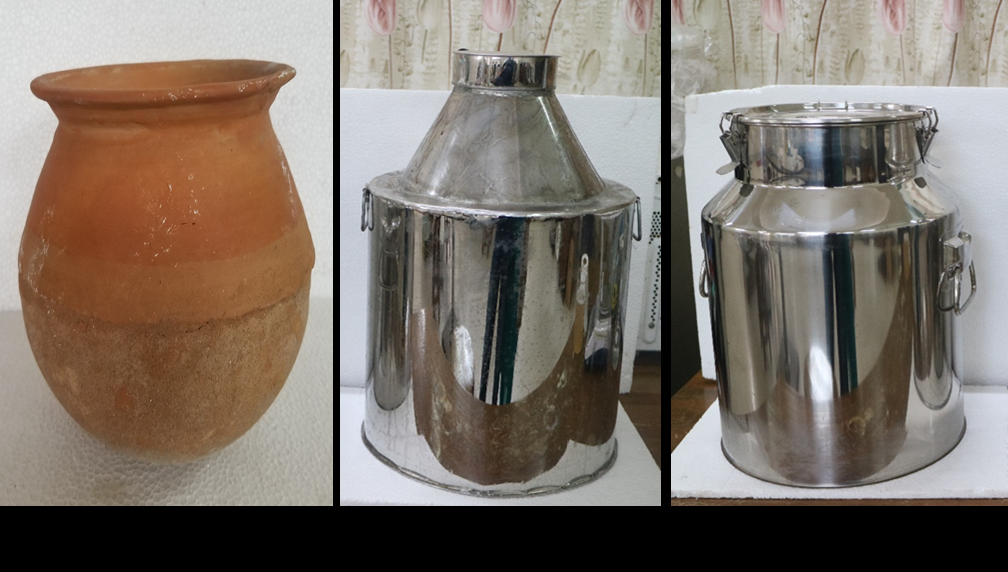
In the very early in the morning, fresh date palm juice was purchased from nearby farmers. After that, collected juice sieved through a clean cloth and kept in a clay pot (T1) and juice collector jars (stainless steel). Two stainless steel jars were used to keep fresh date palm juice made by with insulation (T2) and without insulation (T3) made by using ice cool system (Figure 1). At regular intervals of time, the various parameters for measuring the degradation and spoiling of processed date palm juice samples were monitored. The acidity, total soluble solids (TSS), sugar, pH and microbial load (standard plate count) were determined initially and at an interval of two hours up to 8 hours (7.30 am to 3.30 pm) during the storage period.
Date Palm Gur Storage
The experiment consisted of two factors:
Factor A: Different Packaging Materials
- Newspaper
- Earthen pot
- Painted earthen pot
- Brown paper Factor B: Sources of Gur
- Prepared in machine designed by SAU (Improved methods of gur production protected condition).
- Prepared by contact growers in traditional method (Open condition of gur processing).
- Collected from local market of Jashore district.
- Collected from local market of Khulna district.
Application of the Treatments: The postharvest treatments for the selected gur were assigned at random in the study. The gurs were stored at room temperature (27±2°C) in a laboratory table using the treatments. Each treatment consisted of four replications.
Measurement of Biochemical Parameters
Total Soluble Solids (TSS) Content
A digital refractometer (MA871; Bucharest, Romania) was used to determine the TSS concentration of the juice and gur. Using a dropper, a drop of juice was taken and placed on the refractometer prism. Total soluble solids were calculated using a refractometer.
pH Determination
Separate filters were used to separate the juices from different sources, and a digital pH meter (HI 2211; Bucharest, Romania) was used to monitor the pH.
Titratable Acidity (TA %)
For the purpose of determining the TA, the samples (5 g) were macerated in a mortar and pestle. Samples were filtered after maceration, and water was then added to generate 100 ml of volume. Then, 2 drops of phenolphthalein were added to 10 ml of stock solution in a conical flask. With 1N NaOH, the solution was titrated three times. The titration was stopped when the pink color started to show.
Ascorbic Acid Content
The method developed by Tee, et al. [7] was used to calculate the ascorbic acid content. A 5g sample was mixed, and the juice was then sieved through Whatman No.1 filter paper. By adding 5% oxalic acid solution, the capacity was increased to 100 ml. The dye solution 2, 6-dichlorophenol indophenol was used for titration. Using L-ascorbic acid standard, the mean observations supplied the amount of dye required to oxidize an unknown concentration of a certain amount of L-ascorbic acid solution. Each time, a 5 ml solution was used for titration, and the pink hue identified the last point of titration, which stayed for 10 seconds.
Phenolic Content
The phenol content was determined according to Singleton, Orthofer and Lamuela-Raventós [8]. In 85% methanol, fresh juice was homogenized. The supernatant was obtained after centrifuging the extract at 3,000 g for 15 minutes at 10°C. 2 ml of supernatant was mixed with 2 ml of Folin and Ciocalteu’s reagent. Each test tube received a 7.5% sodium carbonate solution (2 ml), and the absorbance was measured at a wavelength of 725 nm against a reagent blank after 30-45 minutes. To quantify the concentration of total phenols in the unknown sample, a standard curve was established using gallic acid.
Total Sugar
The juice was filtered through two layers of cloths, and the pulverized tissue was re-extracted in hot 80% alcohols for 3 minutes, using 2 to 3ml of alcohol per g of tissue. After cooling, the extract was passed through two layers of cloths. The extracts were both filtered using Whatman No. 41 filter paper. A steam bath was used to evaporate the extract to 25% of its original volume, which was then cooled. This concentrated extract was transferred to a volumetric flask measuring 100 ml, and distilled water was added to get it to the proper volume. Total sugar (%) = Amount of sugar obtained/ Weight of sample×100
Reducing Sugar
A 3 ml aliquot of the extract was pipetted into each test tube, along with 3 ml of DNS reagent, which was thoroughly mixed together. The test tube was heated in a bath of boiling water for five minutes. When the color was still warm in the tubes, 1ml of 40% Rochelle salt was added. After that, the test tubes were cooled using flowing tap water. A reagent blank was made by combining 3 mL of distilled water and 3 mL of DNS reagent in a tube and treating it in the same manner. A colorimeter was used to measure the solution’s absorbance at 575 nm. Reducing sugar (%) = Amount of reducing sugar obtained/ Weight of sample×100
Bacterial Count
One gram of sample was obtained by scraping the surface of stored packed jaggery cubes. In a test tube, a powdered 1 gm sample was thoroughly agitated with 10 ml of autoclaved distilled water. By taking 1 ml from the tube and adding it to 9 ml of the sterile, distilled water used as a blank, the suspension was then utilized for serial dilution. For each sample, dilutions were created up to six times. Twenty milliliters of medium were added to the sterilized, 90-mm petri plates. Following the media’s solidification, 0.1 ml of each diluted sample was aseptically removed from the dilutions and deposited in triplicate on the surface of an agar petri plate. Samples were then distributed by the spreader, and plates were incubated for two to three days at 28 °C. For each jaggery sample, the Colony Forming Units per Gram (CFU/gm) were calculated. The colonies were counted in one portion of each petri plate, which was then multiplied by 4 to determine the total number of colonies in a single petri plate (APHA, 1992).
Statistical Analysis
SAS 9.4 (SAS Institute Inc., Cary, NC, USA) was used to analyze the data in the table, and the mean differences were compared using the least significant difference (LSD) test. P values of 0.05 were considered significant.
Results and Discussion
Composition of Fresh Date Palm Juice
The study of the fresh date palm juice produced estimates of its acidity, temperature, TSS, phenolic content, pH, ascorbic acid, total sugar, reducing sugar, and non-reducing sugar. The findings are shown in Table 1.
Chemical Properties of Preserved Date Palm Juice
The concentrated date palm juice samples were analyzed for acidity, temperature, TSS, phenolic content, pH, ascorbic acid, total sugar, reducing sugar, and non-reducing sugar content. The result is presented in Table 1. It was found that the pH value quickly deteriorate in juice stored at clay pot compared to other jars.
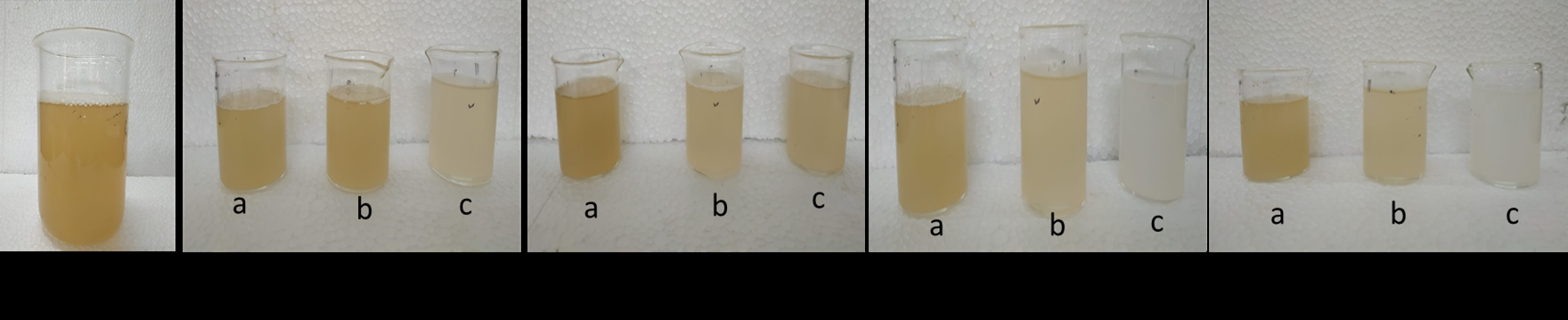
Table 1 shows the chemical characteristics of date palm juice. The pH of date palm juices dropped with increasing storage time, showing acidity in date palm juices. The pH of date palm juice was dramatically altered by the usage of different jars. The pH of the samples remained constant throughout storage. The pH of date palm juice preserved in the clay pot sample (Figure 2), on the other hand, fell and was substantially different from other storage (p ≥ 0.05). Fruits are organic acid-rich agricultural products [9]. This acid/acidity, however, decreases with ripening. The minor pH decrease seen in the sample could be attributed to the metabolic breakdown of carbohydrates by invading microbes, which results in the generation of acids. The retention of pH level is an indication of a good quality product [10].
Total soluble solids in preserved date palm juice ranged between 13.3 and 10.2 °Brix. The total soluble solids of clay pot samples decreased during storage. Total soluble solids were lowest in the clay pot juice (10.2 °Brix), and highest in the stainless steel jar with insulation (12.7 °Brix) at the end of storage (3.30 pm). The changes of the values in this study might be due to the different jar uses of juice preservation used in the study.
The levels of ascorbic acid (vitamin C) in the samples are shown in Table 1. The vitamin C content of preserved date palm juice ranged between 5.76-3.84 mg/100 g and dropped as storage duration increased. This is in favor of the study by Akinola, et al. [11] on an orange, watermelon, carrot, and ginger juice mixture. In this investigation, greater vitamin C values were reported. Up to 13.30 p.m., samples in stainless steel jars with insulation had the maximum concentration of vitamin C (5.76 mg/100 g). The sample from the clay pot has the least vitamin C. Heat, light, and oxygen can all damage ascorbic acid. The ascorbic acid in date palm juice can degrade to de-hydro ascorbic acid when exposed to heat, light, or oxygen, which may explain the decrease in vitamin C concentration that has been found in samples that have been stored. It is a technological technique to package juices in various materials in order to facilitate preservation. Despite the fact that stainless steel jars are more expensive, they have been demonstrated to have a better effect on ascorbic acid retention than other pots.
The total sugar content of preserved date palm juice ranged from 6.53 – 1.02 and decreased with increase in times of storage. The total sugar content of date palm juice was reduced from 7.28 to 1.02 after 10 hours of fermentation in a clay pot (T1), followed by T3 (7.28 to 2.37) and T2 (7.28 to 2.19) over the same time period (Table 1). Total sugar content was the lowest in the clay pot juice (1.02 mg/100ml) while the total sugar content was the highest in stainless steel jar with insulation (2.37 mg/100ml) in the last time (3.30 pm) of storage (Table 2). The pH of the fruit juices decreased as the bacteria expanded, as did the amounts of total sugars and glucose. The reducing sugar content was significantly variable depending on the juice storage pot. The reducing sugar content in the juice was the lowest (0.92 mg/100ml) whereas the total sugar content in gur was the highest (1.28 mg/100ml) (Table 1).
Sugars in culture media are consumed by bacterial growth. We measured the total and reducing sugar concentrations in juices cultivated in different jars at different hourly intervals. Under all conditions in which bacteria thrived, the concentration of total and reducing sugar dropped (Table 1). The increased concentration of phenols did not show an increase of antioxidant activity of samples. The ascorbic acid level of date palm juice declined
2 hours after storage in a clay pot, but juice stored in an insulated jar with an ice system retained the same acidity concentration after 6 hours. This variation of composition had an influence on shelf-life of the concentrated date palm juice. The colonizing microorganism in the juice may have caused an increase in the number of bacteria in the clay pot samples.
| Storage condition | Storage time | TSS (ºBrix) | pH | Ascorbic acid (mg/100g) | Titratable acidity (%) | Phenol (mg/ml) | Total Sugar (mg/100ml) | Reducing Sugar (mg/100ml) | Bacterial Count (cfux10^4) |
|---|---|---|---|---|---|---|---|---|---|
| Immediate after harvest | 7:30 AM | 13.3 | 6.95 | 5.76 | 0.19 | 0.68 | 7.28 | 4.48 | 340 |
| T1 | 9:30 AM | 10.2 | 6.35 | 5.76 | 0.256 | 0.71 | 5.72 | 4.31 | 648 |
| T2 | 12.2 | 6.77 | 5.76 | 0.128 | 0.75 | 6.53 | 4.37 | 348 | |
| T3 | 13.1 | 6.85 | 5.76 | 0.128 | 0.77 | 5.93 | 4.44 | 396 | |
| T1 | 11:30 AM | 10.2 | 5.23 | 3.84 | 0.256 | 0.75 | 2.97 | 2.06 | 704 |
| T2 | 12.2 | 6.62 | 5.76 | 0.128 | 0.8 | 4.19 | 2.53 | 416 | |
| T3 | 13 | 6.56 | 5.76 | 0.128 | 0.86 | 3.86 | 2.16 | 484 | |
| T1 | 13:30 AM | 10.2 | 4.42 | 3.84 | 0.256 | 0.8 | 2.19 | 1.87 | 784 |
| T2 | 12.2 | 6.49 | 5.76 | 0.164 | 1.01 | 3.63 | 2.23 | 564 | |
| T3 | 12.9 | 6.42 | 3.84 | 0.192 | 2.93 | 2.58 | 2.01 | 588 | |
| T1 | 15:30 AM | 10.2 | 4.2 | 3.84 | 0.32 | 0.94 | 1.02 | 0.92 | 865 |
| T2 | 12.1 | 6.28 | 3.84 | 0.192 | 1.66 | 2.37 | 1.28 | 642 | |
| T3 | 12.7 | 5.36 | 3.84 | 0.192 | 4.82 | 2.19 | 0.99 | 650 |
Table 1: Composition of fresh date palm juice evaluated at different time periods under various storage conditions.
T1= control (clay pot), T2= stainless steel jar with insulation, T3= stainless steel jar without insulation. Table 1: Composition of fresh date palm juice evaluated at different time periods under various storage conditions.
Total Soluble Solids (TSS), Ascorbic Acid and Reducing Sugar Content of Date Palm Gur
Table 2 shows the TSS contents of the samples. The TSS content of the gur used different packaging materials ranged from 45–37.8 ºBrix and decreased with increase in month of storage. In the month of March, the TSS content was the highest in brown paper packaging gur prepared by SAU designed machine (43.65 ºBrix) whereas the TSS content was the lowest in the newspaper packaging gur collected from Jashore market (37.8 ºBrix) and followed by Khulna market (38.5 ºBrix).
The levels of ascorbic acid (vitamin C) in the samples are shown in Table 3. The vitamin C content of the gur used diverse packaging materials ranged from 8.62 to 4.48 mg/100 g, with ascorbic acid decreasing over time. The antioxidant ascorbic acid has been employed as a preservative [12]. In the month of March, the vitamin C content was the highest in brown paper packaging gur prepared by SAU designed machine (7.8 mg/100g) whereas the vitamin C content was the lowest in the newspaper packaging gur collected from Jashore market (4.48) and followed by Khulna market (5.04). According to Ahmed and Ramaswamy [13], ascorbic acid loss is utilized as an indicator of the degree of potential nutritional losses. When compared to other packaging materials, gur of painted clay pot demonstrated the least amount of ascorbic acid loss. The reducing sugar contents of the samples are presented in Table 4. The reducing sugar contents of the gur used different packaging materials ranged from 19.86–6.81 mg/100 g and decreased with increase in month of storage. The reducing sugar content was the highest in gur collected from Jashore and Khulna market. Gur prepared by SAU designed machine showed the lowest content of reducing sugar. Among the packaging materials painted earthen pot showed better performance for all the samples collected from various sources. Increases in reducing sugars were also documented by Mandal, et al. [14] during storage. Due to more moisture being absorbed by the gur in newspaper and brown paper than in earthen pot, the increase in reducing sugar was greater. Painted clay pots were more effective than unpainted plain earthen pots in limiting a rise in reducing sugars in the stored gut [15].
| Samples | January | February | March | ||||||
|---|---|---|---|---|---|---|---|---|---|
| Before packaging | News paper | Earthen pot | Painted earthen pot | Brown paper | News paper | Earthen pot | Painted earthen pot | Brown paper | |
| Prepared by SAU designed machine | 45 | 44.45 | 40.45 | 43.95 | 44.9 | 39.7 | 41 | 42.35 | 43.65 |
| Prepared from Farmers | 42 | 40.25 | 40.85 | 41.45 | 40.65 | 40.65 | 39.7 | 40.1 | 39.75 |
| Jashore market | 41.7 | 38.15 | 39.75 | 40.6 | 40.35 | 37.8 | 39.6 | 40.5 | 40 |
| Khulna market | 42.2 | 41.35 | 40.7 | 41.15 | 40.85 | 38.5 | 40.6 | 41.15 | 41.05 |
Table 2: Effect of packaging materials on total soluble solid (ºBrix) of date palm gur collected from different sources.
| Samples | January | February | March | ||||||
|---|---|---|---|---|---|---|---|---|---|
| Before packaging | News paper | Earthen pot | Painted earthen pot | Brown paper | News paper | Earthen pot | Painted earthen pot | Brown paper | |
| Prepared by SAU designed machine | 8.62 | 7.68 | 7.68 | 7.68 | 8.06 | 7.68 | 7.6 | 7.6 | 7.8 |
| Prepared from Farmers | 7.68 | 7.04 | 7.6 | 7.6 | 7.4 | 6.6 | 6.04 | 5.76 | 6.4 |
| Jashore market | 7.68 | 4.48 | 7.04 | 6.84 | 5.76 | 4.48 | 4.48 | 5.48 | 5.76 |
| Khulna market | 7.84 | 7.68 | 6.4 | 5.76 | 6.4 | 5.04 | 5.12 | 5.12 | 5.76 |
| Before packaging | Newspaper | Earthen pot | Painted earthen pot | Brown paper | Newspaper | Earthen pot | Painted earthen pot | Brown paper | |
| Prepared by SAU designed machine | 11.32 | 11.5 | 11.61 | 11.89 | 12.1 | 11.89 | 12.81 | 12.17 | 12.48 |
| Prepared from Farmers | 15.66 | 16.32 | 16.98 | 16.02 | 17.15 | 17.89 | 17.8 | 17.16 | 18.58 |
| Jashore market | 16.32 | 16.98 | 16.8 | 16.65 | 17.07 | 18.07 | 17.98 | 17.28 | 18.96 |
| Khulna market | 19.06 | 19.86 | 19.59 | 19.33 | 20.52 | 20.71 | 21.07 | 20.22 | 21.96 |
Table 3: Effect of packaging materials on ascorbic acid content (mg/100 g) of date palm gur collected from different sources.
Bacterial Count (cfu) x 10^5 of Date Palm Gur
The highest bacterial contamination was recorded in gur collected from Khulna market. Bacterial load in gur prepared from SAU machine was comparatively low. The highest bacterial count was recorded in the gur collected from Khulna (488 cfu x10^5) and the lowest bacterial count was recorded in the gur made by SAU machine (252 cfu x10^5) (Table 5). In the month of March, the lowest bacterial count was recorded in painted earthen pot gur prepared by SAU designed machine (263 cfu x10^5) whereas the highest bacterial count was recorded content in the newspaper packaging gur collected from Khulna market (724.5 cfu x10^5) followed by Jashore market (704.5 cfu x10^5).Bacterial count rose as a result of jaggery’s increased moisture content. Singh, et al. [16] found that microbial development was more pronounced in stored jaggery. It may also be due to low pH compared to other collected gurs. The low pH of gur severely limits the amount and type of bacteria that can survive or grow at that pH [17].
| Samples | January | February | March | ||||||
|---|---|---|---|---|---|---|---|---|---|
| Before packaging | News paper | Earthen pot | Painted earthen pot | Brown paper | Newspaper | Earthen pot | Painted earthen pot | Brown paper | |
| Prepared by SAU designed machine | 252 | 311 | 431 | 253.5 | 262 | 431 | 507.5 | 263 | 371 |
| Prepared from Farmers | 330 | 470 | 647 | 429 | 507 | 652.5 | 601 | 490.5 | 518 |
| Jashore market | 388 | 417 | 662 | 469 | 478 | 704.5 | 643.5 | 504.5 | 524.5 |
| Khulna market | 488 | 570 | 617 | 533.5 | 529 | 724.5 | 652.5 | 614.5 | 624.5 |
Table 4: Effect of packaging materials on Bacterial Count (cfu) x 10^5 of date palm gur collected from different sources.
Conclusion
Juice collected in a stainless steel jar with insulation has longer shelf life and quality than other juice collectors. The best quality gur can be prepared by a machine designed by SAU. The painted clay pot is the best packaging material for storing gur at room temperature.
Acknowledgments
The present work was financially supported by the BAS-USDA Endowment Program, Bangladesh Academy of Sciences.
References
-
Kamarubahrin AF, Haris A (2020) Nutritional and potential planting of date palm: review of recent trends and future prospects in Malaysia. International Journal of Fruit Science 20(Suppl 3): S1097-S1109.
-
Younas A, Naqvi SA, Khan MR, Shabbir MA, Jatoi MA (2020) Functional food and nutra‐pharmaceutical perspectives of date (_Phoenix dactylifera_ L.) fruit. Journal of food biochemistry 44(9): e13332.
-
Ahmad A, Naqvi SA, Jaskani MJ, Waseem M, Ali E, et al. (2021) Efficient utilization of date palm waste for the bioethanol production through Saccharomyces cerevisiae strain. Food Sci Nutr 9(4): 2066-2074.
-
Michalczyk M, Macura R, Matuszak I (2009) The effect of air-drying, freeze-drying and storage on the quality and antioxidant activity of some selected berries. Journal of Food Processing and Preservation 33(1): 11-21.
-
Celep GS, Rastmanesh R (2013) Polyphenol consumption and metabolic diseases. Journal of Nutrition Disorders & Therapy 3(1): 1000e106.
-
Vinson JA, Kharrat HA, Andreoli L (2005) Effect of Aloe vera preparations on the human bioavailability of vitamins C and E. Phytomedicine 12(10): 760-765.
-
Tee ES, Young SI, Ho SK, Mizura SS, (1988) Determination of vitamin C in fresh fruits and vegetables using the dye- titration and microfluorometric methods. Pertanika 11(1): 39-44.
-
Singleton VL, Orthofer R, Lamuela-Raventós RM (1999) Analysis of total phenols and other oxidation substrates and antioxidants by means of folin-ciocalteu reagent. Methods in Enzymology 299: 152-178.
-
Mgaya‐Kilima B, Remberg SF, Chove BE, Wicklund T (2014) Influence of storage temperature and time on the physicochemical and bioactive properties of roselle‐ fruit juice blends in plastic bottle. Food Science & Nutrition 2(2): 181-191.
-
Tamuno ENJ, Onyedikachi EC (2015) Effect of packaging materials, storage conditions on the vitamin C and pH value of cashew apple (_Anacardium occidentale_ L.) juice. Journal of Food and Nutrition Sciences 3(4): 160-165.
-
Akinola SA, Ogundipe MF, Osundahunsi OF (2017) Ginger Inclusion Influences the Antioxidant Properties, Physico-Chemical and Microbiological Quality of Orange- Watermelon-Carrot Juice. Translating Research Findings into Policy in Developing Countries-Contributions, Humboldt Kolleg Osogbo, pp: 241-260.
-
Çoban OE, Patir B, Özpolat E, Kuzgun NK (2016) Improving the quality of fresh rainbow trout by sage essential oil and packaging treatments. Journal of Food Safety 36(3): 299-307.
-
Ahmed SB, Ramaswamy SA (2004) Changes in tannin and cyanide content. Effect of traditional process. Food Chemistry 86(2): 140-152.
-
Mandal D, Tudu S, Mitra SR, De GC (2007) Studies on the effect of class II preservatives on keeping quality of semi- solid jaggery (gur) stored in edible oil canister during rainy season in sub-tropical India. Sugar Tech 9(2-3): 200-208.
-
Mandal D, Tudu S, Mitra SR, De GC (2006) Effect of common packing materials on keeping quality of sugarcane jaggery during monsoon season. Sugar Tech 8(2): 137-142.
-
Singh S, Dubey A, Tiwari L, Verma AK (2009) Microbial profile of stored jaggery: a traditional Indian sweetener. Sugar Tech 11: 213-216.
-
Prescott LM, Harley JP, Klein DA (2005) Microbiology. 6th (Edn.), McGraw-Hill, New York, pp: 652-668.
- The Role of Podocyte Apoptosis and the Involvement of SIRT1 in Diabetic Nephropathy
- Dealcoholization of Beer by Osmotic Distillation for the Beverage Industry
- Biopolymer-Based Edible Packaging- Biomaterials, Methods, and Applications in Food Industry: An Updated Review
- Influence of Bioprocessing Methods on 'China Rice' (Gawal R1), and Soyabean Supplementation on the Quality of Complementary Food
- Cassava (Manihot esculenta) Varietal Growth, Yield and Cyanide Content Performance in Three Sites in the South- Eastern Semi Arid Regions of Kenya
- Food Waste Treatment, Recycling, Management and Production of Value-Products-An Update on Methodologies and Current Trends