
Irony of Urban Food Basket and Rural Wild Edible Resources- A Case from India
This article sheds light on the current system of urban food gamut, future vulnerabilities, and interventions. Wild edible plants for urban consumers a prospects and encounters for sustainable innovation which creates a win-win situation. The term “Wild Food Plants” refers to non-cultivated wild edible plants gathered from natural forests and agricultural land. It is food for thought as the urban poor population increasing exponentially. It is also a very good alternative and chief source of nutritive food which has been practiced by indigenous people since immemorial. It could be a local substitute for global high-carbon food available in urban markets. Moreover, wild food plants have many ailments aiding in getting nutritive elements locally instead of globally produced food that is alien to our gut system.
Introduction
Urbanization is continuing at an exponential rate, and the population in cities will also significantly increase by the next decade. The studies revealed that more than 56 percent of the chronically poor are concentrated in cities and urban landscapes [1]. This trend led to the question of food supply and urban food systems which subsequently became ‘food for thought’. It also forces us to understand urban food systems and find ways to ensure that they remain sustainable. Moreover, the trade of agricultural products opens to globalization, industrialization, and commercialization systems. The global and regional food systems have changed not only how urban centers are supplied with food products, but the types of food that are made available and the nutritional character of those foods [2]. It is intuiting that urban food systems are becoming increasingly complex and are drawing upon larger spatial networks and systems.
Hypermarkets in India today are swamped with foods from every part of the world. Ironically, the amazing variety of produce washed and aesthetically arranged on shelves belies a bitter truth – most of the fruits, vegetables, and grains our ancestors ate have disappeared. Easy access to highly processed and fast food in urban scenarios poses more significant health risks in the name of convenience [3]. The homogenization of diets means that our food systems have also become increasingly disconnected from the rural land and its productive capacity.
The local wild greens, tubers, and berries people forage from forests, farmland, and kitchen gardens in rural areas would never substitute the hypermarket blueberries or apples flown in from halfway across the world. Countless varieties have already gone extinct, abandoned by farmers in favour of more productive varieties escorted in by the green revolution. But the green revolution also brought unintended consequences: increasing irrigation resulted in salinization and groundwater depletion, and with monocultures came escalating battles against pests.
Our diets became calorie-rich and nutrient-poor. As we grew addicted to year-round produce from distant places, our food became carbon-intensive. As farmers became easily replaceable parts in global supply chains, income inequality increased and wealth became concentrated in the hands of a few large multinational corporations that control these supply chains. Some of the biggest ills that threaten our species – climate change, biodiversity loss, and income inequality –disappearance of healthy diets [3]. The challenge is how we bring back healthy diets and become more local, inclusive, seasonal, and bio diverse, those are the secrets of long-lived people in the ‘blue zone’.
Wild food plants (WFP) are a unique and underutilized resource that holds tremendous potential for sustainable innovation and entrepreneurship. These uncultivated greens and plants, which grow naturally in the wild and have been used for food and medicinal purposes for centuries, have recently gained attention due to their nutritional and health benefits. With increasing consumer demand for wild food plants (WFP), the prospects for innovation and entrepreneurship in this sector are growing.
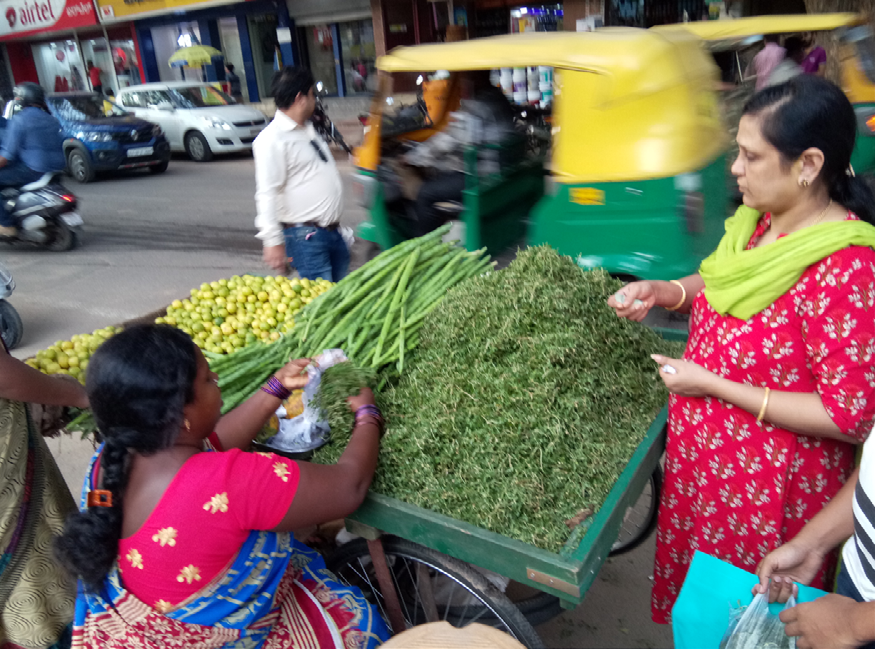
The growing trend of urban agriculture, terrace gardening, and the increased interest in foraging have the scope to increase the availability of these products in urban areas (Figure 1). In line with the UN Sustainable Development Goals (SDGs), the development of the wild food plant sector in India has the potential to contribute to multiple SDGs, including SDG 2 (Zero Hunger), SDG 3 (Good Health and Well-being), and SDG 13 (Climate Action).
Methods
Household survey was carried out using open ended questionnaire with local vendor, indigenous soliga people and urban consumers. Prior informed consent was taken from community. Both gender and age class along with economic status variables were used to select people for interview for both urban consumers and soliga community. There were 6o interviews were conducted for soliga community to gather indigenous knowledge on usage availability of resources and dietary system. There were also 60 individual interviews conducted with urban consumers to understand their perception on wild greens usage, availability and health benefits in urban landscape.
Results
By promoting the use of WFP, this sector has the potential to improve food security, increase access to the health of the community, and nutritional security, and contribute to sustainable agriculture and food systems. Interdisciplinary, intersectional, and inclusive perspectives will be important to ensure sustainable and equitable development for all.
The use of WFP for urban consumers offers a range of opportunities for sustainable innovation and entrepreneurship. It also stimulates the creation of new economic opportunities for small-scale producers and start-ups. Also realizes the promotion of biodiversity and conservation of wild plant species, and the improvement of urban food and nutritional security. However, several challenges must be addressed to guarantee the sustainability of the resources, the new model itself, regulation, and standardization of WFP collection. Effective marketing and reaching urban consumers, and ensuring that WFP collection and commercialization is environmentally and socially sustainable. Addressing these challenges will require a multi-stakeholder approach, involving government, industry, consumers, and the communities to ensure that the use of WFP contributes to sustainable development.
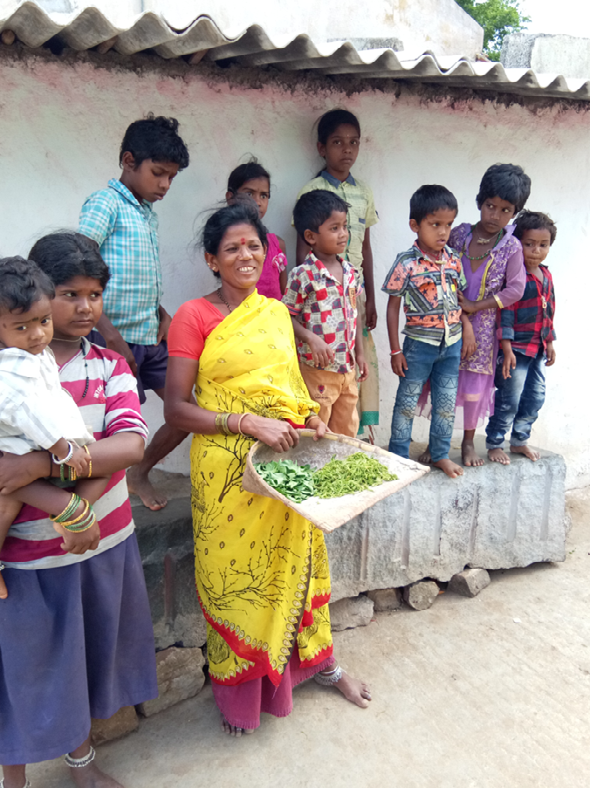
Even within the indigenous communities, the younger generation is quickly losing their traditional knowledge of species in the forests and agriculture systems they inhabit, many turning to agriculture and quarries for their livelihoods. By raising awareness about this rich heritage, perhaps the traditional knowledge of the indigenous communities and rural people can be validated and they can be empowered to preserve it before it is lost forever (Figure 2).
Food security doesn’t guarantee nutritional security. Even though the current global food system can provide food for humankind, the problem of malnutrition persists. Easy access to highly processed and fast food in urban scenarios poses more significant health risks in the name of convenience. With growing awareness of urban consumers who are constantly on the lookout to try new consumables that promise better health and well-being, access to wild foods would be a true blessing (Figure 1). It could prove to be a solution for many ailments aiding in getting nutritive elements locally instead of globally produced food that is alien to our gut system.
Scenarios
Growing Consumer Demand for Wild Food Plants: In India, there is a growing trend of consumers seeking healthier and more sustainable food options, including WFP. This would create an opportunity for entrepreneurs to respond to consumer demand by offering WFP that meets the growing demand for healthier and more sustainable food [4]. The increasing interest in traditional foods and the growing awareness of the health benefits of WFP will contribute to the growing demand for these products. A space for entrepreneurs: The use of WFP in India also presents an opportunity for entrepreneurs to create innovative and sustainable products that meet the growing demand for healthier and more sustainable food. This includes products such as wild food-based snacks, drinks, and other packaged foods that can be easily transported and sold in urban areas. Local tourism industries can be explored for the utilization, preservation, and conservation of WFP. Additionally, the unique flavours and nutritional properties of WFP can be used to create new and innovative products that appeal to consumers and contribute to the sustainability of the new initiative. Start-up venue: This would address the common minimum requisite of human wellbeing. In line with the UN Sustainable Development Goals (SDGs), the development of the wild food pantry in cities has the potential to contribute to multiple SDGs, including SDG 2 (Zero Hunger), SDG 3 (Good Health and Well-being), and SDG 13 (Climate Action). By promoting the use of WFP through start-ups, this area has the potential to improve nutritional security, increase access to healthy food, and contribute to sustainable agriculture and food systems.
Challenges
One of the major encounters for the development of the wild food pantry in cities is the limited knowledge and awareness of these plants among consumers. Many urban consumers are unfamiliar with WFP and their nutritional properties, making it difficult for entrepreneurs to effectively communicate the benefits of these products.
The increasing trend of urbanization has led to a limited supply of wild food plants in urban areas. This can create challenges for entrepreneurs who are seeking to source these plants in sufficient quantities to meet consumer demand. Additionally, the collection and commercialization of WFP can have negative impacts on wild plant populations, however, there is potential to use them sustainably and some of the plants coming from agricultural land, especially weeds will have a positive impact on crops.
Sourcing WFP can be more expensive in the beginning than sourcing conventional crops, as these plants are not grown commercially and often end up with poor supply chain systems. This can result in higher costs for entrepreneurs who are seeking to source these plants, which can limit their ability to compete with other food products in the market. Additionally, the cost of collecting and processing wild food plants can be higher than for conventional crops, creating additional challenges for entrepreneurs seeking to develop this sector.
Addressing these challenges will require technological innovation, entrepreneurship, and a multi-stakeholder approach that involves government, industry, communities, local community institutions, and consumers. This will require efforts to increase knowledge and awareness of WFP, to promote the sustainable collection and commercialization of these plants, and to support the development of a new and innovative wild food pantry for urban consumers.
On the contrary, there is an increasing demand for wild and exotic edibles in the urban consumer market. Many see this as an opportunity to bring attention to the traditional culinary practices of indigenous communities involving wild foods. In the hope of igniting an essential conversation around food production in the context of climate change, wild food gives us the perfect opportunity to draw our attention toward sustainable food systems prevalent in the local community.
It is also an effort to raise awareness towards wild varieties and the way we look at the food. Millets and wild greens are often passed off as poverty food, however, many don’t realize that the uncultivated food consisting of wild greens, tubers, flowers, and seeds are important resources that ensure food security. Wild food can not only help urban consumers expand their culinary experiences but in doing so they will also be incentivizing the indigenous communities to take active measures towards the conservation and preservation of wild edibles.
Discussion
Education and Awareness Campaigns: Creating awareness of WFP through events and incorporating a topic in the school curriculum is necessary. These campaigns should target urban consumers, and other stakeholders, including farmers, policymakers, and entrepreneurs, to increase understanding of the benefits of wild food plants. This can include promoting the nutritional value of these plants, highlighting the cultural significance of traditional food practices, and encouraging the use of WFPs in daily diets. Production and Distribution Networks: To address the challenge of the limited availability of wild food plants in urban areas, it is necessary to expand production and distribution networks for these plants. This can include promoting urban agriculture and foraging practices, supporting the commercial cultivation of WFP, and strengthening supply chains for these products [2]. These efforts can help to increase the availability of WFP in urban areas and provide greater access to these products for consumers. Sustainable Production: To address the challenge of high costs associated with WFP production, it is necessary to invest in sustainable WFP production practices. This can include feasibility studies, supporting research and development of new and sustainable production methods, promoting the use of environmentally friendly production practices, and providing financial and technical support to micro, small, and medium-sized enterprises (MSME) involved in WFP production. These efforts can help to reduce the costs of production and would support sustainable growth. A social enterprise: It links niche wild edible foods such as mushrooms to high-end hotel chains across the country. Using social media and Television platforms to prepare and benefit from traditional recipes using WFPs the urban consumer can be the starting point for a frequent annual event. The proof of concept can later be extended to other luxury chain hotels. The challenges lie in ensuring that urban consumers order and appreciate the food prepared using wild edibles. Blend service and technology: Women›s self-help groups, gram sabha under the Forest Rights Act, eco-development committees, panchayath in the forests, and rural areas can adapt technologies to create dehydrated wild edible foods that increase their shelf-life and cater to urban consumers. These products can be sold on e-commerce platforms and linked with grocery delivery applications such as Zepto, Amazon Pantry, and Swiggy. The challenges lie in initial investments for equipment required for the research and development of products and the costs associated with partnering with such grocery delivery companies. A more dangerous threat is over-harvesting by competitors/middlemen and not the forest dwellers who see the potential in such products. This would confront the purpose of creating an enterprise to benefit the forest dwellers’ livelihoods.
If a WFP becomes popular, there is the risk of overharvesting due to increased demand and there is a bigger scope to harvest these plants from agricultural land when they grow as weeds would not be a threat and it would be an advantage. Because farmers spend an average of two thousand rupees per hectare to control weeds in the cropland. Therefore, encourage farmers to harvest WFP from their agricultural land and supply it to the market, as it gives more income to the farmers and reduce weeding cost [5]. Harvesting from the wild can pose a huge threat to wild ecosystems, but there is scope to engage the community in sustainable utilization, monitoring, and creating incentives for the conservation of these resources. Hence, the entrepreneurial venture has to carefully target a niche audience that can ensure consistent business for the producers while not exponentially increasing its demands. For the same reason, luxury urban clientele would be the best bet for a total win-win for producers, consumers, and the environment.
Conclusion
The wild food plant industry in urban areas offers significant opportunities for sustainable innovation and entrepreneurship. But these opportunities must be realized through the addressing of current challenges by promoting education and awareness, expanding production and distribution networks, and investing in sustainable production practices, entrepreneurs and innovators can help tap into the full potential of wild food plants and contribute to the achievement of the UN Sustainable Development Goals. It is time for entrepreneurs and innovators to explore the potential of wild food plants and create innovative and sustainable products that benefit producers, consumers, and the environment.
The problem of malnutrition and nutritional insecurity poses a challenge to humankind and going to be even greater shortly although food security is accomplished through the green revolution. Current global scenarios show that food security doesn’t guarantee nutritional security. The role of WFP in bridging the gap of the food systems during drought and any other adverse conditions. WFP provides greater diversity and nutritional value (vitamins, phenols, flavonoids, antioxidants, microelements, and fiber) in comparison to cultivated crops. As we are realizing that climate change altering the seasonality which changes the phonological patterns of plants resulted in a reduction in crop production, a more local sustainable food system is the need of the hour.
References
-
Roopa N (2022) India’s wild greens make a comeback. Aljazeera.
-
Harisha RP, Gowthami R, Siddappa Setty R (2021) Vocal to local: Indigenous dietary practices and diversity of wild food plants in Malai Mahadeswara wildlife sanctuary, South India. Ethnobotany Research & Applications 22(22): 1-27.
-
Motti R (2022) Wild Edible Plants: A Challenge for Future Diet and Health. Plants(Basel) 11(3): 344.
-
Tharayil S (2023) Uncultivated Greens: Reawakening forgotten food traditions, The Lexicon.
-
Harisha RP, Siddappa Setty R, Ravikanth G (2021) Dependency and economic benefit of the use of wild food plants among tribal communities in Malai Mahadeshwara Hills Southern India. Future Food: Journal on Food Agriculture and Society 9(1): 1-19.
-
Harisha RP, Padmavathy S, Nagaraja BC (2015) Traditional Ecological Knowledge (TEK) and its importance in South India: Perspective from local communities. Applied Ecology and Environmental Research 14(1): 311-326.
- The Role of Podocyte Apoptosis and the Involvement of SIRT1 in Diabetic Nephropathy
- Dealcoholization of Beer by Osmotic Distillation for the Beverage Industry
- Biopolymer-Based Edible Packaging- Biomaterials, Methods, and Applications in Food Industry: An Updated Review
- Influence of Bioprocessing Methods on 'China Rice' (Gawal R1), and Soyabean Supplementation on the Quality of Complementary Food
- Cassava (Manihot esculenta) Varietal Growth, Yield and Cyanide Content Performance in Three Sites in the South- Eastern Semi Arid Regions of Kenya
- Food Waste Treatment, Recycling, Management and Production of Value-Products-An Update on Methodologies and Current Trends