
Exploring Fruit Peels for Eco-Friendly Bio-Enzymes: Synthesis, Properties, and Sustainable Applications
Current work focuses on the production of bio-enzymes derived from fruit peels, specifically orange, banana, lemon, pineapple, and pomegranate, employing a meticulous three-month fermentation process. The resulting bio-enzymes exhibit substantial antibacterial and antioxidant properties, offering diverse applications in eco-friendly domains such as disinfectants, organic fertilizers, and cleaning agents. A comprehensive evaluation encompasses physicochemical properties, enzymatic activity, and antibacterial efficacy, providing insights into their effectiveness against both gram-positive and gram-negative bacteria. The significance of utilizing fruit waste for bio-enzyme synthesis aligns with sustainable practices, contributing to environmental conservation and waste reduction objectives. The study underscores the versatility of these bio-enzymes, emphasizing their potential impact on various industries, from agriculture to household cleaning. Overall, this research not only contributes valuable insights into the synthesis and properties of bio-enzymes from fruit peels but also advocates for the adoption of environmentally conscious practices by repurposing agricultural by-products for sustainable and multifaceted applications.
Introduction
Modern society heavily relies on chemical products for efficient manufacturing and cost-effectiveness, with sectors like food, agriculture, and pharmaceuticals depending significantly on them for quality and productivity. However, the prolonged use of chemical-based fertilizers, pesticides, weedicides, insecticides, and plant hormones has adversely affected soil stability, leading to a decline in agricultural productivity. Acknowledging the role of environmental chemical exposure as a primary driver of climate change, the latest industrial trend focuses on adopting sustainable products to minimize or replace chemical usage. Among various sustainable approaches, bio enzymes emerge as a promising tool in agriculture and other industries [1]. Bio- enzymes may also be referred to as Eco-enzymes or Garbage enzymes. A comparative approach on chemical-based enzymes and bio-based enzymes has been made in Table 1. With the global population and urbanization on the rise, there is a growing demand for eco-friendly solutions due to heightened concerns about food wastage. The increasing interest in biofertilizers, biopesticides, and biofuels as alternatives to environmentally harmful chemicals reflects recognition of their potential to mitigate adverse environmental impacts. An environmentally conscious approach involves the use of bio-enzymes or eco-enzymes, recognized for their positive role in restoring balance to nature [2]. Globally, an estimated 675 billion metric tons of fruits and vegetables are annually produced, resulting in a substantial 1.3 billion tons of waste. In India, the production reaches 86.602 million metric tons, generating around 5.6 million tons of waste annually, predominantly from fruits and vegetables. Significantly, India loses 18% of its annual fruit and vegetable production, amounting to Rs 13,300 crore in value. The improper management of waste, encompassing both organic and non-organic materials, poses a significant environmental threat, with households being the primary contributors. Recognizing the urgency of effective waste management, adopting recycling strategies is crucial. A noteworthy approach involves converting organic waste into eco-enzymes (EE), a liquid derived from the fermentation of organic materials, including fruits, vegetables, and various agricultural and household wastes. This method contributes to sustainable waste utilization and aligns with environmental conservation goals [3]. In response to this issue, bio-enzymes emerge as a pivotal solution addressing these challenges, providing a natural solution that minimizes waste. By utilizing fruit and vegetable peels, typically discarded as waste, bio- enzymes contribute to waste reduction. These liquids are characterized by their non-hazardous, non-corrosive, non- toxic, and environmentally friendly nature. Bio-enzymes are created through the anaerobic fermentation of fruit and vegetable peels, along with water, jaggery, and yeast, resulting in a combination of juvenile hormones and enzymes synthesized by microorganisms [4]. Through fermenting fresh vegetable and fruit wastes in a mixture of sugar and water, a transformation occurs, giving rise to concentrated organic liquids known as bio-enzymes, eco-enzymes, or garbage enzymes. This intricate liquid, evolving from the decomposition of organic wastes, contains hydrolytic enzymes with environmentally friendly characteristics and versatile applications across various fields [2]. Barman et al.’s systematic review further emphasizes the significance of enzyme extraction from organic wastes, shedding light on its diverse applications and potential benefits [2].
| Chemo enzymes | Bio enzymes | |
|---|---|---|
| Origin | Industrial or Laboratory Synthesis | Natural sources: waste fruits and vegetables |
| Composition | Synthetic materials | Biodegradable proteins |
| Applications | Industries: Food and Pharmaceutical | Wastewater treatment, Agriculture sector, Disinfectants |
| Specificity | Can be modified according to the desired application | Evolve over time |
| Environmental Impact | Toxic | Eco-friendly |
Table 1: Difference between Chemo Enzymes and Bioenzymes.
Even though the EE’s are a little more expensive and time-consuming than chemo enzymes they are gaining more recognition for their sustainable and effective properties (Table 1). Microorganism-driven fermentation transforms complex organic compounds into bioactive forms like antibacterial agents and antioxidants. The resulting secondary metabolites, including organic acids, phenolic compounds, terpenoids, and alkaloids, exhibit antimicrobial properties against pathogenic microorganisms. Although polyphenols are acknowledged as the main natural antioxidants in food, their effectiveness may be diminished due to factors such as binding to cell walls or glycosylation, impacting their bioavailability [5].
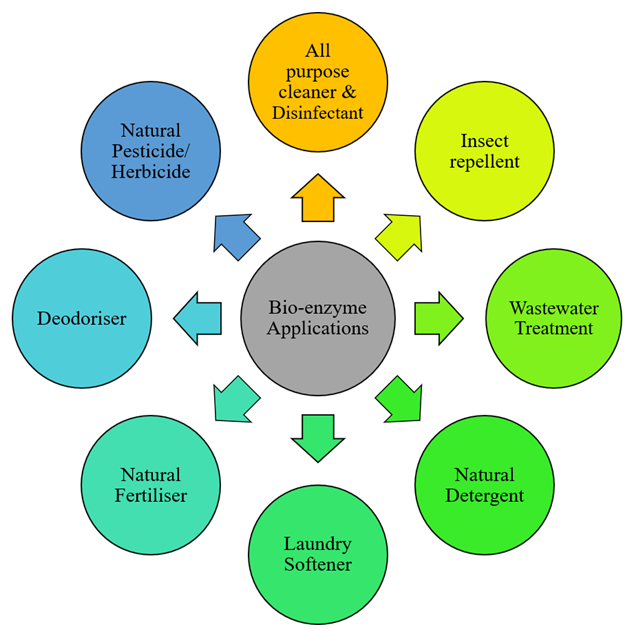
However, fermentation engages metabolic activities that release or convert polyphenols into more active forms. Eco-enzyme (Bio-enzyme) fermentation aims to reduce solid matter, offering a long-term solution for organic waste reduction. The EE solution serves as a versatile product, functioning as a liquid organic fertilizer, natural pesticide, disinfectant, cleaning fluid, organic soap, and more [5, 7]. Graphical expression on EE’s usage has been shown in Figure 1. Derived from household waste, enzymes like amylases, proteases, lipases, and pectinases play a crucial role in expediting biochemical reactions. Pioneering studies, like Rosukon Poompanvong’s work in Thailand, have laid the groundwork for garbage enzyme production, providing organic solutions with antioxidant and antimicrobial properties. These advancements contribute significantly to sustainable waste reduction and a healthier environment [8].
![Figure 1: Derived from household waste, enzymes like amylases, proteases, lipases, and pectinases play a crucial role in expediting biochemical reactions. Pioneering studies, like Rosukon Poompanvong’s work in Thailand, have laid the groundwork for garbage enzyme production, providing organic solutions with antioxidant and antimicrobial properties. These advancements contribute significantly to sustainable waste reduction and a healthier environment [8].](/fulltextimages/12425/fig_1.png)
India boasts an abundance of fruits like oranges, pineapples, lemons, pomegranates, and bananas, leading to their suboptimal utilization and generating substantial waste. Recycling techniques can be employed to repurpose this residual fruit matter, creating health-enhancing products, particularly through fermentation. Pineapple, for example, contains significant amounts of gallic acid, catechins, epicatechins, and ferulic acids – bioactive compounds serving as potent antioxidant ingredients. Additionally, constituents like flavonoids, saponins, and tannins act as natural antimicrobials, aiding in the reduction of food spoilage. Citrus fruits, with their phytochemicals, have also been reported to exhibit antimicrobial and antioxidant properties [9].
In the meticulous process of bio enzyme production, anaerobic fermentation is employed to utilize sugar and kitchen wastes. Contained within an airtight environment, indigenous microflora or Baker’s yeast facilitates the creation of an oxygen-free and acidic setting, providing the ideal conditions for the production of eco-enzymes. The addition of sugar supports microorganism growth, resulting in increased volume with higher sugar content. During fermentation, microbial activity releases gases, converting carbohydrates into volatile acids. As pH decreases, organic acids dissolve into the solution, yielding an eco-enzyme with a vinegar-like liquid. The associated reaction is [10]: CO2 + N2O + O2 → O3 + NO3 + CO3 [2].
Emphasizing the significance of antibacterial activity in bio-enzymes, these biological catalysts, often sourced from natural elements like fruit and vegetable peels, actively combat bacteria. Serving as a natural and eco- friendly alternative to traditional antibacterial agents, bio- enzymes produced through processes such as anaerobic fermentation of organic waste act as natural antimicrobial agents, inhibiting bacterial growth or causing destruction. In waste reduction, these bio-enzymes break down substances, minimizing waste and creating an environment less conducive to bacterial proliferation. In cleaning products, bio-enzymes with antibacterial properties prove beneficial for breaking down organic matter, odours, and stains, particularly in household cleaning and hygiene practices. Eco-enzymes, including those from citrus extracts, offer a natural disinfectant, aligning with environmentally conscious practices and a zero-waste framework. Utilizing bio-enzymes with antibacterial activity reduces reliance on chemical-based agents, contributing to a healthier environment by minimizing the use of potentially harmful substances. Specifically, as a disinfectant, eco-enzyme (EE) produced through the fermentation of fruits demonstrates the capability to hinder the proliferation of pathogenic bacteria, such as Escherichia coli and Staphylococcus aureus, commonly associated with human infections and prevalent foodborne pathogens capable of inducing food poisoning [11].
This study aims to synthesize five bio-enzymes from fruit peels including orange, banana, lemon, pineapple, and pomegranate through a three-month fermentation process. The goal is to assess their physicochemical properties and their effectiveness against pathogenic bacteria, namely Escherichia coli, Mycobacterium smegmatis, and Staphylococcus aureus, to establish their potential as disinfectants. Additionally, the research aims to quantify the antioxidant activity of the bio-enzyme solutions.
Materials & Methods
The fruit peels of Orange, Banana, Lemon, pineapple, and Pomegranate were procured from a local fruit juice vendor in Hyderabad. Vedaka premium Jaggery powder (brown sugar) and Saccharomyces cerevisiae (Desire Baker’s active dry yeast) were purchased from a nearby supermarket, while the nutrient agar medium was acquired from Hymedia Laboratories Pvt. Ltd in Mumbai. The TDS-3 HM digital meter for measuring TDS was acquired from Hyderabad, India. The DCM 900 and DCM-500 digital meters for pH and conductivity were obtained from Global Electronics in Hyderabad. For turbidity measurement, we used the pocket DR 300 colorimeter from HACH in Hyderabad. The colour of bio-enzymes produced was determined using a colour spectrophotometer from Sensegood Instruments Pvt. Ltd in India. Glassware was supplied by Borosil Limited in Mumbai, and various equipment like a hot-air oven, laminar airflow chamber, autoclave, digital weighing machine, and magnetic stirrer were purchased from Memmert, Lab-Tech, Equitrol, Sartorius, and Remi, respectively, in Hyderabad.
Preparation of Bio-enzyme
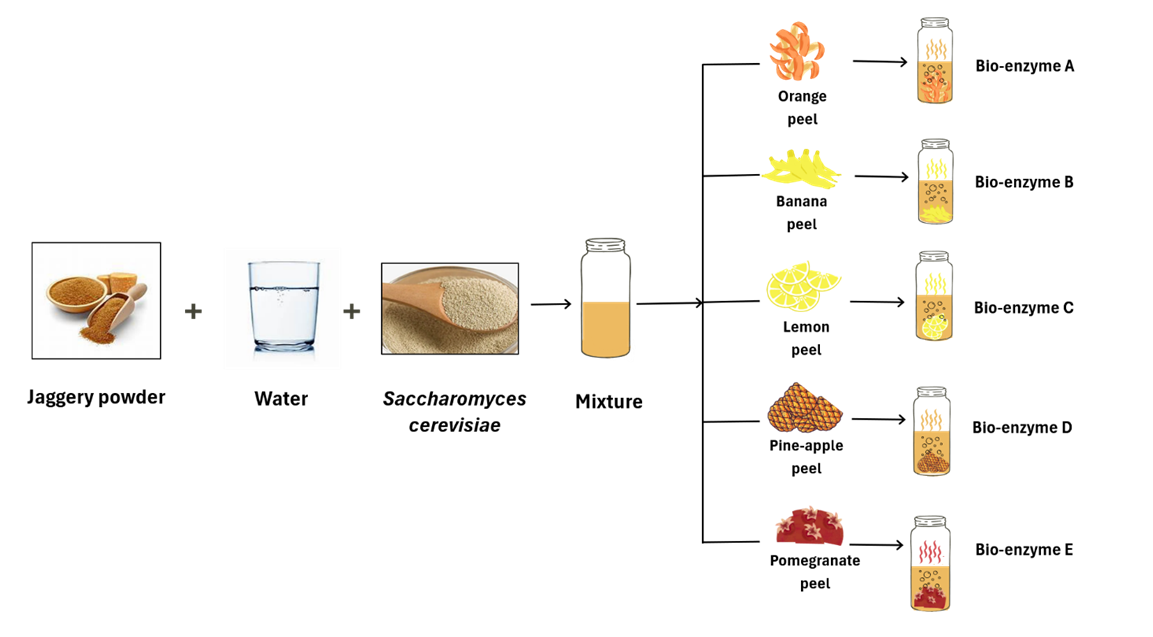
Preparation of bio-enzyme was carried out by taking 500 ml of water, 50 g of jaggery powder, and around 2-3 pinches of Saccharomyces cerevisiae in plastic bottles individually. Fruit peels of samples A, B, C, D, and E (Orange, Banana, Lemon, Pineapple, and Pomegranate respectively) of weight 150 grams each were placed into individual plastic bottles ensuring they were not filled to the brim and were labelled accordingly in Table 2. The plastic bottles were turned upside down without shaking to thoroughly mix the water and jaggery powder solution. Then the bottles were left in a clean, dark room for the fermentation process. Throughout the first month, gases were produced, necessitating the daily unscrewing of the plastic containers to release accumulated gases. After three months of anaerobic digestion, the bio- enzyme was filtered using a strainer. The resulting bio- enzyme was then ready for analysis of its physico-chemical properties. All of the bioenzymes were tagged, stored in a clean, dark location, and retained until they were needed. The steps of the process has been shown in Figure 2.
| Sample | Code |
|---|---|
| Orange | A |
| Banana | B |
| Lemon | C |
| Pineapple | D |
| Pomegranate | E |
Table 2: Sample Labelling.
Analytical Studies
pH: pH is a numerical value indicating the acidity or alkalinity of liquid solutions. It quantifies the concentration of hydrogen ions on a scale from 0 to 14, with lower values indicating acidity and higher values representing alkalinity [12]. The pH of bio-enzymes was determined with a pH meter containing a glass electrode and a reference electrode, generating voltage proportional to the solution’s pH. The glass electrode responds to pH changes, while the reference electrode maintains a stable voltage. Using a calibration curve, the pH meter converts the voltage into a pH value. Regular calibration and maintenance were done for precise and reliable pH measurements.
Conductivity: Conductivity, or specific conductance, measures how well an electrolyte solution conducts electricity, expressed in Siemens per meter (S/m). It is a valuable indicator of ionic contents in water [13]. Commonly employed in industrial and environmental settings. Bioenzymes’ conductivity was gauged with a conductivity meter and probe. When immersed in the sample, the conductivity probe applies a voltage between its electrodes. The samples’ resistance induces a voltage drop, allowing computation of conductivity.
Total Dissolved Solids (TDS): TDS, or Total Dissolved Solids, quantifies the mass of filterable dissolved organic and inorganic substances per unit volume that remains after water evaporation [14]. TDS meter employed for measurement of total dissolved solids in bio-enzyme functions as an electrical charge (EC) meter, employing two evenly spaced electrodes inserted into a sample to measure the charge. The sample conducts a charge, and the ppm figure reflects the proportion of dissolved solids, as all dissolved solids carry an electrical charge enabling the conduction of electrical charge between the electrodes.
Turbidity: Turbidity is a measure of the clarity of a liquid, representing the optical property of water by assessing the light scattering when illuminated through a sample. Described as “haziness” or “milkiness,” turbidity results from fine particles dispersing light around 90 degrees from the incident light direction. Turbidity in a water body is influenced by factors such as suspended particulates, dissolved inorganic chemicals, organic matter content, and temperature [15]. Unlike colour, the turbidity of bio-enzymes was measured with an electronic device using white light, with photometers detecting the diverted light, directly proportional to turbidity, expressed in NTUs (Nephelometric Turbidity Units).
Colour: Colour refers to the characteristic of an object that can be expressed in terms of hue, lightness, and saturation.
Colour measurements quantify human-perceived colours as values, considering illumination, object spectral characteristics, and the spectral sensitivity of the human eye. Colour measurement can be conducted through colorimetry, which defines colour in relation to the quantities of three primary colours—typically red, green, and blue light sources—that, when combined, create the desired colour. Alternatively, spectrophotometry offers a more intricate approach, capturing the reflectance of a colour across the visible spectrum in detail [16]. Colour of each bio-enzyme was distinctly represented with unique Hex colour codes using Sense-good Spectrophotometer. Hex colour codes use three pairs of characters to represent the intensity of red, green, and blue in a colour. Each character can be a digit (0-9) or a letter (a-f). For instance, #000000 is black, and #FFFFFF is white, signifying maximum intensity for all three primary colours. The byte values range from 00 (lowest intensity) to FF (highest intensity) for creating a spectrum of colours in hexadecimal notation.
Odour: Odour is the characteristic of specific substances to stimulate chemical sense receptors even in very small concentrations. It arises from one or more volatilized chemical compounds typically present in low concentrations, detectable by humans and many animals through their sense of smell. Odour measurement techniques are categorized into two main classes. Sensory measurements utilize the human nose to assess the effects of odour as perceived by an observer. Analytical measurements, on the other hand, aim to characterize odours based on their chemical composition and strive to quantify the odorants present [17]. The odour of each bio-enzyme was assessed through sensory analysis as perceived by five observers and the commonly reported response was considered.
Bulk Density: Bulk density is a widely used measurement to facilitate the conversion of water content from weight- based percentage (gravimetric) to volume-based percentage (volumetric) [18]. The bulk density of the bio-enzymes was calculated by dividing the bio-enzyme mass by the volume it occupied, expressed as ρ = mass/volume.
Screening of Enzyme Activity
Following one month of fermentation, enzyme activity and antimicrobial efficacy tests were conducted. The fermented mixtures underwent centrifugation at 5000 rpm for 10 minutes. The resulting supernatant, known as crude garbage enzyme, was utilized to analyze enzyme activity and conduct antimicrobial efficacy tests.
Amylase: To assess amylase enzyme activity, an aseptic agar- agar containing 1% starch was prepared. Using a sterile cork borer, wells of 4mm diameter were created, and 350μl of garbage enzyme was inoculated into each well. Subsequently, the plates were incubated at 37°C for 48 hours. The hydrolysis of starch was indicated by the appearance of clear zones surrounding the wells, which contrasted with the deep blue- brown coloration of starch revealed by the iodine solution. Cellulase: Cellulase agar plates, comprising 1% carboxymethylcellulose, were prepared, and 350μl of garbage enzyme was inoculated onto each plate. Following incubation at 37°C for 24-48 hours, the plates underwent treatment with a 0.3% congo red solution for 10 minutes. Subsequently, they were washed with water and flooded with 1N NaCl as a destaining solution. Cellulase production was indicated by the presence of a translucent zone surrounding the colonies. To determine the zone of inhibition of bio-enzymes, the diameter of the translucent zone was measured. Protease: Protease agar was aseptically prepared with 1% gelatin. Using a sterile cork borer of 4mm diameter, wells were created in the plates, into which 350μl of garbage enzyme was inoculated. The plates were then incubated at 37°C for 24-48 hours. Following incubation, the plates were flooded with acidic mercuric chloride solution and left to stand for 5-10 minutes before decanting the excess solution. The presence of a clear zone around the colonies indicated a positive result for proteolytic hydrolysis of gelatin by the enzyme gelatinase. The diameter of the clear zone was measured to determine the activity level of the microorganisms. Conversely, the absence of a gelatinase enzyme was indicated by an unhydrolyzed and continuous opaque zone around the growth. Caseinase: In the casein hydrolysis test, the tested garbage enzyme was inoculated onto agar plates containing 1% skimmed milk powder. Wells were created using a sterile 4mm cork borer, and each well was filled with 350μl of the garbage enzyme. Subsequently, the plates were incubated at 37°C for 24-48 hours. Following incubation, the plates were flooded with a 0.1% copper sulfate solution, excess solution was decanted, and the formation of a clear zone around the well was observed.
Lipase: 1% Tween-20 hydrolysis agar medium was prepared. Using a sterile 4mm cork borer, wells were made on a plate and labelled with the sample names. 350μl of each sample was added to the respective wells, and the plates were incubated at 37°C for 24 hours. Following incubation, a precipitation zone was observed around each well [19].
Anti-Bacterial Activity
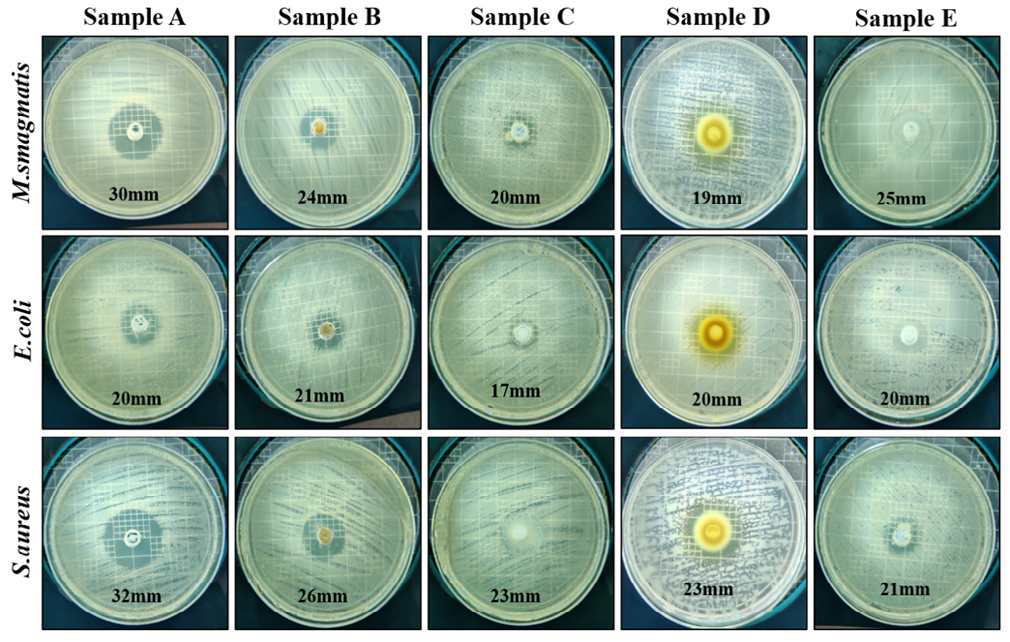
The antibacterial activity of bio-enzymes was evaluated by examining the kill rate of bacteria using the agar well diffusion technique. The agar well diffusion method is a commonly used technique for assessing the antimicrobial activity of plant or microbial extracts. Following a procedure akin to the disk-diffusion method, the microbial inoculum is spread across the agar plate surface. Aseptically, a hole with a diameter of 6 to 8 mm is punched using a sterile cork borer or tip, and a volume (100 µL) of the bio-enzyme solution is introduced into the well. Subsequently, agar plates are incubated at 37°C for 24 hours in a bacterial incubator. The antimicrobial agent from bio-enzyme diffuses within the agar medium, inhibiting the growth of the tested microbial strains. After 24 hrs the zone of inhibition was measured with the help of a ruler [20]. The bio-enzymes’ antibacterial activity was assessed using the agar well diffusion method outlined earlier. Three microorganisms namely Escherichia coli, Mycobacterium smegmatis, and Staphylococcus aureus were used to analyze the efficacy of the synthesized bio enzymes.
Results
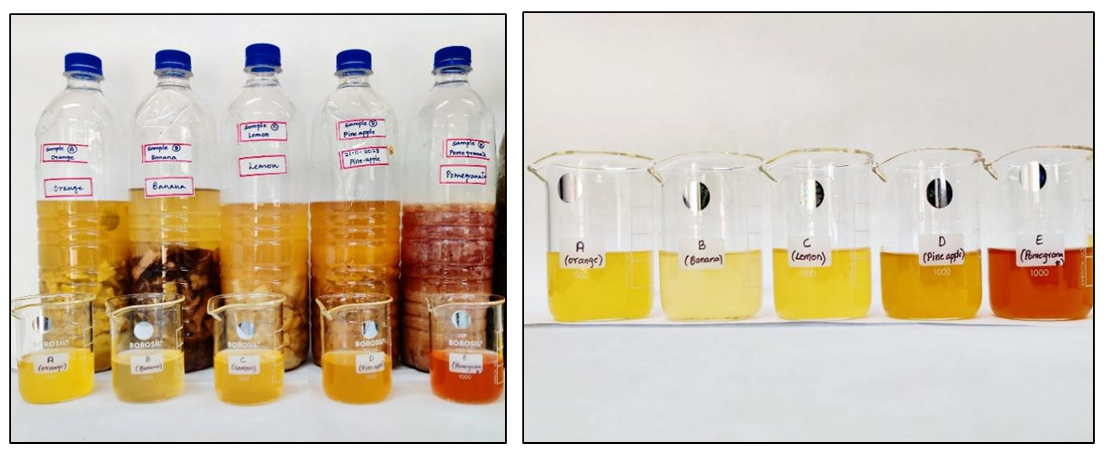
Bio-enzymes were extracted following a three-month fermentation process from fruit peels of Orange (A), Banana (B), Lemon (C), Pineapple (D), and Pomegranate (E), as illustrated in Figure 3. Subsequent to extraction, each bio-enzyme sample underwent comprehensive analysis encompassing physicochemical characterization, assessment of antibacterial efficacy, and evaluation of enzymatic activity.
Physico-Chemical Properties
Analysis of the data presented in Table 3 reveals distinctive characteristics of the bio-enzymes derived from various fruit peels. Specifically, the bio-enzyme extracted from Orange peel (A) exhibits higher acidity, with a pH of 3.38, while the bio-enzyme from Lemon peel (C) closely follows with a pH of 3.40. Conversely, the bio-enzyme obtained from Banana peel demonstrates comparatively lower acidity, with a pH value of 3.91. The pH exhibited minimal variation throughout the fermentation process of samples. Each bio-enzyme emits a distinctive alcoholic aroma, with the bio-enzyme derived from Orange peel exhibiting a particularly pungent scent. Coloration of the bio-enzymes spans a spectrum from yellow to brown. The total Dissolved Solids (TDS) content of the synthesized bio-enzymes ranges from 1000 to 2500 ppm, with the bio-enzyme from Banana peel with the highest TDS value and the bio-enzyme from Orange peel yielding the lowest. Furthermore, sample A (Orange peel bio-enzyme) presents the highest turbidity at 568.33(NTU), followed by sample D (Pineapple peel bio-enzyme).
| Sample | pH (25oC) | Conductivity (20 mS) 30oC | Odour | (Hex Color Code) | Color | TDS (ppm) | Turbidity (NTU) | Bulk Density (g/ml) |
|---|---|---|---|---|---|---|---|---|
| A (Orange peel) | 3.38 | 2.06 | Pungent orange smell | #9b8d65 | 1277 | 568.33 | 1.0024 | |
| B (Banana peel) | 3.91 | 3.57 | Strong alcoholic smell | #9b907d | 2383 | 260.66 | 0.9817 | |
| C (Lemon peel) | 3.40 | 2.10 | Fragrant lemon smell | #9o9073 | 1372 | 265.33 | 0.9915 | |
| D (Pineapple peel) | 3.88 | 2.86 | Strong pineapple smell | #95815d | 1916 | 537 | 0.9898 | |
| E (Pomegranate peel) | 3.81 | 2.15 | Strong alcoholic smell | #9a7d54 | 1401 | 423 | 0.9874 |
Table 3: Physico Chemical properties of Bio-enzymes after one month.
Antibacterial Activity of Synthesized Bio- Enzymes
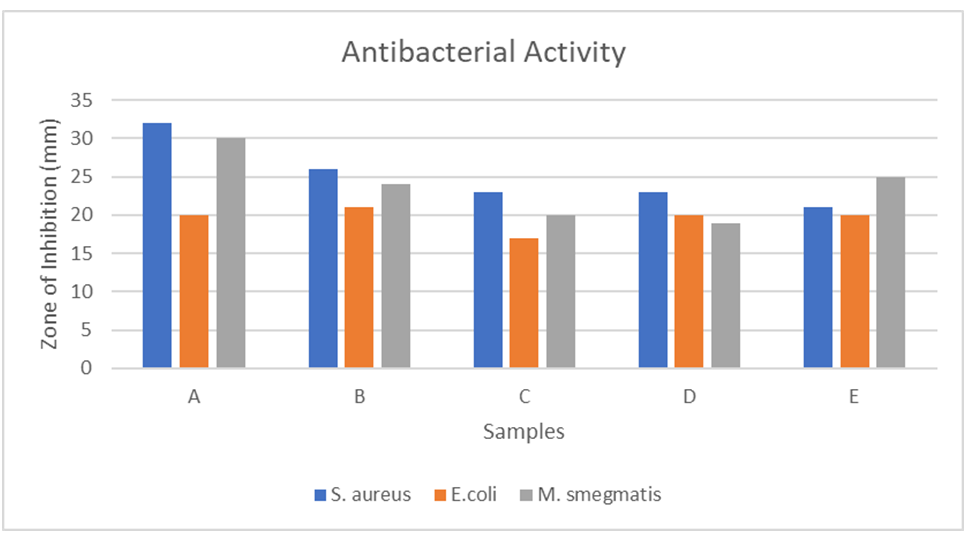
The samples exhibited notable antibacterial activity against S. aureus, E. coli, and M. smegmatis, encompassing resistance against both Gram-positive and Gram-negative bacterial strains (Figure 4). The observed phenomenon was evidenced by the formation of distinct clear zones surrounding the discs, indicative of a zone of inhibition (Figure 5). The diameter of these inhibition zones served as a quantitative measure, elucidating the magnitude of inhibition exerted by the bio-enzymes were noted. From the graph (Figure 4), compared to other samples, Sample A exhibited the highest antibacterial activity, followed by Sample B, Sample E, Sample D, and Sample C in descending order of potency.
Enzymatic Activity
Since these bio enzymes originated from fruit peels, it is apparent that they harbor enzymatic constituents such as amylase, lipase, protease, cellulase, and caseinase. To assess their functional effectiveness, enzymatic assays were conducted, and the outcomes are presented in the subsequent tabular format:
| Code | Sample | Enzyme activity | ||
|---|---|---|---|---|
| Lipase | Cellulase | Amylase | ||
| A | Orange Bioenzyme | + | +++ | ++ |
| B | Banana Bioenzyme | +++ | +++ | ++ |
| C | Lemon Bioenzyme | ++ | + | ++ |
| D | Pineapple Bioenzyme | + | - | ++ |
| E | Pomegranate Bioenzyme | ++ | - | ++++ |
Table 4: Enzymatic activity of synthesized Bio-enzymes.
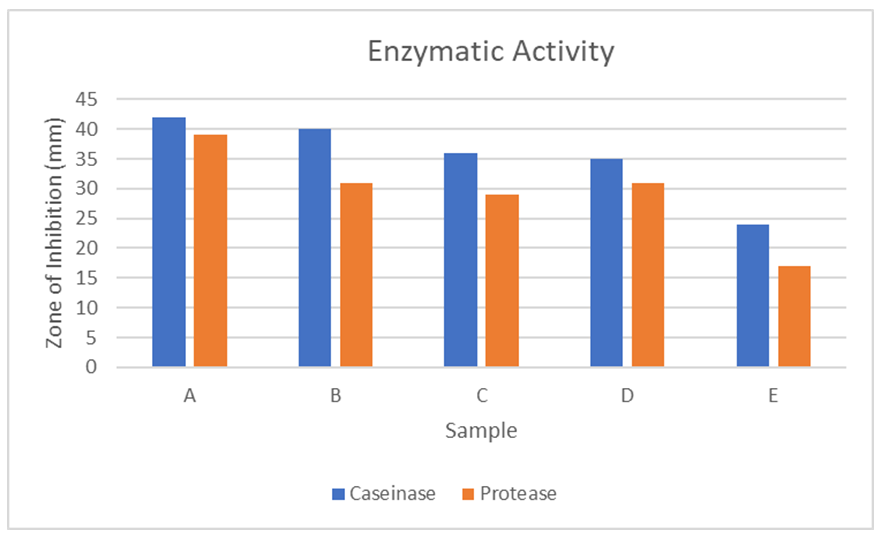
From Table 4 and Figure 6, it is observed that caseinase, protease, lipase, and amylase were present in all bioenzymes, while cellulase was absent in samples D and E. Sample A demonstrated the highest enzymatic activity in caseinase, protease, and cellulase, with comparatively lower activity in lipase and moderate activity in amylase. Conversely, Sample B exhibited robust enzymatic activity across all enzymes except for amylase. Sample C displayed the least activity in cellulase. Sample E showcased remarkably elevated amylase activity in comparison to other samples. These distinctions were further elucidated through zone of inhibition analysis, as depicted in Figure 6.
Figure 6 Enzymatic activity of synthesized Bio-enzymes (a)Caesinase activity (b)Protease activity (c) Lipase activity (d) Cellulose activity (e) Amylase activity.
Discussion
Citrus and pineapple peel bio-enzymes were found effective for use as cleaning agents, while banana peel bio-enzymes were found effective for use as natural fertilizers [22]. The selection of fruit peels from Orange, Banana, Lemon, Pineapple, and Pomegranate for bio-enzyme production is a strategic choice, considering the unique advantages of each fruit. Citrus trees, known for their adaptability to diverse climates, are widely cultivated in India, making them a prime choice. However, the growing interest in and utilization of citrus fruits have led to a rise in waste, particularly peels, posing an environmental concern [23]. Banana, a tropical fruit grown globally, is the second most-produced fruit after citrus. Its peels, rich in cellulose, hemicellulose, and natural fibers, possess paramount industrial importance. These components can undergo various processes, such as bacterial fermentation and anaerobic degradation, contributing to a circular economy [24]. The processing of pineapple yields a significant amount of waste in the form of peel, core, crown end, and pomace. This waste, amounting to about 60% of the original fruit weight, holds the potential to be converted into sustainable resources, aligning with economic development and eco-friendly practices [25]. Pomegranate is widely cultivated on a commercial scale due to containing nutritional and bioactive components which offer numerous therapeutic applications, for which pomegranate can be transformed into different pharmaceuticals and functional food products. Peel and its membranes contribute around 50% of the total fruit weight [26]. In essence, the selection of these fruit peels not only leverages their individual advantages but also aligns with sustainable practices, contributing to economic growth and environmental well-being.
Conclusion
Bio-enzymes synthesized from the above-mentioned fruit peels are versatile in combating a broad spectrum of bacteria, including both gram-positive and gram-negative types, making them effective as a potent disinfectant. Alongside their cleaning properties, they emit a delightful fruity aroma. In India, the abundance of fruit waste contributes to the scalability of these bio-enzymes, applicable from basic household products to industrial settings. From the physical parameter analysis conducted in this study, the low pH in the bio-enzyme solution indicates heightened organic acids, acting as formidable antibacterial compounds. The synthesized bio-enzyme is notably effective in producing household disinfectants, floor and kitchen cleaners, and vegetable washers, targeting diverse bacteria, including E. coli, S. aureus, and M. smegmatis. Based on the experimental analysis conducted, it can be inferred that the orange peel bioenzyme exhibits remarkable antibacterial properties, while the banana peel bioenzyme exhibits significant enzymatic activity. These findings suggest that both have the potential to serve as effective candidates for disinfectants and biofertilizers, respectively.
References
-
M. Barwant, Satyannarayana B (2023) Recent Trends of Innovations In Chemical And Biological Sciences Volume-V.
-
Barman I, Hazarika S, Gogoi J, Talukdar N (2022) A Systematic Review on Enzyme Extraction from Organic Wastes and its Application. J Biochem Technol 13(3): 32- 37.
-
Tang FE, Tong CW (2011) A Study of The Garbage Enzyme’s Effects in Domestic Wastewater 5(12): 887- 892.
-
Lakra P, Saini SK, Saini A (2022) Synthesis, Physio- Chemical Analysis and Applications of Bio-Enzymes Based on Fruit and Vegetable Peels 9(9): a670-a681.
-
Tallei TE, Fatimawali, Niode NJ, Alsaihati WM, Salaki CL, et al. (2023) Antibacterial and Antioxidant Activity of Ecoenzyme Solution Prepared from Papaya, Pineapple, and Kasturi Orange Fruits: Experimental and Molecular Docking Studies. J Food Process Preserv pp: 1-11.
-
Mavani HAK, Tew IM, Wong L, Yew HZ, Mahyuddin A, et al. (2020) Antimicrobial Efficacy of Fruit Peels Eco- Enzyme against Enterococcus faecalis: An In Vitro Study. Int J Environ Res Public Heal 17: 5107.
-
Rahayu MR, Muliarta IN, Situmeang YP (2021) Acceleration of Production Natural Disinfectants from the Combination of Eco-Enzyme Domestic Organic Waste and Frangipani Flowers (Plumeria alba). Sustainable Environ Agric Sci 5: 15–21 .
-
Chin YY, Goeting R, Alas YB, Shivanand P (2018) From fruit waste to enzymes. Biol Sci Bruneiana 17: 1.
-
Oikeh EI, Omoregie ES, Oviasogie FE, Oriakhi K (2016) Phytochemical, antimicrobial, and antioxidant activities of different citrus juice concentrates. Food Sci Nutr 4: 103-109.
-
Muliarta IN, Darmawan IK (2021) Processing Household Organic Waste into Eco-Enzyme as an Effort to Realize Zero Waste. Agriwar J 1: 6-11.
-
Pakbin B, Brück WM, Brück TB, Allahyari S, Tamai AI (2022) A quantitative prevalence of Escherichia coli O157 in different food samples using real-time qPCR method. Food Sci Nutr 11: 228-235.
-
Addy K, Green L, Herron E (2004) Water quality standards for pH.
-
Yung CW, Berezansky PA (1995) Low Electrolytic Conductivity Standards. J Res Natl Inst Stand Technol 100: 1-7.
-
Adjovu GE, Stephen H, James D, Ahmad S(2023) Measurement of Total Dissolved Solids and Total Suspended Solids in Water Systems: A Review of the Issues, Conventional, and Remote Sensing Techniques. Remote Sens 15: 3534.
-
Kitchener BGB, Wainwright J, Parsons AJ (2017) A review of the principles of turbidity measurement. Progress in Physical Geography 41: 620-642.
-
Bullock L (1978) Reflectance Spectrophotometry for Measurement of Colour Change. Technical Bulletin 2.
-
Gostelow P, Parsons SA, Stuetz RM (2001) Odour measurements for sewage treatment works. Water Res 35(3): 579-597.
-
Arshad MAC, Lowery B, Grossman B (2015) Physical Tests for Monitoring Soil Quality. Methods Assess. Soil Qual 49: 123-141.
-
Neupane K, Khadka R, Kanya P (2019) Production of Garbage Enzyme from Different Fruit and Vegetable Wastes and Evaluation of Its Enzymatic and Antimicrobial Efficacy 6.
-
Balouiri M, Sadiki M, Ibnsouda SK (2016) Methods for in vitro evaluating antimicrobial activity: A review. J Pharm Anal 6(2): 71-79.
-
Muruganandam AR, Sivagurunathan AK, Senthilkumar S, Venkatasubramanian S, Veerichetty V (2022) Preliminary Analysis and Applications of Bio-Enzymes from Fermented Vegetable and Fruit Peel Wastes. Indian J Nat Sci 13(73): 1-8.
-
Rungta S, Ojha A, Mishra SK (2022) Study of physico- chemical property of bioenzymes produced from organic household waste and their application in daily life. Discovery 58(315): 228-234.
-
Suri S, Singh A, Nema PK (2022) Current applications of citrus fruit processing waste: A scientific outlook. Appl Food Res 2(1): 100050.
-
Acevedo SA, José A, Carrillo D, Flórez-López E, Tovar DC, et al. (2021) Recovery of Banana Waste-Loss from Production and Processing: A Contribution to a Circular Economy 26: 5282.
-
Sarangi PK, Singh TA, Singh JN, Shadangi KP, Srivastava RK, et al. (2022) Sustainable utilization of pineapple wastes for production of bioenergy, biochemicals and value-added products: A review. Bioresour Technol 351: 127085.
-
Kumar S, Baniwal P, Kaur H, Kaushik R, Sharma S, et al. (2022) Pomegranate Wastes and By-products. Chemistry, Processing, and Utilization. Handbook of Fruit Wastes and By-Products 1st(Edn.), CRC Press, pp: 10.
- The Role of Podocyte Apoptosis and the Involvement of SIRT1 in Diabetic Nephropathy
- Dealcoholization of Beer by Osmotic Distillation for the Beverage Industry
- Biopolymer-Based Edible Packaging- Biomaterials, Methods, and Applications in Food Industry: An Updated Review
- Influence of Bioprocessing Methods on 'China Rice' (Gawal R1), and Soyabean Supplementation on the Quality of Complementary Food
- Cassava (Manihot esculenta) Varietal Growth, Yield and Cyanide Content Performance in Three Sites in the South- Eastern Semi Arid Regions of Kenya
- Food Waste Treatment, Recycling, Management and Production of Value-Products-An Update on Methodologies and Current Trends