
Improved Maize Varieties: Enhancing Food Security in Rural Communities of Central River Region North
Maize production is widely grown by smallholder farmers in rural communities of the Gambia. Maize is an important component of food systems as it provides nutritional security, and income and reduces poverty at the household level. Primary and secondary data were collected to have a broader knowledge of maize varieties. The sample and sampling method was non-probability using the random sampling method. A sample size of twenty (20) farmers was randomly selected from a population of 117 from 5 agricultural districts of the Central River Region/ North. The objective of the study is to bridge the yield gap of 1.0 to 1.3 tons/ ha to > 5 tons/ ha of maize. The result in Table 1 shows that, out of the 4 varieties Kabamano obtained the highest yield data of 6,560 kg/ha followed by Obatamba at 5,440kg/ha while the lowest yield was obtained by early Thai at 3,200kg/ha. The production area was 113 ha with a total production of 340,800kg with an average yield of 3 tons/ha. The implication of the study is to ensure a comprehensive agricultural policy and strategies for better production and marketing of maize. The study recommends that the government, agricultural projects, the private sector, and CSOs create incentives, innovations, and agricultural financing for the coherent sustainability of maize production and marketing.
Introduction
Maize (Zea mays L) is one of the most versatile emerging crops having wider adaptability under varied agro-climatic conditions. Maize as a crop is widely known as queen of cereals because it has the highest genetic yield potential among the cereals. The Gambia, agricultural production entirely depends on rain-fed agriculture that is impactful on the yields in tandem with climate change related issues over the years. Smallholder farmers plant low-yielding local varieties of white maize that takes an average of three (3) months to mature, leaving them at risk of wilting during the short and unreliable rainy falls [1]. The government’s priority is to enhance maize production in the rural communities by securing food, nutrition, and income security for smallholder farmers. Food security exists when all people, at all times, have physical, social and economic access to sufficient, safe and nutritious food, which meets their dietary needs and food preferences for an active and healthy life [2]. The implication of using highly improved maize seeds in the food systems of rural communities ensuring that smallholders would attain food and nutritional security at all times of the year. In The Gambia, four agro-ecological zones are distinguish such as Sahelian, Sudano-Sahelian, Sudanian and Guinean respectively. The Sudanian-Guinean Zone lies within the 900 to 1,200 mm rainfall and the principal crops cultivated in this zone are early millet, groundnut, rice, maize, vegetable, cowpea and sesame. The highly variable agro ecological zones in the region makes it suitable production for varieties of crops. The number of food crops cultivated by smallholder farmers with economic, social, and nutritional importance varying from one agro ecological zone to another zone [3].
In terms of soil conditions, maize requires well-drained soils with a good supply of nutrients and moisture. However, it cannot withstand even a slight degree of waterlogging and its physiology can seize because of water shortage. The preferred soil for maize production should also be deep, well aerated with moderate pH of 5.5-6.5, and rich in organic matter. In a normal field situation, land preparation for maize production usually starts after first precipitation, tillage and crop establishment is the key for achieving the optimum plant stand that is the main driver of the crop yield [3, 4].
Primarily, the crop establishment is a series of events seeding, germination, emergence and final establishment that depends on interactions of seed, depth, soil moisture, and sowing. The method of planting plays a vital role for better establishment of crop under a set of growing situation or conditions. The smallholder farmers usually use draught animals and simple locally available farm implements to plough the soil to improve on soil structure, texture, and aeration when the moisture regime is adequate for sowing [5]. However, the use of tractors for ploughing is minimal due to unavailability of tractors and high cost of ploughing services that result to the use of seeders and sine hoes for land preparation and management by smallholder farmers. Importantly, for smallholder farmers to attain food security the value chain development as a policy direction for sustainability [6]. There are several varieties of maize grown for human consumption: sweet corn, pearl corn, dent corn, floury corn and glass corn, usually use as fodder for livestock and immature cob is widely consumed either boiled or roasted. Their postharvest handling is poor, leading to high wastage and a low-quality product. Furthermore, maize can be processed or transformed into different locally food recipes such as pan-cake, couscous, porridge and mbahal to add-value in to finish product to propel the income of smallholder farmers especially women processors [7]. The value-chain would solve the problem of market by facilitating the linkages between producer associations, processors, storage houses, marketers and transporters.
The yield potentials of these crop varieties are 8.9tons/ ha, 8.5-12tons/ha and 8 tons/ha for kosamaya, Kabamano, Swan1 and Early Thai respectively. These new maize varieties addresses challenges such as drought, diseases, and the effects of climate change and its short cycle contributes to early maturity, enhancing resilience to varying climatic conditions. The Kabamano is high yielding maize variety has the potential to generate a remarkable 50-110% increase in yields compared to traditional maize varieties normally used by smallholder farmers [8]. An open-pollinated variety, Obatamba released in 1992, as oldest variety in the maize market and was liken by farmers because of its attributes [9]. The smallholder farmers have not only improved their income, but also gained better financial muscles and resilience while contributing to food self-sufficiency in the rural communities. The improved seeds supplied to smallholder farmers are Komasaya, Obatamba, Early Thai, and Swan to boost the yield of farmers. Notably, the maize varieties have a production cycle of 85 days for Obatamba, Swan, and Early Thai while Kabamano has production cycle of 80-100 days respectively. With the right cultivation techniques, the new varieties can yield up to eight (8) tons/ ha compared to average yield of 1.0 to 1.3 tons/ha for local maize varieties. Therefore, the objective of the study is to bridge the yield gap of 1.0 to 1.3tons/ ha to >8 tons/ ha by smallholder farmers respectively. Importantly, the Gambia Inclusive and Resilient Agricultural Value Chain project is doing very well is providing enough substantial motivation for farmers’ involvement in the production of maize which has again its chain value in many forms. One is that it is making it possible for more and more people to go into alternative agricultural productions such as poultry.
Materials and Method
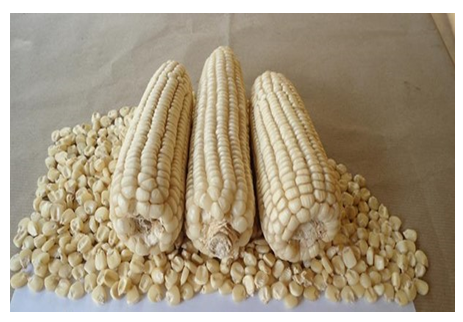
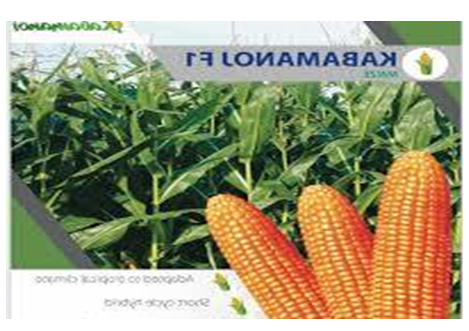
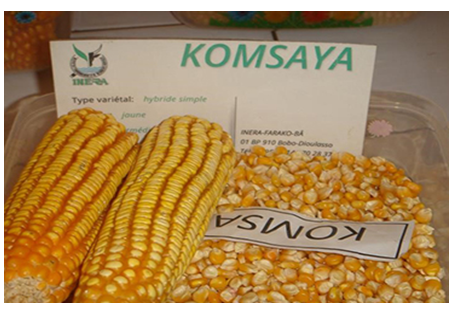
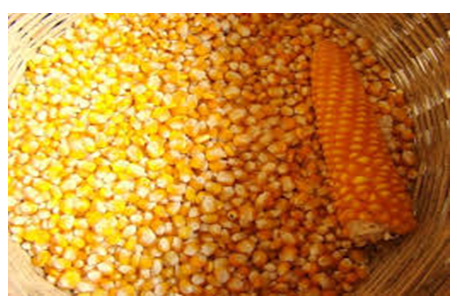
The research trial conducted in Central River Region/ north, which is predominantly for maize production by smallholder farmers. The data collection method was both primary and secondary information for broader knowledge on maize production. The sample and sampling method was nonprobability-sampling. A sample size of twenty (20) farmers randomly selected from a population of one hundred and seventeen (117) farmers from five (5) districts of Central River Region/ north. A sample of four (4) improved maize varieties supplied to male and female smallholders’ farmers in the rural communities. The improved maize varieties were Obatamba, Kabamano F1, Komasaya, Swan and Early Thai on a conducted trial of 0.5 to 1.0/ha block respectively. The data collected from the research work analyzed using the Statistical Package of Social Sciences (SPSS) and interpretation of the results using descriptive statistics (Figures 1-4).
Results and Discussion
In social research, data collection, analysis and interpretation of results is paramount to make meaningful decision from the reliable data collected from the research work. The production and marketing of maize is gaining momentum in the farming communities as it provides nutritional security and income for smallholder farmers [10]. The result in Table 1, shows that, out of four (4) varieties Kabamano obtained the highest yield data of 6,560 kg/ha followed by Obatamba of 5,440kg/ha while the lowest yield was obtained by Early Thai of 3,200kg/ha. Importantly, the improved varieties obtained an average yield of 3 tons/ ha against the national average yield of 1.0 to 1.3tons /ha. According to Falola, et al. [11] to enhance the yield of maize would entirely depend on the use of improved varieties, synthetic fertilizer. Organic fertilizer and application of best agronomy practices.
| Crop | Variety | Gender | Wet Weight | Kept weight | Dry weight | Yield/ha | Yield/ha | Average yield tons/ha | |
|---|---|---|---|---|---|---|---|---|---|
| M | F | (kg) | (tons) | ||||||
| Maize | Swan 1 | 1 | 0 | 12 | 5 | 4 | 3,840 | 3.8 | |
| Early Thai | 1 | 0 | 10 | 5 | 4 | 3,200 | 3.2 | 3 | |
| Obatamba | 1 | 0 | 17 | 5 | 4 | 5,440 | 5.4 | ||
| Kabamano | 1 | 0 | 20 | 5 | 4.1 | 6,560 | 6.5 |
Table 1: Shows yield data of Niani District.
The cultivation of improved maize seeds in the rural communities really contributes significantly to the socio- economic development for the attainment of food security and income by smallholder farmers. In Table 2, the results show that, the Swan varieties registered below the average yield tons/ha of 3 tons/ha of 2.5 and 2.1 respectively. In comparison, the Obatamba varieties in Niani district performed extremely had better than the Obatamba variety of Lower Saloum District of 5.4 tons/ha and 2.1 tons/ha respectively. The implication of the research findings of different yields/ha of Obatamba variety means that districts have different agro-ecologies suitable for maize production [12]. This will be because of inaccessibility of farm inputs, poor agronomic practices, untimely weeding and late planting by smallholder farmers. The small-scale farmers report average yields of 1.25 tons per hectare against a potential of 7 tons per hectare associated to weed infestation, insect pest attacks of fall army worm, insufficient fertilizer and selection of cultivars that are unsuitable for a given set of environmental conditions are the main constraints of increasing maize productivity [13].
| Crop | Variety | Gender | Wet Weight | Kept weight | Dry weight | Yield/ha | Yield/ha | Average yield tons/ha | |
|---|---|---|---|---|---|---|---|---|---|
| M | F | (kg) | (tons) | ||||||
| Maize | Swan 1 | 1 | 0 | 28 | 5 | 3.4 | 7,616 | 7.6 | |
| Swan 2 | 1 | 0 | 16 | 5 | 2 | 2,560 | 2.5 | 3 | |
| Obatamba | 0 | 1 | 13 | 5 | 2.1 | 2,184 | 2.1 | ||
| Komasaya | 1 | 0 | 26 | 5 | 3.6 | 7,488 | 7.4 |
Table 2: Shows yield data of Lower Saloum District.
The smallholder farmers primarily cultivate maize in the rural communities of Central River Region North on subsistence purposes mainly for family consumptions. Furthermore, in the Gambia, women vendors usually sold roasted maize at road site and streets as source of income to improve on their lives and livelihood. In Table 3, the result shows that, Obatamba maize variety registered 3.5 tons/ha while Early Thai and Swan scored 2.4tons/ha respectively. Maize production is an important component of food and nutritional security, income and poverty reduction in the rural communities of the Gambia [14]. Importantly, all the cultivars obtained > than national average yield of 1.0 to 1.3 tons/ha of maize.
| Crop | Variety | Gender | Wet Weight | Kept weight | Dry weight | Yield/ha | Yield/ha | Average yield tons/ha | |
|---|---|---|---|---|---|---|---|---|---|
| M | F | (kg) | (tons) | ||||||
| Maize | Swan 2 | 1 | 0 | 7.5 | 5 | 4 | 2,400 | 2.4 | |
| Early Thai | 0 | 1 | 6.7 | 5 | 2 | 2,560 | 2.5 | 3 | |
| Obatamba | 1 | 0 | 11 | 5 | 4 | 3,520 | 3.5 | ||
| Kabamano | 1 | 0 | 7.5 | 5 | 4 | 2,400 | 2.4 |
Table 3: Shows yield data of Upper Saloum District.
The persistent concentration of maize production from the back yard to outer fields propelled by the dissemination of new agricultural technologies to smallholder farmers in Central River Region North. In Table 4, the result shows that, Swan 2 variety registered far fetch yields of 7.4 tons/ ha followed by Kabamano of 6.5 tons/ha and the lowest score was Obatamba of 3.2tons/ha. Among the South African population, white maize is the staple food, whereas yellow maize is used primarily for animal feed. According to Prasanna, et al. [15] report that yields are between 1.8 and 3.5 tons per hectare in small-scale farm. Participatory approaches made significant contributions to agricultural technology transfer and generation. Farmer participatory research programs encourage resource poor farmers to use higher yielding maize varieties to attain food self-sufficiency [16].
| Crop | Variety | Gender | Wet Weight | Kept weight | Dry weight | Yield/ha | Yield/ha | Average yield tons/ ha | |
|---|---|---|---|---|---|---|---|---|---|
| M | F | (kg) | (tons) | ||||||
| Maize | Swan 2 | 1 | 0 | 12 | 5 | 3.6 | 7,488 | 7.4 | |
| Early Thai | 1 | 0 | 20 | 5 | 2.4 | 3,840 | 3.8 | ||
| Obatamba | 1 | 0 | 16 | 5 | 2.5 | 3,200 | 3.2 | 3 | |
| Kabamano | 1 | 0 | 26 | 5 | 3.6 | 6,560 | 6.5 |
Table 4: Shows yield data of Nianija District.
In the food systems of the Gambia maize production dominated by male against their female counter parts, in contrast women farmers mainly dominate rice production. The result in Table 5, shows that, Obatamba registered 5.4 tons/ha while the least score was 0.96 tons/ha respectively. However, the low yield of Early Thai of 0.96 tons/ha was as a result of late planting, erratic rainfall, inadequate fertilizer, and late application of best agronomy practices. According to Souleymane, et al. [17] women tend to be more of marketers than maize growers but most of the times women are the principal managers of the market economy. Maize is one of the major cereal crops that serves as essential food for human consumption and feed value for livestock production [18, 19].
| Crop | Variety | Gender | Wet Weight | Kept weight | Dry weight | Yield/ha | Yield/ha | Average yield tons/ha | |
|---|---|---|---|---|---|---|---|---|---|
| M | F | (kg) | (tons) | ||||||
| Maize | Swan 2 | 1 | 0 | 6 | 5 | 4 | 1,920 | 1.9 | |
| Early Thai | 0 | 1 | 11 | 5 | 4.3 | 5,504 | 5.5 | ||
| Obatamba | 1 | 0 | 16 | 5 | 4 | 5,440 | 5.4 | 3 | |
| Early Thai | 1 | 0 | 4 | 5 | 3 | 960 | 0.96 |
Table 5: Shows the yield data of Sami District.
Conclusion and Recommendations
The agricultural sector play a crucial role in the socio- economic development of smallholder farmers in the rural communities. The agricultural food systems has key pillars of production in which maize production is one of the key components as it enhances food and nutritional security as well as income security for smallholder farmers. Importantly, the supply of improved maize varieties and its adoption by smallholder farmers enhances the yield gap of maize in the rural communities of Central River Region/ North. Furthermore, adoption of improved maize varieties in the study region vary widely among small scale farmers due to socio-economic factors, including inadequate access to farm inputs, credit, poor agronomic management, low fertilizer application, and untimely weeding, late planting, and poor market access for smallholder farmers. Notably, the use of improved maize varieties by smallholder farmers in tandem with the application of fertilizer and good agronomy practices would open the floodgates for the attainment of food security in rural communities. The maize variety of Kabamano, Komasaya, and Swan are yellow varieties except Obatamba, which white maize.
The implication of yellow maize preferred by household is because of its taste for human consumption and suitable for poultry feed while that of white maize is preferred because of its high grit of flour content not the taste. Furthermore, farmers plant low-yielding local varieties of white maize that take 120 days to mature, leaving them at risk of drought during the short and unreliable rainy season. In the Gambia, yellow maize is widely grown while few pockets of smallholder farmers grow white maize especially in the Upper River Region of the Gambia. The smallholder farmers should adopt and practice best agricultural technologies and create ample time for maize production as major source of their livelihood. Access to finance or credit by smallholder farmers in the study area would enhance their productivity and income. In conclusion, the government needs to conduct comprehensive review of agricultural policy and strategy that will correct the imbalance of access to farm inputs and finance by smallholder farmers. The author also recommends the government to provide fertilizer and seed support on timely basis before the start of raining season.
Conflict of Interest
The author declare(s) that there is no conflict of interest regarding the publication of this article.
Funding Statement
There was no funding support from any donor institute instead the author was able to fund this research findings without any support from financial institute or partners.
Acknowledgement
The research work is dedicated to Omar Sanyang and Khadija Sanyang for being patient with me at the time of data collection. Profound gratitude and appreciation to Regional Agricultural Director and his team of extension workers for their immense support in data collection at field level. My sincere gratitude to the World Bank for providing seeds and fertilizer to smallholder farmers through the Gambia Inclusive and Resilience Agricultural value Chain Project
(GIRAV).
References
-
Assefa BT, Chamberlin J, Reidsma P, Silva JV, Ittersum MKV (2020) Unravelling the variability and causes of smallholder maize yield gaps in Ethiopia. Food Security 12: 83-103.
-
Brookes G, Barfoot P (2020) GM crop technology use 1996–2018: Farm income and production impacts. GM Crops & Food 11: 242-261.
-
Brouwer ID, McDermott J, Ruben R (2020) Food systems everywhere: Improving relevance in practice. Global Food Security 26: 100398.
-
Burdon JJ, Zhan J (2020) Climate change and disease in plant communities. PLoS Biology 18: e3000949.
-
Carr TW, Mkuhlani S, Segnon AC, Ali Z, Zougmore R, et al. (2022) Climate change impacts and adaptation strategies for crops in West Africa; A systematic review. Evviron Res Lett 17(5): 053001.
-
De Groote H, Kimenju SC, Munyua B, Palmas S, Kassie M, et al. (2020) Spread and impact of fall armyworm (Spodoptera frugiperda J.E. Smith) in maize production areas of Kenya. Agriculture, Ecosystems & Environment 292: 106804.
-
Demeke KH (2018) Nutritional quality evaluation of seven maize varieties grown in Ethiopia. Biochemistry & Molecular Biology 3(2): 45-48.
-
Efendi R, Baharuddin, Herawati, Andayani NN, Kalqutny SH, et al. (2020) Evaluation of prolific hybrids maize performance on different population densities and nitrogen level. IOP Conference Series Earth and Environmental Science 484: 012095.
-
Ezeokafor UR, Jacobs CJ, Ekwere GE (2021) Influence of cooperative society on women empowerment in Nigeria. Journal of Applied Agricultural Economics and Policy Analysis 4(1): 25-33.
-
Falola A, Fakayode SB, Kayode AO, Amusa MA (2020) Rural women in Kwara State (Nigeria) and their contributions to the welfare of their households. Journal of International Women’s Studies 21(6): 170-183.
-
Falola A, Mukaila R, Abdulhamid KO (2022) Informal finance: its drivers and contributions to farm investment among rural farmers in Northcentral Nigeria. Agricultural Finance Review 82(5): 942-959.
-
FAO (2016) Food security statistics.
-
FAO (2020) Food and Agriculture Organization of the United Nations. FAOSTAT database, Rome, Italy.
-
Gliessman SR (2018) Defining agroecology. Agroecology and Sustainable Food Systems 42(6): 599-600.
-
Prasanna BM, Huesing JE, Eddy R, Preschke VM (2018) Fall Army Worm in Africa: a Guide for Integrated Pest Management. CIMMYT, USAID, Mexico, pp: 109.
-
Setimela P, Gasura E, Thierfelder C, Zaman-Allah M, Cairns J, et al. (2018) When the going gets tough: performance of stress tolerant maize during the 2015/16 (El Niño) and 2016/17 (La Niña) season in southern Africa. Agric Ecosyst Environ 268: 79-89.
-
Souleymane LY, Sarr I, Martinez RT, Ndiaye S (2021) Caractérisation des Pratiques de Traitements Phytosanitaires dans la Zone de Culture Maraichère des Niayes du Sénégal. International Journal of Progressive Sciences and Technologies 30(1): 301-313.
-
Song C, Huang X, Les O, Ma H, Liu R (2022) The economic impact of climate change on wheat and maize yields in the nort China plain. Int J Environ Res Public Health 19(9): 5707.
-
Wang T, Guo SS, Guo P (2022) Crop growth-based spatially distributed optimization model for irrigation water resource management under uncertainties and future climate. J Clean Prod 345: 131182.
- The Role of Podocyte Apoptosis and the Involvement of SIRT1 in Diabetic Nephropathy
- Dealcoholization of Beer by Osmotic Distillation for the Beverage Industry
- Biopolymer-Based Edible Packaging- Biomaterials, Methods, and Applications in Food Industry: An Updated Review
- Influence of Bioprocessing Methods on 'China Rice' (Gawal R1), and Soyabean Supplementation on the Quality of Complementary Food
- Cassava (Manihot esculenta) Varietal Growth, Yield and Cyanide Content Performance in Three Sites in the South- Eastern Semi Arid Regions of Kenya
- Food Waste Treatment, Recycling, Management and Production of Value-Products-An Update on Methodologies and Current Trends