
Thrombocytosis: A Paraneoplastic Syndrome in Patients with Hepatitis B Related Hepatocellular Carcinoma
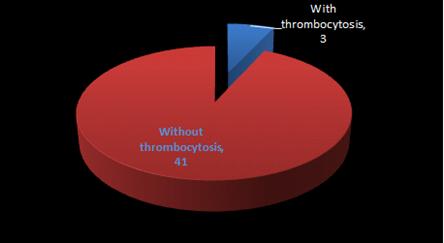
Background: The highest incidence of Hepatocellular carcinoma (HCC) is in Asia, accounting for about 76% of all cases worldwide. In South East Asia, hepatitis B is the most common underlying cause. HCC patients manifest a variety of paraneoplastic syndromes. Thrombocytosis was reported in children with hepatoblastoma. Objectives: The aim of this study was to find out the relationship of thrombocytosis with the hepatitis B-related hepatocellular carcinoma. Methods: This observational study was carried out in the Department of Hepatology, BSMMU from January 2012 to December 2013. The study was approved by the Ethical Institutional Review Board (IRB) of BSMMU, Dhaka. The diagnosis of HCC was confirmed by pathological examination or AFP elevation (400ng/ml) combined imaging (CT/MRI) and diagnosis of thrombocytosis was made by platelet count >450 ×109. All images were evaluated by 2 trained radiologists by consensus after exclusion of hepatitis C virus infection (Anti HCV+ve) and significant alcohol intake (>20 gm. /day). All patients were HBsAg positive done by ELISA test. Results: A total 44 patients were included in this study. Among them, 91% were male (n=40) and 09 % were female (n=4).The mean age was 48.2 (±12.9) years with range from 23 to 80. Cirrhosis was 79.5% (n=35) and no cirrhosis was found 20.5% (n=9). Thrombocytosis was found 6.8% (n=3). Among thrombocytosis, cirrhosis and non-cirrhosis were Research Article Volume 2 Issue 2 Received Date: June 15, 2017 Published Date: July 06, 2017 Gastroenterology & Hepatology International Journal Abu Saleh Sadequl Islam MD, et al. Thrombocytosis: A Paraneoplastic Syndrome in Patients with Hepatitis B Related Hepatocellular Carcinoma. Gastroenterol Hepatol Int J 2017, 2(2): 000121. Copyright© Abu Saleh Sadequl Islam MD, et al. 2 66.6% (n=02) and 33.4% (n=01) respectively. Mean α-fetoprotein (ng/mL) was higher in HCC patients with thrombocytosis than HCC patients without thrombocytosis (39370 vs13476, P value .036). Conclusions: Thrombocytosis is one of the paraneoplastic syndromes in patients with HBV related HCC. HCC patients with thrombocytosis are associated high serum AFP level.
Introduction
HCC is the sixth most common malignant tumor and the third most common cause of cancer deaths worldwide [1]. The etiological agent of HCC is known in more than 90% of cases. In South East Asia, hepatitis B is the most common underlying cause. The highest incidence of HCC is in Asia, accounting for about 76% of all cases worldwide [2]. HCC is the common malignancy in Bangladesh. During its clinical course, patients may manifest a variety of paraneoplastic syndromes, including hypercholesterolemia, hypoglycemia, hypercalcemia, and erythrocytosis [3]. According to previous reports, the prevalence of paraneoplastic syndromes was 11.4-12.1% for hypercholesterolemia, 2.8-5.3% for hypoglycemia, 1.8- 4.1% for hypercalcemia, and 2.5-3.1% for erythrocytosis [4, 5, 6]. Thrombocytosis has been found in children with hepatoblastoma and other malignancies [7]. Based on this hypothesis, we find out the relationship of thrombocytosis with the hepatitis B-related hepatocellular carcinoma.
Methods
Study Population
This is a hospital based observational study of 44 HCC patients. Patients with HBsAg positive done by ELISA test and features suggestive of HCC attending at outpatient & inpatient department of Hepatology, Bangabandhu Sheikh Mujib Medical University (BSMMU), Dhaka, Bangladesh from January 2012 to December 2013 is enrolled this study. Aims and objectives along with its procedure, risks and benefits of this study were explained to the patients and attendants in easily understandable local language (Bangla) and then informed written consent was taken from each participant. Prior to the commencement of the study, the research protocol was approved by the Institutional Review Board (IRB) of BSMMU. Among 44 HCC, 35 were cirrhosis and 09 were non- cirrhosis. Patients were divided into two groups. Group A (HCC patients with thrombocytosis) and Group B (HCC patients without thrombocytosis). The inclusion criteria were: HCC patients were recruited prospectively. The diagnosis of HCC was confirmed by α-fetoprotein elevation (>400 ng/ml) combined with computed tomography (CT) and/or magnetic resonance imaging (MRI) or Pathological examination (Biopsy/FNAC) [Figure 1] and diagnosis of thrombocytosis was made by platelet count >450 ×109. All images were evaluated by 2 trained radiologists by consensus. Exclusion criteria were alcohol abuse (>20g/day), evidence of acute infections or gastrointestinal bleeding, polycythemia vera and infection with HCV (anti-HCV positivity).
Procedure for Fine Needle Aspiration (FNA) from Liver Space Occupying Lesions SOL(s)
After taking informed written consent, patients laid with empty bladder. The site was painted with iodine solution and draped. Skin and deeper tissue was infiltrated with local anesthesia (2% xylocaine) at the proposed puncture site using a 23 G needle. Under real- time USG guidance and using 22 G disposable spinal needles the cavity was entered and aspirated material was collected. The prepared glass slides ware fixed with 95% ethanol and kept in Kaplan’s jar after labeling. Samples were sent for cytopathological examination to the Department of Pathology, BSMMU. Dressings were applied at the needle puncture sites and patients were followed up for next 6 hours.
Statistical Analysis
All data was recorded systematically in a preformed data collection sheet and quantitative data expressed as mean ± SD. Qualitative data analyzed by chi square test and quantitative data by student’s T test or Mann Whitney’s U test. Differences in laboratory parameters compared using one-way ANOVA.P value of ≤0.05 was considered to be statistically significant. All statistical computations were performed by using SPSS version 20 (Statistical Package for Social Science).
- Results
- Demographic and Laboratory Characteristics
- HCC patients with thrombocytosis (n = 03)
- HCC patients without thrombocytosis (n = 41)
- P value
- Age (yr)
- 47±12
- 48.3±13
- 0.001
- Sex (male: female)
- 2:1
- 38:3
- 0.130
- Mean platelet counts (109/mm3)
- 499.33±45
- 213.63±89
- 0.037
- Median (range)
- 510 (450-528)
- 120 (10-440)
- Hb% (g/dL)
- 12±1.2
- 11.4±1.7
- 0.008
- Prothombin time
- 15.9±1.8
- 15.1±2.2
- 0.011
- Albumin (g/dl)
- 2.9±.5
- 3.03±.63
- 0.003
- Cirrhosis (+ :-)
- 2:1
- 33:8
- 0.507
- Splenomegaly (+ :-)
- 2:1
- 24:17
- 0.782
- Portal vein thrombosis (+ :-)
- 1:2
- 17:24
- 0.782
- Mean α-fetoprotein (ng/mL)
- 39370±12835
- 13476±17102
- 0.036
- Median (range)
- 34112 (30000-540000)
- 2230 (9-50000)
- BCLC stage (0,A,B,C&D)
- 0,0,0,1&2
- 1,1,1,10&28
- 0.002
Table 1: Comparison of clinical and laboratory data between hepatocellular carcinoma (HCC) patients with and without
Distribution of the Study Population by Age Range
| Age range | Frequency | Percent | Cumulative Percent | ||||||||
| < 20 | 01 | 02.3 | 02.3 | ||||||||
| 21 -30 | 05 | 11.4 | 13.7 | ||||||||
| 31- 40 | 11 | 25.0 | 38.7 | ||||||||
| 41- 50 | 11 | 25.0 | 63.7 | ||||||||
| 51- 60 | 10 | 22.7 | 86.4 | ||||||||
| > 60 | 06 | 13.6 | 100.0 | ||||||||
| Total | 44 | 100.0 | 100.0 |
Table 2: Distribution of the study population by age range (n = 44).
Table 2 shows distribution of the study population by age range. Maximum (50%) patients’ ages were belonged to 35-55 years. The mean age was found 48.20±12.92 years with range from 18 to 80 years. The mean age difference was statistically significant (P = 0.001) between two groups.
Gender Distribution of the Study Population
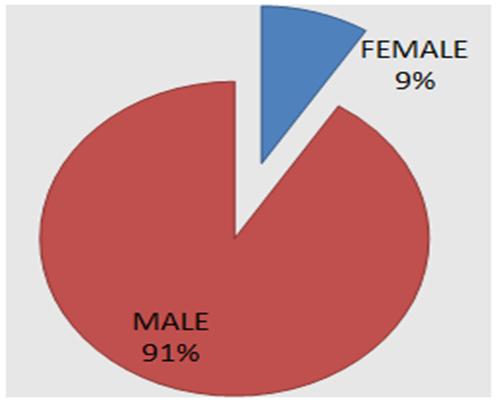
Figure 2: Gender distribution of the study population (n= 44). Figure 1 shows male gender was predominant 91% (40) of the study population. Male female ratio was 10:01. Male was also predominant in both groups, which were 66% (02) in thrombocytosis with HCC group and 92.7% (38) in thrombocytosis with HCC group. The difference was not statistically significant (P = 0.13) between the two groups.
Distribution of Thrombocytosis in the Study Population
Discussion
This is the study from Bangladesh in which the characteristics of HBV related HCC have been studied. HBV infection accounts for most primary HCC and treating HBV infection substantially reduces the risk of HCC development. Chronic HBV infection is recognized as the most important causal factor for HCC in humans. The incidence of HCC increases with age. The development of HCC is uncommon before 40 years of age in western world. However, the pattern of HCC incidence by age is sometimes dependent on the geographic pattern or on etiologic factors .The age distribution of patients with HCC in the present study was similar to other studies in past. Studies from Bangladesh (Khan M, et al. & Gani ABMS et al.), India (Sarma MP, et al.) and Pakistan (Abbas Z, et al.) have shown the maximum incidence of HCC in the fifth to sixth decade [8, 9, 10, 11]. The male preponderance is similar to our previous Bangladeshi study and other studies from India and Pakistan [8, 9, 10, 11]. The population based data show a male to female ratio of 3:1–2:1.1.22 However, high preponderance of HCC in males reported in hospital-based data could suggest a gender bias in seeking medical treatment. Common paraneoplastic syndromes seen in HCC patients include hypercholesterolemia, hypoglycemia, hypercalcemia, and erythrocytosis [1]. Thrombocytosis has been reported in children with hepatoblastoma [7]. The prevalence of thrombocytosis in HCC patients has not been previously reported. Our results showed that 6.8% of HCC patients had thrombocytosis which was defined as a platelet count >450× 109/mm3. The prevalence of thrombocytosis might be underestimated because most HCC patients were associated with liver cirrhosis, and thrombocytopenia was frequently seen in these patients. The clinical significance of thrombocytosis in HCC patients was similar to HCC patients with other paraneoplastic syndromes, including hypercholesterolemia, hypoglycemia, hypercalcemia and erythrocytosis [3, 4, 5, 6]. High serum AFP, more progressive BCLC stage and poor prognosis have been identified in HCC patients with thrombocytosis. Human thrombopoietin (TPO), a glycoprotein hormone also known as megakaryocyte growth factor, is known to play a key role in the development of the growth and maturation of megakaryocytes and platelet production [12]. TPO is secreted principally by hepatocytes and bone marrow stromal cells [12, 13]. The relationships between serum TPO levels and platelet counts in HCC patients, especially those associated with thrombocytosis are of clinical interest. The main sites of TPO production are the liver and, to a lesser degree, the kidneys, bone marrow and spleen. Messenger RNA transcripts of TPO have been found mainly in the liver and released into circulation [13]. Most TPO is bound with and degraded by circulating platelets and megakaryocytes in the bone marrow, and the serum level is low. Circulating TPO levels are inversely correlated with the number of TPO receptors (c-Mpl- molecules) in regulating megakaryocytopoiesis and platelet production. When thrombocytopenia develops, binding receptors decrease and serum TPO levels increase. Elevated TPO levels stimulate megakaryocytopoiesis and result in increased platelet production [14, 15, 16]. Patients with cirrhosis were frequently associated with low platelet counts. However, serum TPO levels in cirrhotic patients were found to be lower than chronic hepatitis patients or normal subjects due to inadequate TPO production by the diseased livers [17]. HCC patients with thrombocytosis had a significantly higher mean serum TPO level than HCC patients without thrombocytosis. In addition, the platelet counts and serum TPO levels in HCC patients with thrombocytosis dropped after a surgical removal of the tumor or TACE, and reelevated when a tumor recurred. Changes of platelet counts and serum TPO levels were parallel to the changes of serum AFP [18]. The mechanisms of thrombocytosis in HCC patients are similar to those for other paraneoplastic manifestations. Hypoglycemia has been related to the overproduction of insulin-growth- factor II with insulin-like activities [3, 4, 5, 6]. The cause of hypercalcemia has been related to overproduction of a parathyroid-related protein which interacts with parathyroid hormone receptors [4]. Elevation of serum erythropoietin has been seen in HCC patients with erythrocytosis [5, 19].
Conclusion
In conclusion, thrombocytosis is one of the paraneoplastic syndromes in patients with HCC, due to the overproduction of TPO by HCC. HCC patients with thrombocytosis are associated with a high serum AFP level. Limitation of this study including small sample size, single center, serum thrombopoietin (TPO) level and tumor size.
Conflict of Interest Statement
No potential conflicts of interest are disclosed.
References
-
Jemal A, Bray F, Center MM, Ferly J, Ward E, et al. (2011) Global cancer statistics. CA Cancer J Clin 61: 69-90.
-
Bosch FX, Ribes J, Cléries R, Diaz M (2005) Epidemiology of hepatocellular carcinoma. Clin. Liver Dis 9(2): 191-211.
-
Okuda K, Kondo Y (1995) Primary carcinomas of the liver. In: Haubrich WS, Schaffner F, Berk JE, eds. Gastroenterology Volume 3.5th (Edn.) Philadelphia: Saunders WB 2467-2468.
-
Hwang SJ, Lee SD, Chang CF, Wu JC, Tsay SH, et al. (1992) Hypercholesterolemia in patients with hepatocellular carcinoma. J Gastroenterol Hepatol 7: 491-496.
-
Yen TC, Hwang SJ, Wang CC, Lee SD, Yeh SH (1993) Hypercalcemia and parathyroid hormone-related protein in hepatocellular carcinoma. Liver 13: 311- 315.
-
Hwang SJ, Lee SD, Wu JC, Chang CF, Lu CL, et al. (1994) Clinical evaluation of erythrocytosis in patients with hepatocellular carcinoma. Chin Med J 53: 262-269.
-
Luo JC, Hwang SJ, Li CP, Hsiao LT, Lai CR, et al. (1999) Paraneoplastic syndromes in patients with hepatocellular carcinoma in Taiwan. Cancer 86: 799- 804.
-
Nickerson HJ, Silberman TL, McDonald TP (1980) Hepatoblastoma, thrombocytosis, and increased thrombopoietin. Cancer 45: 315-317.
-
Khan M, Haq SA, Ahmed N, Matin MA (1997) Etiology and Clinical Profile of Hepatocellular Carcinoma in Bangladesh. Bangladesh Med Res Counc Bull 23(1): 16-24.
-
Gani ABMS, Al-Mahtab M, Rahman S, Akbar SMF (2013) Characteristics Features of Hepatocellular Carcinoma in Bangladesh and their Public Health Implications. Euroasian J Hepato-Gastroenterol 3(1): 28-30.
-
Sarma MP, Asim M, Medhi S, Bharathi T, Diwan R, et al. (2012) Viral Genotypes and Associated Risk Factors of Hepatocellular Carcinoma in India. Cancer Biol Med 9(3): 172-181.
-
Abbas Z, Siddiqui AU, Luck NH, Hassan M (2008) Prognostic factors of survival in patients with non- resectable hepatocellular carcinoma: hepatitis C versus miscellaneous etiology. J Pak Med Assoc 58(11): 602-607.
-
De Sauvage FJ, Hass PE, Spencer SD, Malloy BE, et al. (1994) Stimulation of megakaryocytopoiesis and thrombopoiesis by the c-Mpl ligand. Nature 369(6481): 533-538.
-
Martin TG, Somberg KA, Meng YG, Cohen RL (1997) Thrombopoietin levels in patients with cirrhosis before and after orthotopic liver transplantation. Ann Intern Med 127(4): 285-288.
-
Sarin SK, Thakur V, Guptan RC (2001) Profile of hepatocellular carcinoma in India: an insight into the possible etiologic associations. J Gastroenterol Hepatol 16(6): 666-673.
-
Idilman R, De Maria N, Colantoni A, Van Thiel DH (1998) Pathogenesis of hepatitis B and C-induced hepatocellular carcinoma. J Viral Hepat 5(5): 285- 299.
-
McCarty JM, Sprugel KH, Fox NE, Sabath DE, Kaushansky K (1995) Murine thrombopoietin mRNA levels are modulated by platelet count. Blood 86(10): 3668-3675.
-
Cohen-Solal K, Villeval JL, Titeux M, Lok S, Vainchenker W, et al. (1996) Constitutive expression of Mpl ligand transcripts during thrombocytopenia or thrombocytosis. Blood 88(7): 2578-2584.
-
Eaton DL, de Sauvage FJ (1997) Thrombopoietin: the primary regulator of megakaryocytopoiesis and thrombopoiesis. Exp Hematol 25(1): 1-7.
-
Peck-Radosavljevic M, Zacherl J, Meng YG, Pidlich J, Lipinski E, et al. (1997) Is inadequate thrombopoietin production a major cause of thrombocytopenia in cirrhosis of the liver?. J Hepatol 27(1): 127-131.
-
Hwang SJ, Luo JC, Li CP, Chu CW, Wu JC, et al. (2004) Thrombocytosis: A paraneoplastic syndrome in patients with hepatocellular carcinoma. World J Gastroenterol 10(17): 2472-2477.
-
Kew MC, Fisher JW (1986) Serum erythropoietin concentrations in patients with hepatocellular carcinoma. Cancer 58: 2485-2488.
- Management of Gallbladder Perforations: A Review
- From The Mouth to the Gut: The Oral Microbiome's Role in Promoting Gastrointestinal Disease
- Case Report: Intraductal Papillary Mucinous Neoplasm (IPMN) Complicated by Portal Vein Plaquing and Biliary Obstruction Mimicking Pancreatic Metastatic Malignancy
- Management of Non-Cirrhotic Portal Hypertension during Pregnancy: A Review
- Effectiveness of Omeprazole versus Pantoprazole for Symptomatic Relief of Gastro-Esophageal Reflux Disease (GERD)/ Acid Peptic Disease (APD): A Real-World Evidence (RWE) Study
- Case of Splenic Infarction; A Rare Presentation of Complicated Enteric Fever in a Pediatric Patient