
The Nutritional Links for Gut Microbial Dysbiosis and its Metabolic and Endocrinal Fallouts
The Human Gut Microbiome: The gastro-intestinal tract, skin and genitals, and various other body organs, harbour large and diverse communities of bacteria, viruses, and other microscopic life. In the human gut, a nutrient-rich environment, reside ~ 100 trillion microbes, the vast majority of which is present in the colon. There inhabit microbial members as residents (autochthonous), while others (allochthonous) are from ingested food, water, and other components of the environment. The adult human gut microbiota is dominated by mainly two bacteria, the Bacteroidetes and Firmicutes, and an archea, Metanobrevibacter smithii. The microbial ecosystems throughout the body interact with the molecular processes, which have been linked to various aspects of human physiology. The understanding about microbiota is evolving and presents as an important research avenue. The Gut Biosphere and Ecosystem: In general, the gut microbial communities depend on their specific enzymes and molecules to utilize available nutrients, cell-surface molecular appendages to attach on to their right habitat, to evade bacteriophages, with ability to deal with immune system and avoid washout and genetic mutability to stay well-adapted. The microbiota influences various biological processes and organ physiology, including gastrointestinal processes, energy metabolism and insulin resistance, and thus influence weight gain, development of diabetes, and aging. The intestinal epithelium actively senses various bacteria and plays an essential role in maintaining host-microbial homeostasis at the mucosal interface. On the other hand, the host factors, such as dietary factors influence the host-microbial and microbial-microbial relationships. Microbiota, Health and Disease States: The evidence from clinical studies and animal models show a link between the gut microbiome and human health. There exists a bidirectional microbiota–gut–brain communication which modulates brain function and behaviours. The research in mice and humans is beginning to establish a link between the composition of microbes in the gut and immune response to tumor cells. Certain metabolites or antigens presented by members of that microbiome may help uplift the sensitivity of immune system to tumour cells, whereas dysbiosis may lead to the loss of antitumor immunity. On the other hand, the gut microbes harbour enzymes and secrete molecules that can influence drug activation, efficacy, and metabolism. Dietary Constituents and Microbiome: The dietary components influence the gut microbiota. It has been documented that a change in diet can alter the degradative activity of the colonic microbiota in vivo and in a physiologically relevant setting influence the expression of various microbial genes. The complex plant polysaccharides in diet are not digested and enter the colon as a potential food source for the gut microorganisms, which harbour a multitude of genes involved in catabolism of carbohydrates. The reduced availability of dietary polysaccharides and fibre can trigger dysbiosis and degradation of intestinal mucin layer and affect intestinal health. The microbial production of short chain fatty acids and other metabolites has been shown to influence immune system. Conclusion: There is a causal relationship between altered microbial communities and disease states. In fact, the imbalances in the composition of the bacterial microbiota, known as dysbiosis, appear to be a major factor in various disease states including inflammatory bowel disease. In addition, there are extra-intestinal disorders associated with gut microbiota including abnormal metabolic states, neuropsychiatric disorders, autoimmune diseases, allergic disorders, and tumours. The dynamic effect of altering host diet on the microbiota in the gut and other organs, has potential implications for disease modification and treatment depending on inference from gut microbial diagnostics. The correction of microbial dysbiosis appears to be an evolving therapeutic tool for treating ailments like obesity, diabetes, various degenerative disorders including neurological, and hold immense research and clinical interest.
He Human Gut Microbiosphere
The gastro-intestinal tract and various other organs including skin, respiratory tract and lungs, and genitals harbor large and diverse communities of bacteria, viruses, and other microscopic life [1]. In the human gut, a nutrient- rich environment, reside over 100 trillion microbes, the vast majority of which are present in the colon. There inhabit microbial members as residents (autochthonous), while others (allochthonous) are from ingested food, water, and other components of the environment. The microbial species present within the human gut appear to have evolved through ecological adaptations and the adult human gut microbiota is dominated by mainly two bacteria, the Bacteroidetes and Firmicutes, and archaea, Metanobrevibacter smithii [2]. In general, the gut microbial composition is variable, multidimensional, and highly individual. The ‘healthy’ microbial landscape is, thus, difficult to define. as microbial signatures are highly individualized, multi-dimensional, and variable [3]. The gut microbiome holds a complex ecosystem with attendant multiple intricate interactions. The interactions include intra-microbe interactions, inter- microbe interactions, and host-microbe interactions. Further, the gut microbiome is not a static community. It displays temporal dynamics, shifting diurnally, seasonally, and in a constant flux. Further, the healthy individuals typically display microbial characteristics like one another, while those who suffer with various diseases, microbiota are aberrant and dissimilar in their characteristics [4].
Microbiota and the Gut Ecosystem
The gut microbial communities depend on the host cell-surface molecular appendages to attach to their habitat and their specific enzymes to utilize the available nutrients. In addition, there is need to evade bacteriophages, ably deal with immune system, and avoid washout and genetic mutability to stay well-adapted. On one hand, the intestinal epithelium actively senses various bacteria and plays an essential role in maintaining host-microbial homeostasis at the mucosal interface; on the other, the microbial ecosystem through molecular processes influences various biological processes, and in turn organ physiology and have a bearing on energy metabolism, insulin sensitivity and resistance, and weight gain, development of diabetes, and ageing process [5]. In addition, there exists a bidirectional microbiota–gut–brain communication modulating physiological processes and the microbiota–gut–brain axis, in turn, modulates brain function and behaviours through influencing neurotransmitters.
The composition of the gut microbiota tends to remain relatively stable barring transient fluctuations. The diet with variable contents of nutrients is a major factor influencing the composition of the gut microbiota. Albeit diet factors inducing a variation in the gut microbiota are often temporary. In general, gut microbiota composition is variable between individuals, though some key bacterial species are typically present in most [6]. The dietary patterns correspond with microbial composition and long-term dietary patterns and habits play a role in shaping each individual’s stable microbiota profile [7]. Besides diet, several extrinsic (e.g., lifestyle and medication) and intrinsic (e.g., host genetics, immune and metabolic regulations) factors modify and modulate gut microbiota.
The gut microbiota is a complex ecosystem and contributes to both health and disease states including immune, metabolic, and neuro-behavioural disorders. But permanent rather than transient changes in the core gut microbiota are related to long-term impact on health outcomes. While habitual diet thought to play an integral role in shaping the gut microbial environment, diet–microbe interventions must consider sustainable dietary changes [8]. The permanent or long-term dietary alterations may induce new species and proliferate others and increase the diversity and richness of certain microbial taxa. Thus, a new state of ecological homeostasis of the gut microbiota mediated by diet with beneficial implications for host health may be achieved.
Dietary Diversity and Interactions
The largely variable human dietary patterns, thus, influence the complexity of the human gut microbiome. The complexity of the human gut microbiome is largely mirrored by that of diet, which influences not only the microbial composition, but also regulates the activity of the microbial ecosystem and its effects on the host [9]. The dietary variables influence not only the microbial composition and ecosystem, but also regulate the microbial effects on the host, with or without noticeable microbial compositional alterations. The diet patterns contribute and impact the intertwined mechanisms between the microbiota and host
Altered Abnormal Microbial States
brought about by the dietary nutrients bypassing the host absorption and intestinal secretions that support the activity of gut microbiome [10]. While occurrence of microbial phyla and taxa are widespread within the population, species tend to be more subject-specific with, on average, two unrelated individuals sharing approximately 43% of species. Further, the gut microbiome is not a static community and microbial species observed within the modern gut have evolved through ecological adaptations of host-microbe interactions to ensure microbial stability in response to periods of limited nutritional availability. In addition, the microbial ecosystems have temporal dynamics, shifting diurnally, seasonally, and in constant flux. The interactions between microbes, the microbiome, and the host both locally and systemically to influence the composition as well as its effects on physiological processes [11]. The interactions have been characterised as intra-microbe interactions, inter-microbe interactions, and local host-microbe interactions (Figure 1).
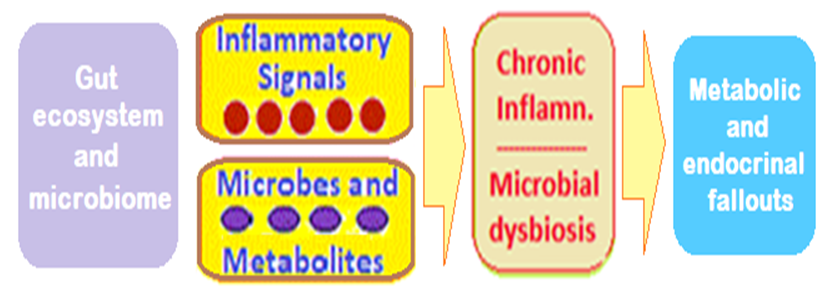
There is a causal relationship between altered microbial communities, that is, dysbiosis and disease states. In turn, the host factors like unhealthy diet, environmental factors, and use of medications, especially antibiotics, have impact on the gut microbiota composition and function and contribute to gut dysbiosis. The gut microbes produce various enzymes and molecules that can influence drug activation, efficacy, and metabolism. Further, certain metabolites produced by them can potentially alter the immune system’s sensitivity to tumor cells, whereas dysbiosis may lead to the loss of antitumor immunity. There is a causal relationship between altered microbial communities, that is, dysbiosis and disease states [12]. The associated extra-intestinal disorders include metabolic diseases, allergic disorders, neuropsychiatric disorders, autoimmune diseases, and neoplasia. On the other hand, the host factors like unhealthy diet and use of medications, especially antibiotics, have impact on the gut microbiota composition and function and contribute to gut dysbiosis.
There is an involvement of the microbiome in several diseases and there exists a clear link between loss of key taxa that drive microbiome structure and function and various disease states. Thus, a disease state can be both association as well as causation of microbial dysbiosis. The understanding of these links between microbiota and the host, both locally and systemically, may enable microbial manipulation to improve human health. The physical structure and chemical composition of microbiota are important variables influencing health. For example, various butyrate-producing gut bacteria, such as F. prausnitzii, S. variable and Roseburia, are auxotrophic for B vitamins and rely on exogenous sources, highlighting the link between increased requirement and consumption of B vitamins and over-growth of these taxa.
The Nutritional Links for Dysbiosis
The core microbial taxa are resilient to most temporary outside influences. In addition, the gut microbes, which are regularly challenged and purged, have the ability to replenish. The microbiota fluctuations are due to nutrient availability and inherent host-derived autoantibodies and peptides, both of which are associated with diurnal and seasonal rhythm oscillations [13, 14]. The microbiome appears to program these synchronised circadian oscillations by rhythmic histone acetylation through epithelial histone deacetylase 3 (HDAC3), which integrates microbial and circadian cues including nutrient intake and metabolic interactions and gene expression. The excess lipid uptake, oxidants in the diet, and disrupters such as jetlag, abnormal sleep patterns and eating disturbances promote an inflammatory response and metabolic stress and can lead to microbial alterations [15].
There is evidence that the feeding regimens including time and duration of consumption and frequency influence the gut microbial composition. In animal studies Thaiss, et al. showed that rhythmic food intake leads to increased commensal microbial abundance [16]. The impact of meal timing in humans on the gut microbiotas in a study by Collado, et al. showed that the meal timing affects the diurnal rhythms of the salivary microbial profile, which in turn affects body weight, cortisol rhythm, basal metabolic rate, glucose tolerance and body temperature [17].
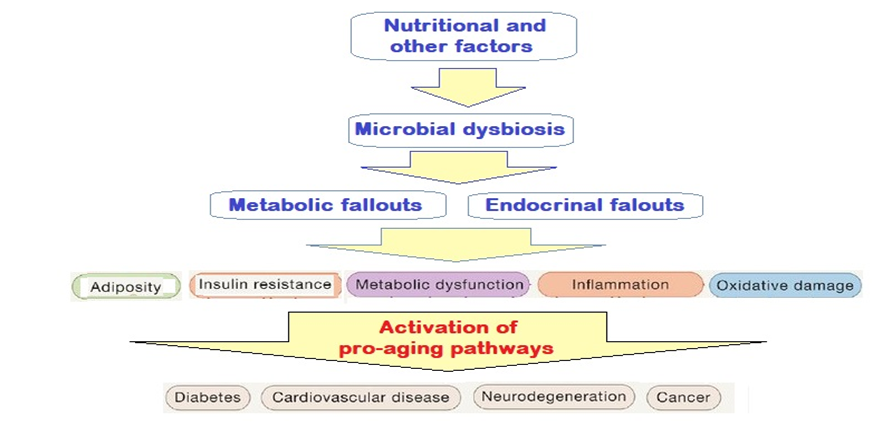
In a mouse study, a number of bacteria taxa and metabolites have been shown to influence hunger and satiety [8]. Though the effect of fasting or time-restricted feeding on the gut microbiota are not established, it has been recognized that gut microbiota is able to adapt to an altered state when faced with a continuous perturbation [18]. The gut microbiota can also rapidly respond to altered macronutrient levels and novel food components. However, the transient effects of these diet-induced microbial alterations are amended shortly after cessation of a dietary challenge, suggesting that the short-term interventions are of too limited value [19]. Thus, the long-term changes in the habitual diet are needed for sustainable alterations in gut microbial composition.
Conclusion: Modulation of Microbiome
There are studies to suggest that therapeutic modulation of the gut microbiota can be achieved through dietary manipulations [20]. The diet influences the composition of gut microbial communities through availability of substrates for the metabolic requirements of individual or subsets of microbial taxa, in addition to modulating host gut microbiota crosstalk. The diet selectively alters the complex gut microbial ecosystem [21]. The modulation of the gut microbiota can be achieved through dietary manipulations. In fact, the diet influences in evolution and shaping the gut microbial community since infancy. Through the provision of substrates for the metabolic requirements of individual or subsets of microbial taxa, the diet provides one of the most promising means of selectively altering the microbiome [22]. In addition, the dietary pattern modulates host-gut microbiota crosstalk. Apart from metabolic and endocrinal functions, the gut microbiome appears to play a significant role in age-associated functional decline and physical frailty. The physiological health and healthy aging as a composite encompass not only on genetics, lifestyle choices and a positive attitude, but also the status of gut microbiome as an important variable [23]. In fact, the disturbed and disbalanced microbiome has been related to various degenerative disease states and accelerated aging. The understanding of dietary influences on microbial physiology and ecosystem provides the background on which measures to improve host metabolism and health can be planned [24].
The evidence is accumulating that there are long lasting effects of dietary contents and patterns on gut microbiome. Despite a tendency for microbial stability in adulthood, dietary constituents, nutrient quality, and quantity are a major driver of gut microbiota alterations. The regular dietary habits and patterns create an environment that can consistently modify the microbial ecosystem [25]. Apart from dietary diversity, the human diet tends to display a cyclical seasonal pattern due to seasonal availability and dietary preferences, and other seasonal variants, including sun exposure, temperature, relative time outdoors, leading to considerable cyclical shift in gut microbiota composition [26]. Among specific nutrients, fibre is an important nutrient to exert a beneficial effect on microbiota composition [27]. Other dietary components such as polyphenols, a group of antioxidants, found in fruits, vegetables, cereals, coffee, tea, and wine exert a dual effect on the gut microbiota as they can inhibit the growth of specific taxa, while enhancing the growth of others where they can be metabolised into bioavailable substrates for the host [28]. They are associated with a range of health promoting activities with a reduced risk of chronic diseases.
In contrary, the exclusion of essential nutrients through dietary choices or inappropriate long use of therapeutic dietary strategies such as the low-FODMAP diet and a gluten free diet, and excessive reduction of nutrients such as fermentable fibre produces may reduce microbial diversity [29]. With gluten-free diet over the course of 30 days, the beneficial bacteria decrease in parallel with an increase of E. coli and total Enterobacteriaceae, typically associated with poor health due to reduced intake of polysaccharides. Similarly, the Westernised diet is characterised by limited dietary diversity and low fibre intake is linked with an altered gut microbiota composition, metabolic syndrome, and obesity thought to be as a result of increased levels of endotoxin- producing bacteria leading to metabolic endotoxemia [30, 31]. Methodically, it may be possible, thus, to overcome dysbiosis and reset and restore normal microbiome through dietary and lifestyle modifications, probiotics and prebiotics, logical antibiotic therapy and bariatric physiological surgery, and fecal microbial transplantation [32, 33]. Whereas individualized dietary modulation for the gut microbiota may be key to disease management.
References
-
Falk PG, Hooper LV, Midtvedt T, Gordon JI (1998) Creating and Maintaining the Gastrointestinal Ecosystem: What We Know and Need to Know from Gnotobiology. Microbiol Mol Biol Rev 62(4): 1157-1170.
-
Ley RE, Peterson DA, Gordon JI (2006) Ecological and Evolutionary Forces Shaping Microbial Diversity in the Human Intestine. Cell 124(4): 837-848.
-
Nikhra V (2022) Establishment, Expansion and Modulation of Gut Microbiome: Birth to First 100 days to Early Childhood and Later. J Prob Health 10: 252.
-
Scarpellini E, Ianiro G, Attili F, Bassanelli C, Santis AD, et al. (2015) The human gut microbiota and virome: Potential therapeutic implications. Dig Liver Dis 47(12): 10007-10012.
-
Brunkwall L, Melander MO (2017) The gut microbiome as a target for prevention and treatment of hyperglycaemia in type 2 diabetes: from current human evidence to future possibilities. Diabetologia 60(6): 943-951.
-
McBurney MI, Davis C, Fraser CM, Schneeman BO, Huttenhower C, et al. (2019) Establishing what constitutes a healthy human gut microbiome: state of the science, regulatory considerations, and future directions. J Nutr 149(11): 1882-1895.
-
Shang Q (2019) From correlation to causation: the missing point in the study of functional foods and gut microbiota. J Funct Foods 61: 103466.
-
Leeming ER, Johnson AJ, Spector TD, Roy CIL (2019) Effect of Diet on the Gut Microbiota: Rethinking Intervention Duration. Nutrients 11(12): 2862.
-
Conlon MA, Bird AR (2014) The impact of diet and lifestyle on gut microbiota and human health. Nutrients 7(1): 17-44.
-
Visconti A, Roy CIL, Rosa F, Rossi N, Martin TC, et al. (2019) Interplay between the human gut microbiome and host metabolism. Nat Commun 10(1): 4505.
-
Mimee M, Citorik RJ, Lu TK (2016) Microbiome therapeutics - advances and challenges. Adv Drug Deliv Rev 105(A): 44-54.
-
Rooks MG, Garrett WS (2016) Gut microbiota, metabolites and host immunity. Nat Rev Immunol 16(6): 341-352.
-
Nobs SP, Tuganbaev T, Elinav E (2019) Microbiome diurnal rhythmicity and its impact on host physiology and disease risk. EMBO Rep 20(4): e47129.
-
Koliada A, Moseiko V, Romanenko M, Piven L, Lushchak O, et al. (2020) Seasonal variation in gut microbiota composition: cross-sectional evidence from Ukrainian population. BMC Microbiol 20(1): 100.
-
Sanna S, Zuydam NRV, Mahajan A, Kurilshikov A, Vila AV, et al. (2019) Causal relationships among the gut microbiome, short-chain fatty acids and metabolic diseases. Nat Genet 51(4): 600-605.
-
Thaiss CA, Levy M, Korem T, Amit I, Segal E, et al. (2016) Microbiota Diurnal Rhythmicity Programs Host Transcriptome Oscillations. Cell 167(6): 1495-1510.
-
Collado MC, Engen PA, Bandín C, Rubio RC, Voigt RM, et al. (2018) Timing of food intake impacts daily rhythms of human salivary microbiota: a randomized, crossover study. FASEB J 32(4): 2060-2072.
-
Singh RK, Chang HW, Yan D, Lee KM, Ucmak D, et al. (2017) Influence of diet on the gut microbiome and implications for human health. J Transl Med 15(1): 73.
-
Miao Z, Du W, Xiao C, Su C, Gou W, et al. (2022) Gut microbiota signatures of long-term and short-term plant-based dietary pattern and cardiometabolic health: a prospective cohort study. BMC Med 20: 204.
-
Gilbert JA, Blaser MJ, Caporaso JG, Jansson JK, Lynch SV, et al. (2018) Current understanding of the human microbiome. Nat Med 24(4): 392-400.
-
Buschart AH, Wilmes P (2018) Human gut microbiome: function matters. Trends Microbiol 26(7): 563-574.
-
Larsen OFA, Claassen E (2018) The mechanistic link between health and gut microbiota diversity. Sci Rep 8(1): 2183.
-
Nagpal R, Mainali R, Ahmadi S, Wang S, Singh R, et al. (2018) Gut microbiome and aging: Physiological and mechanistic insights. Nutr Healthy Aging 4(4): 267-285.
-
Read MN, Holmes AJ (2017) Towards an integrative understanding of diet–host–gut microbiome interactions. Front Immunol 8: 538.
-
Gregorio RP, Gandara JS (2017) A critical review of bioactive food components, and of their functional mechanisms, biological effects and health outcomes. Curr Pharm Des 23(19): 2731-2741.
-
Koliada A, Moseiko V, Romanenko M, Piven L, Lushchak O, et al. (2020) Seasonal variation in gut microbiota composition: cross-sectional evidence from Ukrainian population. BMC Microbiol 20(1): 100.
-
Cronin P, Joyce SA, O’Toole PW, O’Connor EM (2021) Dietary Fibre Modulates the Gut Microbiota. Nutrients 13(5): 1655.
-
Plamada D, Vodnar DC (2021) Polyphenols-Gut Microbiota Interrelationship: A Transition to a New Generation of Prebiotics. Nutrients 14(1): 137.
-
Naseri K, Dabiri H, Nejad MR, Yadegar A, Houri H, et al. (2021) Influence of low FODMAP-gluten free diet on gut microbiota alterations and symptom severity in Iranian patients with irritable bowel syndrome. BMC Gastroenterol 21(1): 292.
-
Malesza IJ, Malesza M, Walkowiak J, Mussin N, Walkowiak D, et al. (2021) High-Fat, Western-Style Diet, Systemic Inflammation, and Gut Microbiota: A Narrative Review. Cells 10(11): 3164.
-
Rowland I, Gibson G, Heinken A, Scott K, Swann J, et al. (2018) Gut microbiota functions: metabolism of nutrients and other food components. Eur J Nutr 57(1): 1-24.
-
Nikhra V (2020) Impact of Dietary Modification on Microbiome: Exploring Therapeutic Implications.EC Diabetes and Metabolic Research 4(9): 7-19.
-
Wisnewsky JA, Clément K, Nieuwdorp M (2019) Fecal microbiota transplantation: a future therapeutic option for obesity/diabetes? Curr Diabetes Rep 19(8): 51.
- Management of Gallbladder Perforations: A Review
- From The Mouth to the Gut: The Oral Microbiome's Role in Promoting Gastrointestinal Disease
- Case Report: Intraductal Papillary Mucinous Neoplasm (IPMN) Complicated by Portal Vein Plaquing and Biliary Obstruction Mimicking Pancreatic Metastatic Malignancy
- Management of Non-Cirrhotic Portal Hypertension during Pregnancy: A Review
- Effectiveness of Omeprazole versus Pantoprazole for Symptomatic Relief of Gastro-Esophageal Reflux Disease (GERD)/ Acid Peptic Disease (APD): A Real-World Evidence (RWE) Study
- Case of Splenic Infarction; A Rare Presentation of Complicated Enteric Fever in a Pediatric Patient