
Stopping School Shootings: A Different Approach
The facilitated self-assessment methodology was initially developed by Dr. McWeeney as a means to assess the preparedness of the field offices of the FBI to combat terrorism. It was later adapted for the coal mine industry to prevent mining disasters, and several large corporations to prevent active shooter incidents. The methodology has now been adapted to address the phenomenon of school shootings. It is prevention model designed to identify vulnerabilities and corrective actions. Identifying the highest impact incidents with the lowest probability of occurrence is essential in this prevention model, as is top down support for corrective actions. The facilitated self-assessment methodology is now being piloted in schools in the United States. As was true in the FBI and the coal mine industry, early results indicate significant risks exist for low probability, high impact incidents within the schools piloted. There is similarly a false sense of security in place with the current mitigation strategies employed. The categories created, and the criteria selected in the facilitated school self-assessment were developed with the assistance of law enforcement, mental health, educators, and emergency management subject matter experts, and experts in school and campus safety. We recommend that School Districts partner with the Institute for Public Management and Governance at Cal State San Bernardino and the Criminology, Law, and Society Program at George Mason University to design and plan a facilitated self-assessment that will provide schools with a comprehensive self-assessment tool to be used to assess its vulnerabilities and begin instituting corrective action.
Stopping School Shootings: A Different Approach
Like many contemporary matters, the overwhelming media response to school shootings often engenders a debate about alternative policies. The debate almost always takes place in a political context in which alternative policies are strongly advocated by political opponents in an environment in which winning or losing often seems as important the end result. As the devastation associated with the most recent massacre of our children fades, those advocating stricter gun laws, fortifying classrooms, improved mental health facilities or even arming teachers, engage in national debate – which often says more about the political predisposition of the debaters than the efficacy of the policies that they are advocating.
We suggest that rather than advocating policy options that reflect their political disposition, public officials should all agree to continue to speak the truth about our capabilities, our performance, and the nature of the continued threat.
Low Risk – But Unacceptable Consequences
In 2018, there were 37 incidents of school shootings on campuses across the United States., resulting in 44 deaths and 81 injuries. This equates to approximately one school shooting every eight school days [1]. FEMA identified 94 “gun incidents” in 2018. The flaw in the current strategy is that it was borne out of a faulty process of evaluating the phenomenon of school shootings. What is needed is a process that addresses the behavior and motivation of the school shooter, and an assessment tool that gauges a school’s readiness to intervene prior to an act of violence. This paper will introduce such a tool; a self-assessment tool accessible to all schools, regardless of population or demographics.
Ensuring that the maximum feasible level of safety is provided to the nation’s schools requires interplay of two distinct perspectives. First, schools must be equipped, the workforce must be trained, and processes and procedures must be put in place that reflect the latest scientific and technical knowledge as well as generally accepted best practices. School districts have made substantial progress in the past decade in improving their capabilities and in developing vastly improved systems and procedures for school safety.
However, while state-of-the-art equipment, training, and practices are a necessary condition for school safety, in and of themselves they are not sufficient. Schools continue to face risks and vulnerabilities that are not easily discernible or are such a low probability of occurring that action required to address them is often deferred or even ignored. The model below depicts the circumstances affecting not only schools but most organizations and institutions:
Responses to Risk and Consequences
| High | ||||||
|---|---|---|---|---|---|---|
| Low Consequence | ||||||
| Consequence | ||||||
| High Risk | Adequately Prepared | Well Prepared | ||||
| Low Risk | Adequately Prepared | Unprepared |
Table 1: Responses to Risk and Consequences.
The model suggests that most organizations – including school districts - are generally focused on the major threats and vulnerabilities that they are aware of and devote a substantial time to addressing them to the maximum extent feasible. Whether it is a direct threat or an anonymous call, a school district addressing high-risk real time risk that is likely to cause unacceptable consequences generally receives the attention and support required to prevent the attack. School districts are also generally well- prepared for issues of "low consequence" whether the risks are high or low, because minor problems of “low consequence” are often unavoidable (Table 1).
However, the most significant management challenge in every school in the country is how to effectively address those risks and vulnerabilities that are so rare as to almost be deemed "unimaginable" – yet, should they occur the results would be "unthinkable". Far too often, protective systems do not include "low consequence, high risk" concerns on their list of priorities.
Addressing "low consequence, high risk" concerns is a very complex management task. The risks associated with identifying, monitoring, and intervening because a student has expressed a violent thought or engages in abnormal behavior does not often occupy a high priority among school officials. And yet, it is these very issues that generally surface in the post-action reviews of the tragedy. The unfortunate truth is that if the concerns could have been easily addressed, tragedy may have been easily avoided.
The importance of focusing on the individual shooter as the center of a prevention program cannot be overstated. In June of 2018, the FBI published a study entitled, A study of pre-attack behaviors of active shooters in the United States between 2000-2013. Among the most interesting of the findings are that 80% of active shooters displayed observable concerning behaviors related to mental health issues, problematic interpersonal interactions, or leakage of violent intent.
54% of those observing the concerning behaviors did nothing at all with the information. Others spoke only to the active shooter about the observed behaviors [2]. Only 25% of active shooters had a diagnosed mental illness, but the findings show that all active shooters were typically experiencing multiple stressors in the year before they attacked.
In the aftermath of almost every school shooting, the investigation revealed a troubled young man who had expressed his frustrations several times to several people – who first revealed this information after the shooting. Post-event investigations always confirm that he revealed his frustrations and vague intentions to several people; or clearly displayed erratic behavior; or spoke frequently about his access to deadly weapons. Unfortunately, and for a variety of reasons, actions in response to these clues simply did not occur.
In school shootings, the questionable behavior was much more likely to be observed by classmates and others in the school community than by parents and family. Those who did observe questionable behavior were not sure where to take the information and there was no clear or comfortable process for receiving and acting on such information. In the Parkland, Florida shooting, where suspicious information was forward to the FBI, it was lost in a backlogged of unprocessed leads and not even forwarded to local officials for information or appropriate action. As such having a system in place to adequately address "low risk-high consequence” issues should be a top priority of all schools.
School and local government officials must accept the fact that they are the party most responsible for both preventing shootings from occurring and ensuring an effective response if one does. Much like a terrorist event, school and government officials must assume a posture of zero tolerance and adopt a mindset very similar to the approach used by the military, the intelligence communities, law enforcement, or any organization in which the primary mission is to prevent a tragedy from occurring and to ensure an effective response if one does. This is an enormous challenge for school officials who must put effective programs in place that will stop an unknow_n person from planning and carrying out an _unspecifie_d act of violence, at an unknown location, during an _unknown time, against an unknown target for unknown reasons [3].
While this daunting task might appear overwhelming, the unique nature of this lethal threat to our children is precisely the reason that local leaders must be encouraged to step beyond their political dogma and to begin developing, implementing, and institutionalizing an insightful and performance-driven strategy that includes deterring the individual shooter as one of a few key elements in an overall prevention strategy. Such a strategy would of course include all the necessary elements of a comprehensive security strategy, but would be primarily designed to discourage, deter, and prevent a potential shooter from considering, planning, or attempting to carry out a school shooting.
The self-assessment
Differing from other approaches, the key to the approach herein suggested is an ongoing periodic and rigorous “self-assessment.” The value of a deterrence strategy, driven by in-depth and candid self-assessments which are made known to the highest authority level in the organization, is that it causes an immediate reaction among senior leadership, lends itself to immediate self- correction, and leaves an undisputable record of accountability. Vulnerabilities that have been addressed but remain uncorrected, either by willful action, ignorance, or neglect bring significant consequences to senior officials [4].
In recent weeks, the Washington Post, Wall Street Journal, and Los Angeles Times have each published compelling article that strongly suggest that the vast sums currently being spent on school safety might not be making schools demonstrably safer. These and other recent commentaries reflect a wide-spread concern that an overreliance on equipment purchases, technology, and barricades has not produced a feeling of greater security for many schools.
The self-assessment evaluation approach was derived from the “utilization-focused evaluation” model developed and popularized by Dr. Michael Patton. Patton emphasized the importance of designing evaluations and assessments to ensure their usefulness, rather than simply creating long reports that seldom result in any practical changes. The utilization-focused evaluation was intended to be a relevant and useful tool for complex environments that change too fast for traditional fixed or static approaches. The model provides instant feedback and meaningful comments in real time encourages practical solutions that reflect innovation, change, and learning rather than external accountability. The utilization focused evaluation helps answer questions that often go unaddressed in formal treat assessments by asking those with the greatest stake in the program to compare their actual everyday experiences with the results of a formal study. For the school shooting issue, this provides an enhanced focus in several areas.
1. Do the security questions reflect an understanding of the specific circumstances and practices at our school?
2. Do assessments intelligence collection and analysis consider the ongoing informal information exchanges among all school employees, students, and the community?
3. Do those who are responsible for encouraging people to identify questionable behavior engage with students is a manner so as to encourage the free exchange of thoughts and concerns. Do they conduct follow up activities to ensure that the message was correct sent and received?
4. Are efforts made by faculty and school administrators to operationally verify the results of a vulnerability assessments?
5. Do community contacts include segments that are most likely to have the most accurate and credible information?
6. Do those who have undergone specialized training believe they are equipped to deal with threatening situations?
The self-assessment provides an opportunity for the real stakeholders participate in a “reality check”, in which they ask themselves if they are being true to their own vison, if they are dealing with reality, and if what they are observing is different from what they are being told. The key factor that differentiates this practical approach to assessments from those offered in glossy documents that sit on coffee tables in school districts executive offices is that it is led by people that are fully engaged, and who strongly believe that failure isn’t an option. Without such personal engagement, without a thorough and candid assessment of real vulnerabilities and the commitment to repair every one of them, security strategy will continue to be the product of faceless nameless committees and reflective of well-meaning intent but will generally NOT be useful in preventing the unthinkable from occurring [5].
The self-assessment approach has been effectively used to prevent tragedies or undesirable events from taking place in several sectors in the recent past. In implementing its terrorism prevention strategy, the FBI managed a system of mandatory self-assessments and corrective action for each of its Field Offices and Headquarters. The self-assessment results indicated the lack of preparedness and adequate capabilities at the majority of FBI Field offices and led to fundamental changes in the FBI’s counterterrorism program. The self- assessment approach was subsequently applied to the FBI’s Intelligence and Counterintelligence program with equally profound findings and corrective actions.
Below are some brief examples of the assessment tool utilized by the coal mining industry. Prior to beginning the assessment, a facilitation team worked with certified experts to identify potential areas of vulnerability. Each area also included the identification of key attributes which were expected to be in place. Sometimes these were small issues such as current training on new equipment, or at other times rather significant issues such as confirming the good working condition of gas and power lines into the mine. Standards were developed that described adequate safety precautions, less than adequate, and poor - and each criterion was color-coded red, yellow or green.
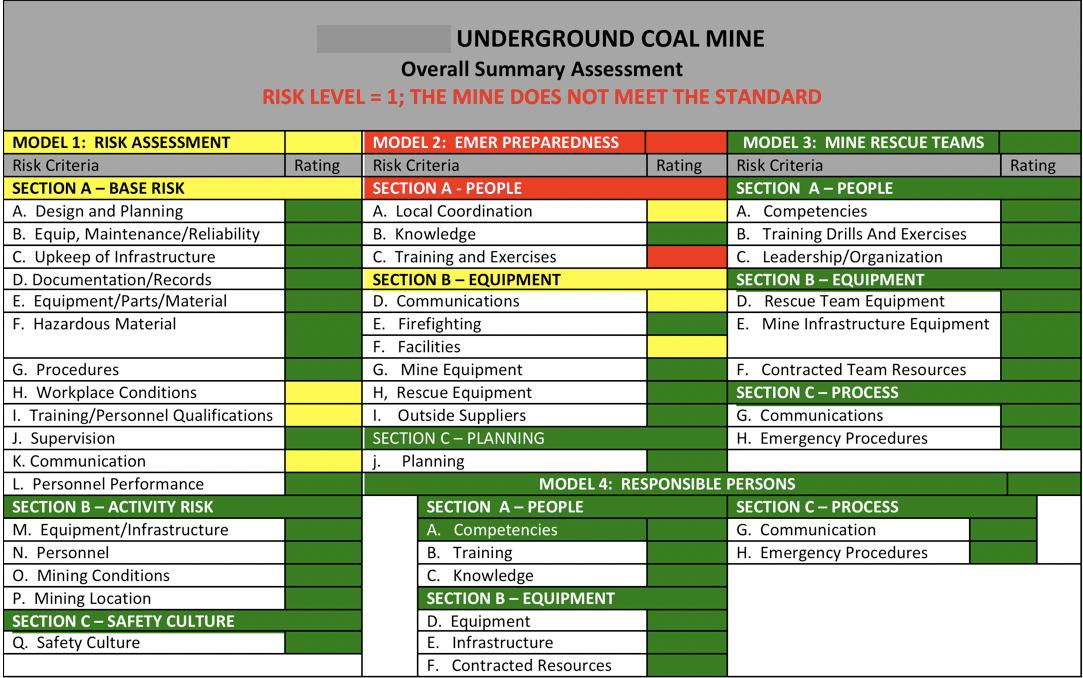
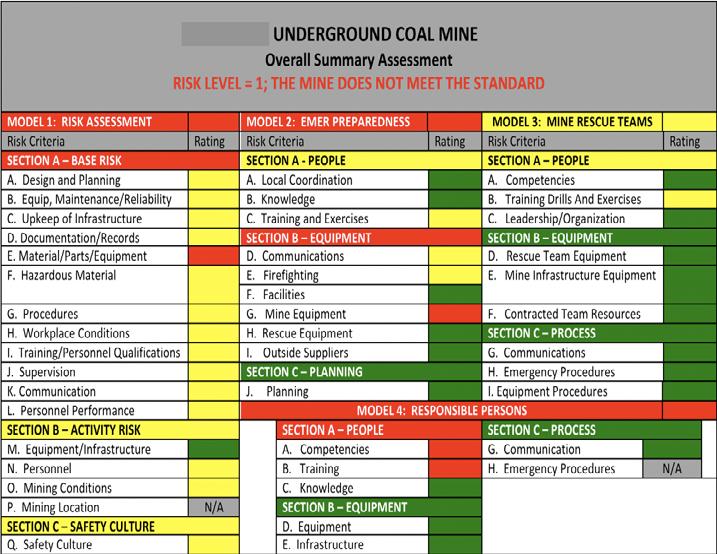
The activities of each coal mine were first divided into four major areas of concern; each major area was then further divided into perhaps a dozen or more critical components. Below is a comparison of individual programs in three different coal mines that highlight - with red or yellow markings - the major areas of concern:
The below graphics represent three separate coal mines, each of which shows an entirely different result from their self-assessment. In the first, most essential safety measures were in place as is evident by the large number of green boxes. The second assessment reflects some caution as the majority of the elements were not functioning at the highest level. The third depicts a mine in which most of the critically important safety criteria was found by the coal miners and executives to be unsatisfactory and unsafe. As it turns out, majority of the fatalities also were attributed to those areas marked in red [6].
A detailed look: Mine rescue teams
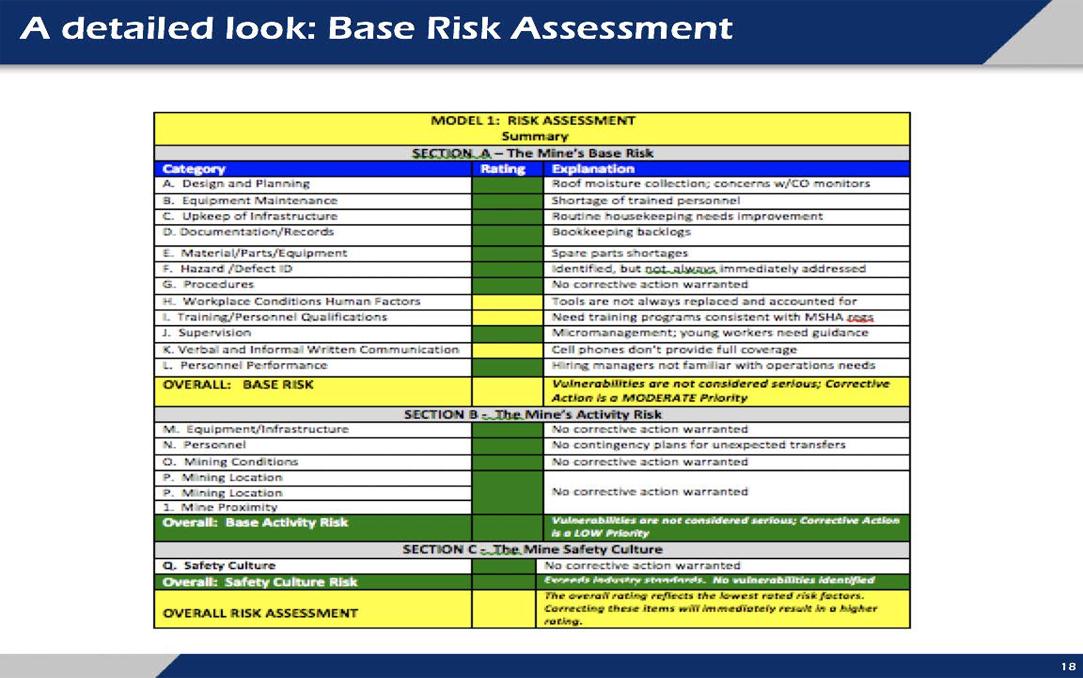
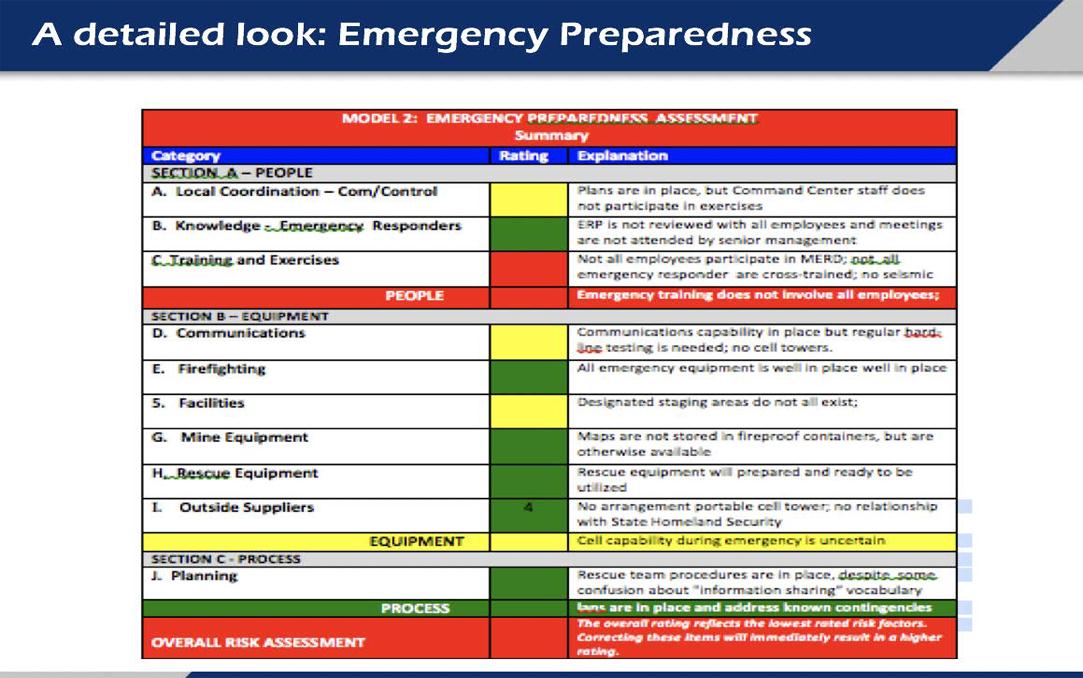
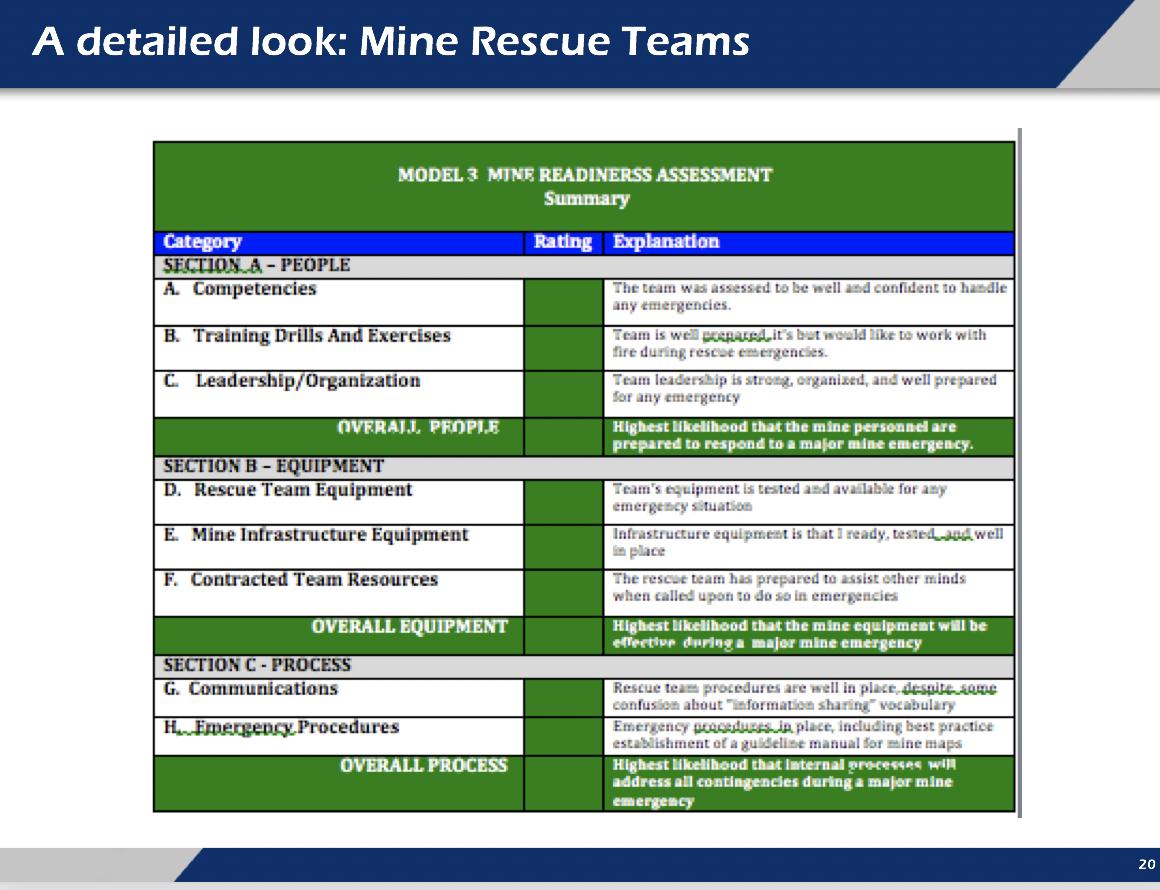
The next series of graphics reveals a closer look at one of the programs from each. In this series one of the four sections depicted in the previous graphics was broken down into its component parts for an overall assessment [7].
As is readily apparent, the coal mine that was primarily rated as superior was consistent in its sound practices throughout all the criteria. The ones with a predominantly yellow and red ratings showed significant portions of their program to be less than satisfactory.
One more series of graphics should be sufficient to explain the full impact of this approach.
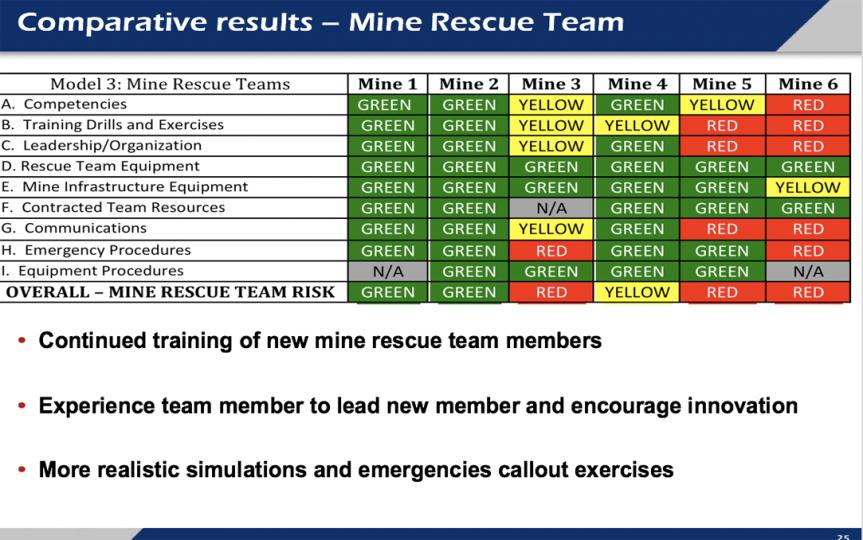
The graphic on the top shows the comparison among six different coal mines, with the first two demonstrating a well-managed safety program and the last two obviously leaving much room for improvement. This
approach was used by the coal mine managers to also identify problem areas that were common to all the mines.
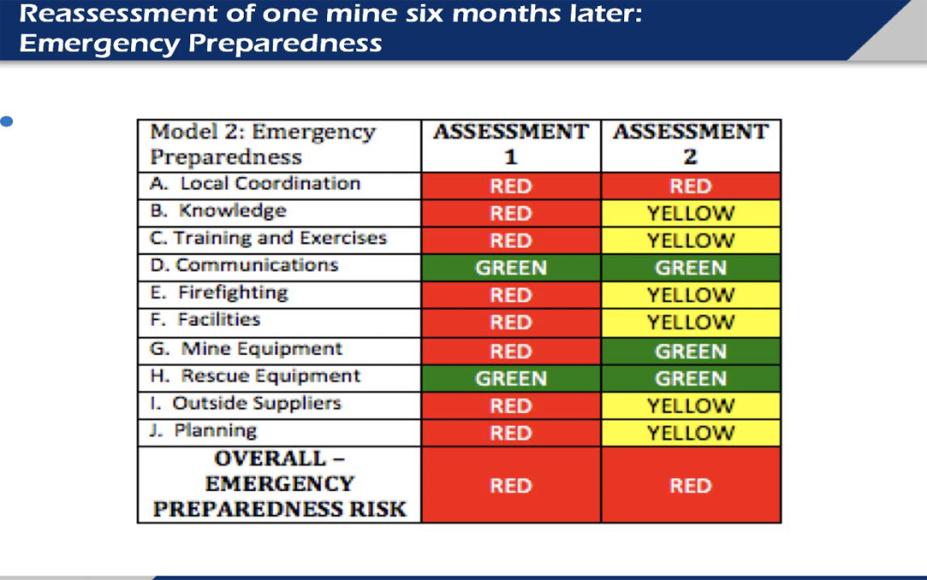
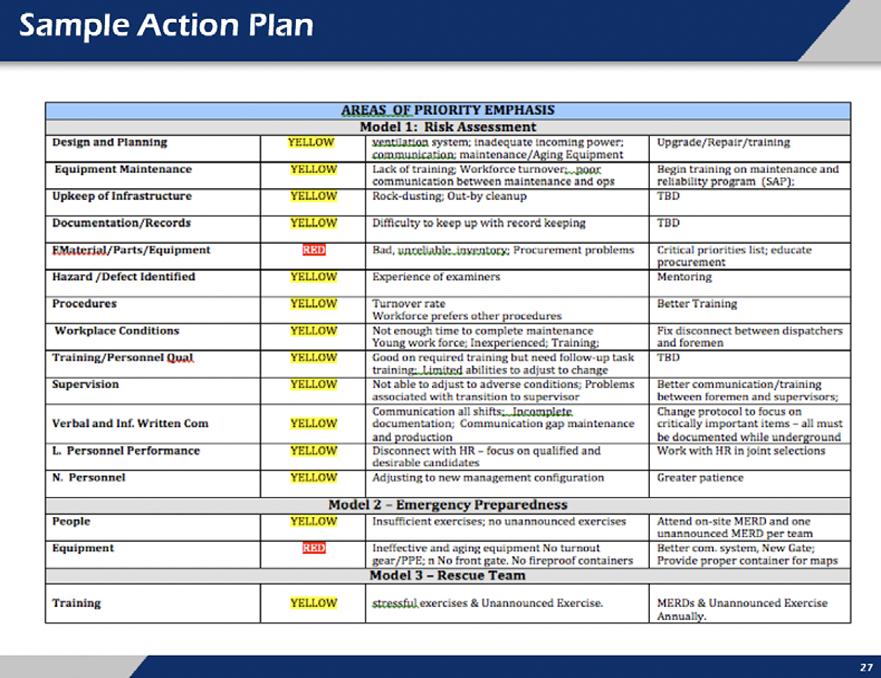
The graphic in the middle extracted all the problem areas, or "non-green" findings, and listed them as priority actions with a very strict deadline for correction. Finally, the graphic on the right shows the net improvement over a six-month period between the first assessment, the imposition of corrective action, and a reassessment. It's obvious that the most significant vulnerabilities were taken care of voluntarily by the management of the coal mines. There was no need to subject the mines to an external review, no need for administrative sanctions, no need to cover up problems. This reflected the candid assessment of those with the highest stake in safety - the coal miners themselves - and the results were far different than those that were obtained by more formal, inspections conducted over the previous 10 years.
The publicity of these successful approaches quickly spread to other programs where vulnerabilities were equally likely to be unknown, unaddressed, and yet were unacceptable. Examples include law enforcement information sharing systems, the protection of Navy bases and classified research facilities, and the insider threat associated with the Department of Energy’s Nuclear Laboratories. In each case, the self-assessment proved far more accurate and far more likely to produce meaningful corrective action that had previous "third-party" inspections or evaluations, whether conducted by agency evaluators, inspector generals, or private contractors. The reason was simple: self-assessments do not generate finger-pointing or blame. They reflect a serious effort by those responsible for the program to understand the program’s vulnerabilities in a much more candid and meaningful way. Furthermore, having devoted the time and effort to create a self-assessment tool and engage the workforce in conduct in analyzing the self-assessment, top management leadership almost always made implementation of corrective action a top priority.
Attributes of a Successful Self-Assessment Program
Differing from a formal inspection or external review, where findings are elevated to the highest levels of management, sanctions imposed, and a general adversarial relationship exists, a self-assessment is a proactive management initiative which is not intended to focus on problems and accountability, it is intended to corrective action and improved performance. The self- assessment permits the experts in the field to identify risks and vulnerabilities at a level that would rarely be made known to external auditors or inspectors without any fear of sanction or termination [8]. Problems are identified solely because the experts subject themselves to intense introspection and are asked to make judgments about things they rarely discuss as part of a facilitated group discussion. Self-Assessments provide a way to identify problems that otherwise would not be made known and would not appear on anyone's list of priorities to address. Through the self-assessment process, these problems become identified, they become scheduled for corrective action, and they provide an effective way of measuring the effectiveness of the deterrent.
Leadership – A Critical Success Factor
Unfortunately, self-assessments are generally not self- initiated. They are discretionary acts, and they frequently give way to daily priorities. Hence, the role of leadership becomes crucial. Where self-assessments have been implemented and have proven to be effective, leadership has been the crucial factor. It takes enlightened leadership to permit the development and testing of a self- assessment tool, it takes engaged leadership to devote the time for senior management to emphasize its importance, it takes committed leadership to require workforce to take it seriously, and it takes a leadership that's dedicated to safety as a priority to have the candor and courage to identify problems that would otherwise go unnoticed [9].
It must be emphasized that self-assessment approach is fragile and must be carefully to address important aspects of the organizational temperament and culture. The managers of a self-assessment project must take into account the following factors in developing an effective process for their environment:
Discretionary Action: No one requires a self- Assessment. Self-assessments are proactive and voluntary. There are no standards associated with them. No external review. No due dates. And no commitment to follow through. In any busy organization, things that are voluntary generally give way to operational demands that are deemed essential. The likelihood that a self- assessment -- no matter how valuable -- will continue to be periodically utilized without extraordinary leadership commitment is very low.
Cultural Resistance to Candor: Supervisors and managers everywhere share a reluctance to elevate problems that may reflect on themselves, the coworkers, or the supervisors. Yet, the value of a self- assessment is realized only when candor becomes generally accepted and those participating in the self-assessment are encouraged to identify potential risks and vulnerabilities that otherwise would go unnoticed.
Corrective Action and Ongoing Monitoring: Making the assessment is one thing. Acting to correct the problems identified is another. Monitoring the performance of the mine on an ongoing basis requires a managerial commitment. Without such commitment, the assessment is, at best, a one-time initiative with minimal long-lasting value.
Reluctance to Share Findings: Among the most valuable benefits of an ongoing system of self- assessments is reporting and sharing of the findings and conclusions with senior management, oversight officials, and organizational stakeholders. The primary purpose of the self-assessment is compare results with expectations and with the performance of other organizations, to report changes in performance to the government and key stakeholders, and to identify and disseminate information relative to best practices. This is primarily a matter of trust, which can best be resolved by positive experience.
Experience has shown that each of these obstacles to an effective self-assessment process can be overcome - but only by the engagement of strong and committed leadership.
Self-Assessment Tool
School districts who decide to pursue a program of self-assessment should be aware of several structural and procedural requirements that should be in place in order to ensure effectiveness. While each school district will undoubtedly have a different way of proceeding, the following is offered as a starting point for the assessment criteria and process attributes that have made the self- assessment effective in the past.
Facilitated Self-Assessment
The development of a replicable process that will ensure an honest and complete assessment is critically important. There are many ways to proceed in such an effort, but among the most successful have been the notion of “facilitated” self-assessment conducted by those with primary responsibility to prevent the dreaded incident from occurring. The assumption here – borne out by recent experience, is that the people with the most to lose are the ones most capable of identifying and monitoring the self-assessment project. However, precisely because of the cultural attributes listed above, particularly the need for a full and candid assessment, the process should include a strong facilitator who can encourage the sharing of candid opinions, no matter how sensitive the subject may be. If a current process that is intended to encourage the reporting of unusual behavior is not working – it must be identified as needing corrective action [10]. This often requires the services of a trained facilitator.
The facilitated self-assessment should occur on a periodic basis - perhaps every six months. The process should include a review and discussion of all the criteria, a collective judgment as to whether the performance standards associated with each of the criteria are being adequately or effectively met, and, whether or not corrective action is indicated. Process should also include specifying nature and timeframe for completing the corrective action. Once the process is completed, report should be presented to school administration for validation and action.
The assessment can be recorded manually, however the use of spreadsheets and/or other evaluation tools is highly recommended so as to provide for comparison over time and a comprehensive analysis of the assessment results to determine areas of best practice.
The process should be updated based on all external information relevant to incidences and other school districts that may cause a strengthening or change in either the criteria or performance standards [11].
. Scoring the assessment is very straight forward. Green indicates that the school currently meets the standard. Red indicates that school does not meet the standard and vulnerability has been identified. Yellow indicates that action is being taken to improve or remove the vulnerability.
Since the assessment results will quite often require immediate action and an evaluation of the effectiveness of that action, an individual, or a small group of individuals should be designated by the school district is responsible for overseeing implementation and three of usually loaded of thousands I will on progress. Self-assessments are rarely self-executing, and therefore school district should put in place a process of review to ensure appropriate follow-up.
Results of the First School Assessment
On December 14, 2018, the first assessment took place at a northern California high school, herein further referred to as High School (NO.1). Below you will see the results of the self-assessment, as well as the adapted self- assessment tool. The process was extremely well received, and similar pilots of the assessment tool are in progress presently.
| School Safety Self-Assessment | ||
| (School No. 1) | ||
| Draft: January 11, 2018 | ||
| OVERVIEW Assessment Date: December 14, 2018 Participants: Principal, Administrators, School Security, School Resource Officer, Police Supervisor, School Mental Health Professionals Facilitators: Dr. Thomas McWeeney, Emily Cunard, Charli Eaton Summary: This self-assessment was undertaken by High School (NO. 1) on December 14, 2018. . The assessment tool was discussed by all attending parties and was used to bring to light vulnerabilities - some of which were previously unknown by management - that the attendees believe must now be highlighted and marked for corrective action. A red, yellow, green priority rating system was used to visibly display areas of concern regarding the safety criteria and standards developed by consultation with experts across the United States. (RED = highly vulnerable”; YELLOW = “making progress, but not meeting standards”; GREEN = “standards are being met”. Overall, High School (NO.1) has addressed most of the 40 areas of potential vulnerability quite well, with only 6 (13%) of the criteria scored as highly vulnerable (RED). Of the six criteria, only one - Social Work/Mental Health - received more than one RED assessment. On the other hand, more than half of the criteria (56%) were assessed to be YELLOW and only 13 (33%) were assessed as GREEN. Note that Five of the six criteria contained at least one RED assessment, resulting in the entire category being assessed as RED. The protocol used called for a RED (highly vulnerable) if at least ONE area was found to be RED. Improving the assessment of as few as four areas will produce a significantly better assessment. The relatively few criteria assessed as RED suggests that by addressing these with a high priority, overall Indio High School’s vulnerability rating can be markedly improved in a relatively short time. The initial meeting familiarized all participating member with the assessment tool and created invaluable dialogue among many of the participants. The next meeting will discuss corrective actions that can be taken by High School (NO.1) to resolve the most pressing vulnerabilities. |
| 1.0 Security | ||||||||
|---|---|---|---|---|---|---|---|---|
| Criteria | Assessment | General | ||||||
| 1.1 Law Enforcement | High School (NO.1) has no visitor management system. This is a high priority by the school and district safety officers. Indio High School would like to utilize the Raptor system for their VMS. Criteria 1.5 was classified yellow by Indio High School but the facilitating team would recommend a red classification based on the ease of resolution (~$1.1 million to relock interior doors). | |||||||
| 1.2 Emergency Response | ||||||||
| 1.3 Exercises and Drills | ||||||||
| 1.4 Physical Security | ||||||||
| 1.5 Video Surveillance |
1.6 Direct Communication to with Police (non- static position)
1.7 Rapid Response and Deployment
2.0 Intelligence Criteria Assessment 2.1 Ongoing threat assessment
2.2 Collect, process, and vet “leakage”
2.3 Rapid referral and dissemination
2.4 Tracking and monitoring information
2.5 Reliable information sources
2.6 Access to and exploitation of social media accounts
2.7 Expertise in interpretation of messages, surreptitious accounts, and navigation
2.8 Crisis team tabletop practice scenarios
2.9 Portals for anonymous student reporting
3.0 Social Work/Mental Health He
Criteria Assessment General Comments 3.1 Understand stressors
3.2 Physical presence at school
3.3 Identify troubled students
3.4 Treatment available
3.5 Monitoring and reporting
High School (NO.1) found vulnerability within the Ongoing Threat Assessment. School security desires to bring admin, psych, and counselors on board and create a state of readiness throughout all departments. Communication between departments is key in improving this section.
High School (NO.1) feels highly vulnerable in this area. Most programs currently in place are reactive to student behavior. High School (NO.1) desires to become preventative of violent behavior. More resources are required to bring the school’s counselor and psychologist to student ratio to the nationally recommended ratio (250:1 and 1000:1 respectively).
3.6 Other 4.0 External. Environment
| Criteria | Assessment | General Comments | ||||||
|---|---|---|---|---|---|---|---|---|
| 4.1. Parents fully engaged in program | Information is not shared between SRO and Security team and High School (NO.1) admin and counseling departments. There are no group discussions between all departments discussing trends and concerns within the school population. | |||||||
| 4.2 Community Briefings | ||||||||
| 4.3 Reporting of suspicions | ||||||||
| 4.4 Gun owner accountability | ||||||||
| 4.5 Liaison/info sharing with partners | ||||||||
| 4.6 Neighborhood watch | ||||||||
| 5.0 School Administration | ||||||||
| Criteria | Assessment | General Comments | ||||||
| 5.1 Program and assessment teams | This area focused on a continuous assessment process. Overall, performance was satisfactory, but would be approved by adapting an ongoing self- assessment process. | |||||||
| 5.2 Continuous assessments | ||||||||
| 5.3 Reporting protocols | ||||||||
| 5.4 Officials engagement | ||||||||
| 5,5 Alternative programs | ||||||||
| 5.6 Adequate information sharing | ||||||||
| Criteria | Assessment | Comments | ||||||
| 6.0 Training | See below for this section in comments and corrective action | |||||||
| 6.1 Crisis Plans | ||||||||
| 6.2 Trained in Incident Command System | ||||||||
| 6.3 Lockdown and evacuation | ||||||||
| 6.4 Trauma and gang training | ||||||||
| 6.5 Youth mental health | ||||||||
| 6.6 School assessments |
Table 4: School Safety Self-Assessment: School No. 1, January 11, 2018.
Executive Summary
| 1.0 Security | |||||||||||
|---|---|---|---|---|---|---|---|---|---|---|---|
| Criteria | Standard | R/Y/G | Corrective Action/Comments | ||||||||
| 1.1 Law Enforcement | Uniformed, armed, state certified in school security. Full time presence, on site, not shared between school | 4 officers for 6 schools in the district. SRO available 24/7 Indio High School SRO not shared with other schools | |||||||||
| 1.2 Emergency Response | Crisis Team in place, trained in ICS, with redundancy, evacuation plan, reunification plan, police liaison…. Regularly meets for tabletop scenarios | Safety committee should meet throughout year (monthly); Post action conversations; ICS training; Reunification drills Emotional/social aspect to recovery | |||||||||
| 1.3 Exercises and Drills | Regularly conducts fire, lockdown, shelter in place, secure the building, evacuation drills. | Standardized protocol K-12 w/in district Live active shooter exercise w/ PD Scheduled drills in 2019 | |||||||||
| 1.4 Physical Security | Exterior doors locked and working properly. Interior doors lock from the inside/ window coverings accessible for doors. Emergency instructions and red vest posted in every room, emergency button in every room posted areas of refuge within each classroom not visible through windows or door | Install safety film on strategic windows ~$1.1 mil to fix interior door locks | |||||||||
| 1.5 Video Surveillance | Full campus coverage, interior and exterior with sufficient staff to monitor. Cameras with audio on school buses. VMS which scans driver’s license checking against databases. Sufficient staff for monitoring and escorting visitors. All students photographed annually. Single point of entry controlled by VMS and security cameras | Install Raptor system for VMS Work with Indio PD to access security camera feed | |||||||||
| 1.6 Direct Communication with Police (non-static position) | Cell phones, radios issued to all security, admin, SRO, custodians, and crisis team members. Security access to radio connected to police, fire, and school security dispatchers | Designated radios for all security staff Sweep teams equipped w/ radios soon | |||||||||
| 1.7 Rapid Response and Deployment | Crisis Plan in place with redundancy- Campus wide intercom/ alert system. Radio connected to police/ school security | More access points for the PA system. Phone app was suggested by assessment team. | |||||||||
| 2.0 Intelligence | |||||||||||
| Criteria | Standard | R/Y/G | Corrective Action/Comments | ||||||||
| 2.1 Ongoing Threat Assessment | Security, admin, special education, school psychologists, counselors, SRO, social worker trained in threat assessment protocol. Weekly meetings to share information. Threat assessment plan in place | Security and SRO communicate with each other. Communication w/in all departments is needed. Define threat assessment for all involved parties. | |||||||||
| 2.2 Collect, process, and vet “leakage” | System in place to monitor, notify, and share intelligence quickly with police, crisis team and | Create static team to meet w/ at risk students proactively vs. |
Table 5: School Safety Self-Assessment: School No. 1, January 11, 2018.
threat assessment team. reactively Staff equipped with computer access and well- trained staff in place for gathering, processing, and
2.3 Tracking and monitoring information
referring intelligence. Multiple modalities for
student/ faculty reporting Anonymous tip line for student reporting. Create a system to store and share information through all departments 2.4 Access to and exploitation of social media accounts
2.5 Reliable information
Source information validated; strong relationships
students, teachers, and staff (including security and SRO) 2.6 Expertise in interpretation of messages, surreptitious accounts, and sources Build relationships between established training in computer forensics, intelligence analysis Third party assistance no staff on Weekly in first month and the month after winter break. Monthly in all other months. Police, school
2.7 Crisis team tabletop
practice scenarios security, admin, crisis team attend Meet more often to discuss procedure, reactions, and changes needed for future situations 2.8 Portals for anonymous student Crisis hotline, drop box, anonymous voicemail/ email/text. Info on reporting posted throughout Tip line/ text/ posting
2.9 Other
| Social Work/ Mental Health | |||||
|---|---|---|---|---|---|
| Criteria | Standard | R/Y/G | Corrective Action/Comments | ||
| 3.1 Understand stressors | Security, staff, and faculty are trained to recognize potential stressors and youth mental health issues | Conversation and engagement @ all levels Update all departments w/ current information | |||
| 3.2 Physical presence at school | Counselors, social worker, psychologist on site in numbers adequate for population | Need more resources to narrow ratio Currently reactionary and academic | |||
| 3.3 Identify troubled students | Adequate staff trained recognizing students at risk and access to staff trained to investigate and intervene | Training in gang identification, crisis intervention, mental health first aid, interview techniques | |||
| 3.4 Treatment available | System in place to detect, assess, deescalate, intervene, treat, place, follow up with student in crisis | Teachers recognize warning signs need effective way to communicate to other teachers After threat counseling and follow-up | |||
| 3.5 Monitoring and reporting | Clear threat assessment protocols with immediate remedies pre-determined by classification. Viewed from a student stressor perspective. | Security team has tap-in/ tap-out system Student must opt in for counseling, mental care after 13 y/o | |||
| 3.6 Other | Special needs population | heavy gang presence in the |
Community threats school and community 4.0 External Environment Criteria Standard R/Y/G Corrective Action/Comments Keep in touch type system in place for communication, emergency info, request for information between the principal and parents. Alert/
4.1. Parents fully engaged in program notification sign up available to parents via text/ email. Parental/ family access to anonymous school reporting system Back to school night- School newsletter, school town
4.2 Community Briefings
hall meetings, media relations personnel/ department Anonymous reporting system available to students, families, school staff, community via. Instructions
4.3 Reporting of suspicions
posted in school, and incorporated in SR&R
(orientation) Student statement forms
4.4 Gun owner accountability
Information sharing and intelligence sharing between the police and school as needed.
Administration meets at least once a week with SRO
4.5 Liaison/info sharing with partners
and School security, school mental health professionals to discuss concerns/ trends daily 4.6 Neighborhood watch Neighborhood watch program in place, evaluated Progress for sending emergency info to parents Different types of engagement needed for different subgroups Current “town hall” not well attended Pilot @home visits w/ students between SRO and admin focus on positive acts/ students Good community school relationship Community shares potential threat info w/ school Very little resistance for information sharing between PD and school No group discussion between departments SRO and security communicate periodically, and partnered with police Citizens on Patrol 5.0 School Administration Criteria Standard R/Y/G Corrective Action/Comments 5.1 Program and assessment teams Teams in place to complete and follow up on the self- assessment process. N To be determined
5.2 Continuous assessments
Assessment performed on a quarterly basis until high priority REDs are eliminated To be determined and strictly adhered to Process appears to be strictly Senior school officials are fully engaged in assessments, monitoring, and corrective action.
5.4 Officials engagement
Redirection and restoration Alternative learning sites when applicable
5. 5 Alternative programs
Information made available to all who need it
5.6 Adequate information sharing
Reactions to student actions and
handling differs with each staff member. Student reactions to staff District level bridge program YAT- Youth Accountability Team- needs outreach aspect Information sharing practices are uneven- Update MOU between police and schools to include information
- Criteria
- Standard
- R/Y/G
- Corrective Action
- School has updated crisis plan on file with police,
- 6.1
- Crisis Plans
- Fire/EMS, school division, state
- Crisis plan includes incident command structure, command post(s) evacuation plans, accountability plans, communications, and administrative police/
- 6.2 Trained in Incident
- Command System fire liaison
- 6.3 Lockdown and evacuation
- Go kit, Off site evacuation sites, transportation coordinator, Accountability/reunification plan
- 6.4 Trauma and gang training
- Teacher workdays set aside for training in calendar
- Partnership with police in mutual training first aid training
- 6.5
- Youth mental health
- Adequate training for administrators
- 6.6
- School assessments
- Train the trainer offered
- 6.7 mentoring programs in place
- Sponsor programs like brave girls, teen parenting,
- Gang resistance
Table 7: School Safety Self-Assessment Tool – Detailed Review.
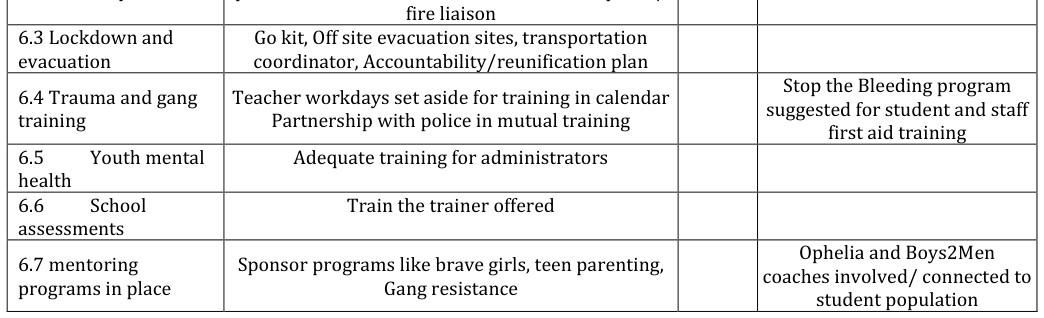
- Criteria
- Standard
- R/Y/G
- Corrective Action
- School has updated crisis plan on file with police,
- 6.1
- Crisis Plans
- Fire/EMS, school division, state
- Crisis plan includes incident command structure, command post(s) evacuation plans, accountability plans, communications, and administrative police/
- 6.2 Trained in Incident
- Command System fire liaison
- 6.3 Lockdown and evacuation
- Go kit, Off site evacuation sites, transportation coordinator, Accountability/reunification plan
- 6.4 Trauma and gang training
- Teacher workdays set aside for training in calendar
- Partnership with police in mutual training first aid training
- 6.5
- Youth mental health
- Adequate training for administrators
- 6.6
- School assessments
- Train the trainer offered
- 6.7 mentoring programs in place
- Sponsor programs like brave girls, teen parenting,
- Gang resistance
Table 7: School Safety Self-Assessment Tool – Detailed Review.
The self-assessment process described in this paper, which has been successfully utilized to prevent tragedies from occurring by the FBI, the nation’s coal mines, major technology companies, and several other organizations, should be considered by a small sample of US school districts as a pilot project. The purpose of the pilots are to test the adaptation of the model to school safety, to calibrate both the assessment criterion and the model to reflect the unique circumstances and conditions of local school districts, and to determine whether the school district and its community of stakeholders are willing and capable of implementing the model to the maximum feasible extent.
We call on school districts to accept this challenge, the first step of which is to accept full responsibility for the safety of our children and for putting in place a candid process of self-assessments that will be at least as effective as the systems for preventing terrorism and coal mine disasters. This is a big step, but an essential one. ONE person must ultimately bear responsibility for the safety of each school in the United States - and it is not the local sheriff.
The key factor that differentiates this concept from others described in glossy documents - that often sit on coffee tables in school districts throughout the country - is that it reflects provides fully engaged officials a platform to drive changes in behavior and transform organizations. Without such engagement, without a deep and candid assessment of real vulnerabilities and the commitment to repair each and every one of them, security strategy will continue to be the product of faceless, nameless committees and reflective of well-meaning intent but will generally not prevent the unthinkable from occurring. School districts currently rely on being prepared to respond to an active shooter event, rather than preventing one from occurring.
We recommend that School Districts partner with the Institute for Public Management and Governance at Cal State San Bernardino and the Criminology, Law, and Society Program at George Mason University to provide schools with a comprehensive self-assessment tool to be used to assess its vulnerabilities and begin instituting corrective action. The information to contact the authors is listed above.
References
-
Craun S, Simons A, Craun S (2018) A Study of Pre- Attack Behaviors of Active Shooters in the United States between 2000 and 2013. Federal Bureau of Investigation, U.S. Department of Justice, Washington, D.C. pp: 1-30.
-
Hempel AG, Meloy JR, Richards TC (1999) Offender and Offense Characteristics of a Non-Random Sample of Mass Murderers. J Am Acad Psychiatry Law 27(2): 213-225.
-
School and campus Safety-SSO Program (2015) Virginia Department of Criminal Justice Services.
-
Timm P (2016) School Security. 1st(Edn.), BH Publications, pp: 228.
-
Youth Mental Health First Aid for Adults Assisting Young People- 2012 Ed., Mental Health Association of Maryland.
-
Cullen D (2009) Columbine. 1st (Edn.), Twelve Publications, New York, pp: 417.
-
Video interviews conducted by Thomas McWeeney Assistant Directors Dave Szady and Kevin Favreau. Videos are currently used in Professor McWeeney’s courses at CSUSB.
-
Underground Coal Mine Risk and Readiness Assessment: Results of the Model Self-Assessment Program. Presentation to Holmes Association National Conference, Virginia Beach, Virginia, June 10, 2015.
-
Counterintelligence Vulnerability Assessment, published on FBI CI Website. 2003
-
Underground Coal Mine Risk and Readiness Assessment: Results of the Model Self-Assessment Program. Cal State University.
-
Performance Ethics: The Convergence of Leadership. Ethics and Performance. Unpublished Manuscript by Thomas G. McWeeney, Executive Director, Public Leadership Institute. July 27, 2010. Delivered to Leadership Symposium sponsored by Seattle University Law School, 2012.
- Narcotics and Digital Forensics: Bridging Crimes in the Digital Age
- Ethics in Forensic Psychiatry: Principles, Dilemmas, and Human Rights
- Impact of Acute Stress on Attentional Orienting to Social Cues
- Head Injury and Intracranial Hemorrhage in Western Region of Libya
- A Forensic Study on Handedness: Examination of Handwriting Features in Right and Left Handed Writers
- Techniques for Latent Fingerprint Development Using Natural and Synthetic Powders: A Review