
Medical Legal Aspects of Expert Investigations in the Crime of Child Kidding
Infanticide represents the type of homicide that most expresses the cruelty of this crime, the characteristics of this fact demand an expertise of extreme quality due to the constant and rapid changes of traces and evidence useful for subsequent forensic determinations. When the violent death of the product of conception occurs, the medico-legal autopsy becomes the decisive procedure for the case to proceed or not with the accusation, the precision of being born alive is the key determination and at the same time the challenge for the forensic doctors, to specify if there was extrauterine life or not defines in many legislations the status of "person", this is the reason for serious debates that include the scientific, legal, social and religious field. The physical examination of the puérpera, the inspection of the place of the fact by the forensic experts even when the product of conception is in the same and the medico-legal autopsy are the three essential procedures. From the above analysis we propose a guide with practical theoretical elements to be taken into account in the medico-legal action for the investigation of this criminal typology, in addition to specifying the causes and circumstances that mediated in the fact.
Introduction
Infanticide, honor killing [1]. Comes from the Latin “infanticidium”, which translates as “death given violently to a newborn or is about to be born” [2].
Each country has its own definition and legal perception of this crime, the central axis of these differences consists in the evaluation of up to where the fetus acquires the condition of person to be able to affirm that there has been a homicide, because otherwise there is never a homicide if it is considered that at the moment of the fact the fetus was not considered a person.
The almost unanimous opinion defines it as independent human life, a minority identifies it with the subject’s capacity for self-determination, so that not only the biological reality of life is protected, but also the faculties of decision and disposition that this reality entails as a whole [3].
We must start from a universal concept of homicide ¨ any person who kills or deprives another of life¨.
Within the variety of homicides we will analyze the intentional homicide, which means intentionality of the end caused. The intentional homicide is that in which malice is appreciated, that is to say, the knowledge and the will that the acts performed will produce or may produce the result of death of a person [4].
According to the Royal Academy of the Spanish Language, it is defined as the cause of death of a person by another person in a conscious and voluntary manner [5].
It is undoubtedly one of the great challenges in the forensic medical expert’s work. It is a subject that is little approached, with scarce updated consulting bibliography, with divergent handling at the country level and its diagnosis, based on the evidence of extrauterine life, has a decisive importance because it is indispensable to characterize the crime, since if the child is not born alive, there can be no sanction (Figure 1) [1].
Development
Independently of the conceptions of up to where a fetus of considered a person or not, we are of the criterion that the main tests that are performed by the forensic doctor look for signs of extrauterine respiration, that is the entrance of air to the lungs and signs of blood circulation that evidence the heart pulsations by the major and minor circulation, subsequently the signs of terms and maturity that indicate the viability of the product of conception are specified (Figure 2).
Proof of Extrauterine Life (Diagnosis of Live Birth)
The set of tests, constitutes the docimasias, a word whose Greek etymology gives it the meaning of “I test, I experiment” [1]. This series of tests are based on the verification of signs of life that are manifested in the respiratory, digestive and circulatory functions and can be classified into:
Docimasias Practiced before the Necropsy of the Cadaver
- Weight metric parameters.
- Otic or auricular docimasia (Wendt-Wredden).
- Radiological docimasia (Bordas). Docimasias Practiced During The Necropsy Of The Cadaver
- Docimasia due to umbilical cord modifications.
- Neurological docimasia.
- Optic pulmonary docimasia of Bouchut.
- Hydrostatic pulmonary docimasia of Galen (in four times).
- Histological Docimasias.
- Gastrointestinal docimasia of Breslau.
- Alimentary Docimasia.
- Hepatic Docimasia.
- Lower jaw tabiculations.
- Beclard’s ossification point. Docimasias Practiced before the Necropsy of the Cadaver Metric Weight Parameters:
- Weight of the newborn: 2500 to 3500 grams.
- Placenta weight: 500 grams.
- Length: 46 to 54 cms.
- Cephalic circumference: 34 cm.
- Thoracic circumference: 33cm.
- Abdominal circumference: 31cm.
- Foot: 8cm. Femur: 8cm. Humerus: 8cm.
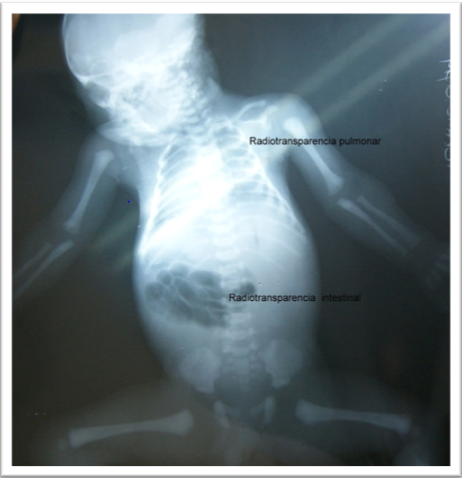
- Occipitofrontal diameter 11 cms. Hair 2 cms [1, 6, 7]. Otic or Auricular Docimasia (Wendt-Wredden): Water is poured into the external orifice of the ear and when puncturing the tympanic membrane bubbles are observed, which means that there is air in the middle ear [1, 6, 7]. Radiological Docimasia (Bordas): Body radiography (Rx) is performed on the cadaver and pulmonary radio transparency is observed in the whole thoracic cage due to pulmonary expansibility by breathing and at gastric level by swallowing air [1, 8, 9].
Docimasias Practiced During the Necropsy of the Corpse Docimasia Due to Modifications of the Umbilical Cord: Attached to the placenta of fresh appearance, hydrated and bluish-gray color. Observe if it is torn or cut [1, 6, 9]. Fontanelles: Wide anterior fontanelle of 2.5 cm in diameter.
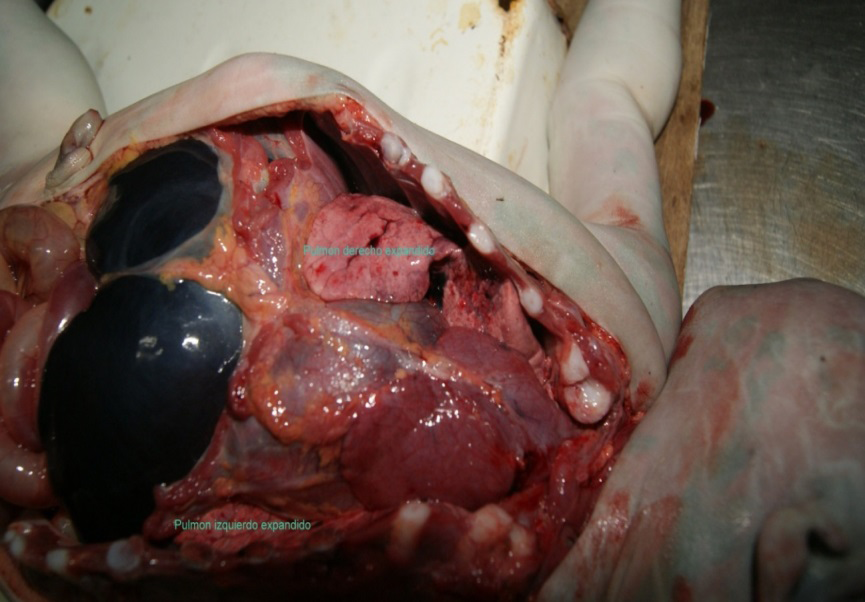
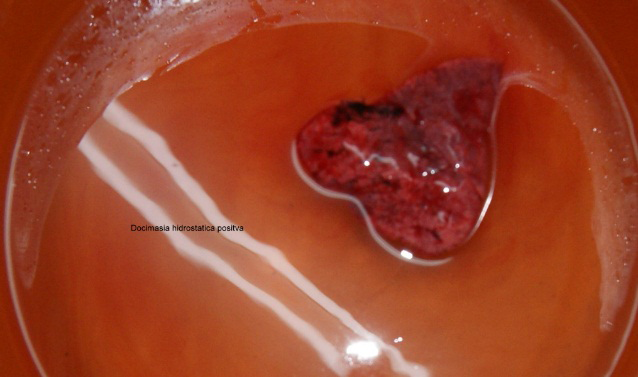
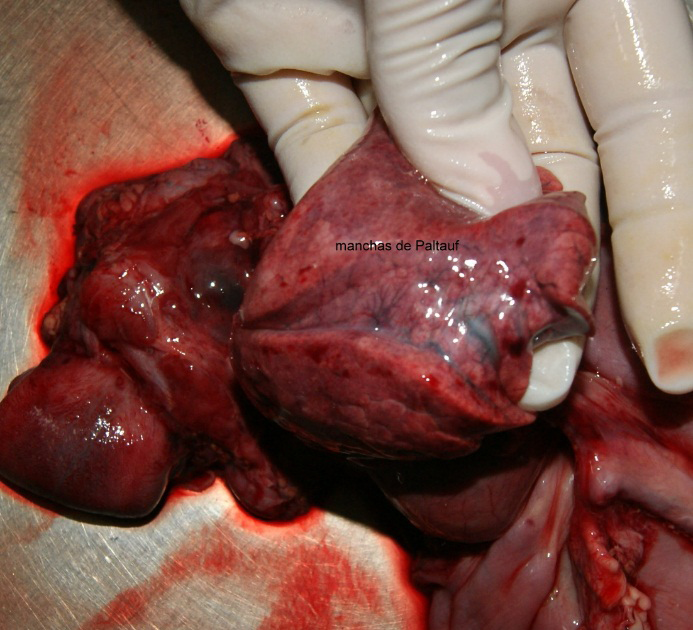
Narrow posterior fontanelle [1, 6, 7]. Neurological Docimasia: It is based on the study of the degree of myelination of the optic nerve fibers, which begins immediately after birth and is completed within four days [9], This docimasia is not useful in children born blind or with any ocular disease [7], Bouchut’s Optical Pulmonary Docimasia: Consisting of the characteristics of the lungs: Pink and marbled lungs, aerated, expanded throughout the thoracic cavity covering most of the heart, lobulations are observed, blunt and rounded edges, crackling under pressure [1, 6, 7]. Hydrostatic Pulmonary Docimasia of Galen: It consists in the flotation of the lung that has breathed when placed in water, this is due to the fact that the density of the aerated lung has a density of 0.90 and the lung that has not breathed has a density of 1.10 with respect to water. This docimasia is performed in four times:
- The whole of the tracheobronchial tree, lungs, heart and thymus were placed in a container with water and floated [1, 6, 7].
- The four organs, lungs, heart and thymus were separated. The heart and thymus sink to the bottom of the vessel and the separated lungs float [1, 6, 7].
- The lungs are divided into small pieces and placed in the container with water and floated [1, 6, 7].
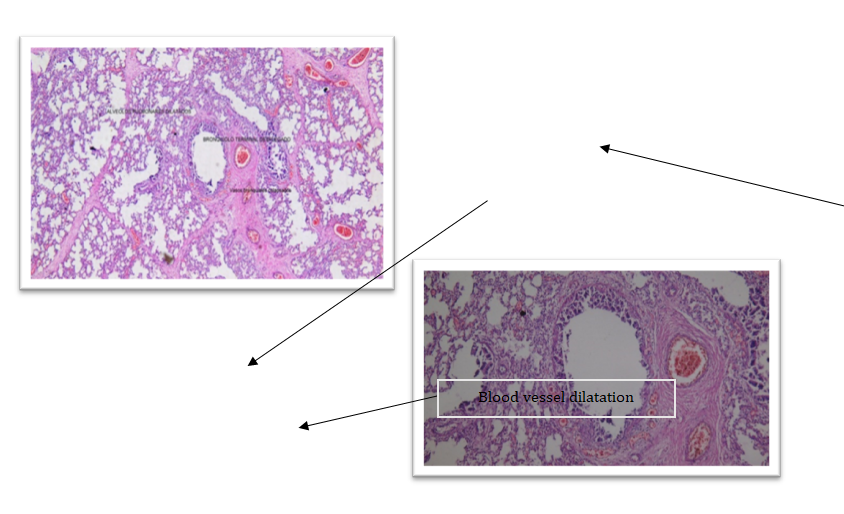
- We take the pieces of lung that has floated and we compress it strongly against the bottom of the container with water and release bubbles and then we observe that they continue floating [1, 6, 7]. Histological Docimasias: Lungs: Folded terminal bronchioles, rounded, polygonal dilated pulmonary alveoli with blunt angles, collapsed bronchial vessels [1, 7, 9]. Gastrointestinal Docimasias of Breslau: The stomach and small intestine are separated with previous ligature in both ends, they are introduced in a container with water observing that they float, which demonstrates the presence of air in the stomach and first intestinal portions product of respiration [1, 4, 5]. Alimentary Docimasia: Food in the digestive tract [1, 9]. Hepatic Focimasia: The liver weighs less in the newborn breathing at birth than in the fetus, due to the fact that a considerable amount of venous blood is emptied by breathing [9]. Lower Jaw Partitions: In each semi mandible there are 4 osseous partitions that form 5 dental alveoli, each one with a dental follicle except the last one that has 2 [6, 9]. Beclard’s Ossification Point: When making parallel cuts from the knee towards the distal extremity of the femur we observe a reddish point of 5 mm in diameter that stands out within the cartilage [1, 7, 9].
Forensic Medical Interpretation
The violent death of a newborn in forensic medical practice is of great importance and allows us to apply the most important expertise of our specialty. In this case we must formulate 6 fundamental objectives [1, 6].
- Diagnosis of live birth.
- Maturation of the newborn and/or Gestational Age at the moment of delivery.
- Duration of life of the newborn.
- Examination of the scene.
- Causes of death of the newborn.
- Examination of the mother. Diagnosis of Live Birth: A newborn is considered to be the product of conception that upon leaving the maternal claustrum maintains movements of voluntary musculature, heartbeat and respiratory movements, with respiration the lungs expand . The otic or auricular docimasias (Wendt- Wredden), radiological docimasias (Bordas), optical pulmonary docimasias of Bouchut, hydrostatic pulmonary docimasias of Galen, gastrointestinal docimasias of Breslau and histological docimasias with unfolded terminal bronchioles, rounded, polygonal dilated pulmonary alveoli with blunt angles, collapsed bronchial vessels allow us to affirm that there was respiration and therefore we are dealing with the corpse of a LIVE NEWBORN [1, 6, 7, 9]. Maturity of the Newborn and/or Gestational Age at Delivery: The maturity of the newborn indicates that it has reached the normal term of gestation.
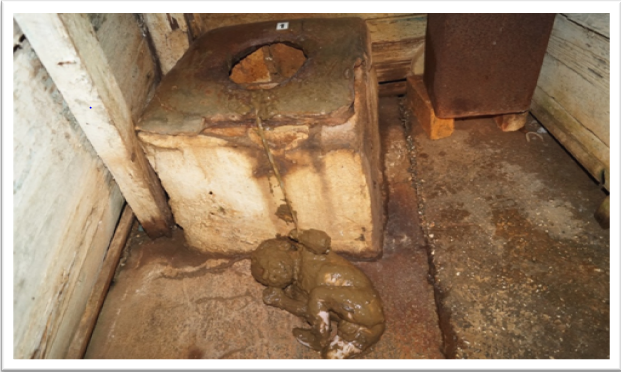
The metric weight parameters given by height, weight, dimensions of the head, thorax and abdomen, Beclard’s ossification point, tabiculation of the lower jaw, fontanels and histological docimasia allow us to determine the gestational age, fetal maturity and consequent viability. Height (normal for term pregnancy 46 - 54 cm) Weight (normal for term pregnancy 2500 - 3500 g) Head circumference 34 cm normal for term pregnancy. Beclard’s ossification point appears in the last weeks of pregnancy in the center of the inferior cartilaginous epiphysis of the femur with a diameter of 4 to 7 mm. The tabiculum of the lower jaw is positive at the end of pregnancy with its 5 dental follicles, the nails of the fingers and toes exceed the extremity of the fingers, the hairs are 2 to 3 cm long, the testicles are descended in the scrotal pouches [1, 7]. Fetal Age: Balthazard-Drevieux formula: Age in days = length in centimeters x 5.6 51 cms x 5.6 = 285.6 days / 7 days = 40 weeks. Trolle’s formula: length of foot in mm + 24 = 80 mm + 24 = 9.4 11 11 months All the above allows us to affirm that we are dealing with a TERM DELIVERY of about 40 WEEKS of gestation with Fetal Maturity and Viable [1, 7, 9]. Life Span of the Newborn: Newborn survival is several minutes and less than one hour given the air expansibility of the lungs demonstrated by the optical, galenic and gastrointestinal docimasias with presence of air in stomach and first portion of the small intestine, as well as the modifications of the umbilical cord which appears fresh, hydrated and bluish gray in color [7, 9]. Examination of the Scene: During the removal of the corpse, hematic maculations could be observed on the dividing wall of said latrine, on the front door and on top of the latrine itself, as well as the newborn was extracted together with the placenta from the interior of the liquid waste of the pit of said premises [1, 6, 10]. Examination of the Mother: Pale skin and mucous membranes, edema in lower limbs, uterine involution 2 fingers’ lengths above the umbilicus, presence of dark red lochia, turgid breasts with milky discharge, extensive vaginal tearing reaching the margins of the anus (grade III perineal tearing) Hemoglobin 6 g / l. Hemoglobin 6 g / l. Multiple tears in both vagina and anus. Multiple tears on both lateral sides of the vagina, towards the cul-de-sac and at the level of the vaginal introitus up to the margins of the anus Immediate Pupery [1, 6]. Perinatal Causes of Death (Natural Death):
- Fatal congenital malformations
- Infections
- HR incompatibility (feto-placental anasarca, hemolytic anemia of the NB).
- Anoxia, hypoxia and asphyxia
- Obstetric traumas (assess precipitous and surprise delivery)
- Intrauterine growth retardation
- Immaturity
- Idiopathic neonatal death
- Others: Interventricular hemorrhage, Hypovolemia or hypervolemia due to fetal or maternal fetal transfusion, Pulmonary hemorrhage, Idiopathic pneumothorax or pneumomediastinum, Enterocolitis, Arrhythmias of unknown etiology [,7,9,10].
Leading Causes of Perinatal Death Yearbook 2018:
- Congenital malformations, deformities and chromosomal abnormalities.
- Hypoxia and birth asphyxia.
- Non-traumatic intracranial hemorrhage.
- Influenza and pneumonia.
- Persistent fetal circulation.
- Congenital pneumonia.
- Disorders related to the duration of gestation and fetal growth.
- Hyaline membrane disease.
- Other conditions arising in the perinatal period. • Accidents. • Pulmonary hemorrhage. • Bacterial, viral, and unspecified meningoencephalitis. • Neonatal meconium aspiration [6].
Conclusion
The forensic medical expertise constitutes the main investigation on which the police and criminal legal system rely during investigations of infanticide, to the extent that the circumstances and processes that led to the death can be clarified, the criminal legal system will be able to act with more security, the forensic expertise requires experienced experts and preferably with performance by peers.
The digital filmic means as well as the exhaustive application of the docimasias are the main procedures, these are directed to verify if the child was born alive and is viable, the cause of death, the age of the fetus and the examination of the mother, but without a doubt the histological docimasia is the main one since it is the evidence of breathing and circulation when dilating bronchioles and alveoli as well as the blood vessels.
Infanticide within homicides needs interdisciplinarity as a system to manage the quality of forensic expertise, the catalytic processes of transformation of organs and systems towards putrefaction is the main component that undermines effective determinations, for this reason, the celerity from the moment the presence of a case is known until the medico- legal necropsy must take place in the shortest possible time, since putrefaction alters the determinations of the docimasias, especially the pulmonary one, which is one of the main ones to demonstrate the breathing of the newborn once outside the maternal claustrophagus.
References
-
Sanchez FLY, Ruiz IGF, Zerquera FP, Pérez JG, Carrera VLS, et al. (1999) Medicina legal. Havana: Pueblo Publishing House and Education / Medical Sciences, pp: 1-147.
-
(2011) Real Academia Española, pp: 17374.
-
Carrasco M (2018) Homicide and its forms. Issues common to crimes against life. Criminal Law special part. Universidad de Chile.
-
(2018) Association of Spanish Language Academies. Pan-Hispanic Dictionary of Legal Spanish.
-
Law No 62 Penal Code. Republic of Cuba.
-
Calabuig G, Villuenda Cañadas E (2004) Forensic Medicine and Toxicology. Editorial Masson 674.
-
Alvarado EV (2012) Medicina Legal. Mexico: Editorial Tirillas, pp: 331.
-
(2019) Ministry Of Public Health Directorate of Medical Records and Health Statistics. Statistical Yearbook of Health 2018. Havana: Editorial Committee.
-
Briones Gonzalez MA (2019) Forensic Obstetrics: Publisher: Los Angeles Catholic University of Chimbote, pp: 164-165.
-
Bueno SD, Moya FB, Romero JL (2011) Treatise on Legal Medicine and Forensic Sciences-Volume III: Forensic Pathology and Biology, In: 1st (Edn.), Torture Volume, pp: 63-64.
- Narcotics and Digital Forensics: Bridging Crimes in the Digital Age
- Ethics in Forensic Psychiatry: Principles, Dilemmas, and Human Rights
- Impact of Acute Stress on Attentional Orienting to Social Cues
- Head Injury and Intracranial Hemorrhage in Western Region of Libya
- A Forensic Study on Handedness: Examination of Handwriting Features in Right and Left Handed Writers
- Techniques for Latent Fingerprint Development Using Natural and Synthetic Powders: A Review