
To Study the Unique Characteristics of Cut Mark on Clothes with a Suspected Knife on the Basis of Microscopic Examination (Optical Comparator): A Case Report
Forensic physics plays a crucial role in cut mark examination, particularly in the analysis of tool marks, including those created by sharp objects like knives or other cutting instruments. The examination of cut marks involves the application of various principles and techniques from physics to understand the nature, characteristics, and potential source of the marks. In the State of Meghalaya, a numbers of cases are received to determine whether the cut marks on clothes are caused or cut by the suspected sharp object. This is predominantly occurring due to conflicts among individuals or groups often involving the use of hard objects or sharp weapons. The prevalence of such cases necessitates a closer examination of cut marks on clothing items as crucial forensic evidence. However, due to improper collection, preservation and packaging of exhibits has cause a potential hinder for the Forensic Expert's ability to provide a conclusive opinion. This study sheds light on the frequent occurrence of cases wherein cut marks on clothing serve as pivotal forensic evidence. Through a systematic scientific approach, this paper elucidates the significance of identifying and interpreting such distinctive features in forensic investigation. This study endeavours to empower forensic experts, enabling them to provide more reliable and insightful conclusions in cases involving cut mark examinations. The proposed improvements not only strengthen the forensic framework but also contribute to the effective resolution of cases involving attempted harm in this region.
Introduction
In the realm of forensic investigations, the comparison of cut marks on clothing with a suspected knife stands as a pivotal endeavour. This meticulous process is rooted in the premise that cut marks on textiles can reveal essential insights into criminal activities, accidents, or critical incidents where sharp-edged instruments are involved. When a cut mark is discovered on clothing, it signifies a potential link between the garment and the instrument used. The intersection of Forensic Science, materials analysis, and tool mark examination converges in this critical examination, shedding light on the dynamic interplay between the physical evidence and the alleged weapon [1].
As we embark on this exploration, it becomes evident that the comparison of cut marks on clothing with a suspected knife is not merely an exercise in scientific analysis; it is a profound convergence of disciplines, each contributing to the mosaic of justice and truth. Through the discerning eyes of Forensic Experts and dedicated investigators, the seemingly innocuous cut marks take on a new significance, becoming a critical means of deciphering the narrative of a crime. Forensic analysis, as it pertains to cut marks, draws upon a rich tapestry of scientific principles and methodologies. It involves the keen observation of physical characteristics, the utilization of microscopic tools, and an in-depth understanding of the behaviour of materials under stress. Materials science offers insights into the properties of the fabrics or substances being cut, while physics principles guide the assessment of the force and energy required to create these marks. At the heart of this examination lies the art of tool mark analysis, a specialized field within forensic science. Tool mark examiners possess the unique ability to bridge the gap between a cut mark and its potential source a suspected knife, in this instance. They scrutinize the microscopic features, the striations and patterns left behind by the cutting instrument, and unravel the subtle but essential details that tie the evidence to the weapon [2].
As we delve into the methodologies and considerations underpinning the examination of cut marks on clothing with a suspected knife, we recognize that the mission is not merely to decipher physical evidence. It is a quest for clarity, a pursuit of truth, and a commitment to upholding the principles of justice. It is the enduring dedication of forensic experts to unravel the mysteries concealed within cut marks and to ensure that the truth prevails. This paper serves as a testament to the tireless efforts of those who dedicate their expertise to this field, as well as a tribute to the collaborative nature of Forensic Science. The convergence of materials science, Physics, tool mark analysis, and investigative techniques exemplifies the profound interdisciplinary synergy that defines the pursuit of truth and justice within the Forensic realm.
Materials and Methods
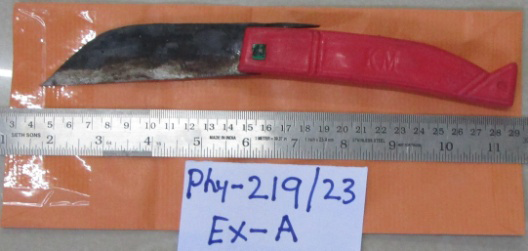
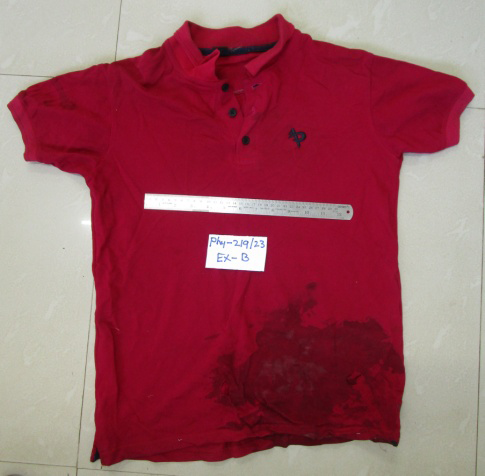
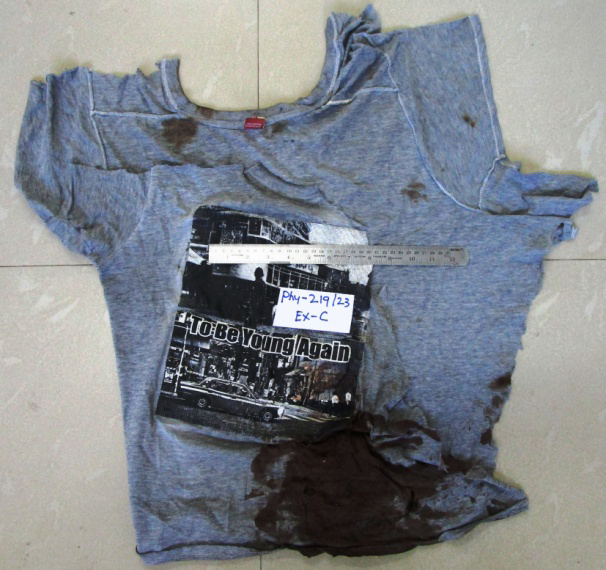
A case was referred to the State Directorate of Forensic Sciences, Meghalaya, Shillong where according to the brief history of the case that, the police has received an FIR from one person (name undisclosed) to the effect that his cousin brother (name undisclosed) was stabbed by a knife on the roadside by a Bus Driver (name undisclosed). After the incident, they said Driver fled away from the spot and his cousin brother was taken to the nearby Hospital as he was seriously injured. After receiving the FIR, the Police promptly apprehended the suspect and were able to seize the suspected knife. Similarly, the shirt which was worn by the victim at the time of incident was also collected and sends to this Forensic Laboratory to determine whether the cut/stab marks present on the clothes have been made using the suspected knife. This Laboratory received three numbers of exhibits (Figures 1-5).
Preliminary Examination
The total number of exhibits in this instant case is described as below:-
- As shown in Figure 1, the overall length of the folding knife (well-known as handmade Khasi knife) is around 25 cm and the length of the blade is around 12 cm marked as Ex-A.
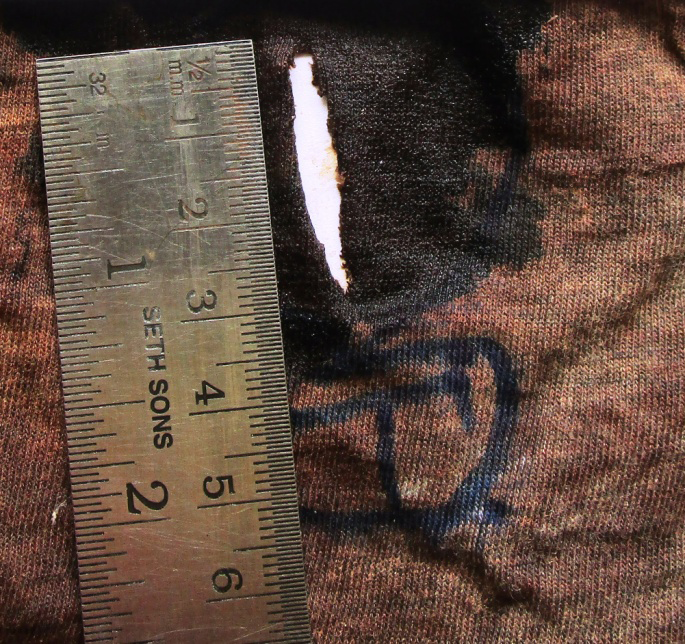
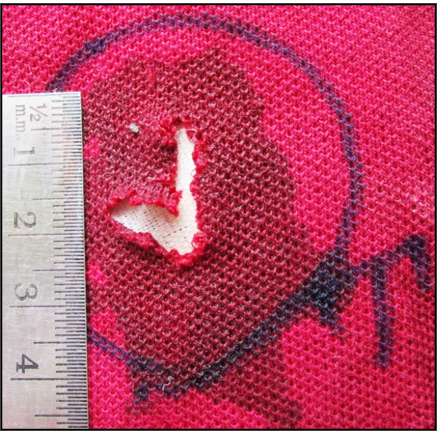
- As shown in Figure 2, one red colour T-Shirt with one stabbing/cut mark marked Ex-B.
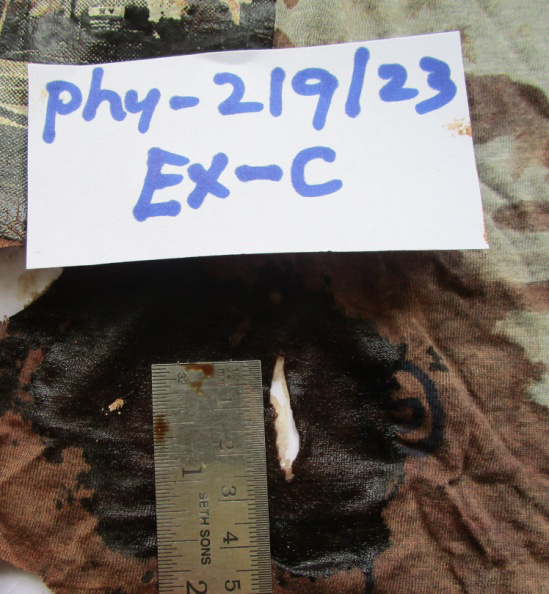
- As shown in Figure 4, one light grey T-Shirt with one stabbing/cut mark marked Ex-C.
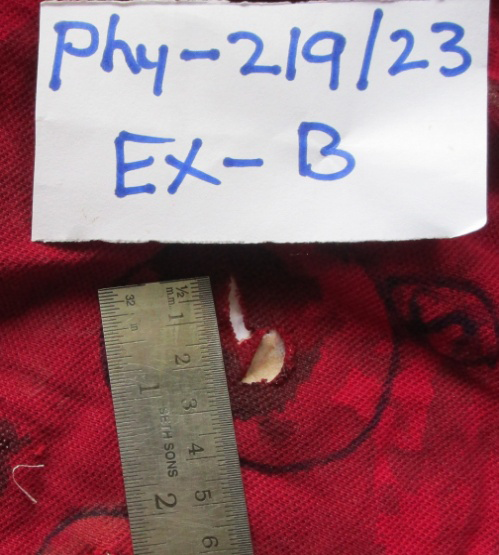
Upon meticulous observation and analysis, it was noted that the stabbing/cut mark inflicted by exhibit Ex-A is consistently situated at the bottom-left position on both exhibits, denoted as Ex-B and Ex-C. The distance from the collar of the shirts on these exhibits to the cut mark was determined to be approximately 90cm. The length of the stabbing/cut mark measures approximately 2.5cm on Ex-B and 3cm on Ex-C, exhibiting slight variation between the two exhibits. Notably, the orientation of the stabbing cut runs vertically on both Ex-B and Ex-C.
Further scrutiny revealed distinctive characteristics of the stabbing/cut marks on each exhibit. On Ex-B, the top edge of the stabbing mark displayed clarity and precision, presenting a well-defined outline [3].
Conversely, the bottom edge of the stabbing mark exhibited irregularities, indicating potential serrations or jagged features. Conversely, on Ex-C, the bottom edge of the stabbing mark exhibited clarity and definition, while the top edge displayed irregularities, suggesting possible serrations or jaggedness.
Additionally, a prominent discoloration or blood stain was observed in the proximity of the stabbing/cut mark on both exhibits, Ex-B and Ex-C. This discoloration likely signifies the presence of blood or other bodily fluids, indicative of the traumatic event associated with the inflicted wound. The meticulous documentation of the location, dimensions, orientation, and characteristics of the stabbing/cut marks on exhibits Ex-B and Ex-C provides crucial forensic evidence for further analysis and interpretation [4].
These observations contribute to the understanding of the nature and dynamics of the inflicted wounds, aiding in the reconstruction of the events leading to the observed injuries. Moreover, the presence of blood stains underscores the forensic significance of the examined exhibits, potentially linking them to the circumstances surrounding the incident under investigation.
Creation of Test Stabbing/Cut Mark
To facilitate a comprehensive analysis and examination of the incised wounds identified on exhibits Ex-B and Ex- C, a replica of the victim’s body was simulated using a cotton pillow. This replication aimed to mimic the contours and physical properties of the victim’s body, particularly concerning the distribution and nature of the incised wounds observed on the aforementioned exhibits. The procedure involved the insertion of the cotton pillow beneath exhibits Ex-B and Ex-C, representing the victim’s shirts.
Subsequently, a controlled approach was adopted to recreate the incised wounds by employing a knife, denoted as exhibit Ex-A. Careful attention was given to replicating the suspected cutting dynamics, including the angle of insertion, the orientation of the blade, and the manner in which the knife was held.
The objective was to reproduce the distinctive characteristics of the original incised wounds, including their depth, edge morphology (whether clear or jagged), and any additional features pertinent to the analysis [5]. This process required precise manipulation of the suspected knife exhibit, applying a controlled amount of force to achieve incisions resembling those observed on exhibits Ex-B and Ex-C.
Through this scientifically guided procedure, the intention was to generate comparable incised wounds on the simulated victim’s clothing, thereby enabling a detailed examination and analysis of the similarities and differences between the replicated wounds and the original ones (Figures 6-8).
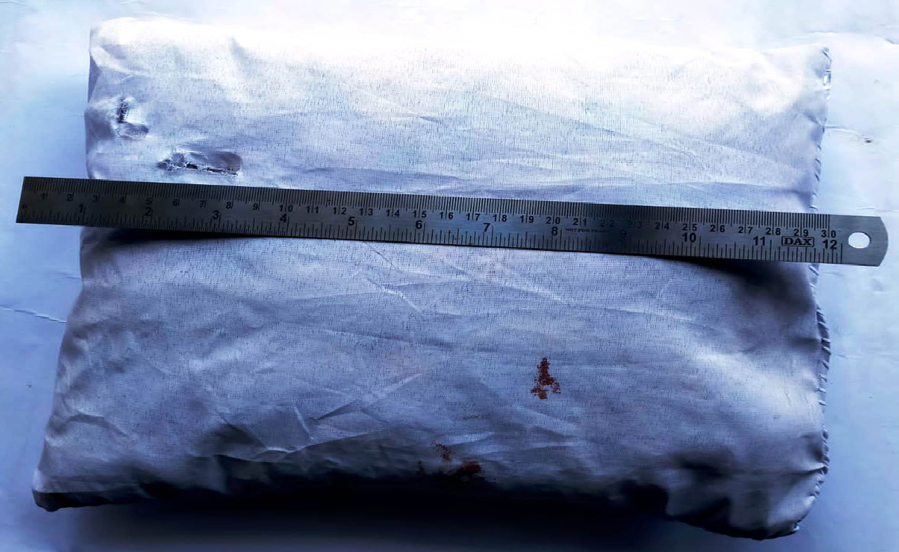
Creating the stabbing/cut mark under controlled condition allows forensic experts to have a better understanding of the characteristics created by the suspected knife. This test stabbing/cut mark can be used for subsequent comparison with the original evidence found on the exhibits marked Ex-B and Ex-C (victim’s clothing).
Microscopic Examination Using Optical Comparator
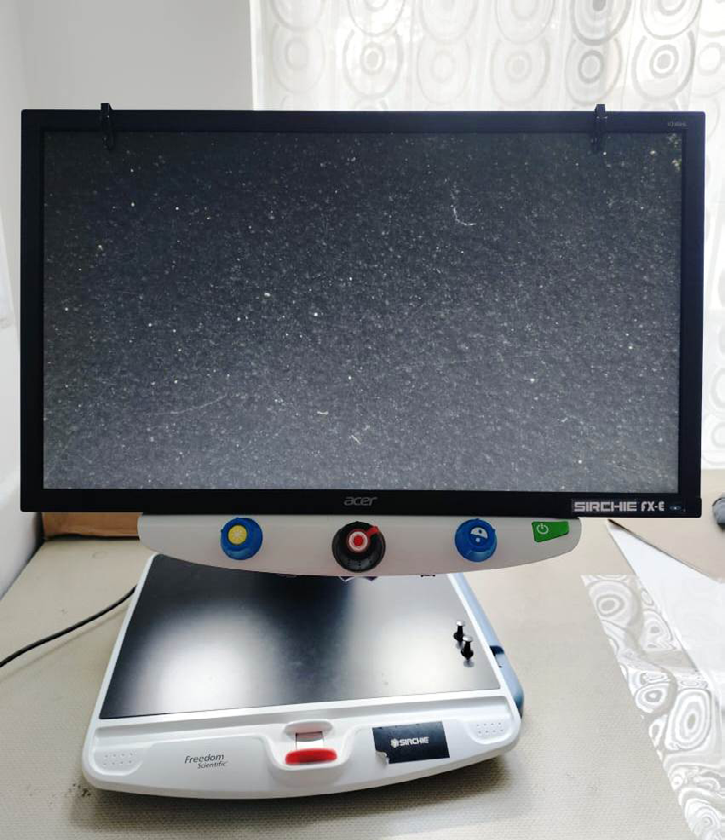
The exhibit marked Ex-A (suspected knife) and the suspected stabbing/cut mark on exhibits marked Ex-B and Ex-C were subjected to microscopic examination to compare the test stabbing/cut mark with the original stabbing/cut mark found on exhibits marked Ex-B and Ex-C. The following findings were observed in Figure 9.
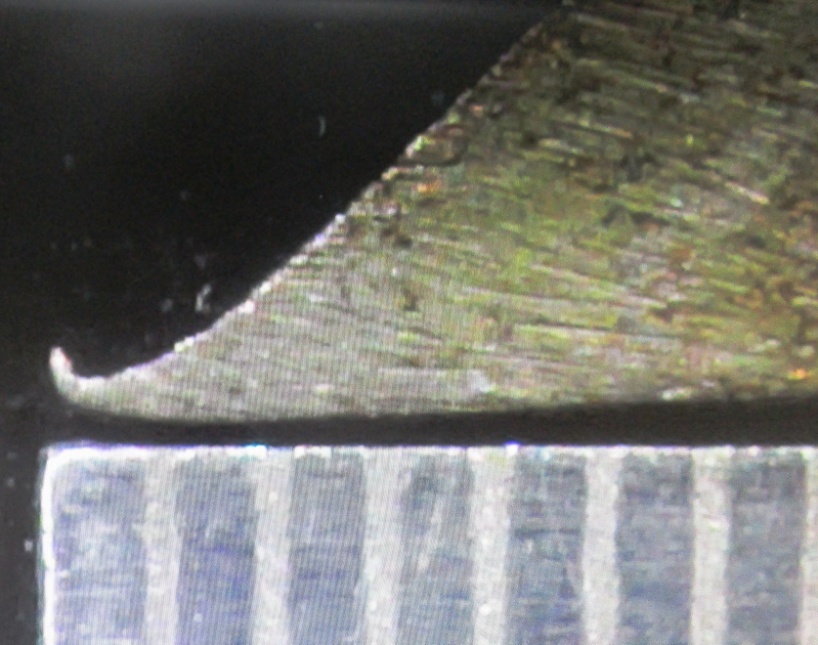
Description Exhibit Marked Ex-A
The unique feature identified at the tip of the knife blade, characterized by a sharp curve, represents a significant point of interest in forensic examination and analysis. This distinctive attribute contributes to the individualization of the knife, facilitating the establishment of associations between the weapon and the evidence at the crime scene. The sharp curve observed at the tip of the blade may manifest as a concave or convex curvature, depending on the specific geometry of the blade. This curvature may exhibit varying degrees of sharpness, ranging from subtle to pronounced and thereby imparting distinctiveness to the overall morphology of the blade tip. The curvature at the tip of the blade may result from several factors, including the manufacturing process, wear patterns, and the intended design of the knife. During the manufacturing process, factors such as grinding techniques, blade geometry, and material composition can influence the formation of unique features, including the observed curve at the tip [6].
Moreover, wear patterns and usage history can further accentuate the distinctiveness of the blade tip. Continuous use and contact with various surfaces may result in characteristic abrasions, nicks, or deformations, contributing to the individualization of the knife [7]. From a forensic perspective, the identification and documentation of such unique features, including the sharp curve at the tip of the blade, are crucial for establishing associations between the weapon and the evidence recovered from the crime scene. By employing various magnification levels on the microscope, forensic analysts can meticulously examine and document the morphology and characteristics of the blade tip, enhancing the forensic significance and evidentiary value of the observed features. Ultimately, the identification of distinctive features such as the sharp curve at the tip of the knife blade strengthens forensic examinations, aiding in the determination of weapon attribution and contributing to the overall investigative process in criminal proceedings (Figure 10).
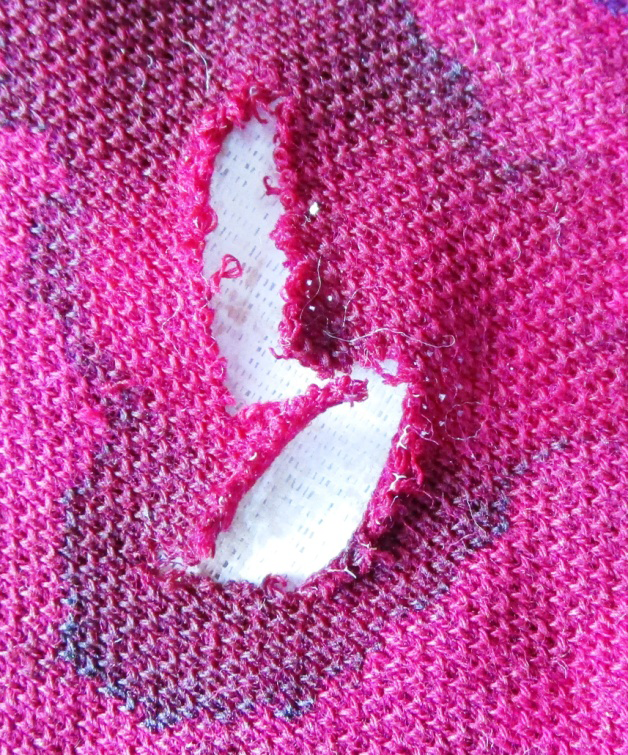
Comparison of Original and Test Cut Stabbing/ Cut Mark on Exhibit Marked Ex-B
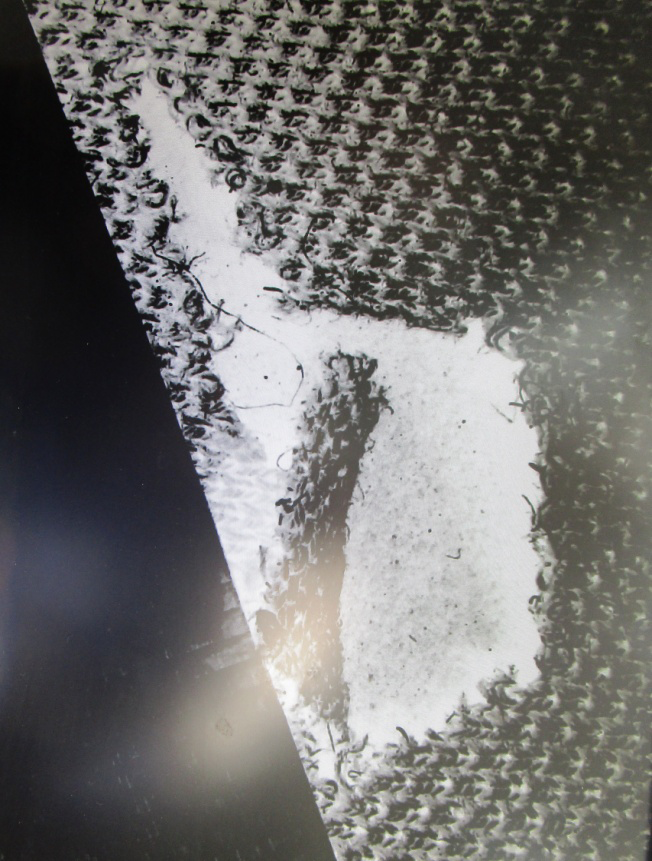
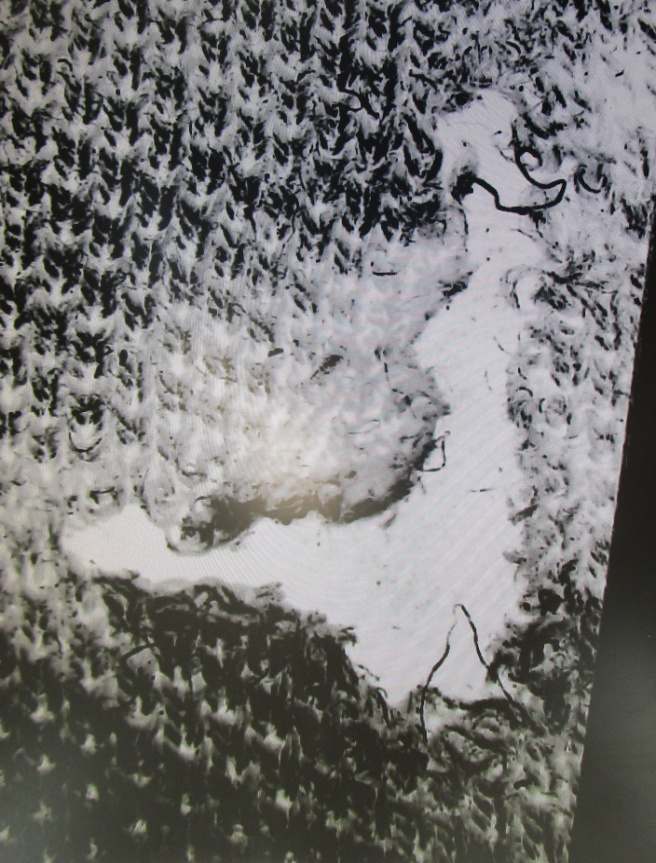
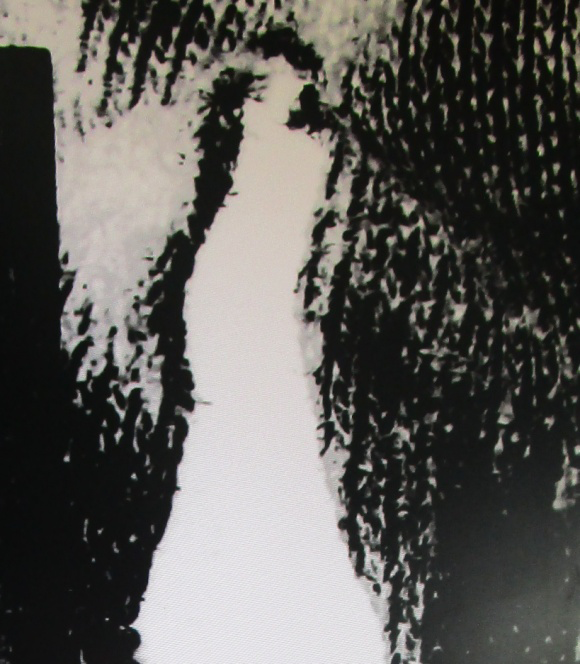
Based on the characteristics observed during the microscopic examination of the suspected and tested stabbing/cut mark on exhibit marked Ex-B, it is observed that, the microscopic analysis of the suspected and tested stabbing/cut mark on exhibit Ex-B revealed several distinctive characteristics indicative of the dynamic nature of the cutting action. These include bending and kinking of fabric fibres along the trajectory of the cut, indicating the application of external force by a sharp object such as a knife or blade. Additionally, twisting patterns were observed, suggesting rotational movement during the cutting process, which manifested as irregularities or spiral patterns in the fabric structure. The disruption of the weave pattern further corroborated the cutting action, with observable irregularities and discontinuities along the cut line. Changes in fabric structure and alignment, including compression and displacement of fibers, provided evidence of the force applied during cutting. Furthermore, at the termination of the cut, a significant rupture and separation of fabric fibers were noted, indicating the release of accumulated tension and stress [8]. These findings collectively underscore the forensic significance of the observed characteristics in determining the nature and dynamics of the cutting event (Figures 11-14).
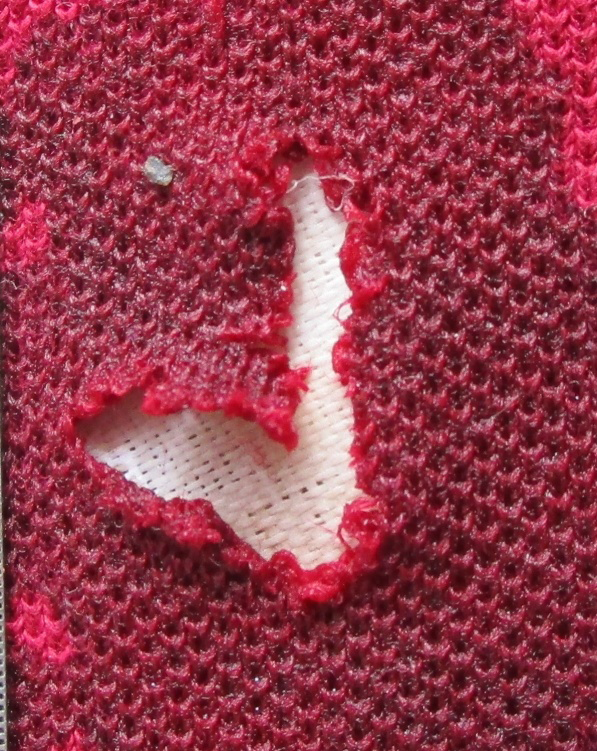
Comparison of Original and Test Cut Stabbing/ Cut Mark on Exhibit Marked Ex-C
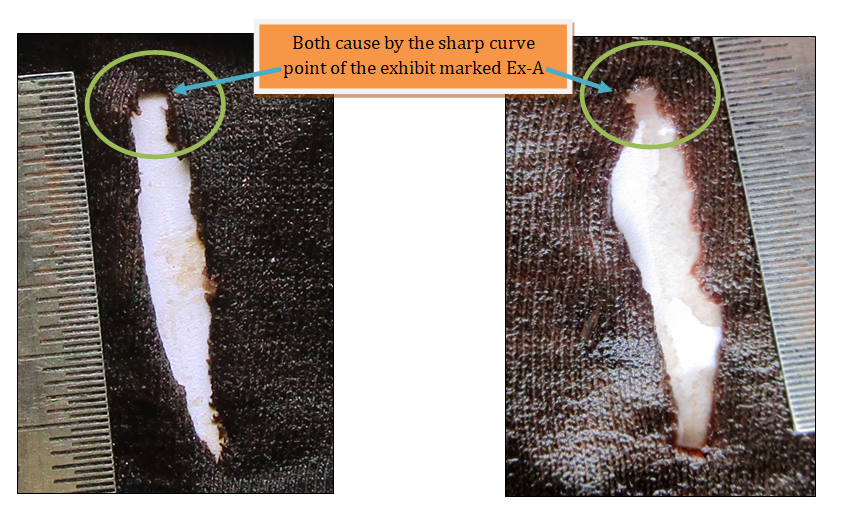
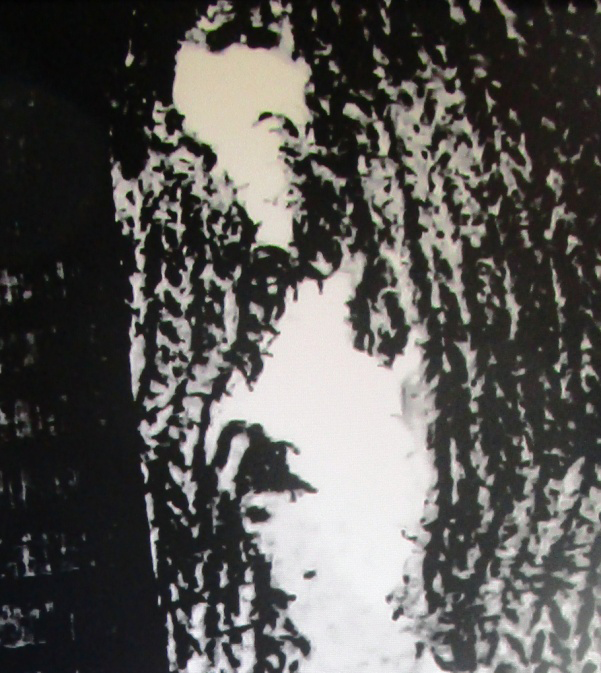
Based on the characteristics observed during the microscopic examination of the suspected and tested stabbing/cut mark on exhibit marked Ex-C, it is observed that, the microscopic analysis conducted on the suspected and test stabbing/cut marks, designated as exhibit Ex-C, revealed consistent and comparable features indicative of a congruent modus operandi between the original and test samples. Notably, both sets of marks exhibited characteristic features including bending and kinking along their edges, minuscule signs of rupture or deformation at the top edge, clear alignment of fibers on either side of the cut mark, and a narrow, uniform width of the stabbing/cut mark devoid of any discernible rupture or distortion at the fabric’s termination point [9]. These findings collectively provide compelling forensic evidence suggesting a similarity in the tools or techniques employed in the creation of both marks. The observed bending, kinking, fibre alignment, and structural integrity serve as critical indicators in forensic analysis, facilitating the establishment of a substantive connection between the original incident and the test scenario (Figures 15-18).
Results on Microscopic Examination of the Original and Test Tabbing/Cut Marks on Exhibit Marked Ex-B
The consistent patterns of fiber distortion observed around both the suspected stabbing/cut mark and the test stabbing/cut mark on Exhibit Ex-B indicate significant mechanical stress applied to the fabric during the cutting action. These stress-induced deformations include characteristic features such as bending, kinking, and twisting of the fabric fibers. These distortions are consistent with the forces exerted by a sharp object, as it penetrates and interacts with the fabric structure. Upon analysis of the fiber end characteristics of the cut marks, large, similar fraying patterns were observed. This fraying is attributed to the rotational force exerted by the suspected knife, Exhibit marked Ex-A, during the cutting action. The presence of a large rupture on the right side of the fabric at the fiber end suggests a counter clockwise rotational movement of the knife. This observation may offer insights into the handedness of the individual wielding the knife, as counter clockwise rotations are commonly associated with right- handed individuals [10].
The above mentioned similarities significantly strengthen the case, suggesting a high likelihood that the suspected cut marks and the test cut mark share a common origin.
Result on Microscopic Examination of the Original and Test Stabbing/Cut Marks on Exhibit Marked Ex-C
Both the original and test cut marks on Exhibit Ex-C display discernible tool mark features attributed to the sharp, curved tip of the blade [11]. These features include minuscule fabric ruptures, likely caused during the knife’s withdrawal from the victim’s body post-stabbing. The similarities in shape and positioning of these ruptures indicate consistent tool geometry and action. Examination of the fiber end characteristics of the stabbing/cut marks revealed notable resemblances, characterized by precise cuts and minimal fraying. This observation suggests uniform sharpness and cutting properties of the utilized tool in both instances.
These observed similarities substantially fortify the case, implying a strong likelihood that the suspected cut marks and the test cut mark share a common origin [12].
Discussion
The use of an optical comparator in the microscopic examination of suspected cut marks (Ex-B and Ex-C) offers valuable insights into their forensic characteristics. This method allows for precise comparison and measurement of features, aiding in the establishment of potential connections between the original and test cut marks. The findings derived from this examination contribute substantially to the investigation, offering a forensic link between the marks and potentially shedding light on the circumstances surrounding the incidents under scrutiny.
The significance of the curve sharpness of the knife, as represented by Exhibit Ex-A, cannot be understated in identifying the characteristic features of the cut marks on Exhibits Ex-B and Ex-C. A sharp, curved tip on a knife can produce distinct patterns of fabric deformation and fiber disruption, leaving behind unique signatures on the cut marks. These signatures may include specific bending, twisting, and rupturing patterns that are indicative of the cutting tool’s geometry and motion [13].
By focusing on the curve sharpness of the knife, forensic experts can discern subtle nuances in the cut marks that may not be immediately apparent through visual inspection alone. The optical comparator facilitates detailed examination of these features, allowing for precise comparisons and measurements to be made between the suspected and test cut marks.
Understanding the uniqueness of the discussion surrounding the curve sharpness of the knife involves recognizing its role as a critical factor in shaping the characteristics of the cut marks under investigation. By elucidating how the specific features of the knife interact with the fabric material, forensic investigators can glean valuable information about the tool’s involvement in the incidents at hand.
Ultimately, the comprehensive analysis of the suspected cut marks, in conjunction with other pieces of evidence, forms a crucial aspect of the investigative process. The insights provided by the optical comparator examination, coupled with considerations of the curve sharpness of the knife, contribute to a more thorough understanding of the case and aid in reaching informed conclusions regarding the common origin of the marks. This decision entirely depends on the expertise and the discretion of the expert concerned.
Acknowledgement
I am deeply grateful for the invaluable assistance provided by Mrs. M. Lapang, Assistant Director, Directorate of Forensic Sciences, Meghalaya Shillong, in the completion of this paper work. Her insight and thought significantly enriched the quality of this work.
References
-
James R, Claude R, Kenneth GW (2017) Forensic Examination of Fibres 3rd (Edn.), CRC Press/Taylor & Francis Group, Boca Raton, Florida, USA, pp: 488.
-
Pelton WR (1995) Distinguishing the Cause of Textile Fiber Damage Using the Scanning Electron Microscope (SEM). Journal of Forensic Sciences 40(5): 874-882.
-
Bostock E, Parkes GMB, Williams G (2013) A Novel Method for the Analysis of Slash Cuts to Clothing. J Forensic Res 4(5): 1-7.
-
Chesterene C, Jane MT (2021) Scientific Protocols for Forensic Examination of Clothing 1St (Edn.), CRC Press/ Taylor & Francis Group, Boca Raton, Florida, USA, pp: 252.
-
Monahan DL, Harding HWJ (1990) Damage to Clothing- Cuts and Tears. Journal of Forensic Sciences 35(4): 901- 912.
-
Rao MB (2006) Forensic Science Laboratory, Haryana, India.
-
Nabar BS (2013) Forensic Science in Crime Investigation, Asia Law House, Hyderabad, Telangana, India.
-
Carr DJ, Wainwright A (2011) Variability of simulants used in recreating stab events. Forensic Sci Int 210(1-3): 42-46.
-
Taupin JM (1998) Testing conflicting scenarios--a role for simulation experiments in damage analysis of clothing. Journal of Forensic Sciences 43(4): 891-896.
-
Kemp E, Carr DJ, Kieser J, Niven BE, Taylor MC (2009) Forensic evidence in apparel fabrics due to stab events. Forensic science International 191(1-3): 86-96.
-
Wiggins K (1995) Recognition, Identification and Comparison of Rope and Twine, Science and Justice 35(1): 53-58.
-
Mahall K (1993) Quality assessment of textiles - Damage detection by microscopy, Springer-Verlag New York, USA, pp: 227.
-
Fowles J (1974) Why we wear clothes. A Review of General Semantics 31(4): 343-352.
- Narcotics and Digital Forensics: Bridging Crimes in the Digital Age
- Ethics in Forensic Psychiatry: Principles, Dilemmas, and Human Rights
- Impact of Acute Stress on Attentional Orienting to Social Cues
- Head Injury and Intracranial Hemorrhage in Western Region of Libya
- A Forensic Study on Handedness: Examination of Handwriting Features in Right and Left Handed Writers
- Techniques for Latent Fingerprint Development Using Natural and Synthetic Powders: A Review