
A Forensic Appraisal of Neoteric Hyphenated Techniques for Separation and Detection of Narcotic Drugs
Narcotic drugs are traditionally been identified on basis of chromatographic-hyphenated techniques in instrumental analysis. Nowadays, contemporary neoteric chromatographic hyphenated techniques have received ever-increasing attention because the principal means to unravel complex analytical problems. A legal examination is a term articulated for examination of all sorts of violations that leads to the prove for any sort of wrong doing as a conclusion of the suspect. Forensic laboratories drugs are identified and separated by TLC, HPLC, HPTLC, GC, LC and known hyphenated techniques which are like HPLC-MS,HPTLC-MS, GC-MS, and LC-MS-MS etc. give reliable and confirmatory leads to drugs identification. HPLC-MS is more preferred method for separation and detection of narcotic drugs. The drawback of HPLC which it requires more solvent as compared to HPTLC. These techniques provide efficient, quick and straightforward method for detection and separation of narcotic drugs and psychotropic substances (NDPS). Analytical chemists face a challenging task in separating, identifying, and determining illicit drugs in pills and biological fluids. There is an increasing need to create advanced methodologies to reduce analysis time, improve sensitivity, and progress towards green chemistry. The hyphenated techniques help in low level detection, highly specific detection, and precise and accurate results for the forensic investigations.
S Thangadurai¹*, B Sithi Asma², A Palanimurugan² and A Cyril²
¹Department of Chemistry, Government Arts and Science College, Government of Tamil Nadu, Sivakasi - 626124, Tamil Nadu, India ²Research and PG Department of Chemistry, Raja Doraisingam Government Arts College Government of Tamil Nadu, Sivagangai - 630 561, Tamilnadu, India
Abrreviations
MS: Mass Spectrometry; LC-MS: Liquid Chromatography- Mass Spectrometry; GC-MS: Gas chromatography-Mass Spectrometry; CNS: Central Nervous System; DFSA: Drug- Facilitated Sexual Assaults; GHB: Gamma-Hydroxybutyrate; TOF: Time-of-Flight; HPTLC: High-Performance Thin-Layer Chromatography; TLC: Thin-Layer Chromatography; HPLC: High performance Liquid chromatography.
Introduction
The branch of science that examines the evidence acquired during a crime scene investigation is called forensic science. The branch focuses on how a person dies and looks for the actual cause of death. It is expected of forensic professionals to make objective assessments and to support the choice of procedures by explaining even the smallest details of the methodologies. The public, the media and the employees of the judicial system keep a close eye on everything that goes on. In recent years, powerful technologies have emerged that have given forensic scientists new analytical skills that were inconceivable only a few years ago.
been developed; nevertheless, the analysis of banned drugs may be confounded by the presence of numerous isomers, particularly optical isomers in which the identification of the isomer may be crucial to punishment. Currently, only a few portable separation systems are capable of separating and identifying the different types of optical isomers. The hyphenated technique is the combination or the coupling of the different analytical techniques. Mainly chromatographic techniques are combined with spectroscopic techniques. Then the separated components of the mixture from chromatographic technique will enter into the spectroscopic technique through an interphase (Figure 1).
One of the fastest expanding areas in forensic analysis is the use of information-rich technology like mass spectrometry (MS) to analyze forensic evidence. To enable more precise forensic evidence identification, there has been an increasing need over the past few years to bring this technology to the field for in the workplace, rapid processing. To do this, a number of portable mass spectrometers have
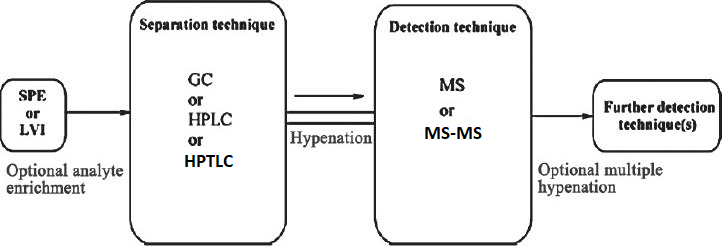
Tandem mass spectrometry (MS/MS) involves two separate stages of mass analysis and can be used to decipher relationships among ions in a mass spectrum or to identify compounds in complex mixtures that have not been subjected to prior separation. Pros and Cons of hyphenated techniques given below:
Advantages of Hyphenated Techniques
- Fast and accurate analysis
- Higher degree of automation
- Higher sample throughput
- Better reproducibility
- Reduction of contamination due to its closed system
- Separation and quantification achieved at same time
Disadvantages of Hyphenated Techniques
- The disadvantage is that only volatile samples can be investigated by this technique.
- Fragmentation patterns are poorly reproducible, databases are therefore problematic.
- Requires derivatization depending on the type of molecules that are analysed. Derivatization can mask the result.
- Different types of adducts can be produced, depending on the nature of the compounds.
- This technique is more suited for targeted analysis.
The development and application of statistical methods for drugs of abuse is crucial. Cocaine sold on the streets usually has a variety of contaminants added to it. These contain cornstarch, anesthetics, caffeine, sugar or other carefully selected chemicals to conceal the physical attributes of the cocaine and make it harder to detect [1]. Large variability of concentration found in the samples could lead the user to an accidental overdose. Addiction to drugs is a multifaceted worldwide issue that is influenced by political, cultural and socio-economic factors. Such hyphenated processes preceded the coupling of separation of a specific sample preparation off- line and subsequently adding a detection approach. Currently, the hyphenated approach is being developed by fusing online spectroscopic detection technology with a separation technique called chromatography. Drug of abuse research has made extensive use of separation techniques, especially when sample examination is required. Among these methods are tandem Liquid Chromatography-Mass Spectrometry (LC-MS), Gas chromatography-Mass Spectrometry (GC-MS) and two- dimensional gelatin chromatography-Mass spectrometry (LC- MS).
Illegal drugs can be either an irrelevant therapeutic substance or a drug with astonished capability. Illegal drugs include cannabis, cocaine, heroin, ketamine, amphetamine and ecstasy. Other medications found during the drug of abuse screening, like temazepam, diazepam and methadone, were classified as confused capability or medicinal depending on the circumstances. All drugs taken willingly by the subject were considered appropriate therapeutic drugs (sedative or not), including non-depressants analgesics like ibuprofen and paracetamol, as well as medication for depression and anti-psychotic medication with little to no tranquilizer side effects like venlafaxine and sertraline.
Heroin is not present because diamorphine, also known as heroin, converts quickly in the body to morphine. However, the complainant acknowledged to using heroin, heroin use was determined if 6-monoacetyl morphine was identified or if morphine was detected. Heroin is the most often sold drug in the underground economy. This medication, which is classified as an analgesic narcotic, has a brief half-life and breaks down quickly into morphine and 6-monoacetyl- morphine. Conjugation to the glucuronide’s morphine-3 and morphine-6 is the main route of morphine metabolism. Cancer pain is commonly managed with highly potent analgesics like morphine.
Numerous medical side effects, such a vasoconstriction, hypertension, cerebral hemorrhage, pulmonary edema, aggravation of pre-cardiac conditions and issues with the respiratory central nervous systems and gastrointestinal have all been related to the use of khat alkaloids [2]. Hypnagogic hallucinations can also a side effect [3]. Cardiovascular issues linked to khat use have also been examined [4]. Stroke cases linked to khat use have also been reported [5]. Both ethanol and khat alkaloid misuse can have clinical problems and alcohol consumption can enhance those risks. For those who are persistently addicted to khat alkaloids and alcohol, these problems can be lethal [6].
The naturally occurring plant known as khat is not covered by NDPS Act in India. A bill to combine and amend the laws concerning NDPS, to set strict guidelines regarding these substances and drugs [7], to permit the seizure of assets acquired through the illegal trafficking of psychotropic substances and drugs and to carry out the provisions of the International Convention on Narcotic Drugs and Psychotropic Substances [8]. The dried latex of the opium poppy, which includes many alkaloids, is known as opium. Its accurate and dependable detection of biological and non-biological substances is crucial in forensic and clinical toxicology. Morphine is used to make codeine, an alkaloid that is present in opium in minuscule levels. The Asian opium poppy plant’s seed pod is the source of morphine, an opioid drug used to make heroin. A speedball is when heroin and crack cocaine are mixed together. Methamphetamine is a psycho stimulant that acts more strongly on the central nervous system (CNS) than amphetamine, although having a similar chemical structure. Similar to cocaine, methamphetamine causes excitement and pleasure upon ingestion; however, the effects of methamphetamine last longer (6 to 8 hours after a single dose).
Drug-facilitated sexual assaults (DFSA) frequently involve the use of stimulant and sedative medications. Alcohol, amphetamines, benzodiazepines, various opiate analgesics and sedative hypnotics such as zopiclone and diazepam are the substances most frequently encountered in such cases [9, 10]. Non-opiate analgesics and illicit drugs have also been documented in these types of cases. Alcohol is not surprising because the great majority of claimed DFSA instances occur during or after social events. Rather than the “loss of consciousness” scenario most media portrays in DFSA cases, a decrease of inhibitions could be caused by high alcohol concentrations and/or illegal substance usage. It is commonly recognized that combining alcohol with sedative medications including benzodiazepines, cannabis and gamma-hydroxybutyrate (GHB) increases intoxication. Alcohol and GHB use together have resulted in several fatalities [11].
In recent years, the media has focused a great deal of attention on the subject of DFSA. Even though many of these cases are obviously not dates, the media has come to refer to them as “date-rape.” Instead, most toxicology practitioners prefer to refer to it as DFSA, it is characterized as the use of a drug, harsh material, or chemical agent to promote arousal. Flunitrazepam (Rohypnol), a benzodiazepine drug and more recently GHB and ketamine, have been specifically linked in the media to criminal activity [12, 13, 14].
The literature has a wealth of information about these substances’ sedative qualities, which make them appealing as agents for this kind of crime [15, 16]. They will become more sedative when used with alcohol. Despite reports of the use of GHB and Flunitrazepam in DFSA patients, there isn’t any solid scientific proof that any one drug is being used specifically. The analytical process employed in the examination of DFSA cases complies with established rules and recommendations for the cytotoxic analysis of such forms of crime [17, 18].
The need for contemporary scientific methods used in forensic toxicology to resolve conflicts is gradually growing. Hyphenated analytical methods have advanced significantly over the past 20 years, allowing for a greater range of applications in the examination of materials such as natural products, biomaterials, explosives, elemental species and trace elements. Recent advancements in the uses of numerous with hyphenated techniques, including GC-MS, LC-FTIR, LC-MS, LC-NMR, etc., in a variety of sectors, including the environment, forensic science, geography, pharmaceuticals, biotechnology, etc., were covered by Patil D, et al. [19] with relevant examples.
Recently, there has been a lot of interest in the use of hyphenated LC-MS procedures for biochemical fingerprinting studies for the standardization and quality control of medicinal herbs. The two most often used capitalized techniques in use today are LC-MS and GC-MS, with MS acting as the primary detection method and the most commonly utilized apparatus being time-of-flight (TOF) mass spectrometers, ion traps and single and triple quadrupole mass spectrometers. Noroska G, et al. [20] examined the most popular techniques for identifying and measuring drugs of misuse in biological fluids, connective tissues and artificial specimens using mass spectrometry methods in forensic toxicology.
Biochemical degradation can give more structural information and increase the accuracy and particularity of LC-MS techniques notably for less polar compounds. Derivatization has enhanced analysis of plant extracts, including the capacity to quantify volatile acids like formic acid, which are difficult to measure using GC-MS. This shows the promise of derivatization for metabolic profile development in LC-MS. Wang SM, et al. [21] primarily addressed the LC-MS and GC-MS analysis of drugs of abuse in their discussion.
The type of drug that was taken from the offender will dictate the punishment for manufacturing, consuming illegally, possessing and trafficking. Therefore, it is essential to fully characterize and identify any narcotic and psychotropic compounds that have been seized. The purpose of several hyphenated analytical techniques and the associated analytical approaches in the analysis of narcotic drugs are the main topics of this review article.
Chromatographic Techniques
Thin Layer Chromatography (TLC)
Despite being an outdated method, it is nevertheless widely used in the field of narcotic drug analysis. In TLC, a thin layer of a solid support typically made of glass, plastic or aluminum is covered with a solid phase, known as the adsorbent. Several factors influence this type of chromatographic separation’s efficiency. First, there should be significant variations in elution rates due to the adsorbent’s high selectivity for the chemicals that need to be separated. The high specificity of TLC has been applied to quantitative analytical tasks using spot elution and spectrophotometric measurements. There are several reasons why opium alkaloids have been subjected to TLC, which include:
- studying the alkaloids found in plant material and opium;
- studying the alkaloids found in pharmaceutical preparations;
- studying the alkaloids found in biological materials, where they are typically used to identify drugs of abuse in addicts; and
- researching how animals and humans metabolize opium alkaloids.
Using silica gel plates and chloroform-acetone-25% ammonia, good results were obtained in an analysis using TLC separation of papaverine and its breakdown products (75:25:1). Other adsorbents, such as calcium carbonate, calcium sulphate and magnesium oxide, have also been employed in addition to silica gel and aluminum oxide. Many researchers have employed two-dimensional TLC for opium alkaloids in order to detect them in TLC. The most used techniques include iodine, Dragendorff’s reagent and iodo platinate reagent. Opiate alkaloids come in three different varieties. First, there are the poppy-like alkaloids, hich include morphine, codeine, thebaine, noscapine and papaverine; then there are the semi-synthetic and synthetic derivatives, which include dextromethorphan, pholcodine and ethyl morphine; and finally, there are the illicit drug compounds, diacetylmorphine (heroin) and opium drugs, which are used as substitutes for other drugs used in addiction treatment, like buprenorphine and methadone. In order to accomplish an apparent distinction between morphinan and isoquinoline compounds during conventional TLC of opium alkaloids, complex eluents containing strong alkaline substances are essential.
For thousands of years, cannabis has been utilized as a medical plant. There are currently over 700 different types of cannabis, each with hundreds of different components, such as fatty cannabinoids, which are the physiologically active elements and volatile terpenes, which have various fragrances.
Sherma J, et al. [22] have compiled the TLC’s examination and study of cannabis and its components, as well as synthetic cannabinoids, for medical and recreational purposes. As a last resort for identifying molecules in an unknown sample, highly accurate and efficient findings can be obtained by the use of advanced hyphenated instruments. For the long time, medicines have been separated and detected in biological and non-biological samples using TLC, a conventional analytical technique. Because of its lower adsorbent particle size, HPTLC is said to have numerous advantages over TLC.
High Performance Thin Layer Chromatography- Mass Spectroscopy (HPTLC-MS)
High-Performance Thin-Layer Chromatography (HPTLC) is the most advanced type of Thin-Layer Chromatography
(TLC). Using high-efficiency chromatographic layers and cutting-edge equipment, HPTLC produces chromatograms that are precise, established and repeatable and is evaluated using software. HPTLC is a comprehensive concept, including established statistical and qualitative assessment methodologies and a fully defined methodology based on scientific fact. A large matrix load, low delectability of the compounds or UV pollutants, a paucity of solvents compatible with MS, or other factors prevent all samples from being processed using HPTLC-MS, HPTLC-DAD, or HPTLC-MALDI, according to surveys. However, HPTLC is still another quick and effective way to separate materials. In the past, unidentified substances were removed from TLC-HPTLC plates, rinsed into a tube filled with solvent and then submitted to the mass spectrometer. Introduction of the method, HPTLC-MS interface, benefits with examples, HPTLC and MS information and method applications have all been recently investigated by Bhole RP, et al. [23].
Kanak L, et al. [24] characterized HPTLC-MS as a cutting-edge hyphenated method for forensic identification and drug separation. This technology makes it possible to quickly, easily and effectively identify and separate psychotropic compounds from narcotic medicines. Using HPTLC-MS (CAMAG equipment), the following substances were tested: papaverine, methadone, Ketamine, Cocaine, Caffeine, Phenobarbital, Acetaminophen, Codeine, Thebaine, Diazepam, Methamphetamine, Heroin, Narcotine, Carbamazepine, Ephedrine and Morphine. The majority of these substances are frequently found in drug seizures. These medications are marketed illicitly under numerous names and through numerous channels. Abuse of opioids or a decrease in breathing effort are serious dangers. Amnesia and strong dissociative anesthesia are the effects of ketamine, a derivative of phencyclidine. Because it is a cheap anticonvulsant, phenobarbital will continue to be significant in developing nations. The technique has paved the way for scientists to advance toward more cost-effective, clean and environmentally friendly technology that uses less solvents.
High Performance Liquid Chromatography (HPLC)
High performance liquid chromatography (HPLC) is used to separate various combinations of molecules found in pharmaceutical and physiological environments in order to better understand the roles of different components. In addition to having excellent selectivity, the HPLC process may also produce the necessary precision. It should be mentioned, nonetheless, that comprehensive system suitability studies must be carried out before the HPLC analysis in order to attain the extraordinary specificity, precision and accuracy. High specificity, precision and accuracy come at a great expense as a result. Validated methods for determining cannabinoids in cannabis samples have been proposed by Zivovinovic S, et al. [25]. The application of RP-HPLC-UV broadens the scope of this technology and allows it to identify acidic precursors even more quickly than GC-based methods. Their main goal was to create and verify a rapid and simple RP-HPLC method based on an UV sensor for the identification of cannabinoids in forensic cannabis samples and cannabidiol (CBD) samples.
The advent of could be hazardous NPS which are not subject to worldwide law has occurred recently, which has prompted the creation of various particle techniques for precise determination of these substances. For the first time, NPS in oral fluid was concurrently detected using a quick Ultra-Performance Liquid Chromatography-tandem mass spectrometry approach (UPLC-MS-MS) and a sample preprocessing based on micro extraction by compacted sorbent (MEPS). This matrix works well in replacement therapy programs for drug control, as well as for lowering and preventing traffic accidents, in substitution of traditional biological samples. The HPLC-MS approach for identifying and separating narcotic drugs and psychotropic compounds is efficient, rapid and straightforward.
Liquid Chromatography-Mass Spectrometry (LC-MS)
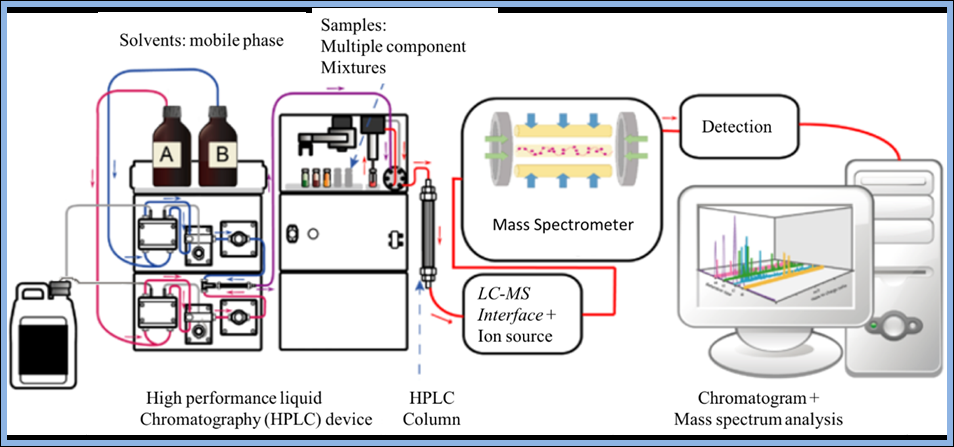
A double three-way diverter in line with an auto sampler, an LC system and a mass detector is what makes Liquid chromatography combined with mass spectrometry (LC-MS) one of among the most important techniques of the last 10 years. As a versatile separation technique, LC has improved the identification and determination of analytes such as amphetamines, cocaine, opiates, cocaine, hallucinogens, pharmaceutical products, designer drugs and illicit drugs in a variety of matrices. A diagram of an LC-MS apparatus is shown in Figure 2. Widespread application of LC-MS analysis has tremendously benefitted both the structural characterization of potential drug molecules and metabolites in bodily fluids and the quantitative investigation of medications in various biological matrices.
Presently, the industry offers a wide range of LC-MS systems with different input options. The design of the interfaces enables sufficient sample ionization, liquid nebulization and vaporization, ion extraction and solvent vapour removal, into the mass analyzer. For instance, electrospray ionization (ESI) and air pressure chemical ionization are the two interfaces that are most frequently utilized in natural product analysis (APCI). The latter is referred regarded as “the chromatographer’s LC-MS interface” due to its linear response, broad applicability, elevation in solvent rate capabilities and sensitivity. Compounds ranging from polyaromatic (non-polar) to peptide and protein can be found using LC-MS. Compound identity and purity are determined using LC-MS. used in environmental monitoring to identify herbicides, pesticides and organic pollutants. The extremely selective LC-MS approach uses quadruples, an extremely sensitive mass analyzer technique. Because it makes it easier to detect time-to-flight (TOF), quadruple ion traps, identify substances in real time when there is other to-flight reflection (TOFR) and identify ion cyclotron compounds, LC-MS is known as selective mass spectrometry.
This was previously unimaginable to identify medications and their metabolites at extremely low concentrations, but recent developments in analytical techniques have made this possible. In reality, because of their high sensitivity, specificity and capacity to handle complicated matrices, use of the LC- MS and LC-MS-MS techniques as confirmation processes is growing in popularity. Additionally, for a large number of compounds, LC-MS methods do not require the time- consuming derivatization steps required for GC-MS; however, ion reduction or enhancement due to complex matrices is a common investigation challenges that must be dealt with during technique development and validation. Using liquid chromatography/triple quadrupole mass spectrometry (LC- MS), Koen Deventer K, et al. [26] have developed a novel method of screening urine for 18 compounds with the aim of anti-doping.
As an interface, electro spray ionisation (ESI) was used. To evaluate each compound’s mass spectrometric behavior in terms of choosing ions specific to the product, infusion tests were performed on all of them. After that, a tandem mass spectrometric method based on selective reaction monitoring (SRM) was built using these product ions. Shakleya DM, et al. [27] used LC-MS to examine possible drug relapse in 15 pregnant heroin users by measuring cocaine, opiates and byproducts in 284 urine specimens collected three times a week. The difference in opiate and cocaine biomarker patterns revealed following LC-MS versus GC-MS analysis is intriguing. Because of their high sensitivity, LC- MS and GC-MS are the most often utilized techniques among others. Usman M, et al. [28] have thoroughly researched and analyzed the comprehensive understanding of drug deposition, extraction, analysis and application of results in forensic and clinical situations. Although there are a number of methods for identifying opiates and their metabolites, LC appears to be the one that can separate the fatty and aqueous analytes of the whole hormonal profile of heroin and morphine without the need for pretreatment. After the parent drugs are administered, opiate metabolites detected in various biological matrices can be determined using LC linked to MS, as discussed by Zuccaro P, et al. [29].
While LC-MS has significant advantages for trace analysis in complex matrices, it also has a number of drawbacks that must be addressed when utilizing this technique. Polar and non-polar substances, as well as thermolabile molecules, can be analyzed using LC-MS. LC-MS has evolved as one of the most potent analytical methods for screening and identifying drug metabolites in this regard. Advancements in the LC-MS sector have facilitated researchers’ comprehension of drug metabolic routes and drug-drug interactions.
Liquid Chromatography with Tandem Mass Spectrometry (LC-MS-MS)
Liquid chromatography is employed in conjunction with tandem mass spectrometry (LC-MS-MS) because of its exceptional selectivity, sensitivity and reproducibility. This method is more sensitive and specific than the LC-MS method. It is roughly 20-100 times more sensitive than LC-MS. Specifically, the time of analysis is also involved in the second filtering phase in this technique. For analytical toxicologists [30, 31, 32, 33, 34, 35], the introduction of novel psychoactive chemicals is a constant issue. Different analogues are constantly being launched into the market in order to get around legislation and improve pharmacological efficacy. Although drug detection in blood shows recent exposure and links intoxication to the causative agent, in clinical and forensic settings, urine is still the preferred testing matrix.
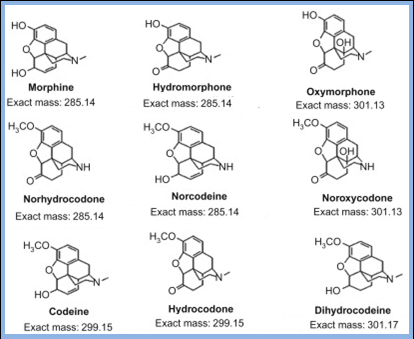
tests occur [36]. Figure 2 displays the chemical structures of a number of opioids as well as their demethylated metabolites. Multiple transition monitoring in conjunction with robust chromatography is necessary to discriminate between structurally related compounds.
When substances with identical molecular weight and probably the corresponding shattering patterns are not separated chromatographically, problems with LC-MS/MS
Huestis MA, et al. [36] have developed and validated a sensitive and specific LC/MS/MS approach for the simultaneous detection of cocaine, opioids and metabolites in urine. The method proved to be user-friendly and time- efficient and it may be used in clinical research projects to track drug usage and methadone treatment compliance. Allain A, et al. [37] have created a rapid, precise and focused method for detecting opiates, cocaine and their metabolites in plasma, urine and blood. Furthermore, Joyce K. Klu et al. [38] have developed a method to measure 9-tetrahydrocannabinol (THC), the main active ingredient in marijuana, in the entire blood stream using solid-phase separation and LC-MS-MS.
Yan Jiang et al. have developed and validated an LC- MS-MS approach for both the detection and quantization of 38 medications for depression, psychotics and related byproducts in tiny amounts of human whole blood [39]. In order to evaluate Δ9-tetrahydrocannabinol (THC), 11-hydroxy-Δ9-THC (THC-OH) and 11-nor-Δ9-THC-9- carboxylic acid (THC-COOH) in postmortem solid specimens, Al-Asmari and colleagues devised and established an LC-MS approach [40, 41]. THC and its metabolites (THC-OH and THC-COOH) in tissues must be measured by any forensic toxicology detection method, particularly in situations when solid tissues may be the only samples accessible for testing due to the high degree of decomposition of the body.
Milena MM, et al. [42] examined the facial and its tail hair of horses in order to develop and validate a sensitive LC-MS-MS method for the identification and quantification of commonly provided sedatives, opioids and non-steroidal anti-inflammatory medicines. Thirteen commonly used medications were tested using the authorized LC-MS/MS technology. In order to measure tetra hydro cannabivarin (THCV) (WB), 11-hydroxy-THC (11-OH-THC), (+)-11-nor-Δ9- THC-9-carboxylic acid, cannabinol (CBN) and CBD, Hubbard JA, et al. [43] developed an LC-MS-MS approach. For the purpose of discovering novel psychotropic compounds in oral fluid, Ares AM, et al. [44] have presented a quick bio analytical approach based on minute extraction by packaged absorbing material and UPLC-MS-MS.
Deveaux M, et al. [45, 46] have presented a synopsis of the phenomenon of drug-facilitated crime (DFC), mainly in France. Not only have there been more scientific studies and congress presentations on the subject recently, but there have also been more incidents of robberies and sexual attacks. National inquiries have found that substances such as opioids, barbiturates, anaesthetics, hallucinogens, moderate tranquillizers and neuroleptics, benzodiazepines and benzodiazepine-like medications (zopiclone, zolpidem) are among those that appear to be connected to DFC. Some of these substances are unique to France in DFC conditions. ElSohly MA, et al. [47, 48, 49] have developed a technique that uses LC-MS-MS to identify opiates in wastewater samples.
A method for analyzing the content of several illegal narcotics included in dietary supplements has been devised by Choi JY, et al. [50]. They have developed and refined a method for concurrently analyzing 28 narcotic chemicals in powders, liquids, pills and capsules that are found in different types of nutritional supplements using LC-MS/MS. Furthermore, cookies and candies with adulteration cases found were also examined. Additionally, they examined 47 dietary supplements that are sold commercially and were acquired in Korea. Although the 28 designated narcotic adulterants were not found in any of these samples, their unique LC-MS/MS technique can be used extensively and continuously to track the adulteration of illegal drugs in dietary supplements.
Abuse of cocaine (COC) is a major issue both domestically and internationally. Crack COC is a stimulant that is very addictive and can be consumed as a powder or free base. It creates feelings of excitement and attentiveness. Snozek CLH, et al. [51] have developed a method for detecting and quantifying parent’s COC, its primary compound benzoylecgonine and several other its byproducts that can reveal details about the validity of the sample (m-hydroxy benzoylecgonine), potential risk, mode of administration and co-utilization with ethanol Knittel et al. offered validated techniques for identifying and measuring 15 parent’s produced cannabinoids in bloodstream and the urine metabolites associated with them using LC-MS-MS.
A significant public health worry with new psychoactive drugs (NPS) is the rise in serious poisoning episodes. It is challenging to find these chemicals. Furthermore, Jose Luiz Costa used the LC-MS-MS technology to design and confirm a sensitive screening method for 104 drugs of misuse in fluid from the mouth. Among these substances were fentanyl analogues, synthetic cathinones, synthetic cannabinoids, phenethylamines and other psychotropic substances that are abused. A method for simultaneously measuring the six primary opiates in serum, urine, whole blood, plasma and meconium has been disclosed by Coles R, et al. [33].
Jose Luiz Costa et al. concurrently measured more synthetic opioids: furanylfentanyl, carfentanyl, acrylfentanyl, alfentanil, valerylfentanyl, thiofentanyl, acetyl fentanyl and furanylfentanyl. They also assessed two metabolites: acetyl norfent and norfentanyl. Worldwide, a significant proportion of overdoses and fatalities are caused by synthetic opioids. Nowadays, fentanyl and its derivatives are sold in counterfeit medications like hydrocodone, oxycodone and alprazolam, or combined with cocaine, heroin and methamphetamine. Gerd Jakobsson established and verified an LC-MS-MS method for quantifying morphine-6-D-glucuronide, morphine-3- D-glucuronide, codeine-6-D-glucuronide, normorphine, codeine, norcodeine, 6-acetylmorphine and ethylmorphine in urine. This method was applied to fatalities due to opiates as well as metabolic disorders.
Amphetamines, or amphetamine-type stimulants (ATSs), are a class of toxicological and pharmaceutical substances with a molecular structure similar to that of Phenethylamine. They commonly cause anorexia, vasoconstriction, hallucination and excitation of the central nervous system. Middleberg RA, et al. [52] have revealed a method for testing urine and serum utilizing an LC-MS-MS technology. Methamphetamine has a high level of addiction. Death rates have risen in a number of countries. To lower the risk of addiction, crime, suicide and other methamphetamine- related mortality, more public awareness, education and treatment initiatives are needed. This procedure was then used to standard postmortem blood specimen examination to assess the method’s applicability. Ahrens BD, et al. [53] have reported on a combined LC-MS-MS and GC-MS testing approach for the detection of all stimulants and chemicals that are forbidden by the World Anti-Doping Agency.
A very simple and efficient extraction method has been developed by Hara K, et al. [54], for the purpose of screening a variety of pharmaceuticals found in postmortem autopsy materials. In actual autopsy cases, these methods were utilized to identify 94 and 124 compounds, respectively, using GC- MS and LC-MS-MS. The novel methods for removing a broad variety of compounds from postmortem samples might be easily included into a forensic laboratory’s typical workflow.
Gas Chromatography – Mass Spectrometry (GC- MS)
GC approaches hyphenated with MS are most appealing, according to the concepts of “green analytical chemistry,” due to the possibility that the mobile phase in GC-based techniques won’t significantly pollute the environment. GC- MS, or gas chromatography-mass spectrometry, is a type of analytical technique that is called hyphenated. In actuality, it is a single approach for evaluating organic chemical combinations that combines two approaches. While mass spectrometry is used to describe each component independently, the components of a mixture can be sorted using gas chromatography (GC). By combining the two techniques, a sample containing many chemical substances can be evaluated both thoroughly and statistically. A few uses for GC-MS include forensic, environmental, geological and chemical research. For forensic toxicological investigations of drugs of abuse, where expediency is paramount, sample treatment is not preferred, even if high molecular weight substances can be derivatized and analyzed by GC. Because of this, the bulk of GC-MS developments center on improving the analysis’s resolution and separation capabilities.
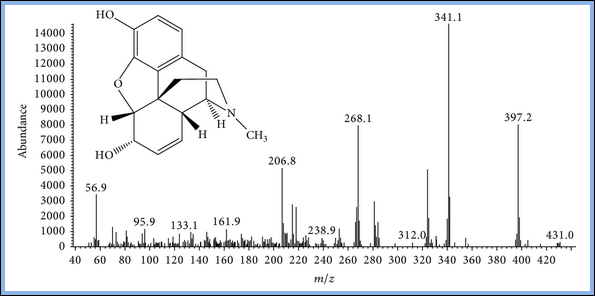
The first technique of this sort to be applied to study and development was the hyphenated GC-MS method. It was created by merging GC with MS. Further structural information is obtained by analyzing fragmentations in mass spectra generated by this hyphenated technique. It is possible to compare library spectra to fragment ions that have different relative abundances. Compounds that are small enough, suitably volatile and stable at high temperatures can be readily evaluated by GC-MS under GC conditions. In judicial and medical toxicology labs, GC and LC in conjunction with mass spectrometry (GC-MS and LC- MS) are the most often used techniques. Xiaoqian Z, et al. [55] constructed and verified a sensitive and selective GC-MS technique for detecting codeine and morphine in human pee, which is shown in Figure 4.
During forensic identification investigations, this method proved effective in detecting codeine and morphine in human urine.
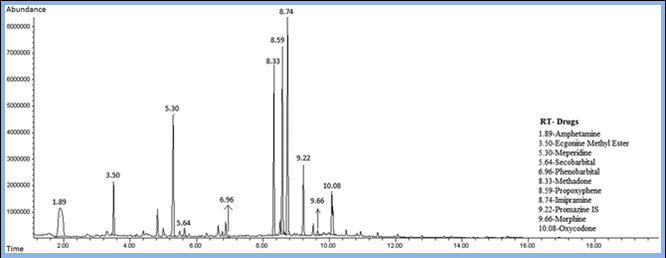
Guillot and associates have introduced an analytical method for detecting free 6-acetylmorphine (6-AM) heroin and free morphine in urine, vitreous humor and blood [56]. When heroin use is under suspicion as the reason of death in postmortem cases, this technique is applied. During this derivatization, neither heroin nor the internal standard, diethyl nalorphine, underwent any changes. Full-scan ion trap (250-405 amu), reaction products were analyzed using GC-MS. The distinct mass spectra and baseline separation of every substance relevant are obtained using this method. An effective and quick GC/MS approach for thorough drug screening in urine has been reported by Garg U, et al. [57]. It uses the GC/MS analysis, sample concentration and liquid- liquid extraction depicted in Figure 5.
A rapid and simple technique for identifying synthetic cannabinoids in plant mixes and human blood has been developed by Saito K, et al. [58] using Gas Chromatography- Mass Spectrometry (GC-MS) in conjunction with Head Space solid-Phase Micro Extraction (HS-SPME). This method demonstrates the application of a simple, quick and effective screening procedure for unlawful herbal mixes and blood samples. In 2008, it was found that herbal smoking combinations sold on online and in “smart stores” contained several synthetic cannabinoids. These compounds are sold on the street and have proliferated in the illegal drug trade along with other novel psychoactive drugs. To investigate the pharmacokinetic, pharmacodynamic and toxicological characteristics of synthetic cannabis, quick analytical methods for its identification and measurement in biological systems must be developed and assessed. To demonstrate the feasibility of using the method of direct solid-phase micro extraction with GC-MS to identify manufactured and authentic cannabinoids in oral fluid, Anzillotti L, et al. [59] conducted a pilot investigation, as shown in Figure 6.
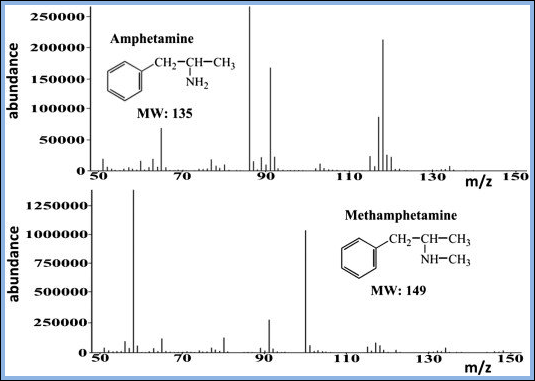
Alternative specimens have been used in place of whole blood in postmortem toxicological testing on occasion. McIntyre IM, et al. [60] have investigated the utility of vitreous humour in drug screening, determining if it might substitute (or supplement) whole blood. In whole blood, they were able to uncover a total of 209 results, compared to 169 in vitreous. There was a total of 71 chemicals found in whole blood and 60 in vitreous humour. They speculated that vitreous fluid would be a good candidate for drug screening in postmortem toxicology shows in Figure 7.
Blood can be tested for free morphine and codeine using a sensitive approach developed by Matyus M, et al.
[61]. It is possible to identify the usage of illegal drugs by using this method. This test has legal applications as well as monitoring therapeutic dosages. The amount of each of the resultant chemicals (SIM) is measured using the GC-MS instrument in the specific ion phase. Robert Meatherall has described a method for GC-MS confirmation of morphine, hydromorphone, hydrocodone, oxycodone, 6-acetylmorphine, codeine and oxymorphone in urine specimens [62, 63].
Wasels R, et al. [64], given a review of opiates analysis using GC-MS. The most popular the process of hydrolysis extraction and derivatization techniques for the GC-MS
detection and measurement of both legal and illegal opiates in a range of bodily fluids were the focus of this research. According to the NDPS Act, several cases of opium or its derivatives being abused have been reported within the past few years. The investigators examined Khajuria H, et al. [65] to determine whether they could measure the amounts of morphine that built up in human hair over time.
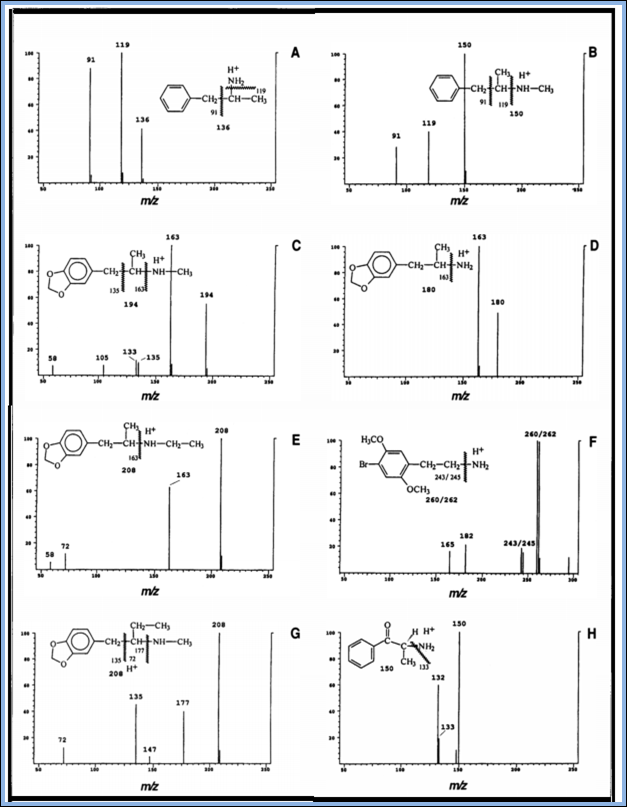
Segura J, et al.’s approach [66] for identifying drug addiction in hair has been proposed. It involves two steps: first, a straightforward ELISA is used to screen for cocaine, opiates and its metabolites, as well as benzodiazepines. Samples that test positive for opiates, cocaine metabolites are then subjected to gas GC-MS to confirm that they exist. Other
medications used in replacement therapy, like methadone and its primary metabolite, also be detected in the same GC-MS run. A method for identifying and measuring cocaine (COC), morphine, ecgonine methylester (EME), benzoylecgonine (BZE), 6-monoacetylmorphine (6-MAM), ethylmorphine (EM), ethylmorphine (EM), codeine (COD) and cocaethylene (CE) in the hair of opiates and cocaine users was disclosed by Kintz and Mangin. It is still difficult to identify cocaine, opiates and metabolites at the same time in small biological samples. Cone EJ, et al. [67] have put together a list of important methods that have been published in the previous ten years for the development of tests for these analytes, including detection mode, extraction, chromatographic settings, derivatization and data acquisition.
The Mandatory Guidelines for Federal Workplace Drug Testing Programs provide that GC-MS must be used to verify urine specimens suspected of being positive. For occupational drug testing, methamphetamine, amphetamine, 11-nor-delta 9-tetrahydrocannabinol-9-carboxylic acid (THC-acid), phencyclidine, morphine, benzoylecgonine and codeine must be confirmed in urine, Goldberger BA, et al. [68] focused on GC-MS methods. Furthermore, the current laboratory issues for each drug class were reviewed. Drug testing usually involved extraction techniques derivatization if necessary and GC-MS detection with the selected ion tracking mode or full scan gathering. The most important and extensively utilized technology for classifying and evaluating solid-dosage medications is GC-MS. Using GC-MS, Brettell TA, et al. [69] provide a thorough, helpful technique for rapidly detecting and screening most of the substances of abuse that are commonly seen in forensic drug labs.
A fast, accurate and specific fast gas chromatography– mass spectrometry (FGC-MS) analytical method was developed by Rana S, et al. [70] to swiftly and concurrently detect the presence of codeine, hydromorphone, morphine and hydrocodone in human urine using hydrogen as a carrier gas. Byrska B, et al. [71] have described how to alter a standard GC procedure for identifying psychotropic and narcotic compounds as well as how to choose the best settings for FGC-MS analysis of the materials. The method that was developed can be applied to regular qualitative examination of psychotropic and narcotic drug samples. Usman M, et al. [72] have described and evaluated a covert product of a medication that has been changed. The examination of morphia tablets showed that they were a modified form of heroin obtained from the streets. Identification and validation of drugs of abuse in blood is becoming more and more common in forensic and clinical toxicology. Commercially available urine cassettes with immunoassay technology are typically used to test for drug misuse; however, advanced analytical tools like HPLC, LC-MS and GC-MS are required to verify the accuracy of these data. There have been several attempts to develop confirmatory methods for identifying drugs of abuse in blood and urine. However, utilizing GC-MS Selective Ion Monitoring technology, Santhosh SR, et al. [73] tried to apply one approach for simultaneously identifying and quantification of ten drugs of abuse in whole blood and urine matrix.
Benites J, et al. [74] have introduced a rapid, precise, sensitive and tailored technique for concurrently measuring fentanyl, methadone, morphine, heroin, 6-monoacetylmorphine (6-MAM) and codeine in human whole blood and plasma. Huestis MA, et al. [75] were used GC-MS to screen for cocaine, codeine and metabolites in sweat. Having the specificity and sensitivity required by clinical and forensic toxicologists, the method was quick, simple and accurate. Many criminal laboratories spend a significant amount of time analyzing drugs of abuse. The most important and extensively utilized technology for classifying and evaluating solid-dosage medications is GC-MS.
Gas Chromatography with Tandem Mass Spectrometry (GC-MS/MS)
GC-MS is widely employed in forensic toxicology to detect steroids and poisons in biological samples, as well as in anti- doping labs to detect performance-enhancing drugs like anabolic steroids. GC-MS can be used to identify barbiturates, narcotics, alcohols and drugs such as anesthetics, anticonvulsants, sedative hypnotics, antihistamines and anti-epileptic therapies. Finding noxa in biological matrices is a crucial responsibility for witnesses who are experts and forensic toxicologists. Because of this, it’s still very popular to find and measure illegal drug residues in human hair. Uhl M [76] conducted tests on human hair for the most commonly abused compounds, such as heroin and other cannabis, amphetamine derivatives, opioids and cocaine utilized the benefits of GC-MS-MS.
Wozniak MK, et al. [77] reported a GC-MS-MS approach for identifying over 670 New Psychoactive Substances (NPS) in blood samples. Tested on actual forensic samples, the methodology demonstrated its suitability for measuring a variety of psychoactive substances in routine toxicological assessments. They claim that this is the first study to show how to use GC-MS-MS to determine NPS in blood samples that is simple to modify the process they developed for use with additional compounds. A lot of effort is being put into developing GC-MS/MS-based systems for routine toxicological analyses due to the technology’s adequate sensitivity and selectivity for identifying traces of analytes in intricate biological matrices. Additionally, GC-MS-MS-based techniques have been proposed as being more economical and ecologically friendly than LC-MS-MS-based analyses. The analysis of biological material using GC-MS-MS has not yet proven to be a useful method; instead, it has only been successful in identifying NPS in seized materials.
Pichini R, et al. [78] were presented an analytical technique for identifying coca ethylene, heroin, benzoylecgonine, 6-monoacetyl, morphine, cocaine, morphine and codeine in human hair used to GC-MS-MS . Bourland JA, et al. [79] have tested 30 human head-hair samples for the presence of cocaine (COC), norcocaine (NCOC), methyl ecgonine (EME), benzoylecgonine (BE) and using a sensitive positive ion chemical ionization GC-MS-MS technique. A technique for simultaneously quantifying cocaine, benzoylecgonine and coca ethylene in pericardial fluid has been reported by Contreras MT, et al. [80].
Pericardial fluid samples were obtained from autopsy cases involving both drug-related and non-drug-related deaths.
The challenges are increased when trying to develop an analytical process that can identify analyte traces in complicated matrices with interfering compounds present. The only samples left from badly decayed cadavers are generally putrefied specimens. Critical information regarding these frequently disregarded biological matrices could be clarified for the benefit of the toxicology and forensic medicine communities by using a fast and reliable GC-MS/ MS technique. Rotted examples are often the last examples left from seriously deteriorated bodies. The mix of a strong planning technique and investigation with quick GC-MS/ MS could help the criminological medication and toxicology networks explain significant data from these frequently disregarded natural frameworks.
Conclusion
Drug misuse remains a major issue in society, combining public health and safety problems with legal and forensic concerns. Since analytical chemistry makes it possible to find drugs in both biological matrices and stolen goods, many of these industries rely heavily on it. In a short length of time, scientists can experiment with several solvent systems using the neoteric hyphenated techniques and then optimize or confirm the procedure that works best for the particular molecule. The advances have allowed forensic scientists to move toward more cost-effective, clean and environmentally friendly equipment that uses less solvents. Given the expanding opioid and prescription medicine pandemic in society, new analytical approaches are badly needed to provide high-throughput, comprehensive drug screening. Traditional urine drug testing is costly, biased and only detects a small number of recognized drugs of abuse (DoA). It is based on a GC-MS-MS or LC-MS-MS technology after a two-tier immunoassay screen.
As a result, it can be concluded that hyphenated approaches are significantly superior and more beneficial than single procedures. Hyphenation entails both separation and detection, making sample analysis simple. Hybrid approaches are now more widely employed than traditional spectroscopic or chromatographic procedures. Instrumental approaches provide the basis of contemporary forensic toxicology investigations. This review article aims to demonstrate these methods potential for forensic investigation. The focus is on the basic concepts and areas in which this technology can be employed, as well as the hopes for the future, rather than delving into a full discussion of the technical intricacies of the separation conditions suitable for the separation of a particular category of compounds. Drug screening is an essential component of forensic toxicology and clinical toxicology laboratory service. Some laboratories use only automated chemistry analyzers for limited screening of DoA and few other drugs. We conclude that this hyphenated technique is useful for screening for a large number of drugs and for rapid screening of the most commonly encountered substances in forensic science laboratories.
References
-
Cox G, Rampes H (2003) Adverse effects of khat: a review. Adv Psychiatr Treat 9: 456-463.
-
Zhu R, Dong X, Zhang D, Liu X, Ye Y, et al. (2021) Simultaneous Quantification of 38 Psychotropic Drugs and Relevant Metabolites in Blood using LC–MS-MS. J Anal Toxicol 45: 397-409.
-
Suwaidi J A, Ali W M, Aleryani S L (2013) Cardiovascular complications of Khat. Clin Chim Acta 419: 11-14.
-
Kulkarni SV, Mughani YA, Onbol EHA, Kempe Gowda P (2012) Khat and stroke. Ann Indian Acad Neurol 15: 139-140.
-
Muche A, Makonnen E, Kinfu Y, Afework M (2006) The effect of ethanol and khat (Catha edulis Forsk) on the cerebellar cortex of early postnatal rats Pharmacology online 3: 862-876.
-
Narcotics Control Bureau (2015) Annual Report. India.
-
(1985) The Narcotic Drugs and Psychotropic Substances Act.
-
Verma KL, Kumar M, Singh AP (2018) HPTLC-MS as a Neoteric Hyphenated Technique for Separation and Forensic Identification of Drugs. JASMI 8: 1-15.
-
Jones AW, Kugelberg FC, Holmgren A, Ahler J (2008) Occurrence of ethanol and other drugs in blood and urine specimens from female victims of alleged sexual assault. Forensic Sci Int 181(1-3): 40-46.
-
Bosman IJ, Verchraagen M, Lusthof KJ (2011) Toxicological findings in the cases of sexual assault in the Netherlands. Forensic Sci 55: 1562-1568.
-
Jones C (2001) Suspicious death related to gamma- hydroxybutyrate (GHB) toxicity. J Clin Forensic Med 8: 74-76.
-
Hindmarch I, ElSohly M, Gambles J, Salamone S (2001) Forensic urinalysis of drug use in cases of alleged sexual assault. J. Clin. Forensic Med 8: 197-205.
-
Schwartz RH, Milteer R, LeBeau MA (2000) Drug- Facilitated Sexual Assault (‘Date Rape’) South. Med J 93(6): 558-561.
-
Smith KMJ (1999) Drugs used in acquaintance rape. J Am Pharm Assoc 39(4): 519-525.
-
Slaughter L (2000) Involvement of drugs in sexual assault. J Reprod Med 45(5): 425-430.
-
LeBeau M, Andollo W, Hearn WL (1999) Recommendations for toxicological investigations of drug-facilitated sexual assaults. J. Forensic Sci 44(1): 227-230.
-
Stark MM, Wells D (1999) Drug-mediated sexual assault. J Clin Forensic Med 6(1): 53-55.
-
Stillwell ME (2002) Drug-Facilitated Sexual Assault Involving Gamma-Hydroxybutyric Acid. J Forensic Sci 47(5): 1133-1134.
-
Sheetal V, Patil D, Shashikant Barhate (2015) Hyphenated techniques: an overview. World J Pharm Res 4 (2): 214- 225.
-
Noroska G, Cristian D, Paloma SP, Jose R, Amand S, Roldan Torres-G, et al. (2018) New Advances in Toxicological Forensic Analysis Using Mass Spectrometry Techniques. J Anal Methods Chem pp: 1-17.
-
Lin DL, Wang SM, Wu CH, Chen BG, Liu RH (2016) Chemical derivatization for forensic drug analysis by GC- and LC-MS. Forensic Sci Rev 28(1): 17-35.
-
Sherma J, Fried B (2003) Handbook of Thin-Layer Chromatography. In: 3rd (Edn.), CRC Press, New York, USA.
-
Bhole RP, Jagtap SR, Chadar KB, Zambare YB (2020) Review on Hyphenation in HPTLC-MS. Research J Pharm and Tech 13(2): 1028-1034.
-
Kanak L, Manoj K, Amar P (2018) HPTLC-MS as a Neoteric Hyphenated Technique for Separation and Forensic Identification of Drugs. Journal of Analytical Sciences, Methods & Instrumentation 8(1): 1-15.
-
Zivovinovic S, Alder R, Allenspach MD (2018) Determination of cannabinoids in Cannabis sativa L. samples for recreational, medical, and forensic purposes by reversed-phase liquid chromatography-ultraviolet detection. J Anal Sci Technol 9: 27.
-
Deventer K, Pozo OJ, Eenoo PV, Delbeke FT (2007) Development of a qualitative liquid chromatography Chromatography / tandem mass spectrometric method for the detection of narcotics in urine relevant to doping analysis. Rapid Commun Mass Spectrom 21(18): 3015- 3023.
-
Shakleya DM, Dams R, Choo RE, Jones H, Huestis MA (2010) Simultaneous liquid chromatography-mass spectrometry quantification of urinary opiates, cocaine and metabolites in opiate-dependent pregnant women in methadone-maintenance treatment. J Anal Toxicol 34 (1): 17-25.
-
Usman M, Naseer A, Baig Y, Jamshaid T, Shahwar M, et al. (2019) Forensic toxicological analysis of hair: a review. Egypt J Forensic Sci pp: 9-17.
-
Pichini S, Altieri I, Pellegrini M, Zuccaro P, Pacifici R (1999) The role of liquid chromatography-mass spectrometry in the determination of heroin and related opioids in biological fluids. Mass Spectrom Rev 18(2): 119-130.
-
Knittel JL, Holler JM, Chmiel JD, Vorce SP, Magluilo J, et al. (2016) Analysis of Parent Synthetic Cannabinoids in Blood and Urinary Metabolites by Liquid Chromatography Tandem Mass Spectrometry Journal of Analytical Toxicology 40 (3): 173-186.
-
Sempio C, Almaraz N, Jackson M, Zhao W, Wang GS, et al. (2022) Simultaneous Quantification of 17 Cannabinoids by LC–MS-MS in Human Plasma Journal of Analytical Toxicology 46(4): 383-392.
-
Cunha KF, Oliveira KD, Huestis MA, Costa JL (2020) Screening of 104 New Psychoactive substances (NPS) and Other Drugs of Abuse in Oral Fluid by LC–MS-MS, Journal of Analytical Toxicology Journal of Analytical Toxicology 44 (7): 697-707.
-
Coles R, Kushner MM, Nelson GJ, McMillin GA, Urry FM (2007) Simultaneous Determination of Codeine, Morphine, Hydrocodone, Hydromorphone, Oxycodone, and Acetyl morphine n Urine, Serum, Plasma, Whole Blood, and Meconium by LC-MS- MS. Journal of Analytical Toxicology 31(1): 1-4.
-
Cunha KF, Rodrigues LC, Huestis MA, Costa JL (2020) Miniaturized extraction method for analysis of synthetic opioids in urine by microextraction with packed sorbent and liquid chromatography-tandem mass spectrometry Journal of Chromatography A 1624.
-
Jakobsson G, Truver MT, Wrobel SA, Gréen H, Kronstrand R (2021) Heroin-Related Compounds and Metabolic Ratios in Postmortem Samples Using LC–MS-MS Journal of Analytical Toxicology 45(3): 215-225.
-
Cunha KF, Oliveira KD, Huestis MA, Costa JL (2020) Screening of 104 New Psychoactive substances (NPS) and Other Drugs of Abuse in Oral Fluid by LC–MS-MS. Journal of Analytical Toxicology 44(7): 697-707.
-
Cailleux A, Bouil A, Auger B, Bonsergent G, Turcant A, et al. (1999) Determination of Opiates and Cocaine and Its Metabolites in Biological Fluids by High-Performance Liquid Chromatography with Electrospray Tandem Mass Spectrometry. J Anal Toxicol 23: 620-624.
-
Joyce KK, Jane AO, Park A, Mudie R, NicDaeid N (2021) Measurement Uncertainty in Quantifying Delta-9- Tetrahydrocannabinol (THC) in Blood using SPE and LC/ MS/MS. Forensic Science International 322: 110744.
-
Zhu R, Dong X, Zhang D, Liu X, Ye Y, et al. (2021) Simultaneous Quantification of 38 Psychotropic Drugs and Relevant Metabolites in Blood using LC–MS-MS. Journal of Analytical Toxicology Journal of Analytical Toxicology 45 (4): 397-409.
-
Al-Asmari A (2020) Method for Postmortem Tissue Quantification of Δ9-Tetrahydrocannabinoand Metabolites Using LC–MS-MS. Journal of Anal Toxicol 44(7): 718-733.
-
Ahmed Al-Asmari (2019) Method for Postmortem Quantification of Δ9-Tetrahydrocannabinol and Metabolites Using LC-MS-MS. J Anal Toxicol 43(9): 703- 719.
-
Milena MM, Barbara SS, Jacqueline K, Anton F, Markus R, et al. (2016) Long-term monitoring of opioid, sedative and anti-inflammatory drugs in horse hair using a selective and sensitive LC-MS/MS procedure. BMC Vet Res 12: 84.
-
Hubbard JA, Smith BE, Sobolesky PM, Kim S, Hoffman MA, et al. (2020) Validation of a liquid chromatography tandem mass spectrometry (LC-MS/MS) method to detect cannabinoids in whole blood and breath. Clin Chem Lab Med 58(5): 673-681.
-
Ares AM, Fernandez P, Regenjo M, Fernandez AM, Carro AM, et al. (2017) A fast bioanalytical method based on microextraction by packed sorbent and UPLC–MS/MS for determining new psychoactive substances in oral fluid. Talanta 174: 454-461.
-
Deveaux M Chèze M, Pépin G (2008) The role of liquid chromatography-tandem mass spectrometry (LC-MS/ MS) to test blood and urine samples for the toxicological investigation of drug-facilitated crimes. Ther Drug Monit 30 (2): 225-228.
-
Chèze M, Duffort G, Deveaux MG, Pépin G (2005) Hair analysis by liquid chromatography-tandem mass spectrometry in toxicological investigation of drug- facilitated crimes: report of 128 cases over the period June 2003-May 2004 in metropolitan Paris. Forensic Sci Int 153(1): 3-10.
-
Gul W, Stamper BJ, Godfrey M, ElSohly MA (2016) LC– MS-MS Method for Stimulants in Wastewater During Football Games. Journal of Analytical Toxicology 40(2): 124-132.
-
Gul W, Stamper B, Godfrey M, ElSohly MA (2016) LC–MS- MS Method for Analysis of Opiates in Wastewater During Football Games II. Journal of Analytical Toxicology 40(5): 330-337.
-
Gul W, Stamper B, Godfrey M, ElSohly MA (2018) LC-MS- MS Method Development and Analysis of Stimulants, Opiates, Synthetic Opiates, PCP, and Benzodiazepines in Wastewater, Preponderance of these Drugs During Football Games. Methods in Molecular Biology pp: 1810.
-
Choi JY, Heo S, Yoo GJ, Park SK, Yoon CY, et al. (2015) Development and validation of an LC-MS/MS method for the simultaneous analysis of 28 specific narcotic adulterants used in dietary supplements Food Addit Contam Part A Chem Anal Control Expo Risk Assess 32(7): 1029-1039.
-
Snozek CLH, Bjergum MW, Langman LJ (2012) Cocaine and Metabolites by LC-MS/MS. In: Langman L, Snozek C (Eds.), LC-MS in Drug Analysis Methods in Molecular Biology (Methods and Protocols) pp: 902.
-
Middleberg R A, Homan J (2012) Quantitation of Amphetamine-Type Stimulants by LC-MS/MS. Methods in Molecular Biology (Methods and Protocols). 902: 105- 114.
-
Ahrens BD, Kucherova Y, Butch AW (2016) Detection of Stimulants and Narcotics by Liquid Chromatography- Tandem Mass Spectrometry and Gas Chromatography- Mass Spectrometry for Sports Doping Control Methods Mol Biol 1383: 247-63.
-
Hara K, Waters B, Ikematsu N, Tokuyasu T, Fujii H, Takayama M, et al. (2016) Development of a preparation method to produce a single sample that can be applied to both LC–MS/MS and GC–MS for the screening of postmortem specimens. Legal Medicine 21: 85-92.
-
Xiaoqian Z, Mengchun C, Gaozhong C, Guoxin H (2013) Determination of Morphine and Codeine in Human Urine by Gas Chromatography-Mass Spectrometry. Journal of Analytical Methods in Chemistry pp: 1- 6.
-
Guillot JG, Lefebvre M, Weber JP (1997) Determination of Heroin, 6-Acetylmorphine, and Morphine in Biological Fluids Using their Propionyl Derivatives with Ion Trap GC-MS. J Anal Toxicol 21(2): 127-133.
-
Ramoo B, Funke M, Frazee C, Garg U (2016) Comprehensive Urine Drug Screen by Gas Chromatography/Mass Spectrometry (GC/MS). Methods in Molecular Biology 1383: 125-131.
-
Saito K, Kaneko S, Furuya Y, Asada Y, Ito R, Sugie KI, et al. (2019) Confirmation of synthetic cannabinoids in herb and blood by HS-SPME-GC/MS. Forensic Chemistry 13: 100156.
-
Anzillotti L, Marezza F, Calò L Andreoli R, Agazzi S, Banchi F, et al. (2019) Determination of synthetic and natural cannabinoids in oral fluid by solid-phase microextraction coupled to gas chromatography/mass spectrometry: A pilot study. Talanta 201: 335-341.
-
Metushi IG, Fitzgerald RL, McIntyre IM (2016) Assessment and Comparison of Vitreous Humor as an Alternative Matrix for Forensic Toxicology Screening by GC–MS. J Anal Toxicol 40(4): 243-247.
-
Mátyus M, Kocsis G, Boldis O, Karvaly G, Magyar E, et al. (2012) Determination of morphine and codeine in serum after poppy seed consumption using gas chromatography-mass spectrometry. Acta Chromatographica 24 (3): 351-365.
-
Robert M (1999) GC-MS Confirmation of Codeine, Morphine, 6-Acetylmorphine, Hydrocodone, Hydromorphone, Oxycodone, and Oxymorphone in Urine. J Anal Toxicol 23(3): 177-186.
-
Robert M (2005) GC-MS Quantitation of Codeine, Morphine, 6-Acetylmorphine, Hydrocodone, Hydromorphone, Oxycodone, and Oxymorphone in Blood. J Anal Toxicol 29(5): 301-308.
-
Wasels R, Belleville F (1994) Gas chromatographic-mass spectrometric procedures used for the identification and determination of morphine, codeine and 6-monoacetyl morphine. J Chromatogr A. 674 (1-2): 225-234.
-
Khajuria H, Prakash Nayak B (2016) Detection and accumulation of morphine in hair using GC–MS. J Forensic Sci 6(4): 337-341.
-
Segura J, Stramesi C, Redón A, Ventura M, Sanchez CJ, et al. (1999) Immunological screening of drugs of abuse and gas chromatographic-mass spectrometric confirmation of opiates and cocaine in hair. J Chromatogr B Biomed Sci 724(1): 9-21.
-
Cone EJ, Darwin WD (1992) Rapid assay of cocaine, opiates and metabolites by gas chromatography-mass spectrometry. J Chromatogr 580(1-2): 43-61.
-
Goldberger BA, Cone EJ (1994) Confirmatory tests for drugs in the workplace by gas chromatography-mass spectrometry. J Chromatogr A 674(1-2): 73-86.
-
Brettell TA, Lum BJ (2018) Analysis of Drugs of Abuse by Gas Chromatography-Mass Spectrometry (GC-MS). Methods Mol Bio 1810: 29-42.
-
Rana S, Garg RK, Singla A (2014) Rapid analysis of urinary opiates using fast gas chromatography–mass spectrometry and hydrogen as a carrier gas. J Forensic Sci 4(3): 100-107.
-
Byrska B, Zuba D (2009) Application of fast gas chromatography to routine analysis of narcotic drugs and psychotropic substances. Z Zagadnien Nauk Sadowych 79: 303-313.
-
Usman M, Jamshaid T, Naseer A, Baig Y, Mehmood Z, et al. (2018) Component analysis of illicit morphia tablets (clandestine laboratory preparation) using gas chromatography mass spectrometry: a case study. J Forensic Sci 73: 1-5.
-
Santhosh SR, Sampath S, Gupta A, Kumar A (2019) Simultaneous analysis of ten drugs of abuse in blood and urine matrix by gas chromatography–mass spectrometry: Implications for air crash investigation Indian. J Aerosp Med 63(2): 65-70.
-
Bravo F, Gonzalez D, Benites J (2011) Development and validation of a solid-phase extraction gas chromatography-mass spectrometry method for the simultaneous quantification of opioid drugs in human whole blood and plasma. J Chil Chem Soc 56 (3): 799- 802.
-
Huestis MA, Oyler JM, Cone EJ, Wstadik AT, Schoendorfer D, et al. (1999) Sweat testing for cocaine, codeine and metabolites by gas chromatography-mass spectrometry. J Chromatogr B Biomed Sci Appl 733(1-2): 247-264.
-
Uhl M (1997) Determination of drugs in hair using GC/ MS/MS. Forensic Sci Int 8(1-3): 281-294.
-
Woźniak MK, Banaszkiewicz L, Wiergowski M, Tomczak E, Kata M, et al. (2020) Development and validation of a GC–MS/MS method for the determination of 11 amphetamines and 34 synthetic cathinones in whole blood. Forensic Toxicology 38(2020): 42-58.
-
Pichini R, Pacifici I, Altieri M, Pellegrini P, Zuccaro (1999) Determination of opiates and cocaine in hair as trimethylsilyl derivatives using gas chromatography- tandem mass spectrometry. J Anal Toxicol 23(5): 343- 348.
-
Bourland JA, Hayes EF, Kelly RC, Sweeney SA, Hatab, MM (2000) Quantitation of cocaine, benzoylecgonine, cocaethylene, methyl ecgonine, and norcocaine in human hair by positive ion chemical ionization (PICI) gas chromatography-tandem mass spectrometry J Anal. Toxicol 24(7): 489-495.
-
Contreras MT, González M, González S, Ventura R, Valverde JL, et al. (2007) Validation of a procedure for the gas chromatography-mass spectrometry analysis of cocaine and metabolites in pericardial fluid. J Anal Toxicol 31 (2): 75-80.
- Narcotics and Digital Forensics: Bridging Crimes in the Digital Age
- Ethics in Forensic Psychiatry: Principles, Dilemmas, and Human Rights
- Impact of Acute Stress on Attentional Orienting to Social Cues
- Head Injury and Intracranial Hemorrhage in Western Region of Libya
- A Forensic Study on Handedness: Examination of Handwriting Features in Right and Left Handed Writers
- Techniques for Latent Fingerprint Development Using Natural and Synthetic Powders: A Review