
Population Growth of Thunnus thynnus and Vulnerability to Fishing along the Syrian Coast (Eastern Mediterranean Sea)
A total of 233 random samples of Thunnus thynnus were collected from Syrian seawater between July and October 2023. These samples were subjected to advanced analytical techniques, including artificial neural networks and fuzzy logic. The largest individual caught measured 218 cm fork length and was estimated to be 10 years. The Bertalanffy growth equation: FLt = 361.43 (1-e-0.079 (t + 1.210)) provided insight into the growth pattern of the studied Th. thynnus population, indicating negative allometric growth (b = 2.94). The growth performance index (Φ’) was 4.01. The mortality coefficients were estimated to be Z = 0.56 y-1, F = 0.39 y-1, M = 0.17 y-1 and E = 0.70 y-1, with a survival coefficient (S) of 0.57 y-1. The analysis revealed significant population growth patterns at a fishing pressure (FP) value of 60, but also identified a high fishing vulnerability (FV) value of 67. This vulnerability represents a significant threat to the fish population. The findings of this study underscore the significance of implementing conservation measures for the long-term sustainability of the species. They also contribute to our understanding of the growth, mortality, and vulnerability of Th. thynnus to fishing, which will inform future research and management strategies.
Introduction
The Atlantic bluefin tuna, Thunnus thunnus, is distributed in the western and eastern Atlantic and the Mediterranean. However, it is now extinct in the Black Sea. This species is a highly valued food fish and supports one of the world’s most lucrative commercial fisheries [1]. Its status on the IUCN Red List of Threatened Species has been changed from endangered to least concern in 2021, based on updated population data [2, 3]. An oceanic species that seasonally approaches coastlines, Atlantic bluefin tuna form schools by size and occasionally associate with other tunas, including albacore, yellowfin and bigeye. As visual predators, their diet includes small schooling fish, squid and red crabs [4]. One study found that at night their feeding is concentrated on diel migrants, but during the day they target larger prey [5]. The lifespan of the Atlantic bluefin tuna is estimated to be up to 40 years, with an average weight of 900 kg. Eggs and larvae are pelagic, while juvenile growth is rapid at 30 cm per year, slower than other tunas and billfishes. Adults grow much more slowly over 10 years to reach two-thirds of their maximum length. Spawning occurs in the Mediterranean Sea from June to August [4]. A landmark 2009 study comprehensively examined the biometrics of Mediterranean bluefin tuna, including age and growth [6]. According to FAO data, aquaculture in the Mediterranean and Black Sea will produce an average of 33,276 tonnes of Atlantic bluefin tuna per year in 2020-2021, representing 4% of total production [7].
The determination of fish age is of paramount importance for the effective management and conservation of fisheries. While traditional methods rely on experienced readers to meticulously examine annual growth rings in otoliths, recent advances in artificial intelligence (AI) offer a more efficient and accurate approach. Convolutional neural networks (CNNs), a type of deep learning algorithm, have demonstrated remarkable ability to predict fish age from otolith images [8, 9, 10, 11], but alternative methods exist. In the Northwest Atlantic, high-resolution X-ray computed tomography has been employed to analyse vertebral centroids for age estimation, and various growth models have been utilized to study growth patterns [12]. Additionally, Hamwi [13] selected the multilayer perceptron artificial neural network model as a viable alternative to deep learning approaches, citing its higher accuracy, reduced effort and lower cost. It is also noteworthy that this method indirectly contributes to fish conservation by minimizing mortality and providing opportunities for survival, reproduction and distribution, particularly for endangered species or those facing population decline and habitat loss.
Expert systems, a type of artificial intelligence (AI) that mimics human expertise, are increasingly being used in fisheries research. These systems employ fuzzy logic and other AI techniques to address complex problems related to fish population dynamics, vulnerability assessment and conservation. For instance, Cheung, et al. [14] developed a fuzzy logic expert system to assess the inherent vulnerability of marine fish to extinction due to fishing. In another study, Cheung, et al. [15] employed an expert system to assess the vulnerability and conservation risks of marine species due to fishing activities. Jones, et al. [16] utilised fuzzy logic to assess the vulnerability of marine species to climate change impacts. Hamwi, et al. [17] estimated the vulnerability of Sparidae fish species in the eastern Mediterranean (Syrian coast) using the fuzzy logic method. Furthermore, Hamwi et al. [18] proposed a model based on fuzzy logic expert systems to estimate the growth of fish populations.
Syrian waters have not been studied for Thunnus thunnus. In this initial study, the growth patterns and fishing impacts are investigated using advanced methods such as neural networks and fuzzy logic in an expert system framework.
Materials and Methods
A comprehensive collection of 233 specimens of Thunnus thynnus, commonly known as Atlantic bluefin tuna, was successfully carried out along the Syrian coast and its territorial waters between July 2023 and October 2023. The samples were obtained using a variety of fishing methods, including purse seines, longlines, traps and various hand gears (Figures 1a,1b).
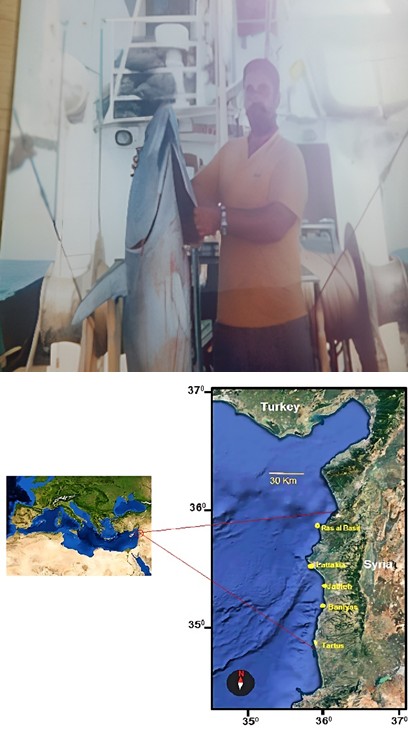
Figure 1a: Professional artisanal fisherman (Abu Bassam).
Figure 1b: Syrian seawater (Eastern Mediterranean Sea).
Age and Maturity
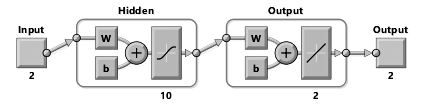
In the study by Hamwi [13], an artificial neural network model known as a multilayer perceptron was employed to estimate the maturity and age of Thunnus thynnus. The network model had a configuration of (1, 10, 2), indicating the number of neurons in each layer. The input parameter used for the updated network model was the fork length (FL) of the fish (Figure 2).
Growth of Fishery Population (FP)
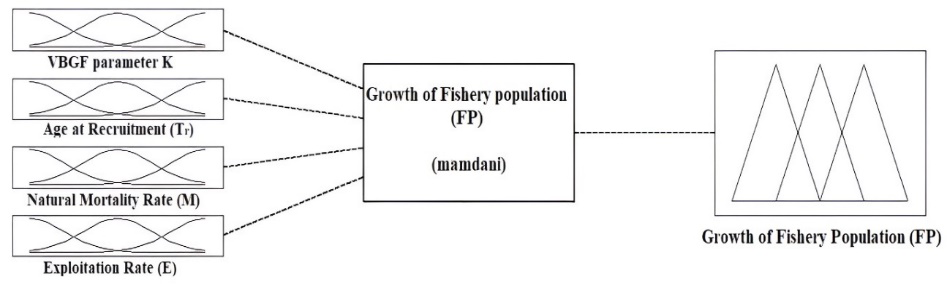
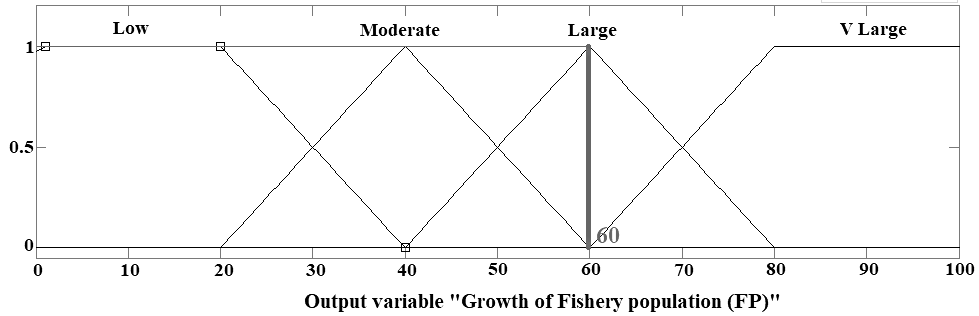
In their research, Hamwi, et al. [18] developed an expert system model based on fuzzy logic to estimate the growth of the Thunnus thynnus population in Syrian seawater. The model employed specific parameters (K, Tr, M, E) as inputs and employed fuzzy logic techniques to analyse and interpret the data (Figure 3).
The von Bertalanffy equation was employed to ascertain the parameters (K, FL∞) and the Akaike Information Criterion (AIC) was utilised to select the most appropriate growth model. The AIC is defined as N ln (WSS) + 2M, where N is the number of data points, WSS is the weighted sum of squares of the residuals and M is the number of model parameters. The objective of this research was to evaluate the suitability of different growth models for characterising the characteristics of fish species. The growth model can be expressed as FLt = FL∞ / (1 + e-K(t-t0)), where FLt is the fork length of the fish at a given age (t), FL∞ is the hypothetical asymptotic fork length (in centimetres) that the fish can reach, K is the growth coefficient, and t0 is the theoretical age at which the length of the fish is assumed to be zero.
The Ricker method Ricker WE [19] was employed to estimate total mortality (Z). This entailed determining the regression equation for the catch curve (ln Nt = a - Zt) across the entire population. The natural mortality rate (M) was calculated using a specific relationship: log M = -0.0066 -0.279 log FL∞ + 0.6543 log K + 0.4634 log T [20], where FL∞ and K are the von Bertalanffy parameters, and T is the average surface water temperature (in degrees Celsius) in the fishing area. During the study period, the average surface water temperature was recorded as 28.6°C.
The fishing mortality rate (F) was calculated by subtracting the natural mortality rate (M) from the total mortality rate (Z) in accordance with the method proposed by Ricker [19]. Thus, F = Z - M. The exploitation rate (E) was determined using the formula E = F / Z as described by Sparre, et al. [21]. The survival rate (S) was calculated using the equation S = e-Z, as proposed by Ricker [19]. Estimates of fork length (FLc) and age (Tc) at first capture were made using the equations proposed by Beverton and Holt [22]: FLc = FL’ - [K (FL∞ - FL’) / Z ]; Tc = - (1/K) * ln (1 - FLc / FL∞) + t0, where FL’ is the mean fork length of the captured fish.
The determination of fork length (FLr) and age (Tr) at recruitment was performed using the equations proposed by Beverton, et al. [22]: FLr = FL’ - [ K (FL∞ - FL0) / Z ]; Tr = - (1/K) * ln (1- FLr/ FL∞) + t0, where FL0 is the fork length of the fish at hatching or age zero.
The growth performance index (ΦFL`) can be calculated using the equation proposed by Pauly, et al. [23]: ΦFL` = logK + 2logFL∞.
The relative yield-per-recruit (Y’/R) model, derived from the Beverton, et al. [24], is expressed as follows: Y’/R = [ E * U(M/K) ] * [ 1 – (3U / (1 + m) + (3U2 / (1 + 2m) – (U3 / (1 + 3m) ], Where U = 1-(FLc/FL∞); m = (1-E) / (M/K) = (K/Z); E = F/Z.
The estimation of relative biomass-per-recruit (B’/R) is derived from the following relationship, as proposed by Ricker [19]: B’/R = (Y’/R) / F.
Fishing Vulnerability (FV)
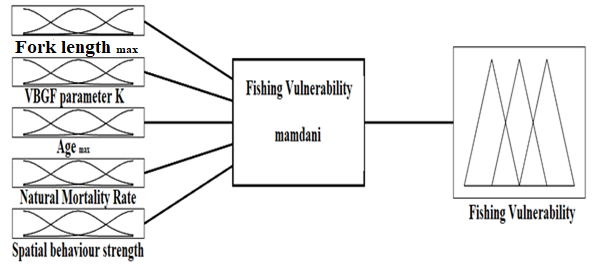
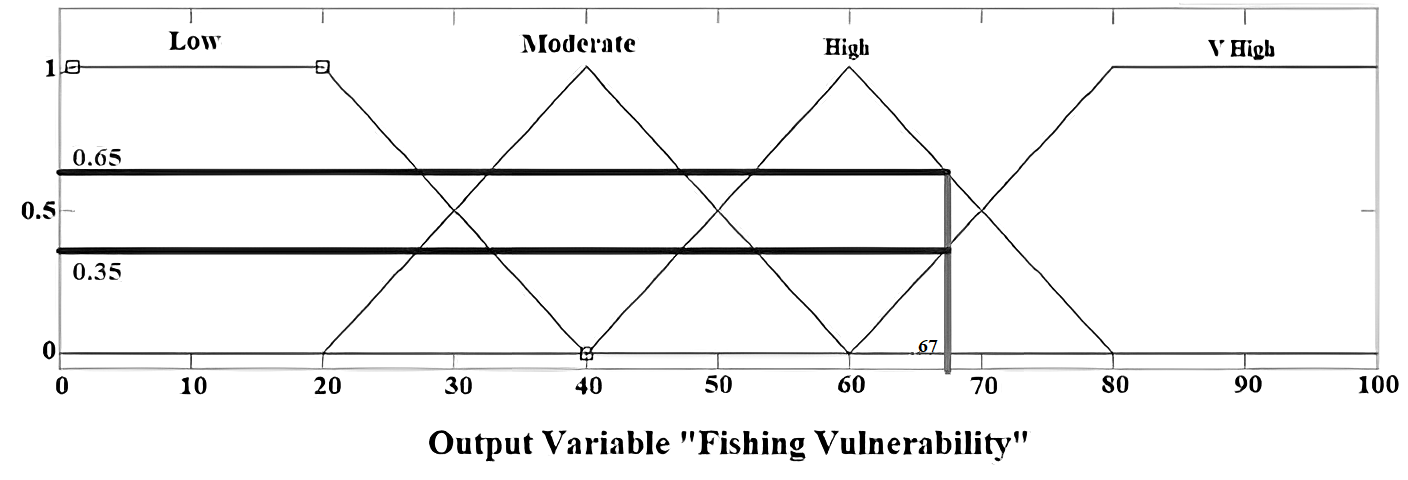
The model developed by Hamwi, et al. [17] was employed to assess the vulnerability of Th. thynnus to fishing. This expert system utilised specific parameters (FLmax, K, Tmax, M, S) as inputs and applied fuzzy logic techniques to analyse and evaluate the vulnerability of the species to fishing (Figure 4).
Results and Discussion
The study of the age composition of Thunnus thynnus revealed the presence of 10 different age groups. Of these, the fourth age group was the most abundant, representing 18.62% of the total population. In contrast, the ninth and tenth age groups each represented only 1.03% of the total catch, indicating an extended life span for this species in Syrian seawater (Figure 5).
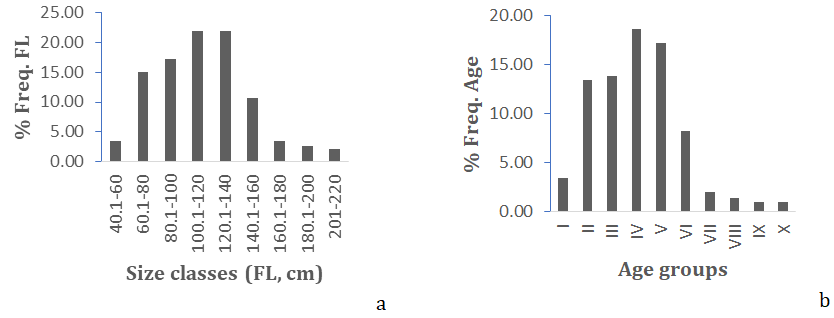
A statistical analysis of the fork length (FL) distribution revealed that the most prevalent group exhibited fork lengths between 100.1 and 140 cm, representing 21.89% of the population. Conversely, individuals with fork lengths between 201 and 220 cm were the least common, representing only 2.15% of the total population. In this study, Th. thynnus specimens caught in Syrian marine water had a maximum fork length of 218 cm at the age of 10+ years. The smallest recorded fork length for an individual was 43.2 cm at the age of 1+. Santamaria, et al. [6] reported that in the Mediterranean, fork lengths ranged from 51 cm to 255 cm at the age of 15+. Luque, et al. [25] documented a maximum observed length of 265.58 cm at age 15 in the eastern Atlantic and western Mediterranean. In the western Atlantic, fork lengths recorded at 35 years varied between 30.2 cm and 527.2 cm. In eastern Tunisia, fork lengths recorded at 14 years of age were reported [26] (Table 1).
| Location and author | Age | Fork length (FL, cm) | |
|---|---|---|---|
| min | max | ||
| Mediterranean Sea [6] | 15 | 51 | 255 |
| Syrian seawater [present study] | 10 | 43.2 | 218 |
| eastern Atlantic Ocean and western Mediterranean Sea [25] | 16 | 42.12 | 265.58 |
| western Atlantic [26] | 35 | 30.2 | 527.2 |
| East Tunisia [27] | 14 |
Table 1: Maximum-minimum fork length and age of _Thunnus_ _thynnus_ from different water bodies.
The parameters of the Bertalanffy growth equation were calculated as follows: FLt = 361.43 (1-e-0.079 (t + 1.210)) (AIC=
306.021; WSS= 591.953; 95% confidence = 6.026). Previous studies have reported disparate estimates for the FL∞ of Th. thynnus in disparate regions. Santamaria, et al. [6] reported a FL∞ value of 373.08 cm for the Mediterranean Sea. Luque, et al. [26] found a FL∞ value of 327.4 cm in the eastern Atlantic and western Mediterranean. Restrepo, et al. [27] reported an FL∞ value of 314.9 cm, while Khemiri, et al. [26] found it to be 390 cm. In the present study, the FL∞ of Th. thynnus was determined to be 361.43 cm.
The growth coefficient (k) for the fork length of Thunnus thynnus was evaluated, resulting in a value of 0.079. This value is lower than that observed in the eastern Atlantic and western Mediterranean (k = 0.097) [25] and the western Atlantic (k = 0.089) [27]. The study revealed a negative allometric growth pattern (b = 2.94 < 3) for fork length, indicating a faster rate of increase in fork length compared to other dimensions. Notably, this negative allometric growth pattern (b = 2.847) was specifically observed in the Mediterranean Sea [6].
The results of this study indicate that the mean age and fork length of Th. thynnus individuals at first capture were 3.61 years and 114.40 cm, respectively. Similarly, the mean age and fork length of individuals at recruitment were 2.82 years and 98.60 cm, respectively. The ratio of length at first capture to asymptotic length (Lc/L∞) is an indicator of whether the fish harvested are predominantly juveniles or mature individuals. A ratio of less than 0.5 indicates that the majority of the catch consists of juvenile fish [28]. In this study, the estimated (FLc/FL∞) ratio was 0.32, indicating that the majority of the catch in the Th. thynnus fishery consists mainly of juveniles. Additionally, the growth performance index (Φ’) for fork length growth was calculated and documented as 4.01.
The total mortality coefficient (Z) for Th. thynnus was estimated to be 0.56 y-1. The fishing mortality rate (F) and the natural mortality rate (M) were calculated to be 0.39 y-1 and 0.17 y-1, respectively. The estimated survival rate (S) was found to be 0.57 per year. Furthermore, the exploitation mortality coefficient (E) was calculated to be 0.70 y-1.
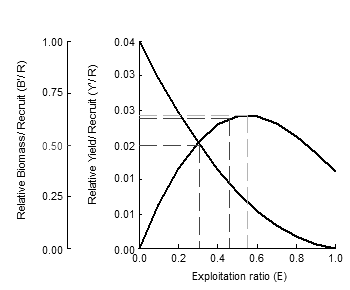
Figure 6 illustrates the results of the interaction between exploitation rates (E) and relative yield per recruit (Y’/R) and relative biomass per recruit (B’/R). The analysis included exploitation rates ranging from 0.05 to 1.00 as variable input parameters. By examining the derivative of the yield function with respect to exploitation rate, several significant values were identified. One such value is Emax, which represents the exploitation rate that maximises the yield per recruit. For Th. thynnus, the calculated Emax was 0.552 y-1. Two other critical values were also identified. E0.1 corresponds to the exploitation rate at which the marginal increase in relative yield per recruit reaches one tenth of its value at E = 0. In the case of Th. thynnus, the calculated E0.1 was 0.461 y-1. Furthermore, E0.5 represents the exploitation rate at which the biomass of the stock is reduced to 50% of its unexploited state. The estimated E0.5 for Th. thynnus was found to be 0.308 y-1. These results improve our understanding of the relationship between exploitation rates, relative yield and biomass per recruit for Th. thynnus. These insights provide valuable information regarding the population dynamics of this species and offer guidance for the implementation of sustainable management practices. The results indicate that the current exploitation rate (E = 0.70) in Syrian water exceeds Emax. This suggests that fishing pressure has exceeded critical levels, leading to over-exploitation of Th. thynnus populations. If intensive fishing activities continue without the implementation of a resource management plan, Th. thynnus stocks will decline significantly over time.
The fuzzy logic-based expert system proposed by Hamwi, et al. [18] yielded a growth value of 60 for the Th. thynnus population in Syrian seawater. This value corresponds to a high growth rate of 1, based on a maximum fishing population growth (FP) value of 100 (Figure 7). It indicates a clear tendency towards significant growth in the Syrian marine environment.
The fuzzy logic expert system developed by Hamwi, et al. [17] indicates that Th. thynnus has a fishing vulnerability of 67 FV, with the maximum vulnerability value (FV) set at 100. This value indicates a high vulnerability score of 0.65 and a very high vulnerability score of 0.35 (Figure 8), indicating a strong tendency to be highly susceptible to fishing activities. Consequently, these fish species are highly threatened in Syrian seawater. In contrast, the Fishbase intrinsic vulnerability assessment classifies Th. thynnus as moderately vulnerable, with a score of 82 out of 100 [4].
Conclusion
The current study provides valuable insights into the population dynamics of Thunnus thynnus in the waters of Syria, highlighting the importance of conservation measures in ensuring the sustainable management of this species. The findings enhance our understanding of Th. thynnus’s growth patterns, mortality rates, and susceptibility to fishing, laying the groundwork for future research and management strategies. The results of this study have significant implications for the management of the Th. thynnus fishery in Syrian seawater. Overfishing can have a profound impact on the population’s ability to sustain itself, leading to a decline in abundance. Therefore, it is crucial to implement management strategies that minimise Thunnus thynnus catch and ensure the long-term sustainability of the fishery.
Acknowledgment
The author would like to express their gratitude to Tishreen University for their support and assistance in conducting this research, as well as extend a great appreciation to the artisanal fishermen, particularly the professional fisherman Abu Bassam.
References
-
Wikipedia contributors (2024) Atlantic bluefin tuna. The Free Encyclopedia.
-
Collette BB, Boustany A, Fox W, Graves J, Juan Jorda M, et al. (2021) _Thunnus thynnus_. The IUCN Red List of Threatened Species 2021: e.T21860A46913402.
-
IUCN (2024) The IUCN Red List of Threatened Species. Version 2023-1.
-
Froese R, Pauly, D Editors (2024) FishBase. World Wide Web electronic publication.
-
Battaglia P, Andaloro F, Consoli P, Esposito V, Malara D, et al. (2013) Feeding habits of the Atlantic bluefin tuna, _Thunnus thynnus_ (L. 1758), in the central Mediterranean Sea (Strait of Messina). Helgol Mar Res 67: 97-107.
-
Santamaria N, Bello G, Corriero A, Deflorio M, Vassallo‐ Agius R, et al. (2009) Age and growth of Atlantic bluefin tuna, _Thunnus thynnus_ (Osteichthyes: Thunnidae), in the Mediterranean Sea. Journal of Applied Ichthyology 25(1): 38-45.
-
FAO (2023) The State of Mediterranean and Black Sea Fisheries 2023–Special edition. General Fisheries Commission for the Mediterranean. Rome, Italy, pp: 1-38.
-
Ordoñez A, Eikvil L, Salberg AB, Harbitz A, Murray SM, et al. (2020) Explaining decisions of deep neural networks used for fish age prediction. PLoS ONE 15(6): e0235013.
-
Moore BR, Ámar ZT, Schimel ACG, Maolagáin CÓ, Hoyle SD (2021) Development of deep learning approaches for automating age estimation of Hoki and Snapper. New Zealand Fisheries Assessment Report 69: 38.
-
Politikos DV, Sykiniotis N, Petasis G, Dedousis P, Ordoñez A, et al. (2022) Deep Otolith v1. 0: An Open-Source AI Platform for Automating Fish Age Reading from Otolith or Scale Images. Fishes 7(3): 121.
-
Moen E, Vabø R, Smoliński S, Denechaud C, Handegard NO, et al. (2023) Age interpretation of cod otoliths using deep learning. Ecological Informatics 78: 102325.
-
Parsons KT, Maisano J, Gregg J, Cotton CF, Latour RJ (2018) Age and growth assessment of western North Atlantic spiny butterfly ray _Gymnura altavela_ (L. 1758) using computed tomography of vertebral centra. Environmental biology of fishes 101: 137-151.
-
Hamwi N (2024) Predicting age and maturity of endangered Spiny butterfly ray, Gymnura altavela (Linnaues 1758) using artificial neural network (multilayer perceptron). Damascus University Journal for the basic sciences 40(1): 55-68.
-
Cheung WWL, Pitcher T, Pauly D (2005) A fuzzy logic expert system to estimate intrinsic extinction vulnerabilities of marine fishes to fishing. Biological Conservation 124(1): 97-111.
-
Cheung WWL (2007) Vulnerability of marine fishes to fishing: from global overview to the northern south China sea. A Thesis in the University of British Columbia pp: 354.
-
Jones MC, Cheung WWL (2017) Using fuzzy logic to determine the vulnerability of marine species to climate change. Glob Change Biol 24(2): 1-13.
-
Hamwi N, Ali Basha N (2019) Estimation of the vulnerability of some Sparidae species to fishing in the Eastern Mediterranean Sea (Syrian coast) by fuzzy logic method. Journal of Al-Baath University 41(10): 129-160.
-
Hamwi N, Ali-Basha N, Al-Tajer H, Farah T (2022) A proposed model to estimate the growth of the fishery populations by expert system. Journal of Hama University 5(9): 92-106.
-
Ricker W E (1975) Computation and interpretation of biological statistics of fish populations. Bulletin of the Fisheries Research Board of Canada 191: 382.
-
Pauly D (1980) A new methology for rapidly acquiring basic information on tropical fish stocks: growth, mortality and stock recruitment relationships. In: Saila SB, et al. stock assessment for tropical small-scale fisheries. Univ Rhode Island, Kinston, USA, pp: 154-172.
-
Sparre P, Venema SC (1998) Introduction to tropical fish stock assessment-Part 1: Manual. FAO Fisheries Technical Paper 306/1, Rev. 2, pp: 407.
-
Beverton RJH, Holt SJ (1957) On the dynamics of exploited fish population. Fishery Investigations, Series II, London, UK, 19: 1-533.
-
Pauly D, Munro J L (1984) Once more on the comparison of growth in fish and invertebrates. FishByte 2(1): 21.
-
Beverton RJH, Holt SJ (1966) Manual of methods for fish stock assessment. Part II. Tables of yield function. FAO Fish. Biol Tech Pap (38) 10 + 67 pp: 1.
-
Luque PL, Rodriguez‐Marin E, Landa J, Ruiz M, Quelle P, et al. (2014) Direct ageing of _Thunnus thynnus_ from the eastern Atlantic Ocean and western Mediterranean Sea using dorsal fin spines. Journal of Fish Biology 84(6): 1876-1903.
-
Restrepo VR, Diaz GA, Walter JF, Neilson JD, Campana SE, et al. (2010) Updated estimate of the growth curve of Western Atlantic bluefin Tuna. Aquatic Living Resources 23(4): 335-342.
-
Khemiri S, Gaamour A, Zarrad R, Saidane S (2023) Preliminary Study of Age and Growth of Bluefin Tuna _Thunnus thynnus_ (Scombridae) from Fish Farm in the East of Tunisia. Journal of Ichthyology 63(4): 718-726.
-
Pauly D, Soriano ML (1986) Some practical extensions to Beverton and Holt’s relative yield-per-recruit model. In The first Asian fisheries forum. Manila: Asian Fisheries Society pp: 491-496.
- Genetic Improvement of Nile Tilapia (Oreochromis niloticus): Advances in Selective Breeding and Genomic Approaches for Sustainable Aquaculture
- Microplastics, Contaminants, and Waste Hotspots: Divergences and Faults in Prioritizing Control Efforts
- Creating a Healthier, More Vibrant Open and Closed Aquatic Environment. A Submersible, Centrifugal Magnetically Affixed Current Changing Aquarium Pump
- An Attempt to Assess Alpha Diversity and Sample Size: Using the Ostracod Assemblages off Kumamoto Port, Japan
- Assessment of the Efficiency of Common Fishing Gears and Crafts Used at Mohananda River of Chapai Nawabganj, Bangladesh
- Fish Productivity and Biodiversity Status of Sundarban Mangrove in Bangladesh