
A Preliminary Study on Ornamental Fish Disease in Telangana State
Ornamental fish, cherished for their beauty and diversity, are susceptible to various diseases that can affect their health and vitality. This review provides an overview of the most common diseases encountered in ornamental fish, their etiology, clinical signs, and management strategies. Among the prevalent diseases are bacterial infections such as columnaris disease, caused by Flavobacterium columnare, and Aeromonas infections, manifesting as ulcers and fin rot. Viral diseases like viral hemorrhagic septicemia virus (VHSV) and infectious hematopoietic necrosis virus (IHNV) pose significant threats to ornamental fish populations, leading to systemic hemorrhaging and mortality. Fungal infections, predominantly caused by species of Saprolegnia and Achlya, result in cotton-like growth on the skin and fins. Parasitic infestations by protozoans (e.g., Ichthyophthirius multifiliis), monogeneans (e.g., Gyrodactylus spp.), and crustaceans (e.g., Argulus spp.) are common and can cause significant morbidity and mortality if left untreated. Environmental stressors, poor water quality, and inadequate husbandry practices often predispose ornamental fish to disease outbreaks.
Introduction
The fancy angle industry is an aquaculture-based commerce which is the well-known pastime around the world which gives hundreds of millions of dollars and underpins the country individuals in creating nations. And the veterinarians are progressively getting to be included in malady administration of the related species whether for private domestic clients, retail and discount operations, which are in bigger show settings. Infections of angle emerge through numerous of the same pathways of impacting the essential, and sustaining components as of their other creatures. Frequently comes about in the viable approach of euthanizing one or more of the seriously influenced angle, and utilizing different devices [1, 2, 3, 4, 5, 6, 7, 8, 9, 10, 11, 12, 13, 14, 15, 16, 17]. Early clinical signs in numerous irresistible and noninfectious maladies of angle are shown by the skin [10]. In the worldwide scene, tropical aquarium angle keeping is considered as the moment biggest leisure activity following as it were to photography. The hone of keeping up angle for fancy reason is known from Tang
line (680 to 908, A.D). Decorative angle keeping was started as a little time leisure activity utilizing gold angle amid the 18th century. In 20th century; aquarium keeping and raising of decorative angle got around the world acknowledgment. At show this procedure has created in to a broad and worldwide component of universal exchange worth millions of dollars. Concurring to FAO, the trade esteem in 1996 was US$ 206,603,000. Since 1985, the universal exchange in decorative send out has expanded on a normal of 14.0% per year. The ‘developing countries’ account for approximately 63.0% of to send out esteem. Agreeing to Dr. Kevan Primary of Harbor Department Oceanographic Institution, about 90.0% of new water fancy angle are captive bred. The same creator has demonstrated that almost 25 of 8,000 marine fancy species as it we are effectively raised. Subsequently, much scope exists for breeding and domesticating numerous high-value marine fancy angles [5, 6, 7, 8, 9, 10, 11, 12].
Material & Methods
General methods for detecting a fish’s health in field conditions, Peeping is a pronto and low-cost way that requires a well-trained eye. Yet, its dependability is not top-notch. Here are some fast hints for disease diagnostic methods.
External Examination
Quick Reactions: Healthy fish have speedy reflexes like, Escaping, Eye twitching, and Tail flicking. Other signs might include, Lazy behavior, Twirling, spinning, or zigzagging movements, Washed out or dark pigmentation Exophthalmos or ‘popping eye condition, Bleeding, Jaw or mouth erosion, Gill bugs, tender gills, white lumps, Tail or fin decay, Swollen stomach (Dropsy), Poking out anus, Blood seepage, Sores/bumps (furuncles), Outside bugs, Cotton-like growths [7].
Internal Examination
Internal examination can be done by dissecting a infected fish infected fishes may exhibit following symptoms such as Air-filled cavities, Fluid in the belly, Bleeding in muscle wall/air bladder/Liquid in the air bladder, internal organs, White lumps in internal organs, Organ enlargement (Kidneys, liver, etc.).
Histological and Microscopic Examination
Impression blot or moist mound creation can be checked utilizing a gentle microscope. This is an immediate and low-cost diagnostic device. This method is great for viewing mobile bacteria and protozoa. More detailed information might come from historical method when exclusive colors are applied to the tissue sections. However, it moves slow and expensive. It also needs a skilled technician, and at times fails to provide a concise diagnosis.
Bacterial Isolation
A specimen is taken and either lined on agar-based medium or placed into a watery soup containing a fusion of custom-made ingredients. Some media are also prepared to support the selective growth of precise bacteria from a potential mix of harmful and non-harmful bacteria. Common morphological grouping of bacteria can be done based on the colony size, shape, color, and scent. For more precise identification, biochemical characterization is often used. In this, a solo purified colony is checked for its talent to metabolise a variety of diverse minerals, chemicals, and food sources. This is a highly definite diagnostic method. None the less, it takes days or even weeks to get the results, and not all bacteria will cultivate on described media.
Tissue Culture
Since viruses can’t grow or reproduce unless they’re within alive cells, cell cultures permit the diagnostician to grow several kinds of viruses in the lab. A specimen is crushed and put into the cells in the tissue cultivation container. If the virus is there in the specimen, it creates the Cytoplasmic Effect (CPE). Nevertheless, cell cultures have only been produced for some finfish, but not for shellfish.
Quick Diagnostic Exams for Recognizing Fish Pathogens
To hamper outbursts, reduce the presence of pathogens, and lessen the use of antimicrobial compounds, swift detection of pathogen is crucial. They are also beneficial because the tests are:
- Speedy, sensitive and accurate,
- Presumptive and/or confirmatory,
- Be micro-modified for inexpensive handling of significant numbers of individuals and little volume samples,
- Necessitate non-destructive samples,
- Produce qualitative and quantitative results.
The outcomes gathered from such tests can be linked with the other clinical signs of the fish. Here are some important quick diagnostic tests:
- Polymerase chain Reaction (PCR) exams.
- Dot immunobinding assay
- Western Blotting skill
- Straight gleaming antibody test (d-fat)
- Enzyme immune tests (EIAS) or ELISA
- The Elastic agglutination assays
- DNA-based diagnostic tests
Common Ornamental Fish Diseases and Management
Common Disease
Lymphocystis Symptoms: Nodular white swellings (cauliflower) on fins or body. Lymphocystis is caused by virus and hence affects the cells of the fish. It usually manifests itself as abnormally large white lumps (cauliflower) on the fins or other parts of the body. This is a rare disease. Treatment: it is better to remove and destroy the infected fish as soon as possible.
Parasitic Diseases
Various types of parasites cause most of the common diseases in ornamental fish. According to their habitat, they are grouped as external and internal parasites. Many of these parasites multiply in the water in which ornamental fishes are stocked without having a host, making it easy for the parasite to complete its life cycle in the water itself. Tropical climate plays a significant role in the rapid multiplication of parasites without involving any host. The commonly found external parasites in ornamental fish are Dactylogyrus, Gyrodactyllus, Chilodonella uncinata, Ichthyophthirius sp, Tetrahymena, Piscinoodinium, Trichodina, Ichthyobodo, Uronema, Lernaea, and Argulus. Since these parasites are found on the body of the fish, they could be detected very easily. Most ectoparasitic diseases show similar signs of infections such as irritation due to the presence of parasites on the body of the fish, small hemorrhages due to the penetration of parasites into the body of the fish, excessive mucous production, infection of the gill, etc. The parasites are generally introduced into the water through infected fish: contaminated water, live feeds, and aquatic plants. The main source of infection could be through fish. Though infected fishes may appear to be healthy initially. They may be the carriers of potential pathogens. It is also not uncommon that these parasites are already in the water in which the fish lives, they will cause diseases when the fish is weak by other factors. The parasites may even penetrate the tissues of the fish and cause damage to the gill and skin tissues. Their infection may later lead to a secondary infection involving bacteria and ulceration. Less harmless protozoans such as Apiosoma, Scyphidia, Epistylis, and Zoothamnium also cause diseases in ornamental fish. Their presence on the body surface of the fish causes irritation, which may ultimately lead to unclear.
Argulus Symptoms: The fish scrapes itself against objects, clamped fins; visible parasites about 1/4 inches in diameter are visible on the body of the fish.
Treatment: With larger fish and light infestation, the lice can be removed with forceps. Weak formaldehyde is also useful to remove the parasites.
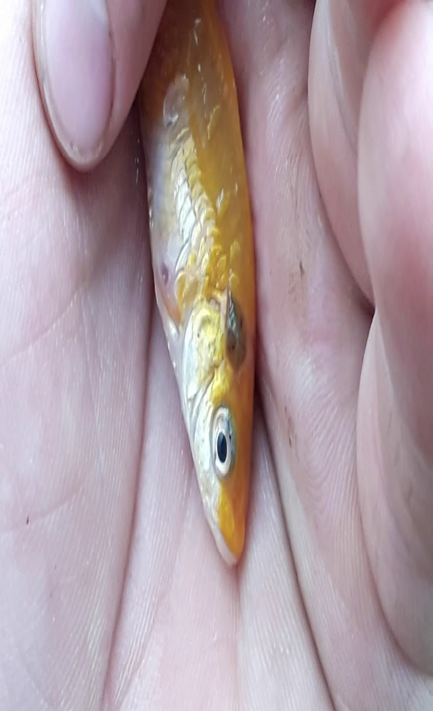
Ergasilus This parasite is like the anchor worm, but is smaller and attacks the gills instead of the skin. Symptoms: Whitish-green threads hang out of the fish’s gills. Treatment: Bath for 10 to 30 minutes in 10.0mg/ litre of potassium permanganate or continuous exposure of the whole tank with 2 mgt liter of potassium permanganate. In addition, 3D-minute dip with 1.0 ppm of Copper control followed by 3D-minute dip with 1.0 ppm of BKC will be helpful to control gill parasites.
Miscellaneous Diseases/Infections
Eye problems are more common in aquarium fishes. Symptoms: pop eye, cloudy cornea, opaque lens, swelling, blindness. Treatment: Pop eye (exophthalmia) can result from rough handling, gas embolism, tumors, bacterial infection, or vitamin A deficiency. It can be treated successfully with penicillin or amoxicillin. Cloudy cornea can result from a bacterial invasion. Antibiotics may help. Opaqueness can result from poor nutrition or a metacercaria invasion (grubs).
Bacterial Diseases
Poor water quality will lead to bacterial infection in fish as secondary infection in parasitic diseases. The most common bacteria associated are Pseudomonas and Aeromonas. The general symptom associated with bacterial infections are fish body become darker, non-response to feeding, hemorrhage lesions along the lateral and ventral surfaces of the body ultimately developing into ulcers, accumulation of fluid in the abdominal cavity, enlargement of internal organs etc. Use of antibiotic, tetracycline at a dosage of 0.5 mg per kg of food er give a bath in 50 ppm tetracycline solution overnight is the remedial measure. Mycobacteriosis, caused by Mycobacterium marinum, is a common disease in red eyed tetras. Lethargy, imbalance, skin discoloration, rapid opercular movements, defect on the scales or scale loss, infection of fins are the symptoms.
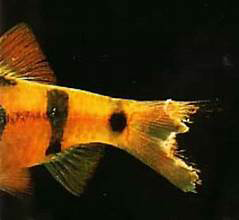
Fin and Tail Rot Symptoms: Disintegrate fins that might have decreased, to stumps, visible fin wishbones, blood on rims of fins, reddened areas at bases of fins, skin ulcers with grey or red limits, hazy eyes. Potential predisposing causes: Bad water value/ aquarium situations and injury to the fin and tail. The affected area will slowly decompose. Treatment: It’s wise to cure the water or fish with antibiotics @ 20 - 30 milligrams per litre. To mix with food, 1.0% of antibiotic can be used and provided to the fish. Antibiotics like chlorinity (chloroformphenol) or tetracycline may be useful in handling feather and tail pain conditions.
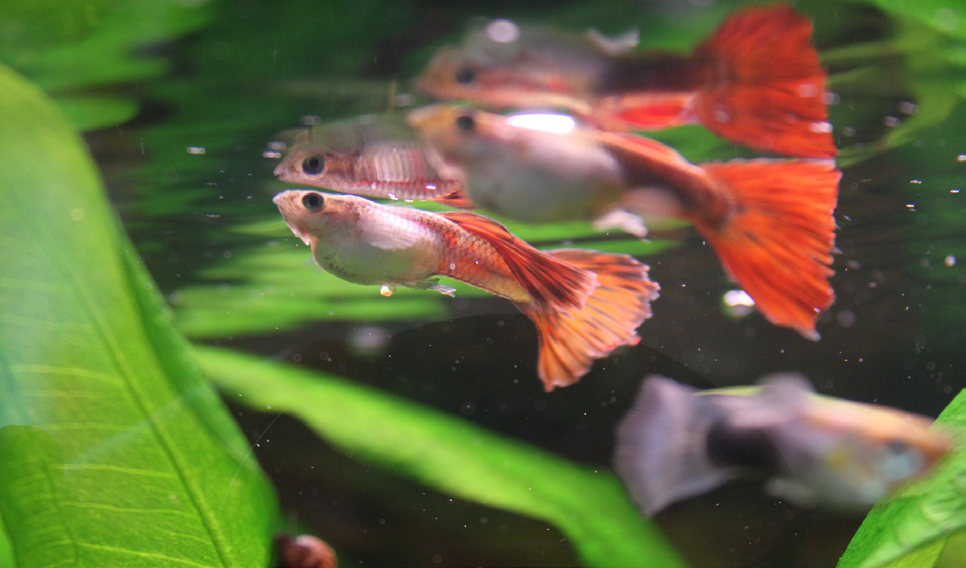
Scale Protrusion Symptoms: Protruding scales without body blow. Protrusion of scales is essentially an infection of bacteria of scales and/ or body. Treatment: An efficient cure is to join an ant biologist to the meal. With flake food, use about 1% of antibiotic like chlorophenol or tetracycline. In water, add about 10 milligrams per litre of the necessary antibiotic.
Dropsy Symptoms: Inflated of body, protruding scales. Dropsy is created by bacterial infection of the peritoneal region including kidneys, generating fluid amassing. The fluids in corporeal develop and create the fish to puff up and the scales to stick out. Treatment: Suggested dose of antibiotic, Tetracycline.
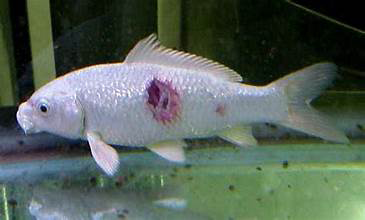
Ulcerations Symptoms: Bloody streaks on fins or body. Bacteria pierces inside the body’s tissue. Treatment: Rinse the breeding water with adapt antiseptics as acriflavine or monacrin (monoaminoacridine) with 0.2% resolution @ 1 milliliter per liter pursued by antibiotic handle.
Fungal Diseases
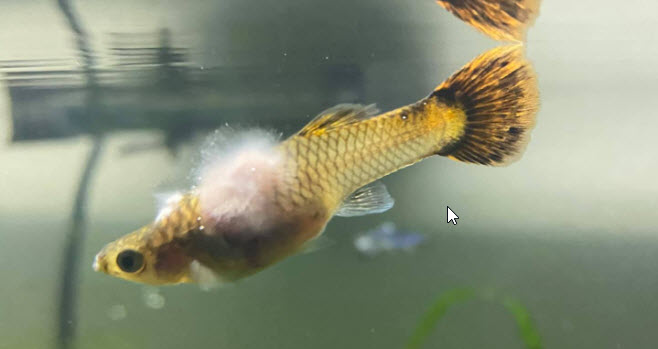
Fungal infection is usually caused when there is excessive feeding and poor-quality water. It is generally associated with parasitic or bacterial infection. The reason for fungal infection will also be improper handling or netting causing injuries. The most common fungi found are Saprolegnia, appearing as cotton like tuft on the dorsal or the ventral side of the fish. Infection is most commonly seen on infertile eggs which may eventually spreads to fertile eggs.
Saprolegniosis Symptoms: Tufts of white cotton-like expansion on the skin or fins. Eggs become white. Usually mushroom is a consequential infection. Fungal tackles follow an accident, parasitic maintenance or afterward a bacterial infection. Treatment: At besieging on fish eggs, apply 3 to 5 mg/ 1 methylene blue as a guarding caution and measured after has laid. Additionally, 10 milliliters of 1.0%phenmethyl can be combined. It’s suggested to iterate for a few days as under necessity. If the symptoms are strong the fish can be withdrawn from the fish tank and cleaned with a fabric immersed in slight resolution of povidone iodine or mercurochrome.
Protozoan Diseases
Protozoan fish diseases are caused by various single- celled organisms belonging to the group Protozoa. These parasites can infect fish in both freshwater and marine environments, leading to a range of health problems.
Ich Disease or Ichthyophthirius Disease
Ich disease or ‘white spot disease’ is the normal disease in aquariums. Living creature inducing the disease: The ciliately Ichthyophthirius multifils Symptoms: White shimmering spots or Salt-like flecks on the body/fins. Overmuch jelly on body, difficulties in breathing, clasped fins and loss of hunger is other symptoms. Treatment: The aimless swimming time of the parasite is vulnerable to chemicals. Quinine hydrated hydrochloride or Quinine sulphate at 30 milligrams per litre (1 in 30,000) can properly. Different like acridine yellow, acriflavine, gentle formalin solution, benzalkonium chloride, malachite green or malachite green with cupric can be useful.
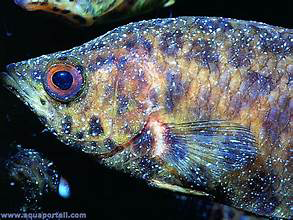
Costia Symptom: Milky cloudiness on skin Treatment: Cuprum at 0.2 milligram per litre (0.2 ppm) to be iterated once in few days if required. Acriflavine can be used at 0.2% result (1 ml).
Chilodonella Symptoms: Dulling of the colors due to excessive slime, fraying of the fins, weakness and gill damage. Treatment: Acriflavine at 1.0% solution (5 ml per litre).
Viral Diseases
Viral fish diseases are caused by various types of viruses that infect fish, leading to a range of health problems. These diseases can have significant economic impacts on aquaculture and wild fish populations. Some common viral fish diseases include Viral Hemorrhagic Septicemia (VHS): VHS is caused by the viral pathogen known as the viral hemorrhagic septicemia virus (VHSV), belonging to the Rhabdoviridae family. It affects a wide range of fish species, causing symptoms such as hemorrhaging, abdominal swelling, and lethargy. Mortality rates can be high, especially in susceptible species like salmonids. Infectious Pancreatic Necrosis (IPN): IPN is caused by the infectious pancreatic necrosis virus (IPNV), belonging to the Birnaviridae family. It primarily affects young salmonids, leading to symptoms such as abdominal swelling, pale gills, and darkened skin. Mortality rates can be significant, especially in fry and fingerlings. Infectious Hematopoietic Necrosis (IHN): IHN is caused by the infectious hematopoietic necrosis virus (IHNV), belonging to the Rhabdoviridae family. It affects a wide range of salmonid species, causing symptoms such as anemia, hemorrhaging, and exophthalmia (bulging eyes). Mortality rates can vary depending on the fish species and environmental conditions.
Result and Discussion
During Our Examination and This Study Period, We Have Identified These Diseases by performing some tests like examination under a microscope, dot ELISA test, and spot agglutination test, and confirmed the disease by mode of infection and causative agent, many ornamental fish keepers faces Problems with these Specific Diseases.
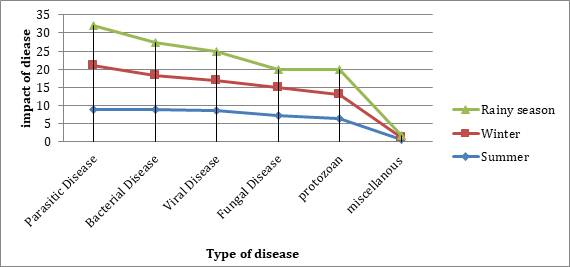
We here by conclude that the ornamental fish disease outbreaks are more in the Telangana state ,in some districts Mostly We Have Identified There Is More Domination of Bacterial and Parasitic Disease like, Epizootic Ulcerative Syndrome (EUS), Fin and Tail Rot, Argulosis, Lemaeosis, Branchiomycosis, Dactylogyrous. Better management practices can result in good production, maintaining water quality parameters and regular using of disinfectants during fish handling and stocking, Will run successful culture [4].
Conclusion
Proper diagnosis through clinical examination, microscopy, and molecular techniques is crucial for effective disease management. Prevention strategies, including quarantine protocols, biosecurity measures, and maintaining optimal water quality parameters, play a pivotal role in disease prevention and control. Additionally, therapeutic interventions such as antimicrobial treatments, antiparasitic agents, and supportive care are essential for restoring the health of affected fish. Overall, a comprehensive understanding of common diseases in ornamental fish and the implementation of proactive health management practices are vital for ensuring the well-being and longevity of these beloved aquatic pets.
References
-
Adrian E, Burgess PH, Bailey MT (1999) A-Z of Tropical Fish Diseases and Health Problems. New York, N.Y: Howell Book House. ISBN 1-58245-049-8, USA.
-
Axelrod HR, Dieter U (1989) Handbook of fish diseases. Neptune, NJ: T.F.H. Publications. ISBN 0-86622-703-2.
-
Fairfield, Terry (2000) A commonsense guide to fish health. Woodbury, N.Y: Barron’s Educational Series. ISBN 0-7641-1338-0.
-
Sai KB, Ram KD, Jagadeeshwara CT (2024) A study on fish diseases in freshwater aquaculture at Siddipet Telangana, India, IJOAC 8(1): 1-7.
-
Blazer VS (1992) Nourishment and malady resistance in fish. Ann Rev Fish Dis 2: 309-323.
-
Bondad RMG, McGladdery SE, East I, Subasinghe RP (2001) Asia Demonstrative Direct to Oceanic Creature Maladies. FAO Angle. Tech. Pap. No. 402(S2). Rome. Italy, pp: 236.
-
ADB/NACA (1991) Angle wellbeing administration in Asia-Pacific. Report of a Territorial Ponder and Workshop on Angle Infection and Angle Wellbeing Management. ADB Agricult. Dep. Rep. Ser. No. 1, Organize of Aquaculture Centres in Asia-Pacific, Bangkok, Thailand, pp: 627.
-
Agius C (1982) Infection infections of warm water angle. In: Roberts RJ (Ed.), Microbial illnesses of angle, London, UK, pp: 115-130.
-
Arthur JR, Ogawa K (1996) A brief outline of infection issues in the culture of marine finfishes in east and Southeast Asia. In: Primary KL (Ed.), Aquaculture Wellbeing Administration Methodologies for Marine Angles. Procedures of a Workshop in Honolulu, Hawaii, USA, pp: 9-13.
-
Schmale (1995) The Maritime Organized. Hawaii, USA, pp: 9-31.
-
Arthur JR, Subasinghe RP (2002) Potential unfavorable socio-economic and natural impacts of oceanic creature pathogens due to hatchery-based improvement of inland open-water frameworks, and conceivable outcomes for their minimization, Essential Oceanic Creature Wellbeing Care in Country, Smallscale, Aquaculture Advancement. FAO Fish. Tech Pap 406: 113-126.
-
Bowser PR, Babish JG (1991) Clinical pharmacology and viability of fluoroquinolones in angle. Ann Rev Angle Dis 1: 63-66.
-
Bowser PR, Casey JW (1993) Retroviruses of fish. Ann Rev Angle Dis 3: 209-224.
-
Buschkiel AL (1935) New contributions to the knowledge of Ichthyophthirius multifiliis Fouquet. Curve Neerland Zool 2: 178-224.
-
Chang SF (2001) Grouper viral maladies and investigate in Singapore. In: Humphrey J (Ed.), Development of a Territorial Inquire about Program on Grouper Infection Transmission and Antibody Development, Thailand, pp: 66-67.
-
Chapman FA, Fitz CSA, Thunberg EM (1997) Joined together states of America Exchange in Decorative angle. J World aquacult Soc 28: 1-10.
-
Chris A, Nevelle C, Adrian E (1988) The Manual of Fish Health. Stillwater, MN: Voyageur Press. ISBN 1-56465- 160-6.
- Genetic Improvement of Nile Tilapia (Oreochromis niloticus): Advances in Selective Breeding and Genomic Approaches for Sustainable Aquaculture
- Microplastics, Contaminants, and Waste Hotspots: Divergences and Faults in Prioritizing Control Efforts
- Creating a Healthier, More Vibrant Open and Closed Aquatic Environment. A Submersible, Centrifugal Magnetically Affixed Current Changing Aquarium Pump
- An Attempt to Assess Alpha Diversity and Sample Size: Using the Ostracod Assemblages off Kumamoto Port, Japan
- Assessment of the Efficiency of Common Fishing Gears and Crafts Used at Mohananda River of Chapai Nawabganj, Bangladesh
- Fish Productivity and Biodiversity Status of Sundarban Mangrove in Bangladesh