
1,8-Cineole an Underappreciated Anti Inflammatory Therapeutic
The use of plant-based medicines, health products, food supplements, and cosmetics is being increased nowadays due to their active and healthy ingredients. 1,8-cineole is a natural monoterpene, also known as eucalyptol. It is a major compound of many plant essential oils, mainly extracted from Eucalyptus globulus, Elettaria cardamom, Amomum subulatum Roxb. 1,8-cineole has recently been identified as a rhizosphere volatile in Arabidopsis, is well known as an allelopathic agent from Salvia and Artemisia. These are traditionally used as herbal medicine in Ayurveda, Homeopathy, Naturopathy, Siddha, Unani and Yoga worldwide. They are indigenous plant native to India and are rich in bioactive molecules like alkaloids, anthocyanins, chlorogenic acids, coumarins, flavonoids, lignans, phenolic acids, saponins and glycosidic substitutes, tannins and terpenoids. Hence they are used to cure a wide range of diseases and act as a good anti-diabetic agent. 1,8-Cineole is a colourless liquid and found is many medicinal plants. This review aims to summarize the pharmacological bio-activities reported in literature. A system review was collected from various public databases such as NCBI, EMBASE and other reported research articles. Methodologies were focused on 1,8-Cineole anti-inflammatory property, gastroprotective mechanism, anti-microbial property, Anti-proliferative and Hepatoprotective mechanism. The present review aims to summarize and consolidate the biological properties of 1,8-Cineole.
Introduction
Presently, many drugs are available to reduce diabetes, inflammatory, antimicrobial, infertility but they are purely chemicals but 1,8-cineole an bioactive compound isolated from various plants. 1,8 cineole was primarily extracted from the essential oils of plants such as Eucalyptus [1, 2], Salvia lavandulifolia vahl [3, 4], and Melaleuca quinquenervia (cav.) S.T Blake [5]. Eucalytus is a well-known tree species for producing essential oils. The main species known to produce cineolic essential oils are Eucalyptus baueriana, E.smithii, E.globulus, and E.polybractea [6]. Eucalyptus cinerea is the least studied species with the highest 1,8-cineole content [7], and it could be used as an alternative source of cineole production. In GC-MS analysis of A. subulatum, essential oil led to the identification of 18 compounds representing 99.2% of the total oil contents. The predominant constituents of the oil were found to be 1,8-cineole (73.27%) followed by α-terpineol (4.23%), limonene (4.2%), α-terpinyl acetate (3.33%), α-pinene (2.9%), terpinen-4-ol (2.82%), β-pinene (2.12%), ν-terpinene (1.8%) and α-bisabolene (1.4%). Molecular Docking studies explored associated anti-tumor activity by Caspase 3 binding capacity and also for polar residues nucleophilic attack in Caspase 3 catalytic active site.
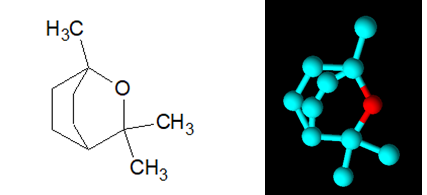
A wide range bioactive compounds were identified and extracted from many plants and they proved therapeutic properties in experimental in-vitro and in-vivo procedures. Medicinal plants are natural reservoirs of bioactive compounds which have been widely used around the world for many years. From last few years scientist showed interest in development and advancement of herbal medicines for various diseases. Cineole is a non-reactive and non-toxic agricultural bioagent with anti-inflammatory [8], anti- microbial [9] and nematicidal [10] properties, making it a safe agricultural bioagent. As a result, 1,8-cineole has the potential to treat cardiovascular disease, digestive illness, Alzheimer’s disease, and respiratory illness. In the treatment of bronchitis, asthma, and chronic obstractive pulmonary disease [11, 12]. 1,8 Cineole, also known as Eucalyptol, is an organic colourless liquid compound with a boiling point of 175 Celsius and a fresh diffusive camphoraceous cool odour with low tenacity [13].It belongs to cyclic ether and monoterpenoid [14]. Plant based compounds have the ability to treat and cure various diseases in human and cattles. The main covered area study is to summarize the relevant articles of 1,8 Cineole were studied to review the biological activities Figure 1 and Table 1.
| S.NO. | Plants Reported | Plant Parts |
|---|---|---|
| 1 | Eucalyptus globulus | found in Shoot, Essential Oil, Leaf, Leaf Essential Oil, Fruit Essential Oil |
| 2 | Laurus nobilis | found in Leaf Essential Oil, Essential Oil, Leaf, Fruit Essential Oil |
| 3 | Melaleuca alternifolia | found in Essential Oil, Root Essential Oil, Leaf Essential Oil, Resin, Exudate, Sap, Leaf |
| 4 | Elettaria cardamomum | found in Seed Essential Oil, Fruit, Fruit Essential Oil |
| 5 | Lindera benzoin | found in Shoot Essential Oil, Twig |
| 6 | Hyssopus officinalis | found in Essential Oil, Shoot |
| 7 | Artemisia salsoloides | found in Rhizome, Rhizome Essential Oil |
| 8 | Citrus limon | found in Shoot |
| 9 | Peumus boldus | Found in Leaf Essential Oil |
| 10 | Eucalyptus citriodora | Found in Shoot, Leaf Essential Oil, Leaf, Essential Oil |
| 11 | Pycnanthemum loomisii | Found in Shoot |
| 12 | Eucalyptus desquamata | found in Leaf |
| 13 | Artemisia cina | found in Flower |
| 14 | Alpinia galanga | found in Rhizome, Leaf |
| 15 | Eucalyptus bridgesiana | found in Leaf |
| 16 | Salvia triloba | found in Plant |
| 17 | Cinnamomum verum | found in Bark, Essential Oil, Bark Essential Oil, Root Bark, Stem Bark, Leaf Essential Oil, Leaf |
| 18 | Amomum compactum | found in Seed |
| 19 | Coriandrum sativum | found in Seed Essential Oil, Fruit |
| 20 | Eucalyptus melliodora | found in Shoot |
| 21 | Foeniculum vulgare | found in Seed, Essential Oil, Plant |
| 22 | Eucalyptus blakelyi | found in Shoot |
Table 1: Plants that reported the presence of 1,8-Cineole compound have been summarized in below.
- 23
- Eucalyptus maideni found in Shoot
- 24
- Mentha longifolia found in Shoot
- 25
- Eucalyptus bosistoana found in Shoot
- 26
- Curcuma longa found in Leaf, Root, Rhizome
- 27
- Mentha spicata found in Plant
- 28
- Umbellularia californica found in Plant
- 29
- Artemisia annua found in Shoot
- 30
- Eucalyptus stoatei found in Leaf
- 31
- Eucalyptus incrassata found in Leaf
- 32
- Eucalyptus astringens found in Shoot
- 33
- Rosmarinus officinalis found in Plant, Shoot, Leaf
- 34
- Vitex agnus-castus found in Leaf, Flower, Fruit
- 35
- Thymus mastichina found in Plant
- 36
- Eucalyptus intertexta found in Leaf
- 37
- Eucalyptus sparsa found in Leaf
- 38
- Pycnanthemum setosum found in Shoot
- 39
- Eucalyptus punctata found in Shoot
Table 2: Plants that reported the presence of 1,8-Cineole compound have been summarized in below.
Anti-Inflammatory Activity
1,8-Cineole was studying for its anti-inflammatory activity by cell line study using murine lung alveolar macrophage. The pro-inflammatory mediators such as TNF-α, IL-1 (α and β), and NO were significantly reduced during pre-treatment in LPS-induced AM inflammation model. The modulatory role of TREM-1 and NLRP3 inflammasome pathways and the MAPK negative regulator MKP-1 were explained [15]. Another study was performed in severe asthma patients in the age of 32-37 years old and receiving administration of 1,8-Cineole to understand the efficacy in bronchial asthma patients [16]. A next study carried on trinitrobenzenesulfonic acid (TNBS)-induced colitis model in rats to determine therapeutic effect against human inflammatory bowel disease [17]. Furthermore reported 1,8-Cinole reported in ploclonal stimulated cytokine production inhibition in LPS stimulated monocytes [18]. The results showed 1,8-Cineole as strong inhibitor of TNF-α and IL-1β and used to control airway mucus hyper secretion, long-term treatment to asthma, sinusitis and chronic obstructive pulmonary disease (COPD).
Anti-Viral Activity
1,8-Cineole showed inhibitory action against nuclear factor (NF)-kB and antiviral activity in influenza virus infected mice. Additionally, 1,8-Cineole decreased level of IL-4, IL-5, IL-10, and MCP-1, IL-1β, IL-6, TNF-α, and IFN-γ and found reduction in the expression of NF-kB p65, intercellular adhesion molecule (ICAM)-1, and vascular cell adhesion molecule (VCAM)-1 in lung tissues of infected mice [19]. 1,8-cineole potentates poly(I:C)- incited action of the antiviral transcription factor interferon regulatory factor 3 (IRF3), while at the same time diminishing movement of pro-inflammatory nuclear factor (NF)- κB in human cell lines, inferior turbinate undifferentiated organisms (ITSCs) and in ex vivo grown human nasal mucosa. Co-treatment of cell lines with poly (I:C) and 1,8-cineole came about in fundamentally expanded IRF3 reporter gene activity contrasted and poly(I:C) alone, though NF-κB action was diminished. Appropriately, 1,8-cineole-and poly (I:C) treatment prompted expanded nuclear translocation of IRF3 in ITSCs and a human ex vivo model of rhinosinusitis contrasted and the poly(I:C) treatment approach. Nuclear translocation of IRF3 was fundamentally expanded in ITSCs and slice cultures treated with lipopolysaccharide (LPS) and 1,8-cineole contrasted and the LPS-treated cells mimicking bacterial infection. This discoveries emphatically propose that 1,8-cineole depicted the antiviral bio-activity of IRF3 in expansion to its inhibitory impact on proinflammatory NF- κB signalling, and may subsequently widen its field of use [20].
Gastroprotective Mechanism
Recent study proved 1, 8-Cineole have gastroprotective mechanism by antiulcer and healing activity. Acute ulceration, gastrointestinal motility and antisecretory activity were studied in wistar rats by followed standard protocols. Moreover the levels of lipid peroxidation, sulphydryl groups, gastric mucus and myeloperoxidase activity were tested. The healing activity was demonstrated by acetic acid-induced chronic ulcer, histo-immunological assays. Study reported that 1,8-Cineole has essential in gastroprotection mechanism along with cytoprotection effect [21].
Effects of 1,8-Cineole in Neurpathic Pain Treatment
The naturally occurring 1,8-Cineole has reported anti- oxidant activity via P2X3 receptor-mediated neuropathic pains in dorsal spinal coard. The transmission of algesia and nociception informations transferred by P2X2 and P2X3 receptors activation. The study resulted that 1,8-Cnineole exhibited inhibition of P2X2 expression in rats of random groups. In-situ nucleic acid hybridization (ISH) and quantitative real time PCR examined the changes in mRNA pattern of P2X2 receptor expression in rat spinal cord (dorsal) horn. Hence, oral administration of 1,8-Cineole control P2X2 receptor over-expression in chronic constriction injury (CCI) affected rats [22].
Anti-Microbial Property
Synergistic action was exhibited among CHG and 1,8-cineole against Staphylococcus aureus, methicillin- resistant S. aureus, Escherichia coli, Klebsiella pneumoniae, Enterococcus faecalis, and Candida albicans. Indifferent interactions exhibited by these compounds against Pseudomonas aeruginosa. Hence, CHG germicide properties were seen as expanded when CHG was utilized in combination with 1,8-cineole. Along these lines, CHG will uncover more potent impact against microorganisms [23].
Anti-Proliferative Action
The anti-proliferative impact of 1,8-cineole on human colon malignant growth cell lines HCT116 and RKO by WST- 8 and BrdU measures. The cytotoxicity of 1, 8-cineole was explored by LDH action and TUNEL staining. The process of apoptosis by 1, 8-cineole was dictated by western blot investigations. In in-vivo study, RKO cells were infused into the SCID mice and the impact of 1, 8-cineole was explored. Explicit acceptance of apoptosis, not necrosis, was seen in human colon malignant growth cell lines HCT116 and RKO by 1, 8-cineole. The treatment with 1, 8-cineole was related with inactivation of survivin and Akt and enactment or activation of p38. These molecules initiated cleavage of PARP and caspase-3, at long last causing apoptosis. In xeno transplanted SCID mice, the 1,8-cineole group indicated fundamentally restrained tumor activity contrasted with the control group. These outcomes showed 1, 8-cineole smothered human colorectal disease expansion by inciting apoptosis. In view of these investigations 1, 8-cineole would be a powerful technique to treat colorectal malignancy [24].
Hepatoprotective Mechanism
Hepatocyte-specific Phosphatase and tensin homolog (Pten)- knockout (KO) mice show hepatic injuries undifferentiated from non-alcoholic steatohepatitis (NASH). 1,8-cineole belongs to a monoterpene oxide and it has a few organic impacts including hepatoprotective impacts. In this investigation we uncovered that 1,8-cineole enhances NASH of Pten KO mice. Pten KO mice were relegated to a control group with no prescription or to a 1,8-cineole group infused with 50 mg/kg i.p. two times every week for about two months. At about two months, livers from each gathering were handled to quantify triglyceride (TG) content, gene expression investigation, western blot investigation, and histological assessment including Oil red O staining. 1,8-cineole improved hepatic steatosis in Pten KO mice, uncovered by TG substance and Oil red O staining. Additionally, 1,8-cineole down regulated collagen 1a1 expression and improved liver fibrosis. In this way, 1,8-cineole has potential as a contender to treat NASH by inactivating the Akt/PI3-kinase pathway [25].
Conclusions
Essential oil extracted from plants has a long medicinal folk and tribal history of being utilized for the treatment of various disease conditions. The essential terpenoid constituent in the basic oil of eucalyptus and numerous plants is 1,8-cineole or cineole, which has been concentrated in both pre-clinical and clinical settings. 1,8-cineole shows a few pharmacologic exercises that may give remedial impacts in disease conditions, for example, bronchodilatory impacts, Anti-inflammatory activity, anti-viral activity, .gastroprotective mechanism, neurpathic pain treatment, anti-microbial property, anti-proliferative, hepatoprotective mechanism. A few clinical preliminaries have been acted in people influenced with respiratory sickness, for example, rhinosinusitis, bronchitis, asthma and COPD with constructive outcomes. 1,8-Cineole have an assortment of against microbial, resistant stimulatory, mitigating (diminishing certain inflammatory cytokines), hostile to oxidant, and even pain relieving and spasmolytic impacts. Antimicrobial impacts include a scope of microorganisms, infections and parasites. In any case, monocytes appears to be more influenced than other white platelets. Application by oral course can give intense advantage. There is a long history of society use with a decent well-being record; all the more as of late, the biochemical subtleties behind these impacts have been explained. 1,8-Cineole revealed valuable much of the time, particularly for purulent and non-purulent respiratory issues, including bronchitis, asthma and COPD.
Other plant oils may once in a while show up more microbiologically dynamic; in any case, the mix of the security of modestly portions of 1,8-Cienole alongside its expansive range antimicrobial activity make it an alluring option in contrast to pharmaceuticals. It is strange for an enemy of microbial specialist to likewise have mitigating and resistant animating properties. It has additionally been appeared to counterbalance the myelotoxicity of one chemotherapy operator. Regardless of whether this is a general property or whether impacts chemotherapy advantage, stays to be resolved. The targets of this review are to give an unthinking outline of 1,8-cineole with an attention on the essential constituent, sum up the pharmacology of 1,8-Cineole.
References
-
Ogunlwande IA, Olawore NO, Adeleke KA, Konig WA (2003) Chemical Composition of the Essential Oils from the Leaves of Three Eucalyptus Species Growing In Nigeria. J Essent Oil Res 15(5): 297-301.
-
Porres Martinez M, Gonzalez Burgos E, Carretero ME, Gomez Serranillos MP (2015) Major selected monoterpenes α-pinene and 1,8-cineole found in Salvia lavandulifolia (Spanish sage) essential oil as regulators of cellular redox balance. Pharm Biol 53(6): 921-929.
-
Chao WW, Su CC, Peng HY, Chou ST (2017) Melaleuca quinquenervia essential oil inhibits α-melanocyte- stimulating hormone induced melanin production and oxidative stress in B16 melanoma cells. Phytomedicine 34(15): 191-201.
-
Weiss EA (1997) Essential Oil Crops. CAB International, Wallingford, UK.
-
Zrira S, Bessiera JM, Menut C, Elamrani A, Benjilali B (2004) Chemical compositions of the essential oil of nine Eucalyptus species growing in Morocco. Flavour Fragr J 19: 172-175.
-
De Vincenzi M, Silano M, De Vincenzi A, Maialetti F, Scazzoccio B (2002) Constituents of aromatic plants: eucalyptol. Fitoterapia 73(3): 269-275.
-
Levison KK, Takayama K, Isowa K, Okabe K, Nagai T (1994) Formulation optimization of indomethacin gels containing a combination of three kinds of cyclicmonoterpenes as percutaneous penetration enhancers. J Pharm Sci 83(9): 1367-1372.
-
Gundidza M, Deans SG, Kennedy AI, Mavi S, Waterman PG, et al. (1993) The essential oil from Heteropyxis natalensis har its antimicrobial activities and phytoconstituents. J Sci Food Agric 63(3): 361-364.
-
Sangwan NK, Verma BS, Verma KK, Dhindsa KS (1990) Nematicidal activity of some essential plant oils. Pestic Sci 28(3): 331-335.
-
Fischer J, Dethlefsen U (2013) Efficacy of Cineole in Patients Suffering from Acute Bronchitis A Placebo Controlled Double Blind Trial. Cough 9(25).
-
Worth H, Dethlefsen U (2012) Patients with asthma benefit from concomitant therapy with cineole: a placebo-controlled, double-blind trial. J Asthma 49(8): 849-853.
-
Worth H, Schacher C, Dethlefsen U (2009) Concomitant therapy with Cineole Eucalyptole reduces exacerbations in COPD A placebo controlled double-blind trial. Respir Res 10(69).
-
Arctander S (1969) Perfume and Flavor Chemicals Aroma Chemicals. Allured Publishing Co.
-
National Center for Biotechnology Information (2020) PubChem Database. Eucalyptol.
-
Yadav N, Chandra H (2017) Suppression of inflammatory and infection responses in lung macrophages by eucalyptus oil and its constituent 1,8 cineole Role of pattern recognition receptors TREM 1 and NLRP3 the MAP kinase regulator MKP 1 and NFκB. PLoS One 12(11): 188232.
-
Juergens UR, Dethlehsen U, Gillissen A, Repges R, Vetter H, et al. (2003) Antiinflammatory activity of 18 cineol eucalyptol in bronchial asthma a double blind placebo controlled trial. Respir Med 97(3): 250-256.
-
Chen BW, Wang HH, Liu JX, Liu XG (1999) Zinc sulphate solution enema decreases inflammation in experimental colitis in rats. J Gastroenterol Hepatol 14(11): 1088- 1092.
-
Juergens UR, Engelen T, Racke K, Stoeber M, Gillissen A, et al. (2004) Inhibitory activity of 1,8 cineol eucalyptol on cytokine production in cultured human lymphocytes and monocytes. Pulm Pharmacol Ther 17(5): 281-287.
-
Li Y, Lai Y, Wang Y, Liu N, Zhang F, et al. (2016) 18 Cineol Protect Against Influenza Virus Induced Pneumonia in Mice. Inflammation 39(4): 1582-1593.
-
Müller J, Greiner JFW, Zeuner M, Brotzmann V, Schäfermann J, et al. (2016) 18 Cineole potentiates IRF3 mediated antiviral response in human stem cells and in an ex vivo model of rhinosinusitis. Clin Sci Lond 130(15): 1339-1352.
-
Rocha Caldas GF, Oliveira ARdS, Araújo AV, Lafayette SSL, Albuquerque GS, et al. (2015) Gastroprotective Mechanisms of the Monoterpene 18 Cineole Eucalyptol. PLoS ONE 10(8): 0134558.
-
Zheng XB, Zhang YL, Li Q, Guo Liu YI, Wang XD, et al. (2019) Effects of 18 cineole on neuropathic pain mediated by P2X2 receptor in the spinal cord dorsal horn. Sci Rep 9(1): 7909.
-
Simsek M, Duman R (2017) Investigation of effect of 18 cineole on antimicrobial activity of chlorhexidine gluconate. Phcog Res 9(3): 234-237.
-
Muller J, Greiner JFW, Zeuner M, Brotzmann V, Schafermann J, et al. (2016) 18 cineole potentiates IRF3- mediated antiviral response in human stem cells and an ex vivo model of rhinosinusitis. Clinical Science 130(15): 1339-1352.
-
Murata S, Ogawa K, Matsuzaka T, Chiba M, Nakayama K, et al. (2015) 18Cineole Ameliorates Steatosis of Pten Liver Specific KO Mice via Akt Inactivation. Int J Mol Sci 16(6): 12051‐12063.
- Potential Medicinal Herbs and Secondary Metabolites in Combating Corona Virus
- Monkeypox and its Clinical Implications in Pregnancy
- Pharmacognostical Analysis of the Leaves of Important Nervine Medicinal Plant: Strychnos Nux-Vomica L
- Assessment of Antibacterial Activity of Various Solvent Extracts of Dictyota Dichotoma Against Multidrug Resistant Bacterial Strain
- An Insights of Bioactive Elements on Malignancy: Mechanistic Avenues
- Advances and Future Directions in Pharmacognosy and Chinese Medicine