
Ayurvedic Consideration and Management of Herpes Zoster Affecting Trigeminal Nerve a Case Study Report
Ayurveda is considered as one of the oldest Systems of Medicine (TSMs) originating from India based on Tridoshic theory; the three doshas are vata, pitta, and kapha. Ayurveda’s unique, humane, personalized, and holistic approach considers whole body, mind, and aatma (the entity that keeps the body and organs alive- soul/spirit) along with their relationships with nature. Ayurveda aims for the methodical and skillfully administered treatment plan, “Shuddha Chikitsa- Chikitsa=treatment, Shuddha=clean, unadulterated, pure, safe treatment planned for progressive healing with utmost caution to avoid ‘harming’, to keep away from generating a new disease or complication during or after treatment” and considers rejuvenation and immunity modulating treatment modalities described as “Apunarbhav Chikitsa- Chikitsa=treatment, Apunarbhav=a-no, punah=again, bhava=manifest,” for the prevention of recurrence of the same cured disease. Ayurvedic Management of Herpes Zoster Affecting Trigeminal Nerve viral infection is observed quicker on recovery, cost effective, rejuvenating, freeing from complications, and free of drug induced adverse-side-effects. Herpes Zoster affecting trigeminal nerves - Orofacial herpes zoster (shingles), is an acute viral disease affecting the trigeminal nerve (CNV) and the skin around the nerve course. Due to the resemblance in presentation, Ayurvedically, it is considered as one type of Visarpa-Vata-Pittaja-Visarpa or Agneya Visarpa. It is essential to acknowledge the real time efficacy of Ayurvedic treatment when the client (patient) requested the Ayurvedic treatment plan with only herbs, and conducive food, lifestyle and with a “no” to “metallic bhasma-Rasaushadhee”* (“Rasaaushadi-a special aspect of ayurvedic pharmacology-bhasma-scientific method to process metals for therapeutic administration”)* and a “no” to any method of ‘bloodletting’. This may open up a new avenue for the Ayurvedic practice outside of India, and mainly within those countries where Ayurvedic formulations that include the metallic ingredients in any form, or leech therapy are not permissible within the scope of Ayurvedic Wellness Practice. Ayurvedic permissible protocols applied in this case include the cleansing modalities, dosha balancing herbs, local applications, food, and lifestyle interventions.
Introduction and Objective
The modern medicine is appreciated in many ways, emergency treatments and surgeries, etc. However, ‘immunosuppressant therapeutic protocols’ of modern medicine for Herpes Zoster affecting Trigeminal Nerve, associated symptoms, its potential complications, come with the ‘disclaimer of drug induced potential adverse side- effects’ which may remain short term/ long-term. A quick overview of relevant information from modern medicine is included to uncover anatomy, functions of Trigeminal nerve, disease description, and an example of typical treatment plan having the drugs that may cause serious adverse side effects. It is essential to highlight seriousness of this disease, its intensity, acute-short term effects, potential underlying long- term sequelae leading to lifelong traces on the body parts and functions due to anatomy and physiology of ‘location’ involved. Which calls for the due clarity on Ayurvedic understanding in this context since the efficacy of Ayurvedic intervention within this case has helped. As compared to that ‘immunosuppressant treatment approach’ incurring drug induced adverse side effects, the ‘Ayurvedic immunity strengthening, detoxifying, rejuvenating, conservative approach with wide range of modalities’, addressed almost each symptom associated with this noxious ailment. Against the background of the challenges of the conventional pharmaceutical industry regarding discovery in the areas of innovations on adverse-side-effects-free new drugs, Classical ancient Ayurveda seems to offer a conservative route with safer, healthier, effective, quicker, and significantly low to no cost healthy lifestyle treatments [1].
Description
Conventional medicine describes Herpes Zoster, (HZ) infection commonly known as shingles, is an active transmitting viral skin disease caused by the reactivation of the latent varicella zoster virus (VZV) that potentially caused an earlier episode of chickenpox. The name Herpes Zoster is derived from Herpein, meaning to creep; zoster, meaning gridle. ‘Shingles word origin’ which is derived from the Latin “cingulus” literally “gridle” that refers to the segmental arrangement of the eruption [2]. Visarpa is a serious disorder incurring quick, penetrative spread compared to the spread of poison incurred due to the bite of cobra. It is characterized by appearance of unilateral grouped vesicles in dermatomal patterns, which are associated with burning sensation, itching and pain along the affected dermatome and quick spread within one side of the body.
The reddish eruptions with basal erythema in the skin become pustules followed by crust formation. Herpes zoster affecting trigeminal nerves - Orofacial herpes zoster (shingles) is an acute viral disease affecting the trigeminal nerve (CN V) and the skin around the nerve course. It is the result of reactivation of the varicella zoster virus (VZV) that remained dormant in the trigeminal nerve root ganglion following exposure or clinical manifestation of chickenpox. After Initial varicella zoster infection, the virus persists in the ganglia of the sensory cranial nerve, spinal sensory dorsal root ganglion without any triggering symptoms for many years. Reactivation could be due to immunosuppression, or it could be age-related. Acute herpes zoster affects trigeminal nerves in about 10—15% of all zoster cases [3].
Definition of Trigeminal Nerve
Nerve Trigeminal
The term “trigeminal” comes from the Latin “trigeminus” meaning “threefold,” referring to the three divisions (ophthalmic, maxillary and mandibular) of this nerve [4].
Synonyms: Fifth cranial nerve, nervous trigeminal, trigeminal, trigeminus [5]. The trigeminal nerve is the fifth and largest cranial nerve (Figure 1). The cranial nerves, including the trigeminal nerve emerge from or enter the skull (the cranium), as opposed to the spinal nerves which emerge from the vertebral column. There are twelve cranial nerves (Figure 2). This nerve functions both as the chief nerve of sensation for the face as well as anterior scalp and as the motor nerve controlling the muscles of mastication (chewing) (Figure 3). Problems with the sensory part of the trigeminal nerve result in pain or loss of sensation in the face. Problems with the motor root of the trigeminal nerve result in deviation of the jaw toward the affected side and trouble chewing (Figure 4). This nerve carries both sensory and motor fibers.
![Figure 1: Trigeminal nerve Divisions [7].](/fulltextimages/10625/fig_1.png)
![Figure 2: Overview: Trigeminal nerve [8].](/fulltextimages/10625/fig_2.png)
The motor fibers are primarily involved with the muscles used in chewing, tongue movements, and swallowing. The sensory fibers innervate the same areas, including the teeth and most of the tongue in addition to the jaws. Some fibers of the trigeminal nerve innervate the cornea, face, scalp, and the dura mater of the brain. The trigeminal nerve is also sensitive to the airflow changes that occur during breathing [6] (Table 1 & Table 2). Trigeminal Nerve: Divisions: (image 1) Ophthalmic Division V1: Sensory to upper face: Nasal, orbital, forehead [9] Maxillary Division V2: Sensory to midface: upper lips, cheeks, temporal region [10] Mandibular Division V3: Sensory to mandibular to temporal area and motor to muscles of mastication [7].
| Nerve | Origin | Innervation |
|---|---|---|
| Trigeminal Nerve | Anterolateral surface of the mid pons [11] | Ophthalmic division-Sensory: Upper face; nasal, orbital, forehead |
| Maxillary division-Sensory: Midface; upper lips, cheeks, temporal | ||
| Submandibular division: Sensory: mandibular to temporal, Motor: mastication [12] |
Table 1: Origin of Trigeminal Nerve and innervation (Figures 2 & 3).
![Figure 3: Overview: Trigeminal nerve [10].](/fulltextimages/10625/fig_3.png)
![Figure 4: Muscles associated with trigeminal nerve [11].](/fulltextimages/10625/fig_4.png)
| Muscle Name | Origin | Insertion |
|---|---|---|
| Masseter | Zygomatic Arch | Lateral surface and angle of mandible [11] |
| Temporalis | Temporal fossa on the parietal bone | Coronoid process [11] |
| Lateral Pterygoid | Superior head: infratemporal crest of greater wing of sphenoid bone | Superior head: Joint capsule of the temporomandibular joint |
| Inferior head: Lateral surface of the lateral pterygoid plate on the sphenoid bone | Inferior head: Pterygoid fovea on the neck of the condyloid process [11] | |
| Medial Pterygoid | Superficial: Maxilla tuberosity, pyramidal process of palatine bone | Medial surface of ramus and the angle of the mandible [11] |
| Deep: Medial surface of the lateral pterygoid plate on the sphenoid bone |
Table 2: Muscles associated with trigeminal nerve – (Figure 4).
Conditions due to Herpes Zoster affecting Trigeminal nerve: Acute/Short-term effects- Facial skin eruption, Severe swelling/ Lymphadenopathy, Shooting, jolt-like pain with facial spasms, Flares of pain may last seconds to minutes, Pain typically affects one-side of face at a time, Pain is less common at night, Spontaneous pain triggers from brushing teeth, touching face, chewing, etc [8, 9]. May affect any or all the areas of trigeminal nerve, viz. Ophthalmic, Maxillary and Submandibular.
Trigeminal Neuralgia is due to compression of the trigeminal nerve commonly due to a blood vessel compressing the nerve. Most common complication of herpes zoster is neuralgia [9]. Long-term sequelae include Vacillating pattern with flaring episodes lasting weeks to months followed by pain-free periods, Encephalitis, Vision Loss, Postherpetic Neuralgia, Conditions associated with Multiple Sclerosis (MS) and may present as early symptom of MS [8] (Table 3).
| Medications | Administration |
|---|---|
| Valacyclovir 1 g tablet Commonly known as: VALTREX Take 1 t | Take 1 tablet by mouth 3 times daily for 7 days. |
| Hydrocodone-acetaminophen 5-325 mg per tablet Commonly known as: NORCO | Take 1 tablet by mouth every 6 hours as needed for Pain for up to 3 days. |
| Or | |
| Gabapentin (NEURONTIN) 100 mg capsule | Take 1 cap by mouth up to 3 times daily for pain. |
| Within first 3 days for pain management, | |
| After 7 days if pain persisted, continue to Take 1 cap by mouth up to 3 times daily- 90 capsules |
Table 3: Modern medicine treatment plan – one example [13].
Ayurvedic Consideration of Herpes Zoster
Ayurvedic Scholars considered Herpes Zoster – Shingles comparable with a closely resembling condition called Visarpa, which is described in Ayurveda.
Visarpa Etymology
Visarpa: [=vi-sarpa] [from vi-sṛp] m. creeping along or about, spreading, diffusion, [Uttararāma-carita; Śāntiśataka] ([varia lectio]) [14]. Meaning Visarpa is a serious disorder characterized by a quick, penetrative spread comparable with the spread of a poison induced by cobra bite. It is also called as Parisarpa because of the potential to spread all over. Visarpa is one of the most typical skin disorders, widely explained in detail apart from Kusthavyadhi-Skin related diseases by almost all the Ayurved classics. ‘Vedinee’ is the Ayurvedic name of the fifth layer of the skin that is involved within the pathology of Visarpa. The Visarpa is characterized by appearance of grouped vesicles in dermatomal patterns, reddish in color, are associated with burning sensation, itching, pain along the affected dermatome and quick spread that may be upward, downward or all over the affected area. These characteristic symptoms are also present in Herpes Zoster. Ayurvedic three-fold scientific foundation of Hetu(etiological factor), Linga (manifestation-symptoms and signs), and Aushadi(treatment-wide range of modalities) and to prioritize the dosha wise assessment of the person first and then the disease works successfully. Dosha wise understanding of the person unfolds the personalized, tailored Ayurvedic treatment.
Ayurvedic classics provide in depth understanding, pinpoint diagnostic approaches and personalized tailored treatment plans including medicines, diets and lifestyle interventions based on the evidence of person-to-person variable presentations of this one and the same disease and associated symptoms and complications. Ayurveda described various types of Visarpa based on predominance of single or multiple dosha, treatment, etc. Planning effective treatment of disease requires addressing them all together, fully, and integrative.
The differential diagnosis in this case is mainly done on the basis of the predominance of dosha. The presentation of the symptoms resembled with the description of Agni or Agneya Visarpa caused due to the vitiation of Vata and Pitta dosha. According to Charaka samhita Pitta and Vata vitiation leads to the eruption of scald-like ‘Visphota’- the skin lesions of eruptions caused by the Pitta predominance, characterized by burning sensation, pain-vesicular lesions [15]. In Sushruta Samhita, Visarpa is mentioned as a ‘Kshudra kushtha’- minor skin disease, with a quickly spreading inflammation causing local and general symptoms that are caused by the vitiation of ‘Twacha-skin as the integumentary system’, and ‘Rakta dhatu- blood as a tissue’ and ‘Mamsa Dhatu-muscular tissue’ [16]. Sushruta Samhita recommends ‘Ropana karma- measures to facilitate the process of healing of the wound’, in case of the lesions with Pitta and Rakta predominance [17] ‘Ropana karma-measures to facilitate the process of healing of the wound’, is also indicated in case of ‘Visphota- skin lesions of eruptions caused by the Pitta predominance’, characterized by burning sensation, and pain [18].
Vagbhata described Vata pitta-predominant Visarpa as painful, fast-moving ‘Visphota-the skin lesions of eruptions caused by the Pitta predominance’, characterized by burning sensation, and pain [19]. The crux of treatment plan recommended by Ayurvedic classics is pacify increased dosha, viz. Vata and Pitta ‘Shodhana’-Eliminatory therapies for detoxification, Shamana-in this case, Vata, Pitta-pacifying measures [20].
Case Report
Chief Complaint: A 58-year-old female with the diagnosis as Herpes Zoster affecting Trigeminal Nerve (she was diagnosed by her doctor from conventional medicine), reported chief complaints that started the same day on the right side of her face that included rapidly spreading multiple red colored rashes, and swelling over the forehead on the right side on the face. Local severe burning, itching and pain over all the rashes and eruptions and caused different types of pains such as pricking, cutting, and squeezing types. Pain and irritation on the associated areas as well, right ear pain, pain, and difficulty in chewing the food, pains and sensitivity while brushing teeth, itching in right eye, (she was seen by the eye specialist same day-reported normal) severe headache, fever, and body ache. Assessment on Day 1.
Findings on Examination: On the local examination, unilateral (right side) red colored rashes on the scalp, mid frontal point, right apex, at the hairline, and at the medial corner at the lower line of her right eyebrow close to her right eyelid, and at center of the upper border of the same right eyebrow and near eyebrow and inflammation on the forehead on the right side on the face, and around the lesions having a red colored rash [Refer picture 1].
Throat: Pain, dryness, no congestion, no inflammation. No pre aural or auricular extensions. Lymph nodes-not palpable. Intraoral mucosal ulceration – NA. Nature of Pain: Throbbing & Burning type of pain. Auscultation: no adventitious breath, heart, and bowel sounds. Temperature: 99.5 F (oral) - Low grade Fever. Predisposing Factor: Nothing Significant other than the mild headache. Precipitating Factor: Pain increase after intake of Sour (amla), pungent (katu), Heaty and spicy corrosive (Vidaahi) Food. Past History of Present Illness: NA. Family History: NA. Personal History: NA. Pulse: 92/min. Weight: 58 kg. BP: 140/90 mm/Hg (she reported BP-110/70 mm/Hg before this event) , Respiration– 18/min, Oxygen Saturation- 97%.
Ayurvedic Assessment Nidana Observations
Pulse – Naadi – fast (teevra gati)(increased pulse rate – 92/m-(teevra-fast, gati-speed), Tongue – Jihva – white coating (despite cleaning tongue daily), Skin – Twacha- Whole Body temperature after touching – warm, rashes and swelling on right side of the scalp and forehead and eyebrow - local lesions – hot, Eyes – Askhi-normal, no oozing, no inflammation, swelling on the right eyebrow due to eruptions on the medial lower border and central upper border of the right eyebrow, Ears – Karna-normal, no redness, no oozing, no inflammation.
Appetite Agni Reduced Appetite
Mala: Purish- Bowels’, and ‘purishpravrutti- bowel movement’- hard stools that day, with comparatively increased flatulence, once in a day. Urine and Urination Mutra: Normal color, as usual, no significant change, 5-7 times, Sweat and sweating – as usual, no change.
Etiological Factors Causes Hetu: Intimate - Sannikrushta- Not found, Distant –(Viprakrushta)-Four months back patient suffered with Covid19, and that time needed to take antiviral medicines, antipyretics and steroids which caused indigestion, acidity and heart burn symptoms repetitively for 3 months, stress due to Covid19 and symptoms arose post covid19, due to drug induced adverse effects, old age, eat prominently green leafy vegetables, pungent and spicy foods, irregular sleep schedule. Primary Diagnosis: Visarpa with predominance of Vata and Pitta.
Dosha: Vata (increased due to increase in mobil-(chala) and dry-(ruksha) qualities, specific explanation on the type of Vata- Pranavata-closely associated with the brain, nerves and intake of anything inwards though nose and mouth, Udanvata-closely associated with the chewing and nerves, and exhalation, Vyanvata-closely associated with the blood circulation, Pitta (increased with its penetrating (teekshna), heaty (ushna), flowing (sara) qualities, specific explanation on the type of pitta-sadhaka pitta-closely associated with the nervous system and brain, alochaka pitta-closely associated with eyes and vision, ranjaka pitta-closely associated with the absorption and digestion at the level of the skin and skin coloration, Kapha tarpaka kapha-closely associated with the cranial organs, lubrication, nervous system, and brain, bodhaka kapha-closely associated with the mouth and sense of taste and touch within the mouth.
Dushya: skin-twacha, rakta dhatu- blood as tissue, mamsa dhatu-muscular tissue, majja dhatu-whole of the nervous system and bone marrow, described as closely associated with the entire nervous system.
Vyadhi Vinishyaya: Ayurvedic Diagnosis’: Vata Pittaja Visarpa-Agni Visarpa (Figure 5).
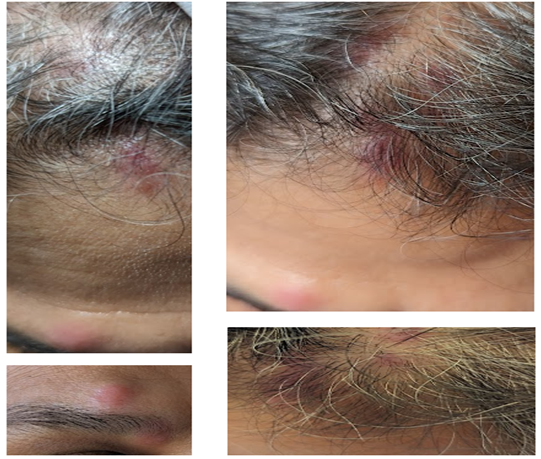
‘Samprapti - Ayurvedic detailed view of disease pathology in this case’ – Etiological factors like improper food and drug induced adverse effects that increased vata, and pitta, and irregular sleep and stress increased vata and pitta dosha. That affected the digestive ability of ‘Agni-the in-charge of appetite and digestion’, leading to improper digestion of food, and generation of toxic substance Ama within the digestive system (ama that gets absorbed within the stomach, intestines, and get circulated through blood, that caused contamination of blood.) (Ama may also be explained as a toxic constituent formed in the body due to weak digestion and metabolism.) After formation, ‘ama’ enters into the ‘Srotas- channels’ of ‘rakta-blood as tissue, mamsa- muscular tissue, majja-whole of the nervous system and bone marrow’ and causes ‘srotovarodh-obstruction’ which leads to provocation of Vata and forms an inflammatory painful condition.
This impurity of blood leads to the appearance of lesions on the skin along with the inflammation and pain. As per Ayurvedic pathogenesis Vata and Pitta play an important role to produce Agni Visarpa disease, the treatment plan prioritized their pacification to break the pathogenesis. Simultaneously, treatment plan considers digestion of toxic ‘ama’, clearing up the obstructions from channels- Srotoshodhan which is needed for regularizing circulation of Rakta-blood, modalities for the rectification of agni, nutrition- ‘rasayana-rejuvenation’ for the affected vital ‘dhatu-tissues’ and associated body parts, wound healing for ulcerations/ blisters, pacification of burning, anti-inflammatory, analgesic actions, and pain management. Ayurveda considered the area above the diaphragm as the seat of kapha dosha; the manifestation is observed on the face and scalp, the impact of vitiated vata and pitta over the kapha dosha is considered within the treatment plan. Snehana-oleation-use of oils/fats therapies are contra indicated before purification in this case.
‘Chikitsa-A treatment plan’- based on the Ayurvedic principles that includes Langhana-fasting or light and small portions conducive foods as per appetite – to repair the metabolism, to digest the ama which is explained as the circulating toxic substance, Rukshan – bring about essential dryness by removing undue fluidity, Avidaahi Aahar non- corrosive foods, dietary and lifestyle counseling and due changes, Virechana-therapeutic purgation, Shaman-only herbs for vata, pitta pacification and tridosha balancing, oral route only-for Shodhana-detoxification and Shamana, Lepa– local application of medicinal paste to facilitate healing, maintain herbal bath, personal and social hygiene.
Treatment Plan Administered
Food and Lifestyle: The patient was counseled about the role of food and lifestyle to bring in the desired efficacy and outcomes from Ayurvedic herbal protocol. The need and significance of due changes was explained. For the consistent progressive recovery, a strict conducive regimen of Food Lifestyle Changes has to be followed during the first seven days of treatment to facilitate elimination of toxins and enhance digestion and metabolism. The routine diet can be administered from the 7th day onwards.
Pathya: Conducive diet- eat as per appetite, sweet, light- easy to digest, tridosha balancing foods that are not much heaty and not much cooling kind of foods-Mudga-whole green beans, yellow mung beans, Masur-split red lentil, Old barley, Wheat, old rice, pomegranate, grapes, black raisins, broccoli, beetroot, carrots, asparagus, celery, cabbage, cilantro, ginger, garlic, oats, food must be warm when getting consumed. Freshly cooked and warm food processed with minimal spices. From 7th day onwards-Light, non-spicy, and moderate quantity routine vegetarian food, cow’s ghee, various millets, oats, hemp seeds, fennel seeds, oat-milk, coconut-milk, Stay hydrated. Water boiled with cumin seeds and coriander seeds was given for drinking [21, 22] where its decoction is used for cleansing in skin diseases. and repeated administration can be effective in indigestion [23].
Apathya: non-conducive diet-hot sour, pungent, cold foods. No to oils, ghee for the first one week. Hot, sour, pungent, spicy food, green leafy vegetables, incompatible diet, heavy meals and difficult to digest foods that cause indigestion (Table 4). Spicy and hot food items, junk foods that cause disturbance in digestion and reduces the bioavailability of the medicine, Carbonated drinks – makes the stomach more acidic and disturbed digestion, Refrigerated and frozen foods – causes weak and sluggish digestion by weakening Agni (digestive faculty), Milk and milk products – increase kapha, cause obstruction in channels and obesity, Yogurt/ Curd – corrosive, causes excess fluidity and thereby many other diseases, pickles, salted snacks, alcohol, and sour fruits, non- vegetarian food was avoided for 90 days.
| Name of the food | Taste | Post Digestive Effects | Potency- Thermal Effect | Actions on the Vata, Pitta, kapha, including Dhatu Effect Modern Medicine/ Nutrition- Phytochemicals |
|---|---|---|---|---|
| Whole Green Beans | Astringent | Pungent | Cooling | Pacify Vata, Pitta and Kapha |
| Yellow Mung Beans | Sweet | Pungent | Cooling | Pacify Pitta and Kapha, Increase Vata |
| Masoor split Red Lentil | Sweet Astringent | Sweet | Cooling | Increases Vata, Balances Pitta and Kapha |
| Old barley | Astringent, Sweet | Pungent | Cooling | Increase Vata, Pacify Pitta and Kapha |
| Wheat | Sweet | Sweet | Cold | Balances Vata and Pitta |
| Pomegranate | Sweet, Sour, Astringent | Sweet, Sour | Anushna - neither Cold, nor sweet | Sweet Pomegranate balances Vata, Pitta and Kapha, but Sour Pomegranate balances Vata and Kapha, but increase Pitta |
| Ripe Grapes | Sweet | Sweet | Cooling | Pacify Vata and Pitta, increase Kapha, |
| Black Raisins | Sweet | Sweet | Cooling | Balances Vata and Pitta, Laxative, Stomachic, Diuretic, Blood Purifier |
| Beet Root | Bitter, Sweet, Astringent | Pungent | Cooling | Pacify Vata and Pitta, Increase Kapha, Contains Potassium, Iron, Vitamin C and Folate. It has Antioxidant, Anti-aging, Aphrodisiac, Anti- inflammatory properties |
| Carrot | Sweet, Bitter | Sweet | Heating | Pacify Vata and Pitta, Increase Kapha |
| Fresh Asparagus | Sweet, Astringent | Sweet | Cooling | Pacify Pitta |
| Green Cabbage | Sweet, Astringent | Pungent | Cooling | Reduce Pitta and Kapha, Increase Vata, It is Anti- inflammatory, rapid healing of Ulcers |
| Fresh Ginger | Pungent | Sweet | Heating | Balance Kapha, Vata and Pitta |
| Oats | Sweet | Sweet | Cooling | Pacify Vata and Pitta, Increase Kapha |
| Cilantro | Astringent, Bitter, Pungent | Sweet | Cooling | Balances Vata, Pitta and Kapha |
| Curry leaves | Bitter, Pungent | Pungent | Cooling | Pacify Vata, Pitta and Kapha |
| Mustard | Pungent, Bitter | Pungent | Heating | Balance Kapha and Vata, Increase Pitta, Anthelmintic, Appetizer, Anti Bacterial, AntiSeptic, Anti inflammatory |
| Rice | Sweet | Sweet | Cooling | Increase Kapha, Pacify Vata and Pitta |
| Cow’s ghee | Sweet | Sweet | Cooling | Balance Pitta and Vata, Increase Kapha, it is rich in antioxidants, fat soluble vitamins like vitamins A, E, D. |
| Patol | Bitter | Pungent | Heating | Balance Kapha and Pitta |
| Millets | Sweet, Astringent | Pungent | Slightly Hot | Balance Pitta and Kapha, increase Vata |
| Hemp seeds | Sweet | Astringent | Heating | Pacify Vata and Pitta, Increase Kapha |
| Coconut milk | Sweet | Sweet | Cooling | Pacify Vata and Pitta, Increase Kapha |
| Almond milk | Sweet | Sweet | Cooling | Pacify Vata and Pitta, Increase Kapha |
| Puffed Rice | Sweet | Sweet | Cooling | Pacify Pitta and Kapha, increase Vata |
| Fennel seeds | Pungent | Sweet | Cooling | Pacify Vata, Pitta and Kapha |
| Coriander seeds | Astringent, Bitter | Sweet | Heating | Pacify Vata, Pitta and Kapha |
| Cumin seeds | Bitter, Pungent | Pungent | Heating | Pacify Vata and Kapha, Increase Pitta |
Table 4: Actions of Planned Foods.
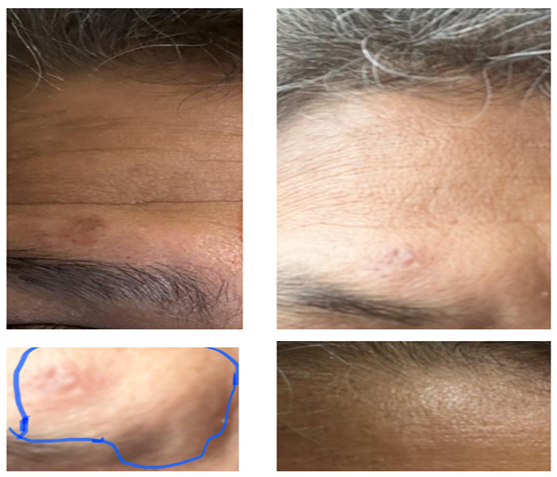
Ayurvedic treatment plan to restore the balanced Tridosha state for Healthy Prakruti in the patient is administered. (Refer table 4) Methodical follow-up has been done and found sustainable clinical improvement (Figure (Table 5 and Table 6).
6). The burning, pain, inflammation, and skin discoloration reduced very successfully. (Refer picture 2). After 21 days therapy assessment had been done to evaluate their action
| Medication | Route | Dose | Anupan- adjuvant | Duration | Caution |
|---|---|---|---|---|---|
| 1. Sariva ground Hemidesmus indicus 2.Haridra ground Curcuma longa 3. Guduchi ground Tinospora cordifolia 4.Nimba ground Azadirachta indica 5.Punarnava ground Boerhavia diffusa 6. Amalaki ground Phyllanthus emblica linn | oral | a)½ teaspoon of each ground herb 3 times within meals or immediately after meals in one day for the first 14 days b)¼ th teaspoon of each up to 90 days | mix herbs with hot water to make a paste first, and consume the warm paste and drink additional water if needed | consecutively for 21 days | maintain consistency in the oral administration of herbs as per plan Maintain consistency in conducive-diet and lifestyle |
| 1).Shatavari ground Asparagus racemosus 2).Yashtimadhu gr. Glycyrrhiza glabra | oral | 1).1 teaspoon 2). 1/8th teaspoon | Warm water | empty stomach in the morning and before dinner for 90 days | |
| Triphala ground | oral | 1 teaspoon | Warm water | 1 hour-after lunch and after dinner | report in case of frequent bowl movement |
Table 5: Efficacy of Administered Herbs.
Mix with water to get a fine consistent paste
- local-affected facial skinexternal application
- 1.Sariva ground
- 2.Yashtimadhu ground
- ½ teaspoon of each
- Thin layer bath – pour on the scalp and whole body
- 1.Nimba ground 2.Haridra ground skin-scalpapplication on the affected and healed area on the scalp
- Yashtimadhu ground
- Haridra ground
- Nimba ground
- Amalaki ground mixture of ½ teaspoon of each dry ground herbs
- 5 drops with the dropper in each nostril for the first 3 days –11 am and 7 pm
- Cow’s ghee – organic Use warm drops every time both the nostrils
Table 6: Herbs administered.
| Herb Admini stered | Taste, post digestive effect, thermal energy | Actions on tridosha, vata pitta, kapha | Overview of Actions – selected in this context |
|---|---|---|---|
| Sariva | Sweet, Bitter Sweet Coolant | Balances Pitta, Vata, Kapha | Antibacterial, Antimicrobial, Antiulcer, drying Antiallergic, Hepatoprotective, stress relieving, skin color enhancer, healing wounds, digestive |
| Shatawari | Sweet, Bitter, Sweet Coolant | Balances Vata and Pitta | Hepatoprotective, Nerve Tonic, mind soothing, Diuretic, cooling, and healing, antacid, rejuvenating, energy booster |
| Neem | Bitter, Astringent, Pungent, Coolant | Pacify Pitta and Kapha | Antiviral, antimicrobial, Detox Liver and Blood, Immune system modulator, relieves Skin Irritation, and Inflammation |
| Turmeric | Bitter, Pungent, Pungent, Pungent Heating | Balance Vata Pitta and Kapha | Anti-atherosclerotic, Antioxidant, antiviral, improves skin color, heals wounds, blood purifier, digestive, appetizer, anticoagulant |
| Punarnava | Sweet, Bitter, Astringent, Pungent, Heating | Balance Vata, Pitta and Kapha | Nerve Relaxant, stimulates brain functions, Anti Inflammatory, digestive, cleanses channels, Antimicrobial, antipyretic, relieves pain |
| Guduchi [24] | Astringent / Bitter, Sweet Heating | Balance Vata, Pitta and Kapha | Boost immunity, antipyretic, anti-inflammatory antiviral, hepatoprotective, kindles agni, purifies blood and channels |
| Yashtimadhu | Sweet, Sweet, Cooling | Pacify Vata and Pitta | Hepatoprotective, soothing for mind and body, Antiviral, Anti-Ulcer, Antipyretic, Antioxidant, improves skin color complexion, and heals scars |
| Amalaki [25], [26] | Sour, Sweet, Bitter, Astringent, Pungent, Sweet Cooling | Balance Vata, Pitta and Kapha | Analgesic, extracts on post operative and Neuropathic pains, Anti Inflammatory, rasayana-rejuvenating, enhances courage by strengthening mind and body connections, antacid |
| Triphala | Astringent / Sour, Neutral | Pacify Pitta and Kapha, Increase Vata | Natural Internal Cleansing, laxative/purgative- detoxification of toxins from the rakta-blood, mamsa dhatu-muscle tissue, leading to clearer skin, enhance skin health, maintains regularity, Nourishes and rasayana-rejuvenates tissues, Natural antioxidant |
Table 7: Efficacy of Administered Herbs.
Research results from the modern medicine suggest that the recurrence of HZ is much more common than generally expected, and that the associated risk factors can play an important role in predicting recurrence [24, 25, 26, 27]. However, it is observed from the follow up and examinations as mentioned in the above Table 7 that there were no evident drug induced side effects, there were no complications during or post treatment, and no reoccurrence or complications up to the 90 days. By appraising Ayurveda, further research in a systematic and logical methodology is required in this area. Too often contemporary research has been more oriented towards basic science methodologies [28].
| Day | Symptoms and Follow-up – treatment plan is administered consistently (refer table ) Symptoms expressed with the grade out of 10 where 10 being maximum level of suffering – |
|---|---|
| 1 | 1. Burning (7/10), 2. Pain-on the rashes(7/10), and at the areas nearby the rashes (7/10), 3. Persistent headache (7/10), 4. Body ache (7/10), 5. Fever 99.5F, 6. Right ear pain (6/10), 7.dryness inside the mouth (6/10), 8.throat pain (5/10), 9.swelling on the rashes (7/10), 10.swelling over the forehead (6/10), 11.overall redness on the rashes (7/10), 12. Itching in the right eye-3/10, 13. Fatigue-7/10, 14. Pulse rate –92/-higher than her normal, 15. BP – 140/90 (mm/Hg)-high • Summary – 15 symptoms were listed |
| 7 | 1.burning (2/10), 2.pain-on the rashes(2/10), and at the areas nearby the rashes (2/10), 3.severe persistent headache (4/10), 4. Body ache, NA, 5.fever - NA, 6. Right ear pain NA , 7.dryness inside the mouth NA, 8.throat pain- NA, 9.swelling on the rashes (1/10), 10.swelling over the forehead - NA, 11.overall redness on the rashes (2/10), 12. Itching in the right eye-NA, 13. Fatigue-3/10, 14.Pulse rate –82/m-Normal,15. BP –110/70 (mm/Hg) Normal • Summary –- progressive healing benefits of treatment are analyzed after examination. • 9 out of 15 listed symptoms went away - 100% result • Improvement: Percentage of reduction in the intensity as compared to the intensity of the same symptom recorded on day 1 - a)swelling on the rashes reduced by 86%, b)three symptoms, viz. burning, pain on the rashes and at the nearby area, overall redness on the rashes reduced by 71%, c)persistent headache reduced by 43%, d)fatigue- reduced by 57% Drug induced adverse side effect-NA Relapse – NA |
| 14 | Below 14 symptoms recovered-symptoms 1.burning, 2.pain- on the rashes and at the areas nearby the rashes, 3. Body ache, 4.fever, 5. Right ear pain 6.dryness inside the mouth, 7.throat pain, 8.swelling on the rashes, 9.swelling over the forehead, 10.overall redness on the rashes, 11. Itching in the right eye,12. Fatigue 13. Pulse rate – 86/m-Normal, 14. BP – 110/70 (mm/Hg)- Normal 1.severe persistent headache -1/10 Summary- progressive healing benefits of treatment are analyzed after examination. • 1-14 - 14 out of 15 listed symptoms went away-100% result • Improvements: Percentage of reduction in the intensity as compared to the intensity of the same symptom recorded on day 1 –headache reduced by 86% Drug induced adverse side effect-NA Relapse – NA Patient’s state gave her confidence to resume her work from day 14 |
| 21 | No symptoms reported after her visit on day -14 and within her visit on day 21, no symptoms observed after examination. Energy level of the patient – 8/10 and patient resumed her daily exercise routine Recurrence of any symptoms – NA |
| 30 | Continuing consistent treatment protocol. No symptoms reported after her visit on day -14 Energy level of the patient – 10/10, feels vibrant health, and patient is continuing her exercise routine. No symptoms reported after the day 14, Patient felt confident to travel. Recurrence of any symptoms – NA |
| 60 | No symptoms reported after her visit on day -14 Energy level of the patient – 10/10, feels vibrant health, and patient is continuing her exercise routine. Patient travelled and had no symptoms of any disease that she reported. No recurrence of disease |
| 90 | No symptoms reported after her visit on day -14 Energy level of the patient – 10/10, feels vibrant health, and patient is continuing her exercise routine. Patient travelled and had no symptoms of any disease that she reported. No recurrence of disease. Gradual withdrawal as per ayurvedic methodology was recommended. |
Table 8: Methodical Examination and Follow up.
Translation of Ayurvedic concepts into modern terminologies is another area of great concern. For instance, Bhasma (e.g., of any metal) is not oxide - they have much deeper scientific meanings. Unless scientists understand these concepts correctly and comprehensively, any attempt at validation may be unscientific as well as counter-productive and detrimental. In the past, such ill-designed scientific attempts have rarely led to any meaningful advancement of knowledge. Rather, they have seriously damaged Ayurveda’s reputation [29, 30].
Conclusion
- Herpes Zoster affecting trigeminal nerve and its associated symptoms are treated with authentic classical ayurvedic principles, herbs and food and lifestyle interventions; leading to quicker and complications-free recovery at the mind and body paradigm in the country outside of India where the classic detox modality like ‘Raktamokshan-therapeutic bloodletting methods/ leeches and ‘rasaushadhee-metallic formulations’ are excluded.
- There are no drug induced adverse side effects during and after the course of treatment
- The post herpes complications did not occur in this case.
- During this therapy the strength of patient was not impaired rather patient felt stress free and rejuvenated.
- There is no reoccurrence of HZ within 90 days from the first day of reporting of the case.
- Ayurveda is a system of medicine with a robust diagnostic foundation , treatment modalities and pharmacological abundance in the management of Agneya (pitta vata prominent) Visarpa.
- Ayurvedic immunity-strengthening and rejuvenating approach gave significant improvements as compared to the immunosuppressant and adversely affecting approach.
Declaration of Patient Consent
Authors certify that they have obtained patient consent form, where the patient/caregiver has given their consent for reporting the case along with the relevant clinical information and the pictures of the affected areas only, by not disclosing her identity in the journal. The patient’s as well as care giver’s name, address, initials, and any personal information will never be revealed and will not be inquired and cannot be published. The patient as well as caregiver understand that their names and initials will not be published, and due efforts will be made to conceal their identity, but anonymity cannot be guaranteed.
Financial Support and Sponsorship: Nil.
Conflicts of Interest: There are no conflicts of interest.
References
-
Pandey MM, Rastogi S, Rawat AK (2013) Indian traditional ayurvedic system of medicine and nutritional supplementation. Evidence Based Complementary and Alternative Medicine pp: 12.
-
Shingles, Etymology, origin and meaning of shingles by etymonline.
-
(2014) How to Manage Acute Herpes Zoster Affecting Trigeminal Nerves. J Can Dent Assoc 80: e42.
-
Stöppler MC (2017) Definition of Trigeminal Nerve, RxList.
-
(2023) Trigeminal nerve.
-
American Psychological Association (2023) APA Dictionary of Psychology.
-
Ferneini EM (2021) Trigeminal neuralgia. Journal of Oral and Maxillofacial Surgery 79(11): 2370-2371.
-
Huff T, Weisbrod L, Daly D (2023) Neuroanatomy cranial nerve 5 (trigeminal). StatPearls Publishing, Treasure Island, Florida, USA.
-
Lovell B (2015) Trigeminal herpes zoster: early recognition and treatment are crucial. BMJ Case Rep 2015: 2014208673.
-
(2023) Sensory systems VI Chemical senses. Integrative Neuroscience.
-
Schünke M, Schulte E, Schumacher U, Stefan C, Wesker KH, et al. (2021) Head and Neck. In: Ross LM, et al. (Eds.), Thieme Atlas of Anatomy. 3rd(Edn.), Thieme, USA, pp: 488-516.
-
TeachMeAnatomy (2023) The trigeminal nerve (CNV).
-
(2014) How to Manage Acute Herpes Zoster Affecting Trigeminal Nerves. J Can Dent Assoc 80: e42.
-
Williams MM (1899) Monier-Williams Sanskrit-English Dictionary. Cologne Digital Sanskrit Dictionaries.
-
Acharya YT (2016) Charaka Samhita of Agnivesta with Ayurvedadipika Commentary by Sri. Chakrapanidatta Chikitsa Sthana Chikitsa Adhyaya. 1st (Edn.), Varanasi Chowkhamba, pp: 560-561.
-
Acharya YT (2014) Nidana Sthana: Nidanam. In: Acharya JT, et al. (Eds.), Sushruta Samhita of Sushruta with Nibandh Samgraha Commentary by Sri Dalhana Acharya. 1st(Edn.), Chowkhamba Publishing, Varanasi, India, pp: 285.
-
Shastri HP (2017) Nidana Sthana: Roga Shopha Visarpa Nidana. In: Shastri HP, et al. (Eds.), Ashtanga Hridayam of Vagbhata with Commentaries Sarvangsundra of Arundatta and Ayurvedarasayana of Hemadri. 1st(Edn.), Chowkhamba Publishing House, Varanasi, India, pp: 522.
-
Shastri HP (2017) Uttar Sthana. In: Shastri HP, et al. (Eds.), Ashtanga Hridayam of Vagbhata with Commentaries Sarvangsundra of Arundatta and Ayurvedarasayana of Hemadri. 1st(Edn.), Chowkhamba Publishing House, Varanasi, India, pp: 865.
-
Acharya YT (2017) Chikitsa Sthana. In: Acharya YT, et al. (Eds.), Sushruta Samhita of Sushruta with Nibandh Samgraha Commentary by Sri Dalhana Acharya. 1st(Edn.), Chowkhamba Publishing House, Varanasi, India, pp: 403.
-
Acharya YT (2017) Uttara Tantra. In: Acharya YT, et al. (Eds.), Sushruta Samhita of Sushruta with Nibandh Samgraha Commentary by Sri Dalhana Acharya. 1st(Edn.), Chowkhamba, Varanasi, India, pp: 471.
-
Srikantha MKR (2012) Sarpaviṣapratiṣedha-adhyāya In: Srikantha MKR, et al. (Eds.), Vagbhata’s Astanga Hrdayam Uttara sthana. 6th (Edn.), Chowkhamba Krishnadas Academy, India, pp: 357.
-
Srikantha MKR (2012) bhaṅgapratiṣedha-adhyāya. In: Srikantha MKR, et al. (Eds.), Vagbhata’s Astanga Hrdayam Uttara sthana. 6th (Edn.), Chowkhamba Krishnadas Academy, India, pp: 263-264.
-
Gogte VM (2009) Ayurvedic Pharmacology & Therapeutic Uses of Medical Plants Dravyagunavignyan. Chaukhambha Publications, India, pp: 860.
-
Pruthvish R, Gopinatha SM (2018) Antiviral prospective of Tinospora cordifolia on HSV-1. International Journal of Current Microbiology Applied Sciences 7(1): 3617- 3624.
-
Yang B, Liu P (2014) Composition and biological activities of hydrolyzable tannins of fruits of Phyllanthus emblica. Journal of Agriculture Food Chemistry 62(3): 529-541.
-
Khopde SM, Priyadarsini I, Mohan H, Gawandi V, Satav JG, et al. (2001) Characterizing the antioxidant activity of Amla (Phyllanthus emblica) extract. Current Science 81(2): 185-190.
-
Kim YJ, Lee CN, Lee MS, Lee JH, Lee JY, et al. (2018) Recurrence Rate of Herpes Zoster and Its Risk Factors: a Population-based Cohort Study. Journal of Korean Medical Science 34(2): e1.
-
Patwardhan B, Mashelkar RA (2009) Traditional medicine-inspired drug discovery and development: Can Ayurveda show a way forward. Drug Discovery Today 14(15-16): 804-1011.
-
Patwardhan B (2010) Ayurveda and integrative medicine: Riding a tiger. Journal of Ayurveda Integrative Medicine 1(1): 13-15.
-
Barnett R, Sears C (1991) JAMA gets into an Indian herbal jam. Science 254(5029): 188-189.
- Potential Medicinal Herbs and Secondary Metabolites in Combating Corona Virus
- Monkeypox and its Clinical Implications in Pregnancy
- Pharmacognostical Analysis of the Leaves of Important Nervine Medicinal Plant: Strychnos Nux-Vomica L
- Assessment of Antibacterial Activity of Various Solvent Extracts of Dictyota Dichotoma Against Multidrug Resistant Bacterial Strain
- An Insights of Bioactive Elements on Malignancy: Mechanistic Avenues
- Advances and Future Directions in Pharmacognosy and Chinese Medicine