
Epidemiological Characterization of Leptospirosis in Affective Animals in Santa Clara Municipality, Cuba 2018-2022
Leptospirosis is a reemerging infectious disease. The objective of the study was to characterize epidemiologically affectionate animal leptospirosis in the Santa Clara municipality, in the period 2018-2022. An observational, descriptive and crosssectional study was carried out. In the affected animal population, the incidence, trend, seasonality and endemic channel were determined in a five-year time series. The occurrence of outbreaks by year, morbidity, lethality, mortality, cases by area, seasonality, enzootic channels and trend in the canine and feline species of the territory were found. The incidence of animal leptospirosis in the municipality of Santa Clara is low, and the most affected areas were José Martí, Antón Díaz y La Gomera. Animal leptospirosis manifests a circumscribed enzootic behavior and with under-recording of the real state of the population of loving animals.
Introduction
Leptospirosis is a reemerging infectious disease [1]. The disease affects virtually all mammals and has a wide range of clinical effects, from mild, subclinical infection to multiple organ failure and death [2].
The etiologic agent of the disease is Leptospira spp. a Gram-negative spirochete of which at least 22 species and more than 300 serovars have been reported. Of the 22 species, only 45% (10 out of 22) are pathogenic to humans and animals (Leptospira interrogans, L. kirschneri, L. borgpetersenii, L. mayottensis, L. santarosai, L. noguchii, L. weilii, L. alexanderi, L. kmetyi and L. alstonii) and five others of low pathogenicity (L. broomii, L. fainei, L. inadai, L. licerasiae and L. wolffii) [3].
Production and companion animals play a very important role in the epidemiology of the disease, as they can act as hosts of Leptospira spp. However, rodents are one of the most important reservoirs for this bacterium to remain in the environment. The main route of transmission to humans is through contact with tissues or urine of infected animals, as well as mud or water contaminated with the urine of infected animals [4, 5].
In Cuba, the main reservoirs of human leptospirosis are rats, pigs, dogs and cattle [6]. It is a disease that has an endemoepidemic behavior with a seasonal cyclic character [7, 8].
It is necessary to maintain an active epidemiological surveillance of leptospirosis, with periodic investigations to know the current status of the disease in domestic animals, because they are part of the chain of transmission to humans [9, 10].
In Villa Clara province, Cuba, several studies have been carried out that have addressed epidemiological aspects of human and animal leptospirosis [11, 12, 13, 14, 15]. However, it is necessary to carry out research, especially in those factors in which there are contradictory results or have not been studied, that allow a more complete knowledge of the epidemiology of the disease in this territory and to outline strategies for prevention and control, both in humans and animals.
The objective of this study was to characterize epidemiologically leptospirosis in affective animals in Santa Clara municipality, Villa Clara province, Cuba, in the period 2018-2022.
Materials and Methods
Study Area
The research was carried out in Santa Clara municipality, located in the south-central portion of Villa Clara province, Cuba, at 22, 40615º north latitude and 79, 96566º west longitude.
Epidemiological Analysis
An analytical, observational, descriptive, descriptive, retrospective, retrospective, cross-sectional study was conducted in a time series of five years, in the period from January 2018 to December 2022. An epidemiological analysis of the behavior of the occurrence of leptospirosis in the canine and feline population was performed. The occurrence of outbreaks per year, the epizootic indexes of morbidity, lethality and mortality, the number of cases per zone, as well as the seasonality, enzootic channel and trend were found.
The sources of information were the time series obtained from the database of the Department of Animal Health of the municipality of Santa Clara. A clinical-epizootiological diagnosis was applied and, in some cases, it was corroborated with the anatomopathological and serological diagnosis (MAT) according to OIE (16 and 17) at the Provincial Center of Epizootiology and Veterinary Diagnosis of Villa Clara.
Statistical Analysis of the Results
A database was created using the Microsoft Excel tabulator and the results obtained were processed using the statistical package Stat graphics Centurion ver. XV. II. (Statistical Graphic Corp., USA). To compare the epizootic indexes of leptospirosis in the animal population studied, the following formulas were used: Morbidity: Sick animals / Susceptible animals * 100 Mortality: Dead and/or slaughtered animals/susceptible animals * 100 Lethality: Dead animals/ sick animals * 100 Descriptive statistics were used to establish the spatial distribution of outbreaks using an absolute and relative frequency distribution. To determine the presence of the seasonal component, the occurrence of leptospirosis in animals was analyzed with values obtained from 60 time periods, and the seasonal decomposition of these values was performed by the additive method. The monthly occurrence was separated into Cycle-Trend, seasonal and random components, the seasonal indexes were obtained for each month, scaled so that an average season was equal to 100, their graphs and annual trends. The trend component of the occurrence of human cases was analyzed using the equation of the trend line adjusted by the least square method.
To establish the channels of usual behavior of the occurrence of cases in the entire period analyzed (2018 -2022), the average, first and third quartile method was used, which is based on determining for each period (months) a measure of central tendency and its minimum and maximum values, in order to define safety or alert zones.
The average, minimum and maximum values of the occurrence of cases in each month of the five-year period of the time series analyzed were found, and the channels were constructed with the central measure, the lower range and the upper range, establishing zones of success (values equal to or lower than the lower limit), safety zone (values equal to or lower than the average and higher than the lower limit), alert zone (values equal to or higher than the average and lower than the upper limit) and epidemic zone (values equal to or higher than the upper limit). The trend was found using the least square method.
Results
Table 1 shows the main epidemiological indices of animal leptospirosis in the population studied (canines and felines). Note that in each of the outbreaks or foci analyzed, morbidity showed a tendency to increase, which indicates a greater extension of the infectious process in the susceptible population. Of the 43 cases of leptospirosis diagnosed, only four (9.30%) were reported in cats.
| Cases | Brotes | Susceptibles | Morbidity (%) | Mortality (%) | Lethality (%) | |
|---|---|---|---|---|---|---|
| 2018 | 21 | 19 | 32 | 65.63 | 18.75 | 28.57 |
| 2019 | 2 | 2 | 3 | 66.67 | 0 | 0 |
| 2020 | 6 | 6 | 10 | 60 | 10 | 16.67 |
| 2021 | 4 | 3 | 5 | 80 | 20 | 25 |
| 2022 | 10 | 8 | 12 | 83.33 | 16.67 | 20 |
| Total | 43 | 38 | 62 | 69.35 | 16.13 | 23.26 |
Table 1: Epidemiological indices of animal leptospirosis in Santa Clara during the period 2018-2022.
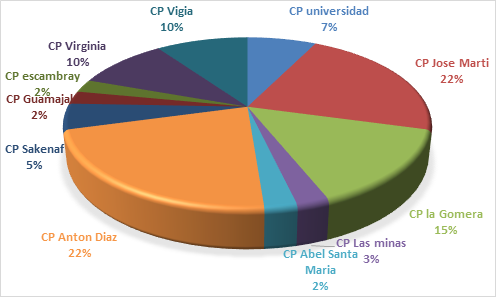
Figure 1 shows the spatial distribution of animal leptospirosis cases according to zones or Popular Councils (PC) in the municipality of Santa Clara during the period analyzed.
Figure 2 shows the seasonality of animal leptospirosis occurrence in Santa Clara during the analyzed period. This figure exhibits the results of the seasonal indices for the monthly occurrence of animal leptospirosis in the period 2018 - 2022; note that there is a seasonal balance of the occurrence of animal leptospirosis throughout the year, with the lowest index -4.43 in the month of December and the maximum of 10.44 in the month of February. The occurrence of leptospirosis is higher in the months of February, June and November, their indexes are higher than 0 that of an average season.
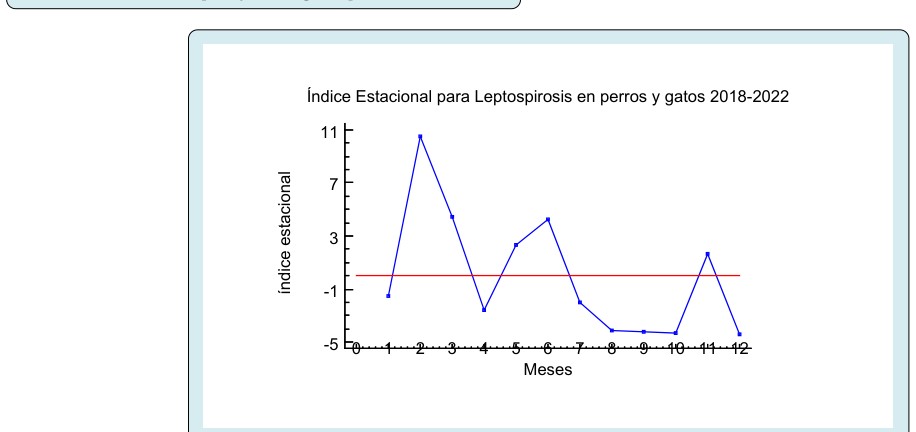
Figure 3 shows the enzootic channel of animal leptospirosis occurrence based on the annual series for the period 2018-2022 in Santa Clara.
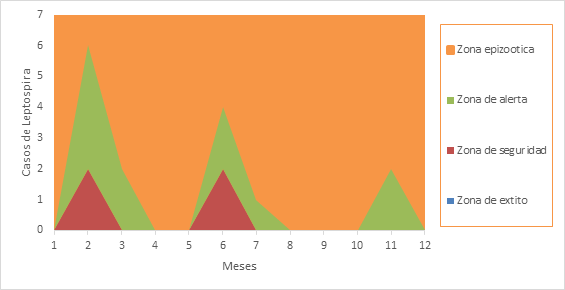
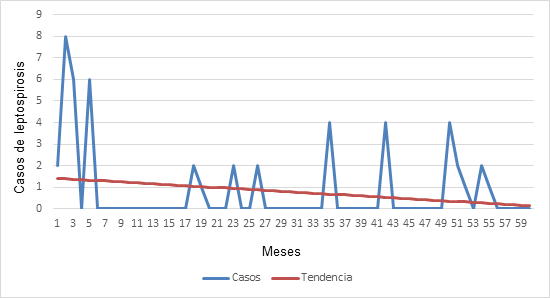
Figure 4 shows the occurrence of animal leptospirosis cases and their trend during the period analyzed.
Discussion
Mortality and morbidity of animal leptospirosis in the municipality of Santa Clara, in most of the years analyzed, is lower than that reported in other studies such as those conducted by Dubraska, et al. [16] and Virbac [17] who indicate that morbidity could exceed 75% and mortality 20%, respectively. These results are attributed to several factors, including the prevalence and circulation of less virulent strains that may result in less severe forms of the disease. The implementation of control and prevention programs, such as animal vaccination and rat extermination in higher risk areas. Although a crucial factor that may contribute to the apparent low morbidity of animal leptospirosis in the area is the underreporting of cases.
The geographic proximity to the Epizootiology and Veterinary Diagnostic Center in the areas of José Martí, Antón Díaz and La Gomera, identified as the areas with the highest incidence of cases, facilitates quick and efficient access to veterinary services for the residents of these localities. In addition, these are peripheral areas of the city where there are more animals such as pigs, horses and dogs, and therefore the population is more exposed [11, 12].
On the other hand, more remote areas may experience access difficulties due to lack of transportation or less awareness of the seriousness of leptospirosis, thus contributing to underreporting of the disease. This lack of awareness may be compounded by the absence of obvious symptoms or the mistaken belief that certain symptoms are attributable to less serious conditions, an aspect that is consistent with Perez, et al. [18] who refer to underreporting or underdiagnosis of the disease in animals.
In addition, the location of the Epizootiology and Veterinary Diagnostic Center in the José Martí area and adjacent areas may influence the fact that residents of these areas are the most likely to use such services, which could result in a concentration of cases reported from these sectors. However, this concentration does not necessarily reflect the actual distribution of the disease in the animal population of the entire Santa Clara region, but rather the availability of services in the area near the diagnostic center [12, 13, 14, 15].
The observed relationship between proximity to the diagnostic center and higher incidence of cases may be due to accessibility and awareness factors that affect the ability to report in more remote areas [19, 20]. This highlights the need for improved infrastructure and awareness in these areas to ensure more equitable and accurate detection of animal leptospirosis throughout the region [17, 18].
Paradoxically, in February and March, which coincide with the low rainfall period in Cuba, there is an increase in leptospirosis cases. This challenging phenomenon can be attributed to several factors. Despite the less favorable seasonality for the proliferation of leptospires, local microclimatic conditions may vary, allowing punctual climatic events that favor the transmission of the disease [11, 21, 22].
In addition, the storage of contaminated water, agricultural and livestock practices, as well as human behavior, can maintain the presence of leptospires even in periods with less rainfall [11, 21]. Thus, the complexity of the epidemiology of leptospirosis during February underlines the influence of local, behavioral and microclimatic factors on the dynamics of the disease in the region [23, 24, 25]. In addition, animals usually manifest active infections, chronic leptospirosis, carrier and/or reservoir status, clinical manifestations that may or may not coincide with environmental conditions favorable for Leptospira [24, 25, 26, 27].
The months of May and June are framed within the rainy period (May-October). This phenomenon is explained by the favorable climatic conditions of high humidity and high temperatures that characterize this period [11, 12, 21]. These conditions favor the proliferation of leptospires in ecological niches contaminated by the urine of sick animals, carriers and reservoirs. The combination of climatic factors creates an ideal environment for the survival and transmission of the bacteria, increasing the disease burden [8, 11, 23].
These results coincide with those obtained by Tabo, et al. [23]; Zambrano, et al. [27] who state that leptospirosis is more frequent during the rainy season favored by an increase in exposure to stagnant water.
As can be seen, the channel of the usual behavior of the occurrence of cases for the period analyzed is from zero to two cases per month and in many months the incidence is null, which denotes the underreporting of the disease. Observation of the monthly behavior of the occurrence of animal leptospirosis reveals an intrinsically irregular trend over time, with significant variability in the frequency of cases. This irregularity, rather than indicating random fluctuation, suggests an underlying pattern consistent with the endemic nature of animal leptospirosis in the region [8, 11, 17, 21].
The fact that the overall trend shows a decrease suggests some stability or adaptation over time, which could be associated with the establishment of environmental and epidemiological conditions conducive to the persistence of the bacterium in ecological niches. However, it is crucial to highlight that this apparent decrease may be misleading and, in reality, be related to a recurrent and pernicious phenomenon: the underreporting of diagnosed cases as stated by Perez, et al. [18] the situation of underreporting in animal leptospirosis may be accentuated in the veterinary field, and several factors contribute to this problem, focusing especially on the lack of resources and the lack of awareness on the part of animal owners.
The epidemiology of leptospirosis as a zoonosis and the interaction at the animal-human-environment interface constitute a challenge for veterinary public health, due to the wide range of symptoms, serovars, risk factors and variation in epidemiology according to the region. Therefore, it is necessary to deepen in the epidemiological behavior of the disease in order to contribute to its knowledge, surveillance and control within the framework of the “ONE HEALTH” concept [20, 22].
Conclusion
The incidence of animal leptospirosis in the municipality of Santa Clara was low, affecting mainly the areas of José Martí, Antón Díaz and La Gomera. Animal leptospirosis showed a circumscribed enzootic behavior, with an underreporting of the real status of the affective animal population; therefore, diagnostic screening of affective animals and training with the “One Health” approach should be increased through educational interventions in communities at high zoonotic risk in the municipality of Santa Clara. The epidemiology of leptospirosis as a zoonosis and the interaction at the animal- human-environment interface constitute a challenge for veterinary public health, so it is necessary to continue to deepen the epidemiological behavior of this entity.
References
-
Zakharova OI, Korennoy FI, Iashin IV, Toropova NN, Gogin AE, et al. (2021) Ecological and Socio-Economic Determinants of Livestock Animal Leptospirosis in the Russian Arctic. Front Vet Sci 8: 658675.
-
Yang W, Pan J, Yang Y, Yang CW, Pan MJ, et al. (2019) Leptospirosis and the Kidney. Transl Res Biomed. Basel, Karger 7: 57-64.
-
Dhewantara PW, Al Mamun A, Yin WW, Ding F, Guo D, et al. (2020) Spatial distribution of leptospirosis incidence in the Upper Yangtze and Pearl River Basin, China: Tools to support intervention and elimination. Sci Total Environ 7(25): 1-14.
-
Lugo CBL, Velasco-Rodríguez LC, Canales VG, Velázquez HJF, Herrera HEV (2015) Detection of antileptospira antibodies in a vulnerable population in the municipality of Ixhuatlancillo, Veracruz, Mexico. Rev Med Inst Mex Seguro Soc 53(2): 158-163.
-
Krijger IM, Ahmed AAA, Goris MGA, Groot-Koerkamp PWG, Meerburg BG (2019) Prevalence of Leptospira Infection in Rodents from Bangladesh. Int J Environ Res Public Health 16(12): 1-19.
-
Suárez M, Otero J, Cruillas S, Otero M (2015) Prevention of human leptospirosis in the community. Cuban Journal of Military Medicine 44(1): 86-95.
-
Obregón FAM (2017) Laboratory advances on human leptospirosis in Cuba, 1989-2016. Cuban Journal of Tropical Medicine 69 (3): 1-18.
-
Obregón FAM (2023) Leptospirosis and human brucellosis, present of two zoonoses of public health impact in Cuba. Pedro Kourí Institute of Tropical Medicine. III International Workshop on Parasitic Zoonoses of Medical Importance and VIII International Workshop on Climate Change and Health. November 13- 17, 2023. Trinidad, Cuba.
-
Zambrano P, Lazo L, Barragán V, Morales M, Bulnes C, et al. (2017a) Current status and future strategies in the epidemiology of leptospirosis in the canton of Portoviejo, province of Manabí. VIII Symposium of Veterinary Medicine. International Scientific Convention. October 23-27, Caibarién, Cuba.
-
Zambrano GP, Lazo PL, Vera LE, Castillo CJC, Fimia DR, et al. (2020) Seroprevalence of antibodies against Leptospira spp. in pigs raised in Portoviejo, Ecuador. Cuban Journal of Tropical Medicine 72(3): 1-14.
-
Castillo J, Iannacone J, Fimia DR, Quiñones M, Cepero O, et al. (2016) Epidemiological behavior of human and animal leptospirosis in the province of Villa Clara, Cuba. The Biologist (Lima) 14(1): 89-102.
-
Pérez J, Osés R, Fimia R, Iannacone J, Pérez B, et al. (2017) Leptospirosis and its relationship with some climatic variables in the municipality of Santa Clara, Villa Clara, Cuba. Biotempo 14(1): 57-69.
-
Lazo PL, López RR, Ortiz BY, Cepero RO, Rodríguez AL (2017) Epidemiological surveillance in slaughtered pigs in Villa Clara province, Cuba. Computerized Journal of Swine Production 24 (2): 128-139.
-
Ortíz HBY, Lazo PL, Cuéllar VE, Almoguea M (2018) Passive diagnosis of interstitial nephritis in slaughterhouse pigs. Agroecosistemas Scientific Journal 6(1): 162-167.
-
Ortíz HBY, Lazo PL, Almoguea ML, Cuellar E (2019) Passive diagnosis and its contribution to epidemiological surveillance. Agroecosistemas Scientific Journal 7(1): 181-187.
-
Dubraska V, Díaz C (2005) Dual Purpose Livestock Manual: leptospirosis. pp: 301-306.
-
Virbac (2006) Bovine Leptospirosis in Colombia: Chronic Infection.
-
Pérez J, Agudelo P, Jaime G, Ernesto J, Arboleda M (2019) Incidence and underreporting of leptospirosis cases diagnosed with three different methods in Urabá, Colombia. Biomedica: Journal of the National Institute of Health 39(S1): 150-162.
-
World Organization for Animal Health (OIE) (2018) Terrestrial Manual of the OIE. pp: 1-16.
-
World Organization for Animal Health (OIE) (2021) Chapter 3.1.12 Leptospirosis: Terrestrial Manual of the World Organization for Animal Health.
-
Zambrano P, Lazo L, Osés R, Barragán V, Morales M, et al. (2018) Retrospective study of human leptospirosis and its relationship with climatic variables in Portoviejo canton, Manabí province, Ecuador. V International Symposium on Surveillance, Monitoring and Control of Vectors Involved in the Transmission of Zoonotic Diseases. November 12-16, 2018, Trinidad, Cuba.
-
Zambrano GP (2021) Contributions to the knowledge of the epidemiology of swine leptospirosis as a zoonosis in the central region of Portoviejo, Ecuador in the period 2014-2019 [Doctoral thesis]. Santa Clara: Repository of the Central University “Marta Abreu” of Las Villas.
-
Tabo NA, Villanueva SYAM, Gloriani NG (2018) Prevalence of Leptospira-agglutinating Antibodies in Abattoir Workers and Slaughtered Animals in Selected Slaughterhouses in Cavite. Philippines. Philippine Journal of Science 147(1): 27-35.
-
Lunn K (2019) Overview of Leptospirosis. Merck and the Merck Veterinary.
-
Yang W, Pan J, Yang Y (2019) Leptospirosis and the Kidney. Transl Res Biomed Basel, Karger 7: 57-64.
-
Sykes JE, Reagan KL, Nally JE, Galloway RL, Haake DA (2022) Role of diagnostics in epidemiology, management, surveillance, and control of leptospirosis. Pathogens 11(3): 395-421.
-
Zambrano GP, Lazo PL, Barragán V, Morales M, Bulnes GC, et al. (2017b) Current status and future strategies in the epidemiology of leptospirosis in the canton of Portoviejo, province of Manabí, Ecuador. Biotempo 14 (2): 197-209.
- Mitochondrial Bio-Logistics: Steering Co-Enzyme Q10 and Lycopene Synergies within the Science 4.0 Bio-OS Framework
- Hymenoptera Specimens from the Caño Negro Wetland, of the National Museum Collection, Costa Rica
- Science 4.0: Comprehensive Architecture of the Biological Operating System (Bio-OS) A Framework for Systemic Resilience and Industrialized Bio-Governance
- Rabbit on, or Hare Back? Understanding Climate Change
- Clinical Validation of Science 4.0: Flow Steering and Epigenetic Drift Inversion on a 76-Year-Old Hybrid System
- Seeds Planted by another Mind