
Science, Conservation and Society: What if we Unite them in Entomology?
Light pollution generated by human structures attracts insects or even modifies their behaviour, which causes many specimens to appear dead on windows, lights and in corridors. Carrying out insect sampling in private homes, within the framework of research projects, can facilitate communication between researchers and environmental authorities with the community, allowing not only very efficient sampling for taxonomic characterisation but also a clear detection of the needs for environmental education in a specific area.
Abbreviations
NMCR: National Museum of Costa Rica.
Introduction
There has always been a barrier between science, conservation and the non-scientific population, especially when we put the issue of illegal trafficking of species in the middle, since in this aspect, Costa Rica still has many shortcomings and unresolved problems, both at the of knowledge about the true state of the populations, as well as regarding the strategies applied in this matter. However, this does not mean that society cannot be involved in solving this problem, since it is a matter of strategy.
Approximately one fifth of the earth is affected by artificial lights in cities and human settlements, which has been addressed from the perspective of loss and impact of natural habitats, especially for insects that are attracted to windows and lights. of houses and buildings, especially when they involve white lights [1]. Likewise, studies have been carried out focused on observing the interaction of some families of moths and grasshoppers with artificial lights in biological sampling [2, 3, 4]. But, the truth is that currently artificial lights are not something that is not going to disappear, but rather are a permanent and increasing part of human activity. But far from only seeing the negative side that has already been widely studied, we can take an aspect that is useful to us in terms of research and in terms of improving the relationship between science and society.
Methodology
A rapid sampling was carried out, collecting only dead insect specimens that were inside the infrastructure of a single house in the district of Ojochal, Uvita, Puntarenas Province, to which I was allowed access.
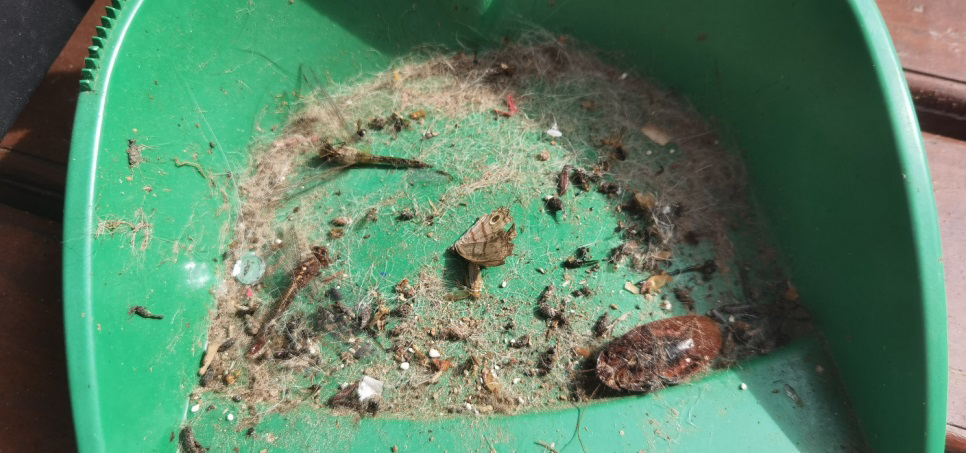
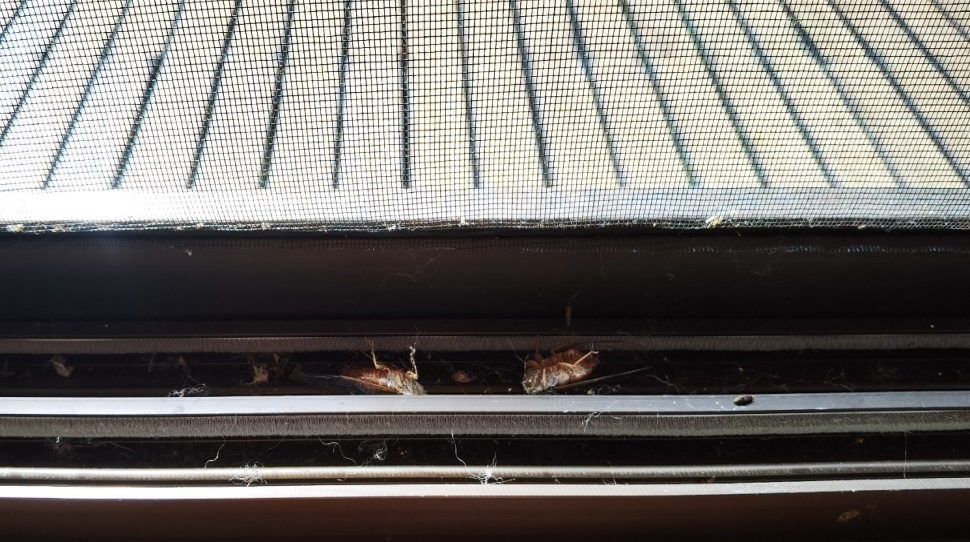
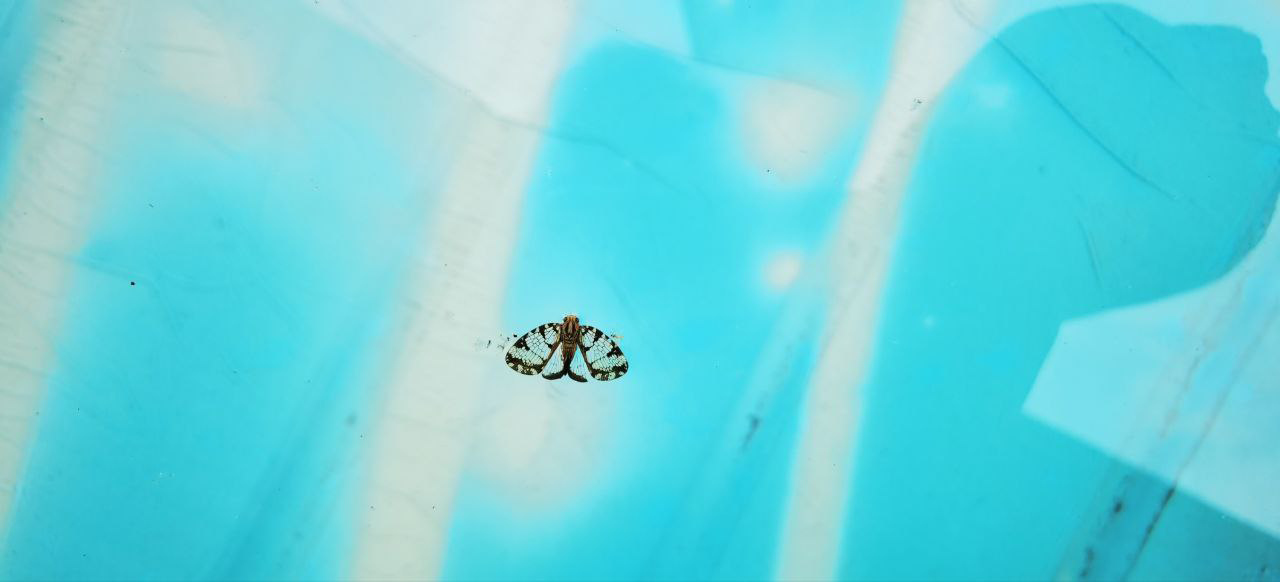
Specimens were collected from the windows, the floor, the cleaning area, the lights, the kitchen, and the interior of bedrooms and bathrooms (Figures 1-3). The photos were taken with an Honor Magic 6 Pro cell phone.
This collection was carried out using the collection permit R-SINAC-SE-DT-PI-017-2024 and the specimens were deposited in the collection of the National Museum of Costa Rica (MNCR).
Results
A total of 44 specimens were collected, corresponding to 5 orders and 29 species (Table 1). Likewise, several concerns that people often have about insects and the surrounding ecosystem were detected, which could be addressed through environmental education, namely: A. People do not know how to differentiate between wasps and bees, which caused a tendency to try to eradicate stingless bee hives (Hymenoptera: Apidae: Meliponini) for fear that they would harm children and dogs. B. Leaf-cutting ants are considered problematic in gardens, but all species are eradicated equally. C. The community considers the loss of forest to be a serious problem, which has been increasing over the years. D. People are concerned about the wide variety of wild cockroaches they often find in their homes, as these species are only associated with urban or dirty environments, since they are not aware of the great diversity of strategies that the group has or its role in the ecosystem.
| No. Catalog | Order | Family | Species |
|---|---|---|---|
| MNCR-A 5151581 | Lepidoptera | Erebidae | Cosmosoma sp. |
| MNCR-A 5151584 | Hemiptera | Cicadelidae | Dorisiana sp. |
| MNCR-A 5151585 | Hemiptera | Cicadelidae | Dorisiana sp. |
| MNCR-A 5151588 | Hemiptera | Nogodinidae | Sp. 1 |
| MNCR-A 5151582 | Hemiptera | Cicadelidae | Diostema sp. |
| MNCR-A 5151583 | Hemiptera | Cicadelidae | Diostema sp. |
| MNCR-A 5151586 | Hemiptera | Flatidae | Flatomenis sp. |
| MNCR-A 5151587 | Hemiptera | Flatidae | Flatomenis sp. |
| MNCR-A 5151590 | Hemiptera | Cicadelidae | Sp. 2 |
| MNCR-A 5151589 | Hemiptera | Pentatomidae | Sp. 3 |
| MNCR-A 5151593 | Hymenoptera | Halictidae | Augloclora sp. |
| MNCR-A 5151603 | Hymenoptera | Apidae | Centris obscurior |
| MNCR-A 5151592 | Hymenoptera | Apidae | Cephalotrigona zexmeniae |
| MNCR-A 5151591 | Hymenoptera | Vespidae | Agelaia centralis |
| MNCR-A 5151600 | Hymenoptera | Formicidae | Sp. 4 (queen) |
| MNCR-A 5151601 | Hymenoptera | Sp. 5 | |
| MNCR-A 5151604 | Hymenoptera | Megachilidae | Sp. 6 |
| MNCR-A 5151609 | Hymenoptera | Apidae | Trigona fulviventris |
| MNCR-A 5151597 | Hymenoptera | Apidae | Scaptotrigona subobscuripennis |
| MNCR-A 5151598 | Hymenoptera | Apidae | Scaptotrigona subobscuripennis |
| MNCR-A 5151599 | Hymenoptera | Apidae | Scaptotrigona subobscuripennis |
| MNCR-A 5151596 | Hymenoptera | Apidae | Plebeia sp. |
| MNCR-A 5151594 | Hymenoptera | Apidae | Scaptotrigona subobscuripennis |
| MNCR-A 5151595 | Hymenoptera | Apidae | Scaptotrigona pectoralis |
| MNCR-A 5151602 | Hymenoptera | Ichneumonidae | Sp. 7 |
| MNCR-A 5151605 | Hymenoptera | Apidae | Scaptotrigona subobscuripennis |
| MNCR-A 5151606 | Hymenoptera | Apidae | Trigona fulviventris |
| MNCR-A 5151612 | Hymenoptera | Apidae | Tetragonisca angustula |
| MNCR-A 5151608 | Hymenoptera | Vespidae | Protopolibia chartergoides |
| MNCR-A 5151611 | Hymenoptera | Apidae | Scaptotrigona subobscuripennis |
| MNCR-A 5151610 | Hymenoptera | Apidae | Trigona fulviventris |
| MNCR-A 5151607 | Hymenoptera | Apidae | Scaptotrigona subobscuripennis |
| MNCR-A 5151614 | Hymenoptera | Apidae | Dolichotrigona schultessi |
| MNCR-A 5151613 | Hymenoptera | Apidae | Dolichotrigona schultessi |
| MNCR-A 5151615 | Diptera | Sp. 8 | |
| MNCR-A 5151616 | Diptera | Sp. 9 | |
| MNCR-A 5151617 | Diptera | Sp. 10 | |
| MNCR-A 5151618 | Diptera | Sp. 11 | |
| MNCR-A 5151619 | Diptera | Merosargus lampronotus | |
| MNCR-A 5151620 | Diptera | Sp. 12 | |
| MNCR-A 5151621 | Diptera | Sp. 13 | |
| MNCR-A 5151622 | Diptera | Sp. 14 | |
| MNCR-A 5151580 | Blettaria | Nyctiboridae | Nyctibora sp. |
Table 1: Recolected species list.
Discusion
The MNCR collections database [5]. records a history of 61 collection events for this area, in which a total of 816 specimens were collected, of which 324 species had been identified to date. We could say that an average of approximately 13 or 14 specimens were identified per event, while considering this last sampling of just a few minutes, 44 specimens corresponding to 29 species were collected, 22 of which had not been collected for the area, although they are very common throughout the country.
In addition to this considerable contribution, it is even more important to mention the impact on the people who allowed us to carry out this sampling in their home, since curiosity increased when the subject of species richness as an indicator of a balanced environment was put on the table. It is not something new that insects are the protagonists of many psychopathologies and aversions that make involving communities in their conservation and monitoring a challenge, since there is always the idea that they bite, sting, or can transmit diseases, which, although not entirely false, only applies to specific species and in specific circumstances [6, 7, 8]. however, raising awareness among people begins with environmental education, which in turn depends on good training of ecologists with teaching skills, who are capable not only of transmitting basic knowledge [9] but of identifying the specific problems that must be addressed in each locality. In Costa Rica, although environmental education has very specific objectives, it does not receive the importance it deserves from educational institutions, nor the necessary funds for officials in conservation areas to carry them out effectively throughout the country. In the particular case of the Bahía Ballena community, concerns related to insects that may affect children and pets, and given that the population of the Uvita sectors is mainly foreign, they often try to destroy the hives of stingless bees thinking that they are wasps, such as those of the Plabeia, Tetragonisca, Scaptotrigona and Dolichotrigona genera found in the house visited. However, when explaining that they are harmless and that on the contrary two of them could even produce very high quality honey, as well as their invaluable role in plant genetic communication, fears gave way to ideas to relocate the hives to small houses in the garden so as not to interrupt the pollination that was taking place.
Conclusion
A. It is concluded that houses are, in and of themselves, sources of insect specimens, which can be used as rapid sampling points with very significant taxonomic results. B. Using private homes as sampling points brings the community closer to science and creates a portal for environmental education within the framework of research projects. C. This type of sampling opens direct channels of communication with the population, allowing the identification of needs and problems that can be addressed through environmental education, such as the problem identified in differentiating wasps from bees.
References
-
Stewart AJA (2021) Impacts of artificial lighting at night on insect conservation. Insect Conservation and Diversity 14(2): 163-166.
-
Janzen DH (1984) Two ways to be a tropical big moth: Santa Rosa saturniids and sphingids. Oxford Surveys in Evolutionary Biology 1: 85-140.
-
Hashizume K, Hironaka M (2019) Distribution and swarm flights of grasshoppers in the genus Oxya (Orthoptera: Acrididae) in Ishikawa Prefecture, Japan. Proceedings of the Association of Plant Protection of Hokuriku 68: 21-30.
-
Kasai M, Hironaka M (2024) Effects of artificial light on the arrival time, duration of stay, and departure time of nocturnal flying insects. Applied Entomology and Zoology 59: 155-162.
-
National Museum of Costa Rica. Natural History Specify 7 Data base.
-
Querol A (1997) Artrópodos y psicopatología: aproximación a dos entidades clínicas. Boletín de la Sociedad Entomológica Aragonesa 20: 217-221.
-
Blanco P, Martínes MUP (2018) Mitos sobre animales impactan su conservación. Ciencia más Tecnología 32 (21 de marzo).
-
Salvador ME, Iruarrizaga I (2002) Intervencion en un caso de fobia a las cucarachas desde una perspectiva cognitivo-condutual. Ansiedad y Estres 8(1): 89.
-
Azarkhin A, Abduev S (2024) Environmental education in higher education: modern tracks. BIO Web of Conferences 11: 07022.
- Mitochondrial Bio-Logistics: Steering Co-Enzyme Q10 and Lycopene Synergies within the Science 4.0 Bio-OS Framework
- Hymenoptera Specimens from the Caño Negro Wetland, of the National Museum Collection, Costa Rica
- Science 4.0: Comprehensive Architecture of the Biological Operating System (Bio-OS) A Framework for Systemic Resilience and Industrialized Bio-Governance
- Rabbit on, or Hare Back? Understanding Climate Change
- Clinical Validation of Science 4.0: Flow Steering and Epigenetic Drift Inversion on a 76-Year-Old Hybrid System
- Seeds Planted by another Mind