
Identification of Prey Species Consumed by the Great Horned Owl (Bubo virginianus) in the Suburban Area of Zacatecas, Mexico
The great horned owl (Bubo virginianus) is a representative bird of the Strigidae family; they are generalist predators, their prey being mainly rodents, lagomorphs, and arthropods, in varying proportions depending on the habitat, time of year, and availability of prey; therefore, taking into account that the analysis of their diet allows for the collection of ecological information on the species; the objective of this study was to identify the species consumed by the great horned owl (Bubo virginianus) in the study area during the rainy and dry seasons in an urbanized area near the city of Zacatecas. To this end, the presence of long-eared owls was located in a rural area of the state of Zacatecas. Once located, pellets were collected during two seasonal periods: the rainy season and the dry season. The samples collected were processed for content analysis (bone remains, molars, skulls, hair, and feathers). To identify prey species, skulls and molars obtained from each sample were identified using specialized reference literature. The data obtained were subjected to principal component analysis (PCA) statistical tests to identify the main prey for each season analyzed, as well as of Mann-Whitney U test analysis to establish the difference between the prey present and the number of individuals consumed in each study season. The results indicated the presence of five genera of the order Rodentia (Peromyscus, Baiomys, Sigmodon, Reithrodontomys, and Chaetodipus), two classes (Aves and Reptilia), and phylum Arthropoda, with the species Peromyscus (31%) and Chaetodipus (29%) being the most frequently identified prey in both seasons. Analysis of the data indicated that there is a significant difference (P>0.05) between the prey identified within the study seasons. It is concluded that the main prey species consumed by horned owls are rodents, which, due to the conditions of the habitat in which they occur, are available throughout the year, and the difference is observed due to the biology of the species.
Ángel Sánchez-García M¹, Mercado-Reyes M¹*, Adriana Ramírez- Hernández L², Delgadillo-Ruiz L¹ and Valdez-Romero E¹
¹Academic Unit of Biological Sciences, Autonomous University of Zacatecas, Mexico ²Academic Unit of Mathematics, Autonomous University of Zacatecas, Mexico Keywords: Diet; Horned Owl; Pellet Analysis; Zacatecas
Abbreviation
PCA: Principal Component Analysis.
Introduction
The great horned owl (Bubo virginianus) is a species of nocturnal bird of prey found throughout much of the American continent. It is an opportunistic species and therefore highly adaptable to its environment. It plays an important role in ecosystems as the primary predator-prey in the food chain. This bird of prey is known for its ability to regulate the natural populations of the species it hunts, which can be essential for the preservation and balance of the ecosystem. This type of owl shows a preference for rodents as a fundamental part of its regular diet. In addition, it tends to build its nests in structures previously used by other birds of prey [1, 2].
The horned owl has an adaptable diet with a wide variety of prey species, including rodents, waterfowl, game birds, birds of prey, insects, and even larger birds. In the regions where the horned owl lives, its diet consists of 90% mammals, mostly rodents, while the remaining 10% consists of birds. Most research has focused on forest environments, grasslands, and croplands, and although its adaptation to urbanized environments has been established, there is little information about its diet in more urbanized landscapes [3].
Urban areas alter the natural environment, which can have an impact on surrounding wildlife populations and trigger adaptive processes in some species. Globally, the natural habitats of birds of prey are declining due to land use change, yet some species show a remarkable ability to adapt to urban environments, even nesting in them [4]. The study of feeding habits is a methodology of great importance in researching the ecological aspects of wildlife species. In this sense, the analysis of the feeding habits of predatory birds provides relevant information about the interaction between this predatory species and its potential prey. Identifying this process in strigiform bird species allows us to understand their role as predators and their processes of adaptation to the resources available in urban area [2]. The analysis of pellets from birds of prey, mainly Strigiformes (owls), has proven to be a useful methodology for evaluating the taxonomic structure of small mammal communities. The analysis of prey from the pellets of birds of prey has several advantages, such as ease of collection, a source of qualitative and quantitative data for the study of local communities, and the ability to obtain a large number of specimens per sample [5]. Therefore, the objective was to identify the species consumed by the great horned owl (Bubo virginianus) in the study area during the rainy and dry seasons in an urbanized area near the city of Zacatecas.
Materials and Methods
Study Area
The study area is located northeast of the city of Zacatecas between coordinates 22° 54’04.08” N and 102° 39’30.86” W. It is located within an urbanized area with buildings belonging to the research center of the National Institute of Forestry, Agricultural and Livestock Research (INIFAP), adjacent to Federal Highway 45. The vegetation consists of xerophytic scrub and natural grassland, and the area is fragmented by different sections dedicated to crops and greenhouses (Figure 1).
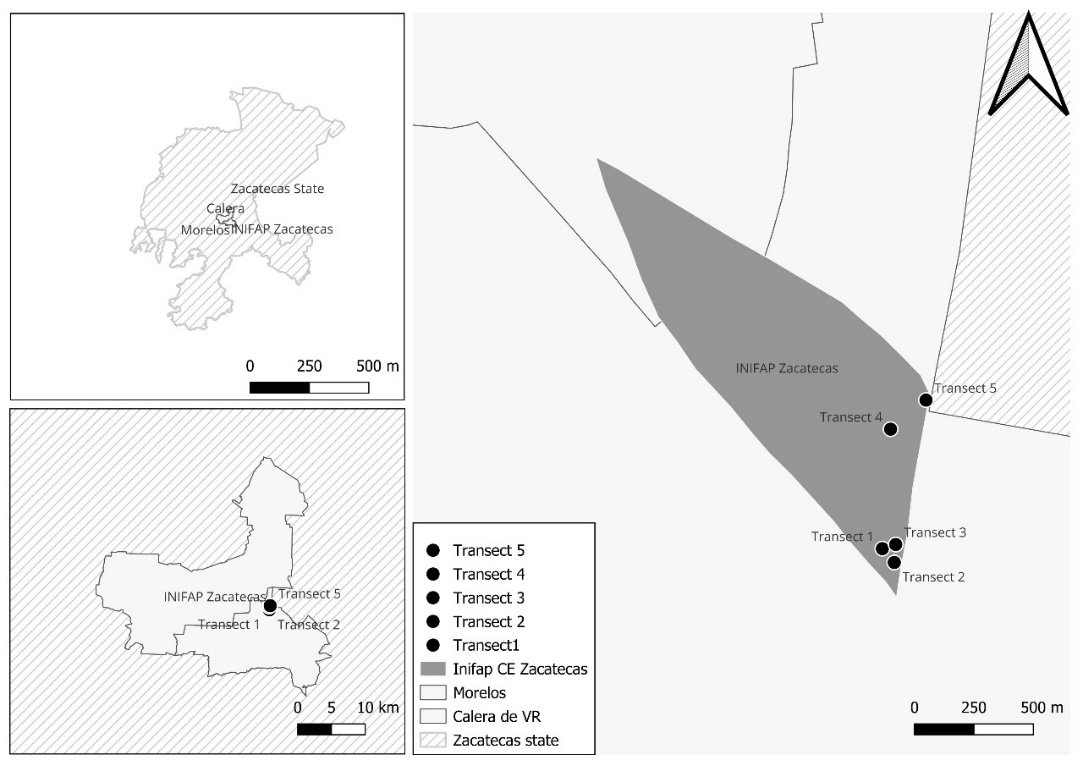
Figure1: Study area and location of transects where great horned owl pellets were collected.
Location of the Species in the Study Area
The presence of the species was determined using both indirect techniques (identification of signs) and direct techniques (direct observation of individuals of the species), for which systematic searches were carried out on foot during the day (from 7:00 a.m. to 10:00 a.m.) in areas of the study area that had the potential to be occupied by the species (holes in buildings, trees) and recording data on feathers, down, excrement, etc. [6]. Information on sightings was obtained from the residents of the study area themselves regarding the location of individuals (perching and nesting areas).
Sample Collection
Fixed points for collecting pellets were established, and collection was carried out during two seasonal periods identified as the rainy season (July to September) and the dry season (January to March) according to the study region. For sample collection, the pellets were preserved individually and stored in polyethylene bags, after identifying the collection area [7]. The samples were then transported to the laboratory for content analysis and identification of consumed prey.
Sample Processing
The samples obtained were recorded by obtaining data on the weight, width, and length of each pellet in order to determine the volume of the final consumption content [7, 8]. The pellets were washed under running water to remove traces of organic matter and dried in an oven for 24 to 72 hours to separate food items (hair, teeth, and bone fragments) for later identification.
Identification of Prey Consumed
This was done through morphological analysis of the bone remains and teeth (skull, molars, long bones, etc.), using specialized literature for identification [9, 10, 11]. Complete skulls were separated and analyzed, identifying their morphology and measurements to carry out their identification with the support of reference species collected in the region (rodents), guides, and taxonomic keys.
Statistical Analysis
The nonparametric Mann-Whitney U test was used to determine possible statistical differences between data groups (identified species and number of individuals consumed) between each seasonal period analyzed in this study (P<0.05) [12]. To determine the relationship between species in both seasons of the study (dry and rainy seasons), _Principal Component Analysis (_PCA) was used with the application of Biplot [13].
Results
Location of Sampling Points and Collection of Pellets
During each season, frequented locations were identified for the collection of pellets. In the wet season, these were found in proximity to laboratories, offices, and entrance areas, as well as in areas with abundant dry grass, pastures, and common areas. In contrast, during the dry season, they were found far from the establishments, such as fodder warehouses and more exposed areas, where human presence was less frequent, which facilitated the collection of pellets.
Analysis of Pellets and Identification of Prey Consumed
Rainy season During this season, a total of 94 pellets were collected, of which 4 did not contain bone remains; on the other hand, 56 pellets were dark gray in color, while the rest of the pellets collected were lighter in color (38 light brown samples). They ranged from 1.14 to 8.9 cm in length, 9.7 to 3.05 cm in width, and weighed approximately 1 to 6.9 grams. In terms of shape, 56% of the pellets were oval, while 44% were circular.
A total of 132 complete skulls and 24 incomplete skulls were obtained, and five genera of the order Rodentia (Peromyscus, Chaetodipus, Baiomys, Reithrodontomys, and Sigmodon) were identified, as well as two classes, one from the phylum Arthropoda (Insecta) and the phylum Chordata (Aves). In the case of birds, some species could not be identified due to the condition of the skulls. Bone remains were also obtained, including humerus, radius, spine, vertebrae, and pelvis, among others, belonging to the rodents consumed, and in the case of birds, beaks and feathers. The presence of insect remains (limbs) was also identified, which accounted for only 1% of the total diet. It was therefore determined that the main prey species was the Order Rodentia (Table 1).
| Rainy season | ||
|---|---|---|
| Specie | Individuals | % Diet |
| Peromyscus spp. | 59 | 37% |
| Chaetodipus spp. | 35 | 22% |
| Baiomys spp. | 22 | 14% |
| Reithrodontomys spp. | 10 | 6% |
| Sigmodon spp. | 23 | 15% |
| Arthropoda | 2 | 1% |
| Aves | 7 | 5% |
| Total | 158 | 100% |
Table 1: Record of identified prey during the rainy season.
Dry Season
A total of 111 pellets were collected, of which 6 did not contain bone remains. On the other hand, 77 pellets were light brown in color, while the remaining 34 pellets were darker in color. The measurements obtained from the collected pellets ranged from 1.3 to 4.1 cm in length, 1 to 2.6 cm in width, and approximately 1 to 3.2 grams in weight. In terms of shape, 38% of the pellets were oval, while 62% were circular.
Identification of Prey Consumed
A total of 160 complete skulls and 28 incomplete skulls were obtained, which were cleaned and analyzed to identify the prey. Five genera of the order Rodentia (Peromyscus, Chaetodipus, Baiomys, Reithrodontomys, and Sigmodon) were identified, as well as two classes of the phylum Chordata (Aves and Reptilia). Bone remains such as humerus, radius, spine, vertebrae, and pelvis, among others, belonging to the consumed rodents and birds were also found. The presence of reptiles and the absence of insects were observed. Taxonomic classification was limited to the class due to the condition of the skulls. Identification of the reptile skull was difficult, but its characteristics clearly indicated that it belonged to this group. It was determined that the main prey species identified were those of the order Rodentia (Table 2).
| Dry season | ||
|---|---|---|
| Specie | Individuals | % Diet |
| Peromyscus spp. | 47 | 25% |
| Chaetodipus spp. | 65 | 35% |
| Baiomys spp. | 23 | 12% |
| Reithrodontomys spp. | 18 | 10% |
| Sigmodon spp. | 26 | 14% |
| Reptilia | 3 | 1% |
| Aves | 6 | 3% |
| Total | 188 | 100% |
Table 3: Record of identified prey during the dry season.
Statistical Analysis
In the course of this study, 346 individuals consumed by the horned owl species were identified in the study area, yielding a total of 292 complete skulls and 52 incomplete skulls. Analysis of the remaining bone structures indicated the range of individuals consumed. Thirty-one percent corresponded to Peromyscus spp., 29% corresponded to Chaetodipus spp., 12% corresponded to Baiomys spp., 8% corresponded to Reithrodontomys spp., 14% corresponded to Sigmodon spp., 0.5% corresponded to Arthropoda, 1% to Reptilia, and 4.5% to Aves. The remains of reptiles, amphibians, or insects (arthropods) were occasional finds that had a low percentage of occurrence.
Taxonomic keys, specifically skulls following Gilbert’s methodology [14], were used to identify rodents. Once this was done, the Mammalian Species journal was consulted to verify the description of the species data. In the case of birds, they were classified according to skull size and shape. As for arthropods (insects), several insect parts were found, which made it difficult to identify the species. Five genera of the order Rodentia (Peromyscus, Chaetodipus, Baiomys, Reithrodontomys, and Sigmodon) (Table 3) and three classes, one from the phylum Arthropoda and one from the phylum Chordata (Aves and Reptilia), were recognized.
| Season | Rainy No. of individuals | Dry No. individuals |
|---|---|---|
| Order Rodentia | ||
| Peromyscus spp. | 59 | 47 |
| Chaetodipus spp. | 35 | 65 |
| Baiomys spp. | 22 | 23 |
| Reithrodontomys spp. | 10 | 18 |
| Sigmodon spp. | 23 | 26 |
| Unidentified taxa | ||
| Arthropoda | 2 | - |
| Reptilia | - | 3 |
| Birds | 7 | 6 |
Table 2: Number of individuals of prey species identified in the analysis of horned owl pellets in the study area by season. Prin
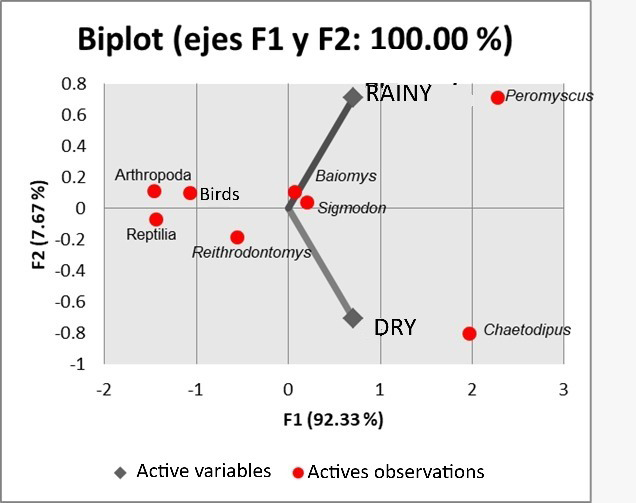
Table 3: Number of individuals of prey species identified in the analysis of horned owl pellets in the study area by season. Principal Component Analysis (PCA) of Dry and Rainy Seasons Applying the principal component analysis technique, the biplot, allowed the visualization of the relationship between the prey consumed and the seasonal periods, observing a difference between both variables (Figure 2) [13]. This indicates that among the current prey of the order Rodentia, two species showed variations in their presence during the two seasons. During the wet season, a greater abundance of Peromyscus was recorded_, while during the dry season, _Chaetodipus predominated. The other species of organisms did not show notable or significant differences in their presence between the two seasons.
Mann-Whitney U test on Identified Species
When applying the nonparametric Mann-Whitney U test, it was determined that there were no significant differences between the two seasons (distributions) of the identified species groups (p> 0.050).
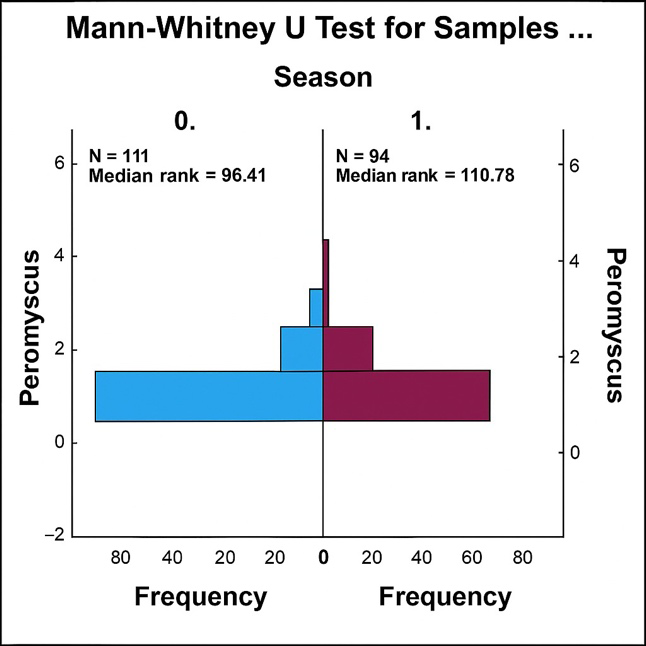
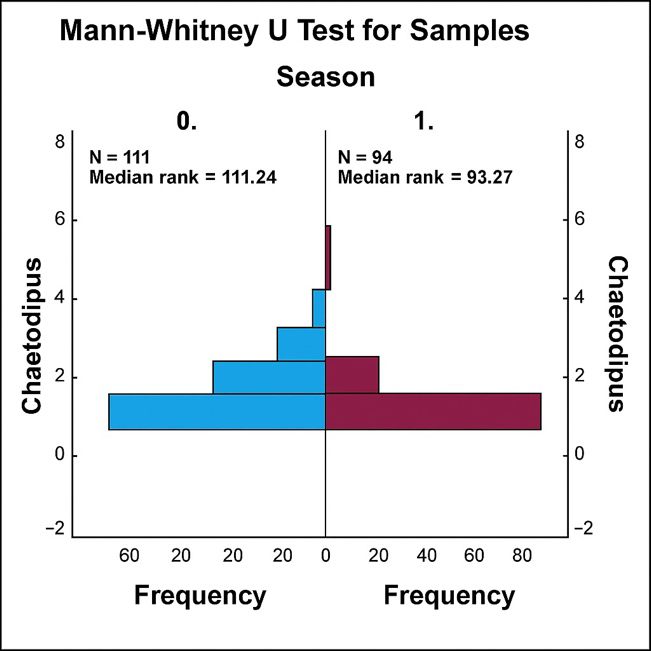
According to the number of individuals found in each season in the collected pellets, the prey species with the highest frequency of occurrence in the analyzed pellets were Peromyscus spp. (Figure 3A) and Chaetodipus spp_. (Figure 3B), with a significance of _p < 0.050. As for the other prey species identified, no significant difference was found in their respective analyses (p>0.050).
Discussion
Presence of Birds of Prey in Suburban Areas
In this study, the presence of the species Bubo virginianus was determined in the study area, where at least one pair was observed in an area that, according to its characteristics, is a suburban zone. Previous studies establish that the species is present in suburban areas, describing how some nocturnal birds of prey have managed to adapt to impacted environments and now inhabit environments altered by human activity, especially in semi-urban areas, influenced by vegetation, the presence of food, and nesting sites [15, 16]. Over the last fifty years, Mexico has undergone radical h y transformations in land use, with a marked increase in urbanization and industrialization, often without adequate planning [17].
Through the analysis of pellets, relevant information was obtained about the ecology of the species in the present study; these analyses are one of the main methods for studying feeding habits and identifying prey in birds of prey; in the present study, it was observed that there is a difference in the morphology (weight and color of the samples collected) of the pellets collected for each season; Previous studies have established that pellets have a natural durability over time. In humid environments, they retain their structure for only three or four months after being regurgitated, depending on exposure to the elements. However, in dry places, they can remain intact for several years due to gradual and complete dehydration. It is common to use pellets as a reliable method for assessing species diversity in a specific area. Some studies have observed seasonal or annual differences in the dimensions (length and width) and weight (in grams) of pellets [18].
Diet Composition of Birds of Prey
Regarding the diet of the horned owl, this study determined that it consisted mainly of species of the order Rodentia during both seasons analyzed, followed by the occasional presence of other species (birds and reptiles); noting that five genera within this order Rodentia were identified in the diet, namely Peromyscus, Chaetodipus, Baiomys, Reithrodontomys, and Sigmodon. Kremer, et al. [19] refer to Bubo virginianus, whose diet consisted of invertebrates, which made up around 58% of the prey consumed, mammals around 38%, and other diverse vertebrates (birds, reptiles, and amphibians) approximately 4% in the Utah Desert in the United States. Hernández- Muñoz, et al. [1] refer to Tyto alba, whose diet consisted of 85% mammals, 6.1% insects, 4.8% amphibians, 3.6% birds, and 0.2% reptiles in central Cuba. Álvarez [20] refers to Tyto furcata pratincola, whose diet consisted of 10 genera grouped into 5 families belonging to 3 orders (sharing the genera Reithrodontomys, Baiomys, Sigmodon, Peromyscus, and Chaetodipus) in the community of Susticacán in the state of Zacatecas. González-Calderón [21] refers to Tyto alba, whose diet consisted of 14 genera grouped into 8 families belonging to 3 classes (sharing birds and rodent species such as Reithrodontomys and Peromyscus) in the State of Mexico.
The methodology has been described in previous studies, which establish that characteristics such as skull shape, molar arrangement, and size allow for species identification using references on the identification of rodent bone remains [22].
The greater presence of rodents in the study area was attributed to the abundance of available food. Benavides, et al. [23] mention that in their natural habitat, rodent reproduction tends to be seasonal, mainly during spring and summer. However, under optimal conditions, with greater food availability and a favorable climate, these animals can reproduce throughout the year. This is because the biology of these species establishes their reproduction period in the first months of the year, coinciding with the rainy season that lasts from the middle of the year, when there is greater food availability
Conclusions
The results obtained indicate that rodents are the main prey consumed by the long-eared owl (Bubo virginianus) in the study area; the main species identified are Peromyscus spp_. (rainy season) and _Chaetodipus spp. (dry season), suggesting that this difference could be due to biological aspects of the species identified in the study area. The presence of other taxonomic groups (arthropods and reptiles) could indicate their availability in each season. The availability of prey can be suggested due to the conditions present in the study area (barns, crops, and optimal environmental conditions as a habitat for rodents due to urbanization), which allowed for a stable food supply for the species in this study area.
References
-
Hernández-Muñoz A, Mancina CV (2011) The diet of the barn owl (_Tyto alba_) (Aves: Strigiformes) in natural and anthropogenic habitats in central Cuba. Revista Mexicana de Biodiversidad 82: 217-226.
-
Lavado SKN (2015) Food ecology of the great horned owl _Bubo virginianus_ (Strigiformes: Strigidae) in the buffer zone of the Junín National Reserve, Peru. Bachelor’s thesis. National University of San Marcos, Lima, Peru, pp: 102.
-
Hindmarch S, Elliott JE (2014) Comparing the diet of Great Horned Owls (Bubo virginianus) in rural and urban areas of southwestern British Columbia. Canadian Field-Naturalist 128(4): 393-399.
-
Zambrano B (2022) Birds of prey nesting in urban and peri-urban environments in Santiago, metropolitan region, central Chile. Revista Chilena de Ornitología 28(1): 15-27.
-
López JM, Aguilar JP, Fernández FJ (2021) Current pellets of birds of prey as a tool for generating paleoenvironmental models in the province of Mendoza, Argentina. Neotropical Mammalogy 28 (1): 516.
-
Reynolds M, Shook J, Breed G, Kielland K (2021) Diet and reproductive success of Great Horned Owl (_Bubo_ _virginianus_) at its northern breeding limit. Canadian Field-Naturalist 135(4): 337-345.
-
Valdez JR (2018) Ecology of the Mexican Spotted Owl (_Strix occidentalis lucida_) in the north-central Sierra Madre Occidental, Mexico. Master’s thesis. Postgraduate College, Institution for Teaching and Research in Agricultural Sciences, San Luis Potosí, Mexico, pp: 68.
-
Trejo A, Ojeda V (2002) Identification of raptor pellets in forested and ecotonal environments in northwestern Argentine Patagonia. Neotropical Ornithology 13: 313- 317.
-
Mantooth SJ, Best TL (2005) Chaetodipus penicillatus. Mammalian Species 767: 1-7.
-
Reid FA (2006) Mammals of North America, 4th ed., Houghton Mifflin Company, Boston, New York, USA, pp: 579.
-
Canseco-Márquez L, Gutiérrez-Mayén GM (2010) Amphibians and reptiles of the Tehuacán-Cuicatlán Valley. Benemérita Universidad Autónoma de Puebla, Mexico City pp: 105-302.
-
Narvaez M (2022) Mann-Whitney U test: What it is and how it works.
-
Palacio FX, Apodaca MJ, Crisci JV (2020) Multivariate Analysis for Biological Data: Theory and Application Using the R Language. In: 1st (Edn.), Buenos Aires, Argentina, pp: 268.
-
Gilbert BM (1980) Mammalian Osteology, The Missouri Archaeological Society, Laramie, Wyoming, USA, pp: 428.
-
Enríquez PL, Johnson DH, Rangel-Salazar JL (2006) Taxonomy, distribution, and conservation of owls in the Neotropics: a review. Current Raptor Studies in Mexico. Northwest Biological Research Center and CONABIO. Mexico pp: 254-307.
-
Londoño-Betancourth JC (2013) Discussions on the presence of birds of prey, migratory birds, and birds under some degree of threat in the city of Pereira, Risaralda. Revista Luna Azul 36: 134-164.
-
Vázquez PJR, Enríquez PL (2015) The Owls of Mexico. Neotropical Owls: Diversity and Conservation. Department of Biodiversity Conservation, El Colegio de la Frontera Sur, Carretera Panamericana y Periférico Sur s/n Barrio Ma. Auxiliadora, San Cristóbal de Las Casas, Chiapas, Mexico, pp: 475-510.
-
Muñoz-Pedreros A, Acuña JR, Valenzuela JY (2019) Birds of Prey of Chile. CEA Ediciones, Valdivia, Chile, pp: 561.
-
Kremer SR, Belk MC (2003) Effects of habitat disturbance on diets of great horned owl (_Bubo virginianus_) in a cold desert 63(1): 56-62.
-
Álvarez CF (2017) Identification of prey consumed by _Tyto furcata pratincola_ (BONAPARTE, 1838), based on the study of pellets in the municipality of Susticacán, Zacatecas, Mexico. Bachelor’s thesis.
-
González-Calderón A (2017) Diet of the barn owl (_Tyto_ _alba_) in Ocoyoacac, State of Mexico. Huitzil, Mexican Journal of Ornithology 18 (2): 212-222.
-
Aragón EE, Castillo B, Garza A (2002) Rodents in the diet of two nocturnal birds of prey (_Bubo virginianus_ and _Tyto alba_) in northeastern Durango, Mexico. Acta Zool Mex 86: 29-50.
-
Benavides FJ, Guénet JL (2016) Biology and reproductive management of mice. Manual of laboratory rodent genetics: basic principles and applications. Laboratory Animals Ltd. SECAL pp: 59-81.
- Mitochondrial Bio-Logistics: Steering Co-Enzyme Q10 and Lycopene Synergies within the Science 4.0 Bio-OS Framework
- Hymenoptera Specimens from the Caño Negro Wetland, of the National Museum Collection, Costa Rica
- Science 4.0: Comprehensive Architecture of the Biological Operating System (Bio-OS) A Framework for Systemic Resilience and Industrialized Bio-Governance
- Rabbit on, or Hare Back? Understanding Climate Change
- Clinical Validation of Science 4.0: Flow Steering and Epigenetic Drift Inversion on a 76-Year-Old Hybrid System
- Seeds Planted by another Mind