
Emphasis on Post COVID-19 Pulmonary Fibrosis
Introduction
In early 2021, stem cell research has received grant from the American Lung Association (ALA) for the research purpose on repair of the damaged lung. The American Lung Association has granted Catalyst Award of $ 100,000 for 2 years to scientists who are involved in the regeneration of damaged lung tissue. Scientists in the Department of Stem Cell Biology and Regenerative Medicine at the University of Southern California are planning to use the grant to observe if a specific group of stem cells could repair damaged lungs in people with conditions such as idiopathic pulmonary fibrosis.
This fatal disease really should be on the constant target of scientists looking for new ways to stop the development of fibrous tissue and stimulate the regression of fibrosis.
However, in the context of the COVID-19 pandemic, fibrotic lesions of the lungs especially in the Post COVID period cannot be ignored. Some doctors believe that fibrosis that develops after acute COVID-19 phase is reversible and does not need treatment at all. This concept is mistaken and in fact extremely harmful point of view.
Any minimal changes in the elasticity of the lung tissue can cause serious disturbances in microcirculation in the lungs with impaired ventilation-perfusion mechanisms and lead to the development of pulmonary hypertension. Articles of this problem have started to appear in the scientific press and are accumulating day by day.
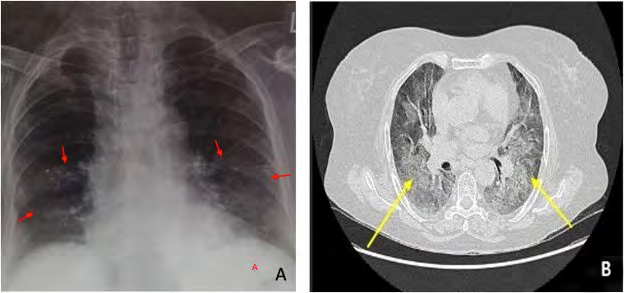
In particular, the authors of the case report represent patient who developed pulmonary arterial hypertension (PAH) two months post-COVID-19. The patient was a 55-year- old female and normal blood pressure, tested positive for severe acute respiratory syndrome coronavirus 2 (SARS- CoV-2), developed mild respiratory distress syndrome and required continuous positive airway pressure during the treatment in the hospital. After two months of discharge from the hospital with RT-PCR negative to SARS-CoV-2, later the patient presented with exertional dyspnea, dry cough, fatigue and episodes of syncope during exertion. Based on clinical presentation, electrocardiography, computed tomography, and transthoracic echocardiography assessment, PAH diagnosis was established (Figure1).
The development of post COVID syndrome is associated not only with direct damage to the lung tissue, but also with the presence of inflammatory cells, which creates a powerful profibrotic potential. Realization of this signal also leads to excessive proliferation of fibrous tissue in the lungs. Mesenchymal stem cells have proven to be an effective weapon to fight against Post COVID pulmonary fibrosis. MSCs produce anti-inflammatory cytokines and suppress cells of the immune system thereby counteracting the mechanisms
of the cytokine storm.
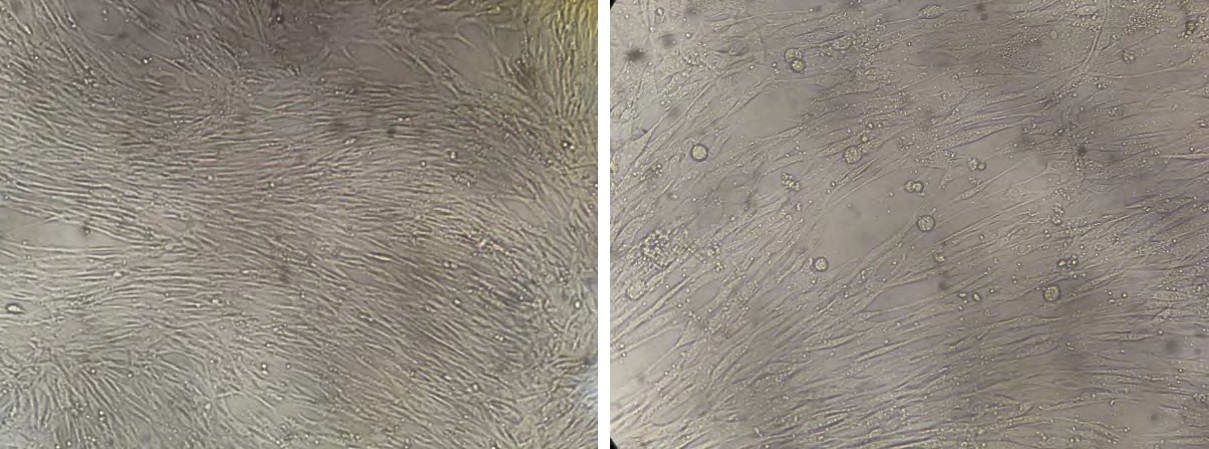
The preliminary results of our clinical trials “Mesenchymal Stem Cell Therapy for COVID-19” showed that the use of MSCs (Figure 2) in the treatment of patients with oxygen-dependent COVID-19: a) Does not cause any adverse reactions and negative changes in clinical and laboratory parameters. b) Significantly shortens the time span of the COVID-19 symptoms to disappear. c) Causes rapid clinical improvement, which is accompanied by a decrease in blood levels of biochemical markers of inflammation: C-reactive protein, interleukin 6, ferritin and D-dimer; although ferritin levels are not normal in all patients. d) Rapid and effective increase in the ratio of blood oxygen saturation to the fraction of inhaled oxygen (SpO2 / FiO2), which indicates the ability of MSCs to prevent the development of cytokine storm and acute respiratory distress syndrome. e) Causes rapid and progressive increase in the oxygenation index PaO2 / FiO2, which indicates the ability of MSCs to significantly improve ventilation-perfusion mechanisms in patients with oxygen-dependent form of COVID-19.
Significant fact is that patients who received mesenchymal stem cells in the acute period of COVID-19 did not develop pulmonary fibrosis in the Post COVID period.
Thus, post COVID complications in the form of pulmonary fibrosis and pulmonary arterial hypertension requires very close attention for researchers and further studies to optimize the treatment of COVID-19.
Reference
1. Abdul Wali Khan, Irfan Ullah, Kiran Shafiq Khan, Muhammad Junaid Tahir, Sri Masyeni, et al. (2021) “Pulmonary arterial hypertension post COVID-19: A sequala of SARS-CoV-2 infection?” Respir Med Case Rep 33: 101429.
References
-
Abdul Wali Khan, Irfan Ullah, Kiran Shafiq Khan, Muhammad Junaid Tahir, Sri Masyeni, et al. (2021) “Pulmonary arterial hypertension post COVID-19: A sequala of SARS-CoV-2 infection?” Respir Med Case Rep 33: 101429.
- Research Progress of Induced Pluripotent Stem Cells and Their Clinical Application Prospects
- Nishan Al-Kamal is the Starting Point of A Feminist Scientist
- Current Concepts and Future Perspectives of Stem Cell Therapy in Peripheral Arterial Disease
- Stem Cell and Oxidative Stress-Inflammation Cycle
- Adipose Derived Mesenchymal Stem Cells Origin, Characteristics and Promises
- Mitochondria Targeted Antioxidants can Improve In Vitro Embryo Production in Buffalo