
Functional Outcome of Unicondylar Knee Arthroplasty in Indian Population: A Retrospective Study with Midterm Follow Up
Introduction: Unicondylar Knee Arthroplasty (UKA) has been excellent surgical procedure to treat lateral and medial compartment osteoarthritis of knee joint. UKA has many advantages including short duration of surgery, minimal blood loss, early recovery and good functional outcome compared to Total Knee Arthroplasty (TKA). We aim to report the functional outcome of UKA among Indian population with midterm follow up. Materials and Methods: This was a retrospective study involving 94 patients who underwent UKA at single center from 2015 to 2016 for medial compartment osteoarthritis of knee joint. Demographic data including Gender, Body Mass Index (BMI) and Laterality, and Patient Reported Outcome Measures (PROMs) including Knee Injury Osteoarthritis Outcome Score (KOOS) and Forgotten Joint Score (FJS) were accessed during follow up of minimum 5 yrs. Results: The mean follow up duration was 6.9 ± 1.13 years. The mean age of patients was 67.2 ± 8.1 years and BMI was 26.4 ± 3.8 kg/m2. The preoperative KOOS Score improved from 39.2 ± 9.7 to 73.8 ±19.3 after surgery (p < 0.001) and Forgotten Joint Score at 5 years mean follow up was 75.70 ± 16.21. Survivorship of implant was 92% (95% CI) at 5 years follow up. Conclusions: UKA has good functional outcome at midterm follow up among Indian population and is an excellent surgery in management of medical compartment knee osteoarthritis. Further research can explore the long term outcomes and help in identifying factors that predict the success of UKA.
Poudel N¹*, Singh H², Surana R² and Simon²
¹Department of Orthopedics, Civil Service Hospital, Kathmandu, Nepal ²Department of Orthopedics & Joint Replacement, Fortis Hospital, Mohali, India
Abbreviations
OA: Osteoarthritis; UKA: Unicondylar Knee Arthroplasty; TKA: Total Knee Arthroplasty; ACL: Anterior Cruciate Ligament; HTO: High Tibial Osteotomy; BMI: Body Mass Index; PROMs: Patient Reported Outcome Measures; KOOS: Knee Injury Osteoarthritis Outcome Score; FJS: Forgotten Joint Score.
Introduction
Osteoarthritis of knee joint is a very common disorder involving a knee joint primarily affecting the old age [1]. There are different surgical procedures for the management of knee osteoarthritis (OA) [2]. Unicondylar Knee Arthroplasty (UKA) has been excellent surgical procedure to treat lateral and medial compartment osteoarthritis of knee joint [3].
UKA has many advantages including short duration of surgery, minimal blood loss, early recovery and good functional outcome compared to Total Knee Arthroplasty (TKA) [4, 5, 6, 7, 8, 9]. The preservation of Anterior Cruciate Ligament (ACL) and minimal bone loss preserves the native structures of knee joint with early functional recovery and normal gait kinematics [10].
The development of Oxford Knee by Good fellow and O’Connor has revolutionized the UKA design with subsequent evolvement of advanced implant designs [11, 12]. The optimal patient selection, advancement of implant designs and improvement in surgical techniques have favored good functional outcomes with decreased revisions after UKA [13, 14, 15, 16, 17, 18]. Recently UKA has shown favorable outcome among young population with similar outcome among both gender [7, 19, 20, 21, 22, 23, 24, 25]. However few studies have questioned the long- term survivorship of UKA compared to TKA [26].
In Indian subcontinent, patients usually present late with multicompartment OA and choose surgery when they are functionally limited with severe pain. UKA is relatively less common surgical procedure in India compared to western countries [27]. This has resulted in underreporting of UKA in literature with few research articles reporting the midterm functional outcome of UKA. Here, we aim to report the functional outcome of UKA among Indian patients with survivorship of the implant.
Materials and Methods
This was a retrospective study involving 105 patients who underwent UKA at single center from 2015-2016 for medial compartment osteoarthritis of knee joint.
The inclusion criteria included patients undergoing medial UKA for medial compartment OA who had failed conservative treatment including medications and physiotherapy. The exclusion criteria involved patients with lateral compartment osteoarthritis, ACL Insufficiency or collaterals insufficiency, undergone other surgeries such as High Tibial Osteotomy (HTO), inflammatory arthropathies, lower limb malignment (valgus >5°, varus >10°), preoperative flexion of knee joint < 90°, patients with active infections and patients with cognitive impairment to fill the quality-of-life related forms. All patients had radiological involvement of OA involving the medial compartment of Knee joint. The informed consent was obtained from all patients participating in the study and Institutional Ethics Committee approval was taken prior to study.
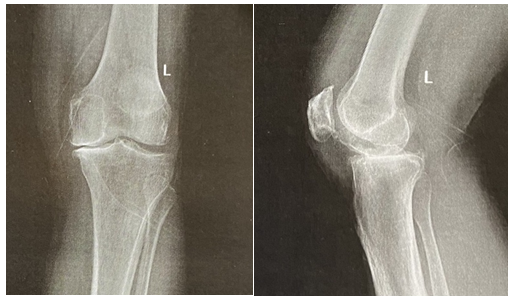
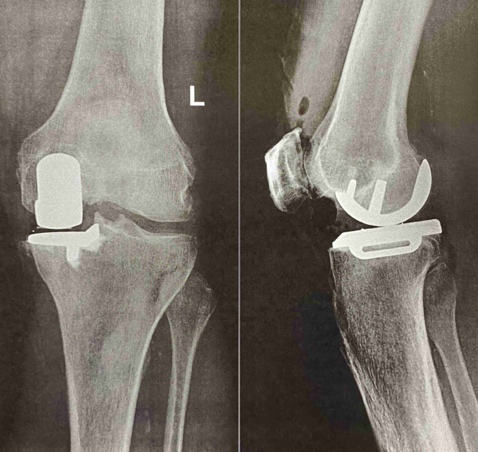
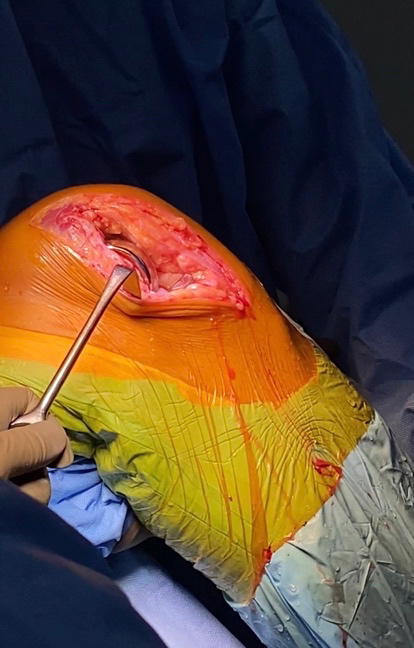
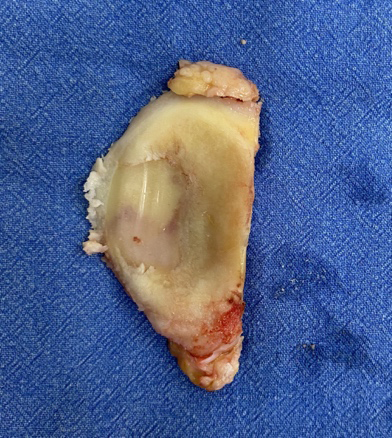
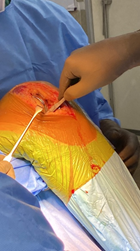
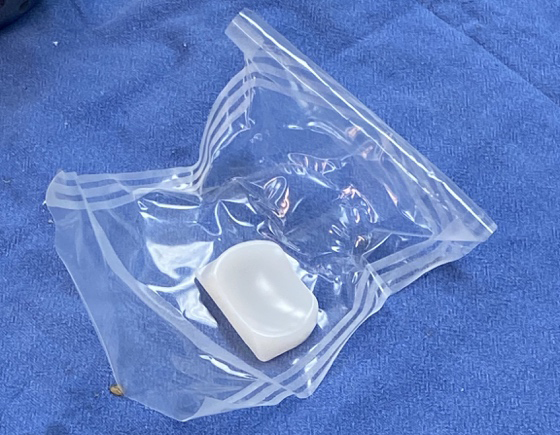
All patients underwent minimally invasive surgery with medial approach by same surgeon trained for UKA (Figures 1-7). Oxford Partial Knee System (Zimmer Biomet, Warsaw, IN, USA) was used as implant during the surgery in every patient. Standard postoperative protocols of antibiotics on surgical day, thromboprophylaxis for 2 weeks and supervised physical therapy were instituted in all patients. Follow up data were collected at postoperative 2 weeks, 6 months, 2 years, 5 years and latest visit at outpatient department.
Demographic data including gender, Body Mass Index (BMI) and laterality, and Patient Reported Outcome Measures (PROMs) Knee Injury Osteoarthritis Outcome Score (KOOS) and Forgotten Joint Score (FJS) were accessed during follow up. Poor outcomes were measured with low score and good outcomes with high score. Each patient was accessed for PROMs via telephone, outpatient visit over a period of 5 weeks before classifying them as being lost to follow up. The deceased patients (n=3) and declining follow ups (n=8) were excluded, with 94 patients enrolled in the study. All patients had radiographic review with X ray to identify implant failures and associated pathologies.
Descriptive statistics including mean values and Standard Deviation (SD) and Student t- test were used to analyze demographic data and PROMs. SPSS Software Version 25 (IBM, Armonk, NY, USA) was used for statistical analysis with a p-value of < 0.05 considered statistically significant.
Results
The total of 94 patients were included in the study undergoing consecutive medial compartment UKA with minimum follow up period of 5 years. The mean follows up duration was 6.9 ± 1.13 years. The mean age of patients was 67.2 ± 8.1 years and BMI was 26.4 ± 3.8 kg/m2. 61.07 % patients were female while 38.93 % were male patients. Right knee was involved in 52.12% and 47.18% had left knee involved. Patient demographic data are summarized in Table 1.
| Sex | BMI | Side | Follow Up | |
|---|---|---|---|---|
| 67.2 ± 8.1 Years | F (n=58) | 26.4 ± 3.8 Kg/m2 | R (n=49) | 6.9 ± 1.13 Years |
| 67.2 ± 8.1 Years | M (n=36) | 26.4 ± 3.8 Kg/m2 | L (n=45) | 6.9 ± 1.13 Years |
Table 1: Demographic characteristics.
F= Female; M=Male; R= Right Knee; L=Left Knee
The patients had excellent functional outcome measured at mean 5 years after surgery illustrated in Table 2. The preoperative KOOS Score improved from 39.2 ± 9.7 to 73.8 ±19.3 after surgery (p < 0.001) and Forgotten Joint Score at 5 yrs mean follow up was 75.70 ± 16.21.
| Preop | 5 Year Follow Up | P value | |
|---|---|---|---|
| KOOS Score | 39.2 ± 9.7 | 73.8 ±19.3 | < 0.001 |
| FJS Score | - | 75.70 ± 16.21 | - |
Table 2: Functional outcome scores of medial UKA.
UKA: Unicompartmental Knee Arthroplasty; KOOS: Knee Injury Osteoarthritis Outcome Score; FJS: Forgotten Joint Score Survivorship of implant was 92% (95%CI) at 5 years follow up. 1 patient had mobile bearing dislocation which required revision surgery with reinsertion of mobile bearing. 3 patients had superficial surgical site infections managed with antibiotics therapy. Only 11 (11.70%) knees were converted to TKA. 7 patients had osteoarthritis progression to lateral and patellofemoral compartment requiring TKA, and 4 had implant loosening which were subsequently converted to TKA. No patient developed periprosthetic fracture during the follow ups.
Discussion
Our study showed superior functional outcome after UKA in indicated patient with midterm follow up of minimum 5 years.
Unicondylar Knee Arthroplasty is an excellent surgical procedure with good functional outcomes. The minimal invasivenes of surgery and preservation of native knee kinematics with early recovery are favorable to the patients. The mean KOOS improvement to 73.8 ±19.3 in our study was comparable to M. A. Gaudiani et al. study with mean KOOS of 71.6 ±15.2 in 5 years follow up [13]. In F. Zambianchi et al. study, mean KOOS improved from 34.1 ± 13.2 preoperatively to 85.5 ± 17.0 with male patients reporting higher KOOS compared to female patients with 3 year follow up [15]. Similarly, the J. A. Burger et al. study had excellent mean KOOS 84.3±15.9 after medial UKA [16]. The ability of patient to forget the knee joint ascribes to the successful UKA surgery. M. H. Redish et al. reported mean Forgotten Joint Score of 68.9 ± 28.9 at 10 year follow-up [17]. FJS was significantly higher in the UKA group (FJS 1 year 73.9 ± 22.8, FJS 2 year 74.3 ± 24.8) in H. A. Zuiderbaan et al. study which is comaprable to ours of 75.70 ± 16.21 [18]. UKA with minimal morbidity had high FJS in study by Gaudiani MA, et al. study [13].
UKA has comparable long term survivorship of implant with TKA. H.R.Mohammad et al. conducted a systematic review and observed a 10-year survival rate of 93% and a 15-year rate of 89% for Oxford phase 3 UKAs [4].
Z. Li et al. reported patient satisfaction, functional outcomes, implant survival and postoperative complications similar in the younger and elderly osteoarthritis patients at a minimum 5-year follow-up after Oxford UKA. The surgeon’s experience and proficiency and advancement of surgical technology has attributed to longer survivorship of implant [5]. E. Uzun et al. reporting of 93.2% survival rate of implant was comparable with our study of 92 % with mean follow up of 5 years [6]. Bayomi, et al. reported excellent 10 year survivorship with UKA [7].
UKA has been reported to successfully return younger, active patients to sport within 3–6 months of surgery [5, 19]. Although many studies advocate for low impact activities after surgery, evidence also suggests that high impact sports can be partcipated with minimal impact on implant after UKA [21]. Moreover, patient specific UKA shows significantly improved functional outcome compared to conventional TKA [24]. Medial robotic assisted UKA (RA-UKA) demonstrated improved patient recorded outcomes, high patient satisfaction, met expectations, and good functional recovery with excellent midterm survivorship [16].
The limited sample size with single center study is limitation of our study. Multicentric prospective study with large sample size enhances accuracy of study representing wider population.
Conclusion
UKA has good functional outcome at midterm follow up among Indian population and is an excellent surgery in management of medial compartment knee osteoarthritis. The innovation of new generation of implants and improvement in surgical techniques can lead to more adoption of this surgical practice. Further research can explore the long term outcomes and help in identifying factors that predict the success of UKA.
Conflicts of Interest
The authors declare no conflicts of interest.
References
-
Willis-Owen CA, Brust KU, Alsop H, Miraldo M, Cobb J (2009) Unicondylar knee arthroplasty in the UK National Health Service: An analysis of candidacy, outcome and cost efficacy. Knee 16(6): 473-478.
-
Neubauer M, Reinberger EM, Dammerer D, Moser LB, Neugebauer J, et al. (2023) Unicompartmental Knee Arthroplasty Provides Superior Clinical and Radiological Outcomes Compared to High Tibial Osteotomy at a Follow-Up of 5-8 Years. Journal of Clinical Medicine 12(16): 5387.
-
Pandit H, Jenkins C, Barker K, Dodd F, Murray DW (2006) The Oxford medial unicompartmental knee replacement using a minimally-invasive approach. J Bone Joint Surg Br 88(1): 54-60.
-
Mohammad HR, Strickland L, Hamilton TW, Murray DW (2017) Long-term outcomes of over 8,000 medial Oxford Phase 3 Unicompartmental Knees—a systematic review. Acta Orthopaedica 89(1): 101-107.
-
Li Z, Chen Z, Wei J, Zeng X, Sun H, et al. (2021) Excellent outcomes with Oxford Uni-compartmental knee arthroplasty in anteromedial osteoarthritis patients (≤60 years) at mid-term follow-up. BMC Musculoskeletal Disorders 22: 859.
-
Uzun E, Misir A, Kizkapan TB, Ozcamdalli M, Gunay AE, et al. (2020) Mid-term functional, clinical, and radiological outcomes with factors affecting revision of mobile-bearing medial unicompartmental knee arthroplasty. The Knee 27(2): 527-534.
-
Bayoumi T, Kleeblad LJ, Borus TA, Coon TM, Dounchis J, et al. (2023) Ten-Year Survivorship and Patient Satisfaction Following Robotic-Arm-Assisted Medial Unicompartmental Knee Arthroplasty: A Prospective Multicenter Study,” The Journal of Bone and Joint Surgery. American Volume 105(12): 933-942.
-
Gowd AK, Plate JF, Lichtig A, Gencer A, Yanmis O, et al. (2023) Favourable mid-term outcomes following unicompartmental knee arthroplasty with wider patient selection: A single-centre experience. Journal of ISAKOS: joint disorders & orthopaedic sports medicine 8(4): 255-260.
-
Vaidya N, Jain A, Kulkarni N, Kale S (2023) Long-term study of functional outcomes of robotic assisted medial UKA using mid-vastus approach in a high-volume centre. Journal of Robotic Surgery 17(4): 1599-1607.
-
Andriacchi TP, Koo S, Scanlan SF (2009) Gait mechanics influence healthy cartilage morphology and osteoarthritis of the knee. The Journal of Bone and Joint Surgery. American Volume 91(1): 95-101.
-
Goodfellow J, O’Connor J (1978) The mechanics of the knee and prosthesis design,” The Journal of Bone and Joint Surgery. British volume 60(3): 358-369.
-
Murray DW, Goodfellow JW, O’Connor JJ (1998) The Oxford medial unicompartmental arthroplasty: a ten- year survival study. The Journal of Bone and Joint Surgery. British Volume 80(6): 983-989.
-
Gaudiani MA, Samuel LT, Diana JN, DeBattista JL, Coon TM, et al. (2022) 5-Year Survivorship and Outcomes of Robotic-Arm-Assisted Medial Unicompartmental Knee Arthroplasty. Applied Bionics and Biomechanics 1-5.
-
Pongcharoen B, Liengwattanakol P, Boontanapibul K (2023) Comparison of Functional Recovery Between Unicompartmental and Total Knee Arthroplasty: A Randomized Controlled Trial,” The Journal of Bone and Joint Surgery. American Volume 105(3): 191-201.
-
Zambianchi F, Franceschi G, Rivi E, Banchelli F, Marcovigi A, et al. (2019) Clinical results and short-term survivorship of robotic-arm-assisted medial and lateral unicompartmental knee arthroplasty. Knee Surgery, Sports Traumatology, Arthroscopy 28(5): 1551-1559.
-
Burger JA, Kleeblad LJ, Laas N, Pearle AD (2020) Mid- term survivorship and patient-reported outcomes of robotic-arm assisted partial knee arthroplasty. The Bone & Joint Journal 102(1): 108-116.
-
Redish MH, Fennema P (2018) Good results with minimally invasive unicompartmental knee resurfacing after 10-year follow-up. European journal of orthopaedic surgery & traumatology: orthopedie traumatology 28(5): 959-965.
-
Zuiderbaan HA, van der List JP, Khamaisy S, Nawabi DH, Thein R, et al. (2017) Unicompartmental knee arthroplasty versus total knee arthroplasty: Which type of artificial joint do patients forget?. Knee surgery, sports traumatology, arthroscopy: official journal of the ESSKA 25(3): 681-686.
-
Walker T, Stupp J, Reiner T, Panzram B, Nees TA, et al. (2023) Minimally invasive Oxford medial unicompartmental knee replacement in patients 50 years of age or younger. Archives of orthopaedic and trauma surgery 143(6): 3077-3084.
-
Vossen RJM, De Brauw GVTN, Bayoumi T, Zuiderbaan HA, Pearle AD (2024) Patient Satisfaction following Unicompartmental Knee Arthroplasty: Current concepts. Journal of ISAKOS 9(6): 100349.
-
Plancher KD, Li N, Braun GE, Petterson SC (2024) The million dollar question: Can I return to sports after unicompartmental knee arthroplasty, Doc?. Journal of ISAKOS 9(6):100338.
-
Thibaut Royon, Foissey C, Fontalis A,Planchet F, Servien E, et al. (2024) Gender does not influence outcomes and complications in medial unicompartmental knee arthroplasty. Knee Surgery Sports Traumatology Arthroscopy 32(10): 2551-2561.
-
Rossi SMP, Perticarini L, Clocchiatti S, Ghiara M, Benazzo F (2021) Mid- to long-term follow-up of combined small implants. The Bone & Joint Journal 103(5): 840-845.
-
Freigang V, Rupp M, Pfeifer C, Worlicek M, Radke S, et al. (2020) Patient-reported outcome after patient-specific unicondylar knee arthroplasty for unicompartmental knee osteoarthritis. BMC Musculoskeletal Disorders 21(1).
-
Beard DJ, Davies LJ, Cook JA, MacLennan G, Price A, et al. (2019) The clinical and cost-effectiveness of total versus partial knee replacement in patients with medial compartment osteoarthritis (TOPKAT): 5-year outcomes of a randomised controlled trial. The Lancet 394(10200): 746-756.
-
Chawla H, van der List JP, Christ AB, Sobrero MR, Zuiderbaan HA, et al. (2017) Annual revision rates of partial versus total knee arthroplasty: A comparative meta-analysis. The Knee 24(2): 179-190.
-
Mishra D, Nanda SN, Samant S, Tripathy SK, Gachhayat A, et al. (2020) Short-Term Functional Outcome and Satisfaction Rate of Unicompartmental Knee Arthroplasty in Indian Population: A Retrospective Study. Cureus 12(7): e9033.
- Return to Work Among Manual Workers After the Latarjet Procedure: A Cohort Study of 43 Patients
- Refractory Pelvic Collection Following Modified Stoppa Approach for Both-Column Acetabular Fracture Fixation: A Case Report
- Comparative Study of Dynamic Knee Phenotypes Under Loaded and Unloaded Conditions: Clinical Impact
- Locked Intramedullary Nailing of the Tibia Using a Humeral Nail: A Care Case Report
- Subtalar Dislocation: About a Case Report
- Surgical Site Infection in Orthopedics in a Country with LimitedResources: Indications, Treatment and Results