
Artemisia Spp. Ethnobotany, Economics, Taxonomy, and in Ayurveda, in India
There are about 45 Artemisia species reported to be found in India. This communication tries to find the ethnobotanical (use as incense and in medicine), economical (as a drug & essential oil), the taxonomic and the Ayurvedic status of Artemisia species found in India. It reports the conversion of few Artemisia species to the rank of Serephidium and also reports two new species viz., Artemisia austro-himalayana sp.nov.; Artemisia filiformilobulata sp.nov. Collected by the author which is used as a sacred plant in the region from where it was reported. The well-known species of Artemisia annua, which yields artemisinin as a new anti-malarial drug that was awarded the Nobel Prize of 2015 to the scientist, who worked on it is also discussed.
Introduction
The genus Artemisia of family Asteraceae (Compositae) is one of the largest and most complicated and difficult taxa to understand. The generic name ‘Artemisia’ is derived from ‘Artemis’, which refers to Diana, a Greek Goddess [1]. However, Artemisia species are used medicinally throughout the world. It is reported that there are about 500 species of Artemisia reported in the world and out of which about 45species, are found in India. However, a maximum of 200 species are reported from China, and many are used in their folk medicine and in traditional medicine [2]. Though, Artemisia species are quite common in the Himalayas and Eastern & Western Ghats. But, for medicinal use purpose these were introduced in India by the Arab traders, the Unani physicians and by the Britisher.
It seems the species of Artemisia plant as a drug have been introduced by the outsiders in India. When the Arabian traders came to India in about 800 A.D. especially to Gujrat and Malabar coastal regions, they started colonizing these places and settled down here. They also brought with them their Greco-Arabic system of medicine (Unani System of Medicine) for their treatment and also introduced it, in India. They brought with them, a rich store of their own Materia- Medica quite unknown, to India. They used the Artemisia species medicinally, viz., Afsanteen (A.absinthium),Kirmani (A.maritima), and Afsantheen Desi (A.sieversiana), which they might have brought with them and these were being well used, in present Unani-tibb [3].
However, when the Britishers came to India, they started collecting and listing the medicinal & economic plants of India [4, 5] and as such, they established a museum of medicinal and economic plants at Howrah [6], who became the curator of the museum cataloged all the medicinal plants, used in indigenous medicine. There are 522 listed plants, and under which, there are four Artemisia species. Whether these were used in Unani or Ayurvedic systems of medicine is not mentioned. The species are stated to be the following:
A.absinthium L. ‘Afsanteen’, it was known in India by different regional names, such as; ‘Daman vishesh’ ‘Prantha parna’, ‘suparna’, (Sanskrit); ‘vilayati afsantenn’, ‘sarada’ ‘saparna’ ‘supreema’ (Marathi); ‘supeen, ‘mastru’ (Gujrati); ‘mastru’ (Bengali). It was used mainly as an anthelmintic and in stomach ailments [6]. It is native to Europe and possibly, earlier, it was imported from Europe, therefore, called ‘Vilayati afsanteen’. It is distributed in West Himalaya, common on slopes of Srinagar, Banihal, Tanmarg, etc., and later when the people knew that it grew in India, and then it was collected and brought from Kashmir.
A.sieversiana Ehrh. Known as ‘Afsanteen’ desi’ or ‘Daun’. It was esteemed as a tonic, deobstruent, (a drug which removes obstructions in the body by aiding the opening of ducts) febrifugal, and anthelmintic and applied externally as a discutient (Causing dispersal or disappearance of pathological accumulation. and as an antiseptic) [6]. It is also distributed in Kashmir and Himachal Pradesh growing on marshy, sandy soil, between 2500-3500 m. Possibly, the plant was also collected from Kashmir, and it was sold in the Bombay market under the name ‘Desi afsanteen’.
Later, they brought Artemisia persica Willd. ‘Shih’ (Arab and Persian); ‘Davana’ (Marathi). Used as tonic, febrifuge, and vermifuge. Chopra, et al. [7] Distributed in W Tibet, China westward to S Russia Hazra, et al. [8, 9] reported that it grows in Kashmir as a weed in cultivated fields above 3000m.
Artemisia maritima L. It was known as ‘kirmani’ by the Hakims of Bombay, who prescribed the plant as an anthelmintic and deobstruent and as a stomach tonic [6]. Earlier, the Arabians brought the plant along with them later it was imported and when it was known that it grows in Kashmir it was collected from there.
A local growing plant Artemisia vulgaris L. now A. dubia Wall.ex Besser was also used and, the plant was / is known in India by different names; ‘dau’un’ or ‘dawn’, ‘nagdaun’, ‘nagdamni’ ( Marathi); ‘davan’, ‘damro’ (Gujrati). However, it is to be noted that A.vulgaris L. is not found in India. The Britons thought it to be akin to A.vulgaris Linn. The plant was used as tonic, anthelmintic, antispasmodic, and expectorant in diseases of children. The expressed juice is applied by the native-practitioners to the head of young children for the prevention of convulsion. The Hindu Vaidya considered it to be valuable stomachic, and deobstruent, its infusion was prescribed in electuary and in cases of obstructed menses and hysteria. Externally, it is used in fomentation given in skin diseases and foul ulcers as an alternative [6]. But, it is not mentioned in Atharvaveda, the first Ayurvedic book, in which single drugs therapy is mentioned. Garga [10], Pandey [11] and Sarma [12] also do not mention the use of Artemisia species use as medicine in the Vedic texts.
The Use of Artemisia Species in Ayurveda
Though different species were/are used in folk-lore and medicinal purposes under different vernacular names within the country. Sharma [13] has described a list of 162 herbal drugs in which, a number of plants have been identified botanically with their medicinal uses. Many of these remain unidentified. So, far Artemisia sp. Is present among the list it is still unknown it is to be known that Atharva Veda is the first book on Ayurveda in which 169 plants have been mentioned with their Sanskrit names. The book on South Indian Ayurvedic plants by Sivarajan and Balchandran [14] also do not mention.
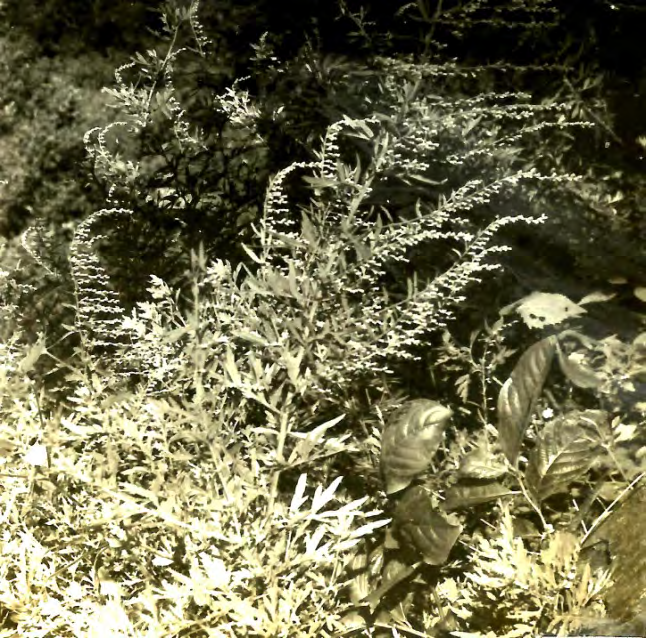
The Ethno botanical Uses as an Incense and in Medicine Purpose from Kumaon (Uttarakhand) and From N.E. India There are numerous uses of the species of Artemisia in India. However Shah and Joshi [15] reported that A. nilagarica (Clarke) Pamp. syn. A. vulgaris Sensu Hook.f., which grows into a tall and bushy plant; A.vestita Wall ex DC., now a variety of A. gmelinii var. vestita is a hairy pubescent shrub with fern-like leaves, and A. parviflora Buch. Ham ex Roxb. the lower leaves are wedged shaped. All these species are known as ‘kunja pati’ or ‘pati’ in Kumaon. The aerial parts are very aromatic and used to worship the Goddess Nanda Devi (the local deity) and also used in death anniversaries for worshipping. Recently, it has been reported to be used by the local people in diabetes (Figure 1).
Artemisia Plants are Aromatic
Mostly, the aromatic plants are aromatic, i.e., they bear essential oils, which are volatile due to which these are extremely odoriferous.
Artemisia indica Wall (A.vulgaris auct.non Linn), collected from Joshimath (Uttarakhand) and distilled for the essential oil. The major aromatic constituents of the oil are; camphor (9.7%); 1-8cineole (6.5%); β-eudesmol (7.98); borneol (5.29%); artemisia alcohol (3,4%);camphene (2.59%); p-cymene (1.6%); terpene-4-ol (1.24%); α-pinene (1.2%); α-gurjunene (1.92%) Uniyal, et al. [16] and Shah [17]. However, the plant at that time was misidentified later it was corrected as. The detail work on analysis of essential oil of A. parviflora and A.vestita from Kumaon (Uttarkhand is not availablel. However, from Kashmir Himalaya the essential oil assay of A.vestita Wall is available with other wild-growing species at high altitudes, viz., A. moorcroftiana Wall., A. lacinata Willd., A. salsolides Willd. and A.persica, Boiss Kaul [18].
Ganga Tulsi A Sacred Plant
A. sacrorum Ledeb. now A. gmelinii Web. ex Stechm.: Russian Wormwood, ‘Ganga Tulsi’, ‘Kala-purcha’. It is known in Harsil and Gangotri in the (Uttarkashi) region as ‘GangaTulsi’ and, in Niti, Mana, and Malari (Chamoli) region as ‘Kala purcha’. The herb is 0.5-0.9 m. high found in the dry alpine region from 2300-3000 m. In Harsil and Gangotri region the plant is used as Ocimum sanctum’ the common, ‘Tulsi’ and used similarly in cough and cold and fever, therefore, called, ‘Ganga tulsi’. In Malari and Niti the herb is used as incense and also offered to the local deities. The plant was collected first by the author from Harsil (near Gangotri), in 1966, where it was found in abundance the leaf twig was being offered in Gangotri temple and was known as ‘Ganga Tulsi’. In the author’s second trip to the Gangotri in 1979, the plant was not much seen in the said region. Possibly, the visitors must have discriminately collected the plant to offer it in the Gangotri temple.
The plant was also collected by the author from Malari region to determine the essential oil and its chemical constituents. The yield of essential oil was 0.3 to0.5% and the major constituents were; limonene (45.6%), borneol (11.1%), farnesol (9.2%),thujyl alcohol(9.0%), geranyl acetate (6.9%), α-pinene (6.5%), nerol(3.6%), thujone (2.8%), thujyl acetate (0.9%),cineole (0.2%) Shah [19] and (Annual Report CIMAP, 1983-84).
Sufed Purcha as Source of and as an Incense Plant Used in Malari Region
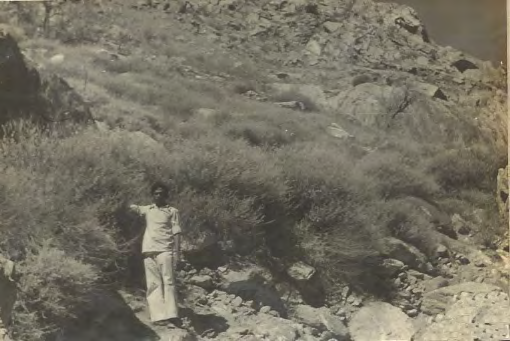
Artemisia brevifolia Wall. ex DC.syn.A. maritima non L. Hook. f. was also collected from Malari region. The plant was identified by Prof. Y.R. Ling, of China as Seriphidium brevifolium (Wall.) Y. Ling et Y.R.Ling. The plant is well distributed in Malari area and the local people of Malari, the ‘Bhotias’ call it ‘safed- purcha’ and use only the immature leaves and the inflorescence of the plant as an incense. Therefore, the aerial parts with immature leaves and mature leaves and inflorescence were collected, in two seasons and distilled for essential oil, and the oil was assayed to find out why the natives only use the immature leaves and inflorescence. It was revealed that the natives used only the immature leaves and inflorescences because the immature material contains a high percentage of thujone and 1-8 cineole, i.e., α-thujone (77.0%) and 1-8 cineole (3.5%) and in the mature material contained, α- thujone (60.29%) and 1-8 cineole(1.5%), and other aromatic constituents in detail [20] (Figure 2).
Further, it is presumed that the local people use the incense perhaps as a psychoactive agent due to the presence of α-thujone, a monoterpene ketone, which is a mild intoxicating agent and thus they forget their fret & worries of life and the severe cold conditions of the place and other domestic hardships Shah [21]. Recently, thujone from A. absinthium and Salvia officinalis has been found as a drug for diabetes mellitus Alhaj Badder, et al. [22].
Artemisias from and from N.E. India
In the North-East India, the Mompas of Kameng District uses the decoction of leaves of A. nilagarica (Clarke) Pamp. Syn. A. vulgaris Sensu Hook.f., in sores and call it ‘Nilum’. The Nagas of North East Himalayas call the plant as ‘Diti Bati’ and keep the plant in front of their doors and below their pillows and believe that doing so, no evil spirits and ghosts enter the house.
The Cultivated Artemisia Species in India
The Species, which were Introduced for Cultivation during British Time and Now, Not Found Under Cultivation
Artemisia abrotanum L. (Southern-wood, lad’s love, southern wormwood): It is reported to be cultivated in Bombay, Grahm Catalogue 1839 quoted by ‘Karthikeyan, et al. [23]. Certainly, the plant does not exist now, anywhere under cultivation or wild. However Hazra, et al. [8], has not enumerated it. It is a small bushy shrub, with small, feathery, narrow, grey-green leaves. The flowers are small and yellow. It can easily be propagated by cuttings, or by a division of the roots.
Distribution: It is an European plant found in the Mediterranean countries southwards. It is mainly distributed in E. Antolia, Armenia, and Tunicia. The origin of this species has remained uncertain but it is said to be wild in E. Antolia. The plant is described from Syria and Turkey. Possibly, in the past, it was brought to India by some European during the British period, due to its multiple uses. Cultivation: Presently, it is cultivated in Southern Europe mainly in France and Spain and the former country is the main marketer and its main supplier Anonymous [24]. Trade: It is the costliest culinary herb. The French variety is sold @ 11.607 to 15.179 $ per kg Anonymous [24] and now the prices must have increased at least double or more. Presently, it is on line for sale by Hooks green Co. U.K.. The Russian variety used to be sold about 9.00-12.5 $ per kg. The Netherlands and Iran also produce Tarragon. Though, Morocco and Eastern European countries also supply but a cheaper quality of Tarragon. Germany also produces top- grade Tarragon but in lesser quantity. The plant is well known from ancient times, and it has a strong camphor-like pleasing aroma and was historically used as an air freshener or strewing herb. Its infusion used in gastric disorders and used externally as bath-water, aromatic tonic, and its poultice, in frostbite. The pungent, scented leaves and flowers are used in herbal teas. It is also used as a Kitchen garden herb. A yellow dye is extracted from the branches of the plant for coloring wool. Its dried leaves are used to keep moths away from wardrobes. It was customary to lay sprays of the herb on the clothes, or hang them in closets, hence called, “guard robe” or “clothes-preserver”.
It is stated that whenever the Judges visited the prisoners they carried with them the posies or sachets or cloth bags of ‘southernwood’ and the rue (Ruta graveolens ) ‘Harmal’ to protect themselves from the prisoners’ contagious diseases. It was also used by some church-goers, who relied on the herb’s sharp scent to keep them awake (not to sleep) during the long sermons.It is also reported that it is cultivated in Germany [25]. Raghunathan K [26]. Artemisia pallens been reported from Ladakh vide Plant accession No.3923 in Raghunathan,(op.cit). This sheet needs to be re-examined ( Note: Those who are interested to revise the Artemisia species of Ladakh, they may consult the Herbarium of CCRAS New Delhi, as this plant is lodged in this herbarium.
There are about 22 Artemisia species collected from Ladakh in 1975 and are lodged here. The author was also one of the members of the team sent to Ladakh for the Techno- economic survey of Ladakh). Artemisia princeps Pamp. Japanese Mugwort. It is also known as ‘yomogi’ in Japan, and ‘huang hua ai’ in China. Karthikeyan, et, al quoted by Almeida J. Econ. Taxon and also listed the plant as cultivated. But, it is not found in India under cultivation. It is distributed in the South-Asian countries.
It is a perennial, very vigorous plant that grows to 1.2 meters. It bears small, buff-colored small flowers, which are hermaphroditic, and pollinated by wind. The leaves are feather-shaped, scalloped and light green, with white dense fuzz on the underside. This species spreads rapidly through underground stolons and can become invasive. Aerial parts and the leaves were used.
The plant is mostly used in Japan, China, Korea, etc. The leaves are sometimes blanched and added to soups or rice. Leaves and young seedlings can be eaten raw or cooked. They can also be used in salads and soups after boiling to remove the bitterness. The young leaves can be lightly boiled before being pounded and added to glutinous rice dumplings known as ‘mochi’ to which they give a pleasant color, aroma, and flavor. It is used in Moxibustion, a traditional medical practice, in which the plant is burnt and placed over the wound or injured part for early healings. It is on line sale in Japan & Korea presently.
The Species, which are Found in the Himalayan Region and are being Cultivated Elsewhere but Not Within the Country
Artemisia dracunculus L. Dragon Mugwort, Estragon, Tarragon: In India, it is distributed in the North-West and Western Himalayas at 14000-16000 ft in Kashmir, Lahul, Nubra, Shyok and Zanskar in Ladakh Chopra, et al. [7, 27] and Stewart [28]. It is mainly distributed in the central, southern and eastern regions of Russia, Siberia, Mongolia, and Tibet in Northern China and also in North America. It is a 90 cm high perennial herb or semi shrub with smooth, glossy, dark green, long narrow leaves shooting from opposite sides of wiry stalks. Soft aerial parts at the flowering stage and leaves are used. It is taken in the form of infusion to stimulate the appetite in the treatment of gastric and intestinal catarrh and intestinal parasitic infestations and also as a mild diuretic. It is a bitter tonic used in indigestion and in gastric troubles [25]. It is generally used in French, European and American cuisine.
It is mainly used in making Tarragon vinegar and to flavor mustards, soups stews, egg, chicken, and other meats, salad, lobsters, pickles, mushrooms, and fish dishes. It is also used in garnishing salads. It is cultivated in Southern Europe mainly in France and Spain and the former is the main market for its supply. It is also cultivated in Morocco, Anonymous, (1986). Presently it is being sold in Japan about @100 $ for 1 kg dried leaves by the IPHYM PHARMA & PLANTES , a pharmaceutical establishment IN Japan and other countries..
Essential oil 0.25-0.3 % with aniseed like sweet odor and methyl chavicol 60-70 %, are the main constituents Chopra, et al. [7]. Asolkar, et al. [29] reviews the main constituents of essential oil, and the herbs as flavons, including rutin, artemitin hyperoside, etc. It is the costliest culinary herb. The French variety is sold at higher rates than the Russian variety. The Netherlands and Iran produce Tarragon. Though, Morocco and eastern European countries also grow the Tarragon. but cheaper quality. Though Germany also produces top-grade Tarragon but in lesser quantity Anonymous [24].
Presently cultivated Artemisia species are: Artemisia pallens Wall. ex DC. ‘Davana’. It is grown in gardens and cultivated in fields in Andhra Pradesh, Tamil Nadu and in Karnataka states, where there are no heavy rains. In Karnataka and Tamil Nadu, it is stated to be cultivated on a large scale for the production of ‘Davana oil’ which is used in high-class perfumery and is exported.
It was first botanically recorded by Hooker [30] but he cited it as a doubtful species. Further, it has never been seen in the wild condition. Hazra, et al. [8] did not mention this plant? However Karthikeyan, et al. [23] mentioned it with a note as a doubtful species. It seems to be an introduced plant in India, the origin is, yet not known. At the time, when it was introduced possibly by the Britishers due to its pleasant aroma, A. dubia Wall. ex Besser. Earlier, known as A.vulgaris auct. non Linn.(referred earlier as A.vulgaris, L.) growing wild, and was also used in Ayurvedic and folk medicine, and was known as; ‘dau’un’ or ‘dawna’ like, ‘nagdaun’, ‘nag damni’ and more precisely, in Marathi- ‘davan’, Gujratati- ‘damro’. The Britishers called it as ‘Davana’.
According to Badhwar, et al. [31] and Husain, et al. [32] in cultivation the plant is 15-30 cm high. However, two distinct types have been identified, i. With short stature having basal leaves entire and early flowering, and ii. Tall ca. 60 cm. with leaves highly dissected and late flowering [29]. It is a short term winter crop extending from Nov. to Feb. under south Indian conditions. Uses: India exports the distilled essential oil Western Europe and North America, to be mainly used in the preservation of sausages and pork products, and high- grade perfumery and scents. Earlier the export demand of the essential oil was about 2 tons [24] and now reported to be of 4 tons, which is produced in South India Kak and Kaul [33]. The local people use the ‘Davana’ blossoms to be offered to Shiva, and decorate His altar throughout the day. According to Asolkar, et al. [29]. ‘Davana’ powder as sachet used for preserving delicate fabrics against moths.
Chemical Composition: ‘Davana’ oil consist of davanones- (55.0%), nerol- (10.0%), Geraniol --(5.0%), hydroxyl davanone-(3.0%), dyhydroxy-rosefurans- (2.5%), furano- norditerpenpoid- (2.0%), hydroxyl nerolidol- (2.0%), davana ethers- (1.5%), artemone -(1.5%), davanafurans –(1.0%), davana esters-(1.0%), hydroxydihyhydrorosefuran-(0.5%), and number of other aroma chemicals in minute concentration Kak and Kaul [33] (Figure 3).
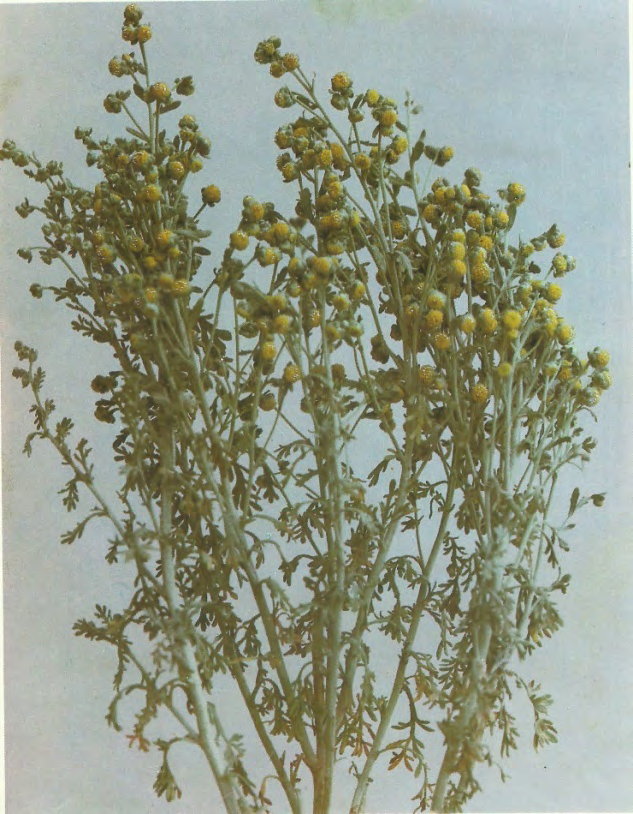
Artemisia annua. L.: An annual plant is known as wormwood, Sweet wormwood, Sweet annie and ‘Qing Hao Su’ or ‘Ginghaosu’ in China. Actually, ‘Ginghaosu’ refers to artimisinin, an anti-malarial drug, in China, to treat Malaria Ling [34]. The plant has long been grown in China and Vietnam traditionally as a medicinal article under the name, ‘Ginghaosu’, and as ‘ thanhhao’, ‘than cao hoa vang’, respectively. It is an erect aromatic annual under-shrub, stem angular. In the wild condition, it is a short plant but rises to
1-1.5 m. under cultivation. Used as an aromatic wreath in the USA and in Europe its essential oil is used for flavoring beverages.
Klayman, et al. [25] discovered that it yields an important compound known as artemisinin, a sesquiterpene lactone endoperoxide. The Artemisinin contents reported 0.06% were from samples of A. annua collected in the United States (Klayman,op.cit. ), which were very low for commercial exploitation. Furthermore, analysis of artemisinin is difficult because the compound is unstable, and the concentration in the plant very low, the intact molecule stains poorly, and other compounds in the crude plant extracts interfere in its detection. The yield of extracted artemisinin from the above- ground portions of the plant have ranged from 0.01% to 0.5% (w/w) in the People’s Republic of China.
History of Introduction of Artemisia Annua, in India through CIMAP and Assay of the Plant for Chemical Constituents & Essential Oil
In the year, 1981 work on Artemisia annua, was carried out at CIMAP (Central Institute of Medicinal & Aromatic Plants, Lucknow. U.P.), a well-known anti-malarial drug in China, and the work of Klayman, et al. [35] in the USA had attracted the attention of many plant laboratories of the world, engaged in developing new medicines. CIMAP, Lucknow was also amongst those institutions, which were keen on working on this plant. In 1986, the Director-General, CSIR had also shown his interest and asked the Director, CIMAP to brief him about this new plant. The author was sent to Delhi to brief the DG about this plant with a note prepared by the author with inputs by the then director Dr. Akhtar Hussain, to brief the DG, CSIR. The copy of the same is as under: “Importance of Artemisia annua and its prospect as an anti- malarial drug in India.
Artemisia annua, a Chinese herb, is a member of the Compositae family and is reported to be used in Chinese folk medicine to alleviate the chills and fever of malaria. The active crystalline constituent named artemisinin, was isolated from the aerial portion of the plant with a yield of 0.01-0.05 % in 1972. The structure of artemisinin was elucidated in 1979. This sesquiterpene has peroxide function, which is essential for antimalarial activity. Because of the number of chloroquine-resistant strains of Plasmodium falciperum were emerging in Asia, South and Central America and Africa, and, the need for a new anti-malarial was accorded on top priority by WHO. The attention of CIMAP in this area was also drawn. No sooner than the publication of the antimalarial activity of Artemisia annua was reported in the Chinese literature. And, through the courtesy of Dr. Nityanand (ex-director CDRI),3 gms. of Artemisia annua seeds were procured from the Royal Botanical Gardens, Kew and cultivated in CIMAP, Bonera Farm (Dist.Phulwama) in Kashmir Valley. Some plants were raised for seeds and a part of the crop processed chemically to obtain the anti-malarial drug. In this effort 0.16 yield of artemisinin, the anti-malarial chemical constituents were obtained from the aerial part of the plant. The success of cultivation in experimental fields in Kashmir valley as well as in Lucknow offers bright prospects for its introduction as an important crop of anti-malarial drugs. The yield of artemisinin, in Artemisia annua cultivated in Kashmir valley, is of the order 0.1 % the efforts are being made to grow larger quantities of Artemisia annua in Kashmir valley. To have high yielding strains of Artemisia annua seeds are being procured from Iran, Afghanistan, and Turkey.
Recently, we have procured seeds from Western Europe and USA and France, through the courtesy of Prof Klayman, Walter Reed Army Institute of Research.
It is hoped that in the forthcoming season we will be able to cultivate Artemisia annua in a couple of hectare of land. We have small quantities of artemisinin for experimental work for 1985 but we propose to produce bulk quantity of artemisinin in the year 1986-87. The chemical processing for artemisinin has been established. The compound has cured several thousand malarial patients in China. It is effective against both chloroquine-sensitive and chloroquine-resistant strains of Plasmodium falciperum. In addition, it is very effective against cerebral malaria. It has been considered as a very potent anti-malarial drug especially in areas, where chloroquine-resistant strains of Plasmodium falciperum is found” [36].
The Researches on Artemisia Annua Undertaken by CIMAP
A number of improved technologies for the processing and production of artemisinin and the essential oil; single pot conversion of artemisinin to artesunic acid; single pot conversion of artimisinin to artemether and the process of isolating artemisinin from Artemisia annua was developed and patented by CIMAP, in India, (Annual Report CIMAP 2003-2004 pp.90-91). The plant has been well established and naturalized for cultivation in India. The progress was continued in collaboration with CDRI, Lucknow for a long time. About 15 yrs ago IPCA Laboratories, Ltd. had taken all the patented technologies from CIMAP to start cultivation throughout India and produce artemisinin, in a big way. Many organizations within the country had also started cultivation as artemisinin and its other products, are well in very good demand within the country and abroad. China is a big competitor in this field and supplies the drugs at a lower rate.
The essential oil obtained from A. annua as a byproduct was also introduced in the market by CIMAP . About 1 kg oil was for the first time was sold in Rs.10000/- to a big perfumer of the country. (Author’s information). But now it’s small packing is being sold on line by a number of companies for various purposes.
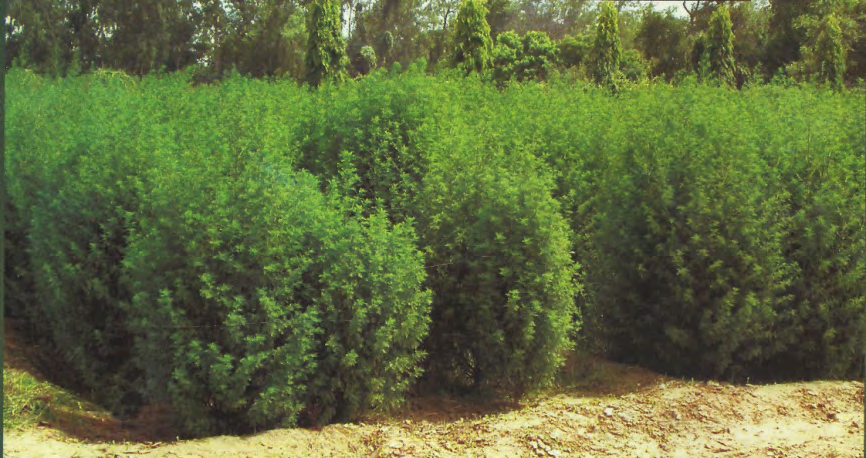
The aromatic chemical-constituents of essential oil of A. annua extracted via steam distillation are : alpha- pinene (0.032%), camphene (0.047%), ß-pinene (0.882%), myrcene (3.8%), 1,8-cineole (5.5%), Artemisia ketone (66.7%), linalool (3.4%), camphor (0.6%), borneol (0.2%), and ß-caryophyllene (1.2%), (CIMAP, Annual Report 1989- 90) (Figure 4).
Artemisia Annua is Found in India or not?
The author conducted a repeated surveys to find whether the plant of Artemisia annua is found in Kumaon Himalayas or not. As there is no record of its presence in India as a wild plant. However, in a revised catalog published by Duthie [37] based on the survey of Sir Richard Strachey & James Edward Winterbottom conducted in Kumaon and in the adjacent portions of Garhwal & Tibet in which A. annua is well listed but the location is not given. So, the author took 4-5 repeated survey trips in Kumaon’s border areas, viz., Gangotri ( Uttarkashi), and Niti, Malari, Mana (Badrinath) in Chamoli district, in Uttarakhand. These areas are adjoining and near to the Indo-Tibetan region but he failed to find any plant.
On the contrary, the author collected two new species of Artemisia,viz., On a second trip to Gangotri, the author collected Artemisia species, which was very much alike to Artemisia sacrorum. But, it was recorded as a new species, viz., “Artemisia filiformilobulata Ling YR, et al. Puri HS sp.nov. (Sect. Abrotanum Bess.). Himalaya S, Gangotri, 5000.
Collected by Shah NC, Field Book No CIMAP 266 A; 22-9-1979 [38] and other one Artemisia astro-himalayana, Ling YR, et al. Puri HS syn. A. tenuifolia, auct. non Adam. Ex DC. Ling YR et al. Puri HS sp. nov. (Sect. Artemisia). S.Himalaya, Niti Chamoli, 4000 m. collected by Shah NC, et al. Singh SC from Niti. Field Book No.CIMAP 1660 [38] (Figure 5).
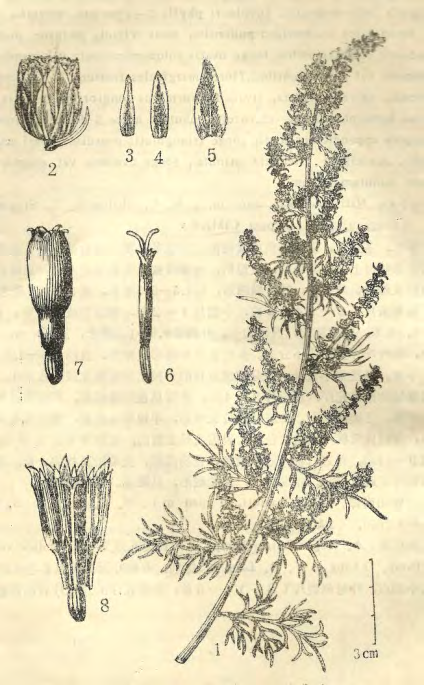
A new species from Gangotri area Uttarkashi (Uttarakhand). It is used in Gangotri as ‘Ganga Tilsi” as a sacred plant and offered to the temple by the pilgrims.
Nobel Prize for working on Artemisia Annua
This is also to communicate here that the Nobel Prize in Physiology or Medicine 2015, was awarded for the discovery of two main natural products: 1. artemisinin, a sesquiterpene lactone containing an unusual peroxide bridge isolated from the plant Artemisia annua L.(Asteraceae) and 2. avermectin, a macrocyclic lactone isolated from the soil microorganism, Streptomycis avermitilis (and its derivative ivermectin). Both these compounds have established new therapies to treat two parasitic diseases such as; malaria (artemisinin) and lymphatic filariasis and onchocerciasis (avermectin). The prize was divided, one half to Youyou Tu a Chinese for her discoveries concerning a novel therapy against malaria, the other jointly to William C. Campbell and Satoshi Omura for their discoveries concerning a novel therapy against infections caused by roundworm parasites. The fact that artemisinin and avermectin are both natural products and are promising and highly insignificant Efferth, et al. [39] and Callaway, et al. [40].
Discussion and Conclusion
- The present paper has discussed the history of the introduction of some of the Artemisia sps. in India used by the Arabians traders and the Britishers for medicine.
- A few Artemisia species were introduced and cultivated by the Britishers in the past, viz., Artemisia abrotanum L, Artemisia princeps Pamp. and Artemisia dracunculus L. Now, these are not under cultivation. However, A. dracunculus and A. abrotanum are still cultivated in Europe by many countries. A. dracunculus is recorded to be found in the Western Himalayas. The possibility of its cultivation be tried and the wild one should be collected and tried as germplasm for improving the crop.
- Artemisia species is not mentioned in Atharva Veda, the first Ayurvedic literature, in which single drug plant’s uses is discussed, however, it is mentioned in later literature like Vagbhata, as these Artemisias were brought into India by the Arabian traders.
- Presently, only two Artemisia species are under cultivation, viz., A. pallens known as ‘Davana’ for perfumery trade and A. annua for production of anti- malarial drug, artemisine.
- A.sacrorum (A. gmelinii) which was found commonly in Gangotri area and was being offered in Gangotri temple as ‘Ganga Tulsi’ before 1970, has now become rare.
- Many species of Artemisias growing in N.
East Himalayan region as reported by Hazra, et al. [8] and, Karthikeyan, et al, (
Acknowledgment
I am thankful to Dr. Subhas Singh (ex-scientist CIMAP) for assistance in the field during survey & collection work of Artemisia species.
References
-
Plowden CC (1968) The Manual of Plant Names. George Allen and Unwin Lyd, London, pp: 1-260.
-
Huang YP, Ling YR (1996) Economic Compositae in China. In: PDS Caligari, DJN Hind (Eds.), Compositae: Biology & Utilization. Proceedings of the International Compositae Conference, Royal Botanic Gardens, Kew, 2: 415-422.
-
Wahid, Abdul H (1957) A Survey of Drugs. Hamdard Research Institute, Delhi, pp: 1-28.
-
Watt G (1889-1896) A Dictionary of the Economic Products of India. Allen WH & Co., London. Vol. 6.
-
Watt G (1908) The Commercial Products of India. John Murray, London.
-
Bal SN (1932) Catalog of medicinal plants exhibits. The Industrial Section of the Indian Museum. Govt. of India Publication, Calcutta, pp: 1-20.
-
Chopra RN, Nayar SL, Chopra IC (1956) Glossary of Indian Medicinal Plant. CSIR, New Delhi, pp: 1-330.
-
Hazra PK, Rao RR, Singh DK, Uniyal BP (1995) Flora of India Asteraceae (Anthemideae-Helmintheae). Botanical Survey of India, Calcutta, India.
-
Kaul MK, Bakshi JK (1984) Studies on the genus Artemisia. L. in North-West Himalayas with particular reference to Kashmir. Folia Geobotanica & Phytotaxonomica 19(3): 299-316.
-
Garga DS (1967) Dhantwantri. Vijaya Garh Aligarh IV, pp: 43-44.
-
Pandey GS (1969) Bhava Praksha Nighantu. Chowkhamba VidyaBhawan, Varanasi, pp: 1-986.
-
Sarma P (1969) Dravayaguna Vijnana. Chowkhambha Vidya Bhawan, Varanasi.
-
Sharma DC (1969) Vedon mein dravyaguna shastra. Gujrat Ayurvedic University, Jamnagar. (in hindi & sanskrit).
-
Sivarajan VV, Indira B (1994) Ayurvedic drugs and their plants sources. Oxford & IBH Publishing Co.Ltd. New Delhi, pp: 1-576.
-
Shah NC, Joshi MC (1970) Folk-lore and Aromatic Plants of Kumaon Hills. The Flavour Industry 61(12): 851-855.
-
Uniyal GC, Singh AK, Shah NC, Naqvi AA (1985) Volatile constituents of Artemisia nilagirica. Planta Medica 51(5): 357-358.
-
Shah NC (1992) Prospective and retrospective views of aromatic herbs from hills of Uttaranchal, Uttar Pradesh. Proc. Explor. Indig. Raw Material. Ess. Oil. Ind, Bharat Jyoti Perfumers & Growers Dev, Foundation, Lucknow, pp: 1-22.
-
Kaul VK (1997) Chemical Investigation of Essential oils of Artemisia species in Kashmir Himalaya. In: SS Handa (Ed.), Supplement to cultivation & utilization of aromatic plants. Regional Research Laboratory, Jammu Tawi, pp: 307-329.
-
Shah NC (1997) The Status of Essential Oil bearing Plants in Uttarakhand (UP) India. In: Handa SS, Kaul MK (Eds.), Supplement to Cultivation & Utilisation of Aromatic Plants. Pub: Regional Research Laboratory Jammu, Tawi, pp: 485-503.
-
Shah NC, Thakur RS (1992) Chemical composition of the Leaf / Inflorescence oil of Seriphidium brevifolium (Wall) Y Ling et YR Ling. J Ess Oil Res 4(1): 25-28.
-
Shah NC (1996) Ethnobotany of some well-known Himalayan Composites. In: Caligari PDS, Hind DJN (Eds.), Compositae: Biology & Utilization. Proceedings of the International Compositae Conference, Royal Botanic Gardens, Kew, Vol 2: 415-422.
-
Alhaj Badder, Stephen G Walch (2011) The Choice of thujone as a drug for diabetes. Natural Product Research 25(20): 1890-1892.
-
Karthikeyan S, Sanjappa M, Moorthy S (2009) Flora of India Series 4. Flowering Plants of India Dicotyledons. Botanical Survey of India, Howrah, pp: 336.
-
Anonymous (1986) Essential oils and oleoresins. A Study of selected producers and major markets. International Trade Centres UNCTAD/GATT, Geneva, pp: 1-208.
-
Stary F, Jirasek V (1973) Herbs. Hamlyn, London, pp: 1-238.
-
Raghunathan K (1978) Preliminary Technoeconomical Survey of Natural Resources and Herbal Wealth of Ladakh. CCRIMH, New Delhi, pp: 184.
-
Chopra RN, Chopra IC, Handa KL, Kapur LD (1958) Chopra’s Indigenous drugs of India. UN Dhar and Sons Pvt. Ltd, Calcutta, pp:1-816.
-
Stewart RR (1972) Flora of West Pakistan, An Annotated catalog of vascular plants of West Pakistan & Kashmir. Nasir E & Ali SI Fakhri Printing Press, Karachi, Pakistan, pp: 1-1028.
-
Asolkar lV, Kakkar KK, Chakre OJ (1992) Second Supplement to Glossary of Indian medicinal plants with active principles. Part-I (A-K) covering 1965 to 1981 references. National Institute of Science Communication (CSIR), pp: 1-414.
-
Hooker JD (1882) Flora of British India. L Reeve and Co., Ashford, Kent, London, 3: 323.
-
Badhwar RL, Rao P S, Sethi H (1964) Some useful aromatic plants. Manager, Publications, Govt. of India. Delhi, pp: 1-63.
-
Husain A, Virmani O P, Sharma A, Kumar Anup, Misra LN (1988) Major Essential Oil-Bearing Plants of India. Central Institute of Medicinal and Aromatic Plants, Lucknow India. pp: 1-237.
-
Kak SN, Kaul BL (1997) Davana-Prospects of cultivation and improvement. In: SS Handa (Eds.), Supplement to cultivation & utilization of aromatic plants. Regional Research Laboratory, Jammu-Tawi, pp: 237-279.
-
Ling YR (1986) On medicinal Artemisia Linn. In China and their identities in ancient Chinese Pharmacopoea. Wuyi Science Journal 6(12): 351-371.
-
Klayman DL, Lin A J, Action N, Scovill J P, Hoch J M, et al. (1984) Isolation of Artemisinin ( Qinghaosu) from Artemisia annua growing in the United States. J Nat Prod 47(4): 715-717.
-
Shah NC (2012) The building of Herbarium at ICMR (CCRAS) Unit at (NBG) NBRI, Lucknow. Herbal Technology, 7: 25-31.
-
Duthie JF (1906) Sir Strachey Richard & Winterbottom. Catalogue of the Plants of Kumaon and the adjacent portion of Garwal and Tibet in 1852. Republished by Bishen Singh Mahendra Pal Singh, Dehradun, pp: 2-269.
-
Ling YR, Puri HS (1985) Two new species of Artemisia from S. Himalaya. Guihaia 5(1): 1-5.
-
Efferth T, Zacch S, Georgiev MI, Liu L , Wagner H, et al. (2015) Nobel prize for artemisinin brings phytotherapy into the spotlight. Phytomedicine 22(13): 1-3
-
Callaway Ewen, Cyranoski David (2015). China celebrates first Nobel. Nature 526(7572).
-
Bamber CJ (1916) Plants of Punjab. Supdt. Government Printing Press, Punjab.
-
Belenovskaja L (1996) Artemisia: The flavonoids and their systematic value. In: Hind DJN, Beentje HJ (Eds.), Compositae Systematics. Proceedings of the International Compositae Conference, Royal Botanic Gardens, Kew, pp:253-259.
-
Ling YR (1980) TaxaNovaGenerum Artemisiae. Et Seriphidii Xizangensis. Acta Phytotaxonomica Sinicia 18(4): 504-513.
-
Ling YR (1981) On the genus Artemisia Linn., in Xizang. Journal of Nanjung Technological College of Forest Products 24(1): 81-105.
-
NX Dung, Le Kiem Bien, Vu N Lo, PA Leclercq, Vu Viet Nam, et al. (1996) The recent development in the study of Compositae from Vietnam. In: DJN Hind (Eds.), Proceedings of the International Compositae Conference, Royal Botanic Gardens, Kew, pp: 655-663.
-
Rau MA (1975) High Altitude flowering Plants of West Himalaya. Botanical Survey of India, Howrah, pp: 1-234.
-
Roxburgh W (1832) Flora Indica or Description of Indian Plants. Today & Tomorrows Publication, New Delhi, pp: 1971.
-
Watson LE (1996) Molecular Systematics of the tribe Anthemidieae. In: Hind DJN, Beentje HJ (Eds.), Compositae Systematics. Proceedings of the International Compositae Conference, Royal Botanic Gardens, Kew, 1: 341-348.
-
World Health Organization (1981) Report of the Fourth Meeting of the Scientific Working Group on the Chemotherapy of Malaria. Beijing, People’s Republic of China.
- Management of Ear Keloid with Ksharsutra: A Case Study
- Yoga and Global Sustainability: A Holistic Path to One Earth, One Health
- Autoimmune Diseases in Ayurveda: A Narrative Review with Classical and Modern Perspectives
- Management of Cluster Headache Associated with Pituitary Apophysitis by CERT (Chakrasiddh Energy Release Technique): A Case Report on Energy Rebalancing
- Zygophyllum Geslini Coss : Biochemicals and Antioxidant Activity
- Observations of a Beginner Vaidya