
ImmunoProtective Role of Medicinal Herbs as Phytotherapeutic Drugs in Ayurveda – A Prospective Approach for Defending COVID19
The present review article elucidates the phytotherapeutic applications of various herbal medicines and plant products in Ayurveda for curing diseases and promoting health through boosting our immunity. This could serve as an immune protective tool in defending the antagonistic effects of the present Covid-19 pandemic. The plants with various phyto-immunomodulatory constituents could be a perspective approach for combating the antagonistic effects of COVID-19 and possibly developing immunity to fight against the upcoming health issues related to it. A list of potential herbs with their phyto protective constituents is described in this review. Our immunity plays a significant role in defending the adverse impacts of foreign antigens and synthesizes some protective biomolecules called immunoglobulins in response to that. Various naturally occurring bioactive compounds are isolated from medicinal herbs. In this regard, Ayurvedic therapy employs the ability of various immunomodulatory phytoconstituents derived from medicinal herbs to cure the ailments. In the current era of medicinal research, scientific investigations on the role of immunomodulatory phytoconstituents in the modulation of immunity have gained utmost importance. In light of this, several medicinal plants and their Ayurvedic Rasayana with immunomodulatory activity have been reported. Some of these plants are, Cinnamomum zeylanicum Garcin ex Blume, Glycyrrhiza glabra L., Adhatoda vasica L., among various immunomodulatory phytoconstituents Cinnamaldehyde, Eugenol, Glycyrrhizin, isoliquiritin, vasicine, Adhatodic acid, have notable phytoimmunomodulatory effects for effective management of COVID-19.
Introduction
With the progress in human civilization, we are facing a lot of challenges in the social, physical, and mental sectors. Nowadays challenges in the health sector are a major burning issue that needs to be addressed carefully and vigorously in a sustainable manner. Since time immemorial Indians and other countries are in the practice of several traditional therapies like Ayurveda, Unani, Siddha, and Homeopathy. These therapies are catering to the need of diseased people by providing various naturopathy. Ancient peoples were in the practice of taking plant-based drugs for curing various ailments. Use of conventional medicines is no wiser for a long-term approach considering its various negative verges viz. numerous adverse side effects, expensive, destabilizing hormones and metabolism, weakening the immune system.
Notwithstanding the medical and technological advancements of the modern era, the global demand for herbal remedies is intensified. Plant-derived bioactive compounds are gaining more attention nowadays as a natural remedy to meet the healthcare needs of people. The Indian recognized traditional system of medicine including Ayurveda, Yoga, Unani, Siddha, and Homoeopathy (AYUSH) is one of the oldest systems of medical practice in the world and has played a crucial role in catering to the health care needs of human civilization since time immemorial [1].
These traditional herbal medicines with their multifarious beneficial roles as more affordable and accessible than conventional medicines, reduced side effects due to their natural origin, cheaper as made from bountiful and easy-to- produce natural resources. with lower production cost, self- healing ability by targeting the source of pain or discomfort and not only just masking the symptoms and improved overall health by aiming to identify and eradicate illness rather than suppress the symptoms. The additional benefits of herbal medicine are that it contains vitamins, antibodies, and other health-promoting agents, immune boosters which cumulatively serve to strengthen the overall body and improve our immunity against various ailments, infections, and disorders. Ayurveda is one such traditional practice that uses medicinal herbs and plant products for healing various diseases to a greater extent.
Most infectious diseases and disorders are the consequence of stressful environmental conditions which are associated with suppression of the immune system as suggested by developments in clinical and experimental immunology [2, 3]. Phyto-Immunomodulator is those bioactive components in the plants which can stimulate or suppresses both innate and adaptive immune responses.
The modulation of the immune system by various medicinal plant products has become a subject for global scientific discussion. Millions of people worldwide are victimized by the attack of an infectious novel coronavirus in the early 2020s which severely attack the respiratory system of human beings and cause very fast and frequent deaths. The vast infection is through inhalation of respiratory droplets and dispersed aerosols by coughing, sneezing from infected persons [4].
AYUSH systems have helped the nation in the previous pandemic crisis due to plague, cholera, Spanish flu, etc. in the past. Hence, by repurposing the traditional uses of Indian medicinal plants and formulations, new treatment options can be identified to combat the current deadly pandemic.
Given the COVID-19 outbreak, the entire human race across the globe is perturbed. While there is no medicine for COVID-19 as of now, it is imperative to take preventive measures such as practicing self-hygiene, social distancing, and boosting immunity. Many safe traditional formulations of AYUSH, which are well-known immunity modulators, have been used for centuries in respiratory disorders and allergic conditions.
The Ministry of AYUSH (Govt of India) has listed out such formulations and recommended their use as a prophylactic measure in red zones, containment zones, as well as for corona warriors. Many of them are now under clinical trial in COVID-19 patients. Practicing self-hygiene, social distancing, and boosting immunity are some of the preventive measures to be taken to combat the pandemic situation. The Ministry of AYUSH (Govt of India) has listed out many safe traditional formulations which are well-known immunity modulators and recommended their use as an anticipatory measure.
Phyto-Immunomodulators in Medicinal Herbs
It was estimated that around 3/4th of the world’s population was relying on the potential of traditional herbal medicines as an alternative healthcare system as reported by World Health Organization [5]. In this modern world, various medicinal herbs are the source of many valuable imperative drugs which has high therapeutic potential [6]. Due to the lower adverse effects and high nutritional benefits these herbal medicines are now employed for cure and prevention of many upcoming diseases [7]. There is one saying “Prevention is better than Cure”. So in recent years all the medical practitioners, investigators as well as common people are rushing towards the ethno medicinal benefits of traditional therapeutic systems like Ayurveda and Rasayana. Following are some medicinal plants with their Ayurvedic doses to develop immunity against cough and cold especially to combat the detrimental effects of the present COVID-19 pandemic. Ayurveda is the world’s oldest medical system and is equipped with varieties of treatment modalities to handle various types of deadly diseases. According to Ayurveda, the Sareera (Body) is composed of Dosha (humors like Vata, Pitta, and Kapha), Dhatu (Tissues like Rasa, Rakta, Mamsa, etc.), and Mala (waste products like fecal matter, Urine, and Sweat).
Cinnamomum zeylanicum Garcin ex Blume
Cinnamomum zeylanicum of the family Lauraceae is commonly known as cinnamon (Figure 1). It is native to Sri Lanka and wildly grown in Western ghats, and adjoining hills of west India. The plant is also found in Java, Sumatra, and South America, Mauritius and is a bushy evergreen tropical tree. Cinnamon is the dried inner brown bark of the tree having 0.5% to 1% of aromatic essential oil. These plants possess amazing therapeutic properties like antioxidant, antifungal, antibacterial, lowering cholesterol level, maintaining sugar level in the body, controlling vomiting in the body, and its regular intake will reduce breathlessness, strengthen heart muscles and vascular system. The biochemical constituents are cinnamaldehyde, eugenol, phellandrene, benzaldehyde, etc.
Different immunomodulatory phytoconstituents present in the plant are Cinnamaldehyde, Eugenol [8]. Niphade, et al. reported that 100 mg/kg bodyweight of cinnamon high dose (CHD) showed immunostimulant activity in Swiss Albino. It was reported to increase the phagocytic index in the carbon clearance test, increased serum immunoglobulin levels, and also increased the antibody titer in the indirect hemagglutination test. He also reported that cinnamon at a high dose increases both cell-mediated and humoral immunity.
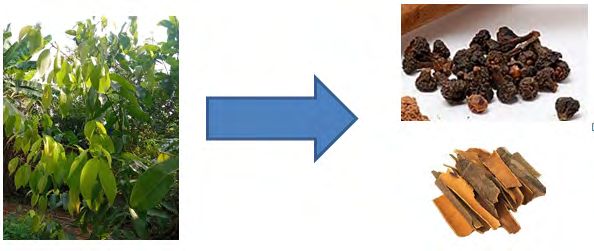
The bark of the plant contains cinnamaldehyde, benzaldehyde, cumin aldehyde, and terpenes [8, 9, 10]. Cinnamaldehyde is reported to inhibit lymphocyte proliferation and NF-kB stimulation. Polyphenols and volatile phenols are the two chemical classes that are isolated from C. zeylanicum. The essential oil extracted from the bark contains cinnamaldehyde with a range of 90% to 62% and is the most signified substance. Eugenol has a higher concentration >80% and cinnamyl acetate and caryophyllene is the main component of cinnamon leaf oil and cinnamon flowers and fruit [11].
Glycyrrhiza glabra L.
It is commonly known as Liquorice or sweet wood or Mulaithi of family Fabaceae (Figure 2) is native to parts of Asia and Europe. Hong, et al. (2009) reported from their preclinical study that co-administration of polysaccharides isolated from G. glabra to mice feeding on a high-fat diet enhances the immune response and increases the activities of various antioxidant enzymes. It is a flowering herbaceous perennial legume plant native to Western Asia, North Africa, and Southern Europe. With sweet aromatic flavoring extract obtained from the root is having high medicinal value [12, 13].
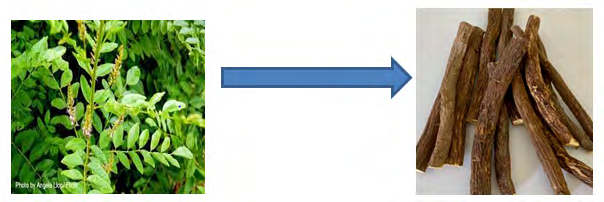
Liquorice root has been widely used around the world to treat cough since ancient times. It contains. Glycyrrhizin and glycyrrhetinic acid are considered to be the main active components and are potent inhibitors of cortisol metabolism, due to their steroid-like structures. Glycyrrhizin, also called glycyrrhizic acid (GLR), a major active constituent, is a triterpene glycoside/triterpenoid saponin mainly isolated from the roots of the plant’s Glycyrrhiza glabra [14]. It contains a lot of phytochemicals including more than 300 flavonoids (of them 42 chalcones) and 20 triterpenoids [15]. So, the root of this plant has been used for the treatment of coughs, colds, and asthma. Glycyrrhizin alleviated allergic asthma in an ovalbumin-induced experimental mouse model of asthma as evidenced by increased IFNγ level, while it decreased IL-4, IL-5 levels, and eosinophil count in bronchoalveolar lavage (BAL) [16, 17, 18]. Owing to its therapeutic potential, the plant was used from ancient times as alternative natural medicine in Ayurveda. Besides its use as food additives, such as flavors and sweetening agents, it has high potential in the treatment of many diseases [19]. Glycyrrhizin and Liquorice extract are present in most traditional Chinese medicine formulas used against SARS- CoV-2 in China. Significant data are showing that glycyrrhizin and liquorice extract have multiple beneficial activities in combating most features of SARS-CoV-2 [15]. Several review articles concluded that the antiviral activity of liquorice extract and glycyrrhizin has been reported against various viruses including SARS-CoV and SARS-CoV2 [14, 19, 20, 21].
Several bioactive compounds viz. polysaccharides, triterpenes, and flavonoids found in glycyrrhizin enhance immunity through the activation of different targets such as increase of interferon-gamma production, enhances the lymphocytic proliferation in response to viral infection, dose- dependent cell-mediated and humeral immunomodulatory activity, significantly increase leukocyte count and phagocytic index, reduced the duration of viral antigen shedding and increases the serum antibody titers [14, 15, 19]. It causes an increase in chemokine and chemokine receptor genes expression that modulates B and T cell recruitment to lymphoid follicles. Glycyrrhizin promotes the release of immune factors and its two components viz. isoliquiritigenin, and naringenin, promote regulatory T cells induction. They are useful against inflammatory and autoimmune diseases as they enhance immune suppression of Regulatory T cells [15].Polysaccharides show immunostimulatory activity and promote dendritic cell maturation [14, 15].
Adhatoda vasica L
Adhatoda vasica (L.) Nees commonly known as Vasaka is a well-known medicinal plant widely used in the Unani and Ayurvedic system of medicine [22].The plant grows throughout the Indian peninsula up to an altitude of 1300m in the sub-Himalayan tract, also found in Nepal, Pakistan, Myanmar, Sri Lanka, and Germany (Figure 3). It usually grows in waste places frequently near villages and often as an escape from cultivation as a hedge plant.
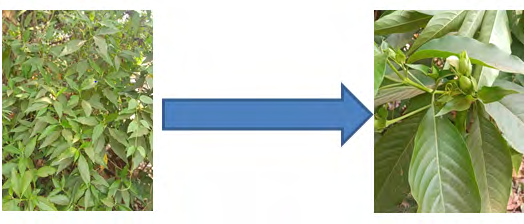
The principal constituents of Vasaka are its several alkaloids, the chief one being vasicine. The leaves contain two major alkaloids called vasicine and vasicinone2, 3. The leaves of Vasaka are rich in vitamin C, carotene, and essential oil. Vaccine also exhibits strong respiratory stimulant activity [22]. Adhatoda vasica has been used in traditional Indian medicine for thousands of years to treat respiratory disorders like bronchitis, tuberculosis, and other lung and bronchiole disorders [23]. This could be an advantage to fight the COVID-19 symptoms. A decoction of the leaves can be used as an herbal treatment for cough and other symptoms of colds. The soothing action helps irritation in the throat and the expectorant will help loosen phlegm deposits in the airway which makes Adhatoda a good remedy for sore throat [23]. The leaves, roots, and flowers are extensively used in indigenous medicine as a remedy for cold, cough, bronchitis, and asthma as prescribed in Ayurvedic medicine. In acute stages of bronchitis where the sputum is thick and sticky, which is a case in post Covid impact; this plant gives unfailing relief by liquefying tilt sputum. The dried leaves should be smoked for relief in asthma [23]. Kumar, et al. [23] also reported that leaf decoction (7 leaves of the plant are boiled in water, strained, and mixed with 24 grams of honey), a confection of vasaka (mixture of 60 grams of flowers and 180 grams of jaggery in doses of 12 grams twice daily) relieves cough. It has vasicine, vasicinone and vasicolone as major chemical constituents. These primary alkaloids are well established as therapeutical r. Previous experimental and clinical trials demonstrated that Vasaka has antiviral action. It has shown antiviral action against different viruses indicating that it could be a therapeutic option for the management of COVID19 related symptoms [22, 24, 25].
Ayurvedic Doses of Different Plant Parts
Cinnamomom Respiratory Agent zeylanica
- English: Cinnamon
- Hindi: Dalchini
- Properties Taste: Bitter, Pungent, sweet Qualities: Light, unctuous Penetrating Potency: Hot Final Test: pungent
- Chemical Constituent: Cinnamaldehyde, Eugenol.
- Actions: It subsides Kapha and Vata It elevates Pitta. It is digestive and increases appetite. It enhances internal immunity and is a blood purifier. It is expectorant.
- Uses: Dyspepsia, Loss of appetite, cough, Infection, etc.
- Parts Used: Bark oil, Leaf.
- Dose: Bark powder 3-6 gm, oil- 2-5 drops.
- Medicine: Sitopaladi Powder.
Glycyrrhiza glabra
- English: Liquorice
- Hindi: Mulethi
- Properties Taste: sweet (50 times sweeter than sugar) Qualities: Heavy, unctuous Potency: Cold Final test: sweet
- Chemical Constituent: Glycyrrhizin, isoliquiritin, etc.
- Actions: It subsides Vata & Pitta. It is a potent acid neutralizer. Expectosant, Health Booster.
- Uses: Hyperacidity, cough, and general debility
- Parts Used: Root
- Dose: 3-5 gm.
- Medicine: Yastimadhu Powder
Adhatoda Vasica
- English: Malabar nut.
- Hindi: Adusa
- Properties Taste: Bitter, Astringent Qualities: Unctuous, Light Potency: Cold Final test: Pungent
- Chemical Constituent: Vasicine Adhatodic acid.
- Actions: It Kapha and Pitta. It liquefies cough and expectorant. It increases the surface area of Bronchial tree.
- Uses: Cough, Epistaxis
- Parts Used: Root, Leaf & Flower
- Dose: Root Decoction of 20-50 ml.
- Medicine: Vasavaleha, vasarista etc.
Conclusion
Due to the multi-modal therapeutic effects of cinnamon, Vasaka, Clove, and licorice it may be hypothesized that the plants could be effective in the prevention and Management of COVID-19 symptoms. The existing review of the literature and the findings from the survey-based research regarding their immunomodulatory activity specify the potentiality of different bioactive compounds in the management of COVID-19 symptoms. Due to the lack of standard formulation regarding the use of these compounds and different plant parts, its wider use is restricted. For this purpose, translational research is recommended in the context of the management of COVID-19 systems.
References
-
Ahmad S, Zahiruddin S, Parveen B, Basist P, Parveen A, et al. (2021) Indian Medicinal Plants and Formulations and Their Potential against COVID-19–Preclinical and Clinical Research. Front Pharmacol 11.
-
Das K (2022) Herbal plants as immunity modulators against COVID-19: A primary preventive measure during home quarantine. Journal of Herbal Medicine 32: 100501.
-
Singh N, Tailang M, Mehta S C (2016) A Review on Herbal Plants as Immunomodulators. Sementic Scholar.
-
WHO T (2020) WHO Director-General’s opening remarks at the media briefing on COVID-19. 11 March 2020. Geneva, Switzerland.
-
Mohanty M, Mohanty S, Bhuyan SK, Bhuyan R (2021) Phytoperspective of Moringa oleifera for oral health care: An innovative ethnomedicinal approach. Phytotherapy Research 35(3): 1345-1357.
-
Mohanty M, Pradhan C (2015) A Review on Phytochemistry, Bio-Efficacy, Medicinal and Ethno- Pharmaceutical Importance of Artocarpus altilis. Semantic Scholar 3:13.
-
Pradhan C, Mohanty M, Rout A (2013) Phytochemical screening and comparative bioefficacy assessment of Artocarpus altilis leaf extracts for antimicrobial activity. Frontiers in Life Science 6(3-4):71-76.
-
Niphade SR, Asad M, Chandrakala GK, Toppo E, Deshmukh P (2009) Immunomodulatory activity of Cinnamomum zeylanicum bark. Pharmaceutical Biology 47(12).
-
Chelliah DA (2008) Biological Activity Prediction of an Ethno Medicinal Plant Cinnamomum camphora Through Bio-informatics. Ethnobotanical Leaflets 12: 181-190.
-
Sienkiewicz M, Głowacka A, Kowalczyk E, Wiktorowska- Owczarek A, Jozwiak-Bebenista M, et al. (2014) The biological activities of cinnamon, geranium and lavender essential oils. Molecules (Basel, Switzerland) 19(12): 20929-20940.
-
Kumar S, Kumari R, Mishra S (2019) Pharmacological properties and their medicinal uses of Cinnamomum: A review. The Journal of Pharmacy and Pharmacology 71(12): 1735-1761.
-
Bhat H, Sampath P, Pai RJ, Bollor R, Baliga, et al. (2013) Chapter 15-Indian Medicinal Plants as Immunomodulators: Scientific Validation of the Ethnomedicinal Beliefs. Bioactive Food as Dietary Interventions for Arthritis and Related Inflammatory Diseases. In: R. R. Watson, et al. (Eds.), Academic Press, pp: 215-224.
-
Bhat SA, Rather SA, Iqbal A, Qureshi HA, Islam N (2020) Immunomodulators for Curtailing COVID-19: A Positive Approach. Journal of Drug Delivery and Therapeutics 10(3-s): 286-294.
-
Bailly C, Vergoten G (2020) Glycyrrhizin: An alternative drug for the treatment of COVID-19 infection and the associated respiratory syndrome? Pharmacology & Therapeutics 214: 107618.
-
Gomaa AA, Abdel-Wadood YA (2021) The potential of glycyrrhizin and licorice extract in combating COVID-19 and associated conditions. Phytomedicine Plus 1(3): 100043.
-
Bellanger RA, Seeger CM (2021) Chapter 40-Complementary and alternative medicine. Side Effects of Drugs Annual. In: Ray SD (Eds.), Elsevier, Vol 43: pp. 493-502.
-
Gulati K, Verma P, Rai N, Ray A (2021) Chapter 7-Role of nutraceuticals in respiratory and allied diseases. Nutraceuticals (2nd Edn.). In: Gupta RC, et al. (Eds.), Academic Press, pp: 101-115.
-
Sharma P, Kumar P, Sharma R, Gupta G, Chaudhary A (2017) Immunomodulators: Role of medicinal plants in the immune system. National Journal of Physiology Pharmacy and Pharmacology 7(6):552-556.
-
Pastorino G, Cornara L, Soares S, Rodrigues F, Oliveira MBPP (2018) Licorice (Glycyrrhiza glabra): A phytochemical and pharmacological review. Phytotherapy Research 32(12): 2323-2339.
-
Wang HL, Li YX, Niu YT, Zheng, J, Wu J, et al. (2015) Observing anti-inflammatory and anti-nocceptive activities of glycyrrhizin through regulating COX-2 and pro-inflammatory cytokines expressions in mice. Inflammation 38(6): 2269-2278.
-
Sun ZG, Zhao TT, Lu N, Yang YA, Zhu HL (2019) Research progress of glycyrrhizic acid on antiviral activity. Mini- reviews in medicinal chemistry 19(10): 826-832.
-
Khan R, Shamsi Y, Nikhat S (2020) Medicinal Benefits Of Adhatoda Vasica Nees.-In Unani And Contemporary Medicine. Cellmed 10(2): 13.1-13.7.
-
Kumar KS, Bhowmik D, Tiwari P, Kharel R (2010) Indian traditional herbs Adhatoda vasica and its medicinal application. J. Chem. Pharm. Res 2(1): 240-245.
-
Bag, Bag A (2020) Treatment of COVID-19 patients: Justicia adhatoda leaves extract is a strong remedy for COVID-19-Case report analysis and docking-based study. ChemRxiv Version 1.
-
Khanal DH, Khanal DU, Koirala J (2020) Medicinal plant vasaka could be a therapeutic option for the management of COVID-19 symptoms. Journal of Medicinal Plants Studies 8(5): 44-48.
- Management of Ear Keloid with Ksharsutra: A Case Study
- Yoga and Global Sustainability: A Holistic Path to One Earth, One Health
- Autoimmune Diseases in Ayurveda: A Narrative Review with Classical and Modern Perspectives
- Management of Cluster Headache Associated with Pituitary Apophysitis by CERT (Chakrasiddh Energy Release Technique): A Case Report on Energy Rebalancing
- Zygophyllum Geslini Coss : Biochemicals and Antioxidant Activity
- Observations of a Beginner Vaidya