
An Analytical Study of Kalmegh (Andrographis Paniculata) and Kiratikta (Swertia Chirayita): An Economic Substitution for Metro Cities in Global Pandemic with Healthcare 4.0
Ayurveda has always been a treasure of knowledge. During Covid pandemic when humans were forced to suffer and no cure seemed to exist to end this suffering, the Ayurvedic medicine system once again proved its viability and brought our sufferings to the end. Many Ayurvedic herbs showed a wondrous effect in the treatment of Covid. One of those is S. chirayita, It is famous formulation Sudarshan Ghan Vati and AYUSH-64 were found very effective in Covid treatment. It is very unfortunate for us that such a potent herb has now become endangered. In this manuscript the core idea is to substantiate that the Andrographis paniculata, another indigenous herb, can be a wellfounded substitute for Swertia chirayita. The authentic quality of A. paniculata can be fetched from the market with economic prices having the substitutable pharmacological effect as compared with S. chirayita, however the authenticity of S. chirayita is doubtful due to the endangered status of this herb. In this work, authors have made a comparative study between both drugs. For this, a systematic review of literature and a pharmacogonostical study was done. On investigation, it was found that both drugs are almost similar in qualitative phytochemical analysis and qualities as par Ayurvedic pharmacology. It was also observed that most of the therapeutic actions of both drugs are similar. Graphical and tabular representation of the different parameters gives more insight to the readers. Use of pictures has also been done to heighten the interest of readers. Background: Along with the abundant erudition of medicines Ayurveda also provides to us vast fields for research purposes. Kiratatikta i.e. Swertia chirayita found in the Himalayan regions had been frequently described in the Ayurvedic literature because of it is unique viability as a medicinal herb. On the other hand Andrographis paniculata commonly known as kalmegh is found in the plain regions of the Indian subcontinent. The respective drug had been used therapeutically for ages by the indigenous people of Asian and European countries. Journal of Natural & Ayurvedic Medicine 2 Rastogi R, et al. An Analytical Study of Kalmegh (Andrographis Paniculata) and Kiratikta (Swertia Chirayita): An Economic Substitution for Metro Cities in Global Pandemic with Healthcare 4.0. Nat Ayurvedic Med 2022, 6(2): 000346. Copyright© Rastogi R, et al. Swertia chirayita (Kiratatikta) and Andrographis paniculata (Kalmegha) both are widely used herbs with high medicinal value. These are being used by Ayurvedic physicians in different diseases, such as (jvara) fever, (Krimi) worm infestation, (Vrana) wound, and (Kushtha) skin diseases. Modern studies have also explicitly revealed that both these herbs have a wide range of pharmacological actions such as antipyretic, antimalarial, anti-inflammatory, antidiarrhoeal, antiviral, hepatoprotective, antidiabetic, anticancer, anti-human immunodeficiency virus (HIV), and immune stimulator. Sudarshan Ghan Vati and AYUSH-64 which were found very effective in Covid-19 treatment are famous formulations of S. chirayita. Recently A. paniculata also has been very popular among pharmaceuticals. During the pandemic, it has been found effective in the treatment of Covid-19. The aim of this work is to compare both the drugs through literary review and pharmacogonostical analysis so that we can assess whether A. paniculata can be used as a substituent drug to S. chirayita or not. Because S. chirayita is not only very costly but also an endangered species making its availability harder for common use. On the other hand, Kalmegh i.e. A. paniculata not only is cheap and cost- effective but can also be grown anywhere easily just like a weed making it much more feasible. A detailed study is provided in the manuscript, describing elaborate analysis. Organization of the Paper: This study, first of all, gives a general idea of global health in today's time and the adverse effects of modern medicine to manage covid-19 pandemic. The author team explained about Ayurveda and its holistic approach. For the endorsement of the study, the author team initially did a literary survey and reviewed research papers of concerned drugs and various Ayurvedic texts like Charak Samhita, Sushruta Samhita, Ashtang Samgrah, Raj Nighantu, Bhavprakash nighantu, Dhanvantari Nighantu, Priya nighantu, Adarsh nighantu, Dravyaguna Vigyan, etc. This literary survey provides deep knowledge about both drugs i.e. Kiratatikta and Kalmegha. The author team has described the methodology in which they have represented the methods used for the study. This study has been divided into two sections, the first was a literature review and the second was a pharmacogonostical screening of both plant samples. After critical analysis of pharmacognostical screening results were presented. The manuscript presents all data in graphical and tabular form as well. In the recommendation section, which is one of the most important parts of the research studies, suggestions for specific interventions to address the issues and constraints identified in the assessment have been presented. The novelty section refers to elements that are new in the research. In the last, the conclusion section represents the final assessment and describes the overall findings of the study. Motivation of the Study: In the terrifying time of COVID pandemic, when the whole of mankind was looking for a miracle, Ayurveda proved to be a boon for our survival. Formulations like Sudarshan Ghan Vati and AYUSH-64, gave positive results against Covid-19. The main ingredient of this formulation is Kiratatikta i.e. S. chirayita. The main motivation of this study is to find an economical substitute for S. chirayita and as well as preservation of S. chirayita, as it is a critically endangered medicinal herb now
Introduction
Present Crisis of Pandemic and Indian Ecosystem
The COVID-19 pandemic has created a disturbance for the global health care system. Health organizations and institutions fighting infectious disease, supporting health workers, delivering social services, and protecting livelihoods have captured the world’s attention [1, 2, 3, 4, 5, 6, 7, 8]. Due to this pandemic challenges of access, safety, supply chain logistics and financial stress were faced by everyone like never before. The short-term implications of this global challenge are evident everywhere, but the long term consequences of the pandemic, how it will affect health and development institutions, government policies, occupations, and priorities are still difficult to imagine [9].
As modern science is evidence based science and depends upon authentic research, it is difficult to develop treatment protocol for Covid-19 in such a short duration and without proper authentic research which takes its stipulated time. In the case of conventional medicine, this inevitable dilemma between medical research and clinical medicine has been resolved by the parallel development of the pragmatic standard of care guidelines for clinical practice while at the same time pursuing rigorous research protocols to generate higher levels of evidence.
Global Scenario of Healthcare
Today Global health depends upon 6 major issues- Pandemics, environmental factors, economic disparities, political factors, non-communicable disease and animal health food sourcing and supply. And there are three challenges i.e. building medical capacity, increasing access to medicines and improving medical information [10].
There is a need for a holistic approach. Focus should be targeted at changing lifestyles so that everyone can live a healthier life. Health care leaders worldwide can adopt 3 major initiatives. First one is Intervene at the intersection of health and lifestyle, second one is Transition from volume to value and the last one is Interoperability in the digital age. Basic need is the power of integration which can easily help to eradicate major health issues all over the world and turn our planet into a healthy one [11].
Allopathic Medicine and their Side Effects
There are a variety of modern medicines available to fight the germs in different ways, either to kill it or to stop its production. But neither of the treatments focuses on prevention, and treatment is always disease specific not patient oriented i.e. it focuses on the part, not complete health. So, allopathic treatment is not having a holistic approach to treat something in the best way. The disease might appear again, leading to expenses of both money and time [12, 13].
Indian Vedic Life Style and Science of Ayurveda
Ayurveda is an age-old science, comes from the ancient Vedic tradition of India. It is known as the upveda of the Atharva Veda. It is understood as the science of life. It is a study of life based on the direct experience of the Ayurveda Siddhant i.e. fundamental „laws of nature‟ that govern our world and that cannot be challenged. Ayurveda basically deals with areas such as Dravya (herbs), Ahara (diet), Vyayama ( exercise), Prakriti (individual constitutions) and most important are Yoga and _Swasthwrit_t (Preventive social medicine). So treatment with a holistic approach is possible through Ayurveda only [14].
Medicinal Plants and their Boons
The medicinal plants are the spine of the Indian system of medicine i.e. Ayurveda, Siddha, Unani, and ethno- medicines as well. Herbal medicines are the key factors of primary health care due to their availability, compatibility and affordability. About 80% of the world’s population depends largely on traditional remedies for their healthcare needs. With emerging awareness towards Ayurveda and herbal medicine, use of medicinal plants is anticipated to rise globally. At present, approximately 70,000 to 80,000 medicinal plant species are used globally [15]. Ayurvedic classics have described many efficacious herbs for treating a variety of ailments. Swertia chirayita (Kirattikta) is one of them. Andrographis paniculata (Kalmegha) is also a widely used potential herb with high medicinal value. The objective of this research work is to critically analyze the properties of Kiratatikta and Kalamegha.
Kalmegh (Andrographis paniculata)
Andrographis paniculata (Burm. f.)Wall.ex Nees belongs to the family Acanthaceae commonly known as King of Bitters. It is used for centuries in Asia as ethno medicine for the treatment of various ailments such as dyspepsia, diarrhea, dysentery, influenza, respiratory infections, malaria, and is used as an antidote for snake-bite and poisonous stings of some insects [16]. This herb is used by the tribals of Tamilnadu, India, to treat different diseases like dysmenorrhea, leucorrhoea, prenatal and postnatal care, intestinal worm infestation, eczema, leucoderma, malaria, jaundice, gonorrhea, and general disorders like wounds, cuts, boils, and skin diseases [17]. In Malaysia, its decoction is used to treat cancer, hypertension, diabetes, malaria, common cold, and snakebite. In traditional Chinese medicine, it is seen as the cold-property herb used to rid of the body heat and fever and to expel toxins from the body [18]. In Ayurveda_, Kalmegh_ is indicated especially in liver disorders and fever, skin disease, intestinal worm infestation as well. A. paniculata is an important constituent of at least 26 formulas in Indian pharmacopeia and described in American and British pharmacopoeias as well [19].
Kiratatikta (Swertia chirayita)
S. chirayita, commonly known as “Chirayta” belongs to the family of Gentianaceae is an important plant for various herbal remedies. It is very commonly used by local people as a remedy for various disorders like hepatitis, fever, vomiting, and indigestion. Decoction of Chirayta is used traditionally, as hepatoprotective, anthelmintic, antimalarial, antifungal, and antibacterial, cardiac stimulant, anti-fatigue, anti- inflammatory, anti-aging, and antidiarrheal. It is beneficial for the vital organs like liver and heart, it lowers blood sugar and blood pressure as well [5]. Ayurveda medicine system state extensive range of indications of Kiratatikta like chronic fever, malaria, anemia, bronchial asthma, liver disorder, dyspepsia, gastritis, ulcers, constipation, skin diseases, intestinal worms, epilepsy, and certain types of mental disorders, and Prameha (diabetes) [20]. It increases secretions of bile and purifies blood. Herbal formulations such as Ayush-64, Sudarshan churna, Sudarshan ghan vati, Mensturyl syrup, Diabecon, and ointment Melicon V contain S. chirayita extract [21]. S. chirayita is mentioned in American and British pharmacopeias in the forms of infusions and tinctures. It’s extract shows a wide range of pharmacological activities, such as antimicrobial, anti-neoplastic, anti- diabetic, antioxidant, and anti-inflammatory activities [22].
Literature Review
S. chirayita is a well-known medicinal plant which is now among the list of endangered species. Mostly it is distributed in the region lying between Kashmir and Bhutan. They emphasized Swertia chirayita’s therapeutic potential in liver diseases, malaria, and diabetes as well as the importance of implementing comprehensive conservation strategies because it is on the edge of extinction [23]. It is found in temperate climate; in India it is found in Himalayan regions at the altitude of 1200-2100m. Although the entire plant of S. chirayita is used for healing, the roots are the most widely used part of the plant. Various approaches may be adopted for conservation of plants such as micro- propagation, production of synthetic seeds, and hairy root culture. The plant has been cited in several classical and modern texts including Ayurveda, Unani, Siddha, British Pharmacopoeia, American Pharmacopoeia and Indian Pharmaceutical Codex. It was also urged that replacement medications with similar pharmacological and phytochemical actions be sought.
Lwin Lwin Nyein and his team explored how globally it has been realized that it is important to study medicinal plants for new drug discovery and development. The scientific validation of traditional medicines has given a new concept of reverse pharmacology. Nyein and his team was worked on S. chirayita to study its antimicrobial activity with microbial agents such as Staphylococcus aureus and Bacillus cereus for gram positive bacteria & Escherichia coli and Salmonella arizonae for gram negative bacteria. Antimicrobial activity was studied with a disc diffusion method. It was concluded that ethanolic extract of leaves and stem of S. chirayita has antibacterial properties [24].
A. paniculata commonly found as weed is another very important indigenous medical plant that has been used for years by the Asian and European countries [25]. It grows mostly in tropical and moist regions and is distributed in the plains of India, Pakistan, Sri Lanka and the West Indies. It is a small terrestrial, annual, erect herb, attaining 1-3 feet of height. The Stem is dark-green, much branched, sharply quadrangular and smooth from the lower part with longitudinal furrows. The plants bear flowers and fruits during the months of April-May and September-October [2, 26].
A. paniculata contains various compounds, terpenoids (Diterpenoid lactones), flavonoids (flavones), xanthones, polyphenols, trace elements (Cr, Mn, Co, Ni, Zn, Cu, Se, Rb, Sr, and Pb), and macro-element (potassium and calcium). Andrographolide is the commonest terpenoid isolated from A. paniculata, most prominently on account of its therapeutic activity. Cinnamic acid, caffeic acid, ferulic acid and chlorogenic acid were also isolated [18, 27]. Several studies has been reported that A. paniculata showed a broad range of pharmacological effects including immunostimulant, anticancer, anti-microbial, cytotoxic, antimalarial, anti- inflammatory, anti-oxidant, anti-diabetic, anti-infective, anti- antigenic, hepato-renal protective, sex hormone modulatory, liver enzymes modulatory, anti-HIV and insecticidal and toxicity activities [26].
Hossain and team have tried to bring to light the effectiveness of plant Andrographis paniculata also known as the king of bitters. The plant which is indigenous to Asia has been a part of various indigenous medicine systems since a long time especially in European and Asian countries. A. paniculata has anti-cancer, antiviral, anti- hyperglycemic, antioxidant, anti- hepatitis and cardiovascular effects. The plant can be grown even under abiotic stress. All parts of the plant are effective. The plant is also a very good blood purifier, in terms of Ayurveda it can be described as Pittashamak [2].
Chaturvedi and his team discussed that Kalmegh which usually grows as a weed has hidden potentials and is a very efficient hepatoprotective agent. Chopra and Nadkarni have mentioned the effectiveness of Kalmegh decoction. Kalmegh also increases biliary flow. Later on other authors reported the presence of two non-basic principles from the leaves of A. paniculata, besides an essential oil and named them as Andrographolide CH₂O,; M.P. 206) and Kalmeghin (CH₂O; M.P. 185°). It shows a significant increase in serum protein level. The plant is a cheaper and beneficial treatment for hepatitis and may prove a valuable contribution for treatment of liver disorders [28].
In respect to Ayurveda
In, Ayurveda, pharmacological actions of any drugs are based on their Rasa panchaka (properties and actions) i.e. Rasa (Taste), Guna (physical property), Virya (potency), Vipaka (post metabolism test) and karma (therapeutic action). According to Ayurvedic Pharmacopeia of India, the properties and actions of Kalmegha and Kiratatikta are listed in (Table-1). We found all the properties are similar except for their potency and some difference in their actions [29, 30].
Most of the actions and uses of both the drugs are similar as presented (Table-2) [20]. In “Pharmacognosy of Ayurvedic drugs of Travancore, the cochine’’ Andrographis paniculata is described for Kiratatikta.
| Rasa-panchaka (Properties & Action) | Kiratatikta (Swertia chirayita) [29,31] | Kalamegha (Andrographis paniculata) [30] |
|---|---|---|
| Rasa (Taste) | Tikta (Bitter) | Tikta (Bitter) |
| Guna(Qualities) | Laghu (Light for digestion),Ruksa (Dry in nature) | Laghu (Light for digestion),Ruksa (Dry in nature) |
| Vipaka (Post metabolic Property) | Katu (Catabolic Property) | Katu (Catabolic Property) |
| Virya (Potency) | Sheeta (Hot) | Ushna (Hot) |
| Karma (Pharmacological actions) | Kapha-pitta-hara (alleviate kapha and pitta humour), Jvaraghna (antipyretic), Deepan (appetizer), Anuloman (carminative), Krimigan (wormicidal), yakrit uttejak (stimulates liver), Shothahar (anti-inflmmatory), Raktashodhak (purifies blood), Vrana shodhaka (wound cleanser), | Kapha-pitta-hara (alleviate kapha and pitta humour), Jvaraghna (antipyretic), Deepan (appetizer), Anuloman (carminative), Krimigan (wormicidal), yakrit uttejak (stimulates liver), Shothahar (anti-inflmmatory), Raktashodhak (purifies blood), |
Table 1: Properties & action Kiratatikta (Swertia chirayita) and Kalmegha (Andrographis paniculata).
| Kalmegha (Andrographis paniculata)[20] | Kiratatikta (Swertia chirayita)[20] |
| Krimi rog (Worm infestation) | Krimi rog (Worm infestation) |
| Kushtha rog (Leprosy) | Kushtha (Leprosy) |
| Yakritvikar (Liver disorders) | Yakritvikar (Liver disorders) |
| Jwara (Fever) | Jwara (Fever) |
| Shotha (Inflammation) | Shotha (Inflammation) |
| Rakta vikar (Bleeding disorders) | Rakta vicar |
| Vibandh (Constipation) | Vibandh |
| Agnimandya (Poor digestion) | Agnimandya |
| Tvaka vikara (Skin disorders) | Tvaka vikara (Skin disorders) |
| Vrana (wound) | Raktapitta (hemorrhagic disorders), Kasa (cough), Svasa (asthma), Trishna (thirst), Vrana (wound) |
Table 2: Medicinal uses of Kiratatikta (Swertia chirayita) and Kalmegha (Andrographis paniculata) in Ayurvedic texts.
Ethno-Medicinal Uses
Kalmegh is used commonly by the ethnics of Kerala, Tamilnadu, and other southern parts of India while Kiratatikta is used in Uttarakhand, Sikkim and other Himalayan regions for similar therapeutic uses. The preference for one drug over the other is based on their availability in a particular region (Table 3).
| Kiratatikta (Swertia chirayita) [23,31] | Kalamegha (Andrographis paniculata) [18] |
| Hepatic disorders; GIT disorders (indigestion, dyspepsia intestinal worms and,diarrhea) | Dyspepsia, dysentery, stomachic and diarrhea anthelmintic, hepatitis, and irregular stools |
| Tonic for boosting immunity, cough, rhinitis, viral fever, and dyspnoea | Tonic, Febrifuge, influenza, and respiratory infections, fever, loss of appetite, common cold, cough, fever, sores and also bronchitis |
| Headaches and blood pressure, malaria | Hypertension, and malaria |
| Renal infection, UTI, GIT infections, nausea, gastric ulcers, and hiccups | Gastro-intestinal disorder, colic pain, urinary tract infection |
| Effective against scorpion bite | Snakebite and insect sting |
| Used in excessive vaginal discharge, eczema and pimples | Tuberculosis, mouth ulcers, diabetes, cancer |
Table 3: Ethno-Medicinal uses of Kiratatikta (Swertia chirayita) and Kalamegha (Andrographis paniculata)
Pharmacological Actions
On reviewing several research papers we have found that both the drugs A. paniculata and Swertia chirayita are very important medicines. Both of these drugs perform various pharmacological actions such as antimicrobial, anti-malarial, anti-inflammatory, anti-oxidant, immune-stimulant, anti- diabetic, anti-angiogenic, hepato-renal protective, and anti- toxic [19] (Table 4).
| Kiratatikta (Swertia chirayita) [23] | Kalamegha (Andrographis paniculata) [32] |
| Antibacterial | Antibacterial |
| Antifungal | - |
| Antileishmanial | - |
| Antihelminthic | - |
| Antimalarial | Antimalarial |
| Egg hatchability and larvicidal | Larvicidal and ovicidal effects |
| Anti-hepatitis B virus | - |
| Anti Inflammatory | Anti Inflammatory |
| Hypoglycemic, Antidiabetic | Antihyperglycemic activity |
| Antipyretic, Analgesic | Analgesic, antipyretic |
| Anticarcinogenic | Anticarcinogenic |
| Hepatoprotective | Hepatoprotective |
| Antiviral | Antiviral |
| Anti-HIV effect | Anti-HIV effect |
| Antioxidant activity | Antioxidant activity and immunomodulatory effect |
Table 4: Comparative study of pharmacological actions of _Kiratatikta (Swertia chirayita_) and _Kalmegha (Andrographis_ _panicula
Experimental Study and Methods Used
Methods
For the entire study of both the drugs i.e. S. chirayita and A. paniculata, various aspects were considered. First of all, the team did a critical review of ancient literature along with modern literature. Data compiled and presented here were obtained through Ayurvedic texts like Chikitsa & Samhita Granthas, Nighantus, and other authentic books, E-resources like Science Direct, Pubmed, Google, and research papers up to September 2021.
Secondly analytical study has been done in the laboratory for organoleptic, physicochemical and phytochemical analysis. Samples were collected from their native place of plants. The samples of Kiratatikta were collected from high hills of Dhanolti and Kalamegha from Dev Samskriti Vishwavidyalaya, Shantikunj, Haridwar, and Uttarakhand. Collected samples of both herbs were kept for drying by keeping them between the folds of old newspapers. The dried specimens were then pasted on the herbarium sheets of standard size and proper labeling was done and was certified from Botanical Survey of India, Dehradun. Organoleptic Study: All the collected samples were dried and powdered for further study. The powdered sample of both drugs observed with naked eye & magnifying lens, to analyze different organoleptic features i.e. colour, odour, taste, and appearance were recorded [29]. Determination of pH Value: The pH value of an aqueous liquid may be defined as the common logarithm of the reciprocal of the hydrogen ion concentration expressed in grams per liter, the pH of both samples was measured by using a digital pH meter. Determination of Different Soluble Extract: 5 g coarse powder of sample drug macerated with 100 ml solvent, shaking frequently for six hours and allowed to stand for eighteen hours after that it was filtered, filtrate kept to dry in a tarred flat bottomed shallow dish. The percentage of solvent-soluble extract with reference to the drugs which are already dried in air is calculated. Determination of extract in different solvent like Aqueous, alcohol and Petroleum Ether was done in the same manner as mentioned above. Determination of Total Ash: Total amount of material remaining after ignition is measured through the total ash method. Both physiological ash which is derived from the plant tissue itself and non-physiological ash which is the residue of the extraneous matter (e.g. sand and soil) adhering to the plant surface are measured during the process. Silica Crucible was cleaned, dried well, labeled with glass pencils and then weighed to constant weight. 5 gm of powdered drug sample put in the Silica crucible. The drug was spread evenly into a thin layer. This crucible was placed in a muffle furnace and ignited at a temperature of 450°C for about 6 hrs or more until the ash was totally free from Carbon. The crucible containing the ash was allowed to be cooled in desiccators and subsequently weighed to constant weight. Calculation of ash with reference to the drug (which must be air dried) is performed. Determination of Acid Insoluble Ash: Acid insoluble Ash value was determined as per Ayurvedic Pharmacopoeia of India, 2008. Boiled the total ash, with 25 ml of 2M hydrochloric acid for 5 minutes, collected the insoluble matter in a Gooch crucible or on an ash less filter paper, washed with hot water, ignited, cool in a desiccator and weighed. Calculated the percentage of acid - insoluble ash with reference to the air - dried drug. Water-soluble Ash: Water – soluble ash value determined as per Ayurvedic Pharmacopoeia of India, 2008. Boiled the total ash for 5 minutes with 25 ml of water; collected the insoluble matter in a Gooch„s Crucible or on an ash less filter paper, washed with hot water and ignited for 15 minutes at a temperature not exceeding 450 C. It was subtracted (insoluble matter) from the weight of the ash; the difference in weight represented the water-soluble ash. Phytochemical Study: Freshly prepared extracts of both sample drugs were used for different tests to know the availability of different active phytochemicals as follows: Fehling solution test for Carbohydrates, Mayer reagent test for alkaloids, Biuret Test for amino acids and proteins, Foam test for saponins, Borntragor’s Test for glycosides, Phenolic Test for phenolic compounds, Salkowaski test for steroids, FeCl3 test for Tannins, Iodine test for starch, Test for Flavonoid, Test for Terpenoids.
Component Collection Data
- Collection of samples: The samples of Kiratatikta were collected from high hills of Dhanolti and Kalmegh_a from Dev Sanskriti Vishwavidyalaya, Shantikunj, Haridwar, Uttrakhand. The specimen of Kalmegha was collected in the last of September and _Kiratatikta was in the mid of September.
- Other materials: Magnifying Lens, measuring tape for organoleptic study. Eosin, Ferric chloride, Naphthol, Iodine, Sudan red III and Ethanol. All the analytical procedures were done in Pharmacognosy labs of GS Ayurveda Medical College (Figure 1).
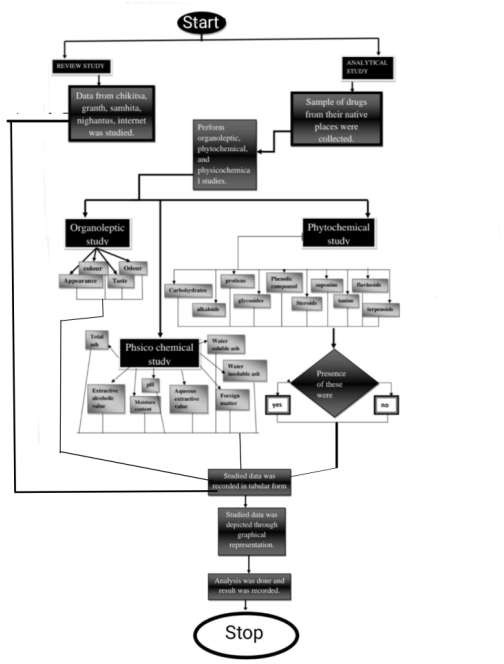
The flowchart briefly depicts the methodology of our research work which was broadly divided into two parts i.e. review study and analytical study. In the analytical study reviewing organoleptic features, physical parameters and phytochemicals of both drugs samples, later study reviews the presence of ten Phytochemicals in different extracts of both the drugs. Physico-chemical study then calculates the value of the respective parameters on the basis of which comparative study between the two drugs is performed.
Results and Discussion
Organoleptic Analysis
On the basis of organoleptic analysis we find not much difference between A. paniculata and S. chirayita; there is difference found only in their color, as organoleptic features of both samples are given below in tabular form (Table 5).
| Characterers | Swertia Chirayita | Andrographis paniculata |
|---|---|---|
| Appearance | Crude Drug | Crude Drug |
| Colour | Yellowish brown | Green |
| Odour | Characteristic | Characteristic |
| Taste | Bitter | Bitter |
Table 5: Organoleptic characteristics of both medicinal herbs under study.
Physicochemical Analysis
- Moisture Content of both the samples was determined and it was found to be least in Kalamegha i.e. 8.70% while highest in sample of Kiratatikta i.e. 9.52%.
- Total ash content was found to be 5.19% in the sample of Kiratatikta and in the sample of Kalamegha is 8.62%. Acid insoluble ash was found to be lower in the sample of Kiratatikta 0.98% than in the sample of Kalamegha 1.72%. Water soluble Ash was also found lower in samples of Kiratatikta 1.24% than in samples of Kalamegha 3.42%.
- It was observed that values of alcohol soluble extract and water soluble extract were higher in samples of Kiratatikta i.e. respectively, 15.15% and 15.98% and found to be least in Kalamegha respectively 10.76% and 13.55% (Table 6).
| Andrographis paniculata | Swertia chirayita | |
|---|---|---|
| Moisture content | Moisture content 8.70% w/w | Moisture content 9.52% w/w |
| pH | 7.97 | 4.64 |
| Alcohol Extractive Value | 10.76% w/w | 15.15% w/w |
| Alcohol Extractive Value | 10.76% w/w | 15.15% w/w |
| Aqueous Extractive Value | 13.55% w/w | 15.98% w/w |
| Foreign matter | 1.34% w/w | 0.95% w/w |
| Total Ash | 8.62% w/w | 5.19% w/w |
| Acid Insoluble Ash | 1.72% w/w | 0.98% w/w |
| Water Soluble Ash | 3.42% w/w | 1.24% w/w |
Table 6: Comparative physico chemical study of Swertia chirayita and Andrographis paniculata.
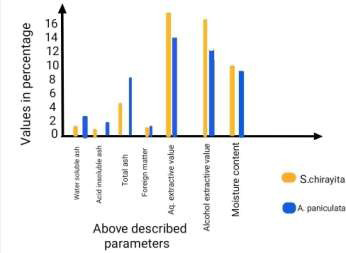
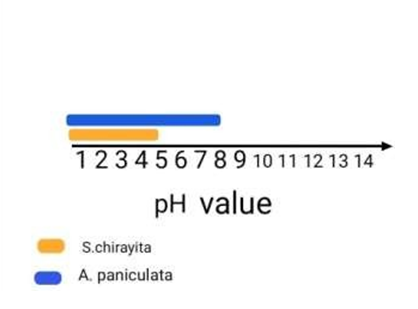
Here the blue bars give the values of A. paniculata and the yellow one show the data of S.chirayita. Here we can clearly see that except for the pH, total ash and acid insoluble ash the other values do not vary much. The difference in pH can be overcome by taking complementary drugs with desirable pH. Overall the study shows that A. paniculata can be a very good substitute for S. chirayita (Figures 2 & 3).
Total ash, water soluble ash, and acid insoluble ash were found higher in Andrographis paniculata in comparison to Swertia chirayita, indicating that the Andrographis paniculata contains more minerals. The presence of polar chemicals in Swertia chirayita indicates its greater alcohol and aqueous extractive values.
Qualitative Phytochemical Analysis
Phytochemical Study: Freshly prepared extracts of both sample drugs were used for different tests to know the availability of different active phytochemicals as follows.
- Carbohydrates: Fehling solution test showed the presence of carbohydrates in aqueous extract but not in alcohol extract and in petroleum ether extract.
- Alkaloid: In both samples, Mayer reagent test showed the presence of alkaloids in all extract i.e. aqueous, alcoholic and petroleum ether.
- Amino acids: Biuret Test showed the presence of amino acids in aqueous extract but not in Alcoholic and Petroleum ether extract of Kiratatikta and Kalamegha.
- Proteins: In both the samples, Biuret Test showed the presence of proteins in aqueous extract but not in Alcoholic extract and petroleum ether extract.
- Saponin: In both the samples, Foam test showed the presence of saponins in Aqueous extract and in alcoholic extract but not in petroleum ether extract.
- Glycosides: In both the sample, Borntragor’s Test showed presence of glycosides in the aqueous extract but not in Alcoholic and petroleum ether extracts.
- Phenolic Compounds: In sample of Kalamegha, Phenolic Test showed presence of phenolic compounds in aqueous and alcohol extracts but not in petroleum ether extracts while in sample of Kiratatikta, it showed presence of phenolic compounds in alcoholic extract but absent in petroleum ether and aqueous extract.
- Test for Steroids: In both the samples, Salkowaski test showed the presence of steroids in all extracts i.e. in aqueous, petroleum ether and in alcoholic extract.
- Test for Tannins: In Kalamegha sample, FeCl3 test showed presence of Tannins in aqueous extract and in alcoholic extract but absent in petroleum ether extract while in sample of Kiratatikta, it showed presence of Tannins in alcoholic extract but absent in aqueous extract and petroleum ether extract.
- Test for Starch: In both the samples, Iodine test showed presence of starch in the aqueous extract but absent in alcoholic and petroleum ether extracts.
- Test for Flavonoid: In both the samples, presence of flavonoids in all extracts i.e. aqueous extract, petroleum ether extract and alcoholic extract.
- Test for Terpenoids: In both the samples, Terpenoids test showed the presence of Terpenoids in alcoholic extract and petroleum ether extract but absent in Aqueous extract [30] (Table 7) (Figure 4).
| Phytochemical | Andrographis paniculata | Swertia chirayita | ||||
|---|---|---|---|---|---|---|
| Aqueous | Alcohol | Petrol. ether | Aqueous | Alcohol | Petrol. ether | |
| Carbohydrate (C) | +ve | +ve | +ve | +ve | +ve | +ve |
| Alkaloids (Al) | +ve | +ve | -ve | +ve | +ve | +ve |
| Proteins (P) | +ve | -ve | -ve | +ve | -ve | -ve |
| Saponin (Sa) | +ve | +ve | -ve | +ve | +ve | -ve |
| Glycosides (Gl) | +ve | -ve | -ve | +ve | -ve | -ve |
| Phenolic compounds (Ph) | +ve | +ve | -ve | -ve | +ve | -ve |
| Steroids (St) | +ve | +ve | +ve | +ve | +ve | +ve |
| Tannin (Ta) | +ve | +ve | -ve | +ve | +ve | -ve |
| Flavonoid (Fl) | +ve | +ve | +ve | +ve | +ve | +ve |
| Terpenoids (Te) | -ve | +ve | +ve | -ve | +ve | +ve |
Table 7: Comparative study of phytochemicals present in different extracts (Aqueous, Alcohol, Petroleum ether) of Swertia chirayi
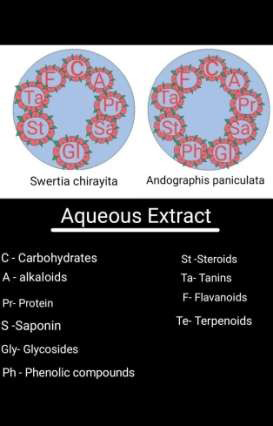
The above figure represents the comparison of respective phytochemicals present in the Aqueous medium for A. paniculata and S. chirayita. All the major phytochemicals are common between A. paniculata and S. chirayita except for the absence of phenolic compounds in S. chirayita and absence of terpenoids in both the plants.
Out of the total ten phytochemicals studied, nine (carbohydrates, alkaloids, proteins, saponins, glycosides, phenolic compounds, steroids, tannins, and flavonoids) were found in Andrographis paniculata (aqueous extract) and eight (carbohydrates, alkaloids, proteins, saponins, glycosides, phenolic compounds, steroids, tannins, and flavonoids) in Swertia chirayita (aqueous extract) that showed the possibility of broad spectrum activities of Andrographis paniculata as compared with Swertia chirayita. Phytochemicals studied in Alcoholic extracts of the comparative plants show the absence of two major phytochemicals i.e. proteins and glycosides. Again it shows the similarities between A.paniculata and S.chirayita (Figure 5).
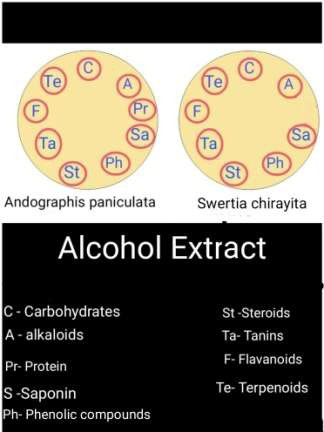
The last figure gives the data of phytochemicals present in the petroleum ether extracts of A. paniculata and S. chirayita. The least number of phytochemicals are present in the petrol extracts of the respective plants in comparison to their alcoholic and aqueous extracts. However again the phytochemicals present are similar for both the studied plants except for the absence of alkaloids in A. paniculata (Figure 6).
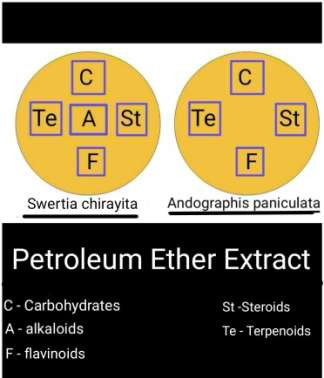
Carbohydrates, steroids, flavonoids, and terpenoids were found in petroleum ether extracts of Andrographis paniculata and Swertia chirayita. Furthermore, alkaloids were exclusively found in the Swertia chirayita extract. Proteins, saponins, glycosides, phenolic compounds, and tannins, on the other hand, were not discovered in extracts.
Discussion
S. chirayta is an important drug described in Charak Samhita with the names Kiratatikta and Bhunimb. It is indicated in Jwar chikitsa, Raktapitta chikitsa Atisar chikitsam and Grahni roga [33] and indicated it in skin disorders. Kalmegh is a popular drug but not described in Charak and Sushruta samhita. Kalmegh is described by Vaidya Bapalal in his book Adarsh Nighantu and by Acharya Priyavrat Sharma in his texts, Priya Nighantu [34] and Dravyaguna Vigyan. Both are renowned personalities of Ayurvedic pharmacology & Materia medica. On reviewing the Ayurvedic literature it is seen that both drugs have the same Ras panchak or properties and are mostly indicated in similar diseases such as liver disorder, fever, diabetes, skin disorders etc.
On the basis of physicochemical analysis we find differences between A. paniculata and S. chirayita; moisture content is lesser in A. paniculata than S. chirayita. Moisture content of drugs should be at a minimal level to discourage the growth of bacteria, yeast or fungi during storage. Thus, life expectancy is more of A. paniculata. The higher ash value is suggestive of heat-stable or inorganic constituents. Total ash, water soluble ash, and acid insoluble ash were found higher in Andrographis paniculata in comparison to Swertia chirayita, indicating that the Andrographis paniculata contains more minerals. Estimation of extractive values determines the amount of the active constituents in a given amount of plant material when extracted with a particular solvent. The presence of polar chemicals in Swertia chirayita indicates its greater alcohol and aqueous extractive values [30].
On the basis of qualitative phytochemical analysis of Kiratatikta and Kalamegha, it has been observed that maximum phytochemicals are similar like Carbohydrate, Amino acids, Protein, Alkaloids, Glycosides. Tannin and Phenolic compounds are present in both aqueous and alcoholic extract of A. paniculata while present only in alcoholic extract of Swertia chirayita. ‘Bahuta Tatra Yogyatvam Anek Vidh Kalpna , Sampachiiti Chatushkoayam Dravayanam Guna Uchayt_e.’ Acharya Charak, a renowned physician , states the quality of a good drug, He says that a drug must have four qualities i.e. first is _Bahuta means abundance, drugs or sources of drugs should be in abundance so that it be easily available. Second is Yogyatvam means efficiency. A drug must be able to treat the disease without any side effects. Third is Anekvidh Kalpna means different formulations. A drug can be used through different formulations such as tablets, syrup etc. Fourth is Sampatt i.e. quality wise good, A drug should be of good quality, it never be used after it’s expiry date [35].
Kiratatikta i.e. Swertia chirayita is not only very costly but also an endangered species making its availability harder for common use. On the other hand Kalmegh i.e. A. paniculata not only is cheap and cost effective as in the Indian market the price of Kalmegha is Rs.120/- per kg as compared to Chirayta, which is Rs. 900/- per kg .It can be grown anywhere easily just like a weed making it much more feasible. If A.
paniculata is used as a substitute for Swertia chirayita then it will be beneficial for both pharmaceuticals as well as the environment. As we know S. chirayita is an endangered species and is available in a narrow zone while A. paniculata is easily available in abundant quantities, thus authentic use of A. paniculata will help to check the exploitation of S. chirayita. Additionally due to its abundance it is cheap so will be economically beneficial for pharmaceuticals and society. Abundance is one of the qualities of a drug among the four i.e. abundance, affectivity, various pharmaceutical forms and excellence of composition as mentioned in Charak samhita, renowned text of Ayurveda.
Nagarjan M, et al. [36] also gave significant emphasis on inclusion of some new substitute drugs as Abhava pratinidhi dravya (substitute drug) by understanding the concept of Dravyagun_a to better explore the logic behind selection of substitute drugs. This will be helpful in identifying new substitutes, especially for those drugs that are unavailable due to their regional, seasonal, and endangered status. On the basis of similarities in therapeutic actions, the _Andrographis paniculata might be considered as a substitute of the S_wertia_ chirayita [37].
Recommendations
In present work, a comparative study has been done to evaluate the similarity and dissimilarity between Swertia chirayita (Kiratatikta) and Andrographis paniculata (Kalmegh). This study compares both the drugs on the basis of their phytochemicals, pharmacological actions, ethno medicinal uses, and therapeutically uses as per Ayurveda. This study provides a detailed knowledge of both herbs in the light of Ayurvedic perspective as well as modern research. The authentication and qualitative phytochemical profiles of both drugs were fairly established in this study. On the basis of their similarities in their pharmacological actions, therapeutic actions, and ethno medicinal uses, Kalmegh might be considered as a substitute for Kiratikta, which is not only economically beneficial but can also protect the reckless exploitation of Kiratatikta, which is on verge of extinction.
Future Research Directions and Limitations
Future Research Directions:
- There is a need for holistic conservation of both the medicinal plants through the organic cultivation or micro propagation methods.
- The molecular pathways, cellular signaling, and genomic interactions of specific active constituents may be worked out through the application of cheminformatics, proteogenomic, and network pharmacological analysis.
- The synthetic analogs of these active chemical constituents may be further explored for drug-like properties.
- To establish the efficacy of both S. chirayita and A. paniculata, comparative clinical trials must be performed.
Limitations
This work did not analyze quantitative data of phytochemicals. In all probability it’s pivotal to perform the comparative critical study of S. chirayita and A. paniculata in order to prove their vitality. Comprehensive comparative studies may also be conducted with other species of Acanthaceae and Gentianaceae families.
Novelties
- Critical Comparative study of two herbs having almost similar properties.
- The manuscript discusses strengths & limitations for both the herbs.
- The presented work discusses why A. paniculata should be used as a substitute for S. chirayita.
- This study has a more practical approach and application which can benefit a common person also.
- Ethically, the manuscript motivates audiences to reduce consumption of Kiratatikta and thus prolonging the extinction.
Conclusion
Properties of Swertia chirayita and Andrographis paniculataare are almost similar but there are many dis- similarities too. Swertia chirayita is more acidic and has more aqueous and alcoholic solubility as compared to Andrographis paniculata. In terms of ash value Andrographis paniculata is having better results. It may be concluded that we can achieve more bioavailability of the drug with Swertia chirayita through aqueous and alcoholic extract as compared to Andrographic paniculata. Andrographis paniculata with rich ash value confirms its rich mineral content. Swertia chirayita also has the advantage of having alkaloids in petroleum ether extract.
The phytochemical profiles of both drugs have been fairly established in this study, and it was found that A. paniculata had a higher amount of phytochemicals and higher ash values (total ash, water soluble ash, and acid insoluble ash), indicating the presence of more mineral content than S. chirayita. The study showed a number of similarities between both herbs in regarding of their pharmacological activities and therapeutic uses. As a result, it is possible that Andrographis paniculata could be utilized as a substitute for Swertia chirayita.
Scope of the Study
The study shows the uprightness of indigenous knowledge of medicines. It also encourages us to dwell deeper in the ocean of natural herbs and traditional medicinal systems. This study will provide us a better replacement for Chirayta as it is an endangered herb. Also it opens up the gates for the discovery and development of more such drugs which need to be authenticated as substitutes for the traditional drugs which now are on the verge of extinction. Ethically it will lead to reduced consumption of Kiratatikta by us humans, prolonging its extinction hopefully for forever.
Role of Authors
Dr. Bhavna Singh acted as team leader and coordinated among all co-authors. She prepared the topic introduction and background study; also contributed to experiments. Rohit Rastogi prepared the structure of the manuscript and ensured the quality of the content along with all co-authors. Dr. Lalit Raj Singh and Dr. Ankur Singhal did the experimental Analysis and along with concluding remarks. Ms. Richa Singh has compiled the literature survey along with graphical Representations.
Ethical Certification
The experiments don’t include any human related experiments and no ethical violation has been made. Though the authors performed lab experiments with a comparative analytical study of two herbs i.e. S. chirayita and Andrographis paniculata, it doesn’t violate any health related measures.
References
-
Vaidya BL (2018) Nighantu Adarsh. Chaukhambha Bharati Academy, Varanasi, India, Vol-1, pp: 229.
-
Hossain S, Urbi Z, Sule A, Rahman K (2014) Andrographis paniculata (Burm. f.)Wall.ex Nees: A Review of Ethnobotany, Phytochemistry, and Pharmacology. ScientificWorldJournal 2014:274905
-
Sastri JLN (2012) Dravya Guna Vijnana. Chaukhambha Orientalia, Varanasi, India, Vol. 2, pp: 355.
-
Sehgal H, Singh B, Thapliyal S (2018) Role of Kalmegha (Andrographis paniculata (Burm. F.) Wall. Ex Nees) in treating Vatarakta (Gout).Journal of Drug Delivery and Therapeutics 8(6): 98-101.
-
Schimmer O, Mauthner H (1996) Polymethoxylated xanthones from the herb of Centaurium erythraea with strong antimutagenic properties in Salmonella typhimurium. Planta medica 62(6): 561-564.
-
Banerjee S, Kar A, Pulok K, Mukherjee A, Haldar P, et al. (2021) Immuno protective potential of Ayurvedic herb Kalmegh (Andrographis paniculata) against respiratory viral infections – LC–MS/MS and network pharmacology analysis, Phytochemical Analysis 32(4): 629-639.
-
Bentley R, Trimen H (1880) Medicinal Plants. London. In: Bentley R, Trimen H (Eds.), J and A Churchill, London.
-
Hooker JD (1885) Flora of British India.In: Ashford Kent (Ed.), 1st (Edn.), L. Reeve & Company Limited Ashford, Kent Vol. IV, UK.
-
Perera D (2021) Addressing the socio-economic impact of COVID-19 on communities. News and Press Release, UNV Communications, Asia and the Pacific.
-
Macpherson C (2021) What is Global Health? The 6 Biggest Issues You Need to Know About.
-
Broussard B (2018) 3 Ways to tackle the Global Health Crisis. Retrieved 9 Oct.
-
Mandel IS (2009) Understanding Differences Between Holistic, Alternative, and Complementary Medicine Inquiries 1(10): 1.
-
Singh LR, Singh K (2020) Holistic Therapeutic Approaches for Curing Novel Coronavirus: An Overview. Advances in Plant Sciences 33(I-II): 175-179.
-
Britannica T (2019) Ayurveda. Encyclopedia Britannica.
-
Chaudhari A, Singh B (2016) A Critical Review of Karvira (Nerium indicum Mill). Int J Ayurveda & Med Sc 1(2): 51- 55.
-
Chopra RN (1980) Glossary of Indian medicinal plants. Council for Scientific and Industrial Research, New Delhi, India, pp: 18.
-
Alagesaboopathi C, Diwakaran P, Ramachandran VS (1999) Andrographis paniculata Nees in tribal medicine of Tamil Nadu. Anc sci life 19(1-2):28.
-
Okhuarobo A, Falodun JE, Erharuyi O, Imieje V, Falodun A, et al. (2014) Harnessing the medicinal properties of Andrographis paniculata for diseases and beyond: a review of its phytochemistry and pharmacology. Asian Pacific Journal of Tropical Disease 4(3): 213-222.
-
Singh B, Sehgal H (2018) A Scientific Study of Kalmegh I.E. Andrographis Paniculata (Burm.f.)Wall. Ex. Nees. International Journal of Recent Scientific Research 9(2): 24409-24412.
-
Sharma PV (2013) Dravya Guna Vijnana. Chaukhambha Bharati Academy, Varanasi, India, Vol. 2, pp: 691.
-
Dinda B (2019) Pharmacology and applications of naturally occurring iridoids. Switzerland, Springer.
-
Joshi P, Dhawan V (2005) Swertia chirayita-an overview. Current science 89: 635-640.
-
Kumar V, Van Staden J (2016) A review of Swertia chirayita (Gentianaceae) as a traditional medicinal plant. Frontiers in pharmacology.
-
Nyein LL, Ismail ISB, Rahman NAABNA (2013) Analysis of Different Fractions of Swertia Chirata Against Gram Positive and Gram Negative Bacteria. The Open Conference Proceedings Journal 4(Suppl-2, M8): 29-32.
-
Aleem A, Kabir H (2018) Review on Swertia chirata as Traditional Uses to its Phytochemistry and Pharmacological Activity. JDDT 8(5-s): 73-78.
-
Singh B, Sehgal H (2018) A Scientific Study of Kalmegh I.E. Andrographis Paniculata (Burm.f.)Wall. Ex. Nees. International Journal of Recent Scientific Research 9(2): 24409-24412.
-
Kulyal P, Tiwari UK, Shukla A, Gaur AK (2010) Chemical constituents isolated from Andrographis paniculata. Indian Journal of Chemistry 49(B): 356-59.
-
Chaturvedi G, Tomar G, Tiwari S, Singh K (1983) Clinical Studies on Kalmegh (Andrographis paniculata) in Infective Hepatitis. Anc Sci Life 2(4): 208-215.
-
The Ayurvedic Pharmacopoeia of India (2001). Part-I, 1st (Edn.), Controller of Publication, Ministry of Health and Family Welfare, Government of India, New Delhi, India, Vol-1, pp: 213-214.
-
The Ayurvedic Pharmacopoeia of India (2008). Part-I, 1st (Edn.), Controller of Publication, Ministry of Health and Family Welfare, Government of India, New Delhi, India, Vol-VIII.
-
Pandey GS (2013) Bhavaprakasha Nighantu Bhavamishra-Bhavaprakash Nighantu, commentary by Prof. K.C. Chunekar. Chaukhamba Bharati Prakashan, Varanasi, India, Shloka 153-156: pp.70.
-
Jayakumar T, Hsieh CY, Lee JJ, Sheu JR (2013) Experimental and Clinical Pharmacology of Andrographis paniculata and Its Major Bioactive Phytoconstituent Andrographolide. Evidence-Based Complementary and Alternative Medicine.
-
Sharma PV (2014) Charak Samhita. Chaukhamba, orientalia, Varanasi, India, Sutrasthan, chapter No. 2/13, 9/7, Vol.I, pp: 63-135.
-
Shastri A (2019) Acharya Sushruta, Part1. Chaukhamba Samsrita Samsthan, Varanasi, India, 38/6.
-
Sharma PV (2004) Priya Nighantu, Shatpushpadi Varga. Chaukhambha Surbharti Prakashan, Varanasi, India, Shloka, pp: 135-136.
-
Nagarajan M, Kuruvilla GR, Kumar KS, Venkatasubramanian P (2015) Abhava pratinidhi dravya: A comparative phytochemistry of Ativisha, Musta and related species. J Ayurveda Integr Med 6(1): 53-63.
-
Girach RD, Aminuddin, Khan SA (1992) Andrographis paniculata-A Possible Substitute for Swertia chirata in Southeastern India. International journal of pharmacognosy 32(1): 95-97. **Supplementary** **Key Terms and Definitions** • **Swertia chirata**: Swertia chirata is a bitter tonic, carminative, laxative, antipyretic, febrifuge, anti-periodic, anti-inflammatory, stomachic, and anthelmintic. It is used in treating piles, skin diseases, ulcers, and diabetes. • **Kiratikta**: Sanskrit name for Swertia Chirata as used in Ayurveda classics. • **Andrographis paniculata**: Andrographis paniculata is used in traditional medicine to treat infectious diseases and fevers. Andrographis exhibits antibacterial, antioxidant, anti- inflammatory, anticancer, and immunostimulating properties. • **Kalmegha**: Kalmegh is a plant which is also known as “Green Chiretta” and the “King of Bitters”. It is used for various medicinal purposes and is bitter in taste. It is mainly used for liver problems as it protects the liver against damage caused by free radicals due to its antioxidant and anti-inflammatory activity. • **Bhunimba**: Bhunimba is a bitter-tasting herb that is popular amongst practitioners of Ayurveda, Traditional Chinese Medicine, and western herbology. Indian herbalists often refer to it as the ‘King of Bitter herbs. It serves as a natural supplement to support the immune system and removal of toxins from the blood. • **Ayurveda**: Ayurvedic medicine is one of the world’s oldest holistic healing systems. It was developed more than 3,000 years ago in India. It’s based on the belief that health and wellness depend on a delicate balance between the mind, body, and spirit. Its main goal is to promote good health, not fight disease. But treatments may be geared toward specific health problems. **Additional Readings** • CURRENT UPDATE OF AYURVEDIC DRUGS USED IN FEVER: A CRITICAL REVIEW https://www.researchgate. net/publication/304908076_CURRENT_UPDATE_OF_ AYURVEDIC_DRUG S_USED_IN_FEVER_A_CRITICAL_ REVIEW. • Traditional Herbal Remedies for Primary Health Care https://apps.who.int/iris/bitstream/ handle/10665/206024/B4572.pdf?sequence=1. • Validation and quantification of major biomarkers in „Mahasudarshan Churna‟- an ayurvedic polyherbal formulation through high-performance thin-layer chromatography https://www.ncbi.nlm.nih.gov/pmc/ articles/PMC7291524/. • Introduction and Importance of Medicinal Plants and Herbs • http://nhp.gov.in/introduction-and-importance-of- medicinal-plants-and-herbs_mtl. • Pharmacognostical & TLC Fingerprinting of Andrographis Paniculata (Kalmegh). • h t t p s : / / w w w . r e s e a r c h g a t e . n e t / publication/340526769_Pharmacognostical_TLC_ Fingerprinting_of_Andrograp his_Paniculata_Kalmegh. Supported Images [INLINE_FIGURE:14:0] Andrographis paniculata. Sample of Andrographis paniculata as raw medicine. [INLINE_FIGURE:14:1] Field survey and sample collection of A.paniculata. [INLINE_FIGURE:14:2] Swertia chirayita. [INLINE_FIGURE:14:3] Swertia chirata as raw medicinal herb. [INLINE_FIGURE:15:0] Field survey and sample collection of Swertia chirayita.
- Management of Ear Keloid with Ksharsutra: A Case Study
- Yoga and Global Sustainability: A Holistic Path to One Earth, One Health
- Autoimmune Diseases in Ayurveda: A Narrative Review with Classical and Modern Perspectives
- Management of Cluster Headache Associated with Pituitary Apophysitis by CERT (Chakrasiddh Energy Release Technique): A Case Report on Energy Rebalancing
- Zygophyllum Geslini Coss : Biochemicals and Antioxidant Activity
- Observations of a Beginner Vaidya