
Awareness of Sudanese Married Women among the Use of Hormonal Contraceptive
Objective: To determine the awareness of Sudanese women about the use of hormonal contraceptive, knowledge about the different type of hormonal contraception, common side effects caused by a hormonal contraceptive, to assess attitude about the use of hormonal contraceptive and to find out the knowledge of women about emergency Contraceptives. Methodology: Cross-sectional study conducted in-depth interviews with women consulting at obstetrics and geriatric hospital in Omdurman military hospital. A total of 335 women participated in the study. Results: Among the 335 women included in the study (335 women) were 58.8% of them were housewives, (29.2%) women were employers, moreover, Medical field, their number (11.4%) women and only (0.6%) women have not answered. The educational level of the participants as In level, University was (54.9%) women, A secondary level of education, were (31.9%) woman, Basic education level, their number were (11.1%) women, Uneducated women, were (1.8%) women, and there were only one woman declined to answer. (65.4%) from the women in the study had birth less than 4 children, (29.6%) women had birth more than 4children, while there were (5%) women hadn’t birthed. 82.7% from the women in the study were using contraceptives (60.6% were used contraceptive pills, 22.1% were used transdermal patches or injectable contraceptive) while 17.3% not used contraceptives. Conclusion: awareness of Sudanese women about the use of hormonal contraceptive was good, the most side effects was hair loss, change in mood and weight changes, the attitude to use hormonal contraceptive was most related to refuse the husbands to use it and personal beliefs, the knowledge of emergency contraceptive was low in women. Most of the women use contraceptive for family planning reasons. Half of the women were found to be lack of knowledge about more advantages of using contraceptive other than family planning.
Introduction
Family planning is voluntary planning and action taken by individuals to prevent, delay or to achieve a pregnancy. Family planning services include counseling and education, preconception care, screening and laboratory tests and family planning methods. Family planning benefits individuals and countries in many ways. Among the most important ways are: Saving women’s lives, saving children’s lives and offering women more choices.
Contraception is the prevention of pregnancy by inhibiting sperm from reaching a mature ovum or by preventing a fertilized ovum from implanting in the endometrium. Also, contraceptives are pharmacologic agents or devices used to prevent pregnancy [1]. There are two main types of oral contraceptives Combinations of estrogen with a progestogen (the combined pill) and Progestogen alone (the progestogen- only pill). The combined oral contraceptive pill is extremely effective, at least in the absence of intercurrent illness and treatment with potentially interacting drugs.
Common adverse effects of combined pills: Weight gain, owing to fluid retention or an anabolic effect, or both, mild nausea, flushing, dizziness, depression or irritability, Skin changes (e.g. acne and/or an increase in pigmentation), Amenorrhea of variable duration on cessation of taking the pill [2].
The transdermal patch is an alternative to combination oral contraceptive pills is a transdermal contraceptive patch containing Ethinyl estradiol and the progestin norelgestromin. One contraceptive patch is applied each week for 3 weeks to the abdomen, upper torso, or buttock. Week 4 is patch-free, and withdrawal bleeding occurs. The transdermal patch has efficacy comparable to that of the oral contraceptives, but it is less effective in women weighing greater than 90 kilograms. Contraindications and adverse effects for the patch are similar to those of oral contraceptives [2]. Injectable birth control is the method involves the injection of a progestin, DMPA (depot medroxyprogesterone acetate), given in the arm or buttocks once every 3 months. This method of birth control can cause a temporary loss of bone density, particularly in adolescents. However, this bone loss is generally regained after discontinuing use of DMPA [3].
Vaginal rings the ring is thin, flexible, and approximately 2 inches in diameter. It delivers a combination of synthetic estrogen (Ethinyl estradiol) and a progestin. The ring is inserted into the vagina, where it continually releases hormones for 3 weeks. The woman removes it for the fourth week and reinserts a new ring 7 days later [4]. Risks for this method of contraception are similar to those for the combined oral contraceptive pills, and a vaginal ring is not recommended for any woman with a history of blot clots, stroke, or heart attack, or with certain types of cancer [4, 5, 6, 7, 8].
Implantable Rods is each rod is matchstick-sized, flexible, and plastic. A physician surgically inserts the rod under the skin of the woman’s upper arm. The rods release progestin and can remain implanted for up to 5 years [9].
Emergency Contraceptive Pills (ECPs) is ECPs are hormonal pills, taken either as a single dose or two doses 12 hours apart, that are intended for use in the event of unprotected intercourse. If taken before ovulation, the pills can delay or inhibit ovulation for at least 5 days to allow the sperm to become inactive. They also cause thickening of cervical mucus and may interfere with sperm function. ECPs should be taken as soon as possible after semen exposure and should not be used as a regular contraceptive method [10].
There are many studies was established in many areas around the world to obtain the awareness of women about the use of hormonal contraceptive. A study was carried out on the use of contraceptives among women of childbearing age at Alahfad Center for Family Health, Khartoum, Sudan. The objectives were to measure the proportion of using contraceptives, reasons behind not using contraceptives, the overall effectiveness of contraceptives and satisfaction of women of childbearing age with the use of contraceptives. The study included 150 women of childbearing age attending Alahfad Centre for Family Health during a month. Required data were collected from participated women by questionnaire. The proportion of contraceptives using among women of childbearing age at Alahfad for Family Health was 86.7%. Common reasons behind not using contraceptives among women of childbearing age at Alahfad for Family Health were fear of complications 13(48.2%), lack of conviction 3(11.1%), lack of information 3(11.1%) and other health reasons 8(29.6%). The overall effectiveness of contraceptives used by women of childbearing age was 85.4%. About 82.1% of women of childbearing age who were using contraceptives were satisfied concluded that, although the percentage of contraceptives using was relatively high, further information about contraceptives was needed to increase the proportion rate.
Women in Sudan suffer from poor and lack in education about the use of contraceptive, the correct selection of contraceptive; also the dose cycle of pills. Moreover; they cannot know the next time to be pregnant. Despite a large number of modern contraceptive methods available in the market today, numerous studies have shown insufficient awareness of young women about these forms for birth control. This study aimed to determine the knowledge of Sudanese women among the use of contraceptives as well as the awareness of hormonal emergency contraception among Sudanese female. This study to determine the awareness of Sudanese women about use, types and side effects of Hormonal Contraceptive and to assess attitude about the use of hormonal contraceptive and to find out the knowledge of emergency contraceptive.
Methodology
The study was a cross-sectional study conducted at Omdurman Military hospital in Khartoum state during April 2016 for 335 women selected by simple random for patients in obstetrics and geriatric hospital in Omdurman military hospital. Data were collected by questionnaire (close-ended questions) though depth interviews with women those in age between (15-44) years and analyzed by using SPSS software version 2016.
Results
Demographic Data
The age of women in the study appear to be not effective in their knowledge also we found that the jobs of women didn’t affect the level of knowledge toward contraceptive. The Occupations samples surveyed were (335 women) were 58.8% of them were housewives, (29.2%) women were employers, moreover, Medical field, their number (11.4%) women and only (0.6%) women have not answered. The educational level of the participants as In level, University was (54.9%) women, A secondary level of education, were (31.9%) woman, Basic education level, their number were (11.1%) women, Uneducated women, were (1.8%) women, and there were only one woman declined to answer (65.4%) from the women in the study had birth less than 4 children, (29.6%) women had birth more than 4children, while there were (5%) women hadn’t birthed.
Awareness of Women
We found that the awareness of women is good in study, we divided the awareness questions to (11) questions and by that, we determined the awareness of women by the answering the questions (11-Excellent, 10-8 good, 6- low) as presented in Table 1.
| Awareness | Total | ||
|---|---|---|---|
| Excellent | Good | Low | |
| 95 | 178 | 62 | 335 |
| 28% | 53% | 19% | 100% |
Table 1: Represent the awareness of women in the study.
82.7% from the women in the study were using contraceptives (60.6% were used contraceptive pills, 22.1% were used transdermal patches or injectable contraceptive) while 17.3% not used contraceptives.
The reasons for not using contraceptives by 17.3%, were: 48.3% from them their husbands refused to them to use contraceptives, 25.9% had a Personal belief, 17.3% had medical causes contraindicate the use of contraceptives and 8.5% had a religious cause for not using contraceptives.
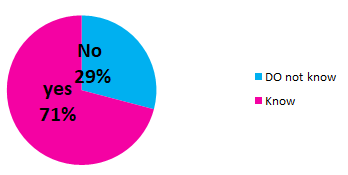
From the women using pills contraceptive which was 60.6% (203), there were 82.3% from them could distinguish the different type of contraceptive, while 17.7% (36) of them hadn’t the ability to distinguish. 71 % of them know what had to do if they forgot to take a contraceptive, while 29% of them hadn’t known what they will do if they forget as presented in Figure 2.
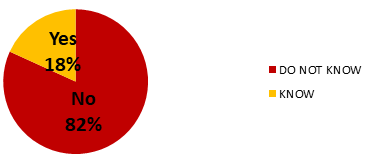
Only 18% from the women taking contraceptives to know what to do if they forgot taking 2 pills or more while the others 82% didn’t know what to do if they forgetting to take 2 pills or more as presented in Figure 3.
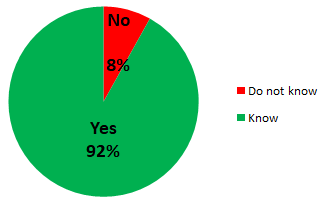
From the women in the study were used transdermal patches or injectable contraceptive which were 22.1% (74), the majority of them (92 %) know when to use them from days of the menstrual cycle, while there were 8 % (6) do not know as presented in Figure 4.
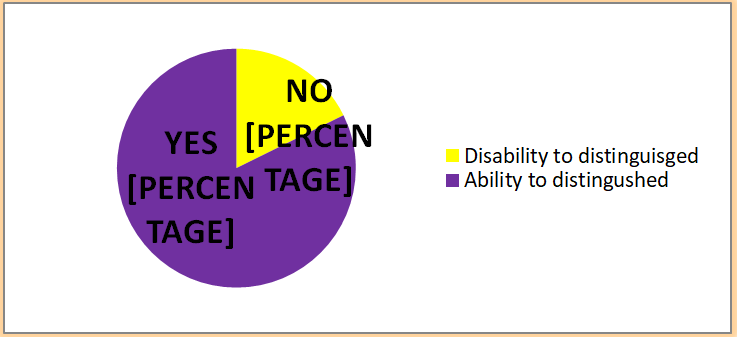
In the area of knowledge of presence other types of pills contraceptive, we found that there were 82% off (203) women who use pills knows there are other types of contraceptive, while there were 18% of them don’t know the other types as presented in Figure 1.
From women who use contraceptive either pills or transdermal and injectable 82.7% (277), there was only 34.3% (95) of them know when the next pregnancy occurs after they stopped the contraceptive, but there were 31% (86) don’t know, and 34.7% (96) have no answer.
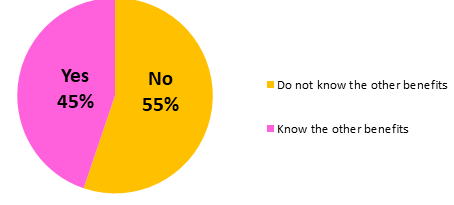
In the knowledge of other benefits of contraceptive, we found there were 55 % of women know other benefits of contraceptive, while there were 45 % didn’t know from the women using contraceptives as presented in Figure 5.
Side Effects
In the area of side effects occurring in 80.1% from the women in the study used contraceptives had disturbing symptoms while 19.9% didn’t have disturbing symptoms.
The disturbing symptoms occurrence varies from women to women and can be either multiple in their occurrence or one of them can occur for the women in the study, they included the followings symptoms (Disturbing symptoms).
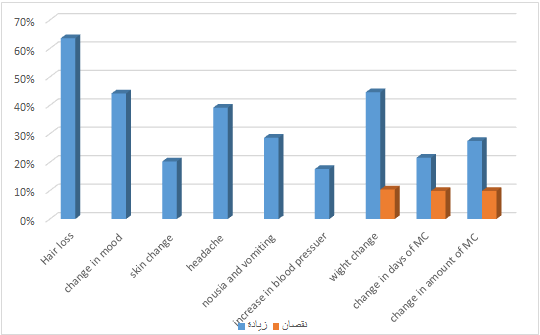
50.9% (141) from the woman in the study taking contraceptives stated they had hair loss, 53.4% (98) had changed in their mood, 31.4% (87) had to get a headache, 23.1% (64) had to get nausea and vomiting, 14.1% (39) get increased in their blood pressure and 7.2% (20) women had skin change.
44% get Change in the weight either increasing in their weight (35.7%) while 8.3% get decreasing in their weight.
25.3% from the women taking contraceptives stated that they get a change in the number of days of the menstrual cycle, 17.3% get increased in the number of days of the menstrual cycle, while the 8% from the women get decreased in the number of days of the menstrual cycle.
30% from the women taking contraceptives get change in the amount of menstrual cycle, 22% of them there were increased in the amount of menstrual cycle, while the 8% from the women happened to them a decrease in the amount of menstrual cycle as presented in Figure 6.
34.3% (95) from the women using contraceptives change the type of it, 62.8% didn’t change the type of contraceptives while 2.9% didn’t respond to this area as presented in Figure 7.
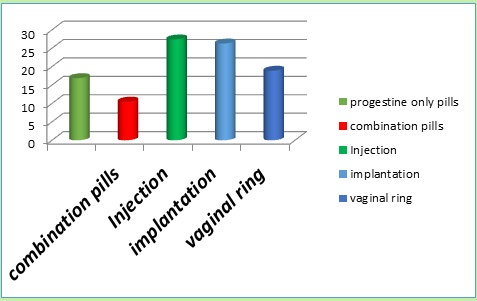
The women changed the type of contraceptives stated that they changed it to: 27.4% from them changed it to injection type, 26.3% changed it to patches, 18.9% changed to vaginal rings, 16.8% changed it to progestin-only pills and 10.6% change the type of contraceptive to combination pills. 53.8% from the women used contraceptives get pregnant immediately after they were used contraceptives, 43.7% didn’t have pregnant after they were used contraceptives while 2.5% declined to answer.
The Attitude about the Use of the Contraceptives
There are many beliefs to be obtained of women that don’t use a contraceptive, 58 women 16.3%, were. From these 58 women 28 women 48.2% were refused by their husbands, 15 women 25% due to Personal belief, were 10 women 17.2% due to medical causes and 5 women 8.6% due to religious causes.
Knowledge about Emergency Contraceptive
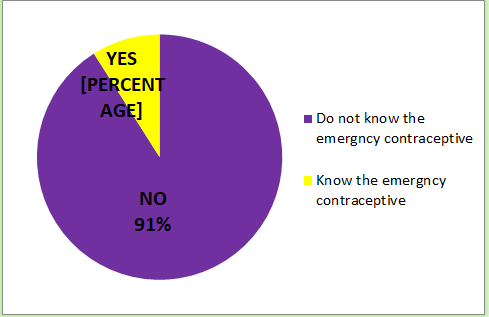
91% of the women using contraceptives didn’t know the emergency contraceptive while only 9% know the emergency contraceptive as presented in Figure 8.
Discussion
The awareness of women in our study was found to be good (53%) of total women most women in the study who use contraceptive were housewives 58.8% with university education level 54.9% also there were employers, we found that the level of education has a significant effect in the knowledge of contraceptive (p-value 0.016). We concern on the awareness of women among the use of hormonal contraceptive. We found that most women in our study had contraceptive from the family planning centre by (41.5%) and others had it from pharmacies and doctors.
In Sudanese culture, there are many beliefs to be obtained of women that don’t use a contraceptive, one of them that showed in our study was refuse of husband to use a contraceptive, and they were 17.3% who don’t use a contraceptive, comparing with the study was done in Alahfad Center for Family Health during the whole month. The sample size was 150 women. They found that (13.3%) of women use contraceptive (n=27).
Some women of study can distinguish the different types of pills by (82%), while there were (18%) don’t know. 82.7% from the women in the study were using contraceptives (60.6% were used contraceptive pills, 22.1% were used transdermal patches or injectable contraceptive) while 17.3% not used contraceptives. On the other hand, we found that there was lack of awareness in Sudanese women about knowledge of emergency contraceptive, this lack was to be about (91%) of women used contraceptive pills, compared with study in California which was established by Diana G Foster and et al. the study was estimated the knowledge of emergency contraception among adult women of reproductive age at risk of pregnancy, which found that there were only (29%) of Californian women identified a method of ECs.
In the area of the correct way of use we found that there was some awareness if some of the women forget one pill (71%) compare with the study was done by Ornstein RM1, Fisher MM. were on Hormonal contraception in adolescents which it found there were many of women did not what they will do if they forget one pill or more.
Conclusion
We concluded that the awareness of Sudanese women about the use of hormonal contraceptive was good, the most side effects was hair loss, change in mood and weight changes, the attitude to use hormonal contraceptive was most related to refuse the husbands to use it and personal beliefs, the knowledge of emergency contraceptive was low in women. Most of the women use contraceptive for family planning reasons. Half of the women were found to be lack of knowledge about more advantages of using contraceptive other than family planning.
Recommendation
To increase the knowledge of women, the education programs must be established about correct use, regular use and the common types of contraceptives to be used. Also, the knowledge programs about emergency contraceptive must be done and work to diffusion this knowledge.
Health care providers should give clear, simple instructions, both written and oral, on missed hormonal contraceptive pills as part of contraceptive counseling.
References
-
Megabiaw B (2012) Awareness and utilization of modern contraceptives among street women in North- West Ethiopia. BMC women’s health 12(31): 71-74.
-
Johns Hopkins (2018) World health organization department of reproductive health and research. United States agency for international development, Family Planning: A Global Handbook for Providers, Family planning provision, pp: 368-380.
-
Rang HP, Dale MM (2012) The reproductive system. In: 7th (Edn.), Rang and dales Pharmacology, Chapter 34, pp:
-
Frini HO, Omer W, Nabag M (2013) The knowledge and determinant factors of contraceptive use among married Sudanese Women, Applied Science Reports 4(3): 247- 225.
-
Siddig OH, Khalid N, Hajar HS, Awad A, Alawad M (2018) Knowledge, Attitude and Practice of Family Planning Among Married Women Attending Primary.
-
(2015) Health Center in Sudan. International Journal of Public Health Research 3(5): 243-247.
-
Rollyn Ornstein, Martin M Fisher (2006) Hormonal contraception in adolescents; Special considerations. pennstate 8: 25-45.
-
David J Hooper (2010) Attitudes, awareness, compliance and preferences among hormonal contraception users: a global, cross-sectional, self-administered, online survey. Clinical drug investigations 30(11): 749-763.
-
Foster DG, Harper CC (2004) Knowledge of emergency contraception among women aged 18 to 44 in California. American journal of obstetrics and gynecology 191(1): 150-156.
-
Black A, Dunn S (2008) Missed Hormonal Contraceptives: New Recommendations. Journal of obstetrics and Gynecology Canada 30(11): 1050-1062.
- Capacity Constraints in Pediatric Inpatient Psychiatric Care: A Cross-Sectional Analysis of Bed Availability and Geographic Access in North Carolina
- Why Healthcare Analytics Still Optimizes the Wrong Things
- Coding, Coverage, and Care: The Infrastructure of Transgender Health Inequities
- The Effect of Classroom Attendance on Academic Achievement of Management and Leadership Discipline of Nursing Students at Instituto Superior Cristal and Universidade de Dili, Timor-Leste, 2024: A Case Study
- The Role of Social Bonds in Facilitating Shared Investments and Resource Allocation: Addressing the “Wrong Pocket Problem” in Public Health and Healthcare
- Social-Cultural Factors Contributing to Antimicrobial Resistance in Livestock Farmers and Community Households in Kayonza District, Rwanda