
Rights against the Adverse Effects of Climate Change! Who & How to Ensure? -Not Only National Governments!
In 2022, the United Nations General Assembly declared that access to a clean, healthy and sustainable environment is a universal human right. The Supreme Court of India has recently in a judgment, a significant step towards acknowledging the impact of climate change on human life, has said that the "right against the adverse effects of climate change" falls under the scope of Articles 14 and 21, which guarantee rights to equality and life and country must take action to mitigate it. Focusing on the mean surface air temperature offers a reliable way to compare the relentless heat affecting both deserts and rainforests. In order of highest mean temperature Mali, Burkina Faso, Senegal, Mauritania, Tuvalu, Djibouti the Gambia, Maldives, Benin, and Palau. Eight states of Rajasthan, Uttar Pradesh, Gujarat, Madhya Pradesh, Telangana, Delhi, Andhra Pradesh in India are sizzling hot right now. Heat stress is a common problem encountered in farming in hot weather, emergency response activities or recovery operations, when workers are required to work in hot environments, and sometimes for extended periods. Any process or job site that is likely to raise the workers deep core temperature {> 100.4 degrees F/ (38°C)} raises the risk of heat stress. Materials & Methods: This article is based on recent reports of heat stroke across & India managing one case each of heat stress, Prickly heat, Heat exhaustion in first week of May 2024 and literature search of management practices across the world. Results: All the cases managed had recovered fully. Among the media reports of heat stroke fatalities, there is a need to authenticate all such deaths by medical teams. Synthesis of the Conclusion: The world must be concerned, not just climate change but other environmental crises such as air and water pollution, noise and light pollution in cities, micro plastics, freshwater availability, biodiversity loss, ocean acidification etc. We need an integrated approach for addressing all the global environmental issues. Ultimately, we should strive for a safe and resilient Earth for that, States must reduce a) carbon emissions levels, b) concrete jungles and increase c) number of trees, and d) number of lakes!.
Introduction
The world is currently off-track to limit global temperature rise to 1.5°C, a threshold that would prevent the worst impacts of the climate crisis. As Earth’s climate warms, Temperature extremes, Ice melting, Sea levels and ocean acidification, difficult Plants and animals’ survival, social effects, the need for additional financial resources will be faced [1]. Incidences of extreme heat and humidity are rising, which will have significant consequences for human health. India is facing an unprecedented heat wave, especially in the south and east. If 2024 continues to follow its expected trajectory, global temperatures will fall out of record territory in the next month or two says a climate scientist [2].
In 2022, the United Nations General Assembly declared that access to a clean, healthy and sustainable environment is a universal human right; in that sense, climate justice is an important aspect of the just transition to a safe and secure future, and where the voices of vulnerable communities and groups are increasingly gaining prominence on the international agenda [3].
The three main causes of heat stress are i) Radiant heat from direct or indirect sunlight (reflection from pavement or kilns) ii) Air temperature hotter than skin and iii) High humidity (makes harder to cool down). In terms of working nature, the more active one is, the more heat S/he will produce, the worker conditioning, advanced age, Poor health / medical conditions like obesity, diabetes, hypertension (the body responding poorly to overheating), inadequate hydration, Excess clothing, or inappropriate personal protective equipment (trap heat & prevent cooling) [4, 5, 6].
Apart from rising natural mean temperatures, operations involving high air temperatures, radiant heat sources, high humidity, direct physical contact with hot objects, or strenuous physical activities have a high potential for inducing heat stress in employees. Outdoor operations conducted in hot weather, such as farming, animals grazing, construction, sewage pits refining, hazardous waste site activities, and emergency response operations, that require workers to wear semi-permeable or impermeable protective clothing like fire fighter, Furnace workers etc. Indoor operations such as foundries, brick-firing and ceramic plants, glass products facilities, rubber products factories, electrical utilities - boiler rooms, bakeries, confectioneries, commercial kitchens, laundries, chemical plants, mining sites, smelters, where problems can occur [5, 7].
The Supreme Court of India has recently in a judgment, a significant step towards acknowledging the impact of climate change on human life, has said that the “right against the adverse effects of climate change” falls under the scope of Articles 14 and 21, which guarantee rights to equality and life and country must take action to mitigate it [8]. The right to health, is impacted due to air pollution, rising mean surface temperatures, droughts, shifts in vector-borne diseases, shortages in food due to crop failure, storms, and flooding.
This article is based on recent reports of heat stroke across globe and managing few cases of heat stress, in second fortnight of April 2024 by the author, literature search of management practices and recommended actions across the world and the need for Individual precautionary measures & efforts workplace and community scale adaptations. The urgent need of the time is for the countries to go to their settings and set (i) increased number of trees, ii) reduce carbon emissions levels, iii) reduce concrete jungles, iv) increased number of lakes etc. to save the environment and improve the climate.
Current Situation
Our current climate situation and its consequences are well explained in our vernacular (Kannada) as “ಹಸಿರ ಸೀರೆ ಉಟ್ಟ ಭೂದೇವಿ ಸೆರಗ ಎಳದದ್ದೇ ಎಳದದ್ದು ನವೆಲ್ಲರು ದುಶಾಶನಂತೆ, ಬಿಸಿಲ ತಾಪ ಹೆಚ್ಛಾಗಿ ಕುದಿಯಲು ನೀರು ಇಲ್ಲವಾಗಿ ಕಣ್ಣೀರು ಇಡುತಿಹೆವು ಮುಗ್ಧರಂತೆ”. English translation means- “Disrobing the green saree (Common Indian women’s dress) (comparing to Dushyasana of Mahabharat epic) resulting in hot weather, water scarcity, we are crying as innocent people”. Basically, blaming out own misdeeds of cutting trees and loosing Tanks for constructions.
April 2024 marked an 11th consecutive month of record global heat, the latest sign that humans are in uncharted climate territory. If 2024 continues to follow its expected trajectory, global temperatures will fall out of record territory in the next month or two, say’s Zeke Hausfather, a climate scientist (Figure 1).
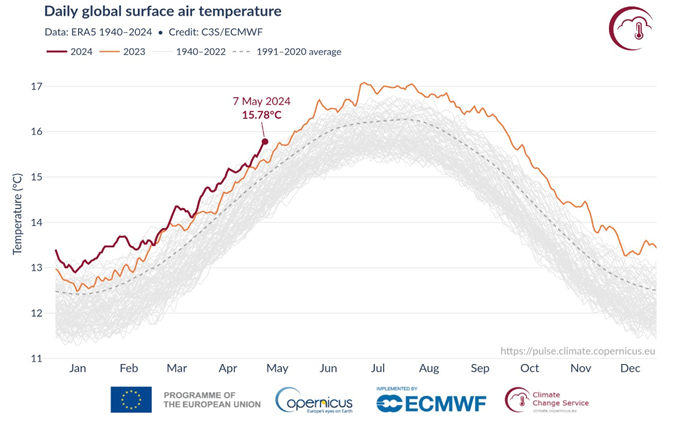
Figure1: Daily global surface air temperature.
Focusing on the mean surface air temperature (averages daily highs and lows over a period) offers a reliable way to compare the relentless heat affecting both deserts and rainforests. In order of highest mean temperature Mali, Burkina Faso, Senegal, Mauritania, Tuvalu, Djibouti the Gambia, Maldives, Benin, and Palau.
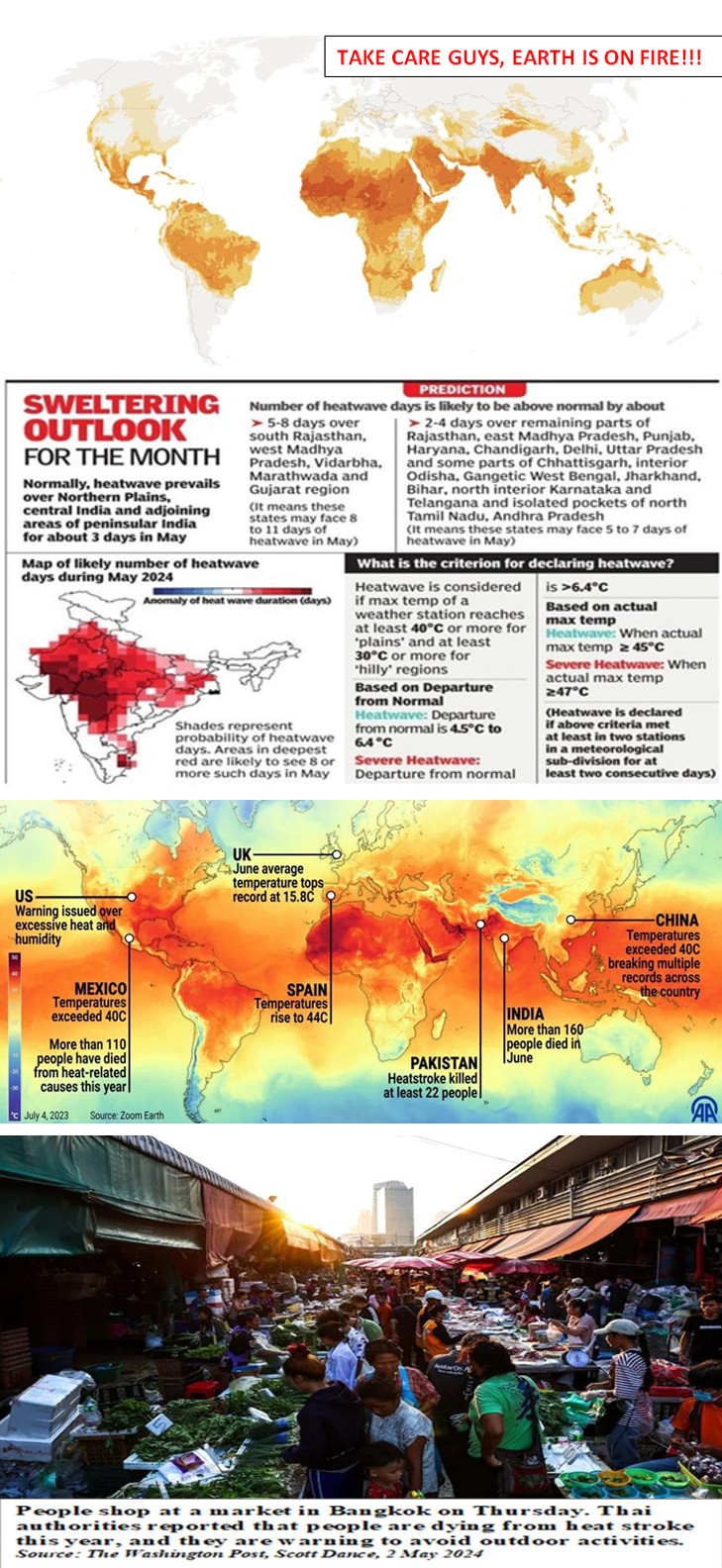
Map.1: Where Saturday’s maximum temperature forecasts were extremely high.
$$ \begin{array}{l} 7 0 ^ {\circ} \mathrm {F} \\ 8 0 ^ {\circ} \mathrm {F} \\ 9 0 ^ {\circ} \mathrm {F} \\ 1 0 0 ^ {\circ} \mathrm {F} \\ 1 1 0 ^ {\circ} \mathrm {F} \\ 1 2 0 ^ {\circ} \mathrm {F} \\ \end{array} $$
Map 02: Heat wave map shows deadly temperature around the world in July.
Figure: 01: Shows the people shop at a market in Bangkok on Thursday.
Back home in India, eight states of Rajasthan, Uttar Pradesh, Gujarat, Madhya Pradesh, Telangana, Delhi, Andhra Pradesh in India are sizzling hot right now. The top 10 hottest districts with a population of 1.5-2 million each in India today with mean temperatures are: Sri Ganganagar (Rajasthan) & Rentachintala (Andhra Pradesh) =50°C, Agra (UP), Vijayawada (AP) & Bilaspur (Chhattisgarh) and Sambalpur (Odisha) =49°C, Jhansi (Uttar Pradesh), Nagpur (Maharashtra), Dalton Ganj (Jharkhand), Tetragram (Odisha), Wardha (Maharashtra), Delhi, = 480, Machilipatnam & Kurnool (AP) =46°C [8] (Chart 1).
Chart-1: Sweltering outlook for the month.
Case Report
Karnataka, home state of the author reported 613 cases of heat-related illness, which included 398 cases of heat rash (prickly heat), 141 heat cramp cases and 74 cases of heat exhaustion from districts of Bagalkot, Chitra Durga and Gulbarga. 500 heatstroke cases, 2 deaths in 5 weeks Last week of April 2024, my neighbour’s a family of 5 (grnadparents-2, parents-2 and about 2 yrs. old girl travelled from Bengaluru (ambient temperature-30-320C) to Kalburgi (Ambient temperature 40-420C) northern district in Karnataka to attend a marriage. While day one of their arrival from deboarding the train morning around 0600 hrs, they were indoors and did feel the heat but managed to settle. The grandfather aged about 68 years felt giddy around 1600hrs and was asked to take rest indoors and missed some celebrations.
Prickly Heat
By the end of the second day the girl who playing with other kids outdoors, had sweated a lot and parents some rashes in arm pits. They applied some talk powder and baby was able to sleep. Third day, the key day of outdoor functions of the marriage the girl’s rash increased and formed blotches over neck, chest, shoulders, and forehead (Figures 2&3).


They returned to Bengaluru on the 5th day and the prickly heat fully subsided withing in next 2 days with no interventions.
Heat Exhaustion
Our friend, 68 years male, consulted me complaining of fatigue, mild head ache and weakness on the morning after return. On asking history he revealed of exposure to temperatures over 400C for last 2-3 days and one of the days to hot sun in the afternoon and falling faint around 1600 hrs 2 days ago during the marriage. He was examined by a local doctor who had recorded as following: Semi-conscious, moderate dehydration, pulse 88/minute, feeble, BO 120/68, CVS &RS= NAD. He was given 2 pints IV fluids, followed by ORS fluids by the local private doctors. He had stayed indoors that day and next day getting adequate oral fluids and took the return night train to Bengaluru. The factor of lack of acclimatization to sudden high temperatures had predisposed him to heat fatigue. After a general examination which indicated mild dehydration and no other systemic disturbances, I put him on 1. Coconut water one fruit every 4hrs (Coconut water is a natural and refreshing beverage that contains essential electrolytes such as potassium, magnesium, and sodium),2. Watermelon juice being season widely available and cheap) every 3 hrs, Lemonade with a twist, Cucumber-mint infused water alternately in the afternoon at 2 hourly intervals and tea or coffee in cool hours. After 3 days of continued rehydration, he recovered fully.
Heat Stroke
I was requested to make a factory visit on the afternoon of 25 April 2024 to attend to an emergency case of a labourer working in a Steel Roller mill had fallen and was not responding to normal stimuli (waking by shouting and even pinching). Having PG Diploma in Industrial Health (DIH) I do get such occupational health emergencies around my house (as this was an Indistrial Suburb and getting shifted slowly, some units are still working). On reaching I saw this moderately built mid-50’s man in an unconscious state. The history revealed that he had walked about 2 km, in the hot sun, having taken the morning session Off to attend some domestic chore and went to work without taking water also, to attend to the pending job. Within an hour after he started work, he suddenly fell, fortunately in the free space behind him standing about 3 feet way from the Roller Mill (Chart 02).
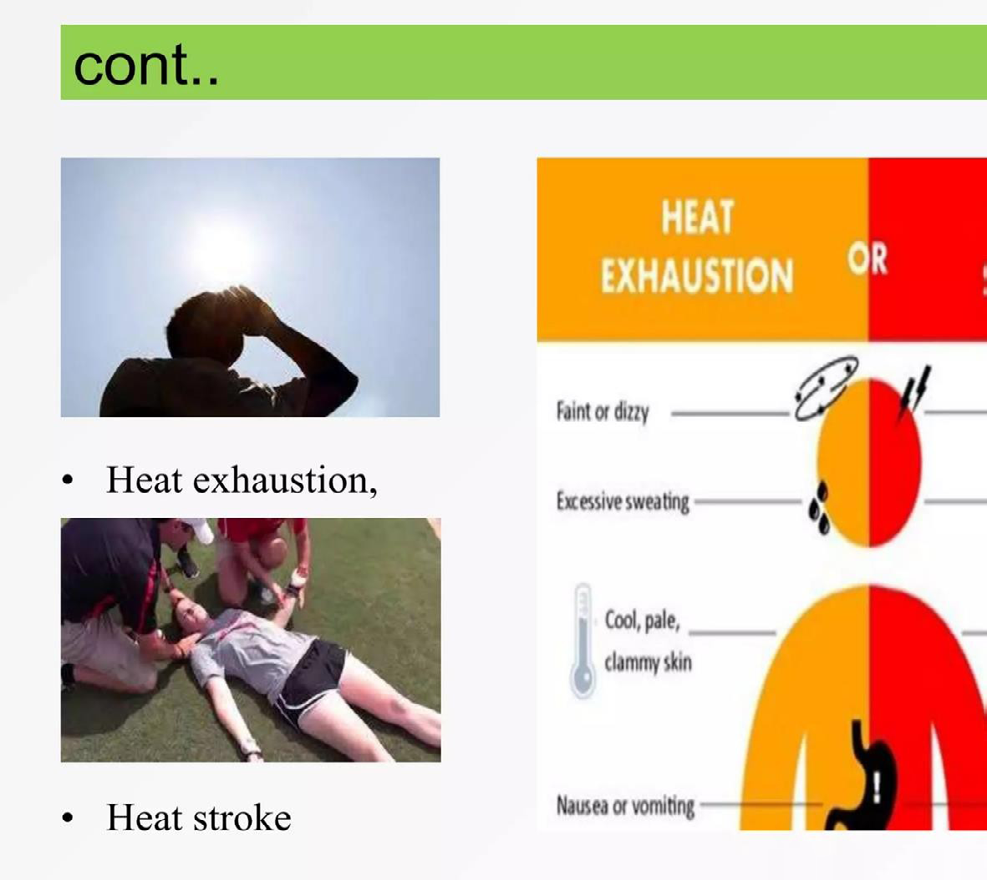
Chart 02: Heat exhaustion & heat stroke.
By the time I visited, he was removed to the rest room, and he was semi-conscious and complaining of severe headache, responding sometime relevantly and some other time irrelevantly, he was not sweating, and the body temperature was 400 C, Pulse was rapid (100/minute) and strong, Respiratory Rate was 20/minute, and his skin was warm.
Making a diagnosis of Exertional Heat Stroke (EHS), I asked his work protection gears to be removed and with minimum undergarments put some wet towels on him and turned on the table fan using evaporation cooling techniques. Raised his feet putting a stool under them.
After about 30 minute he was fully conscious and then sked to give oral fluids like tender coconut, Watermelon juice, plain water every hour. He recovered by 1900 hrs and was sent home with instruction take rest next day fully. He reported to duty after 3 days recovering fully, just by continuing rehydration.
Heat Stroke Deaths in India in 2024 (Media Reports)
Karnataka: Karnataka State Disaster Management Authority reported 521 heat stroke cases, two deaths first week of April 2024. Bagalkot and Kalaburagi districts reported one heatstroke-related death each in the period between March 1 and April 3, a report said. Districts including Chikkaballapura, Bagalkot, Chitradurga and Mandya are the most affected by the ongoing heatwave conditions, having reported 102, 69, 56 and 54 cases of suspected heatstroke, respectively [9]. The Karnataka State Natural Disaster Monitoring Centre (KSNDMC) in its daily weather bulletin noted that an average maximum temperature of 42.7 degrees Celsius was recorded at Kalaburagi District. “75 per cent of the geographical area in the state recorded maximum temperatures in the range of 36 to 42 degrees Celsius. Maximum temperature in the range of 43 to 45 degrees Celsius was recorded in some parts of Kalaburagi, Yadgir, and Raichur districts [10, 11, 12].
Bengaluru on Fire as Temperatures Breach 40°C in Multiple Areas, Heatwaves Forecast in Karnataka till May 6 reported By TWC India Edit Team on 02 May 2024 [13]. The Indian Meteorological department regional centres declare a heatwave when the local temperature is expected to cross 40°C and simultaneously rise 5-6°C above region’s normal temperature. A severe heatwave is issued if the mercury surpasses the average by 7°C or more [14].
For 45-year-old Hanumanth, the resident of Jalibenchi village in Raichur taluk had asked for water on his return from a temple on Friday 3 May 2024, but even before his family members could fetch it, he collapsed and died. Similarly, Veeresh Hanumanthappa Madiwal, 50, collapsed while going to while going to wash clothes in the afternoon, Gangamma Devadasi, 60, Pradeep Thimmanna Pujari, 15, a differently abled person, died in his sleep after begging in the hot son, Durgamma Hanumanthappa Uppar, 60, died of sunstroke [15].
Maharashtra: Amid the rising mercury across Maharashtra, the State Public Health Department reported 202 cases of heat strokes are reported statewide, heat stroke cases between March 1 to May 05, 2024 [15].
Kerala: At least two people (A 90-year-old woman & a 53-year-old man) have died in the state of Kerala of suspected heat stroke, media reported on Monday, as the country battles temperatures as temperatures soared to 41.90 Celsius record levels. [26].
Discussions
Apart from rising natural mean temperatures, operations involving high air temperatures, radiant heat sources, high humidity, direct physical contact with hot objects, or strenuous physical activities have a high potential for inducing heat stress in employees. There are an estimated 5.5 billion persons in the working age group of which 3,5 billion are in labour force globally. While 1 billion workers are poor a billion and half work in vulnerable jobs, and 80% of them are middle income countries like India and most of them are outdoor works like construction, road building, mining etc. [17].
Outdoor operations conducted in hot weather, such as farming, animals grazing, construction, sewage pits refining, hazardous waste site activities, and emergency response operations, that require workers to wear semi-permeable or impermeable protective clothing like fire fighter, Furnace workers etc. Indoor operations such as foundries, brick- firing and ceramic plants, glass products facilities, rubber products factories, electrical utilities - boiler rooms, bakeries, confectioneries, commercial kitchens, laundries, chemical plants, mining sites, smelters, where problems can occur [2, 4].
In 2022, 32.9 % of workers were exposed to the outdoors as a regular part of their job globally. Occupational group percentage of fatal work injuries from exposure to extreme heat were Construction and extraction =32.3%, Building, grounds cleaning & maintenance= 12.0, Transportation & material moving 9.3 and Farming, fishing, and forestry-8.8 [4].
Earth’s temperature has risen by an average of 0.11° Fahrenheit (0.06° Celsius) per decade since 1850, or about 2° F in total. The rate of warming since 1982 is more than three times as fast: 0.36° F (0.20° C) per decade. Higher temperatures are worsening many types of disasters, including storms, heat waves, floods, and droughts. A warmer climate creates an atmosphere that can collect, retain, and unleash more water, changing weather patterns in such a way that wet areas become wetter and dry areas drier. A temperature of 30 and a dew point of 30 will give you a relative humidity of 100%, but a temperature of 80 and a dew point of 60 produces a relative humidity of 50%. It would feel much more “humid” on the 800F Day with 50% relative humidity than on the 300 days with a 100% relative humidity.
Climate in India
- Current climate in India according to the IMD, in Gangetic West Bengal, Bihar, Sub-Himalayan West Bengal, Jharkhand, & Odisha are experiencing heat wave to severe heat wave since April 2024, and heat wave to severe heat wave conditions are expected to persist over East India entire May 2024.
- The highest maximum temperature recorded at Kalaikunda (WB) & Baharagora (Jharkhand), reaching 47.2°C & 47.1°C, respectively. Hot and humid conditions reported over coastal Karnataka, while severe warm night conditions prevailed in Odisha.
Above-normal temperatures by 4-8°C are anticipated in many parts and increase in heatwave days, in regions like North Karnataka, South Rajasthan, Delhi, West Madhya Pradesh, Vidarbha, Marathwada, and Gujarat.
The trends of heat waves in India indicate that of the three years 2022 reported the most severe heat waves (Chart 3), and the trend is similar in 2023 and first 4 months of 2024.
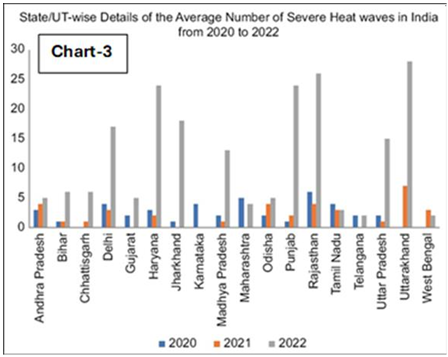
Chart 03: State/UT-wise details of the average number of severe heat waves in India from 2020 to 2022.
A professor at the Centre for Atmospheric and Oceanic Sciences, IISc, Bengaluru, explained the reasons for India’s scorching summer since April this year as the presence of persistent and intense anticyclones over Arabian Sea and Bay of Bengal and their influence on wind circulation over the Indian landmass and the intensity of these anticyclones is likely influenced by the waning El Nino [11].
Human Reactions to Hot climate: For humans, 20°C is comfortable. Any warmer we work less efficiently because releasing heat requires energy. Many species can live at much colder or warmer temperatures than humans. Humidity is the amount of water vapor in the air. If there is a lot of water vapor in the air, the humidity will be high. The higher the humidity, the wetter it feels outside, humidity is usually explained as relative humidity [5].
Too much heat is not safe for anyone. Extreme weather is more dangerous for older adults than for younger people! Elderly might start to feel sick or get a heat-related illness serious enough. It is much riskier for elderly or those who have health problems as hotter days cause difficulty in the body’s ability to regulate its temperature! Elderly adults are more likely to have chronic medical conditions that affect the body’s response to temperature! As most of the elderly are on prescription medicines that alter the body’s ability to control temperature or sweat. It is always better to be cautious &get relief quickly when overheated.
Landmark Judgement of Supreme Court, India: The Supreme Court has recently made a significant judgement emphasizing the impact of climate change on people’s lives. In a statement, the court said that the “right against the adverse effects of climate change” falls under the scope of Articles 14 and 21, which guarantee rights to equality and life. The right to health, which is a part of the right to life under Article 21, is impacted due to factors such as air pollution, shifts in vector-borne diseases, rising temperatures, droughts, shortages in food supplies due to crop failure, storms, and flooding. The court has asserted that there is a right to be free from the adverse effects of climate change. This judgement is a significant step towards acknowledging the impact of climate change on human life and the need to take action to mitigate it.
The National Programme on Climate Change and Human Health (NPCCHH) and National Centre for Disease Control (NCDC) have prepared a set of guidelines of the criteria to label a death as heat-related/ heat stroke and bring in evidence-based medical decision-making processes. However, the decision to conduct an autopsy is based on the circumstances of the death, the age of the deceased, and the available resources. The collection of blood, urine, etc., for toxicological examination is highly desirable if the condition of the body allows it. The guidelines emphasise that the post-mortem diagnosis of heat-related deaths poses many challenges including that pre-terminal or terminal body temperatures are frequently unavailable, the autopsy findings are non-specific and depend upon the duration of survival after exposure, diagnosis of hyperthermia is mostly dependent on the scene investigation, the circumstances of death, and the reasonable exclusion of alternative causes of death and that autopsy is not mandatory in heat-related deaths. As the autopsy findings are non-specific, the relevant samples to pathology departments for histopathological evaluation are being collated [18].
Physiology and Physiopathology of the Heat Stress
During rest and activity human body tries to maintain an internal temperature of 98.40C. Hot weather, hard work and heat sources raise the body’s core temperature. In the first 1-2 hours of exposure to heat stress, heated blood is pumped to the skin’ surface, and body’s heat get transferred to the environment if it is cooler. If body heat must be shed faster, sweat carries it outside skin and evaporates to aid the cooling of the body. During hard work an average individual loses 1-2 litres of fluid per hour. After about 3 hours of continuous hard work or in hot sun, the person is likely to lose 3-4 litres of fluids and is likely to lose endurance, become uncomfortable, feel hot and become thirsty. The blood volume drops mildly below normal and body temperature rise a bit above (99- 99.50F) the normal. Continued the same heat stress and work for 3-5 hours, if fluid replacement is not done, during the extended period of work, heat cramps or heat exhaustion result as the body temperature crosses 100-1010F and Blood volume drops further to moderately low below the normal. If these conditions remain untreated may progress to heat stroke. After continued work in the same situation for more than 4-5 hours, the longer the body sweats, the volume of the blood further reduces to carry excess heat to the skin or Oxygen and nutrients to the muscles. About 3-4 hours of dehydration the individual experiences-headaches, muscle fatigue, weakness, loss of accuracy and dexterity, heat cramps, reduced alertness, nausea, and vomiting (Chart 4).
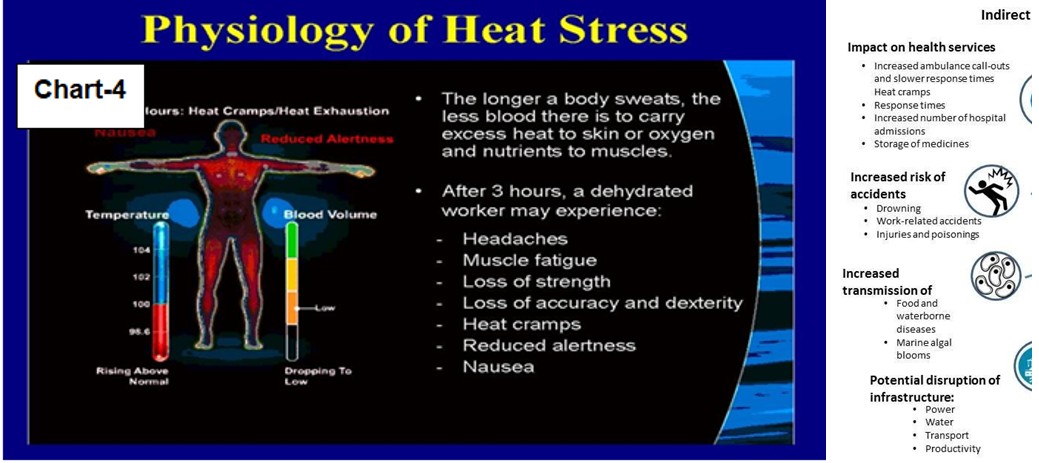
Chart 04: Physiology of Heat Stress.
Individual’s heat response depends upon-Age, weight, degree of physical fitness, direct exposure to Sun in farms, or in front of hot furnaces or any other hot environment, degree of acclimatization, metabolism, use of alcohol or drugs, and a variety of medical conditions like obesity, diabetes, hypertension, the type of clothing worn and prior heat injury if any , living in places without air conditioning or fans, all that affect a person’s sensitivity to heat.
Implications for Clinical Practice
Clinicians and public health specialists have an important role to play in reducing the burden of mortality and morbidity due to heat stress. Primary care physicians need to be equipped to identify and manage heat-related illness with adequate and robust health system strengthening to maintain appropriate infrastructure to handle the cases (Figure 4). The well-known conditions and their management are:
Figure 4: Implications for Clinical Practice. Heat Syncope: A sudden dizziness when people are active in hot weather, People who are taking a beta blocker for Hypertension are less acclimated to hot weather, and more likely to feel faint. Individual action: Rest in a cool place, put the legs up, and drink water to make the dizzy feeling go away. Heat Cramps: Painful spasms of muscles in our stomach, arms, or legs. Cramps result from hard work or intense exercise. Our body temperature and pulse stay normal during heat cramps and the skin feels moist and cool. Individual action: Stop physical activity one is doing and rest in the shade or in a cool building. Drink plenty of fluids, water and sports drinks containing electrolytes. Do not consume alcohol or caffeinated beverages. Heat Oedema is a Swelling in your Ankles and Feet when you get Hot. Individual Action: Put legs up to help reduce swelling. If that doesn’t work quickly, consult a doctor. Heat Rash (Prickly Heat): It is a skin irritation from heavy sweating. It causes red clusters of small blisters that look like pimples on the skin. Skin may feel itchy, or you may feel “prickly” tingling pain. Individual action: Keep the infected area dry, use powder to sooth the rash, and stay in cool areas. Rashes reduce in 48-72 hours if move to cool place. Sun Exposure/Sunburn: It is a sign of skin damage due to extreme or long exposure. The skin appears red and tender, develop blisters, start to peel, and be warm to the touch. Severe reactions cause fever, chills, nausea, or rash. Individual action: Prevent sunburn by wearing protective clothing that covers, stay out of direct sunlight. Use a broad-spectrum sunscreen with an SPF of 15 or higher & reapply often. Wear lightweight clothing, take cool showers, moisturize affected areas, so that skin can heal. Heat Exhaustion (HE): It is a warning that our body can no longer keep itself cool. One might feel thirsty, dizzy, weak, uncoordinated, and nauseated. May sweat a lot. But body temperature stays normal, and skin may feel cold and clammy. Some people with heat exhaustion have a rapid pulse. Individual action: Rest in a cool place & get plenty of fluids. If one doesn’t feel better soon, get medical care as, it can progress to heat stroke. Heat Stroke (HS): A medical emergency in which the body’s temperature rises > 104°F. Symptoms include- A core body temperature of 104 F (40 C) or higher, obtained with a rectal thermometer, is the main sign. Altered in mental state or behaviour, and sweating, Nausea and vomiting, Flushed skin / Dry skin, Rapid breathing, Racing heart rate, Headache, Seizures and Unconsciousness.
Heat exhaustion and heat stroke are a continuum of heat related illnesses. Recent research has identified a cascade of inflammatory pathological events, that begin with mild heat exhaustion, and if untreated can lead to multiorgan failure and death.
Heat stroke is likely affecting mostly elderly living in apartment with no fans or ACs in urban areas, or those working in hot sun like farmers or working near heat producing machines (foundries, furnaces, Ironing with coal energy etc).
At Risk by Age, and Outdoor Activites
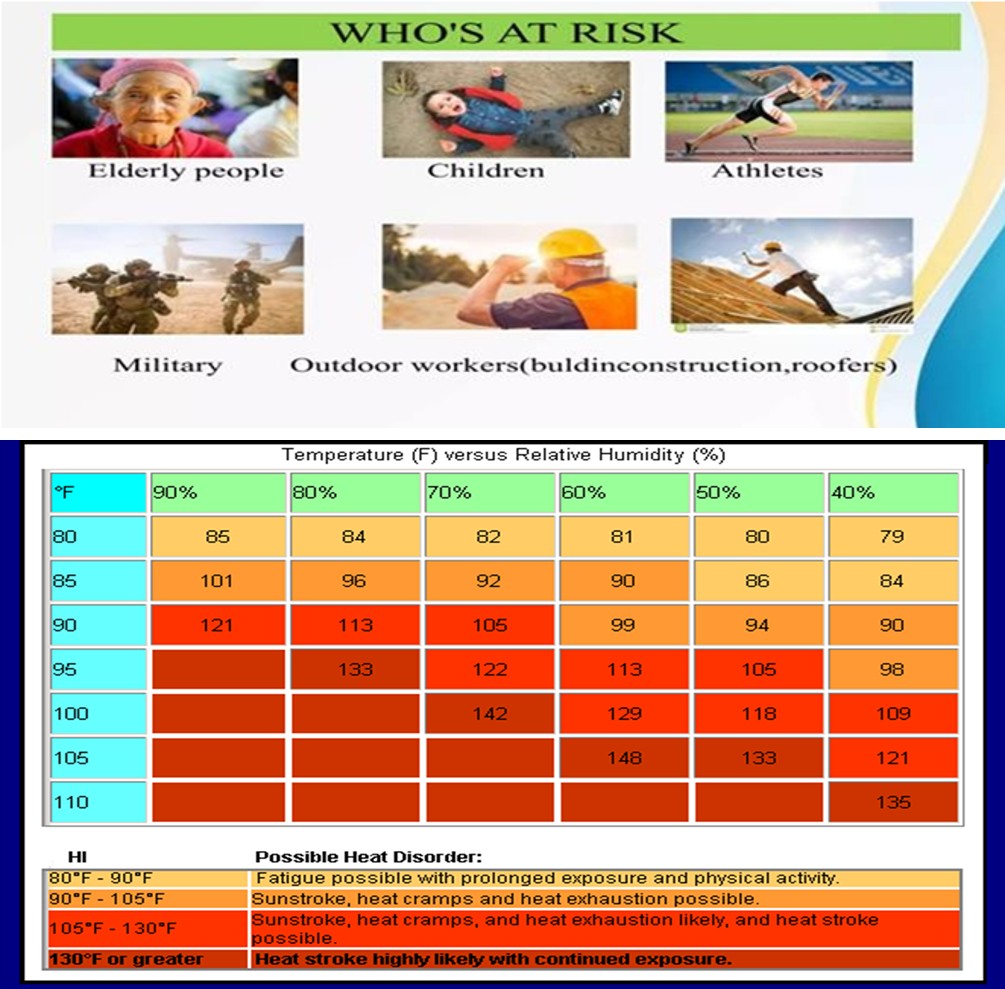
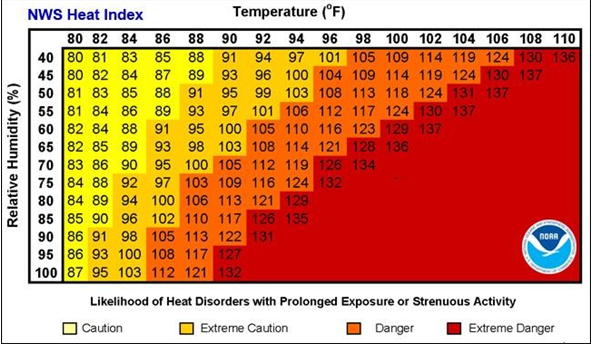
Heat Index: Heat stroke is strongly related to’ Heat Index ‘which is measurement of combination of atmospheric temperature and Humidity. A relative humidity of 60% or more hampers sweat evaporation from the human body in turn limiting our body’s ability to cool itself (Figure 5).
| Temperature (F) versus Relative Humidity (%) | ||||||
| °F | 90% | 80% | 70% | 60% | 50% | 40% |
| 80 | 85 | 84 | 82 | 81 | 80 | 79 |
| 85 | 101 | 96 | 92 | 90 | 86 | 84 |
| 90 | 121 | 113 | 105 | 99 | 94 | 90 |
| 95 | 133 | 122 | 113 | 105 | 98 | |
| 100 | 142 | 129 | 118 | 109 | ||
| 105 | 148 | 133 | 121 | |||
| 110 | 135 | |||||
| HI | Possible Heat Disorder: | |||||
| 80°F - 90°F | Fatigue possible with prolonged exposure and physical activity. | |||||
| 90°F - 105°F | Sunstroke, heat cramps and heat exhaustion possible. | |||||
| 105°F - 130°F | Sunstroke, heat cramps, and heat exhaustion likely, and heat stroke possible. | |||||
| 130°F or greater | Heat stroke highly likely with continued exposure. |
Table 1: Showing Heat Index.
When the heat index climbs over 90 degrees or more the chances of heat stroke increases. Therefore, it is important to pay attention to heat reported indices. Also note that exposure to direct sunshine add another 15 degrees to reported heat index. One can estimate the heat Index by estimate heat index: 1) Find out the temperature 2) Note down the relative humidity. 3) Using the NOAA data chart (Table-1 or 2), trace the relative humidity horizontally until it meets the temperature line. The intersecting point is the heat index.
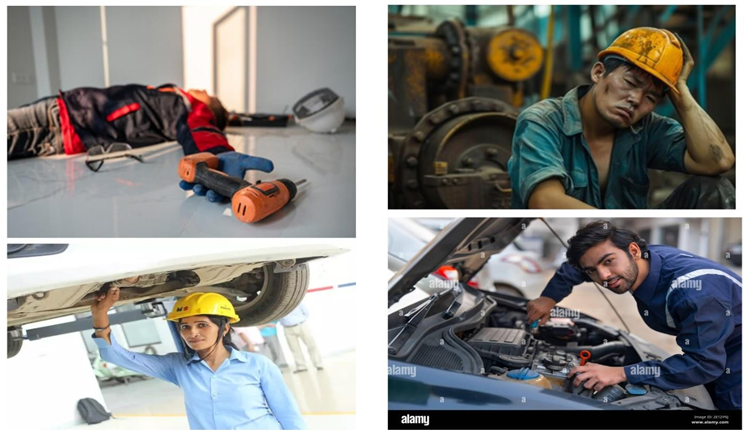
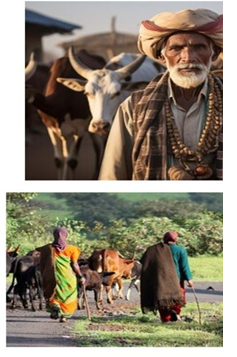
Diagnostic Challenges & differentiating HE& HS: Primary Care Physician needs to depend upon the clinical features shown in Fig. Rectal Temperature measurement is the key to clinch the diagnosis. Urine text -just colour indicates dehydration. Serum Sodium and Potassium test point to CNS disturbances. X Rays, MRI and Scans help identifying organ damage if the patient is brought late.
Management of Heat Strokes by Primary Care Physicians
Heat stroke is a medical emergency, continues to be leading causes of preventable death in sports. Rapid reduction of the core body temperature is the cornerstone of the treatment, as the duration of hyperthermia is the primary determinant of outcome [6].
Initial Nursing care by a nurse or any one close by must ensure: Nursing (Non-Physician) diagnosis by noting
- Hyperthermia
- Dehydration- sunken eyes, dry tongue etc / low pulse
- Nausea
- Anxiety
- Acute Confusion: Then start
- Immerse in cold water. A bath of cold or ice water is most effective & quick action to lower core body temp, If not possible
- Use evaporation cooling techniques such as packing the patient with ice and cooling blankets, Blow Fan air over the patient while wetting their skin with water from a sponge or garden hose.
- Apply ice packs to the patient’s armpits, groin, neck, and back as these areas are rich with blood vessels close to the skin, cooling them reduces body temperature.
- Immerse the patient in a shower or tub of cool water.
- Monitoring the vital signs: body temperature rises to 104°F (40°C) or higher
- the patient’s HR, BP, and especially the rectal temperature.
- If the person is young and healthy and suffered heat stroke while exercising vigorously (EHS) use an ice bath to help cool.
- Identify the triggering factors.
- Monitor fluid intake and urine output. If the patient is unconscious, central venous pressure or pulmonary artery pressure should be measured to monitor fluid status [6].
Once heat stroke is suspected, cooling must begin immediately at the scene, before transporting & continued during resuscitation, as per Sports Medicine recommendation (Figure 8).
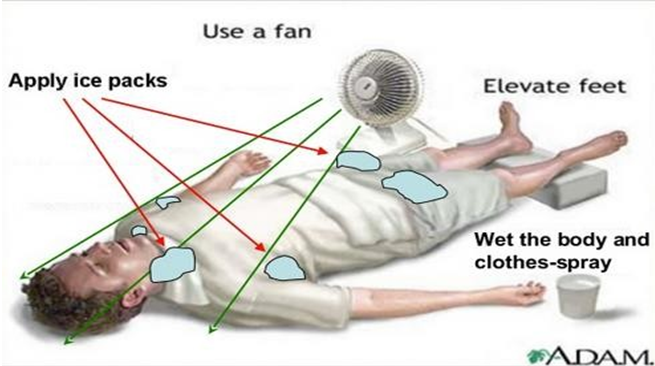
Monitor the patient in a cool, shady environment and ensuring adequate hydration. Emergency medical treatment includes hypothermia, blankets, intravenous fluids. Patients diagnosed with EHS or NEHS be admitted AND monitored 48 hours for complications. Immediate cooling through evaporation or full-body ice-water immersion is crucial in the facility. Irrigating the stomach and lower bowel with cool solution. Physicians must monitor electrolyte abnormalities, signs of renal or hepatic failure, and replace fluids. If patient is shivering give medications (Morphine, pethidine, nalbuphine, fentanyl, and meperidine) to stop them. Review serum electrolytes especially serum sodium. Start intravenous normal saline solutions or as indicated. Provide high caloric diet. Educate about the importance & convince the person & the family to increased fluid intake to avoid dehydration [19, 20].
Cooling is Discontinued with Close Monitoring once the Core Temperature Reached 38°C Limitations of the Medication Management
Medications have shown little efficacy in treating heatstroke. Muscle relaxants such as benzodiazepines and neuroleptic agents such as chlorpromazine (Thorazine) have been used to inhibit shivering and as prophylaxis against seizures, but clinical trials are lacking. Dantrium a skeletal muscle relaxant and antipyretics are used but have either not proved ineffective or have not been evaluated in decreasing temperature during heat stroke [6].
Effects of Climate Change
The health impacts of heat stress are not well known in India. Family Physicians and Government hospitals point to significant burden of heat-related illnesses in India. Addressing heat-related illness is a top priority now, as the summer is approaching with the prediction of heat waves and extreme weather in the country. Whie short term actions include equipping health facilities and Industries with capabilities to manage Heat related illnesses, the long- term actions call for concerted efforts to reduce a) carbon emissions levels, (b) concrete jungles, and increase c) number of trees, and number of lakes!
It is not just climate change that we should be concerned about. We face environmental crises such as air and water pollution, noise and light pollution in cities, micro plastics, freshwater availability, biodiversity loss, ocean acidification etc. We need to take a holistic look at what we are doing to our environment [14].
There is immense human pressure on the planet now. Current human actions are taking the planet away from conditions that allowed human civilisation to develop and thrive. If we continue the current path, we will compromise the integrity of the whole Earth system. We need an integrated approach for addressing all the global environmental issues. We must strive for a safe and resilient Earth, by switching to Human Mode from Auto-mode [9, 18].
Economic Impact of Hot Climate
The economic impact of the pitiless heat wave that is scorching southern Europe, the United States, India, China and much of the Northern Hemisphere may be short-lived in most spots. This will lead to temporary closure of tourist sites, the abandonment of outdoor dining and a rise in electricity use related to air-conditioning. But over the longer term, the economic fallout caused by climate change will be profound leading to devastating fires, floods, and droughts as we are seeing in India for the last 5 years, that tend to dominate the headlines in the press and TV. We have found that extreme temperatures reduce labour productivity, damage crops, outbreaks of water borne diseases like gastroenteritis, enteric fevers etc, raise treatment costs and mortality rates, disrupt global trade, and dampen investment.
Such adverse developments put added pressure on public spending, as governments are called on to replace damaged infrastructure and provide subsidies and relief. The analysis notes that tax revenues could also shrink when climate changes disrupt economic activity.
European Union estimates economic losses related to climate change to significantly increase in the future, and there is no mechanism in most countries to collect and assess the economic costs. Analysts at Barclays estimated that the cost of each climate-related disaster has increased nearly 77% over the past half century.
One study published last year that sought to measure the impact of human-caused heat waves on global economic growth concluded that the cumulative loss between 1992 and 2013 reached between $5 trillion and $29.3 trillion globally [10].
Relevance to Preventive Medicine
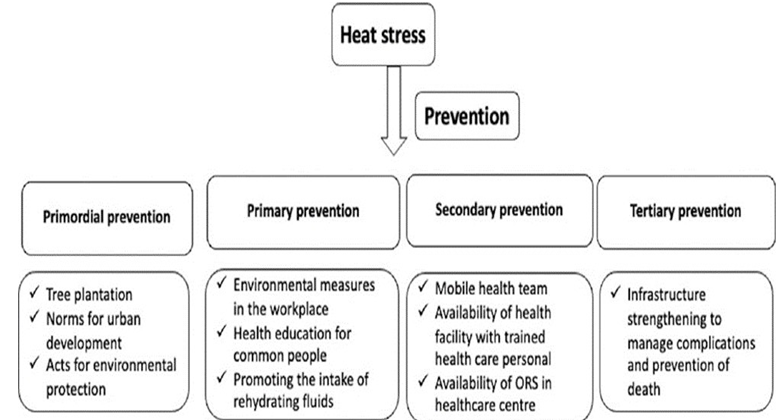
Heat stress is a pertinent public health problem worldwide. It needs attention, especially due to ongoing global warming and climate crisis. The morbidity and mortality and the impacts of heat stress are not clearly known, especially in developing countries like India. Stringent public health measures need to be implemented to tackle heat-related illness and its impacts (Figure 9).
Preventive Principles

Preventive Actions by Individuals: When the heat index is high, it’s best to stay in an air- conditioner environment.
If one must go outdoors: Reschedule or cancel outdoor activity. If possible, shift your time outdoors to the coolest times of the day, either early morning or after sunset.
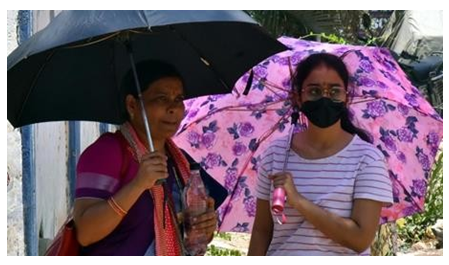
- Wear lightweight, light-coloured, loose-fitting clothing. Protect from direct sun rays using an umbrella preferably of light colours (Figure 10). The elderly must use a wide-brimmed Fedora hat.
- Use sunscreen with a sun protection factor (SPF) of 30 or more. Sunscreen is important to protect your skin against harmful effects of ultraviolet radiation. Some of the misconceptions around it are a) Sunscreen is essential for all, no matter their skin tone or type as it safeguards against UV rays that can cause sunburn, accelerate ageing and most critically, lowers the risk of skin cancer b) When the sun hides behind the clouds, but UV rays can penetrate clouds, so using sunscreen every day is necessary c) Even though darker skin has more melanin for some UV protection, it does not prevent skin cancer. Broad-spectrum sunscreens with an SPF of at least 15 help protect people from skin cancer and early skin ageing caused by the sunrays. d) the effect of sunscreen on vitamin D synthesis is usually minimal. Regular, brief exposures (10 to 15 minutes several times a week) to sunlight without sunscreen are sufficient for maintaining healthy vitamin D levels e) High SPF offers more protection, ideally, SPF 30 blocks which about 97% UVB rays, SPF 50 about 98% only. f) Sunscreen needs reapplication every 2 to 3 hours, especially after swimming, sweating, or drying off g) Small amount of Sunscreen is not enough, about a teaspoon of sunscreen for your face and neck. One should choose based on Individual skin type: i) Oily skin: Use gel-based or non-comedogenic sunscreens that won’t clog pores ii) Dry skin: opt for sunscreens with moisturisers c) Sensitive skin: Choose mineral or physical sunscreens with titanium dioxide or zinc oxide, as they are less likely to irritate sensitive skin [9, 18, 20].
Drink Extra Fluids: to prevent dehydration, it’s generally recommended to drink at least eight glasses of water, fruit juice, or vegetable juice per day. As sweating causes salt depletion, substitute an electrolyte-rich sports drink for water during periods of extreme heat and humidity.
Exercising in Summer season: Additional precautions when exercising or working outdoors include Drink 48 Ounces (1.5 litres)- 24 ounces of fluid two hours before exercise, consume another 8 ounces of water or sports drink right before exercise, every 20 minutes during exercise, even if one doesn't feel thirsty [9, 18].
Protecting Industrial Workers
- Engineering Controls:
- General ventilation to dilute hot air with cooler air (brought in from the outside)
- Air treatment/air cooling reduces the temperature of the air by removing heat (and sometimes humidity) from the air.
- Air conditioning is best method of cooling, expensive to install & operate.
- Local air cooling, effective in reducing air temperature in specific areas. [9]
- Administrative Control and Work Practices:
- Make the workers aware of the hazards of heat stress.
- Recognition of predisposing factors, danger signs, and symptoms
- Awareness of first-aid procedures for, & the potential health effects
- Empower Employee responsibilities in avoiding heat stress.
- Ensure Employees use of protective clothing and equipment.
- Create Awareness of the Dangers of using drugs, including therapeutic ones, & alcohol in hot work environments.
- Coverage of environmental and medical surveillance programs and
- The need, urgency & advantages of worker participation in programs
Conclusion
- Scorching Temperatures are putting millions of people in danger this summer.
- Severe/ Heat wave conditions are expected to persist over 1/3 of the world.
- If we have a month-long hot condition at a certain location, the same hot conditions could persist over a six-month period when global mean warming is about 5-6°C under very high greenhouse gas emissions.
- For reference, the current global mean warming is slightly above 1°C.
- Individual precautionary measures & efforts workplace
- Community scale adaptations & Management are the urgent needs of the time.
- To ensure the world gets on track, global leaders must adopt aggressive climate action across the public and private sectors, and closely & transparently monitor progress using rigorous and credible methods. [1].
- In Lighter vein: Sun is saying “I HAVE NOT CHANGED MY SETTINGS- PLEASE CHANGE YOUR SETTINGS”
- The world must be concerned, not just climate change but other environmental crises such as air and water pollution, noise and light pollution in cities, micro plastics, freshwater availability, biodiversity loss, ocean acidification etc.
- We need an integrated approach for addressing all the global environmental issues. Ultimately, we should strive for a safe and resilient Earth for that:
- States must reduce a) carbon emissions levels, b) concrete jungles and increase c) number of trees, and d) number of lakes!
- Basically, switch to human mode from auto mode [21, 22].
References
-
(2024) Tracking climate change. Dance S (2024) A streak of record global heat nears one-year mark. The Washington Post.
-
(2022) Upholding the Human Right to a Healthy Environment to Address the Triple Planetary Crisis. Common Narrative: Advancing the Human Right to a Healthy Environment.
-
(2024) Heat stress.
-
(2023) Heat stress.
-
(2022) Hot-weather-safety-older-adults. Hot Weather Safety for Older Adults.
-
Emergency Preparedness and Response. Occupational Safety and Health Administration.
-
(2024) Right against the adverse effects of Climate change.
-
Mathur S (2023) Saving Workers & Labourers from Extreme Heatwave. Welfare.
-
Majumdar B (2024) Heat wave is linked to record global temperatures and waning El Nino’s influence on wind circulation over Indian landmass.
-
Cohen P (2023) The Economic Fallout from Extreme Heat will rise over time.
-
(2024) Karnataka reports over 613 heat related minor illnesses, 500 heatstroke cases, and 2 deaths.
-
Mohanasundaram M, Abhiyant T, Vijay L, Andreas M, Arvind S, et al. (2024) Heat Stress in India: A Review. Preventive Medicine Research & Reviews 1(3): 140-147.
-
Yamini CS (2024) Over 500 suspected sunstroke cases, 2 deaths in Karnataka since March amid heatwave: Report.
-
(2024) Bengaluru-on-fire-as-temperatures-breach- 40degc-heatwaves-in-karnataka. TWC India.
-
(2024) 5 killed in Karnataka’s Raichur as mercury level touches 450C. The times of India.
-
(2024) List of Top Hottest Place in India 2024.
-
(2024) Health Ministry issues guidelines for confirming heatstroke and heat-related deaths. Sci-Tech.
-
Khan A (2017) 10 things to know about the global labour force.
-
(2024) Sunscreen, 10 myths about sun protection.
-
(2024) Over 200 cases of heat wave reported in Maharashtra. Environment.
-
(2024) Heat waves kill 2 persons in Kerala.
- Capacity Constraints in Pediatric Inpatient Psychiatric Care: A Cross-Sectional Analysis of Bed Availability and Geographic Access in North Carolina
- Why Healthcare Analytics Still Optimizes the Wrong Things
- Coding, Coverage, and Care: The Infrastructure of Transgender Health Inequities
- The Effect of Classroom Attendance on Academic Achievement of Management and Leadership Discipline of Nursing Students at Instituto Superior Cristal and Universidade de Dili, Timor-Leste, 2024: A Case Study
- The Role of Social Bonds in Facilitating Shared Investments and Resource Allocation: Addressing the “Wrong Pocket Problem” in Public Health and Healthcare
- Social-Cultural Factors Contributing to Antimicrobial Resistance in Livestock Farmers and Community Households in Kayonza District, Rwanda