
Recent Breakthroughs of Nanomedicine in Medical Fields
Nanomedicine refers to the application of nanoparticles for disease diagnosis and treatment. Recent progresses in nanomedicine have demonstrated significant breakthroughs in enhancing the efficiency and safety of medical treatments. The key advances in nanomedicine for targeted drug delivery systems, to treat the spinal cord diseases, to enhance immune modulation and regenerative medicine have shown promising in recent years. Despite the advancements of nanomedicine, a few challenges such as biocompatibility, toxicity, and regulatory hurdles remain.
Abbreviation
SAXS: Small-Angle X-Ray Scattering
Recent Progresses in Nanomedicine
Nanomedicine in Drug Delivery
Nanomedicine enables precise targeting of therapeutic agents to specific cells or tissues, to improve the efficacy of treatments while minimizing the side effects. This is particularly beneficial in cancer treatment, where nanoparticles assist chemotherapy drugs to reach tumour cells, reducing damage to other healthy cells and tissues [1].
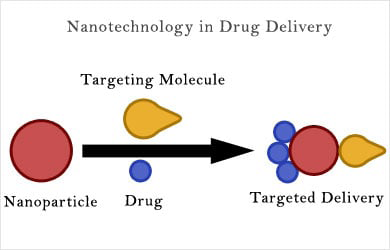
Nanomedicine in Spinal Treatment
Spinal cord injuries results in the permanent loss of nerve function below the injury level, leaving the patient paralyzed and wheelchair-bound for the remainder of his/her life. Unfortunately, clinical treatment that depends on surgical decompression is unable to handle damaged nerves, and high-dose therapy is also associated with problems, such as infection, femoral head necrosis, obesity and hyperglycaemia. Fortunately, nanomedicine has appeared as promising option to treat spinal cord injuries. Latest approaches involve using nanotechnology to modulate glial cells that play a crucial role in inflammation and recovery. This could potentially extend to treating neurodegenerative diseases like Alzheimer’s. The most extensively tested NPs for drug delivery to the spinal cord have been polymeric NPs and silica NPs, although other NPs are also being investigated. Like micelles, NPs can be coated or functionalized with targeting peptides to improve delivery efficacy [2].
![Figure 2: Schematic Diagram of the Role of Nanomaterials in SCI Treatment [2].](/fulltextimages/13093/fig_2.png)
MRNA Nanomedicines
MRNA nanomedicines that have been particularly used in COVID-19 vaccines, have garnered significant attention. Researchers have been utilizing techniques like small-angle X-ray scattering (SAXS) to better understand and optimize the structure and performance of lipid nanoparticles used in these therapies. This technology not only aids in fighting viral infections but also holds potential for cancer treatment and other therapeutic applications [3].
Image Credit: Corona Borealis Studio/Shutterstock.com. Figure 3: Virus.
Nanomedicine in Immune Modulation
Nanomedicine has found promising to modulate the immune system, either by enhancing the body’s natural defences against diseases such as cancer or by suppressing immune responses in cases of autoimmune disorders. This ability to fine-tune the immune response holds significant therapeutic potential [4].
Enhanced Diagnostic Capabilities by Nanotechnology
Nanotechnology enhances diagnostic tools by allowing for the detection of diseases at very early stages. Nanoscale biosensors can identify biomarkers in extremely low concentrations, facilitating early and accurate diagnosis of conditions such as cancer, cardiovascular diseases, and infectious diseases [5].
Regenerative Medicine
Nanomaterials are being used to create scaffolds that support the growth and regeneration of tissues. This is crucial in treating injuries and degenerative diseases, where nanotechnology can promote the regeneration of nerves, bones, and even entire organs, potentially leading to breakthroughs in tissue engineering and organ transplantation [6].
Conclusions and Future Outlooks
Nanomedicine is a game changer in medical treatment due to its ability to revolutionize the way diseases are diagnosed, treated, and monitored. It has shown promise in improving the bioavailability and targeted delivery of drugs, reducing side effects, and enhancing therapeutic outcomes. These advancements illustrate the growing impact of nanomedicine on personalized healthcare, regenerative medicine, and targeted therapies creating a choice for more effective and accessible treatments in the near future. Its applications across various medical disciplines are expected to continue growing, offering new solutions to some of the most challenging health issues. Despite these advancements, challenges such as biocompatibility, toxicity, and regulatory hurdles remain. Ongoing research and collaboration among scientists, clinicians, and regulatory bodies are essential to address these challenges and translate nanomedicine breakthroughs into clinical practice. As we look ahead, the prospects of nanomedicine inspire hope for a future where medical treatments are as advanced and unique as the individuals they are designed to help.
References
-
Wang J, Wu X, Chen J, Gao T, Zhang Y, et al. (2024) Traditional Chinese medicine polysaccharide in nano- drug delivery systems: Current progress and future perspectives. Biomedicine & Pharmacotherapy 173: 116330.
-
Gong W, Zhang T, Che M, Wang Y, He C, et al. (2023) Recent advances in nanomaterials for the treatment of spinal cord injury. Materials Today Bio 18: 100524.
-
Ramezani K, Moradi FD, Alireza SH (2025) Optimizing medical oxygen concentrators: Efficiency, flexibility, and patient-centric solutions. Separation and Purification Technology 353: 128549.
-
Azharuddin M, Zhu GH, Sengupta A, Hinkula J, Slater NKH, et al. (2022) Nano toolbox in immune modulation and nanovaccines. Trends in Biotechnology 40(10): 1195-1212.
-
Panda P, Sudhir Kar S, Mohapatra R (2025) DNA polymer conjugates: Revolutionizing neurological disorder treatment through targeted drug delivery. Next Materials 7: 100336.
-
Krishnan L, Chakrabarty P, Govarthanan K, Rao S, Santra TS (2024) Bioglass and nano bioglass: A next-generation biomaterial for therapeutic and regenerative medicine applications. International Journal of Biological Macromolecules 277: 133073.
- Solution-Processed Chiral Perovskites for Biomedical Applications
- Nanotechnology in Health Chemistry and Medicine: Current Challenges and Future Directions
- Human Exposure to Micro- and Nanoplastics: Pathways, Toxicity, and Intervention Strategies
- Exosome Nanomedicine for Cancer Therapy
- Micro and Nanoplastics–Plastisphere, Biotoxicity, Impact on Human Health, and Mitigation Strategies
- Process Validation of Cefixime Powder for Suspension Dosage Form, 50 mL