
The New View towards EDM Files
With continuous evolution of NiTi file system it has become a challenge to choose between the right system for individual clinical scenario. The various thermomechanic procedures and the improvement of composition of the alloy that is used in manufacturing NiTi files are aimed to improve the flexibility of NiTi files. Improved flexibility of NiTi files would minimize the intracanal irregularities such as canal transportation and would ensure an increase in the success of root canal therapy. Technically speaking there is a phase shift from milling of alloy to electro discharge machining of alloy. Electro-discharge machining (EDM) is a non-contact thermal erosion process that partially melts and evaporates the wire by high-frequency spark discharges. There is significant difference in surface architecture of nickel titanium after thermal treatment. Electro discharge machining gives better fatigue resistance property hence more predictable outcome.
Introduction
There has been a evolution of metallurgy since the spark of NiTi files have come to dentistry. Shape memory alloys (SMA) have attracted the interest of the scientific community mainly due to their exquisite properties that make them ideal materials for applications in automotive, aerospace and biomedical sectors while the areas of interest are constantly expanding and numerous commercial applications already exist. Properties such as superelasticity (SE) and shape-memory effect that give these materials their characterization as smart materials are in the forefront of the studies related to them.
Superelastic materials can return to their initial shape when the applied deformational stress is removed, which leads to a subsequent recovery of the deformation strain, thus the material returns to its original shape. This phenomenon is attributed to the reversible transformation occurring from the austenite to martensite phase, also termed as stress induced martensite. In order to better clarify the SE mechanism, depicting a stress-temperature curve and a stress-strain curve, is presented. The thermal treatment of these alloy gives rise to the following phases: martensite phase transformation start temperature upon cooling; austenite phase transformation start temperature upon heating. R- phase wires exhibit superior resistance to functional fatigue and to mechanical fatigue, according to recent studies. Cyclic fatigue tests conducted by Pirani, et al_._ [1] corroborated such findings.
Electrodischarge Machining Versus Milling
There are different types of surface treatment of the NiTi to get the most beneficial outcome. In this evolutionary process EDM- Electro Discharge Machining has now come to picture. Most non-conventional machining works pertain to electrodischarge machining (EDM) or wire electrodischarge machining (WEDM) of NiTi SMAs. Object of the studies is usually the surface and subsurface modifications that take place from the spark discharges during machining and the influence of various parameters on the material removal rate of the process. In a comparison between milling and EDM investigations concluded that EDM produced higher surface roughness than that of milling [2]. EDM investigations concluded that EDM produced higher surface roughness than that of milling. Furthermore, a white layer (Figures 1a & b) was also observed that was less thick than that measured when milling was applied. Furthermore, for finish trim cut, the white layer is even thinner and crack-free. Material removal rate also increases with increase in working energy [2]. Similar results are reported when WEDM is considered [3]. NiTi alloys are sensitive to thermal influence and it is of interest to reduce the effect of excessive thermal loading when laser machining components made of SMAs. Femptosecond laser are also used for the machining of NiTi alloys for the production of micro-devices [4].
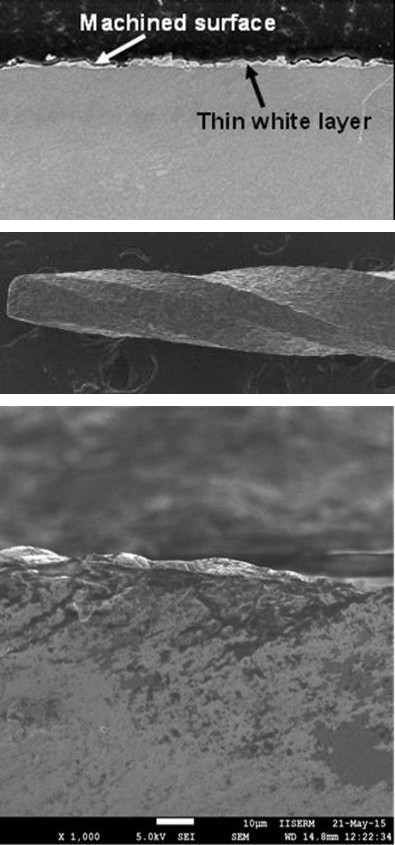
Figure 1A: White Layer formed after EDM.
Figure 1B: Higher Magnification SEM image of white layer formed after machining.
Science behind EDM
EDM is a thermo-electric machining process in which the material removed or eroded from the work piece due to the energy from a series of electric discharges generated between the tool electrode and the work piece electrode immersed in a dielectric medium. The electric discharges or sparks produced at the gap remove the work as well as tool material by melting and evaporation. The formed white layer and the recast layer which is higher hardness and different property compared to the bulk material. The dielectric medium acts as a deionizing medium between the electrode and the work piece, thus providing the optimal conditions for spark generation and also flushes the debris formed in the spark gap [5, 6]. A comparative study of fatigue strength and other surface integrity aspects generated by grinding and Wire EDM of titanium alloy 9 Ti-6Al-4V was recently reported in with a conclusion that a standard Wire-EDM process with instabilities has a better fatigue life than a standard grinding process [7]. HyFlex EDM files are produced using an innovative manufacturing process called Electrical Discharge Machining (Figure 2). The EDM process results in a file that is extremely flexible and fracture resistant. In fact, HyFlex EDM files are up to 700% more resistant to cyclic fatigue compared to traditional NiTi files [8]. In a recent in vitro study of 2017 Hyflex EDM instruments resisted static cyclic fatigue significantly more than WaveOne Gold, Reciproc Blue & One Shape endodontic files [9]. Kaval, et al. [10] reported that the cyclic fatigue resistance of HyflexEDM was significantly higher than ProTaper Universal and Pro- Taper Gold files. The reason for HyflexEDM files having a higher cyclic fatigue resistance might be the electrodischarge machining procedure performed during the production.
Conclusion
With the change in technology of NiTi alloy system the file are getting more flexible. The novel electrical discharge machining was used in oral implantology from long back. EDM, mainly composed of martensite and R- phase, revealed peculiar structural properties, such as increased phase transformation temperatures and higher hardness .The different phase composition and the improved hardness may shed light on the enhanced mechanical behaviour of electro-discharge machined instruments. Windeler AS [11] received a patent for improving the fit of cast restorations using EDM and since 1990 it has been used widely in implant prostheses [12], EDM was used in dentistry for fabricating titanium implant-retained restorations [13]. EDM has stepped its foot in endodontics through two file system namely Neolix NeoNiTi and Coltene Hyflex EDM. EDM files gives an edge to the operator in terms of increased resistance to cyclic fatigue, less vibration and better surface properties.
Reference
1. Pirani C, Iacono F, Generali L, Sassatelli P, Nucci C, et al. (2016) HyFlex EDM: superficial features, metallurgical analysis and fatigue resistance of innovative electro discharge machined NiTi rotary instruments. Int Endod J 49(5): 483-493.
2. Theisen W, Schuermann A (2004) Materials Science
and Engineering A 378: 200.
3. Hsieh SF, Chen SL, Lin HC, Lin MH, Chiou SY (2009)
International Journal of Machine Tools & Manufacture 49: 509.
4. Li C, Nikumb S, Wong F (2006) Optics and Lasers in Engineering 44: 1078.
5. Schumacher BM (2004) After 60 years of EDM the discharge process remains still disputed. Journal of Materials Processing Technology 149(1-3): 376-381.
6. Kunieda M, Lauwers B, Rajurkar KP, Schumacher BM
(2005) Advancing EDM through Fundamental Insight into the Process. CIRP Annals - Manufacturing Technology 54(2): 64-87.
7. Klocke F, Welling D, Dieckmann J (2011) Comparison
of grinding and Wire EDM Concerning Fatigue Strength and Surface Integrity of Machined Ti6Al4V Components. 1st CIRP Conference on Surface Intigrity Procedia Engineering 19: 184-189.
8. Guo Y, Klink A, Fu C, Snyder J (2013) CIRP Annals -
Manufacturing Technology 62: 83.
9. Gundogar M, Ozyurek T (2017) Cyclic Fatigue
Resistance of OneShape, HyFlex EDM, WaveOne Gold, and Reciproc Blue Nickel-titanium Instruments. J Endod 43(7): 1192-1196.
10. Kaval ME, Capar ID, Ertas H (2016) Evaluation of the cyclic fatigue and torsional resistance of novel nickel- titanium rotary files with various alloy properties. J Endod 42(12): 1840-1843.
11. Windeler AS (1982) Method of Fabricating a Dental
Prosthesis. United States Patent No.4,363,627.
12. Roekel Ned BV (1992) Electric discharge machining in dentistry. Int J Prosthodont 5: 114-121.
13. Walter M, Böning K, Reppel PD (1994) Clinical
performance of machined titanium restorations. J Dent 22(6): 346-348.
References
-
Pirani C, Iacono F, Generali L, Sassatelli P, Nucci C, et al. (2016) HyFlex EDM: superficial features, metallurgical analysis and fatigue resistance of innovative electro discharge machined NiTi rotary instruments. Int Endod J 49(5): 483-493.
-
Theisen W, Schuermann A (2004) Materials Science and Engineering A 378: 200.
-
Hsieh SF, Chen SL, Lin HC, Lin MH, Chiou SY (2009) International Journal of Machine Tools & Manufacture 49: 509.
-
Li C, Nikumb S, Wong F (2006) Optics and Lasers in Engineering 44: 1078.
-
Schumacher BM (2004) After 60 years of EDM the discharge process remains still disputed. Journal of Materials Processing Technology 149(1-3): 376-381.
-
Kunieda M, Lauwers B, Rajurkar KP, Schumacher BM (2005) Advancing EDM through Fundamental Insight into the Process. CIRP Annals - Manufacturing Technology 54(2): 64-87.
-
Klocke F, Welling D, Dieckmann J (2011) Comparison of grinding and Wire EDM Concerning Fatigue Strength and Surface Integrity of Machined Ti6Al4V Components. 1st CIRP Conference on Surface Intigrity Procedia Engineering 19: 184-189.
-
Guo Y, Klink A, Fu C, Snyder J (2013) CIRP Annals - Manufacturing Technology 62: 83.
-
Gundogar M, Ozyurek T (2017) Cyclic Fatigue Resistance of OneShape, HyFlex EDM, WaveOne Gold, and Reciproc Blue Nickel-titanium Instruments. J Endod 43(7): 1192-1196.
-
Kaval ME, Capar ID, Ertas H (2016) Evaluation of the cyclic fatigue and torsional resistance of novel nickel- titanium rotary files with various alloy properties. J Endod 42(12): 1840-1843.
-
Windeler AS (1982) Method of Fabricating a Dental Prosthesis. United States Patent No.4,363,627.
-
Roekel Ned BV (1992) Electric discharge machining in dentistry. Int J Prosthodont 5: 114-121.
-
Walter M, Böning K, Reppel PD (1994) Clinical performance of machined titanium restorations. J Dent 22(6): 346-348.
- Diagnosis and Management of Mental Nerve Paresthesia Secondary to Apical Periodontitis of Mandibular Second Premolar: A CBCT Based Case Report
- A Randomized, Double Blinded Clinical Trial to Compare the Effect of Oral Premedication (Diclofenac Potassium or Dexamethasone) on Post-Operative Pain Following Pulpectomy
- Modified Lip Repositioning Technique for the Management of Excessive Gingival Display
- Integral Role of Non-Dental Providers and Fluoride Dissemination
- Root Canal Treatment Rate in Deciduous Teeth Among 6-Year- Olds in the Era of Discontinuing Water Fluoridation - Historical Cohort Study
- The Impact of the Notch1 on the Migratory Capacity and the Expression of E-Cadherin and CyclinD1 in Ameloblastoma Cells