
Strategic Management Adopting Digital Intelligence (Business Intelligence) for Dentistry and Dental Clinics
This qualitative research article aims to identify digital intelligence (business intelligence) essentials among dentistry and dental clinics for their strategic management. The systematic review is based on valid secondary data using sources from Google Scholar, Scopus, Web of Science and reliable online sources from 2020-2024. The researchers employed observations in data collection via online platforms from July 2023 to December 2023. The content analysis and Free Word Cloud Generator were adopted for interpretation and data analysis. The results reveal that since the 1950s, X-ray, digital imaging and Artificial Intelligence (AI) have helped dentists diagnose oral diseases. Integrating digital use into strategic management for dentistry and dental clinics revolutionizes oral healthcare delivery by improving efficiency, personalization, and accessibility of dental appointments, digital marketing, communications, and processes. Digital intelligence (business intelligence) in dentistry and dental clinics may be related to dental marketing and ethics, which involve ethical and transparent promotion of dental products, services, and research with integrity and patient welfare in mind. Marketing communications must also protect patient privacy. Dental clinics and researchers in dentistry must obtain informed consent, maintain confidentiality, and prioritize patient safety to ensure patient safety, professional ethics, and public confidence. AI-driven digital intelligence (business intelligence) is integrated with human intelligence (emotional intelligence, social intelligence, and cognitive capabilities). Using digital intelligence (business intelligence), AI helped dentists in strategic management diagnose dental diseases, and digital marketing and technology adoption have been discussed in this article regarding digital intelligence (AI integrated with human intelligence) in contemporary studies. This article explains the essentials of digital intelligence in dentistry and dental clinics. However, this paper is a systematic review and may not include respondents. Thus, questionnaires and interviews are recommended for further studies for perceptions insight results.
Introduction
Artificial intelligence (AI) technology in dentistry facilitates the rapid interpretation of vast data, enhancing clinical decision-making. The rapid advancement of AI technology could replace the need for manual dexterity in dentistry. It is imperative to exercise caution and maintain human oversight when utilizing these technologies to minimize mistakes and prevent negligence. Swift and exact identification of oral ailments results in improved patient outcomes [1]. The incorporation of advanced technology in digital dentistry has led to significant improvements in the overall patient experience. Additional repair methods are accessible, providing extended durability and enhanced aesthetics. New strategies are being implemented to improve productivity and precision, using the enthusiasm, abilities, and expertise of the individuals engaged. Novel methods for enhancing productive and streamlined inter-professional and clinician-patient communications have emerged. Data may be mined with more efficiency for forensic and epidemiological purposes that possess innovative ways of acquiring knowledge. Novel, frequently unforeseen alliances have emerged, causing additional disruption and introducing unique benefits. Indeed, digital dentistry has caused significant trouble, but the many favourable results strongly suggest that it has not caused any detrimental effects [2]. This article reviewed artificial intelligence (AI) benefits in dentistry and dental clinics, in which AI is integrated with human intelligence to become digital intelligence (business intelligence). It is adopted in dentistry and dental clinics as the strategic management for contemporary studies regarding the digital technology era.
Literature Review
Artificial Intelligence (AI) in Dentistry and Dental Clinics
AI-driven dental imaging interpretation is highly productive in dentistry. Dental clinicians have been able to detect dental disorders using X-ray and imaging devices since the 1950s. Nevertheless, the manual procedure for evaluating oral diseases is laborious and susceptible to mistakes when conducted by untrained dentists. Researchers have utilized many sophisticated computer vision techniques and machine and deep learning models to diagnose dental diseases using X-ray and near-infrared images. Although AI in dentistry has made significant progress, some limitations hinder the effectiveness of the proposed methods, such as insufficient data, imbalanced class distribution, and a lack of transparency and interpretability. The research community must develop appropriate methodologies, considering the current obstacles and utilizing insights from previous studies while addressing future research opportunities [3]. The research has been focused on AI-driven dental imaging interpretation, which is particularly prolific. Since the 1950s, dental practitioners have been able to identify dental conditions by utilizing X-ray and infrared imaging apparatus. However, the manual process of assessing oral disorders is arduous and prone to errors when performed by dentists who need more training. Scientists have employed advanced computer vision techniques and machine and deep learning models to diagnose dental disorders using X-ray and near- infrared pictures. Despite notable advancements, the usefulness of AI in dentistry is impeded by several obstacles, including inadequate data, unequal class distribution, and a need for more transparency and interpretability [4]. Thus, AI is essential for dentistry and dental clinics today and beyond.
P4 Medicine/ P4 Dentistry: AI and Personalized Care
In an ideal scenario, personalized care should aim to deliver the safest, most effective and efficient diagnoses and therapies. This notion is strongly linked to precision medicine and another “P4 medicine” concept. Four the acronym “four Ps” represents a healthcare approach characterized by precision, personalization, focus on prevention, and active participation (Figure 1). To achieve personalized, precise, and P4 dentistry, a profound comprehension of persons and the ability to anticipate the outcomes for a particular individual, organ, or lesion are essential [5].
![Figure 1: P4 Dentistry: Precise, Personalized, Preventive and Participatory [5].](/fulltextimages/12053/fig_1.png)
Artificial Intelligence (AI) and Human Intelligence
A promising research program for human-augmented AI is to track the human labour involved in constructing, training, maintaining, and dissolving AI systems. Such human contribution is being studied using ethnographic and qualitative methodologies. Humans augment AI across settings and applications in diverse ways that need additional study. Learning highly digitalized work for private purposes (e.g., social media and content control and home applications such as smart speakers. Human enhancement is an AI feature and flaw. In the future, researchers could compare embodied, disembodied, and embedded AI in terms of what human augmentation does to the AI and what the AI does to human augmentation. When studying augmented human intelligence, consider fairness, inequality, trust, literacy, and privacy. Answer these questions: How does AI enhance human intellect in healthcare, education, and the legal system, and how (un)fair are these tendencies for stakeholders? Who gains from AI that augments human intelligence? Who suffers from prejudice, lack of access, or unintended consequences? How much faith should be placed in AI systems that enhance human abilities to avoid over trust and under trust/aversion? How do you conceptualize AI literacy holistically, and what are the cognitive and affective requirements for augmented human intelligence? Does augmented human intelligence have surveillance and privacy issues? These problems and research directions demonstrate how ethics impact human-augmented AI, augmented human intelligence, and human–AI interactions. Interdisciplinary socio-technical research on AI and human intelligence is needed. Technical, social/human, ethical, and legal aspects should be studied together and in close synergy by teams prioritizing holistic understandings of AI in context (Figure 2) [6].
![Figure 2: Artificial Intelligence in Relationship with Human Intelligence [6].](/fulltextimages/12053/fig_2.png)
Strategic Management by Adopting Digital Intelligence for Dentistry and Dental Clinics
Some studies used human-augmented AI to refer to artificial intelligence in relationship with human intelligence [6]. Emotional intelligence and digital intelligence are inseparable in business and must be harmonized. In the business realm, as digitalization increasingly permeates company processes and methodologies, personnel with both technical and cognitive abilities can play a crucial role in attaining organizational goals and objectives. It may also yield robust empirical findings in subsequent investigations. Companies may derive tremendous value by exploring many forms of intelligence, including artificial, social, and visual intelligence, and perhaps developing novel conceptual frameworks [7].
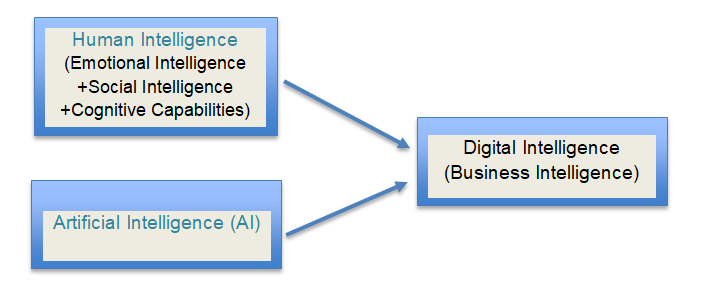
Digital intelligence encompasses the combined human intelligence (social, emotional, and cognitive capabilities) that empowers humans to confront and adjust to the digital realm’s complexities of AI. As humans engage more with Information Technology (IT), a growing intelligence is developing. It has been proposed that acknowledging this intelligence will broaden the range of teaching and learning in the 21st century and impact many aspects of one’s personal and professional life [8]. Contemporary strategic management difficulties highlight organizations’ current challenges in the present-day business landscape. The challenges encompass technological disruption, globalization, international competition, sustainability, environmental responsibility, changing workforce dynamics, data security, privacy, disruptive business models, ethical and social responsibility, agile strategy implementation, customer experience, personalization, and political and regulatory uncertainty [9]. Digital intelligence pertains to the strategic aspects of digital marketing. Customer service is the most relevant factor, but the clinic’s reputation and dentists had a detrimental effect on clients. Hence, these factors necessitate assessment and enhancement. It is suggested to improve the digital marketing approach, such as optimizing Instagram, enhancing optimizing Google Maps, and considering employing a digital marketing agency. In addition, a comprehensive plan was devised to guide dental clinic personnel in implementing these tactics, even without a designated budget for engaging a digital marketing firm [10].
Therefore, digital intelligence refers to the capacity to comprehend and effectively harness the potential of information technology. It is an essential aptitude for business and IT managers in the contemporary economy. The progression of IT and digital intelligence delineates its components, which include a comprehension of how to harmonize strategic management and digital technology plans to the practical outcome of dental clinics and dentistry in this study.
This study proposed digital intelligence (business intelligence), integrating human intelligence (emotional intelligence, social intelligence, and cognitive capabilities) and AI that could be used in strategic management. Business intelligence is used for business companies, and digital intelligence is used for modern organizations, including dentistry and dental clinics, as shown in Figure 3.
Methodology
The qualitative method is adopted to collect data, identify, and assess the issue or problem. Develop a research plan, collect data, analyse data, and write reports for qualitative research. Narrative synthesis is used to evaluate relevant literature. Narrative synthesis summarizes and clarifies synthesis results in academic writing. The content analysis uses verbal, visual, or written evidence to describe a phenomenon objectively. Content analysis helps construct reliable findings. This versatile data analysis method can be used for systematic qualitative reviews. Content analysis methodologies must be changed for periodic qualitative evaluations to accommodate highly ordered and contextualized information to locate knowledge and theory. Conclusion: This study used qualitative content analysis [11, 12, 13, 14]. The content analysis was adopted, and interpretation was done using Free Word Cloud Generator [15].
Results
The results reveal that exaggerated assertions or concealed information jeopardize the well-being of individuals while taking advantage of susceptible individuals, which is morally incorrect and potentially hazardous. Research necessitates both rigor and transparency to uphold its credibility and prevent any conflicts of interest that may compromise the integrity of its findings. Ultimately, adhering to ethical principles safeguards the well-being of patients, upholds professional integrity, and fosters public confidence - the foundation of promoting oral health and a thriving profession.
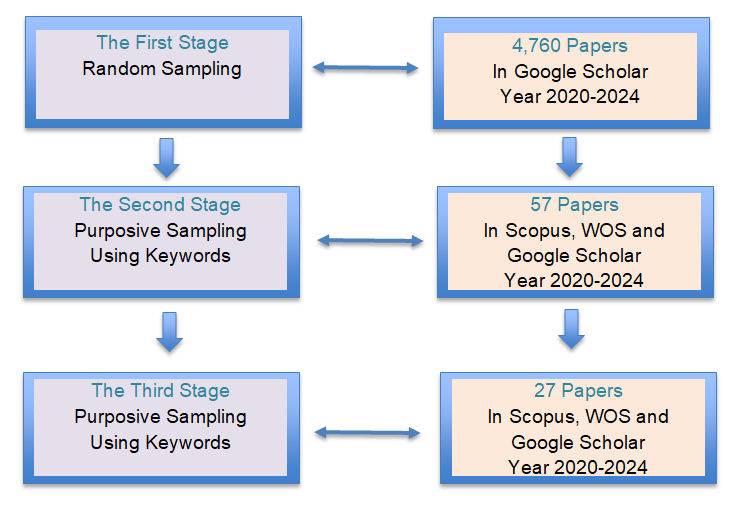
The researchers collected secondary data and online platform observation as a user from July to December 2023. Digital Intelligence is becoming crucial and relates to ethical concerns because engaging in reckless behaviour can have detrimental consequences for patients, damage professional standing, and undermine the confidence placed in healthcare providers. This qualitative study employed a systematic review for random sampling for the first data collection stage and found 4760 scholarly papers in 2020-2024. The second stage, purposive sampling, uses the keywords for dental intelligence, business intelligence, dental clinics, dentistry, and strategic management in 2020-2024. It was found 57 related papers. The third stage was to select the articles in the database that were the most relevant. The review is based on valid secondary data using sources from Google Scholar, Scopus, Web of Science, and reliable online sources from 2020-2024. 27 related papers were found and are shown in Figure 4.
![Figure 5: Word Cloud (results using Free Word Cloud Generator, generated [15]).](/fulltextimages/12053/fig_5.png)
Discussion
According to the previous studies [16, 17, 18, 19, 20, 21, 22, 23, 24, 25, 26, 27], the findings confirmed that implementing digital intelligence (business intelligence) in strategic management for dentistry and dental clinics could be beneficial.
Digital Strategic Management
Implementing digital intelligence in dentistry and dental clinics entails adopting sophisticated patient management systems. It includes electronic dental records, the organization of appointments, and communication systems to improve the overall patient experience.
Telehealth Services
The integration of telehealth services allows dentists to conduct consultations and follow-up appointments remotely. It not only broadens the scope of dental services but also caters to patients who may have geographical or transportation obstacles.
Data analytics for Treatment Plans
It involves using digital intelligence to analyse patient data in dental hospitals and dental clinics in creating personalized treatment plans. It facilitates the provision of focused and highly efficient dental care, hence improving treatment results.
Utilizing Digital Information
Internet marketing and a robust digital presence can simultaneously draw new patients to dental clinics, using digital relationship marketing to build dental patients’ loyalty. It entails leveraging social media, search engine optimization, and other digital marketing tactics to expand one’s reach to a broader audience.
Automating Administrative Duties
Implementing digital intelligence can automate various administrative tasks, including billing, insurance claims, and inventory management. It enhances efficiency and diminishes the likelihood of errors in normal operational activities.
Utilizing Digital Imaging and Diagnostic Technologies
It improves the accuracy of dental diagnostics in dentistry. These technologies encompass 3D imaging, intraoral cameras, and CAD/CAM systems, enhancing dental operations’ precision and efficiency. CAD/CAM refers to integrating Computer-aided design (CAD) and Computer- aided manufacturing (CAM).
Cyber Security Measures
With the shift of dental clinics towards digital platforms, it is imperative to give utmost importance to cybersecurity. By implementing resilient cybersecurity measures, patient data is protected, guaranteeing adherence to privacy standards and upholding trust in the digital environment.
Continuous Training in Digital Technologies
Dental professionals need to optimize the benefits of digital intelligence. This training should focus on the most recent advancements and updates in digital dentistry. It guarantees that the clinic stays at the forefront of innovations and delivers top-notch care.
Enhancing Patient Comprehension of Oral Health and Promoting Preventative Care Practices
This can be achieved by utilizing digital channels, such as interactive websites and educational videos, for patient education. Examples are dental clinic websites, TikTok, and Instagram.
Feedback Mechanisms
Digital intelligence can be utilized to establish feedback mechanisms, enabling patients to offer immediate input on their experiences. It facilitates dental clinics implementing on-going enhancements and adjusting to evolving patient requirements. Examples are the Facebook Fan page and the Line application.
Conclusion
Integrating digital utilization into strategic management for dentistry and dental clinics brings about a revolutionary transformation in oral healthcare delivery, enhancing efficiency, personalization, and accessibility of dental appointments, digital marketing, communications, and processes. Digital intelligence (business intelligence) in dentistry and dental clinics could be related to ethics regarding dental marketing and research, involving responsible and transparent promotion of dental products, services and research with integrity and patient welfare in mind. Marketers that exaggerate therapeutic benefits or mislead patients may encourage needless operations. Maintaining patient privacy in marketing materials is also essential. Dental clinics and researchers must get informed consent, maintain confidentiality, and prioritize dental patient safety. Essentially, ethical considerations are crucial in dentistry marketing and research for the following reasons: Ensuring the safety of patients, upholding professional ethics, and fostering public confidence.
The presence of crucial digital intelligence (business intelligence) provides several significant reasons for dentistry and dental clinics to avoid ethical issues as follows:
- Ensuring the Safety and Welfare of Patients
- Deceptive Assertions and Data: overstated commitments or incorrect depictions of therapies might harm patients by creating unrealistic hopes or promoting unneeded operations.
- Privacy and data protection are essential considerations in dental research and marketing, as they frequently involve handling sensitive patient data. Adhering to ethical norms guarantees the appropriate acquisition of informed consent, safeguarding of data, and conscientious utilization of information.
- Vulnerable patients, particularly those with poor dental knowledge or financial resources, are susceptible to being exploited by unethical marketing or research tactics involving coercion and manipulation.
- Conflicts of interest arise when dentists and researchers must prioritize the well-being of their patients over their gain. Ethical principles mitigate conflicts of interest, such as endorsing particular products or therapies for personal financial gain, such as those found in digital advertising.
- Competence and honesty: Ethical behavior necessitates dentists and researchers to maintain the utmost professionalism, guaranteeing proficiency in their respective domains and delivering truthful and precise information.
- Transparency and accountability: Ethical procedures promote trust by guaranteeing openness in research methodologies, sources of funding, and possible conflicts of interest.
- Credibility and reputation: Upholding ethical principles ensures the reliability of dental research and marketing, fostering trust in the field and motivating patients to pursue essential treatment.
- Dental professionals and researchers can contribute to a reliable and patient-focused healthcare environment by prioritizing ethical issues, eventually encouraging oral health results.
Implications
Ethical concerns are crucial when adopting digital intelligence because engaging in reckless behaviour can have detrimental consequences for patients, damage professional standing, and undermine the confidence placed in healthcare providers. Exaggerated assertions or concealed information jeopardize the well-being of individuals while taking advantage of susceptible details, which is morally incorrect and potentially hazardous. Digital marketing and research necessitate transparency to uphold its credibility and prevent ethical issues that may compromise the integrity of the usefulness of digital intelligence. Ultimately, adhering to moral principles safeguards the well-being of patients, upholds professional integrity, and fosters public confidence - the foundation of promoting oral health and a thriving profession. Ethics in dental marketing using digital intelligence involve responsible and transparent dental services with patient welfare in mind. Digital marketing that exaggerates therapeutic benefits or misleads patients may encourage needless operations. Maintaining patient privacy in marketing materials is also essential. Researchers must get informed consent, maintain confidentiality, and prioritize patient safety. The recommendation for the dentistry industry is to address these issues to maintain trust, professional standards, and patient well-being in marketing and research. Moreover, questionnaires and interviews are necessary for further study to understand better and adopt perceptions from respondents (dental patients and stakeholders).
Limitations and Recommendations
The suggestion for the dentistry industry is to address the issues regarding digital intelligence to maintain trust, professional standards, and patient well-being in marketing and research. However, questionnaires and interviews are necessary for further study to understand better and adopt perceptions from respondents (dental patients and stakeholders). Participants are required for more comprehensive and insightful results. Therefore, the researcher recommended questionnaires and interviews regarding respondents to continue research on digital intelligence in dentistry and dental clinics.
Acknowledgement
The authors acknowledge Manipal GlobalNxt University, Malaysia; Bangkokthonburi University, Thailand and the University of Phayao, Thailand to encourage their faculty members in conference and journal contributions. Also, it is thankful to the Open Access Journal of Dental Sciences for inviting me; Prof. (Adj.) Dr. Supaprawat Siripipatthanakul is one of the editorial board members.
References
-
Mahdi SS, Battineni G, Khawaja M, Allana R, Siddiqui MK, et al. (2023) How Does Artificial Intelligence Impact Digital Healthcare Initiatives? A Review of AI Applications in Dental Healthcare. International Journal of Information Management Data Insights 3(1): 100144.
-
Rekow ED (2020) Digital Dentistry: The New State of the Art-Is it Disruptive or Destructive? Dental Materials 36(1): 9-24.
-
Shafi I, Fatima A, Afzal H, Diez IDLT, Lipari V, et al. (2023) A Comprehensive Review of Recent Advances in Artificial Intelligence for Dentistry E-Health. Diagnostics 13(13): 2196.
-
Dhopte A, Bagde H (2023) Smart Smile: Revolutionizing Dentistry with Artificial Intelligence. Cureus 15(6): e41227.
-
Hung KF, Yeung AWK, Bornstein MM, Schwendicke F (2023) Personalized Dental Medicine, Artificial Intelligence, and their Relevance for Dentomaxillofacial Imaging. Dentomaxillofacial Radiology 52(1): 20220335.
-
Jarrahi MH, Lutz C, Newlands G (2022) Artificial Intelligence, Human Intelligence and Hybrid Intelligence based on Mutual Augmentation. Big Data & Society 9(2): 20539517221142824.
-
Yeke S (2023) Digital Intelligence as a Partner of Emotional Intelligence in Business Administration. Asia Pacific Management Review 28(4): 390-400.
-
Adams NB (2004) Digital Intelligence Fostered by Technology. Journal of Technology Studies 30(2): 93-97.
-
Ogli LIK, Ogli NNN (2023) Modern Strategic Management Issues. Science and innovation 2(13): 987-993.
-
Nabilla MA, Arief NN (2023) Digital Marketing Strategy to Attract New Customer for Dental Clinic (Case Study: Bandung Dental Center). International Journal of Current Science Research and Review 6(7): 4272-4283.
-
Lim L (2023) Digital Marketing Strategies: A Case of Charles & Keith. Advance Knowledge for Executives 2(2): 1-11.
-
Jaipong P (2023) Business Model and Strategy: A Case Study Analysis of TikTok. Advance Knowledge for Executives 2(1): 1-18.
-
Kok SL, Siripipatthanakul S (2023) Artificial Intelligence (AI) Adoption: The Case of the Malaysian Financial Industry. Advance Knowledge for Executives 2(4): 1-15.
-
Kraiwanit T, Limna P, Siripipatthanakul S (2023) NVivo for Social Sciences and Management Studies: A Systematic Review. Advance Knowledge for Executives 2(3): 1-11.
-
Free Word Cloud Generator (2024)
-
Lelyana N (2023) Strategic Analysis in the Application of Digital Technology in Dental Practice. Journal of Social Interactions and Humanities 2(3): 253-274.
-
Da Costa CB, Peralta FDS, Ferreira de Mello ALS (2020) How has Teledentistry been Applied in Public Dental Health Services? An integrative review. Telemedicine and e-Health 26(7): 945-954.
-
Chen YW, Stanley K, Att W (2020) Artificial Intelligence in Dentistry: Current Applications and Future Perspectives. Quintessence Int 51(3): 248-257.
-
Nazeli B, Sugiarto Y, Wahyudi A (2023) Digital Marketing Analysis in Dental Healthcare: The Role of Digital Marketing in Promoting Dental Health in the Community. East Asian Journal of Multidisciplinary Research 2(11): 4337-4360.
-
Alauddin MS, Baharuddin AS, Mohd Ghazali MI (2021). The Modern and Digital Transformation of Oral Health Care: A Mini-Review. Healthcare 9(2): 118.
-
Cen Y, Huang X, Liu J, Qin Y, Wu X, et al. (2023) Application of Three-Dimensional Reconstruction Technology in Dentistry: A Narrative Review. BMC Oral Health 23(1): 630.
-
Javaid M, Haleem A, Singh RP, Suman R (2023) Towards Insighting Cybersecurity for Healthcare Domains: A Comprehensive Review of Recent Practices and Trends. Cyber Security and Applications 1: 100016.
-
Joda T, Zitzmann NU (2022) Personalized Workflows in Reconstructive Dentistry-Current Possibilities and Future Opportunities. Clinical Oral Investigations 26(6): 4283-4290.
-
Srivastava R, Tangade P, Priyadarshi S (2023) Transforming Public Health Dentistry: Exploring the Digital Foothold for Improved Oral Healthcare. International Dental Journal of Students Research 11(2): 61-67.
-
Rao GKL, Mokhtar N (2023) Dental Education in the Information Age: Teaching Dentistry to Generation Z Learners Using an Autonomous Smart Learning Environment. Handbook of Research on Instructional Technologies in Health Education and Allied Disciplines, IGI Global pp: 243-264.
-
Siripipatthanakul S (2022) The Influence of COVID-19 Perceptions and COVID-19 Worries on Individuals’ Intentions to Postpone Dental Visits. Open Access Journal of Dental Sciences 7(1): 000327.
-
Phuangsuwan P, Siripipatthanakul S, Hadi S, Suttipong R, Wattanakul P (2023) A Review of Sustainable Development Guidelines for Green Universities in Thailand. Advance Knowledge for Executives 2(4): 1-11.
- Diagnosis and Management of Mental Nerve Paresthesia Secondary to Apical Periodontitis of Mandibular Second Premolar: A CBCT Based Case Report
- A Randomized, Double Blinded Clinical Trial to Compare the Effect of Oral Premedication (Diclofenac Potassium or Dexamethasone) on Post-Operative Pain Following Pulpectomy
- Modified Lip Repositioning Technique for the Management of Excessive Gingival Display
- Integral Role of Non-Dental Providers and Fluoride Dissemination
- Root Canal Treatment Rate in Deciduous Teeth Among 6-Year- Olds in the Era of Discontinuing Water Fluoridation - Historical Cohort Study
- The Impact of the Notch1 on the Migratory Capacity and the Expression of E-Cadherin and CyclinD1 in Ameloblastoma Cells