
A Management Model for Leadership in Diversity and Equality Affecting Human Resource Satisfaction and Performance in Dentistry
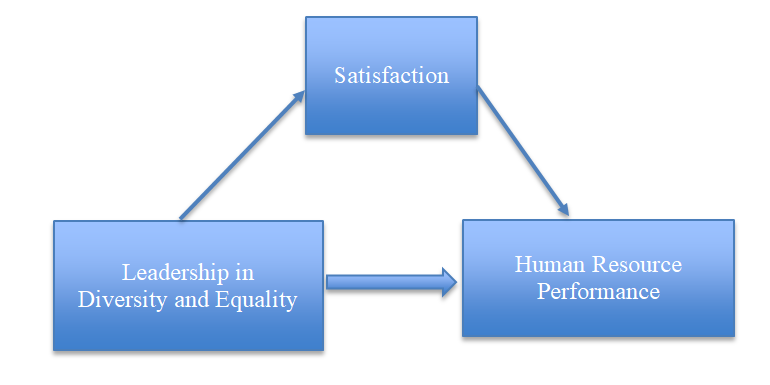
The field of dentistry is undergoing quick and dynamic changes, requiring the integration of digital technology and human resource management to ensure sustainable businesses. There is a growing need for leadership to enhance diversity and equality in the workplace. Leadership in diversity and equality significantly impact dental members’ satisfaction and performance. This qualitative study uses a systematic review utilizing reliable sources, including Google Scholar, Web of Science (WOS), and Scopus databases. The researchers gathered scholarly publications published between 2019 and 2024 through purposive sampling. The results demonstrate that enhancing human resource management (HRM) in leadership for dentistry can enhance ethical considerations and ensure a resilient dental workforce that embraces diversity and equality guided by leadership principles. The way to promote gender equality is to avoid words like “women’s leadership” or “men’s leadership” that reinforce gender stereotypes but suggest using leadership in diversity and equality that affect satisfaction and human resource performance. Leadership for diversity and quality has been a prominent topic of discussion to improve human resource satisfaction and performance in dental management settings and dentistry. It is suggested that questionnaires, interviews, or focus groups should be explored as methods to get more insights from participants for further studies. The findings could be applied to any company and organization, not only in dentistry and dental management settings.
Abbreviations
CEO: Chief Executive Officer; HRM: Human Resource Management; SHRM: Strategic Human Resource Management; AI: Artificial Intelligence; DQ: Diversity Intelligence; HRD: Human Resource Development.
Introduction
The dental industry needs inspiring role models and leaders in the future. Identifying and developing human soft skills can improve quality and ensure the sustainability of the dental business. Leadership is complicated and multidimensional, according to current scholarship. Effective leadership traits have been widely debated in business settings. Modern organizations emphasize leadership and the necessity to identify leaders for diversity and equality. It aspires to promote and develop organizational reforms based on leadership in diversity and equality. Some studies support a “double bind,” which is that women CEOs must be compassionate, powerful, and ambitious, which helps female leaders overcome stereotypes. Leaders may affect gender prejudices and women’s achievement. Women who fulfil feminine stereotypes lack leadership, while men lack warmth and likability. Female and masculine features define the “androgynous” leader. Bravery and warmth enable women to lead and break gender stereotypes. Successful women leaders are skilled. Women leaders develop trust and connection with their people via teamwork, empathy, and emotional intelligence. Women leaders overcome leadership challenges via mentoring and networking. Mentors, sponsors, and peers assist women leaders. Women leaders must confront biases, lead balanced, and use their abilities and experiences to break the double bind. Women may manage and diversify leadership with these strategies. Gender equality and women empowerment are vital to humanity’s inclusive, just, and sustainable future. Still, the 1995 Beijing Declaration and Platform for Action’s progress on women’s rights must be more consistent among nations and economies. Scholars worldwide recognize issues, discover solutions, and propose strategies to advance women’s rights and leadership [1, 2, 3, 4]. Although some studies are inclined toward women’s leadership, this article provides context and quotes the latest data on leadership, diversity, equality, satisfaction, and human resource performance that could be adopted in dentistry without specific for men or women. Practical leadership in gender diversity and equality must be acknowledged in equality campaigns, and all genders should be considered.
Literature Review
Human Resource Management (HRM) for Diversity Intelligence and Talents in Dentistry
Today’s dynamic world requires Strategic Human Resource Management (SHRM) for organizational success. SHRM has grown from an administrative role to a strategic partner in business goals as firms adjust to globalization and technology. Technological integration in HR, remote work, and employee well-being as a key SHRM aspect are discussed in the essay. Data analytics and AI have changed HR, enabling data-driven decision-making and predictive talent management. Remote work is becoming more prevalent, forcing companies to reconsider hiring, training, and retention methods. SHRM paradigms emphasize adaptability for managing a distributed workforce and promoting organizational coherence. Companies are realizing that employee well-being promotes morale, productivity, and sustainability. Strategic HRM developments and advances in the 21st century are thoroughly examined in this essay. SHRM emphasizes technological integration, remote work, and employee well-being as strategic HR strategies for the modern workplace [5, 6, 7].
Promoting diversity and inclusion in the workplace has become a significant concern for human resource managers in today’s contemporary environment characterized by fast change. The action in question is not just the moral thing to do, but it is also a strategic move that has the potential to result in a more prosperous organization. The professionals who work in human resources play a significant part in developing a diverse workforce and ensuring that each workforce member is recognized and appreciated. This all- encompassing book will discuss the significance of diversity and inclusion, their advantages, and the techniques that human resource managers can practice creating a more diverse and inclusive workplace [8, 9].
Perspective on workforce diversity from human resource management (HRM) is essential. From this perspective, the development and implementation of organizational initiatives that (1) increase the numerical representation of historically excluded groups, (2) empower a diverse workforce once it is in place to participate fully in organizational decision-making, and (3) ensure the inclusion of a diverse workforce in every aspect of organizational life are some of the most important aspects to consider. Business objectives, shifts in the labor market, globalization, and competitive advantage are all factors considered in the business case for human resource diversity initiatives. These strategies include recruitment, selection, development, and retention of a diverse workforce [10, 11].
Leaders, Human Resource Management (HRM), and Human Resource Development (HRD) experts should manage for talent inter-personnel diversity perspective or talent diversity. Developing all employees by position and accommodating high-potential personnel is possible. To remain relevant to leaders and employees, talent management systems must evaluate and maintain workforce inter-personnel diversity. Managing inter-personnel diversity requires forward-thinking approaches like establishing unity among employees, valuing their qualifications, training and developing them, supporting their self-development, providing career pathways and management systems to support them, and valuing their time. Diversity intelligence (DQ) and acknowledging and comprehending all employees give leaders workforce inter-personnel diversity expertise to boost company performance [12, 13].
Leadership in Diversity and Equality
Leadership development is crucial to company success, but more is needed to know how it changes as the organization grows. A leadership development system with simple principles and programs interwoven into regular meetings. Multidimensional views of leadership development that links managers, employees, customer outcomes and corporate growth. Two new key points to enhance advanced leadership development system descriptions: It is customer- focused and system-wide, not just business-specific [14, 15]. All institutes have gender-based discrepancies, but the top leadership level (principals/deans) has the most males (84.5%). Mid-level leadership roles showed a modest gender gap, with over 40% of female leaders in medical/ dental education. It identified gender-based disparities in lived experiences for leadership traits, paths, obstacles, and support. Women in some county, such as Pakistan, are underrepresented in medical and dental college leadership, endure gender-based discrimination, and struggle to combine work and life. These findings are crucial for government, organizations, human resource managers, and policymakers as they consider laws, regulations, and support mechanisms to improve gender balance and help current and aspiring leaders [16, 17].
There is a global dilemma regarding the emergence of leaders. Leadership research indicates that the emergence processes should be modified to encourage competent, practical, responsible, and inclusive leadership behaviors. The concept of leadership emergence provides insights into how the process of leadership emergence might be reformed to promote equality, diversity, and inclusion. A classification system for Leadership Effectiveness (LE) that includes precise definitions, theoretical frameworks, and the resulting organizational outcomes is presented. The leadership transformation process to effectively tackle various global challenges afflicting organizations presents a comprehensive process model that outlines concerns regarding leadership formation and strategies for transforming leadership emergence through leadership interventions [18, 19].
In organizations that include a workforce consisting of individuals from various backgrounds, inclusive leadership is considered necessary to ensure that diverse personnel are fully valued and engaged. Limited research explores how leadership fosters an inclusive environment within diverse teams. There is an impact of inclusive leadership on promoting inclusivity within heterogeneous teams. Inclusive leadership positively moderates the relationship between team ethnic-cultural diversity and inclusive climate. However, the increased team diversity only sometimes results in an inclusive workplace. Effective leadership that embraces inclusivity is necessary to foster an environment where diverse team members are appreciated for their unique contributions to work methodologies. Effective leadership is essential for promoting inclusivity among teams of individuals from varied backgrounds [20, 21].
Leadership in Diversity and Equality, Satisfaction and Human Resource Performance
Leadership that includes individuals of different genders influences the development and implementation of policies, initiatives, and practices to manage diversity. Utilizing stakeholder theory, board gender diversity and senior management team gender diversity have a favorable influence on diversity-related human resource efforts and work-life initiatives. This study utilizes strategic human resource management theory and ability-motivation- opportunity theory to propose and examine the favourable impacts of human resources and work-life initiatives on organizational financial performance. Contingency theory suggests how an inclusive, diverse environment affects the relationship between initiatives and financial success. There is a favorable correlation between the diversity of genders on the board and the effectiveness of human resource and work-life initiatives that aim to manage diversity. Work- life initiatives correlate with higher operating revenue and profit before tax. Moreover, there was a significant positive correlation between the implementation of work-life initiatives and the profitability of firms operating in a highly diverse environment [22, 23].
Methodology
A narrative summary followed this comprehensive literature review. Narrative synthesis incorporates academic writing to summarize and explain results. Qualitative research involves planning, data collection, analysis, and report writing. Content analysis is a qualitative method that uses verbal, visual, or written data to describe phenomena and draw conclusions objectively. Systematized qualitative reviews benefit from flexible data analysis. Systematic qualitative assessors must adopt content analysis approaches to identify knowledge and theory in organized and contextualized sources. This study employed qualitative content analysis [24, 25, 26].
The scholarly papers were based on Scopus, Web of Science (WOS) and Google Scholar in 2022-2024. Purposive sampling selected 26 articles using Figure 1 leadership, diversity, equality, satisfaction, and performance as keywords. In the first screening stage for the related topic, 21,000 results were found. The second stage was for select papers in 2019-2024, and 3,930 results were found. In the last stage, the four authors select papers for 26 articles that most relate to this topic. Grammar and plagiarism in this study employed Grammarly (97% grammar and 4% plagiarism).
Results
Discussion
According to several previous studies, such as Carlo GSD [3], Eshete SK, et al. [4], Kess MAJ, et al. [5], Smith MA [6], Groenewald ES [7], Wang J [8], Igbrude P [9], Chukwudi OA, et al. [10], Javed H [11], Hughes C [12], Kamasak R, et al. [13], Sharma P, et al. [16], Tinay DT, et al. [18] and Kusumaningrum DAD, et al. [21]. Due to rapid change, dentistry must integrate digital technologies and human resource management for sustainable enterprises. More leadership to promote workplace diversity and equality is needed. Diversity and equality leadership affects dental staff satisfaction and performance. A systematic review of Google Scholar, Web of Science (WOS), and Scopus databases was used in this qualitative study. Based on purposive sampling was used to collect 2020–2024 scholarly articles and for new articles. The findings confirm that to improve human resource management (HRM) in dentistry, employing leadership can improve ethics and create a resilient dental staff that values diversity and equality under leadership principles. Instead of “women’s leadership” or “men’s leadership” that reinforce gender stereotypes, encourage diversity and equality leadership that affects happiness and human resource performance. Leadership for diversity and quality has been discussed to improve dental management and dentistry human resource satisfaction and performance. Any gender, not only men and women, should be considered. Thus, when campaigning for equality, gender diversity must be considered. Avoid using men’s or women’s leadership to promote gender equality. Avoid using phrases like “women’s leadership” or “men’s leadership” since they may promote gender stereotypes and imply that certain leadership traits are gender specific. Practical leadership skills are not gender specific. Leadership requires inspiring, motivating, communicating, deciding, and executing. All genders share these traits. More than just men and women should discuss equality. People can identify with genders other than male and female.
Conclusion
The concept of leadership in diversity and equality is a highly intricate and multifaceted phenomenon, as evidenced in the existing literature and its influence on satisfaction and human resource performance. Leaders empower and value everyone by using inclusive language and perspectives, allowing people to share their skills and attitudes. It encourages diversity, creativity, and social justice. The dental sector will require influential role models and visionary leaders in the coming years. Enhancing and cultivating human soft skills can enhance the caliber and guarantee the long- term viability of the dentistry enterprise. Current literature suggests that leadership is a complex and multifaceted concept. The discussion surrounding practical leadership attributes has been extensive in business environments. Contemporary organizations prioritize leadership and the need to choose leaders who promote diversity and equality. Its goal is to foster and advance organizational reforms centered on leadership in diversity and equality.
Recommendations
This scholarly paper is a systematic review and may not include respondents’ perceptions. Thus, the researchers recommend further survey research, such as questionnaires or interviews. Digital technology, communication, and management abilities are used in dentistry and could be other determinant factors of management for further studies.
Acknowledgement
The researchers thank the Open Access Journal of Dental Sciences, which always professionally supports authors in paper publication. The researchers also thank their affiliates, Bangkok Thonburi University, University of Phayao, Thailand and Manipal GlobalNxt University, Malaysia, for encouraging the faculty members to publish their scholarly papers in reputable journals.
References
-
Antoniadou M (2022) Leadership and Managerial Skills in Dentistry: Characteristics and Challenges Based on a Preliminary Case Study. Dent J (Basel) 10(8): 146.
-
Chikwe CF, Eneh NE, Akpuokwe CU (2024) Navigating the Double Bind: Strategies for Women Leaders in Overcoming Stereotypes and Leadership Biases. GSC Advanced Research and Reviews 18(3): 159-172.
-
Carlo GSD (2023) Defining ‘Gender’ Across Europe: A Linguistic Analysis of the Definition, Translation, and Interpretation of the Word ‘Gender’ from the Beijing Declaration to the Istanbul Convention. International Journal for the Semiotics of Law-Revue Internationale de Semiotique Juridique 36(3): 1217-1238.
-
Eshete SK, Amentie C (2024) Strategic Human Resource Management (SHRM) and Inclusion for promoting Workplace Creativity and Innovation: Systematic Review.
-
Kess MAJ, Tula ST, Bello BG, Omotoye GB, Daraojimba AI (2024) Strategic Human Resource Management in the 21st Century: A Review of Trends and Innovations. World Journal of Advanced Research and Reviews 21(1): 746-757.
-
Smith MA (2022) InclusionMetrics: Defining Success of Diversity and Inclusion. Unlocking the Potential of Diversity in Organizations pp: 215-233.
-
Groenewald ES (2024) Inclusive Workplaces: The Key Strategies for Sustainable Diversity Practices. International Multidisciplinary Journal of Research for Innovation, Sustainability and Excellence (IMJRISE) 1(1): 156-161.
-
Wang J (2023) The Diversity and Inclusion Report: The Rise of a New Corporate Public Reporting Genre. Journal of Business and Technical Communication 38(2): 95- 136.
-
Igbrude P (2021) Implementing Diversity & Inclusion Strategies in Higher Education Institutions in Ireland and Its Impact on Employee Perceptions. Dublin, National College of Ireland.
-
Chukwudi OA, Eusebius A (2023) Diversity, Equity, and Inclusion (DEI): Exploring the Effectiveness of Human Resource Strategies and Practices in Fostering Diversity, Equity, and Inclusion in the Workplace and Understanding the Benefits of a Diverse Workforce in Nigeria. Journal for Studies in Management and Planning 9(9): 1-22.
-
Javed H (2024) Creating a Positive Workplace Culture: Diversity, Equity, and Inclusion Initiatives. Innovative Human Resource Management for SMEs pp: 367-394.
-
Hughes C (2019) Using Workforce Inter-Personnel Diversity as a Unique Talent Management System Component. Workforce Inter-Personnel Diversity pp: 47-80.
-
Kamasak R, Alkan DP, Yalcinkaya B (2023) Emerging Trends of Industry 4.0 in Equality, Diversity, and Inclusion Implementations. Contemporary Approaches in Equality, Diversity and Inclusion: Strategic and Technological Perspectives pp: 129-148.
-
Fabisch A, Kjellström S, Ockander M, Avby G (2024) Transformations towards an Integrated Leadership Development System-A Longitudinal Study in a High- Performing Public Organization. In: Leadership 20(3).
-
Shahzad M, Jamil B, Mehboob B, Mahboob U, Elmigdadi F (2024) Gender-Based Differences in the Representation and Lived Experiences of Academic Leaders in Medicine and Dentistry: A Mixed Method Study from Pakistan. Research Square Platform LLC.
-
Sharma P, Srinivas B, Shunmugasundaram M, Rai SK, Kumar OP, et al. (2023) Innovations in Human Resource Management: Adapting to the Future of Work. Journal of Informatics Education and Research 3(2).
-
Byrd MY, Scott CL (2024) Diversity in the Workforce: Current Issues and Emerging Trends. 3rd (Edn.), Routledge, USA.
-
Tinay DT, Ayaz O, Ozbilgin M (2024) Transforming Leadership Emergence through Equality, Diversity and Inclusion. Edward Elgar Publishing 228-241.
-
(2024) Organizational Citizenship Behaviour (OCB) in India: Emerging Trends and Future Directions pp: 165.
-
Ashikali T, Groeneveld S, Kuipers B (2021) The Role of Inclusive Leadership in Supporting an Inclusive Climate in Diverse Public Sector Teams. Review of Public Personnel Administration 41(3): 497-519.
-
Kusumaningrum DAD, Winarno A (2024) Organizational Planning and Business Human Resource Management: A Systematic Qualitative Review. Business and Investment Review 2(3): 28-37.
-
Baker M, Ali M, French E (2021) Leadership Diversity and its Influence on Equality Initiatives and Performance: Insights for Construction Management. Journal of Construction Engineering and Management 147(10): 04021123.
-
Adeniyi IS, Hamad NMA, Adewusi OE, Unachukwu CC, Osawaru B, et al. (2024) Gender Equality in the Workplace: A Comparative Review of USA and African Practices. World Journal of Advanced Research and Reviews 21(2): 763-772.
-
Lim L, Siripipatthanakul S (2023) A Review of Artificial Intelligence (AI) and ChatGPT Influencing the Digital Economy. International Conference on Research and Development (ICORAD) 2(2).
-
Kok SL, Siripipatthanakul S (2024) Foreign Direct Investment (FDI) in Malaysia. Advance Knowledge for Executives 3(1): 1-9.
-
Limna P (2023) Artificial Intelligence (AI) in the Hospitality Industry: A Review Article. International Journal of Computing Sciences Research 7: 1306-1317.
- Diagnosis and Management of Mental Nerve Paresthesia Secondary to Apical Periodontitis of Mandibular Second Premolar: A CBCT Based Case Report
- A Randomized, Double Blinded Clinical Trial to Compare the Effect of Oral Premedication (Diclofenac Potassium or Dexamethasone) on Post-Operative Pain Following Pulpectomy
- Modified Lip Repositioning Technique for the Management of Excessive Gingival Display
- Integral Role of Non-Dental Providers and Fluoride Dissemination
- Root Canal Treatment Rate in Deciduous Teeth Among 6-Year- Olds in the Era of Discontinuing Water Fluoridation - Historical Cohort Study
- The Impact of the Notch1 on the Migratory Capacity and the Expression of E-Cadherin and CyclinD1 in Ameloblastoma Cells