
Knowledge and Associated Factors of Obstetric Danger Signs among Pregnant Women at Tumu Government Hospital: A Health Facility Based Cross-Sectional Study
The commencement of pregnancy requires close medical care. However, the inability of pregnant women to maintain optimal health result to pregnancy complications. This study sought to assess knowledge and associated factors on obstetric danger signs among pregnant women attending antenatal care at Tumu Government Hospital. A cross-sectional design adopted a simple random sampling technique to recruit 399 participants. A structured questionnaire was developed to collect data. Study data were analysed using Statistical Package Social Sciences (27) and analysed descriptively and inferentially with an alpha value <0.05 indicative of significant relationship between predictors and outcome variable. About 17% of participants had poor knowledge of obstetric danger signs. Factors such as occupation [p=0.001] associated with poor knowledge on obstetric danger signs. First trimester [p=0.012], Second trimester [p=0.001], Multigravida [p=.006] and Previous skilled birth [p=0.0001] significantly predicted poor knowledge on obstetric danger signs. Awareness of pregnant women through more intensive health education programs would help avert the complications associated with obstetric signs. Further studies are recommended to examine the role of traditional practices in the emergence of obstetric danger signs among pregnant women in the community.
Introduction
Pregnancy is crucial period in women and requires critical medical care [1]. During pregnancy, expectant mothers are exposed to obstetric danger signs that worsen their wellbeing and that of the baby [2], leading to maternal and neonatal mortalities particularly in underdeveloped regions of the world [3]. Given that maternal mortalities arising from obstetric danger signs are on ascendency particularly in underdeveloped countries who are hardest hit, in spite of these signs being preventable when detected earlier [4]. The sustainable development goal three. [3] which aimed at reducing avoidable pregnancy related deaths to <70 per 100 000 live births and neonatal mortality to 12 per 1000 live births [5], in addition to the introduction of antenatal care in the 20th century as a strategy to ensure early prevention and management of pregnancy associated complications [6]. Per this, it is expected that, every pregnant woman is aware of the onset of dangerous obstetric conditions, helping pregnant mothers to make the rightful decisions by taking appropriate health intervention and prompt care to improve of their health [3].
Worldwide, thousands of pregnant women lose their precious lives due to pregnancy associated complications [7]. Evidently, on daily basis about 830 pregnant die due to pregnancy danger signs and about 66% of these deaths occurs in Sub-Saharan Africa [3, 8]. Nearly 15% of pregnancies that end in obstetric complications such as bleeding, pre- eclampsia and infections contribute to global estimate of 10.7million of maternal mortality over last two decades [9]. Available data indicates that, the poor knowledge of pregnant women on obstetric danger signs is a major determinant of pregnancy complications in Africa [10, 11, 12]. Additionally, it is revealed that, the inadequate knowledge of expectant mothers on pregnancy danger signs contributes to poor pregnancy health outcome [4, 13]. In Ghana, available evidence found that, the increase in maternal death despite significant interventions such as focused antenatal care and routine clinical care are attributed to mother’s inability to recognise obstetric danger signs particularly those in rural settings [14].
Although, Ghana had recorded a significant improvement in enhancing maternal knowledge on pregnancy danger signs, available literature established in the northern part of Ghana indicated that, about 45% of pregnant women are unable to recognise obstetric danger signs, making them unable to report to early antenatal care [15]. Expectant mothers accessing health care at the Sissala East District is still battling with challenges of obstetric complications. For the past two years, there had been an increase of obstetric danger signs of expectant mothers from 13.3% to 16.3% at the Tumu Government Hospital contributing to both maternal and neonatal complications. Additionally, there is dearth of data on expectant mother’s knowledge on obstetric danger signs [16]. To address these gaps, this study aimed at determining knowledge and associated factors of obstetric danger signs among pregnant women at the Tumu Government Hospital, so that appropriate interventions and policies would be instituted to increase expectant mothers understanding and early recognition of obstetric danger signs.
Methods
Study Setting and Design
The Sissala East District is one of the eleven districts of the Upper West Region of Ghana which has its capital at Tumu. The district is bounded to the north by the republic of Burkina-Faso, to the east by Upper East Region and South by Wa East district and the west by Mamprusi and Nadowli district. The district has a total land area of 4600sqkm with most of the inhabitants being subsistent farmers. The district has only one rainy season beginning from May to September. The district has 62 communities which have been divided into four Area Councils and one town council. The languages spoken are: Sissali, Grunni and Dagaari. However, Akan, Hausa, and English are widely spoken particularly in the district capital. Islam, Christianity and traditional African religion are practiced in the district. However, the effects of some religious beliefs have negative effects on the health of the people, since some of these beliefs have seriously undermined the acceptance of some health messages The Tumu Government Hospital is the only referral health facility for the nearby health centres in the district. The facility runs a twenty-four-hour service with general out- patient consultations, reproductive and child health service, obstetrics and gynaecology care among other important services. The study was quantitative and employed a cross- sectional study design to determine pregnant women’s knowledge and associated factors of obstetric danger signs during pregnancy. A cross sectional study design as an observational type of study in which the researcher employs to measure the outcome and the exposure at the same time.
Sample Size and Sampling Technique
2
2e =z pq n for By employing a simple Cochran Formulae
estimating sample size and considering a 45% of prevalence of obstetric danger signs among pregnant women [15], the required sample size of 399 pregnant women was estimated for the study considering a 5% unresponsive rate. Using the daily antenatal care attendance register, the study adopted a simple random sampling technique in selecting eligible participants into the study.
Data Collection Tool and Techniques
A structured questionnaire was employed to collect data for the study. The questionnaire was developed based on the study objectives and were into three sections. The first section contained the sociodemographic characteristics of participants which comprised of eight questions. The second section consisted of participants’ knowledge on obstetric danger signs and had eleven questions. The third section measured the obstetric factors that influences participants knowledge on pregnancy danger signs and had fourteen questions.
Prior to data collection, two research assistants were sufficiently trained in regard to educating participants about the objectives and significance of their inclusion into the study. They also provided assistance during the data collection phase of the study. Data collection from eligible and consented participants for the study was for period of two months and a one on one interview was scheduled between participants to collect data. During that period, the questionnaires were read and filled out for participants who could not read or write after they had been explained in their local language. However, for participants who could read and understand the questionnaire was given to them to answer by themselves. For participants to agree and partake in the study, they were made without coercion to sign or thumbprint on a well-written consent form after the study had been explained to them in a language that they understand.
Data Analysis
Data was manually entered into the Statistical Package for Social Sciences version 27 (USA) and managed. Categorical variables were assigned value codes and analysed into frequencies and percentages whilst mean and standard deviation was estimated for continuous variables with normal data distribution. Pearson Chi-square test was conducted to measure the association between the dependent and the independent variables. In the multivariate model, binary logistics regression was conducted to determine the odds of factors that influenced participants knowledge on obstetric danger signs at an alpha value of <0.05 considering a 95% level of confidence. Findings were projected using tables and charts.
Study Limitations
There could be a possibility of response bias due to the nature of self-reported data by participants. Again, since the study assessed participants at a single encounter, causal relationships between the dependent and independent variables cannot be determined.
Research Ethics
Ethical clearance for the study was sought from the Ethics review committee board of Ghana Health Service with approval number (GHS-ERC: 030/10/22). Permission was also sought from the Regional Director of Health and the Municipal Director Health Service at Tumu municipality before the collection of data. Informed consent of the study was obtained from participants by reading and explaining to them in the language that they understand before being enrolled by signing or thumb printing to confirm approval. Participants were informed that participation in the study was strictly voluntary. That they have the right to withdraw from the study at any point after their initial acceptance to participate in the study.
Results
The study involved 399 pregnant women and there was a 100% response rate. The mean age of participants was 27±6.0 years. About 33.3% (n=133) of the participants were between the ages 18-23 years whilst 42.6% (n=170) fell between 24-30 years and 18.8% (n=75) of the participants fell between the ages 31-36 years. About 54.1% (n=216) of the participants lived in a rural area whilst 45.9% (n=183) resided in urban settings. Concerning respondent’s marital status, 79.9% (n=319) were married. With regards to level of education, about 29.6% (n=118) had basic education, 25.8% (n=103) had secondary education and 24.8% (n=99) had tertiary education. About 42.9% (n=171) of the participants were self-employed, 25.8% (n=103) were unemployed. About 62.2% (n=248) of the participants were Sissalas’ whilst 37.8% (n=151) were non-Sissalas’. About (45.6% (n=182) of participants travelled less than 1km to reach a health facility whilst 31.1% (n=124) travelled between 2-4km to get to a health facility (Table 1).
| Characteristics | Category | Frequency | Percentage |
|---|---|---|---|
| Age (years) | 18-23 | 133 | 33.3 |
| 24-30 | 170 | 42.6 | |
| 31-36 | 75 | 18.8 | |
| 37-42 | 21 | 5.3 | |
| Marital Status | Married | 319 | 79.9 |
| Single | 49 | 12.3 | |
| Co-habiting | 31 | 7.8 | |
| Residency | Rural | 216 | 54.1 |
| Urban | 183 | 45.9 | |
| Education | No formal education | 79 | 19.8 |
| Basic education | 118 | 29.6 | |
| Secondary education | 103 | 25.8 | |
| Tertiary education | 99 | 24.8 | |
| Occupation | Civil service | 75 | 18.8 |
| Self-employed | 171 | 42.9 | |
| Unemployed | 114 | 28.6 | |
| Student | 39 | 9.8 | |
| Ethnicity | Sissala | 248 | 62.2 |
| Non-Sissala | 151 | 37.8 | |
| Distance to facility | <1 Km | 182 | 45.6 |
| 2-4 Km | 124 | 31.1 | |
| 5-7 Km | 63 | 15.8 | |
| >8 Km | 30 | 7.5 |
Table 1: Distribution of Sociodemographic Characteristics of Participants.
The majority, 73.2% (n=292) of the participants initiated antenatal care late whilst 26.8% (n=107) initiated late. Most, 71.2% (n=284) of the participants were in their first trimester and 21.6% (n=86) in the second trimester. About 32.3% (n=129) were nulli-gravid and 52.1% (n=208) were multi-gravid. About 24.8% (n=99) had conceived once, 74.4% (n=297) had two or three pregnancies and 24.1% (n=96) had more than four pregnancies. With regards to participants’ birth spacing, about 74.4% (n=297) had two or three years and 19.0% (n=76) above four years. About
41.1% (n=164) had a history of obstetric danger signs whilst 58.9% (n=235) had no records of obstetric danger signs. The majority, 93.7% (n=374) of participants had counselling on obstetric danger signs. Slightly above half, 51.6% (n=206) of participants reached antenatal within 30 minutes, 35.6% (n=142) between 30 to 60 minutes. The majority, 95.5% (n=381) prefer to give birth at the health facility whilst 3% (n=12) prefer traditional birth attendants. Concerning skilled delivery of previous birth, the majority, 89.7% (n=358) of participants had professional delivery (Table 2).
| Variable | Category | Frequency | Percentage |
|---|---|---|---|
| ANC Initiation | Early initiation | 292 | 26.8 |
| Late initiation | 107 | 73.2 | |
| Trimester of pregnancy | 1st trimester | 284 | 71.2 |
| 2nd trimester | 86 | 21.6 | |
| 3rd trimester | 29 | 7.3 | |
| Parity | Nulli-parity | 129 | 32.2 |
| Multiparity | 208 | 208 | |
| Grand parity | 62 | 15.5 | |
| Gravidity | One | 99 | 24.8 |
| Two-four | 297 | 74.4 | |
| Greater than four | 96 | 24.1 | |
| Birth spacing (years) | One | 26 | 6.5 |
| Two-three years | 297 | 74.4 | |
| Greater than four | 76 | 19 | |
| History of ODS | Yes | 164 | 41.1 |
| No | 235 | 58.9 | |
| Counselled on ODS | Yes | 374 | 93.7 |
| No | 25 | 6.3 | |
| Place of delivery | Health facility | 381 | 95.5 |
| TBA | 12 | 3 | |
| Herbalist | 6 | 1.5 | |
| Previous skilled birth | Yes | 358 | 89.7 |
| No | 41 | 10.3 |
Table 2: Distribution of obstetric characteristics of participants.
The majority 367(92%) knew that anaemia was a significant obstetric danger sign while 32(8.0%) knew not. Most 347(87.0) knew weight loss was a danger sign while 52(13.0%) knew not. In addition, the majority 369(92.5%) were aware of vomiting as an obstetric danger sign while 30(7.5%) were not aware. More than half 230(57.6%) of participants knew lethargy as a danger sign while 169(42.4%) did not know. most 358(89.7%) of the participants knew about bleeding during pregnancy as a danger sign, 221(55.4%) knew pallor as a danger sign while 178(44.6%) were uninformed of yellow pallor as a complicated sign. Moreover, 274(68.7%) of the participants knew diarrhoea as a danger sign while 125(31.1%) did not know diarrhoea as a danger sign. Furthermore, 334(83.7%) participants knew about respiratory distress, 225(56.4%) about abdominal distention and 189(47.4%) knew cyanosis as an obstetric danger sign, However, 210 o (52.6%) were uninformed of cyanosis as a danger sign (Table 3).
| Variable | Category | Frequency | Percentage |
|---|---|---|---|
| Anaemia is pregnancy danger sign | Yes | 367 | 92 |
| No | 32 | 8 | |
| Weight Loss is pregnancy danger sign | Yes | 347 | 87 |
| No | 52 | 13 | |
| Vomiting is pregnancy complication | Yes | 369 | 92.5 |
| No | 30 | 7.5 | |
| Lethargy is obstetric danger sign | Yes | 230 | 57.6 |
| No | 169 | 42.4 | |
| Bleeding is pregnancy complication | Yes | 358 | 89.7 |
| No | 41 | 10.3 | |
| Yellow Pallor is obstetric complication | Yes | 221 | 55.4 |
| No | 178 | 44.6 | |
| Diarrhoea is pregnancy danger sign | Yes | 274 | 68.7 |
| No | 125 | 31.3 | |
| Respiratory Distress is pregnancy complication | Yes | 334 | 83.7 |
| No | 65 | 16.3 | |
| Abdominal distension is obstetric danger sign | Yes | 225 | 56.4 |
| No | 174 | 43.6 | |
| Cyanosis is obstetric complication | Yes | 189 | 47.4 |
| No | 210 | 52.6 |
Table 3: Distribution of participants knowledge on Obstetric Danger Signs.
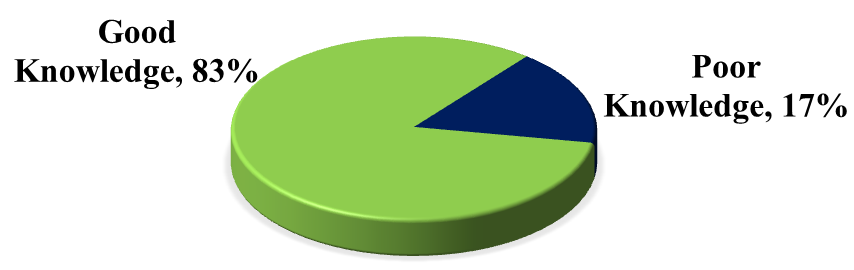
Participants knowledge on obstetric danger signs was scored based on a response to obstetric danger signs. The total score of knowledge on obstetric factors sums up to ten.
A respondent is said to poses Good Knowledge when the score was equal to or greater than five whilst Poor Knowledge to obstetric danger sign when the score is less than five. Most 83.0% (n=331) of participants had Good knowledge of obstetric danger signs whilst about 17.0% (n=68) of the participants had Poor knowledge of obstetric danger signs (Figure 1).
Pearson chi-square set at a 95% confidence interval was used to determine the association between knowledge of obstetric danger signs and the socio-demographic characteristics of participants. Occupation of participants associated with knowledge of obstetric danger signs [X2 =17.1, p=0.001]. However, there was no association between age, marital status, education, ethnicity, place of residence, and knowledge on danger signs (Table 4).
| Variable | Knowledge of obstetric danger signs | X2 (P) | |
|---|---|---|---|
| Good knowledge (n=331) | Poor knowledge (n=68) | ||
| Age (years) | |||
| 18-23 | 105(31.7) | 28(41.2) | 4.5 (0.21) |
| 24-30 | 145(43.5) | 25(36.8) | |
| 31-36 | 61(18.4) | 14(20.6) | |
| 37-42 | 20(6.0) | 1(1.5) | |
| Marital Status | |||
| Married | 267(80.7) | 52(76.5) | 3.57(0.17) |
| Single | 42(12.7) | 7(10.3) | |
| Co-habiting | 22(6.6) | 9(13.2) | |
| Level of Education | |||
| Non-formal | 62(18.7) | 17(25.0) | 2.59(0.46) |
| Basic | 97(29.3) | 21(30.9) | |
| Secondary | 90(27.2) | 13(19.1) | |
| Tertiary | 82(24.8) | 17(25.0) | |
| Occupation | |||
| Civil service | 59(17.8) | 16(23.5) | 17.1(0.001) * |
| Self-employed | 150(45.3) | 21(30.9) | |
| Unemployed | 98(29.6) | 16(23.5) | |
| Student | 24(7.3) | 15(22.1) | |
| Residency | |||
| Urban | 149(45.0) | 34(50.0) | 0.56(0.45) |
| Rural | 182(55.0) | 34(50.0) | |
| Ethnicity | |||
| Sissala | 206(62.2) | 42(61.8) | 1.5(0.94) |
| Non-Sissala | 125(37.8) | 26(38.2) | |
| Distance to facility | |||
| <1 km | 156(47.1) | 26(38.2) | 5.3 (0.15) |
| 2-4 km | 100(30.2) | 24(35.3) | |
| 5-7 km | 54(16.3) | 9 (13.2) | |
| >8 km | 21(6.3) | 9 (13.2) |
Table 4: Association between sociodemographic factors and knowledge of obstetric danger sign. X2: Chi-square, P: p-value, *: <0.0
Table 4: Association between sociodemographic factors and knowledge of obstetric danger sign. X2: Chi-square, P: p-value, *: <0.05: Statistically significant Pearson Chi-Square set at a 95% confidence interval was used to determine the association between knowledge of obstetric danger signs and obstetric characteristics of participants. Participants’ trimester of pregnancy [X2 =85.08, p=0.001]. In addition to participants’ parity and gravidity associated with knowledge of danger signs [X2 =9.96, p=0.007], [X2 =8.0, p=0.018] respectively. Participants’ previous skilled birth associated with knowledge of obstetric danger signs [X2 =15.6, P=0.001]. Binary logistic regression set at a 95% confidence level was applied to determine the odds of relationship between the dependent and independent variables. After controlling for possible confounders, participants who had previous skilled birth were less likely to possess poor knowledge of obstetric danger signs as compared to those with no previous skilled birth and such a relationship was significant [aOR=0.266(95% CI=0.133-0.531), p=0.0001]. Participants who were in their first and second trimester of pregnancy had reduced odds of poor knowledge of obstetric danger signs [aOR=0.33(95%CI=0.012-0.71), p=0.001], [aOR=0.252(95%CI=0.094-0.672), p=0.016] respectively. Multigravida participants had decreased odds of poor knowledge of obstetric danger signs [aOR=0.30(95%CI=0.127-0.711), p=0.006] (Table 5).
| Variable | Knowledge of Obstetric Danger Signs | X2 (p) | aOR(95CI) | |
|---|---|---|---|---|
| Good knowledge | Poor Knowledge | |||
| Pregnancy | ||||
| First trimester | 265(80.1) | 19(27.9) | 85(0.001)* | 0.33(0.012-0.71)* |
| Second trimester | 55(16.6) | 31(45.6) | 0.252(0.09-0.67)* | |
| Third trimester | 11(3.3) | 18(26.5) | Reference | |
| Parity | ||||
| 0-1 | 96(29.0) | 33(48.5) | 9.9(0.007) * | Reference |
| 02-Mar | 182(55.0) | 26(38.7) | 0.767(0.302-1.95) | |
| >4 | 53(16.0) | 9(13.2) | 0.790(0.219-1.85) | |
| Gravidity | ||||
| One | 76(23.0) | 23(33.8) | 8.0(0.018) * | Reference |
| Two-Three | 167(50.5) | 37(54.4) | 0.732(0.407-1.32) | |
| >Four | 88(26.6) | 8(11.8) | 0.30(0.127-0.71)* | |
| Birth spacing | ||||
| One year | 19(5.7) | 7(10.3) | 2.2(0.34) | |
| Two-Three years | 247(74.6) | 50(73.5) | ||
| Four years | 65(19.6) | 11(16.2) | ||
| History of ODS | ||||
| Yes | 138(41.7) | 26(38.9) | 0.27(0.59) | |
| No | 193(58.3) | 42(61.8) | ||
| Counselled on ODS | ||||
| Yes | 310 (93.7) | 64(94.1) | 0.21(0.89) | |
| No | 21(6.3) | 4(5.9) | ||
| Place of delivery | ||||
| Health facility | 314(94.9) | 67(98.5) | 1.96(0.38) | |
| TBA | 11(3.3) | 1(1.5) | ||
| Herbalist | 6(1.8) | 0(0.0) | ||
| Previous skilled birth | ||||
| Yes | 306(92.4) | 52(76.5) | 15.6(0.001)* | 0.26(0.133-0.53)* |
| No | 25(7.6) | 16(23.5) | Reference |
Table 5: Association between obstetric factors and knowledge of obstetric danger signs. CI: Confidence Interval, aOR: adjusted Od
Discussion
In order to assess how well pregnant women, pay special attention to improving and maintaining their health, a thorough knowledge of pregnant women about obstetric danger signs is very important, as they can recognize danger signs in pregnancy that affect their health and that of the developing foetus. This present study found that about 17.0% of the pregnant women who attended the maternity clinic had poor knowledge of obstetric danger signs. Although the knowledge deficit of pregnant women about obstetric dangers was low compared to most studies reported in the literature, it should be noted that a single reported case of obstetric dangers requires immediate medical attention and assistance. Comparing the results of this present study with other studies reported in the literature, it is found that approximately fifty percent of pregnant women had insufficient knowledge of obstetric danger signs, which did not correlate well [12]. In addition, a cross-sectional study [15] found that approximately 45% of pregnant women failed to recognize obstetric danger signs and therefore the results did not support this current study. In a cross- sectional study conducted among pregnant women to assess their knowledge of obstetric danger signs, it was found that approximately 16.8% had adequate knowledge of obstetric danger signs. This means that approximately 83.2% of pregnant women had insufficient knowledge of obstetric signs and the results do not agree well with the result of this recent study [3]. In Kenya, it is reported that few pregnant women are aware of obstetric danger signs, which also does not agree well with the result of this study [8]. Likewise, in Tanzania, it was found that about 50% of pregnant women had insufficient knowledge of obstetric danger signs and the results do not correlate well [10]. In addition, the results of a systematic review and meta-analysis in Ethiopia showed that approximately 48% of pregnant women had adequate knowledge of obstetric danger signs, and the results do not agree well with this new study [9]. Again, a cross-sectional study conducted to assess pregnant women’s knowledge of obstetric danger signs found that approximately 37.5% of participants were familiar with obstetric danger signs. This means that a significant proportion of pregnant women had insufficient knowledge of pregnancy risk signs and the results do not agree well [17]. It had been reported that approximately 57.7% of pregnant women had adequate knowledge of obstetric danger signs and as such findings do not support this present study outcome [8]. Further, it is reported that about 37.3% of the pregnant women had a good knowledge of pregnancy danger signs, which also does not collaborate well with current study findings [18]. In Ghana it is established that, about 16.4% of pregnant women had insufficient knowledge of obstetric danger signs, which supported the finding of this current study [19]. The differences in study findings could be attributed to the variations of methodologies of previous studies. The finding that the occupation of pregnant women is associated with a poor of knowledge about obstetric danger signs is consistent with the finding of a cross-sectional study conducted in Ethiopia, which found that the occupation of pregnant women contributes to obstetric danger signs [9]. In addition, a cross- sectional survey in Indonesia found that the occupation of pregnant women, plays an important role in determining knowledge of obstetric signs, supporting the results of this present study [20]. The available body of knowledge had shown that pregnant women with obstetric risk signs are influenced by their occupation, which also agrees well with the finding of this recent study [21].
Further, in a cross-sectional study conducted to determine maternal knowledge of pregnancy danger signs, it was reported that, occupation was found to have a significant association with knowledge of obstetric danger signs, which also supports the results of this present study [3]. More so, a cross-sectional study [12] found that pregnant women’s occupations are associated with obstetric dangers, and this is consistent with the findings of the new study. Similarly [22] has pointed out that pregnant women’s knowledge of obstetric signs is related to their occupation. A comparison of this report with the results of this present study shows that these results matched well. However [23] noted that there is no association between pregnant women’s occupations and their knowledge of obstetric danger signs and that these results do not support the report of this present study. Obstetric factors such as trimesters of pregnancy, parity, gravidity and prior childbirth preparation of pregnant women were found to have a significant association with poor of knowledge of pregnancy risk signs. According to [12], pregnant women with multiple pregnancies are less likely to have sufficient knowledge of pregnancy risk signs which related well to present study findings. The available body of knowledge had also indicated that pregnant women in the third trimester do not influence their knowledge of obstetric danger signs, and this did not correlate well with recent study report [8]. In addition, it has been shown that pregnant women with two or more pregnancies are more likely to have adequate knowledge of obstetric danger signs and the results are different [24]. One study [8] found that the trimester of pregnancy strongly affects pregnant women’s knowledge of obstetric danger signs, and this is consistent with the report of this recent survey. However, it is indicated that pregnant women’s parity is not related to knowledge of obstetric danger signs, and this is inconsistent with the present study report. In the Democratic Republic of the Congo, a cross-sectional study found that multigravida women significantly improve pregnant women’s knowledge of obstetric danger signs, and the results were consistent when compared to current study [13]. Parity has been reported to be an important factor in pregnant women’s knowledge of obstetric dangers, and this finding is similar to the finding of this present study [20]. A cross-sectional study by [1] had shown that parity in pregnant women was related to their knowledge of obstetric danger signs, and this also supports the finding of this current study. A safe birth is very important for every pregnant woman, as it contributes to the safe delivery of the child and the prevention of birth-related complications [25]. A study conducted by [25] found that pregnant women with earlier childbirth preparations were associated with increased knowledge of obstetric danger symptoms, and this finding supports this current study outcome. In addition [22] pointed out that a pregnant woman’s history of skilled delivery has a significant association with obstetric danger signs, and this also correlates well with the result of this present study. Pregnant women’s knowledge of obstetric danger signs is of paramount for pregnant women’s attitudes towards resorting to skilled births. A good knowledge of pregnant women of obstetric danger signs reduces the pregnant woman’s exposure to pregnancy-related complications and promotes positive maternal behavior that ensures early screening for foetal development and detection of abnormalities. However, pregnant women’s lack of awareness of obstetric danger signs results in poor recognition of pregnancy danger signs, leading to delays in referral to emergency obstetric care, which is an important predictor of maternal death. Understanding and recognizing pregnancy-related danger signs is essential for pregnant women [3]. However, the poor of knowledge of pregnant women about obstetric signs poses a serious risk to the health of the mother and the developing foetus [26]. Therefore, pregnant women who are unaware of obstetric signs are less likely to give birth at health facilities and through skilled care [13]. This contributes to putting pregnant women at increased risk of maternal and neonatal morbidity and mortality, particularly in low- and middle-income countries with inadequate health resources [3, 4, 8, 27]. For example, there is evidence that a pregnant woman’s inability to recognize signs of pregnancy is known to contribute to approximately hundreds of maternal deaths each day [3]. Pregnant women’s poor knowledge of obstetric signs increases their risk of pregnancy and delivery complications such as frequent cesarean sections [4, 28]. In addition, pregnant women’s lack of awareness of obstetric dangers is a major reason pregnant women delay seeking prenatal care, thereby reducing the use of skilled care and increasing birth complications such as stillbirth [3, 4, 10]. Moreover, the poor knowledge of pregnant women about obstetric danger signs contributes to poor maternal nutrition, which increases the risk of poor foetal growth, increased number of cesarean sections [4, 29] and neonatal jaundice in babies, which leads to poor foetal development [30], low birth weight [31], preterm delivery, prolonged labor and postpartum psychiatric disorders [31].
Conclusion and Recommendations
The study concluded that slightly less than twenty percent of pregnant women in the municipality seeking antenatal care had poor knowledge of obstetric danger signs. It was also concluded that, occupation, first and second trimester of pregnancy associates with pregnant woman poor knowledge of obstetric danger signs. Additionally, it was concluded that multigravida pregnant women were less likely to associate with poor knowledge of obstetric danger sign. The study further concluded that pregnant women with previous skilled delivery had reduced odds to influence pregnant women’s poor knowledge of obstetric danger signs. There should be intensification of health education to raise awareness of the complications of obstetric signs. Future qualitative study should be investigated into traditional practices that influences the presence of obstetric danger signs among pregnant women in the municipality.
Acknowledgement
The authors thank the pregnant women who volunteered to take part in the study. Again, the health management team and the employees of the maternity clinic of the hospital as well as everyone who contributed in various ways to the success of the study.
Conflict of Interest
The authors declare that there was no conflict of interest between them
Source of Study Funds
The authors solely financed the study.
Contribution of Authors
MOP and DH: developed the topic and drafted the introduction. FA and CAP: Developed the methodology. DH, EK, TBE and MOP: Collected and analysed the study data. DS and MOP wrote the discussion. MOP, TBE and FA: drafted the manuscript and reviewed it. All authors proof read the paper and accepted it for submission.
References
-
Tjandraprawira KD, Ghozali I (2019) Knowledge of Pregnancy and Its Danger Signs Not Improved by Maternal and Child Health Handbook. J Obstet Gynecol India 69(3): 218-224.
-
Terefe N, Nigussie A, Tadele A (2020) Prevalence of Obstetric Danger Signs during Pregnancy and Associated Factors among Mothers in Shashemene Rural District, South Ethiopia. J Pregnancy 2020: 1-7.
-
Bolanko A, Namo H, Minsamo K, Addisu N, Gebre M, et al. (2021) Knowledge of obstetric danger signs and associated factors among pregnant women in Wolaita Sodo town , South Ethiopia : A community-based cross- sectional study. SAGE Open Med.
-
Salem A, Lacour O, Scaringella S, Herinianasolo J, Benski AC, et al. (2018) Cross-sectional survey of knowledge of obstetric danger signs among women in rural Madagascar. BMC Pregnancy Childbirth 18(1): 46.
-
Tamang ST, Dorji T, Yoezer S, Phuntsho T, Dorji P, et al. (2021) Knowledge and understanding of obstetric danger signs among pregnant women attending the antenatal clinic at the National Referral Hospital in Thimphu , Bhutan : a cross-sectional study. BMC Pregnancy Childbirth 21(1): 104.
-
Yitayew AE, Enyew HD, Goshu YA (2018) Utilization and Associated Factors of Insecticide Treated Bed Net among Pregnant Women Attending Antenatal Clinic of Addis Zemen Hospital, North-Western Ethiopia : An Institutional Based Study. Malaria Research and Treatment 2018: 1-9.
-
Berhe B, Mardu F, Legese H, Gebrewahd A, Gebremariam G, et al. (2019) Prevalence of anemia and associated factors among pregnant women in Adigrat General Hospital, Tigrai, northern Ethiopia. BMC Res Notes 12: 310.
-
Phanice OK, Zachary MO (2018) Knowledge of Obstetric Danger Signs among Pregnant Women Attending Antenatal Care Clinic at Health Facilities within Bureti Sub-County of Kericho County, Kenya. Research in Obstetrics and Gynecology 6(1): 16-21.
-
Geleto A, Chojenta C, Musa A, Loxton D (2019) WOMEN’s Knowledge of Obstetric Danger signs in Ethiopia (WOMEN ’ s KODE ): a systematic review and meta- analysis. Systematic Reviews 8: 1-14.
-
Bintabara D, Mpembeni RNM, Mohamed AA (2017) Knowledge of obstetric danger signs among recently- delivered women in Chamwino district, Tanzania : a cross-sectional study. BMC Pregnancy and Childbirth 17: 1-10.
-
Laksono AD, Matahari R, Wulandari RD (2020) Factors Related to the Choice of Contraceptive Methods among the Poor in Indonesia. Systematic Reviews 11(9): 195- 200.
-
Wulandari RD, Laksono AD (2020) Education as Predictor of the Knowledge of Pregnancy Danger Signs in Rural Indonesia. International Journal of Innovation, Creativity and Change 13(1): 1037-1051.
-
Nkamba DM, Wembodinga G, Bernard P, Ditekemena J, Robert A et al. (2021) Awareness of obstetric danger signs among pregnant women in the Democratic Republic of Congo : evidence from a nationwide cross ‑ sectional study. BMC Womens Health 21: 1-12.
-
Nuamah GB, Agyei-baffour P, Mensah KA, Boateng D, Quansah DY, et al. (2019) Access and utilization of maternal healthcare in a rural district in the forest belt of Ghana. BMC Pregnancy and Childbirth 5: 1-11.
-
Saaka M, Aryee P, Ali M, Kuganab-lem R, Masahudu AR, et al. (2017) The effect of social behavior change communication package on maternal knowledge in obstetric danger signs among mothers in East Mamprusi District of Ghana. Globalization and Health 13: 1-12.
-
(2021) Annual review on maternal audit, Tumu Government Hospital.
-
Adjapong G, Hale M, Garrill A (2014) An investigation of the distribution of Candida species in genitourinary candidiasis and pelvic inflammatory disease from three locations in Ghana. African Journal of Microbiology Research 8(6): 470-475.
-
Qumer M, Fatima T, Albert A, Riaz S (2022) Knowledge, Attitude and Practices of Women Towards the Neonatal Jaundice in Pakistan. Merit Res Journals 104(4): 125- 134.
-
Vallely LM, Emori R, Gouda H, Phuanukoonnon S, Homer C, et al. (2019) Women’s knowledge of maternal danger signs during pregnancy: Findings from a cross-sectional survey in Papua New Guinea. Midwifery 72: 7-13.
-
Wulandari RD, Laksono AD (2020) Determinants of knowledge of pregnancy danger signs in Indonesia. PLoS One 15(5): e0232550.
-
Hibstu DT, Siyoum YD (2017) Knowledge of obstetric danger signs and associated factors among pregnant women attending antenatal care at health facilities of Yirgacheffe town, Gedeo zone, Southern. Arch Public Health 75: 35.
-
Dessu S, Gedamu G, Tamiso A (2020) Assessment of Knowledge on Danger Sign of Pregnancy and Associated Factors among ANC Attendant Pregnant Women in Arbaminch Town Governmental Institutions, Southern Ethiopia. Annals of Medical and Health Sciences Research 2020: 5-11.
-
Shrestha A, Bhattarai D, Thapa B, Basel P, Wagle RR et al. (2017) Health care workers’ knowledge, attitudes and practices on tuberculosis infection control, Nepal. BMC Infect Dis 17(1): 1-7.
-
Woldegebriel AG, Gebrehiwot GG, Desta AA, Ajemu KF, Berhe AA, et al. (2020) Determinants of Anemia in Pregnancy : Findings from the Ethiopian Health and Demographic Survey. Anemia 2020: 2020.
-
Chowdhury SSA, Kundu S, Sharif AB (2023) Socioeconomic and geographical inequalities in using skilled birth attendants during delivery in Bangladesh over two decades. BMC Pregnancy Childbirth 23(1): 1-8.
-
Jewaro M, Yenus H, Ayanaw Y, Abera B, Derso T, et al. (2020) Knowledge of obstetric danger signs and associated factors among mothers in Bahir Dar district, northwest Ethiopia: an institution-based cross-sectional study. Public Health Rev 41(1): 1-8.
-
Dhital R, Silwal RC, Simkhada P, Teijlingen EV, Jimba M, et al. (2019) Assessing knowledge and behavioural changes on maternal and newborn health among mothers following post- earthquake health promotion in Nepal. PLoS One 14(7): e00220191.
-
Xu N, Xie S, Chen Y, Li J, Sun L, et al. (2020) Factors influencing medication non-adherence among chinese older adults with diabetes mellitus. Int J Environ Res Public Health 17(17): 6012.
-
Fuge TG, Ayanto SY, Gurmamo FL (2015) Assessment of knowledge, attitude and practice about malaria and ITNs utilization among pregnant women in Shashogo. Malar J 14: 1-9.
-
Lin L, Wei Y, Zhu W, Wang C, Su R, et al. (2018) Prevalence, risk factors and associated adverse pregnancy outcomes of anaemia in Chinese pregnant women : a multicentre retrospective study. BMC Pregnancy and Childbirth 18: 1-8.
-
Uwimana G, Elhoumed M, Gebremedhin MA, Azalati MM, Nan L, et al. (2023) Association between quality antenatal care and low birth weight in Rwanda: a cross- sectional study design using the Rwanda demographic and health surveys data. BMC Health Serv Res 23(1): 558.
- Postpartum Maternal Mental Health - A Narrative Review
- Beta HCG in Cervico-Vaginal Secretion as a Predictor of Preterm Delivery
- Successful Management of Mid Trimester Foetal Death with Major Placenta Previa by Expectant Management Followed by Induction of Labour
- To Evaluate the Expression of Egr2 Gene in Term Low Birth Weight Newborns
- Impact of Maternal Obesity on Maternal and Foetal Outcomes: A Prospective Cohort Study from Northern India
- ‘’Benefit of Pulsatile GnRH Therapy in Treatment of Functional Hypothalamic Amenorrhea (FHA) and Congenital Hypogonadotropic Hypogonadism(CHH) in Infertile Patients Over Canonical Gonadotropins with IVF –A Short Communication’’