
Heartfelt Stories about Doctor Patient Relationship
In recent years, the doctor-patient relationship has come under a lot of strain all over the world. Part of it is due to a generalized socio-cultural change, with more consumerism, increasing expectations and an inability to accept adverse outcomes. Of course, there are many problems and potential solutions related to the way we deal with patients, but a major problem is that of “trust”. The trust between a doctor and a patient is sacred and should remain so. Many senior doctors in the past enjoyed almost complete faith and trust of all their patients. While it may be difficult to maintain that kind of trust in today’s changed society with big faceless hospitals and increasingly expensive healthcare, yet all of us, both doctors and patients should do the best we can to maintain this trust, as it is vital to the success of any medical intervention. We are sure the story shared in this article, and taken from diverse backgrounds will help to restore that trust.
Introduction
In recent years, the doctor-patient relationship has come under a lot of strain all over the world. Part of it is due to a generalized socio-cultural change, with more consumerism, increasing expectations and an inability to accept adverse outcomes. Of course, there are many problems and potential solutions related to the way we deal with patients, but a major problem is that of “trust”. The trust between a doctor and a patient is sacred and should remain so. Many senior doctors in the past enjoyed almost complete faith and trust of all their patients. While it may be difficult to maintain that kind of trust in today’s changed society with big faceless hospitals and increasingly expensive healthcare, yet all of us, both doctors and patients should do the best we can to maintain this trust, as it is vital to the success of any medical intervention. We are sure the story shared in this article, and taken from diverse backgrounds will help to restore that trust.
One of us (SKP) was inspired to become a doctor (an ophthalmologist) after witnessing the respect enjoyed by my grandfather (Late Dr. Kamta Prasad Pandey), who was doing eye surgeries during my early childhood. I had the opportunity to witness the changing doctor-patient relationship during twenty years of my diverse ophthalmic career that started while pursuing residency in ophthalmology from prestigious, Postgraduate Institute of Medical Education and Research (PGIMER) Chandigarh (India) and continued while pursuing advanced ophthalmic fellowship training at Medical University of South Carolina (MUSC), Storm Eye Institute, Charleston, S.C. (USA), University of Utah, John A. Moran Opinion Eye Center, Salt Lake City, Utah, USA and Save Sight Institute, Sydney Eye Hospital, University of Sydney, Australia. We were fortunate to get the opportunity to travel to Europe, South America, Middle East, Australasia and SAARC countries for participation in international ophthalmic conferences and one of us (SKP) also had the opportunity to interact with patients while doing Live Surgery. After gaining extensive experience in academic institutes overseas, we returned to India and established SuVi (SuVi was coined from our name Suresh & Vidushi) Eye Institute & Lasik Laser Center in Kota, (Rajasthan) with the goal of “Competent Care with Compassion”.
While working in Kota, we used social media to reach out more widely to patients and build new relationships and professional associations. These interactions know no boundaries and can help in building bridges across borders. Our interest in documentation and sharing eye surgery videos prompted us to make a YouTube channel dedicated to ophthalmic surgical videos [1], which attracted many views (2035649) and subscribers (10974). This helped us to make new connections with ophthalmic colleagues, and it was our privilege to have ophthalmologists come over to SuVi Eye Institute, Kota, India (www.suvieyehospital.com) for surgical training from as far away as USA, Azerbaijan, Saudi Arabia, Switzerland and Ireland. Their journey from a distant country to a small Indian city (Kota, Rajasthan) is a testament to the rising influence of social media interactions (Figure 1a & 1b). In this article, we share one story from our experience as practicing art and science of ophthalmology [2].
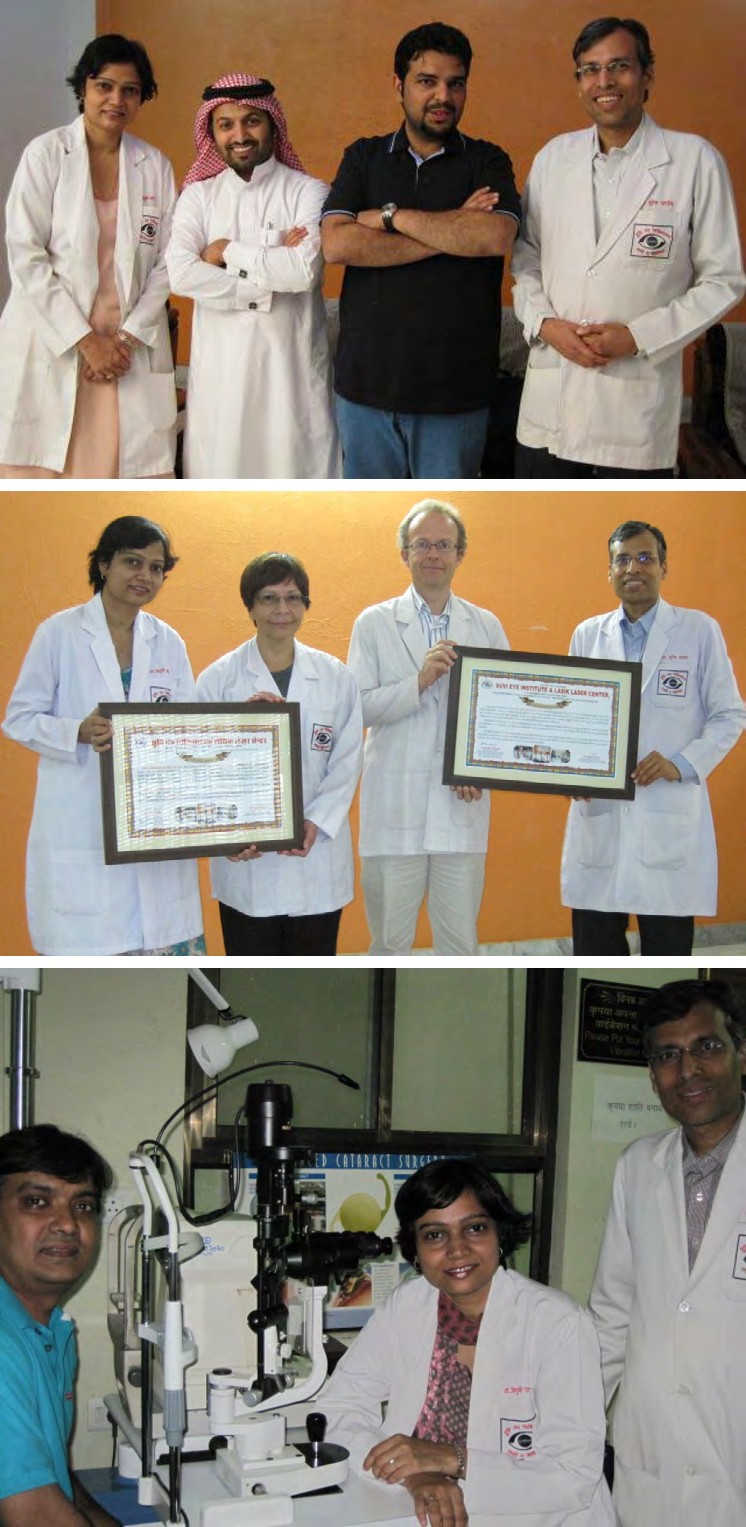
Figure 1a: Dr Linda Vargas (Austin, Texas, USA), Dr Roman Garemiger (Switzerland). Figure 1b: Dr. Hasan Al Taweel, Dr. Fahad Alwadni (Visited Kota from Saudi Arabia).
Spreading the Light Across the Border
This is the story of a software engineer (working in OMI Hospital, Karachi) of Pakistan, who came all the way from Karachi to Kota (Rajasthan, India) to get his cataract surgery done (in July 2012), as he wanted the implantation of a specific multifocal intraocular lens (Johnson and Johnson Tecnis IOL), which was not available in Pakistan at that time. The distance between Karachi in Pakistan, and Kota in Rajasthan, India is just about 500 miles, but this 500 mile journey can be one of the most challenging and daunting journeys, considering the hostility between the two countries and the paperwork (including visa, verification from intelligence agencies and police, and getting written permission from neighbours, etc.) and fear involved in travel. There are many isolated instances of seriously ill patients who travelled from Pakistan to India for difficult surgeries like pediatric heart surgery etc. However, in this case, it was the “trust” between a patient and an unknown doctor that prompted this gentleman to seek relatively routine, yet modern and precise cataract surgery in India, only to get the benefit of a specific multifocal IOL. This is a story of the enormous trust between a doctor and a patient that can transcend all barriers and boundaries and proved once again that doctor-patient trust and empathy knows no boundaries, neither political, nor religious [3].
The patient (Mr. Fahim Uddin) was a high myope and developed bilateral cataracts at a relatively early age. At 42 years old, his cataracts had increased significantly and he was advised surgery. Being a young, net savvy person, he did a search for the best possible IOL to implant in his eye. Since he was relatively young, he wanted to have a multifocal IOL to get spectacle independence, and read up extensively about the comparative features of various multifocal IOLs. He concluded that Tecnis Multifical IOL (from Johnson and Johnson formerly Abbott Medical Optics) would be the best
for him. While reading up further about this IOL, he came across many surgical videos posted by our centre showing the implantation of this particular IOL. He then found our hospital’s phone number and called us. We explained to him about the IOL, and even offered to get the IOL delivered to him as it was not available in Pakistan at the time. However, he started thinking of coming to Kota, India to get his cataract surgery done, and made a few more phone calls to ensure that he as well as we were ready for all the paperwork needed to undertake this trip. After about three months of extensive paperwork, he landed in Kota (India) on July 8th, 2012 on a Medical Visa (Figure 2a). He underwent bilateral cataract surgery on July 9th and July 12th, 2012. He was extremely happy with the visual results (6/6 and N5 unaided) and the warmth he received from the entire hospital staff and people here. He even saw a movie (Bol Bacchan) in the cinema hall here and was thrilled with the excellent vision he had at both distance and near without glasses, with no significant night vision problems either. The patient also got the opportunity to visit the cemetery of one of his ancestors (in a place known as Chhabra, 130 kms from Kota) and thanked his great grandfather for divine help to regain his vision (6/6 and N6 Unaided) while pursuing his journey from Karachi to Kota.
Figure 2a: Mr. Fahim Uddin with Dr. Vidushi & Dr Suresh K. Pandey during his visit from Karachi (Pakistan) to Kota, India.
The fact that he had come over from Karachi, Pakistan for his eye surgery made him somewhat of a mini celebrity, and his visit was well covered by local media. A program- “Spreading Light Across the Border” (Aman Ki Roshni) was organized during his visit and Mayor of the City, the Inspector General of Police and some other prominent personalities of city participated (Figure 2b). The speakers emphasized that with the help of social media the patient came to know about the Center in India and he undertook this journey from Karachi to Kota. When it comes to people to people interaction, Indians and Pakistanis have always been very warm to each other and this was just another reinforcement of the need for the two neighbors to live like friendly neighbors, leaving aside the hostility fanned by extremist groups.
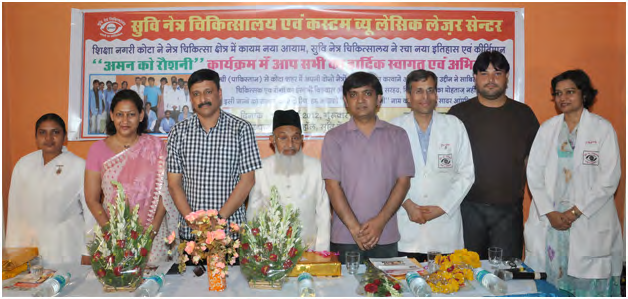
Figure 2b: A program, Spreading Light Across the Border (Aman Ki Roshni), was organized during the patient’s visit, in which the mayor of Kota, the Inspector General of Police, and other prominent personalities of the city participated. Left to right: Brahakumari Divisha, Mayor Dr. Ratna Jain, Mr. Amrit Kalash (IG Police), Shahar Kazi Anwar Ahmed, Mr. Fahim Uddin, Dr. Suresh K. Pandey, Mr. Tauqeer Bokhari, and Dr. Vidushi Sharma Later, one of us (SKP) got the opportunity to visit Karachi (Pakistan) during the SAARC Ophthalmology Conference (August, 17 to 21, 2016). Mr. Fahim Uddin received me at the airport and I also met his parents and all family members. All his family members were grateful for the Gift of Sight he received from India.
Gift of Sight
The second story is of a 28 year old woman (Banasi Devi) and her 4 year old daughter (Teena Kumari), both of them needlessly blind from cataract (Figure 3A). The woman was married off at an early age, and her only child suffered from congenital cataracts. While cataract surgery is done in many free eye camps all over India, congenital cataracts are often neglected due to lack of awareness, illiteracy and poor socioeconomic condition, lack of support from family members, fear and anxiety, as well as hesitation of ophthalmologists to deal with congenital cataracts in a camp set-up. She and her only child were unable to seek treatment for the same and continued their life with very poor vision, and gradually they were confined to their hut, unable to perform daily activities due to lack of sight.
We happened to visit campus of Chambal Fertilizer and Chemical Limited (CFCL) in Gadepan (situated on National highway 27 about 40 Kms from Kota) during an eye checkup camp in December 2012. While returning back to Kota, we were requested by a village Head (Sarpanch) if we can see a mother and child who had no vision, at their hut. We accepted their request, and visited their hut and was shocked to see them almost totally blind due to cataracts in this age! The family was extremely poor and illiterate, and it was a challenge to convince them to come for cataract surgery. Seeing their condition, we decided not to waste any more time, took help of the village head and other villagers to convince for detailed examination and brought them to the hospital in our car. After detailed counseling and thorough ocular and systemic investigations, we operated on both of them without any charge (Figure 3B and 3C). The surgery was quite difficult due to small pupil, zonular dehiscence and pre-existing posterior capsule defect, but both of them had significant improvement in vision after undergoing successful cataract surgery and lens implantation and could actually see each other for the first time!
The child (Teena) is now 10 years old and studying in class 4 and the mother is taking care of her child. Teena wants to become a school teacher in future and would like to teach poor girls free of cost. It was a life changing experience for both mother and child, and the mother asked us if they can celebrate Rakhi festival and tie Rakhi (sacred thread) on our wrist. This emotional request was accepted and they have been visiting our hospital every year for the last 5 years to observe Rakhi and express their gratitude. Rakhi is traditionally tied in India by sisters on their brothers’ wrists and in turn, the brothers promise to always be there to help their sisters in time of need. It was also a life changing experience for us to visit the patient and her daughter confined to their hut (due to vision problem) and witness the positive change that was seen in their life after performing eye surgery. Although many surgical cases, specially challenging surgeries done well, give us a lot of satisfaction, but we seldom across patients where a simple cataract surgery can completely alter the life of a patient. It is for witnessing such human miracles, that we all love our profession despite the long arduous training and many other stresses.
Our Passion (Giving Joy of Sight) & Our Message to Young Doctors
In these times of increasing expectations and eroding trust, sometimes we doctors tend to feel frustrated for being doubted, for our intentions being needlessly questioned, and for patients being not only constantly suspicious, but also ready to pick up an argument at the drop of a hat. When things go far, they end up in court or in developing countries like India, sometimes end up in violence against doctors. However, the patients need to realize that for one incident that they hear of some wrong being done by doctors, there are thousands of doctors treating countless patients and making their lives better. And even that one case is often a result of misunderstanding, medicine being a complex subject and patient’s response to treatment/surgical procedure may be variable. Similarly, we would like young doctors to know that this profession gives a lot of satisfaction, and there are many grateful patients who make this whole journey worthwhile. This is one profession where the satisfaction comes not only in the usual terms of financial rewards and the satisfaction of a job well done, but also from the knowledge of making a lasting difference in a life (Figures 3a-3c)[4].
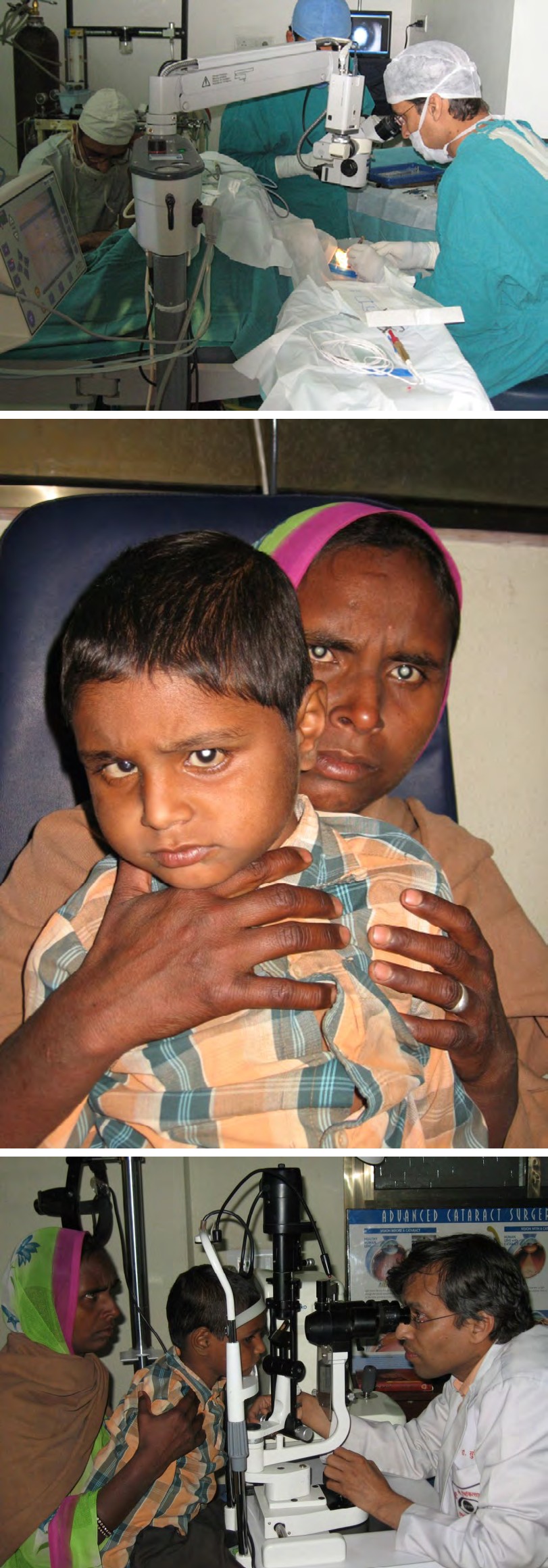
Figure 3a: Child- Teena Kumari & her mother Banas Devi before Eye Surgery.
Figure 3b: Dr. Suresh K. Pandey examining Teena Kumari.
Figure 3c: Teena Kumari undergoing sight restoring surgery at SuVi Eye Institute, Kota. The surgery was done free of cost.
Improving the doctor patient relationship is the need of the hour; we would also like to give a few tips to the younger doctors to avoid confrontational situations based on our experience. a. Hear them out: Many irate patients cool down if they feel they have been heard and understood. It is unwise to brush aside complaints, even if they seem insignificant. Patients will seldom create much trouble if the doctor is respectful and sensitive. They will, however, become increasingly aggressive if they get the impression that the doctor makes them feel inferior or is too rushed to listen to them. b. Adequate Counselling for Surgical Patients: The patients today expect nothing short of miracles from surgical procedures. The risks that seem obvious also need to be spelled out in detail. While it is routine to get a detailed consent form signed, often the chair time given to explain risks etc. is not adequate. To save the surgeon’s time, trained Counsellors or paramedical staff may do this counselling in detail, but all risks etc. need to be explained and all questions answered. This is specially true branches like ophthalmology dealing with elective surgery, where aggressive advertising, tall claims, and high surgical costs have convinced patients that eye surgery is a 5-minute wonder during which nothing can go wrong and after which the patient will have “supervision.” c. Do not be in a Hurry to Operate: Any patient who is not convinced, or who seems to have doubts about the procedure should be given time to think it over. It is time we doctors realized we are all in the same boat and need to work together to improve our collective image. For high risk patients or highly demanding patients, an honest second opinion might save you from a lot of trouble later.
Last but not the least; we want to say that we feel fortunate to be ophthalmologists who can make a difference in the life of so many patients. Above are just 2 examples, we are sure most of the doctors have many examples. In the end, we would like to quote Hellen Keller- The best and most beautiful things in the world cannot be seen or even touched - they must be felt with the heart [5].
References
-
Social Media and Ophthalmic Practice Beyond Borders.
-
Pandey SK, Sharma V (2013) Social Media and Ophthalmology. Cataract & Refractive Surgery Today.
-
Pandey S K (2014) From Aphakic Glasses to Modern-Day IOLs. Cataract & Refractive Surgery Today.
-
Pandey Suresh K (2020) Secrets of Successful Doctors: A Complete Guide to a Fulfilling Medical Career.
-
Pandey Suresh K, Vidushi S (2020) A Hippocratic Odyssey: Lessons from a Doctor Couple on Life in Medicine, Challenges and Doctorpreneurship. Bloomsbury India.
- Screening of Hospital Staff During World Glaucoma Week in a Tertiary Eye Care Centre
- Angioid Streaks with Macular Neovascularization: Clinical Insights from Two Cases
- Giant Kissing Naevus: An Oculoplastic Challenge
- Why Freedom of Vision Should Not Cost the Freedom of Feeling - LASIK in the Climate of Change
- Asymmetric Optic Nerve with Small Disc and Large Cup: A Rare and Challenging Case of Unilateral Optic Nerve Hypoplasia
- Large Angle Exotropia in a Child: A Case Report