
Composite Treatment Module for Removing Acidity and Metal (Loid)S from Acid Rock Drainage
This study evaluates a two-stage approach for remediating acid rock drainage (AMD) generated from an abandoned coal mine site. The method combines the adsorption and chemical precipitation properties of drinking water treatment residue (WTR) in a continuous flow-through fluidized filter bed with hydroponic phytoremediation using Vetiver grass to remove dissolved metal(loid)s. In the first stage, the filter demonstrated exceptionally high removal efficiencies for several metals, including up to 99.67% of Al (
Abbreviations
AMLs: Abandoned Mine Lands; AMD: Acid Rock Drainage; WTRs: Water Treatment Residues; EC: Electrical Conductivity; DO: Dissolved Oxygen.
Introduction
Centuries of unregulated coal mining have left behind thousands of abandoned mine lands (AMLs) worldwide, many of which generate acid rock drainage (AMD). This acidic effluent contains high concentrations of sulfates and metal (loid)s such as Al, Fe, Mn, Zn, Cu, and As, along with other co-occurring elements. When AMD discharges into surface water bodies, it significantly impacts aquatic ecosystems, reducing biodiversity and degrading water quality. Moreover, AMD contributes to the bioaccumulation of toxic metals in soils, leading to reduced soil fertility, plant toxicity, and health risks to humans and animals through the food chain [1, 2].
Conventional AMD remediation methods, including reverse osmosis, ion exchange, electrodialysis, passive sulfate-reducing bioreactors, and adsorption, are often energy-intensive, labor-demanding, and associated with high costs. Among these, adsorption has gained popularity due to its operational simplicity and safety compared to other techniques. Commercial activated carbon and its derivatives have been widely studied for efficiently removing trace metal ions [3, 4, 5, 6].
To improve cost-efficiency and sustainability, several researchers have focused on alternative adsorbents to replace activated carbon, including iron hydroxides, activated alumina, modified chitosan beads [7, 8, 9] and water treatment residues (WTRs) [10, 11, 12]. Despite their positive laboratory performances for metal removal, typically performed in a batch setup under controlled environment using synthetic acid rock drainage and in batch, they have mostly failed to demonstrate adequate effectiveness and long-term sustainability in a natural environment. This is because field AMD is a complex, dynamic mix of metals, acidity, sulfate, and organic matter which are difficult to replicate in synthetic solutions. Hence, the AMD solution used in this research was collected in the field to correctly capture the variability found across different mining sites and seasonal changes, providing more relevant and reliable data for evaluating the efficiency of the proposed treatment method in a continuous flow mode.
Relative to conventional adsorbents and other precipitants are WTRs - byproducts of coagulation-filtration and precipitative softening processes. It consists primarily of soil separates, organic matter, and (oxy) hydroxides of Al, Fe, and Ca. These residues can constitute 2–10% of a water treatment plant’s throughput and are often readily available at minimal cost beyond transportation [13]. Their morphology, surface chemistry, availability, and low cost make WTRs a promising and sustainable alternative for metal removal in aqueous environments.
Phytoremediation, recognized for its cost-effectiveness, aesthetic appeal, and environmental sustainability, has gained considerable attention as a complementary method. Over 400 plant species, including Vetiver grass (Chrysopogon zizanioides), are identified as hyperaccumulators of metals [14, 15]. Native to tropical and subtropical regions, Vetiver grass is well-suited for remediation due to its robust morphology, adaptability to diverse environmental conditions, and ability to tolerate and remove contaminants from water and soils.
Herein, the evaluation of the novel synergistic application of WTRs and vetiver to successfully attenuate metal (loid) concentrations in aquatic systems under natural environmental conditions, is reported. The goal of this research is to understand the biological and physicochemical mechanisms through which this system removes metals from acid rock drainage. Conducted at the Southern Illinois University Energy Park, the experiment also assessed the effectiveness and limitations of this integrated technique, highlighting its potential for scalable and cost-efficient AMD remediation pathways.
Material Sampling and Characterization
Acid Rock Drainage
ARD was collected from the Tab-Simco abandoned coal mine (Figure 1) in the Illinois Basin in the USA, identified in 1996 as one of the most heavily contaminated ARD sites in the mid-continent region, producing an average of 4.86 m3/ hour (1,284 gallons/hour) [16, 17].
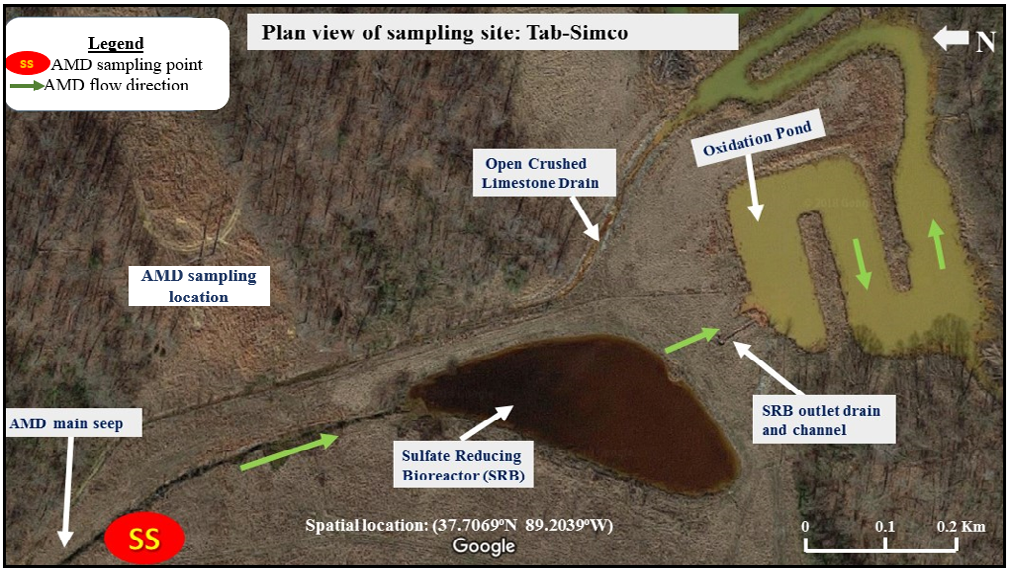
Representative samples were collected from a seep area (SS) where natural attenuation of contaminants is minimal to investigate its level of acidity and trace metal toxicity. A constructed weir was used to enhance the hydrologic head for sampling below the surface while avoiding sediment contamination from the bottom.
Field parameters, including pH, electrical conductivity (EC), dissolved oxygen (DO), and oxidation-reduction potential (ORP), were measured on unfiltered ARD samples immediately after collection using a portable HACH® multi- parameter water analyzer (Model HQ40D, HACH, USA). Calibrated probes that were employed included Intellical™ PHC101 (pH), Intellical™ MTC301 Ag/AgCl (ORP), and Intellical™ CDC401 (DO).
For dissolved metal analysis, aqueous samples were filtered using 0.45-micron filter paper and acidified with ultrapure nitric acid (HNO3) to lower the pH to <2.0, then stored at 4°C. Acidification was performed to prevent metal precipitation, minimize adsorption to container walls, and inhibit biological activity. Dissolved metal (loid)s were analyzed using an Agilent ICP-MS 7500, equipped with an ESI SC-4 high-capacity, fast-washout auto-sampler, and gallium as the internal standard. For quality control, duplicate acid blanks were analyzed, confirming that target metal (loid) concentrations in HNO3 blanks were below method detection limits (MDL). The concentrations of relevant metal (loid)s and additional parameters considered in the study are summarized in Table 1.
| Analyte | Concentration [mg/L] | Chemical parameters | Value |
|---|---|---|---|
| Al | 130 | pH (std. units) | 2.67 |
| Mn | 32.4 | ||
| Fe | 327 | ORP (Mv) | 486 |
| Co | 0.426 | ||
| Ni | 1.72 | DO (mg/l) | 16.8 |
| Cu | 0.035 | ||
| Zn | 2.88 | EC (µs/cm) | 4884 |
| As | 0.003 |
Table 2: Relevant properties and elemental analysis of the ARD.
Although the ORP and DO suggest the water is well- oxygenated with good oxidative capacity, the recorded extreme acidity and high concentration of metals suggest that the water is highly contaminated and severely toxic to most forms of aquatic life. The low pH increases the solubility and bioavailability of metals as corroborated by the recorded EC, thereby amplifying their toxic effects.
Vetiver Plant
Vetiver grass stolons used in this study were obtained from Agriflora Tropical in Puerto Rico. Vetiver stolons were potted and nursed in a greenhouse to ensure the development of new roots and shoots that indicate good health of the grass, hence, only stolon that developed new roots were used in the study.
Water Treatment Residue
Water treatment residue (WTR) sample was collected from various locations along the dewatering pond at the Saline Valley Conservancy District Water Treatment Plant in Saline County, Southern Illinois, USA. Composite (pooled) WTR samples were collected in labeled plastic buckets with lids to transport. To prevent high temperature drying (>120°F) from affecting the extractable cation analysis, the samples were air-dried at room temperature (~72°F). Once dried, the samples were crushed, thoroughly mixed, and sieved through a 2-mm mesh for storage and subsequent analysis. The samples were stored at ambient temperature and analyzed for pH and electrical conductivity (EC) within four weeks of collection. The WTR’s physical and chemical properties were determined following standard procedures, as outlined in Table 2.
| Particle Size Distribution (%) | ||||||||
|---|---|---|---|---|---|---|---|---|
| Ph | EC (µs/ cm) | SG (g/ cc) | Sand | Silt | Clay | |||
| 9.1 | 321.3 | 2.47 | 12.5 | 76.5 | 11 | |||
| Total Element Analysis by AR (mg/kg) | ||||||||
| Fe | Mn | Al | Zn | Cu | As | Pb | Ca | Ni |
| 6100 | 203 | 400 | 9 | 1.4 | 18.1 | 0.4 | 3.30E+05 | 0.6 |
| DTPA Extractable Micronutrients (mg/kg) | Exchangeable Cations (meq/100 g) | |||||||
| Zn | Mn | Fe | Cu | Bo | K | Mg | Ca | Na |
| 1.3 | 28 | 194 | 1.2 | 0.9 | 0.04 | 4.5 | 8.54 | 0.11 |
Table 1: Selected characteristics of WTR used in this study.
*pH = 1:2.5 (w:v; soil: water), EC = 1:5 (w:v; soil: water), AR: aqua regia digestion DTPA: diethylenetriaminepentaacetic acid (chelating agent) Table 2: Selected characteristics of WTR used in this study.
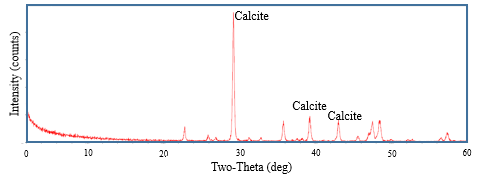
Particle density was determined using a water pycnometer following ASTM D 854-00, while high-resolution particle size analysis was conducted with the patented Microtrac® Tri-Laser Technology Bluewave particle size analyzer (Pa, USA). The bulk mineralogical composition of randomly oriented WTR powder samples was characterized by X-ray diffraction (XRD) using a Rigaku Ultima-IV diffractometer. Intensity data were collected in the 2θ range of 2°–60°, with a scanning step of 0.02° using Cu-Kα radiation. Mineral phase identification was performed by comparing d-spacing values with published crystal structure data [18].
was predominantly composed of calcite, with a significant presence of other non-crystalline, amorphous materials such as Fe or Al oxides mainly due to the use of coagulants such as alum [Al2(SO4)3.14H2O], ferric chloride [FeCl3], and iron (III) sulfate [Fe2(SO4)3] in drinking water treatment process.
X-ray diffractograms Figure 2 revealed that the WTR
Experimental Setup
Stage 1: Fluidized Column Filter
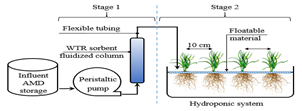
A transparent plastic tube measuring 5cm in diameter and 45cm in height, was loaded with 120 grams of WTR media to treat ARD at a consistent flow rate of 40 mL/ min. Based on preliminary bench-scale experiments, the media was changed when the flow rate reduced to 15% of the initial flow rate mostly occurring after four (4) hours of the system operation. A reverse flow approach was used to maintain a fluidized layer to enhance contact and reduce short-circuiting. To minimize WTR material loss, the top cap of the column was packed with glass wool. A test run without any media indicated no significant impact of glass wool on pH or metal removal. A Teflon thread seal was used to control potential leakage from the system. Composite samples of the column effluent at the end of the experiment were collected and analyzed for pH and metal concentrations by ICP-MS. The staged setup of the experiment is illustrated in Figure 3.
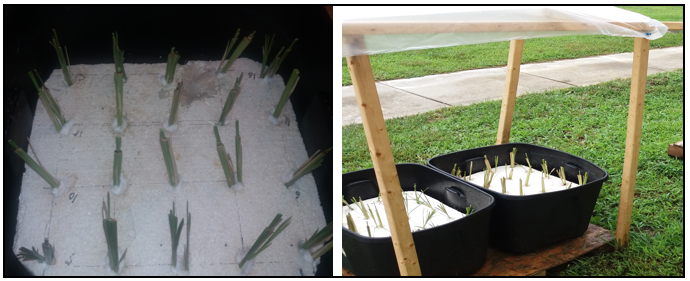
![Figure 4: The hydroponic study was conducted in batch mode over a 30-day period under ambient weather conditions in Southern Illinois. A transparent cover was erected over the setup to minimize dilution from precipitation, and the water level was regularly maintained by adding deionized water to compensate for evaporation losses. At the end of the 30-day study, the net growth of the vetiver plant root and shoot. Harvested vetiver was triple- washed with deionized water, and separated into shoot and root fractions. Plant tissue analysis was performed to evaluate metal uptake and translocation. The multi-element dry ash method [17] was employed to prepare the plant samples for total metal(loid) analysis using ICP-MS.](/fulltextimages/13688/fig_4.png)
Stage 2: Vetiver Hydroponic Unit
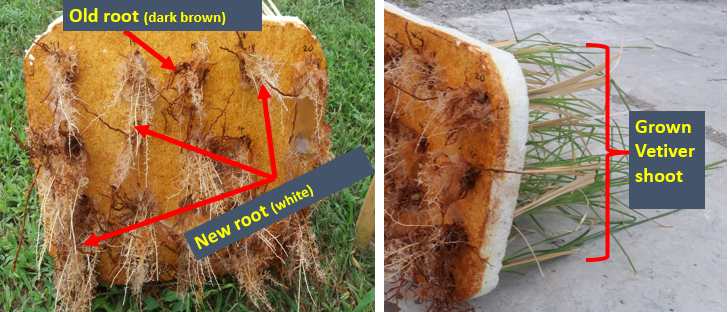
To assess the metal uptake capability of vetiver grass during the hydroponic treatment stage, approximately eight (8) gallons of column effluent were collected into a black open plastic container with a water depth of roughly 20 cm. The dark color of the container helped inhibit algae growth by blocking direct sunlight. Vetiver grass was placed in holes on floating platforms made of non-reacting Styrofoam, with plants spaced 10 cm apart (center-to-center), providing roughly 100 cm2 of water surface area per plant. Cotton was used to support the plants at the base, as shown in Figure 4. The hydroponic study was conducted in batch mode over a 30-day period under ambient weather conditions in Southern Illinois. A transparent cover was erected over the setup to minimize dilution from precipitation, and the water level was regularly maintained by adding deionized water to compensate for evaporation losses. At the end of the 30-day study, the net growth of the vetiver plant root and shoot. Harvested vetiver was triple- washed with deionized water, and separated into shoot and root fractions. Plant tissue analysis was performed to evaluate metal uptake and translocation. The multi-element dry ash method [17] was employed to prepare the plant samples for total metal(loid) analysis using ICP-MS.
Results and Discussion
Metal (Loid)S Removal from Fluidized Column
The fluidized column filter effectively reduced the acidity of influent AMD, increasing the pH from 2.67 to
6.13. As shown in Figure 5, significant amounts of the target metals were removed, including Al (130 to 0.43 mg/L), Fe (327 to 1.75 mg/L), Mn (32 to 28 mg/L), and other co- occurring elements: Cu (62.85%), Zn (69.24%), Ni (26.74%), Co (21.36%), and the metalloid As (92.48%).
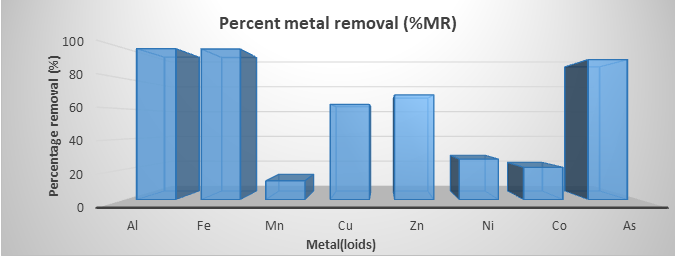
The multiple mechanisms driving the removal of the metal(loid)s can be attributed primarily to precipitation and nucleation resulting from the pH neutralization triggered by calcite dissolution, and adsorption on the amorphous surface structure of the WTR.
To further assess the occurrence of adsorption and/or precipitation, the surface structure of both fresh and spent WTR was analyzed using a FEI Nova Nano SEM 430 field emission scanning electron microscope (SEM), equipped with backscattered and secondary electron detectors. The clean calcite surfaces of the fresh WTR (Figure 6) were observed to have changed from the experiment, with surface coatings visible on the spent WTR.
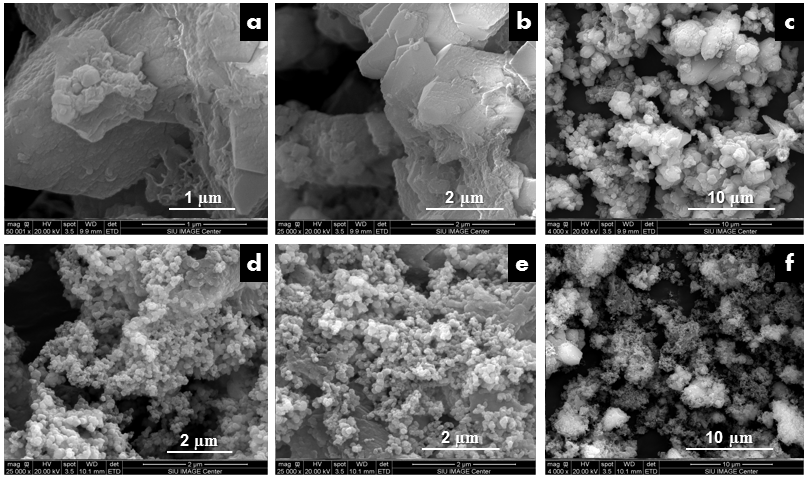
The chemical nature of these surface complexes remains undetermined but could represent either a hydrated or dehydrated surface complex, or a phase that behaves similarly to a surface precipitate. This observation suggests that both adsorption and precipitation processes may have occurred, but further studies and analysis would be required to conclusively identify the nature of these surface modifications. Due to the complexity of surface sorption mechanisms and the roles of dissolution and precipitation, especially under conditions typical of natural systems, this study does not attempt to distinguish between adsorption and surface precipitation processes. The challenges of isolating these distinct metal removal mechanisms in aqueous environments were emphasized in a similar study by Al-Mahrouqi, et al. [18].
Hydroponic Phytoextraction of Manganese
During the initial stage of treatment, most metal ions present in the AMD were effectively removed, reducing their concentrations below regulatory discharge limits. The subsequent hydroponic phytoremediation stage was specifically designed to target and further reduce manganese levels in the column effluent. Elevated manganese concentrations cause operational and aesthetic challenges in water utilities [19] and may present health risks, including neurotoxicity [20]. At the end of the 30- day hydroponic stage, the concentration of manganese was further reduced, achieving an additional 56.9% removal, in addition to the 12.5% removal observed in the fluidized column filter. Although the recorded concentration is still above EPA’s secondary maximum contaminant level (SMCL) of 0.05 mg/L for aesthetic considerations, the results reinforce the incremental purification capacity of the hydroponic system.
Phytoextraction Assessment in Vetiver
After the experiment, it was observed that vetiver demonstrated significant growth, with additional root lengths averaging 11.6 ± 2.7 cm (≈ 0.38 cm/day), and net shoot length reaching 32.0 ± 11.67 cm (≈ 1.07 cm/day) (Figure 7). The growth of vetiver contributed to an increased surface area in both root and shoot tissues, which, in turn, enhanced photosynthetic activity and facilitated the uptake of manganese (Mn) and other dissolved metal(loid)s from the solution. This growth pattern supports its adaptability to the hydroponic environment.
The tissue analysis of vetiver grass indicated a significant uptake of manganese (Mn). Concentrations of Mn in the shoot and root systems, measured on a dry weight (DW) basis, revealed that metal translocation within the plant was generally low, with higher Mn concentrations observed in the roots compared to the shoots. This finding aligns with the results reported by Mwegoha WJ (2008) Roongtanakiat N, et al. and Andra, et al. [21, 22, 23, 24], who observed similar patterns of low translocation for Mn. In contrast, Ying O, et al. [25]. Reported high metal translocation as a key physiological characteristic of vetiver which suggests some variation in findings possibly due to differences in experimental conditions and duration. The mean Mn uptake per vetiver plant was estimated to be 0.059 mg on a dry weight basis. The 30-day experimental period in this study may not have provided adequate time for plant growth and subsequent metal uptake, particularly for manganese which was present at higher concentrations in the solution at the beginning of the experiment [26, 27, 28].
The researchers of this study acknowledge that a control setup of the hydroponic system was not included in this experiment, which represents a limitation of the study. The absence of control limits the ability to definitively attribute the observed metal reduction to phytoextraction by vetiver. Hence, the incremental metal reduction between the two stages should not be taken as a mass balance for the overall experiment. Future studies should incorporate appropriate control setups to validate these findings and ensure robust conclusions.
Acknowledgments
This research was funded by the United States Department of the Interior’s Office of Surface Mining Reclamation and Enforcement (OSM Cooperative Agreement No. S12AC20001). The authors wish to thank the engineers at the drinking water treatment plant facilities at Carbondale, Rend Lake, and Saline Valley Conservancy District in southern Illinois for their assistance with collecting WTR for this study. We also sincerely thank our colleagues at Southern Illinois University, including Dr. Sanjeev Kumar; Dr. Meisam Peiravi, Dr. Xingmao Ma, Dr. Liu Jia, and Mr. Rajesh Guru.
Conclusion
This study demonstrates the potential of using a two- stage treatment system involving WTR in a fluidized column followed by hydroponic phytoremediation with vetiver grass to effectively remove metal (loid)s from acid rock drainage (AMD). The first stage, utilizing WTR in the fluidized column, successfully neutralized the AMD and significantly reduced the concentrations of several metal ions, including Al, Fe, Cu, Mn, and As, through precipitation, nucleation, and adsorption. While manganese (Mn) removal was limited in the fluidized column stage, the hydroponic phytoremediation phase incrementally reduced Mn concentrations by 56.9%, demonstrating the ability of vetiver to uptake and translocate metal ions from the treated effluent. Future studies should explore the long-term effects of this approach, including desorption and regeneration to restore the WTR
adsorbent to its original properties, as well as the potential for phytomining and the safe disposal or recycling of metal- saturated plant biomass.
References
-
Antoniadis V, Sabry MS, Efi L, Jorg R (2020) International Trace Element Regulation Limits in Soils. Soil and Groundwater Remediation Technologies. CRC Press, USA, pp: 31-39.
-
Rinklebe J, Antoniadis V, Sabry MS, Oliver R, Manfred A (2019) Health risk assessment of potentially toxic elements in soils along the Central Elbe River Germany. Environ Int 126: 76-88.
-
Sultana M, Mahbub HR, Maheruneesa S, Hafezur R, Nur SMA (2022) A review on experimental chemically modified activated carbon to enhance dye and heavy metals adsorption. Cleaner engineering and technology 6: 100382.
-
Mariana M, Abdul KHPS, Mister EM, Esam BY, Tata A, et al. (2021) Recent advances in activated carbon modification techniques for enhanced heavy metal adsorption. Journal of Water Process Engineering 43: 102221.
-
Zhang Z, Tao W, Huixue Z, Yonghong L, Baashan X (2021) Adsorption of Pb (II) and Cd (II) by magnetic activated carbon and its mechanism. Science of the Total Environment 757: 143910.
-
Shahrokhi-Shahraki R, Chelsea B, El-Din MG, Junboum P (2021) High efficiency removal of heavy metals using tire-derived activated carbon vs commercial activated carbon: Insights into the adsorption mechanisms. Chemosphere 264: 128455.
-
Miller SM, Julie BZ (2010) Novel, bio-based, photoactive arsenic sorbent: TiO2-impregnated chitosan bead Water Res 44(19): 5722-5729
-
Dhoble RM, Pratap RM, Sadhana SR, Bhole AG, Ashwinkumar SD, et al. (2017) Removal of arsenic(III) from water by magnetic binary oxide particles (MBOP): experimental studies on fixed bed column. J Hazard Mater 322(B): 469-478.
-
Hasan S, Tushar KG, Dabir SV, Veera MB (2008) Dispersion of chitosan on perlite for enhancement of copper(II) adsorption capacity. J Hazard Mater 152(2): 826-837.
-
Zeng H, Yaping Y, Fanshuo W, Jie Z, Dong L (2020) Arsenic (V) removal by granular adsorbents made from water treatment residuals materials and chitosan. Colloids and Surfaces A: Physicochemical and Engineering Aspects 585: 124036.
-
Xu D, Lai YL, Fang YL, Zhiyang L, Hao Z, et al. (2020)Water treatment residual: A critical review of its applications on pollutant removal from stormwater runoff and future perspectives. Journal of environmental management 259: 109649.
-
Muisa N, Innocent N, Walter R, Mercy MM (2020) Utilization of alum sludge as adsorbent for phosphorus removal in municipal wastewater: A review. Journal of Water Process Engineering 35: 101187.
-
Cornwell DA, Lee RG (1994) Waste stream recycling: its effect on water quality. Journal‐American Water Works Association 86(11): 50-63.
-
Chen Y, Zhi J, Zhang H, Li J, Zhao Q, et al (2017) Transcriptome analysis of Phytolacca americana L. in response to cadmium stress. PloS one 12(9): e0184681.
-
Ali H, Khan E, Sajad MA (2013) Phytoremediation of heavy metals-concepts and applications. Chemosphere 91(7): 869-881.
-
Behum PT, Lefticariu L, Walter E, Kiser R (2013) Passive treatment of coal-mine drainage by a sulfate-reducing bioreactor in the Illinois coal basin. In Proceedings, West Virginia Mine Drainage Task Force symposium, Morgantown, WV, US, pp: 26-27.
-
Munter RC, Grande RA, Barnes RM (1981) Plant analysis and soil extract analysis by ICP-atomic emission spectrometry. Developments in Atomic Plasma Spectrochemical Analysis. Heyden and Son, Ltd, London, pp: 653-672.
-
Mahrouqi AD, Vinogradov J, Jackson MD (2017) Zeta potential of artificial and natural calcite in aqueous solution. Advances in colloid and interface science 240: 60-76.
-
EPA (2004) Drinking water health advisory for manganese. U.S. Environmental Protection Agency, EPA- 822-R-04-003, Washington, DC, USA, pp: 55.
-
WHO (2004) Manganese in drinking water-background document for development of WHO guidelines for drinking-water quality. WHO/SDE/WSH/03.04/104. World Health Organization, Geneva, Switzerland, pp: 21.
-
Dey S, Tripathy B, Kumar MS, Das AP (2023) Ecotoxicological consequences of manganese mining pollutants and their biological remediation. Environmental chemistry and ecotoxicology 5: 55-61.
-
Mwegoha WJ (2008) The use of phytoremediation technology for abatement soil and groundwater pollution in Tanzania: opportunities and challenges. Journal of sustainable development in Africa 10(1): 140-156.
-
Roongtanakiat N, Tangruangkiat S, Meesat R (2007) Utilization of vetiver grass (Vetiveria zizanioides) for removal of heavy metals from industrial wastewaters. Science Asia 33: 397-403.
-
Yohannes SB, Mihret DU, Asamire AG (2024) Use of Vetevera Grass (Chrysopogon zizanioides) in a Constructed Wetland to Remove Heavy Metals from Kege Wet Coffee Processing Plant, Dale Woreda, Sidama Regional State, Ethiopia. Journal of Applied Sciences and Environmental Management 28(4): 1083-1095.
-
Zhang Z, Sarkar D, Levy F, Datta R (2023) Chemically Catalyzed Phytoextraction for Sustainable Cleanup of Soil Lead Contamination in a Community Garden in Jersey City, New Jersey. Sustainability 15(9): 7492.
-
Ouyang Y (2002) Phytoremediation: modeling plant uptake and contaminant transport in the soil-plant- atmosphere continuum. Journal of Hydrology 266(1-2): 66-82.
-
Lasat MM (2002) Phytoextraction of toxic metals: a review of biological mechanisms. Journal of environmental quality 31(1): 109-120.
-
Pandey VC, Souza-Alonso P (2019) Market Opportunities: in Sustainable Phytoremediation. In Phytomanagement of Polluted Sites, pp: 51-82.
- Electronic Waste Management in the Top Ten Economies in the World: A Critical Review on Waste Generation, Regulations, Collection, Recycling and Environmental Challenges
- Some Challenging Transdisciplinary Aspects of the Sustainable Waste Management in the Permacrisis Context
- Use of Mobile Autonomous Systems for Pollution Control of Inland Water Bodies
- Environmental Impact Perspective Sustainable Online Textile Retailing: Harnessing Augmented Reality-Based Digital Twins in Bangladesh
- Household E-Waste Management Systems [E-Wms] in Malaysia
- Biodiversity and Conservation Challenges in the Forests of Mudug and Galgaduud Regions, Somalia: A Mini Review