
“Competitive Landscape and Brand Equivalents: Implications for ANDA (Abbreviated New Drug Application) Approval”
Generic drugs stand as a beacon of hope within the realm of medicine, offering a pragmatic and wallet-friendly solution for patients seeking essential treatments. They open the doors to the same therapeutic benefits as their brand-name counterparts, all without imposing exorbitant financial burdens. This revolutionary journey begins with the Abbreviated New Drug Application (ANDA), a pivotal gateway into the stringent regulatory landscape overseen by the U.S. Food and Drug Administration (FDA). Unlike the labyrinthine process faced by novel drugs, generics enjoy a streamlined path to approval, showcasing their equivalence to the original through meticulous validation of identical active ingredients and efficacy. This efficient route not only saves precious time but also preserves valuable financial resources, sidestepping the need for redundant testing mandated for new drugs. With the coveted FDA seal of approval, these generic marvels burst onto the market, offering patients a cost-effective alternative without any compromise on quality or effectiveness. In essence, generic drugs emerge as beacons of accessibility, ensuring that essential treatments reach the masses while steadfastly upholding the highest standards of safety and efficacy. They represent not just a practical solution, but a transformative force in democratizing healthcare access for all.
Introduction
Generic drugs offer a compelling solution within the pharmaceutical landscape, mirroring the active ingredients of their brand-name counterparts while being economically advantageous. As patents for original medications expire, generic drugs emerge, embodying the same therapeutic efficacy at a fraction of the cost. Rigorously tested to ensure equivalence with their brand-name counterparts, they undergo stringent assessments to secure approval from esteemed regulatory bodies like the FDA in the United States.
By providing accessible and cost-effective alternatives, generic drugs play a pivotal role in broadening the reach of essential medications, thus alleviating financial burdens on healthcare systems and enhancing overall public health outcomes. Generic drugs offer several advantages over brand-name counterparts. Firstly, they are notably more cost-effective due to the absence of extensive research and development expenses incurred by brand-name manufacturers, rendering them accessible to patients, particularly those lacking insurance or facing high co-payments [1]. Secondly, generic drugs undergo stringent testing to ensure bioequivalence with their brand-name counterparts, assuring equal efficacy and safety. Thirdly, the expiration of a brand-name drug’s patent allows for the production of generic versions by other manufacturers, fostering competition and enhancing availability, particularly in regions where brand-name drugs may be scarce or expensive. Furthermore, generic drugs adhere to the same regulatory standards as brand-name drugs, ensuring quality, safety, and efficacy.
Additionally, their affordability contributes to healthcare sustainability by reducing overall costs and broadening access to essential medications. Moreover, the availability of multiple generic options enables healthcare providers to tailor treatments to individual patient needs, potentially leading to improved outcomes and fewer side effects. Lastly, lower costs often translate to improved medication adherence, consequently yielding better health outcomes and reduced healthcare costs associated with untreated or poorly managed conditions. In summary, generic drugs play a pivotal role in furnishing affordable, safe, and effective treatment options globally, thereby enhancing access to healthcare and promoting better health outcomes. The Abbreviated New Drug Application (ANDA) serves as a critical pathway for the approval of generic drugs in the United States. As a regulatory submission to the U.S. Food and Drug Administration (FDA), the ANDA enables manufacturers to seek approval for generic versions of already-approved brand-name medications. This application is based on the principle of bioequivalence, requiring the generic drug to demonstrate identical active ingredients, dosage form, strength, route of administration, and labelling as its brand- name counterpart. By leveraging existing clinical data and demonstrating comparability with the reference product, ANDA streamlines the approval process, expediting access to more affordable medications while upholding stringent safety and efficacy standards. Through this mechanism, the ANDA plays a pivotal role in enhancing competition within the pharmaceutical market, driving down costs, and expanding patient access to essential treatments [1].
The Benefits of Generic Drugs
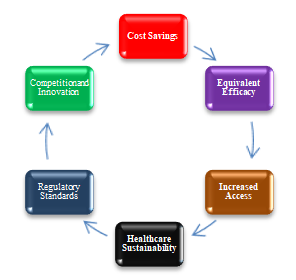
Cost Savings
Generic drugs are typically more affordable than brand- name medications, making healthcare more accessible and reducing out-of-pocket expenses for patients.
Equivalent Efficacy
Generic drugs contain the same active ingredients as brand-name drugs and undergo rigorous testing to ensure they have comparable efficacy and safety profiles.
Increased Access
Lower costs and widespread availability of generic drugs expand access to essential medications, especially for individuals with limited financial resources or in underserved communities.
Competition and Innovation
Generic drugs foster competition in the pharmaceutical market, encouraging innovation and driving down prices for all medications over time.
Healthcare Sustainability
By offering cost-effective alternatives, generic drugs help to control healthcare costs, making it more sustainable for healthcare systems and insurance providers.
Patient Choice
Generic drugs provide patients with more options when it comes to selecting medications, empowering them to make informed decisions about their healthcare [1].
Regulatory Standards
Generic drugs must meet the same rigorous standards for quality, safety, and efficacy as brand-name drugs, ensuring that patients receive reliable and effective treatments (Figure 1).
Birth of Generics Hatch Waxman Act
The genesis of generic drugs and the flourishing generics industry owe much to the enactment of the Hatch-Waxman
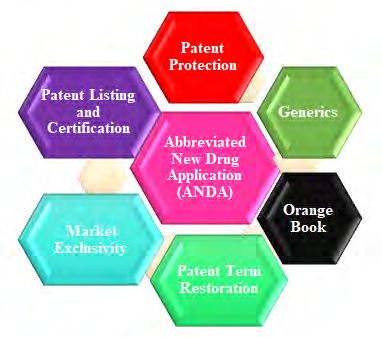
Act, hailed as the Drug Price Competition and Patent Term Restoration Act of 1984. This pivotal legislation was crafted with the dual purpose of fostering innovation within the pharmaceutical sphere while ensuring equitable access to cost-effective medications for consumers (Figure 2) [2].
Patent Protection Reinforcement
By delineating a structured framework, the Act fortified pharmaceutical companies’ ability to secure patent protection for their novel drugs. This bestowed upon them exclusive rights to market the medication for a designated period, typically spanning 20 years from the initial filing date [2].
Streamlined Approval Process
Introducing the Abbreviated New Drug Application (ANDA) pathway was a game-changer. Generic drug manufacturers could now pursue approval for their products sans the arduous and costly ordeal of conducting extensive clinical trials. Instead, they leveraged data previously submitted by the brand-name drug company, showcasing bioequivalence to the original formulation [2].
Incentivizing Market Entry
Recognizing the pivotal role of competition, the Act enticed generic drug companies to challenge prevailing patents and introduce their products to market. It provided a window of exclusivity for the pioneering generic competitor, affording them a period of limited competition and heightened profitability.
Patent Term Augmentation
In a symbiotic exchange, the Hatch-Waxman Act also offered patent term restoration. This concession allowed brand-name drug companies to elongate their patent protection by up to five years, compensating for time lost during the rigorous FDA approval process [2].
Creation of the Orange Book
A cornerstone provision, the Act established the FDA’s Orange Book, a repository of approved drug products and their patent information. This invaluable resource empowered generic drug manufacturers to identify potential patent barriers to market entry, laying the groundwork for patent challenges and ensuing litigation [2].
Competitive Landscape of Generics
Expansive Market Dynamics
Embark on a journey through the flourishing global generic drugs market, where opportunities abound as patents expire, and inviting generic drug manufacturers to claim their stake and strive for unparalleled market dominance [2].
Consolidation Trends
Witness the symphony of consolidation as behemoths within the generic drugs realm embrace smaller players, enriching their portfolios and expanding their market footprint. This consolidation fuels a crescendo of competition among select elite, igniting flames of innovation and operational excellence [2].
Regulatory Rigor
Navigate the intricate labyrinth of regulatory landscapes, where adherence to stringent guidelines is the key to unlocking the gateway to success. Here, manufacturers embark on a quest to conquer regulatory hurdles and secure their rightful place in the market spotlight.
Thriving Price Dynamics
Engage in the pulsating dance of price competition, where manufacturers vie to offer the most enticing deals to consumers. Witness the relentless pursuit of affordability as prices ebb and flow, driven by the tidal wave of generic versions flooding the market [2].
Strategic Product Differentiation
Marvel at the strategic ballet of product differentiation, where manufacturers craft unique formulations, innovative delivery mechanisms, and captivating packaging to captivate consumers. Here, differentiation becomes the cornerstone of competitive advantage, propelling manufacturers to the zenith of success [2].
Global Reach and Influence
Embark on a voyage across continents as the generic drugs industry transcends geographical boundaries. Here, manufacturers wield their influence on a global scale, navigating the currents of competition from low- cost production hubs, enriching the tapestry of access to affordable medications worldwide [3, 4].
Competition for Generics from Brand-Name Medications
Market Presence
Brand-name medications traditionally enjoy a significant market presence due to their established reputation, marketing efforts, and physician prescribing patterns. However, the introduction of generic alternatives presents consumers with a competitive choice, potentially eroding the brand’s market share [3, 4].
Price Competition
Generics typically enter the market at lower prices than their brand-name counterparts, creating price competition. This can lead to cost savings for consumers, healthcare systems, and insurers, as well as pressure on brand-name manufacturers to adjust their pricing strategies to remain competitive [3, 4].
Regulatory Environment
Regulatory agencies require generics to demonstrate bioequivalence to brand-name drugs before approval, ensuring comparable efficacy and safety. This stringent regulatory oversight helps maintain consumer confidence in generics and fosters fair competition between brands and generics [3, 4].
Innovation and Differentiation
Competition from generics can incentivize brand-name manufacturers to invest in innovation and differentiation to maintain market share. This may involve developing new formulations, delivery methods, or extended-release versions of existing medications to differentiate their products from generics [4].
Market Access and Affordability
The availability of generic alternatives enhances market access and affordability of essential medications, particularly for patients with limited financial resources or those without insurance coverage. This increased access improves healthcare outcomes and reduces overall healthcare costs.
Physician Prescribing Practices
Physician prescribing practices play a crucial role in driving competition between brand-name and generic medications. While some physicians may prefer to prescribe brand-name drugs based on familiarity or perceived quality, others may opt for generics to achieve cost savings for patients and healthcare systems [5, 6].
The Abbreviated New Drug Application (ANDA)
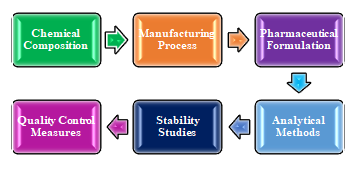
The Abbreviated New Drug Application (ANDA) process stands as a pivotal pillar within the pharmaceutical industry, heralding a pathway for generic drug manufacturers to introduce accessible medications into the United States market. Anchored in meticulous scrutiny, ANDA submissions entail the exhaustive presentation of data meticulously showcasing the bioequivalence of the generic product to its brand-name counterpart. Through a symphony of scientific rigor, manufacturers navigate a labyrinth of stringent tests, encompassing comparative studies, analytical assays, and dissolution profiles, meticulously crafted to ensure parity in therapeutic efficacy. Moreover, this journey of validation encompasses stringent quality control measures and detailed manufacturing information, meticulously orchestrated to uphold the sacred trifecta of safety, efficacy, and consistency intrinsic to every pharmaceutical formulation. With the imprimatur of FDA approval, the generic medication emerges triumphant onto the market stage, unfurling its banner of affordability and accessibility (Figure 3) [7].
The Benefits of the Abbreviated New Drug Application (ANDA)
Increased Access to Affordable Medications
ANDA facilitates the entry of generic drugs into the market, providing consumers with more affordable alternatives to brand-name medications. This enhances access to essential treatments, especially for patients with limited financial resources or those without insurance coverage [5, 6].
Cost Savings
Generic drugs approved through the ANDA process are typically priced lower than their brand-name counterparts, leading to significant cost savings for patients, healthcare providers, and insurance companies. This helps reduce the overall burden of healthcare expenses on individuals and the healthcare system [5, 6].
Competition and Market Dynamics
ANDA fosters competition in the pharmaceutical market by allowing multiple manufacturers to produce generic versions of the same medication. This competition drives down prices, incentivizes innovation, and improves the availability of a wide range of medications for consumers [5, 6].
Regulatory Efficiency
The ANDA process streamlines the approval of generic drugs by allowing manufacturers to rely on existing data for safety and efficacy, rather than conducting extensive clinical trials. This increases the efficiency of the regulatory review process and accelerates the availability of generic medications to patients.
Promotion of Public Health
By expanding access to affordable medications, ANDA contributes to improved public health outcomes. Patients are more likely to adhere to their prescribed treatments when medications are affordable, leading to better disease management and prevention of complications [5, 6].
Support for Healthcare Sustainability
The availability of generic drugs approved through ANDA helps control healthcare costs, making healthcare more sustainable for individuals, healthcare providers, and insurance companies. This enables resources to be allocated more efficiently and effectively within the healthcare system [8, 9].
The Protocol for Submitting an Abbreviated New Drug Application (ANDA)
Preparation and Planning
Understand regulatory requirements, consult experts, and develop a detailed submission plan.
Data Compilation
Gather comprehensive data on formulation, manufacturing, stability, and bio equivalence testing [8, 9].
Quality Control Measures
Implement strict quality control measures following good manufacturing practices (GMP) [8, 9].
Bio equivalence Studies
Conduct studies to demonstrate equivalence to the brand-name product in terms of safety and efficacy [8, 9].
Submission to FDA
Prepare and submit the ANDA package, including all required information and analyses [8, 9].
FDA Review Process
FDA conducts a thorough review of the submission, assessing compliance and data integrity [8, 9].
FDA Approval
If the submission meets all requirements, FDA grants approval for marketing the generic drug [8, 9].
Post-Approval Activities
Continued monitoring of safety, quality, and compliance post-marketing [10, 11].
The Data Requirements for an Abbreviated New Drug Application (ANDA)
Chemical Composition
Detailed information about the active pharmaceutical ingredient (API) and its specifications [10, 11].
Manufacturing Process
Description of the manufacturing process, including controls and validation data to ensure consistency and quality [10, 11].
Pharmaceutical Formulation
Complete details on the formulation, including excipients and their functions [10, 11].
Analytical Methods
Validation data for analytical methods used to assess the quality and purity of the drug product.
Stability Studies
Data demonstrating the stability of the drug product under various storage conditions over time [10, 11].
Bio equivalence Studies
Comparative studies demonstrating bioequivalence between the generic drug and the reference product [10, 11].
Packaging Information
Details on packaging materials and methods to ensure stability and integrity of the product.
Labelling
Proposed labelling including prescribing information, patient information, and packaging inserts [10, 11].
Safety Data
Safety data including any adverse reactions observed during clinical studies or post-marketing surveillance [10, 11].
Quality Control Measures
Documentation of adherence to Good Manufacturing Practices (GMP) and quality control procedures throughout the manufacturing process [11, 12].
Several Challenges Exist for Generic Drug Manufacturers
Regulatory Hurdles
Meeting stringent regulatory requirements, including demonstrating bio equivalence and complying with manufacturing standards, can be complex and costly [11, 12].
Intellectual Property Lawsuits
Brand-name companies may file patent infringement lawsuits to delay or prevent generic competition, resulting in legal battles and prolonged market entry [11, 12].
Market Saturation
Some generic markets are already saturated with multiple competitors, making it challenging for new entrants to gain market share and profitability [11, 12].
Price Erosion
Intense competition among generic manufacturers often leads to price erosion, squeezing profit margins and potentially affecting product viability [11, 12].
Supply Chain Disruptions
Dependence on complex global supply chains for raw materials and active ingredients exposes generic manufacturers to risks such as shortages, price fluctuations, and quality issues [11, 12].
Complexity of Formulation
Some drugs have complex formulations or delivery mechanisms, making it difficult to develop generic equivalents that meet regulatory requirements [11, 12].
Quality Concerns
Maintaining consistent product quality and compliance with manufacturing standards is essential but can be challenging, especially for smaller manufacturers with limited resources [11, 12].
Generic Substitution Policies
Policies promoting generic substitution by pharmacies and healthcare providers can affect market access and demand for specific generic products [13, 14].
The Future of Generic Drugs Holds Several Key Trends and Developments
Biologics and Biosimilars
As patents expire on biologic drugs, there will be increasing opportunities for the development and approval of biosimilars, offering cost-effective alternatives to expensive biologics [15].
Complex Generic Products
With advancements in formulation technologies and regulatory pathways, there will be a rise in the development of complex generic products, including inhalers, injectable, and transdermal patches [15].
Digitalization and Personalization
Integration of digital technologies and personalized medicine approaches may lead to the development of generic drugs tailored to individual patient needs, improving efficacy and adherence [15].
Regulatory Changes
Regulatory agencies may introduce expedited pathways and initiatives to streamline the approval process for generic drugs, fostering innovation and market competition [15].
Global Expansion
Generic drug manufacturers will increasingly focus on expanding their presence in emerging markets to capitalize on growing healthcare demand and address unmet medical needs [15].
Quality and Safety Enhancement
Continued efforts to enhance quality assurance measures, such as track-and-trace systems and real-time monitoring technologies, will ensure the safety and reliability of generic drugs [15].
Drug Pricing and Access
Continued pressure to lower healthcare costs and improve access to essential medications may drive policies promoting generic substitution and price transparency [15].
Collaboration and Partnerships
Collaboration between generic manufacturers, innovator companies, academic institutions, and regulatory agencies will drive innovation, accelerate research, and improve market access for generic drugs [15, 16].
The Future of Generic Drugs in India
Domestic Market Growth
India’s large population and increasing healthcare needs create a significant demand for affordable medications, driving growth in the domestic generic drug market [15, 16].
Expansion of Regulatory Framework
India’s regulatory authorities, such as the Central Drugs Standard Control Organization (CDSCO), are continuously updating regulations to enhance quality standards, streamline approval processes, and promote innovation in generic drug manufacturing [15, 16].
Focus on Quality Assurance
Indian generic manufacturers are increasingly investing in quality assurance measures and compliance with international standards such as Good Manufacturing Practices (GMP) to enhance the safety and efficacy of their products [15, 16].
Biopharmaceuticals and Biosimilars
With the expiration of patents on biologic drugs, there is growing interest and investment in the development and manufacturing of biosimilars, offering opportunities for Indian companies to enter this segment and expand their product portfolios [15, 16].
Technological Advancements
Adoption of advanced manufacturing technologies, automation, and digitization will improve efficiency, reduce costs, and ensure consistency in generic drug production [15, 16].
Export Opportunities
India is a major exporter of generic drugs to markets worldwide, and this trend is expected to continue as demand for affordable medications rises globally, especially in emerging economies [15, 16].
Public-Private Partnerships
Collaborations between the government, academia, and private sector entities will drive research and development initiatives, foster innovation, and address healthcare challenges through the development of generic drugs [15, 16].
Patent Challenges and Litigation
Indian generic manufacturers may face patent litigation from multinational pharmaceutical companies, necessitating strategies to navigate intellectual property laws and defend their market position [16, 17].
Summary
The future of generic drugs in India is poised for remarkable growth and innovation, propelled by an array of dynamic factors. With a burgeoning domestic market and a robust regulatory framework, the stage is set for expansion and development. Moreover, a steadfast commitment to quality assurance ensures that Indian generics maintain global standards of excellence. Breakthroughs in biopharmaceuticals and biosimilars further enrich the landscape, promising cutting-edge solutions to healthcare challenges.
But that’s not all; technological advancements open new avenues for growth, while export opportunities beckon Indian generics to the global stage. Through strategic public- private partnerships, the industry is poised to unlock new potentials, fostering collaboration and driving progress.
Of course, challenges such as patent issues provide opportunities for innovation and adaptation, fuelling the industry’s resilience and creativity. Ultimately, the future of generic drugs in India embodies a vision of growth, innovation, and unwavering dedication to quality, affordability, and accessibility in healthcare. It’s a future that promises to transform the healthcare landscape, ensuring that lifesaving treatments reach every corner of the globe [16, 17].
References
-
Dong K, Boehm G, Zheng Q (2017) Economic impacts of the generic drug user fee act fee structure. Value in Health: ISPOR 20(6): 792-798.
-
Boehm G, Yao L, Han L, Zheng Q (2013) Development of the generic drug industry in the US after the Hatch- Waxman Act of 1984. Acta Pharmaceutica Sinica B 3(5): 297-311.
-
Joshi SS, Shetty YC, Karande S (2019) Generic drugs-The Indian scenario. J Postgrad Med 65(2): 67-69.
-
Hassali MAA, Shafie AA, Jamshed S, Ibrahim MIM, Awaisu A (2009) Consumers’ views on generic medicines: A review of the literature. The International Journal of Pharmacy Practice 17(2): 79-88.
-
Hassali MA, Alrasheedy AA, McLachlan A, Nguyen TA, AL- Tamimi SK, et al. (2014) The experiences of implementing generic medicine policy in eight countries: A review and recommendations for a successful promotion of generic medicine use. Saudi Pharm J 22(6): 491-503.
-
Ahn K, Trujillo A, Gibbons J, Bennett CL, Anderson G (2023) Settled: Patent characteristics and litigation outcomes in the pharmaceutical industry. International Review of Law and Economics 76: 106169.
-
Wittayanukorn S, Rosenberg M, Schick A, Hu M, Wang Z, et al. (2018) What factors may impact the likelihood of first abbreviated new drug application (ANDA) submission for a reference product? Value in Health: ISPOR 21(S1): S116.
-
Basak A, Raw A, Alhakim A, Furness S, Samaan N, et al. (2007) Pharmaceutical impurities: Regulatory perspective for Abbreviated New Drug Applications. Adv Drug Deliv Rev 59(1): 64-72.
-
Fahim SM, Ngorsuraches S (2020) Did citizen petitions prolong the number of approval days of generic drugs? Research in Social & Administrative Pharmacy: RSAP 16(9): 1282-1284.
-
Kulkarni SB, Gaikwad VL (2023) Common chemistry, manufacturing, and control deficiencies in abbreviated new drug applications assessed by the US Food and drug administration: Hurdle to access cost-effective medicines. Journal of Pharmacological and Toxicological Methods 123: 107295.
-
Marzo A (1997) Clinical pharmacokinetic registration files for nda and procedures. Pharmacological Research: The Official Journal of the Italian Pharmacological Society 36(6): 425-450.
-
Zagalo DM, Simões S, Sousa J (2022) Regulatory science approach in pharmaceutical development of follow- on versions of non-biological complex drug products. Journal of Pharmaceutical Sciences 111(10): 2687-2713.
-
Lopes GDL (2013) Cost comparison and economic implications of commonly used originator and generic chemotherapy drugs in India. Annals of Oncology 24(S5): v13-v16.
-
Murthannagari VR, Krishnan GGN, Manu KV, Jayachandraiah CT, Rajendra PKM, et al. (2023) Exploring the potential challenges for developing generic orphan drugs for rare diseases: A survey of US and European markets. Value in Health Regional Issues 35: 87-94.
-
Prasad A, Panesar A (2024) Decoding the perception of prescribers towards generic medicine: A bibliometric study. Journal of Generic Medicines 20(9).
-
Tempest B (2024) The journal of generic medicines- editorial march 2024. Journal of Generic Medicines 20(1): 3-4.
-
Toverud EL, Hartmann K, Håkonsen H (2015) A systematic review of physicians’ and pharmacists’ perspectives on generic drug use: What are the global challenges? Applied Health Economics and Health Policy 13(S1): 35-45.
- Hydrogen Peroxide Scavenging by Methanolic Extracts of Coriander: An In Vitro Antioxidant Study
- Aromatherapy in Palliative Care: A Fragrant Quest for Relief
- Empowering Women, Securing Futures: Contraception’s Role in Socioeconomic Progress in India
- Effect of Crospovidone, Croscaramellose Sodium in Combination on the Drug Release of Anti diabetic Medication in Tablet Form
- Knowledge, Attitudes, Anxiety, and Preventive Behaviors Regarding Covid-19 Affliction among Healthcare Workers in Pakistan
- Novel Advancements in Mouth Dissolving Film Technology