
Offset Wells Data Analysis and Thermal Simulations Improve the Performance of Drilling HPHT Well
To drill new HPHT development wells safely, an exact estimate of their stability is essential. Analyzing previously drilled offset wells can assist in this determination, eliminating any stratigraphic column issues and saving nonproductive time. The challenges found with offset wellbores, their consequences on well design, possible remedies, and preventative measures are discussed in this paper. It examines drilling data from offset wells in order to discover, diagnose, and treat serious issues. Furthermore, thermal simulation was done in order to study the temperature distribution of the wellbore, annuli and fluids during drilling, tripping, circulation, logging, casing and cementing in HPHT zone
Introduction
HPHT wells refers to high pressure and high temperature boreholes. They are an inescapable byproduct of the world’s never-ending hunt for new hydrocarbon resources. The high pressures and temperatures are bigger challenges during designing, drilling, and doing operations in these wells. When constructing such wells, each string design influences the design of other strings due to the unusual encountered stresses, unlike the traditional well design, such as annular pressure accumulation connect numerous strings. HPHT circumstances result in a variety of non-standard load situations, necessitating the use of non-standard fluids and materials, advanced design techniques, and innovative processes. The design of these wells frequently need material or equipment which are difficult to meet at the current technology [1].
In order to define HPHT wells, a common definition of these wells has not been developed; in any event, most administrators regard a well with a formation temperature in excess of 300 oF and a surface closing pressure more than 10000 psi to be an HPHT application [2]. Wells with layer temperatures above 425 oF and pressures over 15000 psi are commonly referred to as ultra-HPHT or extreme-HPHT (X-HPHT) wells [3]. The UK Heath and Security Executive has recommended that for an application to be classified as HPHT, the undistributed bottomhole temperature must exceed 300 oF and have a formation pressure gradient in excess of 0.8 psi/ft or require the utilization of controlling equipment rating in excess of 10000 psi working pressure [4].
It is critical to note that bottomhole temperature and zone pressure are critical. Borehole temperature and formation pressure are not, in and of themselves, indicators of HPHT conditions. The geothermal change is a third factor that will be used to identify situations in which hot issues demand special attention. Warm impacts became genuine enough to need remarkable thought amongst planning after a geothermal gradient of 0.014 oF/ft [1].
In this paper, we review the HPHT circumstances that are considered in plan all through the world. In this portion, we endeavor to characterize the term HPHT as well as distinguish the worldwide dissemination of HPHT indications. The study examines strategies and methods for assessing temperature and pressure, which are clearly basic within the plan of HPHT wells. The effect of HPHT on the characteristics and execution of liquids and materials, as well as non-standard stresses put on wells, are investigated. The operational results of HPHT circumstances, especially as they relate to well control, are inspected.
Previous Studies
Drilling in HPHT fields and regions is highly difficult and required a lot of circumstances, technologies, strategies and plans in order to do the trajectory and reach target safely and cost effectively. There are several authors who studied those area and cover main researches. Table 1 shows a survey study of published researches regarding the HPHT wells’ problems and their solutions, pressure and temperature estimation methods, thermal analysis, and wellhead movement.
| Author (s) | Publication Year | Study/ or Technique Developed |
|---|---|---|
| HP/HT Wells Problems and Pressure Estimation Methods | ||
| Maury and Idelovici [5] | 1995 | Studying the effect of transient thermal regime, which comprises alternating cooling and heating of the wellbore, and causes a loss of well stability while drilling under HP/HT circumstances. |
| Kelley, et al. [6], Sweatman, et al. [7], and Webb, et al. [8] | 2001 | Presenting HP/HT well pore pressure integrity and treatments to avoid problems |
| Skomedal, et al. [9] | 2002 | A study of the reservoir rock’s mechanical behavior when uncovered to varieties in stress and formation pressure |
| Swarbick [10] | 2002 | The limits of porosity-based prediction tools and popular ways of predicting formation pressure |
| Shaughnessy, et al. [11] | 2003 | Issues involved with ultradeep HP/HT wells and their solutions |
| Esmersoy and Mallick [12] | 2004 | A novel approach/ or technique for predicting pressures ahead of the bit using vertical seismic profile (VSP) |
| Wellbore thermal problem and temperature estimation methods | ||
| Marshal and Bentsen [13] Hasan and Kabir [14] | 1982 2002 | Studying typical thermal characteristics of formation and borehole materials. |
| Prensky [15] | 1992 | Geothermal temperature estimation techniques |
| Sathuvalli, et al. [16] | 2001 | Investigating the significant geothermal gradients seen in offshore oil and gas fields |
| Beardsmore and Cull [17] | 2001 | Errors in the estimate of the geothermal gradient due to geologic noise |
| Hasan and Kabir [14] | 2002 | Investigating the borehole thermal problem and the numerous situations that arise during drilling fluid circulation and formation fluid generation. |
| Wellbore thermal analysis and measurement techniques | ||
| Ramey’s [18] Raymond [19] Willhite [20] | 1962 1967 1969 | Building semi-analytical models for borehole thermal analysis and predicting injection and production temperatures |
| Vidick and Acock [21] | 1991 | highlighting some of the flaws in some of the flow temperature measuring methodologies |
| Impact of High temperatures on material characteristics | ||
| Berckenhoff and Wendt [22] | 2005 | Examining the impact of high temperatures on material features such as elastomers and how they affect the system’s sealing integrity |
| Brownlee, et al. [23] | 2005 | Offering a thorough examination of the industry’s materials selection techniques for sour HP/HT wells |
| Nice, et al. [24] | 2005 | Discussing the development of a moderate sour benefit, 125-ksi high-strength low-alloy steel study for the Kristin production casing |
| The impact of HP/HT circumstances on PVT behavior of reservoir fluids | ||
| Fisk and Jamison [25], Oakley, et al. [26], Zamora, et al. [27] | 1989 2000 | Examining the impact of high temperatures on mud characteristics |
| MacAndrew, et al. [28], Mansour, et al.[29], Rotmero and Loizzo [30], | 1993 1999 2000 | Providing research on the loss of cement mechanical properties under the impact of temperature |
| Rommetveit and Bjørkevoll [31], Harris and Osisanya [32]. | 1997 2005 | Building a simulator to forecast the pressure and temperature dependency of mud density and rheological parameters |
| Wang and Su [33] | 2000 | Presenting a pressure-temperature model for estimating equivalent static density (ESD) in HPHT circumstances |
| Danesh [34] | 2002 | Doing experiments to demonstrate that increasing water content enhances the viscosity of formation fluids |
| Saasen, et al. [35] | 2002 | Presenting benefits of cesium formate for the Huldra field in the North Sea, which had a kick owing to barite sag in the OBM utilized |
| Griffith, et al. [36] | 2004 | Investigating the use of foamed cement systems to lessen the influence of temperature |
| Gozalpour, et al. [37] | 2005 | Demonstrating the impact of temperature on the volatility of heavy elements in HP/HT fluids |
| Developed thermal loads due to higher temperatures | ||
| Handelman [38], Lubinski [39], Lubinski, et al. [40], Hammerlindl [41], Sparks [42], Mitchell [43], Paslay [44], He and Kyl-lingstad [45], Lea ,et al. [46] | 1946, 1951, 1962, 1980, 1984, 1986, 1994, 1995, 1995 | Addressing the problem of buckling in restricted tubulars caused by high thermal loads |
| Handelman [38], Lubinski [39], Lubinski, et al. [40], Hammerlindl [41], Sparks [42] | 1946, 1951, 1962, 1984 | Presenting the equations and theory needed to calculate effective forces for buckling and post-buckling analyses |
| Suryanarayana and McCann [47] | 1995 | Presenting buckling theory and experimental findings |
| ISO 13679 [48] | 2002 | Recommendation of using premium connections for HP/HT wells designing utilizing severe testing techniques. |
| Bradley, et al. [49], Carcagno [50] | 2005 | Addressing the issue of increased thermal loads created by higher temperatures |
| Wellhead movement (WHM) and annular pressure buildup APB | ||
| Adams [51] | 1991 | Provides the formulas for calculating WHM and thermal stresses resulted from the elastic spring model’s thermal expansion of the strings. |
| Halal and Mitchell [52] | 1993 | Highlighting the multistring casing design, which addresses the elastic response of the casing system. |
| Samuel and Gonzales [53] | 1999 | Describing the optimizing of multi-string casing design for annuli fluid expansion and wellhead increase |
Table 1: Literature review study of HPHT wells.
Field Case Study, Results and Discussion
Field Description
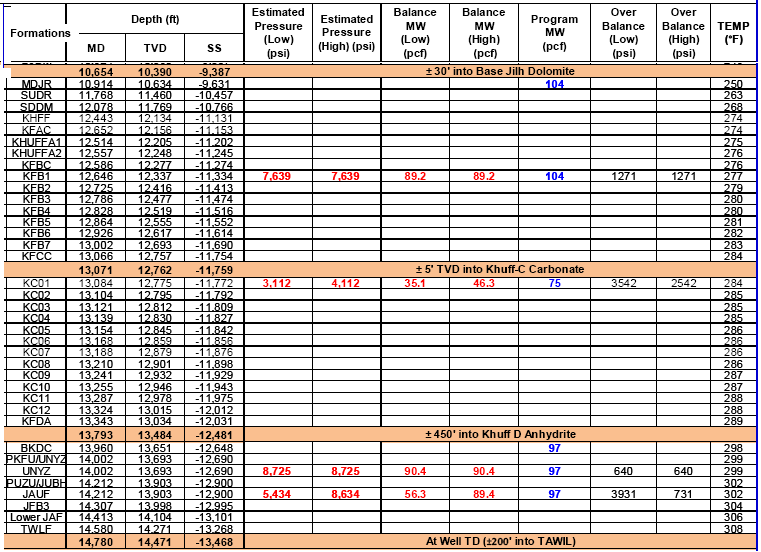
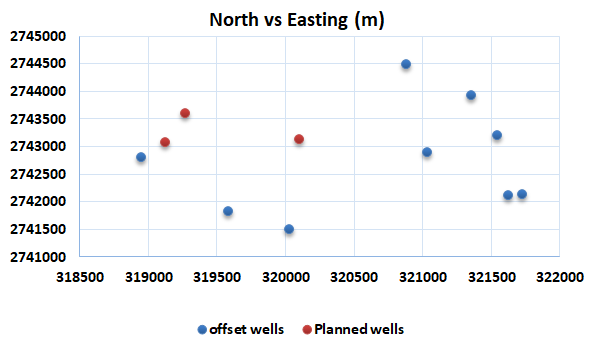
A gas field located in Arab Gulf is classified as HPHT field because of appearing pressure in excess of 10000 psi and temperature over 300 oF during drilling its stratigraphic column (Figure 1). The drilling program is issued to drill 3 wells among between the previous drilled wells. The wells are proposed as a vertical S-shape well with Pre-Khuff as primary and Khuff-C as secondary objective in the gas field. Also, Offset and planned wells map is shown in Figure 2.The well is designed as a special well due depleted pressures in Khuff-C and high pressure in Pre-Khuff. The well is designed as a S-shape because of the surface location issues.
Otherwise, Hydrocarbon potential are:
- Zones of primary hydrocarbon potential Pre-Khuff.
- Other Known accumulations of hydrocarbons include: • Oil in carbonates of the Arab-D Reservoir. • Gas in Khuff Reservoir. • Shallow gas is not expected in this location.
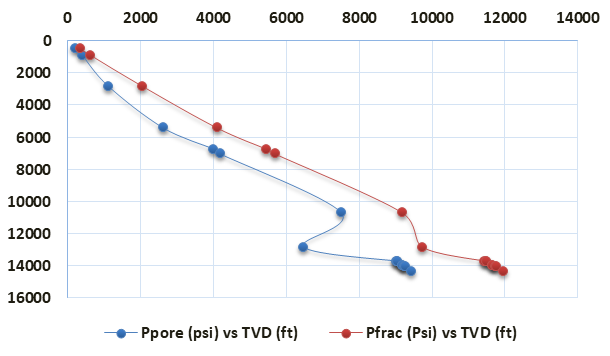
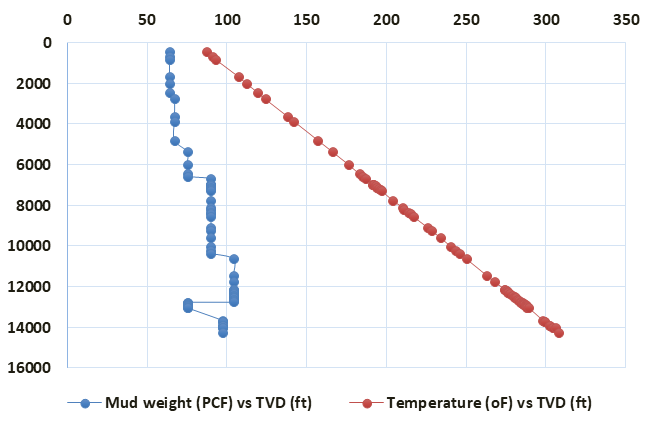
Furthermore, the pressure and temperature profiles of this region are plotted in Figures 3 and 4. Additionally, the future planned selected mud weights are constructed in Figure 3. So as to improve the future drilling performance, offset data analysis is done for previously drilled offset wells.
Offset Data Analysis
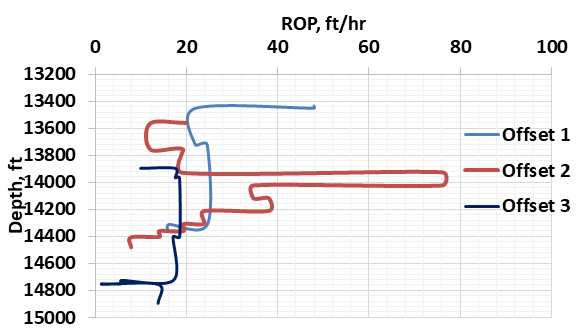
For the production section - 5 7/8 inch hole with 4 1/2 inch liner, 5 7/8 inch hole where the problem of HPHT appears, is drilled with the performance BHA bottom assembly from 4204 meters to +/- 4505 meters MD / 4411 m TVD (60 m - 200 ft in layer) with KCl type drilling mud polymers with ideal density 1553 kg/m3 (97 pcf). A volume of cleaning fluid is circulated before the introduction of the casing. Investigations (mud logging and wireline logging) are done for this section. Potential hazards and information from neighboring or similar wells are also detected. Based on information from offset wells, the following risks are considered relevant for this section (Table 2 & Figure 5)
- Slow ROP and bit wear due to abrasive Unay and Jauf formations.
- Possible sloughing shale and tight spots in Tawil formation.
- Possible high pressure in Unay and Jauf reservoirs.
- Hole washout in Jauf formation Based on offset data analysis, the drilling parameters are optimized and selected for the 5 7/8 inch borehole section until the 4-1 / 2 inch liner is landed at 4505 meters MD / 4411 m TVD, as follows:
- WOB: 15 – 22 klbs
- Flow Rate: 160 – 200 gpm
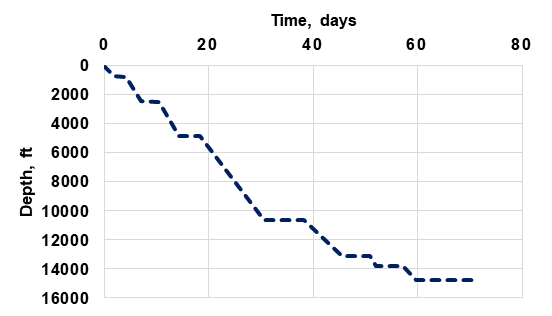
- RPM: 60 – 90 Expected ROP: 15 – 40 ft/hr Due to the overpressure in the Jauf layer, a risk of differential clamping is estimated. In this regard, it is necessary to minimize the time to make a connection or any time in which the gasket is stationary. Additionally, the optimum mud weights are selected and plotted in Figure 3. Finally, the planned depth-time graph is constructed and shown in Figure 6. The required days for drilling the next HPHT well are 71 days of drilling, conditioning, logging, casing, cementing, and completion.
| Offset Well No. | Mud weight (pcf) | Risk / Event / Prevention / Mitigation |
|---|---|---|
| 1 | 88 | 1. Drilled interval: 13,000’ to 15,135’ starting from 73 till 100 pcf. |
| 2. Well flow at 14,944’ (TWIL), killed with 88 pcf. | ||
| 2 | 94 | 1. Drilled interval: 12,040’ (KHUFF B base) to 13,775’. |
| 2. Unable to complete coring due to abrasive sands in UNNZC. | ||
| 3 | 89 | 1. Drilled interval: 12,560’to 14,052’ starting from 74 till 89 pcf. |
| 2. Well flow at 12,865 killed with 89 pcf. | ||
| 4 | 92 | 1. Drilled interval: 12,560 (JAUF TOP) to 14,550’ (450’ below JAUF). |
| 5 | 94 | 1. Drilled interval: 12,438’ (KHUFF-B top) to 14,597’ (TAWIL). |
| 6 | 97 | Drilled 5-7/8” hole from 13,552’ to well TD at 14,481’ (180’ into TWIL). |
| Ran and cemented 4-1/2” liner. | ||
| 1. Drilled interval: 13,552’ (450’ into KFDA) to 14,052’ (180’ intoTWIL). | ||
| 7 | 68-74/94 | 1. Drilled interval: 13,937’ (KFCC) to 5,807’ MD / 14,989’ (200into TAWIL). |
| 2. Well flow at 14,183’ MD / 13,380’ TVD (KFC-10), killed with 74 pcf mud. | ||
| 3. Reaming BHA stuck at bottom. | ||
| 4. MDT on TLC got stuck at 15,369’ MD /14,520 TVD (JAUF). | ||
| 8 | 96 | 1. Drilled interval: 13,435’ to 14,350’ (TWIL). |
| 2. String stuck at 14,350’ (TWIL). | ||
| 9 | 95 | 1. Drilled interval: 13,885’ (UNZA) to 14,350’ (TWIL). |
| 2. Wireline held up on 2 occasions at 14,48 (JAUF) and 14,806 (TWIL), performed logging on TLC. |
Table 2: Offset wells data analysis.
Simulations Results and Analysis
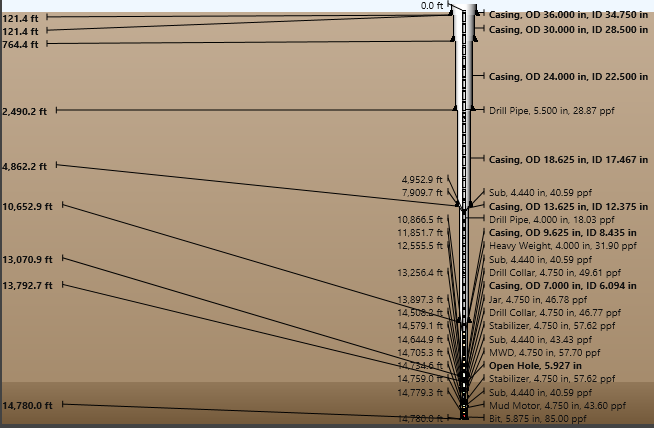
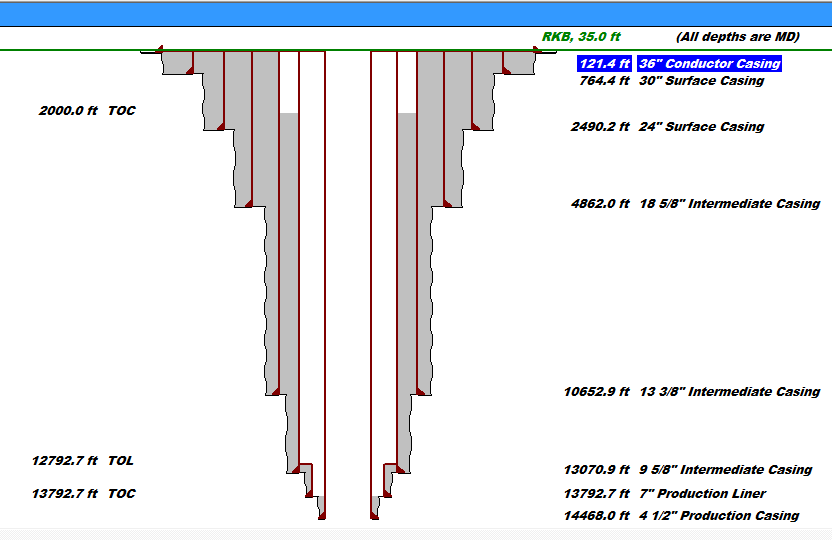
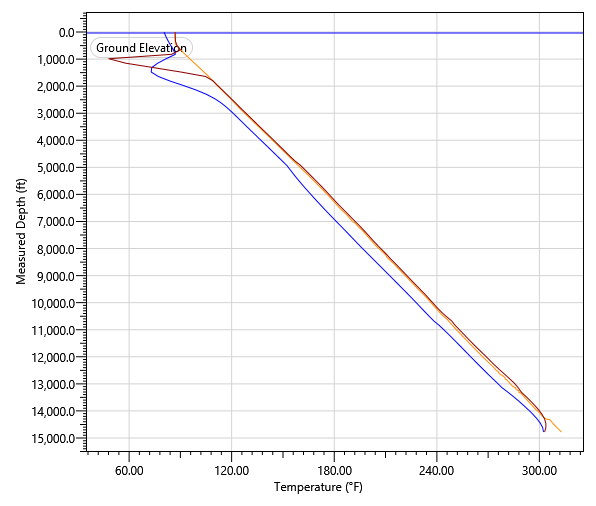
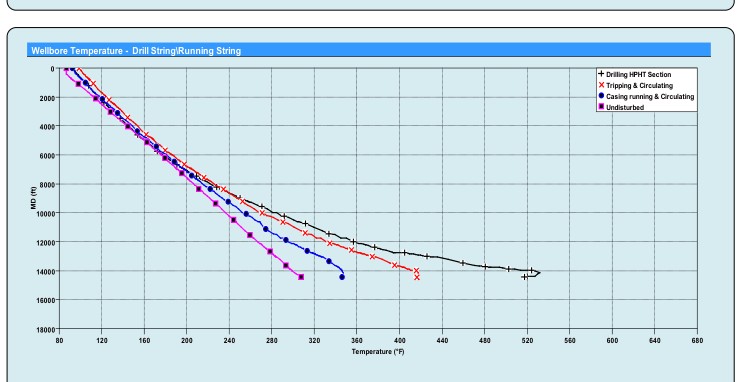
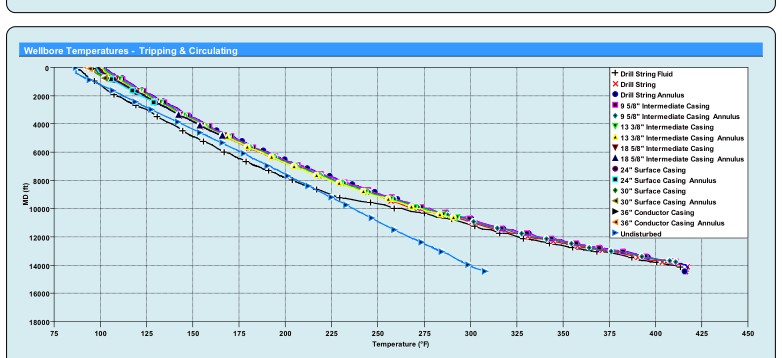
A simulation study is done using landmark software in order to show the effect of HPHT on future wells. For the production section - 5 7/8 inch wellbore with 4 1/2 inch liner, HPHT appears. The temperature simulation and design would be done and performed in this section with Landmark software. Figure 7-9 show the geothermal gradient and temperature of the drill string and at the annular space. It is noted that the temperature of the drill string also increases at the annular space, and reaches the geothermal gradient despite the cooling caused by the mud. Simulations and modeling studies were performed for HPHT well pressures and dynamic conditions.
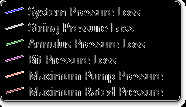
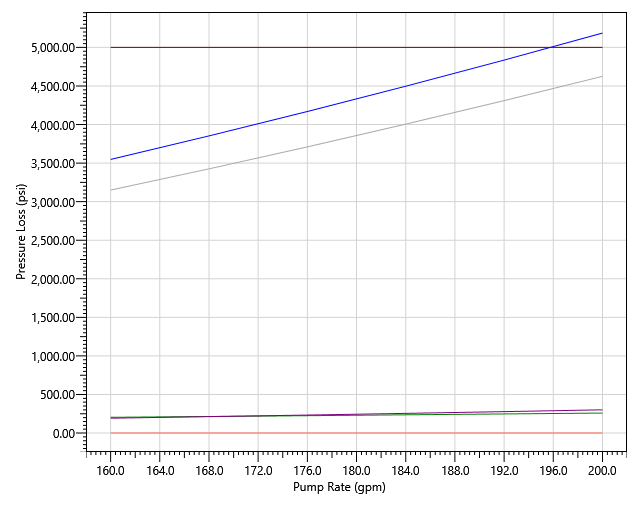
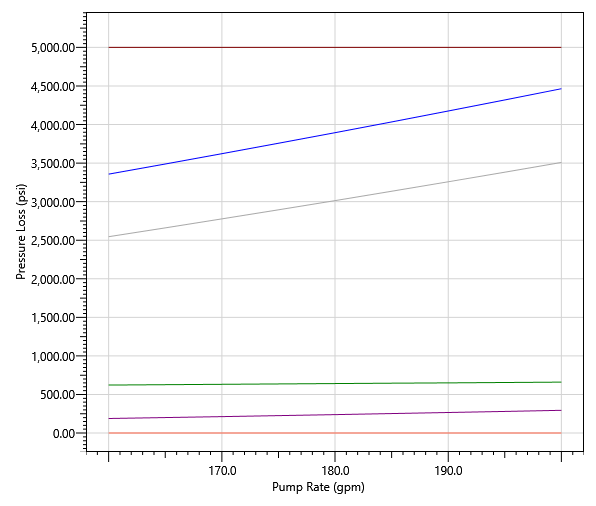
The entire circulation system has been optimized to determine and predict pressure losses, pump flow rates, flow pressure, pressure loss distribution, ECD and circulation pressure. During the modeling, the effect of temperature, change operations, cuttings loading and DFG hydraulic model was taken into account. Figures 10-15 shows the simulation results including various effects such as temperature, change operations, cuttings loading and DFG. It found that the HT increases the pressure distribution and losses in the hydraulic system during drilling HPHT section than normal case (Figures 11 & 12). Further, the variations of ECD during drilling operation causing swab and surge problems are appeared in Figure 12. Now, we can overcome the future surge and swab problem during drilling this zone.
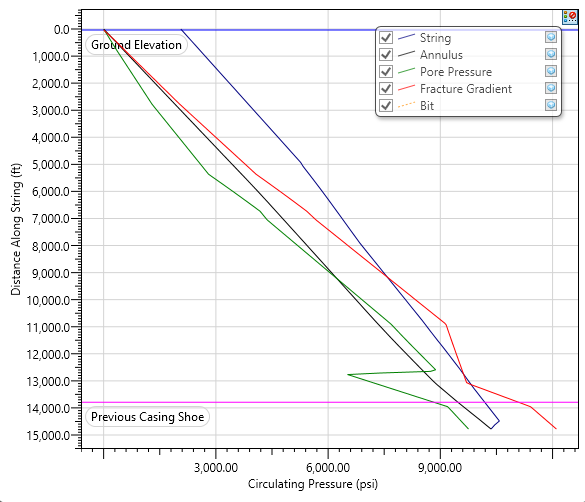
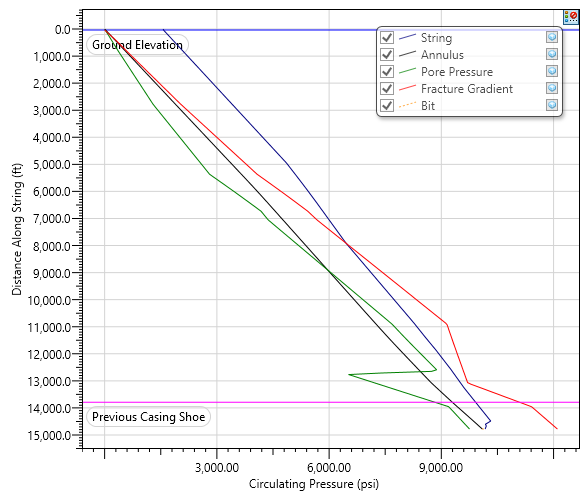
Additionally, the HT induces the increasing of annulus and string pressure during circulation making them moving towards fracture pressure and super passing it (Figure 14). However, this effect does not exist in case of lower temperature or without taking the effect of temperature (Figure 15). Therefore, HPHT well can effectively be drilled based on offset data analysis and simulation so that the best drilling parameters can be optimized and selected carefully.
[equation]
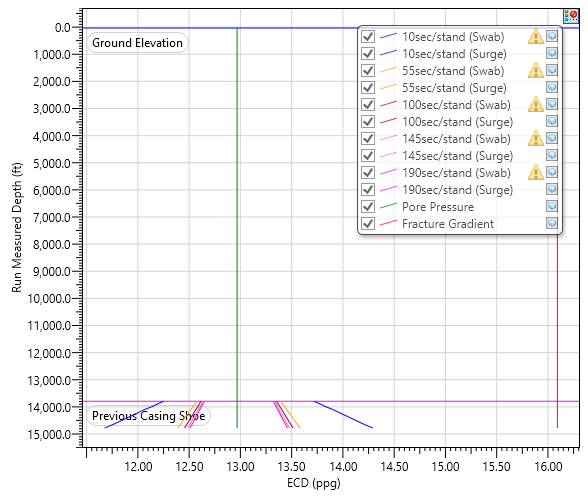
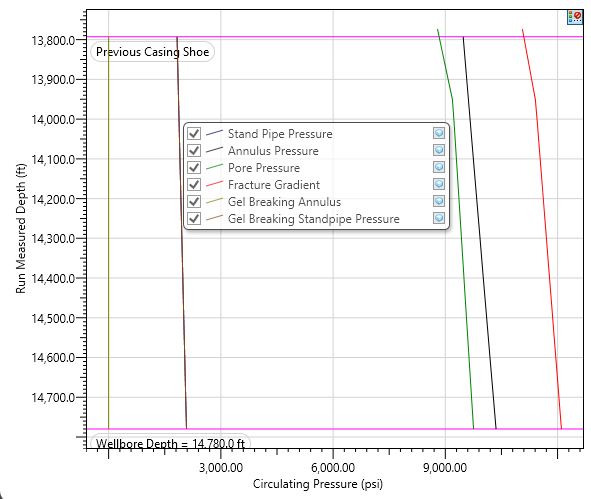
Thermal simulation study was also done as shown in Figures 16 through 22 in order to study the temperature distribution in the wellbore and around it. During drilling operations, fluid temperature increases. The more period of the operation, the higher fluid temperature acquires (Figure 16). The same situation repeats for the wellbore to be drilled in HPHT section (Figure 17).
This is due to increasing the geothermal temperature with depth during drilling as seen in Figure 18. As a result of that, all the wellbore including boreholes, casings, pipes, annuli, cementing, equipment, strings and devices landed or will be landed would be subjected to be heated during drilling those zones of HPHT (Figures 19-21). Thus, it is recommend to be careful with all material landed if they are suitable or not).
Finally, the required ECD during various operations is shown in Figure 22. It appeared that there are some shallower depths/ zones would be subjected to ECD problems but those would be cased during drilling HPHT section. Consequently, there would not be problems with those areas.
Conclusion and Recommendations
HPHT well is a big a challenge, and needs several studies and advanced technologies. In our case, the HPHT zone has a little bit pressure of less than 10000 psi but the temperature of more than 300 oF. However, this zone can be considered as an HPHT region based on the definitions previously presented. Although our simulations and study contain a lot of details regarding HPHT well, the conclusions will include the only part presented in this paper, which is about offset data analysis, and simulation with landmark to show the effect of HPHT on circulation system, as follows:
- HPHT zone changes most of the drilling parameters during operations.
- HT has a great effect on pressures’ profiles and fluids composition.
- Offset data analysis plays a great role in future development plans.
- Thermal simulation is a key-element to study temperature distribution in HPHT wells.
- HPHT increases the swab and surge problems.
- It is recommended to be careful for all material used in HPHT well if there are suitable or not.
- HPHT Technologies, materials, fluids and standards are often your requirements without thinking.
- Wellhead movement (WHM) and annular pressure buildup (APB) will be a challenge due to annuli pressurizing and multistring interaction.
References
-
Aadnoy B, Cooper I, Miska S, Mitchell RF, Payne M (2009) Advanced drilling and well technology. SPE, pp: 888. RK 36" (48") 30" (36") 24" (28") 18 5/8" (22") 13 3/8" (16") 9 5/8" (12") 7" (8 3/8")
-
Harrold D, Ringle D, Taylor M, Timte S, Wabnitz F (2004) Reliability by Design-HP/HT System Development. Offshore Technology Conference, Houston, USA.
-
Baird T, Drummond R, Langseth B, Silipigno L (1998) High-Pressure, High-Temperature Well Logging, Perforating and Testing. Oilfield Review 10(2): 51-67.
-
Seymour KP, MacAndrew R (1993) The Design, Drilling, and Testing of a Deviated High-Temperature High- Pressure Exploration Well in the North Sea. Offshore Technology Conference, Houston, USA.
-
Maury V, Idelovici JL (1995) Safe Drilling of HP/HT Wells: The Role of the Thermal Regime in Loss and Gain Phenomena. SPE/IADC Drilling Conference, Amsterdam, Netherlands.
-
Kelley S, Sweatman R, Heathman J (2001) Treatments Increase Formation Pressure Integrity in HTHP Wells. AADE National Drilling Conference, Houston, USA.
-
Sweatman R, Kelley S, Heathman J (2001) Formation Pressure Integrity Treatments Optimize Drilling and Completion of HTHP Production Hole Sections. SPE European Formation Damage Conference, The Hague, Netherlands.
-
Webb S, Anderson T, Sweatman R, Vargo R (2001) New Treatments Substantially Increase LOT/FIT Pressures to Solve HTHP Drilling Challenges. SPE Annual Technical Conference and Exhibition, New Orleans, USA.
-
Skomedal E, Jostad HP, Hettema MH (2002) Effect of Pore Pressure and Stress Path on Rock Mechanical Properties for HP/HT Application. SPE/ISRM Rock Mechanics Conference, Irving, Texas, USA.
-
Swarbick RE (2002) Challenges of Porosity-Based Pore Pressure Prediction. CSEG Recorder 27(7).
-
Shaughnessy JM, Romo LA, Soza RL (2003) Problems of Ultradeep High-Temperature, High- Pressure Drilling. SPE Annual Technical Conference and Exhibition Denver, USA.
-
Esmersoy C, Mallick S (2004) Real-Time Pore-Pressure Prediction Ahead of the Bit. Research Partnership to Secure Energy for America (RPSEA), Final Report RPSEA-0016-04, Subcontract No. R-515, Sugar Land, Texas, USA.
-
Marshal DW, Bentsen RG (1982) A Computer Model to Determine the Temperature distribution in a wellbore. J Can Pet Tech 21(01): 63-75.
-
Hasan AR, Kabir CS (2002) Fluid Flow and Heat Transfer in Wellbores. SPE, Texas, USA, pp: 175.
-
Prensky S (1992) Temperature Measurements in Boreholes: An Overview of Engineering and Scientific Applications. The Log Analyst 33(3): 313-333.
-
Sathuvalli UB, Suryanarayana PV, Erpelding P (2001) Variations in Formation Temperatues Due to Mature Field Production Impacts Drilling Performance. SPE/ LADC Drilling Conference, Amsterdam, Netherlands.
-
Beardsmore GR, Cull JP (2001) Crustal Heat Flow: A Guide to Measurement and Modeling. Cambridge University Press, Cambridge, UK.
-
Ramey HJ (1962) Wellbore Heat Transmission. J Pet Technol 14(4): 427-435.
-
Raymond LR (1969) Temperature Distribution in a Circulating Drilling Fluid. J Pet Technol 21(3): 333-341.
-
Willhite GP (1967) Over-All Heat Transfer Coefficients in Steam and Hot Water Injection Wells. J Pet Technol 19(5): 607-615.
-
Vidick B, Acock A (1991) Minimizing Risks in High- Temperature/High-Pressure Cementing: The Quality Assurance/Quality Control Approach. Offshore Europe, Aberdeen, UK.
-
Berckenhoff M, Wendt D (2005) Design and Qualification Challenges for Mudline Well Control Equip- ment Intended for HP/HT Service. SPE High Pressure/High Tem- perature Sour Well Design Applied Technology Workshop, The Woodlands, Texas, USA.
-
Brownle JK, Flesner KO, Riggs KR, Miglin BP (2005) Selection and Qualification of Materials for P/HT Wells. SPE High Pressure/High Temperature Sour Well Design Applied Technology Workshop, The Woodlands, Texas, USA.
-
Nice PI, Oksenvag S, Eiane DJ, Ueda M, Loulergue D (2005) Development and Implementation of a High Strength “Mild Sour Service” Casing Grade Steel for the Kristin HP/HT Field. SPE High Pressure/High Temperature Sour Well Design Applied Technology Workshop, The Woodlands, Texas, USA.
-
Fisk JV, Jamison DE (1989) Physical Properties of Drilling Fluids at High Temperatures and Pressures. SPE Drill Eng 4(4): 341-346.
-
Oakley DJ, Morton K, Eunson A, Gilmour A, Pritchard D, et al. (2000) Innovative Drilling Fluid Design and Rigorous Pre-Well Planning Enable Success in an Extreme HP/HT Well. IADC/SPE Asia Pacific Drilling Technology, Kuala Lumpur, Malaysia.
-
Zamora M, Broussard PN, Stephens MP (2000) The Top 10 Mud-Related Concerns in Deepwater Drilling Operations. SPE International Petroleum Conference and Exhibition in Mexico, Villahermosa, Mexico.
-
MacAndrew R, Parry N, Prieur J, Wiggelman J, Diggins E, et al. (1993) Drilling and Testing Hot, High Pressure Wells. Oilfield Review 5(2): 15-32.
-
Mansour S, Schulz J, Haddad GS, Helou H (1999) Cementing Under Extreme Conditions of High Pressure and High Temperature. SPE/IADC Middle East Drilling Technology Conference, Abu Dhabi, UAE.
-
Rotmero J, Loizzo M (2000) The Importance of Hydration Heat on Cement Strength Development for Deep Water Wells. SPE Annual Technical Conference and Exhibition, Dallas, USA.
-
Rommetveit R, Bjørkevoll KS (1997) Termperature and Pressure Effects on Drilling Fluid Rheology and ECD in Very Deep Wells. SPE/IADC Middle East Drilling Technology Conference, Bahrain.
-
Harris OO, Osisanya SO (2005) Evaluation of Equivalent Circulating Density of Drilling Fluids Under High- Pressure/High-Temperature Conditions. SPE Annual Technical Conference and Exhibition, Dallas, USA.
-
Wang H, Su Y (2000) High Temperature and High Pressure (HTHP) Mud P-T Behavior and Its Effect on Wellbore Pressure Calculations. IADC/SPE Drilling Conference, New Orleans, Louisiana, USA.
-
Danesh A (2002) Reservoir Fluid Studies. Sharp 1OR Newsletter 3: 4.2.2.
-
Saasen A, Jordal OH, Burkhead D, Cato Berg P, Løklingholmet G, et al. (2002) Drilling HT/HP Wells Using a Cesium-Formate-Based Drilling Fluid. IADC/SPE Drilling Conference, Dallas, USA.
-
Griffith JE, Lende G, Ravi K, Saasen A, Nødland NE, et al. (2004) Foam Cement Engineering and Implementation for Cement Sheath Integrity at High Temperature and High Pressure. IADC/SPE Drilling Conference, Dallas, USA.
-
Gozalpour F, Danesh A, Fonseca M, Todd AC, Tohidi B, et al. (2005) Physical and Rheological Behavior of High- Pressure/High-Temperature Fluids in Presence of Water. SPE Europec/EAGE Annual Conference, Madrid, Spain.
-
Handelman GH (1946) Buckling Under Locally Hydrostatic Pressure. Journal of Applied Mechanics 13(3): A198-A200.
-
Lubinski A (1951) A Study of the Buckling of Rotary Drilling String. API Drilling & Production Practice 1951: 178-214.
-
Lubinski A, Althouse WS (1962) Helical Buckling of Tubing Sealed in Packers. J Pet Technol 14(6): 655-670.
-
Hammerlindl DJ (1980) Basic Fluid and Pressure Forces on Oilwell Tubulars. J Pet Technol 32(1): 153-159.
-
Sparks CP (1984) The Influence of Tension, Pressure and Weight on Pipe and Riser Deformations and Stresses. Journal of Energy Resources and Technology 106(1): 46- 54.
-
Mitchell RF (1986) Simple Frictional Analysis of Helical Buckling of Tubing. SPE Drill Eng 1(6): 457-465.
-
Pislay PR (1994) Stress Analysis of Drillstrings. University of Tulsa Centennial Petroleum Engineering Symposium, Tulsa, USA.
-
Lea JF, Pattillo PD, Studenmund WR (1995) Interpretation of Calculated Forces on Sucker Rods. SPE Prod & Fac 10(1): 41-45.
-
He X, Kyllingstad A (1995) Helical Buckling and Lock-Up Conditions for Coiled Tubing in Curved Wells. SPE Drill Eng 10(01): 10-15.
-
Suryanarayana PVR, McCann RC (1995) An Experimental Study of Buckling and Post-Buckling of Laterally Constrained Rods. ASME Journal of Energy Resources Technology 117(2): 115-124.
-
ISO 13679 (2002) Petroleum and Natural Gas Industries- Procedures for Testing Casing and Tubing Connections. ISO, Geneva, Switzerland, pp: 139.
-
Carcagno G (2005) The Design of Tubing and Casing Premium Connections for HTHP Wells. SPE High Pressure/High Temperature Sour Well Design Applied Technology Workshop, The Woodlands, Texas.
-
Bradley AB, Nagasaku S, Verger E (2005) Premium Connection Design, Testing, and Installation for Hp/ HT Sour Wells. SPE High Pressure/High Temperature Sour Well Design Applied Technology Workshop, The Woodlands, Texas, USA.
-
Adams A (1991) How To Design for Annulus Fluid Heat- Up. SPE Annual Technical Conference and Exhibition, Dallas, USA.
-
Halal AS, Mitchell RF (1993) Casing Design for Trapped Annular Pressure Buildup. SPE Drill Eng 9(2): 107-114.
-
Samuel GR, Gonzales A (1999) Optimization of Multistring Casing Design With Wellhood Growth. SPE Annual Technical Conference and Exhibition, Houston, USA.
- Nigeria’s Vulnerability in the Face of Global Energy Policy
- A Simulation Study of Investigation of Optimum Oil Production Performance by Applying Various Gas Injection Methods in Oil Reservoir
- Characterization of Permo-Triassic Reservoirs through Thermal Maturity Assessment of Westphalian Source Rocks in the Cheshire Basin
- Influence of Microwax on the Rheological and Thermal Behaviour of a Wax Crude Oil
- Real-Time Monitoring and Performance Optimization of Steam Injection in Heavy Oil Reservoirs Using Fiber Optic Sensing and Integrated Predictive Simulation Models
- Rapid On-Site Determination of the Total Petroleum Hydrocarbon Content of Soils by Handheld Fourier Transform Near-Infrared Spectroscopy: Development of a Global, Site- and Scanner- Independent Calibration Model