
An Approach to Assess the Impact of Polyanionic Cellulose (PACLV) Polymer and Nanoparticles on Rheology and Filtration Control of Water-Based Muds
Filtration loss control, rheology properties, and a good knowledge of the sealing integrity of water-based drilling muds (WBDM) are some of the important factors for successful drilling operations, particularly when considering high-pressure and hightemperature (HPHT) fields. Although various research carried out in the past have shown that the application of nano-silica particles (NSP) on water-based muds improves filtration control, the impact under high pressure and high temperature with Polyanionic Cellulose Low Viscosity (PAC-LV) is undermined. This study assesses the interaction between NSP and PAC-LV on the rheology and filtration control of complex water-based drilling muds (WBDM) under high-pressure high temperatures. Furthermore, an attempt was made to examine the sealing integrity of SNP when combined with PAC-LV on the WBDM in a 1mm simulated fracture for 10 minutes, and the findings were compared with the widely used nutshell. This was done using a stainless-steel slotted filter disk. The yield point, apparent viscosity, and plastic viscosity of the WBDM were all improved by 403%, 318%, and 414%, at 78oF and 393%, 285%, and 577%, at 450oF respectively, according to the data. The fluid loss of the WBDM was reduced by 64% and 62% at 78oF and 450oF respectively, aging showed a slight decline in the effect. The experimental results demonstrated that the inclusion of an optimal concentration of PAC-LV lowers the risk of differential sticking and stops formations from sloughing into the wellbore. Finally, it should be emphasized, that the NSP and PAC-LV in the drilling mud improved the seal integrity and produced better results than the frequently employed nutshell while also being more resilient to deformation.
Introduction
To meet the rising demand for oil and gas, the exploration and production (E&P) sector is searching for new resources in unexplored regions and deeper formations. The success of any drilling operation depends on the effectiveness of the drilling mud design. So, the drilling operation’s efficiency is influenced by the mud’s properties, which must be able to withstand bottom-hole HPHT (high pressure, high temperature) conditions. Additionally, most drilling issues are primarily due to improper choice and poor drilling fluid design. There have been many studies to improve rheology and the filtration control of water-based muds through the application of nanoparticles [1, 2, 3]. Drilling fluids (also known as drilling muds) are pumped as fluid spray from the nozzles of the drill bit from the surface through the drill string, down the borehole, and up toward the surface through the annulus between the hole and the drill string [4, 5, 6, 7]. Drilling muds perform several functions that must be optimized to ensure a safe drilling operation with minimum hole problems, including the prevention of formation damage, as well as the suspension of cuttings and weighting materials [7, 8]. Maintenance of the rheological and filtration properties of water-based mud during drilling operations is crucial.
Several substances, such as polymers, salts, inhibitors, and weighing agents, are added to the mud to optimize its qualities. The properties of drilling fluids are improved when additives are added, by forming a filter cake with lower permeability. The failure of drilling mud to meet its design functions especially when subjected to high temperatures can lead to loss of materials and time, as well as compromise the successful completion of the well [9, 10]. Drilling activities face technical challenges, the most notable of them arguably being drilling fluid loss [2]. Drilling fluid loss can simply be described as the phenomenon where the liquid component of the drilling fluid (commonly referred to as mud) infiltrates into the permeable rock formations encountered during drilling operations [10]. Drilling fluid loss would cause increases in the drilling cost. The cost of a drilling mud system is one of the most expensive factors to consider when drilling a new well, especially in difficult formations [6, 2]. Irrespective of the true financial implication in this area, a significant percentage of the overall unproductive cost evaluated when drilling a well is due to circulation loss and fluid loss issues. For the overall satisfaction of the economics, a more effective drilling method must be followed by operators [2]. Maintaining the bentonite dispersion, which calls for the use of suitable dispersants, is essential to achieve the proper rheological and filtration characteristics for muds exposed to high temperatures. To keep the particles disseminated in the solution, some thermally stable polymers or other additives are added to the mud system [5, 6, 7]. The rheological qualities of the drilling fluid are extremely important since they influence the pressure drop in the drilling bit and the well’s bottom hole cleaning [1].
Nanotechnology has the capacity to enhance the drilling fluid operation for drilling deeper depths. Small size (1-100 nm), high specific surface area, optical, thermal, electrical, mechanical, and good adsorption capabilities are just a few of the unique characteristics that nanoparticles display. It is cost-effective for any industrial application due to the tiny number of nanoparticles. Nanoparticles were successfully tested in drilling fluid to regulate mud rheology, minimize mud invasion into the formation, and produce a thin and compact filter cake [11, 12, 13]. This is accomplished by constructing a tiny filter cake with low permeability to seal holes and other openings in the penetrated structure [14, 15, 16].
Polymers such as starch, xanthan, gum xanthan, cellulose, and PAC-LV are commonly used as additives in water-based drilling muds to modify their properties and enhance their performance in drilling operations [2, 12, 17]. According to a study by Nyeche W, et al. [18], the combination of PAC- LV and potato starch in equal amounts is the best additive for enhancing the fluid loss control capabilities of drilling mud. With only a slight increase in viscosity, better thermal stability of mud has also been seen for this combination. Also, polymers are often added to the drilling fluid to get adequate properties to ensure numerous functions and facilitate a good drilling operation process [3, 19, 20]. Furthermore, the polymers’ addition to drilling fluids provokes an important rheological properties modification.
The aim of this paper is to prepare a nano-silica-based fluid with Polyanionic Cellulose (PAC-LV) of different concentrations and measure the rheological impact and filtration control on developed water-based drilling mud (WBDM) and compare the result to those of bentonite–based system. The outcomes of this study revealed that NSPs and PAC-LV hybrid potentially improved the rheological and filtration properties of bentonite-based drilling fluid most especially for lost circulation treatment when compared with the widely applied industrial nutshell.
Materials and Methods
Bentonite, nutshell, barite, nano silicon, and Polyanionic Cellulose Low Viscosity were purchased from Royal Co. Ikeja, Nigeria, and other chemicals and materials used were from the departmental mud laboratory, they were highly pure. Bentonite clay is used as a mud viscosifier, nanoparticles work as a perfect bridging agent due to their tiny sizes, and the PAC-LV is a high-quality, water-soluble polymer designed to control fluid loss.
Hierarchy of Apparatus
- OFITE Model 800 Viscometer
- Mud balance
- LPLT (Low Pressure Low Temperature) Filter Press
- HPHT (High Pressure High Temperature) Filter Press
- HI 2211 pH/ORP meter
Formulation of Drilling Fluid Samples
The mud samples used for the purpose of this paper publication were all prepared in-house. Seven mud samples were prepared, all containing five weight-percent (5.0 wt.%) bentonite in 350ml of fresh water. The mixture was stirred with a constant speed mixer for 30 minutes at a speed of 12,000rpm using a Hamilton Beach mixer. then, nano silica was added to the mud samples in different concentrations and then stirred for 10 min to achieve a homogeneous solution. PAC-LV as a filtrate control additive was added in various concentrations to further investigate mud properties. The solution was then finally mixed using a homogenizer for about 30 minutes. Large surfaces of nano silica and the pH of the aqueous solution are crucial factors, thus, 1 weight percent of sodium hydroxide (NaOH) was added to the mud to regulate the pH. For the purposes of this experiment, a pH range of approximately 8–10 is appropriate. The elements listed in Table 1 with their constituents and abbreviated names were used to prepare drilling mud samples. According to the American Petroleum Institute’s test protocols, tests on these criteria were undertaken [17]. The mud properties were determined before (78oF) and after (450oF) thermal aging process.
| Sample | Abbreviation |
|---|---|
| 5wt% Bentonite | Water-Based Fluid (WBF) |
| 5wt% Bentonite + 0.5 wt. % (1.7g) nano-silica | N-0.5 |
| 5wt% Bentonite + 1.0 wt. % (3.5g) nano silica | N-1.0 |
| 5wt% Bentonite + 2.0 wt. % (7.0g) nano silica | N-2.0 |
| 5wt% Bentonite + 0.5 wt. % (1.7g) nano silica + 0.5 wt. % (1.75 ml) PAC-LV | P-0.5 |
| 5wt% Bentonite + 1.0 wt. % (3.5g) nano silica + 1.5 wt. % (5.25 ml) PAC-LV | P-1.5 |
| 5wt% Bentonite + 2.0 wt. % (7.0g) nano silica + 2.5 wt. % (8.75 ml) PAC-LV | P-2.5 |
Table 1: Component of WBF, NSP, and PAC-LV drilling fluid and proposed abbreviated titles.
Rheological Measurement
Rheological properties of the drilling fluid have a great impact on drilling parameters such as it is carrying capacity, hole cleaning, and regulating the pressure drop. Observing and controlling mud rheology is one of the most important tasks that must be carried out when trying to achieve effective drilling. The effect of nano-silica particles and the polymer additives on the mud rheology was observed and recorded at ambient pressure using the viscometer. The fluid to be investigated was put into the viscometer cup and then put in the appropriate position allowing the sleeve of the viscometer to be submerged in the fluid, and the mud was sheared at a constant rate between the outer sleeve and the inner bob. In this investigation, a rotational viscometer (model: 800) was used to investigate the rheological characteristics of seven samples, base fluid (BF); BF and varying concentrations of nano-silica particles (NSP); and BF, varying concentrations of NSP, and PAC-LV. The rates at which the viscosity tests were taken were 600, 300, 200, 100, 6, and 3 rpm. The following equations were used to determine the rheological properties of the drilling mud formulated, namely, plastic viscosity (), yield point , and apparent viscosity
600 300 p µ θ θ = − (1)
300 p p Y θ µ = − (2)
θ µ = (3)
600 2 app Where 600 è and 300 è are dial readings at 600 and 300 rpm, respectively. Also, the gel strengths were determined across a range of time intervals, and then the dial readings for the subsequent 10 s (for Gel 10 s) and 10 min (for Gel 10 min) were recorded at 3 rpm. The relationship between the fluid’s shear stress and shear rate determines the rheology of the drilling fluid. The shear stress-shear rate behavior of drilling muds has recently been described using a variety of models. Equation 4 below displays the Bingham plastic model [21].
k n τ γ = (4)
log log log k n τ γ = + (5)
p o τ µ γ τ = + (6) Where: 𝜏 = the shear stress (Pa) 𝜇p = plastic viscosity, mPa.s (cp) 𝜏o = yield point, Pa.sn or lb/100ft2 𝛾 = shear rate, Sec-1.
Filtration-Loss Measurement
The filtration test for drilling fluids was performed in accordance with API standards using a standard API filter press (model: GGS 42-24) at room temperature for 30 minutes at a pressure of 100 psi (0.69 MPa) (13B-1 2017 API). The filtrate was collected in a measuring cylinder, and its volume (in ml) was noted. The employed filter paper has a 45 m µ particle size retention. The thickness of each filter cake was measured in millimeters (mm) after it had been carefully rinsed with water to eliminate any remaining liquids (mm). Utilizing the fluid-loss volumes at various times using equation 10 [22, 23].
KA P q h µ
Ä = (7)
V F h A F F
F SLDS MUD
− − = − (8) −
( ) SLDS CAKE SLDS MUD
( ) 2 SLDS CAKE SLDS MUD F SLDS MUD
Ä − −
F F P V A Kt F µ − = (9)
−
1 F F t V V t = (10)
2 2 1 q = Filtrate flow rate (cm3/sec) K = Permeability (darcies) A = Area, cross-sectional (cm2) P Ä = Pressure differential (atmospheres) µ = Viscosity (cP) h = Thickness of filter cake (cm) F V = Volume filtrate SLDS MUD F − = Volume fraction solids in mud SLDS CAKE F − = Volume fraction solids in filter cake t = Time
2 F V = Unknown filtrate volume at time t1
1 F V = Filtrate volume at time t2 t2= Time period of interest t1= Time period for 1 F V High-temperature, high-pressure (HTHP) filter press and filter paper (pore size: ) were used to measure the high- temperature, high-pressure (HTHP) filtration-loss volumes at drilling fluid temperatures of 180 and 450 °F and a differential pressure of 500 psi. Following the API standard, the filtrate volume was taken after 30 min for each sample [24].
Determination of the Permeability of the Filter Cake
The filtration performance of a created filter cake is assessed using the permeability of the filter cake and its specific volume (which is the filter cake volume divided by the filtrate volume). Superior filtration performance relates to the development of a compact/thin filter cake with low permeability. Darcy’s law in the form of eq. 11 was used to evaluate the permeability () of the filter cake [24, 25].
=
t t 1 k Q l ì 2PFt c (11)
where t Q is the quantity of the filtrate volume (cm3) separated after time t, tl is the thickness of the filter cake (cm), ì is the viscosity of the filtrate (cP), P is the filtration pressure (atm), t is the time (s), and F is the effective filter surface (cm2).
Test of Bridging Materials
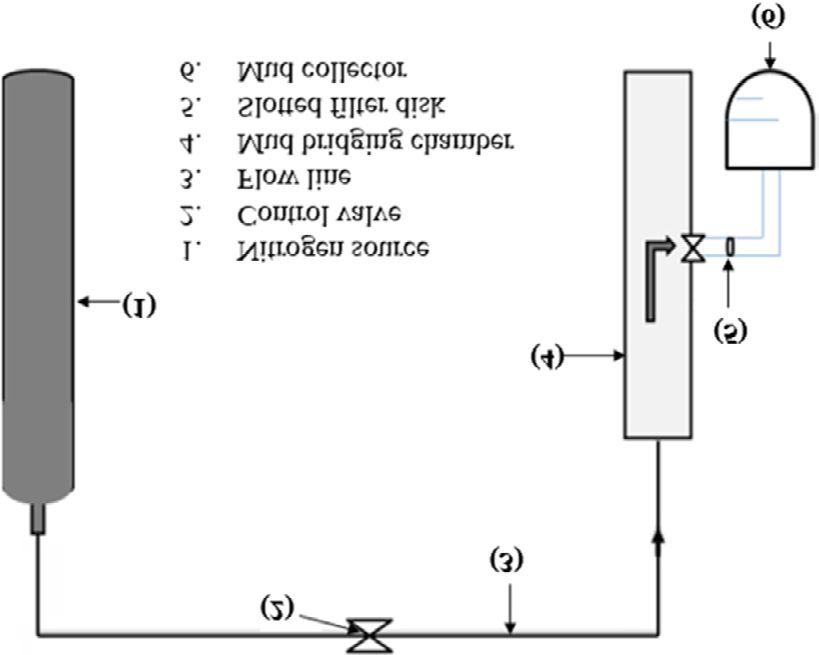
This experimental study is designed to closely represent the actual sealing procedure and lost circulation issues by simulating the drilling environment. The developed NSP and PAC-LV were tested according to industry standards in accordance with API RP Bulletin 13B-1 Specification of Bridging Materials for regaining circulation. According to the procedure stated by Jeennakorn M, et al. [26] in his publication, the temperature of 450 F was applied in the bridging material test cell to create a high-temperature condition throughout the drilling operation [26]. To evaluate whether the formulated NSP and PAC-LV mud system has potential lost circulation material, a straight- slotted filter disk that can simulate 1 mm fractures was chosen. For the sudden discharge of the mud cell, it was connected to a graded (3500 ml) plastic container with an inlet and outlet. Pressurized nitrogen gas was supplied to the test cell to supply pressure to the bridging material test apparatus as shown in Figure 1. With a perforated plate and sleeves to support the marble bed that had been taken from the cell, a 1 mm disk was selected and inserted into the valve outlet. The pressure cell was filled with the mud samples, heated to 450F, and then the pressurized nitrogen cylinder valve was opened to the atmosphere. Adding fluid at a continuous flow rate of 25 ml/min for 40 s activates the seal, which lasts for 60 s. Until a rapid increase in the injected pressure is noticed, the step is repeated. This rise in pressure indicates the development of the seal, and the procedure continues until the pressure reaches 100 psi. Finally, the seal is strengthened and checked for integrity by injecting mud until the pressure reaches 500 psi and then stopping for 60 seconds. The pressure is increased by 500 psi each time this phase is performed until the seal fails and the cylinder is empty. Following the completion of the testing, the created seals were taken from the straight slotted filter disk, and the final volume was recorded. The seal integrity was then evaluated.
Results and Discussion
Impacts of NSP and PAC-LV on the Rheology and Filtration Control of WBF
Seven different concentrations of water-based drilling fluid with additives were prepared and investigated. Hence, for drilling operations to be successful and to guarantee the safety of the environment, and other stakeholders, drilling fluid additives must be managed and monitored correctly. This is important as it plays a vital part in the penetration rate, stability, and capacity to clean the borehole.
| Properties | Units | WBF | WBDM +NP (wt.%) | WBDM+NP+PAC-LV (wt.%) | ||||
|---|---|---|---|---|---|---|---|---|
| N-0.5 | N-1.0 | N-2.0 | P-0.5 | P-1.5 | P-2.5 | |||
| Mud Weight | ppg | 8.3 | 10.3 | 10.4 | 10.5 | 11.2 | 11.3 | 11.5 |
| Apparent Viscosity | cP | 14.3 | 16.34 | 17.34 | 18.3 | 49.36 | 56.45 | 59.5 |
| Plastic Viscosity | cP | 8.95 | 20.62 | 25.35 | 32.5 | 34.36 | 37.48 | 46 |
| Yield Point | lb/100ft2 | 5.07 | 6.7 | 7.51 | 8.09 | 13.54 | 22.57 | 25.5 |
| GS @ 10s | lb/100ft2 | 8 | 10 | 10 | 11 | 14 | 18 | 19 |
| GS @ 10mins | lb/100ft2 | 8 | 10 | 12 | 13 | 17 | 19 | 20 |
| PH | 8.7 | 8.71 | 8.87 | 8.87 | 8.56 | 8.5 | 8.37 | |
| LPLT Filtration Loss Volume | ml | 26.8 | 21 | 20 | 16 | 14 | 12.2 | 9.6 |
Table 2: The measured mud properties at different concentrations (78o F).
| Properties | Units | WBF | WBF+NP (wt. %) | WBF+NP+PAC-LV (wt. %) | ||||
|---|---|---|---|---|---|---|---|---|
| N-0.5 | N-1.0 | N-2.0 | P-0.5 | P-1.5 | P-2.5 | |||
| Mud Weight | ppg | 8.1 | 10.1 | 10.3 | 10.5 | 11.1 | 11.2 | 11.4 |
| Apparent Viscosity | cP | 12.5 | 13.95 | 14.8 | 15.9 | 27.21 | 41.3 | 48.4 |
| Plastic Viscosity | cP | 9.25 | 19.34 | 24.7 | 28.3 | 32.65 | 34 | 40 |
| Yield Point | lb/100ft2 | 5.07 | 5.17 | 7.04 | 7.98 | 12.87 | 21.7 | 25 |
| GS @ 10s | lb/100ft2 | 8 | 9 | 9 | 10 | 13 | 15 | 18 |
| GS @ 10mins | lb/100ft2 | 8 | 9 | 10 | 11 | 15 | 18 | 19 |
| PH | 8.71 | 9.89 | 8.64 | 8.5 | 8.56 | 8.42 | 8.22 | |
| Filtration Loss Volume | ml | 26.8 | 22 | 21 | 16 | 14 | 13 | 10 |
Table 3: The measured mud properties at different concentrations (450oF).
The Weight of Drilling Mud
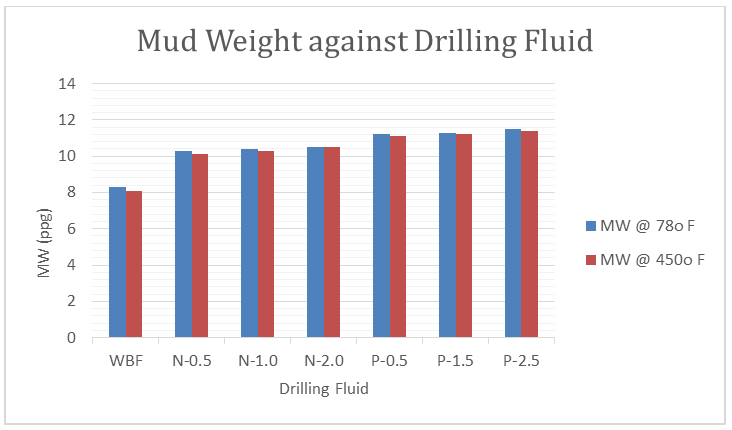
The density of drilling mud, often referred to as mud weight in the oil and gas industry is presented in Tables 2 and 3 at different concentrations of NSP and PAC-LV. The mud density of the WBF was observed (9.3 ppg) to increase with an increasing concentration of the NSP and PAC-LV between 10.3 and 11.5 ppg before aging and 10.1 to 11.4 ppg after aging with the WBF at 8.1 ppg. Therefore, the density of the mud base increases from 24.1% to 38.6%, at 78oF, however, after aging (Table 3) it increases from 24.69% to 40.74%. Furthermore, as seen in Figure 2, these densities are lower than they were before aging, which indicates the weakening of the NSP and PAC-LV particle-mud connections due to the increased temperature [28]. The observed decrease in the densities of the NSP and PAC-LV mud samples is, however, rather slight, and it won’t result in wellbore collapse [29].
The Apparent Viscosity of Drilling Mud
As clearly shown in Tables 2,3, the results of the AV for different concentrations of NSP and PAC-LV were compared with the water base fluid. The AV value for WBF is 14.25 cp and increases slightly with 0.5, 1.0, and 2.0 wt.% of NSP by 14.67%, 21.68%, and 28.6% respectively, and noticeably increases with 0.5, 1.5, 2.5 wt.% of PAC-LV by 246.4%,
296.1%, and 317.5% respectively. In line with recent research work by Blkoor, the authors claimed that fluid with a high bentonite content exposed to hot rolling in the oven encourages the creation of a gel structure, which raises the AV [29]. However, both before and after thermal aging, the AV is increased by the NSP and PAC-LV content. The 2.5 wt. % PAC-LV was observed to have the highest margin of increase in the AV of the WBF (506.9%).
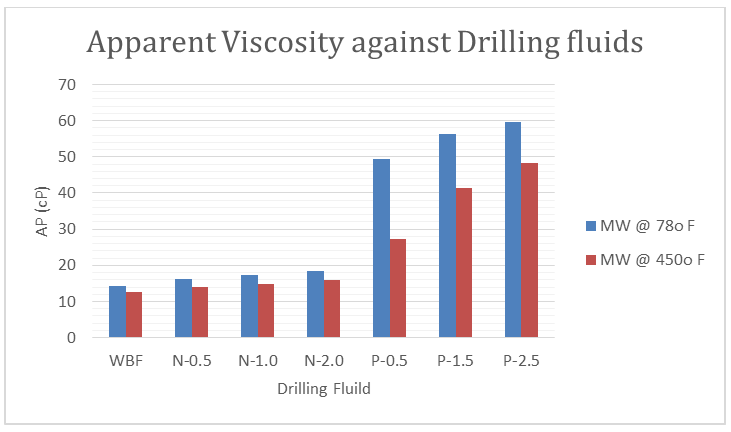
To determine the temperature resistance of additives in bottom-hole conditions, as seen in this investigation following thermal aging (Figure 3), drilling muds often showed a reduction in viscosity (AV and PV) and YP with an increase in temperature. The AV display in Table 3 is a little lower than the AV displayed in Table 2 with 0.5, 1.0, and 2.0 wt.% of NSP by 11.20%, 17.61%, and 26.6% respectively, and with 0.5, 1.5, 2.5 wt.% of PAC-LV by 116.9%, 229.6%, and 285.8% respectively. This might be explained by the PAC- LV’s exceptional heat resistance, which allowed its structure to maintain stability even at increasing concentrations during thermal aging [30]. The intermolecular interactions in the mud samples have weakened with an increase in temperature, the reason for the reduction in viscosity [31]. The extended contact between PAC-LV long molecular chains with nano silica particles leads to enhanced intermolecular attractions that contribute to the resistance, hence, it can be inferred that the PAC-LV will be suitable for a high- temperature environment [6, 30].
The Plastic Viscosity of Drilling Mud
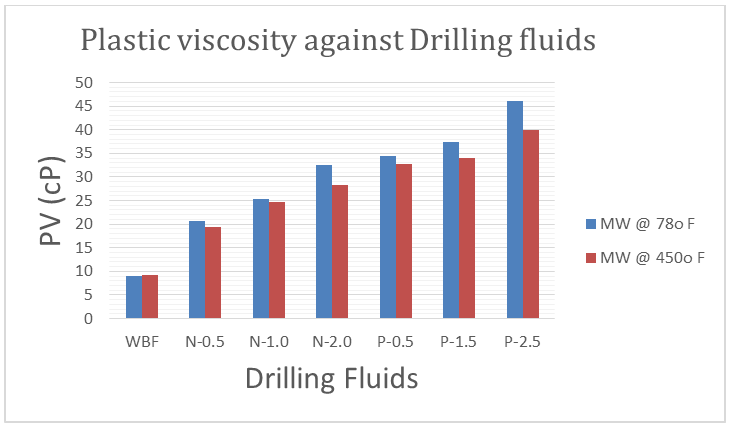
The effect of NSP and PAC-LV on PV of the WBF was shown in Tables 2,3, PV stops drilling mud leaks into formations. The WBF PV of 8.95cp increased after the addition of 0.5 wt.%, 1.0 wt.%, and 2.0 wt.% nanoparticles and 0.5, 1.5, 2.5wt% PAC-LV to 20.62, 25.35, 32.49 cP and to 32.36, 37.48, 45.98 cP for 78°F respectively. The capacity of water molecules to interact directly with polymeric chains and other additives via hydrogen bonds with their hydrophilic groups is the theory supporting the WBM’s viscosity [30]. Additionally, after thermal heating, the PV of the WBM increased by a range of 189.5% to 357.7% with NSP concentrations and between 439.5% and 577.6% for PAC-LV (Figure 4). As NSP and PAC-LV concentration increases, it strengthens the bonds between the bentonite-clay layers and maintains the forces of attraction between the plates with a more significant impact on the PV of the complex drilling muds at both 78oF and 450oF temperatures [32, 33].
The Bingham plastic model fits the fluid properties illustrated in this paper. Since the PV of PAC-LVs-based mud is greatly influenced by the solids and clays present in the mud, the PV values presented in Tables 2,3 might be favored for drilling practice, demonstrating that the addition of PAC- LV can resist high-temperature settings.
The combination of PAC-LV and NSP in a drilling mud may produce the desired fluid properties needed for drilling in a high-temperature environment. The average molecular weight of nonionic cellulose compounds like PAC-LV containing -OH groups, which the NSP may bond with, allowing the compounds to absorb on the surface of the clay particles and aid in the particles’ adhesion to one another. This may lead to an increase in the particles’ intermolecular strength, which in turn may enhance the liquid’s viscosity [34].
The Yield Point of Drilling Mud
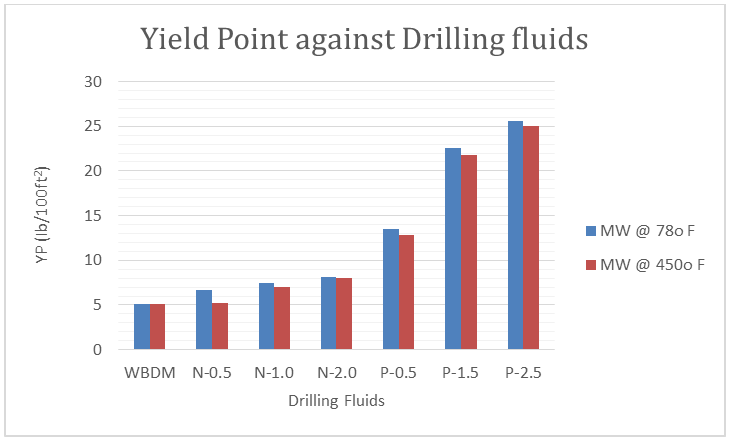
The capacity of the drilling fluid to transport the drilling cutting to the surface is measured by the yield point, it denotes the mud’s ability to prevent pipe sticking issues. The increase in the concentrations of NSP and PAC-LV leads to an increase in the yield point of WBF before and after aging as shown in Tables 2 & 3. The incredibly small size of NSP which led to a large surface area serves as a site for bonding with other mud molecules, generating a rigid network for the yield point improvement. The increase in the concentration of PAC-LV has shown proper control of drilling mud for efficient hole cleaning [15, 35]. The yield points 5.07lb/100ft2 of the WBF system were increased by 167.1, 345.1, and 403.6% at 78oF and 153.8,328.8, 393.1% at 450oF with different concentrations of NSP and PAC-LV, respectively as shown in Figure 5. The increase in the yield point of the base mud when NSP and PAC-LV were present shows their impact on the drilling mud.
The concentrations of the NSP and PAC-LV in WBF may be an excellent choice for effective cuttings transport and wellbore cleaning if used in accordance with API regulations [17], then we can deduce that the yield point levels should range from 5 to 30 lb/ 100 ft2. Therefore, it can be concluded that the combination of NSP and PAC-LV showed a significant level of heat resistance with increasing concentration along with the increase in apparent viscosity, plastic viscosity, and yield point.
The Gel Strength of Drilling Mud
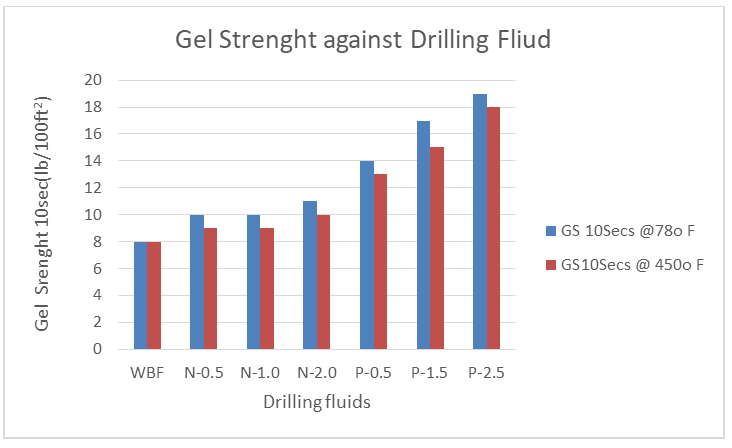
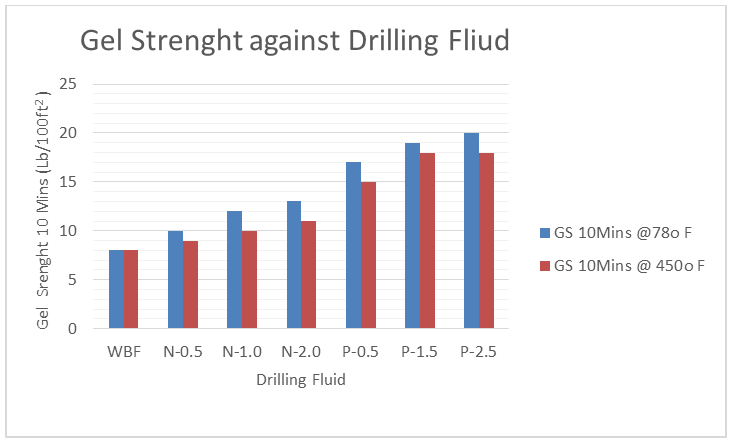
Gel strength is a significant property that indicates the capability of the mud to lift cuttings to the surface. Drilling fluids must possess the capacity to suspend the drill cuttings to prevent them from settling at the bottom hole [13]. Tables 2 & 3 shows the effect of the concentration of the NSP and PAC- LV on the initial and 10-minute gels of the formulated WBFs. The combination of NSP and PAC-LV also had a temperature resistance feature that helped keep the GS intact during drilling operations and ensure that the drilled cuttings were suspended properly, preventing sagging issues. The GS at 10s of the WBF of 8 lb./100ft2 increased by 37.5% with the addition of 2.0 wt. % and 62.5% with 2.5 wt. % of PAC-LV (Figure 6), while the GS at 10 min increased by 137.5% with NSP and 150% with PAC-LV (Table 2). For the 10sec and 10 mins, GS conducted after aging as shown in Figure 7, the percentage of increase with the addition of 2.0 wt. % NSP and 2.5 wt. % of PAC-LV is 18 lb./100ft2 (125%) and 19 lb./100ft2 (137.5%) respectively. This implies that the addition of NSP and PAC-LV has the capacity to improve and strengthened the viscosity of the gel immensely in the mud solution [14]. The hydrogen bonds between the water molecules and the -OH formed on the surface of the nanoparticles improved the characteristics, which undoubtedly enhance the gel’s quality [36]. Additionally, the nanoparticles have a negative charge, and the -OH are bound by electrostatic attraction. As a result, increased gel hydrophilicity was achieved through electrostatic attraction and hydrogen bonding, which increased the water-bound ratio [37].
Evaluation of Filtration Properties
The amount of water lost from the drilling fluid to the reservoir formation is referred to as mud filtration. Maintaining wellbore stability, managing formation damage, and assuring drilling effectiveness all depend on effective filtrate loss control. It is possible to reduce or eliminate wall sticking and, in some cases, increase wellbore stability by properly controlling filtrate loss [38]. The behavior of the mud samples investigated under LPLT and HPHT settings is shown in Figure 8. According to the results, when NSP was added to base mud, the amount of filtrate loss was reduced. This is because NSP could enter pores that are inaccessible to larger particles, which lowers the permeability of the bentonite particles and, in turn, lowers the volume of fluid lost [29, 39]. Also, the addition of PAC-LV provides synergistic effects when used alongside NSP in improving rheology and fluid loss control of the mud. The mud samples mixed with NSP and PAC-LV were tested for 45 minutes under API conditions, with the addition of 0.5, 1.0, and 2.0wt% of NSP, the filtrate loss was best decreased from 26.8 ml of WBF to 21 ml (21.6%), 20 (25.7%) and 16 ml (40.3%) respectively. Relatedly, the inclusion of 0.5, 1.0, and 2.5 wt.% of the PAC-LV to the formulated mud reduced the amount of filtrate loss of the base mud further to 14 ml (47.7%), 12.2 ml (54.4%) and 9.6 ml (64.2%) respectively.
![Figure 8: According to the results, when NSP was added to base mud, the amount of filtrate loss was reduced. This is because NSP could enter pores that are inaccessible to larger particles, which lowers the permeability of the bentonite particles and, in turn, lowers the volume of fluid lost [29,39]. Also, the addition of PAC-LV provides synergistic effects when used alongside NSP in improving rheology and fluid loss control of the mud. The mud samples mixed with NSP and PAC-LV were tested for 45 minutes under API conditions, with the addition of 0.5, 1.0, and 2.0wt% of NSP, the filtrate loss was best decreased from 26.8 ml of WBF to 21 ml (21.6%), 20 (25.7%) and 16 ml (40.3%) respectively. Relatedly, the inclusion of 0.5, 1.0, and 2.5 wt.% of the PAC-LV to the formulated mud reduced the amount of filtrate loss of the base mud further to 14 ml (47.7%), 12.2 ml (54.4%) and 9.6 ml (64.2%) respectively.](/fulltextimages/11119/fig_8.png)
Due to the presence of NSP and PAC-LV in the mud samples, the impact of high temperature was not noticeable in the base mud and is not significant in the mud samples, this explains the thermal stability of the mud. A rise in temperature can reduce the viscosity of the liquid phase, which can increase filtrate loss. However, aging (Figure 8) showed a slight decline in the effect, the American Petroleum Institute [17] nevertheless considered the result to be within the acceptable field practice range for high-temperature settings. The filtrate loss control was increased to 22 ml, 21 ml, and 16 ml, for the 0.5 wt.%, 1.0 wt.%, and 2.0 wt.% NSP in the base mud and 14 ml, 13 ml, and 10 ml for the 0.5 wt.%, 1.0 wt.%, and 2.5 wt.% PAC-LV in the base mud respectively. This demonstrates that the NSP and PAC-LV stabilized the base mud during its thermal treatment at 450oF and maintained sealing effectiveness in hot drilling settings while reducing fines and mud migration into the drilled formation [16, 27]. Finally, as displayed in Tables 2 & 3 the filtrate loss control results demonstrated the successful reduction in the amount of fluid seepage into the formation initially Using NSP. The addition of PAC-LV synergistically dispersed through the -OH groups and potentially clogs the filter paper’s pore spaces, less filtrate will penetrate through the hydrophilic layer [27, 34].
Evaluation of Loss Circulation of NSP and PAC- LV
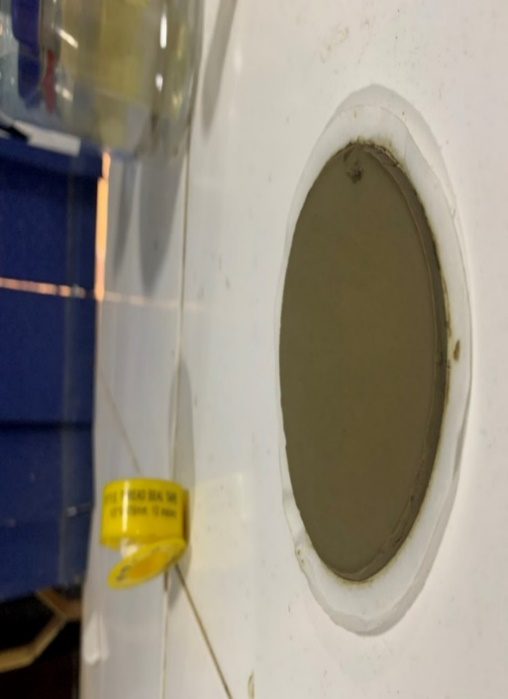
An approximated production zone rock matrix was simulated with a slotted stainless-steel filter disk to determine the performance of NSP and PAC-LV in regulating lost circulation at various concentrations. The results of the filtrate loss volume of NSP and PAC-LV at various concentrations in comparison to the water base fluid in 1 mm simulated fracture for 10 minutes were displayed in Figure 9. The outcome demonstrates that the mixture of NSP and PAC-LV minimized fluid loss better than base mud, and its performance improved with increasing concentration. With the addition of 0.5, 1.0, and 2.0 wt. % of NSP, the basic mud loss volume was reduced by 45, 50.7, and 62.4%, again the addition of 0.5, 1.0, and 2.5 wt. % of PAC-LV to the existing mixture, the basic mud loss volume was reduced further by 65, 80.7, and 94.4% respectively. This is because numerous particles entered the fracture at once and came together easily to complete the connecting, plugging, and shutting process, Also, along with the increase in the additive’s concentrations, better sealing performance is noticed. As a result, at lower concentrations NSP, cannot contact each other seamlessly, leaving a significant void in the filter cake (Figure 11), whereas at higher concentrations, the densely packed sheets can interlock to significantly reduce the amount of fluid seeping into the reservoir formation [27, 40]. Additionally, the addition of fibers can improve the shear strength and cohesive forces of drilling fluid [26].
![Figure 9: The outcome demonstrates that the mixture of NSP and PAC-LV minimized fluid loss better than base mud, and its performance improved with increasing concentration. With the addition of 0.5, 1.0, and 2.0 wt. % of NSP, the basic mud loss volume was reduced by 45, 50.7, and 62.4%, again the addition of 0.5, 1.0, and 2.5 wt. % of PAC-LV to the existing mixture, the basic mud loss volume was reduced further by 65, 80.7, and 94.4% respectively. This is because numerous particles entered the fracture at once and came together easily to complete the connecting, plugging, and shutting process, Also, along with the increase in the additive’s concentrations, better sealing performance is noticed. As a result, at lower concentrations NSP, cannot contact each other seamlessly, leaving a significant void in the filter cake (Figure 11), whereas at higher concentrations, the densely packed sheets can interlock to significantly reduce the amount of fluid seeping into the reservoir formation [27,40]. Additionally, the addition of fibers can improve the shear strength and cohesive forces of drilling fluid [26].](/fulltextimages/11119/fig_9.png)
Comparison of the Filtrate Loss Results with Respect to Time
Filtrate loss is a phenomenon that occurs during drilling operations, when mud seeps into the formation being drilled, and loses some of its efficiency by leaving behind solid particles. The ability of the formulated WBF to control filtrate loss is evaluated and compared with the conventional nutshell mud system used in the industry at the same concentration of 1.0 wt. %. Also, the seal integrity of the mud systems was examined, and it took 10 minutes in total, which is within the bounds of earlier work by [27, 41]. The combination of NSP and PAC-LV are confirmed as the best lost circulation material when compared with conventional nutshell, and NSP mud system WBF was used as the control mud as shown in Figure 10. Considering the smaller particle size of NSP and the liner from PAC-LV, the formulated WBF isolate loss zone, giving a significant reduction in fluid loss and as such was able to withstand the local deformation [38]. Although both nutshells, and NSP improve the sealing ability of the mud but the addition of PAC-LV to NSP mud system significantly improve the sealing ability of the foundation mud [42, 43].
![Figure 10: Considering the smaller particle size of NSP and the liner from PAC-LV, the formulated WBF isolate loss zone, giving a significant reduction in fluid loss and as such was able to withstand the local deformation [38]. Although both nutshells, and NSP improve the sealing ability of the mud but the addition of PAC-LV to NSP mud system significantly improve the sealing ability of the foundation mud [42,43].](/fulltextimages/11119/fig_10.png)
Conclusion
This study investigated how different concentrations of NSP and PAC-LV in the formulated WBF system affected the rheological and filtration properties at 80oF and 450oF. Additionally, their sealing integrity was examined using a bridging material test in a simulated production zone with 1 mm fractures, contrasted with the commonly used nutshell utilized as lost circulation material in the petroleum sector. The following conclusions are provided below:
- In comparison to 5wt. % bentonite, the addition of 2.0 wt. % NSP and 2.5 wt. % PAC-LV concentrations improved the rheology and filtration properties of formulated WBF.
- Although both nutshells, and NSP improve the sealing ability of the mud but the addition of PAC-LV to NSP mud system significantly improve the sealing ability of the formulated mud.
- The results of the bridging material test indicated that the combination of NSP and PAC-LV outperformed the nutshell and NSP and was more resilient to deformation.
- A newly formulated WBF with NSP and PAC-LV additives is offered for use at temperatures up to 232°C (450°F) for rheological and filtration stability.
- It can therefore be resolved that the addition of nano- silica particles as well as polyanionic cellulose low viscosity in the formulation of water-based drilling fluids enhances the rheology and filtrate control properties.
- A newly formulated 5 wt.% WBF with 2.0 wt. % NSP and 2.5 wt. % PAC-LV is the optimum recommended concentration for lost circulation treatment and stability. Funding No funding was required for the development of this article.
References
-
Xianghai M, Zhang Y, Zhou F, Chu PK (2012) Effects of carbon ash on rheological properties of water- based drilling fluids. Journal of Petroleum Science and Engineering 100: 1-8.
-
Adeyemi G, Fadairo A, Ogunkunle T, Oladepo A, Olugbenga O, et al. (2020) Effect of Polymer Additives on the Rheology and Fluid Loss of Water Based Muds. SPE Nigeria Annual International Conference and Exhibition. Lagos, Nigeria.
-
Karakosta K, Mitropoulos AC, Kyzas GZ (2021) A review in nano polymers for drilling fluids applications. J Mol Struc 1227: 129702.
-
Daverux S (1999) Drilling Technology in Nontechnical Language. PennWell, Tuls, USA, pp: 337.
-
Adesina F, Gbadegesin A, Olalekan O (2016) Formulation and environmental impact evaluation of walnut and soya bean oil-based drilling fluid. J Applied Sci Technology 17(3): 1-9.
-
Li W, Liu J, Zhao X, Zhang J, Jiang Jiwei, et al. (2018) Novel modified rectorite provides reliable rheology and suspend ability for biodiesel-based drilling fluid. SPE/ IADC Middle East Drilling Technology Conference and Exhibition, pp: 29-31.
-
Hany G, Basfar S, Abdulaziz A (2019) Effect of pH on Rheological and Filtration Properties of Water-Based Drilling Fluid Based on Bentonite. Sustainability Basel 11(23): 6714.
-
Mahto V, Sharma VP (2004) Rheological study of a water based oil well drilling fluid. J Pet Sci Eng 45 (1-2): 123- 128.
-
Fadairo A, Anthony A, Adeyemi GA, Esseoghene O, Oyakhire A, et al. (2012) Environmental impact evaluation of safe drilling mud. SPE Middle East Health Safety Security and Environment Conference and Exhibition Held in Abu Dhabi, UAE, pp: 2-4.
-
Vryzas Z, Arkoudeas P, Mahmoud O (2015) Utilization of Ferric oxide Nanoparticles in Drilling Fluids Improves Fluid Loss and Formation Damage Characteristics. European Association of Geoscientists & Engineers Doha, Qatar.
-
Jung Y, Barry M, Lee J (2011) Effect of Nanoparticle- Additives on the Rheological Properties of Clay-Based Fluids at High Temperature and High Pressure. Houston, Texas, USA, pp: 1-4.
-
Luheng Q (2014) The Application of Polymer Mud System in Drilling Engineering. Elsevier Ltd, Hebei Xuanhua, China, Elsevier Ltd, pp: 7.
-
Boyou NV, Ismail I, Sulaiman WRW, Haddad AS, Husein N, et al. (2019) Experimental investigation of hole cleaning in directional drilling by using nano-enhanced water- based drilling fluids. J Pet Sci Eng 176: 220-231.
-
Fadairo A, Adeyemi G, Ogunkunle T, Ling K, Rasouli V, et al. (2021) Study the suitability of neem seed oil for the formulation of eco-friendly oil-based drilling fluid. Petroleum Research 6(3): 283-290.
-
Henry E, Raoof G, Dol SS (2017) An approach to improve the cuttings carrying capacity of nanosilica-based muds. Journal of Petroleum Science and Engineering 152: 309- 316.
-
Zakaria MF, Husein M, Hareland G (2012) Novel Nanoparticle-Based Drilling Fluid with Improved Characteristics. International Oilfield Nanotechnology Conference and Exhibition.
-
American Petroleum Institute (2017) Recommended practice for field testing water-based drilling fluids. 5th(Edn.), American Petroleum Institute, pp: 1-121.
-
Nyeche W, Nmegbu J, Ifeoma P (2015) Drilling mud formulation using potato starch (Ipomoea batatas). J Eng Res Appl 5(9): 48-54.
-
Ismail AR, Norddin MNAM, Latefi NAS, Oseh JO, Ismail I, et al. (2019) Evaluation of a naturally derived tannin extracts biopolymer additive in drilling muds for high- temperature well application. Journal of Petroleum Exploration and Production Technology 10: 623-639.
-
Adeyemi G, Fadairo A, K Ling, Rasouli V, Ogunkunie T, et al. (2022) Evaluating the Performance of Natural Organic Sorbent for Produced Water Treatment. SPE Nigeria Annual International Conference and Exhibition.
-
Bingham EC (1916) An Investigation of the Laws of Plastic Flow. Bulletin of the Bureau of Standards, Govt Print off, Washington, USA, pp: 309.
-
Oseh JO, Mohd MN, Isham I, Ismail AR, Ismail AR, et al. (2019) Investigating almond seed oil as potential biodiesel-based drilling mud. J Petrol Sci Eng 181: 106201.
-
Hamad BA, Xu M, Liu W (2019) Performance of Environmentally Friendly Silica Nanoparticles-Enhanced Drilling Mud from Sugarcane Bagasse. Part Sci Technol 39(2): 168-179.
-
Hamad BA, He M, Xu M, Liu W, Mpelwa M, et al. (2020) A Novel Amphoteric Polymer as a Rheology Enhancer and Fluid-Loss Control Agent for Water-Based Drilling Muds at Elevated Temperatures. ACS Omega 5(15): 8483- 8495.
-
Dejtaradon P, Hamidi H, Chuks MH, Wilkinson D, Rafati R, et al. (2019) Impact of ZnO and CuO Nanoparticles on the Rheological and Filtration Properties of Water-Based Drilling Fluid. Colloids Surf A 570: 354-367.
-
Jeennakorn M, Alsaba M, Nygaard R, Saasen A, Nes O, et al. (2019) The effect of testing conditions on the performance of lost circulation materials: understandable sealing mechanism. J Pet Explor Prod Technol 9: 823-836.
-
Agi A, Oseh JO, Gbadamosi A, Fung CK, Junin R, et al. (2023) Performance evaluation of nano silica derived from agro-waste as lost circulation agent in water-based mud. Petroleum Research 8(2): 256-269.
-
Fattah KA, Lashin A (2016) Investigation of mud density and weighting materials’ effect on drilling fluid filter cake properties and formation damage. J Afr Earth Sci 117: 345-357.
-
Blkoor SO, Ismail I, Oseh JO, Selleyitoreea S, Norddin MNAM, et al. (2021) Influence of polypropylene beads and sodium carbonate treated nanosilica in water-based muds for cuttings transport. J Pet Sci Eng 200: 108435.
-
Saleh TA, AL-Hammadi SA (2018) Insights into the fundamentals and principles of the oil and gas industry: the impact of nanotechnology. In: Saleh T, et al. (Eds.), Nanotechnology in Oil and Gas Industries. Springer International Publishing, Cham.
-
Ismail AR, Mohd NMNAM, Basir NF, Oseh JO, Ismail I, et al. (2020) Improvement of rheological and filtration characteristics of water-based drilling fluids using naturally derived henna leaf and hibiscus leaf extracts. J Pet Explor Prod Technol 10: 3541-3556.
-
Medhi S, Chowdhury S, Gupta DK, Mazumdar A (2020) An investigation on the effects of silica and copper oxide nanoparticles on the rheological and fluid loss properties of drilling fluids. J Pet Explor Prod Technol 10: 91-101.
-
Guan OS, Gholami R, Raza A, Rabiei M, Fakhari N, et al. (2020) A nanoparticle-based approach to improving filtration control of water-based muds under high- pressure high-temperature conditions. Petroleum 6(1): 43-52.
-
Fereydouni M, Sabbaghi S, Saboori R, Zeinali S (2012) Effect of Polyanionic Cellulose Polymer Nanoparticles on Rheological Properties of Drilling Mud. Int J Nanosci Nanotechnol 8(3): 171-174.
-
Elochukwu H, Gholami R, Dol SS (2017) An approach to improve the cuttings carrying capacity of nanosilica- based muds. J Pet Sci Eng 152: 309-316.
-
Oseh JO, Norddin MNAM, Muhammed HN, Ismail I, Gbadamosi AO, et al. (2020) Influence of (3-Aminopropyl) triethoxysilane on entrapped polypropylene at nanosilica composite for shale swelling and hydration inhibition. J Pet Sci Eng 194: 107560.
-
Chen H, Wang W, Martin JC, Oliphant AJ, Doerr PA, et al. (2013) Extraction of lignocellulose and synthesis of porous silica nanoparticles from rice husks: a comprehensive utilization of rice husk biomass. ACS Sustain Chem Eng 1(2): 254-259.
-
Hamad BA, He M, Xu M, Liu W, Mpelwa M, et al. (2020) A novel amphoteric polymer as a rheology-enhancer and fluid-loss control agent for water-based drilling muds at elevated temperatures. ACS Omega 5 (15): 8483-8495.
-
Okon AN, Udoh FD, Bassey PG (2014) Evaluation of rice husk as fluid loss control additive in water-based drilling mud. SPE Nigeria Annual International Conference and Exhibition, Lagos, Nigeria.
-
Xuan Y, Jiang G, Li Y (2014) Nanographite oxide as ultra strong fluid-loss-control additive in water-based drilling fluids. J Dispersion Sci Technol 35: 1386-1392.
-
Alsaba M, Nygaard R, Saasen A, Nes O (2014) Lost circulation materials capability of sealing wide fractures. SPE Deepwater Drilling and Completions Conference.
-
Chengwen W, Renzhou M, Fengfeng X, Ruihe W (2016) Use of nanoemulsion for effective removal of both oil- based muds and filter cake. J Nat Gas Sci Eng 36: 328- 338.
-
Ghosn R, Mihelic F, Hochepied JF, Dalmazzone D (2017) Silica nanoparticles for the stabilization of W/O emulsions at HTHP conditions for unconventional reserves drilling operations. Oil Gas Sci Technol Revue d IFB Energ Nouvelles 72(4): 1-13.
- Nigeria’s Vulnerability in the Face of Global Energy Policy
- A Simulation Study of Investigation of Optimum Oil Production Performance by Applying Various Gas Injection Methods in Oil Reservoir
- Characterization of Permo-Triassic Reservoirs through Thermal Maturity Assessment of Westphalian Source Rocks in the Cheshire Basin
- Influence of Microwax on the Rheological and Thermal Behaviour of a Wax Crude Oil
- Real-Time Monitoring and Performance Optimization of Steam Injection in Heavy Oil Reservoirs Using Fiber Optic Sensing and Integrated Predictive Simulation Models
- Rapid On-Site Determination of the Total Petroleum Hydrocarbon Content of Soils by Handheld Fourier Transform Near-Infrared Spectroscopy: Development of a Global, Site- and Scanner- Independent Calibration Model