
Infidelity in Marital Relationships
Marital infidelity is perhaps the most complex problem encountered by couple and family counselors and psychologists. Many researchers on family and marriage have studies the phenomenon to understand the reasons underlying infidelity and its consequences on the other spouse and children. This paper highlights several important topics related to marital infidelity including definition, prevalence rate, types, demography factors, attitudes, predictors, and effects on other family members. The study employs the meta- analysis approach to analyze past literature on marital infidelity. Personal factors like gender, age, and education, as well as attitudes and cultural values, are significantly related to marital infidelity. Analysis also shows that children, non-infidel partner, and family experience unpleasant consequences due to infidelity. The paper recommends more study be done on the intervention strategies that focus on personal and couple relationship because the problem can be managed and overcome, thus lessen the effects on other family members.
and Yusni Mohamad Yusop
Introduction
Family is a basic unit in human society. The basic core of family institution is marriage or marital relationships. Marriage is the process by which a woman and a man as spouse make their relationship public and official. People get married because of love, responsibility, career advancement, economic, and to achieve feeling of fulfillment. Marriage institution has gone through some progressive transformation with time especially in how couple relates to one another. However, sometimes certain circumstance may effect on spouse relationship. One of them is marital infidelity which poses dangers to high-investment mating associations [1]. Marital infidelity can cause high divorce rate, homicide, mental health issues like depression, and adjustment problems [2]. These negative consequences affect both partners and their children in the present and future development, personally and socially. For years, marital infidelity has been discussed by researchers and those in the helping profession. According to them, marital infidelity will continue to be a challenge to marriage institution and couple relationships. It is a complex issue and every couple has to prepare themselves to this threat to their relationship. New variables or factors that may influence infidelity behaviors, which may have been overlooked, may now post significant threat without us realizing it. It is the joining of two people in a bond that putatively lasts until death, but in practice is often cut short by divorce. Social media, new technologies, new perception of gender roles, and family functions may require fresh attention from researchers in order to provide new perspective to marital infidelity. The basic question of this review is that what components are related to marital infidelity. The
authors have tried to address some main components like predictors and consequences of marital infidelity which are important for couples, parents, and helping professional exports who work with the marital problems. Therefore, it is important that this subject is studied and considered more thoroughly by the scientific and academic groups, policy makers and governments in the world.
Material & Method
This study is a kind of literature review. Statistic population included studies which published in English language related to various aspects of marital infidelity in the world. To identify relevant articles, papers, and theses, a lot of digital library and data bases were searched such as Elsevier, PsyINFO, SCOPUS, PubMed, ProQuest, EBSCO, ERIC. Almost all searches in all digital library and databases were restricted to review the works published between 1970 and 2018. In the first stage of study, the materials’ titles (articles, papers,…) were screened, in second stage, their abstracts were reviewed; afterwards the materials were evaluated and used by the authors.
Definition of Marital Infidelity
Infidelity can be defined with many words like cheating, adultery, unfaithful, extramarital or stepping out [3]. The definition of marital infidelity consists of sexual infidelity (sexual exchange with no romantic involvement), romantic infidelity (romantic exchanges with no sexual involvement) and sexual and romantic involvement [4]. Hertlein, Wetchler, and Piercy (2005) defined infidelity as either “engagement in sexual relations with a person other than one’s partner,” cyber- sex, looking at pornography, physical intimacy, or emotional intimacy with someone other than one’s spouse [5]. Blow and Hartnett (2005) declared that, marital infidelity can be observed through several activities including: “…having an affair, extramarital relationship, cheating, emotional connections that are beyond friendships, internet relationships, pornography use” [6].
Marital infidelity can be recognized through some behavioral activities. Based on Hertlein, Wetchler, and Piercy (2005) cheated partners may display several of the following behaviors during the time they involved in marital infidelity: changing in appearance, experiencing financial problem, changing work habit, decreasing intimacy, becoming secretive, buying a new phone secretly, having a lot of doubtful messages, taking phone calls late at night or at the mid night, avoiding answering any strange phone call if his/her partner is close by, removing message frequently, lying about significant things or gifts, and having a lot of reasons to skip family meals [5]. Fife, Weeks, and Gambescia (2008) stated marital infidelity as "a betrayal of this implied or stated commitment regarding intimate selectness [7]. With infidelity, emotional and/or sexual intimacy is shared with someone outside of the main relationship without the consent of the other partner" (p. 316). Nevertheless, both scholars and members of the general public have widely divergent perceptions and definitions of infidelity.
Prevalence of Marital Infidelity
Marital infidelity was also prevalent in previous decades, and in historical and tribal societies. Reports in the 1920s showed that 28% of American men and 24% of women were unfaithful at some point during their marriage [8, 9, 10]. In the late 1940s and early 1950s, nearly 33% of men and 26% of women in American sample were adulterous [11, 12]. Data in the 1970s revealed that some 41% of men and 25% of women reported engaging in infidelity behaviors [13], and data gathered in the 1980s revealed that 72% of men and 54% of women were adulterous at some point during marital relationships.
Marital infidelity was also reported among the classical Greeks and Romans, the pre-industrial Europeans, the historical Japanese, Chinese and Hindus, the traditional Inuit of the arctic, Kuikuru of the jungles of Brazil, Kofyar of Nigeria, Turu of Tanzania and many other tribal societies [10].
In January 2018, Relationships Australia’s monthly online study asked visitors to their website to share their understanding of infidelity. Approximately 1800 individuals responded to the online survey. Survey respondents were asked to guess the percentage of people in committed relationships that have experienced infidelity. Men and women estimated the frequency of infidelity were almost evenly spread across the response categories, with women slightly more likely to report higher rates of unfaithfulness. When asked about the most damaging types of infidelity, survey respondents were most likely to report that all types of infidelity were equally bad (men = 41%; women = 58%). A considerable minority of men (33%) and women (21%) conceded that sexual infidelity was the most destructive type of infidelity. Majority of the respondents claimed that the main cause of infidelity was emotional interruption (male respondents = 52%; female respondents = 60%). The second most commonly mentioned reason by male (23%) and female (16%) respondents were feeling unappreciated at home. When asked about the types of people they thought were the most likely to be adulterous, both men (35%) and women (51%) reported that men were the most likely to be disloyal. Male respondents reported that women or ‘other’ as the next most likely types of people to be unfaithful, while female respondents reported people with a family history of infidelity or ‘other’ as the next most likely. A larger part of the respondents remarked that infidelity should not always signal the end of the relationship (male = 64%; female = 54%). However, more than 10 per cent of men and women thought betrayal should always be an indicator of the end of the relationship. Two-thirds of men and women reported that the partner of the unfaithful person was the most affected by infidelity, while 25% of men and 20% of women acknowledged that the couple’s child or children were the most affected by infidelity (https://www.relationships.org.au/what-we- do/research/online-survey/january-2018-infidelity) A organized assessment of the literature review of marital infidelity proposed an incidence rate of unfaithfulness between 1.2% and 89.4% [14, 15, 16]. Studies of American couples displayed that 20%-40% of heterosexual married men and 20%- 25% of heterosexual married women have an adulterous affair during their lifespan [17, 18, 19]. Orubuloye, Caldwell, and Caldwell figured out a high prevalence of adulterous relations among the Ekiti of southwestern Nigeria [20]. They appraised that 55% of rural men in monogamous unions and 60% of their urban counterparts involved in extramarital sexual relation during the year previous to their study. The reported numbers for men and women in polygamous were 36% and 47%, respectively. They distinguished further that rural women in polygamous union have a higher sexual networking than monogamously married ones. In a study, Tagler and Jeffers (2013) designed to take a new approach by assessing attitudes toward partner unfaithfulness [20, 21]. The results were consistent with the evolutionary viewpoint; men, to a meaningfully larger degree than women, appraised partner sexual marital infidelity more negatively than emotional marital infidelity.
Types of Marital Infidelity
There are various types of marital infidelity which called emotional infidelity, sexual infidelity and internet affairs or cybersex infidelity.
Emotional infidelity includes deep feelings and a deep relation for another person. This could involve dissipated thoughts of that person, and also feeling of willingness or intimacy [22]. An example of emotional infidelity could be sneaking around and deceiving about spending quality time with another man or woman. Taking pleasure in their company and developing an emotional connection to that person.
Sexual infidelity involves physical and sexual engagement with another person [23, 24]. Basically having sexual relations or involving in the act of sex with someone other than one’s spouse or partner.
A loyal relationship is typically defined by an obvious or implied promise concerning closeness, including both sexual and emotional fidelity to one’s spouse [7]. On the other hand, definitions of physical and emotional infidelity often differ from person to person. As said by Treger and Sprecher, emotional infidelity happens when “a partner falls in love with another person” and physical infidelity is “where a romantic partner engages in sexual intercourse with another person” (2011, p. 413). Also, Carpenter (2012) defines emotional infidelity as “an intense emotional attachment outside her or his main loving connection” whereas physical infidelity occurs when “one partner has sexual relations outside her or his primary romantic relationship” (p. 25). Therefore, any physical sexual contact is studied a physical affair (i.e. kissing, oral sex, intercourse etc.) and an emotional affair is any intimate emotional relation (i.e. texting, e-mailing, chat rooms etc.) [25].
Cybersex infidelity deals with partners being physically and emotionally attracted to people online [26]. People who view porn websites and masturbate, flirting with other people online, and even having an online affair. This type of infidelity is rather new and little research has been conducted on it, but it does show that even when sexual behaviors are limited to online activities, spouses can still lose trust in their partners or spouse.
Drigotas, Safstrom, and Gentilia (1999) mentioned five categories of motives for infidelity [27]. They are as follows: sexuality, emotional satisfaction, social context, attitudes-norms, and revenge-hostility. Sexuality motives consist of the desire for diversity and dissatisfaction with the primary sexual relationship. Emotional satisfaction might imply relationship dissatisfaction, ego bolstering, and/or emotional attachment to the other person. Social contextual factors refer to opportunity and absence of the primary partner. Attitudes-norms include sexually permissive attitudes and norms. Revenge-hostility applies to infidelity that occurs in retaliation for some perceived wrong by the partner or spouse.
Demography Factors and Marital Infidelity
Since the 1980s, studies have showed differences between female and male in relation to infidelity, with gender differences being one of the key topics of study within the field of infidelity [17, 28, 29, 30]. There are considerable documents that revealed how females and males differently perceive sexual and emotional infidelity. Both genders respond negatively to a partner’s infidelity, but the nature of the infidelity arouses different responses from them. For example, 60% of men reported that they would be most upset by a sexual affair, but 83% of women would be most distressed by an emotional affair [31]. Similarly, when forced to choose emotional or sexual infidelity as more distressing, 55% of men found emotional to be more distressing and 88% of women found emotional infidelity to be more distressing [32]. Toplu-Demirtas & Fincham found that males compared to female and betrayers compared to non-betrayers more positive tendencies and aims to disloyalty [33]. Also, purposes toward infidelity fully and partly mediated the relationship between attitudes toward infidelity and infidelity for females and males, respectively.
Investigators found that physical disloyalty caused greater disgust and anger; however, males and females involved mental upset from emotional infidelity [34].
As well, Sabini and Green (2004) stated that men are significantly more likely to report higher levels of anger over a physical disloyalty than emotional disloyalty [35]. However, women in the Vaughn Becker study reported overall significantly higher amount in their emotional reaction than that of their men counterparts. Whitty (2003) found, men and women cheat for different causes and purposes [36]. Males cite being more interested in the sexual connections, whereas female are try to find a friendship, which is deliberated an emotional connection [36].
Kemer, Bulgan, and Çetinkaya (2016) stated that males and females may be more jealous to particular kinds of disloyalty [29]. The evolutionary viewpoint (e.g., Buss, Larsen, Westen, and Semmelroth; Buss) considers loving jealousy as a basic adaptive mechanism planned to defend the pair-bond and, ultimately, support reproductive success., Buss, Larsen, Westen, and Semmelroth (1992) revealed that men may show more concerns to partners’ sexual infidelity due to paternal uncertainty – not being totally sure that a child is theirs – while females may experience more concerns to partners’ emotional infidelity, due to their emphasis on parental investment [31, 37].
Lalasz and Weigel, (2011) have shown that males display a greater need for new feelings and, consequently, are more likely to engage in marital infidelity [38]. In addition, in a study by Guadagno and Sagarin (2010 ), they found that differences are between the way men and women respond to different types of infidelity [39]. Females like to show more jealousy related to emotional disloyalty and males to sexual disloyalty. Women consider a deep emotional connection with a person outside the relationship as unfaithful involvement, even if it does not have a physical factor. For men, the importance is to have physical interaction, typically sexual, to establish infidelity, without emotional engagement [40]. Weiser and Weigel (2015) indicated that most disloyalty couples primarily do not know they are involving in infidelity but less than half ended the connection upon knowledge of the infidelity [41]. Low agreeableness seems to be a core characteristic to help clarify why some individuals are willing to be an infidelity spouse and conceal the transgression. Individuals higher on anxious attachment and an unrestricted sociosexual orientation appear to be more likely to be infidelity couples, although this finding must be cautiously interpreted. As a third party is essential to involve in infidelity, understanding more about the infidelity partner is essential to furthering the infidelity literature. Researchers have found that females delineated pursuing infidelity because they are displeased with the emotional relationship in their current connection [28, 42]. It seems that men are more vulnerable to betraying at ages 29, 39, 49, and 59 especially if they are facing personal objectives in their lives. Visiting sexually open internet websites is a factor that contributes to an increased likelihood of seeking other partners outside one’s marriage. Individuals who have a history of anxiety, depression, psychological distress, low self-esteem, and an insecure attachment orientation have also been found to be more vulnerable to marital infidelity. Alcohol dependence and illicit drug use are also correlated with a higher prevalence of marital infidelity. History and past family influences can have a strong effect on future high risk behavior. A high number of previous sexual partners as well as parents who have had similar history of marital infidelity increase the probability for future marital infidelity. Parental infidelity was determined to potentially double the rate of probable future unfaithfulness in adult children compared to those who had not been exposed to this. Lusterman cited that the impact of parental infidelity on children is related to child’s gender, age, and even culture [43]. Pearman found that children and adolescents who exposed to parental infidelity experienced shame, guilt, sadness, etc. This kind of subsequently influenced the development of abnormal and distorted sexual scripts and schemas as they got older [44]. The formation of negative sexual schemas has been associated with the development of rigid sexual expression, heightened anxiety during sexual activity, and sexual avoidance.
Different researches studied the impact of education level on marital infidelity. A study showed that the highly educated people in the United Kingdom, are more likely to engage in marital infidelity Statistics showed that more than 69% of women and over 65% of men with higher education were prone to stray. Atkins et al (2001) shared that highly educated people are also inclined to involve in extramarital sex [45]. They concluded that there is a significant relationship between divorce and education levels and the correlation between education and marital infidelity is only significant for couples who are separated [45]. In another study, Forste and Tanfer (1996) found that if a married woman is more educated than her partner, she is more likely to be adulterous in her marriage compare to a woman with lower education level than her partner [46]. Together, the data from previous studies showed that people with high level of education are more probable to engage in marital infidelity.
Attitudes towards Marital Infidelity
Laumann et al. found in a random sample of 3,432 Americans, 77% of participants believed that sexual marital infidelity is always wrong [18]. In a study, Lieberman (1988) concluded that American women were more abominating of sexual infidelity in premarital committed relationships than were men [47]. Non- admission of marital infidelity also differed among racial and cultural groups in the United States. While 30% of Asian American men and women felt that violence toward a sexually unfaithful wife was justified, 48% of Arab American women and 23% of Arab American men approved of a man slapping a sexually unfaithful wife; 18% of Arab American women even accepted of a man killing a sexually disloyal wife. American men and women overall disapproved of emotional marital infidelity the least, followed by sexual infidelity; and dissatisfaction was highest when the marital infidelity included both sexual and emotional fragments [28, 48, 49]. People who have been sexually adulterous were more admiring of infidelity [50]. In fact, 90% of American husbands and wives who had engaged in some form of marital infidelity (sexual, emotional, or sexual and emotional infidelity) felt there were situations under which this behavior was accepted [4]. In a sample of American dating adolescents, disapproval of infidelity was very high, yet one third reported engaging in infidelity [51]. Widmer, Treas, and Newcom conducted a study of attitudes regarding marital adultery in 24 countries and found widespread of non- admission of extramarital sexual relationships, but respondents in some countries, particularly Russia, Bulgaria, and the Czech Republic, were more endurable of marital infidelity than were those in other countries [52]. Japanese women were also more yearned to involve in sexual marital infidelity, but did not approve of it (Maykovich), while American women were more inclined to accept it without involving in it [53].
Predictors of Marital Infidelity
There are many reasons for marital infidelity. Balon ( 2015 ) stated that marital infidelity may have some biological bases (genetics, brain chemistry,….), but it seems that it be modified/moderated by some factors such as societal, cultural, religious and so forth [54]. Also, some and researchers suggest a biological factor to infidelity, such as a brain system which is purely 'sex drive” (dopamine vs. oxytocin), or evolutionary components like obtain high quality genes.
Infidelity usually occurs in a relationship setting that includes countless and different factors that make the couple vulnerable, including: marital satisfaction, relationship roles and expectations, communication patterns, conflict-resolution style, and emotional and physical intimacy. For example, lower levels of marital satisfaction have been correlated with greater event of betrayal. A couple’s vulnerability may also involve individual and/or relational risk factors. Age, mental health/illness, physical well-being, self-esteem, attitudes about infidelity, religiosity, and gender are examples of individual risk factors. Permissive attitudes toward infidelity increase a couple’s risk and are more likely to occur in liberally minded individuals with low religiosity, premarital sexual experience, and premarital sexual permissiveness. Co-habiting couples are also at greater risk for betrayal when compared with wedded couples, and couples in which one or both spouses have previously been divorced are at greater risk. Previti & Amato (2004) concluded that infidelity is both a predictor and a consequence of couples’ relationship failure and divorce [55]. Also base on the study, extramarital sex (EMS) lowers following marital happiness, increases subsequent divorce proneness, and increases the odds of divorce. Sometimes marital infidelity is caused by sexual dissatisfaction or incompatibility between partners. Many men and women follow marital infidelity because they like to increase their sex lives. It can also be caused by emotional discontent; perhaps a partner is feeling neglected or unappreciated. Shackelford, Besser & Goetz
provided some proofs that personality and marital satisfaction may help to account for which marriages are likely to include infidelities and which are likely to remain faithfully intact [56]. Infidelity is a subject that confronts couple therapists regularly in their clinical practices. They tested and found some support for a causal model according to which people with particularly disagreeable spouses (i.e., those low on Agreeableness) and particularly unreliable spouses (i.e., those low on Conscientiousness) are less satisfied with their marriage, leading them to estimate a higher probability of becoming extramarital involved in the next year. Low conscientiousness and low agreeableness share the common component of impulsivity and inability to delay gratification and are robust predictors of infidelities. Weiser and Weigel carried out three studies to explore how parental infidelity is related to offspring's infidelity behavior and used social learning theory to test potential mechanisms [23, 24]. In Study 1, parental infidelity was positively associated with offspring infidelity; trust and relationship self-efficacy did not mediate the association. In study 2, marital infidelity was linked with parental infidelity and more positive infidelity beliefs. In Study 3, parental infidelity was related positively d with offspring infidelity. Study 3 also revealed that parental infidelity is associated with offspring reports of receiving negative messages about fidelity and positive messages about infidelity from their family of origin. These communications were linked to more positive and accepting of infidelity beliefs. The results of these studies supported the conclusion that parent infidelity is associated with an individual's own infidelity. A meta- analysis of 45 studies examined personality factors underlying sexual risk behavior and found high agreeableness and high conscientiousness reliably correlated with lower sexual risk taking [57]. Low agreeableness correlated negatively with greater sexual risk taking including multiple partners for low conscientiousness and correlated positively with unprotected sex. Infidelity is significantly associated with low agreeableness and low conscientiousness. Shackelford and Baser showed that personality traits and marital quality may help to account for which marriages were vulnerable to infidelities and which are likely to continue faithfully intact [56]. Tan, Hwong, Lee and Michelle reviewed researches on sexual and online infidelity from personality perspectives [58]. They reviewed 51 studies from various journals. The results showed that between personality and marital infidelity, individuals high in the dark triads: psychopathy, narcissism, and Machiavellianism were associated with committing infidelity. For the Big Five Factors, conscientiousness was related to lower marital infidelity; extraversion and agreeableness were associated with higher infidelity while neuroticism and openness showed mixed results. Using HEXACO Personality Inventory- Revised, they found that individuals scoring low on honesty-humility scale had stronger relationship with infidelity. They concluded that future research should do more studies on neuroticism and openness to infidelity. Also, it is necessary to consider environmental factors in explaining individuals’ act in committing marital infidelity.
It is said that the first scientific study regarding the reasons for infidelity was performed by [4]. Concerned with explaining adulterous behavior, the authors proposed 17 justifications for marital infidelity derived from the clinical practice and bibliographic research. The analysis of the data indicated four justifications: (a) sexual, related to curiosity, excitement and variety of sexual partners; (b) romantic love, seeking affection and passion; (c) emotional intimacy, seeking sympathetic and respectful company, reflected in an increase in self- esteem; and (d) extrinsic motivation, a feeling of revenge for the betrayal suffered or seeking career advancement. The results of the study underlined differences between men and women, with men presenting more sexual justifications while women related their reasons to emotional intimacy. Lusterman cited that some spouse are disloyal for a variety of reasons, which may be related to the family of origin, to beliefs about the opposite sex, or to a sense of vulnerability at some point in the life cycle, such as the birth of a child [59]. Allen et al. and Blow and Hartnett found links between a history of infidelity and intrapersonal (diathesis) characteristics such as age, religiosity, and attitudes toward infidelity, personality, and mental health [6, 60]. Some of these components may have direct effects on extramarital sexual behavior, whereas other variables may have either indirect effects or represent the effects of a third variable.
One of the main sides of context that has been studied is the marriage itself. Several researchers have found that lower marital quality is related to increased incidence of infidelity [56]. According on Atkins, Baucom, and Jacobson’s study (2001), there are many predictors that have been linked to infidelity such as demographic, environmental, and relational factors, as well as permissive sexual attitudes [61]. The reasons of marital infidelity are the most varied and complex throughout the marital relationships. Bradbury, Finchman and Beach showed that low marital satisfaction is a strong predictor of divorce and infidelity, while in compatibility, behavioral and relationship problems rank high among the reasons people gave for their divorces [62, 63, 64, 65]. In the Netherlands, De Graaf and Kalmijn described the motives people give for their divorce [65]. They found three kinds of problems related to the people’s motives: relational issues, behavioral problems, and problems about work and the division of labor. They observed three important trends: the normalization of divorce, the psychologization of relationships, and the emancipation of women. Severe divorce motives (e.g., violence and infidelity) have become less important. The researchers interpreted this finding in terms of a threshold hypothesis: First, when the threshold for divorce is higher, marriages that end in divorce will be more problematic. Second, there has been a trend toward more relational and psychological motives, particularly among women. Third, problems in the realm of work and household labor have become more important motives for a divorce. couple and family therapists and counselors believe that marital infidelity is related to lack of understanding of the sacrament or commitment, lack of faith, violence partner, serious marital conflicts, selfishness materialism/sense of entitlement, dominating, disrespectful spouse, loneliness in marriage and depression - no sense of spouse as one’s best friend and little positive communication, attempt to escape from responsibilities, mistrustful and anxious spouse, inability to please one’s spouse or lack of praise, unresolved family of origin loneliness, weak confidence/poor body image, unresolved family of origin loneliness, sex addiction, lack of sex in marriage, relatively short relationship, narcissistic personalities, generally permissive attitudes about sexuality, and overall strong sexual interests tend to increase the likelihood of engaging in infidelity and so on[61, 66, 67, 68]. Thompson found that sexual extramarital was negatively associated with several aspects of relationship satisfaction, including the degree to which the relationship was generally satisfying, whether personal needs were being fulfilled, and the degree of love felt for the primary partner, the frequency and quality of sex with the primary partner, and the length of the marriage [69]. Together, these characteristics accounted for some 25% of the variance in the incidence of extramarital sex. Boredom and a lack of emotional support in a marriage can also put partners at risk for infidelity, as does poor communication, including fewer positive and more negative interactions [60, 70]. As a whole, many factors are related to infidelity that include age, education, history of divorce, religiosity, and length of relationship [63,67,71,72,].
Consequences of Marital Infidelity
Marital infidelity has serious negative consequences for couples and their children. Marital infidelity, regardless of the type, results in major conflicts in spouses’ relationships. For social, cultural and psychological reasons, extramarital affairs may have different impacts on marital satisfaction and mental well- being for different couples [73, 74]. Parental infidelity produces anxiety, confusion and distress among children [43, 75]. It also increases the likelihood of adult children involving in marital betrayal themselves [76]. Marital infidelity has been associated with kinds of emotional responses and behaviors such as increased anxiety and depression, suicidal ideation, along threats of divorces and physical aggression [77, 78].
Ben-Ami & Baker (2012) showed that marital Infidelity lead family conflict and distress [79]. It may cause divorce, separation, and other family changes that its consequences are mental distress like anxiety in children. According to Mao and Raguram (2009), infidelity is highly undesirable in the marriage institution, and can negatively impact the level of trust between spouses. Marital infidelity is usually conducted in silence and therefore causes one partner to feel not only hurt, but also betrayed by the other. Marital infidelity happens in different social groups. A study showed when military couples are separated for long times, and have contact to the internet, it may not be odd for them to become emotionally engaged with cyber partners [80, 81]. Marital infidelity makes distress in partner intimacy and reduces relationship satisfaction in both spouses [82]. Further, the victims and doers of marital infidelity also frequently experience negative outcomes, for example decreased self-esteem, increased risk of mental health issues, shame and guilt feelings, and depression [63, 83, 84, 85]. Identifying psychological characteristics that may be associated with a risk of perpetrating infidelity may help interventions to better target at risk partners. Studies have shown that infidelity can have negative effects on the relationship, and may be the most fear and devastating experience threatening a marriage, which may lead to divorce [86, 87].
Therefore, marital infidelity can display as a strong predictor of divorce [63]. The impact of parental infidelity on children can vary based on the child’s gender, age, and even culture [43]. Children’s’ state of cognitive and emotional development during this sensitive period may inhibit or perpetuate the exercise of unilateral loyalty to a parent. Nogales (2009) cited that 80 % of participants’ attitudes toward love and relationship were influenced by their parent’s infidelity [88]. The same study also found that 70 % of participants reported that their parent’s infidelity had inhibited or reduced their ability to trust their romantic partners. Trust plays a vital role in the establishment and maintenance of healthy and satisfying relationships. Parents’ infidelity may impact children’s risky behaviors. Older children may react to infidelity through externalizing behaviors, and, for adolescents or young adults, this may mean using alcohol, drugs, or sex to act out [89].
Asayesh, Farahbakhsh, Delavar, & Salimi Bajestani reported psychosomatic reactions to infidelity were as follows:
- sleep and dream interruptions,
- eating interruptions,
- impaired brain function,
- physical symptoms of anxiety and stress,
- blood pressure problems,
- hormonal interruptions,
- signs of premature aging,
- gastrointestinal problems,
- respiratory and pulmonary problems, 10- visual problems,
Parent’s infidelity affects children in ways that may not always be apparent to the adults involved, especially if the affair leads to a divorce [98, 99, 100]. Kids react to the problem in individual ways, but reactions like embarrassment, confusion, anger, and distrustfulness are universal.
Nogales (2009) confirmed that children feel betrayed when a parent betrays a spouse. While the betrayed parent may not expect anything from the cheating spouse, their child is left with hopeful expectations as well as a host of fears [88]. Children often find themselves in a nightmare that offers few viable options. One option is to accept the unacceptable: that they have been betrayed by their parent as well, and hope that by doing this they will ensure their parent’s love and attention. Another option is to express their outrage, and in doing so risk being abandoned by a person whose love they so desperately want and need. Whether six, sixteen, or twenty-six years of age at the time of a parent’s infidelity, these children are left with unresolved psychological issues that can plague them throughout their life. More than 800 grown children whose parents were disloyal responded to Nogales’s online Parents Who Cheat survey. The following results showed that 88.4% felt angry toward the cheating parent, 62.5% feeling guilty or discomfited, 80.2% felt that it influenced their attitudes toward love and relationships, 70.5% said their ability to trust others had been affected, 83% stated that they feel people regularly lie, and 86% reported they still believe in monogamy [101, 102, 103, 104].
Conclusion
The findings of the present review revealed that marital infidelity is a Multi-dimensional phenomenon with different causes and effects which are not experienced by all victims and their children alike. The problem has been investigated within a variety of perspectives in marital counseling and psychotherapy literature. Researchers have found that marital Infidelity has negative effects on couples’ and parents’ relationships and may be the most feared and destroying experience of couple relationships, which may cause divorce which effects on couple, parents and their children. The process of healing deep emotional wounds of mistrust, betrayal, sadness, loss of confidence is arduous but worth the effort [86, 87]. Also, the role of faith and forgiveness can be particularly helpful in the process of rebuilding marital affection and the marital relationships. In general, marital infidelity must be considered in terms of prevention and intervention. Preventing marital infidelity is possible, if individuals and couples are familiar with their needs and marital expectation. In the line, increasing knowledge and awareness along with empathy, intimacy and forgiveness are very important which lead in marital fidelity. The literature on marital infidelity show two different aspects for professionals involved in marital infidelity, private and professional which are foundation in solving couples’ problems who engaged to marital infidelity. The intervention or treatment process based on four components client (Cheater and cheated), counselor or therapist, theory and their interaction. Based on different components, there are different treatments approaches for marital infidelity. In order to treat marital infidelity, three basic activities such as self-disclosure, forgiveness and relationship rebuilding are very important. Also, holistic and integrative approach should be considered in the process of studying and treating it. An important part of people's lives is culture. It influences their views, values, hopes, loyalties, worries and fears [105]. Therefore, when we as counselor or psychotherapist are working with two models are presented to study and treat marital infidelity [106, 107].
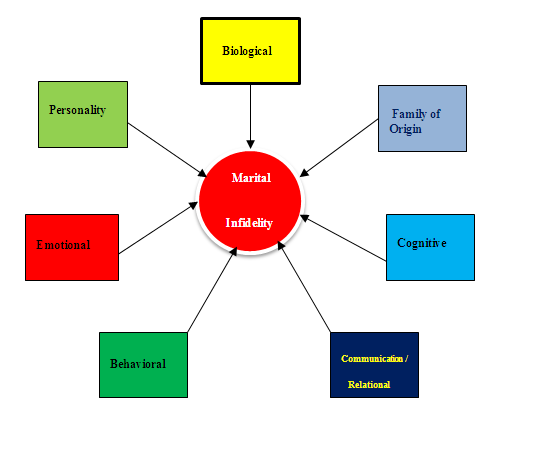
Based on the Literature Reviews, the Authors Would Propose a Model Which Shows the Variables Involved in Marital Infidelity
According to the literature reviews, the authors would present the following pathology model of marital infidelity.
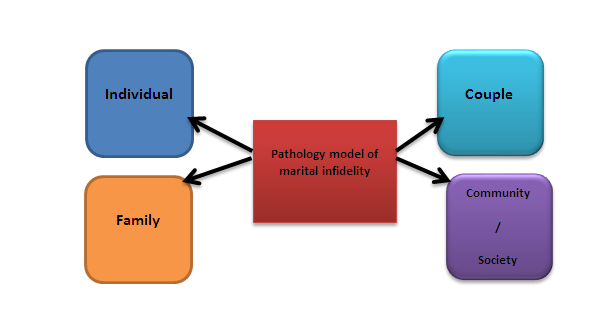
In order to study and treat marital infidelity, counselors, therapists, researchers, social activists and policy makers should paid attention to the variables and their interaction in the models.
References
-
Buss DM (2018) Sexual and Emotional Infidelity: Evolved Gender Differences in Jealousy Prove Robust and Replicable. Perspectives on Psychological Science 13(2): 155-160.
-
Whisman MA (2016) Discovery of a partner affair and major depressive episode in a probability sample of married or cohabiting adults. Family process 55(4): 713-723.
-
Fincham FD, May RW (2017) Infidelity in romantic relationships. Current Opinion in Psychology 13: 70- 74.
-
Glass SP, Wright TL (1992) Justifications for extramarital relationships: The association between attitudes, behaviors, and gender. The Journal of Sex Research 29(3): 361-387.
-
Hertlein KM, Wetchler KM, Piercy FP (2005) Infidelity: An overview. Journal of Couple and Relationship Therapy 4(2-3): 5-16.
-
Blow AJ, Hartnett K (2005) Infidelity in committed relationships I: A methodological review. Journal of Marital and Family Therapy 31(2): 183-216.
-
Fife ST, Weeks GR, Gambescia N (2008) Treating Infidelity: An Integrative Approach. The family journal: counseling and therapy for couples and families 16(4): 316-323.
-
Buunk AP, Dijkstra P (2006) The threat of temptation: Extradyadic relationships and jealousy. In: Perlman D, Vangelisti AL (Eds.), The Cambridge handbook of personal relationships. Cambridge University Press, New York, pp: 533-556.
-
Lawrence A, Samson C (1989) Age, gender, and adultery. British Journal of Sociology 39(3): 409-440.
-
Fisher HE (1992) Anatomy of love: The natural history of monogamy, adultery and divorce. New York, WW Norton.
-
Kinsey AC, Pomeroy WB, Martin CE (1948) Sexual behavior in the human male. Philadelphia: WB Saunders.
-
Kinsey AC, Pomeroy WB, Martin CE, Gebhard P (1953) Sexual behavior in the human female. Philadelphia: WB Saunders.
-
Hunt M (1974) Sexual Behavior in the 1970. Playboy Press, Chicago.
-
Scheeren P (2018) Marital Infidelity: The Experience of Men and Women. Trends in Psychology 26(1): 355- 356.
-
Beaulieu-Pelletier G, Philippe FL, Lecours S, Couture S (2011) The role of attachment avoidance in extra dyadic sex. Attachment & Human Development 3(3): 293-313.
-
Zhang N, Parish WL, Huang Y, Pan S (2012) Sexual infidelity in China: prevalence and gender-specific correlates. The Archives of Sexual Behavior 41(4): 861-873.
-
Greeley A (1994) Marital infidelity. Society 31: 9-14.
-
Laumann EO, Gagnon JH, Michael RT, Michaels S (1994) The social organization of sexuality: Sexual practices in the United States. University of Chicago Press, Chicago.
-
Tafoya MA, Spitzberg BH (2007) The dark side of infidelity: Its nature, prevalence, and communicative functions. In BH Spitzberg & WR.
-
Orubuloye IO, Caldwell JC, Caldwell P (1991) Sexual networking in the Ekiti District of Nigeria. Studies in Family Planning 22(2): 61-73.
-
Tagler MJ, Jeffers HM (2013) Sex differences in attitudes toward partner infidelity. Evolutionary Psychology 11(4): 821-832.
-
Jeanfreau M, Jurich A, Mong M (2014) An examination of potential attractions of women's marital infidelity. American Journal of Family Therapy 42(1): 14 -28.
-
Weiser DA, Weigel DJ (2017) Exploring intergenerational patterns of infidelity. Personal Relationships 24(4): 933-952.
-
Weiser DA, Weigel DJ, Lalasz CB, Evans WP (2017) Family background and propensity to engage in infidelity. Journal of Family Issues 38(15): 2083- 2101.
-
Carpenter CJ (2012) Meta-analyses of sex differences in responses to sexual versus emotional infidelity: Men and women are more similar than different. Psychology of Women Quarterly 36(1): 25-37.
-
Schneider JP, Weiss R, Samenow C (2012) Is it really cheating? Understanding the emotional reactions and clinical treatment of spouses and partners affected by cybersex infidelity. Sexual Addiction & Compulsivity: The Journal of Treatment & Prevention 19(1-2): 123- 139.
-
Drigotas SM, Safstrom A, Gentilia T (1999) An investment model prediction of dating infidelity. Journal of Personality and Social Psychology 77(3): 509-524.
-
Glass S, Wright T (1985) Sex differences in type of extramarital involvement and marital dissatisfaction. Sex Roles 12: 1101-1120.
-
Kemer G, Bulgan G, Çetinkaya-Yıldız E (2016) Gender differences, infidelity, dyadic trust, and jealousy among married Turkish individuals. Current Psychology 35(3): 335-343.
-
Knight E (2010) Gender differences in defining infidelity. Master of Arts in Counseling Psychology, A Thesis Presented to The Faculty of Humboldt, State University, USA.
-
Buss DM, Larsen RJ, Westen D, Semmelroth J (1992) Sex differences in jealousy: Evolution, physiology, and psychology. Psychological Science 3(4): 251-255.
-
Harris CR, Christenfeld N (1996) Jealousy and rational responses to infidelity across gender and culture. Psychological Science 7: 378-379.
-
Toplu-Demirtaş E, Fincham FD (2017) Dating infidelity in Turkish couples: The role of attitudes and intentions. The Journal of Sex Research 55(2): 252- 262.
-
Vaughn Becker DD, Sagarin BJ, Guadagno RE, Millevoi A, Nicastle LD (2004) When the sexes need not differ: Emotional responses to the sexual and emotional aspects of infidelity. Personal Relationships 11(4): 529-538.
-
Sabini J, Green MC (2004) Emotional responses to sexual and emotional infidelity: Constants and differences across genders, samples, and methods. Society for Personality and Social Psychology 30(11): 1375-1388.
-
Whitty M (2003) Pushing the wrong buttons: Men's and women's attitudes toward online and offline infidelity. Cyber-psychology & Behavior 6(6): 569- 579.
-
Buss DM (2000) The dangerous passion: Why jealousy is as necessary as love and sex. The Free Press, Newyork.
-
Lalasz CB, Weigel DJ (2011) Understanding the relationship between gender and extradyadic relations: The mediating role of sensation seeking on intentions to engage in sexual infidelity. Personality and Individual Differences 50(7): 1079-1083.
-
Guadagno RE, Sagarin BJ (2010) Sex differences in jealousy: An evolutionary perspective on online infidelity. Journal of Applied Social Psychology 40(10): 2636-2655.
-
Thornton V, Nagurney A (2011) What is infidelity? Perceptions based on biological sex and personality. Psychology Research and Behavior Management 4: 51-58.
-
Weiser DA, Weigel DJ (2015) Investigating experiences of the infidelity partner: Who is the “Other Man/Woman? Personality and Individual Differences 85: 176-181.
-
Brown EM (2001) Patterns of infidelity and their treatment. Philadelphia, PA: Taylor & Francis Group, LLC.
-
Lusterman DD (2005) Helping children and adults cope with parental infidelity. Journal of Clinical Psychology: In Session 61(11): 1439-1451.
-
Pearman MM (2010) The effect of parental infidelity on an adult child’s sexual attitudes. (Unpublished thesis). Purdue University, Indiana.
-
Atkins DC, Baucom DH, Jacobson NS (2001) Understanding infidelity: correlates in a national random sample. Journal of Family Psychology 15: 735-749.
-
Forste R, Tanfer K (1996) Sexual exclusivity among dating, cohabiting, and married women. Journal of Marriage and Family 58(1): 33-47.
-
Lieberman B (1988) Extra-premarital intercourse: Attitudes toward a neglected sexual behavior. Journal of Sex Research 24(1): 291-299.
-
Yoshioka MR, DiNoia J, Ullah K (2001) Attitudes toward marital violence. Violence Against Women 7(8): 900-926.
-
Kulwicki AD, Miller J (1999) Domestic violence in the Arab American population: Transforming environmental conditions through community education. Issues in Mental Health Nursing 20(3): 199-215.
-
Solstad K, Mucic D (1999) Extramarital sexual relationships of middle-aged Danish men: Attitudes and behavior. Maturitas 32(1): 51-59.
-
Feldman SS, Cauffman E (1999) Your cheat in’ heart: Attitudes, behaviors, and correlates of sexual betrayal in late adolescents. Journal of Research on Adolescence 9: 227-252.
-
Widmer E, Treas J, Newcomb R (1998) Attitudes toward Nomarital Sex in 24 Countries. The Journal of Sex Research 35(4): 349-358.
-
Maykovich, Minako K (1976) Attitudes versus behavior in extramarital sexual relations. Journal of Marriage and the Family 38(4): 693-699.
-
Balon R (2015) Is Infidelity Biologically Determined?. European Psychiatry 30(S1): 28-31.
-
Previti D, Amato PR (2004) Is infidelity a cause or a consequence of poor marital quality? Journal of Social and Personal Relationships 21(2): 217-230.
-
Shackelford TK, Besser A, Goetz AT (2008) Personality, marital satisfaction, and probability of marital infidelity. Individual Differences Research 6(1): 13-25.
-
Holyle RH, Rejifar MC, Miller JD (2000) Personality and sexual risk taking: A qualitative review. Journal of Personality 68(6): 1203-1237.
-
Tan, Lin Jia and Hwong, KahIng and Lee, Michelle Chin Chin (2016) A review of personality factors on infidelity. Journal Psychology Malaysia 30(1): 126- 141.
-
Lusterman DD (1998) Infidelity: A survival guide. Oakland, CA, New Harbinger Publications, Inc, US.
-
Allen ES, Atkins DC (2005) The multidimensional and developmental nature of infidelity: Practical applications. Journal of Clinical Psychology 61(11): 1371-1382.
-
Treas J, Giesen D (2000) Sexual infidelity among married and cohabitating Americans. Journal of Marriage and Family 62(1): 48-60.
-
Bradbury TN, Fincham FD, Beach SRH (2000) Research on the nature and determinants of marital satisfaction: A decade in review. Journal of Marriage and the Family 62(4): 964-980.
-
Amato PR, Rogers SJ (1997) A longitudinal study of marital problems and subsequent divorce. Journal of Marriage and the Family 59(3): 612-624.
-
Amato PR, Previti D (2003) People’s Reasons for Divorcing. Gender, Social Class, the Life Course, and Adjustment. Journal of Family Issues 24(5): 602-626.
-
De Graaf PM, Kalmijn M (2006) Change and stability in the social determinants of divorce: A comparison of marriage cohorts in the Netherlands. European Sociological Review 22(5): 561-572.
-
Edwards JN, Booth A (1976) Sexual behavior in and out of marriage: An assessment of correlates. Journal of Marriage and the Family 38(1): 73-81.
-
Spanier GB, Margolis RL (1983) Marital separation and extramarital sexual behavior. The Journal of Sex Research 19: 23-48.
-
Campbell WK, Foster JD, Finkel EJ (2002) Does self- love lead to love for others? A story of narcissistic game playing. Journal of Personality and Social Psychology 83(2): 340-354.
-
Thompson AP (1983) Extramarital Sex: A Review of the Research Literature. The Journal of Sex Research 19(1): 1-22.
-
Allen E, Rhoades G, Stanley S, Markman H, Williams T, et al. (2008) Premarital Precursors of Marital Infidelity. Fam Process 47(2): 243-259.
-
Wiederman MW (1997) Extramarital Sex- Prevalence and Correlates in a National Survey. The Journal of Sex Research 34(2): 167-174.
-
Glass SP, Wright TL (1977) The relationship of extramarital sex, length of marriage, and sex differences on marital satisfaction and romanticism: Athanasius’s data reanalyzed. Journal of Marriage and the Family 39(4): 691-703.
-
Scott J, Braun M, Alwiti D (1993) The Family Way. In International Social Attitudes: the 10th BSA Report, Roger Jowell, Lindsay Brook, and Lizanne Dowds (Eds.), Aldershot: Gower Publishing.
-
Lee MK, Lu SH (1997) The Marriage Institution in Decline? In Indicators of Social Development: Hong Kong 1995, Lau S, Lee M, Wan O, Wong S (Eds.), Chinese University Press, Hong Kong.
-
Amato PR, Loomis LS, Booth A (1995) Marital conflict and offspring wellbeing during early adulthood. Social Forces 73(3): 895-915.
-
Platt RAL, Nalbone DP, Casanova G, Wetchler J (2008) Parental conflict and infidelity as predictors of adult children’s attachment style and infidelity. American Journal of Family Therapy 36(2): 149-161.
-
Sweeney MM, Horwitz AV (2006) Infidelity, Initiation, and the Emotional Climate of Divorce: Are There Implications for Mental Health? Journal of Health and Social Behavior 42(3): 295-309.
-
Snyder DK, Baucom DH, Gordon KC (2008) An Integrative Approach to Treating Infidelity. The Family Journal 16(4): 300-307.
-
Ben-Ami N, Baker AJL (2012) The long-term correlates of childhood exposure to parental alienation on adult self-sufficiency and well-being. American Journal of Family Therapy 40(2): 169-183.
-
Levesque McCray, Myriam (2015) Infidelity, Trust, Commitment, and Marital Satisfaction Among Military Wives During Husbands' Deployment. Walden University.
-
Levesque McCray, Myriam (2015) Infidelity, Trust, Commitment, and Marital Satisfaction Among Military Wives During Husbands' Deployment. Walden Dissertations and Doctoral Studies.
-
Sanchez Sosa JJ, Hernandez Guzman L, Romero ML (1997) Psychosocial predictors of marital breakup: An exploratory study in Mexican couples and former couples. Archivos Hispanoamericanos de Sexologia 3(2): 125-136.
-
Shackelford TK (2001) Self-esteem in marriage. Personality and Individual Differences 30(3): 371- 390.
-
Cano A, O Leary KD (2000) Infidelity and separations precipitate major depressive episodes and symptoms of nonspecific depression and anxiety. J Consult Clin Psychol 68(5): 774-781.
-
Beach SR, Jouriles EN, O'Leary KD (1985) Extramarital sex: Impact on depression and commitment in couples seeking marital therapy. J Sex Marital Ther 11(2): 99-108.
-
Pittman FS, Wagers TP (2005) Teaching fidelity. Journal of Clinical Psychology 61(11): 1407-1419.
-
Zordan EP, Strey M (2011) Separacao conjugal: Aspectosi mplicados nessa decisão, reverberação e projetos futuros. Pensando Familias 15(2): 71-88.
-
Nogales A (2009) Parents who cheat. How children and adults are affected when their parents are unfaithful. Health Communication, Florida.
-
Sori CF (2007) An affair to remember: Infidelity and its impact on children. In: Peluso PR (Ed.), Infidelity: A practitioner's guide to working with couples in crisis. Routledge/Taylor & Francis Group, New York, pp: 247-276.
-
Asayesh MH, Farahbakhsh K, Delavar A, Salimi Bajestani H (2017) Psychosomatic Reactions and Physiological Effects of Infidelity among the Female Victims: A Phenomenological Study. The Journal of Shahid Sadoughi University of Medical sciences 25(8): 641-657.
-
Negash S, Morgan M (2016) A family affair: Examining the impact of parental infidelity on children using a structural family therapy framework. Contemporary Family Therapy 38(2): 198-209.
-
Glass SP, Wright TL (1988) Clinical implications of research onextramarital involvement. In: Brown RA, Field JR (Eds.), Treatment of sexual problems in individual and couple therapy. New York, NY: PMA, pp: 301–346.
-
Gordon KC, Baucom DH, Snyder DK (2004) An integrative intervention for promoting recovery from extramarital affairs. Journal of Marital and Family Counseling 30(2): 213-231.
-
Gordon KC, Baucom DH, Snyder DK (2005) Treating couples recovering from infidelity: An integrative approach. Journal of Clinical Psychology 61(11): 1393-1405.
-
Hertlein KA, Weeks GA (2007) Two roads diverging in a wood: The current state of infidelity research and treatment. Journal of Couple and Relationship Therapy 6(1-2): 95-107.
-
Hurlbert DF, Apt C, Gasar S, Wilson NE, Murphy Y (1994) Sexual narcissism: A validation study. Journal of Sex and Marital Therapy 20(1): 24-34.
-
Evine S (2005) A clinical perspective on infidelity. Sexual & Relation-ship Therapy 20(2): 143-153.
-
Miller SL, Maner JK (2008) Coping with romantic betrayal: Sex differences in responses to partner infidelity. Evolutionary Psychology 6(3): 413-426.
-
Miller SL, Maner JK (2009) Sex differences in response to sexual versus emotional infidelity: The moderating role of individual differences. Personality and Individual Differences 46(3): 287-291.
-
Orubuloye IO (1992) Diffusion and focus in sexual networking: Identifying partners and partners’ partners. Studies in Family Planning 23(6 Pt 1): 343- 351.
-
Comportamentos de Infidelidade Conjugal: A construção de um instrumento (Tese de doutorado, Universidade Federal do Rio Grande do Sul, Porto Alegre, RS, Brasil
-
Spring JA (2012) After the Affair. Harper Collins Publishers.
-
Wallerstein JS, Kelly JB (1996) Surviving the breakup: how children and parents cope with divorce. New York: Basic Books, pp: 341.
-
Whisman MA, Dixon AE, Johnson B (1997) Therapists’ perspectives of couple problems and treatment issues in couple therapy. Journal of Family Psychology 11(3): 361-366.
-
Whisman MA, Wagers TP (2005) Assessing relationship betrayals. Journal of Clinical Psychology: In Session 61(11): 1383-1389.
-
Whisman J, Snyder D (2007) Sexual Infidelity in a National Survey of American Women. Journal of Family Psychology 21(2): 147-154.
-
Whisman MA, Gordon KC, Chatav Y (2007) Predicting sexual infidelity in a population-based sample of married individuals. Journal of Family Psychology 21(2): 320-324.
- Occupational Stress and Mental Health Outcomes Among Police Officers: A Mini Review
- The Experience of Counterproductive Leadership on Mental Health and Impact on Retention in U.S. Marines: A Phenomenological Study
- Nomophobia in the Digital Age: A Study on College and University Students
- Emotional Regulation in Children with Autism and Learning Disabilities
- Antisemitism on American College Campuses and Its Impact on Jewish Students
- Exploring the Role of Empathy in the Associations of Family Functioning and Purpose in Life with Attitude towards Abortion among Undergraduates: A Moderation Analysis