
Temporal Fractals in the Mammalian Hypothalamus and Music
A fractal is a mathematical shape that is infinitely complex, while its pattern repeats endlessly. Regardless of how zoomed in or zoomed out the analysis is achieved, the segment to study looks very similar in every part of the fractal to the whole picture (in 3D fractals) or the whole composition (2D fractals). In mammalian metabolism, some fractals might be happening, since our inner rhythms and circadian cadences are following a natural sequence, grouped and organised. This series of waves and interconnected system enable the whole organism to have regulation and to monitor the biorhythms. Nature is written in fractal language and in its logarithmic or exponential formulas. Similarly also music is having fractals expressions, catenations, logic consecutive structures or waves in anchored oscillations. In this paper we will briefly study some visual linear and temporal fractals (2D) which might happen commonly for some hypothalamic functions and some parameters of music. Nevertheless for an accurate calculation of Hurst exponent many data and empirical records are required and in some cases this number is not achievable from biological samples or musical pieces with an end. However, statistical knowledge would be able to provide keys to subsane this lack. In those cases when it would be possible, finding temporal parameters, calculating the average and mathematical slope definition of the straight line might add more accurately knowledge for some human metabolic responses or anatomical structures in Neuroscience. Additionally musicians´ grandiose brains and how they were able to organised the music might be better acknowledged.
Introduction
The fractal concept was firstly introduced by the Mathematician Benoît Mahdelbrot in 1982. It refers to a spatial or temporal characteristic phenomena which are continuous and having a fractal dimension repeated in a topological sense with a different orientation [1]. The word fractal comes originally from Latin fractus, which means irregular, broken, made into pieces. In nature there are fractal structures everywhere which are often described as phenomena of nature. However they also happen in the metabolic rhythms of living creatures. In mammals many of these fractals are established and controlled by our hypothalamus in the brain. However, the fundamental properties of these human physiological functions in fractals are needed to be described and defined in mathematical formalism, to a better understanding of its complexity for descriptive and predictive purposes [2]. Some conceptual technicalities and new scientific vocabulary are being implemented for this aim, such as the name “dynamic functional connectivity” (DFC). This postulation has been created to get a more comprehensive approach to the reality of fractals in human metabolism, as a descriptive term for the multifractal analysis that might happen inside human metabolism and its holistic functions [2]. Mathematical defining fractals for some brain functions would undoubtedly benefit the approach to the Neuroscience field. Descriptive but also predictive values might be added to the Neuroscientific knowledge if, at some point, this theoretical and mathematical focusing on the organic and changeable reality of the brain would be incorporated.
Outside the biotic organisms, but processed and produced by the same, the music itself is having so often a fractal structure. Some compact musical pieces might be considered as mirrors of a much compounded but similar structure of small musical passages, which repeats in successive sequences with slightly different variations reminding like reflexes in a mirror the main musical version but under “different lights”. The human working brain is able to distinguish between rhythm, tone and sound [3] and in each of these musical dimensions, fractals are possible to happen. Recursive, iteration and self similarity are common attributes in music to make its sound variations but also they are common resources to make fractals in geometrical and temporal spheres. Our interest in this paper is to prefatorily show how the brain or its metabolic viability and music might share fractal mathematics principles. Maths of the Fractals There are two different fractals: “ideal” fractal (geometry in the 3D space, which are visible to the eye) and “natural” fractal (organic or temporal in 2D, which are better perceived by the ears like sounds). The imaginary, geometrical and exponential fractals are mostly calculated with the basic formula of Mandelbrot: Z = Zm + C, where the exponential m is very variable changing the shape and C is a complex point in the plane that might be different depending on how many itineration have been required. Another standard method to measure ideal and spacial 3D fractals is using the Hausdorff Dimension, which formula is D = log N/ log s, where N is the number of parts a fractal produces from each segment and s is the size of each new part compared to the original segment (Figure 1).
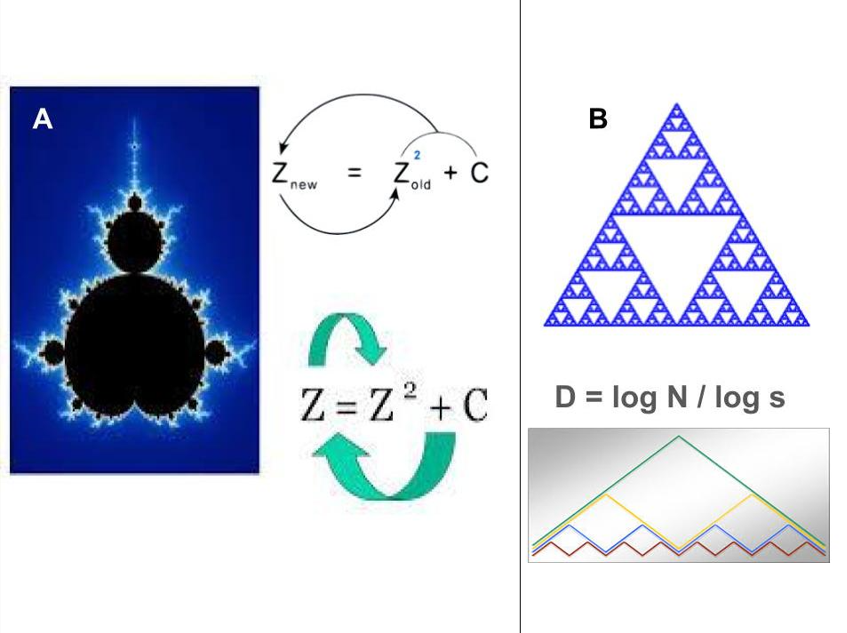
Figure 1: This figure depicts the most common visual three-dimensional fractals: Mandelbrot (A) and Hausdorff (B). On the left (A) a representation of the Mandelbrot fractal. B) shows the Sierpinski triangle, a fractal set with the overall shape of an equilateral triangle, subdivided into smaller recursively equilateral triangles. This is an example of a Hausdorff fractal.
For natural, living and temporal fractals of time series (2D) the measurement would be made with the Hurst exponent (H) being the formula D = 2 – H. The Hurst exponent in a time series can be characterised as the following: H < 0.5 when time series is mean reverting. H = 0.5 when time series is a random geometric Brownian motion and persistence does not exist. Finally the H > 0.5 happens when the time series is trending, not aleatory and persistence does occur.
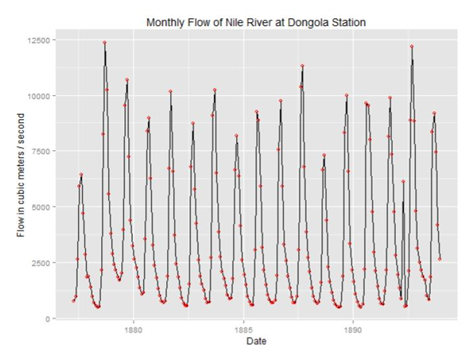
It is noticeable to mention the Hurst exponent was firstly calculated by the mathematician Harold Edwin Hurst for getting a reliable way of measuring the tides (afflux vs reflux) of the Nile river for human safety. Nature was the inspiration to capture and define the aprioristic random or stochastic event of overflows in the Nile. To obtain the Hurst exponent, the total temporal data is subdivided into time intervals of equal duration and the average for each segment is calculated. A straight line is fitted to these average values and the slope of the line is calculated. The Hurst exponent is calculated from the slope of that straight line (Figure 2).
Where are Fractals
The structure of fractals are certainly hypnotic and mesmerising since the same architecture is present in different scales of analysis. That enables the human being to understand and outreach much larger and multiplex compositions. There are quite a number of examples of
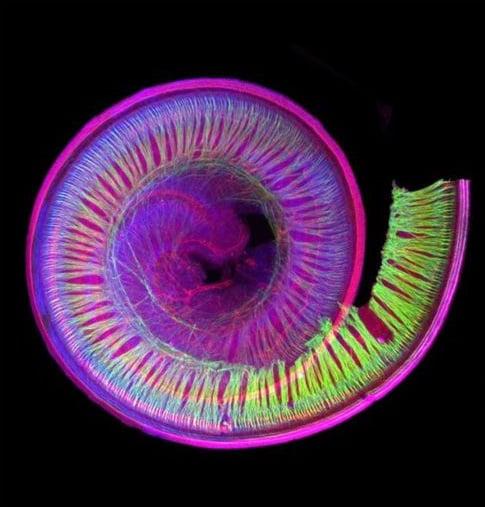
fractal morphologies in our own body, i.e. the brain, eye, heart or kidney contain fractal structures. Some other examples of natural fractals are blood vessel branching, networks of the tracheobronchial tree, neural networks in the brain, the folds of intestine or choroid plexus, the helix and spiral structure of the cochlea, etc [4] (Figure 3).
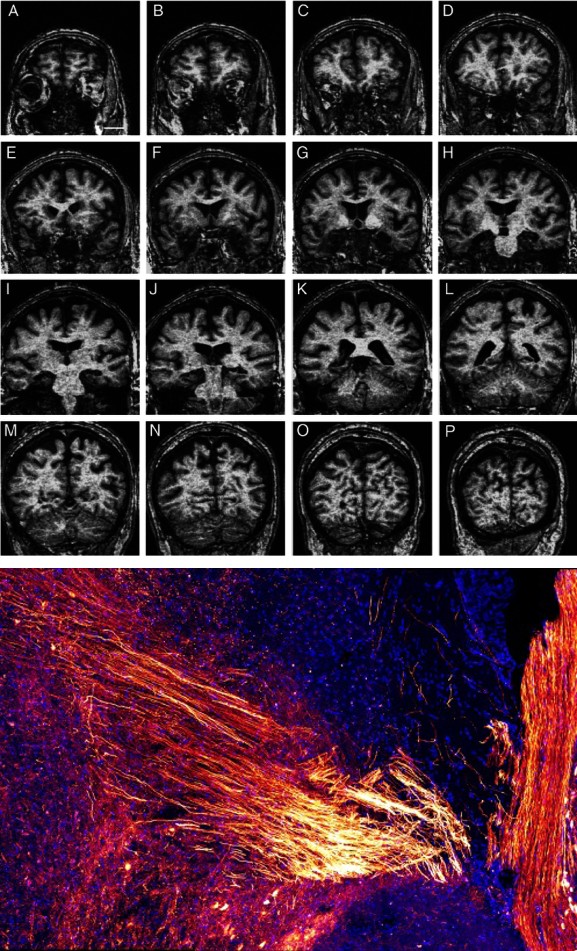
That is the case for the cerebellum and its skeleton. They possess highly fractal gyrations that were proved and measured. The same fractality in the cerebellum skeleton was found for men and women [1]. This fractal appearance is very common in the brain (Figure 4).
(A)
(B) Figure 4: Pictures depict some biotic fractal pictures coming from the brain. The top pictures (A) shows images of the human brain obtained with Magnetic Resonance Imaging (MRI) in a rostro-caudal approach. The other pictures belongs to the Cajal´s drawings exploring the pyramidal neurons in the brain cortex. Both representations show an amazing symmetry and equilibrium between two hemispheres or adjacent neurons, reminding the fractal effect of images on a mirror. Pictures bellow (B) show another real biological images of the brain, fibbers (pic on the left) and neurons (red) with astrocytes (green) (pic on the right) (images obtained with permission from the Icahn School of Medicine at Mount Sinai). It is noticeable how the fractal nature is more elusive or difficult to capture for naked eye in biological pictures (B) vs the pictures in A.
In the time-related dimension of the secular organism, the fractals also have a development. The constant and regular rhythm of the heart generates robust fractal temporal organisations, in humans and rodents. This similarity between species in temporal compositions is suggesting there might be a common scale invariant beat rate control mechanism between mammals (Figure 5).
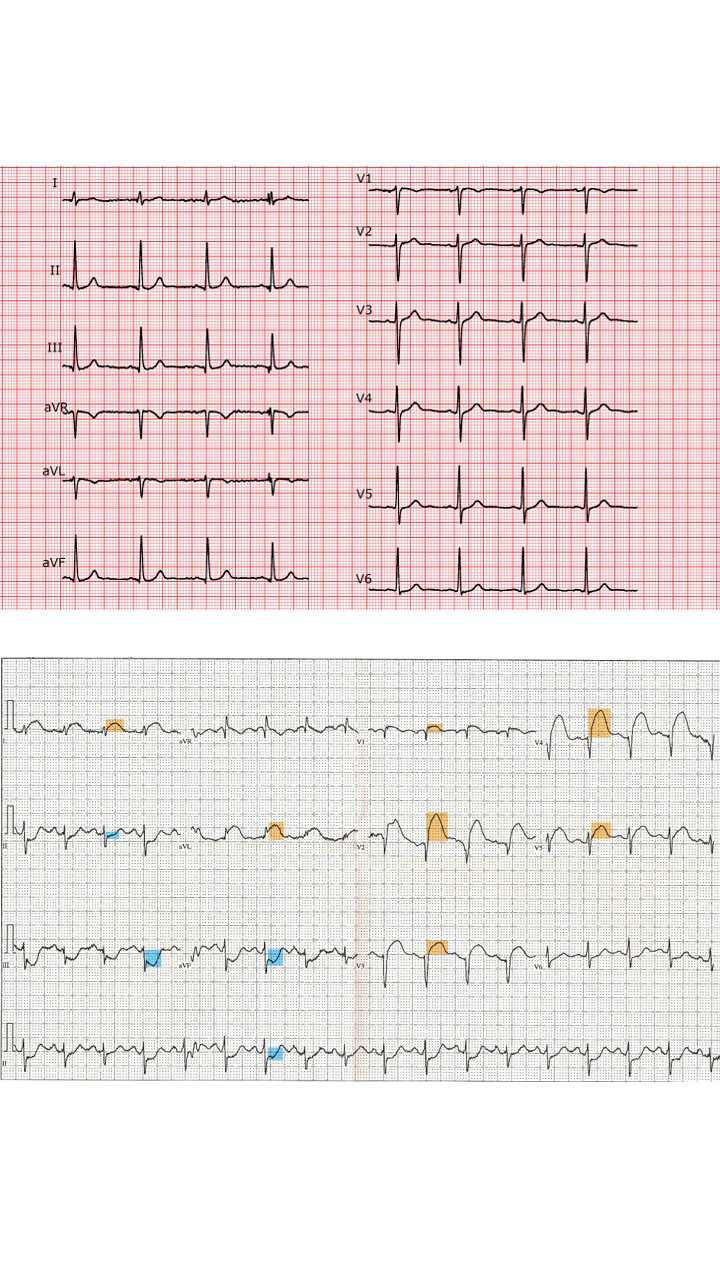
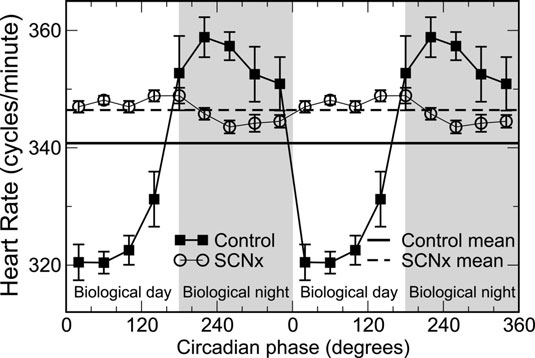
This regulated and ordered mechanism of response in the heart is mediated by the Suprachiasmatic Nucleus (SCN) in the brain. Lesions in the SCN of the brain in rats, without modifying the heart or its anatomy, can cause a larger scale exponent during heart beats (Figure 6). The same has been found in some human heart diseases with different causes [5]. For better adaptability, it might be important to identify other brain areas of control nodes (i. e. the complete dynamic functional connectivity, CDF) and their interactions to the SCN in the heart regulation. For instance, it has been proved other brain regions that are involved in fractal mammals neurophysiological heart regulation might be intergeniculate leaflet, midbrain raphe, paraventricular thalamus, limbic telencephalon or pedunculopontine/laterodorsal tegmental nuclei) [6] (Figure 6 & 7).
![Figure 7: Pictures showing number of active cells expressing vasopressin (b) or vasoactive intestinal polypeptide (VIP) (c) during different periods of the day. It is noticeable how the activity reminds of the oscillation rhythms of tides. There is a peak of activity for vasopressin from 5-9h and from 15-20h, while the peak occurs for VIP during the time periods of 1-5h and 16- 21h [7] with permission.](/fulltextimages/12030/fig_7.png)
Figure 7: Pictures showing number of active cells expressing vasopressin (b) or vasoactive intestinal polypeptide (VIP) (c) during different periods of the day. It is noticeable how the activity reminds of the oscillation rhythms of tides. There is a peak of activity for vasopressin from 5-9h and from 15-20h, while the peak occurs for VIP during the time periods of 1-5h and 16- 21h [7] with permission.
Cognitive control on active breathing has been proved to affect stress or anxiety perception and to improve cognition. That biorhythm monitorization have an effect over the cardiac rhythms via two path: brainstrem circuits involved in motor respiration and via olfactory bulb and its brain main and accessory olfactory networks [8]. This volitional regulation of respiratory can modulate arousal and anxiety (“When the breath is irregular, the minds wavers, when the brain is steady, so is the mind. To attain steadiness, the yogi should retain his breath” [9] and it is not present in other autonomic processes such as heart rate, digestive processes or salivation [8].
Synapse and Action Potentials
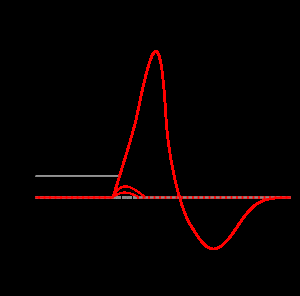
Concerning the shape of neurons and its activity [spontaneous synapses (Figure 8), long term potentiation or miniature synaptic transmission-mini)] some fractal dimensions have been defined. The long term potentiation (LTP) was tested in the hippocampus (CA3-CA1 neurons) of recently born rodents and they found spontaneous and random releases of excitatory minis during consecutive traces which could be on a line for a fractal. The minis were firstly described 60 years ago and a sequence of them might provide information about multiple neuronal processes occurring at different time scales inside a presynaptic terminal, such as a fractal expression, like an echo [10].
Referring to the anatomy of the neuron, the pyramidal neurons have been measured using fractal techniques to explore their complexity. Despite the fact their shapes are not strictly fractal (Figure 3A) the fractal definition was not in complete disagreement and it was increased its adjustability to a fractal concept with the longer length of the pyramidal dendrite [11].
Fine Plastic Arts
Humans display a preference toward images with fractal- like statistics and appearance. The plastic superb artist Mauritius Cornellis Escher was able to increase the further mathematical and scientific research by anticipation or direct inspiration from his paintings. The fractal dimension in Escher work is plastically expressed with an admirable imagination and creativeness. His clever compositions were not easy understood at the time, because his oneiric and surrealistic but possible real characterization of his new-fangled perspective were not well acquired or accepted in those years. Recent investigations have proved the sense of aesthetic and/or beauty is not a product of the external stimuli (i. e. image properties, qualities of composition) but it is an individual act of perception through a complex sensory processing which implies very different levels of awareness in a dynamic functional connectivity for such stimuli [12, 13, 14]. That is the reason why beauty is in the eye of the beholder or “there is no accounting for taste”.
Lifespan Cognition
The perception of fractals is crucial to understand and generates hierarchical shapes in self similarity. That will be required for language, grammar comprehension, general intelligence or sensitivity to visual complexity. Ontogenetically it commences to happen in human development around 9 years of age [15]. This ability to perceive and recognize fractals are related to the brain´s good functioning because they cause positive influences on cognitive skills [4]. During ageing there are alterations in synaptic connectivity or plasticity and in Ca+ homeostasis which affects other metabolic processes. These modifications might have an effect over the quality of fractal perceptions. However, it has been proved that a closer link to fine plastic arts and/or music created by great masters with grandiose
brains might have a positive effect for cognitive abilities in fractal detection properties during lifespan. This could occur through a potential “curative impact”, with healing and modifying human physiology thus its perception and/or interpretation of the world, through fine Arts [4].
In an in vivo study, conducted on and by humans, it was proved the brain fractal dimension, calculated from segmented cerebral white matter Magnetic Resonance Images (MRI), was correlating with greater fluid abilities for its brain activity. These capacities, in the subjects of the experiment, were considerably larger than expected by their childhood intelligence. That suggests brain possibilities and plasticity are happening beyond childhood. In this research it was proved lifelong cognitive changes in fluid abilities were significantly associated with differences in neuroanatomical brain fractal white matter measurements. Curiously these results were happening with no relation to gender or the total white matter volume [16].
Music
Music is a multidimensional environment, consisting of pitch, duration, the time interval between successive sounds, timbre, loudness, tempo, etc. It only happens in highly evolved animals. Pythagoras identified the physics of intervals or distance between notes and that primary harmonic system is still used today [17]. It has been suggested that perception of certain external sounds, which are waves or pressure, may influence and modulate several biological functions such as blood pressure, heart rate, respiration, body temperature, cardiac and neurological functions. This positive or negative effect of music was tested with meditation music, mantra, kindness or hatred expressions, noises. Those waves might be inducing different responses to biological units in human metabolism depending on the classification of “good or bad” sounds [18].
The ability to represent reality into hierarchical principles is thought to be possible because of a higher level of cognitive abstraction and recursive rules, which enables the language. It naturally more easily happens in musicians (84%) but it also occurs in non musicians (without musical training) (71%) [19]. This difference might suggest an important role of the auditory domain, besides of the visual domain, for building fractals representations in different dimensions (Figure 9).
It is believed that Wolfgang Amadeus Mozart wrote a piece of music in 1787 or 1788 as a joke, a duet for string, which could be read in two directions and both were perfectly beauty and coherent (harmonised) in terms of music (“Der Spiegelkanon”) (Figure 10). Because of the facts that i) the key of G is reversible in the pentagram, ii) the notes are more suitable written inside the pentagram and iii) the five lines of pentagram are identical thoroughly, from top to down, the funny story and performance is possible. The music sheet is placed on a table between the two string musicians and each plays what they see, from the beginning to opposite end of the sheet music. This aesthetic consideration of the fractal dimension of music, with this anagram, chiasmus or palindromic invertible canon, was only possible to be written with a deep knowledge of the nature of music and its inner meaning to our brain and auditory system. However, there are some doubts whether this piece was written by Mozart himself [20].
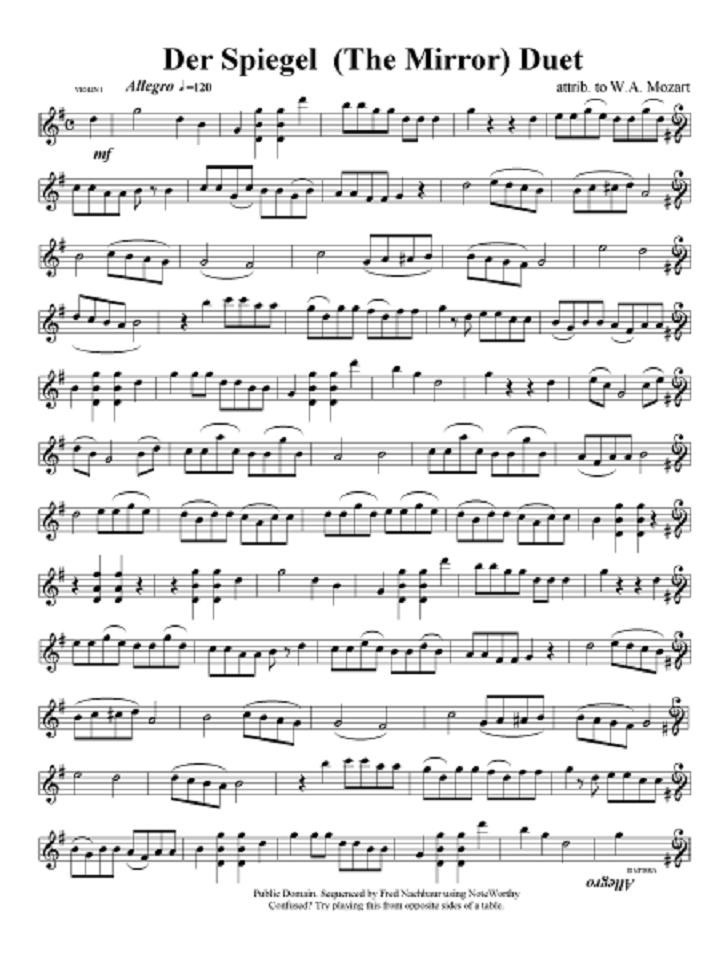
Figure 10: Music sheet ascribed to Mozart named Der Spiegel Duet (the mirror duet). Because of the facts i) the key of G is reversible in the pentagram, ii) the notes are preferable written inside the pentagram and iii) the five lines of pentagram are identical from top to down, the joke is possible to be made and the song is successfully readable from both sides. Many current and more pioneers than Mozart composers have assimilated this musical sense and their music sheets are really very close to the waves that happen in nature. Such are the cases of Johann Sebastian Bach (Figure 11). In these pieces of music, waves of sounds are noticeable. However, variations, the origin of the wave or the end are not possible to predict easily, because they belong to the creativity of the composer and his inner brain activity. Contrary to figure 2, maximum and minimum are changeable in these waves, because notes for origin and end are modifying the final sound to make a beautiful song with a sense and meaning. Knowing better the fractals in music would enable us to understand creativity and its paths.
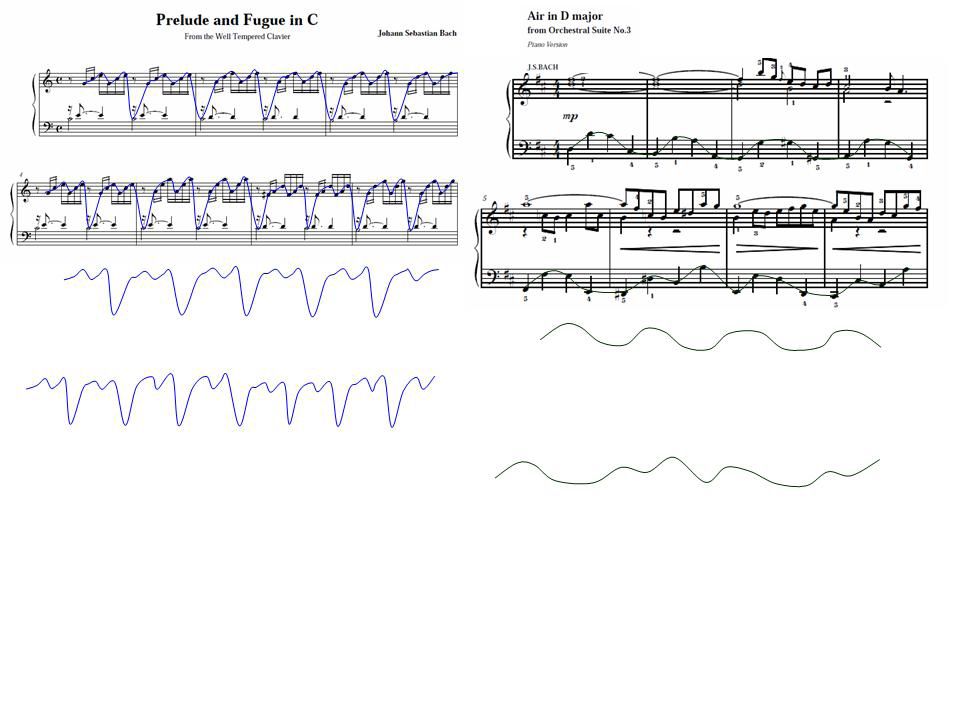
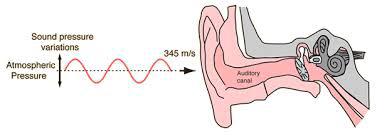
Figure 11: First pages of two well known pieces composed by Bach. In the Prelude and Fugue in C (A) and in Air in D major (B) sequential and constant waves are apprehensible by the ear but also by the eye on the notes written (posterior lines). The oscillating lines in A reminds the heart beats of the human being, during a heart arrest (Figures 4B & 5). Lines in B reminds the sound waves in the air which enters into our auditory system (Figure 12).
Sounds Under Water
It is well known dolphins and other cetaceans produce quite a number of sounds under the water to communicate, such as vocalisations, tonal whistles, clicks or burst pulses. This code plays a role in individual recognition (“signature whistles”) and maintaining group identity [21]. In a study the hieratical temporal structure of 4 minutes of several pieces of sounds were compared: humpback whale song, human speech, rock music, symphonical classical music (Figure 13). As it is shown in figure 13, solitary male humpback whales are able to sing long complex songs, like hermit thrushes, inside the musical meaning and definition of what a song is: introduction, chorus, common structural complexity in terms of self-similar “musical” groups [22].
![Figure 13: Different and specific statistical calculations of the weaves of sound during 4 minutes of recording length. The blue in each of them and its shapes are depicting the waves of sound variations through time and space (air or water). The whale song shows a predictable pattern with a structure of a common song with sequences and repetitions (introduction, chorus, rhythm, etc) all under the water. This distribution is similar to those of the human which implies voices and communication (TED talk and rock music, “Back to Black” by ACDC), pointing out the presence of vocalisations in all those sounds. However, they are all different from classical music, that is Brahms symphony number 4, where the musical structure is as fluid as sounds that are not vocalised [22].](/fulltextimages/12030/fig_13.png)
Figure 13: Different and specific statistical calculations of the weaves of sound during 4 minutes of recording length. The blue in each of them and its shapes are depicting the waves of sound variations through time and space (air or water). The whale song shows a predictable pattern with a structure of a common song with sequences and repetitions (introduction, chorus, rhythm, etc) all under the water. This distribution is similar to those of the human which implies voices and communication (TED talk and rock music, “Back to Black” by ACDC), pointing out the presence of vocalisations in all those sounds. However, they are all different from classical music, that is Brahms symphony number 4, where the musical structure is as fluid as sounds that are not vocalised [22].
Conclusions
For an accurate calculation of Hurst exponent many data and records are required and in some cases this number is not achievable from biological samples or musical pieces with an end. However, statistical knowledge would be able to provide keys to subsane this lack. And in those cases, the definition of fractals might worth it, when a reliable formula is obtained. Contrary to fractals in nature, maximum and minimum are changeable in musical waves, because notes are modifying. Knowing better the fractals in music would enable us to understand creativity and its paths to predict human body reactions and getting a better understanding of great composers and plastic artist´s brain functions. In this brief text we have tentatively analysed two different pieces of music sheets and commented some body metabolic functions which show fractal auto-balanced and homeostatic expressions. In those cases when it would be possible, finding temporal parameters, calculating the average and mathematical slope definition of the straight line might add more accurately knowledge for some human metabolic responses or anatomical structures in Neuroscience. And musicians grandiose brains might be better understood.
Acknowledgements
We would like to thank Prof. Swaab at the Netherlands Institute for Neuroscience for their suggestions while the preparation of this work and his fractal discernment. We would like to thank the editor and reviewers for their improvements.
We would also like to thank the composer Ludovico Einaudi, for being the contemporary musical inspiration of this paper.
Credit of Images
Photographs presented in this work come from files with a free licence in the public domain as Wikimedia Commons. In cases where pictures come with authorship from a published paper, that has been properly quoted and permission from the corresponding author was obtained.
References
-
Liu JZ, Zhang LD, Yue GH (2003) Fractal dimension in human cerebellum measured by Magnetic Resonance Imaging. Biophysical Journal 85(6): 4041-4046.
-
Bogdan P, Eke A, Ivanov PCh (2020) Editorial: Fractals and multifractals facets in the structure and dynamics of physiological systems and applications to homeostatic control, disease diagnosis and integrated cyber-physical platforms. Front in Physiol 11: 447.
-
Ventegodt S, Hermansen TD, Kandel I, Merrick J (2008) Human Development XIII: The Connection between the structure of the overtone system and the tone language of music. Some implications for our understanding of the human brain. The Scientific World Journal 8: 643-657.
-
Zueva MV (2015) Fractality of sensations and the brain health: the theory linking neurodegenerative disorder with distortion of spatial and temporal scale-invariance and fractal complexity of the visible world. Front Ageing Neurosci 7: 135.
-
Hu K, Scheer FAJL, Buijs Shea SA (2008) The circadian pacemaker generates similar circadian rhythms in the fractal structure of heart rate in human and rats. Cardiovascular Research 80(1): 62-68.
-
Hu K, Meijer JH, Shea SA, VanderLeest HT, Pittman- Polletta B, et al. (2012) Fractal patterns of neural activity exist within the Suprachiasmatic Nucleus and require extrinsic network interactions. PLoS ONE 7(11): e48927.
-
Hofman M, Swaab D (2002) A brain for all seasons. Cellular and molecular mechanism of photoperiodic plasticity. Progress in Brain Research 138: 255-280.
-
Maric V, Ramanathan D, Mishra J (2020) Respiratory regulation and interaction with neuro-cognitive circuitry. Neurosci Biobehav Rev 112: 95-106.
-
Iyengar BKS (1985) Light on Pranayama: the Yogic Art of Breathing. Crossroad publishing Co pp: 320.
-
Lamanna J, Signorini MG, Cerutti S, Malgaroli A (2015) A pre-docking source for the power-low behaviour of spontaneous quantal release: application to the analysis of LTP. Front Cell Neurosci 9: 44.
-
De Simoni A, Griesinger CB, Edwards FA (2003) Development of rat CA1 neurons in acute _versus_ organotypic slices: role of experience in synaptic morphology and activity. J Physiol 550(1): 135-147.
-
Spehar B, Wong S, van der Klundert S, Lui J, Clifford CWG, Taylor RP (2015) Beauty and the beholder: the role of visual sensitivity in visual preference. Frontiers in Human Neuroscience 9: 514.
-
Swaab DF (2013) Art is Beauty in the eye of the beholder. Sikkens Foundation publishers 1-32.
-
Swaab DF (2019) Our creative brain. Atlas Contact. Uitgeverij.
-
Martins MD, Laaha S, Freiberg EM, Choi S, Fitch WT (2014) How children perceive fractals: hierarchical self- similarity and cognitive development. Cognition 133(1): 10-24.
-
Mustafa N, Ahearn TS, Waiter GD, Murray AD, Whalley LJ, et al. (2012) Brain structural complexity and life course cognitive change. Neuroimage 61(3): 694-701.
-
Wilson RJ (2003) Music and Mathematics. From Pythagoras to Fractals. In: Fauvel J, Flood R, et al. (Eds.), Oxford University Presss, UK.
-
Lin CD, Romano P, Iliceto S, Tona F, Vitiello G (2022) On collective molecular dynamics in biological systems: a review of our experimental observations and theoretical modelling. Int J Mol Sci 23(9): 5145.
-
Dias-Martin M, Gingras B, Puig-Waldmueller E, Fitch WT (2017) Cognitive representation of musical fractals: Processing hierarchy and recursion in the auditory domain. Cognition 161: 31-45.
-
Gardner M (1992) Fractal music, hypercards and more.. Mathematical Recreation from Scientific American Magazine. W. H. Freeman and Company. New York, USA, 4.
-
Kershenbaum A, Sayigh LS, Janik VM (2013) The encoding of individual identity in dolphin signature whistles: how much information is needed. PLoS ONE 8: e77671.
-
Kello CT, Bella SD, Médé B, Balasubramaniam R (2017) Hierarchical temporal structure in music, speech and animal vocalisations: jazz is like a conversation, humpbacks sing like hermit thrushes. J R Soc Interface 14(135): 2017031.
- Occupational Stress and Mental Health Outcomes Among Police Officers: A Mini Review
- The Experience of Counterproductive Leadership on Mental Health and Impact on Retention in U.S. Marines: A Phenomenological Study
- Nomophobia in the Digital Age: A Study on College and University Students
- Emotional Regulation in Children with Autism and Learning Disabilities
- Antisemitism on American College Campuses and Its Impact on Jewish Students
- Exploring the Role of Empathy in the Associations of Family Functioning and Purpose in Life with Attitude towards Abortion among Undergraduates: A Moderation Analysis