
Silymarin and Curcumin has a Potential Hepato-Protective Effect against Chemically-Induced Liver Dysfunction
The liver is important, essential, and vital organ in the body due to their function in body. Detection of hepatic dysfunction depends on the lab tests such as: Elevated aspartate aminotransferase (AST) or alanine aminotransferase (ALT) and alkaline phosphatase (ALP). Curcumin has been shown to protect liver in much models of liver injury by inhibiting oxidative damage. Twenty four adult male albino rats their average weight 150-200 g were divided into four group six rats in each group ; group1: served as a normal group, group 2:subjected to 0.5mg/kg ccl4 dissolved in olive oil s.c every other day for 3 weeks, group 3:subjected to ccl40.5mg/kg dissolved in olive oil s.c every other day in addition to Curcumin 200 mg/kg /d orally every day for 3 weeks, group 4: subjected to ccl40.5 mg/kg dissolved in olive oil s.c every other day in addition to silymarin 200mg/kg orally every day for 3 weeks. The administration of ccl4 cause hepatic dysfunction and increase in serum ALT, AST and ALP level. The administration of Curcumin and silymarin along with ccl4 showed a decrease in serum ALT, AST and ALP level. The hepatic-protective effect of Curcumin and silymarin are relating to reduced liver enzymes as ALT, AST and ALP in hepatic dysfunction that produced by CCl4 toxicity through an antioxidant effects, exerting anti-inflammatory and free radical diminish.
Introduction
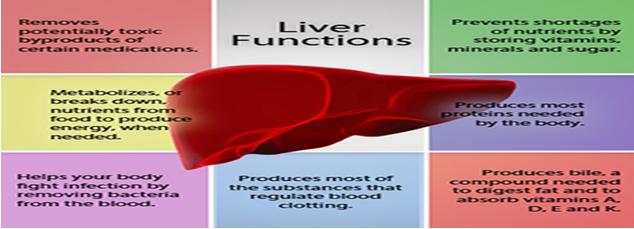
The Liver is largest organ in the body and it weighs about 2.5 kg of total body weight. The Liver is wedge shape organ with base to the right and its apex to left. It's located at right hypochondrium, epigastrium, and left hypochondrium. The liver consists of 2 lobes: a large lobe, and a small left lobe, and these lobes are separated by falciform ligament (which is a fold of peritoneum extending from anterior abdominal wall and diaphragm to liver), fissure for ligamentumteres, and fissure for ligamentumvenosum [1]. The liver is the one of the most important organs in the body, it maintains the normal body activities with many essential functions which include drug detoxification, also the liver is considered the main site for metabolism inside the body, It organizes many metabolic reactions in the body, as well as providing the body with major secretary functions (Figure 1) [1]. Liver dysfunction is related to the abnormality in the liver’s ability to perform its normal functions, mainly due to exposure to various stimuli such as toxic substances, viral infections, and trauma, which eventually lead to massive damage to the hepatocytes as well as diminished functions of the liver [1].
Different Uses of Liver Function Tests such as
1. Screening: Detection method for liver dysfunction.
2. Pattern of disease: Useful into differentiate between acute viral hepatitis, Cholestasis liver diseases and chronic disorders. 3. Assess severity: To evaluate severity results of some diseases such as primary biliary cirrhosis. 4. Follow-up: useful in assessing response such as the treatment of autoimmune liver [2].
Classification of Liver Function Tests
- Tests of ability of liver to transfer organic electrolytes and metabolism of drugs such as (urobilinogen, Serum bilirubin and urine bilirubin).
- Tests that reveal the injury of liver cells which include (ALP, leucine amino peptidase, aminotransferase, glutamylTranspeptidase and 5-nucleotidase).
- Tests the ability of liver to biosynthesis such as (prothrombin time, Serum proteins, serum ceruloplasmin, prealbumin, and albumin) [2].
Tests that Reveal the Injury of Liver Cells
Aspartate Aminotransferase & Alanine Aminotransferase
ALT is present in the liver, in Cytoplasm , but AST is found in a large variety of the tissue such as skeletal muscles, heart, Hepatic tissues and brain and it is also find in mitochondria and Cytoplasm of liver cells. In case of chronic liver disease also mitochondrial AST is increased (Figure 2) [2].
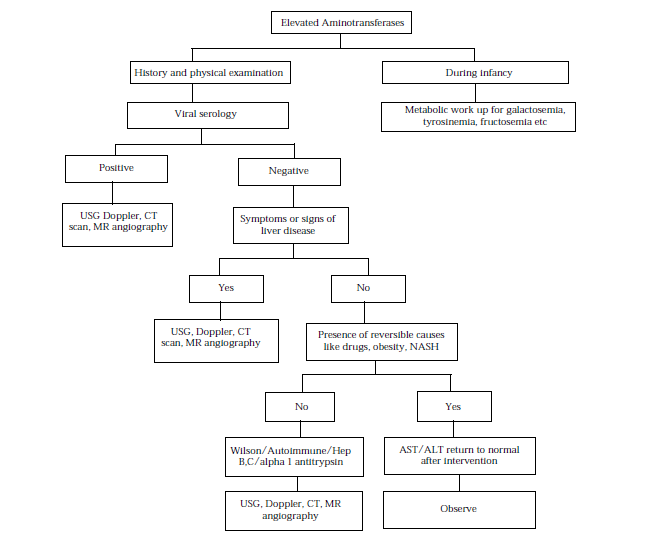
There are Three Types of Aminotransferases Elevations
1. Severe elevation of aminotransferases: (More than 20
times). An Increased level of Aspartate aminotransferase and Alanine aminotransferase if found in most liver diseases. In case of hepatitis, toxins or drugs which cause liver necrosis and circulatory shock leading to an increase in ALT and AST enzymes [2]. 2. Moderate elevation of aminotransferases: (From 3 to
20 times). In case of acute hepatitis, newborn hepatitis, chronic hepatitis and autoimmune hepatitis, Hepatitis due to drug abuse, alcoholic hepatitis and as well as severe biliary tract obstructions cause moderate elevation of ALT and AST. An increased level of Alanine aminotransferase is usually higher more compared with Aspartate aminotransferase only in chronic liver disease [2]. 3. Mild elevation of aminotransferases: (From one to three times). It’s seen in cases of newborn hepatic inflammation that causes sepsis, extra-hepatic biliary atresia [EHBA], liver cirrhosis, drug toxicity, muscle inflammation and muscular dystrophy.
Alkaline Phosphatases Test
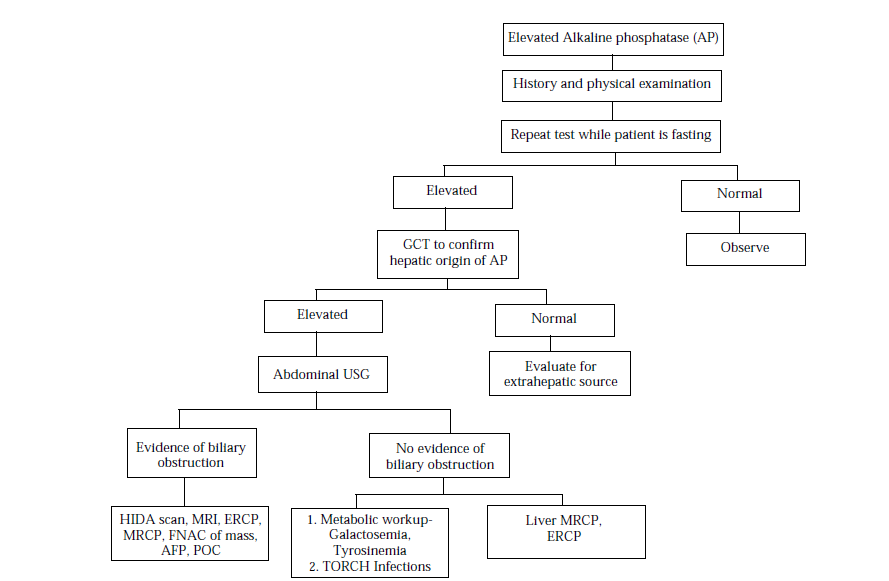
ALP level is usually normal or increased slightly in case of acute viral hepatitis. Hepatitis A can provide an image of cholestasis with noted and long-term Itching and high alkaline phosphatase level. High levels of serum and intestinal alkaline phosphatase (ALP) are found in patients with cirrhosis of the liver, especially with type O blood, and can be linked particularly to the disease within the liver instead of the extra-hepatic obstruction. Some diseases such as liver and bone metastasis can cause high levels of alkaline phosphatase. Also other diseases such as infiltrative liver disease, cysts, and amyloidosis can cause high alkaline phosphatase. High levels of the alkaline phosphatase are found in liver cirrhosis and hepatitis (Fig 3). In disease like Hypothyroidism, pernicious anemia, and decreasing zinc level may cause reduced alkaline phosphatase level. Drugs may cause increase in alkaline phosphatase level such furosemide, cimetidine, Anti- epileptic drug like (Phenobarbitone and Phenytoin).
The present study was conducted to compare the antioxidative effects of Curcumin in comparison to that of silymarin in protecting the hepatotoxic injury caused by CCl4 in rats.
Materials and Methods
Natural Product
Curcumin and Silymarin used as anti- oxidative stress in the rats used to protect liver against liver damage by carbon tetrachloride (CCL4).
Animals
24 adult male albino rats weighing (150-200 g) housed in individual cages 6 rats in each cage in a humidity, temperature and light controlled room- (12:12 h light: dark cycle) maintained on a standard laboratory diet and water ad libitum [3]. The Experimental protocol was approved by Ethics Committee MSA University.
Experimental Design
The rats were randomly divided into 4 groups (6 rats per each). Group I (Control group): subjected to 1ml olive oil administration by gavage for 3 weeks. Group II (CCl4 group): subjected to subcutaneous (s.c) CCl4 injection, 0.5 ml/kg of body weight in olive oil on every other day for 3 weeks CCl4 (Sigma-Aldrich, Egypt). Group III (CCl4 + Curcumin group): received CCl4 by subcutaneous injection, 0.5 ml/kg in olive oil every other day for 3 weeks and 200 mg/kg of body weight Curcumin (Sigma-Aldrich, Egypt) dissolved in olive oil and given by gavage every day for 3 weeks. Group IV (CCl4 + Silymarin group): received CCl4 by subcutaneous injection, 0.5 ml/kg in olive oil every other day for 3 weeks and 200 mg/kg of body weight and Silymarin (200mg/Kg/day) were orally given daily for 3 weeks [3].
Biochemical Analysis of Aminotransferase Level
At the end of the experimental period, animals were anesthetized with sodium pentobarbitone (6mg/100 gr of body weight, IP). Blood were collected and serum separated by centrifuging at 825x g for 10 min. Serum was used for estimation of albumin, alkaline phosphatase (ALP), alanine aminotranseferase (ALT), aspartaeaminotranseferase (AST) using specific diagnostic kits (Biodiagnostic, Egypt).
Results
Alanin Aminotransferase Levels
| Animal No. | Normal | Control | CCl + Curcumin 4 | CCl + Silymarin 4 | ||||||||||
| 1 | 38.5 | 75.1 | 49.1 | 49.4 | ||||||||||
| 2 | 38.3 | 75.3 | 44.7 | 49.2 | ||||||||||
| 3 | 71 | 80.2 | 51 | 59 | ||||||||||
| 4 | 40.6 | 78.6 | 52.6 | 54.3 | ||||||||||
| 5 | 50.2 | 72.1 | 56 | 58 | ||||||||||
| 6 | 59.2 | 60.5 | 55 | 57.3 | ||||||||||
| Mean | 49.63 | 73.63 | 51.4 | 54.6 | ||||||||||
| S.D. | 13.28 | 7.03 | 4.14 | 4.49 | ||||||||||
Table 1: Effect of CCL4 (control), curcumin/CCL4 and silymarine/CCL4 group on ALT levels. The control group showed a high signifi
Table 1: Effect of CCL4 (control), curcumin/CCL4 and silymarine/CCL4 group on ALT levels. The control group showed a high significant elevation in the ALT levels in comparison to the normal group (P<0.001), were Curcumin/CCL4 showed a high significant reduction in comparison to the control group (P<0.001), also silymarine/CCL4 showed a significant reduction in comparison to the control group (P<0.01) figure 4.
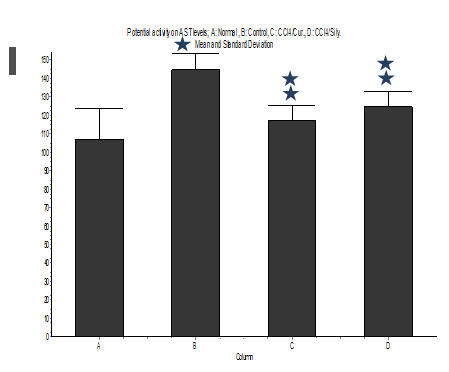
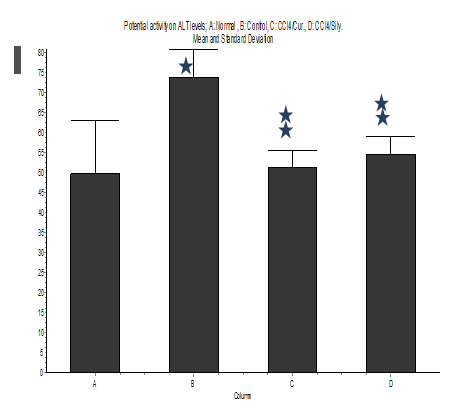
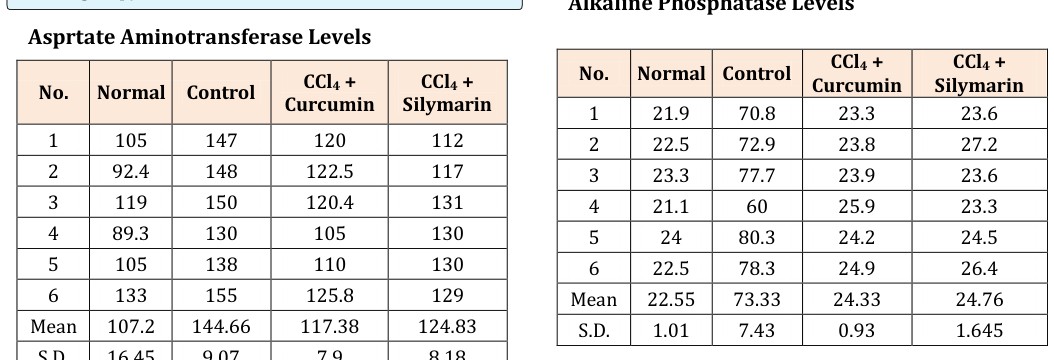
Table 2: Effect of CCL4 group (control), curcumin group and silymarine group on AST levels. The control group showed a high significant elevation in the AST levels in comparison to the normal group (P<0.001), were Curcumin/CCL4 showed a significant reduction in comparison to the control group (P<0.01), silymarine/CCL4 showed a significant reduction in comparison to the control group (P<0.05) figure 5.
Table 3: Effect of CCL4 group (control), curcumin group and silymarine group on ALP levels. The control group showed a high significant elevation in the ALP levels in comparison to the normal group (P<0.001), were Curcumin/CCL4showed a high significant reduction in comparison to the control group (P<0.001), also silymarine/CCL4showed a high significant reduction in comparison to the control group (P<0.001) figure 6.
| CCl + 4 | CCl + 4 | |||||||||||||
|---|---|---|---|---|---|---|---|---|---|---|---|---|---|---|
| No. | Norma | l | Control | |||||||||||
| Curcumin | Silymarin | |||||||||||||
| 1 | 21.9 | 70.8 | 23.3 | 23.6 | ||||||||||
| 2 | 22.5 | 72.9 | 23.8 | 27.2 | ||||||||||
| 3 | 23.3 | 77.7 | 23.9 | 23.6 | ||||||||||
| 4 | 21.1 | 60 | 25.9 | 23.3 | ||||||||||
| 5 | 24 | 80.3 | 24.2 | 24.5 | ||||||||||
| 6 | 22.5 | 78.3 | 24.9 | 26.4 | ||||||||||
| Mean | 22.55 | 73.33 | 24.33 | 24.76 | ||||||||||
| S.D. | 1.01 | 7.43 | 0.93 | 1.645 |
| CCl + 4 | CCl + 4 | |||||||||||||
| No. | Norma | l | Control | |||||||||||
| Curcumin | Silymarin | |||||||||||||
| 1 | 105 | 147 | 120 | 112 | ||||||||||
| 2 | 92.4 | 148 | 122.5 | 117 | ||||||||||
| 3 | 119 | 150 | 120.4 | 131 | ||||||||||
| 4 | 89.3 | 130 | 105 | 130 | ||||||||||
| 5 | 105 | 138 | 110 | 130 | ||||||||||
| 6 | 133 | 155 | 125.8 | 129 | ||||||||||
| Mean | 107.2 | 144.66 | 117.38 | 124.83 | ||||||||||
| S.D. | 16.45 | 9.07 | 7.9 | 8.18 |
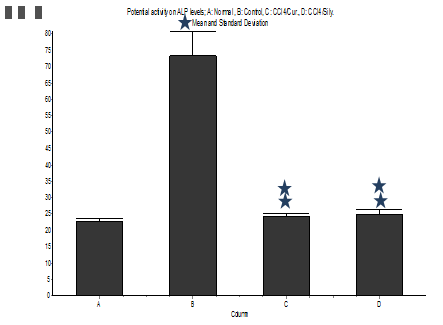
Figure 6: Levels of ALP in different groups (* significant in comparison to control, **significant in comparison to control group). The effect of the Administration of CCl4 on liver enzymes Produced significant increase in Alanine Transaminases Level and Aspartate Transaminases level as well as Alkaline Phosphatase Level. The administration of antioxidant Curcumin on CCl4 Intoxicated liver showed a high protective activity reducing the levels of the transaminases with a high significant manner. The administration of antioxidant Silymarin on CCl4 Intoxicated Liver showed also a significant reduction of the elevated transaminases level. Comparison between protection ability of curcumin and silymarin showed No significant difference (P>0.05).
Discussion
Investigations regarding antioxidants are performed mainly for their ability to prevent the cardiovascular diseases and lung and liver damage which caused by the CCl4 which induce the production of reactive oxygen species, peroxides, and cytokines [4]. Curcumin has been shown to protect liver in much models of liver injury by inhibiting oxidative damage. Therefore, this study was designed to study detailed mechanism of protection provided role of Curcumin against CCl4 that induced the liver damage in mice, where measurements of biochemical, histological and immunological [4]. Serum transaminases such as AST, ALT and ALP show functional activity of liver. The increase in activities of these enzymes indicates a generalized effect due to any toxin substance. Curcumin administration before CCl4 challenge in a significant reduction in serum levels of these enzymes (AST, ALT and ALP). It has been reported for Curcumin to give the protection against such changes in formaldehyde and monosodium glutamate which induced hepatic toxicity and oxidative stress in mice [4]. The protective effects of the Curcumin in reduction levels of liver markers are well connected with the histological findings in this study. Supplementation with Curcumin rate dropped and the severity of CCl4 in the relevant histological changes. Lipid peroxidation may cause changes in the membrane fluidity and permeability and increase rate of degradation of the protein, which finally lead to cell lysis. The prevention of the spread of the oxidation of polyunsaturated fatty acid is defined as the main role by which Curcumin is used to prevent oxidative damage by interfering with [4]. Curcumin supplementation showed an antiperoxidative effect in rat liver tissues via significantly decreasing the CCl4 which induced increase of hepatic malondialdehyde levels. Effect of Curcumin can be interpreted via direct free radical scavenging properties which suggests that by maintaining cellular integrity, it can protect against damage caused by endotoxin [4]. The scavenging effect of Curcumin is to reduce oxidative stress caused by endotoxin in rat brain and that the behavior of the disease in mice, also the inhibition chemotaxis of leukocyte via Curcumin had reduced malondialdehyde levels, thus modulating oxidative stress. [4]. Host cells are protected from oxygen radical derived from injury of naturally occurring free radical scavengers and paths antioxidants, including Curcumin, vitamins A, C, E and, glutathione, superoxide dismutase, catalase, and glutathione peroxidase. However, antioxidant defense mechanism fails, either because of excessive free radical scavenging enzymes or decreased activity, or both, causing lipid peroxidation [4]. Decrease in the activities of superoxide dismutase and reduced GSH levels was observed in the liver tissues from CCl4 challenged rats [4]. This may lead to obstruction dismutation of superoxide anions and detoxification of H2O2 inefficient, leading to the formation of OH-· Ions promote membrane lipid peroxidation which leads to oxidative damage in many tissues. It has been shown to increase tumor necrosis factor alpha over and again to play a role in the CCl4 that induced liver injury [4]. The potential of Curcumin to maintain the structure of the liver along with a significant reduction in biochemical indicative oxidative stress measurements suggest the use of Curcumin as an effective preventive strategy for the management of CCl4-induced injury in the liver tissue [4]. Evaluate combined effect of curcumin against carbon tetrachloride induced liver disorders in mice. Chronic liver injury by carbon tetrachloride is well established animal model of cirrhosis of the liver. Reactive oxygen species and oxidative stress has been shown to play very important role in the etiopathogenesis of fibrotic changes of the liver, and it appears that antioxidant therapy in vivo to be effective in preventing or reducing fibrosis and chronic liver damage [4]. Hepatic enzymes like AST, ALT and ALP present in high concentrations in liver under normal conditions. When there is a hepatic necrosis or membrane damage, will be the release of these enzymes in the circulatory system, as evidenced by the high enzyme levels in the blood [4]. High levels of these enzymes found in the liver, indicates every sign was observed in carbon tetrachloride treated mice, or either indicates liver damage caused by hepatotoxins . Curcumin treatment for carbon tetrachloride rats caused an improvement toxic effect of carbon tetrachloride and restore some signs above the normal level. This effect may be free-radical scavenging of curcumin and the results obtained in this study are consistent with previous findings activity [4]. In carbon tetrachloride toxicity, also increased the synthesis of cholesterol. Significant decrease the concentration of Total cholesterol and triglycerides in serum of carbon tetrachloride and Curcumin administered in the rats [4]. This due to Curcumin possesses hypocholesterolemic action and this could be due to a decrease in absorption of cholesterol or an increase in HDL cholesterol [4]. Increased malondialdehyde levels in group treated with carbon tetrachloride and increase oxidative stress compared with group of control [4]. The Curcumin used as treatment in large restoration of antioxidant enzymes activities as well as the concentration of non-enzymatic antioxidant glutathione in the liver. However, curcumin along with vitamin E treatment showed significant protection of curcumin alone [4]. The combined administration of curcumin and vitamin E can be considered as potentially anti-oxidative stress and toxicity of the liver caused via carbon tetrachloride [4]. This design of experimental studies has shown that treatment of CCl4 induced liver injury with curcumin leads to an increase in serum levels of liver enzymes as AST, ALT and ALP. For that, in this study was confirmed the hepatotoxicity induced by CCl4 by significant increases of serum levels of AST, ALP, and ALT after accurate analysis of these enzymes [5]. But after Administration of CUR in rats which have liver dysfunction induced by CCl4 we showed a recovery from this injury and that is significant evidence by decreasing in activities of ALT, ALP, and AST in serum in period time around 3 weeks of treatment by curcumin [5]. This study was reported that the hepatic protective effects of curcumin are intermediated by its anti-oxidant protect ability and the scavenging activity of free radicals [6]. In addition, the activity of curcumin is 10 times more effective than anti-oxidant activity of vitamin E, and also it has been shown that curcumin was decreased the levels formation of hepatic lipoperoxide in both types of injury as acute cases or chronic cases of CCl4 injuries [6]. The administration of silymarin alone or in combination with curcumin to treated CCl4 –induced liver dysfunction in rats was founded a significant reducing the elevation of ALT in all groups of rats in this study. Such elevation of ALT level was suggested that the toxicity of CCl4 was possessed ability to reach liver and inducing significant detectable damage to it [7]. The elevation of ALT level was by releasing of this enzyme from the cytoplasm into blood circulation after plasma membrane rupture and cellular damage. Administration of silymarin, and curcumin are significantly reduced the activity of liver enzyme ALT in CCl4 intoxicated rat. The previous experimental studies [9, 10] had shown that treatment with CCl4 leads to an increase in serum levels of AST, ALT and ALP. The hepatotoxicity of CCl4 was confirmed in our study by significant increases of serum levels of AST and ALT. Administration of CUR in rats with hepatic injury, induced by CCl4 caused a recovery from injury, as evidenced by decrease in the activities of ALT and AST in serum within 3 weeks of treatment.
Conclusion
The administration of Antioxidants Silymarin or Curcumin has a Hepato-protective effect against Liver Dysfunction induced by CCl4. The hepatic-protective effect of Curcumin and silymarin are relating to reduced liver enzymes as ALT, AST and ALP in hepatic dysfunction that produced by CCl4 toxicity through an antioxidant effects. Moreover, further studies are needed to compare the ability of Curcumin and silymarin to protect the structure and the function integrity of the liver.
References
-
Muthumani M, Prabu SM (2012) Silibinin potentially protects arsenic-induced oxidative hepatic dysfunction in rats. Toxicology Mechanisms and Methods 22(4): 277-288.
-
Thapa BR, Walia A (2007) Liver function tests and their interpretation. Indian Journal of Pediatrics 74(7): 663-671.
-
Bernal W, Wendon J (2013) Acute liver failure. The New England journal of medicine.
-
Stravitz RT, Kramer DJ (2009) Management of acute liver failure. Nat Rev Gastroenterol Hepatol 6: 542- 553.
-
American Society of Anesthesiologists (2012) Inc. Lippincott Williams & Wilkins. Anesthesiology 117: 898-904.
-
Hismiogullari SE, Hismiogullari AA, Sunay FB, Paksoy S, Can M, et al (2014) The protective effect of curcumin on carbon tetrachloride induced liver damage. Revue Méd Vét 165(7-8): 194-200.
-
Murphy SL, Xu JQ, Kochanek KD (2013) Deaths: Final data for 2010. Centers for Disease Control and Prevention website 61(3): 1-118.
-
AlwisD (2007) Genetics of alcoholic liver disease and nonalcoholic fatty liver disease. SeminLiver 27: 44- 54.
-
Bharrhan S, Chopra K, Rishi P (2010) Vitamin E Supplementation Modulates Endotoxin-induced Liver Damage in a Rat Model. American Journal of Biomedical Sciences 2(1): 51-62.
-
Venkatanarayana G, Sudhakara G, Rajeswaramma K, Indira P (2013) Combined effect of curcumin and vitamin E against CCl4 induced liver injury in rats. American Journal of Life Sciences 1(3): 117-124.
- hMPV: Is It Another Covid-19 Like Situation?
- Streptomyces: Sources of Novel Discoveries in Antibiotic Research to Combat Antimicrobial Resistance
- A Review of Mosquitoes (Diptera: Culicidae) and Their Biodiversity, Medical and Veterinary Importance
- Past and Current Immunotherapy in Cancer
- Hematological Cancer and Viral Infection
- The Growing Threat of Antimicrobial Resistance in India: Challenges and Solutions