
Assessing the Effectiveness of Self-Instructional Module on First- Aid Management of Paediatric Emergencies among Mothers of Under Five Children in Community Areas of Bhopal District
First aid is the temporary and immediate care given to the person who is injured or suddenly became ill. First aid can save a victim’s life especially if the victim is bleeding heavily and has stopped breathing. The aim of first aid to preserve life, promote recovery, and prevent worsening of the victim’s general condition and quick transport of the casualty to the nearest medical aid if required. Accidents are the largest single cause of death after the age of one year and are the most serious health problems facing the world today. Mother’s knowledge and practice are relevant variables and are considered to be important factors in planning an educational programme for first aid in paediatric emergencies. The objective of the study was to assess the effectiveness of self-instructional module (SIM) on first aid management of paediatric emergencies among mothers of under five children in community areas of Bhopal district by quasi experimental setup. Cluster sampling technique will be used for selecting the sample. For this purpose, all the mothers of under five children will be listed out separately from Shingarcholi area and 50 mothers will be chosen as sample by using lottery method. The investigators personal and professional experience, structured knowledge questionnaire and self-instructional was prepared to assess the level of knowledge of mothers of under five children on selected conditions of first aid. The present study assessed the knowledge of mothers of under five children regarding first aid management in paediatric emergencies and found all 26 (52%) of mother’s had inadequate knowledge in pre-test and in the post test, a maximum number of mother’s 4 (8%) had moderately adequate knowledge and 35 (70%) of them had adequate knowledge. It shows that there is a significant improvement in knowledge of mother’s after selfinstructional module. Thus, the investigator concludes that self-instructional module is effective in improving the knowledge of mother’s regarding first aid management. The self-instructional module has enhanced the knowledge of mother’s.
Introduction
Unintentional injuries are the most common cause of morbidity and mortality in young children, and most injuries occur in the home. There is often anxiety and uncertainty about the management of injured children in pre hospital environment. The most important factors underpinning this anxiety are lack of training, lack of experience, and lack of familiarity with paediatric emergency conditions [1]. The emotional responses evoked by injured children also play a part in causing distress and anxiety among parents. Seriously injured children are rare event. Nonetheless, the immediate care giver must be able to assess the commence and resuscitation in any age of child without making errors or becoming confused [2].
First aid is the temporary and immediate care given to the person who is injured or suddenly became ill. First aid can save a victim’s life especially if the victim is bleeding heavily and has stopped breathing [3]. The aim of first aid to preserve life, promote recovery, and prevent worsening of the victim’s general condition and quick transport of the casualty to the nearest medical aid if required. First aid is an assessment and interventions that can be performed by a bystander with minimal or no medical equipment. First aid assessment and intervention should be medically sound based on scientific evidence or in the absence of such evidence on expert consensus [4].
Because of advances in technology, changes in life style, and development in disease control, the number of childhood deaths due to epidemics has been reduced, while the number and importance of childhood accidents are increasing. Recent surveys carried out in the United States have shown that the major cause of child deaths accidental injuries. Every year, 150,000 deaths stemming from various traumas are reported. One fifth of these traumas pose major threats to children. In addition, 25% of the patients applying to emergency rooms suffer from accidental injuries. Administration of first aid must not delay activation of emergency medical care or other medical services [5].
The first five years are considered a critical period of life where the child learns to investigate and react with his surrounding and they move curious too much. Accidents are the largest single cause of death after the age of one year and are the most serious health problems facing the world today [6]. Mother’s knowledge and practice are relevant variables and are considered to be important factors in planning an educational programme for first aid in paediatric emergencies [7]. So, the objective of the study was to assess the effectiveness of self-instructional module (SIM) on first aid management of pediatric emergencies among mothers of under five children in community areas of Bhopal district by quasi experimental setup.
Review of Literature
Javed Iqbal Wani (2022) assesses parents’ knowledge and attitude toward paediatric first aid in the Asser region of Saudi Arabia. A cross-sectional study was conducted in the Aseer region of Saudi Arabia to assess the parents’ level of knowledge and attitude about paediatric first aid and trauma with an electronic- and paper-based multiple-choice self-administered questionnaire covering different medical emergencies. Results of the multiple linear regression analysis showed the knowledge score to be significantly higher among participants who had higher education levels, who had received first aid training before (t = 2.786, p = 0.0001), those who were already healthcare providers (t = 4.336, p < 0.001), those who were from rural districts (t = 2.5, p = 0.355), and younger personnel (t = 0.821, p = 0.345). Although this study shows that the level of first aid knowledge among personnel who care for children was low, it also shows that they are interested in obtaining proper training [8].
Aishwarya Makasare (2021) adopted Non-Experimental Descriptive design. The study carried out on 150 care takers of fewer than five children. The Non-probability purposive sampling technique was used and data was collected using the structured questionnaire and was analysed statistically. Data analysis was done mainly using descriptive statistics. The results showed that 84% were having good knowledge and 66% were having average knowledge. Study findings shows there is no association between levels of knowledge regarding the first aid management and demographic variables of selected paediatric emergencies as p-value is less than 0.05 level of significance [9].
KM Aarti (2020) studied the effectiveness of an instructional module regarding first-aid of paediatric emergencies on knowledge among mothers of 1-6 years children. Quasi-experimental with one group pre-test post- test design was used for 48 mothers at paediatric medical ward, surgery ward and trauma emergency KGMU, Lucknow and purposive sampling technique was used. Self-structured knowledge questionnaires on first aid of paediatric emergencies were used. Based on the objectives and the hypotheses the data were analysed by using various statistical tests. The result reveals that the overall score was 13.17 in pre- test and 20.13 in post- test after distribution of Instructional module to mothers 22 (45.83%) had good knowledge and 26 (54.17%) had average knowledge regarding first aid of selected conditions of paediatric emergencies. The study findings revealed that the Instructional module regarding first aid of Paediatric Emergencies was effective in improving knowledge of mothers of 1-6 years children [10].
Research Methodology
The study was conducted in urban slum area i.e. area of Bhopal, Madhya Pradesh. Urban population (Bhopal) consists of 3,795,648 [11]. Bhopal area i.e. Shingarcholi is considered randomly selected as study area. The target population comprises of all the mothers of under five children. The accessible population in this study are all mothers of under five children Shingarcholi area of Bhopal district.
Cluster sampling technique will be used for selecting the sample. For this purpose, all the mothers of under five children will be listed out separately from Shingarcholi area and 50 mothers will be chosen as sample by using lottery method. The investigators personal and professional experience, structured knowledge questionnaire and self- instructional was prepared to assess the level of knowledge of mothers of under five children on selected conditions of first aid. The questionnaire was divided into two sections- section ‘A’ and section ’B’.
Section A
It deals with demographic variables, which include age, sex, religion, educational status, type of family, and previous exposures to the topic.
Section B
Consist 30 multiple-choice questions to assess the knowledge before and after administering the self- instructional module. The question was further divided into 4 parts:
- Part I: General information on first aid - 3 questions.
- Part II: First aid on wounds and injury - 15 questions
- Part III: First aid on Epistaxis - 3 questions.
- Part IV: First aid on foreign bodies - 4 questions.
It was prepared coding for section ‘A’, which consists of demographic variable and for section ‘B’, one mark was given for correct answer and zero for incorrect answer. Thus, total of 30 marks were allotted under knowledge. To interpret the level of knowledge, the score were distributed as inadequate knowledge ≤ 50%, moderately adequate knowledge 51-75% and adequate knowledge >75%. Pre-test was conducted by administering knowledge questionnaires. The self- instructional module was conducted on the same day at the end of the pre-test for about 45-50 minutes using charts, Booklet. Post test was conducted with the same tool after seven days.
Results
Section A
| Demographic Variables | Frequency | Percentage | |
|---|---|---|---|
| 1 | Age in Years | ||
| 21-25 years | 8 | 16 | |
| 26-30 years | 17 | 34 | |
| 31-35 years | 13 | 26 | |
| 36 & above | 12 | 24 | |
| 2 | Religion | ||
| Hindu | 30 | 60 | |
| Christian | 5 | 10 | |
| Muslim | 15 | 30 | |
| Other’s | 0 | 0 | |
| 3 | Educational status | ||
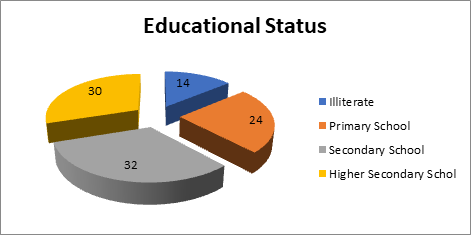
| Illiterate | 7 | 14 | |
| Primary school | 12 | 24 | |
| Secondary school | 16 | 32 | |
| Higher secondary school | 15 | 30 | |
| 4 | Occupation | ||
| House wife | 41 | 82 | |
| Self/Govt. job | 9 | 18 | |
| Business | 0 | 0 | |
| 5 | Family monthly income | ||
| <5000 | 8 | 16 | |
| 5000-10000 | 29 | 58 | |
| 10000-15000 | 6 | 12 | |
| >15000 | 7 | 14 | |
| 6 | Number of under five children | ||
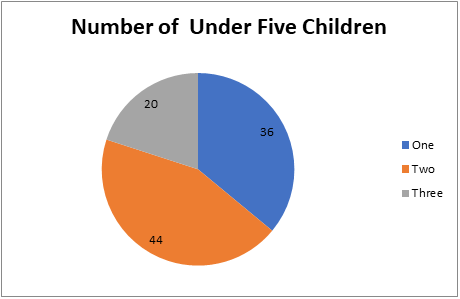
| One | 18 | 36 | |
| Two | 22 | 44 | |
| Three | 10 | 20 |
Table 1: Demographic variables of mothers of under five children frequency and percentage distribution of mother’s according to a
Figure 1 show the age of mothers of under five children 21-25 (16%), 26-30 (34%), 31-35 (26%) and 36 & above (24%).Majority of age of mothers of under five children is 26-30 years (34%).
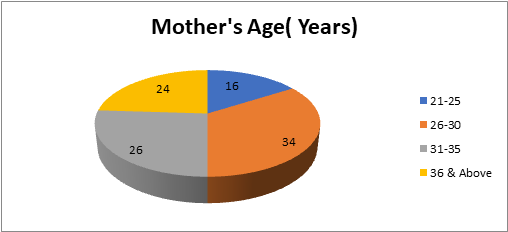
Figure 2 shows the Religion of mothers of under five children Hindu (60.00%), Christian (10%), Muslim (30%), and other’s (0%). Majority of religion of mothers of under five children is Hindu (60.00%).
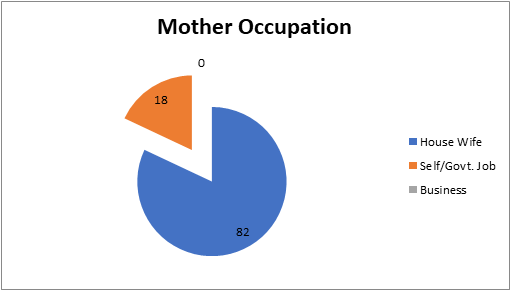
Figure 3 shows the educational status of mothers of under five children followed by illiterates (14%), primary school (24%), secondary school (32%), higher secondary school (30.00%). Majority of educational status of mother’s is secondary school (32.00%).
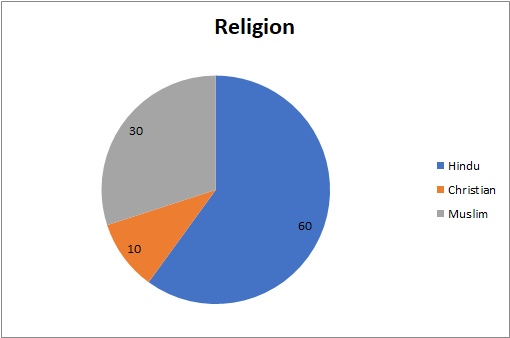
Figure 4 shows the occupation of mothers of fewer than five children followed by house wife (82.00%), self/ govt. job (18.00%), & business (0%).Majority of occupation of mother’s id House Wife (82.00%).
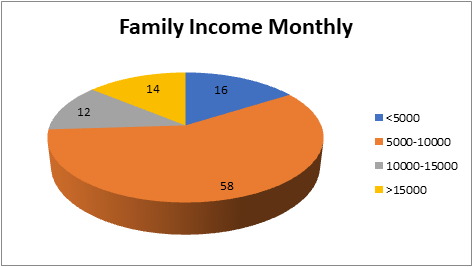
Figure 5 shows the family monthly income of mothers of under five children followed by <5000 (16%), 5000-10000 (58%), 10000-15000 (12%), >15000 (14%). Majority of family monthly income of mother’s is 5000-10000 (58%).
Section B
Total score and item wise analysis of knowledge with regard to first aid management in paediatric emergencies in pre-test and post-test among mothers of under five children (Table 2).
| Item | Pre-Test | Post-Test | |||
|---|---|---|---|---|---|
| F | % | F | % | ||
| First aid is the immediate action taken to - Treat the injured until medical help is available. | 15 | 30 | 33 | 66 | |
| The main aim of first aid is to - Preserve life | 22 | 44 | 45 | 90 | |
| Qualities of a good first aider is to be Calm and quick in action | 19 | 38 | 38 | 76 | |
| Why should some of the victims clothing be removed- To keep the victim from getting over heated | 22 | 44 | 32 | 64 | |
| When administering first aid, the first priority should be given to- Life threatening one | 24 | 48 | 36 | 72 |
Table 2: Percentage distribution of knowledge of mothers of under five children on general information about first aid.
The knowledge of mother’s regarding general information of first aid pre and post test score was depicted in. It was observed that the knowledge of mother’s was high in post-test than pre-test.
In the pre-test, respondents’ responded First aid is the immediate action taken to- Treat the injured until medical help is available (30%), but in the post- test majority of the mothers of under five children have responded in the same manner (66%).
In the pre-test, the main aim of first aid to preserve life (44%), but post-test majority of the mothers of under five children mentioned main aim of first aid as preserve life (90%).
The respondents in pre-test (38%) and in post-test most of the mother’s revealed about the Qualities of a good first aider is to be Calm and quick in action (76%). The mothers of under five children in pre-test (44%) revealed that why should some of the victims clothing be removed, to keep the victim from getting over heated but majority of the mother’s responded the same during post-test (64%).
Half of the mothers of under five children in pre-test revealed that administering first aid, the first priority should be given to-Life threatening one (48%), but more than three fourth of the mother’s responded the same during post- test (72%).The knowledge of mother’s regarding first aid on wound and injury pre and post test score was depicted in Table 3. It was observed that the knowledge of mother’s was high in post-test than pre-test.
| Item | Pre-Test | Post-Test | ||
|---|---|---|---|---|
| F | % | F | % | |
| The best way to clean a wound is with Soap and water | 31 | 62 | 42 | 84 |
| The principles of wound care is to Prevent infection | 29 | 58 | 32 | 64 |
| The purpose of wound dressing is to- Keep the wound neat and dry | 28 | 56 | 39 | 78 |
| Which of the following is the best method for controlling severe bleeding- Tourniquet | 20 | 40 | 47 | 94 |
| A type of open wound characterized by jagged skin edges and free bleeding is known as - An incision | 23 | 46 | 33 | 66 |
| The soft tissue injury resulting from the impact of a blunt object is called - A contusion | 26 | 52 | 42 | 84 |
| First aid in gum bleeding-Rinse the mouth with cold water | 27 | 54 | 35 | 70 |
| What should be done first for a child who spills a container of acid on his arm and legs- Flood the affected area with water | 29 | 58 | 45 | 90 |
| The first aid of puncture wound which cause by impaled object - Do not remove the object stabilized it with a bulky dressing | 20 | 40 | 33 | 66 |
| Sign and symptoms of infected wound is - Increasing pain and soreness in the wound | 29 | 58 | 36 | 72 |
| The chief duties of a first aider in caring for open wounds are To stop bleeding and to prevent contamination from entering the wound | 25 | 50 | 44 | 88 |
| Infection of minor wound can usually be prevented if the first aid treatment consists - Vigorously washing the wound | 27 | 54 | 37 | 74 |
| If corrosive acid has spilled into the eyes the first aider should do Hold eyes open and flood them with water for 15 minutes | 26 | 52 | 46 | 92 |
| The common injuries found in under five children are - Falls | 25 | 50 | 38 | 76 |
Table 3: Percentage distribution of knowledge of mothers of under five children on first aid on wound and injury.
In the pre-test, respondents responded the best way to clean a wound is with Soap and water (62%), but in the post- test majority of the mothers of under five children have responded in the same manner (84%). In the pre-test, the principles of wound care are to prevent infection (58%), but post-test majority of the mothers of under five children mentioned principle of wound care as prevent infection (64%). The respondents in pre-test (56%) and in post-test most of the mother’s revealed about the purpose of wound dressing is to keep the wound neat and dry (78%).The mothers of under five children in pre-test (40%) revealed that which of the following is the best method for controlling severe bleeding as Tourniquet but majority of the mother’s responded the same during post-test (94%). In pre-test revealed that A type of open wound characterized by jagged skin edges and free bleeding is known as an incision (46%), but more than three fourth of the mother’s responded the same during post- test (66%). The respondents in pre-test (52%) and in post-test most of the mother are revealed about the purpose. The soft tissue injury resulting from the impact of a blunt object is called -A contusion (84%).
In pre-test revealed that First aid in gum bleeding-Rinse the mouth with cold water (54%), but more than three fourth of the mother’s responded the same during post- test (70%). The mothers of under five children in pre-test (58%) revealed that what should be done first for a child who spills a container of acid on his arm and legs- Flood the affected area with water, but majority of the mother’s responded the same during post-test (90%). The mothers of under five children in pre-test (40%) revealed that the first aid of puncture wound which cause by impaled object do not remove the object stabilized it with a bulky dressing but majority of the mother’s responded the same during post-test (66%).
In pre-test revealed that Sign and symptoms of infected wound is –Increasing pain and soreness in the wound (58%), but more than three fourth of the mother’s responded the same during post- test (72%). In pre-test revealed that the chief duties of a first aider in caring for open wounds are -To stop bleeding and to prevent contamination from entering the wound(50%), but more than three fourth of the mother’s responded the same during post- test (88%).
In pre-test revealed that Infection of minor wound can usually be prevented if the first aid treatment consists vigorously washing the wound (54%), but more than three fourth of the mother’s responded the same during post- test (74%). In pre-test revealed that if corrosive acid has spilled into the eyes the first aider should do-Hold eyes open and flood them with water for 15 minutes (52%), but more than three fourth of the mother’s responded the same during post- test (92%).
In pre-test revealed that the common injuries found in under five children are falls (50%), but more than three fourth of the mother’s responded the same during post- test (76%).The knowledge of mother’s regarding first aid on epistaxis pre and post test score was depicted in Table 4. It was observed that the knowledge of mother’s was high in post-test than pre-test.
| Item | Pre Test | Post Test | ||
|---|---|---|---|---|
| F | % | F | % | |
| A victim of nose bleed should- Sit quickly and then pinch the nostrils to apply pressure | 18 | 36 | 31 | 62 |
| Do not try to stop a nose bleed in case of- Fracture skull | 21 | 42 | 39 | 78 |
| Epistaxis is caused by- Rhinitis | 24 | 48 | 43 | 86 |
Table 4: Percentage distribution of knowledge of mothers of under five children on first aid for epistaxis.
In pre-test revealed that A victim of nose bleed should –Sit quickly and then pinch the nostrils to apply pressure (36%), but more than three fourth of the mother’s responded the same during post- test (62%).
In pre-test revealed that do not try to stop a nose bleed in case of Fracture skull (42%), but more than three fourth of the mother’s responded the same during post- test (78%). In pre-test revealed that Epistaxis is caused by Rhinitis (48%), but more than three fourth of the mother’s responded the same during post- test (86%).
The knowledge of mother’s regarding first aid on foreign bodies in eyes, nose, ears pre and post test score was depicted in Table 5. It was observed that the knowledge of mother’s was high in post-test than pre-test.
| Item | Pre Test | Post-Test | ||
|---|---|---|---|---|
| F | % | F | % | |
| The first of foreign bodies in the eyes- Wash eye with clean water | 22 | 44 | 44 | 88 |
| The sign and symptom of foreign body in the eye is- Pain and irritation of eye | 18 | 36 | 36 | 72 |
| In case of foreign body (seed or insects) present in the ear, the immediate measure is- Flood the ear canal with oil or clean water | 21 | 42 | 46 | 92 |
| First aid of foreign bodies in the nose- Blow the nose with one nostril closed | 17 | 34 | 39 | 78 |
Table 5: Percentage distribution of knowledge of mothers of under five children on first aid on foreign bodies in eyes, nose, and
In pre-test revealed that the first of foreign bodies in the eyes-Wash eye with clean water (44%), but more than three fourth of the mother’s responded the same during post- test (88%). In pre-test revealed that the sign and symptom of foreign body in the eye is Pain and irritation of eye (36%), but more than three fourth of the mother’s responded the same during post- test (72%).
In pre-test revealed that in case of foreign body (seed or insects) present in the ear, the immediate measure is –Flood the ear canal with oil or clean water (42%), but more than three fourth of the mother’s responded the same during post- test (92%). In pre-test revealed that First aid of foreign bodies in the nose –Blow the nose with one nostril closed (34%), but more than three fourth of the mother’s responded the same during post- test (78%).The knowledge of mother’s regarding first aid in dogs bites and stings pre and post test score was depicted in Table 6. It was observed that the knowledge of mother’s was high in post-test than pre-test.
| Item | Pre Test | Post Test | ||
|---|---|---|---|---|
| F | % | F | % | |
| First aid in dog bite- Wash the area with soap and water | 24 | 48 | 39 | 78 |
| The method of used for removing an embedded tick- Pull the embedded tick out with tweezers | 21 | 42 | 41 | 82 |
| If a sting has been inflicted by a honeybee and the stinger is still in the victims skin, the first aider should- Remove the stingers with tweezers | 25 | 50 | 35 | 70 |
Table 6: Percentage distribution of knowledge of mothers of under five children on first aid in dog bites and stings.
In pre-test revealed that First aid in dog bite –Wash the area with soap and water (48%), but more than three fourth of the mother’s responded the same during post- test (78%). In pre-test revealed that the method of used for removing an embedded tick –Pull the embedded tick out with tweezers (42%), but more than three fourth of the mother’s responded the same during post- test (82%).
In pre-test revealed that if a sting has been inflicted by a honeybee and the stinger is still in the victim’s skin, the first aider should –Remove the stingers with tweezers (50%), but more than three fourth of the mother’s responded the same during post- test (70%).
Table 7 narrates the obtained mean value of knowledge scores with regard to first aid in post-test is higher (193.24) than in the pre-test (110.3). The differences in the pre-test and post-test mean scores were 82.94 indicating that the knowledge is improved considerably during post-test.
| Mean | S.D. | Paired ‘t’ Value | |
|---|---|---|---|
| Pre test | 110.3 | 14.16 | |
| Post test | 193.24 | 23.96 | 6.260** |
| Improvement | 82.94 | 9.8 |
Table 7: Pre-test and post- test mean and standard deviation and ‘t’ value of the knowledge of the mothers of under five children
The obtained ‘t’ value is 6.260, which is highly significant at 1% level. This clearly indicates that there is a significant difference in the knowledge of mothers of under five children before and after the implementation of structured teaching programme. Hence the research hypothesis H1 is accepted i.e. there will be significant difference between pre-test and post-test knowledge scores of mothers of under five children with regard to first aid management in paediatric emergencies.
The (Table 8), showed association of post-test level of knowledge with selected demographic variables The variables such as religion, family monthly income, number of under five children do not show any significant association. Hence the null hypothesis, H4 states that, there is no significant association between the post-test levels of knowledge with selected demographic variables was accepted.
| S.no. | Demographic Variables | Moderately adequate | Adequate >75% | X2 value | ||
|---|---|---|---|---|---|---|
| 51-75% | ||||||
| No | % | No | % | |||
| 1 | Age in years | X2 = 3.98 df = 3 (NS) | ||||
| 21-25 years | 5 | 12% | 3 | 6% | ||
| 26-30 years | 13 | 26% | 4 | 8% | ||
| 31-35 years | 7 | 14% | 6 | 12% | ||
| 36 & above | 6 | 12% | 6 | 12% | ||
| 2 | Religion | X2 = 0.47 Df =2 (NS) | ||||
| Hindu | 16 | 32% | 14 | 28% | ||
| Christian | 3 | 6% | 2 | 4% | ||
| Muslim | 7 | 14% | 8 | 16% | ||
| Other’s | 0 | 0 | 0 | 0 | ||
| 3 | Educational status | X2 = 1.51 Df = 3 (NS) | ||||
| Illiterate | 4 | 8% | 3 | 6% | ||
| Primary school | 8 | 16% | 4 | 8% | ||
| Secondary school | 12 | 24% | 4 | 8% | ||
| Higher secondary school | 10 | 20% | 5 | 10% | ||
| 4 | Occupation | X2 = 1.138 Df = 2 | ||||
| House wife | 22 | 44% | 19 | 38% | ||
| Self/Govt. job | 6 | 12% | 3 | 6% | ||
| Business | 0 | 0 | 0 | 0 | ||
| 5 | Family monthly income | X2 = 3.67 Df= 3 (NS) | ||||
| <5000 | 2 | 4% | 6 | 12% | ||
| 5000-10000 | 8 | 16% | 21 | 42% | ||
| 10000-15000 | 5 | 10% | 1 | 2% | ||
| >15000 | 6 | 12% | 1 | 2% | ||
| 6 | Number of under five children | X2 = 0.183 Df= 2 (NS) | ||||
| One | 8 | 16% | 10 | 20% | ||
| Two | 16 | 32% | 6 | 12% | ||
| Three | 8 | 8% | 2 | 4% |
Table 8: Association of post-test level of knowledge with selected demographic variables of age, religion, occupation, educationa
Discussion
The first objective is the assess the protest knowledge score among mothers of under five children regarding first aid management of paediatric emergencies. In order to meet the above objective, a pre-test was conducted to the mothers of under five children with help of structured interview schedule. Majority of mothers of under five children 26 mother’s had low knowledge (52%) and 3 mother’s had average knowledge (6%) and 21 mother’s had high knowledge (42%) during pre-test about first aid management, whereas in the post-test 35 mother’s had high knowledge (70%), 4 mother’s gained average knowledge (8%) and 11 mother’s had low knowledge (22%).
Mean Score of Knowledge in the Pre-Test
- The mean score of knowledge of mothers of under five children regarding general information about first aid was mean = 20.4 (SD=3.3).
- With regarding first aid on wound and injury was mean = 26.07 (SD=3.2).
- Regarding first aid for epistaxis (nose bleed) was mean = 21 (SD= 3).
- Regarding first aid on foreign bodies in eyes, nose, ear was mean = 19.5 (SD2.38).
- Regarding first aid on dog bites and stings was mean = 23.33 (SD=2.08).
- The second objective was to assess the post-test knowledge score among mothers of under five children regarding first aid management of paediatric emergencies. The mean score of knowledge in post-test
- The mean score of knowledge of mothers of under five children regarding general information about first aid was mean = 36.8 (SD=5.1).
- With regarding first aid on wound and injury was mean = 39.2 (SD=5.13).
- Regarding first aid for epistaxis (nose bleed) was mean = 37.66 (SD= 6.11).
- Regarding first aid on foreign bodies in eyes, nose, ear was mean = 41.25 (SD=4.57).
- Regarding first aid on dog bites and stings was mean = 38.33 (SD=3.05).
The overall gain is the mean score was 82.94 (pre-test mean = 110.3, SD=14.16) and (post-test mean =193.24, SD=23.96) which is highly significance showing the effectiveness of self-instructional module.
The paired ‘t’ test value was obtained 6.260 (p=0.0002) highly significance showing the difference between pre-test and post-test. There is showing that post-test is more than pre-test. Hence the research hypothesis H1 & H3 was accepted. The last objective was to find out an association between knowledge among mothers of under five children regarding first aid management of paediatric emergencies with their selected demographic variables. The x2 of age of post-test = 3.98, the x2 of religion = 0.47, the x2 of educational status = 1.51, the x2 of occupation =1.138, the x2 of family income monthly = 3.67, the x2 of number of under five children =0.183. Were found indicating no significance relationship between knowledge and mothers of under five children.
Conclusion
The present study assessed the knowledge of mothers of under five children regarding first aid management in paediatric emergencies and found all 26 (52 %) of mother’s had inadequate knowledge in pre-test and in the post test, a maximum number of mother’s 4 (8%) had moderately adequate knowledge and 35 (70%) of them had adequate knowledge. It shows that there is a significant improvement in knowledge of mother’s after self-instructional module. Thus, the investigator concludes that self-instructional module is effective in improving the knowledge of mother’s regarding first aid management.
The self-instructional module has enhanced the knowledge of mother’s. Therefore, the community health nurses must constantly focus on effort in improving the knowledge of mother’s regarding first aid management, through health education, mass media and self-instructional module. Hence, the self-instructional module is effective, appropriate and feasible; it can be used in different setting to improve the knowledge of mother’s.
Recommendation
- The study can be conducted on larger samples
- The study can be done in different setting.
- The same study can be done with an evaluated research approach having a control group.
- Comparative study can be done between rural and urban mothers.
References
-
Ransone J, Dunn Bennett LR (1999) Assessment of First Aid Knowledge and Decision Making of High School Atheletics Coaches. J Athl Train 34(3): 267-271.
-
Aslan D, Altantas H, Yldz AN, Elcin M, Odabas O, et al. (2006) Training of First Aid Trainers. Int J Emerg 8(2): 101-109.
-
Carter YH, Bannon MJ, Jones PW (1994) The Role of the Teacher in Child Accident Prevention. J Public Health Med 16(1): 23-28.
-
Singh AJ, Kaur A (1995) Knowledge and Practice of Urban and Rural High School Children Regarding Minor Injuries. Indian J Public Health 39(1): 23-25.
-
Brent HQ, Keith K (1993) First Aid for College and University [7th Edn.]. New Jersey Brady Morton Publication pp: 104-106.
-
Hatzakis KD, Kritsotakis EI, Angelaki HP, Tzanaudaki IK, Androulaki ZD (2005) First Aid Knowledge among Industry Workers in Greece. Ind Health 43(2): 327-332.
-
Severien I, Tan EC, Metz JC, Biert J, Berden HJ (2005) The Level of First Aid and Basic Life Support for the Next Generation of Physicians. Ned Tijdschr Geneeskd 149(31): 1756-1757.
-
Wani JI, Almushayt NO, Abbag WF, Buhran LA, Nadeem M (2022) Pediatric First Aid, Trauma Knowledge, and Attitude among Parents and General Population in Aseer Region, Southern Saudi Arabia. SAGE Open Med 14(10): 20503121221126762.
-
Makasare A, Jogdeo B (2021) A Study to Assess the Knowledge Regarding First Aid Management of Selected Pediatric Emergencies Among Caretakers in Selected Urban Areas of Pune City. Indian Journal of Applied Research 11(2): 1-4.
-
Arti KM, Kumari R, Koonwar S, Charan A (2020) Effectiveness of an Instructional Module Regarding First-aid of Pediatric Emergencies on Knowledge among Mothers of 1-6 years Children. International Journal of Contemporary Pediatrics 8(1): 13-19.
-
Chopra R (2021) A Review of Epistaxis. Journal of Health 120(1): 31-33.
- The Need for Partner Education and Mental Health Support During Pregnancy and the Postpartum Period
- Application of Combined PGT-A and PGT-M for Reproductive Management in a Couple Carrying GCDH Mutations with Prior Affected Offspring: A Rare Case Report
- The Effect of Using a New Technique Karman Injector (Elif Technique) on the Healing Process of Wound Infection-Case Series
- GSM: Counseling Points to Discuss with Women Fearful of Vaginal Estrogen
- Antenatal Diagnosis of Meckel Syndrome: A Case Report
- Discrimination and Workplace Harassment (Mobbing) against Women in the Post-Pandemic Era