
Critical Analysis of World Status of Research on the Development of High Yielding Strains of Jatropha Curcas L
It is almost 45 years since the mission Jatropha started for the development of high-yielding strain for commercial exploitation as a source of biofuel plant. A massive amount of literature has been accumulated on almost all aspects of Jatropha. It is now very important to evaluate the results related to the selection/development of novel strains. No preferable strains have been developed either through intra-and inter-specific hybridization or induced mutagenesis. Literature survey indicates that the quantum of work towards the development of new variety under the Jatropha mission is very negligible in comparison to other works. Maximum activities are not in synchronization with the exact mission of the project. It is now very important to choose the correct path to escalate Jatropha to industrial status within a reasonable time. Breeders may intelligently think about the selection of the best available strain, periodical pruning, and induced mutagenesis for commercial exploitation before doing further experiments with Jatropha. It is now high time to prepare need-based planning considering ongoing and on-coming research areas.
Introduction
Jatropha curcas L. (Family Euphorbiaceae) oil (‘curcas oil’) was identified as an efficient substitute fuel for diesel engines when there was an oil crisis in 1974. ‘Curcas oil’ was tested in diesel engines and very satisfactory results were obtained. J. curcas L. was identified as a very important plant and ‘curcas oil’ as a very sensitive research topic. There was a leap forward in Jatropha research immediately after 1974. Over the last about 45 years, there has been a remarkable rise in academic research on this sensitive social issue at universities, independent research institutes, and government and industrial research organizations. A lot of mammoth design was planned, researched, and written. The main mission was to increase the total oil production of the plant. An increase in productivity of any crop broadly depends upon a few parameters like – selection of high yielding strain from existing genetic diversity or development of high yielding variety either through conventional breeding methods or induced mutagenesis or molecular breeding. I was also a scientific partner in this mission to develop promising variety through induced mutagenesis. A huge amount of popular articles, papers, review articles, book chapters, books have been published and there is the continuous addition of new articles. Now the majority of publications appear to be mechanical despite noteworthy technological progress. Recently Pandey RK, et al. [1] wrote one review chapter under the heading ‘World status of research on Jatropha curcas L. as a biofuel plant’ which covered almost the entire multidisciplinary research status on Jatropha. Few recent publications require worth mentioning i.e. Pandey RK, et al. [2], Bahadur B, et al. [3], Malpuri S, et al. [4] and Garcia- Martin JF, et al. [5]. Analysis of these and other publications motivated me to further evaluate the achievements and impact of past and ongoing research processes towards the actual mission of the Jatropha project i.e. development of high yielding strain. After over 45 years Jatropha project must be mature enough and it is high time to evaluate the achievements against aims and objectives.
The review emphasizes the specific crop improvement steps of the value achievements in the project mission plan including key elements. To conclude fulfilment of the Jatropha project mission at this stage, self‐assessment is very important to narrate individual and collective major contributions and how they accomplished or did not accomplish their performance expectations. It provides a scope to reflect the achievements of the project objectives in the last phase. There has been a leap forward to generate knowledge on multidisciplinary aspects.Despite an early lead and substantial gains, there seems to be a lack of appreciation. Fruits of this research have not yet reached the common man and have made no significant impact on the rural sector. The author has taken the opportunity to argue about the current and future scientific approaches in some detail as it is very relevant to the world’s current focal theme on biodiesel. Considering the length of the period of research there must be a flow of knowledge and feedback from the scientific community down to the ‘grass-roots level’. Despite such remarkable progress and advancement, doubts are often amplified whether the benefits of all these progress could benefit the poor farming community. The articulation of such sensitive project objectives is one of the most critical processes of project management. Success depends upon the application of correct technological applications to fulfill the project objectives and goals. Unyielding optimism and unrealistic expectations do not help to get the right product on time. All results from multiple experimental designs might be assessed individually or in a combined fashion, along with an indication of experiment-to-experiment variability. The end product of the Jatropha project objective is to achieve high yielding strain. The paper will conclude with a discussion both on the theoretical and practical implications of the proposed methodology and by presenting some relevant future research needs. All kinds of crop improvement-related elements and their evaluation methods have been discussed for evaluating the achievements and impacts of past research. The present review would evoke a creative response among all the scientists of Jatropha.
Pandey RK, et al. [1] very critically analyzed and reviewed entire multidisciplinary work reports worldwide on Jatropha and analyzed the spectrum of work and knowledge generated so far. Truly all aspects have been critically analyzed and highlighted literally and diagrammatically. After this publication, the author explored further publications on Jatropha, and work direction motivated the author to prepare a further review enriched with recent findings exclusively on the development of high yielding strain with increased productivity in J. curcas. The ground reality of improvement work for the development of desirable varieties (high yielding) for commercial exploitation has been highlighted and properly acknowledged the reality and limitations of achievements. A massive amount of available literature was consulted and judicially analyzed to prepare this document. The article highlights views on the scientific and technological path that may allow farmers to leapfrog to optimize Jatropha cultivation within a reasonable time.
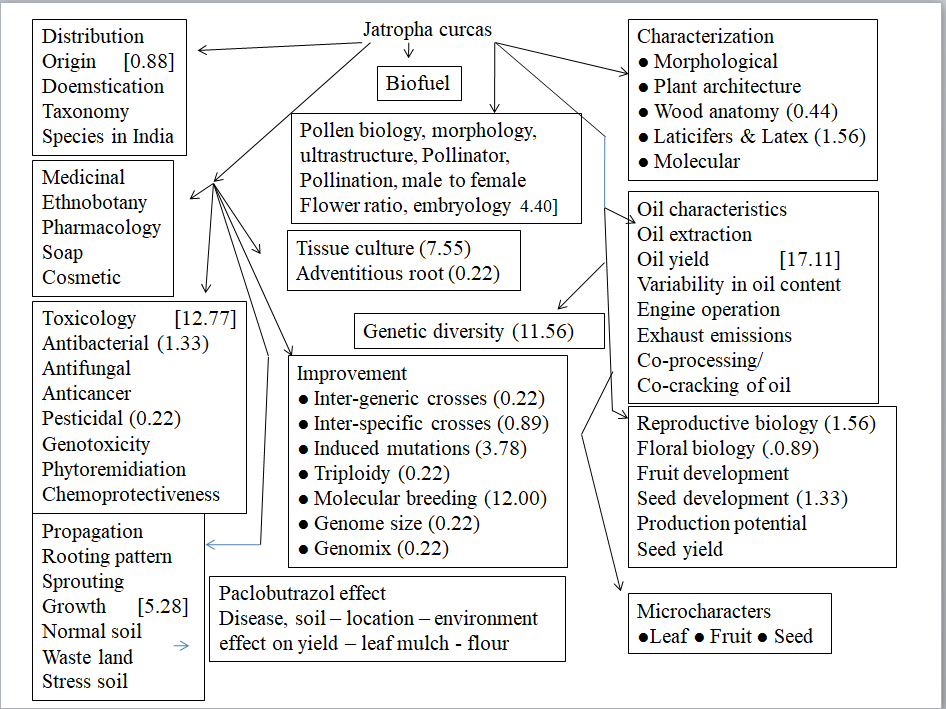
Worldwide researchers from diverse fields initiated work on Jatropha when it got the status of biofuel producing plant. Literature published during the entire period was surveyed and two samplings were made: In one sample work references starting from 1974 (including a few earlier references) till 2020 were selected. In a second sampling, 176 papers published during the period 2010 to 2020 were selected. Without going through reference-wise work details, the entire work done by concentrated efforts of multidisciplinary research scientists has been highlighted in Figure 1. There is hardly any aspect left that has not been touched by researchers, although the main mission was to develop high-yielding traits. Attempts have been made to highlight the percentage of work done on the individual topic and also group-wise.
Literature Survey
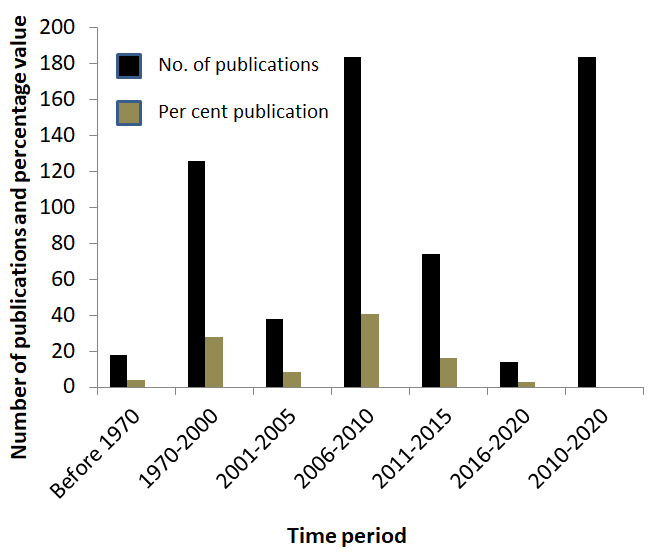
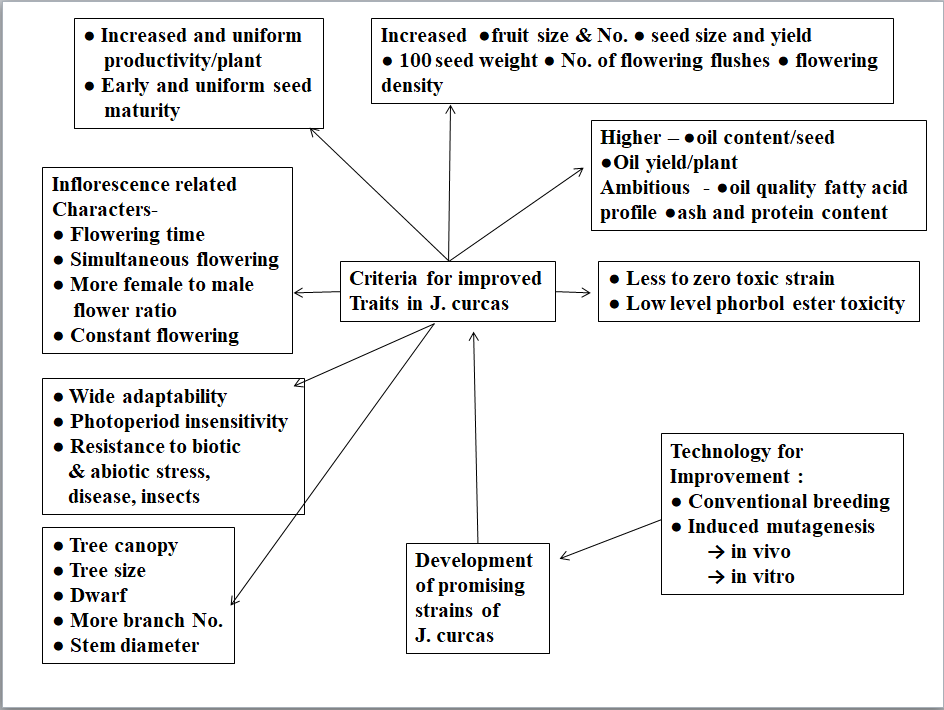
From 1974 to 2020 about 450 articles were selected. The number of articles and percentage of work done on different topics have been shown in (Table 1) and (Figure 2). Keeping in mind the ‘Mission Improvement’ author was especially interested to analyze the research findings on improvement to emphasize the essential need for identification and development of new technologies relevant both to the rural environment as well as to the sophisticated industrial sector. Collaborative research of interdisciplinary researchers having different skills and experience join hands to achieve the target results faster. But the author could not find much collaborative work on Jatropha towards the increase in production and development of high yielding strains. Worldwide researchers were motivated to initiate research on such sensitive topics (Figure 1) from different specializations to enrich their specific subject knowledge although the main target was to increase its productivity for industrial exploitation. (Figure 1) indicates that some aspects were not even relevant to crop improvement. Different components which directly or indirectly contribute towards the yield of a plant, especially in Jatropha have been shown (Figure 3). All important works have been highlighted and more attention has been paid to understanding the concluding/latest comments of each worker after their extensive studies on their subject specialization.
| Work type | Number of articles (per cent work) | |
|---|---|---|
| Before 1970-2020 | 2010-2020 | |
| Total article 450 | Total article 176 | |
| PGeneral (utility, curcas oil, biodiesel, etc.) | 77(16.96) | 44 (25.00) |
| Genetic diversity(molecular markers) | 52 (11.45) | 23 (13.07) |
| Origin, global position, domestication | 4 (0.88) | - |
| Medicinal,pharmacology, toxicology, cosmetic, antibacterial, pesticidal, ethnobotany, latex genotoxicity, phytoremidiation etc. | 58 (12.77 | 75 (42.61) |
| Cultivationwaste land, salt stress, rooting, sprouting, growth etc. | 24 (5.28) | 7 (3.98) |
| Oil characteristics, extraction, protein,lipase etc | 47 (10.35) | 24 (13.63) |
| Interspecific hybrid, relationship, natural hybridization, ornamental hybrid etc. | 7 (1.54) | - |
| Seed morphology, seedling, embryology, floral biology,fruit and seed, laticifers, reproductive biology, etc | 38 (8.37) | - |
| Pollen biology, ultrastructure, pollinator, pollination, taxonomy and biology, anatomy, morphoanatomy, sex types etc. | 20 (4.40) | 1 (0.57) |
| Tissue culture, adventitious shoot regeneration etc. | 35 (7.70) | - |
| Disease | 1 (0.22) | - |
| Ecological balance | 1 (0.22) | - |
| Genetic improvement- breeding, mutation, breeding system, triploidy from endosperm | 34 (7.49) | - |
| Molecular breeding, genome size, karyotype, genomics etc. | 56 (12.22) | 2 (1.13) |
Table1: Multidisciplinary research work reports on Jatropha curcas on different time scale.
Currently (2019-2022) several research reports have been published under different themes either in the form of a book or individual paper. One book entitled ‘Jatropha, Challenges for a New Energy Crop Volume 3: A Sustainable Multipurpose Crop’ Eds. Malpuri S, Nicolas Carels and Bir Bahadur4 has been published in 2019 contributed by 98 authors. Topic covered by different scientists in the book are Martin et al. mentioned the failure of many projects in marginal lands in sub-Saharan Africa due to overestimated yields and underestimated costs. They have reported possible cultivation of superior edible and non- edible hybrids which may lead to a new start in Jatropha cultivation to turn future projects into success stories;
Bonilla et al. mentioned elite genotypes based on their yield selected from varietal trials of promising varieties in Mexico; Jatropha was identified as potential raw material for biofuel production in Mexico but it was not economically viable for farmers due to low production of seed and oil per hectare. Different genetics and biotechnological strategies adopted for the development of improved cultivars have been highlighted Laviola A, et al. [6]; Laosatit et al. realized the importance of interspecific hybridization but no promising achievements were made as mentioned by early breeders. However, they are hopeful for Jatropha improvement in the future using the concept of interspecific hybridization; Fu et al. and Mastan SG, et al. [7]. mentioned the importance of transgenic technology and reviewed the status of genetic transformation work on Jatropha involving functional genes towards the enhancement of the oil content and predicted Jatropha to become a potential model species for studies on gene function and genetic improvement in woody plants; Govender et al. highlighted different parameters related to yield constraints and discussed molecular aspects of inflorescences and flowers. Selection of candidate genes for utilization in breeding programs has been recommended; Malik and Tripathi mentioned that Jatropha plantations were not successful due to unrealistic expectations and uncharacterized planting material. They have developed DNA-based molecular markers and are being used to develop desired varieties; Trebbi et al. also highlighted SSRs, SNPs, AFLPs, RTNs, NGS, etc. as powerful tools for next-generation plant breeding and recommended their application for selective breeding for the domestication of Jatropha; reported oil yield and quality in germplasm around the world and recommended genetic manipulation technology for its improvement. They have identified genes involved in de novo fatty acid synthesis and triacylglycerol assembly and studied their expression in Jatropha suggesting possibilities of improvement via the combinatorial metabolic engineering approach; Huerta-Ocampo and Rosa mentioned the existence of high potential wild non-toxic J. curcas genotype in Mexico for breeding. They have identified proteins in the different seed tissues using proteomics tools. They aim to identify key enzymes and to utilize for selective breeding; reviewed conceptual strategies of natural compounds for new drug applications in the genus Jatropha; Lopez-Guillen et al. described total agro-technological packages reported by various research institutions in Mexico; Kumar RS, et al. [8] reported phenological and physiological behavior of J. curcas under CO2-enriched atmosphere in semiarid condition; Silva et al. studied 4 years and reported the regulation of photosynthesis in three genotypes of J. curcas accessions from environmentally different regions of Brazil and the world. They suggested molecular mechanisms essential for species adaptability may help to maximize biofuel production and improvement of agronomic features; the improvement program of Jatropha has failed in Asia and Africa due to low genetic diversity.
Agricultural practices i.e. irrigation and application of fertilizers vary from region to region and play important role to obtain optimum yields reported how soil composition affects the physicochemical properties of seed and oil on the basis of available reports from different states and from experimental results at Tabasco, Mexico which has ideal ecoclimatic characteristics suitable for Jatropha; different aspects related to phorbol esters toxicity and cake detoxification have been discussed in relation to livestock feed and some other alternative uses (Mendonca et al.); Oliveira et al. evaluated thermodynamics aspects of glycerine (by-product from biodiesel) and highlighted some kinetic models and application of molecular modelling to this reaction; Srinivasan et al. discussed the pharmacological and biological actions of crude oil extracts reported earlier and mentioned many more untouched species where chemical constituents have not yet been explored; Characterization and use of by-products of oil extraction as energy sources and other types of fuels have been discussed studied various aspects (harvest, yield, chemical composition, nanotechnological potential, medicinal properties and biotechnological applications) of Jatropha latex; methods used for the production of biodiesel and advantages and disadvantages of different types of catalysts used in current scientific work have been reported (Lima and Mota; Francis) reviewed economic feasibility and sustainability of Jatropha. Jatropha cultivation could not get impetus due to limitations in productivity and a lack of new investments in the biofuel sector. Paper mentioned the intrinsic value of the various Jatropha products relative to other comparable products now in the market. He recommended production of seed between 2000 and 4300 kg per ha per year from mature Jatropha plantations would be required to reach crop profitability. To meet this seed productivity, improvement by selection and breeding is required; Jingura et al. reported initial cultivation of Jatropha in Sub-Saharan Africa especially its ability to grow on marginal lands, drought- tolerant, high seed and oil yield, etc. They have mentioned that the initial claims about Jatropha have not been realized due to low seed yields, vulnerability to pests and diseases, low economic viability, lack of elite planting materials, poor agronomic practices, and inadequate crop management systems [all references c.f. Malpuri S, et al.[4]. Another book entitled ‘Recent developments in Jatropha Research’ (Ed. Juan Francisco Garcia-Martin JF, et al. [5] was contributed by 25 scientists. Topic discussed by different scientists in the book are - toxic and chemo protective ability of J. dioica roots (Hernandez-Ceruelos et al.) reviewed on different aspects related to potentiality, medicinal and pharmaceutical, physiochemical properties, improvement, oil production, involvement of researchers and private companies in exploiting Jatropha as biofuels using innovative technologies various aspects of development of new genotypes with high yielding capacity suggesting pruning and right agronomical practices for cultivation (Ploschuk and Wassner); review on different pretreatment methods of J. curcas oil highlighting the advantages and difficulties of commercial level of biodiesel production (Raja);study on different aspects related to engine operating parameters, exhaust emissions etc. (Rajendra); study report on co-processing/co-cracking of Jatropha oil and different valuable industrial use like in synthesis chemistry, as solvents, pesticides (Biswas); use in phytoremidiation of heavy metals suggesting generation of further knowledge at the molecular level to understand the mechanism of heavy metal tolerance (Zainuddin et. al.);
phytoremidiation characteristics after irrigation with acidic water contaminated by Cu, Fe and Zn (Martin-Rodriguez and Alvarez-Mateos); use of leaves as bio-sorbent to adsorb Pb and Cd ions in water solution (Zubir); use of J. curcas flour to increase protein, fat, fiber, moisture and carbohydrates in fortified wheat flour tortillas (Guemes-Vera and Simental); use of Jatropha leaf mulch to maintain soil moisture content for normal growth of wheat under water stress conditions Irshad M, et al. [9] Garcia-Martin JF, et al. [5]. Maftuchah ZA, et al. [10] tested six hybrid genotypes and found no significant difference in 100 seed weight, free fatty acid content, acid value, and biodiesel yield.However, few selections were found to be promising.
Almost every year 2-3 much the same review articles are published highlighting the importance of Jatropha and curcas oil [11, 12]. Prastiyanto ME, et al. [13] reported the antibacterial potential of Jatropha latex; Ploschuk and Wassner reported various aspects of the development of new genotypes with high yielding capacity and suggested pruning and right agronomical practices for cultivation. However, mentioned further research is needed for genetic improvement and agronomic practices c.f. Garcia-Martin JF, et al. [5]. Yepuri V, et al. [14] studied and identified various RJMs which could be utilized as a significant asset in Jatropha functional genomics including genome determination, mapping, and marker-assisted selection. Okoye DN, et al. [15] observed that light intensity has the most significant effect on stem girth and the number of leaves as compared to seedling’s height. They suggested further research should be conducted into the stem cutting aspect and on the process of extracting bio-diesel from J. curcas seeds. Irshad M, et al. [8] reported the use of Jatropha leaf mulch to maintain soil moisture content for the normal growth of wheat under water stress conditions. Che Hamzah NH, et al. [16] highlighted the potential of Jatropha Curcas as an environmentally benign biodiesel feedstock for boosting Malaysia’s socio-economic growth and meeting the country’s rapidly growing energy demands. Riayatsyah TMI, et al. [17] made a comprehensive review covering all aspects of Jatropha like agronomic performance, production, biodiesel feedstock, oil extraction etc. and suggested more detail studies on all these aspects for commercial and economically successful production. Recent reviews mentioned several practical issues as the key obstacles to sustainable Jatropha biodiesel production like –poor agronomic performance, cultivation in underutilized locations and fertile land, non production of oil for large-scale biodiesel manufacturing, inadequate market opportunity, insufficient government incentives and clear regulations and legislation etc. These restricted formulation of new projects and many projects have been cancelled [13, 18, 19]. They have suggested that future research should concentrate on either increasing the fuel qualities of Jatropha biodiesel and modifying diesel engines to improve performance and emission characteristics. Finally, before developing largescale biodiesel production, the economic, social, environmental, and technological potential of Jatropha for sustainable biodiesel production should be studied.
Results
All these interdisciplinary scientific progress significantly increased technical knowledge towards fundamental topics but were not scientifically proper and significant to the mission topic. Knowledge on origin, geographical distribution, domestication, taxonomy, botany, genetic diversity of germplasm, and characteristics of Jatropha oil has been sufficiently enriched. Different properties like medicinal, pharmacology, toxicology, cosmetic, antibacterial, pesticidal, ethnobotanical, phytoremediation, etc. have been studied. Cultivation of Jatropha in normal soil, wasteland, stress soil, rooting, seed germination, growth, etc. has been worked out. Concentrated studies sufficiently enriched knowledge on anatomy, seed morphology, floral biology, pollen biology and ultrastructure, pollinators, reproductive biology, fruit and seed, embryology, sex types, etc. Publications trends indicate that these are almost routine research parameters (Figure 1). These publications are important for social benefit but do not provide supportive data for the improvement mission. Search for genetic diversity of germplasm and their classical and molecular characterization appear to be ever ending work mission (Figure 1) Pandey RK, et al. [1, 2]. The total literature survey (accessible to author) indicates that improvement work conducted on Jatropha since 1974 is only 5.47%.
Having mentioned several achievements of all early efforts, it is also necessary to acknowledge several basic weaknesses. The author has taken the opportunity of discussing the new scientific activity of futurology in some detail as it is so relevant to our current focal theme. It is very meaningful to understand the nitty-gritty of production of high-yielding variety. It is very important to highlight some specific topic wise research results related to crop improvement-
Genetic Diversity
The main mission was the selection and multiplication of superior germplasm for quality planting material in achieving improvement in productivity of the species. The information on genetic diversity appears to be a little contradictory. Most reports on genetic diversity, classical and molecular, showed very low genetic variability in the germplasm around the world. Appreciable genetic diversity has also been reported by a few researchers. The genetic variability in India and Central America is considered to be sufficient for exploiting selective breeding. Limited variability has been recorded from Brazil and China. Few high-yielding accessions have been selected. The Indian Council of Agricultural Research has identified the Jatropha variety, SDAUJ-1 (Chatrapati) for commercial cultivation because of its high yield and oil content. CSMCRI, India selected some of the accessions (IC 565731, IC 565735, IC 56573, and IC 573199) with higher yield and oil content for further multiplication through cuttings/tissue culture for large scale production Chikara J, et al. [7]. But no reports are available on large-scale cultivation of selected high yielding strains for commercial use Pandey RK, et al. [1, 2].
Breeding for Broadening the Genetic Base
The main mission was to increase the yield by developing high-yielding variety through genetic manipulations using classical and advanced methods.Under this mission maximum work appears to be inappropriate and similar experiments were repeated a specific number of times without generating new knowledge. Few natural hybrid complexes have been reported like J. curcas-canascens from Mexico [20], J. integerrima-hastata from Cuba and West Indian islands [21] and J. curcas-gossypiifolia (J. tanjorensis) from India [22]. The present status of improvement work is very limited and both intra-and interspecific hybridization work initiated to create more variability in selected parents. For the development of superior hybrid material in J. curcas, researchers selected a wide range of parameters as shown in (Figure 3). All parameters directly or indirectly help the development of high-yielding strain. Selective hybridization in Jatropha is tiresome due to lack of adequate genetic variability and the result is with limited success [23, 24, 25]. Interspecific hybridization work using several species reported both failure and development of F1 hybrids. But no promising hybrids have been recommended for commercial exploitation. Non-toxic variety has been developed in Mexico and Zimbabwe whose seed cake can be used directly for animal consumption [6, 26, 27]. An attempt has been made to exploit Jatropha in the improvement of castor [28], but it does not encourage the improvement of Jatropha. Hybridization between J. curcas and J. integerrima resulted in a good seed set but there was no seed formation in reciprocal crosses and crosses with other Jatropha species [8, 29]. Seed formation took place when J. curcas was used as the female parent in reciprocal crosses [30]. Hybrid with novel characters (high fruit yield, low toxicity, continuous flowering, bushy growth with more number of branches, etc.) has developed [28, 29, 31, 32]. Kant PS, et al. [33] mentioned that Jatropha is a failure as biofuel at the global level and Achten WMJ, et al. [34] pointed out that a minimum of 15 years will require for breeding to reach Jatropha at the level of domestication.
Interspecific hybridization produced very limited success. This limitation is due to post-fertilization barriers and viable hybrids could be recovered through the adoption of embryo rescue techniques.A lot of work is yet to be done. All reports appear to be in one direction i.e. we are still at the data collection phase of the project. Such inter-specific hybridization work does not have scientific relevance to developing high-yielding Jatropha strain.
Molecular Breeding
Molecular approaches have not yet developed desirable transgenic J. curcas traits for commercial exploitation. There are no reports of transgenics in J. curcas harboring agronomically desirable traits. However, significant basic information has been generated on different important parameters like standardization of biolistics-mediated transformation; understanding the function of the key genes involved in fatty acid biosynthesis and oil content to develop better Jatropha biodiesel properties; marker-free transgenes; genes related to the biosynthesis of lipid and toxic compound; traits with less PE; genome sequence; cloning of curcin gene; gene silencing, etc.
Literature is now appreciatively rich about the advantages, disadvantages, and application of molecular breeding in crop improvement. Although recent advances in genetic transformation and the availability of characterized genes with many advantages have made it possible to transfer chimeric gene/genes of academic/agronomic importance to the genome of recipient species to produce transgenic progeny with desired characteristics, it is the dawn of an exciting era.The small genome size, chromosome number, ease of vegetative manipulation, and transformation are favourable features for the use of biotechnological tools for J. curcas improvement. But one has to be cautious regarding the stability of integration and expression of foreign genes/ genes when taking a transgenic approach in perennial plants like J. curcas.
Tissue Culture
A Series of papers and review papers have been published highlighting the importance of tissue culture and technological details. The contribution of tissue culture towards the improvement of Jatropha is debatable. No report is available for large-scale multiplication of high yielding strain for commercial exploitation. In normal cultivation, optimum seed/oil production is after five years. The optimum production stage of tissue-raised plants has not yet been worked out. Another application of tissue culture is the development of high-yielding strains. The development of high yielding strain through somaclonal variation has not yet been reported from the tissue culture sector. Tissue culture scientists concluded that high cost is the main constraint for commercial exploitation and further investigation is required to make the technology adequately strong for commercial exploitation Pandey RK, et al. [1, 2]. The capability of micropropagation for large-scale multiplication needs further research to make the technology sufficiently powerful to allow commercial application by improving techno-economic feasibility standardizing low-coat tissue culture techniques to reduce the unit cost of plant production without compromising the quality. Therefore, routine tissue culture work is not advisable in J. curcas.
Induced Mutations
The mutation is now a well-standardized technique for the development of a new variety through genetic variation. This technique has not been applied much in the improvement of Jatropha. Very little work was conducted and reported primarily basic information i.e. determination of radiosensitivity and LD50 dose (fast neutrons, gamma rays, and colchicine). Experiments from different institutions and the author’s work induced genetic variability towards dwarf plant stature, early flowering, early maturity, increased- branch number, number of the capsule, seed size, and weight, seed per capsule, seed per plant, oil content, etc. Pandey RK, et al. [1, 2]. No further reports are available on the performance of these variants. However, induced mutagenesis has a high potential to create genetic high yielding variability which may be beneficial for direct use in the industry or may be utilized for a breeding program. J. curcas is a suitable crop for induced mutagenesis as it can be propagated both by seeds and vegetative cuttings. Vegetative mode of propagation is an added advantage for J. curcas as it is well established that vegetatively propagated crops are very satisfactory for the application of mutation breeding methods to change one or a few characters of an otherwise outstanding cultivar without altering the remaining and often unique part of the genotype. Some in-depth both in vivo and in vitro mutagenesis work is suggested for the improvement of J. curcas.
Pruning
Pruning is a normal cultural operation to improve the health of the plant and to maintain its symmetrical shape. Pruning helps the growth of side branches. This concept has been applied in different plants including Jatropha to increase the branch number. Pruning principles vary with different plants and mainly depend upon the objective of pruning. A grower with experience can determine the exact pruning time and quantum of pruning operations. Pruning has considerably increased branch number and the seed yield in Jatropha [1, 2, 35, 36, 37, 38, 39, 40, 41]. As the main mission is to increase the yield, pruning will be a good option in this direction.
Conclusion
Such sensitive projects like Jatropha in terms of the economic budget directly or indirectly add to the economy of the nation. Research approaches indicate that the accumulated efforts are far from the actual mission. The exact goal of the Jatropha project towards increased productivity is not yet measurable and realistic. We must be sincere enough to sensitize ourselves about our research results, appropriate methodological perspectives, possibilities, and limitations. It is very important to restructure the scientific and technological priorities to ensure quantum jump into the future. It is most important to determine reconstructions of research designs and particular research processes. Development of promising strains through crossing is not practicable due to the non-availability of proper genotype and its long optimum maturity time. We must now realize this limitation and technically feasible measures should be taken with the best available genotype for commercial exploitation. We must realize the need for feasibility studies after such a long period.
The early mission was to support rural farmers for Jatropha farming, especially on marginal soils. Rural farmers were ambitious to grow Jatropha as a cash crop when it was confirmed as a biofuel crop. But they could not get proper guidelines regarding agro-technology and promising cultivars for commercial cultivation. The scientific community must provide the right genotype for large- scale cultivation. Farmers have not yet been enriched with adequate knowledge regarding the high-yielding genotypes suitable for commercial cultivation in the wasteland and other areas. As part of the mission, Jatropha will be successful when farmers will be provided superior genotypes for cultivation. Already identified potential genotype along with intellectual knowledge-base, should be given to farmers and companies for large-scale cultivation. The pruning technique can be adopted to increase the yield. Two pruning, one in the second year and another in 3rd year (Figure 4) as shown by a mark are recommended for Jatropha. In vivo and in vitro mutagenesis will be a good choice to create further variability in the best available genotype for further improvement. The time frame required for selection and utilization of existing potential genotype, introduction, cultivation, hybridization, induced mutagenesis, etc. have already been worked out and reviewed earlier1,2 and further recent accounts have been highlighted presently (Figure 5). The world is expecting effective results to get direct feedback at the grassroots level. Proper care should be taken before repeating the same experimental design for the development of high-yielding strain. New perspectives are needed to accommodate and foster adjustment of social institutions and practices to the exploitation of the potential provided by science-based technology. Time is of the essence in this race to excellence.
Keeping in mind the time frame of different technical approaches plan should be appropriate to minimize further delay in starting commercial cultivation and to monitor progress in a time-bound fashion, as expertise is already available in many parts of the world. We must leapfrog and make a quantum jump to fulfill the project mission.
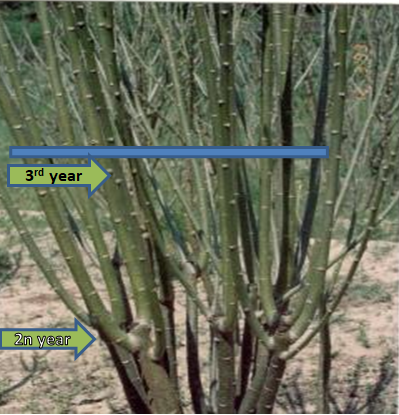
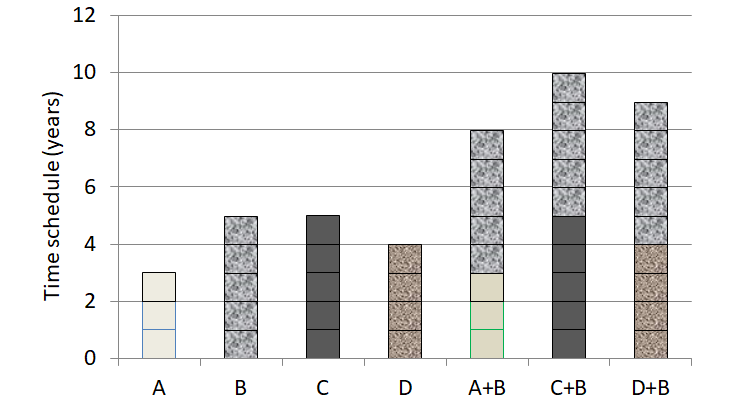
Figure 5: Time schedule for selection of desirable strain, cultivation, hybridization, induced mutation A. Screening of best available genotype - 3 years; B. Cultivation & Optimum yield- minimum 5 years; C. Hybridization to develop desirable variety - 5 years; D. Induce mutagenesis to develop desirable variety - minimum 4 years; A + B - 8 years; C + B - 10 years; D + B - 9 years.
Acknowledgements
Sincere thanks to all researchers for their voluminous contributions on Jatropa.I feel happy for my long association with CSIR-National Botanical Research Institute, Lucknow, and gratefully acknowledge
References
-
Datta SK, Pandey RK (2021) Present research status of Jatropha curcas as biofuel. In: Garcia-Martin JF (Ed.), Recent developments in Jatropha research. Nova science publishers, New York, USA, pp: 95-156.
-
Datta SK, Pandey RK (2013) Studied on Jatropha curcas L and its improvement through induced mutagenesis. In: Bahadur B, et al. (Eds.), Jatropha, Challenges for a New Energy Crop: Genetic Improvement and Biotechnology. Springer, pp: 321-334.
-
Bahadur B, Sujatha M, Carels N (2013) Jatropha, Challenges for a New Energy Crop: Genetic Improvement and Biotechnology. 2nd(Edn.), Springer, pp: 614.
-
Malpuri S, Carels N, Bahadur B (2019) Jatropha, Challenges for a New Energy Crop: A Sustainable Multipurpose Crop. 3rd(Edn.), Springer, pp: 525.
-
Garcia-Martin JF (2021) Recent developments in Jatropha research. Nova science publishers, New York.
-
Peixoto LA, Laviola BG, Bhering LL, Mendonca S, Costa TSA, et al. (2016) Oil content increase and toxicity reduction in Jatropha seeds through family selection. Industrial Crops and Products 80: 70-76.
-
Chikara J, Prakash AR, Mastan SG, Ghosh A (2013) Genetic improvement in Jatropha curcas through selection and breeding. In: Bahadur B, et al. (Eds), Jatropha, Challenges for a New Energy Crop: Genetic Improvement and Biotechnology. Springer, pp: 119-133.
-
Parthiban KT, Kumar RS, Thiyagarajan P, Subbulakshmi V, Vennila S, et al. (2009b) Hybrid progenies in Jatropha – a new development. Current Science 96(6): 815-823.
-
Irshad M, Ullah F, Fahad S, Mehmood S, Khan AU, et al. (2021) Evaluation of Jatropha curcas L leaves mulching on wheat growth and biochemical attributes under water stress. BMC Plant Biology 21: 303.
-
Maftuchah, Zainudin A, Winaya A, Rahmadesi Y (2019) Biodiesel generated from Jatropha (Jatrophacurcas Linn.) seeds selected based on various genotypes crossbred. Energy Reports 6: 345-350.
-
Abobatta W (2019) Jatropha curcas: an overview. J of Advances in Agriculture 10: 1650-1656.
-
Piloto-Rodriguez R, Tobio I, Ortiz-AlvarezM, Diaz Y, Konradi S, et al. (2020) Anapproach to the use of Jatropha curcas by-products as energy source in agroindustry. Energy Sources Part A: Recovery Utilization and Environmental Effects.
-
Prastiyanto ME, Tama PD, Ananda N, Wilson W, Mukaromah AH, et al. (2020) Antibacterial Potential of Jatropha sp. Latex against Multidrug-Resistant Bacteria. International Journal of Microbiology, pp: 8509650.
-
Yepuri V, Jalali S, Kancharla N, Reddy VB, Arockiasamy S, et al. (2020) Development of genome wide transposable elements based repeat junction markers in Jatropha (Jatropha curcas L.). Mol Biol Rep 47: 5091-5099.
-
Saka MG, Okoye DN (2021) Influence of different light intensity on early growth ofJatropha curcas L. seedlings. Journal of Horticulture and Forestry 13(3): 69-73.
-
Hamzah NHC, Khairuddin N, Siddique BM, Hassan MA (2020) Potential of Jatropha Curcas L as Biodiesel Feedstock in Malaysia: A Concise Review. Processes 8(7): 786.
-
Riayatsyah TMI, Sebayang AH, Silitonga AS, Padli Y, Fattah IMR, et al. (2022) Current Progress of Jatropha Curcas Commoditisation as Biodiesel Feedstock: A Comprehensive Review. Frontiers in Energy Research 9: 1-19.
-
Ewunie GA, Morken J, Lekang OI, Yigezu ZD (2021) Factors Affecting the Potential of Jatropha Curcas for Sustainable Biodiesel Production: A Critical Review. Renewable Sustainable Energ Rev 137: 110500.
-
Francis G, Edinger R, Becker K (2005) A Concept for Simultaneous Wasteland Reclamation, Fuel Production, and Socio-Economic Development in Degraded Areas in India: Need, Potential and Perspectives of Jatropha Plantations. Nat Resour Forum 29: 12-24.
-
Dehgan B, Webster GL (1979) Morphology and intrageneric relationships of the genus Jatropha (Euphorbiaceae). Univ Calif Publ Bot 74: 1-175.
-
Pax F (1910) Euphorbiaceae –Jatropheae. In: Engler A (Ed.), Das Pflanzenreich IV 147 (Heft 42). Verlag von Wilheim Englemann Leipzig, pp: 1-48.
-
Prabakaran AJ, Sujatha M (1999) Jatropha tanjorensis Ellis & Saroja, a naturalinterspecific hybrid occurring in Tamil Nadu, India. Genetic Resources and Crop Evolution 46: 213-218.
-
Dehgan B (1984) Phylogenetic significance on interspecific hybridization in Jatropha (Euphorbiaceae). Syst Bot 9: 467-478.
-
Sujatha M (2006) Genetic improvement of Jatropha curcas L. Possibilities and prospects. Indian J Agro for 8: 58-65.
-
Sujatha M, Prabakaran AJ (1997) Characterization and utilization of Indian Jatrophas. Indian J Plant Genet Resou 10(1): 123-128.
-
Makkar HPS, Aderibigbe AO, Becker K (1998) Comparative evaluation of non-toxic and toxic varieties of Jatropha curcas for chemical composition, digestibility, protein degradability and toxic factors. Food Chem 62(2): 207-215.
-
Prusty BAK, Chandra R, Azeez PA (2008) Biodiesel: freedom from dependence on fossil fuels? Nat Preced 4: 1-27.
-
Reddy KRK, Swamy NR, Bahadur B (1987) Cross incompatibility between Ricinus and Jatropha. Plant Cell Incompm News 19: 61-65.
-
Parthiban KT, Senthil KR, Thiyagarajan P (2009a) Jatropha hybrids: a promising development in biofuel research. Asia-Pac Agrofor Newsl 35: 7-8.
-
Dhillon RS, Hooda MS, Jattan M, Chawla V, Bhardwaj M, et al. (2009) Development and molecular characterization of interspecific hybrids of Jatropha curcas x J. integerrima. Indian J Biotechnol 8(4): 384-390.
-
Basha SD, Sujatha M (2009) Genetic analysis of Jatropha species and interspecific hybrids of Jatropha curcas using nuclear and organelle specific markers. Euphytica 168: 197-214.
-
Siam P, Diego B, Sujatha M (2009) Narrow genetic and apparent phonetic diversity in Jatropha curcas: initial success with generating low phorbol ester interspecific hybrids. Nat Preced, pp: 1-45.
-
Kaant P, Shuirong W, Chaliha S, Jasrotia R (2011) Going beyond Jatropha: can an expandedland and feedstock base help India meet its ambitious biodiesel target. Working paper IGREC-22, Institute of Green Economy, pp: 1-36.
-
Achten WMJ, Maes WH, Reubens B, Mathijs E, Singh VP, et al. (2010) Biomass production and allocation inJatropha curcas L. seedlings under different levels of drought stress. Biomass and Bioenergy 34(5): 667-676.
-
Cañadas-López Á, Rade-Loor D, Domı´nguez-Andrade JM, Vargas-Hernández JJ, Molina-Hidrovo C, et al. (2017) Variation in seed production of Jatropha curcas L. accessions under tropical dry forest conditions inEcuador. New Forests 48(6): 785-799.
-
Cañadas-López A,Rade-Loor D, Siegmund-Schultze M, Zambrano-Cedeño X, Vargas-Hernández J, et al. (2020) Pruning and fertilization effects on jatropha yields under smallholder’s Conditions in a Tropical Dry Forest from Ecuador. Revista Facultad Nacional de Agronomía Medellín 73(1): 9089-9097.
-
Maes WH, Trabucco A, Achten WMJ, Muys B (2009) Climatic growing conditions of Jatrophacurcas L. Biomass and Bioenergy 33(10): 1481-1485.
-
Rade-Loor DY, Carreño-Mendoza LA, Zambrano EQ, Cañadas-López AG (2016) Emprendimiento Gubernamental en Manabí “Piñón para Galápagos”. Evidencias de Falta de Capital Social. En: V Evento Internacional La Universidad en el Siglo 21: 1-10.
-
Samsam CI (2013) Pruning techniques for Jatropha curcas L. to increase seed yield production. MMSU Science and Technology Journal 3(1): 59-68.
-
Suriharn B, Sanitchon J, Songsri P, Kesmala T (2011) Effects of pruning levels and fertilizer rates on yield of Physic Nut (Jatropha curcas L.). Asian Journal of Plant Science 10(1): 52-59.
-
Tjeuw J, Slingerland M, Giller K (2015) Relationshipsamong Jatropha curcas seed yield and vegetative plant components under different management and cropping systems in indonesia. Biomass and Bioenergy 80: 128- 139.
- Huddled and Preternatural- Atypical Lobular Hyperplasia
- Cytologic Surveillance Versus Immediate Referral to Colposcopy for Women with a Cervical Cytology Diagnosis of ASC-US and LSIL in the Absence of HPV DNA Test
- Callow and Vernal-Hepatoblastoma
- Black Plum Fruit Extract as a Substitute for Haematoxylin in Haematoxylin and Eosin Staining Technique
- Non-Invasive Follicular Thyroid Neoplasm with Papillary-Like Nuclear Features: Pitfalls of Cytological and Histopathologic Diagnosis
- Melissopalynology in Some Regions of Kermanshah Province (West of Iran)