
Melissopalynology in Some Regions of Kermanshah Province (West of Iran)
In this study, morphology of 30 pollen grains, attractive for honeybees, from different regions of Kermanshah province were studied by Light Microscopy (LM) and some pollen grains were observed by Scanning Electron Microscopy (SEM). The pollen grains collected from flowers, using pollen traps in front of hives and also inside the hives. Pollen flora books from different countries and related websites were used to identify the obtained pollens. The results showed that the flowers with abundant pollens, oblate- Spherical shape and medium pollen sized were attractive for bees. Also, the more attractive families were Asteraceae, Euphorbiaceae and Hyacinthaceae for honeybees. In addition, autumn season and cold region were deduced for pollination and activity of the target honeybees. Therefore, pollen analysis is useful for identifying favorite honeybees’ plants and can increase honey production and high quality.
Introduction
The western honeybee or European honey bee (Apis mellifera L.) is the most common of 7- 12 species of honeybees worldwide. Apis mellifera naturally occurs in Europe, the Middle East and Africa. This species has been subdivided into at least 20 recognized subspecies (or races) [1]. Honeybees, like the other insects, require large amounts of nutrients such as sugars, proteins, Lipids, minerals, vitamins and water for growth and reproduction. Pollen grain is a unit of male cells in flowers that is an important source of mentioned nutrients for bees and is transmitted by various factors such as water, wind, animals and insects in particular, and enables pollination in various plants [2, 3]. The diversity of pollen grains in the honeybee hives are considered as great sources of botanical and geological information. Studying and determining of pollens in honey species (Melissopalynology) plays an important role in identifying geographical origin, plants and type and also quality of honey and feeding on bees [4]. Insects and especially honeybees play an important role in indirect pollination in plants. There are different theories about collection of pollens by honeybees. The honeybees go to the flowers to collect nectar and therefore the attached pollens to their bodies also transfer to the hive [5]. Plants attract honeybees by the color variation of flowers or by the production of volatile compounds. Attractiveness of plants to honeybees depends on plant species, open blossoms and their durability, pollen quality, color and size of pollen and sugar content of nectar [6, 7, 8]. In the flowers that are pollinated by the honeybees, the nectar is concentrated at the base of flower tube. It will therefore be easily accessible to species of honeybees. In this case, the pollen is attached to the small honeybee’s cracks, or the bees wrap the pollens in special baskets on their feet. These pollens are transported to the hive and consumed by different colonies [9]. Today, pollen identification helps a lot in research on bees, identifying honey and plants used by honeybees, preparing pollen calendars and also allergens. In addition, pollens can be used as a reliable measure of honey quality and has been studied in Iran and some regions over the world [4, 5, 10, 11, 12, 13, 14, 15, 16]. Since the type of flowers is effective on the taste, color and thus the price of honey, beekeepers are keen to identify the flowers used by the honeybees. With this knowledge, beekeepers will be able to move their hives to the desired flower gathering areas in order to produce more and better honey. Therefore, the purpose of this study was to identify important plant species used by honeybees in Kermanshah province (west of Iran) by using palynology according to pollen characteristics.
Materials and Methods
Material Examined
Pollen collection methods included as;
- Pollens taken from the honeybee hives directly,
- Pollens taken by using pollen traps,
- Field visited during pollination peak and detection of attractive species for honeybees.
The locations of the hives studied in this research are shown in (Figure
| Location | Date of Collection | Site of Collection |
|---|---|---|
| 1 | 30-Aug-17 | Cheshmeh-Sefid Village, Kermanshah to Islam-Abad Gharb (taken from trapper) |
| 2 | 03-Sep-17 | Cheshmeh-Sefid Village, Kermanshah to Islamabad (taken from frame) |
| 3 | 16-Sep-17 | Nova Mountain, Cheshme-Khers village (taken from nature) |
| 4 | 17-Oct-17 | Cheshmeh-Sefid Village, Kermanshah to Islamabad (taken from trapper) |
| 5 | 18-Oct-17 | Cheshmeh-Sefid Village, Kermanshah to Islamabad (taken from trapper) |
| 6 | 18-Oct-17 | Sarpol-Zahab, Aiineh Village, (taken from hive) |
| 7 | 18-Oct-17 | Sarpol-Zahab, Aiineh Village (taken from frame) |
| 8 | 03-May-18 | 15 km from Kermanshah to Islam-Abad Gharb (taken from trapper) |
| 9 | 05-May-18 | 15 km from Kermanshah to Islam-Abad Gharb (taken from trapper) |
| 10 | 06-May-18 | 15 km from Kermanshah to Islam-Abad Gharb (taken from trapper) |
Table 1: List of locations and collection dates used in this studied.
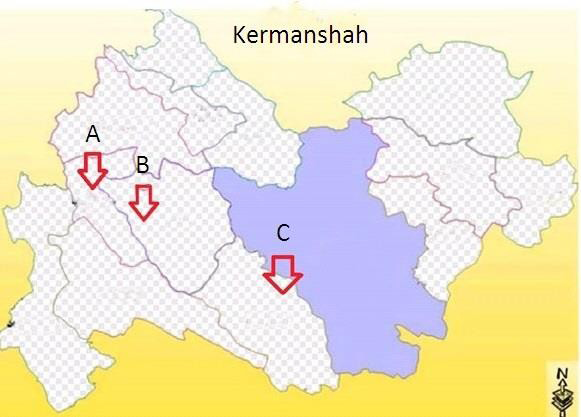
Light Microscopy Preparation
The pollen grains were acetolysed according to Erdtmans’ technique [17]. Polar axis and equatorial axis were measured for thirty pollen grains. The images were taken by Leitz Light Microscope (HM-LUX3) and Dino camera (AM-423).
Scanning Electron Microscopy Preparation
For scanning electron microscopy (SEM) investigations, non-acetolyzed pollen grains were put on aluminum stubs and transferred to the EMITECH sputter coater for coating by gold- paladium (K450X). By these micrographs, exine surface ornamentations, size of lumina and muri were identified. Also, the obtained micrographs were also taken by Philips Scanning Electron Microscopy (XL30).
Pollen Terminology, Pollen Flora and Flora Books
Plant specimens were transferred to Razi University Herbarium (RUHK), Kermanshah, Iran, for identification by botanical references [18, 19, 20, 21, 22, 23]. Pollen flora books from different countries were used to identify pollen grains [13, 24, 25, 26, 27, 28, 29, 30]. In addition, the following references were used to find specialized words for pollen grains [31, 32, 33, 34, 35, 36, 37, 38, 39].
Results
Light Microscopy Observation
The morphological characteristics of the pollen grains of the studied family in this research are as follows in the Latin alphabet:
Apiaceae: Pollen of this family was observed in two genera, including the following species and pollen characteristics are given in the (Table 2) and (Figure 2). Artedia squamata L., Malabaila secacul Boiss Asteraceae: Pollen of this family was observed in ten genera, including the following species and pollen characteristics are given in the Table 2 and Figure 2. Achillea sp., Carduus arabicus Jacq. Ex Murray, Centaurea sp., Cirsium arvense (L.) Scop, Echinops ritrodes Bunge., Erigeron acer L., Lactuca sp., Tragopogon sp., Onopordon sp., Xanthium sp. In addition to the genera mentioned, two other pollen types were identified in the family rank and shown in Table 2 and Figure 2.
Brassicaceae: Pollen of this family was observed in one genus, including the following species and pollen characteristics are given in the Table 2 and Figures 2 & 3. Sinapis arvensis L. In addition to the genus mentioned, one other pollen types were identified in the family rank and shown in Table 2 and (Figure 3).
Caryophyllaceae: Pollen of this family was observed in one genus, including the following species and pollen characteristics are given in the Table 2 and Figure 3. Silene araratica Schischk.
Euphorbiaceae: Pollen of this family was observed in three genera, including the following species and pollen characteristics are given in the Table 2 and Figure 3. Crozophora sp., Euphorbia sp., Euphorbia decipiens Boiss.
Fabaceae: Pollen of this family was observed in two genera, including the following species and pollen characteristics are given in the Table 2 and Figure 3. Alhagi camelorum Fisch., Astragalus sp.
Graniaceae: Pollen of this family was observed in one genus, were identified in the family rank and shown in Table 2 and Figure 3.
Hyacinthaceae: Pollen of this family was observed in two genera, including the following species and pollen characteristics are given in the Table 2 and Figure 3. Ornithogalum sp., Prospero autumnale (L.) Speta. In addition to the genera mentioned, one other pollen types were identified in the family rank and shown in Table 2 and Figure 3.
Lamiaceae: Pollen of this family was observed in two genera, including the following species and pollen characteristics are given in the Table 2 and Figure 3. Phlomis sp., Stachys inflata Benth.
Onagraceae: Pollen of this family was observed in one genus, including the following species and pollen characteristics are given in the Table 2 and Figure 3. Epilobium palustre L.
Poaceae: Pollen of this family was observed in one genus, including the following species and pollen characteristics are given in the Table 2 and Figure 3. Sorghum halepense (L.) Pers.
| Taxon | Polar Axis (µm) Mean±SD | Equatorial Axis (µm) Mean±SD | P.E | Shape of Pollen | Type of Pollen |
|---|---|---|---|---|---|
| Apiaceae (Artedia squamata) | 28.66±3.50 | 32.16±3.00 | 0.9 | Spheroidal | Medium |
| Apiaceae (Malabaila secacul) | 20.33±2.00 | 63.16±6.50 | 0.3 | Peroblate | Large |
| The species of Asteraceae (Achilla sp.) | 18.00±2.00 | 21.33±2.50 | 0.8 | Oblate – spheroidal | Medium |
| The species of Asteraceae (Carduus arabicus) | 50.66±5.50 | 55.83±57.50 | 0.9 | Spheroidal | Large 9 |
| The species of Asteraceae (Centaurea sp.) | 26.33±2.50 | 31.83±3.00 | 0.7 | Oblate – spheroidal | Medium 3 |
| The species of Asteraceae (Cirsium arvense) | 36.50±4.00 | 44.33±4.50 | 0.8 | Oblate – spheroidal | Medium |
| The species of Asteraceae (Echinops ritrodes) | 52.00±5.00 | 60.16±6.50 | 0.9 | Oblate – spheroidal | Large |
| The species of Asteraceae (Erigeron acer) | 25.83±2.50 | 25.50±2.50 | 1 | Spheroidal | Medium |
| The species of Asteraceae (Lactuca sp.) | 24.50±2.50 | 27.50±2.50 | 0.9 | Spheroidal | Medium 6 |
| The species of Asteraceae (Tragopogon sp.) | 38.83±4.50 | 49.00±5.00 | 0.8 | Oblate – spheroidal | Medium |
| The species of Asteraceae (Onopordon sp.) | 32.91±3.75 | 38.00±4.50 | 0.9 | Oblate – spheroidal | Medium 8 |
| The species of Asteraceae (Xanthium sp.) | 21.83±2.50 | 27.16±3.00 | 0.8 | Oblate – spheroidal | Medium |
| The species of Asteraceae | 56.50±7.00 | 125.50±13.00 | 0.7 | Oblate | Large |
| The species of Asteraceae | 79.83±8.50 | 93.33±9.50 | 0.9 | Oblate – spheroidal | Large 10 |
| Brassicaceae (Sinapis arvensis) | 27.00±3.00 | 30.83±3.00 | 0.9 | Oblate – spheroidal | Medium |
| Brassicaceae | 20.33±2.50 | 23.66±2.00 | 0.9 | Oblate – spheroidal | Medium |
| Caryophyllaceae (Silene araratica) | 49.50±5.50 | 58.66±6.50 | 0.8 | Oblate – spheroidal | Large |
| Euphorbiaceae (Crozophora) | 44.83±4.50 | 57.00±6.00 | 0.8 | Oblate – spheroidal | Large |
| Euphorbiaceae (Euphorbia sp.) | 38.33±4.00 | 46.33±5.00 | 0.8 | Oblate – spheroidal | Medium |
| Euphorbiaceae (Euphorbia decipiens) | 53.18±5.50 | 62.08±6.50 | 0.9 | Oblate – spheroidal | Large |
| Fabaceae (Alhagi camelorum) | 34.33±3.50 | 45.17±5.00 | 0.8 | Oblate – spheroidal | Medium |
| Fabaceae (Astragalus sp.) | 49.33±5.50 | 56.66±6.00 | 0.9 | Oblate – spheroidal | Large |
| Graniaceae | 28.50±3.50 | 37.00±4.00 | 0.8 | Oblate – spheroidal | Medium |
| The species of Hyacinthaceae (Ornithogalum) | 27.50-2.50 | 40.00±4.50 | 0.7 | Oblate | Medium |
| The species of Hyacinthaceae (Prospero autumnale) | 35.00±3.50 | 45.16±5.00 | 0.8 | Oblate – spheroidal | Medium |
| The species of Hyacinthaceae | 33.16±3.50 | 45.16±4.50 | 0.7 | Oblate | Medium |
| Lamiaceae (Phlomis sp.) | 61.66±7.50 | 98.50±10.50 | 0.6 | Oblate | Large |
| Lamiaceae (Stachys inflata) | 37.00±4.50 | 52.00±5.50 | 0.7 | Oblate | Large |
| Onagraceae (Epilobium palustre) | 26.00±2.50 | 28.50±3.00 | 0.9 | Spheroidal | Medium |
| Poaceae (Sorghum halepense) | 69.83±7.50 | 97.33±10.50 | 0.7 | Oblate | Large |
Table 2: Morphological characteristics of pollen grains by Light Microscope (LM).
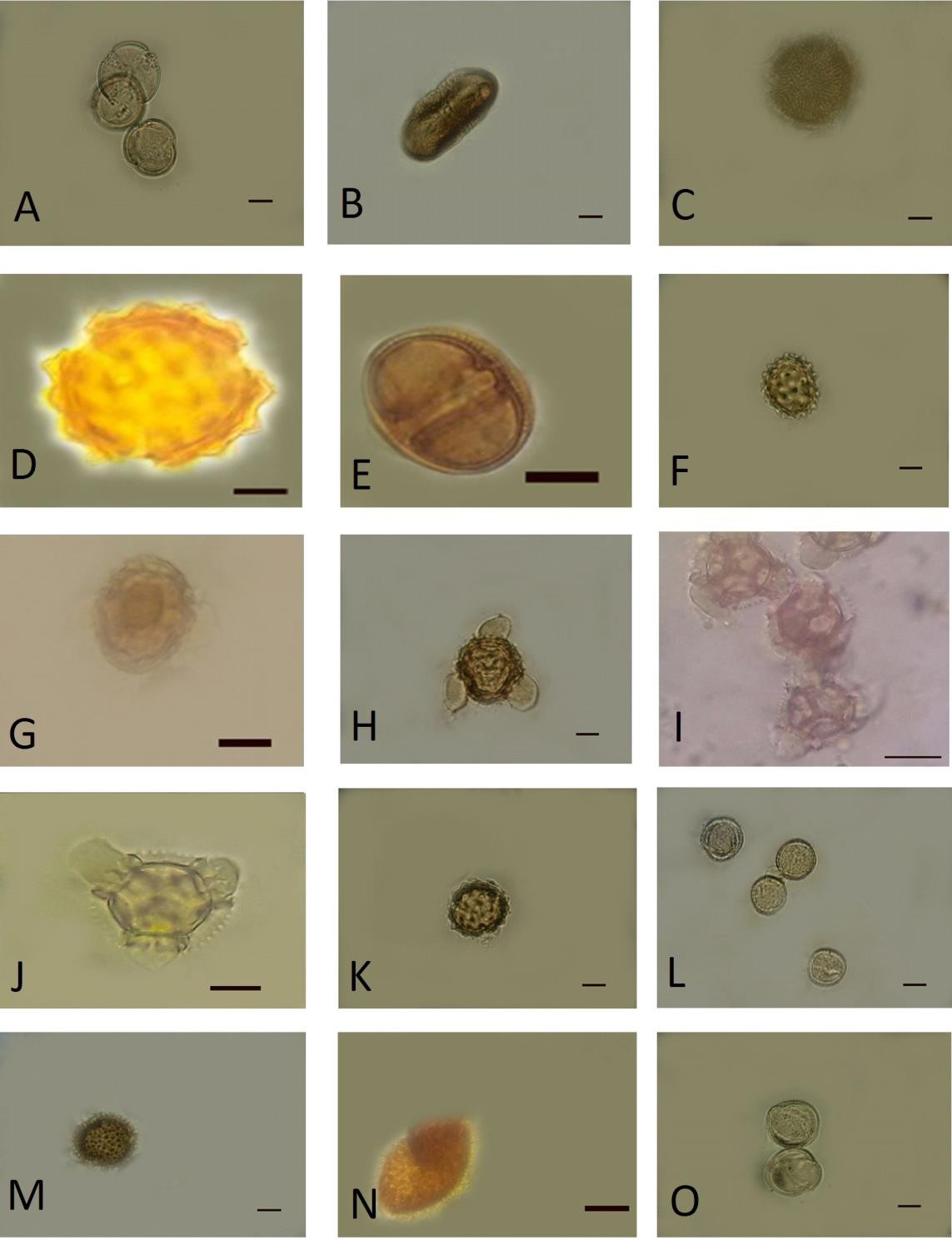
Figure 2: The light microscopy observation of pollen grains; A. Artedia squamata (Apiaceae), Malabaila secacul; (Asteraceae): C. Achillea sp., D. Carduus arabicus, E. Centaurea sp., F. Cirsium arvense, G. Echinops ritrodes, H. Erigeron acer, I. Lactuca sp., J. Tragopogon sp., K. Onopordon sp., L. Xanthium sp., M and N. Species from Brassicaceae family, from Asteraceae family; (Brassicaceae): O. Sinapis arvensis. (scale bar: 10 μm).
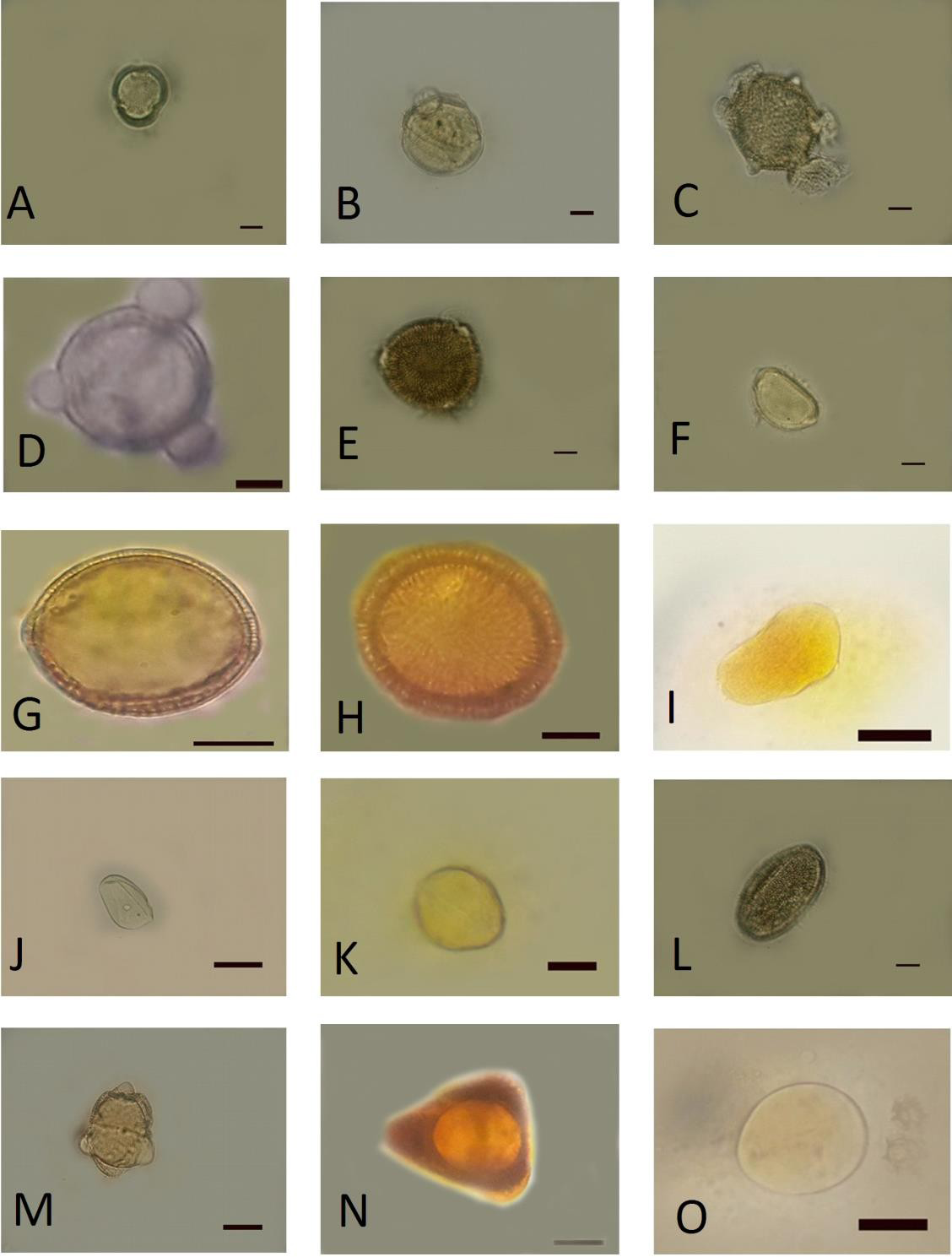
Figure 3: The light microscopy observation of pollen grain; Brassicaceae: A. Species from this family. Caryophyllaceae: B. Silene araratica; Euphorbiaceae: C. Crozophora sp., D. Euphorbia sp., E. Euphorbia decipiens; Fabaceae: F. Alhagi camelorum, G. Astragalus sp. Graniaceae: H. Species from this family; Hyacinthaceae: I. Species from this family, J. Ornithogalum sp., K. Prospero autumnale; Lamiaceae: L. Phlomis sp., M. Stachys inflate. Onagraceae: N. Epilobium palustre. Poaceae: O. Sorghum halepense. (Scale bar: 10 μm).
Pollen Size
The pollen grains were classified into medium and large groups. Among the pollen grains of the studied family, most have a medium pollen size. Therefore, abundant pollen flowers and medium-sized pollen grains are important in harvesting by bees.
Pollen Shape
Another important feature of the pollen grain is its shape, which is very diverse. Knowing the dimensions of the equatorial axis (E) and polar axis (P) and finding the ratio of the two to each other (P / E) can be commented on its shape. Thus, the studied samples are presented in the following general shape by most frequencies:
- Oblate-spheroidal
- Oblate and spheroidal
- Peroblate
Scanning Electron Microscopy Observation
In SEM micrographs observations, different exine ornamentation was observed in the selected taxa and is shown in (Table 3) and (Figure 4).
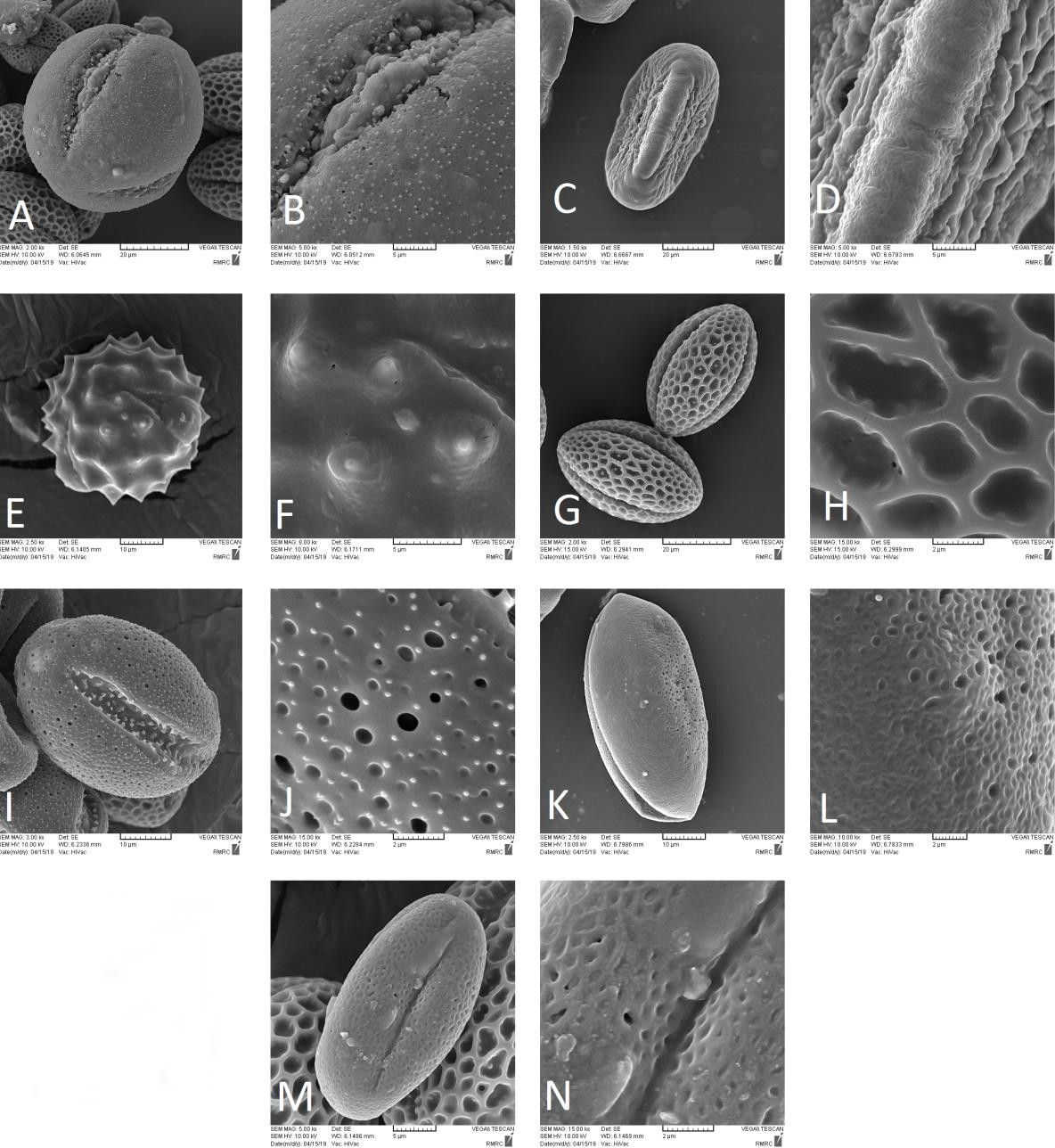
| Taxon | Size of lumina (µm) | Size of muri (µm) | Exine ornamentation |
|---|---|---|---|
| Apiaceae (Artedia squamata) | 0.1 – 0.3 | 0.3 – 0.7 | Microreticulate - Tuberculate |
| Apiaceae (Malabaila secacul) | - | - | Microreticulate - fossulate |
| Asteraceae (Achillea sp.) | - | - | Psilate - echinate |
| Brassicaceae (Sinapis arvensis) | 0.4 - 3 | 0.1 – 0.2 | Microreticulate – reticulate - echinate |
| Brassicaceae (Species from this family) | 0.0 – 6.7 | 0.3 – 0.5 | Macroreticulate |
| Lamiaceae (Phlomis sp.) | 0.3 - 1 | 0.5 - 2 | Microreticulate |
| Hyacinthaceae (Ornithogalum sp.) | 0.1 – 0.8 | 0.2 – 0.8 | Microreticulate |
Table 3: Morphological characteristics of pollen grains by Scanning Electron Microscopy (SEM).
Favorite Bees’ Family
In this study, Asteraceae, Euphorbiaceae and Hyacinthaceae were the most preferred bees and most of the pollen grains belonged to these families and the rest were closely distributed.
Distribution of Favorite Bees in the Tropical and Cold Regions
In this study, most of the families collected by the bees were from the cold region.
Discussion
In this study, the pollen characteristics of several favorite bee plants are discussed. Asteraceae was identified as a key family. This family is one of the largest families especially in hot and dry areas such as Iran. There are many variations in the size and type of pollen exine ornamentation, but echinated exine ornamentation is common in many of their pollen grains [29]. The genera of this family are found in Kermanshah province with high dispersal and high density [40]. Therefore, the warm to cold regions of the province provide pollen and nectar for bees, and pollen data in this study also confirm this.
Euphorbia pollens from the Euphorbiaceae were harvested from nature, from pollen traps and from the honey surface. The pollens were tricolpate with Oblate – spheroidal pollen shape and medium to large pollen size. The features mentioned in this study are consistent with aerial pollen research on Euphorbia from this province [41]. Flowering time of different species of Euphorbia in Kermanshah province when many flowers are dried this plant produces many pollen and nectar and is always a very useful plant for bees.
The Hyacinthaceae family can have its share of pollination by having nectar flowers, flowers of attractive colors and a wide distribution [42]. Our observations in this study also confirm this and showed as the third most attractive species for bees.
Other family in this study had a close affinity for bees. The Fabaceae family was identified as another important strain in this study. Fabaceae is one of the most important genera for bees and this is due to the large distribution of species of this family in Kermanshah province. Butterfly- like flowers and relatively larger than any other flora in the area make this family’s attraction to honeybees [39]. Most members of the Lamiaceae are aromatic, and this feature plays a major role in the pollination of insect members by Lamiaceae [42]. Pollen grain in Apiaceae and Brassicaceae is the nectar of interest to bees.
Today pollen identification helps a lot in research on bees, identifying honey, identifying plants used by bees, preparing pollen calendars in space, allergenic pollens and more. Extracting pollen grains from honey and identifying them provides valuable and valuable information on the type of plants used by bees. In addition to being aware of the biology of honeybees, beekeepers need to identify plant species as well as the type and amount of nectar and pollen and the length of flowering period. Using this information and taking into account the climatic conditions of different regions can be used to optimize the use of different food sources in bee nutrition and make this activity more economical. Presently, European honey bees are naturalized on all continents except Antarctica and are main component of agricultural systems. In fact, pollination by honeybees contributes significantly to global food production. Honeybees pollinate more that 30% of the food we eat. In addition, to providing pollination services, honey bees also produce other products that people use including honey, pollen, wax, royal jelly, and propolis [43, 44].
In the our study, valuable information was obtained from pollen grains collected from bees, as follows, and these findings are of interest to bees:
- Flowers with abundant pollen and medium-sized pollen grains harvested by bees.
- Oblate- Spherical shape is most abundant in the harvest by bees. In this case the medium and oblate- spherical pollens adheres to the bees’ tiny flakes or bees pack these kinds of pollen in special baskets on their feet better than other shapes and sizes. These pollens are transferred to the hive and consumed.
- The more attractive species of Asteraceae, Euphorbiaceae and Hyacinthaceae for bees is due to the high dispersal of species of the above mentioned species. The most common use of honeybees for the above-mentioned members of family is due to the presence of attractive and nutritious substances in their nectar and pollen of flowers. It is obvious that the use of these family members in different agricultural, rangeland and forestry plans, in addition to restoring vegetation, will be more effective in bee- keeping, pollination and propagation.
- In addition to spring as the pollination season, autumn season was classified as the second season for pollination according to the findings. Today, pollen calendars can be used as a reliable measure of honey quality.
- Cold region were deduced from warm regions for pollination and activity of the target bees.
Conclusion
Some bees prefer herbs because of their aromatic, flavor and odor as well as other pollen characteristics. Identifying pollens is important in the development of this industry. Therefore, studies in this field can provide a broad and scientific view of increasing production and enhancing the quality of honey. Factors such as climate, the type of vegetation of interest to bees could be the basis for further research.
Acknowledgment
We appreciate the cooperation of the Palynology laboratory and Herbarium of Razi University in Kermanshah (RUHK), Iran; Razi Metallurgical Research Center, Tehran, Iran for taking the SEM micrographs. We are very grateful to the beekeepers Mr. Ismail Chavoshi, Mr. Javanmir Mohammadi and Ms. Zahra Hayeri for providing herbarium samples.
References
-
Asadi M, Masoumi AA, Khatamsaz M, Mozaffarian V (1988-1993) Persian flora. Publications of Forests and Rangelands Research Institute. Tehran, Iran.
-
Atri M (2005) Glossary of biological sciences. Bu Ali Sina University of Hamadan Press, Iran.
-
Badri F (2018) Survey of aerial pollination and fungal spores in Hassanabad area (Kermanshah province). M.Sc. in Plant Sciences, Razi University, Kermanshah, Iran.
-
Bakhshi Khaniiki Gh (2007) Principles of pollination, Payam Noor Publications, Tehran, Iran.
-
Barbara SB (1991) Using pollen to identify honey. American Bee Journal. 131(4): 242-243.
-
Valdes B, Diez MJ, Fernandez (1987) Atlas polinico de andalucia occidental. Institutu de Desarrollo regional. Universidad desevilla Excma. Diputacion De Cadiz, pp: 370-373.
-
Coffey MF, Breen J (1997) Seasonal variation in pollen and nectar sources of honey bees in Ireland. Journal of Apicultural Research 36(2): 63-76.
-
Crompton CW, Wojtas WA (1993) Pollen grains of Canadian honey plants. Agriculture and Agri-Food Canada, pp: 1-244.
-
Dobson HEM, Groth I, Bergstrom G (1996) Pollen advertisement: chemical contrasts between whole flower and pollen odors. American Journal of Botany 83(7): 877-885.
-
Dziuba OF (2005) Atlas of pollen grains (non-acetolysis and acetolysis), most commonly found in the air basin of Eastern Europe. Nycomed, Moscow, pp: 68.
-
Elmi M, Hassan N, Tuhid E, Naser K (2009) Recognition and study of plants that are used by honey bees in different areas of East Azerbaijan province. Animal Science Research Institute, pp: 65.
-
Ebrahimzadeh H, Dianatnezhad H, Farhood D, Karami M (1992) Biological Dictionary, Alavi Publications of Tehran, Iran, pp: 663.
-
Erdtman G (1960) The acetolysis method: A revised description. Svensk Botanisk Tidskrift 54(4): 561-564.
-
Erdtman G (1952) Pollen morphology and plant taxonomy. Geological Association in Stockholm Negotiations 74(4): 526-527.
-
Engel MS (1999) The Taxonomy of Recent and Fossil Honey Bees (Hymenoptera: Apidae; Apis). Journal of Hymenoptera Research 8: 165-196.
-
Faghih A (2005) Determination of the attractiveness for different plants in Khansar and Faridan of Isfahan Province in Iran. Journal of Agricultural Science 6(3): 521-536.
-
Fan H, Andreas W, Matthew WT (2012) From where did the western Honeybee (Apis mellifera) originate. Ecology and Evolution 2(8): 1949-1957.
-
Ghahraman A (1993) Plant systematics: Cormophytes of Iran. Tehran University Press, pp: 973.
-
Ghahraman A (1987-2014) Iranian color flora. Forests and Rangelands Research Institute Publications, Tehran, Iran.
-
Ghanati F (2006) Pollen grain biology, Armos Publications of Qom, pp: 144.
-
Halbritter H, Buchner R (2011) Brillantaisia leonensis. In: PalDat - A palynological database.
-
International Plant Names Index (2004) Kew: Royal Bot. Gardens; Harvard Univ. Herbaria; Australian Nat. Herbarium.
-
Kazemi N, Masoumi SM (2017) Relationship of Botany and Beekeeping in Iran. The first National Conference of Botany and its relation with other science. Tehran, Iran pp: 116-117.
-
Kupriyanova LA, Yakovlev MS (1971) Pollen morphology: Cucurbitaceae, Thymelaeaceae, Cornaceae; Academy of Sciences of the USSR. V. L. Komarov Botanical Institute of the RAS, Leningrad pp: 277.
-
Kupriyanova LA, Aleshina LA (1972) Pollen of Dicotyledonous Plants in the Flora of the European Part of the USSR, Nauka, Leningrad 1: 171.
-
Memariani F, Alhosseini JG (2001) The melissopalynology study of some honeys from Khorassan. Journal of Pajhouhesh and Sazandegi 13(4): 76-83.
-
Meyer NR, Bovina IY, Kosenko YV, Polevova SV, Severov EE, et al. (2004) Atlas of pollen grains in Asteraceae, Association of scientific publications of the KVM, Moscow, pp: 236.
-
Meymandinezhad MJ (1965) Principles of naming and plant classification. Tehran University Press, Tehran, Iran, pp: 437.
-
Manafi H (1994) Melissopalynological study on honey samples from northwest provinces of Iran. Journal of Pajhouhesh and Sazandegi, 22: 180-182.
-
Mozaffarian V (1992) Plant Classification, Amir-Kabir Publications Institute), Tehran, Iran pp: 610.
-
Mozaffarian V (1997) Culture of names of Iranian Plants. Contemporary Culture Publications. Tehran, Iran, pp: 596.
-
Nazarian H (1997) Recognition of plants that the honeybees use in Tehran province. Report of Research Institute of Animal Husbandry Research, pp: 44-45.
-
Punt W, Hoen PP, Blackmore S, Nilsson S, Thomas Le A, et al. (2007) Glossary of pollen and spore terminology. Review of Palaeobotany and Palynology 143(1-2): 1-81.
-
Razaghi-Kamroodi SH, Shariatpanahi M, Nazarian H (2004) Identification and introduction of plants used by honeybees and their attractiveness and study of Melissopalynology in the rangelands (Hezar-Jerib Behshahr) of Mazandaran province. Proceeding of 6th Iranian Honeybee congress, Animal Science Research Institute, Iran, pp: 215.
-
Sabaghi SH, Nazarian H, Tahmasebi GH, Akbarzadeh M (2004) Recognition of plants which are used by honeybees and determination of their attractiveness in north area of Damavand. Journal of Pajhouhesh and Sazandegi 65: 6-18.
-
Von Der Ohe W, Oddo LP, Piana ML, Morlot M, Martin P, et al. (2004) Harmonized methods of melissopalynology. Apidologie, 35(1): 18-25.
-
Rechinger KH (1963-2015) Flora Iranica. Wien Natur historisches Museum, Graz.
-
Karim A, Nazarian H, Jafari E (2008) Identification of Fars honey bee plant resources from three families in Fars province (Asteraceae, Papilionaceae and Lamiaceae). Journal of Pajhouhesh and Sazandegi 20(2): 101-111.
-
Rastgar SH, Barani H, Sepehri A, Akbarzadeh M (2008) Determination of rangeland plants attractiveness for honeybees and setting the apiculture calendar (case study): polour summer. Journal of Agricultural Science and Natural Resources 15(1): 91-101.
-
Sabaghi SH, Nazarian H, Tahmasebi GH, Akbarzadeh M (2004) Recognition of plants which are used by honeybees and determination of their attractiveness in north area of Damavand. Journal of Pajhouhesh and Sazandegi 65: 6-18.
-
Schmidt JO (1982) Pollen foraging preferences of honeybees. Southwest Entomology 7: 255-259.
-
Taqavizad R, Majd A, Nazarian H (2008) Palynological comparisons of plants during honey bee activity different mounts in Sirachal Region, Tehran Province. Journal of Biology 22(2): 204-217.
-
Tokarev PI (2002) Morphology and ultrastructure of pollen grains. The Partnership of Scientific Publications KMK, Moscow, pp: 51.
-
Topchi Khosroshahi Z, Lotfalizadeh H (2008) Identification of honey plants and their attractiveness to honeybee in Kandovan. Biharean Biologist 5(1): 36-41.
- Huddled and Preternatural- Atypical Lobular Hyperplasia
- Cytologic Surveillance Versus Immediate Referral to Colposcopy for Women with a Cervical Cytology Diagnosis of ASC-US and LSIL in the Absence of HPV DNA Test
- Callow and Vernal-Hepatoblastoma
- Black Plum Fruit Extract as a Substitute for Haematoxylin in Haematoxylin and Eosin Staining Technique
- Critical Analysis of World Status of Research on the Development of High Yielding Strains of Jatropha Curcas L
- Non-Invasive Follicular Thyroid Neoplasm with Papillary-Like Nuclear Features: Pitfalls of Cytological and Histopathologic Diagnosis