
Effects of Ethanolic Extracts of Fruits of Dennettia tripetala on Liver Function of Male Albino Rats
This study evaluated the effects of ethanolic extracts of fruits of Dennettia tripetala on liver function of male albino rats. Dennettia tripetala is an endemic plant of west tropical Africa that is known as pepper fruit. The fruit is known for its numerous medicinal properties such as antioxidant, anti-inflammatory and antidiarrhea. The plant materials were air dried and made into powder, 250g was used for the crude extraction using 70% ethanol. Ninety eight male albino rats were used in this study; forty eight were used for LD50 and fifty for the main experiment. The animals were randomly distributed into 5 groups of 10 animals each. The test animals were administered single dose of ethanolic extracts of fruits of D. tripetala (200 mg/kg and 400 mg/kg) daily for twenty-one days. The animals sacrificed at end of the 21 days. Blood sample was collected via cardiac puncture for biochemical analysis, while the liver was harvested for histological examination. A very high LD50 value of 4000 mg/kg body weight was recorded in this study. The results of biochemical parameters revealed that mean values of AST ALT and ALP were elevated significantly (p<0.05) in all the test groups, except ALP in group 4 which showed no significant alteration when compared to the control. Total protein, albumin and globulin showed no significant alteration in all the test groups; total and direct bilirubin decreased significantly in test groups 4 and 5, and increased in group 2, while indirect bilirubin showed no significant alteration in all the test groups. Photomicrograph of liver section of normal control rats (group 1) showed normal central vein, portal triad, sinusoids and lamella of hepatic cells as well as those in all the test groups.
Introduction
Dennettia tripetala, a member of the Annonaceae family, is a significant endemic plant of West Tropical Africa [1].
Nigeria, Ivory Coast, and Cameroon are all home to this specie. In English, it’s known as ‘pepper fruit,’ but it is also known as mmimi in Igbo, nkaika in Ibibio, imako in Urhobo, ako in Edo, opipi in Idoma and igberi in Yoruba [2, 3]. The fruits and leaves are often use as spices or seasonings in meats, sausages, stews, soups, and vegetables [4]. Certain fruits and leaves are used as flavouring agent as well as quality of wine and alcohol [5]. The tree’s bark is use to add flavor to variety of dishes and the wood is burned as a source of energy [6], the leaves and seeds are used in traditional medicine to cure fever, cough, asthma, catarrh, toothache, diarrhea, and rheumatism [7], as well as to boost appetite, cleanse throats, ease coated tongues, and halt nausea [4]. Spices and herbs are assumed to help tighten uterus, therefore the seeds are a significant part of women’s diets after childbirth [8, 9]. Antioxidant, antidiarrheal, antibacterial, antiparasitic, anticonvulsant, antitrypanosomal, antimalarial, anti- inflammatory, anti-snake venom, and antinociceptive effects have all been associated with the plant [6]. According to studies, D. tripetala has a variety of phytochemicals, the type and quantity of which varies depending on which portion of the plant is investigated [10].
The liver is one of the most essential organ in the body since it is in charge of controlling critical biochemical and functional activities such as maintaining homeostasis, supplying energy and nutrients, and detoxifying foreign substances such as medications and other toxicants [11, 12, 13]. Chemical agents such as alcohol, aluminum trichloride, carbon tetracloride, diethylnitrosamine, and acetaminophen cause the most common type of liver problem [14, 15]. According to Agada SA & Singh A, et al. [16, 17], liver illnesses such as cirrhosis are the fifth leading cause of death and the second leading cause of mortality among all digestive diseases, with approximately 2 million deaths per year worldwide. Thus, hepatic stimulating medications, according to Shanmugasundaram P, et al. [18], may cause liver impairment.
Materials and Methods
Plant Material Used
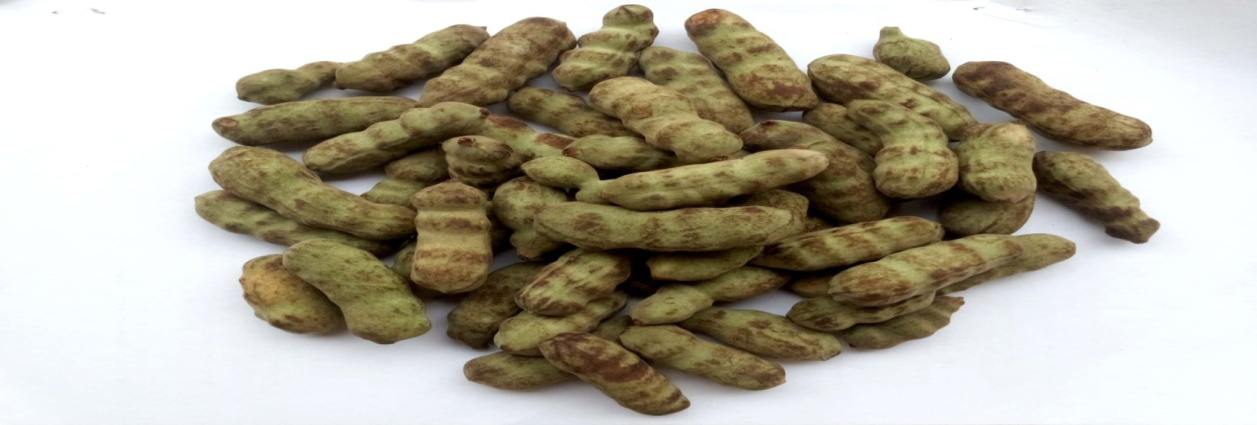
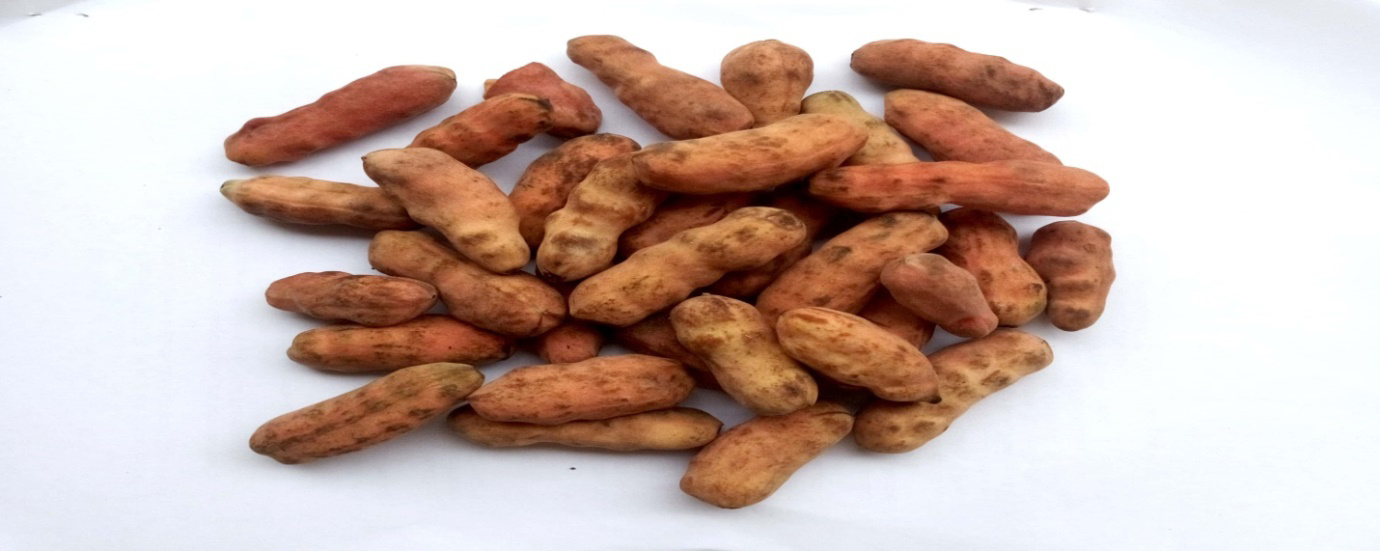
The Dennettia tripetala fresh fruits utilized in this investigation were bought in Nsukka, Enugu state, Nigeria. A manual blender was used to pulverize the choice healthy fruits after they had been air-dried.
Preparation of Plant Extract
The crude extraction was carried out according to the method of Ezeonwu VU, et al. [19], with little modification. The plant materials were air dried and made into powder. The powder (250g) was soaked in 1000 ml of 70% ethanol in a beaker, stirred rigorously and allowed to stand for 48 hours before filtering twice with cheesecloth and whattman filter paper (No 1). The filtrate was concentrated using rotary evaporator at 68°C. Appropriate weights of the filtrate were prepared in normal saline equivalent of the various concentrations used for the experiment. The concentrated extracts were corked in an airtight container, refrigerated at 4°C for further analysis.
Experimental Animals
The rats were purchased from Hema farms federal housing estate Bajaburie Yola, Adamawa State, Nigeria. The animals were housed in animal house of Biochemistry Department, Federal University Wukari, Nigeria under standard laboratory conditions and were allowed free access to standard diet and water ad libitum. The animals were acclimatized for two weeks before the experiment.
Experimental Design
Ninety-eight male albino rats (about 8 weeks of age) were used for this experiment; forty-eight were used for LD50 and 50 for the main experiment. The animals were acclimatized for two weeks before the experiment. All experiments were conducted in compliance with ethical guide for care and use of laboratory animals of Federal University Wukari.
Acute Toxicity Study (LD50)
Forty-eight (48) rats were used for the LD50 according to the method reported by Lorke D & Njoku OU, et al. [20, 21] with slight modification for oral routes in rats.
| Number of Rats before Administration of Ethanolic Extract of Riped Fruits of D. tripetala | Unriped D. tripetala (mg/kg. bw) | Number of Rats before Administration of Ethanolic Extract of Unriped Fruits of D. tripetala | |
|---|---|---|---|
| 250 | 4 | 250 | 4 |
| 500 | 4 | 500 | 4 |
| 1000 | 4 | 1000 | 4 |
| 2000 | 4 | 2000 | 4 |
| 3000 | 4 | 3000 | 4 |
| 4000 | 4 | 4000 | 4 |
Table 1: Acute toxicity study (LD50) of ethanolic extract of fruits of Dennettia tripetala.
Test Groups
The test groups consist of five groups of ten animals each. Each test group was administered ethanolic extracts of fruits of D. tripetala for three weeks (Table 2), except the normal control group. The extracts were administered through oral route.
| 1 | 2 | 3 | 4 | 5 | |
|---|---|---|---|---|---|
| Treatment | Normal Control | Ethanolic extract of riped fruits of D. tripetala | Ethanolic extract of riped fruits of D. tripetala | Ethanolic extract of uniped fruits of D. tripetala | Ethanolic extract of uniped fruits of D. tripetala |
| 200 mg/kg | 400 mg/kg | 200 mg/kg | 400 mg/kg |
Table 2: Test Groups.
Animal Sacrifice and Collection of Samples
At the end of the administration period, the rats were anaesthetized with chloroform vapour. Each rat’s blood was collected through cardiac puncture into different blood collection tubes suitable for each biochemical parameter. The blood collected in plain sample collection tubes were allowed to stand for ten minute and spun at 3000 rpm for 10 minutes using centrifuge, in order to sediment the fibrinogen and other materials. The serum was collected using Pasteur pipette and then subjected to various biochemical analyses. The liver was harvested, stored in 10% formalin for histological examinations of the organs.
Determination of Levels of Liver Biochemical Parameters in Rats Administered Ethanolic Extracts of Fruits of D. tripetala
Level of selected biochemical parameters such as aspartate aminotransferase (AST), alanine aminotransferase (ALT), alkaline phosphatase (ALP), total bilirubin (TB), direct bilirubin (DB), total protein (TP), albumin (ALB) were determined using auto-chemistry analyzer Landwind LW E60B, China.
Histological Examination of the Liver of Rats Administered Ethanolic Extracts of Fruits of D. tripetala
The liver was harvested and fixed in 10% formalin, then gradually dehydrated in 50-100 percent ethanol, cleaned in xylene, and embedded in paraffin wax. The 5-6 mm thick sections were then prepared with a rotary microtome (Leica RM 2125 RTS, Singapore) and stained with hematoxylin and eosin dye for microscopic study of histological changes in the liver.
Statistical Analysis
One-way analysis of variance (ANOVA), further with Duncan’s multiple comparison test was use. Results were expressed as mean ± standard deviation of means obtained (N=7). The statistical analysis was performed using Statistical Package for Social Sciences (SPSS) version 23 and significance was at p < 0.05.
- Results
- LD50
- Number of
- Rats After
- Administration of Unripe Fruit
- Extract of D. tripetala
- 250
- 4
- 4
- 250
- 4
- 4
- 500
- 4
- 4
- 500
- 4
- 4
- 1000
- 4
- 4
- 1000
- 4
- 4
- 2000
- 4
- 4
- 2000
- 4
- 4
- 3000
- 4
- 4
- 3000
- 4
- 4
- 4000
- 4
- 0
- 4000
- 4
- 1
- Concentration of Riped Fruit
- Extract of D. tripetala (mg/kg. bw)
- Number of
- Rats Before
- Administration of
- Riped Fruit extract of D. tripetala
- Number of
- Rats After
- Administration of
- Riped Fruit Extract of D. tripetala
- Concentration of Unriped Fruit
- Extract of D. tripetala (mg/kg. bw)
Table 3: LD50 result of ethanolic extract of fruits of D. tripetala.
There was no mortality recorded after administration of all doses of the extract, except dose 4000 mg/kg. By which showed 100% and 75% mortality for riped and unriped ethanolic fruits extract of D. tripetala respectively.
Levels of Selected Liver Marker Enzymes
| AST (IU/L) | ALT (IU/L) | ALP (IU/L) | |
|---|---|---|---|
| Group 1 (Normal control) | 10.37 ± 1.36a | 10.45 ± 1.37a | 41.84 ± 2.91a |
| Group 2 (Riped fruit of D. tripetala: 200 mg/kg. bw) | 69.30 ± 7.97b | 74.33 ± 11.81b,c | 48.73 ± 3.90b |
| Group 3 (Riped fruit of D. tripetala: 400mg/kg. bw) | 68.74 ± 4.63b | 81.60 ± 5.87c | 59.73 ± 5.40c |
| Group 4 (Unriped fruit of D. tripetala: 200 mg/kg. bw) | 147.93 ± 10.23d | 72.56 ± 9.98b | 46.01 ± 5.15a,b |
| Group 5 (Unriped fruit of D. tripetalaI 400 mg/kg. bw) | 94.25 ± 9.87c | 107.37 ± 5.47d | 50.63 ± 3.74b |
Table 4: Concentration of selected liver marker enzymes of male albino rats administered ethanolic extracts of fruits of D. tripe
Results are expressed as mean ± standard deviation of group results obtained (n=7). Means in the same row having different superscripts are statistically significant (p<0.05). Legend: ALT= Alanine transaminase, AST= Aspartate transaminase, ALP= Alkaline phosphatase.
The results of selected liver function indices showed that AST, ALT and ALP were elevated significantly (p<0.05) in all the test groups except ALP in group 4 which showed no significant alteration when compared to the control.
Serum Protein Parameters
| TP (gm/dL) | ALB (gm/dL) | GLB (gm/dL) | |
|---|---|---|---|
| Group 1 (Normal control) | 7.01 ± 0.46a,b | 3.58 ± 0.11a,b | 3.44 ± 0.46a |
| Group 2 (Riped fruit of D. tripetala: 200 mg/kg. bw) | 7.66 ± 0.88b | 4.14 ± 0.80b | 3.52 ± 0.49a |
| Group 3 (Riped fruit of D. tripetala: 400mg/kg. bw) | 6.74 ± 0.81a | 3.40 ± 0.37a | 3.40 ± 0.37a |
| Group 4 (Unriped fruit of D. tripetala: 200 mg/kg. bw) | 7.12 ± 0.69a,b | 3.62 ± 0.40a,b | 3.50 ± 0.43a |
| Group 5 (Unriped fruit of D. tripetala: 400 mg/kg. bw) | 7.30 ± 0.68a,b | 3.59 ± 0.46a,b | 3.71 ± 0.34a |
Table 5: Concentration of selected serum protein of male albino rats administered ethanolic extracts of fruits of D. tripetala.
Results are expressed as mean ± standard deviation of group results obtained (n=7). Means in the same row having different superscripts are statistically significant (p<0.05).
Levels of Serum Bilirubin
Legend: TP= Total protein, ALB= Albumin, GLB= Globulin. Total protein, albumin and globulin showed no significant alteration in all the test groups.
| TB (mg/dL) | DB (mg/dL) | INDB (mg/dL) | |
|---|---|---|---|
| Group 1 (Normal control) | 0.55 ± 0.12c | 0.36 ± 0.06b | 0.19 ± 0.10a |
| Group 2 (Riped fruit of D. tripetala: 200 mg/kg. bw) | 0.67 ± 0.13d | 0.49 ± 0.11c | 0.18 ± 0.05a |
| Group 3 (Riped fruit of D. tripetala: 400mg/kg. bw) | 0.49 ± 0.10b,c | 0.31 ± 0.07b | 0.18 ± 0.07a |
| Group 4 (Unriped fruit of D. tripetala: 200 mg/kg. bw) | 0.30 ± 0.06a | 0.16 ± 0.05a | 0.13 ± 0.03a |
| Group 5 (Unriped fruit of D. tripetala: 400 mg/kg. bw) | 0.39 ± 0.10a,b | 0.21 ± 0.05a | 0.19 ± 0.07a |
Table 6: Concentration of selected serum Bilirubin of male albino rats administered ethanolic extracts of fruits of D. tripetala
Table 6: Concentration of selected serum Bilirubin of male albino rats administered ethanolic extracts of fruits of D. tripetala Results are expressed as mean ± standard deviation of group results obtained (n=7). Means in the same row having different superscripts are statistically significant (p<0.05). Legend: TB= Total bilirubin, DB= Direct bilirubin, INDB=
Histological Examination of Liver Tissues
Indirect bilirubin. Total bilirubin and direct bilirubin decreased significantly in groups 2, 4 and 5, while indirect bilirubin showed no significant alteration in all the test groups when compared with normal control.
Discussion
The current investigation examined how male albino rats’ liver functions were affected by administration of ethanolic extract of fruits of D. tripetala. A very high LD50 value of 4000 mg/kg body weight for acute toxicity test obtained in this study indicates that the extract has a very high safety margin (Table 1). Team of researchers Akpakpan EI, et al. [22] reported an LD50 of 3496 mg/kg body weight of riped fruits of D. tripetala. The work of Ikpi D, et al. [23] who injected mice with an ethanolic extract of fruits of D. tripetala intraperitoneally showed a very low LD50 value of 251.19 mg/ kg body weight. Researchers Anosike CA, et al. [24] provided an estimate of above 5000 mg/kg LD50 value, implying that the mice did not perish after being given an ethanolic extract of D. tripetala seeds for 24 hours. Additionally, Anaga AO, et al. [25] found that an intraperitoneal administration of ethyl acetate extract of roots of D. tripetala to mice resulted in an LD50 of 1120 mg/kg. The LD50 result from this present study is closely related to report of Akpakpan EI, et al. [22] and is in contrast to findings of Ikpi D, et al. [23] which used mice and Anaga AO, et al. [25] which used rats.
The results of liver function parameters showed that administration of low and high dose (200 mg/kg and 400 mg/kg respectively) of both riped an unriped fruits extracts of D. tripetala significantly increased serum activities of AST, ALT and ALP in all test groups with the exception of test group 4 for ALP which showed mild alteration when compared to the control (group one) after 21 days of treatment (Table 4). The result of AST, ALP and ALT from this current study is in contrast with the report of Iseghohi SO, et al. [26] which reported decrease in serum ALT and ALP, but in tandem with the report of Iseghohi SO, et al. [27] which reported increased in activities of the liver marker enzymes.
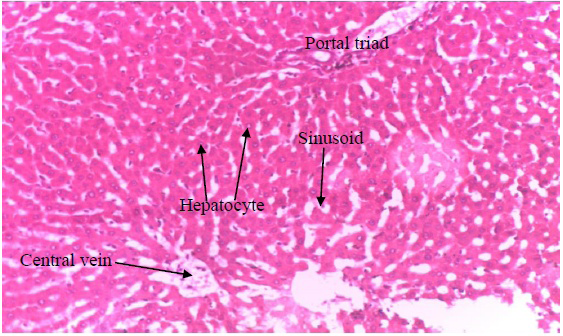
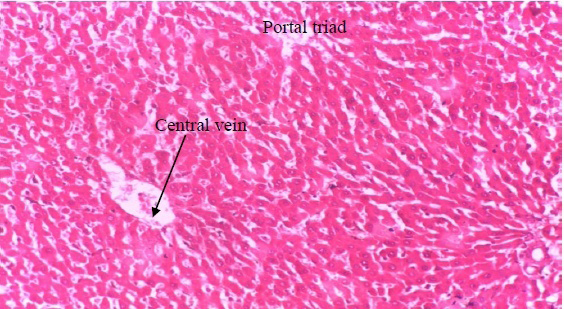
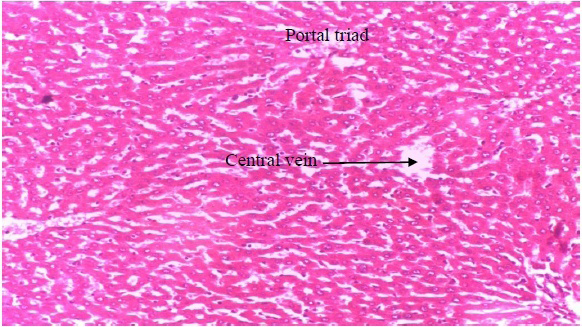
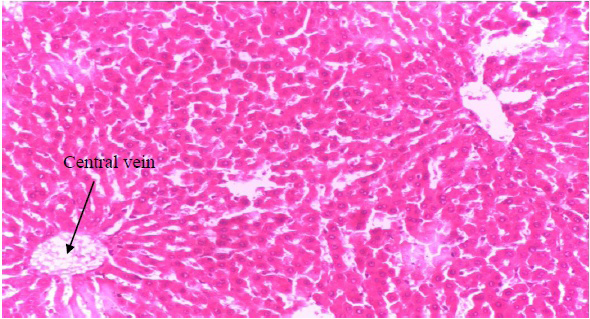
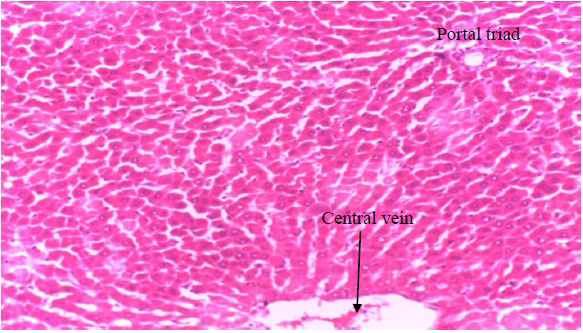
Increased serum enzyme activities indicate cellular leakage and a breakdown of the functional integrity of the liver cell membrane [28]. Elevated blood ALP level could be due to increased hepatic synthesis of the enzyme [29], or due to coronary artery disease according to Johnson RC & Schoppet M, et al. [30, 31], since they encourage vascular calcification via the pyrophosphate pathway. Additionally, a high blood ALP level worsens the prognosis for those with coronary artery disease and raises the chance of death [32, 33]. Photomicrograph of liver section of normal control rat (group 1) showed normal central vein, portal triad, sinusoids and lamella of hepatic cells as well as those of all other test groups. The photomicrograph of the liver suggests that the liver cells were not impaired by both riped and unriped fruit extracts of D. tripetala. The photomicrograph agrees with the results of biochemical indices such as ALP, TP, ALB, total bilirubin, total cholesterol, triglyceride, chloride and sodium. Consumers of extracts of fruits of D. tripetala may not be at risk of liver toxicity as the ethanolic fruit extract of D. tripetala exhibited some hepatoprotective activities.
The insignificant alterations in total protein, albumin and globulin in all animal test groups, suggest that consumption of fruit extracts of D. tripetala may not affect levels of their serum total protein.
The low levels of serum total bilirubin in test groups 4 and 5, suggests that bile is been expelled properly by the liver. Consumers of unriped fruit extracts of D. tripetala may not experience bile duct obstruction.
Conclusion
This study showed that administration of fruit extracts of D. tripetala exhibited hepatoprotective activity, mild alteration in serum total and direct bilirubin with no remarkable alteration in serum protein and liver histology, this is very important for normal liver functions.
Declarations
Ethics Approval and Consent to Participate: The ethics approval and consent to participate was granted by the ethical team of department of biochemistry federal university Wukari, Nigeria, according to laboratory animal ethics of federal university Wukari.
Consent for Publication: Not applicable
Availability of Data and Materials: All data generated or analysed during this study are included in this manuscript Conflict of Interest: The authors declare that they have no competing interest Funding: This research was funded by individual contributions of authors Authors Contributions: PS and CI designed the experiment and performed the analysis of data. PS, CI and OO review the manuscript. All authors participated in the laboratory work.
References
-
Omage SO, Orhue NE, Omage K (2019) Evaluation of the Phytochemical Content, invitro Antioxidant Capacity, Biochemical and Histological Effects of Dennettia tripetala Fruits in Healthy Rats. Food Sci Nutr 7(1): 65- 75.
-
Ejechi BO, Nwafor OE, Okoko FJ (1999) Growth Inhibition of Tomato-rot Fungi by Phenolic Acids and Essential Oil Extracts of Pepper fruit (Dennetia tripetala). Food Research International 32(6): 395-399.
-
Egharevba HO, Idah EA (2015) Major Compounds from the Essential Oil of the Fruit and Comparative Phytochemical Studies of the Fruits and Leaves of Dennettia tripetala Barker F. Found in North Central Nigeria. International Journal of Pharmacognosy and Phytochemical Research 7(6): 1262-1266.
-
Ejechi BO, Akpomedaye D (2005) Activity of Essential Oil and Phenolic Extract of Pepper Fruits, Dennettia tripetala G. Baker Against Some Food-born Microorganisms. African Journal of Biotechnology 4(3): 258-261.
-
Mishra S, Nanda S, Madaan N, Mudgal V (2010) Microbial Population Succession in Alcoholic Beverages Produced from some Tropical Truits. The Open Nutraceuticals Journal 3: 184-187.
-
Khadijah S (2015) Anthelmintic Efficacy of Crude Methanol Extract of Dennetia tripetala. Baker Fruits with its Various Chemical Fractions in Mice Experimentally Infected with Heligmosomoides bakeri. Ahmadu Bello University, Zaria, Nigeria, pp: 65-70.
-
Oyemitan IA, Iwalewa EO, Akanmu MA, Asa SO, Olugbade TA (2006) The Abusive Potential of Habitual Consumption of the Fruits of Dennettia tripetala G. Baker (Annonaceae) Among the People in Ondo Township (Nigeria). Nigerian Journal of Natural Products Medicine 10: 55-62.
-
Aiyeloja AA, Bello OA (2006) Ethnobotanical Potentials of Common Herbs in Nigeria, A Case Study of Enugu State. Educational Research Review 1(1): 16-22.
-
Aiyeloja AA, David IO, Elufioye TO, Ehoro CL, Adedeji GA (2022) Selenium Concentrations in Two Known Effective Anti-miscarriage Herbal Mixtures. Journal of Elementology 27(1): 99-112.
-
Adedayo BC, Oboh G, Akindahusi AA (2010) Changes in the Total Phenol Content and Antioxidant Properties of Pepper fruit (Dennettia tripetala) with Ripening. African Journal of Food Science 4(6): 403-409.
-
Eesha BR, Mohanbabu AV, Meena KK, Vijay M, Lalit, M, et al. (2011) Hepatoprotective Activity of Terminalia paniculata Against Paracetamol Induced Hepatocellular Damage in Wistar Albino Rats. Asian Pacific Journal of Tropical Medicine 4(6): 466-469.
-
Arfat Y, Mahmood N, Tahir MU, Rashid M, Anjum S, et al. (2014) Effect of Imidacloprid on Hepatotoxicity and Nephrotoxicity in Male Albino Mice. Toxicology Reports 1: 554-561.
-
Imo C, Arowora KA, Ezeonu CS, Ikwebe J, Yakubu OE, et al. (2021) Biochemical and Histological Effects of Ethanolic Extracts of Fruits of Xylopia aethiopica and Seeds and Leaves of Piper guineense on Liver and Kidney Function in Male Albino Rats. Future Journal of Pharmaceutical Sciences 7: 1-12.
-
Yakubu OE, Ojogbane E, Abu MS, Shaibu CO, Ayegba WE (2020) Haematinic Effects of Ethanol Extract of Ficus sur Leaves on Diethylnitrosamine-induced Toxicity in Wistar Rats. Journal of pharmacology and Toxicology 15(1): 16-21.
-
Dwivedi SP, Dwivedi N, Tyagi A, Singh RB, Mishra S (2010) Molecular Dynamics Simulation Studies on Effects of Erythritol on Alcohol Dehydrogenase Folding. The Open Nutraceuticals Journal 8: 213-219.
-
Agada SA, Odama RI, Kenechukwu CO, Okang SO, Ezeh CO, et al. (2020) Epidemiology of Chronic Liver Disease in Nigeria: A Review. Asian Journal of Advances in Medical Science 2(3): 1-6.
-
Singh A, Mishra S (2021) A liver Manifestation: Hepatic Cirrhosis and its Management Through Electro- homeopathy: An Overview. International Research Journal of Gastroenterology and Hepatology 4(2): 9-19.
-
Shanmugasundaram P, Venkataraman S (2006) Hepatoprotective and Antioxidant Effects of Hygrophila auriculata (K. Schum) Heine Acanthaceae Root Extract. J Ethnopharmacol 104(1-2): 124-128.
-
Ezeonwu VU, Dahiru D (2013) Protective Effect of Bi-herbal Formulation of Ocimum gratissimum and Gongronema latifolium Aqueous Leaf Extracts on Acetaminophen-induced Hepato-nephrotoxicity in Rats. American Journal of Biochemistry 3(1): 18-23.
-
Lorke D (1983) Determination of Acute Toxicity. Archives of Toxicology 53: 275.
-
Njoku OU, Joshua PE, Agu CV, Dim NC (2011) Antioxidant Properties of Ocimum gratissimum (scent leaf). New York Science Journal 4(5): 98-103.
-
Akpakpan EI, Bassey UE, Etim OE, Ekanemesang UM (2017) The Effect of Ethanol Extract of Ripe Denettia tripetala Fruit (Pepper Fruit) on Indices of Liver and Kidney Function in Male Albino Wistar Rats. International Journal of Biochemistry Research and Review 16(3): 1-7.
-
Ikpi D, Nku C (2008) Effect of Ethanolic Extract of Dennettia tripetala Fruit on Haematological Parameters in Albino Wistar Rats. Niger J Physiol Sci 23(1-2): 13-17.
-
Anosike CA, Okagu IU, Uchenna OK (2016) Phytoconstituents, Acute Toxicity Study and Protective Effect of Ethanol Extract of Dennettia tripetala Seed against Aspirin Induced Ulcer in Rats. International Journal of Advanced Science and Research 1(4): 1-6.
-
Anaga AO, Shoyinka SVO, Asuzu IU (2006) Toxic Effects of Dennettia tripetala Root Extract. Pharmaceutical Biology 44(6): 451-461.
-
Iseghohi SO, Orhue NE (2015) Aqueous Extract of Dennettia tripetala (Pepper fruit) Protects the Liver and Kidney Against Carbon-Tetrachloride-Induced Damage in Rats. NISEB Journal 15(3): 1-6.
-
Iseghohi SO, Orhue NE (2017) Ethanolic Extract of Dennettia tripetala Fruits Protects the Liver and Kidney of Rats from Damage Induced by a Single Exposure to Carbon Tetrachloride. International Journal of Phytomedicine and Phytotherapy, pp: 68-16.
-
Imo C, Uhegbu FO, Ifeanacho NG (2015) Effect of Exposure to Inhalation of Selected Petroleum Products on Liver Function of Male Albino Rats: A Comparative Study. IOSR Journal of Environmental Science, Toxicology and Food Technology 19(9): 2319-2399.
-
Gomez AAJ, Tapias M, Luquez MA (2020) Diagnostic and Therapeutic Approach for Cholestasis in the Adult. Rev Col Gastroenterol 35(1): 76-86.
-
Johnson RC, Leopold JA, Loscalzo J (2006) Vascular Calcification: Pathobiological Mechanisms and Clinical Implications. Circ Res 99(10): 1044-1059.
-
Schoppet M, Shanahan CM (2008) Role for Alkaline Phosphatase as an Inducer of Vascular Calcification in Renal Failure? Kidney Int 73(9): 989-991.
-
Xiao Q, Murphy RA, Houston DK, Harris TB, Chow WH, et al. (2013) Dietary and Supplemental Calcium Intake and Cardiovascular Disease Mortality: The National Institutes of Health–AARP diet and health study. JAMA intern med 173(8): 639-646.
-
Wannamethee SG, Sattar N, Papcosta O, Lennon L, Whincup PH (2013) Alkaline Phosphatase, Serum Phosphate, and Incident Cardiovascular Disease and Total Mortality in Older Men. Arterioscler Thromb Vasc Biol 33(5): 1070-1076.
- Superposition of Cryo-EM and AlphaFold Predictions of Dengue Antigen-Antibody Complexes
- Jugular-Applied Coherent Low-Level Laser Therapy Enhances Systemic Mitochondrial Metabolic Function and Antioxidant Response
- Role of OMC32 Polypeptide in Acrosin-Mediated Exocytosis during the Bovine Sperm Acrosome Reaction
- Association of Galectin-3 but not Laminin in Tamoxifen-Induced Growth Suppression in Breast Cancer MCF-7 Cells
- Effect of Different Wavelengths of Light on the Rate of Photosynthesis
- Nutritional, Therapeutic, and Environmental Effect of Oyster Mushrooms: An Editorial