
TENS and Acupuncture in treatment of Carpal Tunnel Syndrome
Aim: To compare efficacy of transcutaneous electro neuron stimulation (TENS) of median nerves and acupuncture in the treatment of carpal tunnel syndrome (CTS) Materials and methods: The study included 138patients with a diagnosis of CTS. 30patients received only pharmacotherapy treatment. 36patients received an additional course of high-frequency lowamplitude (HL) TENS, 38 patients a course of low-frequency highamplitude (LH) TENS and 34patients a course of acupuncture. Observed responses to the treatment in study using Pain VAS, Tinel’s and Phalen’s Signs and electromyography of median nerves. Results: Greater reduction of pain and Tinel’s and Phalen’s signs was determined in the application of TENS and acupuncture combined with pharmacotherapy. More significant reduction of pain was noted by HL TENS compared with LH TENS and acupuncture. Intensity of positive Tinel’s and Phalen’s signs was significantly lower with LH TENS and acupuncture compared with HL TENS. The electroneuromyography indicators (Amplitude and latency M-response and velocity of sensory fibres), have improved on the background of the LH TENS and at least after acupuncture (p<0.05). Conclusion: Based on the results of this study TENS and acupuncture enhance efficiency of pharmacotherapy in treatment of CTS reducing the severity of sensory and motor clinical and EMG manifestations of the CTS. Spontaneous pain more decrease by HL TENS. Compression of the median nerve in carpal tunnel more reduced following LH TENS and acupuncture. Significant regression of EMG disorders of median nerve was noted by LH TENS therapy.
Al-Zamil MKH and Kulikova NG
Keywords: Acupuncture; TENS; Carpal Tunnel Syndrome; VAS; EMG
Introduction
Many patients with carpal tunnel syndrome display a negative response to surgery in the short term [1]. Recurrent carpal tunnel syndrome develops in 8% patients after carpal tunnel decompression surgery. 33% of these patients had diabetic polyneuropathy [2, 3, 4].
In many cases pharmacotherapy turned out to be insufficient in treatment of many patients with CTS [3, 4]. Clinicians in recent years have therefore begun to widely Research Note use non-pharmacotherapy to enhance the effectiveness of drug treatment of CTS. The effectiveness of transcutaneous electrical nerve stimulation (TENS) [3] and acupuncture [3, 4, 5, 6, 7, 8, 9] therapies in the management of carpal tunnel syndrome (CTS) compared with standard pharmacotherapy was proven in many research studies. In literature little attention has been paid to the comparative analysis between TENS and acupuncture in treatment of CTS [3].
Objective
To compare efficacy of transcutaneous electroneurostimulation (TENS) of median nerves and acupuncture in the treatment of carpal tunnel syndrome (CTS).
Materials & Methods
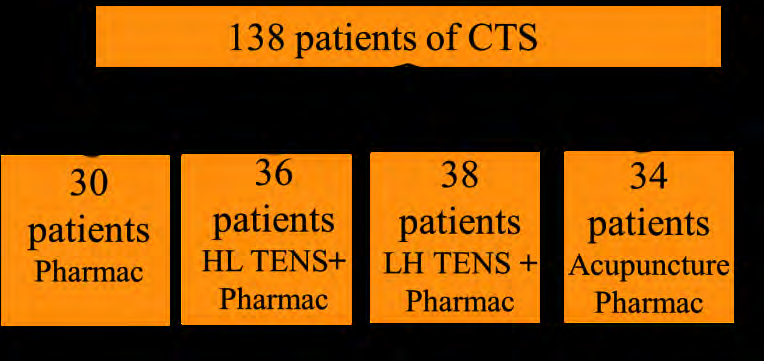
The study included 138patients with a diagnosis of CTS. 30patients received only pharmacotherapy treatment. 36patients received an additional course of high-frequency low-amplitude (HL) TENS, 38patients a course of low frequency high amplitude (LH) TENS and 34 patients a course of acupuncture (Figure 1).
Methods of Treatment
Pharmacotherapy was administered for 1month with the use of vitamin B, Ipidacrine alpha lipoic acid and meloxicam 15.
TENS combined with pharmacotherapy. Median nerve was stimulated by monophasic and square form of electrical impulses. Characteristics of TENS are shown in Table 1. Method of labile stimulation was used. Cathode was fixed on the proximal side of nerve. Anode stimulated the palmar surface of distal phalange of I-IV fingers in sequences of 20 seconds each.
| Frequency | Duration | Amplitude | |
|---|---|---|---|
| HL TENS | 100 Hz | 100 µs | 15 mA |
| LH TENS | 1 Hz | 200 µs | 5 mA |
Table 1: Characteristics of TENS.
Acupuncture
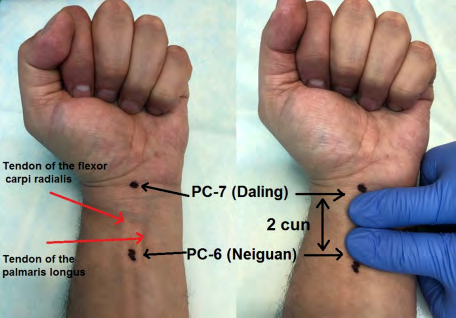
Acupoints were PC-7 (Daling) and PC-6 (Neiguan) along the pericardial meridian compatible with the median nerve tract. The treatment program consisted of 15 sessions of 20min duration over 4 weeks (Figure 2).
Results
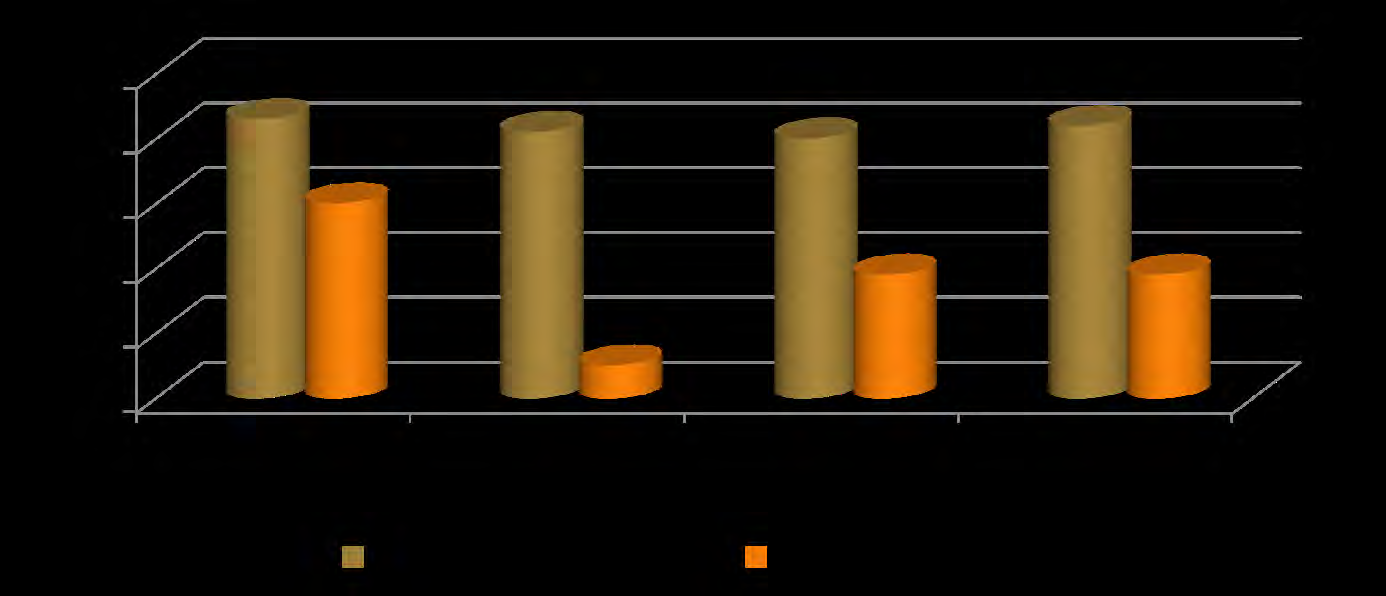
Spontaneous pain decreased by more than 44.5% under transcutaneous electroneurostimulation and acupuncture. Whereas results of pharmacotherapy did not exceed 21% Superior analgesic effect of HL TENS compared with LH TENS and acupuncture significantly was noted by 36% (Figure 3).
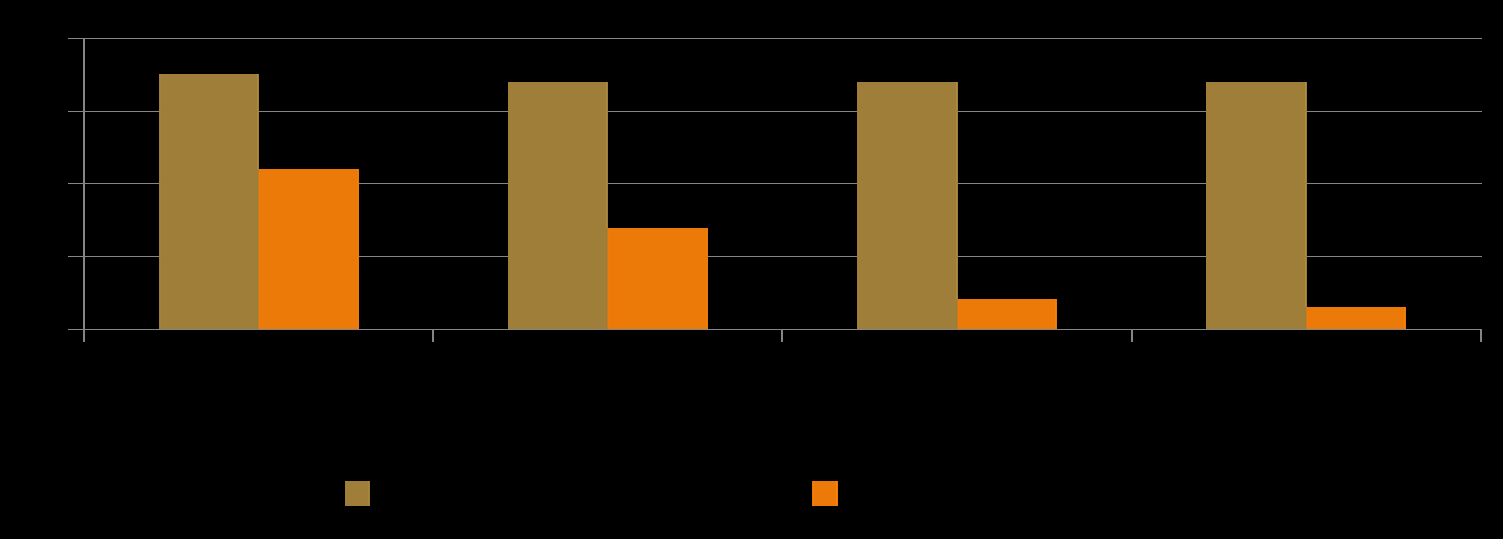
Tinel’s and Phalen’s signs decreased after TENS and acupuncture more than 2times compared with pharmacotherapy. LH TENS and acupuncture seem to have a superior efficacy than HL TENS by 51%. No significant differences between LH TENS and acupuncture were found (Figures 4 & 5).

Muscular strength enhanced after LH TENS and acupuncture reliably by 23,3% and 13,3%. Results indicated a significant increase in the muscular strength after LH TENS compared with acupuncture by 43%.
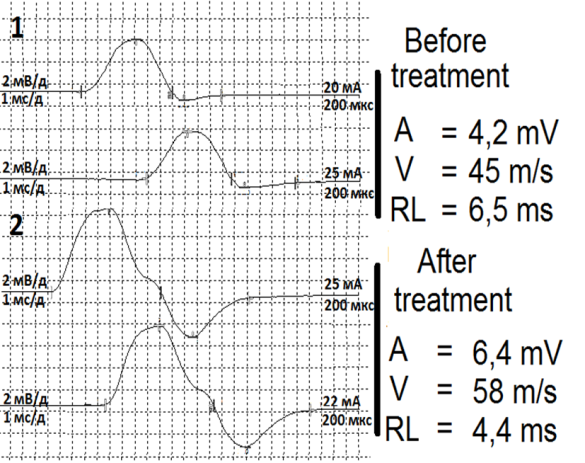
Electromyography evaluation likewise indicated a significant increase in the distal median motor amplitude of the palm-wrist segment by 17% after LH TENS. In addition residual latency was decreased by 8,9% in this group (p>0,05). Increasing of median motor amplitude underground of acupuncture did not reach significant values and amounted to 9.5% (Figure 6).
Conclusion
Based on the results of this study TENS and acupuncture enhance efficiency of pharmacotherapy in treatment of CTS, reducing the severity of sensory and motor clinical and EMG manifestations of the CTS. Spontaneous pain was most significantly decreased by HL TENS. Compression of the median nerve in carpal tunnel was reduced following LH TENS and acupuncture. Significant regression of EMG disorders of the median nerve was achieved by LH TENS therapy.
References
-
Al-Zamil M (2008) Carpal syndrome. Clinical Neurology 1: 41-52.
-
Chien-Yi H, Hsiu-Chen L, Yu-Chen L, Li-Wei C, Ta-Wei K, et al. (2014) Clinical effectiveness of acupuncture for carpal tunnel syndrome. Am J Chin Med 42(2): 303-314.
-
Choi GH, Wieland LS, Lee H, Sim H, Lee MS, et al. (2018) Acupuncture and related interventions for the treatment of symptoms associated with carpal tunnel syndrome. Cochrane Database Syst Rev 12(12): CD011215.
-
Bahrami-Taghanaki H, Azizi H, Hasanabadi H, Hassan Jokar M, Iranmanesh A, et al. (2020) Acupuncture for Carpal Tunnel Syndrome: A Randomized Controlled Trial Studying Changes in Clinical Symptoms and Electrodiagnostic Tests. Altern Ther Health Med 26(2): 10-16.
-
Ho CY, Lin HC, Lee YC, Chou LW, Kuo TW, et al. (2014) Clinical effectiveness of acupuncture for carpal tunnel syndrome. Am J Chin Med 42(2): 303-314.
-
Koca I, Boyaci A, Tutoglu A, Ucar M, Kocaturk O (2014) Assessment of the effectiveness of interferential current therapy and TENS in the management of carpal tunnel syndrome: a randomized controlled study. Rheumatol Int 34(12): 1639-1645.
-
Kumnerddee W, Kaewtong A (2010) Efficacy of acupuncture versus night splinting for carpal tunnel syndrome: a randomized clinical trial. J Med Assoc Thai 93(12): 1463-1469.
-
Margaret AN, Kyung-Ae KH, Barbara EL, Kenneth FB (2002) Carpal tunnel syndrome pain treated with low- level laser and microamperes transcutaneous electric nerve stimulation: A controlled study. Arch Phys Med Rehabil 83(7): 978-988.
-
Somaiah A (2008) Carpal tunnel syndrome. Ulster Med J 77(1): 6-17.
- Potential Medicinal Herbs and Secondary Metabolites in Combating Corona Virus
- Monkeypox and its Clinical Implications in Pregnancy
- Pharmacognostical Analysis of the Leaves of Important Nervine Medicinal Plant: Strychnos Nux-Vomica L
- Assessment of Antibacterial Activity of Various Solvent Extracts of Dictyota Dichotoma Against Multidrug Resistant Bacterial Strain
- An Insights of Bioactive Elements on Malignancy: Mechanistic Avenues
- Advances and Future Directions in Pharmacognosy and Chinese Medicine