
Pharmacotechnological Investigations of the Hedysarum caucasicum from the Northern Caucasus
The main active component of species of the genus Hedysarum are xanthones, the main of them is C-glycoside-mangiferin, which was found in the aerial part of 17 species of Hedysarum. Mangiferin is contained in plants of the genus Hedysarum can serve as a chemotaxonomic marker of this section, it has antiviral activity against DNA-containing viruses: Herpes simplex virus, Varicella zoster, Cytomegalovirus, also has immunostimulatory properties (stimulates cellular and humoral immunity). We have prepared the phytochemical investigations of xanthones. The quantitative maintenance of the sum of xanthones in terms of a specific indicator of a mangiferin is established. The technology of a liquid extract by means of 80% of ethanol is developed, technological parameters of raw materials have been determined: content of extractive substances in raw materials (26.59%); finished product removal factor (2.48); feed absorption coefficient (3.00); Internal juice formation rate (3.37); coefficient of volume increase at dissolution of extractive substances (2,013); bulk density (0.21); dry feed filling ratio (3.7); Swollen feed filling ratio (1.3); Displacement factor (1.7). Extract of Hedysarum caucasicum is obtained with ratio of phases 1:2 in a battery of 6 diffusers. It is established that extract of Hedysarum caucasicum shows the antimicrobial activity concerning Shigella sonnei, Bacillus subtilis and B. anthracoides.
Introduction
The creation of antiviral and immunomodulatory drugs from medicinal plants is a pressing task of modern pharmacy. Thus, the preparation “Alpizarin,” which contains xanthone glycoside -mangiferin, which has pronounced antiviral activity, has been created from Hedysarum. The task - to study the aerial part of the Hedysarum caucasicum as a new additional raw material source of mangiferin [1, 2, 3, 4, 5, 6, 7, 8, 9].
The purpose of the work was to prepare pharmacognostical and pharmaco-technological investigations of the aerial parts of the Hedysarum caucasicum Bieb., to develop a dosage form and to prepare the standardization.
To achieve this goal, research objectives were defined:
- to investigate morphological and anatomical analysis of raw materials;
- to prepare phytochemical study of raw materials;
- to develop a dosage form technology;
- to standardize the dosage form;
- to investigate preliminary examination of antibacterial activity of the obtained medicinal form from the herb of the Hedysarum caucasicum Bieb.
The main active components of species of the genus Hedysarum are xanthone derivatives. Xanthone C-glycoside - mangiferin (I) was found in 17 species of Hedysarum [4, 10, 11, 12, 13, 14, 15, 16, 17, 18, 19], the content of which varies from 1 to 1.5%
Mangiferin is contained in plants of *Hedysarum* mainly in the *Obscura B. Fedtsch* section. And at the same time its isomer isomangiferin is present, which can serve as a chemotaxonomic marker of this section [8, 22, 29, 30, 31, 32]. The xanthones and aminoacids are obtained in callus of *Hedysarum polybotrys*. Mangiferin from *Hedysarum flavescens* and *H. alpinum* has antioxidant and immunostimulatory properties (stimulates cellular and humoral immunity) [5, 12, 13, 14, 23, 24, 25].
The action of mangiferin on humoral immunity is due to the fact that it selectively increases the production of immunoglobulins A and B, which can be used in the therapy of immune deficiency diseases [33, 34, 35, 36, 37, 38].
In conclusion, the clinical studies of mangiferin in patients of adult and childhood age with acute and recurrent forms of Herpes simplex genital and extragenital localization, Caposhi herpetiform eczema, viral diseases of oral mucosa, smallpox and infestation have shown its high effectiveness, in some cases exceeding traditionally used antiviral drugs and not inferior to acyclovir and other most effective drugs [3, 4, 5, 39].
Material and Methods
As the object of the study was used the grass of Hedysarum caucasicum Bieb family Fabaceae collected in the flowering phase on the southeast slope of Mountain Alibek at an altitude of 2,200 m (Dombay District, Karachaevo- Cherkessya) (Figure 1).
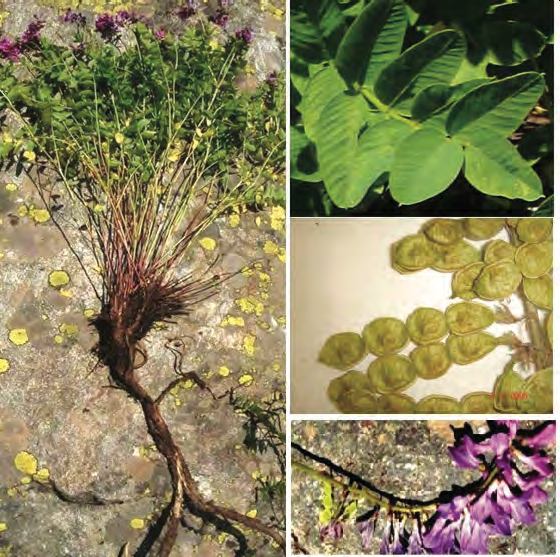
Samples of the herbarium of this species collected by the author are located in the departments of pharmacognosy and botany of Pyatigorsk medical and pharmaceutical institute [2].
Results and Discussion
In order to determine flavonoids, it was necessary to obtain an alcohol extract from the raw material. Extraction was prepared with 80% ethyl alcohol. About 1 g of the feed was placed in a 25 ml flask, 10 ml of 70% ethyl alcohol was added and heated in a water bath for 10-15 minutes. The resulting solution was filtered through a paper filter after cooling. Reactions were connected with the resulting solution: Cyanidine reaction: 0.1 g of magnesium, 2 ml of concentrated hydrochloric acid were added to 1 ml of extraction, heated in a water bath for 2-3 minutes, after some time red-orange staining was observed;
2 drops of 2% lead acetate solution were added to 1 ml of the recovery, and yellow-lemon staining appeared;
1 ml of a 10% ammonia solution was added to 1 ml of the recovery, and yellow staining turned orange on heating appeared.
1 ml of a 2% solution of aluminum chloride in 96% ethyl alcohol was added to 1 ml of the recovery, and lemon-yellow staining was observed [13, 22, 39].
Qualitative reactions with these reagents showed the presence of flavonoid substances in the grass of the Hedysarum
caucasicum, which allowed us to use the chromatography method for further analysis, which is widely used for their detection and identification.
Chromatographic separation of the sum of flavonoids and xanthones was carried out in the preparation of the extracts, and ethyl alcohol 96, 80, 60, 40% concentration was used as the extractant.
About 1.0g of dried and ground grass of Hedysarum caucasicum was placed in a 25 ml flask and 10 ml of ethyl alcohol 96, 80, 60, 40% concentration was poured. Extracted in a flask in a reflux bath for 4 hours. The resulting extracts were then filtered through a paper filter. The extracts obtained were adjusted to the label with 10 ml ethyl alcohol of varying concentration.
0.05 ml of the Hedysarum caucasicum grass extracts were applied to a 40x40cm Watman chromatographic paper and subjected to ascending chromatography in a solvent system: butanol - glacial acetic acid - water in a ratio of 4:1:5 compared to witness substances [17, 19].
The witness mangiferin was obtained from tablets “Alpizarin 0.1g” manufactured by “VILAR.” The chromatography results are shown in table 1. When viewing the chromatogram in UV light, three main spots were found in extracts of the following concentrations of ethanol 96, 70, 60%. The solvent system: butanol - glacial acetic acid - water in a ratio of 4:1:5. Further, chromatograms were sprayed with alcohol solution AlCl3 and a change in stain color was observed. Mangiferin, hyperoside, campferol are detected (Table 1).
| Value Rf | Coloring of spots | |||
|---|---|---|---|---|
| Visible light | UF-light | AlCl 3 | ||
| Mangiferin | 0,47 | Yellow | Yellowy-brown | Orange |
| Hyperoside | 0,58 | Brown | Citreous Yellow | Yellow |
| Campferol | 0,39 | Yellow green | Brown | Brown |
Table 1: Results of ascending paper chromatography of extracts from the Hedysarum caucasicum grass (solvent system: butanol - gla
The largest area of mangiferin spot was observed in the extraction of 80% ethyl alcohol. Based on the results obtained, we used 80% ethyl alcohol as an extract ant in further work. It is known from literary sources that from xanthone compounds besides mangiferin its isomers, such as isomangiferin, accumulate in plant raw materials [22, 24, 31]. Therefore, in order to separate mangiferin from the possible isomers, we conducted an additional study using two-dimensional paper chromography. 0.05 ml of the extraction of the Hedysarum caucasicum grass was applied to a Whattman chromatographic paper with a size of 20x20cm and subjected to chromatography in solvent system №1: butanol - glacial acetic acid - water in a ratio of 4:1:5, in system №2: acetic acid 2% [25, 27, 28].
As a result of chromatography of extracts from the grass of the Hedysarum caucasicum, it was found that the spot of mangiferin in the extraction coincided with the colour and value of Rf (0.64). With mangiferin witness values after two- dimensional chromatography. In addition to the mangiferin spot, another spot with Rf = 0.77 (2% acetic acid system) was found. However, further identification is not possible because there is no isomangiferin witness sample.
Quantitative determination of the main biologically active substance of the Hedysarum caucasicum grass. According to literature, there are a number of intense absorption bands in the UV spectrum of mangiferin.
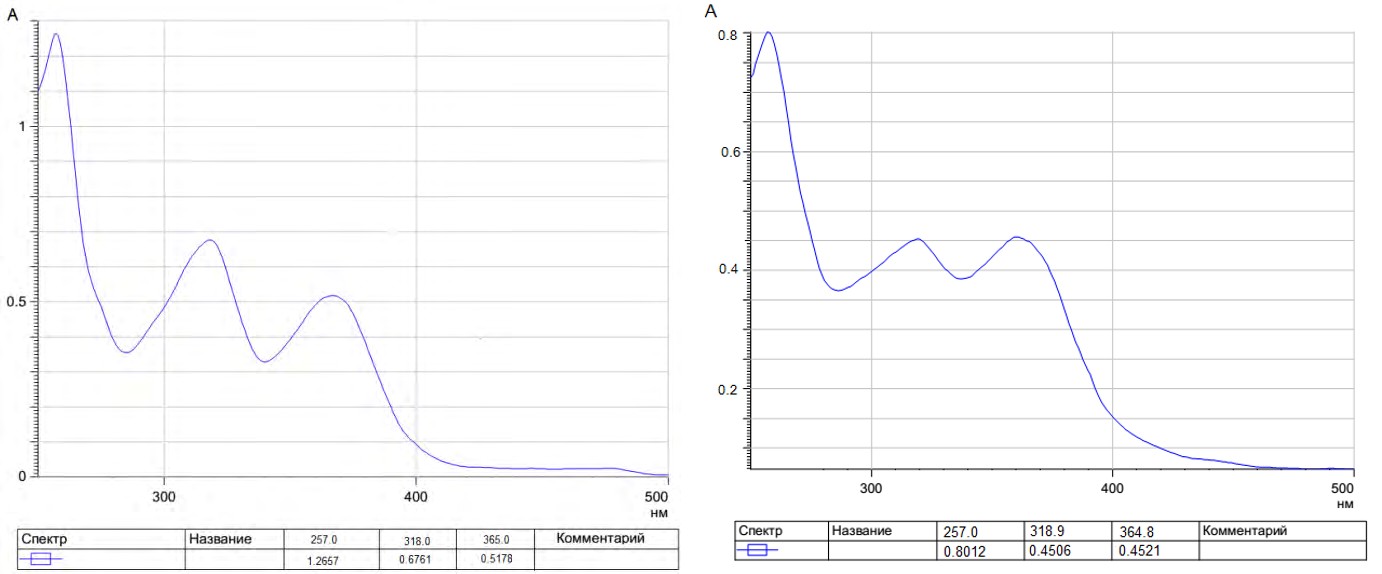
The band with a maximum at 361 nm and a specific absorption coefficient of 295 ± 0.92 is the most suitable for quantification of the substance. In the field of working concentrations, the absorption of mangiferin solutions is subject to Buger-Lambert-Ber law [1, 14]. Examination of the absorption spectrum of mangiferin showed the presence of characteristic absorption maxima in the region of 257 nm, 316 nm and 367 nm.
The quantitative determination of mangiferin was investigated by UV spectrophotometry. Determination procedure: Analytical sample of raw material is ground to size of particles passing through sieve with holes of 2 mm diameter. About 5 g (exact hinge plate) of the crushed raw materials place in a round-bottomed flask with a capacity of 250 ml and extract 25 ml of alcohol of ethyl 80%. Extraction is carried out within 1 hour. The recovery was then poured into a 50 ml measuring flask. The cartridge is poured again with 25 ml of 80% ethyl alcohol and extracted for 1 hour. Extraction is carried out for 1 hour. The recovery was then poured into a 50 ml measuring flask. The cartridge is poured again with 25 ml of 80% ethyl alcohol and extracted for 1 hour. The resulting recovery was poured into a 50 ml measuring flask, cooled and brought to the mark. Absorption spectrum of the solution is measured in the range from 245 nm to
300 nm. However, the maximum absorption of mangiferin in the region of 361nm ± 2 nm was not detected due to the application of concomitant substances in this region of the spectrum. The UV absorption spectrum of the recovery without the purification.С the purpose of purifying the sum of xanthones from co-substances, the extraction is sequentially treated with portions of chloroform. The obtained extract is evaporated to remove alcohol smell, cooled, transferred to a separatory funnel and successively treated with chloroform (three times 10 ml). The purified recovery was diluted with 80% ethyl alcohol in a 50 ml measuring flask (solution A). The 1.5 ml solution A was transferred to a 250 ml measuring flask, the volume was adjusted to the label with 80% alcohol and stirred. Optical density of solution is measured on spectrophotometer at wavelength 361 ± 2nm in cuvette with layer thickness of 10 mm. The calculation of the quantitative content of mangiferin was based on the specific absorption index, which according to the literature was 295 [16, 19].
Content of sum of xanthones in terms of mangiferin and absolutely dry raw material in percent (X) is calculated by formula:
$$ \chi = \frac {D \times 5 0 \times 2 5 0}{E _ {1 c u} ^ {1 \%} \times l \times 1 , 5 \times a} \times \frac {1 0 0}{(1 0 0 - W)}, $$ D - the optical density of the test solution (0.679);
% 1 1_ñì _E - Specific absorption of mangiferin (295);
l - cuvette thickness (1 cm); a- raw material charge (5.0010g) W - raw material humidity (8.60%).
The content of the sum of xanthones from Hedysarum caucasicum grass was 4.2% (the average of two parallel definitions).
Determination of process parameters of raw materials. In order to predict the efficiency of the equilibrium extraction method and the quality of the obtained preparation, it was necessary to experimentally establish the following technological parameters of the raw materials: content of extractive substances in the raw material (x), finished product removal factor (Y), raw material absorption coefficient (Kp), coefficient of internal juice formation, coefficient of volume increase at dissolution of extractive substances (Z).
The determination was carried out according to the procedure described in the literature [24, 26, 37]. Calculations were performed using Galen software-algorithm complex [35]. The results of determination of technological characteristics of the Hedysarum caucasicum grass are given in Table 2.
| Name of an Indicator | Average Value of an Indicator, $\bar{X}$ |
| Humidity of raw materials, % | 8,60 |
| Content of extractive substances in the raw materials, % | 26,59 |
| Raw material absorption coefficient, $sm^3/g$ | 3,00 |
| Coefficient of internal juice formation, $sm^3/g$ | 3,37 |
| Coefficient of volume increase at dissolution of extractive substances, $sm^3/g$ | 2,01 |
| Finished product removal factor, $sm^3/g$ | 2,48 |
| Bulk weight, g/$sm^3$ | 0,185 |
| Dry feed filling ratio, $sm^3/g$ | 3,7 |
| Swollen raw material filling ratio, $sm^3/g$ | 4,83 |
| Replacement coefficient, $sm^3/g$ | 1,7 |
Table 2: Process characteristics of raw material quality of the extract Hedysarum caucasicum grass.
In order to solve the question of the correct selection of the diffuser capacity and to determine the weight of the feed to be loaded, it was necessary to determine the following process characteristics of the feed: bulk density, dry and swollen raw material filling ratio, displacement factor. Determination of the listed values was prepared according to the procedure described in the literature [24]. Using the obtained values of the process characteristics of the raw material, we searched for the optimal ratio of phases to the number of diffusers in the battery, which would ensure maximum efficiency of extraction by the cycle-completed reperculation method [4, 7, 8]. With the help of Galen software-algorithm complex [12, 14], the degree of raw material depletion was calculated both at the ratio of phases 1:2 and 1:1 at different number of diffusers in the battery. The results of the calculations are shown in Table 3.
| Phase Ratio | Number of Diffusers in the Battery, N | Degree of Raw Material Depletion, S,% |
|---|---|---|
| 1,0 | 3 | 22,74 |
| 4 | 22,74 | |
| 5 | 22,74 | |
| 6 | 22,74 | |
| 7 | 22,74 | |
| 8 | 22,74 | |
| 9 | 22,74 | |
| 10 | 22,74 | |
| 2,0 | 3 | 53,30 |
| 4 | 59,34 | |
| 5 | 64,03 | |
| 6 | 69,86 | |
| 7 | 71,10 | |
| 8 | 73,90 | |
| 9 | 76,38 | |
| 10 | 78,59 |
Table 3: Results of calculation of raw material extraction efficiency at different ratio of phases and number of diffusers in the
It can be seen from Table 3 that the maximum depletion rate of the feed at a 1:1 phase ratio is only 22.74%, whereas at a 1:2- 78.59% phase ratio. Theoretical calculations of the degree of depletion of raw materials for the ratio of phases
1:5, 1:10 and 1:20 with the number of diffusers from 3 to 10 show that in no case can the degree of depletion be achieved more than 99.02%.
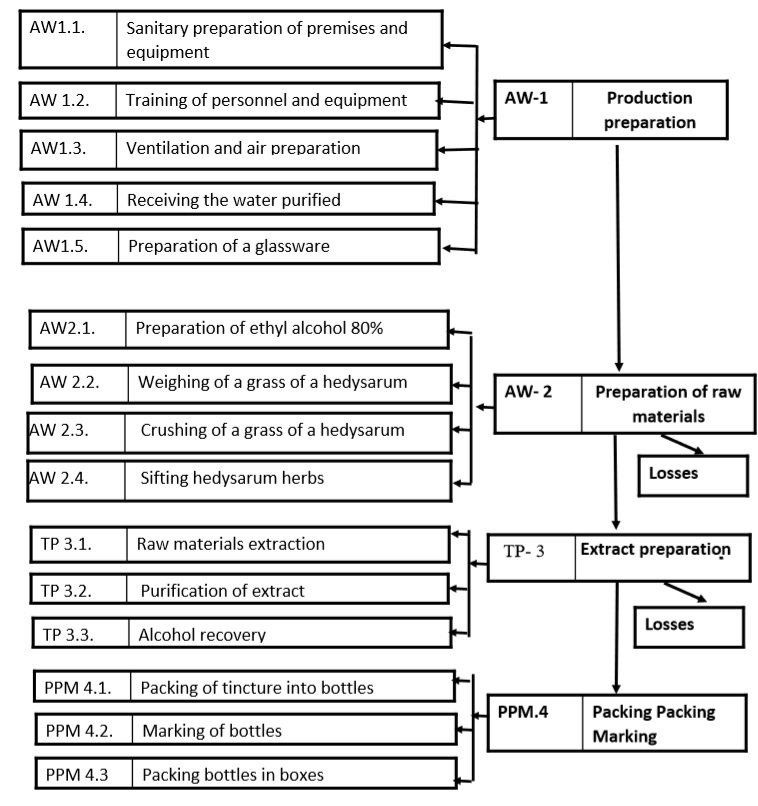
The degree of depletion of the raw material, starting from the 6th diffuser, increases slightly, therefore and optimal condition for obtaining a liquid extract is the choice of a battery of 6 diffusers (Figure 2).
Based on the results of previous theoretical and experimental studies on selection of optimal extraction conditions, we have developed a technological scheme for production of liquid extract of the extract by the method o_f_ reperculation with completed cycle. Extraction of the Hedysarum caucasicum grass was carried out on the principle of countercurrent flow in a battery of 6 diffusers. The time of infusion in the extraction stages both during the introduction of the diffuser battery and during the removal period of the finished product was 24 hours.
The First Day: On the bottom of each of the six percolators is placed an aluminium grid with a hole diameter of 2 mm, on which 4 layers of gauze are placed. Each percolator is sealed with rubber plug. In all six diffusers 10 g of crushed grass of Hedysarum caucasicum are laid. In order to prevent the raw material from floating, a metal grating is fixed in the upper part of the extractor. 50 ml of 80% ethyl alcohol is poured into the first percolator and infused for 24 hours.
The Second Day: The recovery was completely drained into collector №1 (about 20 ml). Into the same percolator 50 ml of fresh extractant is poured and extraction is continued to drain until it accumulates in collector №1 with volume of 50 ml. All drain from collector №1 is transferred to the second percolator. Percolators №1 and №2 are closed and left to insist for 24 hours.
The Third Day: Extracts (about 20 ml) were completely drained from the first and second percolators. Fresh extractant of 50 ml volume is poured into the first percolator and the extraction is drained into collector №1 till accumulation of 50 ml volume as well. Extraction from collection №1 is transferred to the second percolator, continuing to drain into collection №2 until accumulation with volume of 50 ml. The extract from percolator №2 is transferred to the third percolator. All three percolators are left to infuse for 24 hours.
The Fourth Day: The cranes of all three percolators are opened and the extracts are drained into collector’s №1-3 (about 24.8 ml). In the first percolator 50 ml of ethyl 80% alcohol is poured, continuing to drain extraction from it into collector №1 until accumulation of volume of 50 ml. This extraction is transferred to percolator №2, continuing to drain to collector №2 until the same volume accumulates. Extraction is transferred to the third percolator and is continued to drain into collector №3 until accumulation with volume of 50 ml, drain from collector №3 is transferred to the fourth percolator and left to insist for 24 hours.
The Fifth Day: Acting in the same way as on the second day, the fifth percolator is put into operation. Leave for 24 hours.
The Sixth Day: Acting in the same way as on the second day, the sixth percolator is put into operation. Leave for 24 hours.
The Seventh Day: The cranes of all six percolators are opened and the extracts (about 20 ml in volume) are completely drained into collections №1-6. Extraction from collection №6 is finished product. The first percolator is unloaded, and extracts from collector’s №1-6 are transferred to the next extraction stage in percolators №2-6. Leave to insist for 24 hours.
The Eighth Day: The next portion of the ready extract is obtained from percolator №6, percolator №2 is taken out of operation, and extracts from collector’s №2-6 are transferred to the next extraction stage in percolators №3-6. Leave to insist for 24 hours.
The Ninth Day: In the same manner as on the fourth day, a 20 ml portion of the finished extract was obtained from the sixth percolator and the third percolator was withdrawn.
The Tenth Day: A portion of the finished product is obtained from the sixth diffuser and the fourth percolator is taken out of operation.
The Eleventh Day: A portion of the finished product is obtained from the sixth diffuser and the fifth percolator is taken out of operation.
The Twelfth Day: A portion of the finished product is obtained from the sixth diffuser and the sixth percolator is taken out of operation. All six extracts were combined and mixed. The volume of extract is about 120 ml. The received extract was settled at a temperature of 7-10ºC of two day and filtered via the paper filter under which the cotton wool piece is enclosed. Thus, the result of the research was the technology of extract 1:2 by the method of reperculation with the completed cycle.
The quality of the obtained extract was normalized according to the following parameters - content of the sum of flavonoids, heavy metals, alcohol and density of the preparation. Calculations were performed using the Galen program. The calculations made it possible to establish standards of quality of liquid extract. The results are shown in Table 4.
| Indexes of quality | Actual values |
|---|---|
| Heavy metals | - |
| Extract density | 0,8614 |
| Alcohol concentration in extract | 72,62% |
Table 4: Quality indicators of the liquid extract of the _Hedysarum caucasicum_ grass 1:10.
From the results presented in Table 4, it can be concluded that the obtained extract meets the calculated theoretical quality standards for all indicators. The technology of production of liquid extract of Hedysarum caucasicum grass with the help of 80% ethyl alcohol has been developed. The process parameters of the raw materials were determined:
- Content of extractive substances in raw materials (26.59%);
- Finished product removal factor (2.48);
- Raw material absorption coefficient (3.00);
- Internal juice formation ratio (3.37);
- Coefficient of volume increase at dissolution of extractive substances (2,013);
- Bulk density (0.21);
- Dry raw material filling ratio (3.7);
- Swollen raw material filling ratio (1.3);
- Displacement factor (1.7).
The degree of fine material is set at 1.2 mm. Liquid extract is obtained with phase ratio of 1:2 in a battery of 6 diffusers.
Quality standards have been established for liquid extract of Hedysarum caucasicum grass: • Heavy metals (not > 0.01);
- Density of extract (not > 0.8614);
- Alcohol concentration in the extract (not < 72.62%).
The obtained liquid extract fully meets the calculated quality standards.
Quantitative determination of the sum of xanthomas based on the specific absorption of mangiferin was also carried out by UV spectrophotometry. Determination procedure: The test extract, after purification with chloroform, was transferred to a 50 ml measuring flask in an amount of 0.5 ml, the volume was adjusted to the label with 80% alcohol and stirred. The obtained purified extract is evaporated to remove alcohol smell, successively treated with chloroform in a separatory funnel (3 times 10 ml).
The extract was transferred to a 250 ml measuring flask, brought to the mark with 80% ethyl alcohol (solution A). 1 ml of solution A was diluted with 80% ethyl alcohol to 10 ml. Optical density of solution is measured on spectrophotometer at wavelength 361± 2nm in cuvette with layer thickness of 10 mm. The spectrum is shown in Figures 2&3.
Content of sum of xanthomas in terms of specific value of mangiferin in percent (X) is calculated by formula:
$$ \chi = \frac {D \times 5 0 \times 1 0}{E _ {1 c u} ^ {1 \%} \times l \times 0 . 5 \times 1} $$ где D - Optical density of the test solution (0,463);
% 1 1_ñì _E - Specific absorption of mangiferin (295);
l- basin thickness (1 sm);
(A) (B) Figure 3: Absorption spectrum of the mangiferine (A) and solution of the liquid extract of Hedysarum caucasicum after purification (B).
The sum of xanthones in terms of the specific value of mangiferin was 1.57% (average of two parallel definitions).
The technology of obtaining liquid extract with the help of 80% ethyl alcohol has been developed, technological parameters of raw materials have been determined: content of extractive substances in raw materials (26.59%); Finished product removal factor (2.48); Feed absorption coefficient (3.00); Internal juice formation rate (3.37); Coefficient of volume increase at dissolution of extractive substances (2,013); Bulk density (0.21); Dry feed filling ratio (3.7); Swollen feed filling ratio (1.3); Displacement factor (1.7). Extract is obtained with ratio of phases 1:2 in a battery of 6 diffusers. The quantitative content of the sum of xanthones in terms of the specific value of mangiferin in the extract of the UV spectrophotometry was determined, it was 1.57%.
Results and Discussion
The main commodity indices of the Hedysarum caucasicum are determined: humidity (8.6%), total ash (4.05), ash content insoluble in 10% hydrochloric acid solution (1.34%), content of extractive substances (24.56%), and microbiological purity of the raw materials. Using various methods of qualitative determination of biologically active substances (color reactions, paper and thin layer chromatography), the presence of tanning substances, free organic acids, reducing sugars, as well as amino acids was found. The quantitative content of the sum of xanthones in terms of specific mangiferin in the grass was 4.2%. The quantitative content of the sum of xanthones like mangiferin in the extract by UV spectrophotometry was determined 1.57%.
Extract of Hedysarum caucasicum is obtained with ratio of phases 1:2 in a battery of 6 diffusers. It is established that extract of Hedysarum caucasicum shows the antimicrobial activity concerning Shigella sonnei, Bacillus subtilis and B.anthracoides.
References
-
Alaniya MD (1983) Flavonoids of _Hedysarum sericeum_ and _H. caucasicum_. Plenum Publishing Corporation 19: 612-613.
-
Aslanukov AK, Ayrapetova AU, Serebryanaya FK (2009) Identification and the quantitative determination of the sum of xanthones in terms of mangiferin in a grass of _Hedysarum caucasicum_ Bieb.// Development, research and marketing of new pharmaceutical production: scientific papers. – Pyatigorsk State Pharmaceutical academy 64: 11-13.
-
Borreani G, Roggero P (2003) Quantifying Morphological Stage to Predict the Nutritive Value in Sulla (_Hedysarum_ _coronarium_ L.). Agronomy Journal 95(6).
-
Burlando B, Pastorino G, Salis A (2017) The bioactivity of _Hedysarum coronarium_ extracts on skin enzymes and cells correlates with phenolic content. Pharmaceutical Biology 55(1): 1984-1991.
-
Dai R, Gao J, Bi K (2004) High-performance liquid chromatographic method for the determination and pharmacokinetic study of mangiferin in plasma of rats having taken the traditional Chinese medicinal preparation. J Chromatogr Sci 42(2): 88-90.
-
Fedorova Yu S, Sukhikh AS, Kuznetsov PV (2011) Comparative chromatographic analysis of fractional composition of phytomedicines of plants of a genre of _Hedysarum._ Getter and chromatographic processes 1(4): 575-580.
-
Fomina LI, Satsyperova IF, Bandyukova VA (1990) Optimization of chromatographic fractionation of a mangiferin and the hyperoside emitted from an elevated part of _Hedysarum alpinum_ L. Plant Resources 25(3): 431-437.
-
Garcia D, Leiro J, Delgado R (2003) _Mangifera indica_ L. extract and mangiferin modulate mouse humoral immune responses.- Phytotherapy Res 17(10): 1182- 1187.
-
Glyzin VI, Bankovsky AI, Pavlova NS (1970) Phenolic compounds of _Hedysarum sachalinense_ and _H. brandlii_ connections. Chemistry of natural substances, pp: 369.
-
Hai L, Zhang Q, Liang H, Zhao Y (2003) Study on chemical constituents of _Hedysarum polybotrys_. Acta Pharm Sinica 3(5): 592-595.
-
Hai LQ, Xu JJ, Kai Saier A, Zhang X, Ma LY (2006) Chemical constituents of _Hedysarum austrosibiricum_ b. Fedtsch. Huaxi Yaoxue Zazhi 21: 47-48.
-
Huang H, Li X, Ling Q (2003) RP-HPLC determination of mangiferin in the leafs of folium mangiferae sampled in different months and regions. Zhongguo Yao Za Zhi 28(9): 839-841.
-
Huang Z, Cui Z, Ren Y, Zhang J, Cran M (1992) Antiaging effect of _Hedysarum_ _polybotrys_ polysaccharide. Zhongcaoyao 23: 469-473.
-
Schieber A, Berardini N, Carle R (2003) Identification of flavonol and xanthone glycosides from mango (_Mangifera indica_ L.) peels by high-performance liquid chromatography-electrospray ionization mass spectrometry. J Agric Food Chem 13(17): 5006-5011.
-
Kitanov G, Blinova KF (1978) Mangiferin in some species of the _Hypericum.-_Chemistry of natural substances 4: 524.
-
Krivut BA, Fedyunina NA, Kocherga SI, Rusakova SV (1976) Spectrophotometric determination of mangiferin. Chemistry of natural substances 1: 44-46.
-
Kukushkina TA, Vysochina GI, Karnaukhova NA, Selyutina I Yu (20111) The maintenance of a mangiferin and the sum of xanthones in plants of some wild-growing and introduced species of _Hedysarum_ (_Fabaceae_). Vegetable resources (1): 99-105.
-
Li Y, Bi K (2005) Pharmacokinetics of mangiferin in rat plasma after oral administration of a single dose of suanzaoren decoction. Yao Xue Xue Bao 40(2): 164-167.
-
Liu Y, Chen J, Liao X, Wang H, Luo S (2001) Studies on flavonoid constituents of _Hedysarum sikkimense.-_ Zhongcaoyao 32(6): 489-490.
-
Liu Y, Zhao Y, Tu G, Chen H (2005) Flavonoids of the roots of _Hedysarum kirghisorum.-_Biochem. Syst. Ecol 33: 809- 812.
-
Liu Y, Zhao Y, Chen H (2010) Chemical analysis of the principal flavonoids of Radix Hedysari by HPLC. Nat Prod Commun 5(4): 541-544.
-
Liu Y, Chen H, Tu G (2004) Studies on the constituents from the _Hedysarum kirghisorum_. Medicinal Plant Research and Traditional Chinese Medicine Modernization-Fourth National Symposium on Medicinal Botany and Herbal Medicine, pp: 167-169.
-
Liu Y, Chen H, Zhao Y (2006) Quantification and stability studies on the flavonoids of Radix Hedysari. J Agric Food Chem 54: 6634-6639.
-
Liu Y, Hai L, Zhao Y (2009) Isoflavonoids from _Hedysarum_ _semenovii._ Chin Pharm J 44: 1533-1535.
-
Liu Y, Zhang Z, Zhang Y (2010) Study on chemical constituents and antioxidative activity of Radix Hedysari. China Pharm 24: 543-549.
-
Dai R, Li K, Li Q, Kaishun B (2004) Determination of Mangiferin, Jateorrhizine, Palmatine, Berberine, Cinnamic Acid, and Cinnamaldehyde in the Traditional Chinese Medicinal Preparation Zi-Shen Pill by High- Performance Liquid Chromatography. Journal of Chromatographic Science 42: 207-210.
-
Rybachenko AI, Krivut BA (1976) Fluorodensitometric determination of a mangiferin and isomangiferin in _Hedysarum flavescens_ and _H. alpinum._ Chemistry of natural substances 4: 448-450.
-
Shemeryankina TB (1990) Development of a technique of the quantitative definition of mangiferin in raw materials by HPLC method, the State and the prospects of creation of new finished pharmaceutical products and phytochemical medicines, Kharkiv, pp: 167-168.
-
Si Min L, Tseng HH, Suen T (1996) Determination of gentiopicroside, mangiferin, palmatine, berberine, baicalin, wogonin and glycyrrhizin in the traditional Chinese medicinal preparation sann-joong-kuey-jian- tang by high-performance liquid chromatography. Journal of Chromatography A 730(1-2): 17-23.
-
Solovyova EV, Hotsialova LI, Krivut BA (1983) The maintenance of a mangiferin of _Hedysarum_ L., grown up in Moscow areas.-Plant Resources 19(3): 356-360.
-
Voskoboynikova IV (1993) Pharmacological research of the biologically active xanthones and flavanon substances: author’s abstract. Dis pharm sciences Moscow MMA, pp: 27.
-
Vysochina GI, Kukushkina TA (2011) Biological active materials of some types of the genre _Hedysarum_ L. Plant Resources 4: 251-258.
-
Wang T, Pan Y (1997) Determination of Mangiferin in Qingqiliangying Injection by Reversed-Phase HPLC. Zhongguo Zhong Yao Za Zhi 22(10): 602-639.
-
Wang W, Chen H, Wang W (2002) Studies on flavonoid constituents of _Hedysarum multijugum.-_ Acta Pharm Sinica 37: 196-198.
-
Wang W, Chen W, Chen H (2001) Study on chemical constituents of _Hedysarum multijugum_. J Health Sciences 33: 205-208.
-
Xing G, Hao J, Wang L (1999) Relation of free aminoacids and astragalin-I in callus of _Hedysarum polybotrys_ Hand.- Mazz.- Lanzhou Daxue Xuebao, Ziran Kexueban 35(4): 90-93.
-
Xu J, Hai L, Wang X (2005) Chemical constituents of _Hedysarum austrosibiricum_ Fedtsch.-Huaxi Yaoxue Zazhi 20: 214-215.
-
Yang M, Wang W, Sun JH, Zhao YY, Liang H, et al. (2007) Characterization of phenolic compounds in the crude extract of _Hedysarum multijugum_ by high-performance liquid chromatography with electrospray ionization tandem mass spectrometry. Rapid Commun Mass Spectrom 21: 3833-3841.
-
Yinmao D, Dongyan T, Chunhong Z (2013) Phytochemicals and biological studies of Hedysarum. Chemistry Central Journal 7: 124.
- Potential Medicinal Herbs and Secondary Metabolites in Combating Corona Virus
- Monkeypox and its Clinical Implications in Pregnancy
- Pharmacognostical Analysis of the Leaves of Important Nervine Medicinal Plant: Strychnos Nux-Vomica L
- Assessment of Antibacterial Activity of Various Solvent Extracts of Dictyota Dichotoma Against Multidrug Resistant Bacterial Strain
- An Insights of Bioactive Elements on Malignancy: Mechanistic Avenues
- Advances and Future Directions in Pharmacognosy and Chinese Medicine