
Synthesis, Spectral Studies and Antimicrobial Activity of Coumarin Derivatives
An antimicrobial is a substance that kills or inhibits the growth of microorganisms such as bacteria, fungi, or protozoans. Microorganisms have existed on the earth for more than 3.8 billion years and exhibited the greatest genetic and metabolic diversities. They are an essential component of the biosphere and serve an important role in the maintenance and sustainability of ecosystems. Heterocyclic compounds are cyclic compounds with the ring containing one or more atom other than carbon. The fusion of pyrone ring with benzene nucleus give rise to a class of heterocyclic compound known as benzopyrone, of which two distinct types are recognized: Benzo-α-pyrone commonly called as coumarin. Benzo-γ-pyrone commonly called as chromon. In the present study involves synthesis of substituted 2-((4-methyl-2-oxo-2H-chromen-7-yl)oxy) acetamide derivatives. The synthesized derivatives were evaluated for antibacterial activity using two strains viz. Staphylococcus aureus (MTCC 3160) and Shigella flexneri (MTCC 1457). The synthesized derivatives were also evaluated for antifungal activity using strain Candida albicans (MTCC 227). The antibacterial activity data indicate that certain synthesized derivatives, e.g. derivatives 7a, 7c, 7d and 7e exhibited marked inhibitory activity against the test organisms. The compounds having secondary amines exhibit a very good activity against Gram negative and Gram positive bacteria. The compounds substituted with primary amines had low activity against Gram positive and Gram negative bacteria as compared to secondary amines. The secondary amines possessing bulkier alkyl substitution i.e. diisopropyl had better activity. The antifungal screening results were not encouraging or moderate. Compounds showed very less activity against Candida albicans. The structures of the synthesized compounds were established by IR, NMR and Mass Spectroscopy.
Introduction
An anti-microbial is a substance that kills or inhibits the growth of microorganisms such as bacteria, fungi, or protozoans [1]. Antimicrobial agents have saved the human race from a lot of suffering due to infectious disease. Without antimicrobial agents, millions of people would have succumbed to infectious diseases. Microorganisms have existed on the earth for more than 3.8 billion years and exhibited the greatest genetic and metabolic diversities. They are an essential component of the biosphere and serve an important role in the maintenance and sustainability of ecosystems [2]. Antimicrobial chemotherapy has conferred huge benefits on human health. A variety of microorganisms were elucidated to cause infectious diseases in the latter half of the 19th century. Thereafter, antimicrobial chemotherapy made remarkable advances during the 20th century, resulting in the overly optimistic view that infectious diseases would be conquered in the near future. In the current situation, where multidrug-resistant bacteria have spread widely, options for treatment with antimicrobial agents are limited [3].
Clinicians are witnessing increasing rates of in-vitro resistance among previously susceptible organisms and the emergence of intrinsically resistant organisms as pathogens in immune-compromised hosts. To curtail the development and spread of antimicrobial resistance will require both the preservation of current antimicrobials through their appropriate use, as well as the discovery and development of new agents [4]. Antimicrobial agents act selectively on vital microbial functions with minimal effects or without affecting host functions. Different antimicrobial agents act in different ways. Antimicrobial agents mainly act by inhibition of the cell wall synthesis e.g. penicillin, inhibition of ribosome function e.g. erythromycin, inhibition of nucleic acid synthesis e.g. hydroxyurea, inhibition of folate metabolism e.g. methotrexate, inhibition of cell membrane function e.g. polymixin [2]. Drugs in this class differ from all others in that they are designed to inhibit/kill the infecting organism and to have no/minimal effect on the recipient. This type of therapy is generally called chemotherapy which has come to mean ‘treatment of systemic infections with specific drugs that selectively suppress the infection without infecting the host’. Heterocyclic compounds are cyclic compounds with the ring containing one or more atom other than carbon. The fusion of pyrone ring with benzene nucleus give rise to a class of heterocyclic compound known as benzopyrone, of which two distinct types are recognized: Benzo-α-pyrone commanly called as coumarin. Benzo-γ-pyrone commanly called as chromon. They are differing from each other only in the position of carbonyl group in heterocyclic ring. Several methods were developed for the synthesis of coumarin, such as the Pechmann, Perkin, Knoevengel, Witting and Reformastsky reactions [5]. Coumarins have attracted considerable attention of medicinal chemists and pharmacologists in recent years as they have been demonstrated to bear many pharmacological activities like anti-inflammatory analgesic antimicrobial [6, 7, 8], antioxiadant [9], anticancer [10], anticonvulsant [11], antihyperlipidemic, tyrosinase inhibitor and antiparkinsonism activity antiprotozoal [6, 7, 8, 9, 10, 11, 12, 13, 14, 15]. There are some drugs available in the market having coumarin nucleus with different activities. The drugs Ostruthin and Novobiocin have antibacterial activity [16].
Experimental
All of the chemicals used were of LR grade and purified before use in different reactions. Chemicals used were of LR grade and purchased from Spectrochem, Sigma-Aldrich and Merck India and Loba chemie. All the media used for antimicrobial activity were procured from HIMEDIA. All the solvents were distilled and dried where necessary before use. Thin layer chromatography was carried on pre coated (Merck 60 F454) and self-prepared silica gel coated plates were monitor the reaction. Various solvents system used for developing the chromatograms were hexane and ethylacetate, chloroform and methanol. The spots were being located either under Iodine vapors or by UV light. Melting points were taken by the capillary method using melting point apparatus (Perfit India) and are uncorrected. All the infra-red (IR) spectra of the synthesized compound were recorded as KBr pellets on Perkin Elmer- Spectrum RX-I FTIR using solid pellet method. 1H NMR spectra were recorded on Bruker Avance II 400 (400 MHz) spectrometer using DMSO and CDCl3 as solvent. TMS was used as standard and chemical shift (δ) data are reported in parts per million (ppm) where s, bs, d, t and m designated as singlet, broad singlet, doublet, triplet and multiplet respectively. Mass spectra were run on Micromas Q-T of micro spectrometer using TOF based detector at SAIF, Panjab University and Chandigarh.
Synthesis Of 7-Hydroxy-4-Methyl Coumarin (3)
In a beaker, a mixture of resorcinol (1) (5 g, 0.03 mol) and ethylacetoacetate (2) (4 g, 4 mL, 0.03 mol) was added to concentrated sulphuric acid (3 g, 1.63 mL, 0.03 mol) at 5˚ C with constant stirring for 30 minutes. Mixture was poured on the crushed ice with vigorous stirring; 7-hydroxy-4-methyl coumarin (3) was precipitated. Suspension was filtered; crude product was dissolved in cold aq. sodium hydroxide (10%) solution and re-precipitated it by addition of dilute hydrochloric acid. Crude product was decolorized and re- crystallized from charcoal and ethanol respectively to get 7-hydroxy-4-methyl coumarin 3.
Hydroxy-4-Methyl Coumarin (3): State: white powder; Yield: 87%; Melting point: 182-184˚C; Rf 0.6 (Chloroform: Methanol 5%); IR (ATR, cm-1) 1672 (-C=O stretch lactone), 3461 (-O-H stretch); 1H NMR (DMSO-d6, 400 MHz; δ ppm) δ 2.37 (s, 3H, -CH3), 6.05-7.52 (m, 4H, Ar-H), 10.48 (s, -OH)
Synthesis Of Ethyl-2-(4-Methyl-2-Oxo-2H- Chromen-7-Yloxy) Acetate (5)
In a 250 ml RBF 7-hydroxy4-methyl coumarin (3) (4.7g, 0.03 mol), ethylchloroacetate (4) (7.4g, 0.03mol, 2eq), potassium carbonate (8.3g, 0.03mol, 2eq ) was added and refluxed for 24 hr in acetone. The solvent was evaporated on rotary evaporator. The solid obtained was dissolved in dichloromethane and washed with water and 1% NaOH. The excess of solvent was evaporated on rotary evaporator and the precipitates of Ethyl-2-(4-methyl-2-oxo-2_H_-chromen-7-
yloxy) acetate (5) was collected.
Ethyl-2-(4-Methyl-2-Oxo-2H-Chromen-7-Yloxy) Acetate (5): State: white powder; Yield: 85%; Melting point: 116- 119˚C; Rf 0.6 (Chloroform: Methanol 2%).
Synthesis of 2-(4-Methyl-2-Oxo-2H-Chromen7- Yloxy) Acetic Acid (6)
In a 250 mL RBF mixture of compound (5) (4.3 g, 0.02 mol) and solution of NaOH (2 g, 0.05 mol) were stirred for 3-4 hr in methanol. The solvent methanol was evaporated on rotary evaporator. The crude product obtained was acidified with concentrated HCL and extracted with dichloromethane. The dichloromethane was evaporated to collect the precipitates of final product.
4-Methyl-2-Oxo-2H-Chromen7-Yloxy) Acetic Acid (6): State: off white powder; Yield: 80%; Melting point: 218- 220˚C; Rf 0.6 (Chloroform: Methanol 5%); 1H NMR (DMSO) δ 2.4-7.6 (m, 4H, Ar-H), 2.41 (s, 3H, -CH3), 4.77 (s, 2H, Ar-O- CH2-C=O).
Synthesis Of Various Substituted 2-((4-Methyl- 2-Oxo-2h-Chromen-7-Yl)Oxy) Acetamide Derivatives 7 (A-F)
The compound (6) (0.2g, 0.0009 mol) and N-methyl morpholine (0.11g, 0.12ml, 0.0009mol, 1.2eq), isobutylchloroformate (0.14g, 0.13ml, 0.0009mol, 1.1eq) in THF stirred in flat bottom flask for 10 min at temperature 0-5˚ C. After 10 min various 2˚ amines (0.0009mol, 1.5eq) were added and stirred for 30 min. After completion of the reaction the solvent THF was evaporated using rotary evaporator. The precipitates obtained were dissolved in dichloromethane and washed successively with citric acid, sodium bicarbonate, water and finally with brine solution. The organic layer was dried under vacuum evaporation and solid residue was obtained.
Methyl-7-(2-Oxo-2-(Piperidin-1-Yl)Ethoxy)-2H- Chromen-2-One (7a): State: off-white powder; Yield: 78%; Melting point: 114-116˚C; Rf 0.6 (Ethylacetate: Hexane 70%); IR (ATR, cm-1) 1626 (-C=C stretch), 3112 (-C-H aromatic stretch), 1250 (-C-N stretch), 1665, 1703 (-C=O stretch); 1H NMR (DMSO) δ 1.52-7.54 (m, 14H, Ar-H), 2.40 (s, 3H, -CH3), 4.80 (s, 2H, Ar-O-CH2-C=O-).
( 4 - m e t h y l - 2 - o x o - 2 H - c h r o m e n - 7 - y l o x y ) - N - phenylacetamide (7b): State: white powder; Yield: 80%; Melting point: 224-226˚C; Rf 0.51 (Ethylacetate: Hexane 70%); 1H NMR (DMSO) δ 2.36 (s, 2H,-CH3), 4.71 (s, 2H, Ar-O- CH2-C=O-), 6.07-7.83 (m, 8H, Ar-H), 9.83 (s, 1H, -NH); HRMS (M+H+) 310.3.
N,N-Diisopropyl-2-(4-Methyl-2-Oxo-2H-Chromen-7- Yloxy) Acetamide (7c): State: white powder; Yield: 75%; Melting point: 170-173˚C; Rf 0.54 (Ethylacetate: Hexane 70%); IR (ATR, cm-1) 1616 (-C=C aromatic stretch), 3064 (-C-H aromatic stretch), 1314 (-C-N stretch), 1705 (-C=O stretch); 1H NMR (DMSO) δ 2.41 (s, 3H, -CH3), 3.99 (m, 12H, 2(-C=O-N-CH-(CH3)2), 4.88 (s, 2H, Ar-O-CH2-C=O-), 6.13-7.64 (m, 4H, Ar-H).
N,N-Diethyl-2-(4-Methyl-2-Oxo-2H-Chromen-7-Yloxy) Acetamide (7d): State: off-white powder; Yield: 77%; Melting point: 150-153˚C; Rf 0.62 (Ethylacetate: Hexane 70%); 1H NMR (DMSO) δ 1.25 (m, 6H, -C=O-N-CH2-(CH3)2), 2.42 (s, 3H, -CH3), 4.86 (s, 2H, Ar-O-CH2-C=O), 6.12-7.97 (m, 4H, Ar-H); HRMS (M+H+) 290.3.
Methyl-7-(2-Oxo-2-(Pyrrolidin-1-Yl) Ethoxy)-2H- Chromen-2-One (7e): State: yellow powder; Yield: 82%; Melting point: 190-192˚C; Rf 0.54 (Ethylacetate: Hexane 70%); 1H NMR (DMSO) δ 2.00 (s, 3H, -CH3), 4.81 (s, 2H, Ar- O-CH2-C=O-), 6.12-7.61 (m, 12H, Ar-OH); 13C NMR (DMSO) δ 22.81, 25.22, 45.25, 66.31, 100.78, 111.60, 124.75, 151.17, 160.18, 164.33.
N,N-dimethyl-2-(4-methyl-2oxo-2H-chromen-7-yloxy) acetamide (7f): State: off-white powder; Yield: 81%; Melting point: 142-145˚C; Rf 0.56 (Ethylacetate: Hexane 70%); IR (ATR, cm-1) 1635 (-C=C aromatic stretch), 3106 (-C- H aromatic stretch), 1265 (-C-N stretch), 1670, 1706 (-C=O stretch); 1H NMR (DMSO) δ 2.39 (s, 3H, -CH3), 2.84-3.01 (m, 6H, -C=O-N-(CH3)2), 4.63-4.80 (m, 2H, Ar-O-CH2-C=O-), 6.04- 7.83 (m, 4H, Ar-H).
Antimicrobial Evaluation
Study of Antibacterial Activity by Cup-Plate Agar Diffusion Method
In this present study, the antibacterial activity was carried out by cup-plate agar diffusion method. Here response of organism towards the synthesized compounds was measured and compared with the standard reference drug.
Materials and Method
Antimicrobial activity of new synthesized compounds was carried out by the cup-plate agar diffusion method against Gram –ve bacteria like Staphylococcus aureus (MTCC 3160) and Shigella flexneri (MTCC 1457).
Microbial Cultures
Two strains of bacteria were used as test microorganism. The bacterial strains used in the study were Gram –ve bacteria like Staphylococcus aureus (MTCC 3160) and Shigella flexneri (MTCC 1457).
Inoculum Preparation
Nutrient agar media (HIMEDIA) was applied for growing and diluting the micro-organism suspensions. Bacterial strains were grown to exponential phase in nutrient agar at 37 ˚C for 18 hr.
Preparation of Standard Drug Solution
Ciprofloxacin was dissolved in DMSO to get a concentration 10µg mL-1 for testing antibacterial activity.
Preparation of Test Solution
Each test compound was dissolved in DMSO to get a concentration of 100µg mL-1 for testing antibacterial activity.
Procedure
The samples were dissolved in solvent dimethyl sulfoxide (DMSO) to a final concentration. Antimicrobial tests were then carried out using the disc diffusion method with a suspension containing 108 colony forming units per ml of bacteria and 106 colony forming units per mL of bacteria spread on nutrient agar and Saboured Dextrose Agar respectively. Samples were applied to the disc (6 mm diameter) and allow soaking in, and were then placed on the inoculated media. The ciprofloxacin (10µg mL-1) used as standard for antibacterial activity. The inoculated plates were incubated at 37°C for 24 hr for bacterial strains. Antimicrobial activity was evaluated by measuring the inhibition zone against test microorganisms that was sensitive to given extracts in cup-plate diffusion method.
Antifungal Evaluation
Study of Antifungal Activity by Cup-Plate Diffusion Method In this present study, the antifungal activity was carried out by cup-plate diffusion method. Here response of organism towards the synthesized compounds was measured and compared with the standard reference drug.
Materials and Method Antifungal activity of new synthesized compounds was carried out by the cup-plate diffusion method against Candida albicans (MTCC 227).
Inoculum Preparation Microorganisms were aseptically inoculated on Petri dishes containing autoclaved, cooled and settled Sabroud medium. The petri dishes were incubated at 27˚C for 48 hr to give round colonies.
Preparation of Standard Drug Solution Fluconazole was dissolved in dissolved in DMSO to get a concentration 10µg mL-1 for testing antifungal activity.
Preparation of Test Solution Each test compound was dissolved in DMSO to get a concentration of 100µg mL-1 for testing antifungal activity.
Procedure The samples were dissolved in the solvent dimethyl sulfoxide (DMSO) to a final concentration. Antifungal tests were then carried out using the disc diffusion method with a suspension containing 108 colony forming units per mL of bacteria and 106 colony forming units per mL of fungus spread on nutrient agar and Saboured Dextrose Agar respectively. Samples were applied to the disc (6 mm diameter) and allow soaking in, and were then placed on the inoculated Media. The drug Fluconazole (10µg mL-1) used as standard for fungal strains. The inoculated plates were incubated at 25°C for 48 to 120 hr for fungal strains. Antifungal activity was evaluated by measuring the inhibition zone against test microorganisms that was sensitive to given extracts in the disc diffusion assay.
Results and Discussion
As per the proposed protocol (Figure 1) the synthesis of coumarin derivatives were carried out. The yield (%) of the said derivatives was found to be in range of 75-82. The melting points of compounds ranged from 114-226˚C and are uncorrected. The Rf were observed in ranges of 0.51-0.62 using different solvents and detecting system (Table 1). The IR spectra of the final derivatives exhibited the absorption band at 1314-1210 cm-1 confirmed the presence of –C-N stretch, 1650-1600 cm-1 confirmed the presence of aromatic –C=C stretch, 3112-3064 cm-1 confirmed the presence of aromatic -C-H stretch, 1706-1665 cm-1 confirmed the presence of – C=O stretch. 1H NMR spectra had multiplet in region δ 6.07- 7.97 ppm indicated the presence of aromatic protons and the singlet in region of δ 2.00-2.42 ppm confirms the presence of -CH3 and the singlet in region of δ 4.71-4.88 ppm confirms the presence of Ar-O-CH2-C=O protons. The singlet at δ 9.83 ppm confirms the presence of –NH. The M+1 molecular ion peak were observed at 310.3, 290.3 in accordance with theoretical molecular weight.
| C. No. | Molecular Formula | Molecular Weight (g) | Melting Point (°C) | Yield (%) | Rƒ* Value |
|---|---|---|---|---|---|
| 7a | C17H19NO4 | 301.34 | 114-116 | 78 | 0.6 |
| 7b | C18H15NO4 | 309.32 | 224-226 | 80 | 0.51 |
| 7c | C18H23NO4 | 317.38 | 170-173 | 75 | 0.54 |
| 7d | C16H19NO4 | 289.33 | 150-153 | 77 | 0.62 |
| 7e | C16H17NO4 | 287.31 | 190-192 | 82 | 0.54 |
| 7f | C14H15NO4 | 261.27 | 142-145 | 81 | 0.56 |
*ethyl acetate and hexane. Table: 1 Physical Characteristic of Synthesized Compounds.
Antimicrobial Activity
All the synthesized compounds had been screened for antimicrobial activity against Staphylococcus aureus (MTCC 3160) and Shigella flexneri (MTCC 1457). The synthesized compounds possessed good to moderate antibacterial activity. The antibacterial activity data indicate that certain synthesized derivatives 7a, 7c, 7d and 7e exhibited marked inhibitory activity against the test organisms. The compounds having secondary amines exhibit a very good activity against Gram negative and Gram positive bacteria. The compounds substituted with primary amines had low activity against Gram positive and Gram negative bacteria as compared to secondary amines. The secondary amines possessing bulkier alkyl substitution i.e. diisopropyl had better activity. The activity was maximum when secondary amine was involved in cyclic structure. It may be concluded that the synthesized derivatives have the potential to act as antibacterial agents and the activity of the compounds varied according to the position and nature of substituents attached. The potency of the compounds can be further improved by studying their structure activity relationship.
Antifungal Activity
All the synthesized compounds were screened against antifungal activity using strain Candida albicans (MTCC 227). The antifungal screening results were not encouraging or moderate. Compounds showed very less activity against Candida albicans.
Conclusion
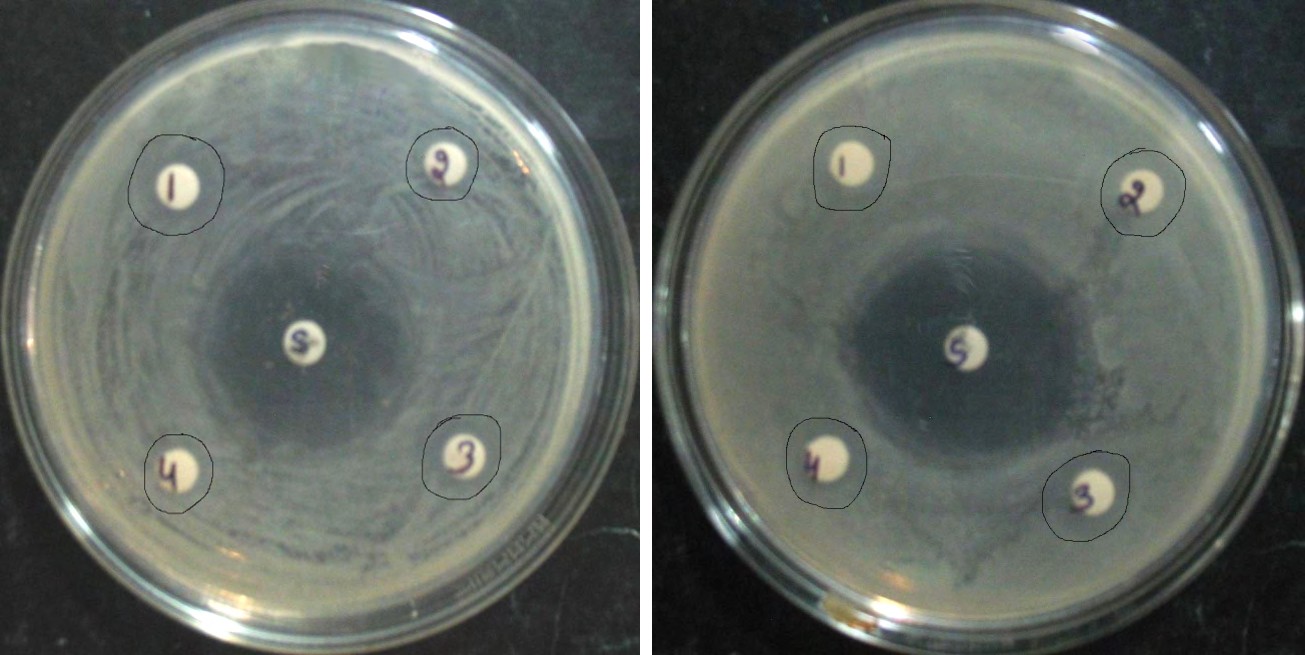
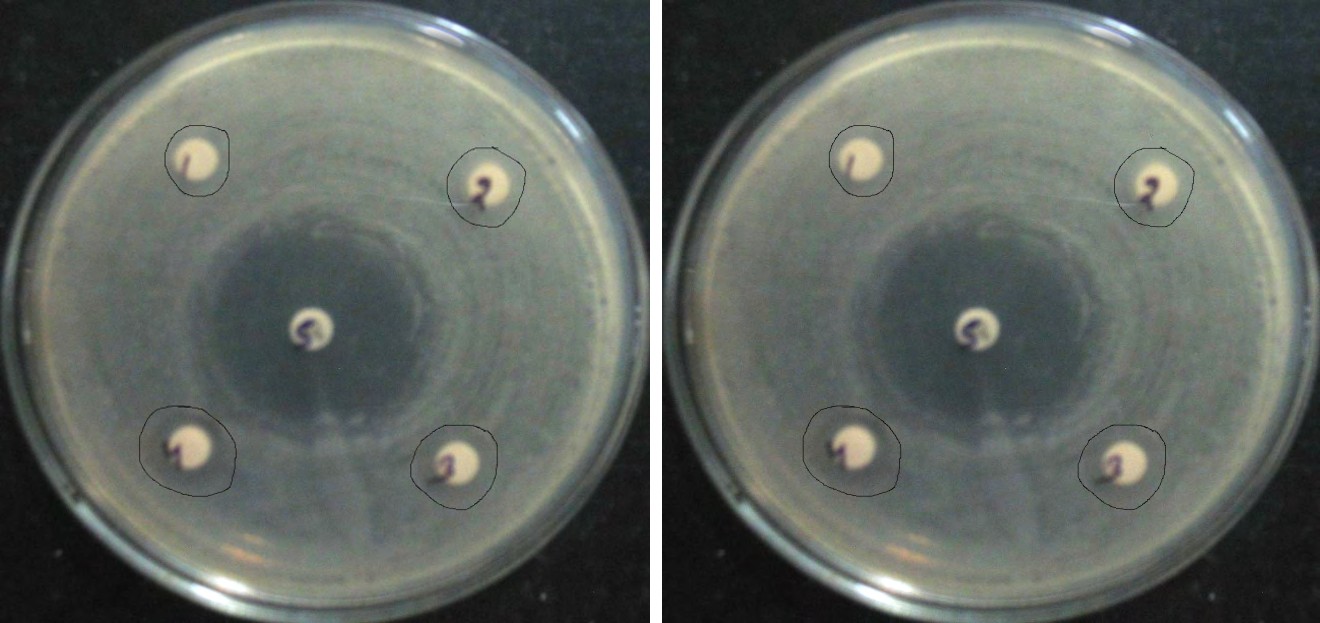
In conclusion, a total of six coumarin derivatives, have been synthesized and evaluated for their antifungal and antimicrobial activities. The synthesized compounds possessed good to moderate antibacterial activity. The antibacterial activity data indicate that certain synthesized derivatives 7a, 7c, 7d and 7e exhibited marked inhibitory activity against the test organisms. The compounds having secondary amines exhibit a very good activity against Gram negative and Gram positive bacteria. The compounds substituted with primary amines had low activity against Gram positive and Gram negative bacteria as compared to secondary amines (Figure 2). The secondary amines possessing bulkier alkyl substitution i.e. diisopropyl had better activity. The activity was maximum when secondary amine was involved in cyclic structure (Table 2).
| Sr.No. | Compound | Conc.(µg/ml) | Disc Size (mm) | Zone of Inhibition in (mm) | ||
|---|---|---|---|---|---|---|
| S. aureus (MTCC 3160) | Shigella flexneri (MTCC 1457) | Candida albicans (MTCC 227) | ||||
| 1 | Standard* | 10 | 6 | 29.12 | 29.71 | 22.7 |
| 7a | 100 | 6 | 18.23 | 17.07 | 8.83 | |
| 50 | 6 | 18.02 | 16.27 | 8.86 | ||
| 25 | 6 | 17.9 | 14.26 | 7.95 | ||
| 12.5 | 6 | 16.86 | 15.03 | 10.23 | ||
| 2 | Standard | 10 | 6 | 28.94 | 28.99 | 20.23 |
| 7b | 100 | 6 | 11.26 | 10.02 | 9.36 | |
| 50 | 6 | 9.28 | 11.02 | 7.86 | ||
| 25 | 6 | 10.52 | 9.81 | 10.19 | ||
| 12.5 | 6 | 9.85 | 10.51 | 10.22 | ||
| 3 | Standard | 10 | 6 | 28.6 | 28.63 | 21.62 |
| 7c | 100 | 6 | 18.01 | 15.57 | 10.27 | |
| 50 | 6 | 17.5 | 14.28 | 10.22 | ||
| 25 | 6 | 15.09 | 15.03 | 9.36 | ||
| 12.5 | 6 | 14.26 | 13.27 | 8.12 | ||
| 4 | Standard | 10 | 6 | 29.23 | 28.53 | 20.12 |
| 7d | 100 | 6 | 15.06 | 14.23 | 9.95 | |
| 50 | 6 | 14.05 | 15.29 | 8.94 | ||
| 25 | 6 | 12.02 | 13.55 | 8.2 | ||
| 12.5 | 6 | 13.36 | 14.23 | 8.02 | ||
| 5 | Standard | 10 | 6 | 28.9 | 29.02 | 20.06 |
| 7e | 100 | 6 | 15.59 | 14.36 | 8.82 | |
| 50 | 6 | 13.05 | 15.26 | 7.86 | ||
| 25 | 6 | 14.95 | 13.35 | 9.36 | ||
| 12.5 | 6 | 12.82 | 13.27 | 10.26 | ||
| 6 | Standard | 10 | 6 | 28.13 | 28.65 | 21.33 |
| 7f | 100 | 6 | 8.05 | 11.86 | 7.86 | |
| 50 | 6 | 9.25 | 9.87 | 7.47 | ||
| 25 | 6 | 10.95 | 11.97 | 6.82 | ||
| 12.5 | 6 | 11.11 | 12.26 | 7.36 |
*Standard: Ciprofloxacin and Fluconazole. Table: 2 In-vitro antimicrobial activity of synthesized compounds.
CH3
O O
a O
OH HO O O
1 2 3 5 Resorcinol Ethylacetoacetate 7-hydroxy-4-methyl coumarin Ethyl 2-(4-methyl-2-oxo-2H- chromen-7-yloxy) acetate O O R O CH3 O OH Cl b O EtO HO O O
4 O
Ethylchloroacetate
c CH3
CH3
d O HO
O O
O O
6 7
2-(4-methyl-2-oxo-2H-chromen -7-yloxy) acetic acid (7a-f) Reagents and Conditions: a) Conc. H2SO4, stir for 30 min at 0-5˚ C; b) Pot. Carbonate, reflux for 24 hr; c) Methanol, NaOH, stir for 3 hr; d) NMM, IBCF stir for 2-3 hr.
Acknowledgement
The authors are thankful to SAIF, Punjab University, Chandigarh, for providing spectral data of synthesized compounds. We are also grateful to Management, ASBASJSM College of Pharmacy for providing the necessary facilities.
Conflict of Interest
The authors declare no conflict of interest
References
-
Ansari KF, Lal C (2008) Eur J Med Chem 20: 1-6.
-
Byarugaba DK, Ade J Sosa (2009) Antimicrobial Resistance in Developing Countries, Springer Science.
-
Saga T, Yamaguchi K (2009) Journal of the Japan Medical Association 52: 103-108.
-
(2004) Powers USFDA 10: 23-31.
-
Khode S, Maddi V, Aragade P, Palkar M, Ronad PK, et. al. (2009) Synthesis and pharmacological evaluation of a novel series of 5-(substituted)aryl-3-(3-coumarinyl)-1- phenyl-2-pyrazolines as novel anti-inflammatory and analgesic agents. Eur J Med Chem 44(4): 1682-1688.
-
Gupta JK, Sharma PK, Dudhe R, Chaudhary A, Verma PK (2010) An Univ Bucuresti Chimie 19: 9-21.
-
Sahoo SS, Shukla S, Nandy S, Sahoo HB (2012) Synthesis of novel coumarin derivatives and its biological evaluations. Eur J Exp Bio 2: 899-908.
-
Singh OM, Devi NS, Thokchom DS, Sharma GJ (2010) Novel 3-alkanoyl/aroyl/heteroaroyl-2H-chromene-2- thiones: synthesis and evaluation of their antioxidant activities. Eur J Med Chem 45(6): 2250-2257.
-
Amin KM, Eissa AAM, Abou Seri SM, Awadallah FM, Hassan GS (2013) Synthesis and biological evaluation of novel coumarin-pyrazoline hybrids endowed with phenylsulfonyl moiety as antitumor agents. Eur J Med Chem 60: 187-198.
-
Siddiqui N, Arshad MF, Khan SA (2009) Synthesis of some new coumarin incorporated thiazolyl semicarbazones as anticonvulsants. Acta Pol Pharm Drug Res 66: 161-167.
-
Sashidhara KV, Kumar A, Kumar M, Srivastava A, Puri A (2010) Synthesis and antihyperlipidemic activity of novel coumarin bisindole derivatives. Bioorg Med Chem Lett 20(22): 6504-6507.
-
Fais A, Corda M, Era B, Fadda MB, Matos MJ, et al. (2009) Tyrosinase inhibitor activity of coumarin-resveratrol hybrids. Molecules 14(7): 2514-2520.
-
Matos MJ, Vina D, Janeiro P, Orallo F, Uriarte E, et al. (2009) 13th International Electronic Conference on Synthetic Organic Chemistry (ECSOC-13) pp: 1-30.
-
Pierson JT, Dumetre A, Hutter S, Delmas F, Laget M, et al. (2010) Synthesis and antiprotozoal activity of 4-arylcoumarins. Eur J Med Chem 45: 864-869.
-
Hodak K, Jakesova V, Dadak V (1967) Ceska Slov Farm 16: 86-91.
-
Chain EB (1958) Chemistry and Biochemistry of Antibiotics. Annual Review of Biochemistry 27: 167-222.
- Potential Medicinal Herbs and Secondary Metabolites in Combating Corona Virus
- Monkeypox and its Clinical Implications in Pregnancy
- Pharmacognostical Analysis of the Leaves of Important Nervine Medicinal Plant: Strychnos Nux-Vomica L
- Assessment of Antibacterial Activity of Various Solvent Extracts of Dictyota Dichotoma Against Multidrug Resistant Bacterial Strain
- An Insights of Bioactive Elements on Malignancy: Mechanistic Avenues
- Advances and Future Directions in Pharmacognosy and Chinese Medicine