
Review on Wound Healing Activity
Background: Wound healing is considered to be the beneficial cellular and biological components that divide the scale in an effort to improve wound healing. Wound healing is defined as physiological phase and delayed wound healing will increase the risk of microorganism infection. Improved wound healing is done by reducing the time required for healing or to reduce the risk of miscarriage. Purpose: The World Health Organization (WHO), along with India, has promoted the use of traditional medicine because it is inexpensive, readily available, and widely believed in the community in developing countries, etc. The literature suggests that simple traditional plants are beneficial. In the treatment of several skin-related problems and in wound healing. Results: Tridax procumbens Linn (Asteraceae) that grows extensively in courtallam and surrounding areas used by people with small cuts, fragments. This plant is readily available in any region of the world. The Tridax daisy plant grows in all kinds of landfills. During the rainy season it grows rapidly and this evergreen plant is widely used as a wound healer, which helps the researcher to devise new methods of wound healing for human consumption.
Introduction
The current practice leads to the development of new wound care treatments, combining traditional healing agents with loading silver nanoparticles into nanocabs, aloe elgin hydrogels, the use of advanced products / techniques in propolis and honey films coating hydrogel sheet. India has rich vegetation, which is widely distributed throughout the country. Herbal medicines are the basis for the treatment and prevention of various diseases and conditions in traditional practices such as Ayurveda, Unani and Siddha. The extracts from plants play an important role in traditional and Western medicine. Herbal remedies have been part of human development and health care for thousands of years. Plant-based herbs are commonly used in India and China. A WHO study reported that more than 80% of the world’s population still rely on traditional medicine for various ailments. About 25 percent of medicinal plants in developed lands are based on plants and their derivatives, and the use of herbal remedies by indigenous peoples in rural areas in developing lands is well known [1, 2].
Wound
The wound has been described as a result of disruption of the anatomical or useful function of living tissue due to physical, chemical, microbic or electrical shock. Wound healing is the body’s process of making dermal and epidermic tissue.
Cooling is activated when platelets in the blood are found in contact with the exposed albuminoid which leads to platelet aggregation and the absence of natural process factors in the formation of protein clots at the site of injury [3].
The wounds square measure the big issues for the patient and the doctor a like; ulcers affect a variety of sizes that exceed the patient’s size and significantly reduce their quality of life. Current estimates indicate that some 6 million people have chronic illnesses worldwide. There is a division to measure a few Indian studies about the specialty in the treatment of chronic ulcers. In another study, the prevalence of chronic ulcers in the community was rumored to be 4.5 / 1000 people wherever that number of malignancies doubled in 10.5 / 1000 people [4].
In recent years, there has been a dramatic increase in the use of natural remedies for various skin ailments, such as cuts, burns, and cuts. Remedies provide higher safety for wound healing products compared to chemically priced additives [5]. Wound healing is the process by which the skin passes through because it repairs wound damage. There are 3 square measure the main type of wound healing, medical betting and wound type. These square measurements are known as primary, secondary and tertiary wound healing.
Major Wound Healing: Refersed when doctors closed the base of the wound, stitches, glue or other methods of wound healing procedures. Closing the wound during this time reduces the lost tissue and allows the body to focus on closing and cooling the wound in a small area instead of the first large wound. For example, a doctor may be able to sew a very large wound instead of allowing the body to recover from all the cuts.
Second Wound Healing: Occurs when a wound that cannot be stitched causes excessive tissue loss. Doctors may leave a wound so that it will heal naturally in these conditions. This may be more common in wounds with a rounded edge, an uneven area, or a square measure in a particular area of the body wherever movement makes stitching or other sealing techniques impossible. It depends on the body’s healing process. This procedure takes a long time, which can result in a solid wound size, risk of infection and infection and other factors such as the use of bandaged medication.
Higher Education Wound Healing: It occurs when there is a need for a delay in the process of closing the wound. This may be necessary if doctors fear that they may catch the virus in the wound by closing it. In these cases, they will allow the lesions to heal or wait for the results of other treatments that require space before closing the lesions [6].
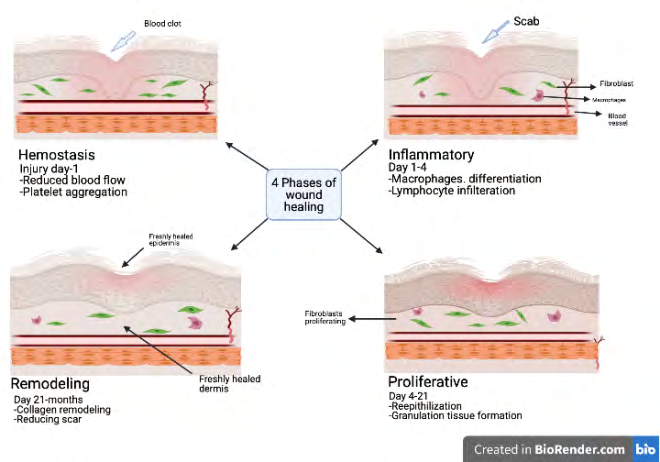
Separation of Wounds: Wounds are classified as open and closed due to the underlying cause of wound formation and severe and chronic wounds in the concept of wound healing physiology. Wound healing involves a complex series of interactions between different cell types, Cytokine mediators and the outer cell matrix. Common stages of wound healing include bleeding, inflammation, swelling, and reconstruction [7].
Open the wounds In this case the blood flows out of the body and the bleeding is clearly visible. Any classified as; cuts, bruises or cuts of wounds, bruises or external wounds, piercing wounds, penetration wounds and gunshot wounds [8].
Closed sores In closed wounds blood escapes from the vascular system and yet resides inside the body. Includes constipation or abrasions, hematomas or blood clots, bruising injuries etc.
Bad wounds It may be tissue damage that generally precedes the systematic and timely recovery that leads to the continuous restoration of anatomic and purposeful integrity. Separate the measurement sometimes caused by cuts or surgical incisions and complete the wound healing process within the expected time [9].
Chronic ulcers Chronic wound is separated from undeveloped lesions in traditional stages of healing and therefore enters a pathologic inflammatory condition. autoimmune disease or medication for common causes of chronic ulcers [10].
Response to an injury, either surgical or traumatic and rapid and broken tissue or wound and go through 3 stages to contribute to the final repair:
- Inflammatory stage
- Growth stage
- Repair section The inflammatory phase prepares the earth for healing and prevents the wound by swelling and inflammation, so that the movement is limited. The fibro plastic part reconstructs the structure, and the repair phase provides the final type.
Phase of Inflammation
The inflammatory phase begins as soon as the injury usually lasts between 24 and 48hrs will continue for up to two weeks in some cases. They started a haemostatic method to prevent blood loss in the wound area. An important clinical manifestation of inflammation, ribbon, calories, tumor, heart failure and fuction-laesa is seen as a result. This stage is characterized by inhibition and consolidation of the protoplasm to cause thickening and after vasodilation and the process of the body giving inflammation to the wound area [11].
Growth Stage The expansion phase mainly involves the production of repair kits and the majority of solid muscle damage [12].
Redesign Phase This is a necessary part of tissue repair and is often overlooked as the end result of those mixed events that broken tissue will be repaired with a scar [12].
Plant profile
The Tridax flower is often called “Ghamra” and in English it is better known as the “Coat buttons ”due to the emergence of flowers that have been widely used in the ayurvedic system of many diseases and are still being distributed to” Bhringraj “by a handful of authors who are a documented medicine for liver disease [13]. Plant science name: Tridax procumbens. Common words: Marathi: kambermoodi, jakhamjudi, tantani. Hindi: Ghamra English: coat buttons, Tridax flower Sanskrit: jayantiveda
| Kingdom | Plantae |
| Sub-kingdom | Tracheobionta |
| Division | Spermatophyte |
| Sub division | Magnoliophyte |
| Class | Magnoliopsida |
| Sub-class | Asteridae |
| Order | Asterales |
| Family | Araceastee |
| Genus | Tridax |
| Species | Procumbene |
Table 1: Taxonomic classification of Tridax daisy.
Biological Source: is found in the juice of fresh leaves of Tridax procumbens. Components used: whole plant (leaf, stem, flower, root etc.)
Local source
This plant is native to tropical America and is found in the tropics of Africa, Asia, Australia and India. It is a wild tree that is widely distributed throughout India [13].
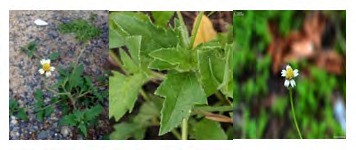
Definition: A perennial herb that grows up to 20cm tall. Leaves: straight, opposite, scattered or rough, sharp, fleshy and yellow. Flowers: a flower that resembles a medium-sized white flower with white or yellow three-pointed beams. Fruits: Strong pains covered with strong hair and have a white calyx with feathers at the end. Seeds: varied, small with hairy in one aspect of air circulation. Flowers and fruits appear throughout the year. Coat buttons are found along roadsides, garbage dumps, canals, railways, riverbanks, crevices and mounds. Its widespread distribution and its importance as a weed are due to its widespread distribution and mass production of seeds [13].
Macroscopy
Tridax procumbens can be a small perennial herb with a short, blushy blade like leaves. Corolla is yellow. It is a common weed that grows in open areas, rough soils made in tropical, subtropical climates, in damp areas. The stem rises 30-50cm high, has branches, rooted in places. The leaves are simple, contrasting, say, easy to ovate. 3-7m tall, unusual base, base wedge formed, soon with stem leaves, hairy in both places. The flowers are tubular, yellow with hairs, inflorescence capitulum [14].
Microscope
Microscopic research is performed by preparing small pieces of leaf, stem and petiole. The small parts are collected in a glass glass and blended with a bleach agent and a little boiling. Thin parts were then washed with water, soaked in safranin and glycerin for detection [15].
Petiole
The leaf stem was found to be a drainage organ near the distal end and a crescent was formed near the side of the bed. One stratified stratum was covered with cuticle and was interrupted by simple, cellular, 3-5 trichomes. Hyper dermis was 1-2 celled and collenchymatous. Ground parenchymatous tissue, vascular bundle 5, the size of the vascular bundles varies from central to large to small. These were centripetal xylems surrounded by phloem.
Root
The Dicot root genus is present in Tridax procumbens and consisted of the ancestor of 2-3 layer cells, 8-12 layer cells epidermis, xylem, phloem, and medullary radiation.
The leaf
The flexible part of the leaf showed dorsiventral, stratum in one bed per area and loaded with a thick cuticle. T.S. passing through the medial ribs showed a slight degeneration in the ventral region and a slight eruption on the dorsal side. The basic cells of the trichomes were swollen and the trichomes looked like nails. Meristeel contains dozens of arteries that are located in one secretion area surrounded by other parenchymatous cells filled with dark content. T.S. passing through the laminar area shows a single-layer palisade cells just below the epidermis followed by mesophyll with 5-7 cells, a parenchyma with no intracellular spaces.
Stem
The epidermis was a single layer, with thick, thin and thin walls surrounded by trichomes. Cork cells consist of 2-4layers, vascular bonds were surrounded by polygonal lignified parenchymatous cells, above the cambium, many patches of a small group of sieve tissue embedded in parenchymatous cells.
Phytochemical Features
Leaf and other parts of T. procumbens are reported to contain flavonoids, alkaloids, carotenoids, hydroxycinnamates, lignans, benzoic acid derivatives, phytosterols, tannins, raw proteins, soluble carbohydrates and calcium oxide [16].
The presence of fumaric acid, β-sitosterol and pentacyclic triterpenoid oleanolic acid has also been reported [16]. Luteolin, glucoluteolin, quercetin and isoquercetin have been reported in flower extracts [17]. Some phytochemicals are found mainly in T. procumbens are 2,6-dihydroxyacetophenone, 2-O-b-D- glucopyranoside, echioidin, pinostrobin, dihydroechiodinin, tectochrysin-5-glucoside, methyl salicylate 5, glucoside, trimethoxyflavone, skull-skull , androechin, tectochrysin, 5,7,2’-trimethoxyflavone, echioidin, skullcapflavone ii, 5,7-dimethoxyflavone and andrographidine.
Flavonoids
Recent research has the undisputed presence of 23 flavonoids in T. procumbens with a total content of about 65g / kg. kaempferol and catechin and its derivatives (-) - epicatechin, (+) - catechin, (-) - eigallocatechin, (+) - gallocatechin, (-) - epigallocatechin-3-gallate (EGCG) and (-) - epicatechin -3 -Gallete account of about 17.59% and 26.3% respectively. The remaining 56.11% represents 16 flavonoids mainly biochanin, apigenin, naringenin, daidzein, quercetin, butein, robinetin, baicalein, nobiletin, i -genistin, ellagic acid, luteolin, myricetin, baicalin, isorhamnetin and silymarin [18]. Flavonoids found in T. procumbens have been identified to resolve drug activity and to release atom, drugs, antiallergic, antiplatelet aggregation, antimicrobial, antiulcer, antiviral, growth and antihepatotoxicity [19].
Two new flavors 8,3’-dihydroxy-3,7,4’-trimethoxy-6- O-b-D-glucopyranosyl flavone and 6,8,3’-trihydroxy-3,7,4 ‘-trimethoxy flavone has been isolated from the rest of the plant with 4 known compounds Puerarin, esculetin, oleanolic acid and betulinic acid exhibiting antioxidant activity [19]. Procumbenetin is a new flavonoid, derived from the airborne components of T. procumbens, identified as 3,6-dimethoxy-5,7,2 ‘, 3’4’-pentahydroxy flavone 7-O-b- D-gluco-pyranoside based on spectroscopic techniques and chemical methods [20].
Kaempferol is the main flavonoid found in T leaves. procumbens pre-health research has shown that kaempferol and its glycosidic release have many therapeutic properties such as antioxidant, anti-inflammatory, analgesic, antimicrobial, antifungal, anticancer, cardioprotective, antidiabetic, and antiallergic activities. Kaempferol has many beneficial effects on inflammatory diseases by linking anti- inflammatory or immunomodulatory functions. It blocks various signaling pathways and suppresses enzymes that degrade the matrix.
Some Phytochemicals
Another bioactive molecule in T leaves. procumbens include caffeic acid and ferulic acid, tannins, stigmasterol and lutein [21, 22]. In vitro studies have shown that caffeic acid and ferulic acid have antioxidant, anti-inflammatory, anticancer and antimicrobial functions [23, 24]. Tannic acid and other hydrolysable tannins have many health benefits including reduced risk of heart disease, anticancer etc [25, 26]. One of the cellular mechanisms underlying health benefits is inhibition of activated Ca2 + channels [27]. Stigmasterol has pharmacological activities such as antihypercholestrolemic, cytotoxicity, antitumor, antioxidant, anti-inflammatory and analgesic [28].
Properties and Methods
Verification of Plant Material
Plant material was collected and certified in February 2021 at KLE Pharmacy College, Belagavi, Karanataka, India. New parts of the plant were used for small studies. The leaves are separated, dried, dried and stored in a sealed container for further study. Macroscopic and microscopic letters were studied as described in the quality control method. Parts of the Microtome were taken, stained, placed and viewed under a binocular and projection microscope.
Crop Extraction The collected leaves of Tridax Procumbens Linn were washed and dried in the shade.
Leaf extraction (Cold maceration process): 50gm of dried leaves of the plant. Apply 50gm dried portion to 250mlof ethyl alcohol / chloroform / methanol Suspend it for 7 days by stirring it from time to time.
Sort by using the Whatman no.1 paper filter.
Physicochemical Features [29]: Physicochemical parameters include moisture, total ash, acid-soluble ash, water-soluble ash, water-soluble ingredients and soluble alcohol bodies.
Phytochemical Tests: To analyze the phytochemical quality, acetone and methanolic extracts of the Tridax procumbens plant were tested using standard principles [30, 31, 32, 33, 34].
Steroid discovery: To obtain steroids 0.5ml of dissolved extract 5ml of chloroform in this concentrated sulfuric acid mixture is added from the side of the test tubes the upper layer is reddish and the acid layer shows yellow with green fluorescence indicating the presence of steroids.
Getting carbohydrates Molisch test: 1ml extract is treated with a few drops of Molisch reagent and a few drops of H2SO4 concentrated from the side of the test tube; the formation of a violet ring at the junction of the two layers indicates the presence of carbohydrate.
Benedict’s test: 1ml of the extract was treated with a benedict reagent and boiled for a few minutes and observed the formation of a red precipitate indicating the presence of carbohydrates.
Protein intake Xanthoproteic tests: 3ml of the extract is treated with a few drops of concentrated nitric acid which leads to the appearance of a yellow color indicating the presence of protein.
Ninhydrin test: 3ml of the extract was treated with 3ml of ninhydrin reagent and allowed to boil for a few minutes leading to the formation of a blue color indicating the presence of amino acids.
Detection of anthocyanins: To detect anthocyanins, 3ml of the extract was treated with a few drops of alcohol fecl3 the appearance of a dark blue solution indicates the presence of phenols.
Discovery of tannins: For tannins 3ml of extract is added to 1% of lead acetate, the formation of yellow rain indicates the presence of tannins and similarly 3ml of extract is treated with 3ml of fecl3 the appearance of green color indicates the presence of distorted tannins.
Detection of alkaloids: To obtain the concentrated alkaloids treated with 2ml of purified HCL and the mixture simmered for 20 minutes allowed to cool and filtered. The filtrate was used for Hager and Wagner’s experiments. Hager experiment- when the filter is treated with the appearance of a yellow Hager reagent of rain color indicates the presence of alkaloids. Wagner experiments- where the filtrate was treated with the formation of Wagner reagent for reddish- brown precipitates indicates the presence of alkaloids.
Detection of saponins: To detect saponins, plant extracts were tested for foam. 5ml of warm aqueous extract was placed under intense stirring and was observed for the formation of a stable foam indicating the presence of saponins.
Discovering flavonoids: To detect flavonoids, experiments with alkaline reagent were performed. The extract is treated with a 10% NaOH solution which leads to the formation of a deep yellow color indicating the presence of flavonoids.
Pharmacological Action
Wound healing work Liquid discharge of T. procumbens (leaves) are not only helpful in healing but also a helpful antidepressant treatment for male experimental mice. The increase in lysyl oxidase activity due to repair has been investigated to indicate wound healing function. Increased nucleic acid levels indicate action at the cellular level [35]. The leaf juice of Tridax procumbens was shown to suppress wound penetration in experimental animals.
Cardiovascular effects / hypotensive effects Aqueous extract in the leaf of T. Procumbene was studies and found positive results in the Sprague-Dawley mouse [36].
Hepatoprotective function The hepatoprotective activity of the tridax procumbens compounds was investigated against d-galactosamine / lipopolysaccharide (d-GalN / LPS) in hepatitis-infected rats.
Antimicrobial activity The entire Tridax plant has reported its antimicrobial activity on a variety of bacteria. The whole plant is lightened between the palms of the hands to obtain juice. Fresh vegetable juice is used twice a day for 3-4 days to heal cuts and wounds. The whole plant Tridax extract showed antimicrobial activity against pseudomonas aeruginosa only. Disk distribution method was used to test antibacterial activity [37].
Immunomodulatory function
Ethanolic extracts of Tridax leaves have an effect on the immune system in Albino mice treated with Pseudomonas aeruginosa and prevent similar growth [38].
And a significant increase in phagocytic index, leukocyte count and spleenic antibody cells was reported in the trachex-soluble ethanol component released by water. Stimulation of the immune response was observed with an increase in hemagglutination antibody titre. Studies have also revealed that Tridax influences humorous antibodies as well as between cells [39].
Antiparasite activity
Infectious diseases caused by protozoa, nematodes, trematodes, and cestodes make up more than 30% of the population and extracts of plants and their secondary metabolites may be the best way to identify these diseases [40].
Medical Use
In the last decade there are many people who suffer from a lack of even basic necessities, and the desire to live has prompted them to explore natural resources for therapeutic effects in relation to common ailments including Inflammation. Inflammation is a common reaction of the body to the insults caused by various biological and non-biological factors present in the environment. The procumbent is recognized for its medicinal properties.
Traditional Use
It is widely used as an anticoagulant, hair tonic, antifungal and insecticide, in bronchial catarrh, diarrhea, diarrhea, and wound healing. Traditional and complementary medicine are increasingly recognized as an integrated approach to health care in many countries (WHO, 2013). The use of plants for medicinal purposes may date back to the Middle Paleolithic period, about 60,000 years ago. T. procumbens is found to be used to treat anemia, fever, inflammation, and Central hepatopathies. Guatemala worldwide. T. procumbens are used as an antibacterial, antifungal, and antiviral. The whole plant is used to treat protozoal diseases such as malaria, leishmaniasis and diarrhea. Leaf juice is used to treat ulcers and to prevent bleeding. This type is also used to treat stomach and intestinal diseases, high blood pressure and diabetes. Watery T Quotes T. daisy have strong anti- plasmodial activity against chloroquine-resistant [41].
Conclusion
Wounds are physical injuries that lead to openness or cracking of the skin. Proper healing of wounds is essential to restoring the disrupted anatomical continuity and functional disruption of several cell types in injury. Reconstructive wounds repair is accompanied by a systematic and unexplained sequence of biological events that begin with wound closure and proceed to repair and repair of damaged tissue.
This review attempts to focus on the benefits and why it is necessary to continue researching plants that are known to be used in traditional medicine that could lead to the discovery and development of new common medicines.
Tridax daisy has a long history of traditional use but the isolation and testing of each phytochemical has not been properly associated with its medicinal properties and may indicate difficulty in reproduction after separation and testing. Various drugs are used to classify metabolites and to treat various diseases.
Research on the Tridax daisy plant also stimulates the development of novel therapeutic agents from a variety of compounds with different pharmacological properties. Therefore, there is a great deal of research focused on other activities of herbal medicine and clarifying how to do the same in the future.
References
-
Perumal SR, Ignacimuthu S, Raja DP (1999) Preliminary screening of ethnomedicinal plants from India. J Ethnopharmacol 66(2): 235-240.
-
Fabricant DS, Farnsworth NR (2001) The value of plants used in traditional medicine for drug discovery. Environmental health perspectives 109(1): 69-75.
-
Alison MR (1992) Repair and regenerative responses. 1st (Vol), Oxford University Press, Oxford: New York, pp: 365-402.
-
Gupta N, Gupta SK, Shukla VK, Singh SP (2004) An Indian community-based epidemiological study of wounds J Wound Care 13(8): 0020323-325.
-
Moghadamtousi SZ, Rouhollahi E, Hajrezaie M, Karimian H, Abdulla MA, et al. (2015) Annona muricata leaves accelerate wound healing in rats via involvement of Hsp70 and antioxidant defence. Int J Surg 18(1): 110- 117.
-
What to know about types of wound healing.
-
Jalalpure SS, Agrawal N, Patil MB, Chimkode R, Tripathi A (2008) Antimicrobial and wound healing activities of leaves of Alternanthera sessilis Linn. International Journal of Green Pharmacy 2(3).
-
Schultz GS (1999) Molecular regulation of wound healing. 2nd (Edn.), Acute and chronic wounds: Nursing management. St. Louis, MO: Mosby. pp: 413-429.
-
Lazarus GS, Cooper DM, Knighton DR, Margolis DJ, Percoraro RE, et al. (1994) Definitions and guidelines for assessment of wounds and evaluation of healing. Arch Dermatol 2(3): 165-170.
-
Menke NB, Ward KR, Witten TM, Bonchev DG, Diegelmann RF et al. (2007) Impaired wound healing. Clinics in dermatology 25(1): 19-25.
-
Krishnan P (2006) The scientific study of herbal wound healing therapies: Current state of play. Current Anaesthesia & Critical Care 17(1): 21-27.
-
Li J, Chen J, Kirsner R (2007) Pathophysiology of acute wound healing. Clin Dermatol 25(1): 9-18.
-
Guo SA, DiPietro LA (2010) Factors affecting wound healing. J Dent Res 89(3): 219-229.
-
Landge M.M, Somthane P.N (2020) A review on wound healing properties of coat buttons, International Journal of Science and Research 9(3): 1411-1415.
-
Vinita A, Singh K, Rani S (2013) Tridax Procumbens: a review on medicinal herb of India. International journal of advance pharmaceutical and biological sciences 3(1): 8-16.
-
Yadav P, Nayak P (2011) Microscopic Studies of Tridex Procumbens Linn. Bull Pharm Res 1(2): 25-32.
-
Mundada S, Shivhare R (2010) Pharmacology of Tridax procumbens a weed. Int J Pharm Tech Res 2(2): 1391- 1394.
-
Verma RK, Gupta MM (1998) Lipid constituents of Tridax procumbens. Phytochemistry 27(2): 459-463.
-
Ikewuchi CC, Ikewuchi JC, Ifeanacho MO (2015) Phytochemical composition of Tridax procumbens Linn leaves: Potential as a functional food. Food and Nutrition Sciences 6(11): 992-1004
-
Dillard CJ, German JB (2000) Phytochemicals: nutraceuticals and human health. Journal of the Science of Food and Agriculture 80(12): 1744-1756.
-
Xu R, Zhang J, Yuan K (2010) Two new flavones from Tridax procumbens Linn. Molecules 15(9): 6357-6364.
-
Ali M, Ravinder E, Ramachandram R (2001) A new flavonoid from the aerial parts of Tridax procumbens. Fitoterapia 72(3): 313-315.
-
Jude CI, Catherine CI, Ngozi MI (2009) Chemical profile of Tridax procumbens Linn. Pakistan Journal of Nutrition 8(5): 548-550.
-
Savithramma N, Rao ML, Bhumi G (2011) Phytochemical screening of Thespesia populnea (L.) So land and Tridax procumbens L. J Chem Pharm Res 3(5): 28-34.
-
Magnani C, Isaac VL, Correa MA, Salgado HR (2014) Caffeic acid: a review of its potential use in medications and cosmetics. Analytical Methods 6(10): 3203-3210.
-
Touaibia M, Jean-Francois J, Doiron J (2011) Caffeic Acid, a versatile pharmacophore: an overview. Mini Rev Med Chem 11(8): 695-713.
-
Scalbert A, Manach C, Morand C, Rémésy C, Jiménez L et al. (2005) Dietary polyphenols and the prevention of diseases. Crit Rev Food Sci Nutr 45(4): 287-306.
-
Namkung W, Thiagarajah JR, Phuan PW, Verkman AS (2010) Inhibition of Ca2+‐activated Cl− channels by gallotannins as a possible molecular basis for health benefits of red wine and green tea. FASEB J 24(11): 4178-4186.
-
Kaur N, Chaudhary J, Jain A, Kishore L (2011) Stigmasterol: a comprehensive review. International Journal of Pharmaceutical Sciences and Research 2(9): 2259-2265.
-
Hussain K, Shahazad A, Zia-ul-Hussnain S (2008) An ethnobotanical survey of important wild medicinal plants of Hattar district Haripur, Pakistan. Ethnobotanical leaflets 2008(1): 5.
-
Thakar SB, Sonawane DK (2013) Mangrove Infoline Database: A Database of Mangrove Plants with Protein Sequence Information. Current Bioinformatics 8(4): 524-549.
-
Dhanabalan R (2008) In vitro phytochemical screening and antibacterial activity of aqueous and methanolic leaf extracts of Tridax procumbens against bovine mastitis isolated Staphylococcus aureus. Ethnobotanical Leaflets 2008(1): 144.
-
Njoku OV, Obi C (2009) Phytochemical constituents of some selected medicinal plants. Afr J Pure Appl Chem 3(11): 228-233.
-
Hegde K, Joshi AB (2010) Preliminary phytochemical screening and antipyretic activity of Carissa spinarum root extract. Der Pharmacia Lettre 2(3): 255-260.
-
Trease GE, Evan WC (1983) BalliereTindall, Pharmacognosy. 12th (Edn.), English language Book society, pp: 309-315, 706-708.
-
Udupa AL, Kulkarni DR, Udupa SL (1995) Effect of Tridax procumbens extracts on wound healing. International Journal of Pharmacognosy 33(1): 37-40.
-
Salahdeen HM, Yemitan OK, Alada AR (2004) Effect of aqueous leaf extract of Tridax procumbens on blood pressure and heart rate in rats. African Journal of Biomedical Research 7(1).
-
Petchi RR, Parasuraman S, Vijaya C (2013) Antidiabetic and antihyperlipidemic effects of an ethanolic extract of the whole plant of Tridax procumbens (Linn.) in streptozotocin-induced diabetic rats. J Basic Clin Pharm 4(4): 88-92
-
Mahato RB, Chaudhary RP (2005) Ethnomedicinal study and antibacterial activities of selected plants of Palpa district, Nepal. Ram Chandra Sharma and Madhusudhan Upadhyaya 3(3): 1.
-
O ladunmoye MK (2006) Immunomodulatory effects of ethanolic extract of Tridax procumbens on swiss Albino rats orogastrically dosed with pseudomonas aeruginosa (NCIB 950). Trends in Medical Research 1(2): 122-126.
-
Tiwari U, Rastogi B, Singh P, Saraf DK, Vyas SP, et al. (2004) Immunomodulatory effects of aqueous extract of Tridax procumbens in experimental animals. J Ethnopharmacol 92(1): 113-119.
- Potential Medicinal Herbs and Secondary Metabolites in Combating Corona Virus
- Monkeypox and its Clinical Implications in Pregnancy
- Pharmacognostical Analysis of the Leaves of Important Nervine Medicinal Plant: Strychnos Nux-Vomica L
- Assessment of Antibacterial Activity of Various Solvent Extracts of Dictyota Dichotoma Against Multidrug Resistant Bacterial Strain
- An Insights of Bioactive Elements on Malignancy: Mechanistic Avenues
- Advances and Future Directions in Pharmacognosy and Chinese Medicine