
Evaluation of Effect on Combination of Five Medicinal Plants Extracts on Denaturation of Protein - A Remedy of Arthritis Disease
Arthritis is a type of autoimmune disorder and a major cause of disability throughout the world. Rheumatoid arthritis the denaturation of protein is one of the causes. In our present study, methanolic extract of combination of plant (Tinospora cordifolia (Thunb.) Miers, Curcuma longa L., Pongamia pinnata (L.) Panigrahi, Emblica officinalis L., Piper nigrum L.). Extracts inhibited heat induced protein denaturation and may be one of the reasons of possessing anti-arthritic activity. Methanolic extracts of different formulation for their antiarthritic activity against denaturation of bovine serum albumin. Result and attributed the 15 formulation out of F2 formulation possessed highly denaturation of protein. The denaturation of protein F2formulation presence of active principle such as alkaloids, flavonoids, saponins and terpenoids and HPTLC analysis major 2 bioactive compounds present which are responsible for this activity. GC-MS analysis of methanol extracts identified major bioactive with peak area 36.92 % is maximum in F2 formulation (10mg/10ml). In fact, herbal plants formulation of five plants for the F2 formulation are being used widely as medicine around decades for treatment of arthritic disease. Herbal medicine constitutes important resources for the treatment of arthritis disease.
Introduction
Arthritis is one amongst the oldest diseases. It is a systemic disease, affecting mainly joints. Internationally, the prevalence of arthritis is believed to range from 0.4 to 1.3% and incidences increases with age, women being affected thrice over men [1]. In adult Indian population a prevalence of arthritis rate of 0.75% was observed. Arthritis is one amongst the foremost common system disorder which will affect many tissues and organs but principally attack synovial joints. Arthritis can affect at any age but more common within the age range of 25-50 years [2]. Arthritis could be autoimmune of disease and a significant reason behind disability throughout the World. It is a chronic multisystem disease characterized by hyperactivity of certain immune reactions, persistent synovitis with diffuse proliferation, and in most of the cases deposition of autoantibodies to immunoglobulins called autoantibody [3]. In severe cases, the synovial inflammation results in articular cartilage damage, bone erosion, and subsequent changes in joint integrity usually peripheral joints are involved.
Some literature Ammon, et al. reported that in autoimmune disorder the denaturation of protein is one amongst the causes. Production of auto-antigens in certain rheumatic diseases is additionally due to in vivo denaturation of proteins [4]. Mechanism of denaturation probably involves alteration in hydrogen, hydrophobic electrostatic and disulphide bonding [5]. Various anti-inflammatory drugs have shown dose dependent ability to inhibit thermally induced protein denaturation. In our present study, methanolic extract of combination of plant extracts inhibited heat induced protein denaturation and will be one amongst the explanations of possessing anti-arthritic activity [6]. Formation of blood clots is one amongst the vital reasons of blood circulation problem. Thrombi or emboli can shack a vas and block the flow of blood in this location depriving tissues of normal blood flow and oxygen. This will lead to damage, destruction (infarction), or perhaps death of the tissues in this area. A blood is made from fibrinogen by thrombin and is lysed by plasmin which is activated from plasminogen by tissue proteinase (TPA). Fribrinolytic drugs are wont to dissolve thrombi in acutely occluded coronary arteries there by restoring blood supply to ischemic myocardium to limit necrosis and to boost prognosis [7].
Streptokinase is an antigenic clot buster used for the treatment of acute infarction. It reduces mortality as effectively because the non-antigenic altreplase in most infarct patients while having the benefits of being much more cost-effective. Tissue-type protease (TPA) is usually preferred as being effective and safer than either urokinase or streptokinase type activators. All available thrombolytic agents still have significant shortcomings, including the requirement for giant doses to be maximally effective, limited fibrin specificity and a major associated bleeding tendency. Due to the shortcomings of the available thrombolytic drugs, attempts are underway to develop improved recombinant variants of those drugs [8, 9, 10, 11, 12].
The plant represents an infinite reservoir of biologically active compounds with various chemical structures and protective/disease preventive properties (phytochemicals). Nearly 50% of medication employed in medicine is of plant origin and only a little fraction of plants with medicinal activity has been assayed. Therefore much current research has been dedicated to the phytochemical investigation of upper plants which have ethno-botanical information related to them. The phytochemicals isolated are then screened for various forms of biological activity like thrombolytic potentials [13]. Herbal preparations are used potential source of medication since times of yore to keep up health and regain healthy state of mind. Herbs showing thrombolytic activity are studied and a few significant observations.
The use of herbal medicines in India represents a protracted history of human interactions with the environment. Plants used for traditional medicine contain a good range of drugs that may be substances treat chronic diseases. The traditionally many plant reported to use as treatment of autoimmune disorder in Indian literature Deodhar, et al. [14, 15, 16]. But scientifically very less works in those plants. It is urgent must base upon traditionally knowledge prepare the formulation and their see the active ingredients. Plant derived drugs function a prototype to develop simpler and fewer toxic medicines. Among them Tinospora cordifolia, Pongamia pinnata, Curcuma longa, Emblica officinalis, Piper nigrum incorporates a big selection of bioactive principles in addition because it has been proven medicinally important plants for arthritis disease curing.
The modern medicine uses non-steroidal anti- inflammatory drugs, diseases modifying anti-rheumatic drugs, TNF- α antagonists and immunosuppressant drugs for the treatment of rheumatoid arthritis. These drugs have potent activity and long term administration is required for the treatments of chronic diseases. Furthermore, they produce some side effects include gastric ulcer, renal damage etc., and toxicity. Therefore there is a need for a new alternative natural therapy. Nowadays herbal plant extracts formulation and their isolated compounds were used both internally as well as externally for the treating inflammatory conditions like arthritis. The goal of the treatment is to cut back joint inflammation and pain, maximize joint function, and forestall joint destruction and deformity. The present study for screening of different formulations for drug development is to cure the rheumatoid arthritis using the protein denaturation method.
Material and Methods
Experimental Materials
Five medicinal plants were collected (Tinospora cordifolia, Curcuma longa, Pongamia pinnata, Emblica officinalis, Piper nigrum) from nearby areas of Chikhli village, District- Navsari during June-July, 2018 Table 1. The plant material of healthy and disease free plants were used to test the medicinal properties. The plants specimens were identified by Dr. Kalpesh Ishnava (Plant Taxonomist) at ARIBAS, CVM University, Vallabh Vidhynagar, Gujarat, India.
| Name of Plant | Family | Plant part used |
|---|---|---|
| Tinospora cordifolia (Thunb.) Miers | Minispermaceae | Stem |
| Curcuma longa L. | Zingiberaceae | Rhizome |
| Pongamia pinnata (L.) Panigrahi | Fabaceae | Leaf |
| Emblica officinalis L. | Euphorbiaceae | Fruit |
| Piper nigrum L. | Piperaceae | Leaf |
Table 1: List of preparation of formulation using medicinal plants.
Drying and Grinding the Plant Material: The plant material was collected and washed under running tap water to remove the dust particles. Then the plant materials were kept to dry at room temperature. Plant materials were cut into small pieces and distributed evenly to facilitate homogeneous drying. Protection from direct sunlight is advised to minimize chemical reactions induced by ultraviolet rays. After drying, plant materials were powdered in mixer grinder (Sumeet Ltd.) into a fine powder.
Preparation of plant extracts by Soxhlet (Hot extraction) apparatus 25 gm of plant powdered was packed in a thimble. Then it was serially extracted into solvent of increasing polarity methanol using a soxhlet apparatus. In this method finely ground plant powder was placed in a thimble made of whatman filter paper, which is placed in extractor. The condensed solvent drips into the thimble containing the plant powder and extract it by contact. The liquid contents of extractor siphon into flask. This process is continuous and is carried out until a drop of solvent from the siphon tube does not leave residues when evaporated. The advantage of this method compared to other methods, is that large amount of powder with a much smaller quantity of solvent. The extracts were collected in big petridish and were allowed it to evaporate at room temperature. After evaporation, the dried extract were scraped and collected into eppendrof tube, and yield extract was calculated. Extracts were stored at 4⁰C until use for further analysis.
Preparations of Herbal Formulation: The preparation of 15 different formulations of selected five different plants extracts using methanolic extracts (Table 2). The all extracts are prepared for the stock solution of 10mg/10ml, 20mg/10ml, and 50mg/10ml final concentration. The stock solution is used for the preparation of herbal formulation.
| Formulations | T. cordifolia | C. longa | P. pinnata | E. officinalis | P. nigrum |
|---|---|---|---|---|---|
| F1(10mg/ml) | 4 | 2 | 1 | 2 | 1 |
| F2 (10mg/ml) | 3 | 4 | 1 | 1 | 1 |
| F3 (10mg/ml) | 2 | 2 | 4 | 1 | 1 |
| F4 (10mg/ml) | 1 | 3 | 1 | 4 | 1 |
| F5 (10mg/ml) | 1 | 1 | 1 | 3 | 4 |
| F1(20mg/ml) | 6 | 5 | 4 | 3 | 2 |
| F2 (20mg/ml) | 5 | 4 | 3 | 2 | 6 |
| F3 (20mg/ml) | 4 | 3 | 2 | 6 | 5 |
| F4 (20mg/ml) | 3 | 2 | 6 | 5 | 4 |
| F5 (20mg/ml) | 2 | 6 | 5 | 4 | 3 |
| F1(50mg/ml) | 20 | 10 | 8 | 7 | 5 |
| F2 (50mg/ml) | 10 | 8 | 7 | 5 | 20 |
| F3 (50mg/ml) | 8 | 7 | 5 | 20 | 10 |
| F4 (50mg/ml) | 7 | 5 | 20 | 10 | 8 |
| F5 (50mg/ml) | 5 | 20 | 10 | 8 | 7 |
Table 2: The 15 different formulations are prepared.
Evaluation of invitro Anti-Arthritic Activity
Evaluation of Inhibition of Protein Denaturation
For the evaluation of invitro anti-arthritic activities of combination of five plants extract using the reported method by Shendkar, et al. [10, 16]. The method used was inhibition of protein denaturation using diclofenac sodium as a standard. The test solution (0.5ml) consists of 0.45ml of bovine serum albumin (5% w/v aqueous solution) and 0.05ml of test solution methanolic extract of plants. The test control solution (0.5ml) consists of 0.45ml of bovine serum albumin (5% w/v aqueous solution) and 0.05ml of distilled water. Product control (0.5ml) consists of 0.45 ml of distilled water and 0.05ml of test solution. Standard solution (0.5ml) consists of 0.45ml of bovine serum albumin (5% w/v aqueous solution) and 0.05ml of diclofenac sodium. Various concentrations (100,200,300,400,500 µg/ml) of methanolic extract of plants and diclofenac sodium (standard) were taken, respectively. The samples were incubated at 37⁰C for 30 minutes. After cooling the samples, 2.5ml Phosphate buffer saline adjusted at pH 6.3 was added. The absorbance was measured using UV-Visible spectrophotometer at 660 nm. The results were compared with diclofenac sodium. The percentage inhibition of protein denaturation can be calculated as – 100 Absorbance control Absorbance treated % of inhibition X Absorbance control =
Preliminary Phytochemical Analysis
Qualitative Phytochemical Analysis
The qualitative phytochemical analysis of alkaloid, flavonoid, saponin, sterol, terpenoid performed as per reported by the Anitha R, et al. [11] method [17].
Quantitative Phytochemical Analysis
Alkaloid Determination Method
5g of the sample was weighed into a 250 ml beaker and 200 ml of 10% acetic acid in ethanol was added and covered and allowed to stand for 4h. This was filtered and the extract was concentrated on a water bath to one-quarter of the original volume. Concentrated ammonium hydroxide was added drop wise to the extract until the precipitation was complete. The whole solution was allowed to settle and the precipitated was collected and washed with dilute ammonium hydroxide and then filtered. The residue is the alkaloid, which was dried and weighed [18].
Total Flavonoid Assay
Total flavonoid contents were measured with the aluminium chloride colorimetric assay. Methanolic extracts or standard solution of gallic acid (100ug mlˉ¹) was added to 10 ml volumetric flask containing 4ml of water. To the above mixture, 0.3ml of 5% NaNO2 was added. After 5 minutes, 0.3ml of 10% AlCl3 was added. After 6 min, 2ml of 1 mol L–1 NaOH was added and the total volume was made up to 10ml with water. The solution was mixed well and the absorbance was measured against a prepared reagent blank at 510 nm. Total flavonoid content of plants extracts was measured using standard readings [19].
Analytical Thin Layer Chromatography
Analytical Thin Layer Chromatography was performed to find out suitable solvent system for the development of chromatogram. The following solvent mixtures were tried on precoated TLC plates (Merck, silica gel 60 F254 plate, 0.25mm). Plate were developed using glass beaker which was pre-saturated with mobile phase for 20min. After that sample were applied from 2cm above of the plate using micro-capillaries. The samples were run up to height of 10cm. Methanol: Acetic acid: Water mobile phase used with composition (6.9:0.1:3). After development plate were removed and dried and visualize under UV light.
HPTLC Analysis
For chemical profile analysis, plant leaves extract formulation 10mg/10ml was taken. The sample used for the HPTLC analysis (Camag system equipped with a sample applicator Linomat-5, twin development chamber, TLC scanner-3 and integration software, documentation systemReprostar-3 with G5 digital camera) (Camag, Switzerland). HPTLC aluminium sheet pre-coated with silica gel 60 (1.05547 E Merck) was used as the adsorbent. Methanol: Acetic acid: Water (6.9:0.1:3) was used as the mobile phase. The chromatographic development chamber was saturated with mobile phase for 10 min prior to placement of the plates. The plates were run up to 8 cm height and derivatized (10% H2SO4in methanol). The derivatized plates were heated at 100°C for 4 min, bands were observed and scanned at 366 nm and photographs were taken for record.
Gas Chromatography Mass Spectroscopy (Gc-Ms)
The GC-MS analysis was done by electron impact ionization (EI) method on Auto system XL gas chromatography (Perkin Elmer Instrument, Germany) coupled to a Turbo Mass Spectrophotometer (Perkin Elmer
Instrument, Germany) at Sophisticated and Instrumentation Centre for Applied Research and Training (SICART), Vallabh Vidyanagar, Gujarat. The column was fused silica capillary column, 30 x 0.25 mm ID; coated with D-I, 0.25 μm film thickness. The temperature of column was programmed at 70 to 250° C at the rate of 10ºC /min increase, injection port temperature at 250°C. Helium was used as carrier gas at constant pressure of 100 kpa and flow rate of 20ml/min. Samples which dissolved in methanol was run fully at range of 60-550 amu and the results were compared by using NIST 107 Spectral library search programme.
Result and Discussion
Arthritis is one of the oldest diseases. It is a systemic inflammatory disease, affecting mainly joints. Internationally, the prevalence of arthritis is believed to range from 0.4 to 1.3%.In adult Indian population a prevalence of arthritis rate of 0.75% was observed.
Rheumatoid arthritis (RA) is a chronic autoimmune disorder characterized by systemic features and joint involvement which affects 1% of the world’s adults. It is one of the most common musculoskeletal system disorder that may affect many tissues and organs but principally attack synovial joints. In 1st stage swelling of the synovial lining, causing pain, stiffness, redness and swelling around the joints. In the 2nd stage the rapid division of cells which leads to the synovium to thicken. In last stage the inflamed cells releases the enzymes that may digest bone and cartilage, often causing the joint to lose its shape and alignment, more pain and loss of movement.
Medicinal plants have been used as natural medicines.
This practice has been living since prehistoric times. There are alternative ways during which plants are found useful in medicines like crude extract of plants has been used directly due to the presence of natural chemical constituents and natural compounds for the synthesis of medication like, colchicine, nicotine, quinine etc. for therapeutic purpose by folk people.
However, it’s been felt that a review with almost fuller information on the disease with focus to the event of satisfactory plant based drugs including combination therapy for successful treatment of all kinds of arthritis is required. The present study for screening of different formulations for drug development is to cure the rheumatoid arthritis using the protein denaturation method.
Extractive Yield (%) of Medicinal Herbs
Before evaluating the knowledge regarding the yield of extract from each herb is important. Lower extract yielding plants are not commonly preferred by the pharmaceutical industry though they are rich in their potency [18]. So, the work was carried out with yield calculation. We have selected methanol solvent for extracting the plant constituents. The organic solvent methanol eluted most of the phytoconstituents from the plant.
The yield of the solvent extracts is mentioned in the Table 3. The methanol extract showed maximum extractive yield of Tinospora cordifolia, Curcuma longa Pongamia pinnata, Emblica officinalis, Piper nigrum, that are 11.88 %, 49.2 %, 72.76%, 48%, 24.88% respectively Table 3. Environmental factors and the location of plants also play a significant role.
| Plants | Solvent | % yield |
|---|---|---|
| Tinospora cordifolia | Methanol | 11.88 |
| Curcuma longa | 49.2 | |
| Pongamia pinnata | 72.76 | |
| Emblica officinalis | 48 | |
| Piper nigrum | 24.88 |
Table 3: Extractive yield (%) of medicinal herbs.
Protein Denaturation by Using Bovine Albumin of Different Formulations
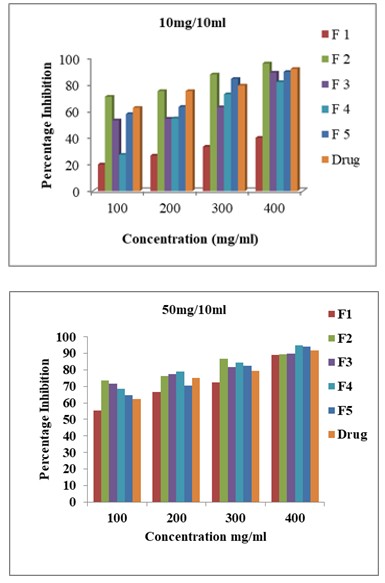
The effect of methanolic extract of combination of plants was evaluated against denaturation of bovine serum albumin. The results are summarized in Figure 1. The present findings exhibited a concentration dependent inhibition of protein denaturation by combination of plant extracts throughout the range of 100 to 400μg/ml. It was effective in inhibiting heat induced albumin denaturation. In BSA denaturation method at concentration of 100,200,300,400µg/ml methanolic extract of F2 formulation (10mg/ml) showed 70.83%, 75%, 87.5%, and 95.83% respectively and reference drug Diclofenac sodium. The present study finding that show the F2 formulation possessed maximum anti-arthritic effect against denaturation of protein in vitro.
F2 formulation (10mg/ml) present the phytochemical constitute of flavonoids, alkaloids and terpenoids. The F2 formulation it may be useful for curing of anti-rheumatism Figure 1.
Some literature reported that in rheumatoid arthritisthe denaturation of protein is one of the causes. Production of auto-antigens in certain rheumatic diseases may be due to in vivo denaturation of proteins [19]. Mechanism of denaturation probably involves alteration in hydrogen, hydrophobic electrostatic and disulphide bonding. Various anti-inflammatory drugs have shown dose dependent ability to inhibit thermally induced protein denaturation [20]. In our present study, methanolic extract of combination of plant extracts inhibited heat induced protein denaturation and may be one of the reasons of possessing anti-arthritic activity. Choudary, et al. [12] Review Tinospora cordifolia contain high fiber (15.9%), sufficient protein (4.5-11.2%), sufficient carbohydrate (61.66%), and low fat (3.1%) [21]. It has high potassium (0.845%), high chromium (0.006%), sufficient iron (0.28%), and sufficient calcium (0.131%) and important in various regulatory functions. Guduchi means to rejuvenate dead cells. It is widely used in veterinary folk medicine and has also claimed to be beneficial according to Ayurveda for the cure of skin diseases, diabetes and various infections for its anti- inflammatory, anti- arthritic [22]. It enhances Vitamin C and so function as an effective antioxidant [23]. In our present study, methanolic extract of combination of plant extracts inhibited heat induced protein denaturation and may be one of the plant materials of possessing anti- arthritic activity.
Arora, et al. [2] investigated the anti-inflammatory activity in different fractions of the petroleum ether extract of the rhizomes of turmeric (two constituents) in animals [24]. They found that the extracts reduced the granuloma growth and no toxic effects were observed. Chandra and Gupta (1972) demonstrated the anti-inflammatory and anti- arthritic actions of volatile oil of C. longa [25]. Pharmacological
actions of curcumin as an anti-inflammatory agent have been examined by Srimal [13, 14, 26]. Huang, et al_. [15] examined the inhibitory effects of curcumin on the proliferation of blood mononuclear cells and vascular smooth muscle cells [27]. The investigators suggested that curcumin could be use clinically in transplant atherosclerosis. Administration of 1200 mg C. _longa a day caused improvement of morning stiffness, walking duration, and relief of joint pain and swelling compared to phenylbutazone (30 mg) [28, 29]. In our present study, methanolic extract of combination of plant extracts inhibited heat induced protein denaturation and may be one of the plant materials of possessing anti- arthritic activity. There are data in the literature showing the administration of Curcuma longa powder in different patients with respiratory diseases and it was observed that these treated patients have relief in symptoms like cough and sputum or physical signs. Other authors reported the treatment of 18 patients with rheumatoid arthritis and found a real improvement on them, treated with 120 mg/day of the drug, and administered orally in patients [30] our result revealed that other author comparative better performance of methanolic extract of F2 formulation.
Mature seeds of karanja have recently gained a great commercial relevance owing to their high oil content, which is explored as an alternate source of fuel and energy [31]. The seeds are reported to contain on average about 28– 34% oil with high percentage of polyunsaturated fattyacids [32]. All parts of the plant have been used as a crude drug for the treatment of tumours, piles, skin diseases, itches, painful rheumatic joints wounds, ulcers, diarrhea etc., [33]. It has also been recognized to possess applications in agriculture and environmental management, with insecticidal activity. More recently, the effectiveness of P. pinnata as a source of biomedicines has been reported [34]. The leaves are hot, digestive, laxative, anthelmintic and cure piles, wounds and other inflammations. A hot infusion of leaves is used as a medicated bath for relieving rheumatic pains [35].
According to Bharat and review, the fruit is rich in, phyllaemblic compounds, gallic acid, tannins, flavonoids, pectin and vitamin C and also contains various polyphenolic compounds [36]. A wide range of phytochemical components including terpenoids, alkaloids, flavonoids, and tannins have been shown to posses’ useful biological activities. Many pharmacological studies have demonstrated the ability of the fruit shows antioxidant, anti-carcinogenic, anti-tumour, antigenotoxic, anti-inflammatory activities, supporting its traditional uses, which have been already discussed in detail by Shah NC [7, 37]. Stating about the nutritional and health care benefits of Amla fruit juice, its other products in which Chyavnaprash is the main poly herbal preparation, which constitutes 70% of the Amla formulations is immune enhancer and a health tonic for both children and elders [38]. Amla is a rare fruit which contains all tastes except salty. With sourness as the foremost taste, it is at the same time sweet, astringent, bitter and pungent. It is light, dry and cold in effect and the richest source of vitamin C. which has already been stated earlier, however, the laboratory tests show that every 100 gm of fresh amla provides nearly 700 mg of this vitamin which is 20 times higher than what is found in an orange. Our result revealed that other author comparative better performance of methanolic extract of F2 formulation.
The phytochemical investigations of Piper nigrum revealed that it contains variety of phytochemicals. Piperine was the first pharmacologically active compound isolated from different members of Piperaceae family. Many investigators isolated different types of compounds viz Phenolics, flavonoids, alkaloids, steroids, terpenes etc and many other compounds. The different pharmacological activities were reported due to the presence of these phytochemicals. Piperine reported to have four isomers viz; Piperine, Isopiperine, Chavicine and Isochavicine. Among all isolated compounds isolated from Piper nigrum Piperine, piperamide and piperamine were found to possess diverse pharmacological activities [39]. The pain and arthritic symptoms in rats were significantly reduced by piperine. It was concluded that piperine showed anti-inflammatory, analgesics and anti-arthritic activities in arthritis model of rats [40]. In fact, herbal plants are being used widely as medicine around decades for treatment of arthritic disease [41]. Herbal medicine constitutes important resources for the treatment of various ailments. Our result revealed that other author comparative better performance of methanolic extract of F2 formulation.
Phytochemical Analysis of Methanolic Extract of F2 Formulation
Qualitative Analysis
Phytochemical Analysis of Qualitative Analysis of F2 Formulation Methanolic Extract of Plants: Phytochemical constituents of the methanolic extract of plants were qualitatively tested for their presence as depicted in Table 4. The phytochemical constituents present in the methanol extract are alkaloids, saponins, flavonoids and terpenoid compound. The presence of these phytochemicals in the plants extract enhances their therapeutic potentials. The in- vitro anti- arthritic activity has been carried out using most popular inhibition of protein denaturation method. Alkaloids have powerful effect on the physiology of animals. They play some metabolic role and control development in living system [42]. Flavanoids compound are effective for many diseases including diabetes, Alzheimer’s disease, rheumatoid arthritis, and cancer [16, 43].
| Phytochemical Constituents | Colour Observed | Result |
|---|---|---|
| Alkaloid | Yellow | + |
| Flavonoid | Yellow | + |
| Saponin | Foam | + |
| Sterol | Brown | - |
| Terpenoid | Reddish brown | + |
Table 4: Phytochemical analysis of qualitative analysis of F2 formulation methanolic extract. +: Present ; -: Absent **Quantitati
Table 4: Phytochemical analysis of qualitative analysis of F2 formulation methanolic extract. +: Present ; -: Absent Quantitative Analysis: Phytochemical constituents of the methanolic extract of plants were quantitatively analyzed for the presence of % chemical constituents in plant under study. The maximum phytochemical present is alkaloid (7%) in the methanolic extracts and flavonoid content in the standard gallic acid at various concentrations (0.05µg/ml) were obtained.
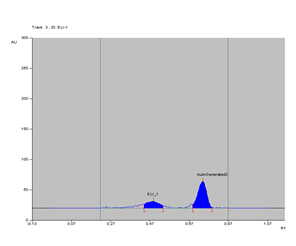
HPTLC Analysis of Methanolic Extract of F2 Formulation: The HPTLC profile under the fluorescence light 366 nm
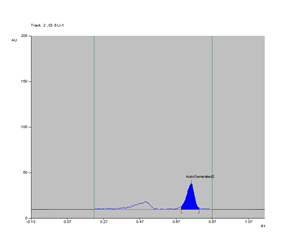
and UV light and chromatograph is observed (Figure 2). The maximum % of height was obtained in the peak no 2 which was72.70 % and end RF value was 0.79cm (Figure 2). For the identification of the chemical profile, the sample was subjected to further characterization and isolation of compound. In our study, total 2 bands were obtained in the sample. The band number 2 shown maximum broad band. This result shows maximum activity of denaturation of protein it may responsible.
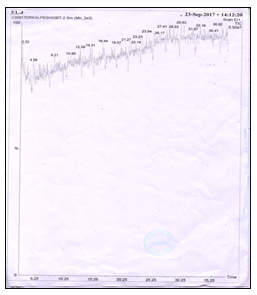
GC- MS Analysis of Methanolic Extract of F2 Formulation: GC–MS analysis of methanolic extract of plants is shown in the figure 3. The separation techniques coupled with GC-MS allowed successful separation of constituents as shown in the GC-MS in (Figure 3). The identifications of phytochemical compound were based on the peak area, retention time and molecular formula. The GC–MS data can be used to identify major bioactive, phytochemical constituent corresponding to major peak with an area of 36.92 %. The peak showing maximum percentage area 36.92 % at RT 35.25 in GC-MS analysis and scan 5.50e7 through mass spectrophotometer is shown in (Figure 3). The further analysis required the MS of GC, NMR and LC-MS for compound identification.
Conclusion
Methanolic extract of different formulation for their anti-arthritic activity against denaturation of bovine serum albumin. Result and attributed the 15 formulation out of F2 formulation possessed highly denaturation of protein. The denaturation of protein F2 formulation presence of active principle such as alkaloids, flavonoids, saponins and terpenoids which are responsible for this activity. F2 formulation (10mg/10ml) based on HPTLC analysis major 2 bioactive compounds present. GC-MS analysis of methanol extracts identified major bioactive with peak area 36.92 % is maximum in F2 formulation (10mg/10ml). In fact, herbal plants formulation of five plants for the F2 formulation are being used widely as medicine around decades for treatment of arthritic disease. Herbal medicine constitutes important resources for the treatment of various ailments. This formulation is further requirement for study of the cyto– toxicity and compound identification in F2 formulation.
Acknowledgements
Authors are thankful and acknowledge the Sophisticated Instrument Centre for Applied Research and Testing (SICART), DST, India for HPTLC and GC-MS analyses. Authors are also thankful to Charutar Vidya Mandal (CVM), VallabhVidyanagar, Gujarat, India and Director of Ashok and Rita Patel Institute of Integrated Studies and Research in Biotechnology and Allied Sciences (ARIBAS), New Vallabh Vidyanagar -388121, Gujarat, India, for providing necessary support research and laboratory facility.
References
-
Mittal J, Sharma MM, Batra A (2014) Tinospora cordifolia a multipurpose medicinal plant A Review. Journal of Medicinal Plants Studies 2(2): 32-47.
-
Arora RB, Basu N, Kapoor V, Jain AP (1971) Anti- inflammatory studies on Curcuma longa Turmeric. Indian J Med Res 59(8): 1289-1295.
-
Chandra D, Gupta SS (1972) Anti-inflammatory and anti- arthritic activity of volatile oil of Curcuma longa Haldi. Indian J Med Res 60(1): 138-42.
-
Ammon HPT, Wahl MA (1991) Pharmacology of Curcuma longa. Planta Med 57(1): 1-7.
-
Meera B, Kumar S, Kalidhar SB (2003) A review of the chemistry and biological activity of Pongamia pinnata. J Medicinal Aromatic Plant Sciences 25: 441-65.
-
Brijesh S, Daswani PG, Tetali P, Rojatkar SR, Antia NH (2006) Studies on Pongamia pinnata (L.) Pierre leaves understanding the mechanism(s) of action in infectious diarrhea. Journal of Zhejiang University Sci B 7(8): 665- 674.
-
Shah NC (2016) Phyllanthus emblica Emblica officinalis an important medicinal and commercial fruit of India. Part I The Scitech Journal 3(9): 35-42.
-
Ahmad A, Damanhouri ZA (2014) Therapeutic potential of Piper nigrum L Black Pepper The king of spices. Med Aromat Plants 3(3): 1000161.
-
Nirwane AM, Bapat AR (2012) Effect of methanolic extract of Piper nigrum fruits in ethanol-CCl4 induced hepatotoxicity in Wistar rats. Der Pharmacia Letter 4(3): 795-802.
-
Shendkar AK, Chaudhari SG, Shendkar YK (2014) In vivo Antiarthritic Activity of Withania coagulans Dunal Fruits. Indo American Journal of Pharmaceutical Research 4(01): 916-924.
-
Anitha R, Vennila V (2015) In vitro evaluation of antiarthritic Activity in different solvent extracts from Cuscuta reflexa. Journal of pharmacy and pharmaceutical sciences 4(4): 1340-1350.
-
Choudary N, Siddique MB, Azmat S, Khatoon S (2013) Tinospora cordifolia Ethanobotany Phytopharmacology and Phytochemistry Aspects. Int J Pharm Sci Res 4(3): 891-899.
-
Srimal RC, Dhawan BN (1973) Pharmacology of diferuloyl methane curcumin a non-steroidal anti-inflammatory agent. J Pharm Pharmacol 25(6): 447-452.
-
Deodhar SD, Sethi R, Srimal RC (1980) Preliminary study on anti-rheumatic activity of curcumin diferuloyl methane. Indian J of Medical Res 71: 632-634.
-
Wu DH, Shi GY, Chuang WJ, Hsu JM, Young KC, et al. (2001) Coiled coil region of streptokinase gamma- domain is essential for plasminogen activation. J Biol Chem 276(18): 15025-15033.
-
Amirmohammadi M, Khajoenia S, Bahmani M, Rafieian- Kopaei M, Eftekhari Z, et al. (2014) In vivo evaluation of antiparasitic effects of Artemisia abrotanum and Salvia officinalis extracts on Syphacia obvelata Aspiculoris tetrapetra and Hymenolepis nana parasites. Asian Pac J Trop Disease 4(1): 250-254.
-
Kavitha S (2014) In vitro Evaluation of Anti-arthritic Activity methanol solvent extract from plants. Journal of pharmacy and pharmaceutical science 3: 894-901.
-
Appian S, Madhavachandran V, Appukuttanair G (2013) Medicinal plants in the treatment of arthritis. Journal Annals of Phytomedicine 2(1): 3-36.
-
Brown JH, Mackey HK (1968) Inhibition of heat induced denaturation of serum proteins by mixture of non- steroidal anti-inflammatory agents and amino acids. Proc Soc Exp Biol Med 128(1): 225-228.
-
Grant NH, Alburn HE, Kryzanauskas C (1970) Stabilisation of serum albumin by anti-inflammatory drugs. Biochem Pharmacol 19(3): 715.
-
Volluri SS, Bammidi SR, Vangalapati M (2011) In-Vitro Anti- Arthritic Activity of Methanolic Extract of Bacopa monniera. Int J Chem Environ Pharm Res 2(2/3): 156- 159.
-
Laurence DR, Bennett PN (1992) Clinical Pharmacology. 7th(Edn.), Churchill Livingstone, New York, pp: 483.
-
Nicolini FA, Nichols WW, Mehta JL, Saldeen TGP, Schofield R, et al. (1992) Sustained reflow in dogs with coronary thrombosis with K2P, a novel mutant of tissue plasminogen activator. J Am Coll Cardiol 20(1): 228-235.
-
Adams DS, Griffin LA, Nachajko WR, Reddy VB, Wei C (1991) A synthetic DNA encoding a modified human urokinase resistant to inhibition by serum plasminogen activator inhibitor. J Biol Chem 266(13): 8476-8482.
-
Lijnen HR, Stassen JM, Vanlinthout I, Fukao H, Okada K, et al. (1991)The mechanism of fibrin-specific plasminogen activation by staphylokinase. J Biol Chem 266(18): 1182- 11832.
-
Marder VJ (1993) Recombinant streptokinase – opportunity for an improved agent. Blood Coagul Fibrinolysis 4(6): 1039-1040.
-
Harborne JB (1998) Textbook of Phytochemical Methods. A Guide to Modern Techniques of Plant Analysis. 5th(Edn.), Chapman and Hall Ltd, London, pp: 21-72.
-
Duraipandiyan V, Ayyanar M, Ignacimuthu S (2006) Antimicrobial activity of some ethnomedicinal plants used by Paliyar tribe from Tamil Nadu, India. BMC Complementary Altern Med 6: 35-41.
-
Subramoniam A, Madhavachandran V, Gangaprasad (2013) A Medicinal plants in the treatment of arthritis. Ann Phytomed 2(1): 3‑36.
-
Sundaraganapthy S, AnandaR, Malathy S,Rajamanickam R (2011) Determination of nutritive values for certain South Indian indigenous species. International Journal of Pharm & Ind Research 1(1): 17-21.
-
Manoharan P, Basford JE, Pilcher-Roberts R, Neumann J, Hu DY, et al. (2014) Reduced miR-124a and miR-150 levels are associated with increased proinflammatory mediator expression in KLF2-deficient macrophages. J biol Chem 289(45): 31638-31646.
-
Osman NI, Sidik JN, Awal A, Adam NAM, Rezali NI (2016) In vitro xanthine oxidase and albumin denaturation inhibition assay of Barringtonia racemosa L. and total phenolic content analysis for potential anti-inflammatory use in gouty arthritis. J Intercult Ethnopharmacol 5(4): 343-349.
-
Chopra RN (1982) Indigenous drugs of India. 2nd (Edn.), Academic Publisher, 4: 140-149.
-
Prince PSM, Padmanabhan M, Menon VP (2004) Restoration of antioxidant defence by ethanolic Tinospora cordifolia root extract in alloxan induced diabetic liver and kidney. Phytother Res 18(9): 785-787.
-
Huang HC, Jan TR, Yeh SF (1992) Inhibitory effect of curcumin, an anti-inflammatory agent on vascular smooth muscle cell proliferation. Eur J Pharmacol 221(3): 381-384.
-
Satoskar RR, Shah SJ, Shenoy SG (1986) Evaluation of anti-inflammatory property of curcumin in patients with post-operative inflammation. Int J Clin Pharmacol Ther Toxicol 24(12): 651-654.
-
Sarma AK, Konwer D, Bordoloi PK (2005) A comprehensive analysis of fuel properties of biodiesel from Koroch seed oil. Energy Fuels 19(2): 656-657.
-
Satyavati GV, Gupta AK, Tandon N, Seth SD (1987) Medicinal Plants of India. Indian Council of Medical Research 2.
-
Singh B, Sharma RA (2015) Antioxidant and antimicrobial activities of callus culture and fruits of Phyllanthus emblica L. Journal of Herbs spices & medicinal plants 21(3): 230-242.
-
Srivasuki KP (2012) Nutritional and health care benefits of Amla. Journal of Pharmacognosy 3(2): 147-151.
-
Shin SS, Jin M, Jung HJ, Kim B, Jeon H, et al. (2003) Suppressive effect of PG201 an ethanol extract from herbs on collagen induced arthritis in mice. J Rheumatology 42(5): 665-672.
-
Edeoga HO, Eriata DO (2001) Alkaloid, tannin and saponin contents of some Nigeria medicinal plants. Journal of Medicinal and Aromatic Plant Sciences 23(3): 344-349.
-
Ahmad N, Fazal H, Abbasi BH, Farooq S, Ali M, et al. (2012) Therapeutic potential of Piper nigrum L Black Pepper The king of spices. Med Aromat Plants 3: 161.
- Potential Medicinal Herbs and Secondary Metabolites in Combating Corona Virus
- Monkeypox and its Clinical Implications in Pregnancy
- Pharmacognostical Analysis of the Leaves of Important Nervine Medicinal Plant: Strychnos Nux-Vomica L
- Assessment of Antibacterial Activity of Various Solvent Extracts of Dictyota Dichotoma Against Multidrug Resistant Bacterial Strain
- An Insights of Bioactive Elements on Malignancy: Mechanistic Avenues
- Advances and Future Directions in Pharmacognosy and Chinese Medicine