
Immune-Boosting Plants Used in Turkish Folk Medicine and their Potential against COVID-19
Having suffered from a global epidemic of Covid19 mutants and variants, the entire world has turned its attention and hope to natural treatments that can keep the immune system active and strong. Recent research on some herbal preparations promises high hopes that they may be potential candidates for developing effective and safe immune-boosting drugs. Considering that Turkey has the richest flora of Europe and the Middle East and has an invaluable ethnomedical background, it offers a treasure-worthy potential for serious researchers. 128 plant taxa belonging to 41 families were determined from 99 works carried out in different regions of Turkey. Of these, only 60 (46.9%) were found to be responded to in experimental studies worldwide on immune system enhancement and other similar activities. Quercetin (10.3%), β-glucan, and catechin (5.1%) emerged as the most common active substances among 39 identified active substances. Urtica dioica (39.4%), Rosa canina (34.3%), and Punica granatum (17.2%) were recorded as the most used plants in Turkey. In addition, Phoenix dactylifera has appeared as the taxon with having more active compounds in the literature. This study presents the first national inventory of immune-boosting plants that are regularly used in traditional Turkish medicine, not only against Covid-19 but for the prevention and treatment of epidemic diseases in general. We present 68 (53.1%) plants whose effective immune-stimulating and strengthening properties have been confirmed in experimental studies in the world literature as ready-made material to the relevant pharmacological sectors.
Introduction
The Covid-19 outbreak, which emerged in Wuhan, China in late 2019, is still the first contagious epidemic the world has encountered after the Spanish Flu in terms of scope and size. The virus, which causes Severe Acute Respiratory Syndrome Coronavirus-2 (SARS-CoV-2) with its enveloped and single-stranded RNA content, rapidly expanded into a global dimension, with rising serious mortality rates after it turned into a regional epidemic [1]. The first verified Covid-19 case in Turkey was detected on March 11. As of 10 May 2021, 5,016,141 confirmed cases and 42,746 deaths have been reported to the World health organization [2]. In order to combat this rapidly emerging threat, prevention and treatment protocols were established and some social restrictions were imposed in a very short time [3].
The immune system is a complex system that forms the defence mechanism against diseases in a living thing, recognizes and destroys pathogens and tumour cells, and protects the body from foreign and harmful substances [4]. Two types of immunities - innate and adaptive, play a powerful role with increased susceptibility against infections. The likelihood of being diseased depends on the effectiveness of the immune response. Therefore, low immunity results in reduced ability to fight the pathogen and become more susceptible to disease. Most of the deaths associated with coronavirus are due to the suppressed immune system of the human body that is unable to fight against it, rather than the damage caused by the virus [5]. When the immune response is low, weak, or damaged, infections such as coronavirus attack people, especially young and older people. It also becomes an open invitation for other diseases such as diabetes, heart disease, or cancer [6, 7]. Since there is not yet a registered drug or vaccine 100% effective against COVID-19 and all its mutants or variants, the immune system is actually still the best defence we have. As long as the immune system is functioning normally, infections such as Covid-19 may go undetected [8]. It has been found that patients suffering from infectious and non-infectious diseases of the lungs are at greater risk from this viral infection due to their low immune system [9, 10]. Therefore, strengthening immunity (natural body system) can make a major contribution as a prophylactic measure against multiple pathogenic conditions as well as maintaining optimum health [10, 11].
The most common symptoms are fever, headache, cough, difficulty breathing and diarrhea. In some cases or in different variants of the virus, these symptoms may also remain silent. Or, on the contrary, it might be presented as severe pneumonia causing shortness of breath, kidney failure or even death. After the virus enters the respiratory mucosa cells of another host through droplets that are released by coughing and sneezing (or close-range speech), it releases its genetic code to initiate viral replication, then uses the following three mechanisms to circumvent the immune response: The virus implements various mechanisms to circumvent the immune response. In the first step, it inhibits the rapid expression of interferon type 1 (IFN-1), known as the “initial alarm”, which modulates immune cells to the “antiviral state” in the case of the system encountering the virus. Second, it blocks IFN-1’s existing signals in the system through inhibition of the phosphorylation of STAT-1 (Signal converter and transcription activator 1). Its third mechanism is the dysfunctioning of the immune system through excessive and prolonged production of IFN-1 by plasmacytoid dendritic cells (pDCs). The process causes an overproduction of activated neutrophils and macrophages, resulting in lung immunopathology (e.g. acute respiratory distress syndrome) [12]. This, in turn, activates a rapid reaction of innate immunity and results in the release of cytokines in large amounts, which play a key role in determining the extent of the infection. They damage beneficial cells and organs in the body, including defence cells, thus causing destruction and leading to death [4]. In the severe cases, a severe immune response is observed with deep lung exudates production, which limits ventilation and can subsequently trigger an uncontrolled inflammatory response, acute respiratory distress syndrome (ARDS) and septic shock, following bilateral pneumonia [13]. These two complications are the primary reasons of hospitalization in intensive care and mortality for COVID-19 in patients with a history of smoking and comorbidities [14]. Chronic obstructive pulmonary disease, including chronic inflammation of the upper respiratory tract (URI), hypertension, diabetes, malignant tumour, coronary heart disease, cerebrovascular disease, and chronic kidney disorders are among the most common of these clinical stories [4, 8].
Due to their ability to easily mutate their genetic material and gain resistance, developing a broad-spectrum antiviral drug/vaccine that is completely safe and has a potential of 100% effectiveness and it reaching the market level is really difficult and quite a time consuming [15]. Moreover, synthetically developed antiviral drugs sometimes have harmful or even fatal side effects that can cause significant health problems [16]. Indeed, a newly developed popular vaccine that received market approval a few months ago created clots as a side effect and caused deaths in vaccinated people. Within a week, its use was suspended by about 18 countries worldwide [17]. Therefore, their ability to minimize these side effects and having effective antiviral potential, herbs and plant-based herbal remedies seem promising in minimizing these side effects [16, 18].
A healthy and proper diet can strengthen the immune system and prevent the development of diseases and immune depression. For example, antioxidants can prevent or repair damage caused by harmful agents such as viruses and free radicals. The most powerful antioxidant in the human body is glutathione (GSH). If its level in the body increases, there is a simultaneous decrease in cytokine factors such as interleukin-6 (IL-6) and tumour necrosis factor-α (TNF-α), which cause to worsen the disease (proinflammatory), thereby helping the patient recover [4]. Especially medicinal plants, due to their rich content in minerals and vitamins, regularly contribute to the healthy development of the general intestinal microbiome, which constitutes 85% of the immune system, and to keep the immune system active in the fight against infections. Highlights of immune- enhancing herbs are garlic, black cumin and liquorice [6, 7]. They produce many important phytochemicals through their secondary metabolism and act as a defence against stress caused by environmental triggers and pathogens. In fact WHO’s an announcement that 80% of the world’s population trusts them for treatment highlights this fact [19, 20].
Herbal preparations/medicines are always defined as a therapeutic regimen that, rather than consisting of a single compound that interacts with a single target, is a concerted pharmacological intervention of several compounds that interact with multiple targets [21]. The results showed that not only do they modulate pathways related to strengthening the immune system, but also modulate multiple pathways that contribute to the progression of multiple disease pathogenesis that would add beneficial effect on specific issues such as hypertension and diabetes patients [10]. After the first SARS-CoV epidemic, it has been shown in many studies that plant extracts and phytochemicals produced from plants affect the virus with different mechanisms. These consist of direct antiviral activity, immune stimulator, inflammation modulator and symptom management. Direct antiviral activity includes inhibition of early replication through viral entry inhibition and late replication inhibition [20].
The most likely mechanism for immune enhancers is to trigger humoral and cellular immune responses [22]. For example, it has been found that aqueous and methanol extracts of basil leaves and seed oil increase the immune response by increasing T-helper and natural killer cells, lymphocyte count, phagocytic activity, neutrophil count, antibody titer, and the like [23, 24]. Similar positive effects of a wide variety of flavonoids found naturally in plants, such as quercetin, naringin, hesperetin, and catechin, against severe acute respiratory syndrome coronavirus (SARS-CoV) have been reported [25]. Researchers such as Terali, et al. [26] and Bibi, et al. [27] also elucidated the inhibitory action pathway against the ACE2 enzyme receptor, which enables COVID-19 to enter host cells. Hence, Utomo, et al. [28] reported that curcumin isolated from turmeric (Curcuma longa) inhibits SARS-CoV-2 protease, spike glycoprotein- RBD and PD-ACE2 receptors, based on their molecular insertion studies. As a result of their in-silico studies, Jakhmola Mani, et al. [29] stated that active ingredients such as a-hederin, thymohydroquinone and thymoquinone, obtained from the extract of Nigella sativa seeds, efficiently bind and block ACE2 and reduce hypoxia and inflammation caused by oxidative stress, strengthening immunity and can greatly assist in the fight against Covid-19. Also, ACE2 inhibitors have been identified in various species such as Allium sativum, Cerasus avium, Berberis integerrima, Alcea digitata, Rubia tinctorum, Peganum harmala etc. [30]. It has also been disclosed that herbal blockers which can inhibit the “pathogenic” kinase (PAK1), which plays a major role in the infection of many viruses, can support the immune system and serve as potential therapeutic agents against COVID-19 [31]. Also, curcumin rhizome [32] and tea- shaped extract of Schinus molle (pink peppercorn) fruits [33] contribute to the blocking of PAK1, strengthening the immune system against COVID-19 and other viral infections, and its essential anti-inflammatory formulations has been reported. On the other hand, Shaghaghi [34] showed in molecular dynamic simulations with terpinoid compounds, including thymoquinone extracted from Nigella sativa, that thymoquinone can reduce the likelihood of infection of SARS-CoV-2 [35]. Therefore, it is envisaged that medicinal plants may be effective in the prevention and treatment of COVID-19, either through direct use or their isolated compounds. However, many more advanced studies are needed for optimum effective dosage formulation and usage descriptions.
The followings can be given as examples of similar studies conducted in Turkey: In an in-silico study conducted by Adem, et al. [36], phytochemicals such as rutin, apiin, hesperidin, diosmin, and diacetylcurcumin were identified as potent COVID19-main-protease (Mpro) inhibitors. Yilmaz, et al. [37] reported that black mulberry (Morus nigra) syrup increased serum lysozyme, myeloperoxidase, superoxide dismutase and catalase activities and expression levels of immune-related genes, increasing innate immune parameters and antioxidant-related gene expression responses. In another study, Bilen, et, al. [38] revealed that the aqueous methanolic extract of lemon balm (Melissa officinalis) has antioxidant and cell-mediated-immune system-stimulating effects by increasing lysozyme, pepsin and trypsin activities. Thus, they highlighted that these herbal use recipes can play a vital role in reducing the symptoms of COVID19 infection and preventing the further spread of such pandemics.
The Covid-19 Pandemic is perhaps the most dangerous and deadly epidemic in human history, due to its rapid infection ability from person to person and its high incidence of mortality. The worldwide spreading rate and the concern that vaccines will be insufficient increase the need for new and natural medicine resources that will stimulate and strengthen our immunity without causing complications such as coagulation and side effects. However, well-designed, further-clinical studies are needed to demonstrate the potential efficacy of local herbal diets and preparations that have the potential to increase immunity against SARS- CoV-2 infection [39]. Turkey contains ethnomedical rich history and experience with the potential worth of ore for researchers and industry who are interested in this issue because it has the richest flora of Europe and the Middle East. The country’s official pharmacopoeia includes contributions from 37 countries, including the European Pharmacopoeia. The number of monographs with rich content prepared to standardize the use of commonly used herbs is increasing day by day [40].
While the previous study exhibited a national-plant list that promises a potential for anti-influenza activity in Turkey, in this study, the most comprehensive national- wide inventory of important medicinal plants that make the immune system quite active and strong is presented. In addition, the repercussions of these plants in the traditional medicine works of neighbouring and nearby countries and in the experimental studies conducted worldwide for the above-mentioned activities were examined, and the results were presented in tables and graphs. The taxa, which were not subject to any experimental research, are unique resource for drug researchers looking for new and natural resources.
Materials and Methods
Data Collection
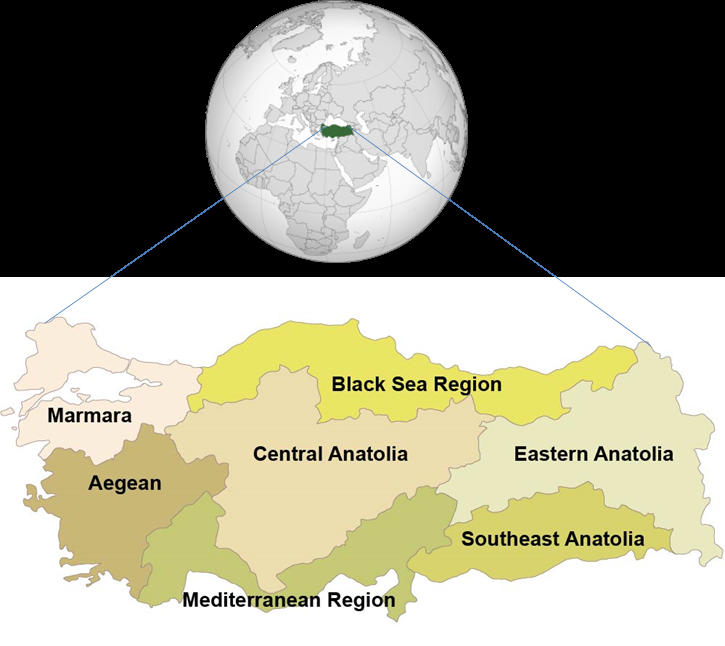
This study was conducted in three different stages by using only English and Turkish terms and by searching electronic databases respected by scientific circles such as Web of Science, Scopus, ScienceDirect, PubMed, ProQuest, Medline, HighWire Press, Cochrane Library, Google Scholar and EBSCO. As a result of the first, an inventory list of plants used as immune system stimulants, enhancers, or boosters in Turkish folk medicine was displayed (Table 3). In order to reach for more detailed information, master’s and doctoral theses conducted in all regions of the country (Figure 1) were also included in the study. To this end, approximately 1000 national works were determined between January 1999 and December 2020, and a consensus reached only over 99 (Table 1). The medicinal plants traditionally used by the people of the country for centuries were carefully distinguished from these studies according to the following criteria and demonstrated in Table 3. In the second, the equivalents of these plants in similar studies conducted in neighbouring and nearby countries were investigated. Thirdly, the implications of the experimental studies in the world literature on immune-boosting and other similar activities such as immunostimulant, immunomodulatory, immune-enhancing, and immunotherapeutic are discussed and the results are presented in Table 4.
| Region | Work | Citation | Citation% | Selected Studies |
|---|---|---|---|---|
| Eastern Anatolia | 15 | 53 | 7.5 | [41-55] |
| Marmara | 12 | 68 | 9.6 | [56-67] |
| Mediterranean | 12 | 66 | 9.3 | [68-79] |
| Black sea | 10 | 85 | 12 | [80-89] |
| Southeastern Anatolia | 10 | 78 | 11 | [90-99] |
| Aegean | 9 | 66 | 9.3 | [100-108] |
| Central Anatolia | 7 | 49 | 6.9 | [109-115] |
| All Regions | 24 | 246 | 34.4 | [18,40,116-137] |
| Total | 99 | 711 |
Table 1: Distribution of ninety-nine works selected from ethnomedical studies conducted in Turkey by region.
Data Selection
For the first and second part scans, the works determined to be within the scope of the study were carefully analyzed, compared and preferred according to the following criteria: I. The work shoud have been carried out within the boundaries of Turkey. II. It must have been presented in an ethnobotanical, ethno- medicinal or ethno-pharmacological framework. III. The plant taxa mentioned in the work should have been given in the study together with their scientific and local names.
The third screening study, which compares the taxa determined as a result of the first screening with the experimental studies published in the world literature, was made based on the following criteria: I. It should be an experimental study (in vitro or in vivo) II. The scientific name of the plant used should be included in the title of the work or in the text. I. One of the words “immune-boosting, immunostimulant, immunomodulator, immune-enhancing or immunotherapeutic” should be included in the title. II. The method of obtaining the compound or extracts used from the plant and the mechanism of action determined should be included in the text. III. For each taxon, only one experimental study should be selected that meets the above criteria. However, in the title, studies with active compounds are preferred.
Data Arrangement
Accurate-scientific nomenclature with international validity of the plant taxa identified in national surveys was performed using “Turkey Plant List (Vascular Plants)” [138], “The Plant List (http://www.theplantlist.org)” and “International Plant Names Index (http://www.ipni.org)”, and exhibited in Table 3 after arranging in alphabetical order.
Family names, English names, used parts, preparetions and references are included in the same table. The English names of taxa have been added to the table using the following databases or search engines: Springer Link (https://link. springer.com/article), National Gardening Association (https://garden.org/plants/search/text.php), Encyclopedia of Life (https://eol.org), and USDA PLANTS (https://plants. sc.egov.usda.gov/java). Due to showing distribution only in Turkey and its immediate vicinity and possibly have not been recognized yet in the English-speaking countries, the English names of Turkey’s endemic plants and the plants belonging to the “Irano-Turanian element” could not be detected in any sources. The results of the reseach whether the plants listed in Table 3 have been the subject of experimental studies in the world literature on their immune-boosting and other similar activities are presented in Table 4. In addition to the scientific names of the taxa with a match, active compounds (if any), used parts, type of activity, type of immune response, mechanism of action and related references are also included in the same table.
Comparative Analysis
After determining the definitive list of plants that have the potential to stimulate or strengthen the immune system in Turkish folk medicine, a second screening was performed to compare similarity rates with similar studies conducted in neighboring and nearby countries, and the results are presented in Table 2. Since there are very few taxa related to the immune system in the identified works, we tried to select as many works as possible from each country. However, the negative effects of repeated taxa on the total number and percentage have been avoided. For example; if taxa related to the immune system were mentioned in only three of the studies conducted in one country, only different taxa in these three works were included in the study. If Melissa officinalis was repeated for the same activity in all three, its number was considered to be 1, and it was not allowed to affect the total number as 3. The table includes country, region, total number of taxa used for immunity, number of similar taxa, percentage of similarity, and references to related studies. Countries are listed in descending order of similarity percentages.
| Countries | Regions | Total taxa used for immunity | Similar Taxa # | Similarity % | References |
| Albania | All | 14 | 9 | 64.3 | [139-145] |
| Cyprus | All | 23 | 14 | 60.9 | [146-148] |
| Bulgaria | All | 16 | 9 | 56.3 | [149-151] |
| Palestine | All | 31 | 16 | 51.6 | [152-155] |
| Bosnia & Herzegovina | All | 22 | 11 | 50 | [156,157] |
| Iran | Mashhad, Azerbaijan | 32 | 16 | 50 | [158-161] |
| Province | |||||
| Kosovo | Anadrini region, Albanian Alps and south Kosovo | 15 | 7 | 46.7 | [162,163] |
| Macedonia | All | 15 | 7 | 46.7 | [164-166] |
| Nakhchivan | All | 26 | 12 | 46.2 | [167-169] |
| Iraq | Northern Iraq | 22 | 10 | 45.5 | [170-173] |
| Croatia | Northeastern Istria, Knin area and Pannonian region | 16 | 7 | 43.8 | [174-176] |
| Azerbaijan | All | 7 | 3 | 42.9 | [177] |
| Armenia | All | 12 | 5 | 41.7 | [178] |
| Syria | Aleppo | 12 | 5 | 41.7 | [179,180] |
| Georgia | All | 10 | 4 | 40 | [181-184] |
| Greece | Thessaloniki (Northern) | 68 | 27 | 39.7 | [185,186] |
| Serbia | Eastern and Southeastern | 63 | 24 | 38.1 | [187-191] |
| Ukraine | Southwestern | 35 | 13 | 37.1 | [192-195] |
| Lebanon | All | 11 | 4 | 36.4 | [196-199] |
| Jordan | All | 26 | 9 | 34.6 | [200-204] |
| Romania | Transylvania, Dobruja and West Romania | 36 | 12 | 33.3 | [205-209] |
| Montenegro | Northern Montenegro | 13 | 4 | 30.8 | [210,211] |
| Israel | All | 30 | 9 | 30 | [212,213] |
| Russia | All | 15 | 4 | 26.7 | [214,215] |
Table 2: Taxon similarity percentages in similar studies conducted in neighboring and nearby countries.
Results and Discussion
Medicinal herbs are a thousands-year-old source in a variety of traditional herbal medicine systems, from raw uses in the form of direct preparations, such as infusions, decoctions, maceration, pastes, to the extraction of key compounds. In fact, their secondary metabolism is a phytochemical treasure with promising results for all of humanity. Therefore, as trials for testing vaccines continue, traditional herbal remedies in the form of decoctions, tea, or powders require increased clinical testing and research to alleviate symptoms [20]. As in many parts of the world, people living in Turkey, especially in rural areas, have rich traditional knowledge and experience about the use of medicinal herbs in the prevention and treatment of various diseases, but also open to serious clinical evaluation studies [216].
Regional Analysis
The dispersion of 99 works with respect to the regions where they were acquired was as follows: 15 in Eastern Anatolia (15.2%), 12 in the Mediterranean and Marmara (12.1%), 10 in Southeastern Anatolia and Black Sea (10.1%), 9 in the Aegean (9.1%), 7 in Central Anatolia (7.1%), and 24 general studies across all regions (24.2%). The reason why ethnomedicinal works related to immunity come mostly from Eastern Anatolia, Mediterranean and Marmara regions may be due to the fact that separate regional studies have been carried out for each region spread over a wide area because these regions contain very different topographies. The sectional dissolution of 711 total reports received was as follows: Black Sea: 85 (12.1%), Southeastern Anatolia: 78 (11.0%), Marmara: 68 (9.6%), Mediterranean and Aegean: 66 (9.3%), Eastern Anatolia: 53 (7.5%), Central Anatolia: 49 (6.9%), and general studies covering all regions: 246 (34.4%). The fact that the obtained taxon references come mostly from the Black Sea region may be due to the fact that these regions contain locations with very high biodiversity and endemism such as Bolu, Düzce, and Artvin [138]. In addition, the traditional high-plateau life, which is scattered far away from the city and district centers, and the abundant rainy climate in these regions, may have prompted the local people to use more varieties of plants [217].
The following can be said as the reason for the lowest percentages in Central Anatolia: First of all, the capital Ankara and Eskişehir, known as the city of universities, are located within the borders of the region. Therefore, widespread urbanization might be providing local people with easy access to healthcare services [218] and reduce the tendency to plants. Secondly, it can be shown that there are not many options as a medicinal plant even for people who are far from healthcare, due to the dominance of the plateau landform in the region, the low annual rainfall percentage [219], and the much lower level of plant biodiversity than other regions [220].
Data Analysis
The sources used in the selection of 128 plant taxa that have been found to be used traditionally for immunity enhancement consist of 67 articles, 23 theses, seven books, and two bulletins. These plant taxa are most commonly Lamiaceae (25 taxa, 19.5%), Rosaceae (18 taxa, 14.1%), Compositae (11 taxa, 8.6%), Malvaceae (7 taxa, 5.5%), Apiaceae and Brassicaceae (5 taxa, 3.9%) and other families (57 taxa, 44.5%). The reason why the Lamiaceae family is the most preferred in Turkish folk medicine can be demonstrated as the habit of preparing many conventional immune-boosting preparations such as lotion, medical bath, spice, infusion mix, and syrup due to the family that contains the highest dosage of essential oils [129] and experience of receiving good results [221] in immunostimulation and flu treatment. In addition, 44.2% of species belonging to Lamiaceae family, 65.2% of species belonging to Origanum genus, 52.6% of species belonging to Thymus genus and 28% of species belonging to Satureja genus are endemic in Turkey [222]. Therefore, it is not coincidental that this family comes first in presenting the richest variety of taxa to our study.
In the works carried out in different regions of Turkey, the most common genera are Citrus and Salvia (5 taxa, 3.9%) and Mentha, Pinus, Prunus, and Taraxacum (4 taxa, 3.1%). It is not surprising that the Citrus, Salvia, and Mentha appeared in the first place. They are grown both naturally and culturally (for healing and ornamental purposes) in park gardens, balconies, and pots in almost every part of the country. Citrus species are actually an exotic genus settled in the flora of Turkey. It is seen on all roadsides and gardens, especially in the southern regions [117, 221]. Moreover, the C. limon species is sold as a “panacea!” or “Lemon for tea and soup!” in almost all local markets of the country. It is also always in high demand for direct use or in mixtures. In particular, the infusion mixture prepared from Mentha x piperita (pepermint) leaves and C. limon peel can be said to be the most widely used traditional preparation in the country to increase body resistance against winter diseases [216, 223]. The other three genera, Pinus, Prunus, and Taraxacum, are also naturally distributed in a wide area in the country [117, 224]. Prunus and Pinus fruits and Taraxacum leaves have been traditionally consumed for centuries for the purpose of healing and food to strengthen the body against diseases [77, 99, 225].
Among the determined plants, 61 were wild (47.7%), 55 were wild and cultural (43.0%), 11 were cultivated (8.6%), and one (Salvia absconditiflora) was endemic (0.9%). These parameters are shown in a column in Table 3; wild taxa as “W”, cultivated “C”, cultivated & wild “CW” and endemic “E”. Most of the plant pieces used are fruits (39.8%), leaves (33.6%), flowers, flowering branches, petals and capitula (32.8%), aerial parts (32.0%), seeds and cones (19.5%), roots, rhizomes and bulbs (13.3%), essential oils, fixed oils, resins, and tars (12.5%), whole parts, stems, barks and shoots (10.9%), and other parts (buds, bracts, pericarps, fruit stalks, galls and pollens) (10.2%). Those parts were mostly used as infusion and infusion mix (80.5%), eating raw or after milling (35.2%), decoction, decoction mix, boiling (31.3%), jam, syrup, marmalate, molasses (21.9%), meal, roast, soup, pastry, cooked (18.0%), pickle, vinegar, tincture, maceration (14.8%), external uses such as foot bath, medicinal bath lotion and frankincense (14.1%), restorative paste, spices drop and additives (11.7%), churchkhela and mixtures (11.7%), drunk, juice, gargle (10.9%), and salad (7.8%). The taxa with the maximum number of consumption parts belong to Juniperus oxycedrus, Pinus brutia, Rosa canina and Tilia tomentosa (6 parts, 4,7%), while the taxa having with the most usage types are Rubus sanctus (8 types, 6.3%), Citrus spp. (7 types, 5.5%), Mentha x piperita, Rosa x damascena, R. canina and Thymbra spicata (6 types, 4.7%) (Table 3).
Comparative Evaluation of the Data with Studies of Nearby Countries
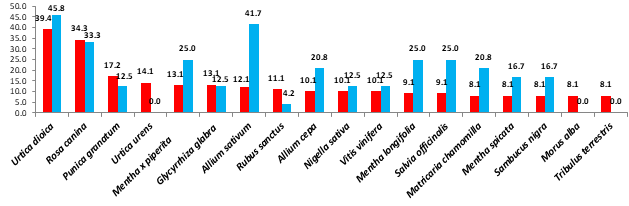
Of the 128 taxa we specified in our research, 81 were detected to match the studies of neighboring and nearby countries, and the similarity rate (from 81x100/128) was computed as 63.3%. 18 taxa, such as Urtica dioica (with 11 references and 45.8%), Achillea millefolium and Allium sativum (with 10 references and 41.7%), and Juglans regia, Rosa canina and Taraxacum spp (8 references and 33.3%) (Figure 2), have been found as the most reported plants. These herbs may have come to the fore because they have been experienced in Turkish folk medicine for centuries and are more permanent and effective in strengthening immunity. Especially, the emergence of Urtica spp as the most used plants as an immune booster in 11 countries (45.8%), other than Turkey, may be due to the fact that it has proven itself in the traditional medicine of many cultures rather than the fact that its distribution area is wide and easily accessible. Indeed, the similarity of 63.3% compared to the results of studies conducted in 24 neighboring and nearby countries may confirm the superior efficacy of these plants (Table 2). 47 plants such as Urtica urens, Morus alba, and Tribulus terrestris, which do not resemble at all (Figure 2), maybe due to the fact that they are not naturally widespread in these countries because of geographical or climatic differences, or even if they do, they are not traditionally preferred for immunity.
Nevertheless, the maximum similarity was detected with Albania (64.3%), Cyprus (60.9%), and Bulgaria (56.3%), while the minimum one was with Russia (26.7%), Israel (30.0%), and Montenegro (30.8%). In countries with high similarity, there may be similarities in climate, vegetation and land forms, as well as cultural and plant use habits from the Ottoman period. The underlying reasons for the low similarity with Russia, Israel, and Montenegro may be differences in religious rituals, social-cultural habits, flora, and topography (Table 2).
Comparative Analysis with Studies in the World Literature
As a result of the comparison screening of experimental studies conducted worldwide under the title of activities such as immunostimulant, immunomodulator, immune- enhancing, or immunotherapeutic, reflections of only 68 (53.1%) of 128 taxa were detected. 60 taxa (46.9%), which have not been investigated yet, are among the valuable data of this study and are shown in bold in Table 3. The percentage distribution of the activities mentioned in the titles of the studies is as follows: Immunomodulatory (47.1%), immunostimulant (27.9%), immunomodulatory and immunostimulant (7.4%), immune-enhancing (5.9%), immune-boosting (5.9%), immune-enhancing and immunostimulant (1.5%), immune-boosting and Immunostimulant (1.5%), and immunomodulatory and immunotherapeutic (1.5%). For only 23 taxa (18.0%) out of 68 matching taxa, the results were given with the active ingredients, while the remaining 45 taxa (35.2%) were not specified. The prominent among 39 active substances are quercetin derivatives (such as quercetin xyloside, quercetin- 3-galactoside, and quercetin‐3‐O‐rutinoside) (10.3%), β-glucan, and catechin (5.1%), respectively (Table 4).
The action mechanisms in the studies identified are listed according to the immune responses on which they were based: Cell-mediated (42.6%), humoral and cell- mediated (22.1%), innate only (11.8%), innate, humoral, and cell-mediated (11.8%), humoral only (5.9%), and innate and cell-mediated (5.9%), respectively. According to these three basic immune responses, it has been determined that the mechanisms were carried out in the following eight different groups: By increasing spleen and thymus indices/serum immune parameters/ total white and red blood cells (WBC/ RBC) (20.3%), by increasing pinocytosis, phagocytic and bactericidal activity/ acting as macrophage and T helper‐1 (Th‐1) activators/ switching the host immune responses towards Th1 response (20.3%), by increasing interleukin cytokine levels/elevating the levels of Tumor Necrosis Factor Alpha (TNF-α) and Interferon gamma (IFNγ)/elevating the expression levels of cytokines/ activating the CD4+ T cells leading to cytokine production (18.0%), by activating the CD19+ B cells in peyer’s patches/ increasing total immunoglobulin/ reducing the suppressive azathioprine effect on the cell-mediated immune response, and antibody response (13.5%), by promoting serum hemolysin formation and increasing lysozyme, myeloperoxidase, superoxide dismutase catalase, and superoxide dismutase activities (12.8%), by increasing production of nitric oxide (NO) on a level comparable with that of lipopolysaccharides/reducing the levels of serum lipids/ inhibiting the lipopolysaccharide induced interleukin‐6 release (6.8%), by increasing respiratory burst activity/ reactive oxygen species (ROS) production / increasing the hematocrit level and red blood cell count/ haemoglobin content and haematocrit value (4.5%), and by increasing the cytotoxic activity of natural killer (NK) cells (3.8%), respectively (Table 4).
When the plant parts used for 68 taxa (53.1%) that were determined to match in the comparison of Turkey and the world literature were examined, a concordance of 94.1% was obtained. This result may have proved the accuracy and reliability of part selection and application methods of plants used as immunostimulants and enhancers in Turkish folk medicine.
Comparative Evaluation of Active Compounds
The plants with the most active substances in terms of immune-boosting and other similar activities are Phoenix dactylifera (5 chemicals, 12.8%, out of 39), Malus domestica (4; 10.25%), Cichorium intybus, Hypericum perforatum, Urtica dioica, and Rosa canina (3; 7.7%) (Table 4). Phoenix dactylifera (date palm) is widespread in a vast area from North Africa to the Middle East, parts of Central and South America, and Southern Europe for both its production and consumption of its fruit for food and healing purposes [117, 226]. The reason why it stands out in terms of active ingredient richness in this study may be that it is rich in fiber, mineral, and other nutritional sources, as well as its antibacterial, antifungal and immunostimulant properties, as a widely effective folk remedy in preventing various infectious diseases and increasing body resistance [227]. As in the geographical area mentioned above, consumption of dried fruit becomes widespread in Turkey, especially during the holy month of Ramadan. It is known that while fasting, the body compensates for the mineral and energy loss, thus keeping the immune system active [117, 110, 224]. This result is also supported by the study of Dogan Y, et al. [226]. They investigated the immunomodulatory effects of hot water extract of ripe fruits compared to prunes and fig fruits in mice and declared that the polyphenols and polysaccharides they isolated stimulated the cellular immune system in mice. Therefore, this finding may be a shred of evidence that this taxon might be more effective than others in terms of immunomodulatory activity.
As a result of this screening, quercetin and its derivatives came to the fore with their immunomodulatory and immunostimulant activities and it was determined that they were isolated from the taxa of Capparis spinosa, Malus domestica, Urtica dioica, and Sambucus nigra [228, 229, 230, 231] (Table 4). It may not be coincidental that quercetin and its derivatives appear as the most common active compounds. Many experimental studies have revealed that these compounds are the most effective compounds used in stimulating or enhancing immunity. A few of these are given below:
Colunga-Biancatelli, et al. [232] provided evidence that the co-administration of vitamin C and quercetin shows a synergistic antiviral effect and enhances its efficacy due to its antiviral and immunomodulatory properties and the capacity of ascorbate to recycle quercetin. Wang, et al. [233] increased the immunostimulant properties, antioxidant index, and disease resistance of zebrafish with the optimal quercetin level. Singh, et al. [24] reported for the first time the in vivo immunostimulatory activity of quercetin in ovalbumin- vaccinated Balb/c mice. Their administration of quercetin showed the dominance of the Th2 immune response by increasing IgG1 antibody titers, as well as increased infiltration of CD11c + dendritic cells in the mouse peritoneum and the production of LPS-activated IL-1β and nitric oxide (NO) by peritoneal macrophages. These outcomes may validate that quercetin and its derivatives are ideal and potential aspirants for a functional nutraceutical or phytotherapy by stimulating or positively modulating immunity. In addition, β-glucan and catechin active compounds are found in many taxa traditionally used in Turkish folk medicine such as Avena sativa, Camellia sinensis, Hordeum vulgare, and Malus domestica. Some studies [119, 122, 124, 231, 234, 235] pointed out that beta-glucan and catechin act through one or more of the eight groups of action mechanisms mentioned above, and that these molecules could potentially give positive results in the treatment of Covid19 in terms of immune-stimulating or accelerating activities.
Ecotic Plants
14 medicinal exotic herbs, such as Alpinia officinarum (lesser galangal), Cinchona pubescens (quina), Echinacea angustifolia (coneflower), Hibiscus sabdariffa (hibiscus), Malpighia emarginata (acerola cherry), and Vaccinium macrocarpon (cranberry) are used for stimulating, enhancing or boosting the immune system in Turkish folk medicine and sold in herbal shops and public markets. Scientific names, families, English names, used parts, preparations, native lands, and related references of these plants are introduced in Table 5.
The Citrus species (native to Southeast Asia) and Phoenix dactylifera (date palm-native to North Africa) given in Table 3 are actually exotic species that were later included in the natural flora. They showed a natural spread after they have been grown on the Mediterranean and Aegean coasts, roadsides, parks, and gardens for centuries. In the same table, Camellia sinensis (tea plant - native to South and Southeast Asia), Capsicum annuum (pepper - South and Central America), Mfigorus alba and M. nigra (mulberry - China), Prunus cerasifera (myrobalan plum - Japan), Solanum lycopersicum (tomato-South America), Withania somnifera (Indian ginseng) and Ziziphus jujuba (jujube-Southeast Asia) are other taxa that have settled in the flora since the Ottoman period [236, 237].
| Plant name | Family | C/W/E | English name | Part(s) | Preparation(s) | Report(s) |
|---|---|---|---|---|---|---|
| Achillea millefolium L. | Compositae | W | Common yarrow | Leaves, Flowers | Infusion | [73,92,116,117,123] |
| Achillea nobilis L. | Compositae | W | Noble yarrow | Aerial parts, Flowers | Infusion | [70,73,102,120] |
| Allium cepa L. | Amaryllidaceae | C | Onion | Bulbs, Leaves | Eaten raw, Boiling, Juice with some honey | [18,48,80,111,119,121,122,124,134] |
| Allium sativum L. | Amaryllidaceae | C | Garlic | Leaves, Bulbs, Flowers | Eaten raw, Cooked, Tincture (prepared with the bulbs, lemon and vinegar) | [18,48,80,81,111,116,119,121,122,1 24,134] |
| Althaea officinalis L. | Malvaceae | C/W | Common marsh | Buds, Flowers | Infusion | [91,116,117] |
| Apium graveolens L. | Apiaceae | C | Celery | Leaves, Seeds | Decoction, Mixture (eaten after milling with cloves and seeds of anise, turnip, radish and mixed with honey). | [100,117,119,121] |
| Asparagus acutifolius L. | Asparagaceae | C/W | Wild asparagus | Aerial parts | Infusion | [72,78,120,124] |
| Astragalus spp. | Leguminosae | W | Milkvetches | Aerial parts, Roots,Young shoots, | Infusion, Eaten raw after peeling, Infusion after dried and pulverized, Mixture (obtained by drying and pulverizing of the fresh shoots and mixing with honey), Tincture (prepared with lemon and vinegar) | [43,49,55,88,100,103,115,116,121] |
| Avena sativa L. | Poaceae | C/W | Oat, common oat | Fruits, Seeds | Pastry, Meal | [117,119,120,122] |
| Brassica oleracea L. | Brassicaceae | C | Cabbage, flowering cabbage, kale | Aerial parts, Leaves | Decoction, Meal, Salad | [82,115,119,128] |
| Brassica rapa L. | Brassicaceae | C | Turnip | Tubers, Roots, Leaves, Seeds | Juice, Boiling-Meal, Mixture (eaten after milling with cloves and seeds of anise, celery, radish and mixed with honey) | [100,119,122,128] |
| Calendula officinalis L. | Compositae | C/W | Pot marigold, ruddles | Flowers | Infusion | [116,120,137] |
| Camellia sinensis (L.) Kuntze | Theaceae | C | Green tea | Leaves | Infusion | [46,118,119,122,127] |
| Capparis spinosa L. | Capparaceae | W | Caper bush, flinders rose | Fruits, Buds, Roots, Barks | Infusion, Decoction | [117,118,120] |
| Capsicum annuum L. | Solanaceae | C | Ornamental pepper | Fruits | Eaten raw, Spice, Decoction, Meal | [71,77,81] |
| Castanea sativa Mill. | Fagaceae | C/W | Chestnut, sweet chestnut | Fruits, Seeds, Flowers | Decoction, Boiling, Infusion | [80,110] |
| Centaurea hyalolepis Boiss. | Compositae | W | Yellow star-thistle, knapweed | Flowers | Restorative paste (with honey after crashing) | [42,43,49,90] |
| Ceratonia siliqua L. | Leguminosae | C/W | Carob | Fruits | Eaten raw, Boiling, Molasses | [78,83,126,127] |
| Cichorium intybus L. | Compositae | W | Blue daisy, blue dandelion, blue sailors, blue weed | Aerial parts, Roots | Infusion, Decoction | [78,90,109,120,123] |
| Cistus creticus L. | Cistaceae | W | Pink rock-rose, hoary rock-rose | Leaves | Infusion | [40,69,117,124,125,127] |
| Cistus laurifolius L. | Cistaceae | W | Laurel-leaved rock rose | Leaves | Infusion | [40,124,125,127] |
| Cistus salviifolius L. | Cistaceae | W | Sage-leaved rock- rose | Leaves | Infusion | [40,117,124,125,127] |
| Citrus spp. | Rutaceae | C/W | Oranges, lemons, grapefruits, pomelos, limes | Pericarps, Fruits | Decoction, Jam, Eaten raw, Juice, Marmalade, Dropped in teas and soups, Gargle | [18,40,69,80,92,117-119,122] |
| Cota austriaca (Jacq.) Sch.Bip. | Compositae | W | Corn chamomile | Capitulums, Flowers, Aerial parts | Infusion | [45,47,50,75,90,109,118] |
| Crataegus monogyna Jacq. | Rosaceae | C/W | Hawtorn, may | Flowers, Fruits, Seeds | Infusion, Eaten raw, Infusion, Eaten raw, Decoction | [41,81,109,114] |
| Crataegus orientalis Pall. ex M.Bieb. | Rosaceae | C/W | Oriental hawtorn | Flowers, Fruits, Seeds | Infusion, Eaten raw, Infusion, Eaten raw, Decoction | [81,93,109] |
| Daucus carota L. | Apiaceae | C/W | Wild carrot, bird’s nest | Seeds | Spice after milling | [92,119] |
| Drosera rotundifolia L. | Droseraceae | C/W | Round-leaved sundew, common sundew | Flowers | Infusion | [116-118] |
| Echinophora tenuifolia subsp. sibthorpiana (Guss.) Tutin | Apiaceae | C/W | Turkish çördük, tarhana | Aerial parts | Soup, Meal (after dried and pulverized) | [100,123,132] |
| Elaeagnus angustifolia L. | Elaeagnaceae | C/W | Silverberry | Fruits, Leaves, Flowers | Eaten raw, Infusion | [99,109,126] |
| Equisetum arvense L. | Equisetaceae | W | Field horsetail, common horsetail | Aerial parts | Infusion, Foot bath | [46,68,73,116] |
| Eriobotrya japonica (Thunb.) Lindl. | Rosaceae | C/W | Loquat | Leaves | Infusion mix (with Cydonia leaves and Tilia flowers) | [79,117,130] |
| Eruca vesicaria (L.) Cav. | Brassicaceae | C/W | Rocket, garden rocket | Leaves | Eaten raw, Salad | [92,101,110] |
| Eupatorium cannabinum L. | Compositae | W | Hemp-agrimony, holy rope | Aerial parts | Infusion | [86,116-118] |
| Ferula orientalis L. | Apiaceae | W | - | Whole parts | Decoction, Infusion after dried and pulverized | [42,43,49,91,132] |
| Ficus carica L. | Moraceae | C/W | Common fig | Fruits | Eaten raw or dried with/without nuts | [44,93,116] |
| Fragaria vesca L. | Rosaceae | C/W | Strawberry, wild strawberry | Fruits | Jam, Syrup | [82,100,119,121] |
| Glycyrrhiza glabra L. | Leguminosae | C/W | Licorice, liquorice | Leaves, Roots | Infusion after pulverizing, Syrup | [40,41,63,81,86,90- 92,95,131,136,121] |
| Helianthus tuberosus L. | Compositae | C/W | Sunroot, sunchoke, earth apple | Tubers | Eaten raw, Salad, Soup, Meal | [74,117] |
| Hordeum vulgare L. | Poaceae | C/W | Barley | Fruits, Seeds | Decoction, Additive (the flour is obtained after drying and grinding is added to the meals). | [41,45,56] |
| Hypericum perforatum L. | Hypericaceae | C/W | St. John’s Wort | Flowering branches, Aerial parts | Infusion after drying, Infusion mix (with the leaves of Urtica spp and Rubus spp). | [56,57,70,77,80,82,87] |
| Hyssopus officinalis L. | Lamiaceae | W | Hyssop | Flowers, Flowering branches, Leaves | Infusion | [18,120,123] |
| Juglans regia L. | Juglandaceae | C/W | Walnut, common walnut | Leaves, Pericarp, Fruits | Infusion, Mixture (eaten with honey and dried fig) | [70,81,117,116] |
| Juniperus oxycedrus L. | Cupressaceae | W | Cade, cade juniper, prickly juniper | Fruits, Seeds, Leaves, Tars, Cones, Gall | Decoction, Infusion, Distillation | [,65,68,96,101,107,109] |
| Lavandula stoechas L. | Lamiaceae | C/W | Spanish lavender, topped lavender | Leaves, Flowering branches | Infusion | [58,64,69,70,91,129] |
| Lepidium sativum L. | Brassicaceae | C/W | Garden cress | Aerial parts, Seeds | Infusion, Restorative paste (prepared with honey) | [94,101,110,112,117] |
| Linum usitatissimum L. | Linaceae | C/W | Flax | Seeds, Fixed oils | Eaten raw, Drunk | [80,81,116,119] |
| Malus domestica Borkh. | Rosaceae | C | Apple | Fruits | Eaten raw, Juice, Decoction (with pear peels after dried) | [41,100,121] |
| Malus sylvestris (L.) Mill. | Rosaceae | C/W | European crab apple | Fruits | Eaten raw, Juice, Decoction (with pear peels after dried) | [41,45,113,121] |
| Malva neglecta Wallr. | Malvaceae | W | Cheeseplant, dwarf mallow | Aerial parts | Infusion, Decoction | [41,44,45,104,109] |
| Malva nicaeensis All. | Malvaceae | W | Bull mallow, French mallow | Leaves | Decoction with the aerial parts of Urtica dioica. | [58,60,93,111] |
| Malva sylvestris (L.) Mill. | Malvaceae | W | Large-flowered mallow, high mallow | Leaves, Aerial parts | Infusion, Meal (prepared with rice, radish, onion and butter). Another Meal is prepared with the leaves, Papaver rhoes petals and Urtica dioica and Spinacia oleraceae leaves. | [56,58,60,67,80,100,123] |
| Matricaria chamomilla L. | Compositae | W | Chamomile, German chamomile | Aerial parts, Flowering branches, Flowers | Infusion | [89,102,107,116,118,119,121,123] |
| Melissa officinalis L. | Lamiaceae | C/W | Lemon balm | Aerial parts | Infusion after drying, Infusion mix (with Sage leaves, Elder fruits, black pepper and ginger) | [59,62,72,121,123-125,133] |
| Mentha longifolia (L.) L. | Lamiaceae | W | Horse mint | Aerial parts | Eaten raw, Infusion | [18,41,51,57,83,90,103,109,123] |
| Mentha pulegium L. | Lamiaceae | W | Pennyroyal, pennyrile, squaw mint | Leaves | Infusion after drying, Infusion mix (with the leaves of Petroselinum crispum and Origanum vulgare) | [18,57,80,83] |
| Mentha spicata L. | Lamiaceae | W | Spearmint | Aerial parts, Leaves | Infusion, Spice (after powdering) | [18,57,59,69,80,83,101] |
| Mentha x piperita L. | Lamiaceae | C/W | Peppermint | Leaves, Aerial parts | Eaten raw, Salad, Spice, Syrup, Infusion mix-1 (with lemon juice), Infusion mix-2 (with the leaves of Petroselinum crispum and Origanum vulgare) | [18,57,61,71,82,83,87,90,109,116,11 8,121,123,129] |
| Mespilus germanica L. | Rosaceae | C/W | Medlar, medlar tree | Leaves, Fruits | Infusion, Eaten raw | [71,80,82] |
| Morus alba L. | Moraceae | C/W | White mulberry | Fruits, Leaves | Syrup, Molasses, Churchkhela, Infusion | [41,45,56,93,94,109,120,124] |
| Morus nigra L. | Moraceae | C/W | Black mulberry, blackberry | Fruits, Leaves | Molasses, Syrup, Infusion | [58,82,124] |
| Myrtus communis L. | Myrtaceae | C/W | Common myrtle or true myrtle | Fruits, Leaves | Eaten raw, Infusion | [46,69,92] |
| Nasturtium officinale R.Br. | Brassicaceae | W | Watercress, yellowcress | Leaves, Flowers | Infusion, Salad, Meal | [68,76,90,93] |
| Nigella arvensis L. | Ranunculaceae | C/W | Wild fennel, field fennel flower | Flowers, Seeds | Infusion after dried, Restorative paste (with honey after crushed), Spices | [59,90,98,101,103] |
| Nigella damascena L. | Ranunculaceae | C/W | Love-in-a-mist, ragged lady | Seeds, Essential oils | Infusion, Eaten raw | [74,118,120] |
| Nigella sativa L. | Ranunculaceae | C/W | Black cumin | Seeds, Essential oils | Eating raw, Infusion after crashing, Spices | [80,83,91,97,101,103,116,117,121, 126] |
| Olea europaea L. | Oleaceae | C/W | Olive | Leaves, Fruits, Fixed oils | Infusion, Cataplasm with one tablespoon molasses, tarhana and flour, Drunk one tablespoon or added to salads | [40,80,91,119,125] |
| Origanum onites L. | Lamiaceae | W | Pot marjoram, Cretan oregano | Aerial parts with flowers, Flowering branches | Foot bath, Infusion-1 (with Sage leaves), Infusion-2 (with anise and minth leaves) | [40,70,101,116,129] |
| Origanum vulgare L. | Lamiaceae | W | Ornamental oregano | Aerial parts with/ without flowers, Flowering branches | Foot bath, Infusion-1 (with Sage leaves), Infusion-2 (with anise and minth leaves) | [40,101,123,129] |
| Papaver rhoeas L. | Papaveraceae | W | Flanders poppy | Flowers, Petals | Infusion with/without Urtica dioica leaves, Meal (prepared with the leaves of Spinacia oleracea and Malva spp or Urtica dioica). | [56,60,62,63,66,93] |
| Petroselinum crispum (Mill.) Fuss | Apiaceae | C/W | Parsley | Leaves, Aerial parts | Eaten raw, Juice (with lemon), Salad, Infusion with/without the leaves of Mentha spp and Origanum spp. | [41,69,91,94,109,110,121] |
| Phoenix dactylifera L. | Arecaceae | C/W | Date, date palm | Fruits | Eaten raw | [110,117,118,126] |
| Pinus brutia Ten. | Pinaceae | C/W | Calabrian pine, Turkish pine | Barks, Shoots, Pollens, Cones, Fruits, Essential oils | Decoction, Eaten with honey. Pickle, prepared with the seeds, cones, lemons, garlic and water. Medicinal bath, Frankincense | [18,84,100,116,118] |
| Pinus nigra J.F.Arnold | Pinaceae | W | Black pine | Resins, Tars, Essential oils | Decoction, Medicinal bath, Frankincense | [18,84,116,110,118] |
| Pinus pinea L. | Pinaceae | C/W | Stone pine, umbrella pine, parasol pine | Fruits, Pollens, Essential oils | Eaten with molasses, honey, dried figs or grapes | [18,84,91,118] |
| Pinus sylvestris L. | Pinaceae | W | Redwood, Scots fir | Buds, Resins, Cones, Essential oils | Decoction, Medicinal bath, Frankincense | [18,84,116,118] |
| Portulaca oleracea L. | Polygonaceae | W | Common purslane, fatweed | Aerial parts | Eating raw, Boiling, Roasting | [44,76,80,90,91] |
| Prunus avium (L.) L. | Rosaceae | C/W | Sweet cherry | Fruits stalks | Infusion, Restorative paste (prepared with a cherry stalk and rye after drying and pulverizing and sweetening with honey or molasses) | [46,56,84,100,102,130] |
| Prunus cerasifera Ehrh. | Rosaceae | C/W | Cherry plum | Fruits | Eaten raw, Infusion, Decoction | [94,103,130] |
| Prunus domestica L. | Rosaceae | C/W | Plum, European plum | Fruits | Eaten raw, compote | [91,110] |
| Prunus spinosa L. | Rosaceae | W | Sloe, blackthorn | Fruits | Eaten raw, Decoction | [56,57,62,68] |
| Punica granatum L. | Lythraceae | C/W | Pomegranate | Fruits, Flowers, Seeds, Pericarps | Eaten raw, Juice, Infusion, Decoction | [41,44,52,54,56,69,80,81,83,88,93,94 ,99,100,107,108,117] |
| Pyrus communis L. | Rosaceae | C/W | European pear, common pear | Fruits | Eaten raw, Decoction with the dried peel of apple after dried) | [45,59,96] |
| Rhus coriaria L. | Anacardiaceae | C/W | Tanner’s sumach, Sicilian sumac | Leaves, Fruits | Infusion, Spice | [70,74,121,127] |
| Rosa × damascena Herrm. | Rosaceae | C/W | Rose, damask rose | Flowers | Infusion, Jam, Syrup, Juice, Pastry, Vinegar | [81,117,120] |
| Rosa canina L. | Rosaceae | C/W | Dog rose, briar rose, common briar | Fruits, Leaves, Flowers, Petals, Roots, Stems | Eaten raw, Infusion after drying and pulverizing, Infusion mix (with lemon balm, elderflower, plantaginis leaf and a little honey or stevia) Decoction, Jam, Marmalate | [41-43,49,57,58,60,62, 66,68,80-82,84,86,90,91, 94,95,97,101,102,105,106,109- 111,113,114,116,120-122,135] |
| Rosa hemisphaerica Herrm. | Rosaceae | W | Sulphur rose | Fruits | Eaten raw, Decoction | [81,109,111] |
| Rosmarinus officinalis L. | Lamiaceae | C/W | Rosemary | Leaves, Fruits, Young shoots | Infusion, Syrup, jam, Eaten raw | [69,81,91,101,108,118,122] |
| Rubus caesius L. | Rosaceae | C/W | Dewberry | Fruits, Leaves, Roots | Syrup, Jam, Eaten raw, Infusion after drying and pulverizing, Infusion mix (with the leaves of Urtica spp and the aerial parts of Hypericum perforatum). | [83,94,114,117,119] |
| Rubus canescens DC. | Rosaceae | W | Woolly blackberry | Leaves, Fruits, Young shoots | Infusion, Syrup, Jam, Marmalate, Eaten raw | [62,66,68,82,116,119] |
| Rubus sanctus Schreb. | Rosaceae | W | Holy bramble | Fruits, Roots, Flowers, Leaves | Syrup, Jam, Eaten raw, Decoction, Infusion, Jam, Infusion after drying, Infusion mix (with the leaves of Urtica spp and the aerial parts of Hypericum perforatum). | [56,58,60,61,68,82,90,116,119,130] |
| Salvia absconditiflora Greuter & Burdet | Lamiaceae | E | - | Aerial parts | Infusion | [90,100,102,109,125] |
| Salvia officinalis L. | Lamiaceae | C/W | Culinary sage, golden sage, garden sage | Aerial parts | Infusion after drying, Infusion mix-1 (with/without the flowers or fruits of Sambucus nigra, the leaves of Melissa officinalis, black pepper and ginger). Infusion mix-2 (with flowers of Tilia and Teucrium, Urtica and Thymus leaves with honey). | [71,81,92,110,116,119,121,122,125] |
| Salvia palaestina Benth. | Lamiaceae | W | Palestinian sage | Aerial parts | Infusion | [76,90,125] |
| Salvia tomentosa Mill. | Lamiaceae | W | Balsamic sage | Aerial parts | Infusion after drying, Infusion mix (with flowers of Tilia argentea and Teucrium poliumor Urtica dioica and Thymus longicaulis leaves with honey) | [75,100-102,125] |
| Salvia verticillata subsp. amasiaca (Freyn & Bornm.) Bornm. | Lamiaceae | W | Lilac sage, whorled clary | Aerial parts | Infusion | [42,45,80] |
| Sambucus ebulus L. | Adoxaceae | W | European dwarf elder | Fruits, Roots, Seeds | Eaten raw, Decoction, Infusion after drying and pulverizing, Infusion mix (with Sage, Melissa leaves, black pepper and ginger) | [53,99,117,125] |
| Sambucus nigra L. | Adoxaceae | W | Elderberry, European elder | Leaves, Flowers, Fruits, Barks | Infusion after drying and pulverizing, Infusion mix-1 (with lemon balm, plantaginis leaf, rosehip fruit powder and a little honey or stevia. Infusion mix-2 (with Sage, Melissa leaves, black pepper and ginger) | [65,68,91,116,122,124,125,131] |
| Satureja cuneifolia Ten. | Lamiaceae | W | Apulian savory | Aerial parts | A glass of its infusion is drunk twice a day | [59,100,102] |
| Satureja hortensis L. | Lamiaceae | W | Summer savory | Aerial parts, Flowering branches, Essential oil | Infusion, Spice, Lotion | [41-43,45,47,49,51,55] |
| Satureja thymbra L. | Lamiaceae | W | Thyme-leaved savory | Aerial parts, Flowering branches, Essential oil | Infusion, Spice, Lotion | [70,79,102] |
| Sesamum indicum L. | Pedaliaceae | C/W | Sesame | Seeds | Mixture (crushed and mixed with boiled grape juice), Eaten raw | [59,91,117] |
| Silybum marianum (L.) Gaertn. | Compositae | W | Milk thistle, Marian thistle | Seeds, Stems, Fruits | Eaten raw after peeling, Infusion | [90,102,117,131] |
| Solanum lycopersicum L. | Solanaceae | C | Tomato | Fruits | Eaten raw or after boiling, Soup, Salad | [80,100,119,121,128] |
| Spinacia oleracea L. | Amaranthaceae | C | Spinach | Leaves | Boiling, Salad, Pastry material. Mixture- meal (prepared with Papaver rhoes petals and Malva spp or Urtica dioica leaves). | [93,100,111,119] |
| Taraxacum spp. | Compositae | W | Dandelions | Flowers, Roots | Infusion, Meal, Mixture-meal (with Allium cepa, Alium sativum,Solanum lycopersicum and Capsicum annuum), Decoction, Tincture (prepared with lemon and vinegar) | [56,82,83,90,118] |
| Thymbra capitata (L.) Cav. | Lamiaceae | W | Spanish oregano, cone-head thyme | Aerial parts, Flowering branches, Essential oil | Infusion, Lotion, Spice | [40,102,116,127] |
| Thymbra spicata L. | Lamiaceae | W | Thyme spiked | Aerial parts, Flowering branches, Essential oil | Infusion, Lotion, Spice, Foot bath, Bath with/without Matricaria | [40,69,90,92,102,116,127] |
| Thymbra sintenisii Bornm. & Azn. | Lamiaceae | W | - | Aerial parts, Flowers | Infusion, Lotion, Spice | [40,90,116,127] |
| Thymus fallax Fisch. & C.A.Mey. | Lamiaceae | W | - | Aerial parts, Flowering branches, Whole parts | Infusion, Foot bath, Bath with/without Matricaria | [18,40,41,82] |
| Thymus longicaulis C.Presl | Lamiaceae | W | Creeping thyme | Flowering branches, Aerial parts | Infusion | [18,40,82,113] |
| Thymus praecox Opiz | Lamiaceae | W | - | Aerial parts, Flowering branches, Whole parts | Infusion, Foot bath, Bath with/without Matricaria | [18,40,75,82,113] |
| Tilia cordata Mill. | Malvaceae | W | Bast, small-leaved linden | Leaves, Fruits, Flowers, Bracts | Decoction mix (with cinnamon and cloves) | [57,81,109,110,116,128] |
| Tilia platyphyllos Scop. | Malvaceae | W | Broad-leaved lime | Flowers, Bracts | Decoction with cinnamon and cloves, Infusion after drying, Infusion mix (with Salvia tomentosa leaves), Cold maseration | [81,104,106,116,128] |
| Tilia tomentosa Moench | Malvaceae | C/W | European white lime, silver lime, silver linden | Leaves, Flowers, Fruits, Barks, Bracts, Roots | Cold maceration, Infusion after drying, Infusion mix (with Salvia tomentosa leaves) | [61,81,83,84,105,120,128] |
| Tribulus terrestris L. | Zygophyllaceae | W | Caltrop, devil’s- thorn | Fruits | Infusion after dried | [65,70,72,74,90,101,109,117] |
| Urtica dioica L. | Urticaceae | W | Stinging nettle, perennial nettle, tall nettle, common nettle | Aerial parts (without flowering), Leeaves, Roots, Seeds | Infusion after drying, Infusion mix (with/ without the petals of Papaver rhoeas or the leaves of Rubus spp and the aerial parts of Hypericum perforatum), The roots are eaten raw after preparing a Mixture (after milling with mustard seeds and mixing with honey). Mixture- meal (with the leaves, Papaver rhoes petals and Malva spp and Spinacia oleraceae leaves). Seeds are eaten with honey. | [18,41,45,47,50,56,57, 60,63,64,68,71-74,80,86,87,89,90, 93,94,96,98,101,104,106,109,111, 112,114,116,118,120,122,123,133,1 35,137] |
| Urtica pilulifera L. | Urticaceae | W | Roman nettle | Aerial parts, Leeaves, Seeds | Salad, Pastry, Infusion, Restorative paste (prepared with ginger, cinnamon, turmeric and Nigella sativa seeds after milling and mixing with honey) | [68,72,73,102,112,116,118,122] |
| Urtica urens L. | Urticaceae | W | Small nettle | Aerial parts | Infusion after dried | [57,58,63,64,73,80,90,104,109,112,1 16,122,123] |
| Vaccinium arctostaphylos L. | Ericaceae | W | Caucasian Whortleberry | Fruits, Leaves | Eaten raw, Infusion | [85,116-118] |
| Vaccinium myrtillus L. | Ericaceae | W | Bilberry, wimberry, whortleberry | Fruits, Leaves | Eaten raw/dried, Jam Infusion | [68,80,85,116,117,119,122] |
| Viburnum opulus L. | Adoxaceae | W | Guelder-rose | Fruits | Eaten raw, Juice | [63,80,83,112] |
| Viscum album L. | Santalaceae | W | European mistletoe, common mistletoe | Fruits, Leaves, Stems, Aerial parts | Infusion, Decoction, Tincture (prepared with lemon and vinegar) | [53,54,71,99,105,116-118] |
| Vitis labrusca L. | Vitaceae | C/W | Fox grape, concord grabe | Fruits, Seeds | Eaten raw, Eaten with honey after dried and pulverized | [85,106,116,126] |
| Vitis vinifera L. | Vitaceae | C | Grapevine | Fruits, Seeds | Eaten raw or dried, Cataplasm (with tarhana flour), Molasses, Churchkhela | [59,68,80,90,98,100,106,116,119,1 26] |
| Withania somnifera (L.) Dunal | Solanaceae | W | Ashwagandha, Indian ginseng | Roots | Infusion after dried and pulverized | [85,116,136] |
| Ziziphora clinopodioides Lam. | Lamiaceae | W | Blue mint bush | Flowering branches, Aerial parts | Infusion, Spices | [42,43,100,102] |
| Ziziphus jujuba Mill. | Rhamnaceae | C/W | Jujube, red date | Fruits | Eaten raw or after dried, Decoction mix (prepared with pear, ginger and lemon),Tincture (prepared with lemon and vinegar) | [71,97,120] |
Table 3: The list of plant taxa used for the immune-boosting and related activities in Turkish folk medicine. C: Cultured plants,
| Plant species | Active compounds effective on immune response(s) (and used parts) | Type of activity | Type of immune response | Mechanism of action | References | |
|---|---|---|---|---|---|---|
| Achillea millefolium L. | Not specified (aerial parts) | Immune-boosting | Humoral | By reducing the levels of serum lipids and boosting the immune response. Thus, it is proposed that can be used as an antibiotic alternative. | [238] | |
| Allium cepa L. | Agglutinin (bulbs) | Immunomodulatory | The cell- mediated | By increasing production of nitric oxide, production of pro-inflammatory cytokines, enhancing proliferation of murine thymocytes and elevating the expression levels of cytokines. | [239] | |
| Allium sativum L. | Not specified (Bulbs) | Immune-boosting | The cell- mediated | By increasing CD4 (cluster of differentiation 4) T lymphocytes and total WBC (white blood cells) synergistically with Allium cepa. | [240] | |
| Apium graveolens L. | Not specified (leaves) | Immunostimulant | The cell- mediated | By increasing total white and red blood counts, haemoglobin content and haematocrit value. | [241] | |
| Avena sativa L. | β-glucan (seeds) | Immunomodulatory | The cell- mediated | By increasing cytokine levels. | [235] | |
| Brassica oleracea L. | Not specified (Aerial parts) | Immune-boosting, Immunostimulant | Humoral and The cell-mediated | By showing significant improvement in phagocytic and bactericidal activity. | [242] | |
| Brassica rapa L. | Not specified (roots) | Immunostimulant | The cell- mediated | By stimulating their endocytic/ pinocytosis activity and releasing nitric oxide, tumor necrosis factor alpha (TNF-α) and interleukin-6 cytokines. | [243] | |
| Calendula officinalis L. | Not specified (flowers) | Immunostimulant | The cell- mediated | By increasing production of nitric oxide on a level comparable with that of lipopolysaccharides. | [244] | |
| Camellia sinensis (L.) Kuntze | Strictinin, Catechin (leaves) | Immunostimulant, Immunomodulatory | The cell- mediated | By using the phagocytic activity of macrophage-like cells as an indicator of immune function activation. | [245] | |
| Capparis spinosa L. | Quercetin and Kaempferol glycosides (buds) | Immunomodulatory | The cell- mediated | By inhibiting the extracellular virus release upregulating their production of IL‐12, IFN‐γ and TNF‐α. It should thus be employed for treatment of in immunocompromised hosts. | [229] | |
| Capsicum annuum L. | Not specified (fruits) | Immunomodulatory | Humoral and The cell-mediated | By oral administration with capsicum extract might activate the CD4+ T cells leading to cytokine production as well as CD19+ B cells in Peyer’s patches. | [246] | |
| Castanea sativa Mill. | Not specified (fruits) | Immunostimulant | The cell- mediated | Through the skin mucus and serum immune parameters were significantly increased in fish fed with CSP compared to control. | [247] | |
| Cichorium intybus L. | Oxycoumarins, Hydroxycinnamic acids, and Flavonoids (aerial parts) | Immunomodulatory | Humoral and The cell-mediated | By reducing the suppressive azathioprine effect on the cell- mediated immune response, antibody response, and phagocytosis with macrophages. | [248] | |
| Citrus spp. | Auraptene (fruits) | Immunomodulatory | Humoral and The cell-mediated | By activating splenocytes and lymphocytes from mesenteric lymph nodes and increasing IL-4, Interferon gamma (IFNγ) and TNF-α production. | [249] | |
| Crataegus monogyna Jacq. | Not specified (leaves) | Immunomodulatory | Humoral and The cell-mediated | By increasing the total number, percentage, and absolute count of T and B splenocytes. | [250] | |
| Elaeagnus angustifolia L. | Not specified (Fruits) | Immunostimulant | Innate, Humoral and The cell- mediated | By increasing the spleen and thymus index of mice, increasing the phagocytosis of mononuclear phagocyte system, and stimulating hemolysin formation. | [251] | |
| Equisetum arvense L. | Not specified (aerial parts) | Immune-enhancing | Innate, Humoral and The cell- mediated | By enhancement of cytokine (IL-2, INF-γ) production in Th1 cells. | [252] | |
| Fragaria vesca L. | Gamma-aminobutyric acid (fruits) | Immunomodulatory | Innate, Humoral and The cell- mediated | By increasing IL-10 and IFN-γ in mice. | [253] | |
| Glycyrrhiza glabra L. | Not specified (roots) | Immunomodulatory | Humoral and The cell-mediated | By increasing leukocytes, phagocytic activities, and antibody secreting cells of mouse spleen in combination with Zinc. | [254] | |
| Helianthus tuberosus L. | Inulin (Tubers) | Immunostimulant, Immunomodulatory | Humoral and The cell-mediated | By increasing total immunoglobulin and lysozyme activity. | [255] | |
| Hordeum vulgare L. | β-glucan (seeds) | Immunomodulatory | The cell- mediated | By increasing cytokine levels. | [235] | |
| Hypericum perforatum L. | Germacrene D, β-Caryophyllene, α-Humulene (essential oils from leaves and flowers) | Immunomodulatory | Innate | By inhibiting neutrophil Ca2+ mobilization, chemotaxis, and reactive oxygen species (ROS) production | [256] | |
| Juglans regia L. | Not specified (fruits) | Immunomodulatory | Innate, Humoral and The cell- mediated | By promoting macrophage phagocytosis and natural killer activity, elevating the percentages of CD3+ and CD4, up-regulating the production of antibody IgM, IgA, IgG and SIgA, and regulating Cytokines, Th1 produced. | [257] | |
| Malus domestica Borkh. | Catechin, Procyandin B, Quercetin-3- galactoside and Quercetin xyloside (fruit peels) | Immunostimulant | Innate and The cell-mediated | By increasing lysozyme enzyme and phagocytic activity of macrophages. | [231] | |
| Malva sylvestris (L.) Mill. | Not specified (leaves) | Immunomodulatory | The cell- mediated | By acting as macrophage and T helper‐1 (Th‐1) activators. | [258] | |
| Matricaria chamomilla L. | Not specified (flowering branches) | Immunomodulatory | The cell- mediated | Through activizating immunoregulation cells of peripheral blood and increasing sensitivity of effector cells to helper signals. | [259] | |
| Melissa officinalis L. | Not specified (aerial parts) | Immunostimulant | The cell- mediated | By increasing lipase and lysozyme activity, and elevating pepsin and trypsin. | [38] | |
| Mentha pulegium L. | Not specified (aerial parts) | Immune-enhancing, Immunostimulant | Innate | By increasing phagocytosis, lysozyme, respiratory burst and total white and red blood cells (WBC/RBC). | [260] | |
| Mentha x piperita L. | Not specified (aerial parts) | Immunostimulant | Humoral and The cell-mediated | By increasing erythrocytes, leucocytes, haematocrit, haemoglobin, phagocytic activity, lysozyme, anti-protease and anti-bactericidal activities, as well as evelating serum protein and globulin levels. | [261] | |
| Mespilus germanica L. | Not specified (leaves) | Immunostimulant | Humoral | By increasing the immunoglobulin levels and interleukin 8 levels as well as elevating the level of lysozyme activity. | [262] | |
| Morus alba L. | 2-Formyl-5-(hydroxymethyl)-1H- pyrrole-1-butanoic acid and 2-Formyl- 5-(methoxymethyl)-1H-pyrrole-1- butanoic acid (fruits) | Immunostimulant | The cell- mediated | By the enhancement of nitric oxide, TNF-α and IL-12 production, and the stimulation of phagocytic activity. | [263] | |
| Morus nigra L. | Not specified (fruits) | Immunomodulatory | Innate | By increasing the activities of serum lysozyme, myeloperoxidase, superoxide dismutase and catalase, and increased the expression levels of immune-related genes (interleukin 1, beta, tumor necrosis factor, immunoglobulin M, interferon gamma and heat shock protein 70) in the spleen and antioxidant-related genes. | [37] | |
| Myrtus communis L. | Not specified (leaves) | Immunostimulant | Innate | By increasing the number of erythrocyte (RBC), leukocyte (WBC) and haematocrit, and lysozyme activity. | [264] | |
| Nasturtium officinale R.Br. | Not specified (leaves) | Immunomodulatory, Immunostimulant | Humoral and The cell-mediated | By enhancing hemoglobin (Hb), mean corpuscular hemoglobin concentration (MCHC), lysozyme and complement activities, as well as total protein and globulin levels. | [265] | |
| Nigella damascena L. | Damascenine and β-Elemene (seed- essential oils) | Immunomodulatory | The cell- mediated | By inhitibiting release of interleukin 1 beta (IL-1β) and interleukin 8 (IL-8), decreasing matrix metallopeptidase 9 (MMP- 9) production. | [266] | |
| Nigella sativa L. | Thymoquinine (seed-essential oils) | Immunomodulatory, immunotherapeutic | Innate and The cell-mediated | By possessing reproducible anti- oxidant effects through enhancing the oxidant scavenger system and augmenting the T cell- and natural killer cell-mediated immune responses. | [267] | |
| Olea europaea L. | Oleuropein (leaves) | Immunomodulatory | The cell- mediated | By inducing and maintaining high proliferation in lymphocytes. | [268] | |
| Origanum vulgare L. | Not specified (aerial parts) | Immunostimulant | Innate and The cell-mediated | By increasing serum total protein, albumin and globulin, respiratory burst activity, phagocytic activity and serum lysozyme activity. | [269] | |
| Petroselinum crispum (Mill.) Fuss | Not specified (aerial part-essential oils) | Immunomodulatory | The cell- mediated | Through its inhibitory effect on PHA-stimulated splenocytes which occurred due to the production of cytokines such as IFN-γ and IL-2, which are vital for T-cell proliferation and the signalling pathways. | [270] | |
| Phoenix dactylifera L. | Chlorogenic acid, Caffeic acid, Pelargonin, Ferulic acid, Trypsin (fruits) | Immunomodulatory | Humoral and The cell-mediated | By stimulating FN-γ mRNA expression significantly in mouse Peyer’s patch cell cultures, and increasing the number of IFN-γ+CD4+ CD49b+ and IL- 12+CD11b+ cells. | [226] | |
| Pinus sylvestris L. | Not specified (cones) | Immune-enhancing | Humoral | By affecting the expansion of T cells (both CD4 and CD8) during the proliferative phase. | [271] | |
| Portulaca oleracea L. | Not specified (aerial parts) | Immunostimulant, Immunomodulatory | Innate, Humoral and The cell- mediated | By enhancing splenocyte proliferation and upregulated inflammatory cytokines (IL-2, IL- 12, TNF-α, and IFN-γ) and natural killer (NK) cell activity in vitro. | [272] | |
| Prunus avium (L.) L. | Not specified (fruits) | Immunomodulatory | The cell- mediated | By inducing the NO release from RAW264.7 cells and the expression of several immune- related molecular (TNFα, IL6, IL10, GCSF, iNOS, COX-2). | [273] | |
| Punica granatum L. | Not specified (pericarps) | Immunomodulatory | Humoral and The cell-mediated | By increasing antibody density to typhoid-H antigen and enhancing the inhibition of leukocyte migration. | [274] | |
| Pyrus communis L. | Not specified (fruits) | Immunostimulant | The cell- mediated | By increasing phagocytic activities. | [275] | |
| Rhus coriaria L. | Not specified (fruits) | Immune-enhancing | Innate, Humoral and The cell- mediated | By increasing the number of leukocyte (WBC) and erythrocyte (RBC), lymphocyte, monocyte, and neutrophil value as well as serum lysozyme and TNF-α and IL-1b. | [276] | |
| Rosa × damascena Herrm. | Not specified (petals) | Immunomodulatory | Humoral and The cell-mediated | Through Peyer’s patch cells and enhanced production of IL-6 from murine macrophages. | [277] | |
| Rosa canina L. | Oleanolic acid, Betulinic acid and Ursolic acid (fruits) | Immunomodulatory | Humoral and The cell-mediated | By inhibiting the lipopolysaccharide induced interleukin‐6 release. | [278] | |
| Rosmarinus officinalis L. | Not specified (leaves) | Immunomodulatory | Humoral | By increasing IgM (Immunoglobulin M) response at all antibody titers and proliferation of spleen cells. | [279] | |
| Salvia officinalis L. | 3-O-methyl-galactose (aerial parts) | Immunomodulatory | The cell- mediated | By inducing the proliferation of rat thymocytes. | [280] | |
| Sambucus ebulus L. | Not specified (leaves) | Immunostimulant | The cell- mediated | By increasing the levels of IFN‐γ, IL‐4, nitric oxide and switching the host immune responses towards Th1 response. | [281] | |
| Sambucus nigra L. | Cyanidin 3-glucoside and quercetin (fruits) | Immunomodulatory | The cell- mediated | By blocking viral glycoproteins as well as indirect effects by increased expression of IL-6, IL-8, and TNF. | [230] | |
| Satureja hortensis L. | Not specified (essential oils) | Immunomodulatory | Innate | Through a significant enhancement in serum lysozyme for innate immune response of angelfish. | [282] | |
| Sesamum indicum L. | Not specified (seeds) | Immunomodulatory | Innate, Humoral and The cell- mediated | By increasing splenocyte proliferation, balancing the secretion of Th1 and Th2 cytokines, inhibiting the secretion of key pro-inflammatory mediators (IL-6, TNFα, and nitric oxide), and increasing the cytotoxic activity of natural killer (NK) cells. | [283] | |
| Silybum marianum (L.) Gaertn. | Silymarin (seeds) | Immunomodulatory | Innate and The cell-mediated | Through the enhancing haematological and immunological parameters including lysozyme and complement activities, total protein and globulin levels. | [284] | |
| Solanum lycopersicum L. | Not specified (fruits) | Immune-enhancing | Humoral and The cell-mediated | By increasing phagocytosis, chemotaxis, and levels of immunoglobulins (TIg, IgG, IgM and IgA). | [285] | |
| Spinacia oleracea L. | Not specified (leaves) | Immunostimulant, Immune-enhancing | Innate | Through a substantial improvement of serum protein profile, lysozyme activity, Hematocrit percent, and serum Superoxide Dismutase enzyme (SOD). | [286] | |
| Taraxacum spp. | Taraxasterol (not specified) | Immunomodulatory | The cell- mediated | By increasing hepatic glutathione (GSH) and superoxide dismutase (SOD) production, inhibiting the release of pro-inflammatory cytokines tumour necrosis factor-α (TNF-α), interleukin-6 (IL-6), IL-1β, interferon-γ (IFN-γ) and IL-4. | [287] | |
| Thymbra spicata L. | Not specified (aerial parts) | Immunomodulatory | The cell- mediated | By increasing the decreased level of the IL-6 cytokine in response to TNF-α. | [288] | |
| Tilia tomentosa Moench | Not specified (flowers) | Immunostimulant | Innate | By increasing lysozyme activity and respiratory burst activity. | [289] | |
| Tribulus terrestris L. | Saponins (fruits) | Immunomodulatory | The cell- mediated | By increasing phagocytic activity. | [290] | |
| Urtica dioica L. | Quercetin‐3‐O‐rutinoside, Kaempherol‐3‐O‐rutinoside and Isorhamnetin‐3‐O‐glucoside (leaves and roots) | Immunostimulant | The cell- mediated | By chemotactic effects in 4, 8, 16 μg doses and showing high intracellular killing activity. | [228] | |
| Viscum album L. | Not specified (aerial parts) | Immune-boosting | The cell- mediated | By increasing phagocytic activity and candidacidal activity of neutrophils and stimulating the levels of CD4+CD25+ and CD8+CD25+ T cells. | [291] | |
| Vitis labrusca L. | Arabino-3,6-galactan (Pericarp) | Immunostimulant | Innate and The cell-mediated | Through enhanced the stimulatory responses of macrophage stimulating activity ex vivo. | [292] | |
| Vitis vinifera L. | Not specified (seeds) | Immunostimulant | Innate | By increasing nitroblue tetrazolium (NBT) activity, myeloperoxidase (MPO) activity, phagocytic activity and lysozyme activity. | [293] | |
| Withania somnifera (L.) Dunal | Not specified (roots) | Immunostimulant | The cell- mediated | By increasing nitric oxide (NO) production by macrophages. | [294] | |
| Ziziphora clinopodioides Lam. | Not specified (aerial partss) | Immune-boosting | The cell- mediated | By improving the immune system and blood biochemical parameters of laying hens with Melissa officinalis and Tanacetum balsamita. | [295] | |
| Ziziphus jujuba Mill. | Not specified (fruits) | Immunomodulatory, Immunostimulant | Innate, Humoral and The cell- mediated | By increasing spleen and thymus indices, promoting serum hemolysin formation, and enhancing the phagocytic activity of macrophages. | [296] | |
| Sc. Names | Families | English names | Parts | Preparations | Native lands | References |
| Alpinia officinarum Hance | Zingiberaceae | Lesser galangal | Rhizomes | Spice, Decoction or infusion (after pulverizing) | Southeast Asia | [88,91,128,131] |
| Cinchona pubescens Vahl | Rubiaceae | Red cinchona, quina | Barks | Decoction or infusion (after pulverizing), Syrup or liqueur prepared after pulverizing | Central and South America | [18,81,116-118,131] |
| Cinnamomum verum J.Presl | Lauraceae | Cinnamon, true cinnamon tree | Barks | Decoction with the puverized bark, linden leaves and cloves. Restorative paste (prepared with the dried and pulverized bark, black peper fruits, ginger rhizomes, nettle seeds, turmeric rhizomes and Nigella sativa seeds after milling and mixing with honey) | South and Southeast Asia | [57,68,,73,81,104,105,10 9,110,116,118,128] |
| Curcuma longa L. | Zingiberaceae | Turmeric | Rhizomes | Restorative paste (prepared with the dried and pulverized rhizomes, ginger, cinnamon, and the seeds of nettle and Nigella sativa after milling and mixing with honey) | Indian subcontinent and Southeast Asia | [18,40,68,72,73,112,118, 121,122,124,127,131] |
| Echinacea angustifolia DC. | Compositae | Narrow-leaf coneflower | Roots, Rhizomes, Flowers | Decoction or infusion (after pulverizing) | North America | [81,116,118,121, 122,124,127] |
| Hibiscus sabdariffa L. | Malvaceae | Roselle, carcade, hibiscus | Leaves | Infusion | West and East Africa and South- East Asia including Northeastern India. | [91,92,97,116,117,122] |
| Malpighia emarginata DC. | Malpighiaceae | Acerola cherry | Fruits | Decoction or infusion (after pulverizing) | Central and South America | [91,118,122] |
| Panax ginseng C.A.Mey. | Araliaceae | Asian ginseng | Roots | Decoction or infusion (after pulverizing), Paste (with honey) | Russian Far East (Outer Manchuria), Northeast China, and the Korean Peninsula | [18,65,81,83,88,91,112,1 18,122,128,137] |
| Piper nigrum L. | Piperaceae | Black pepper | Unripe Fruits | Infusion mix (with the dried and pulverized fruits and ginger rhizomes, melissa leaves, sage leaves and elder fruits), Restorative paste1 (all of them above are eaten by mixing with honey), Restorative paste2 (prepared with the dried and pulverized fruits and ginger rhizomes, cinnamon, turmeric, nettle seeds and Nigella sativa seeds after milling and mixing with honey) | India | [59,62,72,117,121,123- 125,127,133] |
| Rheum officinale Baill. | Polygonaceae | Chinese rhubarb | Roots, Rhizomes | Infusion after pulverizing, Syrup, Paste (with honey) | China | [18,116-118] |
| Syzygium aromaticum (L.) Merr. & L.M.Perry | Myrtaceae | Cloves | Flower buds, Essential oil | Pastille, Infusion, Frankincense, Decoction mix (with cinnamon and linden leaves), Mixture (eaten after milling with seeds of celery and anise, turnip, radish and mixed with honey) | Maluku Islands | [100,117,119,121] |
| Terminalia citrina Roxb. ex Fleming | Combretaceae | - | Fruits, Seeds | Paste (prepared with honey after dried and pulverized) | East India | [65,91,117] |
| Vaccinium macrocarpon Aiton | Ericaceae | Cranberry | Fruits | Eaten after dried, Juice, Decoction | North America | [91,118,122] |
| Zingiber officinale Roscoe | Zingiberaceae | Ginger | Rhizomes | Infusion mix (with the dried and pulverized rhizomes, melissa leaves, sage leaves, elder fruits and black pepper), Restorative paste1 (all of them above are eaten by mixing with honey), Restorative paste2 (prepared with the dried and pulverized rhizomes, cinnamon, turmeric, nettle seeds and Nigella sativa seeds after milling and mixing with honey) | South Asia | [59,62,72,117,121,123- 125,127,131,133] |
Table 4: Worldwide immune-boosting and other similar activity research results of the taxa detected in the study.
Conclusion
Suffering from a global epidemic of Covid19 mutants and variants, the whole world has turned its attention and hope to natural treatments that can keep the immune system active and strong. Recent studies of some medicinal plant preparations hold great prospects that they may be potential candidates to develop effective and safe immune-boosting drugs against this relentless pandemic. Initiatives in this regard will primarily be hope for millions of people with weakened immune systems due to old age and pre-existing medical problems, waiting for treatment in quarantine at home or in intensive care in hospital. In particular, recent research on phytochemicals like quercetin, beta-glucan, and catechin makes us feel a little more optimistic about the future.
Thanks to a strong immune system, a person with good body health can easily get rid of severe acute respiratory syndrome coronavirus 2 (SARS-CoV-2) infections without any complications. It is known that the side effects of existing synthetic drugs and the necessity of taking a certain dose while in the state of infection make vital organs, such as the kidney and liver, even riskier [297, 298]. In fact, new cases are added every day to the reports that dozens of people who had newly developed vaccines lost their lives due to unpredictable coagulation. Countries that were lining up to be able to supply the relevant vaccines a while ago, announced that they, therefore, ban the use of these vaccines one after another [299]. At this point, medicinal plants might almost be the rescuers of humanity, for they have been providing us with the successful results observed in immune system boosting and similar activities for centuries, provided that they are regularly used according to the prescriptions specified in their pharmacopoeias. However, there is also a misperception that herbal medicines are completely safe and have no side effects. In addition, complications that may occur in case of use with existing drugs are another issue that should be taken into consideration. For this reason, we strongly recommend that people and establishments that keep and sell fresh or dried medicinal herbs in public markets and shops are inspected more strictly by local governments and that they are sold to the public in accordance with international norms. In these matters, the directives, instructions, and practices of the American Food and Drug Administration (FDA) and the European Medicines Agency (EMA) can be taken as a model and the existing system can be revised. We firmly advocate the urgent need to inform the public in more details by recording the herbal mixtures and prescriptions of traditional empirical practices with proven reliability and effectiveness after the necessary clinical tests, revealing their ingredients and active compounds through experimental studies, and updating their knowledge in their pharmacopoeias. We sincerely believe that more efficient results will be obtained in public enlightenment activities if the participation of non-governmental organizations, scientific circles and official authorities/institutions in full co-operation with civilians, which can be organized in real or virtual environments, on plants that can be used safely in the face of Covid-19 and similar pandemics or epidemics [300].
Considering that Turkey has the richest flora of Europe and the Middle East and its invaluable ethnomedical history, it presents a treasure-worthy potential for those who want to do serious research on this subject. In fact, this study presents a nationally useful inventory of immune-enhancing plants that are regularly used in traditional Turkish medicine, not only against Covid-19 but for the prevention and treatment of epidemic diseases in general. We present 68 (53.1%) plants whose effective immunostimulating and strengthening properties have been confirmed in experimental studies in the world literature as ready-made material to the relevant pharmacological sectors. In addition to the 60 (46.9%) taxa that have not been searched yet, which are shown in bold in Table 3, the first 18 plants (Figure 2), which received more citations than others about immunity enhancement in our research and were also prominent in neighbouring country studies, we strongly recommend that these should urgently be subjected to clinical trials firstly. In this way, we will feel peaceful and happy if we can be instrumental in the survival of humanity from the current and future epidemics and pandemics with minimal damage, alleviation of patients’ agonies, and the development of a healthier and happier generation.
References
-
TAS (2020) Turkish Academy of Sciences: The Assessment Report on COVID-19 Global Outbreak.
-
WHO (2021) WHO Coronavirus Disease (COVID-19) Dashboard with Vaccination Data. Turkey.
-
Konakci G, Uran BNO, Erkin O (2020) In the Turkish News: Coronavirus and “Alternative & complementary” medicine methods. Complementary Therapies in Medicine 53(1): 102545.
-
Scudiero O, Lombardo B, Brancaccio M, Mennitti C, Cesaro A, et al. (2021) Exercise, Immune System, Nutrition, Respiratory and Cardiovascular Diseases during COVID-19: A Complex Combination. Int J Environ Res Public Health 18(3): 1-20.
-
Bhatta A (2020) Choice of food: A preventive measure during Covid-19 outbreak. Eurasian J Med Sci 2(1): 88- 92.
-
Arshad MS, Khan U, Sadiq A, Khalid W, Hussain M, et al. (2020) Coronavirus disease (COVID‐19) and immunity booster green foods: A mini-review. Food Sci Nutr 8(8): 3971-3976.
-
WHO (2020) Water, sanitation, hygiene and waste management for COVID-19: technical brief.
-
Chowdhury MA, Hossain N, Kashem MA, Shahid MA, Alam A (2020) Immune response in COVID-19: A review. J Infect Public Health 13(11): 1619-1629.
-
Opitz B, van Laak V, Eitel J, Suttorp N (2010) Innate immune recognition in infectious and noninfectious diseases of the lung. Am J Respir Crit Care Med 181(12): 1294-1309.
-
Khanal P, Duyu T, Patil BM, Dey YN, Pasha I, et al. (2020) Network pharmacology of AYUSH recommended immune-boosting medicinal plants against COVID-19. J Ayurveda Integr Med (in press) 13(1): 100374.
-
Nicholson LB (2016) The immune system. Essays Biochem 60(3): 275-301.
-
Hesary FY, Akbari H (2020) The powerful immune system against powerful COVID-19: a hypothesis. Med Hypotheses 140(1): 109762.
-
Galmarini V, Ferrara F, Tosco P, Russo A, Molinari G, et al. (2020) Coronavirus, the immune system and vitamin D. Lo Scalpello-Journal 32(2): 140-144.
-
Kakodkar P, Kaka N, Baig MN (2020) A comprehensive literature review on the clinical presentation, and management of the pandemic coronavirus disease 2019 (COVID-19). Cureus 12(4): e7560.
-
Oyston P, Robinson K (2012) The current challenges for vaccine development. Journal of medical microbiology 61(7): 889-894.
-
Ghildiyal R, Prakash V, Chaudhary VK, Gupta V, Gabrani R (2020) Phytochemicals as Antiviral Agents: Recent Updates. In: Swamy M (Ed.), Plant-derived Bioactives. Springer, Singapore.
-
Tobaiqy M, Elkout H, MacLure K (2021) Analysis of Thrombotic Adverse Reactions of COVID-19 AstraZeneca Vaccine reported to EudraVigilance database. medRxiv 9(4): 393.
-
Jahan I, Onay A (2020) Potentials of plant-based substance to inhabit and probable cure for the COVID-19. Turk J Biol 44(3): 228-241.
-
Ekor M (2014) The growing use of herbal medicines: issues relating to adverse reactions and challenges in monitoring safety. Front pharmacol 4(1): 177.
-
Khan T, Khan MA, Ullah N, Nadhman A (2021) Therapeutic potential of medicinal plants against COVID-19: The role of antiviral medicinal metabolites. Biocatal Agric Biotechnol 31(1): 101890.
-
Wang Y, Fan X, Qu H, Gao X, Cheng Y (2012) Strategies and techniques for multi-component drug design from medicinal herbs and traditional Chinese medicine. Current topics in medicinal chemistry 12(12): 1356- 1362.
-
Vaghasiya J, Datani M, Nandkumar K, Malaviya S, Jivani N (2010) Comparative evaluation of alcoholic and aqueous extracts of Ocimum sanctum for immunomodulatory activity. Int J Pharm Biol Res 1(1): 25-29.
-
Jamshidi N, Cohen MM (2017) The clinical efficacy and safety of Tulsi in humans: A systematic review of the literature. Evid-Based Compl Alt 13(1): 9217567.
-
Singh D, Tanwar H, Jayashankar B, Sharma J, Murthy S, et al. (2017) Quercetin exhibits adjuvant activity by enhancing Th2 immune response in ovalbumin immunized mice. Biomed Pharmacother 90(1): 354-360.
-
Khanna K, Kohli SK, Kaur R, Bhardwaj A, Bhardwaj V, et al. (2020) Herbal immune-boosters: Substantial warriors of pandemic Covid-19 battle. Phytomedicine 85(1): 153361.
-
Terali K, Baddal B, Gülcan HO (2020) Prioritizing potential ACE2 inhibitors in the COVID-19 pandemic: Insights from a molecular mechanics-assisted structure- based virtual screening experiment. J Mol Graph Model 100(1): 107697.
-
Bibi N, Gul S, Ali J, Kamal MA (2020) Viroinformatics approach to explore the inhibitory mechanism of existing drugs repurposed to fight against COVID-19. Eur J Pharmacol 885(1): 173496.
-
Utomo RY, Meiyanto E (2020) Revealing the Potency of Citrus and Galangal Constituents to Halt SARS-CoV-2 Infection. Preprints 2020030214.
-
Mani JR, Sehgal N, Dogra N, Saxena S, Katare DP (2020) Deciphering underlying mechanism of Sars-CoV-2 infection in humans and revealing the therapeutic potential of bioactive constituents from Nigella sativa to combat COVID19: in-silico study. J Biomol Struct Dyn 40(6): 2417-2429.
-
Heidary F, Varnaseri M, Gharebaghi R (2020) The Potential Use of Persian Herbal Medicines Against COVID-19 Through Angiotensin-Converting Enzyme 2. Arch Clin Infect Dis 15(COVID-19), e102838.
-
Asih SC, Irdiani R, Sahlan M, Nasikin M (2021) Molecular docking study between 3 thai medicinal plants compounds and covid-19 therapeutic protein targets: Sars-cov-2 main protease, ace-2, and pak-1. Int J Appl Pharm 13(2): 41-48.
-
Nemati M, Asl ER, Pouya FD, Rasmi Y (2020) Curcumin, an inhibitor of PAK1, potential treatment for COVID-19. Journal of Infectiology 3(2): 1-3.
-
Ji Y, Li S, Ho CT (2019) Chemical composition, sensory properties and application of Sichuan pepper (_Zanthoxylum_ genus). Food Sci Human Well 8(2): 115- 125.
-
Shaghaghi N (2020) Molecular Docking study of novel COVID-19 Protease with low risk Terpenoides Compounds of Plants. Chem Rxiv.
-
Elfiky AA (2020) Natural products may interfere with SARS-CoV-2 attachment to the host cell. J Biomol Struct Dyn 39(9): 3194-3203.
-
Adem S, Eyupoglu V, Sarfraz I, Rasul A, Ali M (2020) Identification of Potent COVID-19 Main Protease (Mpro) Inhibitors from Natural Polyphenols: An in Silico Strategy Unveils a Hope against CORONA. Preprints 46(3): 1-16.
-
Yilmaz S, Ergün S, Yigit M, Yilmaz E, Ahmadifar E (2020) Dietary supplementation of black mulberry (_Morus_ _nigra_) syrup improves the growth performance, innate immune response, antioxidant status, gene expression responses, and disease resistance of Nile tilapia (_Oreochromis niloticus_). Fish Shellfish Immunol 107(1): 211-217.
-
Bilen S, Altief TAS, Özdemir KY, Salem MOA, Terzi E, et al. (2020) Effect of lemon balm (_Melissa officinalis_) extract on growth performance, digestive and antioxidant enzyme activities, and immune responses in rainbow trout (_Oncorhynchus mykiss_). Fish Physiol Biochem 46(1): 471-481.
-
Tewari S, David J, David B (2020) A critical review on immune-boosting therapeutic diet against Coronavirus (COVID-19). J Sci Technol 5(5): 43-49.
-
Şekeroğlu N, Gezici S (2020) Koronavirüs Pandemisi ve Türkiye’nin Bazı Şifalı Bitkileri. Anatol Clin 25(1): 163- 182.
-
Olgun Ş (2019) Ethnobotanical characteristics of Arıcak (Elazığ) District. Master Thesis. Bingöl Univ Sci Inst Bingöl.
-
Altundag E, Ozturk M (2011) Ethnomedicinal studies on the plant resources of east Anatolia, Turkey. Procedia Soc Behav Sci 19(1): 756-777.
-
Tuzlacı E, Doğan A (2010) Turkish folk medicinal plants, IX: Ovacık (Tunceli). Marmara Pharm J 14(1): 136-143.
-
Arasan Ş (2014) Plants used in folk medicine and their usage areas in Savur (Mardin) region. Master Thesis. Van: Yüzüncüyıl University, Science Institute.
-
Bulut G, Tuzlacı E (2008-2009) Folk Medicinal Plants of Bayramiç (Çanakkale-Turkey). J Fac Pharm İst Univ 1(40): 87-99.
-
Kocabaş YZ, Erol A, Aktolun O (2017) Medicinal plants of flora of KSU avsar campus (Kahramanmaras) and surrounding areas. Aksaray J Sci Müh 1(2): 110-120.
-
Sargin SA, Büyükcengiz M (2019) Plants used in ethnomedicinal practices in Gulnar district of Mersin, Turkey. J Herb Med 15(1): 1-18.
-
Bulut G, Tuzlacı E, Doğan A, Şenkardeş İ, Doğan A, et al. (2014) An ethnopharmacological review on the Turkish Apiaceae species. J Fac Pharm İst Univ 44(2): 163-179.
-
Diken ME (2009) Antioxidant contents of some medicinal herbs. Master thesis. Balıkesir Univ Sci. Ins. Balıkesir.
-
Erarslan ZB, Ecevit-Genç G., Kültür Ş (2020) Medicinal plants traditionally used to treat skin diseases in Turkey– eczema, psoriasis, vitiligo. Ankara Üniversitesi Eczacılık Fakültesi Dergisi 44(1): 137-166.
-
Kaval I, Behçet L, Cakilcioglu U (2014) Ethnobotanical study on medicinal plants in Geçitli and its surrounding (Hakkari-Turkey). J. Ethnopharmacol. 155(1): 171-184.
-
Kılıç Ö (2016) An ethnobotanical survey from Bingol (Turkey). RAJAR 2(10): 685-691.
-
Ozturk M, Altay V, Gonenç TM (2017b) Herbal from High Mountains in the East Mediterranean. In: Bhojra S, et al. (Eds.), Drug Discovery from Herbs - Approaches and Applications, Chapter 24, Centre for Science Technology of the Non-aligned and other Developing Countries. DAYA Publishing House, New Delhi, pp: 327-367.
-
Öztürk F, Ölçücü C (2011) Ethnobotanical features of some plants in the district of Şemdinli (Hakkari-Turkey). Int J Acad Res 3(1): 117-121.
-
Polat R, Satıl F, Çakılcıoğlu U (2011) Medicinal plants and their use properties of sold in herbal market in Bingöl (Turkey) district. Biodicon 4(3): 25-35.
-
Özdemir-Nath E (2016) Ethnobotanical researches in Savaştepe and kepsut (Balıkesir) regions. PhD Thesis. Istanbul Univ Health Sci Ins Istanbul.
-
Yeşilyurt EB, Şimşek I, Tuncel T, Akaydın G, Yeşilada E (2017b) Plants used as folk medicine in some settlements of the Marmara Region. Marmara Pharm J 21(1): 132- 148.
-
Bulut GE (2008) Ethnobotanical researches in Bayramiç (Çanakkale) region. PhD Thesis. Marmara Univ Health Sci Ins, Istanbul.
-
Güneş F (2017) Medicinal plants used in the Uzunköprü district of Edirne, Turkey. Acta Soc Bot Pol 86(4): 3565.
-
Kızılarslan Ç (2008) İzmit Körfezi’nin güney kesiminde etnobotanik bir araştırma. Master Thesis. Istanbul University, Health Science Institute, Istanbul.
-
Akay D (2019) Medicinal plants using as folk medicine for respiratory system diseases in Edirne. Master thesis. Trakya Univ Sci Ins Edirne.
-
Özhatay N, Akalın E, Genç GE, Kültür Ş (2009) Ethnomedicinal uses of the wild vascular plants from European Turkey (Turkish Thrace). IV Balkan Botanical Congress, Sofia, pp: 613-623.
-
Tütenocaklı T (2014) Yenice (Çanakkale) ve çevresinde tarımsal bitki biyoçeşitliliği ve etnobotanik araştırmalar. PhD Thesis. Çanakkale: Çanakkale Onsekiz Mart University, Science Institute.
-
Alkış AN (2019) Şanlıurfa’daki aktarlarda zayıflamak amacıyla kullanılan bitkilerin fitoterapi yönünden araştırılması. Master Thesis. Şanlıurfa: Harran University, Science Institute.
-
Korkmaz M, Karakuş S, Özçelik H, Selvi S (2016) An ethnobotanical study on medicinal plants in Erzincan, Turkey. Indian J Tradit Know 15(2): 192-202.
-
Kökçü B, Esen O, Uysal İ (2015) Medicinal plants sold in Çanakkale/Turkey city center herbalists. Biodicon 8(3): 80-91.
-
Tuzlacı E, Sadıkoğlu E (2007) Turkish folk medicinal plants, part VI: Koçarlı (Aydın). J Fac Pharm 39(1): 25- 37.
-
Şanlı BZ (2006) Bursa ve çevresinden toplanan ve ticareti yapılan bazı ekonomik bitkiler. Master Thesis. Bursa: Uludağ University, Science Institute.
-
Güneş S (2010) Karaisalı (Adana) ve köylerinde halkın kullandığı doğal bitkilerin etnobotanik yönden araştırılması. Master Thesis. Niğde: Niğde University, Science Institute.
-
Nacakcı FM, Dutkuner İ (2015) Kumluca (Antalya)’da etnobotanik bir çalışma. Türkiye Ormancılık Dergisi 19(2): 113-119.
-
Uzun SP, Koca C (2020) Ethnobotanical survey of medicinal plants traded in herbal markets of Kahramanmaraş. Plant Divers 42(6): 443-454.
-
Demirci-Kayıran SD (2019) A research on the present uses of the medicinal plants in De Materia Medica written by Dioscorides in eastern mediterranean region. Lokman Hekim Derg 9(2): 189-202.
-
Everest A, Ozturk E (2005) Focusing on the ethnobotanical uses of plants in Mersin and Adana provinces (Turkey). J Ethnobiol Ethnomed 6(1): 16.
-
Özçelik H, Çinbilgel İ, Muca B, Tavuç İ, Koca A, et al. (2016) Burdur ili bitki envanteri (ekonomik, nadir ve endemik bitkileri). Burdur Belediyesi, Sistem Ofset ve Matb, Ankara.
-
Arıtuluk ZC (2010) Tefenni (Burdur) ilçesinin florası ve halk ilaçları. MSc Thesis. Ankara: Hacettepe University, Health Sciences Institute.
-
Kılıç M, Yıldız K, Kılıç FM (2020) Traditional Uses of Medicinal Plants in Artuklu, Turkey. Hum Ecol 48(1): 619-632.
-
Kültür Ş (2007) Medicinal plants used in Kırklareli province (Turkey). J Ethnopharmacol 111(2): 341-364.
-
Ozturk M, Altay V, Gucel S, Altundag, E (2017a) Chapter 5: Plant diversity of the Drylands in Southeast Anatolia- Turkey: role in human health and food security. In: Ansari AA, Gill SS (Eds.), Plant biodiversity: monitoring, assessment and conservation. CABI, Wallingford, pp: 83- 124.
-
Polat R, Cakilcioglu U, Kaltalioğlu K, Ulusan MD, Türkmen Z (2015) An ethnobotanical study on medicinal plants in Espiye and its surrounding (Giresun-Turkey). J Ethnopharmacol 163(1): 1-11.
-
Köse M (2019) Ethnobotanical features of Güneysu (Rize) district. Master Thesis. Artvin Çoruh Univ Sci Ins Artvin.
-
Kavaklı SA, Yaylacı ŞG, Ugurlu E (2020b) Kastamonu Aktarlarında Satılan Bazı Tıbbi Aromatik Bitkiler ve Kullanım Alanları. Iğdır univ fen bilim enst Derg 10(4): 2962-2974.
-
Gül V, Seçkin-Dinler B (2016) Some medical and aromatic plants growing naturally in Kumru Region (Ordu). Süleyman Demirel Univ. Ziraat Fak 11(1): 146-156.
-
Kurt P, Karaoğul E (2018) Bartın’da Aktarlarda Satılan Tıbbi Aromatik Bitkiler ve Ülkemizdeki Pazar Payları. Bartın Orman Fakültesi Dergisi 20(1): 73-80.
-
Gürbüz İ, Özkan AMG, Akaydin G, Salihoğlu E, Günbatan T, et al. (2019) Folk medicine in Düzce Province (Turkey). Turk J Bot 43(6): 769-784.
-
Kubat Ö (2019) Salarha vadisi (Rize) tıbbi ve aromatik bitkileri. Master Thesis. Artvin Çoruh Univ Sci Ins Artvin.
-
Kocabaş YZ, Erol A, Aktolun O (2017) Medicinal plants of flora of KSU Avsar campus (Kahramanmaras) and Surrounding Areas. Aksaray J Sci Eng 1(2): 110-120.
-
Sarıkan I (2007) Kazdağları yöresinin geleneksel ilaçlarının saptanması. Master thesis. Ege Univ Health Sci Ins Izmir.
-
Kilic Ö, Bagci E (2013) An ethnobotanical survey of some medicinal plants in Keban (Elazığ – Turkey). J Med Plants Res 7(23): 1675-1684.
-
Polat R, Cakilcioglu U, Satıl F (2013) Traditional uses of medicinal plants in Solhan (Bingöl—Turkey). J Ethnopharmacol 148(3): 951-963.
-
Kılıç M (2019) An ethnobotanical research on plants grown in Artuklu (Mardin) region. PhD Thesis. Manisa Celal Bayar Univ Sci Ins Manisa.
-
Ötnü H, Akan H (2020) Plants Sold For Phytotheraphy in Pharmacies and Herbalists of Şanlıurfa. KSU J Agric Nat 23 (4): 947-965.
-
Akan H, Bakır-Sade Y (2015) Kâhta (Adıyaman) merkezi ve Narince köyü’nün etnobotanik açıdan araştırılması. Bitlis Eren Univ J Sci & Technol 4(2): 219-248.
-
Gençay A (2007) Cizre (Şırnak)’nin etnobotanik özellikleri. Master Thesis. Van: Yüzüncüyıl University, Science Institute.
-
Çiçek İ (2019) Çermik ilçesi ve köylerinin (Diyarbakır) etnobotanik özellikleri. Master Thesis. Bingöl Univ Sci Ins Bingöl.
-
Yeşil Y, Çelik M, Yılmaz B (2019) Wild edible plants in Yeşilli (Mardin-Turkey), a multicultural area. J Ethnobiol Ethnomed 15(1): 52.
-
Akbaş MN, Akçakaya A (2020) COVID-19 and Phytotherapy. Bezmialem Science 8(4): 428-437.
-
Akgul A, Akgul A, Senol SG, Yildirim H, Secmen O, Dogan Y (2018) An ethnobotanical study in Midyat (Turkey), a city on the silk road where cultures meet. J Ethnobiol Ethnomedicine 14(1): 12.
-
Doğan A (2014) Ethnobotanical researches in Pertek (Tunceli) region. PhD Thesis. Marmara University, Health Science Institute, Istanbul.
-
Onbaşlı D, Dal A (2020) Türk Farmakopesindeki Tıbbi Bitkilerinin İncelenmesi. Erciyes Univ Sağlık Bil Fak Derg 7(1): 22-36.
-
Sargin SA (2013) Alaşehir ve çevresinde (Manisa) tarımsal biyoçeşitlilik ve etnobotanik araştırmaları. PhD Thesis. Balıkesir: Balıkesir University, Science Institute.
-
Deniz L, Serteser A, Kargıoğlu M (2010) Uşak Üniversitesi ve yakın çevresindeki bazı bitkilerin mahalli adları ve etnobotanik özellikleri. AKÜ Fen Ve Mühendislik Bilimleri Dergisi 10(1): 57-72.
-
Sargin SA, Selvi S, López V (2015) Ethnomedicinal plants of Sarigöl district (Manisa), Turkey. J Ethnopharmacol 171(1): 64-84.
-
Arı S, Temel M, Kargıoğlu M, Konuk M (2015) Ethnobotanical survey of plants used in Afyonkarahisar- Turkey. J Ethnobiol Ethnomed 11(1): 1-15.
-
Bulut G, Tuzlacı E (2013) An ethnobotanical study of medicinal plants in Turgutlu (Manisa–Turkey). J Ethnopharmacol 149(3): 633-647.
-
Bulut G, Haznedaroğlu MZ, Doğan A, Koyu H, Tuzlacı E (2017) An ethnobotanical study of medicinal plants in Acıpayam (Denizli-Turkey). J Herb Med 10(1): 64-81.
-
Paksoy MY, Selvi S, Savran A (2016) Ethnopharmacological survey of medicinal plants in Ulukışla (Niğde-Turkey). J Herb Med 6(1): 42-48.
-
Tetik F, Civelek S, Cakilcioglu U (2013) Traditional uses of some medicinal plants in Malatya (Turkey). J Ethnopharmacol 146(1): 331-346.
-
Sargin SA (2015) Ethnobotanical survey of medicinal plants in Bozyazı district of Mersin, Turkey. J Ethnopharmacol 173(1): 105-126.
-
Şenkardeş İ (2014) Ethnobotanical Researches in the Southern Districts of Nevşehir (Acıgöl, Derinkuyu, Gülşehir, Nevşehir-Merkez, Ürgüp). PhD Thesis. Marmara Univ Health Sci Ins Istanbul.
-
Kavaklı SA, Özgür, Kaya, Ugurlu E (2020a) Eskişehir halk pazarlarında satılan bazı tıbbi-aromatik bitkiler ve kullanım alanları. Ağaç ve Orman 1(1): 1-11.
-
Uzun M, Kaya A (2016) Ethnobotanical research of medicinal plants in Mihalgazi (Eskişehir), Turkey. Pharm Biol 54(12): 2922-2932.
-
Ongan D (2018) Kayseri’de yaşayan yetişkin bireylerde bitkisel ürün kullanım alışkanlığı. Sağlık Bilimleri Dergisi 27(2): 125-131.
-
Günbatan T, Gürbüz İ, Özkan AMG (2016) The current status of ethnopharmacobotanical knowledge in Çamlıdere (Ankara, Turkey). Turk J Bot 40(3): 241-249.
-
Mumcu Ü, Korkmaz H (2018) Ethnobotanical uses of alien and native plant species of Yeşilırmak Delta, Samsun, Turkey. Acta Biologica Turcica 31(3): 102-113.
-
Tuzlacı E, Doğan A (2010) Turkish folk medicinal plants, IX: Ovacık (Tunceli). Marmara Pharm J 14(3): 136-143.
-
Kalafatçılar ÖA, Kalafatçılar Aİ (2010) Bitkiler ve Sağlık. Sidas Yayınları, İzmir.
-
Baytop T (1999) Türkiye’de bitkiler ile tedavi: Geçmişten Bugüne. İstanbul: Nobel Tıp Kitabevleri.
-
Genç L (2010) Tıbbi ve Aromatik Bitkilerin Kullanım Alanları ve Etiği. Anadolu University Web-Ofset, Eskişehir.
-
Özcan M, Arslan D, Ünver A (2020) Fonksiyonel Gıdalar Ve Fitokimyasallar. Akademik Gıda 1(5): 40-45.
-
Çekin MD, Alpınar K, Küçük İ (2016) Zeytinburnu Tıbbi Bitkiler Bahçesi. İstanbul: Zeytinburnu Belediyesi Kültür Yayınları 35(1): 1-6.
-
Uçar D, Kanat T, Müslümanoğlu AY, Kayaycı MZ (2020) Coronavirus ve Fitoterapi. Bütünleyici ve Anadolu Tıbbı Dergisi 1(2): 49-57.
-
Yeşilada E (2012) İyileştiren bitkiler. Hayykitap, Istanbul.
-
Özer Z, Elibüyük lÖ, Önen H, Elibüyük EA (2005) Sağlıklı bir yaşamdır yabancı otlar: Türk mutfak kültürü üzerine araştırmalar. In: Toygar K, Toygar NB (Eds.), Türk halk kültürünü araştırma ve tanıtma vakfı, 12: 113-194.
-
Ege M, Elmastaş M (2020) Antiviral Etkili Fitoterapötikler: Tıbbi Bitkiler ve Fitokimyasallar. J Integr Anatol Med 1(2): 5-20.
-
Yeşilada E, Kantarcı G, Öztekin İ, Ortancıl Ö, Mudun A, et al. (2019) Geleneksel ve Tamamlayıcı Tıp YÜGETAT Bülteni. Yeditepe Üniversitesi Hastaneleri, Istanbul.
-
Biçer A (2020) A Study on Foods That Boost The Immune System During The Covid-19 Pandemic. NATURENGS, pp: 28-37.
-
Doğan Y, Doğan S (2020) Koronavirüs Pandemisi ve Türkiye’de Bitkisel Üretime Etkisi. Artuklu Kaime Uluslararası İktisadi ve İdari Araştırmalar Dergisi 3(1): 56-78.
-
Gökçe NP (2011) Doğanın mucizesi şifalı bitkiler. Sis yayıncılık, İstanbul.
-
Bozyel ME, Merdamert-Bozyel E (2020) Ethnomedicinal uses of genus Lavandula (Lamiaceae) in Turkish traditional medicine. Int J Acad 4(2): 5-16.
-
Hürkul MM, Köroğlu A (2019) Etnobotanik Bir Derleme: Amygdaloideae (Rosaceae) Alt Familyası. Fabad J Pharm Sci 44(1): 35-46.
-
Yeşilyurt EB, Şimşek I, Akaydin G, Yeşilada E (2017a) An ethnobotanical survey in selected districts of the Black Sea region (Turkey). Turk J Bot 41(1): 47-62.
-
Akbulut S, Özkan ZC, Kalankan G (2017) Some plants and their effects used in traditional treatment of diseases at Çorum Province in Turkey. Int J Second Metab 4(3): 330-339.
-
Çakılcıoğlu U, Türkoğlu İ (2007) Plants and fruits used for cholesterol treatment by the folk in Elaziğ. Phytol Balc 13(2): 239-245.
-
Doğan A (2008) Ovacık (Tunceli) yöresinin geleneksel halk ilacı olarak kullanılan bitkileri. Master thesis. Marmara Univ Health Sci. Ins. Istanbul.
-
Ekşi G, Özkan AMG, Koyuncu M (2020) Garlic and onions: An eastern tale. J Ethnopharmacol 253(1): 112675.
-
Korkmaz M, Karakurt E (2014) Kelkit (Gümüşhane) aktarlarında satılan tıbbi bitkilerin etnobotanik özellikleri. Süleyman Demirel univ fen bilim. enst derg 18(3): 60-80.
-
Akkol EKK, Karpuz B, Sobarzo-Sánchez E, Khan H (2020) A phytopharmacological overview of medicinal plants used for prophylactic and treatment of colitis. Food Chem Toxicol 144(1): 111628.
-
Güner A, Aslan S, Ekim T, Vural M, Babaç MT (2012) Türkiye Bitkileri Listesi (Damarlı Bitkiler). Nezahat Gökyiğit Botanical Garden and Flora Research Association Publication, Istanbul.
-
Şahin B (2019) Ethnobotany in Kemalpaşa (İzmir) district. Master thesis. Ege Univ Sci Ins Izmir.
-
Pieroni A (2008) Local plant resources in the ethnobotany of Theth, a village in the Northern Albanian Alps. Genet Resour Crop Evol 55(1): 1197-1214.
-
Pieroni A, Dibra B, Grishaj G, Grishaj I, Maçai SG (2005) Traditional phytotherapy of the Albanians of Lepushe, northern Albanian alps. Fitoterapia 76(3-4): 379-399.
-
Pieroni A, Nedelcheva A, Hajdari A, Mustafa B, Scaltriti B, et al. (2014a) Local knowledge on plants and domestic remedies in the mountain villages of Peshkopia (Eastern Albania). J Mt Sci 11(1): 180-193.
-
Pieroni A, Cianfaglione K, Nedelcheva A, Hajdari A, Mustafa B, et al. (2014b) Resilience at the border: traditional botanical knowledge among Macedonians and Albanians living in Gollobordo, Eastern Albania. J Ethnobiol Ethnomedicine 10: 31.
-
Pieroni A, Quave CL (2014) Ethnobotany and biocultural diversities in the Balkans: perspectives on sustainable rural development and reconciliation. Springer, New York/Heidelberg.
-
Quave CL, Pieroni A (2014) Fermented foods for food security and food sovereignty in the Balkans: a case study of the Gorani people of Northeastern Albania. J Ethnobiol 34(1): 28-43.
-
Tomasini S, Theilade I (2019) Local Knowledge of Past and Present Uses of Medicinal Plants in Prespa National Park, Albania. Econ Bot 73: 217-232.
-
Karousou R, Deirmentzoglou S (2011) The herbal market of Cyprus: Traditional links and cultural exchanges. J Ethnopharmacol 133(1): 191-203.
-
Lardos A, Prieto Garcia J, Heinrich M (2011) Resins and gums in historical iatrosophia texts from Cyprus–a botanical and medico-pharmacological approach. Front Pharmacol 2: 32.
-
Özkum D, Ömrüm A, Toklu HZ (2013) Herbal medicine use among diabetes mellitus patients in Northern Cyprus. J Med Plant Res 7(22): 1652-1664.
-
Ivancheva S, Stantcheva B (2000) Ethnobotanical inventory of medicinal plants in Bulgaria. J Ethnopharmacol 69(2): 165-172.
-
Kozuharova E, Lebanova H, Getov I, Benbassat N, Napier J (2013) Descriptive study of contemporary status of the traditional knowledge on medicinal plants in Bulgaria. Afr J Pharm Pharmacol 7(5): 185-198.
-
Koleva V, Dragoeva A, Nanova Z, Koynova T, Dashev G (2015) An ethnobotanical study on current status of some medicinal plants used in Bulgaria. Int J Curr Microbiol App Sci 4(4): 297-305.
-
Abu Rabia A (2005) Herbs as a food and medicine source in Palestine. Asian Pac J Cancer Prev 6: 404-407.
-
Ali Shtayeh MS, Jamous RM, Jamous RM (2011) Herbal preparation use by patients suffering from cancer in Palestine. Complement. Ther Clin Pract 17(4): 235-240.
-
Eid AM, Jaradat N (2020) Public knowledge, attitude, and practice on herbal remedies used during pregnancy and lactation in West Bank Palestine. Front Pharmacol 11: 46.
-
Jaradat N (2005) Ethnopharmacological survey of natural products in palestine. An-Najah Univ J Res 19: 13-67.
-
Redžić SS (2007) The ecological aspect of ethnobotany and ethnopharmacology of population in Bosnia and Herzegovina. Coll Antropol 31(3): 869-890.
-
Kundalic BS, Ahmedbegovic A, Cilovic E, Ademovic Z, Tuzovic VK, et al. (2015) Ethnobotanical study of traditionally used plants in human therapy of Trestenica and Tulovici, north east Bosnia and Herzegovina. Pharmacia 18(2): 221-234.
-
Amiri MS, Joharchi MR (2013) Ethnobotanical investigation of traditional medicinal plants commercialized in the markets of Mashhad, Iran. Avicenna J Phytomed 3(3): 254-271.
-
Latifian E, Arslanoğlu ŞF (2018) Traditional medicinal plants of Azerbaijan province of Iran. Agricultural Sciences 9(1): 157-170.
-
Miraldi E, Ferri S, Mostaghimi V (2001) Botanical drugs and preparations in the traditional medicine of West Azerbaijan (Iran). J Ethnopharmacol 75(2-3): 77- 87.
-
Naghibi F, Mosadegh M, Mohammadi MS, Ghorbani AB (2005) Labiatae family in folk medicine in Iran: from ethnobotany to pharmacology. Iran J Pharm Sci 4(2): 63- 79.
-
Mullalija B, Mustafa B, Hajdari A, Quave CL, Pieroni A (2021) Ethnobotany of rural and urban Albanians and Serbs in the Anadrini region, Kosovo. Genet Resour Crop Evol 68: 1825-1848.
-
Mustafa B, Hajdari A, Krasniqi F, Hoxha E, Ademi H, et al. (2012) Medical ethnobotany of the Albanian Alps in Kosovo. J Ethnobiol Ethnomedicine 8: 6.
-
Ackova DG, Panovska TK, Baceva K, Stafilov T (2011) Metalic trace elements in medicinal plants from Macedonia. Middle East J Sci Res 7(1): 109-114.
-
Pieroni A, Rexhepi B, Nedelcheva A, Hajdari A, Mustafa B, et al. (2013) One century later: the folk botanical knowledge of the last remaining Albanians of the upper Reka Valley, Mount Korab, Western Macedonia. J Ethnobiol Ethnomedicine 9: 22.
-
Rexhepi B, Mustafa B, Hajdari A, Rexhepi JR, Quave CL, et al. (2013) Traditional medicinal plant knowledge among Albanians, Macedonians and Gorani in the Sharr Mountains (Republic of Macedonia). Genet Resour Crop Evol 60: 2055-2080.
-
Ibadullayeva S, Gasimov H, Gahramanova M, Zulfugarova P, Novruzova L (2015) Medico- ethnobotanical inventory (liver and gallbladder ducts illnesses) of Nakhchivan AR, Azerbaijan. Int J Sci 4(6): 80-88.
-
Novruzova LA, Maharramov SH, Ibadullayeva SJ (2015) Management of gastroenterostomy illness with herbs in veterinary practice in Nakhchivan Autonomous Republic (Azerbaijan). Int J Vet Sci 4(4): 224-226.
-
Ozturk M, Hakeem KR (2018) Plant and Human Health, 1st (Vol): Ethnobotany and Physiology. Springer Nature. Switzerland
-
Ahmed HM (2016) Ethnopharmacobotanical study on the medicinal plants used by herbalists in Sulaymaniyah Province, Kurdistan, Iraq. J Ethnobiol Ethnomedicine 12: 8.
-
Ahmad SA, Askari AA (2015) Ethnobotany of the Hawraman region of Kurdistan Iraq. Harv Pap Bot 20(1): 85-89.
-
Kawarty AMMA, Behçet L, Çakılcıoğlu U (2020) An ethnobotanical survey of medicinal plants in Ballakayati (Erbil, North Iraq). Turk J Bot 44(3): 345-357.
-
Mati E, de Boer H (2011) Ethnobotany and trade of medicinal plants in the Qaysari Market, Kurdish Autonomous Region, Iraq. J Ethnopharmacol 133(2): 490-510.
-
Varga F, Šolić I, Dujaković MJ, Łuczaj Ł, Grdiša M (2019) The first contribution to the ethnobotany of inland Dalmatia: medicinal and wild food plants of the Knin area, Croatia. Acta Soc Bot Pol 88(2): 3622.
-
Kosić IV, Juračak J, Łuczaj Ł (2017) Using Ellenberg- Pignatti values to estimate habitat preferences of wild food and medicinal plants: An example from northeastern Istria (Croatia). J Ethnobiol Ethnomedicine 13: 31.
-
Pfeiffer TZ, Krstin L, Maronić DS, Hmura M, Eržić I, et al. (2020) An ethnobotanical survey of useful wild plants in the north-eastern part of Croatia (Pannonian region). Pl Biosyst 154(4): 463-473.
-
Alakbarov FU (2001) Medicinal plants used in medieval Azerbaijan phytotherapy. J Herb Pharmacother 1(3): 35-49.
-
Nanagulyan S, Zakaryan N, Kartashyan N, Piwowarczyk R, Łuczaj Ł (2020) Wild plants and fungi sold in the markets of Yerevan (Armenia). J Ethnobiol Ethnomedicine 16: 26.
-
Alachkar A, Jaddouh A, Elsheikh MS, Bilia AR, Vincieri FF (2011) Traditional medicine in Syria: folk medicine in Aleppo governorate. Nat Prod Commun 6(1): 79-84.
-
Rihawy MS, Bakraji EH, Aref S, Shaban R (2010) Elemental investigation of Syrian medicinal plants using PIXE analysis. Nucl Instrum Meth B 268(17-18): 2790- 2793.
-
Akhalkatsi M, Goloshvili T, Gvaladze G (2018) Rare and Endangered Medicinal Plants of Georgia. Int J Res Stud Sci Eng 5(3): 16-25.
-
Bussmann RW, Zambrana NYP, Sikharulidze S, Kikvidze Z, Kikodze D, et al. (2016a) A comparative ethnobotany of Khevsureti, Samtskhe-Javakheti, Tusheti, Svaneti, and Racha-Lechkhumi, Republic of Georgia (Sakartvelo), Caucasus. J Ethnobiol Ethnomedicine 12: 43.
-
Bussmann RW, Zambrana NYP, Sikharulidze S, Kikvidze Z, Kikodze D, et al. (2016b) Medicinal and food plants of Svaneti and Lechkhumi, Sakartvelo (Republic of Georgia), Caucasus. Med Aromat Plants 5(5): 2167- 0412.
-
Martkoplishvili I, Kvavadze E (2015) Some popular medicinal plants and diseases of the Upper Palaeolithic in Western Georgia. J Ethnopharmacol 166: 42-52.
-
Hanlidou E, Karousou R, Kleftoyanni V, Kokkini S (2004) The herbal market of Thessaloniki (N Greece) and its relation to the ethnobotanical tradition. J Ethnopharmacol 91(2-3): 281-299.
-
Tsioutsiou EE, Giordani P, Hanlidou E, Biagi M, De Feo V, et al. (2019) Ethnobotanical study of medicinal plants used in central Macedonia, Greece. Evid. Based. Complement. Alternat Med Special issue 2019: 4513792.
-
Janaćković P, Gavrilović M, Savić J, Marin PD, Stevanović ZD (2019) Traditional knowledge on plant use from Negotin Krajina (Eastern Serbia): An ethnobotanical study. Indian J Tradit Knowl 18(1): 25- 33.
-
Matejić JS, Stefanović N, Ivković M, Živanović N, Marin PD, et al. (2020) Traditional uses of autochthonous medicinal and ritual plants and other remedies for health in Eastern and South-Eastern Serbia. J Ethnopharmacol 261: 113186.
-
Popović Z, Smiljanić M, Matić R, Kostić M, Nikić P, et al. (2012) Phytotherapeutical plants from the Deliblato Sands (Serbia): Traditional pharmacopoeia and implications for conservation. Indian J Tradit Knowl 11(3): 385-400.
-
Zlatković BK, Bogosavljević SS, Radivojević AR, Pavlović MA (2014) Traditional use of the native medicinal plant resource of Mt. Rtanj (Eastern Serbia): Ethnobotanical evaluation and comparison. J Ethnopharmacol 151(1): 704-713.
-
Živković J, Ilić M, Šavikin K, Zdunić G, Ilić A, et al. (2020) Traditional Use of Medicinal Plants in South-Eastern Serbia (Pčinja District): Ethnopharmacological Investigation on the Current Status and Comparison With Half a Century Old Data. Front Pharmacol 11: 1020.
-
Mattalia G, Stryamets N, Pieroni A, Sõukand R (2020) Knowledge transmission patterns at the border: ethnobotany of Hutsuls living in the Carpathian Mountains of Bukovina (SW Ukraine and NE Romania). J Ethnobiol Ethnomedicine 16: 41.
-
Mattalia G, Stryamets N, Grygorovych A, Pieroni A, Sõukand R (2020) Borders as crossroads: the diverging routes of herbal knowledge of Romanians living on the Romanian and Ukrainian sides of Bukovina. Front Pharmacol 11: 598390.
-
Sõukand R, Pieroni A (2016) The importance of a border: medical, veterinary, and wild food ethnobotany of the Hutsuls living on the Romanian and Ukrainian sides of Bukovina. J Ethnopharmacol 185: 17-40.
-
Stryamets N, Elbakidze M, Ceuterick M, Angelstam P, Axelsson R (2015) From economic survival to recreation: contemporary uses of wild food and medicine in rural Sweden, Ukraine and NW Russia. J Ethnobiol Ethnomedicine 11: 53.
-
Arnold N, Baydoun S, Chalak L, Raus T (2015) A contribution to the flora and ethnobotanical knowledge of Mount Hermon, Lebanon. Fl Medit 25: 13-55.
-
Jeambey Z, Johns T, Talhouk S, Batal M (2009) Perceived health and medicinal properties of six species of wild edible plants in north-east Lebanon. Public Health Nutr 12(10): 1902-1911.
-
Marouf M, Batal M, Moledor S, Talhouk SN (2015) Exploring the practice of traditional wild plant collection in Lebanon. Food Cult Soc 18(3): 355-378.
-
Redwan Z, Baydoun SA, Nasser H, Apostolides NA (2017) Socio-economic importance of some high value wild medicinal plants from Lebanon. International Symposium on Survey of Uses of Plant Genetic Resources to the Benefit of Local Populations 1267: 247-252.
-
Aburjai T, Hudaib M, Tayyem R, Yousef M, Qishawi M (2007) Ethnopharmacological survey of medicinal herbs in Jordan, the Ajloun Heights region. J Ethnopharmacol 110(2): 294-304.
-
Alzweiri M, Sarhan AA, Mansi K, Hudaib M, Aburjai T (2011) Ethnopharmacological survey of medicinal herbs in Jordan, the Northern Badia region. J Ethnopharmacol 137(1): 27-35.
-
Assaf AM, Haddadin RN, Aldouri NA, Alabbassi R, Mashallah S, et al. (2013) Anti-cancer, anti-inflammatory and anti-microbial activities of plant extracts used against hematological tumors in traditional medicine of Jordan. J Ethnopharmacol 145(3): 728-736.
-
Quran SA (2014) Used Ethnobotany of medicinal plants by inhabitants of Al-Mafraq, Jordan. Arnaldoa 21(1): 119-126.
-
Lev E, Amar Z (2002) Ethnopharmacological survey of traditional drugs sold in the Kingdom of Jordan. J Ethnopharmacol 82(2-3): 131-145.
-
Daraban IN, Arsene GG, Turcus V, Ardelean A (2013) Assessment on bioeconomical potential for medicinal plants in salty meadows from the Aradului Plain (W. Romania). Studia Universitatis” Vasile Goldis” Arad. Seria Stiintele Vietii 23(1): 71-78.
-
Papp N, Frendl KB, Bencsik T, Stranczinger S, Czégényi D (2014) Survey of traditional beliefs in the Hungarian Csángó and Székely ethnomedicine in Transylvania, Romania. Rev Bras Farmacogn 24(2): 141-152.
-
Petran M, Dragos D, Gilca M (2020) Historical ethnobotanical review of medicinal plants used to treat children diseases in Romania (1860s–1970s). J Ethnobiol Ethnomedicine 16: 15.
-
Pieroni A, Quave CL, Giusti ME, Papp N (2012) “We are Italians!”: the hybrid ethnobotany of a Venetian diaspora in Eastern Romania. Hum Ecol 40: 435-451.
-
Pieroni A, Nedelcheva A, Dogan Y (2015) Local knowledge of medicinal plants and wild food plants among Tatars and Romanians in Dobruja (South-East Romania). Genet Resour Crop Evol 62: 605-620.
-
Menković N, Šavikin K, Tasić S, Zdunić G, Stešević D, et al. (2011) Ethnobotanical study on traditional uses of wild medicinal plants in Prokletije Mountains (Montenegro). J Ethnopharmacol 133(1): 97-107.
-
Menković N, Šavikin K, Zdunić G, Milosavljević S, Živković J (2014) Medicinal plants in northern Montenegro: traditional knowledge, quality, and resources. Ethnobotany and Biocultural Diversities in the Balkans. Springer, New York, NY, pp: 197-228.
-
Lev E, Amar Z (2000) Ethnopharmacological survey of traditional drugs sold in Israel at the end of the 20th century. J Ethnopharmacol 72(1-2): 191-205.
-
Said O, Khalil K, Fulder S, Azaizeh H (2002) Ethnopharmacological survey of medicinal herbs in Israel, the Golan Heights and the West Bank region. J Ethnopharmacol 83(3): 251-265.
-
Shikov AN, Tsitsilin AN, Pozharitskaya ON, Makarov VG, Heinrich M (2017) Traditional and current food use of wild plants listed in the Russian pharmacopoeia. Front Pharmacol 8: 841.
-
Spiridonov NA, Konovalov DA, Arkhipov VV (2005) Cytotoxicity of some Russian ethnomedicinal plants and plant compounds. Phytother Res 19(5): 428-432.
-
Sargin SA (2021) Potential anti-influenza effective plants used in Turkish folk medicine: A review. J Ethnopharmacol 265: 113319.
-
Terzioglu S, Tufekçiogu A, Kuçuk M (2015) Vegetation and plant diversity of high-altitude mountains in eastern Karadeniz (Black Sea) region of Turkey and climate change interactions. In: Ozturk M, Hakeem K, et al. (Eds.) Climate change impacts on high-altitude ecosystems. Springer, pp 383-408.
-
Keser A, Kurt E (201) The Contributions of waqfs and urban development to the settlement of public health services: An overview to Turkish administrative history of Anatolian Seljuks. IOSR-JHSS 21(10): 66-79.
-
Apaydin H, Anli AS, Ozturk F (2011) Evaluation of topographical and geographical effects on some climatic parameters in the central Anatolia region of Turkey. Int J Climatol 31(9): 1264-1279.
-
Kenar N, Şekerci̇ler F, Çoban S (2020) The phytosociology, ecology, and plant diversity of new plant communites in Central Anatolia (Turkey). Hacquetia 19(1): 1-22.
-
Başer KHC, Tumen G, Malyer H, Kırımer N (2006) Plants used for common cold in Turkey. In Proceedings of the IVth International Congress of Ethnobotany (ICEB 2005) pp: 133-137.
-
Bozdemir C (2019) Turkiye’de yetişen kekik turleri, ekonomik onemi ve kullanım alanları. Yuzuncu Yıl Univ. J Agr Sci 29(3): 583-594.
-
Tuzlacı E, Eryaşar Aymaz P (2001) Turkish folk medicinal plants, part IV: Gonen (Balıkesir). Fitoterapia 72(4): 323-343.
-
Baytop T (2007) Turkçe bitkı adlari sozlugu. Turk Tarih Kurumu yayınları.
-
Dogan Y, Baslar S, Ay G, Mert HH (2004) The use of wild edible plants in western and central Anatolia (Turkey). Econ Bot 58: 684-690.
-
Karasawa K, Uzuhashi Y, Hirota M, Otani H (2011) A matured fruit extract of date palm tree (_Phoenix_ _dactylifera_ L.) stimulates the cellular immune system in mice. J Agric Food Chem 59(20): 11287-11293.
-
Qadir A, Shakeel F, Ali A, Faiyazuddin M (2020) Phytotherapeutic potential and pharmaceutical impact of Phoenix dactylifera (date palm): current research and future prospects. J Food Sci Technol 57: 1191-1204.
-
Akbay P, Basaran AA, Undeger U, Basaran N (2003) In vitro immunomodulatory activity of flavonoid glycosides from Urtica dioica L. Phytother Res 17: 34-37.
-
Arena A, Bisignano G, Pavone B, Tomaino A, Bonina FP, et al. (2008) Antiviral and immunomodulatory effect of a lyophilized extract of Capparis spinosa L. buds. Phytother Res 22(3): 313-317.
-
Torabian G, Valtchev P, Adil Q, Dehghani F (2019) Anti influenza activity of elderberry (Sambucus nigra). J Funct Foods 54: 353-360.
-
Riaz A, Yousaf K, Abdin M, Jabbar S, Abid M, et al. (2020) Extraction Optimization, Purification and Immunostimulatory Activity in vitro of Polyphenols from Apple (Malus domestica) Peel. Sains Malays 49(7): 1553-1566.
-
Colunga Biancatelli RML, Berrill M, Catravas JD, Marik PE (2020) Quercetin and vitamin C: an experimental, synergistic therapy for the prevention and treatment of SARS-CoV-2 related disease (COVID-19). Front Immunol 11: 1451.
-
Wang J, Zhang C, Zhang J, Xie J, Yang L, (2020) The effects of quercetin on immunity, antioxidant indices, and disease resistance in zebrafish (Danio rerio). Fish Physiol. Biochem 46(2): 759-770.
-
Monobe M, Ema K, Kato F, Maeda Yamamoto M (2008) Immunostimulating activity of a crude polysaccharide derived from green tea (Camellia sinensis) extract. J Agric Food Chem 56(4): 1423-1427.
-
Rosch C, Meijerink M, Delahaije RJ, Taverne N, Gruppen H, et al. (2016) Immunomodulatory properties of oat and barley β-glucan populations on bone marrow derived dendritic cells. J Funct Foods 26: 279-289.
-
Kaya LG, Kaynakci Elinc Z, Yucedag C, Cetin M (2018) Environmental outdoor plant preferences: a practical approach for choosing outdoor plants in urban or suburban residential areas in Antalya, Turkey. Fresenius Environ Bull 27(12): 7945-7952.
-
Polat R, Selvi S (2020) Turizm Yerleşim Alanlarında Peyzajda Kullanılan Bitkilerin Çeşitliligi: Edremit Korfezi (Balıkesir) Ornegi. Tr J Nature Sci 9: 62-72.
-
Yakhkeshi S, Rahimi S, Hemati MH (2012) Effects of yarrow (Achillea millefolium L.), antibiotic and probiotic on performance, immune response, serum lipids and microbial population of broilers. J Agric Sci Technol 14(4): 799-810.
-
Prasanna VK, Venkatesh YP (2015) Characterization of onion lectin (Allium cepa agglutinin) as an immunomodulatory protein inducing Th1 type immune response in vitro Int Immunopharmacol 26(2): 304-313.
-
Mirabeau TY, Samson ES (2012) Effect of Allium cepa and Allium sativum on some immunological cells in rats. Afr J Tradit Complement Altern Med 9(3): 374-379.
-
Mohamed GA, Amhamed ID, Almabrok AA, Barka ABA, Bilen S, et al. (2018) Effect of celery (Apium graveolens) extract on the growth, haematology, immune response and digestive enzyme activity of common carp (Cyprinus carpio). J Mar Sc Technol 7(2): 51-59.
-
Pisuttharachai D, Nalinanon W, Areechon N (2020) Effects of Dietary Supplementation with Broccoli Sprouts (Brassica oleracea) on the Hematology and Immunological Responses of Nile Tilapia (Oreochromis niloticus). Journal of Fisheries and Environment 44(1): 65-75.
-
Wufuer R, Bai J, Liu Z, Zhou K, Taoerdahong H (2020) Biological activity of Brassica rapa L. polysaccharides on RAW264. 7 macrophages and on tumor cells. Bioorg Med Chem 28(7): 115330.
-
Danilets MG, Belskiĭ I, GurEv AM, Belousov MV, BelSkaia NV, et al. (2010) Effect of plant polysaccharides on TH1-dependent immune response: screening investigation. Eksp Klin Farmakol 73(6): 19-22.
-
Monobe M, Ema K, Kato F, Maeda Yamamoto M (2008) Immunostimulating activity of a crude polysaccharide derived from green tea (Camellia sinensis) extract. J Agric Food Chem 56(4): 1423-1427.
-
Park MY, Kim DH, Jin MR (2010) Immunomodulatory effects of orally administrated capsicum extract on Peyer’s patches. J Physiol & Pathol Korean Med 24(3): 446-451.
-
Van Doan H, Hoseinifar SH, Hung TQ, Lumsangkul C, Jaturasitha S, et al. (2020) Dietary inclusion of chestnut (Castanea sativa) polyphenols to Nile tilapia reared in biofloc technology: impacts on growth, immunity, and disease resistance against Streptococcus agalactiae. Fish Shellfish Immunol 105: 319-326.
-
Saybel OL, Rendyuk TD, Dargaeva TD, Nikolaev SM, Khobrakova VB (2020) Phenolic Compounds and Immunomodulating Activity of Chicory (Cichorium intybus L.) Extract. Pharmacogn J 12(5): 1104-1107.
-
Nishimoto S, Muranaka A, Nishi K, Kadota A, Sugahara T (2012) Immunomodulatory effects of citrus fruit auraptene in vitro and in vivo. J Funct Foods 4(4): 883-890.
-
Lis M, Szczypka M, Suszko Pawłowska A, Sokol lętowska A, Kucharska A, et al. (2020) Hawthorn (Crataegus monogyna) phenolic extract modulates lymphocyte subsets and humoral immune response in mice. Planta Med 86(02): 160-168.
-
Lian Y, Chen H, Li B, Yang J, Yuan J (2009) Immunoloregulation Effect of Elaeagnus angustifolia L. Polysaccharides in Immunosuppressive Mice. J Anhui Agric Sci 37: 7481-82.
-
Yukitake J, Yamamoto Y (2011) Enhancement of cytokine (IL-2, INF-γ) production in Th1 cells by crude protein extract of Equisetum arvense LINNE. J Anal Bio Sci 34(5): 339-344.
-
Cataldo PG, Villena J, Elean M, de Giori GS, Saavedra L, et al. (2020) Immunomodulatory properties of a γ-aminobutyric acid-enriched strawberry juice produced by Levilactobacillus brevis CRL 2013. Front Microbiol 1: 610016.
-
Mazumder PM, Pattnayak S, Parvani H, Sasmal D, Rathinavelusamy P (2012) Evaluation of immunomodulatory activity of Glycyrhiza glabra L roots in combination with zing. Asian Pac. J Trop Biomed 2(1): S15-S20.
-
Tiengtam N, Paengkoum P, Sirivoharn S, Phonsiri K, Boonanuntanasarn S (2017) The effects of dietary inulin and Jerusalem artichoke (Helianthus tuberosus) tuber on the growth performance, haematological, blood chemical and immune parameters of Nile tilapia (Oreochromis niloticus) fingerlings. Aquac Res 48(10): 5280-5288.
-
Schepetkin IA, Ozek G, Ozek T, Kirpotina LN, Khlebnikov AI, et al. (2020) Chemical composition and immunomodulatory activity of Hypericum perforatum essential oils. Biomolecules 10(6): 916.
-
Mao R, Wu L, Zhu N, Liu X, Hao Y, et al. (2020) Immunomodulatory effects of walnut (Juglans regia L.) oligopeptides on innate and adaptive immune responses in mice. J Funct Foods 73: 104068.
-
El Ghaoui WB, Ghanem EB, Chedid LA, Abdelnoor AM (2008) The effects of Alcea rosea L., Malva sylvestris L. and Salvia libanotica L. water extracts on the production of anti egg albumin antibodies, interleukin 4, gamma interferon and interleukin-12 in BALB/c mice. Phytother Res 22(12): 1599-1604.
-
Uteshev BS, Laskova IL, Afanasev VA (1999) The immunomodulating activity of the heteropolysaccharides from German chamomile (Matricaria chamomilla) during air and immersion cooling. Eksp. Klin Farmakol 62(6): 52-55.
-
Akbary P, Ghareghani Poor M, Fereidouni MS (2015) Effects of Zataria multiflora Boiss and Mentha pulegium Lextracts on Phagocytosis, Lysozyme, Respiratory Burst and Blood Cells of Rainbow trout (Oncorhynchus mykiss Walbaum). J Vet Res 70(4): 447-454.
-
Talpur AD (2014) Mentha piperita (Peppermint) as feed additive enhanced growth performance, survival, immune response and disease resistance of Asian seabass, Lates calcarifer (Bloch) against Vibrio harveyi infection. Aquaculture 420: 71-78.
-
Hoseinifar SH, Zou HK, Miandare HK, Van Doan H, Romano N, et al. (2017) Enrichment of common carp (Cyprinus carpio) diet with medlar (Mespilus germanica) leaf extract: Effects on skin mucosal immunity and growth performance. Fish Shellfish Immunol 67: 346- 352.
-
Kim SB, Chang BY, Jo YH, Lee SH, Han SB, et al. (2013) Macrophage activating activity of pyrrole alkaloids from Morus alba fruits. J Ethnopharmacol 145(1): 393-396.
-
Taee HM, Hajimoradloo A, Hoseinifar SH, Ahmadvand H (2017) The effects of dietary Myrtle (Myrtus communis L.) supplementations on growth performance and some innate immune responses in rainbow trout (Oncorhynchus mykiss). Int J Aquat Biol 5(4): 252-259.
-
Asadi MS, Mirvaghefei AR, Nematollahi MA, Banaee M, Ahmadi K (2012) Effects of Watercress (Nasturtium nasturtium) extract on selected immunological parameters of rainbow trout (Oncorhynchus mykiss). Open Vet J 2(1): 32-39.
-
Sieniawska E, Michel P, Mroczek T, Granica S, Skalicka Woźniak K (2019) Nigella damascena L. essential oil and its main constituents, damascenine and β-elemene modulate inflammatory response of human neutrophils ex vivo. Food Chem Toxicol 125: 161-169.
-
Salem ML (2005) Immunomodulatory and therapeutic properties of the Nigella sativa L. seed. Int Immunopharmacol 5(13-14): 1749-1770.
-
Randon AM, Attard E (2007) The in vitro immunomodulatory activity of oleuropein, a secoiridoid glycoside from Olea europaea L. Nat Prod Commun 2(5): 515-519.
-
Pourmoghim H, Haghighi M, Rohani MS (2015) Effect of dietary inclusion of Origanum vulgare extract on non-specific immune responses and hematological parameters of rainbow trout (Oncorhynchus mykiss). Bull. Env. Pharmacol. Life Sci. 4, 33-39.
-
Karimi MH, Ebadi P, Amirghofran Z (2012) Parsley and immunomodulation. Expert Rev Clin Immunol 8(4): 295-297.
-
Bradley WG, Holm KN, Tanaka A (2014) An orally active immune adjuvant prepared from cones of Pinus sylvestris, enhances the proliferative phase of a primary T cell response. BMC Complement Altern Med 14(1): 1-11.
-
Park YM, Lee HY, Kang YG, Park SH, Lee BG, et al. (2019) Immune enhancing effects of Portulaca oleracea L.–based complex extract in cyclophosphamide-induced splenocytes and immunosuppressed rats. Food Agric Immunol 30(1): 13-24.
-
Cao J, Tang D, Wang Y, Li X, Hong L, et al. (2018) Characteristics and immune-enhancing activity of pectic polysaccharides from sweet cherry (Prunus avium). Food Chem 254: 47-54.
-
Ross RG, Selvasubramanian S, Jayasundar S (2001) Immunomodulatory activity of Punica granatum in rabbits-a preliminary study. J Ethnopharmacol 78(1): 85-87.
-
Pavithra K, Vijayadurga G, Dinesh D, Ramasubramanian V, Nadu T (2020) Effect of Muskmelon, Cucumis melo and Pears, Pyrus communis extract on growth, haematology, immune response and disease resistance in Labeo rohita against Pseudomonas aeruginosa. J Emerg Technol 7(11): 976-789.
-
Slavov A, Kiyohara H, Yamada H (2013) Immunomodulating pectic polysaccharides from waste rose petals of Rosa damascena Mill. Int J Biol Macromol 59: 192-200.
-
Saaby L, Jager AK, Moesby L, Hansen EW, Christensen SB (2011) Isolation of immunomodulatory triterpene acids from a standardized rose hip powder (Rosa canina L.). Phytother Res 25(2): 195-201.
-
Al Sheyab FM, Abuharfeil N, Salloum L, Hani RB, Awad DS (2012) The effect of rosemary (Rosmarinus officinalis. L) plant extracts on the immune response and lipid profile in mice. J Biol Life Sci 3(1): 2157-6076.
-
Capek P, Hrı́balová V (2004) Water soluble polysaccharides from Salvia officinalis L. possessing immunomodulatory activity. Phytochemistry 65(13) 1983-1992.
-
Gharaei A, Shafie M, Mirdar Harijani J, Hasanein P, Arshadi A (2020) Immune responses and haematological parameters changes of rainbow trout (Oncorhynchus mykiss) under effects of dietary administration of sumac (Rhus coriaria L.). J Agric Sci Technol 22(1): 173-186.
-
Kharaji MH, Omrani VF, Badirzadeh A, Ghalehbin BM, Nilforoushzadeh MA, et al. (2019) Sambucus ebulus extract stimulates cellular responses in cutaneous leishmaniasis. Parasite Immunol 41(1): e12605.
-
Farsani HG, Gerami MH, Farsani MN, Rashidiyan G, Mehdipour N, et al. (2018) Effect of different levels of essential oils (Satureja hortensis) in diet on improvement growth, blood biochemical and immunity of Angelfish (Pterophyllum scalare Schultze, 1823). Nat Prod Res 1-6.
-
Majdalawieh AF, Farraj JF, Carr RI (2020) Sesamum indicum (sesame) enhances NK anti-cancer activity, modulates Th1/Th2 balance, and suppresses macrophage inflammatory response. Asian Pac J Trop Med 10(7): 316-324.
-
Ahmadi K, Banaee M, Vosoghei AR, Mirvaghefei AR, Ataeimehr B (2012) Evaluation of the immunomodulatory effects of silymarin extract (Silybum marianum) on some immune parameters of rainbow trout, Oncorhynchus mykiss (Actinopterygii: Salmoniformes: Salmonidae). Acta Ichthyol Piscat 42(2): 113-120.
-
Elwan HA, Elnesr SS, Mohany M, Al Rejaie SS (2019) the effects of dietary tomato powder (Solanum lycopersicum L.) supplementation on the haematological, immunological, serum biochemical and antioxidant parameters of growing rabbits. J Anim Physiol N 103(2): 534-546.
-
Ayoub HF, Khames DK (2019) Effect of spinach (Spinacia oleracea) leaves powder and vitamin e on growth performance and nonspecific immune response of Nile tilapia (_Oreochromis niloticus_). Abbassa Int J Aqua 12(1): 65-84.
-
Sang R, Yu Y, Ge B, Xu L, Wang Z, et al. (2019) Taraxasterol from Taraxacum prevents concanavalin A-induced acute hepatic injury in mice via modulating TLRs/NF-κB and Bax/Bc1-2 signalling pathways. Artif Cells Nanomed Biotechnol 47(1): 3929-3937.
-
Mendi A, Yagcı BG, Kızıloglu M, Saraç N, Ugur A, et al. (2017) Thymbra spicata var. intricata induces mesenchymal stem cell proliferation and osteogenic differentiation. Braz Arch Biol Technol 60: e17160391.
-
Almabrok AA, Amhamed ID, Mohamed GA, Bilen S, Altief TAS (2018) Effect of Tilia tomentosa methanolic extract on growth performance, digestive enzyme activity, immune system and haematological indices of common carp (Cyprinus carpio). J Mar Sci Technol 7(1): 12-20.
-
Tilwari A, Devi PU, Prabha B, Shukla NP (2011) Immunomodulatory Effect of Fractions of Saponins from Tribulus Terrestris on Non-Specific Immunity Using In Vitro Phagocytosis. Int J Drug Dev Res 1(4): 202-207.
-
Fidan I, Ozkan S, Gurbuz I, Yesilyurt E, Erdal B, et al. (2008) The efficiency of Viscum album ssp. album and Hypericum perforatum on human immune cells in vitro. Immunopharmacol. Immunotoxicol 30(3): 519-528.
-
Kim D, Lee J, Kim KJ, Hong HC, Shin KS, et al. (2010) Macrophage stimulating polysaccharide purified from peels of grape (Vitis labrusca). Food Sci Biotechnol 19(2): 479-486.
-
Al Atbee IA, AlNiaeem KS (2021) Efficiency of Grape (Vitis vinifera) Seed Oil on Nonspecific Immune Response and Histopathological Effects in Common Carp Cyprinus carpio Challenged with Pseudomonas aeruginosa. Biol Appl Environ Res 5(1): 130-140.
-
Iuvone T, Esposito G, Capasso F, Izzo AA (2003) Induction of nitric oxide synthase expression by Withania somnifera in macrophages. Life Sci 72(14): 1617-1625.
-
Nobakht A, Mansoub NH, Nezhady MAM (2012) Effect of Melissa officinalis L. Tanacetum balsamita L. and Ziziphora clinopodioides L. on performance, blood biochemical and immunity parameters of laying hens. Asian J Anim Vet Adv 7(1): 74-79.
-
Zou M, Chen Y, Sun Waterhouse D, Zhang Y, Li F (2018) Immunomodulatory acidic polysaccharides from Zizyphus jujuba cv. Huizao: Insights into their chemical characteristics and modes of action. Food Chem 258: 35- 42.
-
Marra F, Smolders EJ, El Sherif O, Boyle A, Davidson K, et al. (2020) Recommendations for Dosing of Repurposed COVID-19 Medications in Patients with Renal and Hepatic Impairment. Drugs R D 21: 9-27.
-
Vitiello A, La Porta R, DAiuto V, Ferrara F, (2021) The risks of liver injury in COVID 19 patients and pharmacological management to reduce or prevent the damage induced. Egypt Liver J 11(1): 1-6.
-
Evenett SJ, Hoekman B, Rocha N, Ruta M (2021) COVID-19 vaccine challenges: What have we learned so far and what remains to be done? Health Policy 125(5): 553-567.
- Potential Medicinal Herbs and Secondary Metabolites in Combating Corona Virus
- Monkeypox and its Clinical Implications in Pregnancy
- Pharmacognostical Analysis of the Leaves of Important Nervine Medicinal Plant: Strychnos Nux-Vomica L
- Assessment of Antibacterial Activity of Various Solvent Extracts of Dictyota Dichotoma Against Multidrug Resistant Bacterial Strain
- An Insights of Bioactive Elements on Malignancy: Mechanistic Avenues
- Advances and Future Directions in Pharmacognosy and Chinese Medicine