
Phytochemical Screening and Standardization of Cedrus Deodara Pinaceae
Several plants are important in human health care, both for self-medication and for public health. India is rich in naturally occurring plant medicines with promising pharmacological properties. A variety of medicinal plants are utilized as rejuvenators as well as to cure various illness situations. The common cedar, Cedrus deodara, is a significant plant in the Pinaceae family. C. deodara has demonstrated significant pharmacological potential, as well as value and use as folk medicine. This review reviewed the plant features, chemical makeup, phytochemicals its screening and standardization.
Introduction
Cedrus deodara, sometimes known as Deodar cedar, is an evergreen conifer that is pyramidal when young and matures to flat-topped trees with widely spaced horizontal branching.
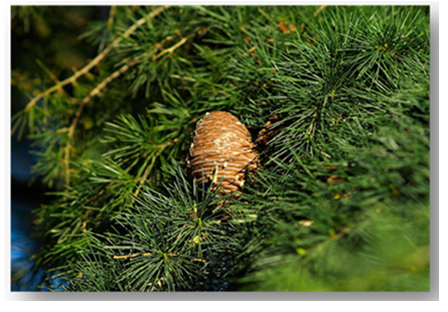
Deodar cedar is the most pendulous of the real cedars, with drooping branchlets and beautifully drooping branching at the tips. Lower limbs of the tree typically stay as it ages, often touching the ground. This tree gets to 40-50’ tall in its first 25 years and has a modest growth rate. Trees in their natural habitat are said to grow substantially taller over time, occasionally reaching 150-200’ tall. Clusters of dark grayish- green needles (up to 1.25” long) emerge. Cones that stand upright (up to 4” long). It is indigenous to the Himalayas. Synonyms: Pinus deodara Roxburgh, Cedrus libani, deodara (Roxburgh), C. libani var. deodara (Roxburgh) [1].
Scientific Classification
- Kingdom: Plantae
- Family: Coniferae
- Genus: Cedrus
- Species: C. deodara
- Common Name: Deodar
Morphology
Trees up to 60 m tall; trunk up to 3 m in diameter; bark dark gray, cracking into irregular scales; branches horizontal, slightly tilted, or slightly pendulous; long branchlets usually pendulous, pale grayish yellow and densely pubescent with some white powder in the first year, then grayish; winter bud scales curved outward at base. Initially pale green, aging dark green, linear but broader distally, triangular in cross section, 2.5-5 cm 1-1.5 mm, firm, stomatal lines 2 or 3 adaxially and 4-6 abaxially, apex acuminate [2]. Flabellate- obtriangular seed scales, 2.5-4 4-6 cm, auriculate into a claw at base, cuneate in central section, incurved distally. Seeds are trapezoidal and about 1 cm long; wings are around 1.5 to 2 cm long.
Trees up to 30 m tall with spreading horizontal branches and drooping branchlets. The leaves are acicular, 2.5 cm long, and sided. Male cones solitary at the terminals of dwarf branches, 2.5 4.5 (7) cm long, erect, cylindrical, purplish at maturity; Microsporophylls are spirally organized, with two oblong sporangia on each; micropores are not winged. Female cones are solitary, erect, and terminal at the end of shoots; immature cones are greenish, mature cones are brown, and 7 12 x 5 9 cm in size; sporophylls are fan-shaped, deciduous, and leave a central woody axis. Obovate seeds, 4 to 6 mm (excluding wing), with a big light brown wing.
Etymology
The scientific name, which is also the common name in English, is derived from the Sanskrit term devadaru, which means “wood of the gods,” a composite of deva “god” and dru “wood and tree [3].
Cultivation
It is extensively grown as a decorative tree, and its drooping leaves makes it popular in parks and large gardens. Trees are usually damaged by temperatures below roughly 25 °C (13 °F) in general cultivation, confining it to USDA zones 7 and warmer for reliable growth. It may thrive in cool-summer regions such as Stateline, Nevada, and Ushuaia, Argentina.
The most cold-tolerant trees are found in Kashmir and Paktia Province, Afghanistan, to the northwest of the species’ range. Selected cultivars from this location are hardy to USDA zones 7 and 6, with temperatures as low as 30°C (22 °F) [4]. This region’s cultivars include ‘Eisregen,’ ‘Eiswinter,’ ‘Karl Fuchs,’ ‘Kashmir,’ ‘Polar Winter,’ and ‘Shalimar. ‘Eisregen,’ ‘Eiswinter,’ ‘Karl Fuchs,’ and ‘Polar Winter’ were selected in Germany from seed collected in Paktia; ‘Kashmir’ was a nursery trade selection, and ‘Shalimar’ was propagated at the Arnold Arboretum from seeds collected in 1964 from Shalimar Gardens in India (in the Kashmir region). C. deodara, as well as the cultivars ‘Feelingin’ Blue and ‘Aurea,’ have been awarded the Royal Horticultural Society’s Award of Garden Merit (confirmed 2017).
Geographical Source
- Native to: India, Nepal, Pakistan, Afghanistan
- Exotic to: Argentina, Canada, China, France, Germany, Italy, Spain.
- Habitat: North-western Himalayas from Kashmir to Garhwal, from 1000-3500 m [5].
Chemistry
Taxifolin is abundant in the bark of Cedrus deodara. Cedeodarin, ampelopsin, cedrin, cedrinoside, and deodarin (3′,4′,5,6-tetrahydroxy-8-methyl dihydroflavonol) are all found in the wood. -terpineol (30.2%), linalool (24.47%), limonene (17.01%), anethole (14.57%), caryophyllene (3.14%), and eugenol (2.14%) are the primary components of needle essential oil. In addition to isopimaric acid, the deodar cedar includes lignans and the phenolic sesquiterpene himasecolone. Other chemicals found include ()-matairesinol, ()-nortrachelogenin, and dibenzylbutyrolactollignan (4,4’,9-trihydroxy-3,3’-dimethoxy-9,9’-epoxylignan).
Vernacular Names
- Ayurvedic: Devadaru, Suradruma, Suradaru, Devakashtha, Devadruma, Saptapatrika, Daru, Bhadradaaru, Amarataru, Amaradaru, Daruka, Devahvaa, Surataru, Surabhuruha
- Unani: Deodaar
- Siddha: Thevathaaram
- Hindi: diar, deodar, devdaar
- English: himalayan cedar, deodar cedar
- French: Cedre del’himalaya German: himalaja- zeder
- Italian: Cedro dell’Himalaia
- Spanish: Cedro del himalaya, cedro de la India
- Trade Name: diar, deodar
Medicinal Activities of Deodar
Deodar possess following pharmacological activities [6].
- Antifertility: Reduces fertility
- Anti-inflammatory: Reduce inflammation
- Antiseptic: prevents the growth of disease-causing microorganisms.
- Antispasmodic: Relieves spasm of involuntary muscle
- Antiviral: Effective against viruses
- Astringent: Constricts soft organic tissue
- Carminative: Relieves gas in the alimentary tract (colic or flatulence or griping)
- Diaphoretic: Induces perspiration
- Diuretic: Causes increased passing of urine
- Insecticide: Kills insects
Material and Methods
Collection and Identification of Plant Part (Heartwood)
The heartwood of Cedrus deoadara was collected from local market (Ludhiana) and was identified I.S.F college of Pharmacy, Moga [7].
Material
All chemicals and solvents used in the experiment were of analytical grade . Phenolphthalein, ethanol, ether, potassium hydroxide, chloroform, sodium thiosulphate, phenolphthalein sol, hydrochloride acid, potassium hydroxide were procured from reputed suppliers [8].
Method
Physiological Studies
Determination of Foreign Matter: Plant material of the given sample size should be weighed. Spread it thinly and separate the foreign matter into groups using visual inspection, a magnifying lens (6x or 10x), or a suitable sieve, depending on the needs for the specific plant material. Sift the remaining sample through a No. 250 screen; dust is considered mineral admixture. Sort the sorted foreign materials into groups by weighing the portions. Determine the content of each foreign matter category in grams per 100g of air dried sample [9].
Ash Values
The ash value is the residue left after burning of plant material, which simply indicates inorganic salts naturally found in crude pharmaceuticals, clinging to it, or intentionally added to it as a type of adulteration.
Total Ash: Total ash is the total amount of material that remains after burning. Carbonates, phosphates, silicates, and silica are common constituents of total ash, which includes both physiological ash formed from plant tissue and non- physiological ash, which is the residue of extraneous matter, such as sand and dirt, on the plant surface [10]. About 2 gram of air dried powdered medication was precisely weighed and placed in a pre-lit and tarred silica crucible, which was then ignited by progressively increasing the heat to 500-600°C until free of carbon. The crucible was weighed and cooled. The percentage of total ash was estimated using the air dried medication as a reference.
Water Soluble Ash: Water-soluble ash is the weight difference between total ash and residue following water treatment of total ash. The total ash obtained was boiled for 5 minutes with 25 ml of water, the insoluble matter was collected on ashless filter paper, incinerated at a temperature not exceeding 450°C, the weight of the insoluble matter was subtracted from the weight of the ash, and the percentage of water soluble ash was calculated using the air dried drug as a reference [11].
Acid-Insoluble Ash: The residue obtained after boiling the entire ash with weak hydrochloric acid and burning the remaining insoluble stuff is known as acid insoluble ash. This determines the amount of silica present, particularly in the form of sand and siliceous earth [12]. The whole ash was heated for 5 minutes with 25ml of 2N hydrochloric acid; the insoluble stuff was collected on ash less filter paper, washed with hot water, ignited, cooled in a desiccator, and weighed. The percentage of acid-insoluble ash was estimated in relation to the air-dried medication.
Sulphated Ash: For 10 minutes, a silica crucible was heated to redness, cooled in desiccators, and weighed. 1 gram of the substance was placed to the crucible, and the crucible and its contents were precisely weighed. After that, it was treated with dilute sulfuric acid before being ignited to a consistent weight. The obtained ash was weighed. The percentage of sulphated ash was estimated in relation to the air dried medication [13].
Determination of Extractable Matter
Extraction of plant materials with certain solvents yields approximate measurements of their chemical contents extracted with those solvents from a specific amount of air dried plant material [14].
Hot Extraction: In a glass-stoppered conical flask, 4.0 gram of coarsely powdered air-dried material was accurately weighed. To acquire the entire weight including the flask, 100 ml of water was added and weighed. The mixture was thoroughly shaken and set aside for one hour. The flask was fitted with a reflux condenser and gently boiled for 1 hour before being cooled and weighed. With the prescribed solvent, the original total weight was readjusted. It was quickly filtered through a dry filter paper following vigorous shaking. 25 mL of the filtrate was transferred to a weighed, dried tared flat-bottomed dish and dried on a water bath. It was dried at 105°C for 6 hours, then cooled in a desiccator for 30 minutes before being weighed.
Cold Extraction: In a glass-stoppered conical flask, a 4.0 gram sample of coarsely powdered air-dried material was carefully weighed. The plant material was macerated for 6 hours in 100 cc of solvent with regular shaking before being allowed to stand for 18 hours. It was immediately filtered, and 25 ml of the filtrates were transferred to a weighed, dried tared flat-bottomed dish and dried on a water bath [15]. It was dried at 105°C for 6 hours, then refrigerated in a desiccator for 30 minutes before being weighed. The difference in weight between the dish before and after drying was calculated. Using air dried material, the proportion of ethanolic and water soluble extractive content was calculated.4.0 gram air-dried coarsely powdered.
Loss on Drying: This parameter is used to calculate the amount of moisture present in a given sample. A tared evaporating dish was used to hold the powder drug sample (2gram). The tared evaporating dish is dried and weighed at 105 1°C till consistent weight. The drying process was repeated until two consecutive readings matched.
Determination of Volatile Matter
To determine the volume of oil, the weighed medication is placed in a distillation flask with water and connected to a Clevenger equipment. The plant material is distilled with water, and the distillate is collected in a graduated tube [16]. The watery portion separates automatically and is returned to the distillation flask. During distillation, the oil and water condense, and the volatile oil that gathers in the graded receiver as a layer on top of the water is measured and the percentage yield is computed.
Determination of Haemolytic Activity
Saponins were detected using haemolytic activity of plant material. It was evaluated by comparing plant extract to the reference substance saponin, which has an activity of 1000 units per gram. Filling a glass stoppered flask to one-tenth of its volume with sodium citrate (36.5 g/L) and whirling to ensure that the inside of the flask was thoroughly moistened yielded the erythrocyte suspension. A sufficient volume of freshly obtained blood from healthy mice was put to it and quickly shook. 1 mL of citrated blood was diluted further with 50 mL of pH 7.4 phosphate buffer. The reference solution (10 mg glycyrrhizin acid, Himedia Mumbai) was produced in 100 ml of phosphate buffer pH 7.4. This was newly made [17].
Preliminary Test
0.1ml, 0.2ml, 0.5ml, and 1ml of alcoholic and aqueous extract (1g) of leaves were taken and adjusted to 1ml in each tube with phosphate buffer. 1ml of 2% blood suspension was added to each tube. To avoid foam development, gently invert the tubes to combine them. After every 30 minutes, the tubes were shook. The mixture was then allowed to stand at room temperature for 6 hours. The tubes were examined and the dilution at which haemolysis occurred, which was indicated by clear, crimson solution, was noted (Table 1).
| Tubes No. | ||||
|---|---|---|---|---|
| 1 | 2 | 3 | 4 | |
| Leaves Extract (ml) | 0 | 0 | 1 | 1 |
| Phosphate buffer pH 7.4 (ml) | 1 | 1 | 1 | - |
| Blood suspension (2%) | 1 | 1 | 1 | 1 |
Table 1: Preliminary test for Heamolytic value.
Main Test
As a preliminary test, a serial dilution of plant material extract was generated diluted or undiluted in 13 test tubes at concentrations of 0.40, 0.45, 0.50 up to 1ml and adjusted the volume in each test tube with phosphate buffer to 1ml. In each test tube, 1ml of 2% blood suspension was added. After 24 hours, the tubes were checked for haemolysis. In the same way that plant material extracts were made, glycyrrhizinic acid was serially diluted. The amount of total hemolysis was calculated (Table 2).
| Tubes No. | |||||||||||||
|---|---|---|---|---|---|---|---|---|---|---|---|---|---|
| 1 | 2 | 3 | 4 | 5 | 6 | 7 | 8 | 9 | 10 | 11 | 12 | 13 | |
| Leaves extract(ml) | 0 | 0.5 | 1 | 0.6 | 1 | 0.7 | 1 | 0.8 | 1 | 0.9 | 1 | 1 | 1 |
| Phosphate buffer pH | 1 | 0.6 | 1 | 0.5 | 0 | 0.4 | 0 | 0.3 | 0 | 0.2 | 0 | 0.1 | - |
| Blood Suspension (2%) ml | 1 | 1 | 1 | 1 | 1 | 1 | 1 | 1 | 1 | 1 | 1 | 1 | 1 |
Table 2: Main test for Heamolytic value.
Calculated the hemolytic activity with formula Haemolytic activity = 1000 × a/b Where 1000 = defined haemolytic activity of saponin; a = (R) that produces total haemolysis. b = quantity of plant material that produces total haemolysis (g).
Determination of Swelling Index
The swelling index is the volume taken up by the swelling of one gram of plant material in milliliters under certain conditions.1 gram of powdered leaf material was precisely weighed and placed in 25 ml glass stoppered measuring cylinders. Each cylinder received 25 ml of water, and the mixtures were firmly shaken every 10 minutes for one hour. They were left to stand at room temperature for three hours. The volume occupied by powdered leaves in mL, including any sticky mucilage, was measured, and the mean value of individual determination was computed.
Determination of Foaming Index
The foaming index is used to assess the foaming ability of an aqueous decoction of plant material and extracts. 1 gram of powdered leaves was properly weighed and deposited into a 500 ml flask containing 100 ml water, heated for 30 minutes, cooled, filtered into 100 ml volumetric flasks, and the volume was made up with water. Each decoction was put into 10 stoppered test tubes in increments of 1 ml, 2 ml, 3 ml, and so on up to 10 ml, and the volume of liquid in each test tube was adjusted with water to 10 ml and shaken for 15 seconds in a longitudinal motion. After allowing the test tubes to stand for 15 minutes, the height of the foam was measured. The following were the outcomes.
The foaming index was less than 100 if the height of foam in each tube was less than 1 cm. The foaming index was greater than 1000 if the height of the foam in each tube was greater than 1 cm. In such circumstances, the findings were obtained by repeating the process with a new set of decoction dilutions. If the height of the foam in any test tube was greater than 1 cm, the volume of the plant material decoction in that tube (a) was utilized to calculate the index.
Formula used for calculation of foaming index = 1000/a
where a = volume of decoction was used for preparing the dilution in tube where foaming height was 1cm measured
Experimental Work
Extracts Preparation
Aqueous Extract: 250 g of coarse powder of Cedrus deoadara was extracted with distilled water for 72 hours using the cold maceration method and filtered through muslin fabric. The filterate was then concentrated in order to obtain a thick extract. It is dried and ground into a powder.
Solvent Extraction: The dried powdered plant (500 g) was extracted in a soxhlet apparatus using petroleum ether (60-80°C), chloroform, ethylacetate, and ethanol. To obtain thick slurry, 32 cycles were run. After that, the slurry was concentrated to produce a solid extract.
Preliminary Phytochemical Screening
Petroleum ether, chloroform, ethylacetate, ethanol, and aqueous extract were examined for the presence of alkaloids, glycosides, carbohydrates, sterols, phenolic compounds, tannins, flavonoids, saponins, proteins, and amino acids.
Test for Alkaloids
About 500 mg of each of the dried extract was stirred with about 5ml of dilute hydrochloric acid and filtered. The filtrate was tested with the following reagents.
- Mayer’s Reagent: Few drops of Mayer’s reagent (Potassium mercuric iodide solution) were added separately to each filtrate and observed for the formation of white or cream coloured precipitate.
- Dragendroff’s Reagent: Few drops of Dragendroff’s reagent (solution of potassium bismuth iodide) were added separately to each filtrate and observed for the formation of orange yellow precipitate.
- Hager’s Reagent: Few drops of Hager’s reagent (saturated aqueous solution of picric acid) were added separately to each filtrate and observed for the formation of yellow precipitate.
- Wagner’s Reagent: Few drops of Wagner’s reagent (solution of iodine in potassium iodide) were added separately to each filtrate and observed for the formation of reddish brown precipitate.
Test for Flavonoids
- Ammonia Test: A few milligram of extract were dissolved in water and filter. To the filtrate, filter paper strip was dipped and ammoniated. The filter paper strip turned yellow indicates the presence of flavonoids.
- Shinoda /Pew Test for Flavonoids: A few milligram of extract was dissolve in water and filter. To the filtrate a piece of metallic magnesium/zinc was added followed by addition of 2 drops of concentrated hydrochloric acid. Appearance of reddish brown colour indicates the presence of flavonoids in all the extracts.
Test for Glycosides
• Killer Killani Test: 1ml of glacial acetic acid containing traces of ferric chloride and 1 ml of concentrated sulphuric acid was added to extracts carefully. Appearance of red colour indicates the presence of glycosides.
- Sodium Nitroprusside Test: The extracts were made alkaline with few drops of 10% sodium hydroxide and then freshly prepared sodium nitroprusside solution was added. Blue colour indicates the presence of glycosides in the extracts.
- Borntrager Test: Appearance of pink colour, when 1 ml of benzene and 0.5 ml of dilute ammonia solution were added to extracts indicates positive test for glycosides.
Test for Sterols
- Liebermann-Burchard Test: A few milligram of extract was dissolved in chloroform and few drops of acetic anhydride were added along with a few drops of concentrated sulphuric acid from the sides of the tube. The appearance of blue to blood red colour indicates the presence of sterols in the extract.
- Salkowski Reaction: 2 ml of concentrated sulphuric acid was added to few milligram of residue extract. The appearance of a yellow ring at the junction which turns red after 1 minute indicates the presence of sterols in the extract.
Test for Phenolic Compounds and Tannins
A few milligram of extract was mixed with 5 ml of distilled water, filtered and to the filtrate following tests were performed.
- Ferric Chloride Test: Formation of blue colour on addition of ferric chloride solution (5%) was taken as positive test of phenolic compounds.
- Lead Acetate Test: Addition of few drops of lead acetate solution (5%) to the aqueous extract gives a yellow/ white precipitate, suggesting the existence of phenolic compounds/tannins.
Test for Saponins
- Foam Test: To the few milligrams of the extract, few drops of water were added and shaken well. Formation of foam indicates the presence of saponins.
- Sodium Bicarbonate Test: To the few milligrams of extract, few drops of sodium bicarbonate were added and shaken well. Formation of honey comb like frothing indicates positive test for saponins.
Test for Proteins and Free Amino Acids
To few milligram of residue, 5 ml distilled water was added and filtered. Filtrate was then subjected to the following tests.
• Millons Test: To 2 ml of the filtrate, 5-6 drops of Millon’s reagent (solution of mercury nitrate and nitrous acid) were added. Appearance of red precipitate indicates the presence of proteins and free amino acids.
- Biuret Test: To the ammoniated alkaline filtrate 2-3 drops of 0.02% copper sulphate solution were added. Appearance of a red/violet colour indicates the presence of proteins and free amino acids.
- Ninhydrin Test: To the filtrate, lead acetate solution was added to precipitate tannins and filtered. The filtrate was spotted on a paper chromatogram, sprayed with ninhydrin reagent and dried at 110°C for 5 minutes. Violet spots (free amino acids) confirmed the presence of proteins/free amino acids.
Test for Carbohydrates
- Molish Test: A few milligram of extract was dissolved in water and filtered. To the filtrate few drops of α-naphthol (20% in ethyl alcohol) were added. Then about 1 ml of concentrated sulphuric acid was added along the side of the tube, reddish violet ring at the junction of two layers was seen, indicates the presence of carbohydrates.
- Fehling’s Test: 1 ml of Fehling’s reagent (copper sulphate in alkaline conditions) was added to filtrate of extract in distilled water and heated on a steam bath. Appearance of brick red precipitates indicates the presence of carbohydrates (as reducing sugars).
Results
Pharmacognostical Characteristics of Stem Bark Macroscopical Characteristics
| Condition | Hard |
|---|---|
| Shape of pieces | Flat strips |
| Dimensions | Varies 8-10 cm long, 2-4 cm wide |
| Colour | Outer surface dark brown, inner surface brownish buff coloured |
| Odour | Slight |
| Taste | Bitter |
| Fracture | Short |
Table 3: The macroscopical characteristics of the stem bark of the Cedrus deodara are tabulated in Table.
Powder Microscopy
- Powder microscopy of the bark of the Cedrus deodara shows the following characteristics
- Cork cells- 4-6 layers of tangentially elongated cells, with yellowish brown matter.
- Lignified fibers-Thick heavily lignified with pointed ends.
- Phelloderm- 6-8 layers of thin walled rectangular cells with starch grains and calcium oxalate crystals.
- Calcium oxalate crystals-calcium oxalate.
• crystals in prism, hexagonal in shape. Physico-Chemical Parameters
| Parameter | Values | |
|---|---|---|
| 1 | Alcoholic Extraction Value | 3.45g |
| Aqueous Extraction Value | 3.30 g | |
| 2 | Loss on drying | 0.23% |
| 3 | Ash values | |
| 3 | Total ash | 1.6 |
| 3 | Water soluble ash | 0.56 |
| 3 | Acid soluble ash | 0.93 |
| 4 | Hemolytical value | -ve |
| 5 | Foreign matter | 0.8 |
| 6 | Volatile oil | 1.50% |
Table 4: Physico-chemical parameters like loss on drying, ash values, extractive values are given in the Table.
Phytochemical Investigation
| Constituent | Observation |
| Alkaloid | + |
| Saponins | + |
| Coumarins | - |
| Fatty acids | - |
| Tannins | + |
| Flavonoids | + |
| Amino acid | - |
Table 5: The results of phytochemical analysis are given in Table.
Discussion
The heart wood, leaves, bark of the plant Cedrous deodara is used in the traditional system of medicine for the treatment of the various disease. As there is no much work on record on it’s macroscopically and microscopically standards of this traditionally much valued drug. So the present research work gives us some parameter for the standardization and authentication of the plant material (Table 6).
| Pet. Ether | Chloroform | Ethanol | Aqueous | |
|---|---|---|---|---|
| Alkaloids | +ve | +ve | +ve | +ve |
| Glycosides | -ve | -ve | -ve | -ve |
Table 6: Alkaloids and glycosides.
Conclusion
Various standardized factors, including macroscopical, microscopical, physicochemical, and phytochemical screening of Cedrus deodara Linn, were used in this study. This study found that the extract of Cedrus deodara contains Alkaloid, Saponins, Tannins, and Flavonoids. As a result, our research contributes to the correct identification of Cedrus deodara. The preliminary phytochemical screening information will be important in determining the drug’s authenticity.
References
-
The Ayurvedic Pharmacopoeia of India (2004) Ministry of health and family welfare. 1st(Edn), New Delhi, India 1(4): 23-34.
-
Dar AR, Dar GH (2006) The wealth of Kashmir Himalaya gymnosperms. Asian Journal of Plant Science 5(2): 251- 259.
-
Mcgowan JC (1982) Majestic Conifers from the Himalayas. Los Angeles, Times Home 156: 5.
-
Nadkarni KM (1954) Indian Materia Medica. Ramdas bhatkal 2: 295-296.
-
Shinde UA, Phadke AS (1999) Studies on the Anti- inflammatory and analgesic activity of _Cedrus deodara_ Roxb Loud Wood oil. Journal of Ethnopharmacology 65(1): 21-27.
-
Kar K, Puri VN, Patnaik GK, Sur RN, Dhawan BN, et al. (1975) Spasmolytic Constituents of _Cedrus deodara_ Roxb loud Pharmacological Evaluation of Himachalol. Journal of Pharmaceutical Science 64(2): 258-262.
-
Singh SK, Shanmugavel M, Himani K, Reena S, Mondhe DM, et al. (2007) Chemically standardized isolates from _Cedrus deodara_ stem wood having anticancer activity. Planta Medica 73(6): 519-526.
-
Parihar P (2003) Antibacterial potential of _Cedrus_ _deodara_. Advances in Plant Sciences 16: 479-482.
-
Tandan SK, Chandra S, Gupta S, Lal J (1998) Pharmacodynamic effects of _Cedrus deodara_ wood essential oil. Indian Journal of Pharmaceutical Sciences 60(1): 20-23.
-
Khandelwal KR (2008) Practical Pharmacognosy. 16th(Edn.), Pragathi books, pp: 9-14.
-
Kokate CK, Purohit AP, Gokhale SB (2006) Pharmacognosy. 22nd(Edn.), Nirali Prakashan publication, pp: 635.
-
Indian Pharmacopoeia (1996) Ministry of health and family welfare. Govt of India, New Delhi, India, 1: 47-49.
-
Anonymous (1996) Indian Pharmacopoeia. 4th(Edn.), Controller of Publications, New Delhi, India.
-
Chaudhri RD (1996) Herbal Drugs Industry, 1st(Edn.), The Eastern Publishers, pp 1-3.
-
Gupta MK, Sharma PK, Ansari SH, Lagarkha R (2006) Pharmacognostical evaluation of _Grewia asiatica_ fruits. International Journal of Plant Science 1(2): 249-251.
-
Kokate CK (1994) Practical Pharmacognosy. 3rd(Edn.), Vallabh Prakashan, New Delhi, India.
-
Khandelwal KR, Khandelwal J, Gokhle SB, Kokate CK, Pawar AP (2005) Practical Pharmacognosy Techniques and Experiments. 13th(Edn.), Pune Nirali Prakashan.
- Potential Medicinal Herbs and Secondary Metabolites in Combating Corona Virus
- Monkeypox and its Clinical Implications in Pregnancy
- Pharmacognostical Analysis of the Leaves of Important Nervine Medicinal Plant: Strychnos Nux-Vomica L
- Assessment of Antibacterial Activity of Various Solvent Extracts of Dictyota Dichotoma Against Multidrug Resistant Bacterial Strain
- An Insights of Bioactive Elements on Malignancy: Mechanistic Avenues
- Advances and Future Directions in Pharmacognosy and Chinese Medicine