
Ethnobiological Investigation of Plant Utilization for the Purpose of Arthritis Management in Nyamira North Sub-County of Nyamira County, Kenya
Traditional medical practices are common among many Kenyan communities, with herbal remedies consistently employed for arthritis treatment, despite the increased availability of conventional medicines. Therefore, it is of paramount significance to document these plants as a means of preserving the cultural knowledge of traditional medicines. Aim of the Study: The study aimed to identify and document medicinal plants utilized by traditional medical practitioners (TMPs) in Nyamira North Sub- County, Nyamira County. Materials and Methods: A field study was conducted in Nyamira North Sub- County. Thirty-six TMPs were selected and interviewed using semi-structured questionnaires. Information regarding the plants used was collected and documented. Frequency tables and data triangulation were employed to present the collected data. Results: A total of 48 species of medicinal plants belonging to 30 families and covering 38 genera were identified for use in managing arthritis. Thirty plant species were found to have reports of similar use in the literature, while 18 species were being reported for the first time regarding their use in arthritis. The most encountered families were Asteraceae (16.67%), Solanaceae (8.33%), and Fabaceae (6.25%). Most of the growth forms used were shrubs (46%), followed by herbs (31%), trees (15%), and climbers (8%). The most frequently used plant parts were the root/root backs (56%), followed by the leaves (20%), stem bark (14%), and the whole plant (8%). Conclusion: The present study identified and documented, for the first time, medicinal plants used to treat arthritis in the study area. It also revealed that eighteen (37.5%) of the traditional herbal remedies used to treat arthritis in the study area have not been reported in the literature. However, thirty (62.5%) are reported in the literature for similar use in other communities.
Introduction
Arthritis is a general term referring to the inflammation of joints, with more than 100 clinical forms characterized primarily by stiffness, warmth, swelling, redness, and pain. It is often used to denote any disease involving pain or stiffness of the musculoskeletal system. Arthritis is a prevalent and debilitating condition impacting numerous individuals worldwide, significantly contributing to the disability burden associated with musculoskeletal disorders. Among the various clinical forms, osteoarthritis (OA) and rheumatoid arthritis (RA) are the most prevalent. Research has highlighted osteoarthritis as the primary joint disease contributing to chronic disability in developed nations. In developing countries, arthritis poses an additional disease burden, especially with limited income, leading to expensive and inaccessible healthcare services. Traditionally, non- steroidal anti-inflammatory drugs (NSAIDs) are widely utilized by arthritis patients due to their effective pain and inflammation relief. However, the associated side effects with NSAIDs may limit their acceptance among many patients. Major factors contributing to mortality and morbidity, particularly among the elderly, involve side effects related to the kidney and gastrointestinal tract.
A significant number of individuals afflicted by this debilitating disease are now exploring complementary and alternative medicine (CAM) as an option [1, 2, 3, 4, 5, 6, 7]. Approximately 60–90% of arthritis sufferers are estimated to opt for alternative medicines, among which chiropractic and herbal remedies are extensively employed [8]. Medicinal plant derivatives are an intrinsic part of the cultural customs and heritage of African populations [9]. Moreover, they play a crucial role in preserving cultural heritage, serving as a foundation for the discovery of new drugs, and safeguarding biological diversity [10]. Based on these premises, the current Ethnobiological investigation was conducted to document the traditionally used medicinal plants for the management of arthritis and related joint illnesses in Nyamira North Sub- County, Nyamira County, Kenya.
Methodology
Design of Study
The study was a cross sectional analytical design where a purposive sampling method was employed to identify 36 traditional medical practitioners as participants.
Study Area
Data collection was confined to Nyamira North Sub- County, Nyamira County, which spans an area of 899.4 km2 and is situated between latitude 00 30° and 00 45° South, and longitude 340 45° and 350 00° East. Nyamira North Sub- County is one of the five sub-counties constituting Nyamira County, alongside Nyamira South, Borabu, Manga, and Masaba North. As per the District Health Information System (DHIS2) population estimates for 2018, the Sub- County has a population of 150,628, with males accounting for 48.9% and females for 51.1% of the total population.
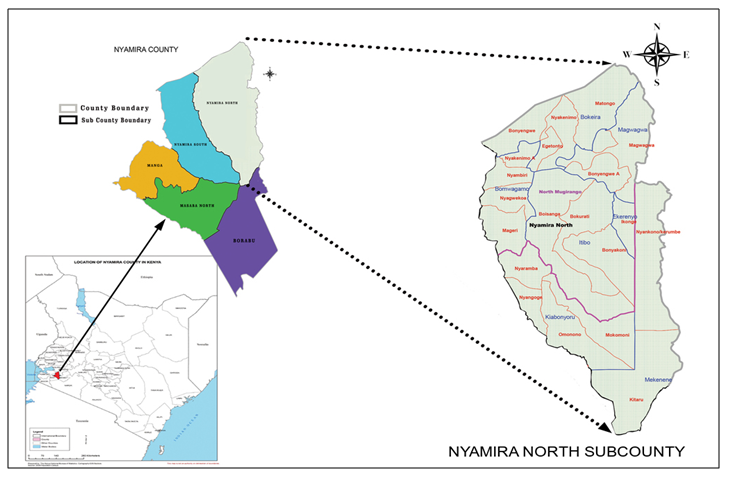
The Sub- County encompasses a coverage area of 219.3 km2 and exhibits a population density of 687 individuals per km2. The region experiences favorable temperate climate conditions, with temperatures ranging between 16-23°C and an average annual rainfall varying from 500-2600 mm. The conducive climate supports agricultural activities, with both subsistence farming, including the cultivation of maize, millets, beans, and fruits, and commercial farming practices such as cattle rearing, tea, and coffee production. The inhabitants of Nyamira North Sub- County predominantly belong to the Abagusii community, accessing healthcare services from 28 government facilities (DHIS2), as well as from various privately owned, faith-based organizations (FBOs), and non-governmental organizations (NGOs) healthcare facilities (Figure 1).
Ethnobiological Investigation
The survey aimed at collecting data on medicinal plants used for treating arthritis and joint-related conditions specifically targeted traditional medical practitioners (TMPs) within this sub-county. The Participatory Rapid Appraisal method (PRA) was employed to gather information concerning the indigenous knowledge associated with the utilization of medicinal plants for managing arthritis and joint-related conditions. This approach involved personally visiting the homes of the TMPs to conduct direct interviews. The recruitment of the TMPs for the study was facilitated through their leader/chairperson and village heads. The researcher administered a guided structured questionnaire and interview guide to selected informants from each of the sub-county divisions. The recorded information encompassed details regarding the usage of the plants, as well as the demographics of the respondents. To ensure the reliability of the data, only those plants mentioned by a minimum of three informants were noted [11].
Plant Collection and Identification
The plant materials referenced by the traditional medical practitioners (TMPs) were gathered and authenticated at the East African Herbarium (EA) located within the Nairobi National Museum of Kenya. A voucher specimen was then deposited at both the East African Herbarium and the Mount Kenya University Herbarium.
Ethical Clearance
Prior to the commencement of the study, ethical approval was obtained from the University of Nairobi Biosafety, Animal Welfare, and Ethics Committee (Reference number, FVM BAUEC/2018/168). Written consent was procured from all the herbalists who expressed willingness to participate in the study, following a comprehensive explanation of the study’s objectives. The researcher also communicated the potential benefits and risks associated with the study to the informants before the study initiation.
Results and Discussion
Socio-Demographics of the Respondents
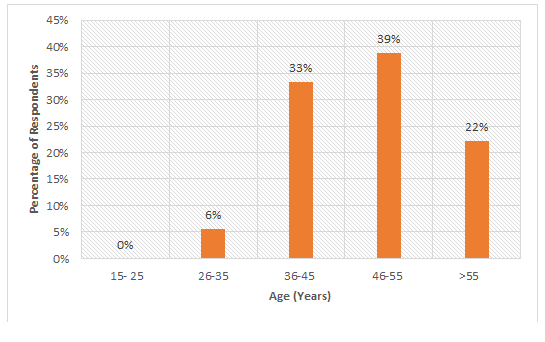
A total of 36 traditional medical practitioners (TMPs) were interviewed, comprising 29 males and 7 females. This aligns with the findings of previous studies that also indicated a predominance of male TMPs [12, 13, 14]. However, this contrasts with Omwenga’s (2015)[15]report, which stated that 54% of TMPs were females. The majority of the respondents (39%) fell within the age range of 46-55 years (Figure 2). This is attributed to the community’s belief that older individuals possess the requisite knowledge in traditional medicinal practices, which is orally transmitted to younger generations.
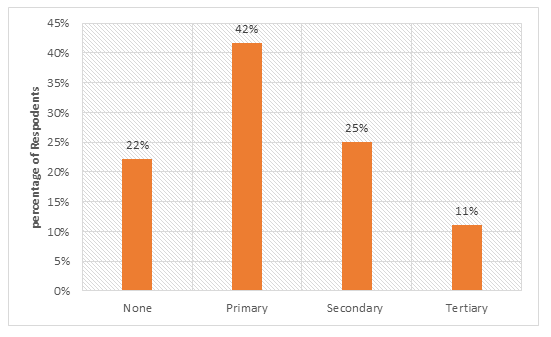
Most of the respondents were considered literate (78%), having completed either primary, secondary, or tertiary education. Only 22% were deemed illiterate, with no formal education (Figure 3). This corroborates similar studies indicating that the level of education does not significantly influence ethnomedical practices [12, 13, 15]. The study revealed that all interviewed TMPs resided in rural areas, where a significant majority (80.6%) primarily engaged in farming as their source of livelihood. Additionally, 5.6% were involved in small-scale businesses, and another 5.6% were employed in formal sectors. Only three respondents (8.3%) exclusively practiced traditional medicine.
Acquisition of Traditional Knowledge and Practices
For most of the interviewees (63.9%), traditional medicine knowledge was acquired through inheritance, passed down primarily from their parents and grandparents. This finding is consistent with the reports of Keter & Mutiso [13] and Kaingu [12], who noted that most TMPs gained knowledge of the trade through inheritance. In the study, 19.44% of the respondents obtained knowledge through apprenticeship under qualified tutor TMPs, while 16.7% acquired it through organized or formal training in seminars and workshops. Concerning experience in traditional medicine, most key informants (33.3%) had 11-19 years of experience. Six respondents (16.7%) had practiced for 1-5 years, 25% for 5-10 years, 16.7% for 20–40 years, and only 8.3% had practiced as traditional medical practitioners for more than 40 years.
This trend is consistent with other studies, indicating that the majority of TMPs have practiced for many years, emphasizing the key role of experience in accumulating ethnomedical knowledge [15]. All the herbalists interviewed resided in rural areas and conducted their practices from their homes, as none of them possessed a clinic. Only two interviewees had obtained a practice license from the Ministry of National Heritage and Culture. Additionally, two TMPs (8.3%) maintained elaborate botanical gardens, cultivating a significant portion of the medicinal plants. This practice was implemented as a mitigation measure against the substantial deforestation occurring in the county, as local inhabitants clear land for agricultural use.
Knowledge of Arthritis among Traditional Herbal Medicine Practitioners
Many of the traditional medical practitioners (TMPs) interviewed (91.67%) demonstrated a limited familiarity with the various forms of arthritis. However, they possessed a reasonable understanding of the general manifestations of arthritis, primarily based on known clinical symptoms such as chronic joint pains, inflammations, and joint stiffness. No notable distinctions were observed regarding the management of different types of arthritis, leading to the utilization of common remedies. Alongside their personal diagnoses, all TMPs occasionally relied on patients’ hospital reports and self-evaluations to establish a diagnosis. Furthermore, all TMPs indicated that their patients were typically referred to them by other patients, family members, and friends.
Medicinal Plants and Predominant Growth Forms Utilized in the Treatment of Arthritis
The study identified a total of 48 species of medicinal plants, spanning 44 genera that were utilized in the management of arthritis, as cited by the key informants. These plants, belonging to 30 families refer to Table 1, were utilized by herbalists to create preparations administered to arthritis patients. Table 1 also displays the number of species cited within each family and their respective proportions. Table 2 outlines the plant species, their families, local names, habits, parts used, and modes of preparation.
| No. | Family | Species | Percentage | No. | Families | Species | Percentage |
|---|---|---|---|---|---|---|---|
| 1 | Asteraceae | 8 | 16.67% | 16 | Oxalidaceae | 1 | 2.08% |
| 2 | Solanaceae | 4 | 8.33% | 17 | Ebenaceae | 1 | 2.08% |
| 3 | Fabaceae | 3 | 6.25% | 18 | Euphorbiaceae | 1 | 2.08% |
| 8 | Rubiaceae | 3 | 6.25% | 23 | Musaceae | 1 | 2.08% |
| 4 | Bignoniaceae | 2 | 4.17% | 19 | Hyacinthaceae | 1 | 2.08% |
| 6 | Lamiaceae | 2 | 4.17% | 21 | Meliaceae | 1 | 2.08% |
| 7 | Rhamnaceae | 2 | 4.17% | 22 | Moraceae | 1 | 2.08% |
| 9 | Salicaceae | 2 | 4.17% | 24 | Myrtaceae | 1 | 2.08% |
| 5 | Hypericaceae | 1 | 2.08% | 20 | Loranthaceae | 1 | 2.08% |
| 10 | Anacardiaceae | 1 | 2.08% | 25 | Papilionaceae | 1 | 2.08% |
| 11 | Apocynaceae | 1 | 2.08% | 26 | Peraceae | 1 | 2.08% |
| 12 | Asparagaceae | 1 | 2.08% | 27 | Ranunclulaceae | 1 | 2.08% |
| 13 | Cucurbitaceae | 1 | 2.08% | 28 | Rutaceae | 1 | 2.08% |
| 14 | Celastraceae | 1 | 2.08% | 29 | Urticaceae | 1 | 2.08% |
| 15 | Crassulaceae | 1 | 2.08% | 30 | Vitaceae | 1 | 2.08% |
Table 1: Number of families and species.
| Family | Plant Scientific Name (Kisii Dialect) | Voucher No. | Form | Part of the Plant | Frequency of Mentions |
|---|---|---|---|---|---|
| Anacardiaceae | Searsia pyroides (Burch.) Moffett (Obosangora) | SMW/2017/11 | Shrub | Root decoction | 15 |
| Apocynaceae | Carissa spinarum L. (Omonyangateti) | SMW/2017/17 | Shrub | Roots decoction | 27 |
| Asparagaceae | Asparagus racemosus Willd. (A.buchananil Bak.) (Ekerebo ekiagarori) | SMW/2017/31 | Climber | Roots decoction inhalation of steam | 28 |
| Asteraceae | Berkheya spekeana Oliv. (Rigeri) | SMW/2017/02 | Shrub | Roots and leaves decoction and also ash | 7 |
| Asteraceae | Conyza bonariensis (L.) Cronquist. (Omosune) | SMW/2017/35 | Herb | Leaves infusion | 7 |
| Asteraceae | Echinops amplexicaulis Oliv. (Rigeri nyagutwa) | SMW/2017/09 | Herb | Root decoction | 21 |
| Asteraceae | Microglossa pyrifolia (Lam.) Kuntze (Nyomba ya kebaki j or Mote okebaki) | SMW/2017/18 | Shrub | Root and Leaves infusion | 27 |
| Asteraceae | Solanecio manni (Hook.f.) C.Jeffrey (Omotagara) | SMW/2017/13 | Shrub | Leaf poultice | 9 |
| Asteraceae | Tagetes minuta L. (Omotiokia) | SMW/2017/33 | Herb | Root decoction | 6 |
| Asteraceaea | Carduus chamaecephalus (Vatke) Olive & Hiern (Egetuke) | SMW/2017/01 | Herb | Whole plant decoction and burnt ash | 5 |
| Asteraceaea | Cirsium vulgare (Savi) Ten. (Rigeri rinene) | SMW/2017/03 | Herb | Whole plant decoction and burnt ash | 6 |
| Bignoniaceae | Markhamia lutea (Benth.) K.Schum, (Omwobo) | SMW/2017/24 | Tree | Root decoction | 5 |
| Bignoniaceae | Spathodea campanulata P.Beauv. (Omonyagasegane) | SMW/2017/32 | Tree | Bark decoction | 21 |
| Celastraceae | Maytenus obscura (A. Rich.) Cufod. (Omosobwa) | SMW/2017/26 | Shrub | Root decoction | 16 |
| Crassulaceae | Kalanchoe densiflora Rolfe (Omoneke) | SMW/2017/40 | Herb | Leave poultice | 17 |
| Cucurbitaceae, | Momordica foetida Schumach (Omwatekania) | SMW/2017/25 | Climber | Root decoction | 13 |
| Ebenaceae | Euclea divinorum Hiern (Omomusi) | SMW/2017/30 | Shrub | Roots decoction | 3 |
| Euphorbiaceae | Phyllanthus amarus Schumach. & Thonn. (Egesabisabi) | SMW/2017/06 | Herb | Root decoction. | 3 |
| Fabaceae | Acacia abyssinica Benth. (Omonyenya) | SMW/2017/20 | Shrub | Bark decoction | 18 |
| Fabaceae | Acacia gerradi Benth. (Omokonge) | SMW/2017/19 | Shrub | Bark decoction | 11 |
| Fabaceae | Indigofera arrecta Hochst. ex A.Rich. (Omocheo) | SMW/2017/34 | Shrub | Root and leaf decoction | 9 |
| Hyacinthaceae | Albuca abyssinica Jacq. (Egetunguu ekiagarori) | SMW/2017/08 | Herb | Bulb Poultice | 11 |
| Hypericaceae | Harungana madagascariensis Lam. ex Poir. | SMW/2017/23 | Tree | Back dcoction | 15 |
| Lamiaceae | Ajuga remota Benth. (Omonyantira) | SMW/2017/39 | Herb | Whole plant decoction | 13 |
| Lamiaceae. | Rotheca myricoides (Hochst.) Steane & Mabb. (Omonyasese) | SMW/2017/14 | Shrub | Roots decoction | 21 |
| Loranthaceae | Phragmanthera usuiensis (Oliv.) M.G.Gilbert (Egete kienyoni) | SMW/2017/29 | Shrub | Leave infusion | 13 |
| Meliaceae | Ekebergia capensis Sparrm (Omoturomesi) | SMW/2017/41 | Tree | Roots decoction | 9 |
| Moraceae | Morus nigra L. (Omokenene) | SMW/2017/43 | Shrub | Leaves infusion | 7 |
| Musaceae | Ensete ventricosum (Welw.) Cheesman | SMW/2017/22 | Herb | Root decoction | 4 |
| Myrtaceae | Eucalyptus spp (Engamu ya bogere) | SMW/2017/38 | Tree | Leaves infusion and warm bath | 5 |
| Oxalidaceae | Biophytum umbraculum Welw. (Ekiebundi) | SMW/2017/12 | Herb | Whole plant decoction | 3 |
| Papilionaceae | Erythrina abyssinica DC. (Omotembe) | SMW/2017/45 | Tree | Roots and bark decoction | 28 |
| Peraceae | Clutia abyssinica jaub & Spach (Omosambara igoro) | SMW/2017/04 | Shrub | Root decoction | 4 |
| Ranunclulaceae | Clematis brachiata Thunb. (Omonyaigena) | SMW/2017/48 | Climber | Roots decoction | 22 |
| Rhamnaceae | Rhamnus prinoides L ˊHérit. (Omonyakige) | SMW/2017/42 | Shrub | Root decoction | 29 |
| Rhamnaceae | Rhamnus staddo A. Ritch (Omongururo) | SMW/2017/05 | Shrub | Root decoction | 27 |
| Rubiaceae | Rytigynia acuminatissima (K.Schum.) Robyns (Omonyinga) | SMW/2017/10 | Tree | Bark decoction | 4 |
| Rubiaceae | Vangueria apiculata (K. Schum) (Omokomoni) | SMW/2017/07 | Shrub | Root decoction | 24 |
| Rubiaceae | Vangueria madagascariensis J.F.Gmel. (Omwuogi) | SMW/2017/21 | Shrub | Root decoction | 21 |
| Rutaceae | Toddalia asiatica (L.) Lam. (Ekenagwa ekiagarori) | SMW/2017/37 | Shrub | Root decoction | 27 |
| Salicaceae | Flacourtia indica (Burm. f.) Merr. (Rikara) | SMW/2017/16 | Shrub | Back decoction | 5 |
| Salicaceae | Trimeria grandifolia (Hochst.) Warb. (Omoatiuga) | SMW/2017/47 | Shrub | Root decoction | 6 |
| Solanaceae | Physalis peruviana L. (Omosobosobo) | SMW/2017/44 | Herb | Roots | 6 |
| Solanaceae | Solanum incanum L. (Omoratora) | SMW/2017/28 | Herb | Root decoction | 9 |
| Solanaceae | Solanum terminale Forssk. (Omonyainogu) | SMW/2017/46 | Herb | Root decoction | 9 |
| Solanaceae | Withania somnifera (L.) Dunal (Omokubinyongo) | SMW/2017/36 | Shrub | Root and leaves decoction | 19 |
| Urticaceae | Urtica massaica Mildbr. (Rise) | SMW/2017/27 | Herb | Root decoction | 13 |
| Vitaceae | Rhoicissus tridentate (L.f.) Wild & R.B.Drumm. (Omokorongotwa) | SMW/2017/15 | Climber | Root decoction | 19 |
Table 2: Medicinal Plants Used to Manage Arthritis in Nyamira North Sub-County.
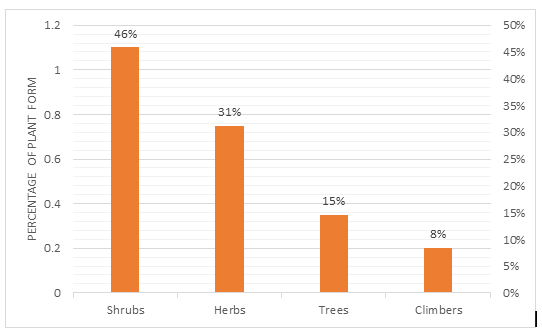
According to the traditional medical practitioners (TMPs) involved in the study, the majority of the plant species employed for treating arthritis belonged to the Asteraceae family (16.67%). This was followed by the Solanaceae family (8.33%), with the Fabaceae and Rubiaceae families each representing 6.25%. Additionally, the Bignoniaceae, Lamiaceae, Rhamnaceae, and Salicaceae families accounted for 4.17% each. The remaining families comprised one species each, contributing to 2.08% of the total number of species. However, some of the plants mentioned by the herbalists were challenging to obtain. For instance, obtaining Echinops amplexicaulis and Rhamnus prinoides required three days due to extensive clearance of the indigenous habitats for agricultural purposes. Notably, although E. amplexicaulis was mentioned by 21 respondents across the study area, it was only sourced from one region. This situation poses a risk of these medicinal plants becoming extinct unless measures are taken to preserve the knowledge and educate locals about the importance of conserving natural habitats. As depicted in Figure 4, the majority of the growth forms encountered were shrubs (46%), followed by herbs (31%), trees (15%), and climbers (8%).
Plant Parts used, Preparation, and Administration
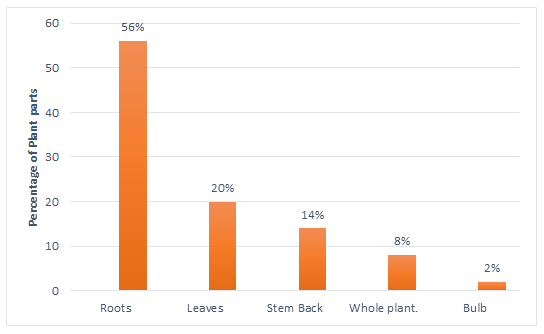
The root/root bark was the most frequently used plant part (56%), followed by the leaves (20%), stem bark (14%), and the whole plant (8%). The bulb had the lowest number of mentions (2%), while flowers and fruits were not cited by any of the respondents in the study refer to Figure 5.
Most herbalists mentioned decoctions as the most common method for preparing remedies, involving the boiling, or soaking of fresh or dried plant parts in water. Other methods included poultices, ash, powder mixed with water for oral administration, and infusion. All herbal preparations were freshly made just before administration. The oral route was cited by all TMPs as the preferred method for administering the medicine in the treatment of arthritis.
Ethnobotanical Uses and Reported Pharmacological Activities
The study involved cross-referencing the plant species with documented traditional uses in other communities. This was conducted with the aim of determining whether these plants had been previously utilized to treat arthritis and related symptoms. The literature search refer to Table 3 revealed that 30 plant species had either been traditionally used to treat arthritis, rheumatism, and other joint-related conditions or had been reported to possess pharmacological activities relevant to arthritis management. Among these, eight were specifically reported to be used for the treatment of arthritis. These are Flacourtia indica [16], Carissa spinarum [17], Clutia abyssinica [17], Phyllanthus amarus [18], Rhamnus prinoides [19, 20], Rotheca myricoides [21], Trimeria grandifolia [22] and Withania somnifera [23]. Plant species that have been reported for use in managing rheumatism include Acacia spp [24], Albuca abyssinica [25], Asparaguss racemosus [26], Carissa spinarum [27], Harungana madagascariensis [28], Momordica foetida [29], Markhamia lutea [30], Physalis Peruvian [31, 32], Urtica massaica [33] and Withania somnifera [23]. The plants that have been reported to be used in treating joint conditions and symptoms related to arthritis (joint pain and inflammation) include Asparagus racemosus [26], Biophytum umbraculum [34], Cirsium vulgare [35], Clematis brachiate [36], Eucalyptus spp [37] Maytenus obscura [38], Momordica foetida [39], Morus nigra [40], Phyllanthus amarus [18], Rhamnus prinoides [19], Rhamnus staddo [41], Searsia pyroides [42], Spathodea campanulata [43] and Tagetes minuta [44]. Vangueria apiculata [45].
| Botanical Name | Relevant Biological Activity | Chemical Constituents | Relevant Ethnomedical Uses |
|---|---|---|---|
| Acacia spp | Not reported | Not reported | Rheumatisms [24] |
| Albuca abyssinica | No reports | No report | Treating rheumatism [59] |
| Asparagus racemosus | Not reported | Flavonoids, isoflavons, phenolic compounds [60] | Widely used in Ayurveda to treat inflammation and rheumatism [60] |
| Biophytum umbraculum | Anti-inflammatory activity [46] | Flavone-C-Glycosides [61] Tannins and flavonoids [62] | Treatment of joint pains, inflammations and fever [34] |
| Carissa spinarum | The root extract had antioxidant and anti- inflammatory activities [63] | Sesquiterpenes, Flavonoids, Sterols and triterpenes [64] | Headache, chest complaints, rheumatism [27]and arthritis [65] |
| Cirsium vulgare | Antioxidant [66] | Phenolic acids, Sterols, alkaloids, triterpenes and flavonoids [66] | Used for inflammation [35] |
| Clematis brachiata | Anti-inflammatory, antinoceptive and antipyretic activities [48] | Saponins, flavonoids and terpenoids [67] | Used to manage pain and swelling [36] |
| Clutia abyssinica | Not reported | Flavonoids, phenolic compounds and terpenoids [17] | Treatment of arthritis [65] |
| Eucalyptus spp | Antioxidant, anti- inflammatory [49] and analgesic activities | Essential oils, tannins, saponins and steroid [68] | Eucalyptus oil has been reported to be effective in reducing pain, swelling, and inflammation [69] |
| Flacourtia indica | Antioxidant [70] and anti- inflammatory activity [71] | Flavonoids, terpenoids, phenols and steroids [71] | The bark is believed to be effective in treating arthritis [16] |
| Harungana madagascariensis | Stem bark shown high antioxidant [72] and anti- inflammatory activities [51] | Alkaloids phenolics flavonoids and saponins [73] | Used for migraine and rheumatism [28] |
| Indigofera arrecta | Anti-inflammatory activity [52] | Steroids flavonoids glycosides Terpenoids and rotenoids [74] | Leaves used to treat toothache and stomachache [24] |
| Markhamia lutea | Anticancer and antioxidant activity [75] | Flavonoids, phenolic compounds and glycosides [76] | Treatment of rheumatic pain [30] |
| Maytenus obscura | Anti-inflammatory [53] | Aqueous and dichloromethane extracts contained flavonoid anthraquinone [53] | Treatment of Inflammation [38] |
| Momordica foetida | Antioxidant activity [77] | Steroids, phenolics and flavonoids and saponins [73] | Used to treat swelling [39,78] and to manage rheumatism [29] |
| Morus nigra | Antioxidant [79] and anti- inflammatory activities [54] | Two anthocyanins, cyanidin-3- O-glucoside and cyanidin-3-O- rutinoside in the fruits [80] | Treatment of inflammation disorders [40] |
| Phyllanthus amarus | Antioxidant and anti- inflammatory activities [55] | Lignans, flavonoids, ellagitannins, alkaloids, triterpenes and sterols [18] | Used traditionally in Brazil for treating joint aches, inflammations and arthritis [18] |
| Physalis peruviana | Antioxidant [81] | Phytosterols, steroid and flavonoid [82] | The fruit is reported to be used for rheumatism [31,32] |
| Rhamnus prinoides | Antioxidants [83] | Flavonoids triterpenes and phenols [84] | Reported use in treating arthritis, back and joint aches [19,20] |
| Rhamnus staddo | No report | Flavonoids, steroids and sterols | Treatment of headaches, back and joint pain [41] |
| Rotheca myricoides | No Report | Alkaloids, terpernoids and flavonoids [85] | Rheumatism and arthritis [21] |
| Searsia pyroides | Anti-inflammatory and antioxidant activity [42] | Biflavonoids [86] | To treat oxidative stress and inflammatory related conditions [42] |
| Solanum incanum | antioxidant analgesic and antipyretic activities [87] | The fruit has flavonoids and steroids [88] | Treatment of tooth-ache, stomach-ache, fever and chest pains among communities in East Africa [89] |
| Spathodeacampanulata | Antioxidant, anti- inflammatory and analgesic [56] | flavones and phenolic compound [90] | Flowers used to treat inflammation. Leaves used for urethra inflammation [43] |
| Tagetes minuta | Antioxidant and anti- inflammatory [57] | Essential oils, dihydrotagetone, b-ocimene and tagetenone [91] | It has been used in Ayurvedic medicine in treating pain and inflammation [44] |
| Trimeria grandifolia | Cytotoxic activity | Contains idesin, lupenone and β-Sitosterol | In a concoction to treat arthritis and toothache [22] |
| Urtica massaica | Not reported | Flavonoids and sterols | Fractures, injuries and rheumatism [33] and Stomach- ache |
| Vangueria apiculata | Not reported | Not reported | Used for general body strength, treating arthritis, backache and joint pains [45] |
| Withania somnifera | Antioxidant and anti- inflammatory activities [58] | Withanoloides, steroidal lactones [23] | Prescribed in Ayurveda for musculoskeletal disorders like arthritis and rheumatism [23] |
Table 3: Cross-referencing of arthritis treatment candidate plant species collected from North Nyamira Sub-County with published
The anti-inflammatory, analgesic and antioxidant activities of some of the plants which were cited in the study have been validated through in vivo and in vitro model studies. Plants with validated anti-inflammatory activity include Biophytum umbraculum [46], Carissa spinarum [47], Clematis brachiate [48], Eucalyptus spp [49], Flacourtia indica [50], Harungana madagascariensis [51], Indigofera arrecta [52], Maytenus obscura [53], Morus nigra [54], Phyllanthus amarus [55], Searsia pyroides [42], Spathodea campanulata [56], Tagetes minuta [57] and Withania somnifera [58]. Eighteen (37.5%) of plants species cited in this study were documented for the first time to be traditionally used in management of arthritis. These species are Ajuga remota, Berkheya spekeana, Carduus chamaecephalus, Conyza bonariensis, Echinops amplexicaulis Ekebergia capensis, Ensete ventricosum, Erythrina abyssinica, Euclea divinorum, Kalanchoe densiflora, Microglossa pyrifolia, Phragmanthera usuiensis, Rhoicissus tridentate, Rytigynia acuminatissima, Solanecio manni, Solanum terminale, Toddalia asiatica, and Vangueria madagascariensis Table 3.
Conclusion and Recommendations
The present study identified and documented, for the first time, medicinal plants used to treat arthritis in the study area. Despite the increased use of conventional medicine to manage arthritis and other related joint problems, this study shows that the use of traditional herbal remedies continues to be embraced by many people suffering from arthritis in this modern world. Literature searches conducted to compare the claims of the herbalists in the study with reported similar uses of the plants in other communities serve to justify their use in the management of arthritis. Documented anti-inflammatory, analgesic, and antioxidant activities of most plants identified in this study also support their use in treating arthritis.
Furthermore, studies have shown that oxidative damage and inflammation, which characterize arthritis, are due to free radicals like reactive oxygen species (ROS) and reactive nitrogen species. Validated antioxidant activities in some of the plants encountered in this study further justify their use in arthritis since they are known to neutralize these free radicals. The study identified and documented 18 plant species cited for the first time to be traditionally used for arthritis. However, further pharmacological and phytochemical investigations should be carried out to determine the bioactive compounds responsible for the claims by the TMPs. These compounds may hopefully provide lead compounds that can be utilized in drug discovery.
Acknowledgement
The authors greatly appreciate the role of traditional medical practitioners from Nyamira North Sub- County who willingly participated in this study. The Directorate of Research and Development at Mount Kenya University is also recognized for facilitating the funds for manuscript handling and publication.
References
-
Segen JC (2012) Concise Dictionary of Modern Medicine. 2nd(Edn.), McGraw-Hill, New york, USA, pp: 765.
-
Hornby S (2005) Oxford Advanced Learner’s Dictionary.
-
Olsen SLB, Cook S, Leech MT, Bowe SJ, Kowal P, et al. (2017) Prevalence of arthritis according to age sex and socioeconomic status in six low and middle income countries Analysis of data from the World Health Organization study on global Ageing and adult health SAGE Wave1. BMC Musculoskelet Disord 18(1): 271.
-
Murphy G, Nagase H (2008) Reappraising metalloproteinases in rheumatoid arthritis and osteoarthritis: Destruction or repair. Nature Clinical Practice Rheumatology 4(3): 128-35.
-
Grazio S, Balen D (2009) Obesity risk factor and predictor of osteoarthritis. Lijec Vjesn 131(1-2): 22-26.
-
Gore M, Tai KS, Sadosky A, Leslie D, Stacey BR (2012) Use and costs of prescription medications and alternative treatments in patients with osteoarthritis and chronic low back pain in community based settings. Pain Pract 12(7): 550-560.
-
Marcum ZA, Hanlon JT (2010) Recognizing the Risks of Chronic Nonsteroidal Anti-Inflammatory Drug Use in Older Adults. Ann Longterm Care 18(9): 24-27.
-
Rao JK, Mihaliak K, Kroenke K, Bradley J, Tierney WM, et al. (1999) Use of complementary therapies for arthritis among patients of rheumatologists. Ann Intern Med 131(6): 409-416.
-
Nanyingi MO, Adamson JM, Lanyasunya AL, Wagate CG, Koros KB, et al. (2008) Ethnopharmacological survey of Samburu district Kenya. J Ethnobiol Ethnomed 4(1): 1-12.
-
Weldegerima B (2009) Review on the importance of documenting ethnopharmacological information on medicinal plants. Afr J Pharm Pharmacol 3(9): 400-403.
-
Johns T, Kokwaro JO, Kimanani EK (1990) Herbal remedies of the Luo of Siaya District Kenya: Establishing quantitative criteria for consensus. Econ Bot 44: 369- 381.
-
Kaingu CK, Oduma JA, Mbaria JM, Kiama SG (2013) Ethnobiological investigation of Medicinal Plants Used For the Management of Male Sexual Dysfunction and Infertility in Tana River County Kenya. The Journal of Ethnobiology and Traditional Medicine.
-
Keter LK, Mutiso PC (2012) Ethnobotanical studies of medicinal plants used by Traditional Health Practitioners in the management of diabetes in Lower Eastern Province Kenya. J Ethnopharmacol 139(1): 74-80.
-
Wambugu SN, Mathiu PM, Gakuya DW, Kanui TI, Kabasa JD, et al. (2011) Medicinal plants used in the management of chronic joint pains in Machakos and Makueni counties Kenya. J Ethnopharmacol 137(2): 945-955.
-
Omwenga EO, Hensel A, Shitandi A, Goycoolea FM (2015) Ethnobiological investigation of traditionally used medicinal plants for infections of skin gastrointestinal tract urinary tract and the oral cavity in Borabu sub- county Nyamira county Kenya. J Ethnopharmacol 176: 508-514.
-
Lalsare S, Verma PK, Khatak M, Ranjan S, Rajurakar S, et al. (2011) Anti-Inflammatory and Antimicrobial activity of Flacourtia Ramontchi Leaves. International Journal of Drug Development and Research 3(2): 308-313.
-
Jeruto P, Lukhoba C, Ouma G, Otieno D, Mutai C (2008) An ethnobotanical study of medicinal plants used by the Nandi people in Kenya. J Ethnopharmacol 116(2): 370- 376.
-
Patel JR, Tripathi P, Sharma V, Chauhan NS, Dixit VK (2011) Phyllanthus amarus: Ethnomedicinal uses, phytochemistry and pharmacology: A review. Journal of Ethnopharmacology 138(2): 286-313.
-
Kimondo J, Miaron J, Mutai P, Njogu P (2015) Ethnobiological investigation of food and medicinal plants of the Ilkisonko Maasai community in Kenya. J Ethnopharmacol 175: 463-469.
-
Kiringe JW (2006) A survey of traditional health remedies used by the Maasai of Southern Kaijiado District, Kenya. Ethnobotany Research & Applications 4: 63-74.
-
Jeruto P, Mutai C, Ouma G, Catherine L, Nyamaka RL, et al. (2010) Ethnobiological investigation and propagation of some endangered medicinal plants from south Nandi district of Kenya. Journal of Animal and Plant Sciences (JAPS) 8(3): 1016-1043.
-
Kigen G, Some F, Kibosia J, Rono H, Kiprop E, et al. (2014) Ethnomedicinal Plants Traditionally Used by the Keiyo Community in Elgeyo Marakwet County Kenya. Journal of Biodiversity Bioprospecting and Development 1(3): 1-11.
-
Mishra LC, Singh BB, Dagenais S (2000) Scientific Basis for the Therapeutic Use of Withania Somnifera: a Review. Alertnative Medicine Review 5(4): 334-346.
-
Kipkore W, Wanjohi B, Rono H, Kigen G (2014) A study of the medicinal plants used by the Marakwet Community in Kenya. J Ethnobiol Ethnomed 10(1): 24.
-
Mesfin F, Seta T, Assefa A (2014) An ethnobotanical study of medicinal plants in Amaro Woreda Ethiopia. Ethnobotany Research and Applications 12: 341-354.
-
Hasan H, Thabet N, Rafei MA (2016) Methanolic extract of Moringa oleifera leaf and low doses of gamma radiation alleviated amiodarone-induced lung toxicity in albino rats. Arch Biol Sci 68(1): 31-39.
-
Nedi T, Mekonnen N, Urga K (2004) Diuretic effect of the crude extracts of Carissa edulis in rats. J Ethnopharmacol 95(1): 57-61.
-
Lukwamirwe KE, Vasombolwa VK, Lejoly J (2016) Popular medicinal plants used by the Bantu people and Pygmies living in the administrative territories of Beni and Lubero DRC. Journal of Medicinal Plants Research 10(30): 479-494.
-
Yineger H, Yewhalaw D, Teketay D (2008) Ethnomedicinal plant knowledge and practice of the Oromo ethnic group in southwestern Ethiopia. J Ethnobiol Ethnomed 4: 1-10.
-
Burkill HM (1985) The useful plants of west tropical Africa. 2nd(Edn.), Royal Botanic Gardens, UK.
-
Wu SJ, Ng LT, Chen CH, Lin DL, Wang SS, et al. (2004) Antihepatoma activity of Physalis angulata and P peruviana extracts and their effects on apoptosis in human Hep G2 cells. Life Sci 74(16): 2061-2073.
-
Ramadan MF (2011) Bioactive phytochemicals nutritional value and functional properties of cape gooseberry Physalis peruviana An overview. Food Research International 44(7): 1830-1836.
-
Fakim AG, Arroo R, Bosch CH, Ruijter A, Simmonds MSJ, et al. (2013) Plant Resources of Tropical Africa. Wageningen University, Netherlands 11(1): 790.
-
Inngjerdingen M, Inngjerdingen KT, Patel TR, Allen S, Chen X, et al. (2008) Pectic polysaccharides from Biophytum petersianum Klotzsch and their activation of macrophages and dendritic cells. Glycobiology 18(12): 1074-1084.
-
Mustafa AHA, Thunibat OYA (2008) Antioxidant activity of some Jordanian medicinal plants used traditionally for treatment of diabetes. Pakistan Journal of Biological Sciences 11(3): 351-358.
-
Chhabra SC, Mahunnah RLA, Mshiu EN (1991) Plants used in traditional medicine in eastern tanzania V Angiosperms passifloraceae to sapindaceae. J Ethnopharmacol 33(1-2): 143-157.
-
Jun YS, Kang P, Min SS, Lee JM, Kim HK, et al. (2013) Effect of eucalyptus oil inhalation on pain and inflammatory responses after total knee replacement A randomized clinical trial. Evidence based Complementary and Alternative Medicine 2013: 502727.
-
Maina MB, Maina GS, Muriithi NJ, Kiambi MJ, Umar A, et al. (2015) Antinociceptive Properties of Dichloromethane Methanolic Leaf Extracts of Caesalpinia volkensii and Maytenus obscura in Animal Models. J Pain Relief 4(4): 1-6.
-
Teklehaymanot T (2009) Ethnobotanical study of knowledge and medicinal plants use by the people in Dek Island in Ethiopia. J Ethnopharmacol 124(1): 69-78.
-
Nomura T, Hano Y (1994) Isoprenoid-substituted phenolic compounds of moraceous plants. Nat Prod Rep 11(2): 205-218.
-
Duncan MC, Buchanan C, Patrick MC (2016) An ethnobotanical study of medicinal plants used by the Masaai people of Losho Kenya. International Journal of Pharmacological Research 6(2): 68-74.
-
Odongo E, Mungai N, Mutai P, Karumi E, Mwangi J, et al. (2017) Antioxidant and anti-inflammatory activities of selected medicinal plants from western Kenya. African Journal of Pharmacology and Therapeutics 6(4): 178- 182.
-
Heim SC, Guarnier FA, Ferreira DT, Filho RB, Cecchini R, et al. (2012) Antioxidant activity of Spathodea campanulata (Bignoneaceae) extracts. Revista Brasileira de Plantas Medicinais 14(2): 287-292.
-
Kirtikar KR, Basu BD (1993) Indian Medicinal Plants. Delhi International Book Publishers, India.
-
Edna M (2018) Ethnopharmacological survey and phytochemical investigation of Maasai traditional medicinal plants from north eastern Tanzania. University of Regensburg, Germany, pp: 3-223.
-
Austarheim I, Pham AT, Nguyen C, Zou YF, Diallo D, et al. (2016) Antiplasmodial anti-complement and anti- inflammatory in vitro effects of Biophytum umbraculum Welw traditionally used against cerebral malaria in Mali. J Ethnopharmacol 190: 159-64.
-
Woode E, Ansah C, Ainooson GK, Abotsi WM, Duwiejua M, et al. (2007) Anti-Inflammatory and Antioxidant Properties of the Root Extract of Carissa Edulis (Forsk) Vahl. Journal of Science and Technology 27(3): 6-15.
-
Mostafa M, Appidi JR, Yakubu MT, Afolayan AJ (2010) Anti-inflammatory antinociceptive and antipyretic properties of the aqueous extract of Clematis brachiata leaf in male rats. Pharm Biol 48(6): 682-689.
-
Dixit A, Rohilla A, Singh V (2012) Eucalyptus globulus A New Perspective in Therapeutics. International Journal of Pharmaceutical and Chemical Sciences 8(2015): 25- 91.
-
Eramma N, Gayathri D (2013) Antibacterial potential and phytochemical analysis of Flacourtia indica Burmf Merr root extract against human pathogens. Indo American Journal of Pharmaceutical Research 3(5): 3832-3846.
-
Iwalewa EO, Adewale IO, Taiwo BJ, Arogundade T, Osinowo A, et al. (2008) Effects of Harungana madagascariensis stem bark extract on the antioxidant markers in alloxan induced diabetic and carrageenan induced inflammatory disorders in rats. J Complement Integr Med 5(1).
-
Madikizela B, Ndhlala AR, Finnie JF, Staden JV (2014) Antimycobacterial anti-inflammatory and genotoxicity evaluation of plants used for the treatment of tuberculosis and related symptoms in South Africa. J Ethnopharmacol 153(2): 386-391.
-
Alajmi MF, Alam P (2014) Anti-inflammatory activity and qualitative analysis of different extracts of Maytenus obscura A. Rich. Cuf by high performance thin layer chromatography method. Asian Pac J Trop Biomed 4(2): 152-157.
-
Padilha MM, Vilela FC, Rocha CQ, Dias MJ, Soncini R, et al. (2010) Antiinflammatory properties of Morus nigra leaves. Phytotherapy Research 24(10): 1496-1500.
-
Kassuya CAL, Leite DFP, Melo LVD, Rehder VLC, Calixto JB (2005) Anti-inflammatory properties of extracts fractions and lignans isolated from Phyllanthus amarus. Planta Med 71(8): 721-726.
-
Ilodigwe EE, Akah PA (2009) Spathodea Campanulata an Experimental Evaluation of the Analgesic and Anti- inflammatory Properties of a Traditional Remedy. Journal of Medical Sciences 1(2): 35-38.
-
Karimian P, Kavoosi G, Amirghofran Z (2014) Anti- oxidative and anti-inflammatory effects of Tagetes minuta essential oil in activated macrophages. Asian Pac J Trop Biomed 4(3): 219-227.
-
Mir BA, Khazir J, Mir NA, Hasan T, Koul S (2012) Botanical Chemical and Pharmacological Review of Withania somnifera Indian Ginseng an Ayurvedic Medicinal Plant. Indian Journal of Drugs and Diseases 1(6): 147-160.
-
Mesfin K, Tekle G, Tesfay T (2013) Ethnobotanical Study of Traditional Medicinal Plants Used by Indigenous People of Gemad District Northern Ethiopia. Journal of Medicinal Plants Studies 1: 32-37.
-
Sharma A, Sharma DN (2017) A Comprehensive Review of the Pharmacological Actions of Asparagus Racemosus. J PharmTech Res 7(1) 1-19.
-
Pham AT, Nguyen C, Malterud KE, Diallo D, Wangensteen H (2013) Bioactive flavone-C-glycosides of the African medicinal plant Biophytum umbraculum. Molecules 18(9): 10312-10319.
-
Pham AT (2014) Chemical biological and ethnopharmacological studies of two Malian medicinal plants. The Faculty of Mathematics and Natural Sciences, pp: 1-10319.
-
Hanan A, Youssef MA, Wafaa B, Hassan HB (2014) International Journal Of Current Research In Chemistry And Pharmaceutical Sciences Phytochemical and Pharmacological Aspects of Carissa Edulis Vahl A Review. Int J Curr Res Chem Pharma Sci 1(9): 12-24.
-
Nazaruk J (2008) Antioxidant activity and total phenolic content in Cirsium five species from north-east region of Poland. Fitoterapia 79(3): 194-196.
-
Mostafa M, Afolayan AJ (2013) Antimicrobial Activity of Clematis Brachiata Thunb Leaf Extracts. Int J Pharm Sci Res, 4(1): 243-247.
-
Sani I, Abdulhamid A, Bello F (2014) Eucalyptus camaldulensis: Phytochemical composition of ethanolic and aqueous extracts of the leaves stem-bark root fruits and seeds. Journal of Scientific and Innovative Research 3(5): 523-526.
-
Silva J, Abebe W, Sousa SM, Duarte VG, Machado MIL, et al. (2003) Analgesic and anti-inflammatory effects of essential oils of Eucalyptus. J Ethnopharmacol 89(2-3): 277-283.
-
Kouam SF, Ngadjui BT, Krohn K, Wafo P, Ajaz A, et al. (2005) Prenylated anthronoid antioxidants from the stem bark of Harungana madagascariensis. Phytochemistry 66(10): 1174-1179.
-
Ndam lm, Mih AM, Tening AS, Fongod AG, Fujii Y, et al. (2014) Phytochemical screening of the bioactive compounds in twenty (20) Cameroonian medicinal plants. Int J Curr Microbiol Appl Sci 3: 768-778.
-
Rahman TU, Zeb MA, Liaqat W, Sajid M, Hussain S, et al. (2018) Phytochemistry and pharmacology of genus indigofera: A review. Records of Natural Products 12(1): 1-13.
-
Narendran R, Ragamanvitha A, Arun KP, Brindha P (2014) Anticancer and antioxidant activity of ethanolic extract of markhamia lutea (Benth) K Schum Stem Bark. In Asian Journal of Chemistry 26(12): 3741-3744.
-
Brindha P, Ragamanvitha A, Narendran R, Sriram S, Vadivel V (2017) Antioxidant Activity and Phytochemical Composition of Aqueous Extract of Markhamia lutea (Benth) K Schum Leaves. Tropical Journal of Natural Product Reseach.
-
Acquaviva R, Giacomo CD, Vanella L, Santangelo R, Sorrenti V, et al. (2013) Antioxidant activity of extracts of Momordica Foetida Schumach et Thonn. Molecules 18(3): 3241-3249.
-
Mazimba O, Majinda RRT, Motlhanka D (2011) Antioxidant and antibacterial constituents from Morus nigra. Afr J Pharm Pharmacol 5(6): 751-754.
-
Chen H, Pu J, Liu D, Yu W, Shao Y, et al. (2016) Anti- inflammatory and antinociceptive properties of flavonoids from the fruits of black mulberry Morus nigra L. Plos One 11(4): e0153080.
-
Puente LA, Muñoz CAP, Castro ES, Cortés M (2011) Physalis peruviana Linnaeus the multiple properties of a highly functional fruit: A review. Food Research International 44(7): 1733-1740.
-
Maobe MAG, Gatebe E, Gitu L, Rotich H (2013) Preliminary Phytochemical Screening of Eight Selected Medicinal Herbs Used for the Treatment of Diabetes Malaria and Pneumonia in Kisii Region Southwest Kenya. European Journal of Applied Sciences 5(1): 01-06.
-
Amabye TG (2016) Evaluation of Phytochemical Chemical Composition Antioxidant and Antimicrobial Screening Parameters of Rhamnus prinoides Gesho Available in the Market of Mekelle Tigray Ethiopia. Nat Prod Chem Res 4(1): 1-6.
-
Onyango CA, Gakuya LW, Mathooko FM, Maina JM, Nyaberi M, et al. (2014) Phytochemical studies on herbal plants commonly used for processing and preserving meat and milk. J Appl Biosci 73: 5942-5948.
-
Pascaline J, Charles M, George O, Lukhoba C (2011) An inventory of medicinal plants that the people of Nandi use to treat malaria. Journal of Animal and Plant Science 9(3): 1192-1200.
-
Masesane IB, Yeboah SO, Liebscher J, Mügge C, Abegaz BM (2000) A bichalcone from the twigs of Rhus pyroides. Phytochemistry 53(8): 1005-1008.
-
Mwonjoria JK, Ngeranwa JJ, Kariuki HN, Githinji CG, Sagini MN, et al. (2014) Ethno medicinal phytochemical and pharmacological aspects of solanum incanum lin. International Journal of Pharmacology and Toxicology 2(2): 17-20.
-
Sambo HS, Olatunde A, Kiyawa AS (2016) Phytochemical Proximate and Mineral Analyses of Solanum incanum Fruit. Int J Chem Mater Environ Res 3(1): 8-13.
-
Kokwaro JO (2009) Medicinal Plants of East Africa. 3rd(Edn.), University of Nairobi Press, Kenya, pp: 478.
-
Brindha P, Nagarajan A, Saralla RP, Narendran R, Sridharan K (2012) A study on chemical and botanical standards of a traditional drug sourcespathodea campanulata Beauv. Int J Pharm and Pharm Sci 4: 157-160.
-
Chamorro ER, Ballerini G, Sequeira AF, Velasco GA, Zalazar MF (2008) Chemical Composition Of Essential Oil From Tagetes Minuta L Leaves And Flowers. Journal of the Argentine Chemical Society 96(1-2): 80-86.
-
Bobach C, Schurwanz J, Franke K, Denkert A, Sung TV, et al. (2014) Multiple readout assay for hormonal (androgenic and antiandrogenic) and cytotoxic activity of plant and fungal extracts based on differential prostate cancer cell line behaviour. J Ethnopharmacol 155(1): 721-730.
-
Kamau LN, Mbaabu PM, Karuri PG, Mbaria JM, Gitahi S (2017) Medicinal plants used in the management of diabetes by traditional healers of Narok County Kenya. Korea Journal Central 7(2): 1-10.
-
Alphonse N, Bigendako MJ, Fawcett K, Nkusi H, Nkurikiyimfura JB, et al. (2008) Chemical Study of the Stems of Urtica massaica a Medicinal Plant Eaten by Mountain Gorillas Gorilla beringei beringei in Parc National des Volcans Rwanda. Res J Appl Sci 3(7): 514 - 520.
-
Valko M, Leibfritz D, Moncol J, Cronin MTD, Mazur M, et al. (2007) Free radicals and antioxidants in normal physiological functions and human disease. International Journal of Biochemistry and Cell Biology 39(1): 44-84.
-
Huy LAP, He H, Huy CP (2008) Free radicals antioxidants in disease and health. Int J Biomed Sci 4(2): 89-96.
- Potential Medicinal Herbs and Secondary Metabolites in Combating Corona Virus
- Monkeypox and its Clinical Implications in Pregnancy
- Pharmacognostical Analysis of the Leaves of Important Nervine Medicinal Plant: Strychnos Nux-Vomica L
- Assessment of Antibacterial Activity of Various Solvent Extracts of Dictyota Dichotoma Against Multidrug Resistant Bacterial Strain
- An Insights of Bioactive Elements on Malignancy: Mechanistic Avenues
- Advances and Future Directions in Pharmacognosy and Chinese Medicine