
Antibiogram of Catheter Associated Bacterial Pathogens in Urinary Tract Infection among Pediatrics Patients in Pakistan
Background: Antimicrobial resistant (AMR) pathogens causing Urinary Tract infection is a serious public health concern in our clinical setting. Methodology: Therefore the current study was designed to investigate AMR profiles and prevalence of bacterial pathogens in catheterized pediatric patients. A total of 200 catheter tips were collected from the different wards (medical, surgical, urology) at the Children’s hospital Faisalabad. Samples were streaked on nutrient agar plates and the positivity of the samples was noted after 24 hours. Positive samples were processed further for the identification of K. pneumoniae, P. aeruginosa, S. aureus, and E. coli using culture identification, microscopy, and biochemical profiling on basis of culture characterization, microscopy, and biochemical profiling and antibiotic susceptibility testing. Results: 76 (38%) of the samples showed growth on nutrient agar. In processed samples, the high prevalence was marked for P. aeruginosa (24/200; 12%) followed by E. coli (22/200; 11%) and S. aureus (19/200; 9.5%) while 11 K. pneumoniae isolates (5.5%) were identified in this study. In antibiotic susceptibility profiling of P. aeruginosa highest susceptibility was found for colistin (100%) and imipenem (70.83%) followed by gentamicin (54.17%) while the highest resistance was found for tobramycin (54.17%) followed by meropenem, ceftazidime, and cefotaxime (50%). In antibiotic susceptibility profiling of K. pneumonia highest susceptibility was found for colistin (100%) and imipenem (72.73%) followed by gentamicin and ciprofloxacin (45.45%) while the highest resistance was found for cefotaxime (63.63%) followed by meropenem, tobramycin and amikacin (54.54%). In antibiotic susceptibility profiling of E. coli highest susceptibility was found for colistin (100%) and imipenem (63.64%) followed by ciprofloxacin (54.55%) while the highest resistance was found for gentamicin (54.55%) followed by tobramycin, meropenem, ceftazidime, and amikacin (50%). In antibiotic susceptibility profiling of S. aureus highest susceptibility was found for vancomycin (100%) clindamycin, cefoxitin, and trimethoprim-sulfamethoxazole (57.89%) while the highest resistance was found for erythromycin and ampicillin (47.37%). Conclusion: Advance studies are needed to investigate the real investigations of bacterial contamination; resistance to treatment options and resistance to antibiotics are needed.
Introduction
In children, urinary tract infection (UTI) is the most prevalent bacterial infection, within the first seven years of life affecting 8% & 2% of girls and boys respectively. Abnormalities of the urinary tract abnormalities like congenital can cause a high risk of UTI in some children. In 30% of children with CAKUT (congenital anomalies of kidney and urinary tract) are at danger for the development of UTI in children. Unidirectional flow of urine changes due to vesico-ureteral reflux (VUR), while pyelo-ureteral junction obstruction (PUJO) leads to stasis, in which both increase the risk of multiplying pathogenic microorganisms. At the age of 1 month and 11 years, more than 8% of children will experience at least one UTI and during the first six to 12 months after an initial UTI, more than 30% of kinds and newborn experience repetitive infections. The most common etiology of UTIs is due to more than 95% of bacteria. Escherichia coli E. coli is the most frequent causative organism of UTI and it is responsible for more than 80% of UTIs.
In males Proteus mirabilis is more frequent than in females while in new born infants Streptococcus agalactiae is more common, Streptococcus viridians, Haemophilus influenza, Streptococcus pneumonia, Staphylococcus epidermidis, Staphylococcus aureus, and Streptococcus agalac_t_ia may be responsible in children with anomalies of the urinarytract (anatomic, neurologic, or functional) or compromised immune system. Only a proper identification of the local pathogen, as well as information on the susceptibility patterns and any related risk factors, can provide appropriate treatment for UTIs. Because of incorrect antibiotic use, the bacterial sensitivity pattern of common pathogens is gradually changing in all countries. To decrease the morbidity rate of UTIs, proper treatment is required. The non-specific signs and symptoms of UTIs in children under the age of two years can make it difficult to diagnose UTIs. Children with simple UTIs may respond to sulphonamides , amoxicillin, trimethoprim-sulfamethoxazole, or cephalosporins, with amoxicillin, sulphonamides, trimethoprim-sulfamethoxazole, or cephalosporins concentrating in the lower urinary tract.
In high-income countries suggest that bacteria that cause UTIs are more likely to form resistance to conventional antibiotics such as trimethoprim-sulfamethoxazole. The fatality rate of S. aureus has been minimized with the help of antibiotics but S. aureus quickly develops resistance to antibiotics. Factors like toxins, adhering proteins, enzymes, antimicrobial peptides, and super-antigen make it a major pathogen for humans and animals. Multidrug-resistant Escherichia coli has been a topic of concern in the current era because of its wide host range, elevation in its pathogenicity level, competency in survival, and many reported pandemics. Multidrug resistance (MDR) in E. coli is a serious issue that poses a risk to human and animal health. This study aims to collect and identify the isolates recovered from the clinical specimens from pediatric patients and the antimicrobial resistance of bacterial isolates as per CLIC guideline 2020.
Material and Methodology
Ethical consideration. Before starting the study, ethical permission was obtained from the Ethical Review Committee, Government College University Faisalabad [1].
Consent Forms
A consent form was designed that included name, gender, date and time of sampling, and permission from the patients/ guardians to use their samples for research purposes [2]. Consent forms were filled out by the patients/guardians at the time of the sampling. The data of the patients were kept secret and not shared with anyone [3, 4].
Sample Collection
A total of 200 catheter tips were collected from the pediatric patients of different wards (urology, surgery, medicine) from the Children’s hospital Faisalabad. The clinical samples of catheter tips were collected by using sterile scissors and cutting catheter tips from the balloon side by 2cm and transferred into a sterile container [5].
Sample Processing and Staining
Samples were first kept in pre-prepared nutrient broth for 24 hours. The Broth was subcultured on Blood, nutrient, and MacConkey agar plates and then incubation done at 37 ºC overnight. Bacterial isolate colonies were preliminarily identified based on colony morphology, the color pigment of the isolates, size, and shape of the colonies [6].
Gram Staining
The basic principle of gram staining is to distinguish between gram-positive and gram-negative bacteria based on a cell wall. Gram staining of the isolates included smear preparation, Gram staining, and microscopy of the colonies. The gram staining observed at 100x, under the microscope; Gram-positive isolates appear to be purple blue while Gram- negative isolates appear to be pink [7].
Biochemical Profiling of Isolates
Isolates were processed further for biochemical profiling for confirmation of biochemical characteristics. Oxidase, triple sugar iron, citrate, urease, indole, methyl red, and Voges Proskauer tests were conducted and results were noted for each of the processed isolates [8].
Antibiotic Susceptibility Testing
Hudzicki & Kirby-Bauer, 2016 method, measured the sensitivity of bacteria. Results were recorded while different zone appeared on antibiotic agar plates [9].
Statistical Analysis
Data were analyzed by SPSS software; sheets were prepared for each of the tested samples. Statistical interpretations were performed for analysis of the results [10].
Results
A total of 200 samples were processed in this study and 76 (38%) of the samples showed growth on nutrient agar. Sample positivity has been presented in Table 1. Table 2 Sample positivity for the tested samples.
| Category | Number (N) | Percentage (%) | |
|---|---|---|---|
| Gender | Male | 120 | 60% |
| Gender | Female | 80 | 40% |
| Gender | Male to female ratio | 3:02 | |
| Sample distribution | Medical ward | 68 | 34% |
| Sample distribution | Surgical ward | 66 | 33% |
| Sample distribution | Urology ward | 66 | 33% |
Table 1: Demographic distribution of total patients.
| Frequency (N) | Percentage % | |
|---|---|---|
| Total samples | 200 | - |
| Positive samples | 76 | 38% |
| Negative samples | 124 | 62% |
Table 2: Positive and negative samples distribution.
76 samples marked positive were processed further for estimation of prevalence of bacteria. In processed samples high prevalence was marked for P. aeruginosa (24/200; 12%) followed by E. coli (22/200; 11%) and S. aureus (19/200; 9.5%) while 11 K. pneumoniae isolates (5.5%) were identified in this study. The results for prevalenceof bacteria has been presented in Table 3.
| Bacterial Species | Frequency (N) | Prevalence |
|---|---|---|
| P. aeruginosa | 24 | 12% |
| E. coli | 22 | 11% |
| S. aureus | 19 | 9.50% |
| K. pneumonia | 11 | 5.50% |
Table 3: Prevalence of bacteria in samples.
Patients Clinical Demographic Distribution for P. aeruginosa
In study of demographic factors for P. aeruginosa, in overall sample distribution for investigation of gender, high prevalence was found for male (15%), for investigation of sample location, high prevalence was found for surgical wards and urological wards (12.12%) and for investigation of age group, high prevalence was found for age group 1-4 (13.54%). The results forpatients clinical demographic distribution for P. aeruginosa has been presented in Table 4.
| Demographic Factor | Category | No. of samples | Frequency of P. aeruginosa | Prevalence | |
|---|---|---|---|---|---|
| Gender | Male | 120 | 18 | 15% | |
| Gender | Female | 80 | 6 | 7.50% | |
| Sample Location | Medical Ward | 68 | 8 | 11.76% | |
| Sample Location | Surgical Ward | 66 | 8 | 12.12% | |
| Sample Location | Urology Ward | 66 | 8 | 12.12% | |
| Age group (Years) | 01-Apr | 96 | 13 | 13.54% | |
| Age group (Years) | 05-Aug | 64 | 6 | 9.38% | |
| Age group (Years) | 09-Dec | 40 | 5 | 12.50% |
Table 4: Patients clinical demographic distribution for P. aeruginosa.
Patients Clinical Demographic Distribution for E. coli
In study of demographic factors for E. coli, in overall sample distribution for investigation of gender, high prevalence was found for male (13.33%), for investigation of sample location, high prevalence was found for urological wards (18.18%) and for investigation of age group, high prevalence was found for age group 5-9 (10.94%). The results forpatients clinical demographic distribution for E. coli has been presented in Table 5.
| Demographic Factor | Category | No. of Samples | Frequency of E. coli | Prevalence | |
|---|---|---|---|---|---|
| Gender | Male | 120 | 16 | 13.33% | |
| Gender | Female | 80 | 6 | 7.50% | |
| Sample location | Medical Ward | 68 | 3 | 4.41% | |
| Sample location | Surgical Ward | 66 | 7 | 10.29% | |
| Sample location | Urology Ward | 66 | 12 | 18.18% | |
| Age group (Years) | 01-Apr | 96 | 11 | 11.46% | |
| Age group (Years) | 05-Aug | 64 | 7 | 10.94% | |
| Age group (Years) | 09-Dec | 40 | 4 | 10% |
Table 5: Patients clinical demographic distribution for _E. coli._ Patients Clinical Demographic Distribution for K. Pneumoniae I
Table 5: Patients clinical demographic distribution for E. coli. Patients Clinical Demographic Distribution for K. Pneumoniae In study of demographic factors for K. pneumoniae, in overall sample distribution for investigation of gender, high prevalence was found for male (7.5%), for investigation of sample location, high prevalence was found for surgical wards (6.06%) and for investigation of age group, high prevalence was found for age group 1-4 (7.30%). The results for patients clinical demographic distribution for K. pneumoniae has been presented in Table 6.
| Demographic Factor | Category | No. of Samples | Frequency of K. pneumonia | Prevalence | |
|---|---|---|---|---|---|
| Gender | Male | 120 | 9 | 7.50% | |
| Gender | Female | 80 | 2 | 2.50% | |
| Sample location | Medical ward | 68 | 4 | 5.88% | |
| Sample location | Surgical ward | 66 | 4 | 6.06% | |
| Sample location | Urology ward | 66 | 3 | 4.55% | |
| Age group (Years) | 01-Apr | 96 | 7 | 7.30% | |
| Age group (Years) | 05-Aug | 64 | 2 | 3.13% | |
| Age group (Years) | 09-Dec | 40 | 2 | 5% |
Table 6: Patients clinical demographic distribution for K. pneumoniae.
Patients Clinical Demographic Distribution for S. aureus
In study of demographic factors for S. aureus, in overall sample distribution for investigation of gender, high prevalence was found for male (11.67%), for investigation of sample location, high prevalence was found for surgical wards (10.61%) and for investigation of age group, high prevalence was found for age group 1-4 (14.58%). The results forpatients clinical demographic distribution for S. aureus has been presented in Table 7.
| Demographic Factor | Category | No. of Samples | Frequency of S. aureus | Prevalence |
|---|---|---|---|---|
| Gender | Male | 120 | 14 | 11.67% |
| Female | 80 | 5 | 6.25% | |
| Sample location | Medical ward | 68 | 6 | 8.82% |
| Surgical ward | 66 | 7 | 10.61% | |
| Urology ward | 66 | 6 | 9.09% | |
| Age group (Years) | 01-Apr | 96 | 14 | 14.58% |
| 05-Aug | 64 | 3 | 4.69% | |
| 09-Dec | 40 | 2 | 5% |
Table 7: Patients clinical demographic distribution for _S. aureus._
Confirmation of the Isolates
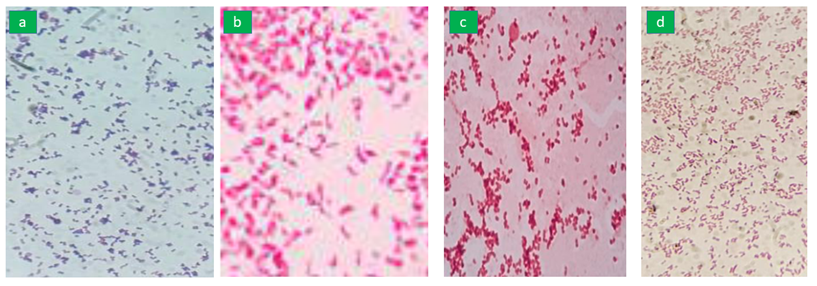
For confirmation of the isolates, identification of P. aeruginosa was carried on cetrimide agar and smooth, convex colonies with greenish pigment and grape like odor are the characteristics feature of the P. aeruginosa isolates. For confirmation of the isolates, identification of E. coli was carried on MacConkey agar and red-pinkish non-mucoid colonies are characteristic feature for E. coli isolates. For the confirmation of the isolates, identification of S. aureus was carried on blood agar and convex, shiny white hemolytic colonies are characteristic feature for S. aureus isolates. For the confirmation of the isolates, identification of K. pneumoniae was carried on EMB agar and mucoid pinkish growth is characteristic feature for K. pneumoniae isolates. Growth exhibiting the culture characteristics of P. aeruginosa, E. coli, K. pneumoniae and S. aureus has been presented in Figure 1. The isolates were observed under microscope 100 X has been presented in Figure 2.
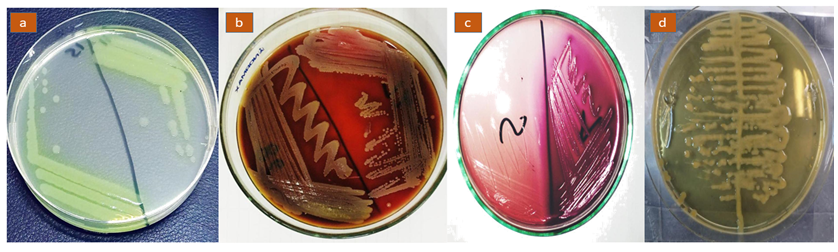
Figure 1: Confirmation of isolates (a) Smooth, convex colonies with greenies pigment exhibiting growth of P. aeruginosa on cetrimide agar (b) Convex, shiny white hemolytic colonies exhibiting growth of S. aureu on blood agar (c) Red pinkish non mucoid colonies presenting growth of ecoli on Macconkey (d) Mucoid growth presenting culture of K. pneumonia.
Biochemical Profiling of Isolates
Biochemical profiling of the isolates was carried out for the confirmation of biochemical characteristics of the isolates. Results of biochemical profiling of the isolates has been presented in (Tables 8 & 9).
| Bacteria | Oxidase | TSI | Indole | Citrate | Urease | Methyl Red | Voges Proskauer |
|---|---|---|---|---|---|---|---|
| E. coli | Negative | Positive | Positive | Negative | Negative | Positive | Negative |
| P. aeruginosa | Positive | Negative | Negative | Positive | Negative | Negative | Negative |
| K. pneumonia | Negative | Positive | Negative | Positive | Positive | Negative | Positive |
Table 8: Biochemical profiling for Gram negative isolates.
| Catalase | Coagulase |
| Positive | Positive |
Table 9: Biochemical profiling for _S. aureus_ isolates.
Antibiotic Susceptibility Testing
Antibiotic susceptibility testing was carried out against the enlisted antibiotics and results were formulated according to the CLSI 2021 guidelines. The results of antibiotic susceptibility profiling of the isolates have been presented in Tables 10-13.
| Antibiotic | Susceptible | Intermediate | Resistant |
|---|---|---|---|
| Gentamicin | 13 (54.17%) | 02 (8.33%) | 09 (37.50%) |
| Ciprofloxacin | 12 (50%) | 01 (4.17%) | 11 (45.83%) |
| Meropenem | 09 (37.50%) | 03 (12.50%) | 12 (50%) |
| Imipenem | 17 (70.83%) | 02(8.33%) | 05 (20.83%) |
| Tobramycin | 10 (41.67%) | 01(4.17%) | 13 (54.17%) |
| Ceftazidime | 11 (45.83%) | 01(4.17%) | 12 (50%) |
| Cefotaxime | 10 (41.67%) | 02(8.33%) | 12 (50%) |
| Amikacin | 12 (50%) | 01(4.17%) | 11 (45.83%) |
| Colistin | 24 (100%) | 0 | 0 |
| Ampicillin | 0 | 0 | 100 |
| Gentamicin | 05 (45.45%) | 01 (9.09%) | 05 (45.45%) |
| Ciprofloxacin | 05 (45.45%) | 02 (18.18%) | 04 (36.36%) |
| Meropenem | 04 (36.36%) | 01 (9.09%) | 06 (54.54%) |
| Imipenem | 08 (72.73%) | 0 | 03 (27.27%) |
| Tobramycin | 04 (36.36%) | 01 (9.09%) | 06 (54.54%) |
| Ceftazidime | 04 (36.36%) | 01 (9.09%) | 06 (54.54%) |
| Cefotaxime | 03 (27.27%) | 01 (9.09%) | 07 (63.63%) |
| Amikacin | 04 (36.36%) | 01 (9.09%) | 06 (54.54%) |
| Colistin | 11 (100%) | 0 | 0 |
| Ampicillin | 0 | 0 | 100 |
Table 10: Presenting antibiotic susceptibility profiling of P. aeruginosa isolates.
| Susceptible | Intermediate | Resistant | |
|---|---|---|---|
| Gentamicin | 09 (40.91%) | 01 (4.55%) | 12 (54.55%) |
| Ciprofloxacin | 12 (54.55%) | 02 (9.10%) | 08 (36.36%) |
| Meropenem | 09 (40.91%) | 02 (9.10%) | 11 (50%) |
| Imipenem | 14 (63.64%) | 01 (4.55%) | 07 (31.82%) |
| Tobramycin | 09 (40.91%) | 02 (9.10%) | 11 (50%) |
| Ceftazidime | 08 (36.36%) | 03 (13.64%) | 11 (50%) |
| Cefotaxime | 10 (45.45%) | 02 (9.10%) | 10 (45.45%) |
| Amikacin | 10 (45.45%) | 01 (4.55%) | 11 (50%) |
| Colistin | 22 (100%) | 0 | 0 |
| Ampicillin | 0 | 0 | 100 |
Table 11: Presenting antibiotic susceptibility profiling of E. coli isolates.
| Antibiotic | Susceptible | Intermediate | Resistant |
|---|---|---|---|
| Penicillin | 08 (42.11%) | 03 (15.79%) | 08 (42.11%) |
| Cefoxitin | 11 (57.89%) | 01 (5.26%) | 07 (36.84%) |
| Erythromycin | 08 (42.11%) | 02 (10.53%) | 09 (47.37%) |
| Ampicillin | 09 (47.37%) | 01 (5.26%) | 09 (47.37%) |
| Trimethoprim-sulfamethoxazole | 11 (57.89%) | 02 (10.53%) | 06 (31.58%) |
| Tetracycline | 09 (47.37%) | 02 (10.53%) | 08 (42.11%) |
| Azithromycin | 08 (42.11%) | 03 (15.79%) | 08 (42.11%) |
| Clindamycin | 11 (57.89%) | 01 (5.26%) | 07 (36.84%) |
| Ciprofloxacin | 10 (52.63%) | 03 (15.79%) | 06 (31.58%) |
| Vancomycin | 19 (100%) | 0 | 0 |
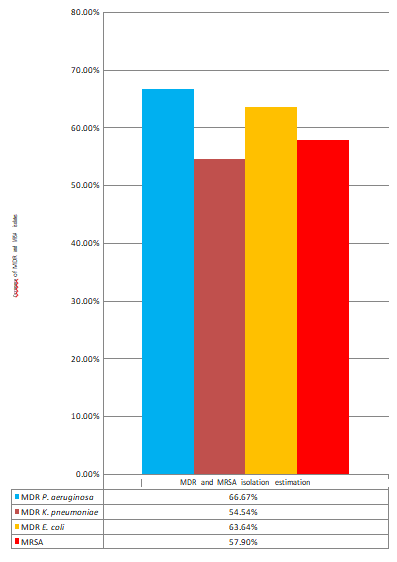
| Bacteria | No. of Isolates | Frequency of MDR isolates | Percentage of MDR isolates |
| P. aeruginosa | 24 | 16 | 66.67% |
| K. pneumoniae | 11 | 6 | 54.54% |
| E. coli | 22 | 14 | 63.64% |
| S. aureus | |||
| MRSA | No. of isolates | Frequency of MRSA | Percentage of MDR isolates |
| MRSA | 19 | 11 | 57.90% |
Table 12: Presenting antibiotic susceptibility profiling of S. aureus isolates.
MDR and MRSA isolate estimation For Gram negative bacteria occurrence of MDR isolates was formulated on basis of resistance in studied isolates while phenotypic detection of MRSA isolates was estimated cefoxitin disk analysis Table 14 & Figure 3.
Discussion
The most frequent bacterial infection in children is urinary tract infection (UTI), which is affecting 8% of girls and 2% of boys under age of 7.30% of people have a chance of developing a second UTI who have already developed UTI in childhood [11]. Some diseases, such as congenital anomalies of the urinary tract, put some children at a high risk of having UTIs [12]. The upper urinary tract (pyelonephritis or kidney infection) or the lower urinary tract (cystitis or bladder infection) may affect by UTI and it is very difficult, to differentiate cystitis-based clinical symptoms and indications of pyelonephritis, particularly in children and infants [13]. Proteus mirabilis is more frequent in males than in girls while in newborn infants Streptococcus agalactiae is more common than Haemophilus influenza, Staphylococcus aureus, Staphylococcus epidermidis, Streptococcus viridians, Streptococcus pneumoniae, and Streptococcus agalactiae may be responsible in children with anomalies of the urinary tract (anatomic, neurologic, or functional) or compromised immune system [3]. Only a proper identification of the local pathogen, as well as information on the susceptibility pattern and any related risk factors, can provide appropriate treatment for UTIs.
Because of incorrect antibiotic use, the bacterial sensitivity pattern of common pathogens is gradually changing in all countries [14]. To decrease the morbidity rate of UTIs, proper treatment is required [7]. Keeping in view the above facts and figures and the importance of UTIs in pediatrics, the current study was designed with the objectives to isolate and identify catheter-associated bacterial pathogens in UTIs among pediatric patients and to estimate the prevalence and antibiotic susceptibility profiling of catheter-associated bacterial pathogens in UTIs among pediatric patients [15]. A total of 200 catheter tips were collected from the patients of different wards (surgery, urology, medicine) at the Children’s hospital Faisalabad. Samples were first kept in pre-prepared nutrient broth for 24 hours and then streaked on nutrient agar plates and the positivity of the samples was noted after 24 hours. Positive samples were processed further for the identification of E. coli, K. pneumoniae, S. aureus, and P. aeruginosa using culture identification, microscopy, and biochemical profiling on basis of culture characterization, microscopy, and biochemical profiling.
Cultures were processed on selective agar,set for incubation at 37 ºC for 24 hours and processed further for Gram-staining, microscopy, and biochemical profiling using oxidase, catalase, triple sugar iron, urease, indole, methyl red, and Voges Proskauer test [16]. Antibiotic susceptibility testing was performed to determine the antibiotic resistance profile of each isolate by disc diffusion method. Antibiotics were selected based on clinical relevance which belongs to different antimicrobial groups. Zone of inhibition was interpreted according to Clinical and Laboratory Standards Institute guidelines (CLSI) 2021 and isolates were determined as resistant, intermediate, and susceptible according to CLSI guideline 2021. A total of 200 samples were processed in this study and 76 (38%) of the samples showed growth on nutrient agar. In processed samples, the high prevalence was marked for P. aeruginosa (24/200; 12%) followed by E. coli (22/200; 11%) and S. aureus (19/200; 9.5%) while 11 K. pneumoniae isolates (5.5%) were identified in this study [17]. This study showed relevance with the results presented by in research designed on P. aeruginosa in OT samples, in research designed on K. pneumoniae in OT samples, in method of researchon E. coli in surgical sites. These results were also supported by the results presented by in method of research on P. aeruginosa in ward samples, in research designed on E. coli on surgical ward samples, and in a study designed on OT samples.
In a comparative study designed on clinical isolates, reported the prevalence of P. aeruginosa at 22.50%, E. coli at 7.5%, and K. pneumoniae isolates at 15%. In antibiotic susceptibility profiling of P. aeruginosa highest susceptibility was found for colistin (100%) and imipenem (70.83%) followed by gentamicin (54.17%) while the highest resistance was found for tobramycin (54.17%) followed by meropenem, ceftazidime, and cefotaxime (50%). In a comparative study designed on catheter samples in Czech Republic also reported more than 90% susceptibility to colistin however resistance to ciprofloxacin (56.6%) and gentamicin (42.9%) and a little susceptibility to amikacin (lesser than 10%) was reported in P. aeruginosa isolates. In Ethiopia also designed a comparative study on catheter samples and also reported imipenem as a susceptible antibiotic (85.3%) reported high resistance to ceftazidime (83.3%) and resistance to gentamicin (41.7%) and tobramycin (41.7%) were also reported in P. aeruginosa isolates. The minor difference in results might be due to the difference in the demographic location of the study [18].
In antibiotic susceptibility profiling of K. pneumoniae highest susceptibility was found for colistin (100%) and imipenem (72.73%) followed by gentamicin and ciprofloxacin (45.45%) while the highest resistance was found for cefotaxime (63.63%) followed by meropenem, tobramycin and amikacin (54.54%). Designed a study on clinical samples in Korea and reported high susceptibility to amikacin (94.4%), gentamicin (80.3%), ciprofloxacin (70.4%), and cefotaxime (53.5%) were reported. The difference in results might be due to differences in sample type and location of the sampling. In antibiotic susceptibility profiling of E. coli highest susceptibility was found for colistin (100%) and imipenem (63.64%) followed by ciprofloxacin (54.55%) while the highest resistance was found for gentamicin (54.55%) followed by tobramycin, meropenem, ceftazidime, and amikacin (50%). In a comparative study designed on clinical samples in Korea, reported 99.2% susceptibility to amikacin, 56% to ciprofloxacin, and 66.1% to gentamicin. These results were also supported by in a study designed on catheter samples in Ethiopia in which 55.6% resistance to ceftazidime was reported. Almost similar results were also reported by in a study designed on E. coli isolates from catheter samples also reported high susceptibility to imipenem (95.7%), amikacin (58.7%), and tobramycin (58.7%).
In a study designed on catheter samples in Nepal in which 100% susceptibility to imipenem and 37.5% resistance to ceftazidime was reported however 100% susceptibility to meropenem and amikacin was also reported in E. coli isolates. In a study designed on catheter samples in Tanzania also reported 50.7% resistance to ceftazidime in E. coli isolates however a bit fluctuation in resistance to gentamicin (43%) was also reported. In antibiotic susceptibility profiling of S. aureus highest susceptibility was found for vancomycin (100%) clindamycin, cefoxitin, and trimethoprim- sulfamethoxazole (57.89%) while the highest resistance was found for erythromycin and ampicillin (47.37%). In a study designed on S. aureus in catheter samples also reported 100% resistance to vancomycin however a little susceptibility to erythromycin (20%) and clindamycin (20%) was found in these isolates. A high prevalence of pathogens in catheter samples has been alarming that has been worsened with the presence of resistant isolates that have not only been found resistant to antibiotics studied. Advance studies are needed to investigate the real investigations of bacterial contamination; resistance to treatment options and resistance to antibiotics are needed.
Conclusion
This study concluded that the high prevalence was determined for P. aeruginosa (24/200; 12%) and E. coli (22/200; 11%). In this study, the male patients were mostly infected as compared to female (3:2). The antimicrobial profile suggested that 54.17 % P. aeruginosa were resistant to tobramycin and highly sensitive drug was colistin (100%). Inantibiotic susceptibility profiling of K. pneumoniae, highest susceptibility was found for colistin (100%) and the highest resistance was found for cefotaxime (63.63%). In antibiotic susceptibility profiling of E. coli highest susceptibility was found for colistin (100%) and while the highest resistance was found for gentamicin (54.55%). In antibiotic susceptibility profiling of S. aureus highest susceptibility was found for vancomycin (100%) while the highest resistance was found for erythromycin and ampicillin (47.37%). There should be public awareness for the use of antibiotics,there should be stoppage of irrational use of antibiotics, people should not take self-antibiotics,over the counter availability of the antibiotics should be banned and continuous education of the health care. Advance studies are needed to investigate the real investigations of bacterial contamination resistance to treatment options and resistance to antibiotics is needed.
Declaration
Consent for Publication
Not applicable
Availability of Data and Materials
Availability of data and materials on request by corresponding author
Competing Interests
The authors have no competing interest
Funding
No funding for this research
Acknowledgements
I am grateful to all of those with whom I have had the pleasure to work during this and other related projects.
References
-
Kanellopoulos TA, Salakos C, Spiliopoulou I, Ellina A, Nikolakopoulou NM, et al. (2006) First urinary tract infection in neonates infants and young children a comparative study. Pediatric Nephrology 21: 1131-1137.
-
Ludwikowski BM, González R (2019) Progress in Pediatric Urology in the Early 21st Century. Frontiers Media, South Africa, pp: 102.
-
Leung AK, Wong AH, Leung AA, Hon KL (2019) Urinary tract infection in children. Recent patents on inflammation & allergy drug discovery 13(1): 2-18.
-
Arbab S, Ullah H, Wang W, Zhang J (2022) Antimicrobial drug resistance against Escherichia coli and its harmful effect on animal health. Veterinary Medicine and Science 8(4): 1780-1786.
-
Aslam O, Aslam I (2022) Urinary tract infection in childhood. Innov AiT 15(5): 280-285.
-
Buonsenso D, Sodero G, Mariani F, Lazzareschi I, Proli F, et al. (2022) Comparison between Short Therapy and Standard Therapy in Pediatric Patients Hospitalized with Urinary Tract Infection A Single Center Retrospective Analysis. Children 9(11): 1647.
-
Luke H, Blanc T, Peycelon M, Michel JL, Leclair MD, et al. (2021) Circumcision and Risk of Febrile Urinary Tract Infection in Boys with Posterior Urethral Valves: Result of the CIRCUP Randomized Trial. Eur Urol 81(1): 64-72.
-
Davies R, Wales A (2019) Antimicrobial resistance on farms a review including biosecurity and the potential role of disinfectants in resistance selection. Comprehensive reviews in food science and food safety 18(3): 753-774.
-
Isac R, Basaca DG, Olariu IC, Stroescu RF, Ardelean AM, et al. (2021) Antibiotic resistance patterns of uropathogens causing urinary tract infections in children with congenital anomalies of kidney and urinary tract. Children 8(7): 585.
-
Isac R, Stroescu R, Olariu C, Pop M, Farkas F, et al. (2019) Diagnosis and clinical consequences of urinary tract malformation in children. Journal of the Romanian Pediatric Surgery Society 22(1): 27-30.
-
Kariyappa P, Reddy SC, Mavinahalli AS, Rao US (2020) Urinary tract abnormalities in children with first urinary tract infection. Indian Journal of Child Health 7(8): 337- 339.
-
Millner RO, Preece J, Salvator A, McLeod DJ, Ching CB, et al. (2019) Albuminuria in pediatric neurogenic bladder identifying an earlier marker of renal disease. Urology 133: 199-203.
-
Mirzaei R, Mohammadzadeh R, Alikhani MY, Moghadam MS, Karampoor S, et al. (2020) The biofilm associated bacterial infections unrelated to indwelling devices. IUBMB life 72(7): 1271-1285.
-
Oumer Y, Regasa DB, Seid M, Biresaw G, Manilal A (2021) Catheter-associated urinary tract infection Incidence associated factors and drug resistance patterns of bacterial isolates in southern Ethiopia. Infection and drug resistanc 14: 2883-2894.
-
Ponvelil JJ, Gowda HN, Raj S (2020) Prevalence of urinary tract infection and sensitivity pattern amongst children less than 3 years of age with fever in a tertiary care hospital in South Karnataka. Int J Basic Clin Pharmacol 9(5): 736-742.
-
Sangeda RZ, Paul F, Mtweve DM (2021) Prevalence of urinary tract infections and antibiogram of uropathogens isolated from children under five attending Bagamoyo District Hospital in Tanzania. A cross-sectiona study, pp: 1-10.
-
Umoh HP (2022) Characterization of Staphylococcus Aureus Isolated From Door Handles In The College Of Humanities Management and Social Sciences. Mountain Top University, Nigeria.
-
Wang ME, Greenhow TL, Lee V, Beck J, Bendel SM, et al. (2021) Management and outcomes in children with third-generation cephalosporin-resistant urinary tract infections. Journal of the Pediatric Infectious Diseases Society 10(5): 650-658.
- Potential Medicinal Herbs and Secondary Metabolites in Combating Corona Virus
- Monkeypox and its Clinical Implications in Pregnancy
- Pharmacognostical Analysis of the Leaves of Important Nervine Medicinal Plant: Strychnos Nux-Vomica L
- Assessment of Antibacterial Activity of Various Solvent Extracts of Dictyota Dichotoma Against Multidrug Resistant Bacterial Strain
- An Insights of Bioactive Elements on Malignancy: Mechanistic Avenues
- Advances and Future Directions in Pharmacognosy and Chinese Medicine